Just over thirty miles west of Krakow are the infamous Auschwitz / Birkenau Nazi Concentration Camps. The coach bus ride from Krakow takes about 90 minutes. No eating is allowed in the camps out of respect for the starvation that took place at the camps.
The whole complex is called the Auschwitz / Birkenau Memorial and Museum. We started on the original Auschwitz side. It was a profound day.
Preliminary Commentary from my Guidebook
A Brief history of the Auschwitz camp from its founding through liberation
Auschwitz (June 1940 – January 1945) was the first Nazi German concentration camp founded in German-occupied Poland and, over time, it became the largest of all the camps set up by the Third Reich. Like the other camps, it was a state institution administered by the German central government and underwritten by its budget. The direct reason for its creation was the rising number of Poles being arrested by the German police and the overcrowding of the existing prisons. At first, Auschwitz was intended to be just one of the many concentration camps established in the Nazi terror system. It filled this role the whole time, even when, beginning in 1942, it became above all the largest center for the mass extermination of Jews.
During its period of peak operations (August 1944), Auschwitz was made up of three main parts: → Auschwitz I (number of inmates approx. 16,000); → Auschwitz II-Birkenau approx. 90,000), 3 km (2 mi) away, where the largest mass extermination facilities— gas chambers — in Europe were located; and → Auschwitz III-Monowitz (approx. 10,000), 6 km (4 mi) away, which was situated next to the Buna-Werke synthetic rubber and gasoline plant, built with the use of prisoner labor by the German IG Farbenindustrie company. At the time Auschwitz also had several dozen sub-camps holding 21,000 prisoners forced to work in industry or on farms. The whole complex formed an integral administrative entity subordinated to the main Auschwitz I camp. In conjunction with the building of the camp, the Germans expelled at least 8,000 Poles from Oswiecim and the nearby villages; the entire Jewish population of the town-about 7,000 people— was deported to Sosnowiec, Bedzin, and Chrzanów.
The liberation of Auschwitz: In mid-January 1945, in conjunction with the breakthrough in the front lines by the Red Army and the approach of Soviet units to Oswiecim, 56,000 prisoners were forced onto the Death March (at least 9,000 fatalities)-the evacuation of laborers to concentration camps located in the depths of the Third Reich,
In the second half of 1944, several months before they fled, the Germans began destroying the evidence of their crimes. They burned the prisoner files and lists of deported Jews, and shipped out the items plundered from the victims along with large quantities of building ma-terials. In the last week of the camp’s existence, they blew up the gas chambers and burned down storehouses full of property left behind by the Jewish victims of mass extermination.
The 7,500 sick and exhausted prisoners left behind in the camp were liberated by Soviet soldiers on January 27, 1945.
Back to my Commentary
Our Educator (or Guide) repeatedly said, “Everything was planned.” And with example after example demonstrated the advance planning of the Nazis (how to build the camps, how to make people “comfortable” when arriving, how to reuse everything, the conduct of human experiments, the labor for their war effort, etc.).
I’ve divided my dialogue below into Auschwitz and Birkenau sections largely to separate photos from each camp, but I’ll talk about both in the either section.
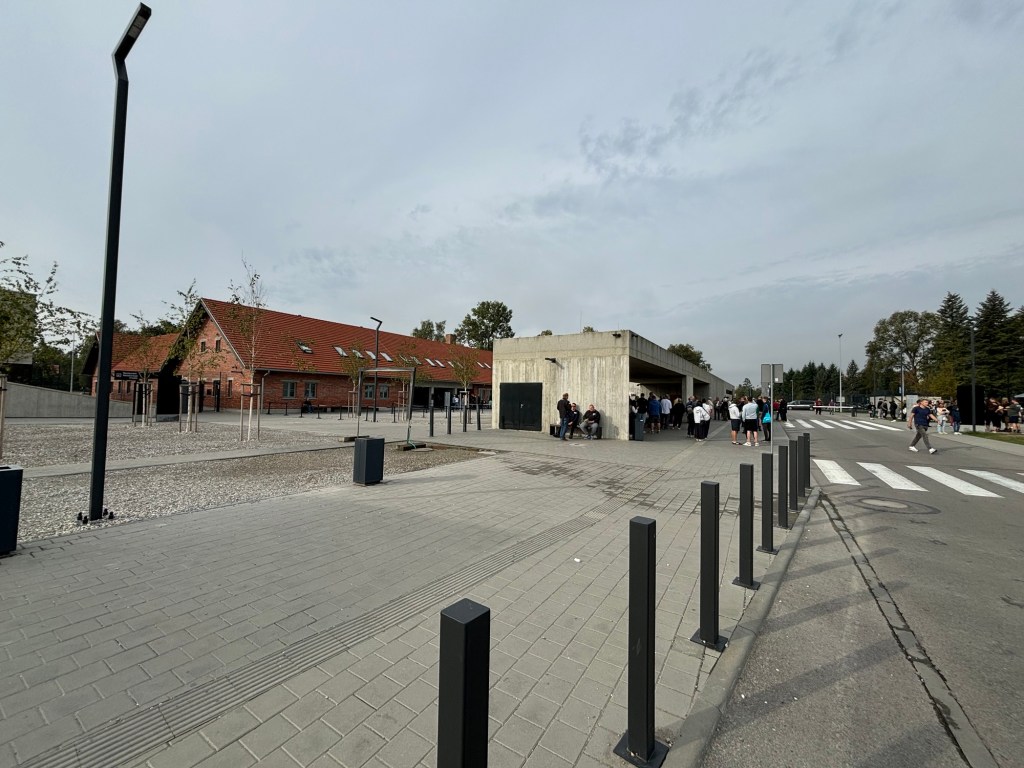
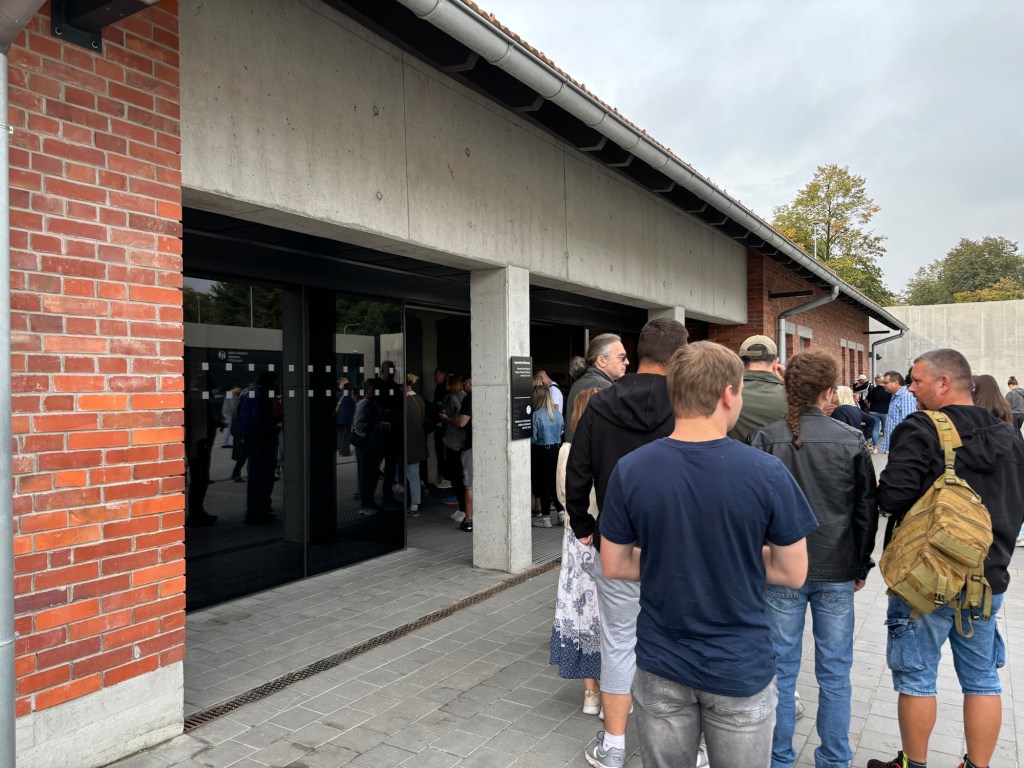
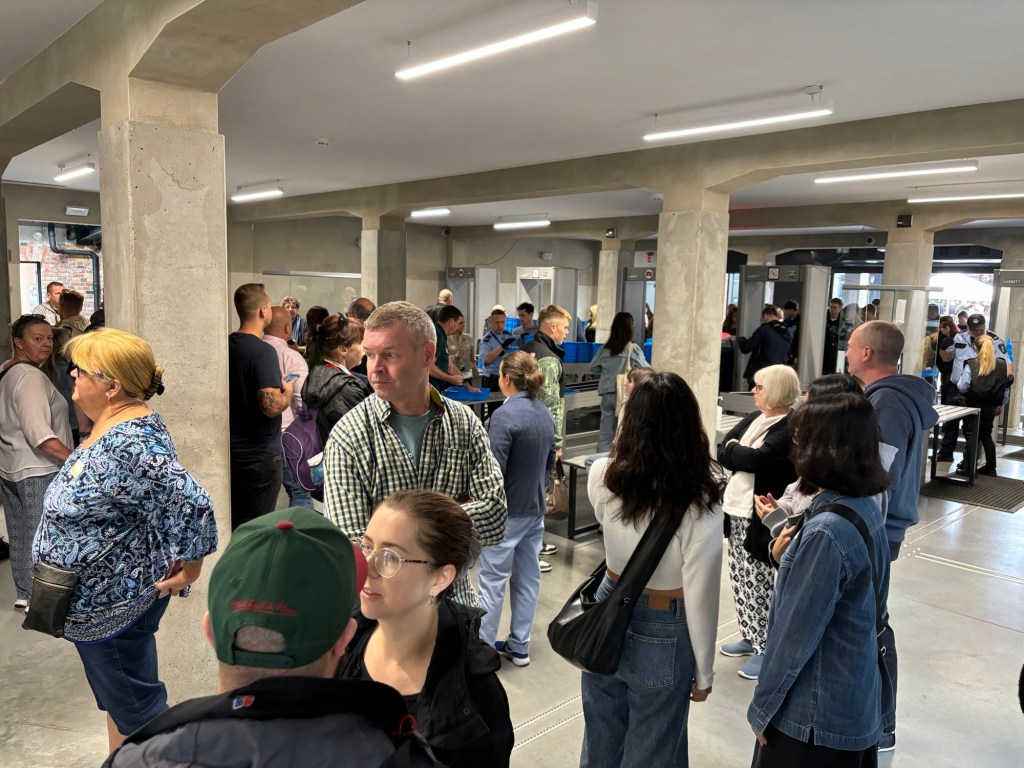
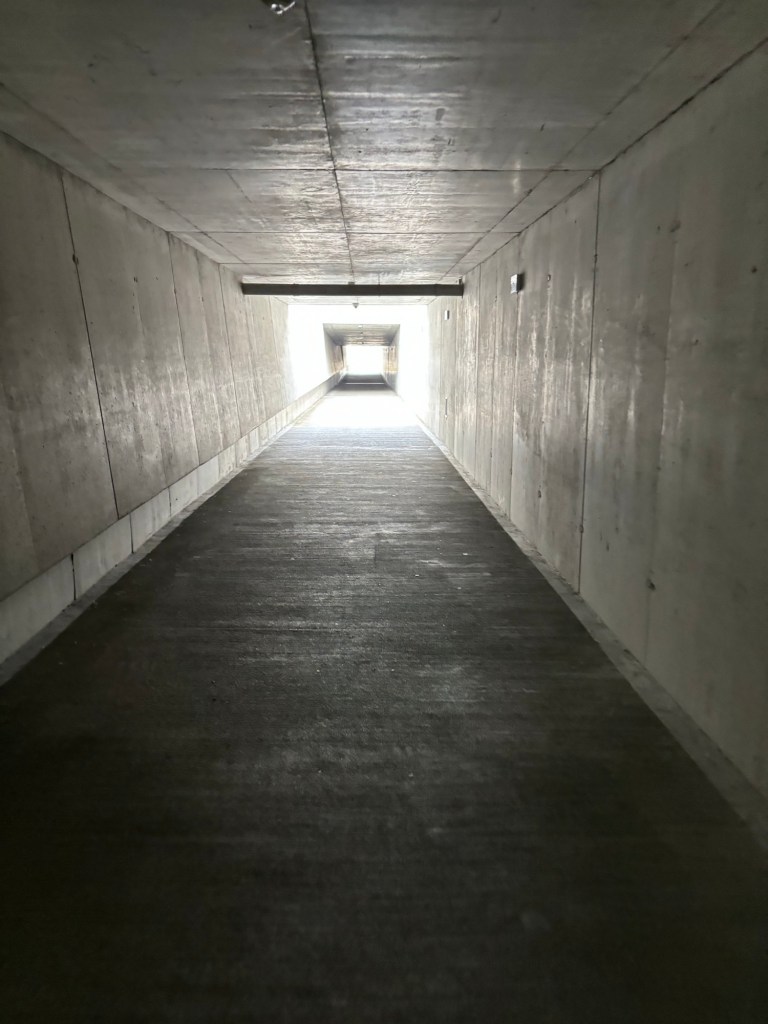
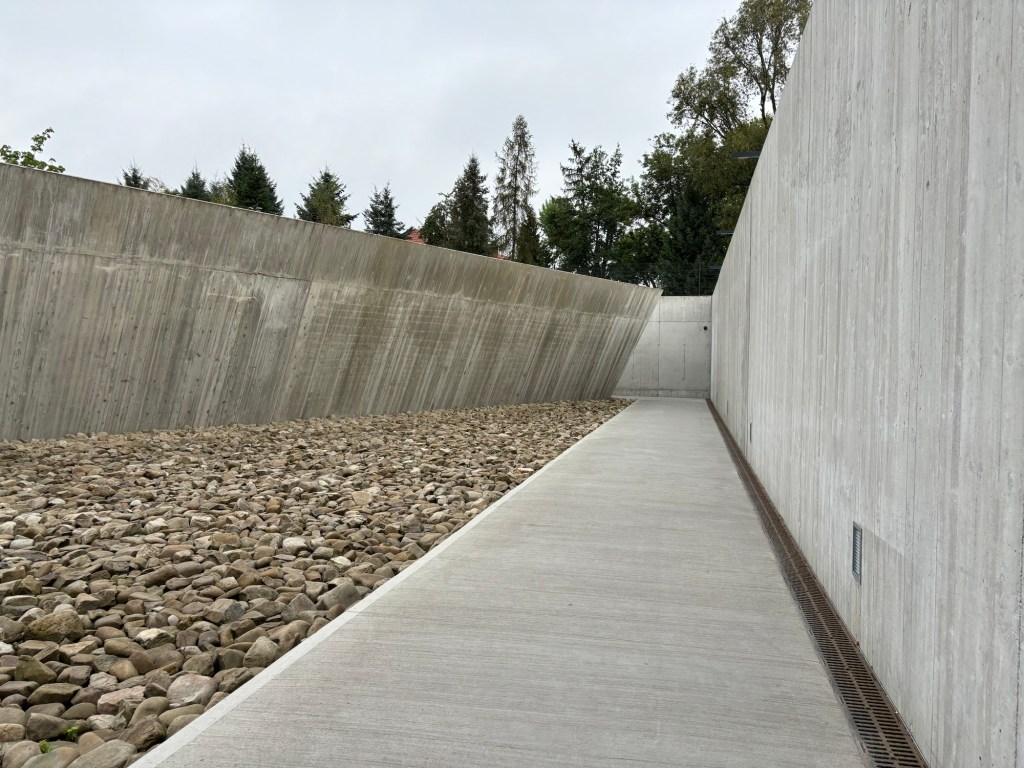
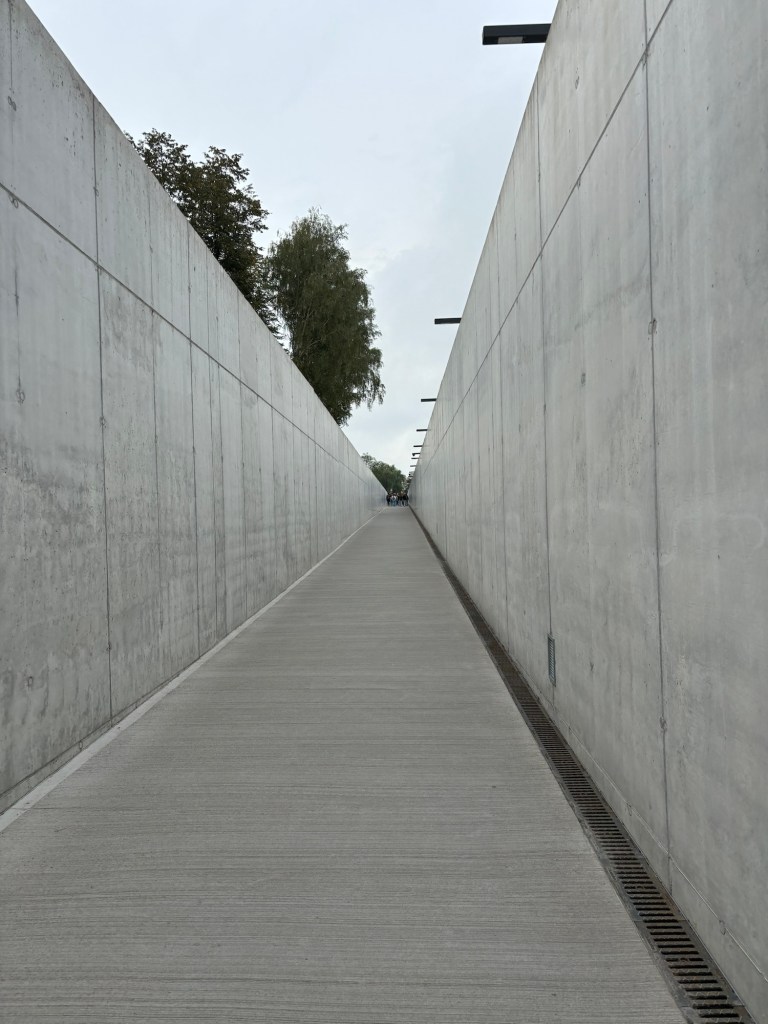
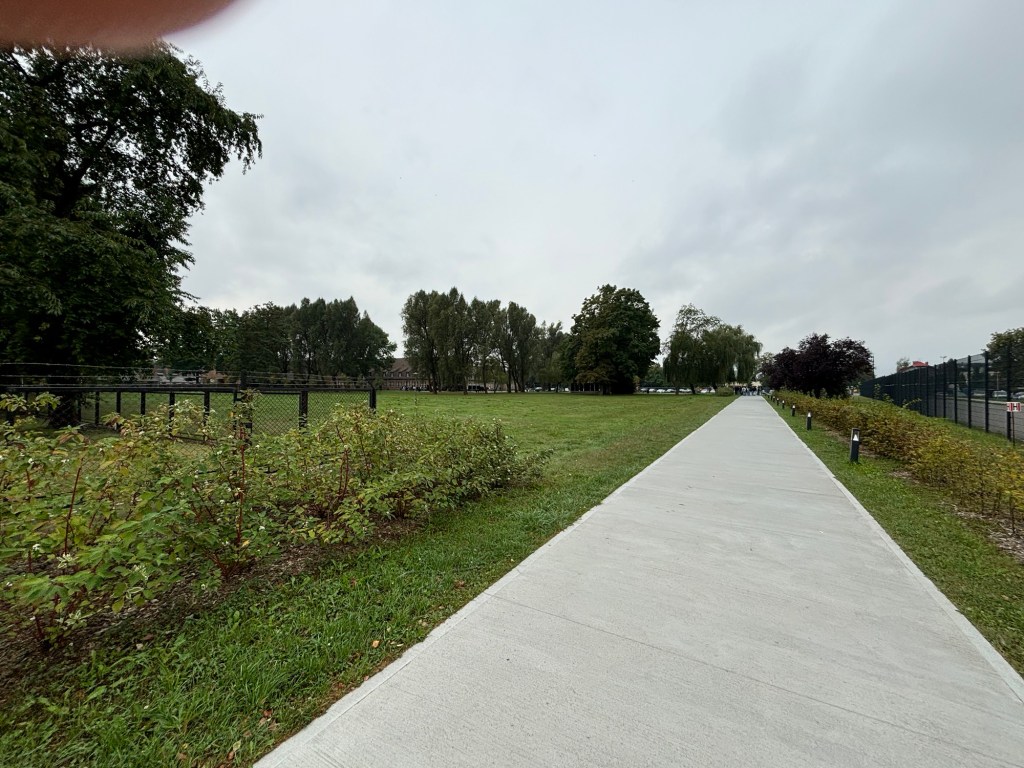
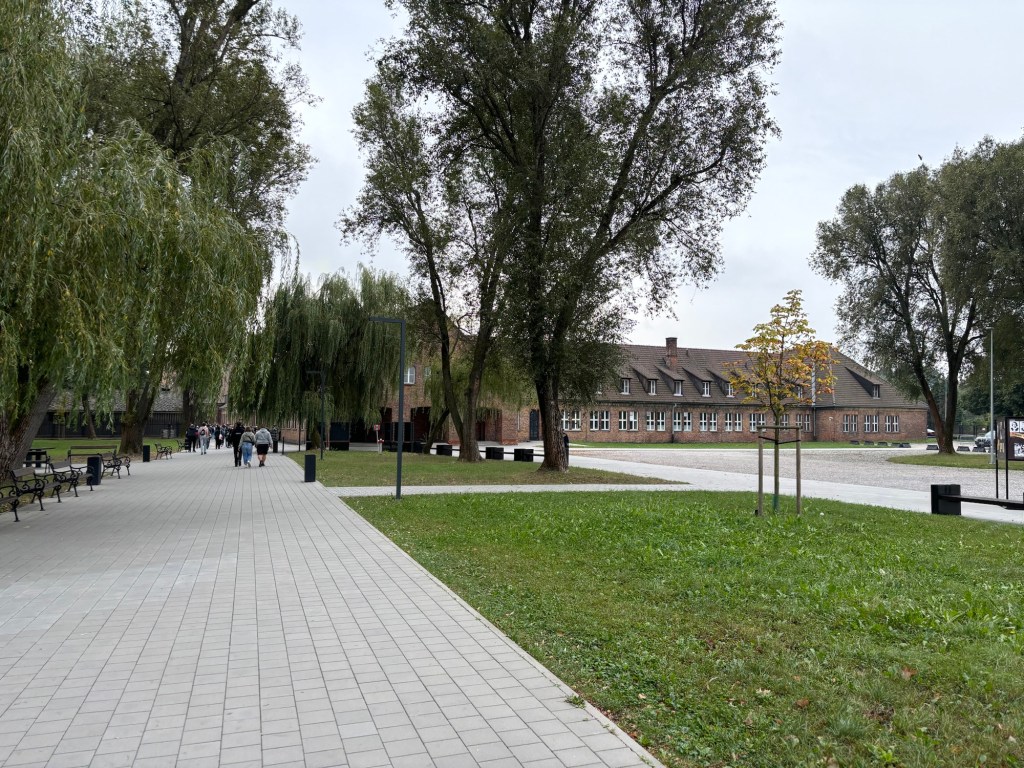
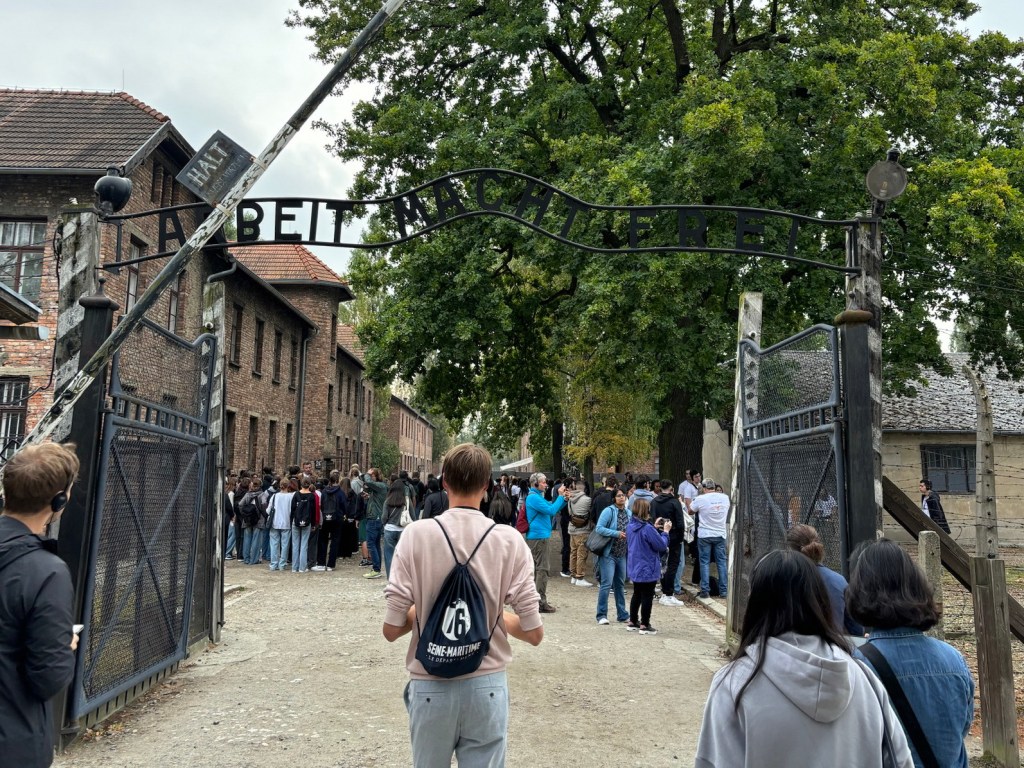
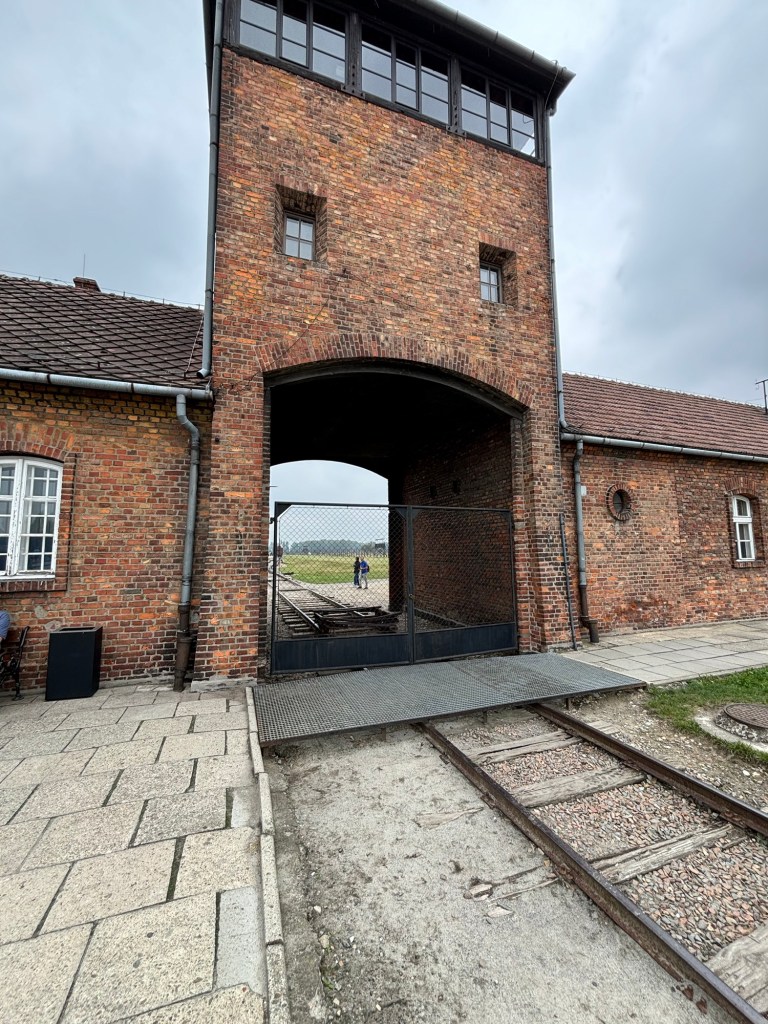
Here are a few photos of the modern entrance:
AUSCHWITZ
“Arbeit macht frei” is the despicable German phrase above the entrance to the Auschwitz Concentration Camp in Poland. It is translated as “Work makes one free.” It was intended to reassure those who were forced to enter that they were just coming to a work camp and everything would be okay.
It is very quiet and properly somber at Auschwitz. The camp has many trees, including a great number of weeping willows on the grounds. Seems appropriate. The tree cover is similar to how it was from 1940-45, and the museum authority has replanted, as needed, in the original configuration.
The Polish names for the villages where the camps are located were changed to the German names of Auschwitz and Birkenau by the Nazis after they invaded.
The Auschwitz site was chosen because it was isolated and had twenty 2-story brick buildings already on the site. Eight more similar structures plus additional administrative and support buildings were constructed by prisoners.
Still, the camp was too small for their growing purposes with only 28 barracks so 18 months after opening they also built nearby Birkenau, or Auschwitz 2, and planned for 600 more barracks there! There were also many sub-camps around the areas.
Initially, prisoners at Auschwitz were largely Poles who were jailed for many reasons, and starvation was used to kill the prisoners cheaply and over time.
Later, especially when large numbers of Jews were being shipped to both camps, about 80% of those arriving were gassed within the day they arrived!
The gas chamber at Auschwitz could kill 2,000 people in 30 minutes. The four additional chambers at Birkenau could murder 8,000 in the same period. Afterwards, the naked bodies were removed from the gas chambers, the womens’ hair was cut off (used to make cheap fabrics) and the bodies were stripped of all jewelry and gold or metal teeth. Then the corpses were burned! The Nazis even found ways to use the ashes and bone fragments.
While some people were sent to the camps to be jailed and to work for the German war effort, from the beginning, all the Jews that were sent here were sent to be exterminated. And this went on for five years!
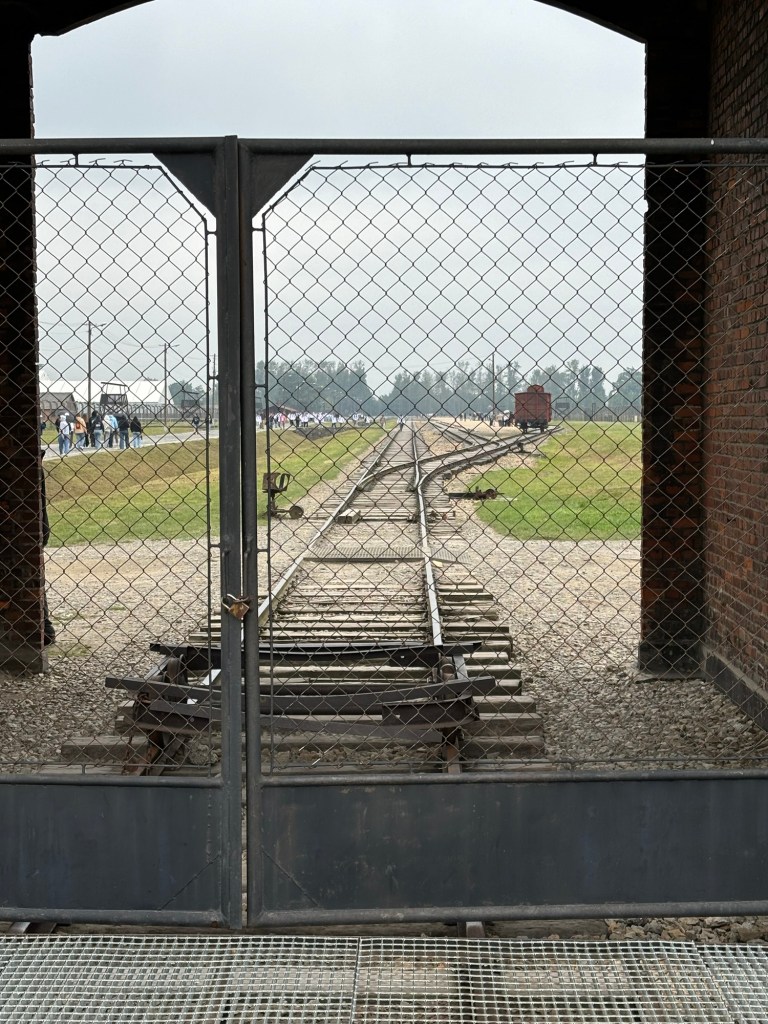
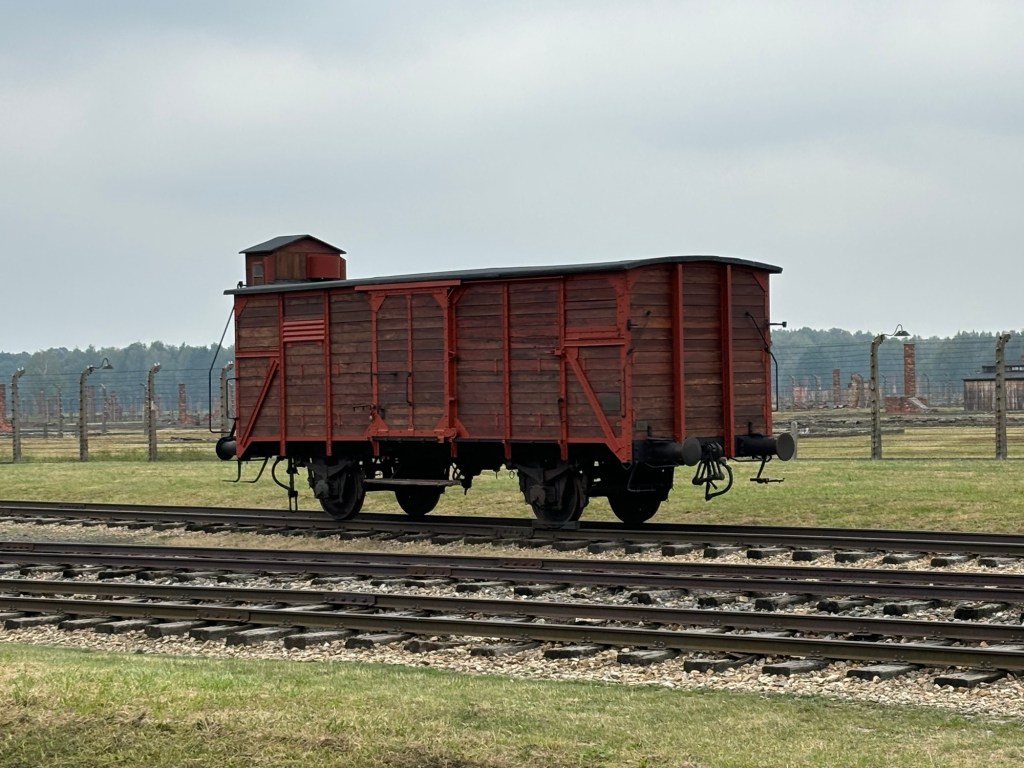
The people were told they were going to resettlement camps. And when they arrived by train, they saw many buildings with people all about working and living there. So they were put at ease and were peaceful when they were taken to the gas chambers.
The Jewish women, mothers, pregnant women, children, young teens, the elderly, the disabled, and most of those over 40 were not useful and were sent straight to the gas chambers.
They were told that they needed to take showers and be disinfected upon arrival. So those going to the gas chambers had to strip down and they were headed into the gas chamber. The Nazis even had fake shower heads in chambers to put people at ease.
However, once the doors were closed, the German soldiers began to drop pesticide crystals down into the chamber from holes opened in the roof.
The people were murdered naked so their clothing could be recycled along with their suitcases and other possessions. They thought of everything! Horribly, some Jewish victims at Birkenau were even burned alive when the Nazis ran short of pesticides for the gas chambers.
Five days before the 1945 liberation, the Nazis tried to burn any evidence of the atrocities. However, so much had been stockpiled over the years that it was impossible.
Other Information
- Workers had to wear striped uniforms for visibility by the guards and they all prisoners had numbers on their uniforms, which is how the guards addressed them.
- Each prisoner also had a colored triangle to identify their group (gay, prostitute, Jew, Roma/gypsies, etc.). Only Jews had both a triangle and a star – and always in yellow.
- Less than 700 of the 200,000 children and young teenagers survived.
- Block 10 was where they experimented on women to find most effective sterilization method. That way, the Nazis could more easily races or peoples the Germans did not want. They could make entire nations die out.
- Block 11 was the Jail. In the Jail Block you either died by flogging, hanging, or firing squad.
- They even had “standing cells” for four adults. The cell was so tiny they could not lie down and then still had to work the next day.
- They even had a Courtroom for the political prisoners.
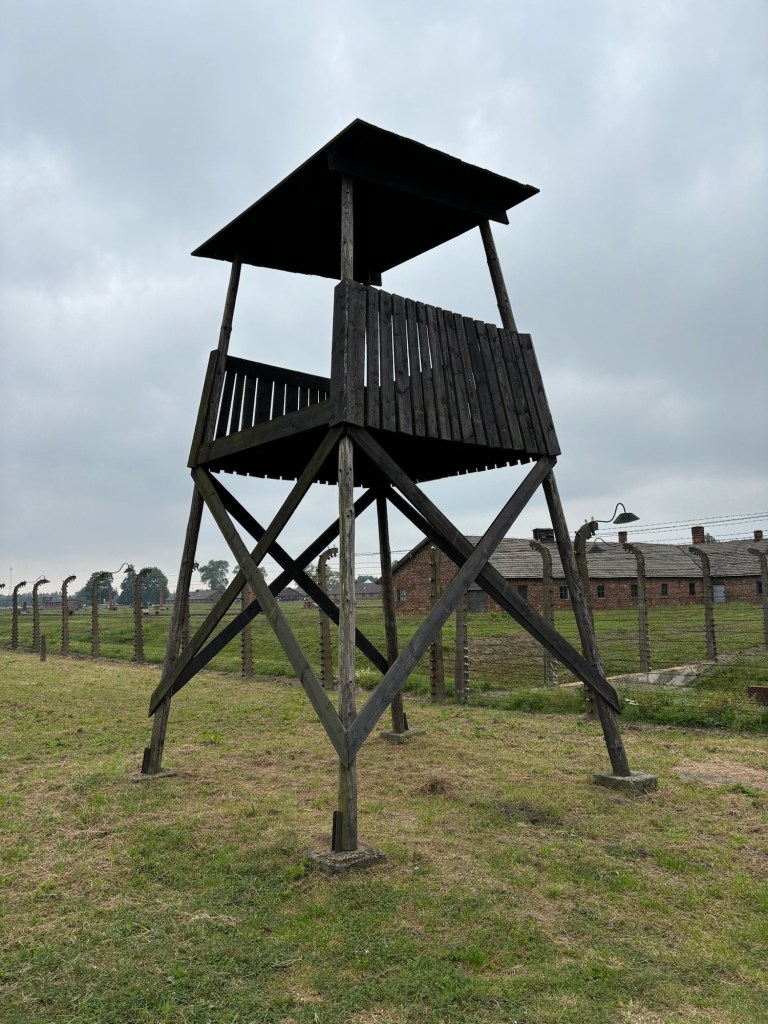
- The adjacent barracks had wood planks over windows so other prisoners couldn’t see what was happening, but they could hear the beatings, floggings, hangings, and firing squads.
- Prisoners were always counted twice per day to make sure no one escaped. The Nazis were worried that escaped prisoners would then tell others what was happening.
- Only 200 escaped out of 1.3 million who came into the camp.
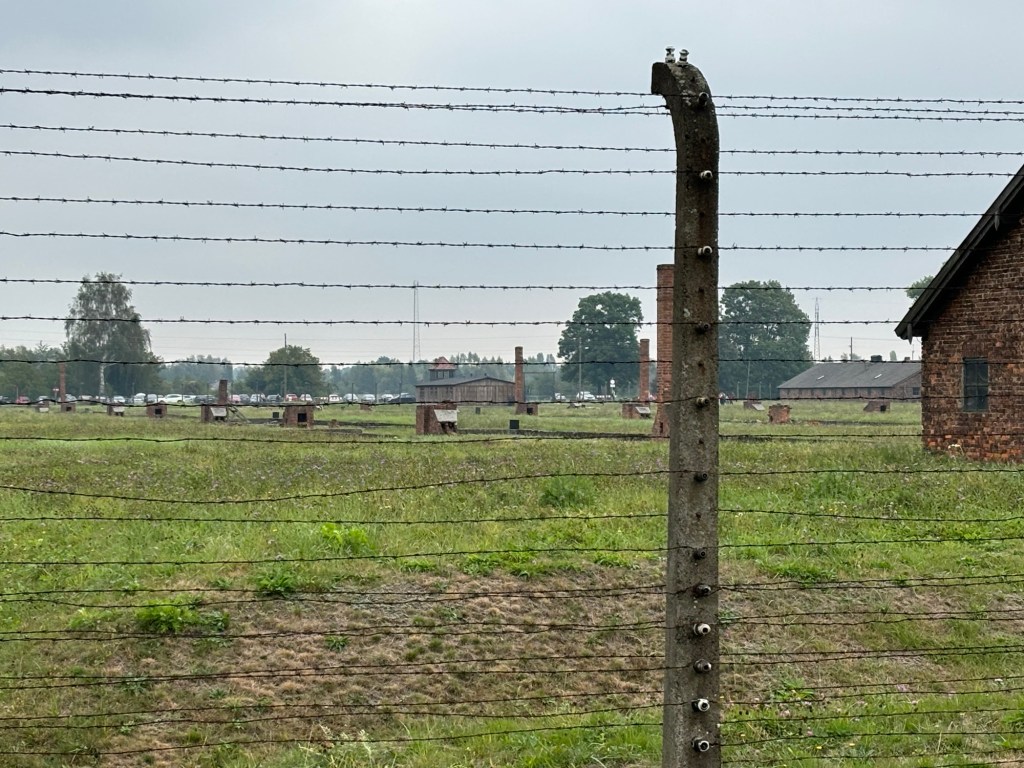
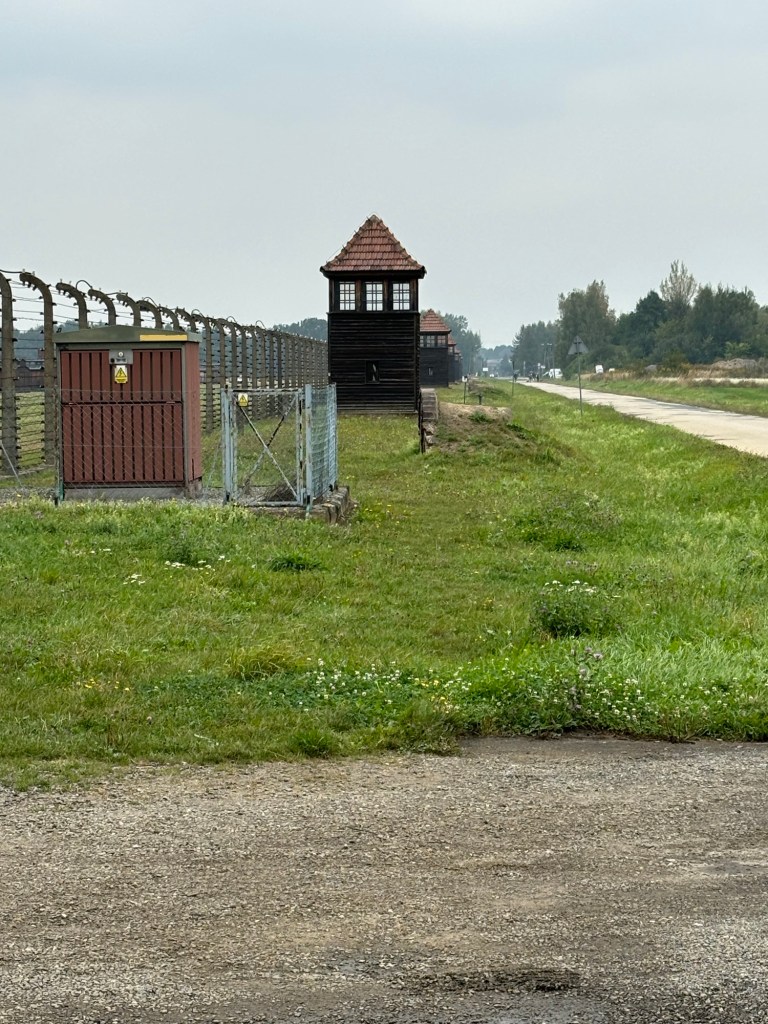
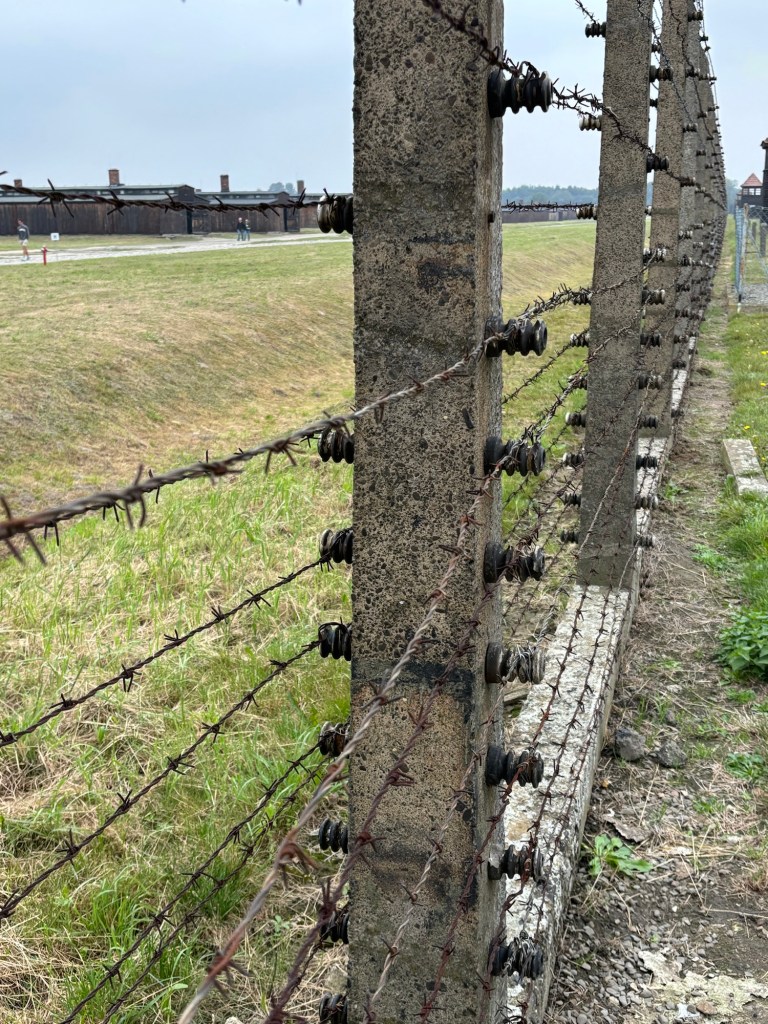
- The camp was also surrounded by 400 volt electrified fence (200 is lethal).
- The stench from the gas chambers and the burning of bodies was horrible.
- Even birds and animals avoided the area, except for rats, which were everywhere (and a food source).
Photos from Auschwitz
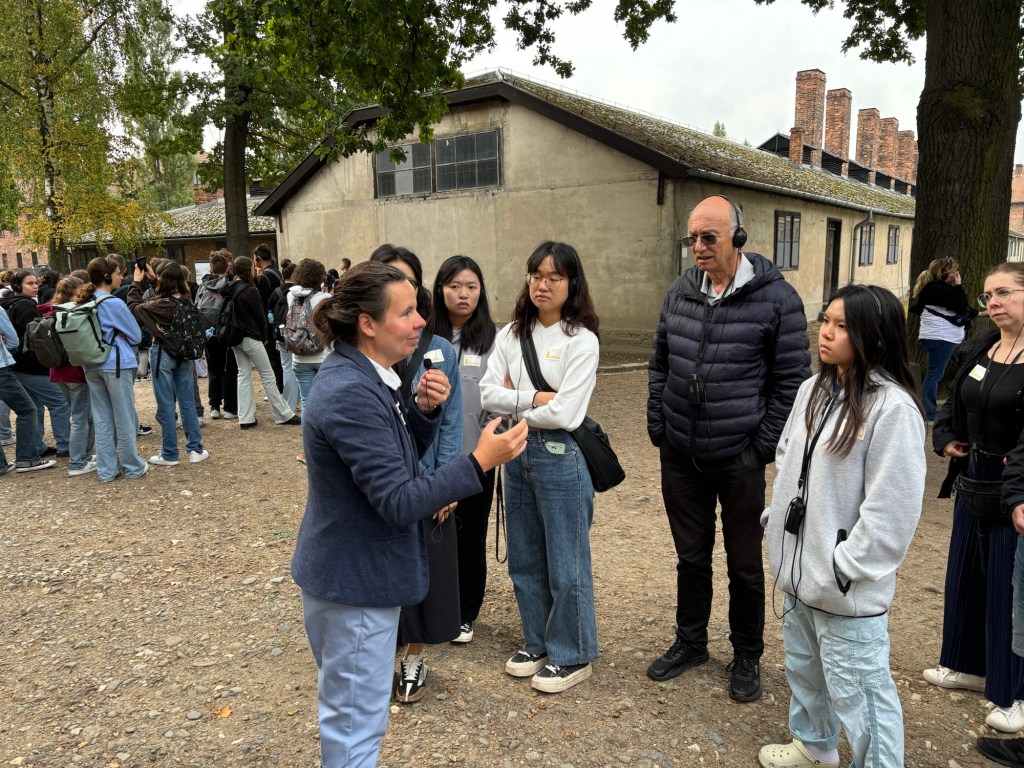
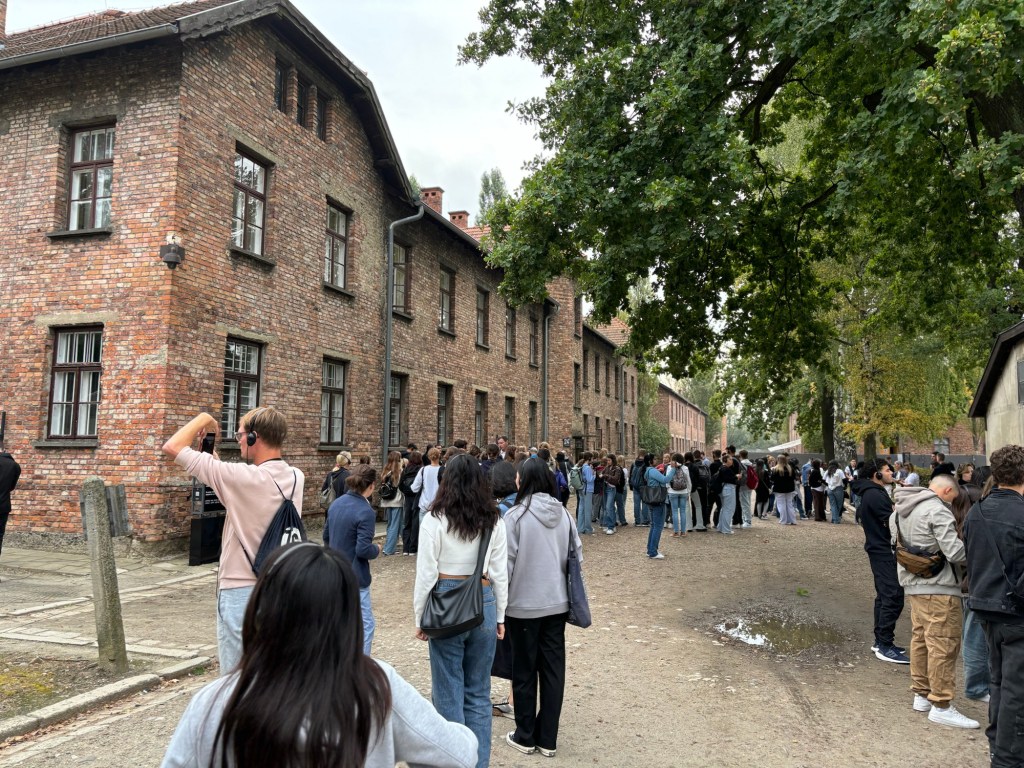
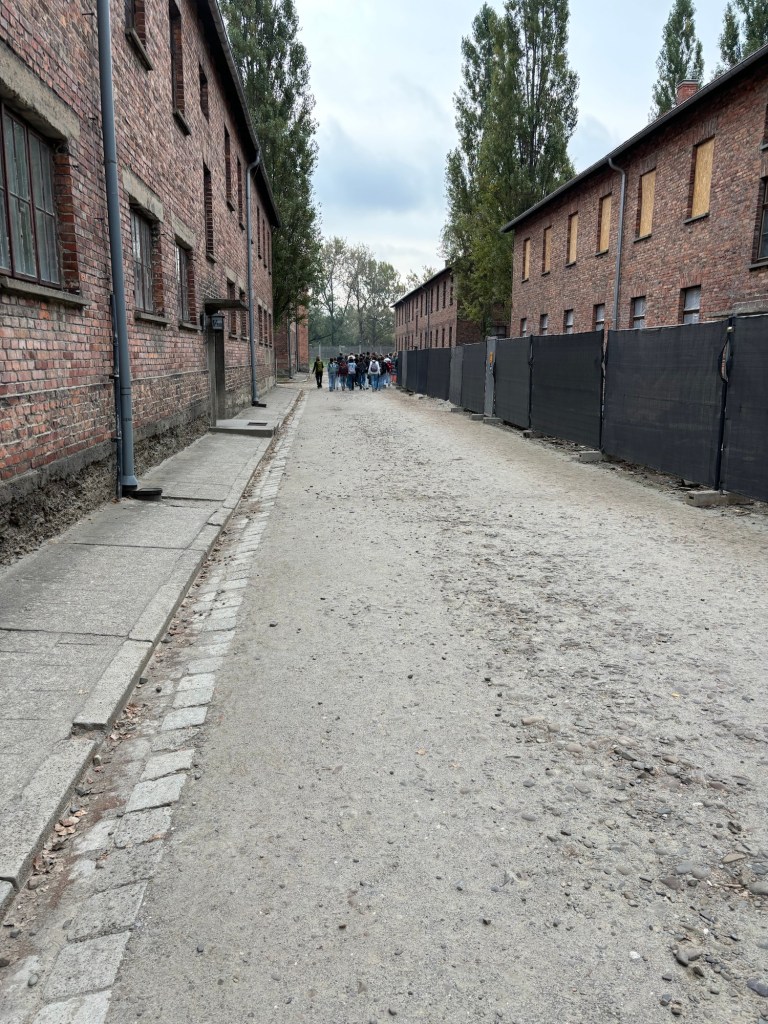
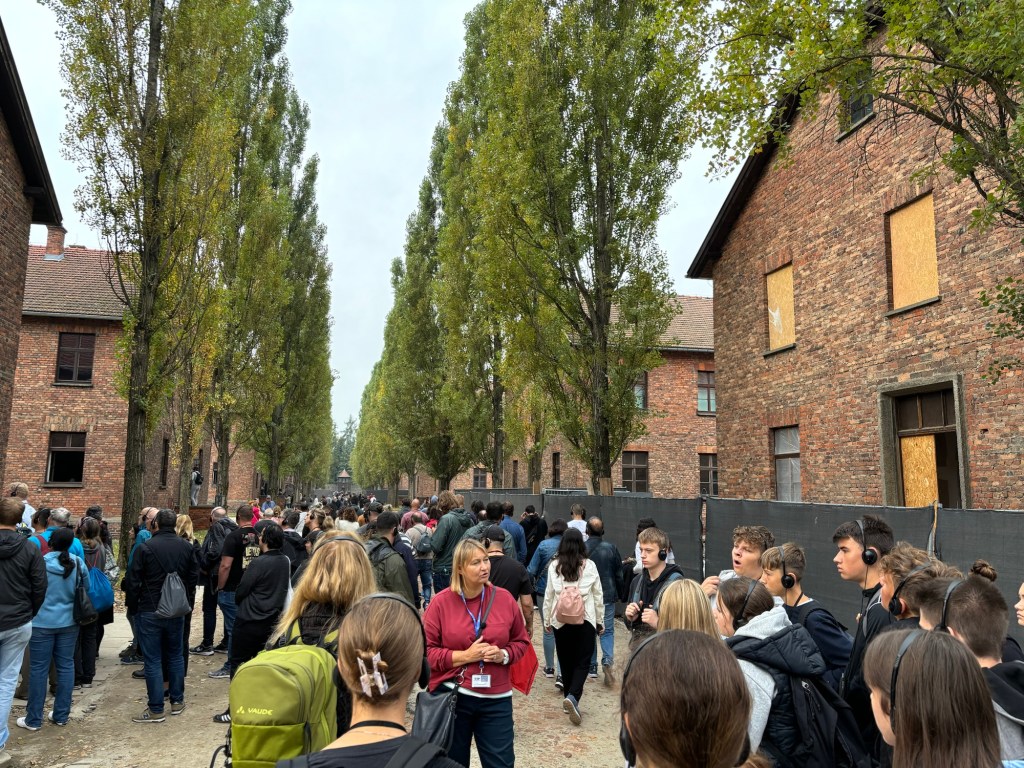
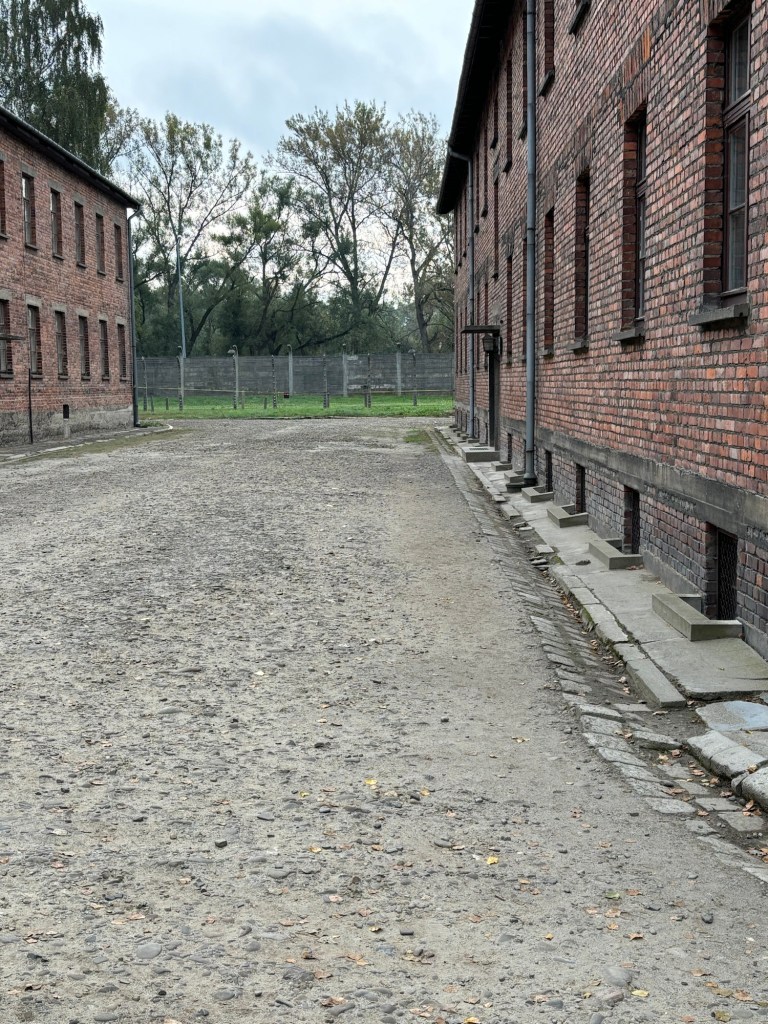
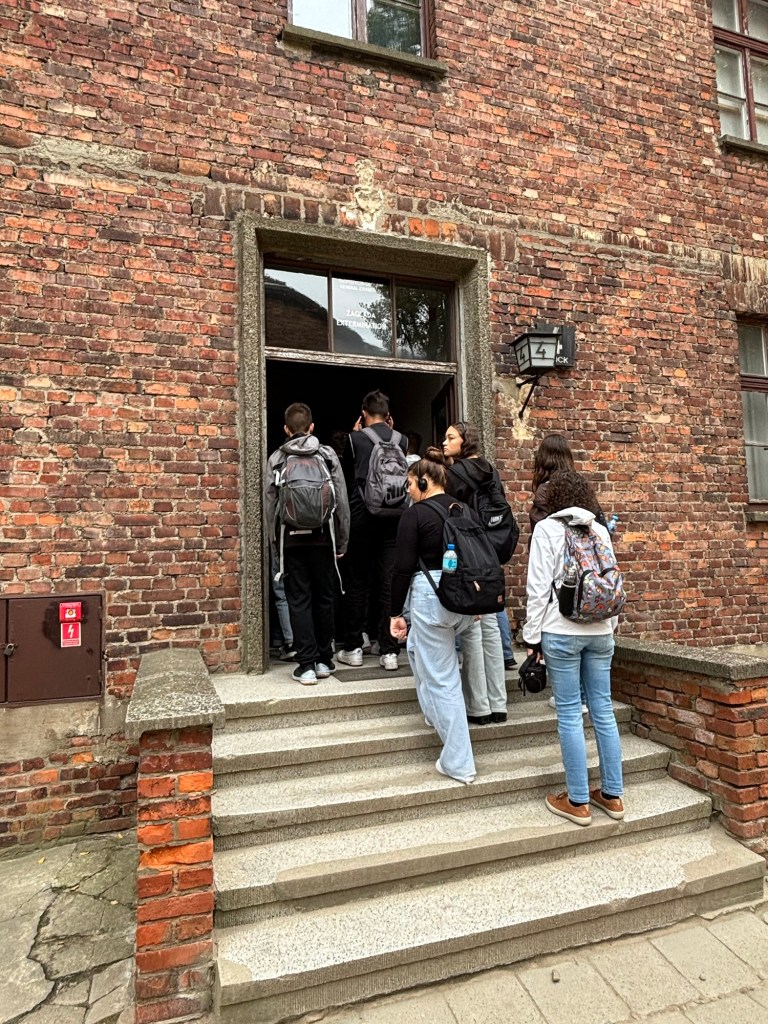
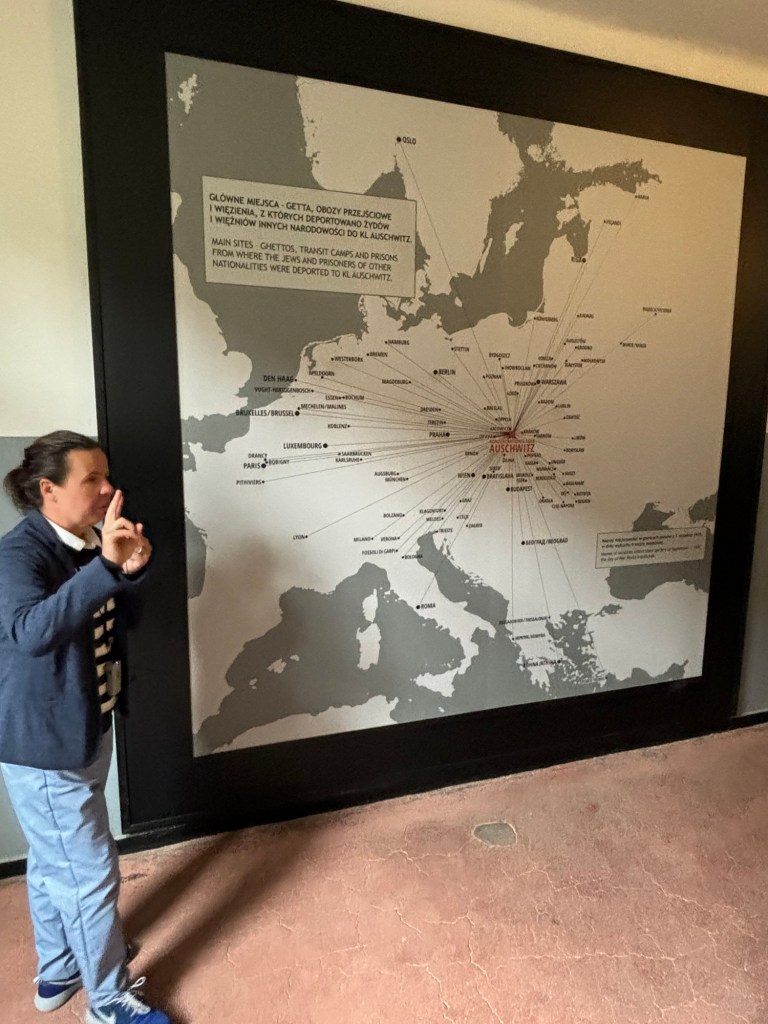
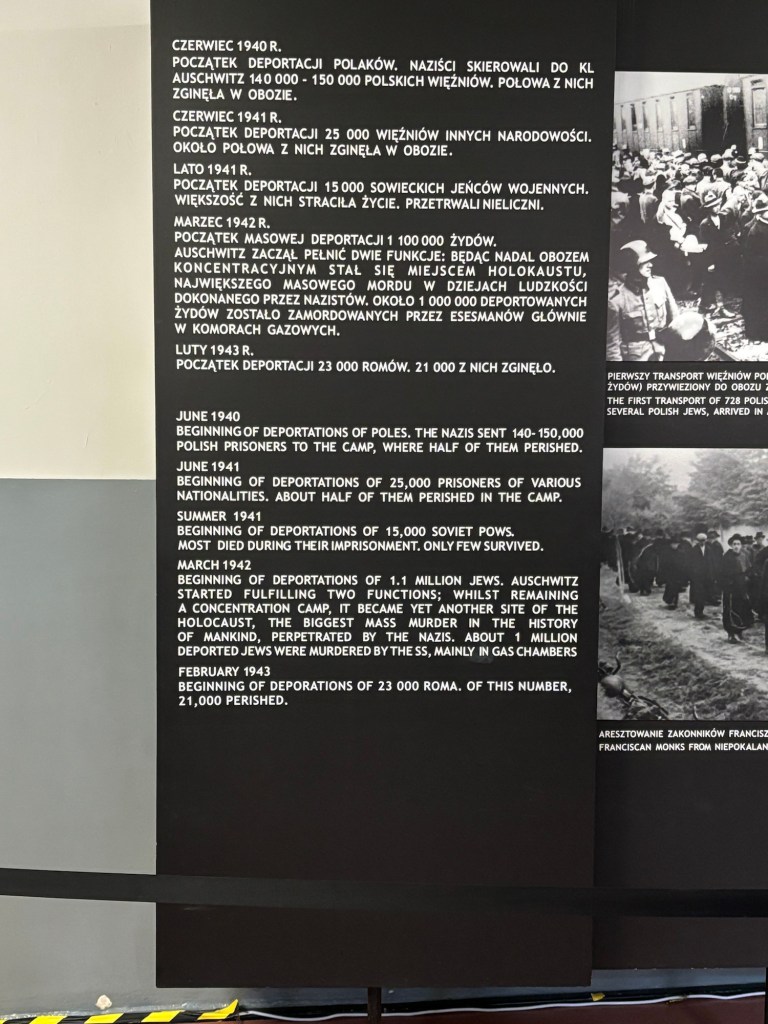
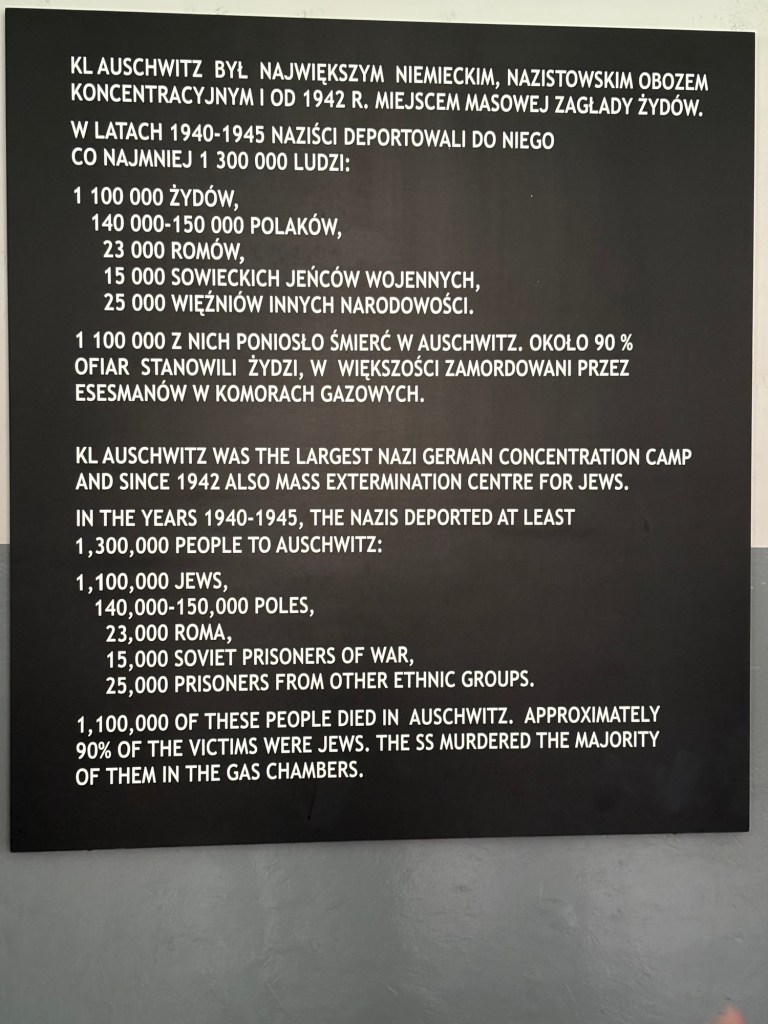
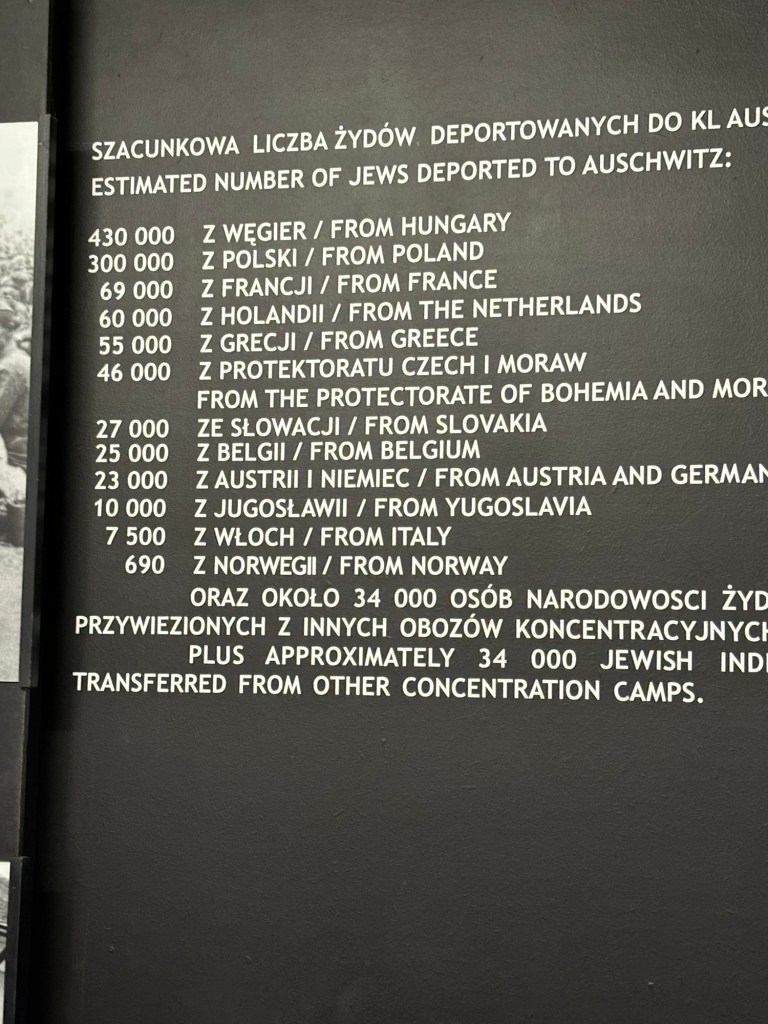
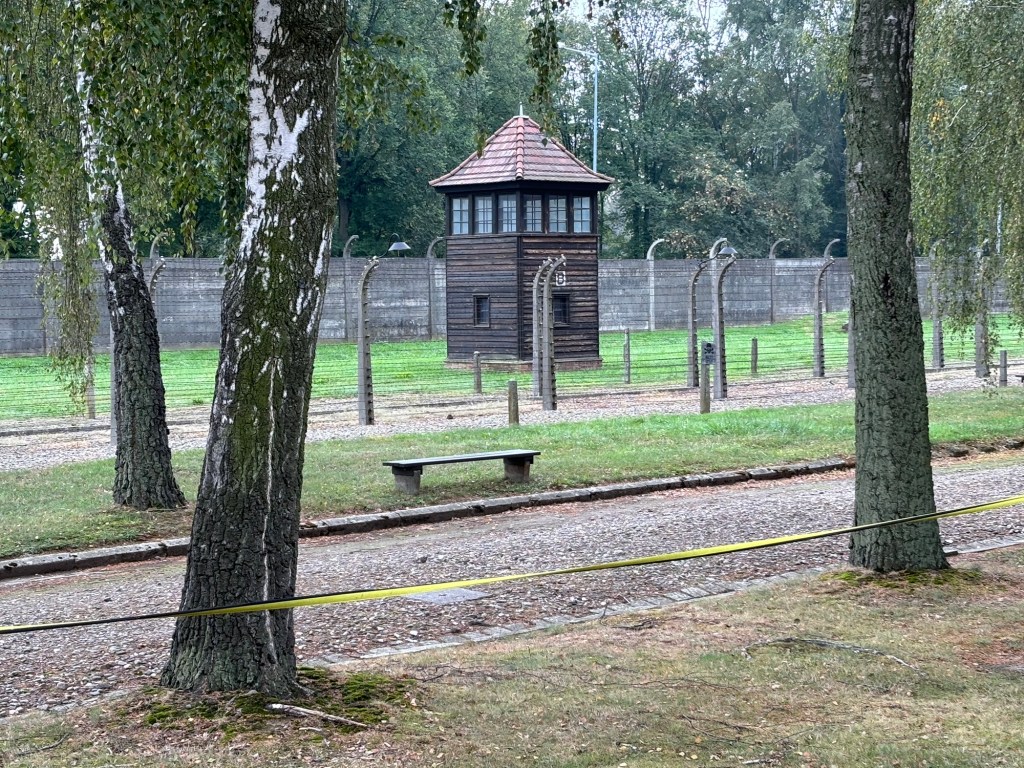
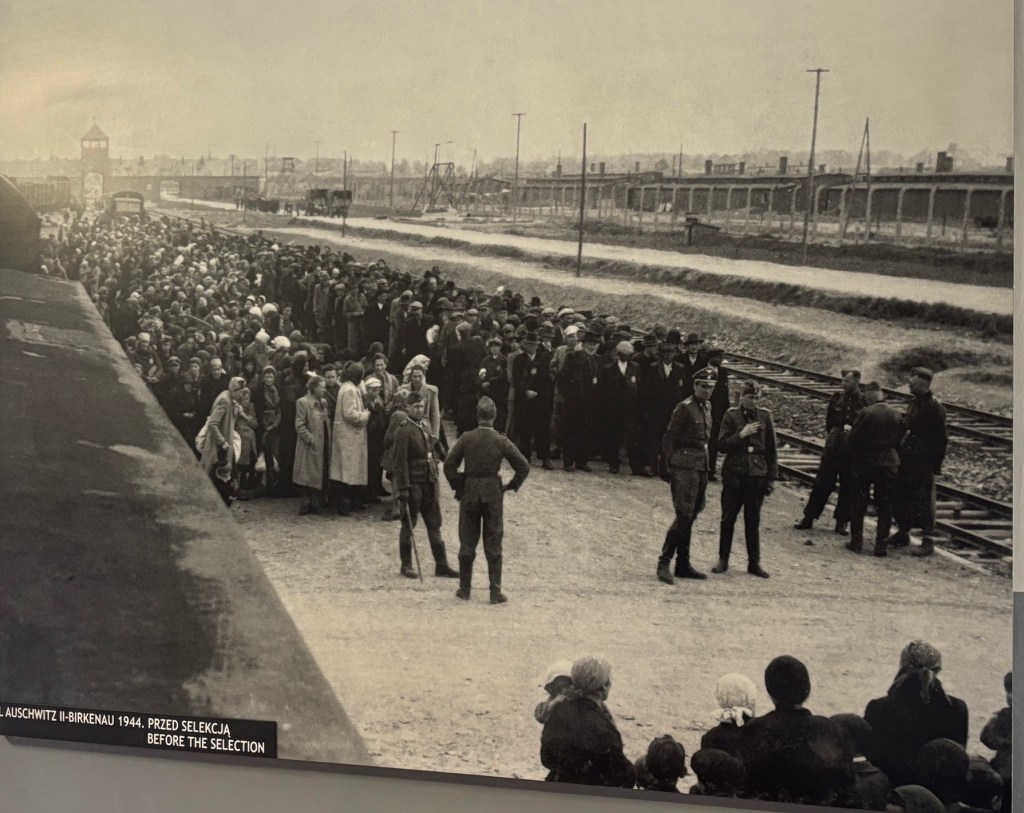
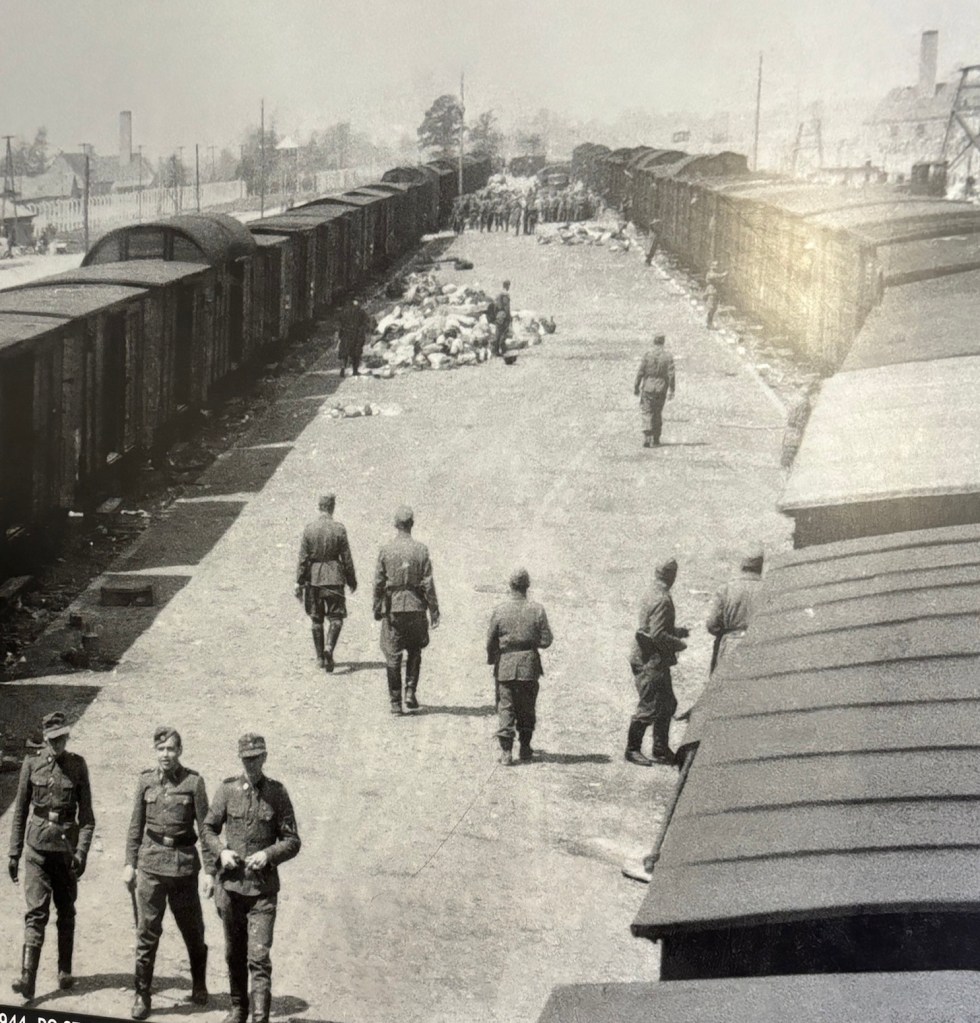
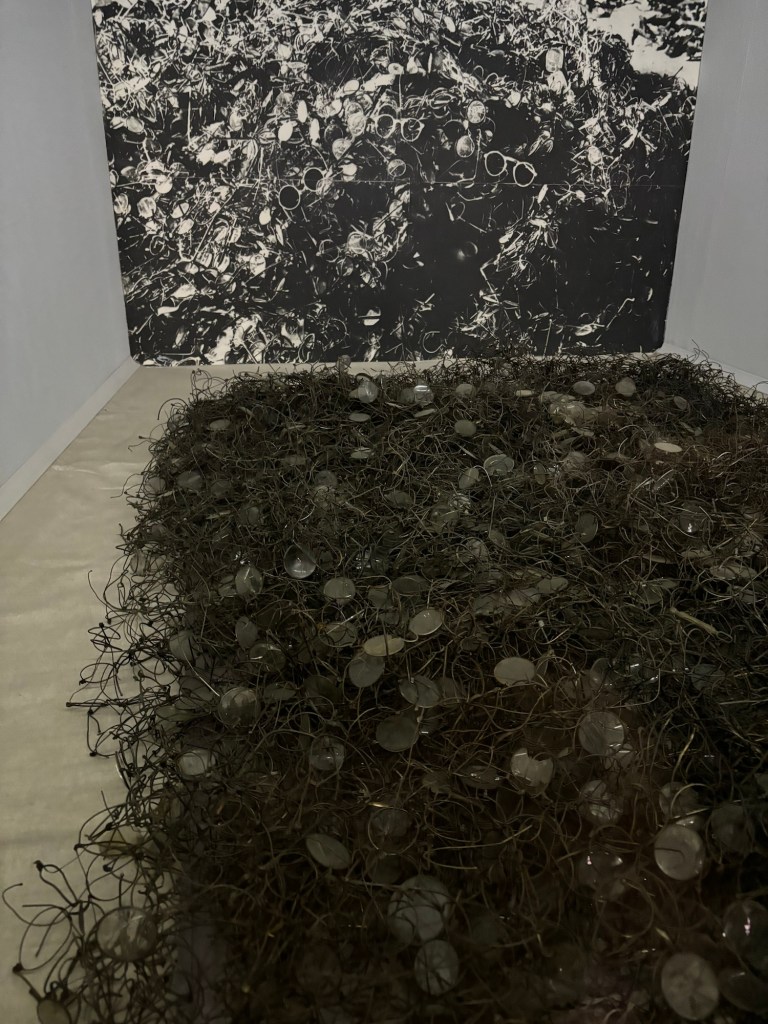
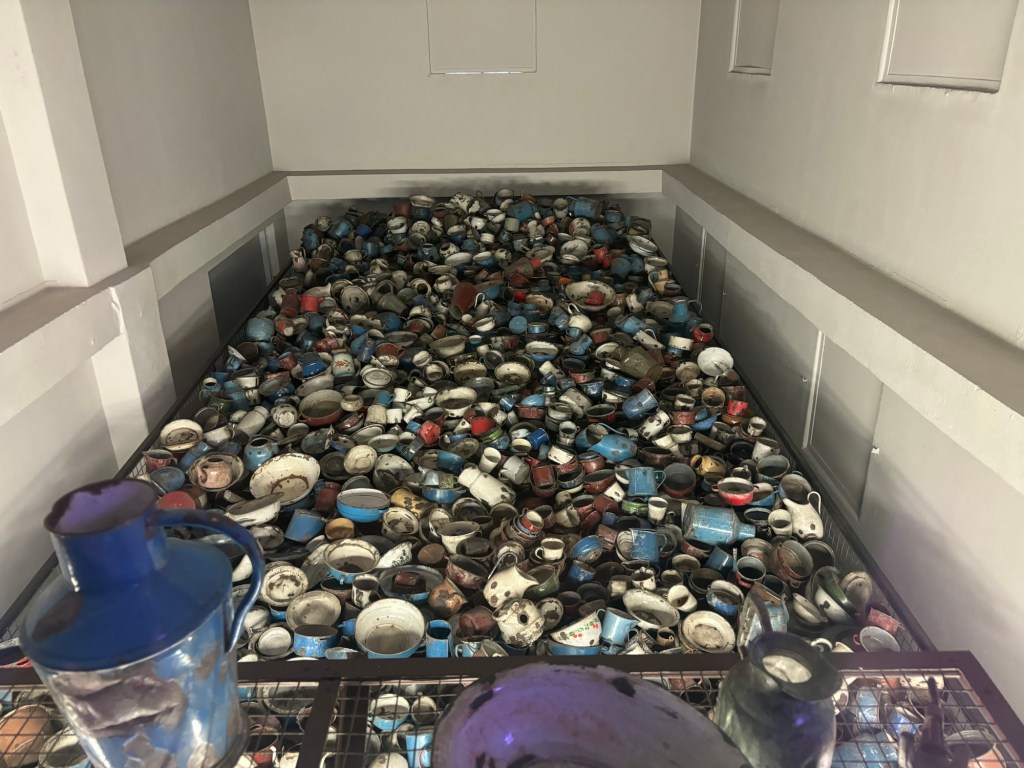
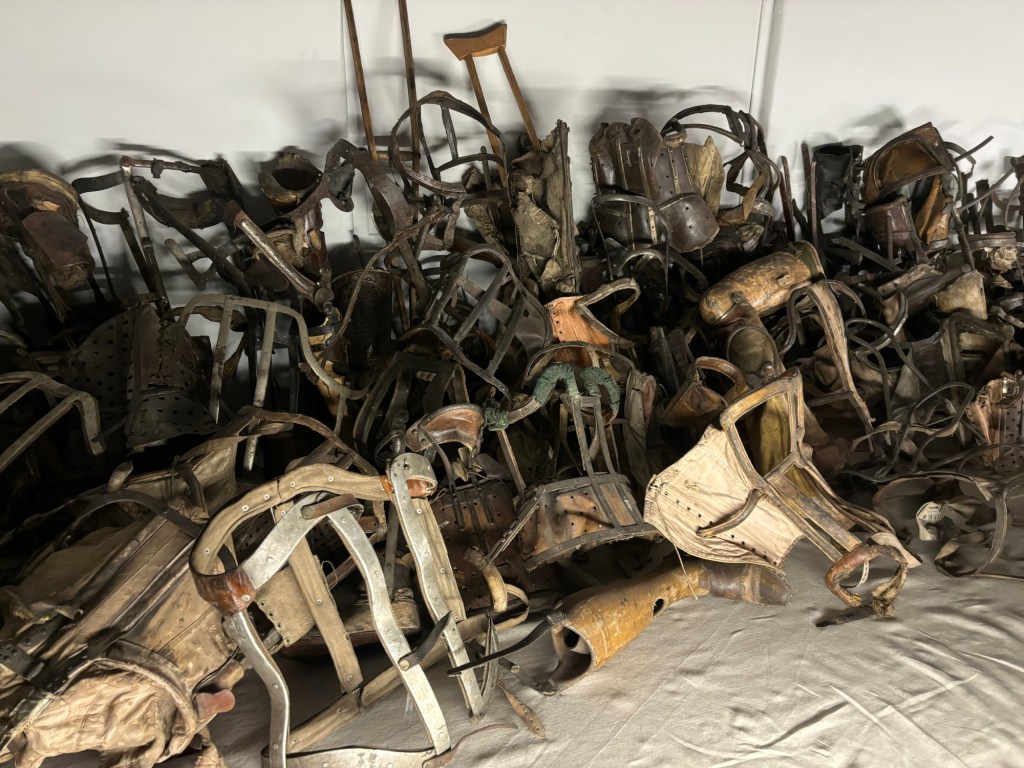
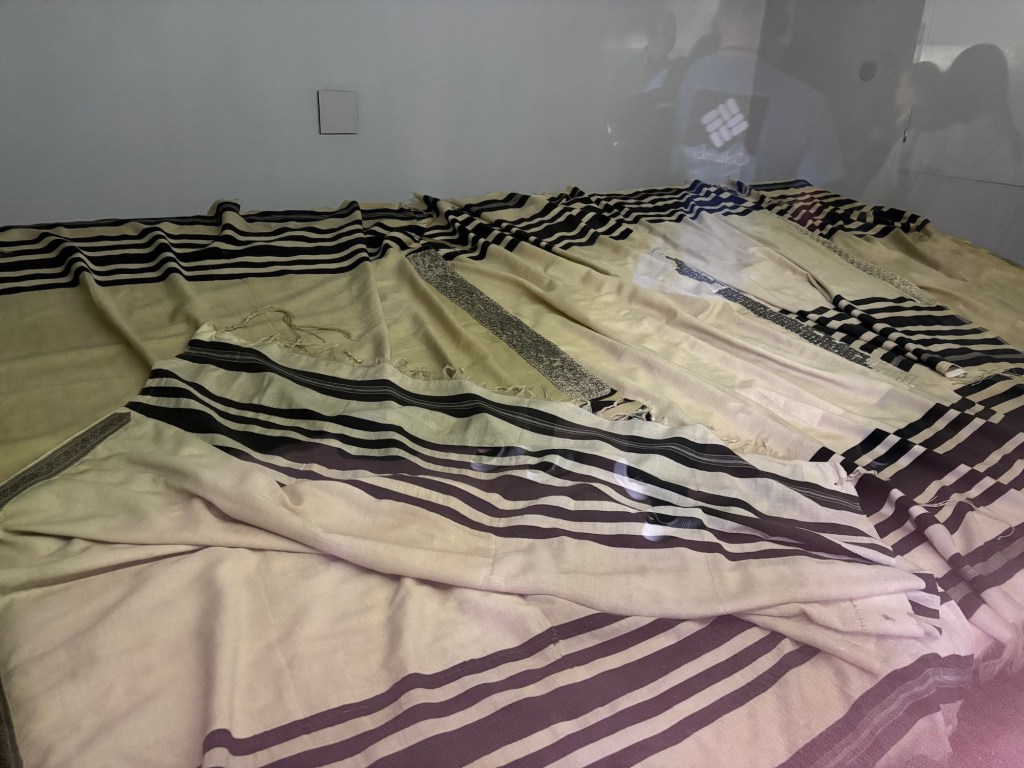
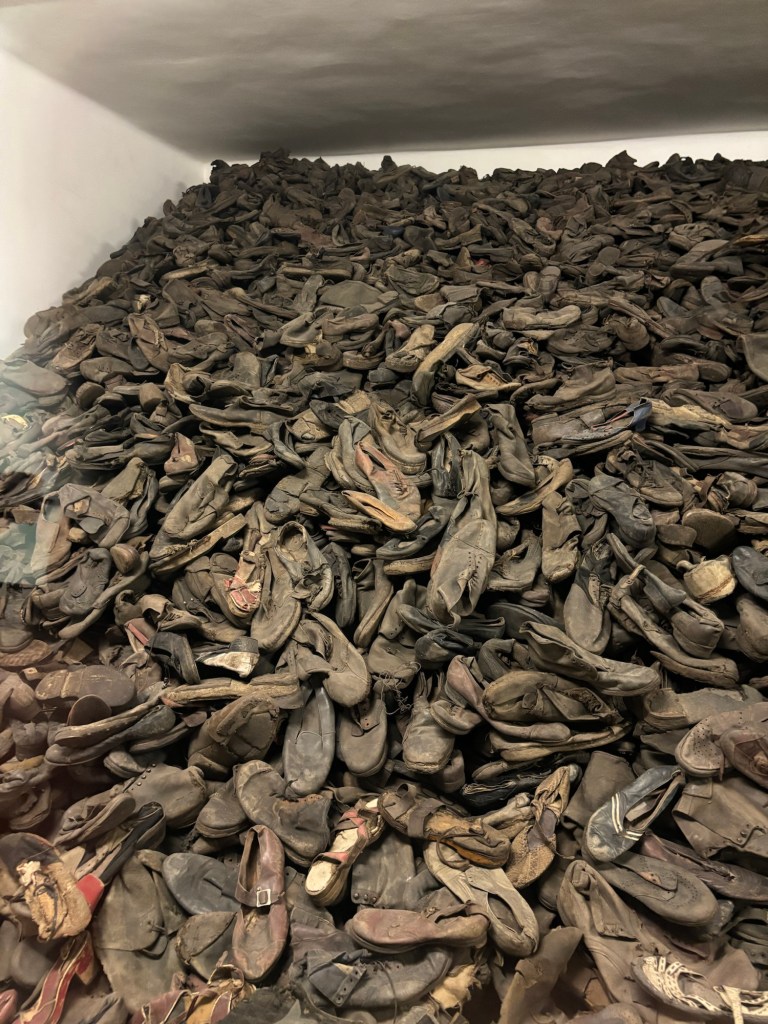
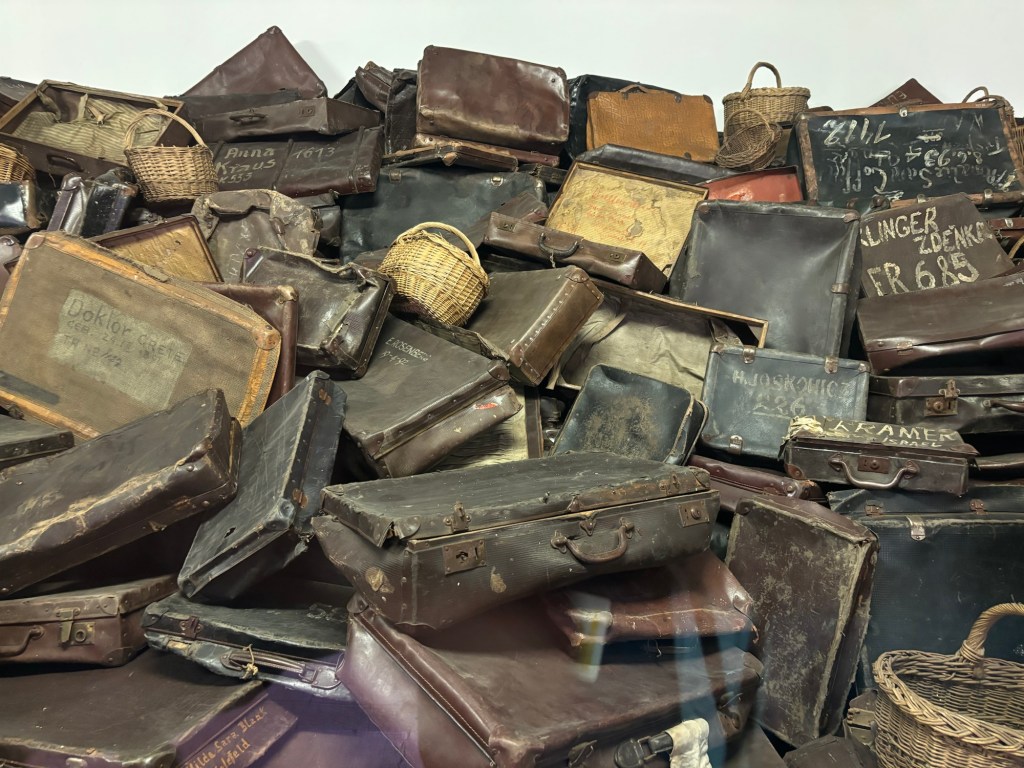
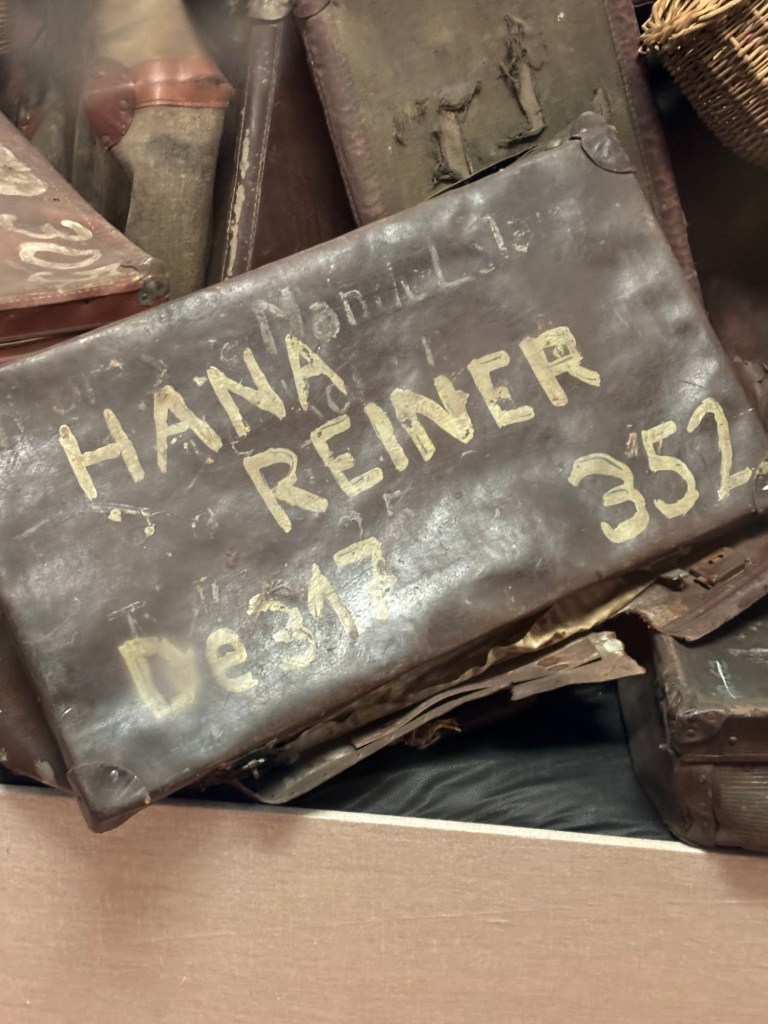
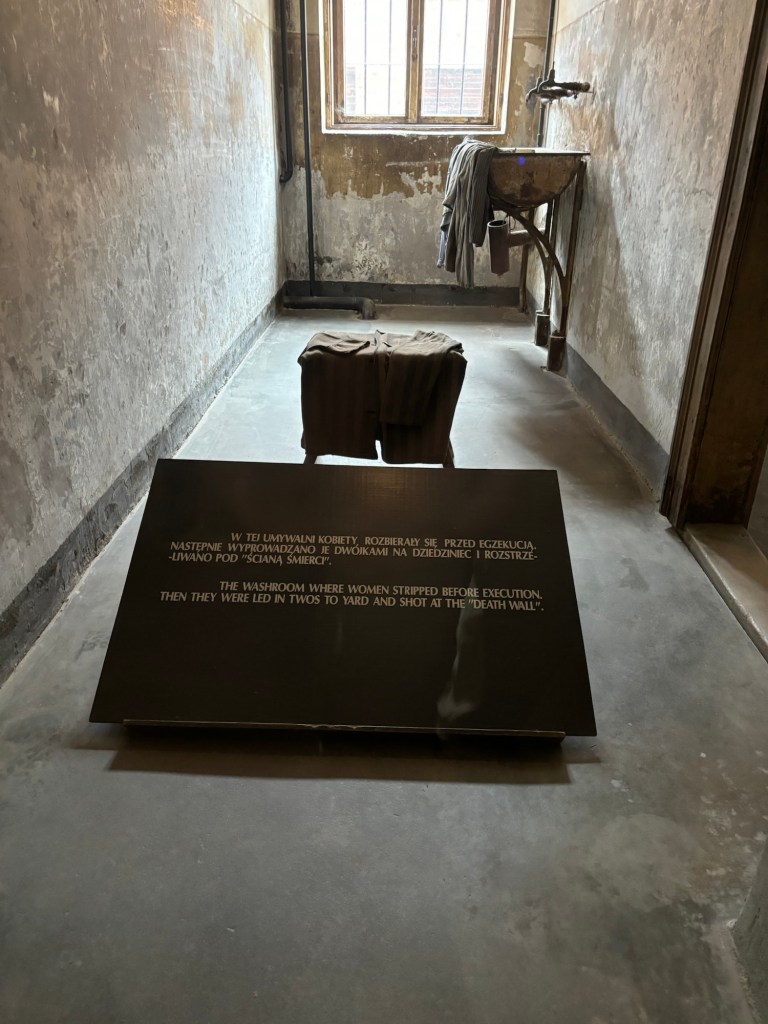
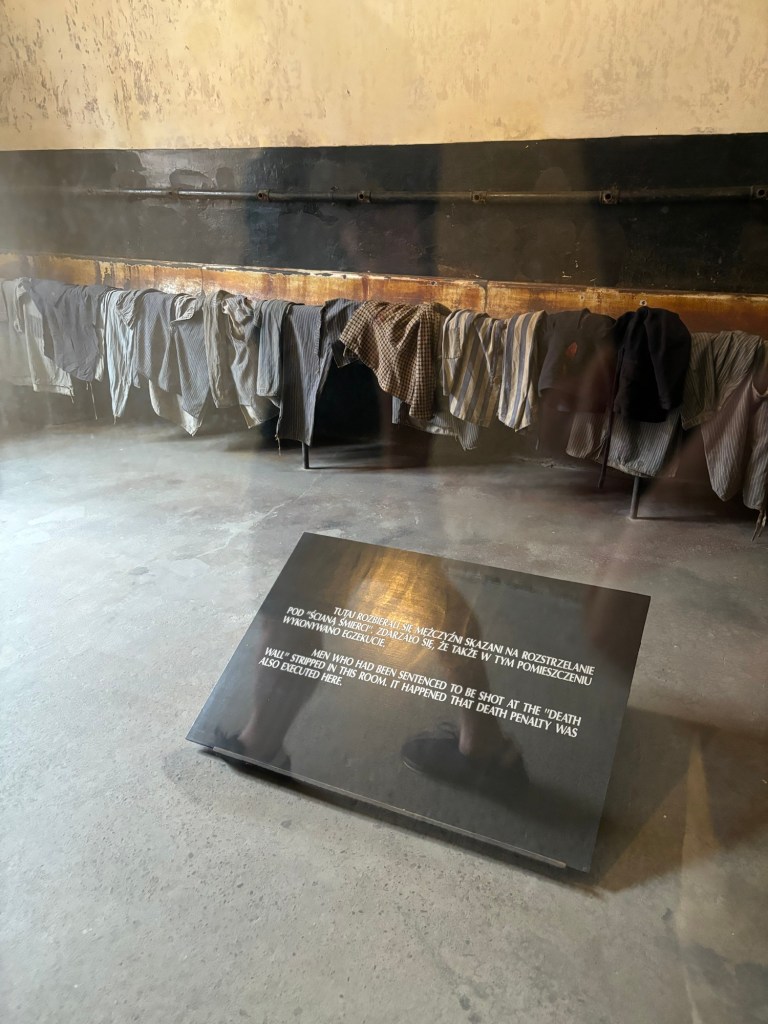
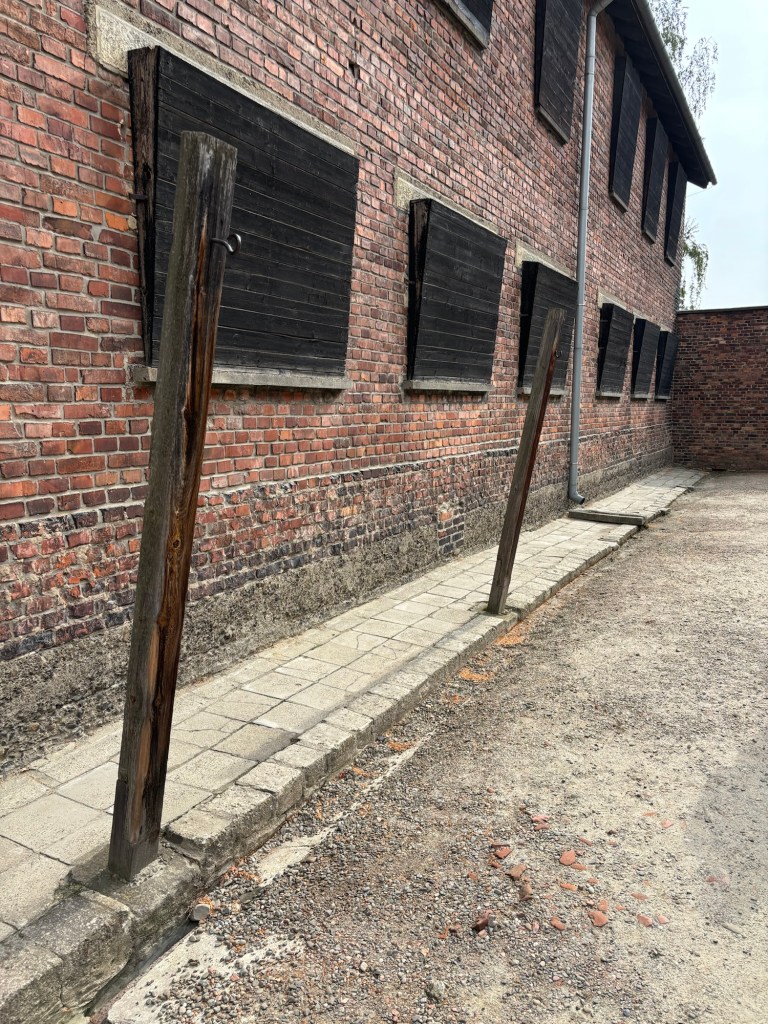
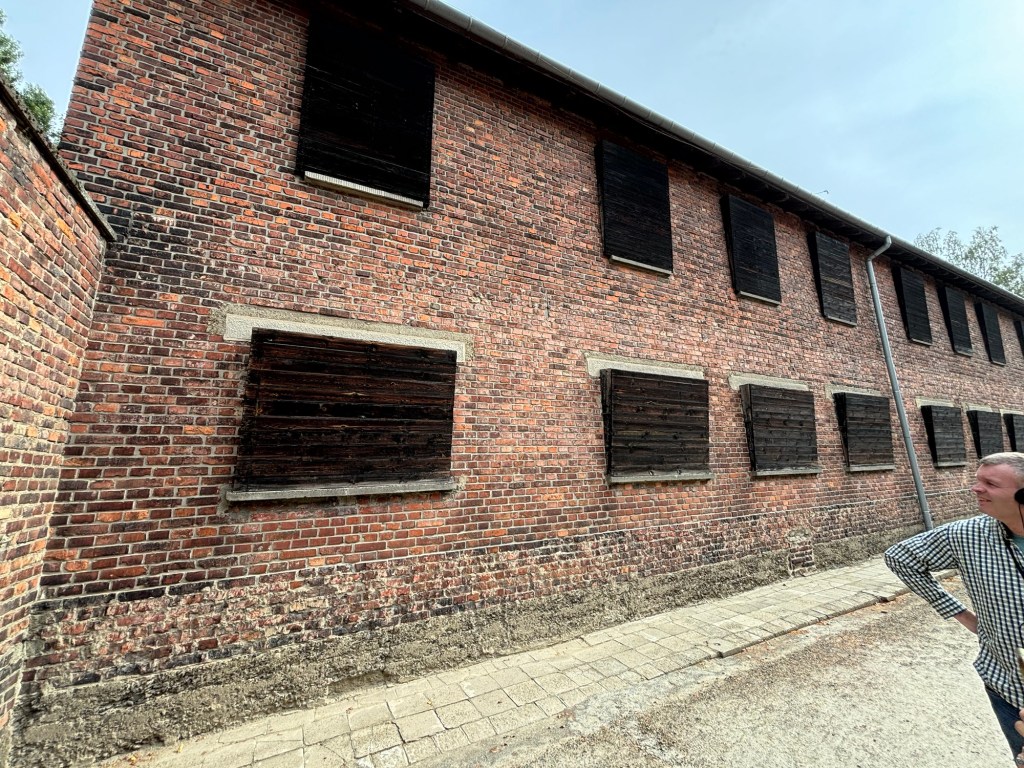
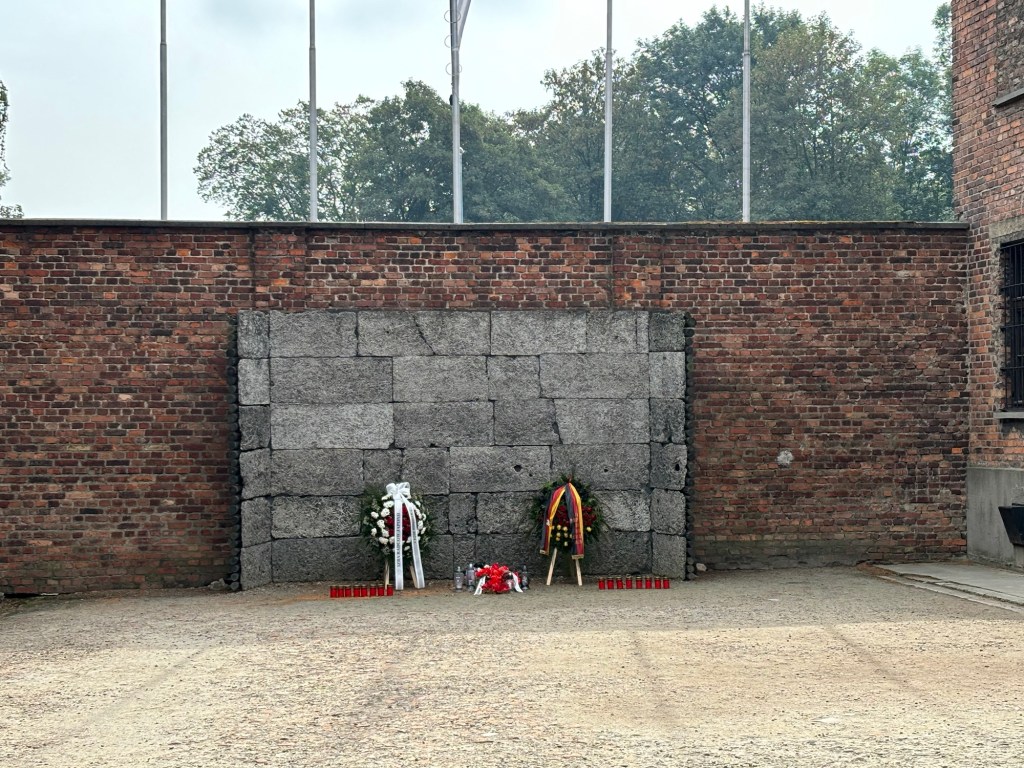
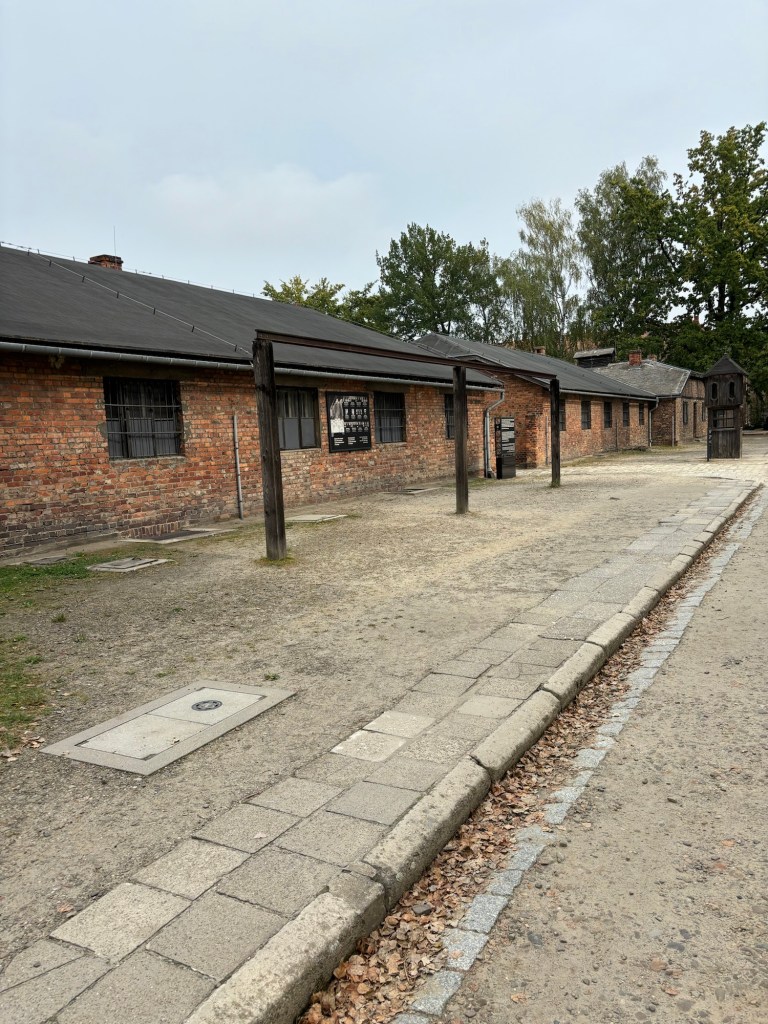
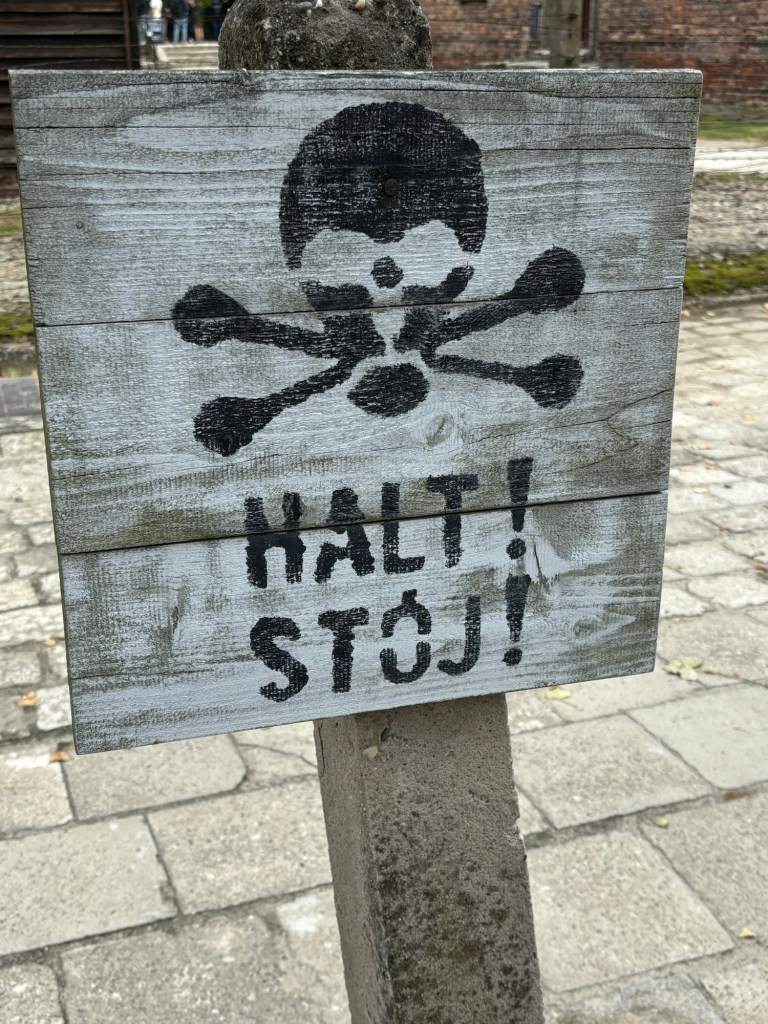
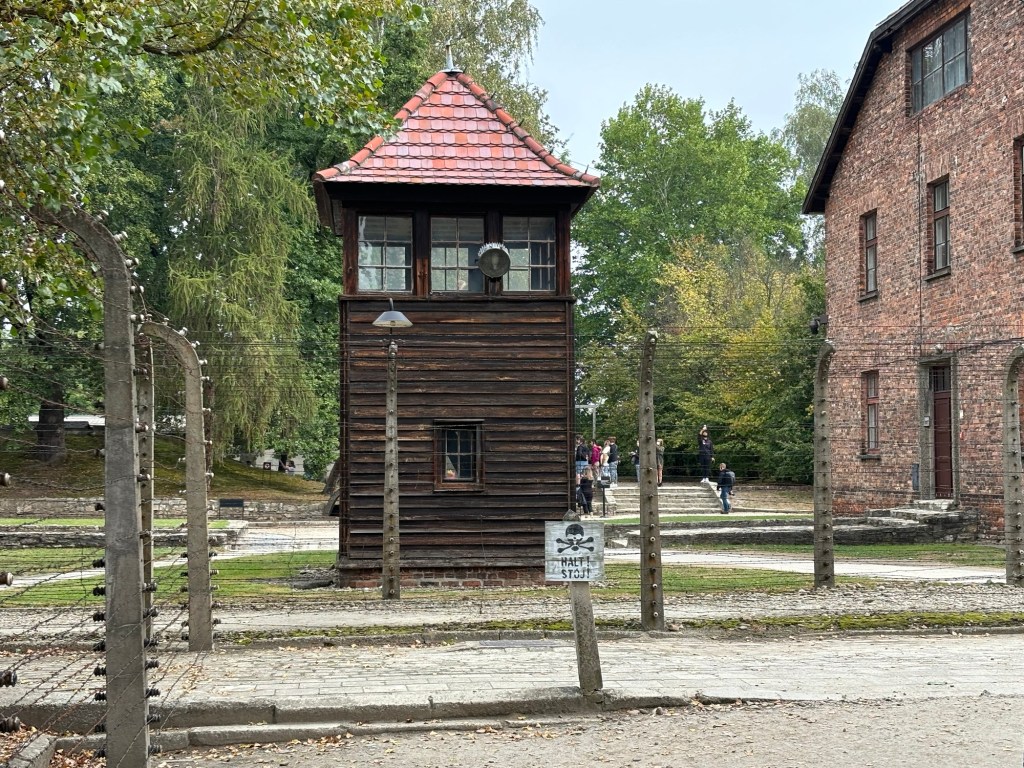
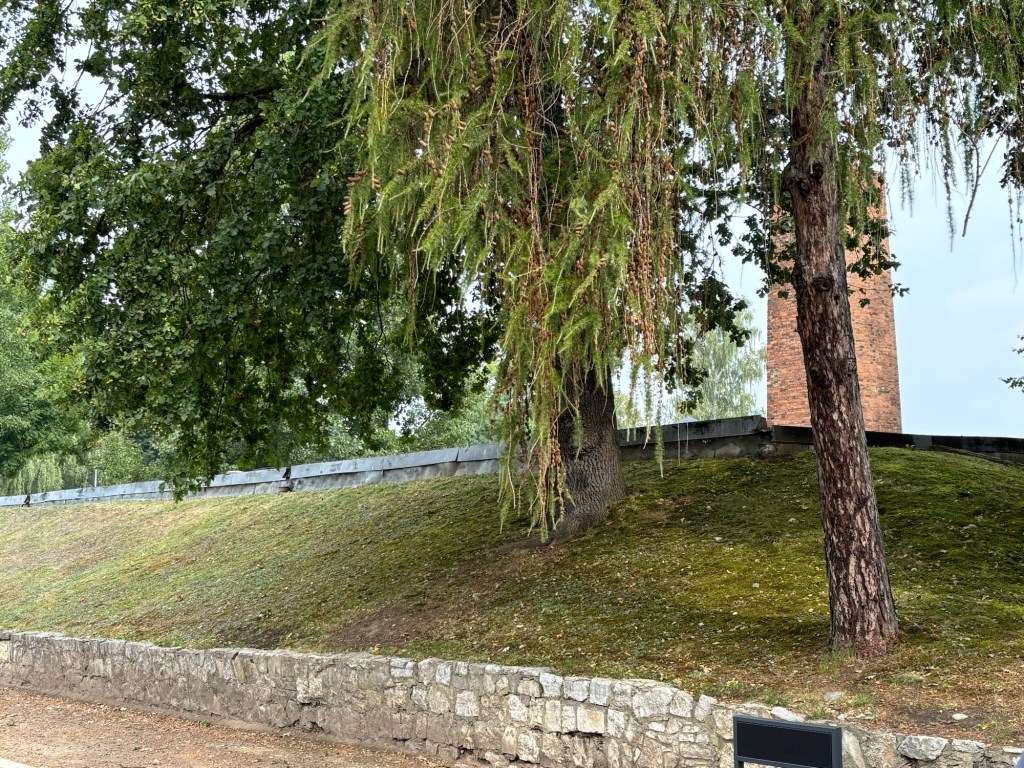
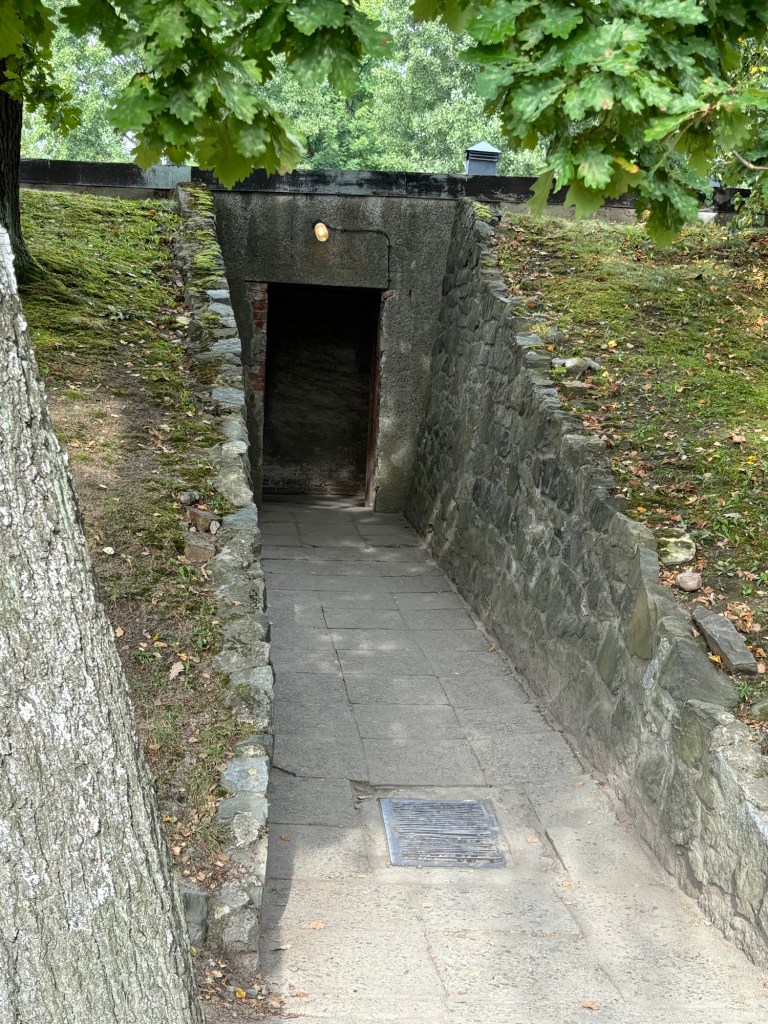
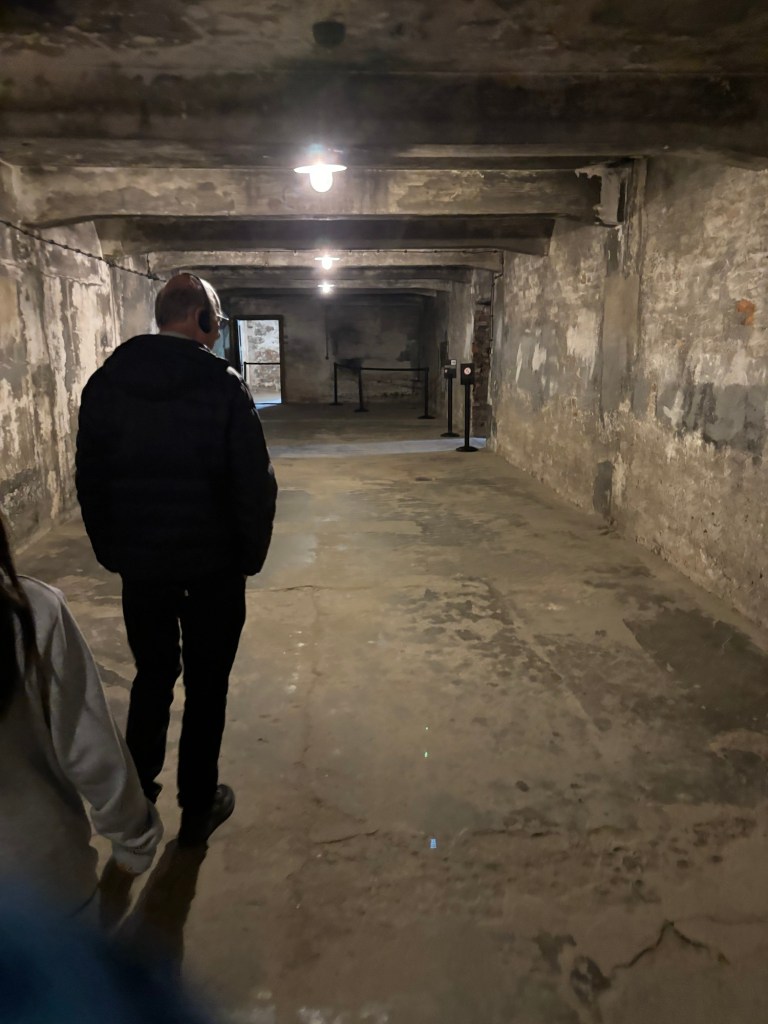
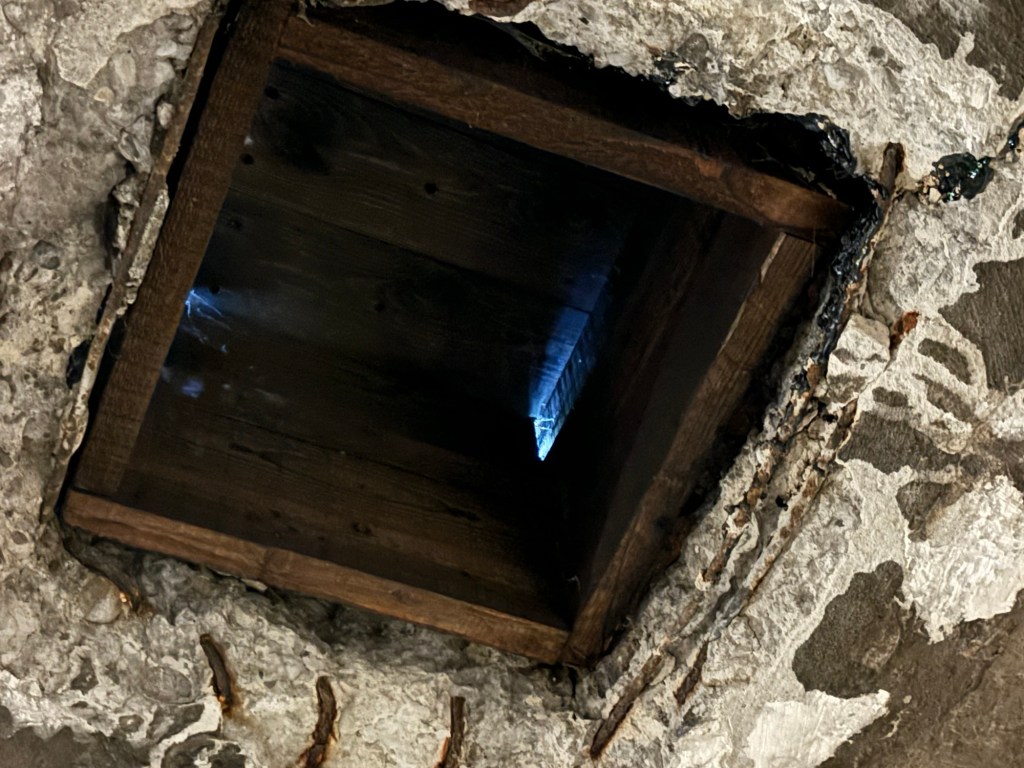
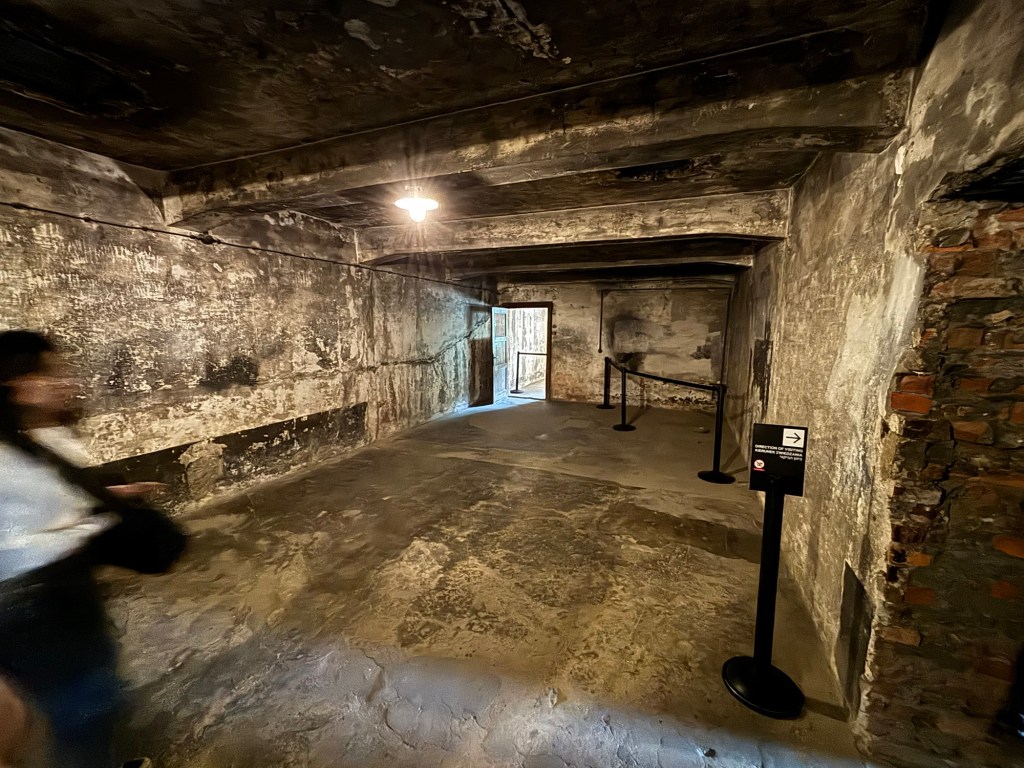
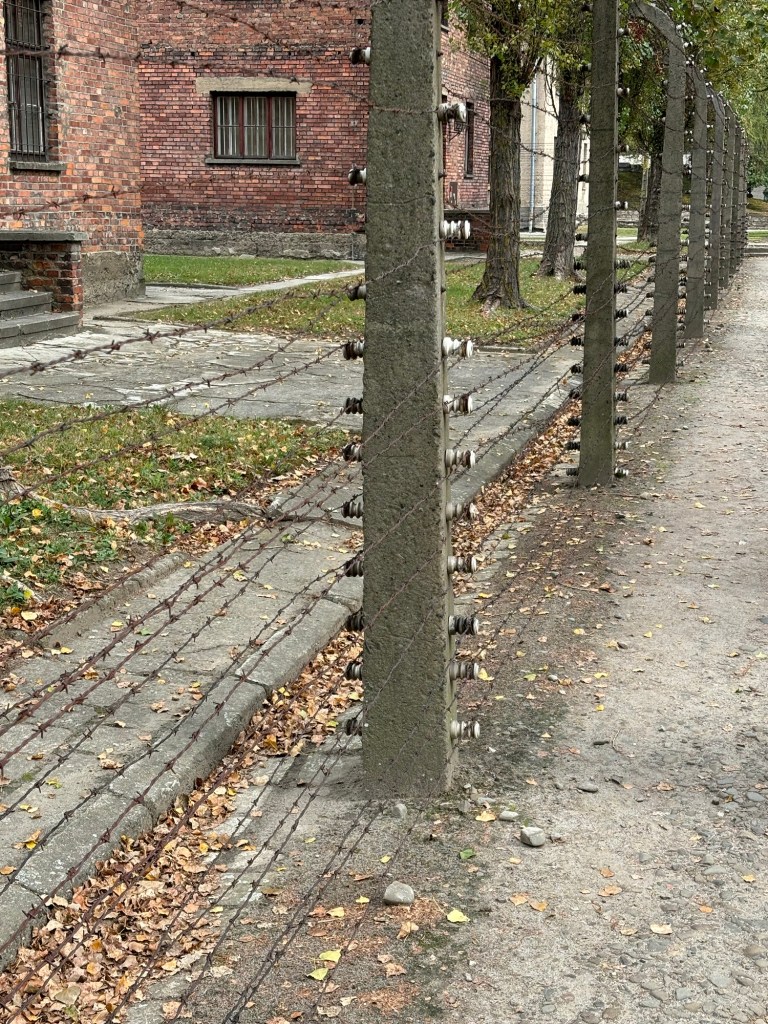
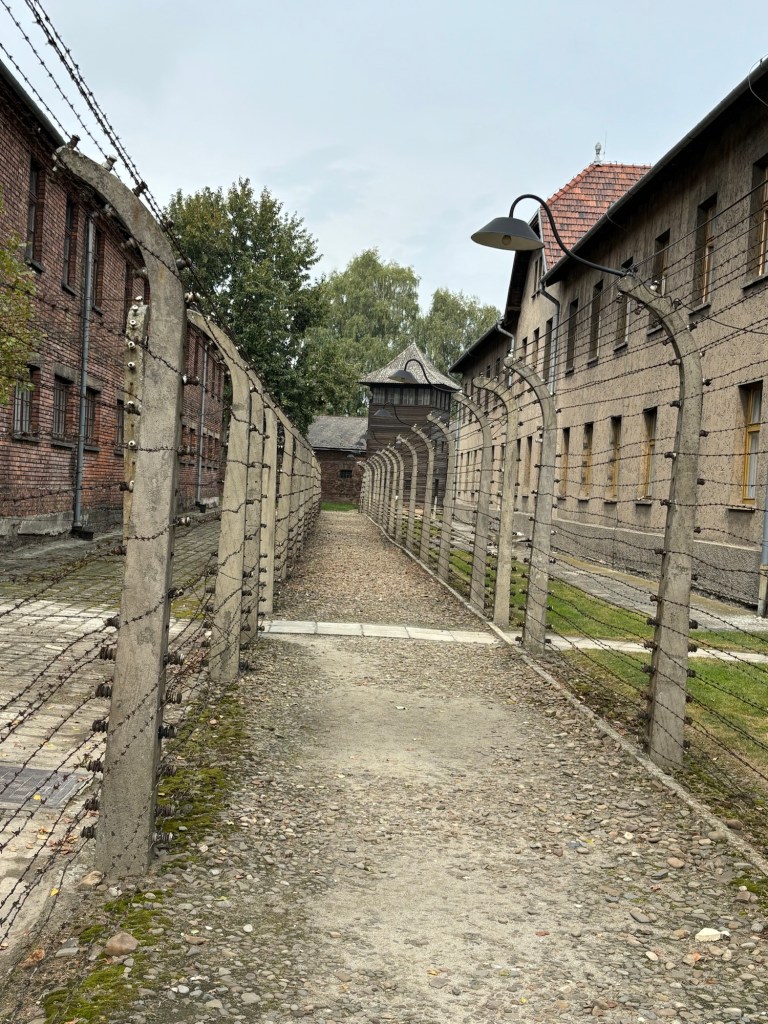
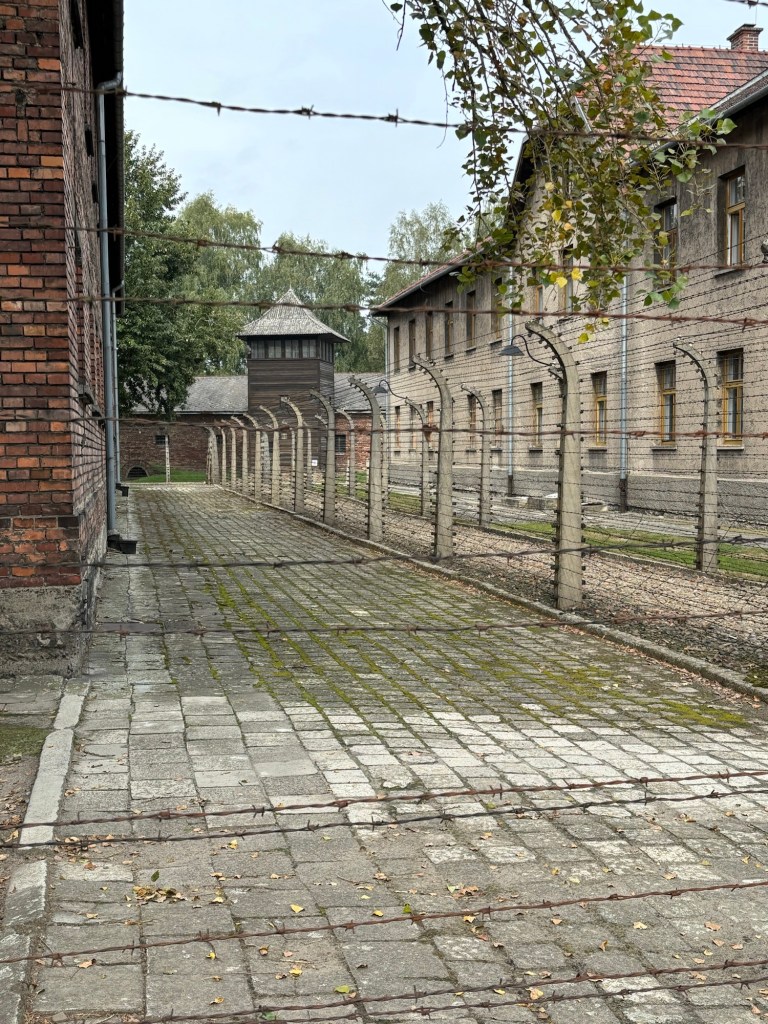
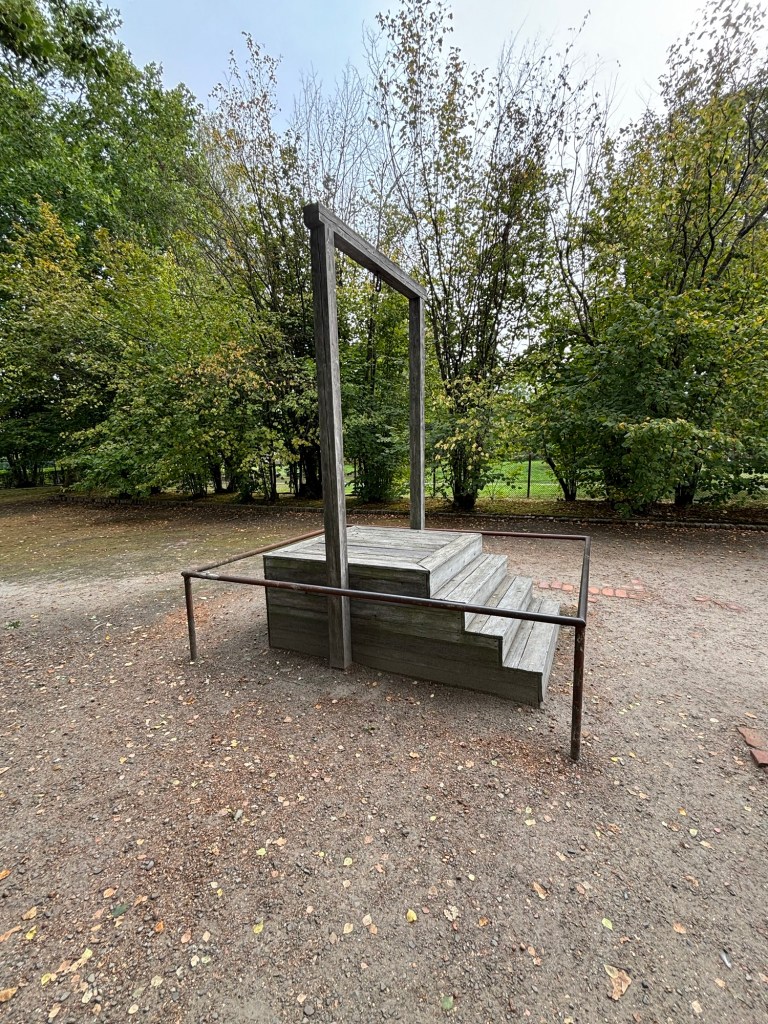
16 April 1947. (Adjacent to the Auschwitz gas chamber)
Next we re-boarded our bus for a 5-minute drive to the Birkenau part of the memorial and museum.
BIRKENAU (or Auschwitz 2)
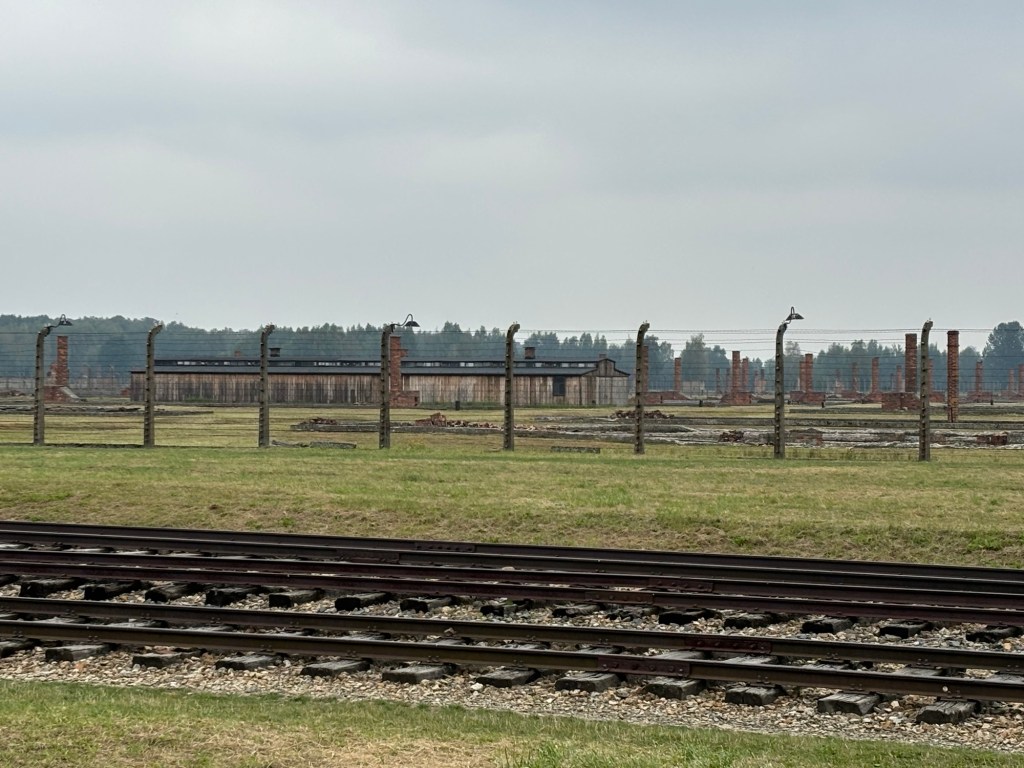
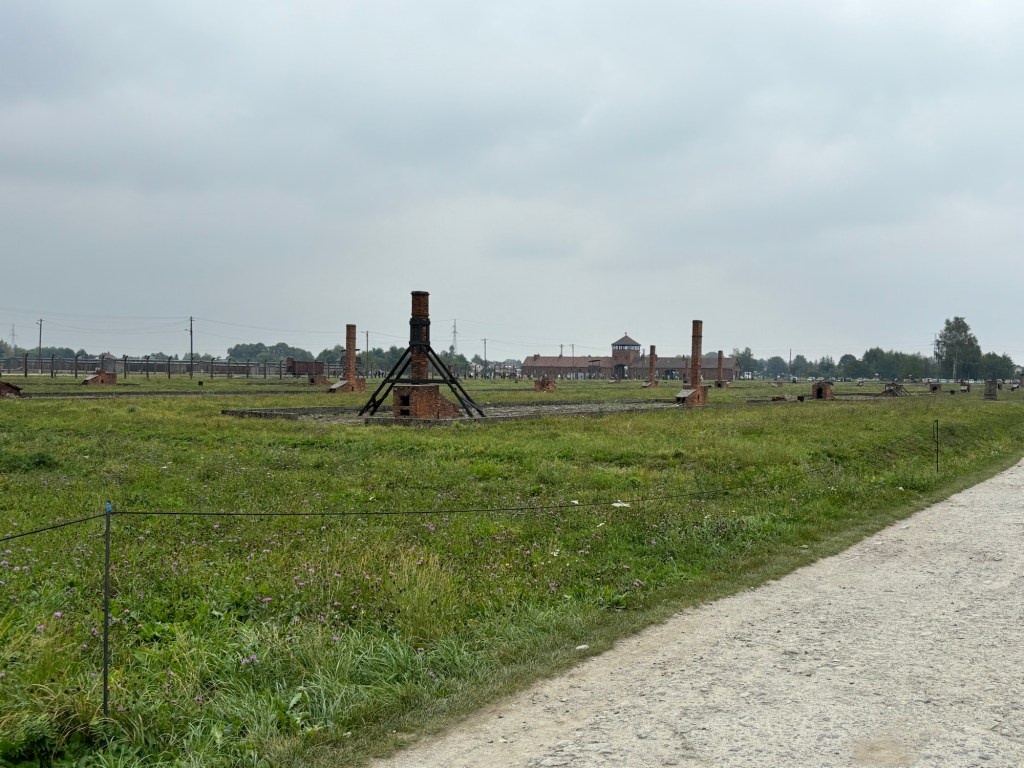
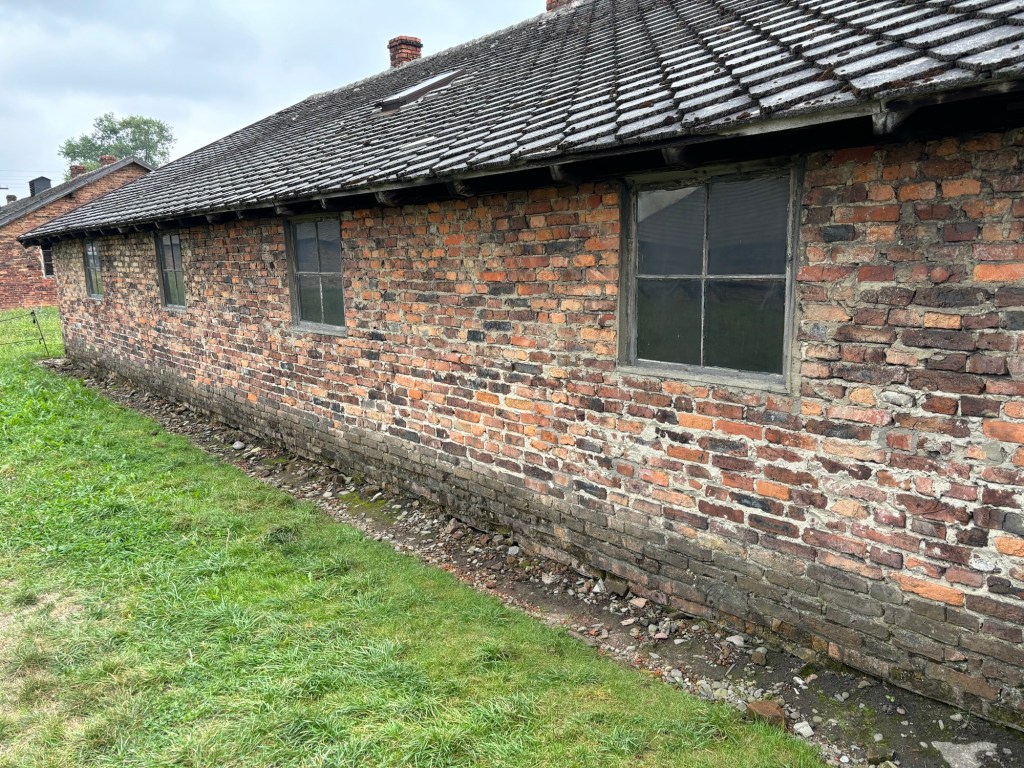
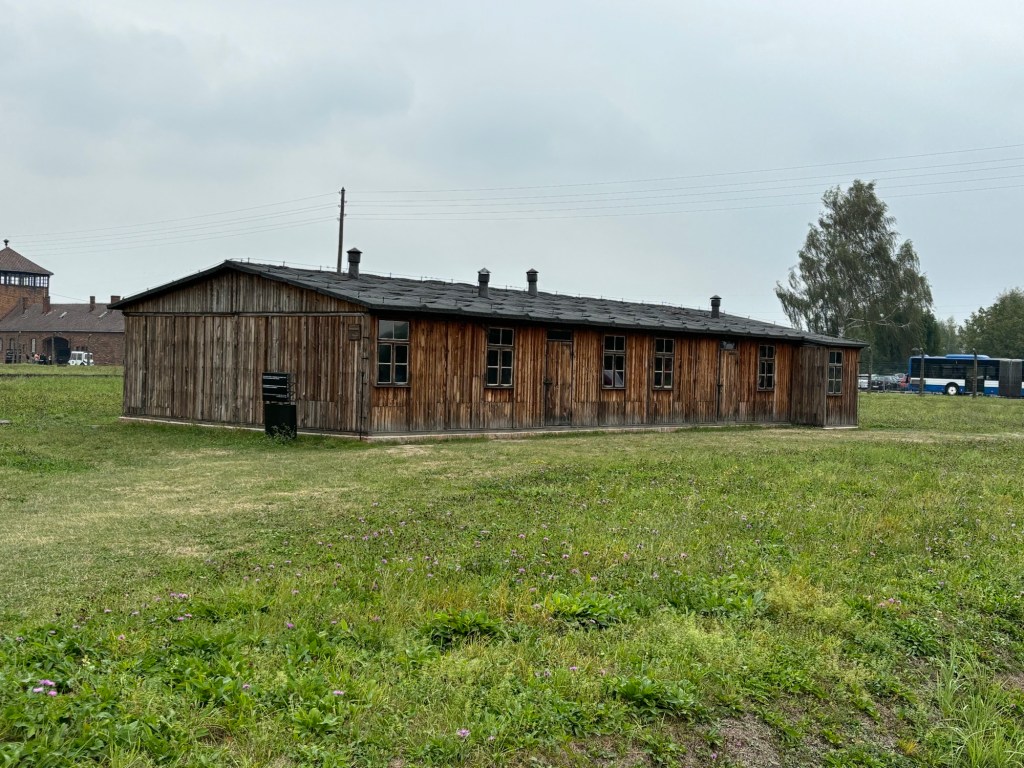
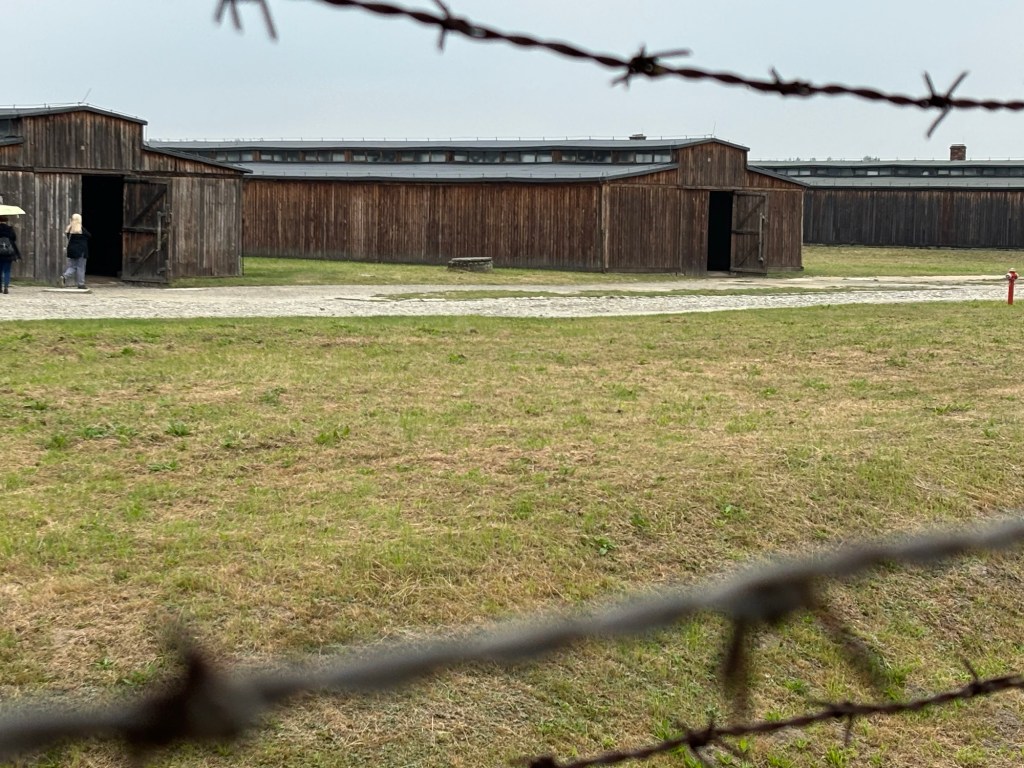
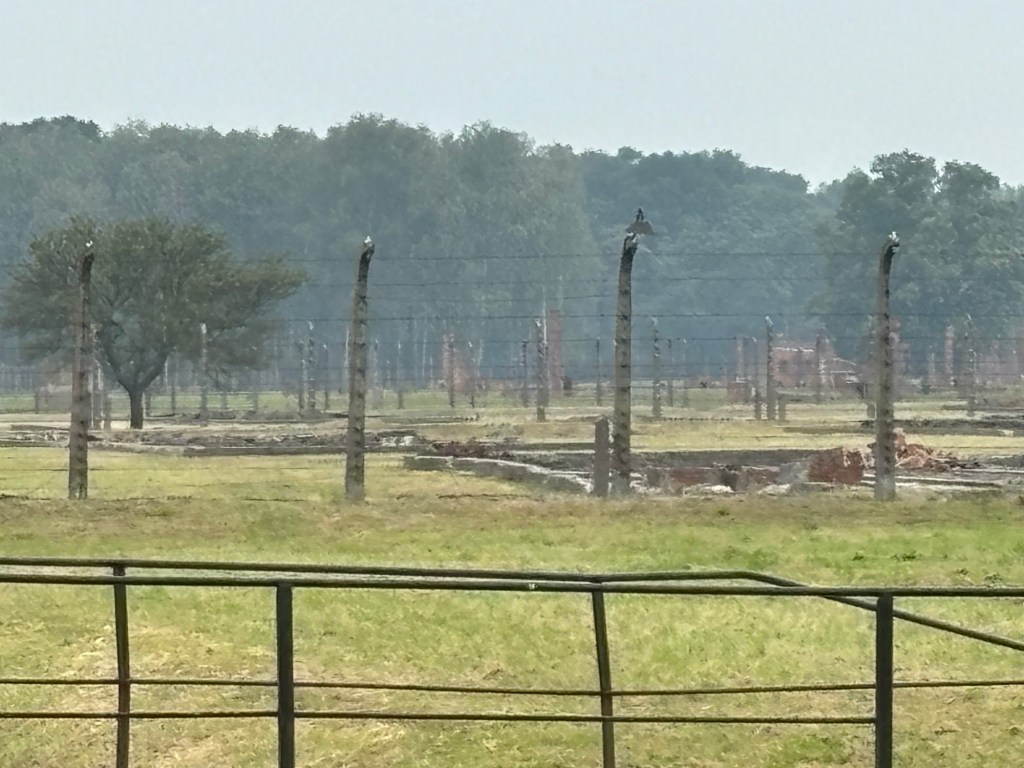
This camp was massive as compared to Auschwitz proper. It was built over three years and designed to hold 200,000 people at a time! The prisoners built 300 barracks. There was not enough time or materials to build the other 300 planned barracks. And the living conditions were much worse at Birkenau. Only 20 wood barracks remain of the almost 250 built.
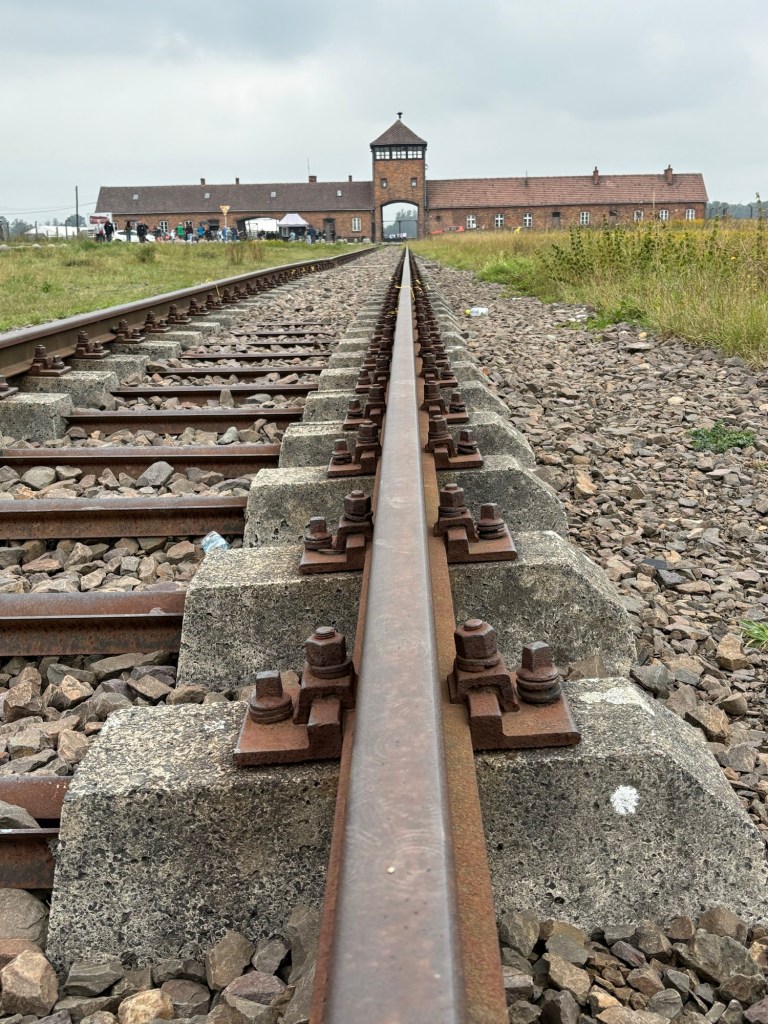
When trains came through the iconic Birkenau gate, the people would dismount along the railway. Nazi SS doctors faced the people as they were lined up parallel to the tracks. The people they waved to the doctor’s right (left side of the disembarked passengers went to barracks and LIVED, at least for a short term until they outlived their usefulness).
The people they selected to move to the doctor’s left (the right side of the disembarked) went to gas chambers! They were the women, children, young teens, the old, and the disabled. In other words, those who were not useful to the Third Reich.
There were so many deaths that the prisoners sometimes had to burn up to 2,000 corpses at a time in one pile, especially since Birkenau had four gas chambers.
Other Information
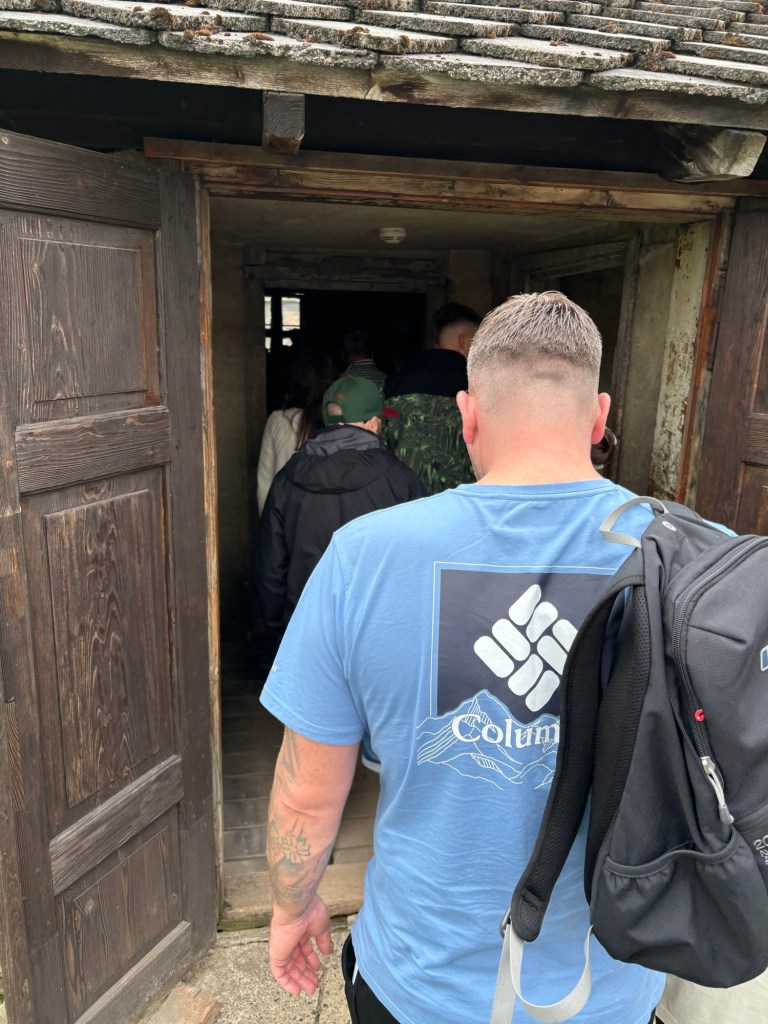
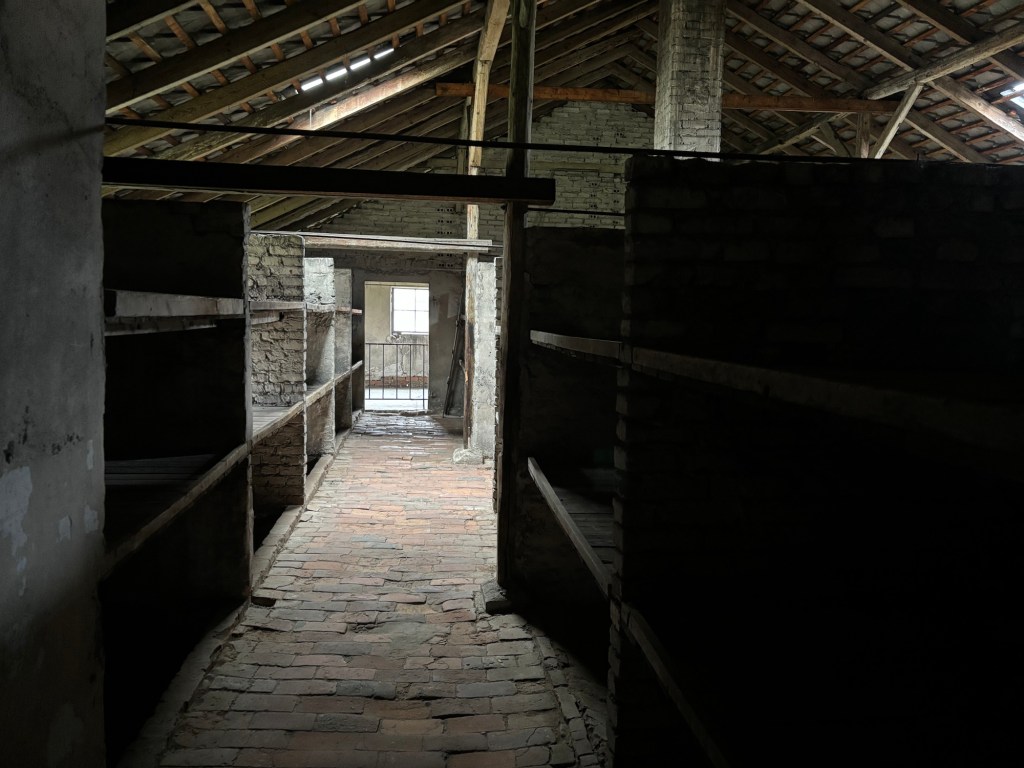
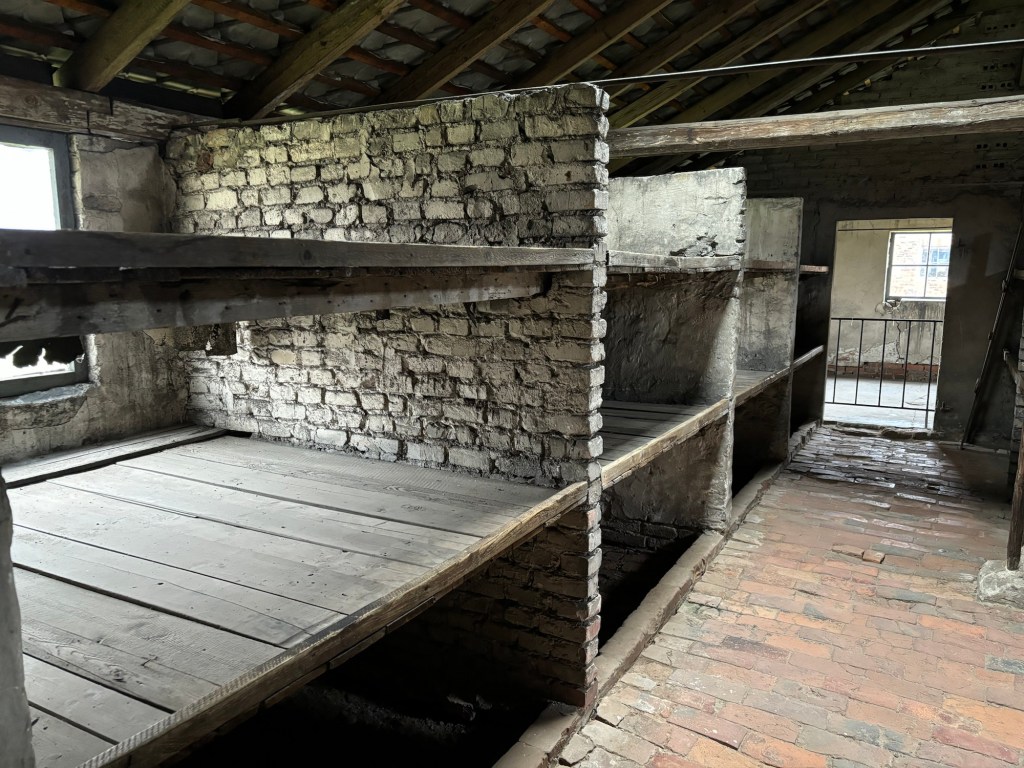
- The wooden barracks were intended for 70 horses as a stable; but instead housed up to 700 humans.
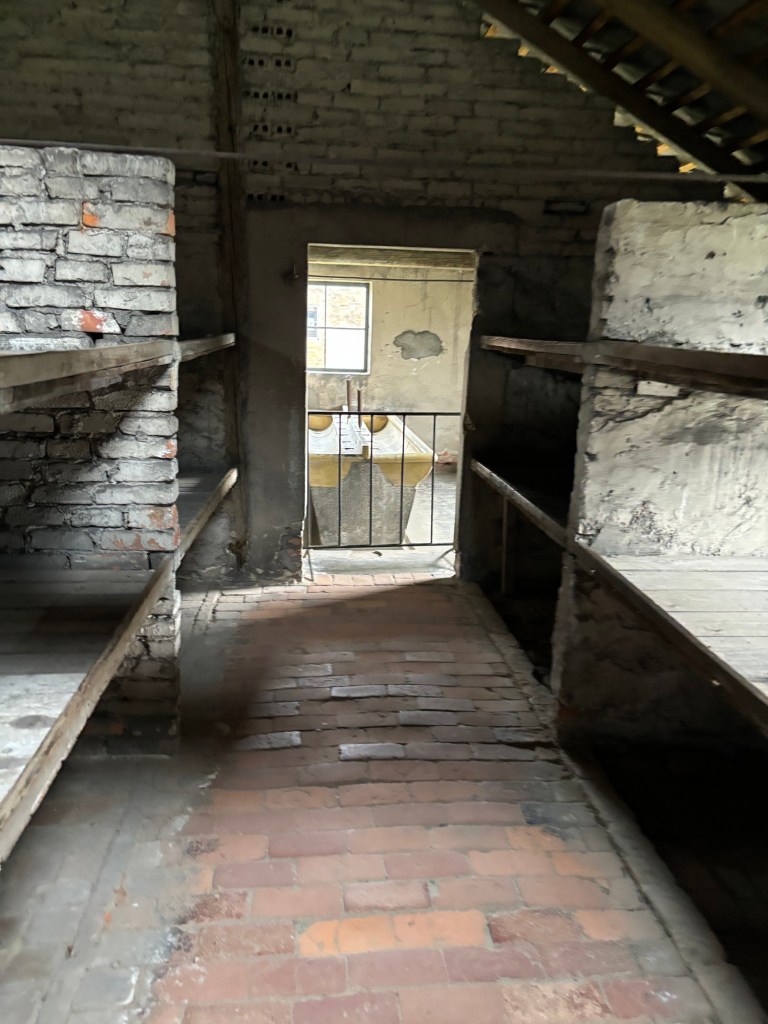
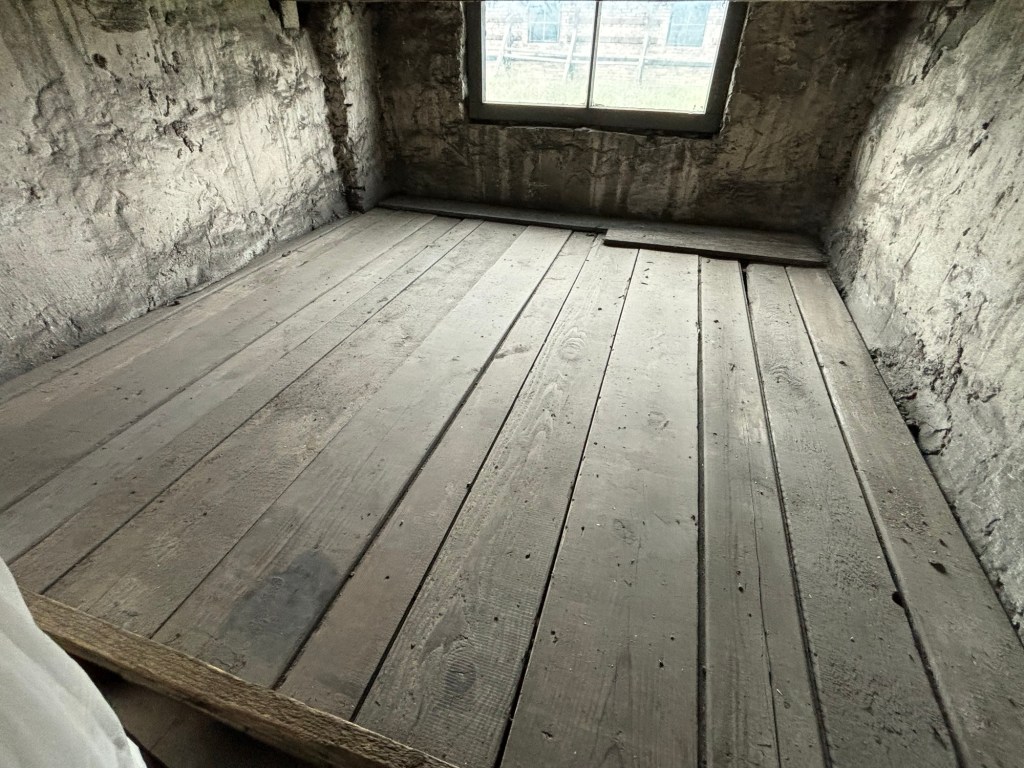
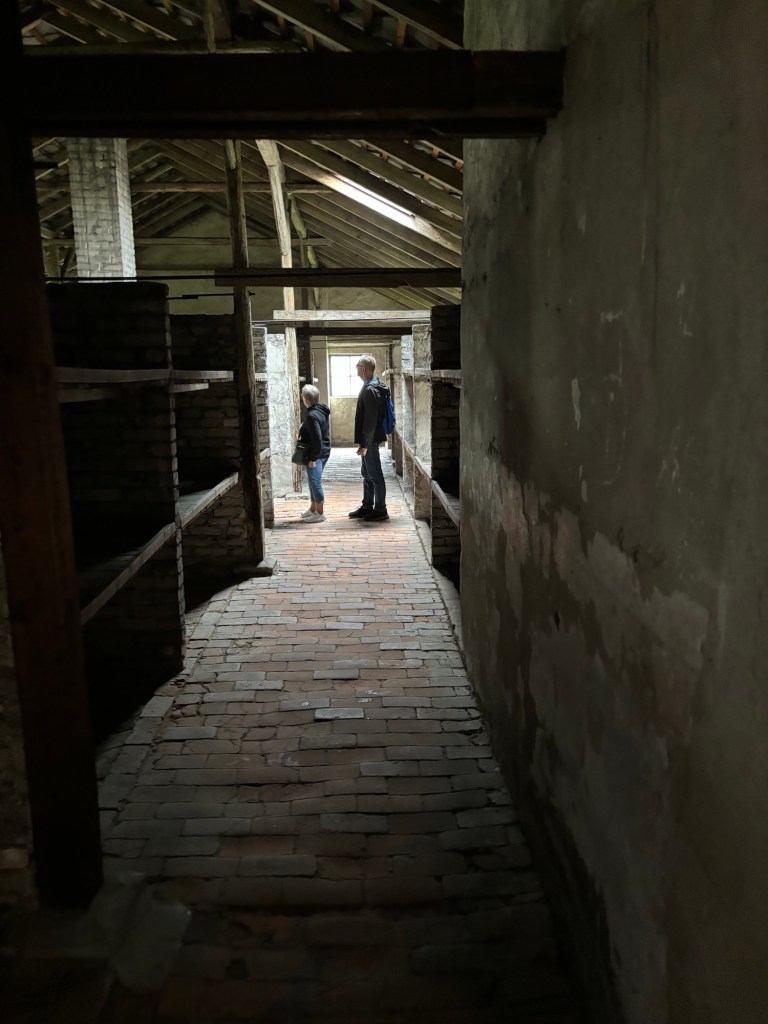
- Each wood rack bed level in the brick barracks was intended for 4 people; 12 total in 3 bunks, but sometimes up to 20!
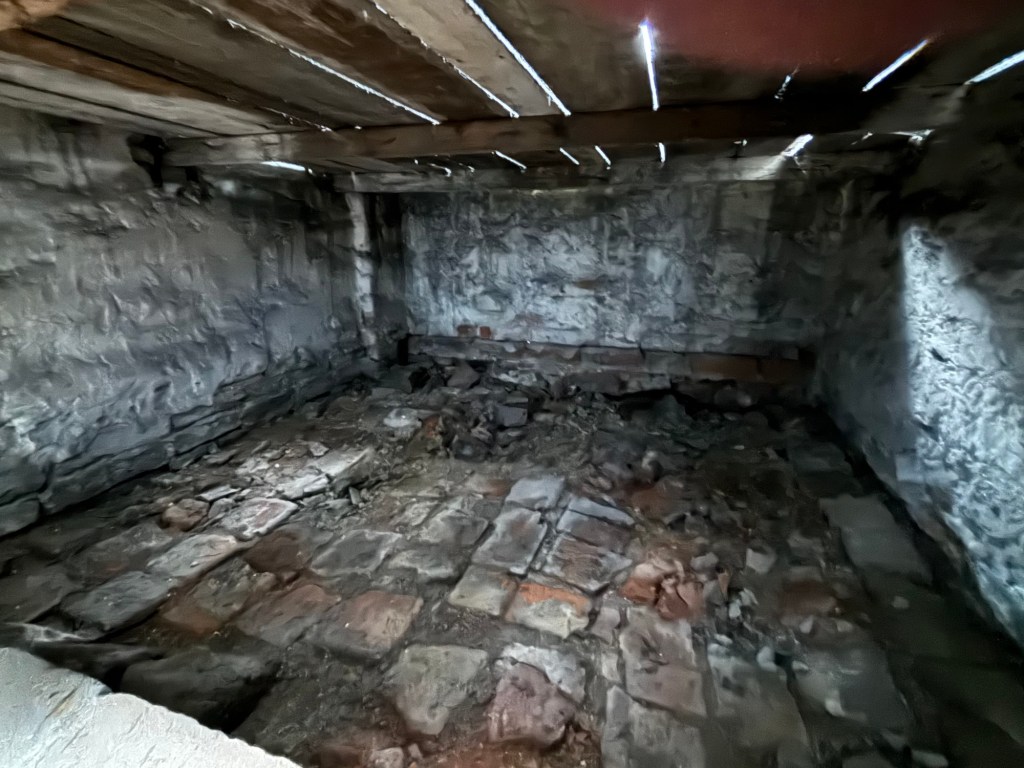
- The bottom level was the worst — rocks, lice, bugs, and cold.
- The temp sometimes fell down to -10 degrees Fahrenheit in winter.
- Less than 0.5% of children and young teens who arrived survived to liberation.
- Auschwitz was a German government institution and part of the national budget!
- All the gold that was melted down was sent to the German treasury.
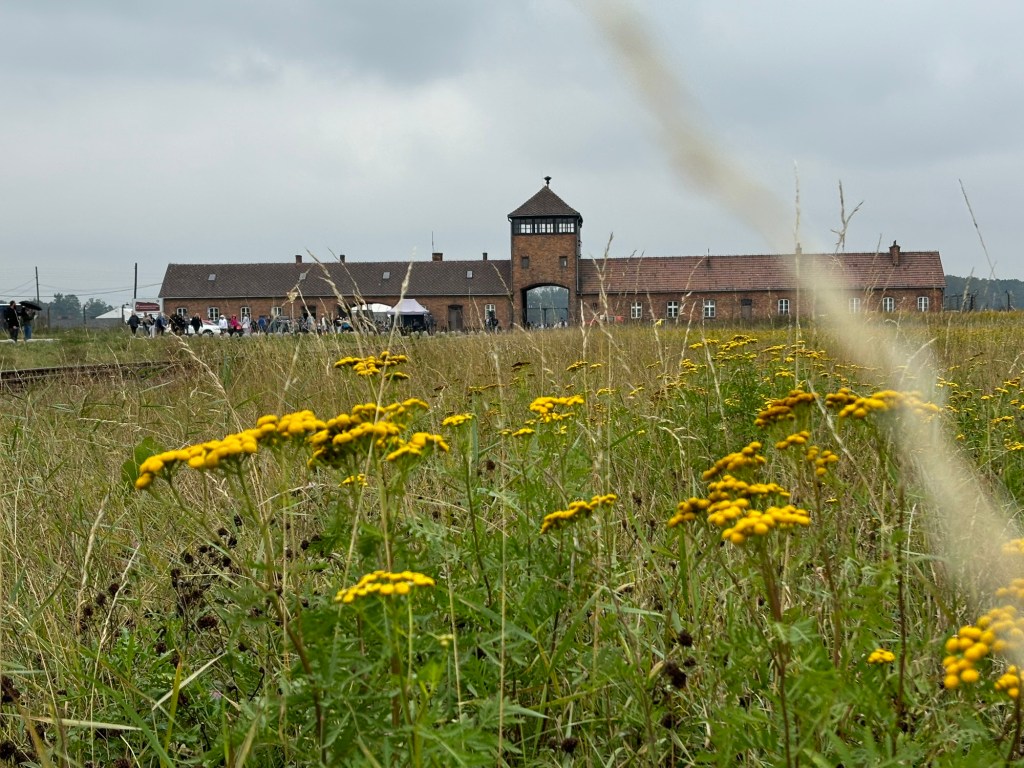

Final Thought
Remember, Auschwitz / Birkenau was only ONE of the Nazi camps areas! More than 1 million people died in five years at Auschwitz / Birkenau. At Treblinka, another camp in Poland, over 900,000 died in one year!
Words of wisdom, or just to amuse…?
Your growth as a conscious being is measured by the number of uncomfortable conversations you are willing to have.

 A Captain’s Adventures