I’m home safely and with gratitude for another amazing experience! This one was:
24 Days
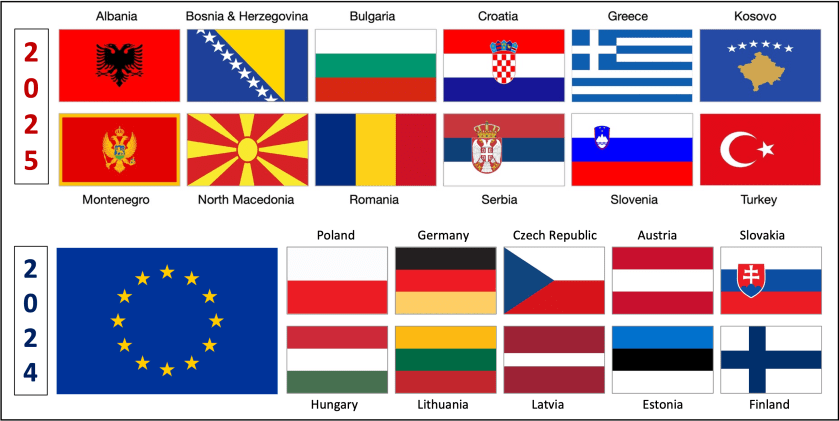
12 Countries
7 Time Zones Crossed
4 International Flights
3 Rental Cars
210 U.S. Driving Miles
3,350 Balkan Driving Miles
105 Hours of Audio Books
1,500+ Photos
And a Mountain of Memories!
The Balkans were amazing! Dozens of highlights of things I had read about, but had never seen. Friendly people, pretty easy to navigate, good food, and spectacular sights and scenery. I’m again thankful for the good health and resources to travel, and with my very tolerant family that puts up with my absences. Maybe that’s the good part for them…?
Where to next? I’ve got three ideas stewing around in my head:
A road trip through South Africa
Hiking along part of the Great Wall of China
Hiking in the English countryside and a visit to Portsmouth, England (to see cool Navy stuff)
And I definitely still have Antarctica on my Bucket List as my last continen to visit. But that one also interferes with ski season! Priorities…
Thank you for tagging along on my blog!
Before you go…
There’s no way God told Noah to put two mosquitos on that ark.
“The greatest wealth is to live content with little.” — Plato
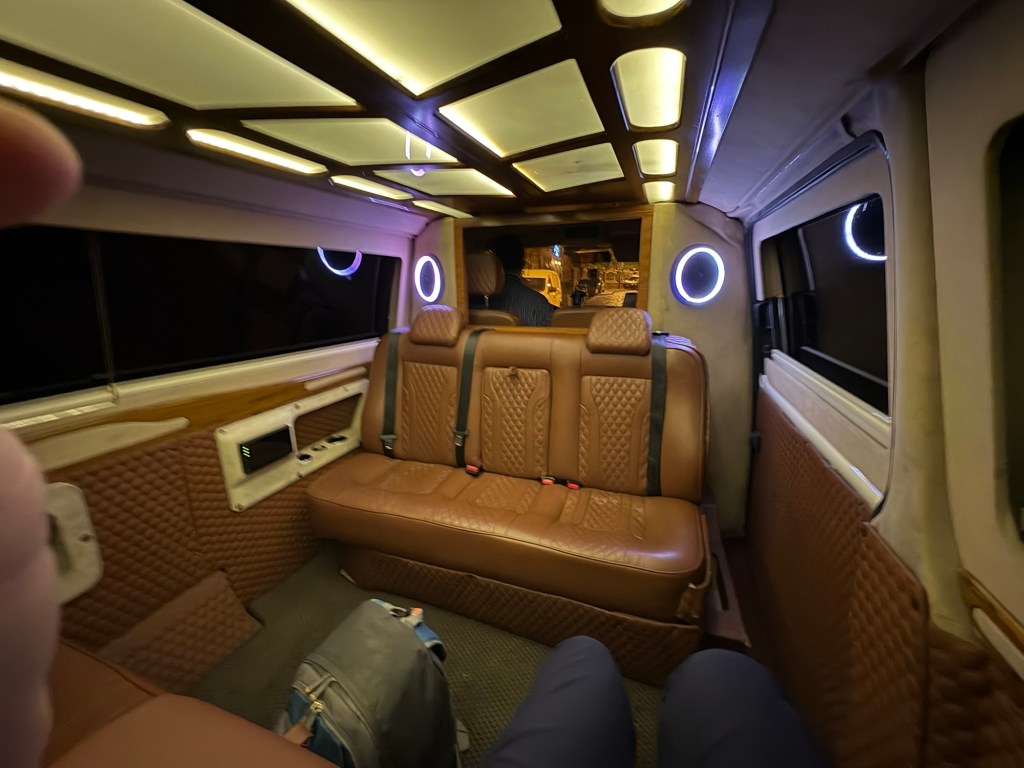
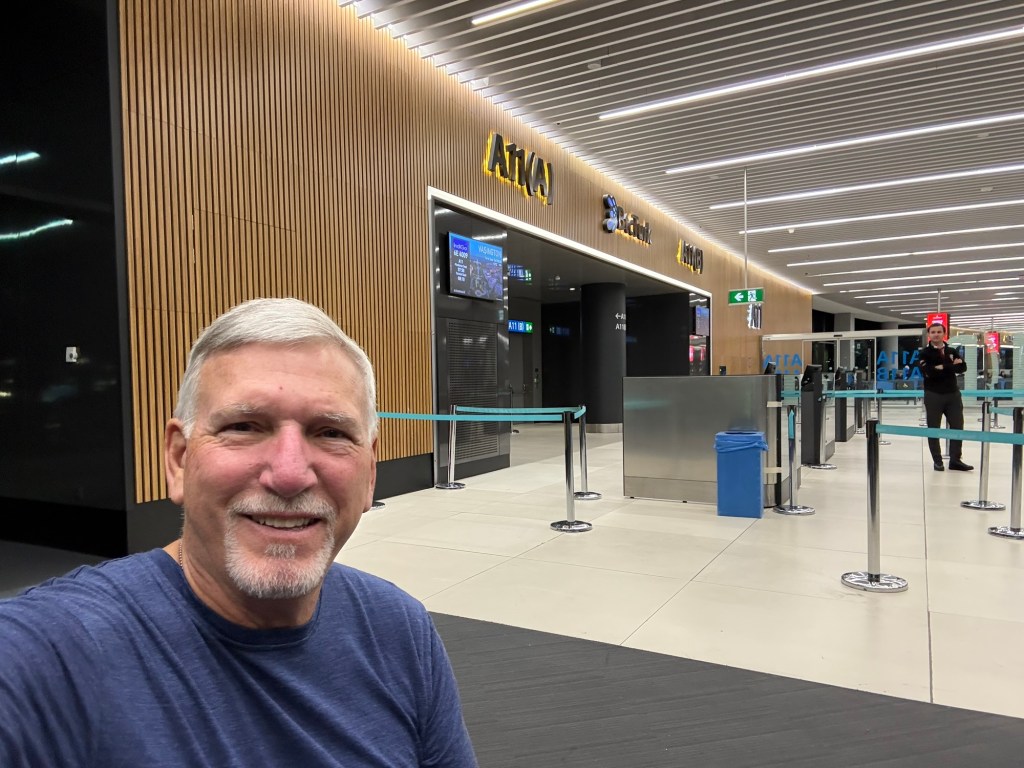
I headed out at 4:30 am for the 45+ minute ride to the Istanbul Airport. Needless to say, there was scattered darkness at that crazy hour.
My “Party Van” ride to the airport! Didn’t expect that, but it wasn’t much of a party since I was the lone passenger.Waiting on my jet…
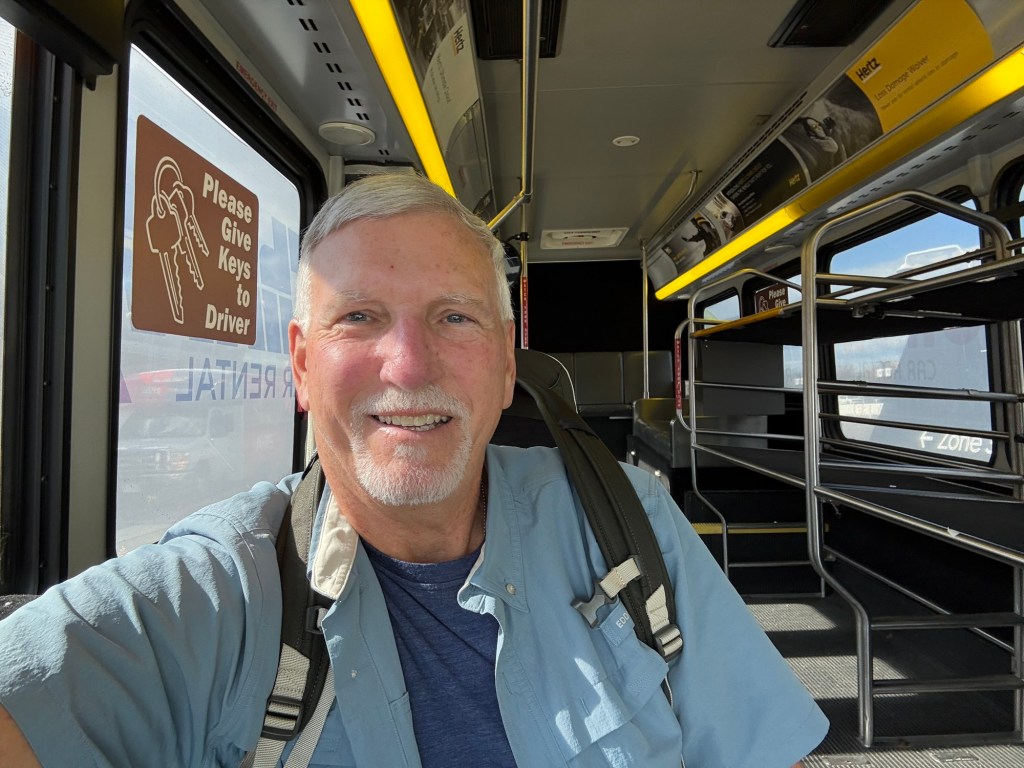
The 11-hour flight was typical Turkish Air – comfortable, friendly, and good food. And I made it out of the DC airport in world record time! From the door of the plane, through immigration, customs, and onto the Hertz Shuttle in less than 10 minutes! Global Entry wins again, as well as an empty airport at Noon!
On the shuttle alone!
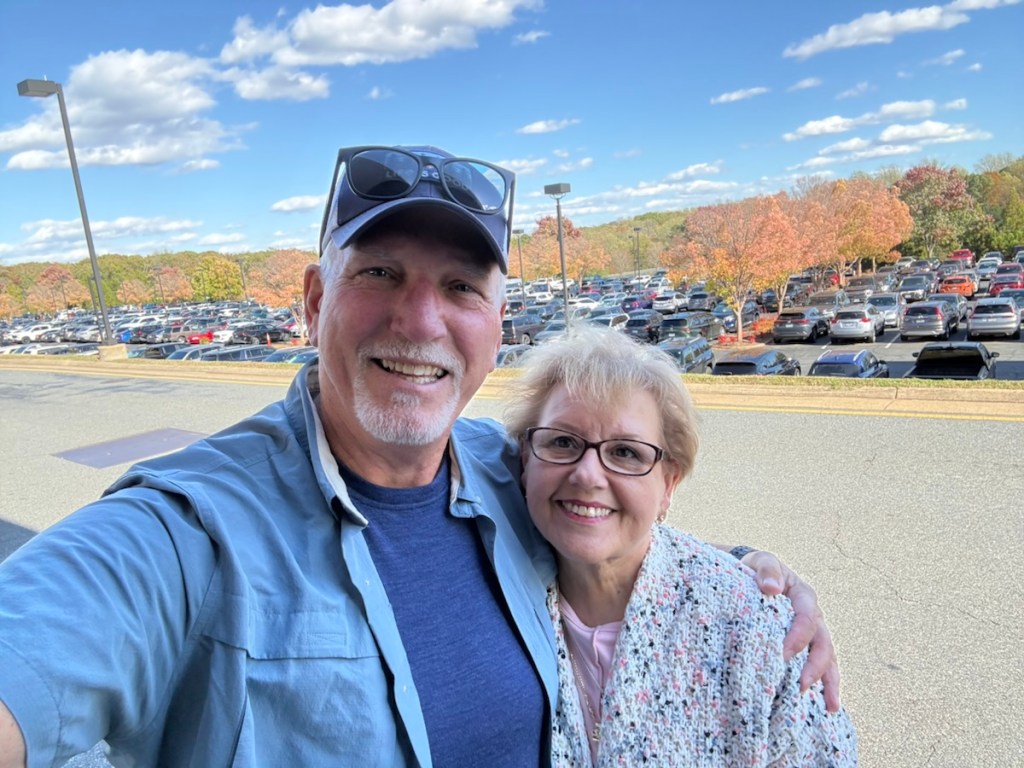
I drove my rental the 2-hours to Charlottesville where I was met by the prettiest girl in town!
Now this lucky guy is home! One more post coming to wrap up and finish off this trip.
Before you go…
If we’re not meant to have midnight snacks, why is there a light in the fridge?
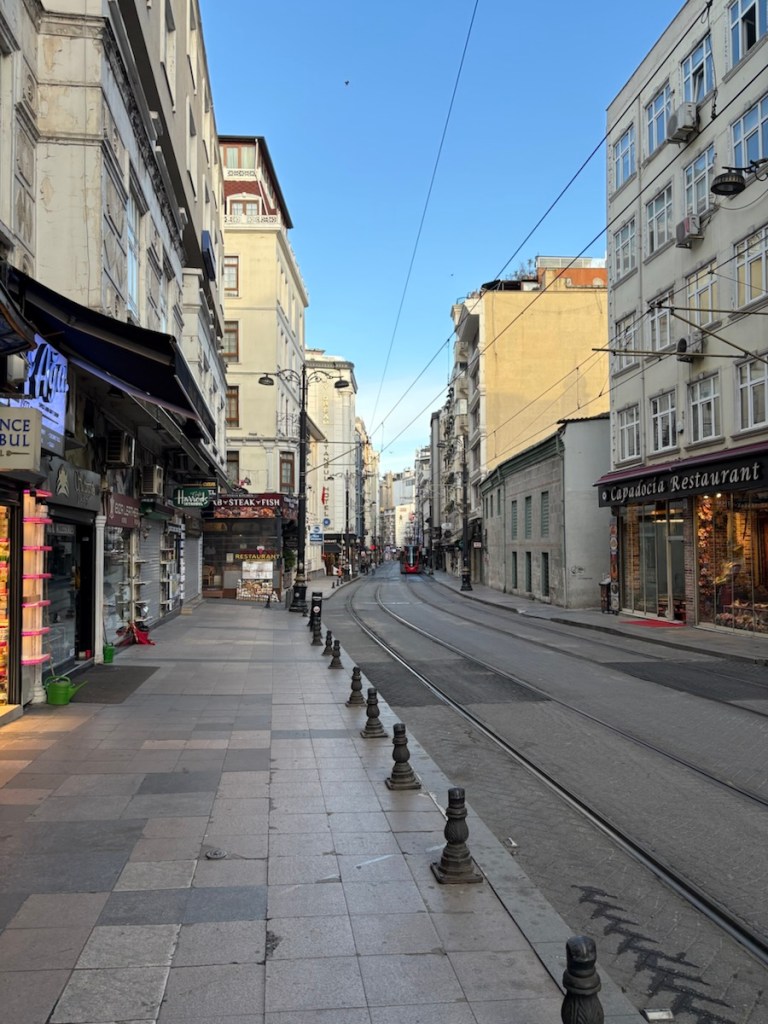
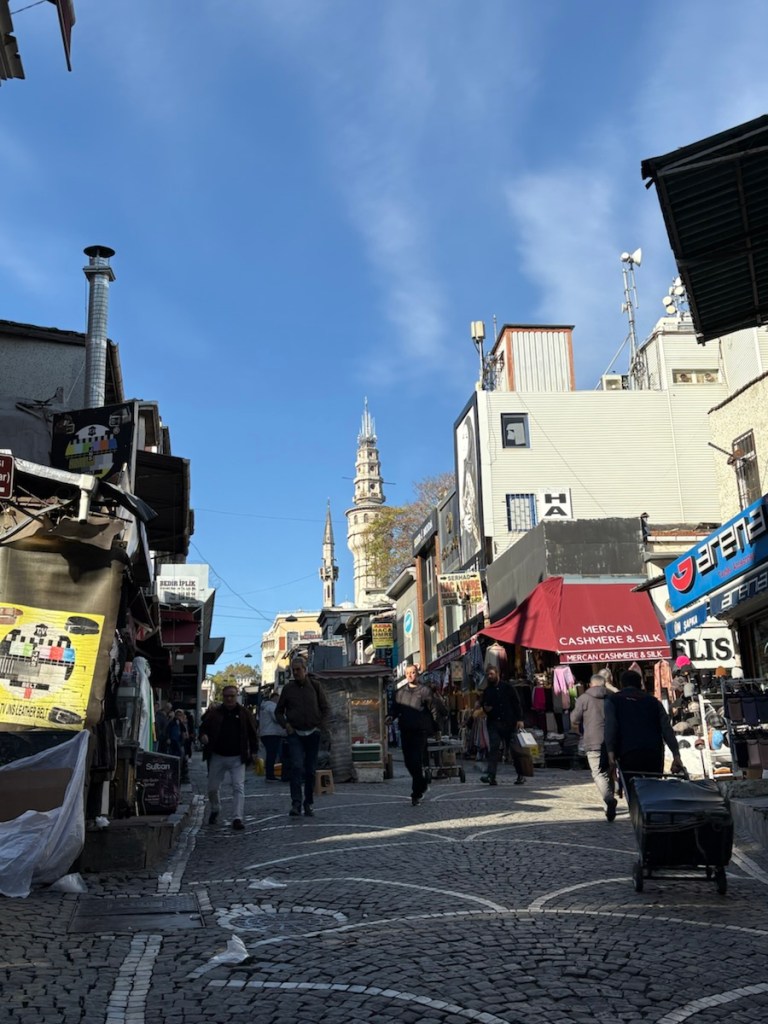
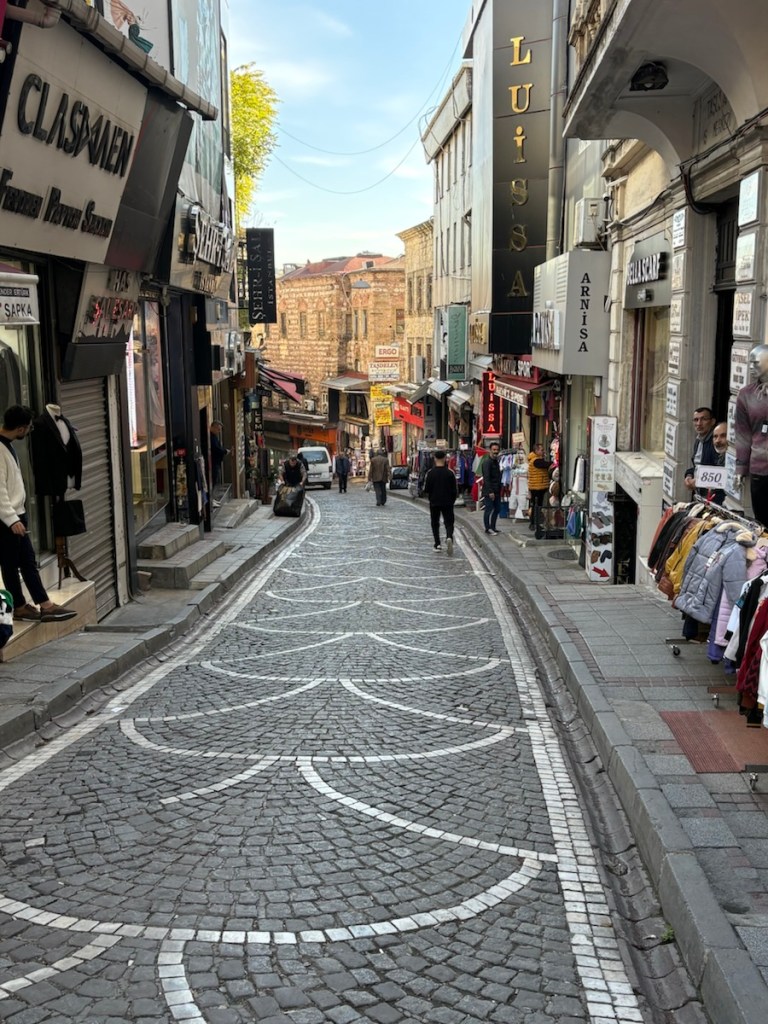
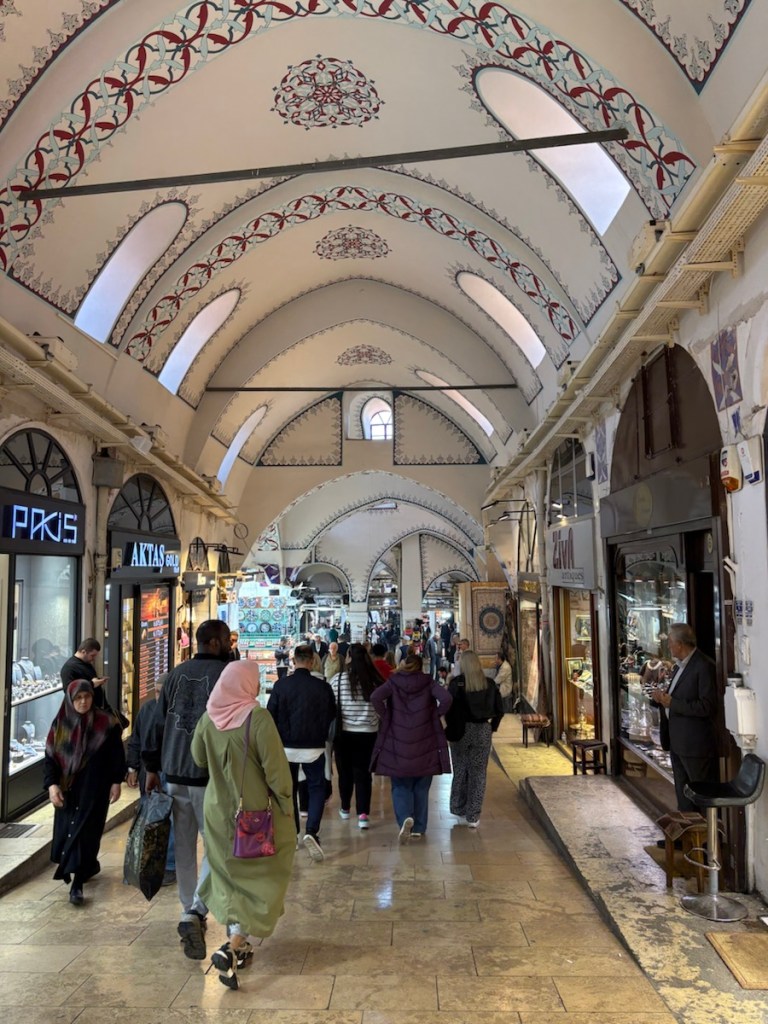
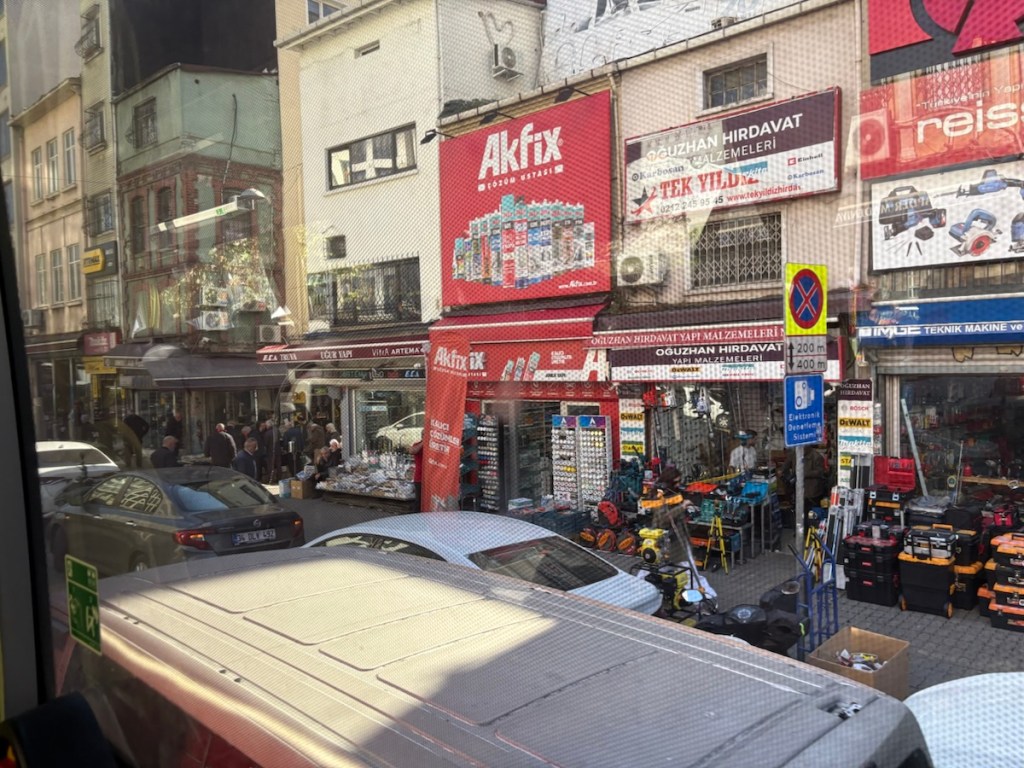
Another gorgeous morning with temps in the low 50s by 8:00 am. So a trip to the Spice Bazaar and the Grand Bazaar were on my to do list. And walking in Istanbul is actually pretty relaxing. Compared to all the other large cities on this trip, Istanbul has the best sidewalks and streets to walk on, with surprisingly few trip hazards.
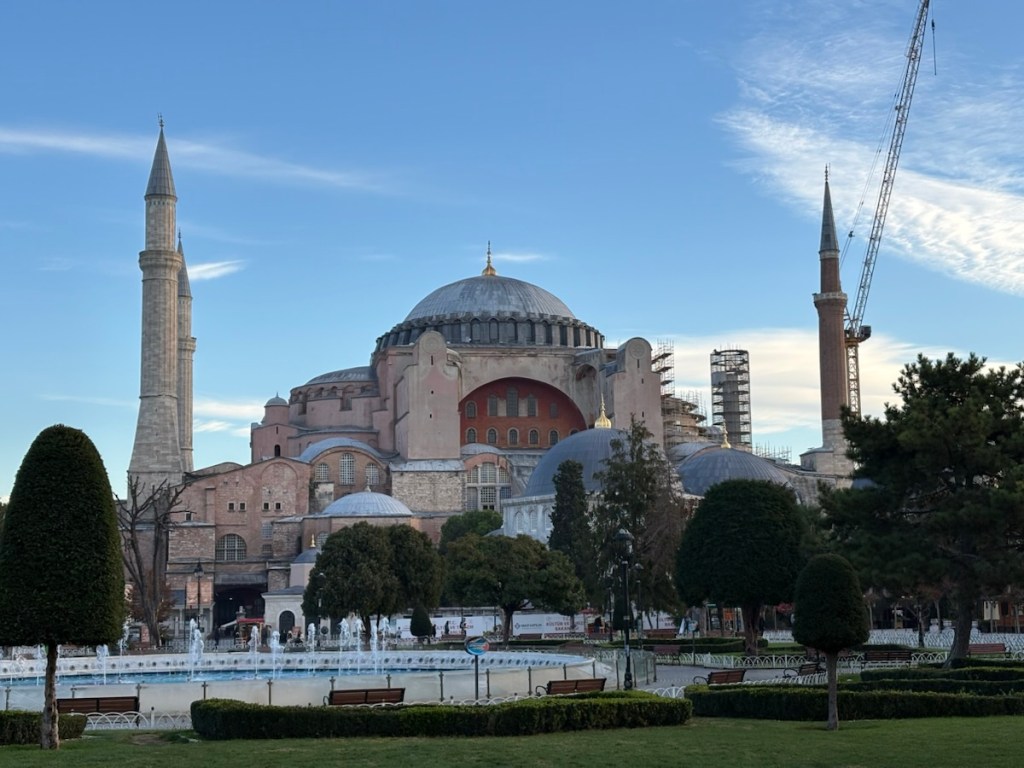
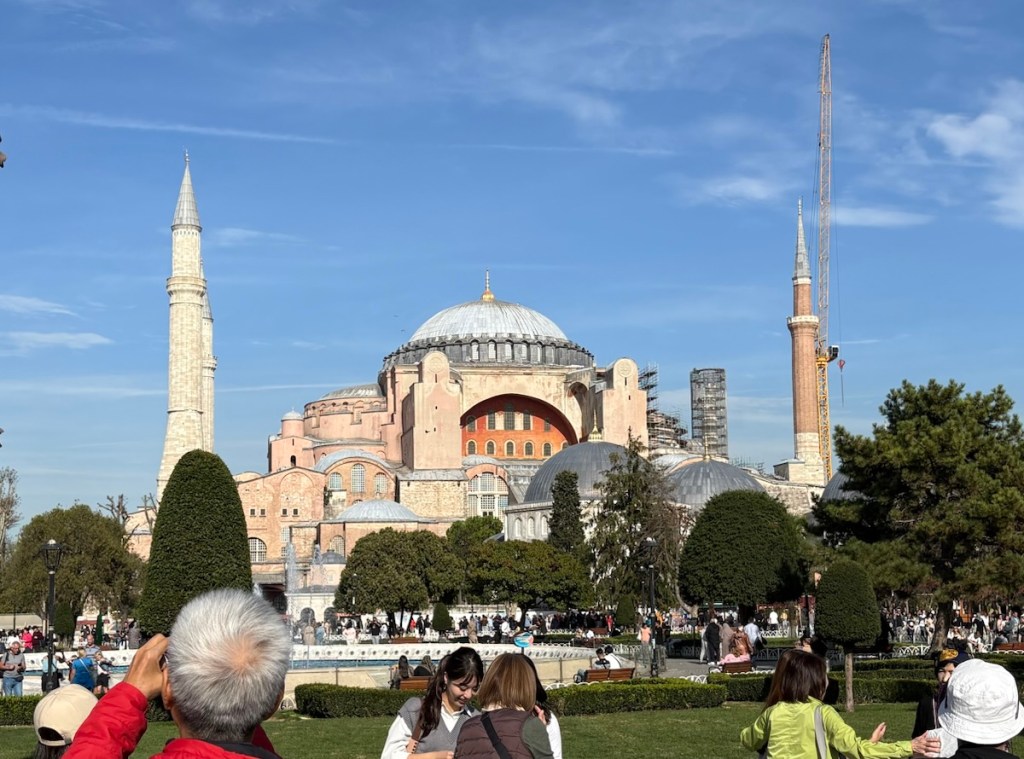
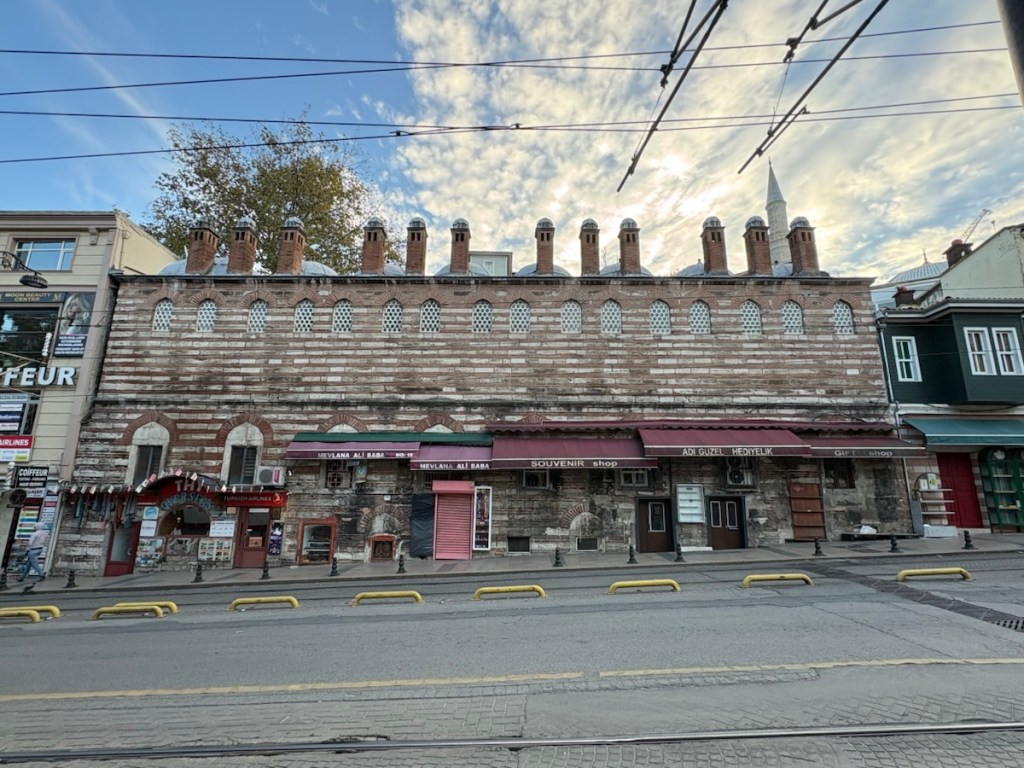
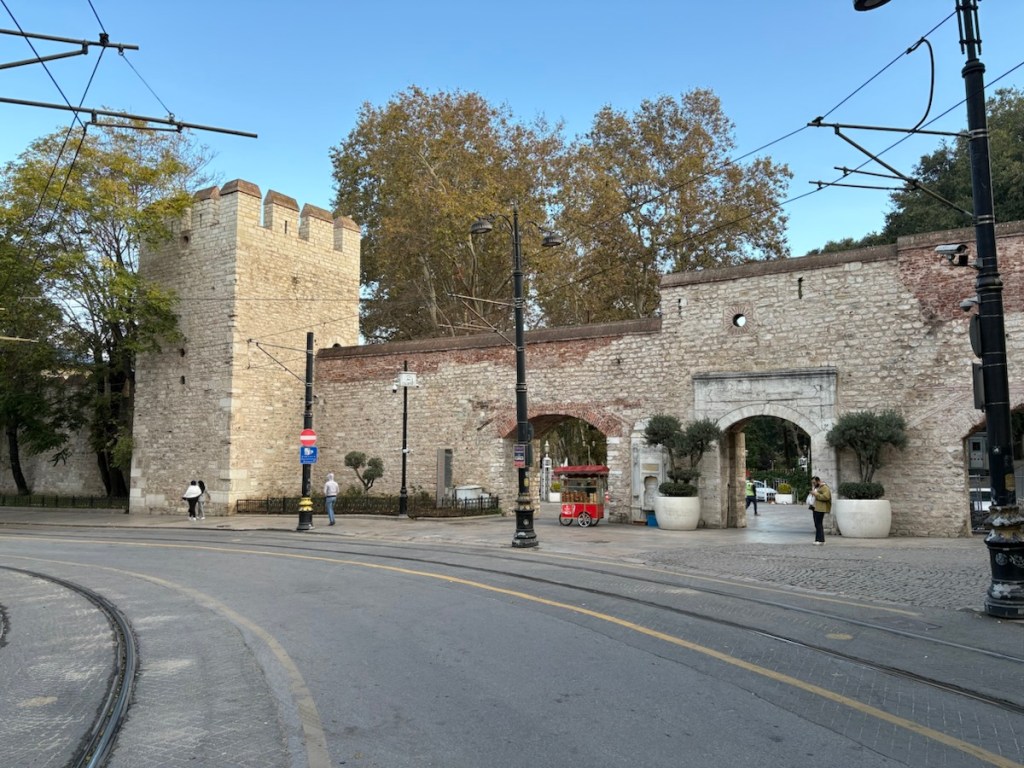
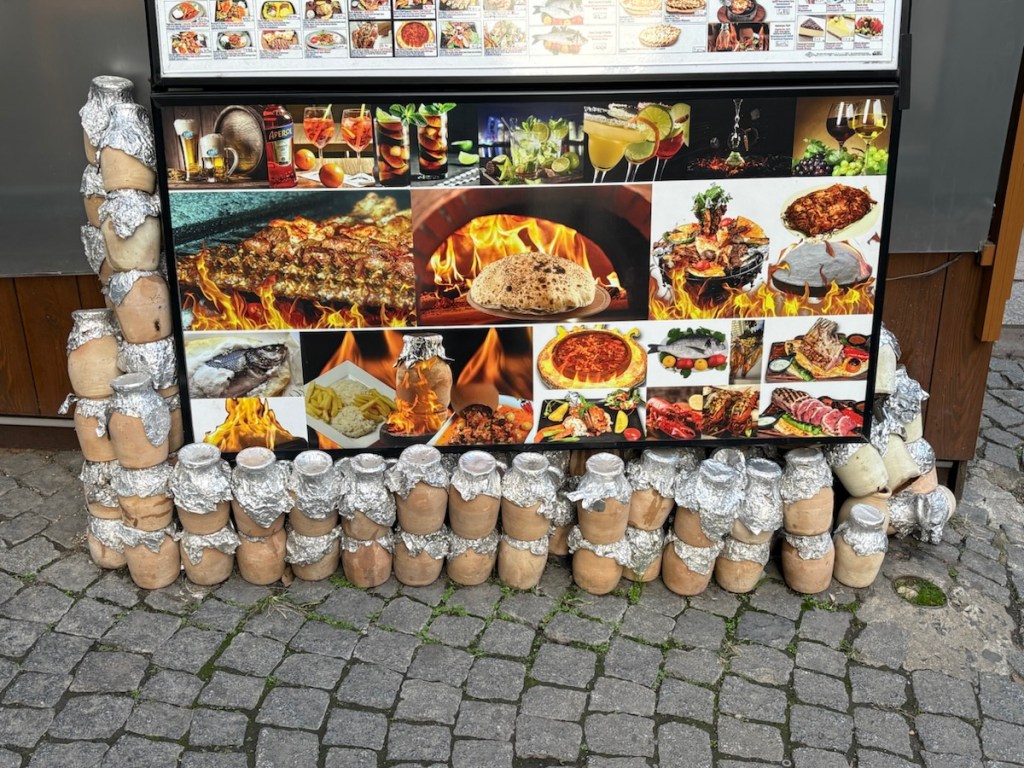
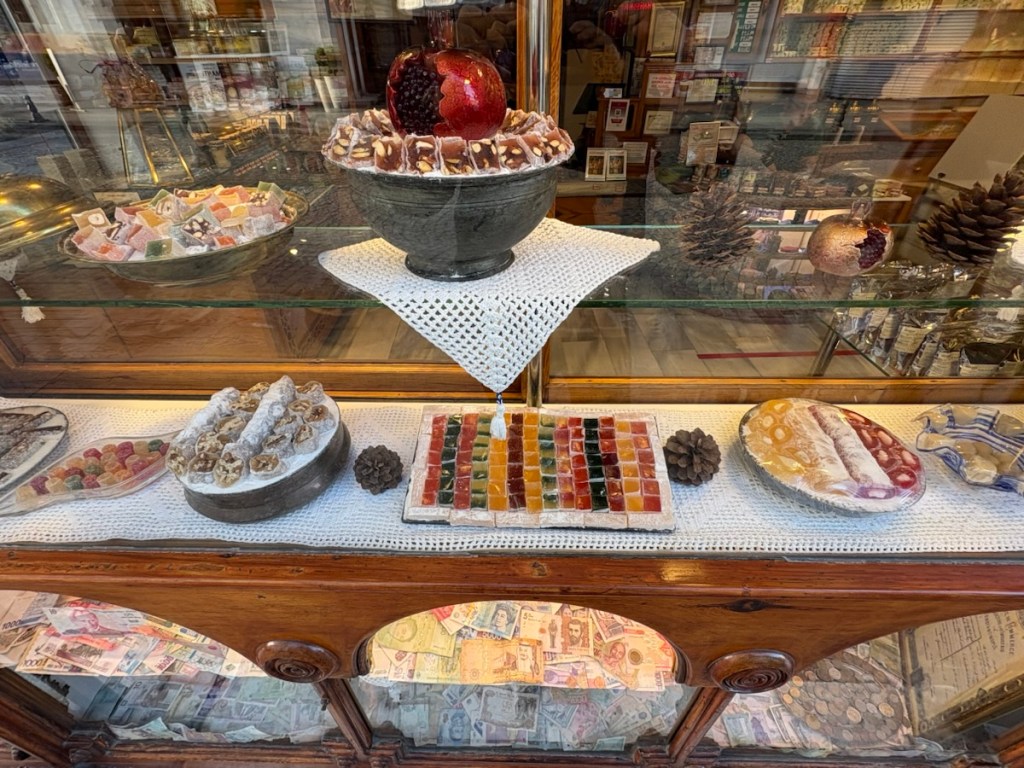
The Hagia Sophia Mosque at 8:00 amApproximately the same photo with the crowds at 3:00 pmAn excerpt from the Islamic Call to Prayer that plays 5 times each day from the speakers on the minaretsEnough chimneys?Part of the old city wallsWhat are the clay pots?Candy shops abound
The small clay pots above are used to cook meals in! The ones outside this restaurant are just for decoration.
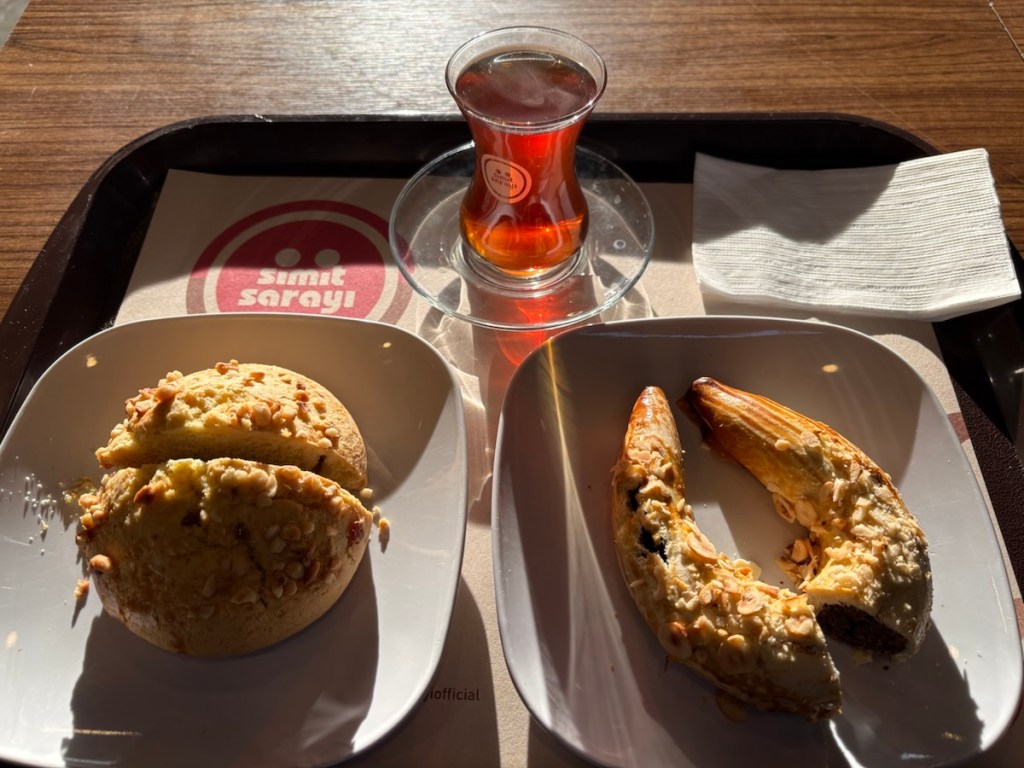
Breakfast was a big orange “cookie” (with not a hint of orange flavor) and a chocolate horned pastry, and washed down with hot tea, of course, because I’m in Turkey! All excellent, even the tea (that I normally never drink).
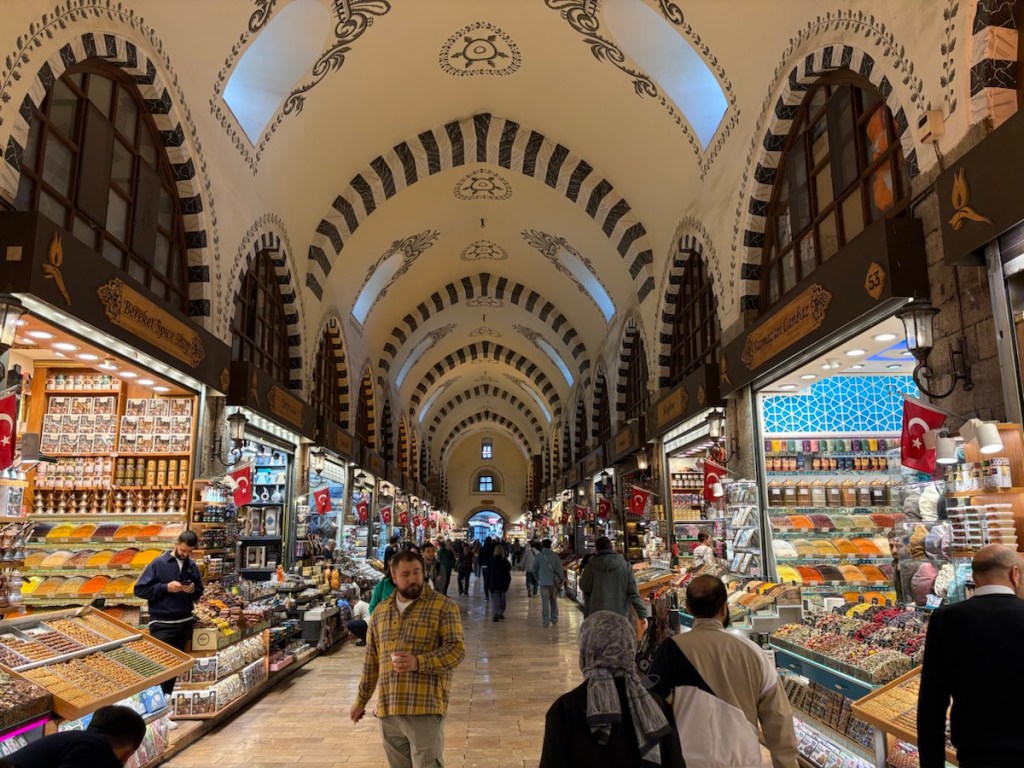
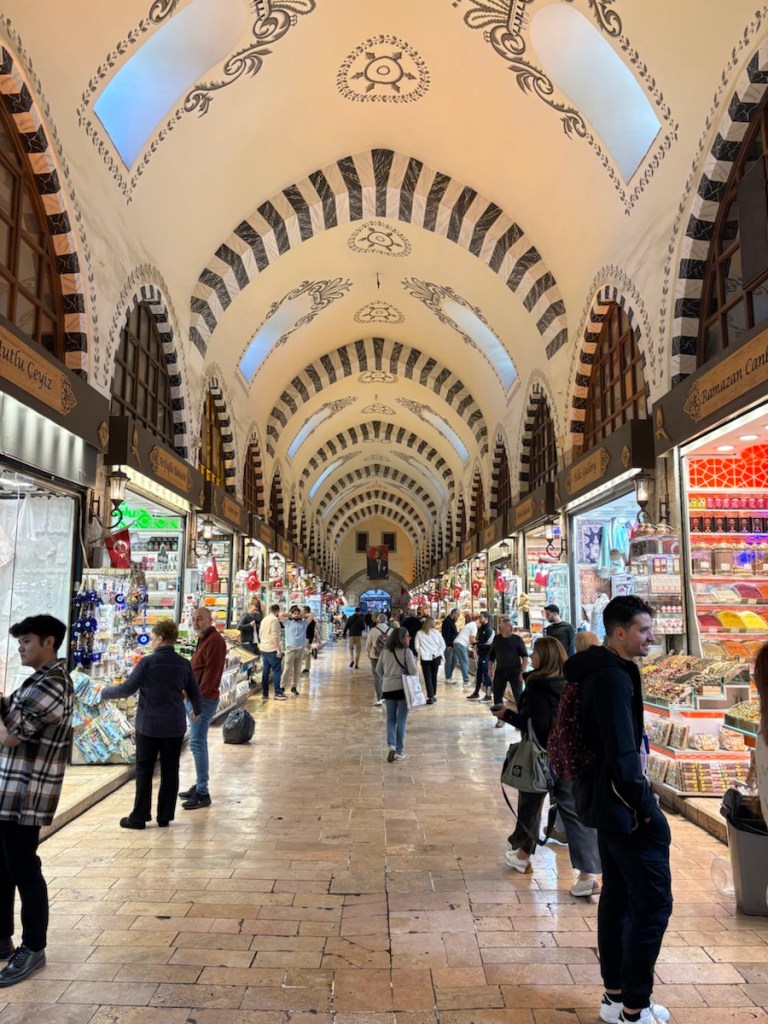
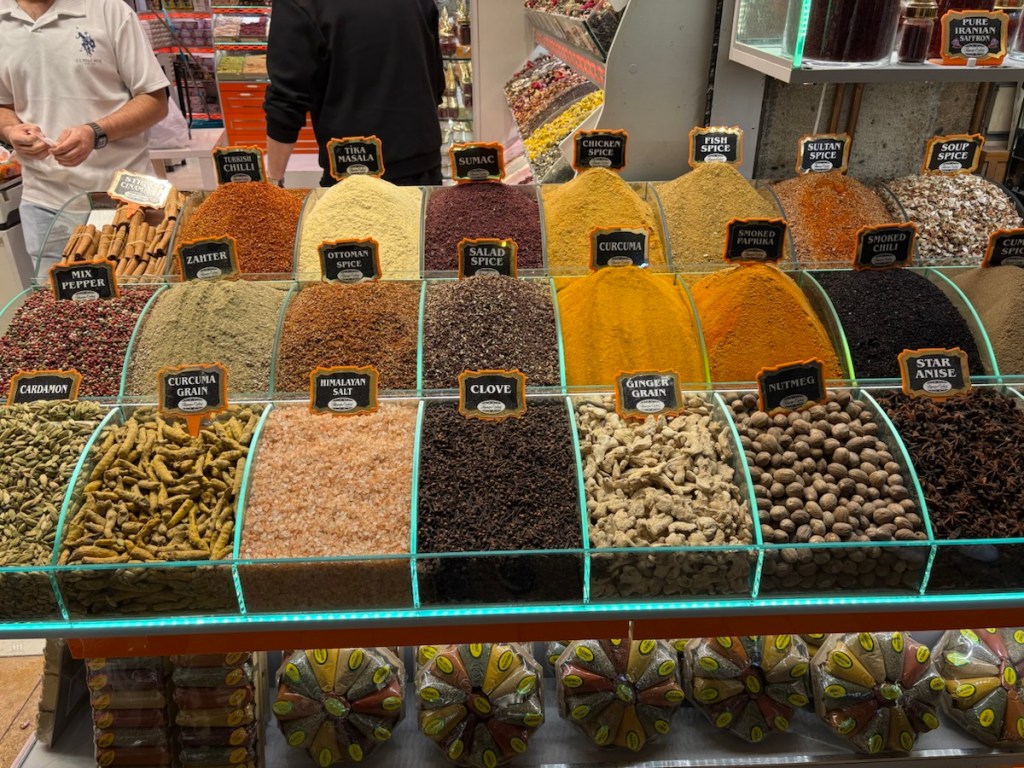
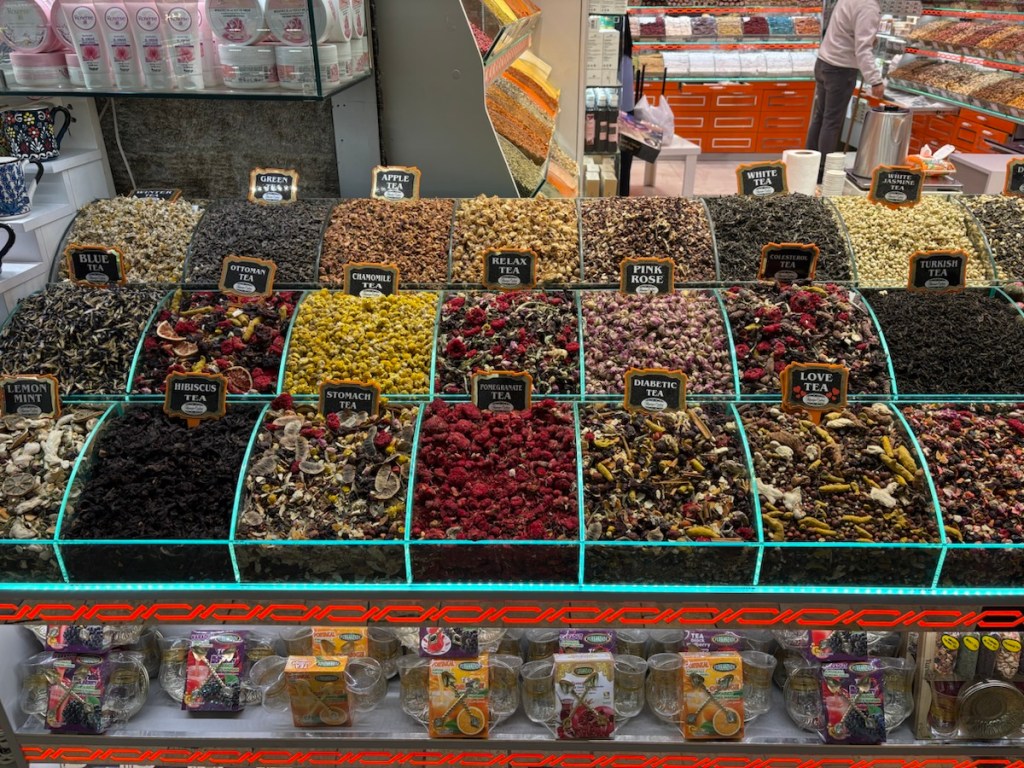
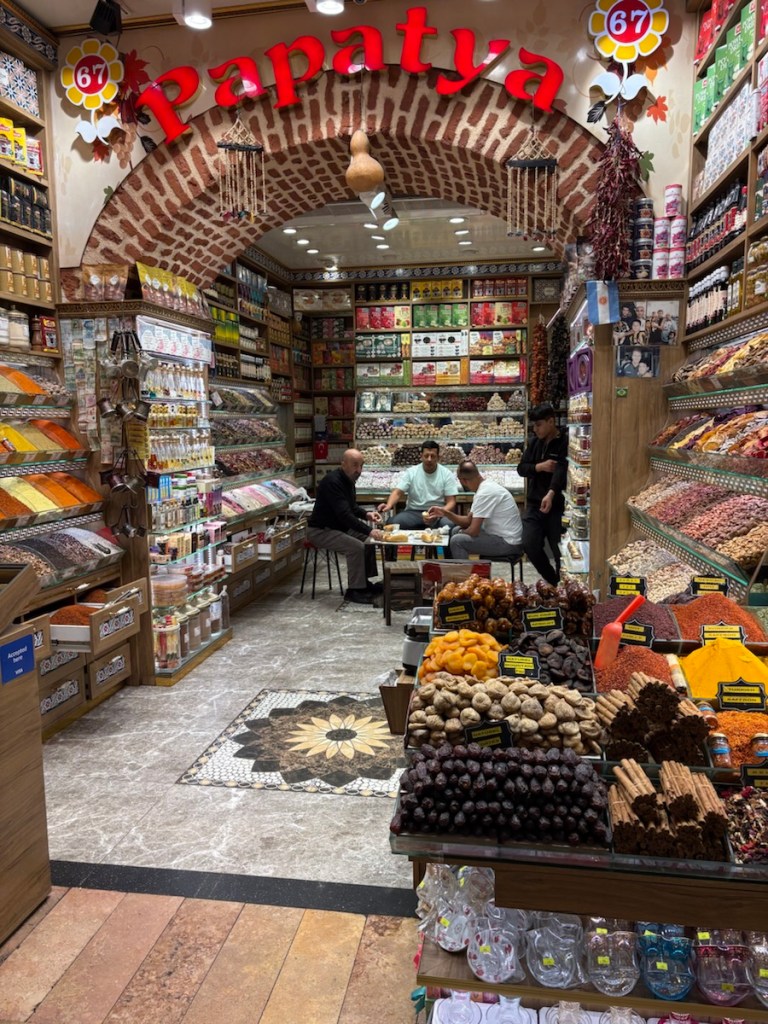
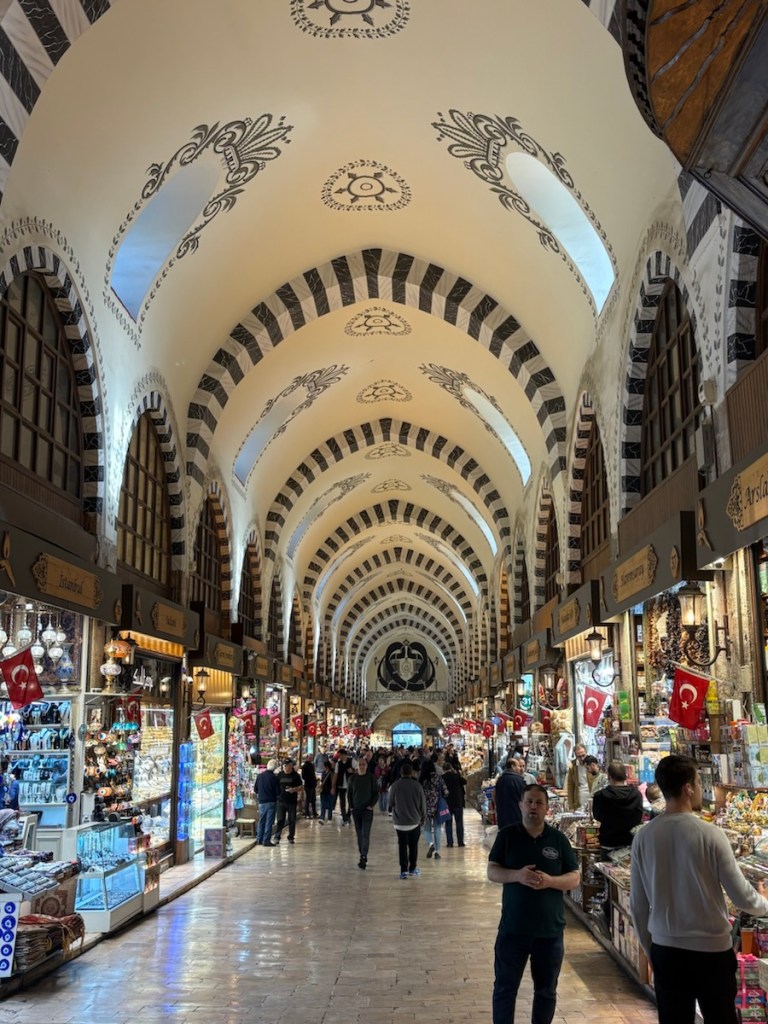
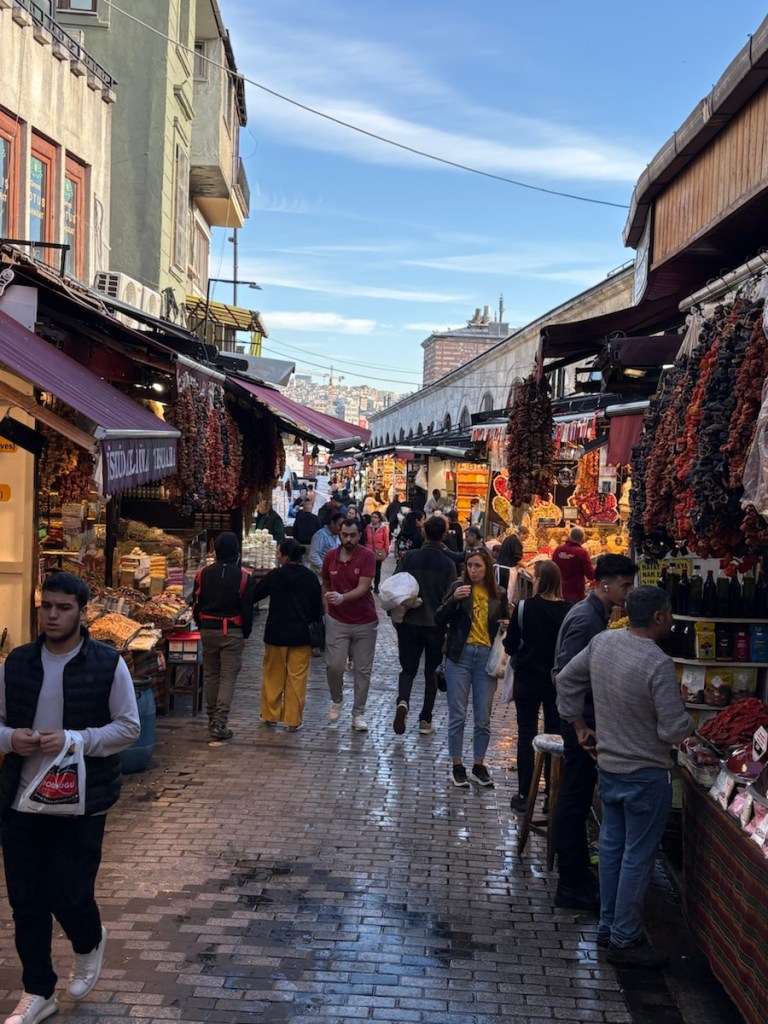
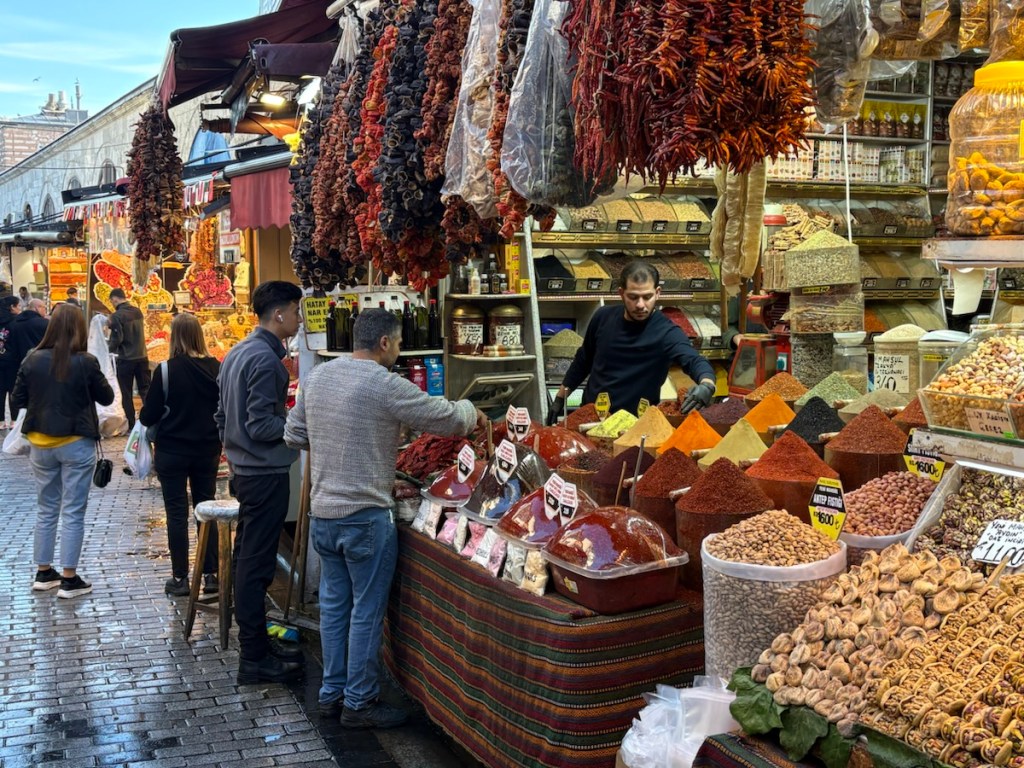
If you ever walk into Istanbul’s Spice Bazaar you will never want to leave — the smells are glorious and intoxicating!
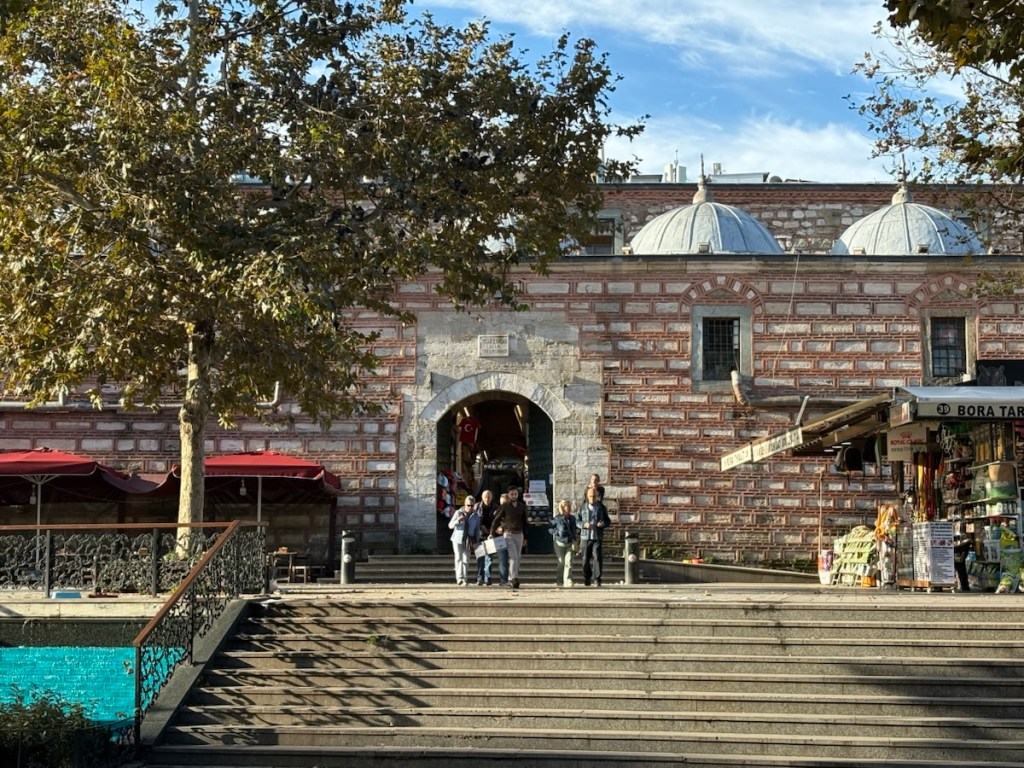
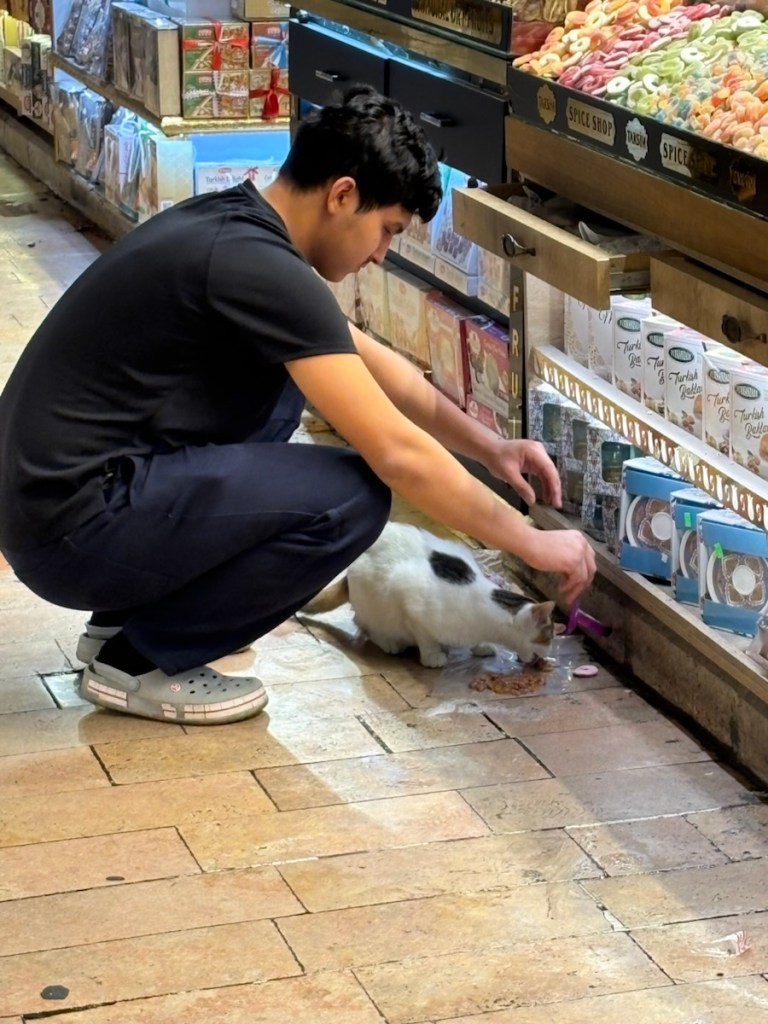
One of the entrances to the covered Spice BazaarSpices anyone?And yes, the cats are well cared for…
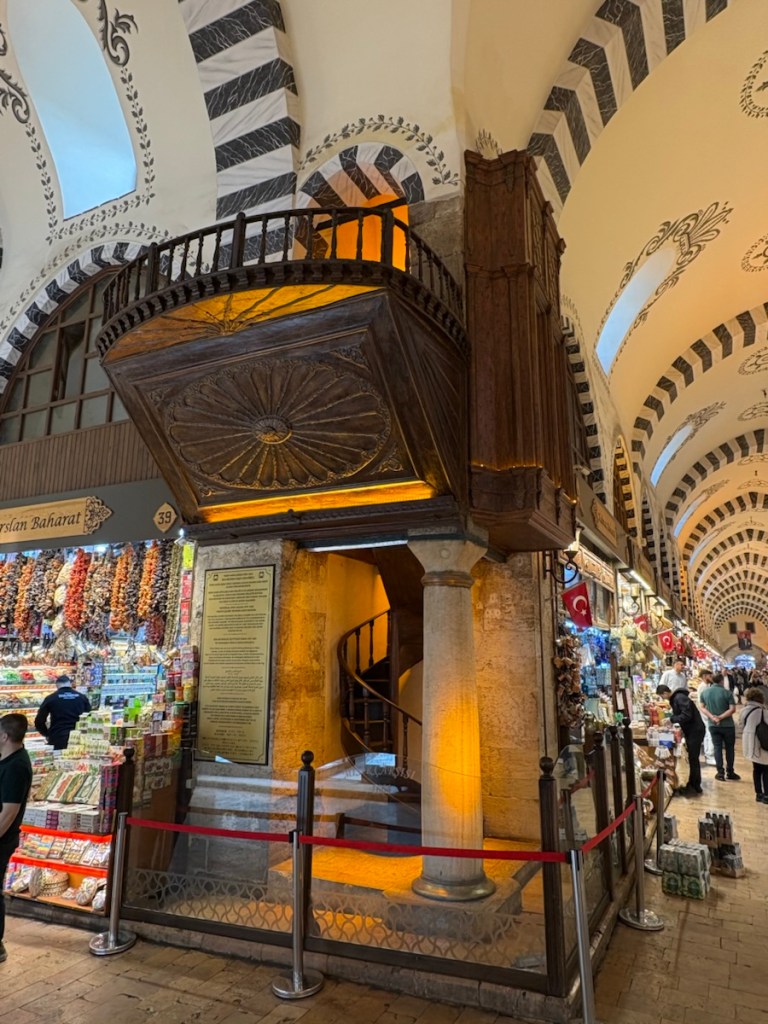
THIS BALCONY LOCATED SOUTHEAST (THE QIBLA) IS NAMED AS AZAN PAVILION. THE SPICE BAZAAR IS A TWO-BAZAAR COMPLEX AS IT IS A COMBINATION OF TWO DIFFERENT BAZAARS. THE PRAYER SQUARE IS LOCATED AT THE CORNER WHERE THE LONGER AND SHORTER SIDES OF THESE TWO BAZAARS MEET. EACH MORNING ARTIZANS USED TO CONVENE AND PRAY HERE BEFORE STARTING THE DAY.
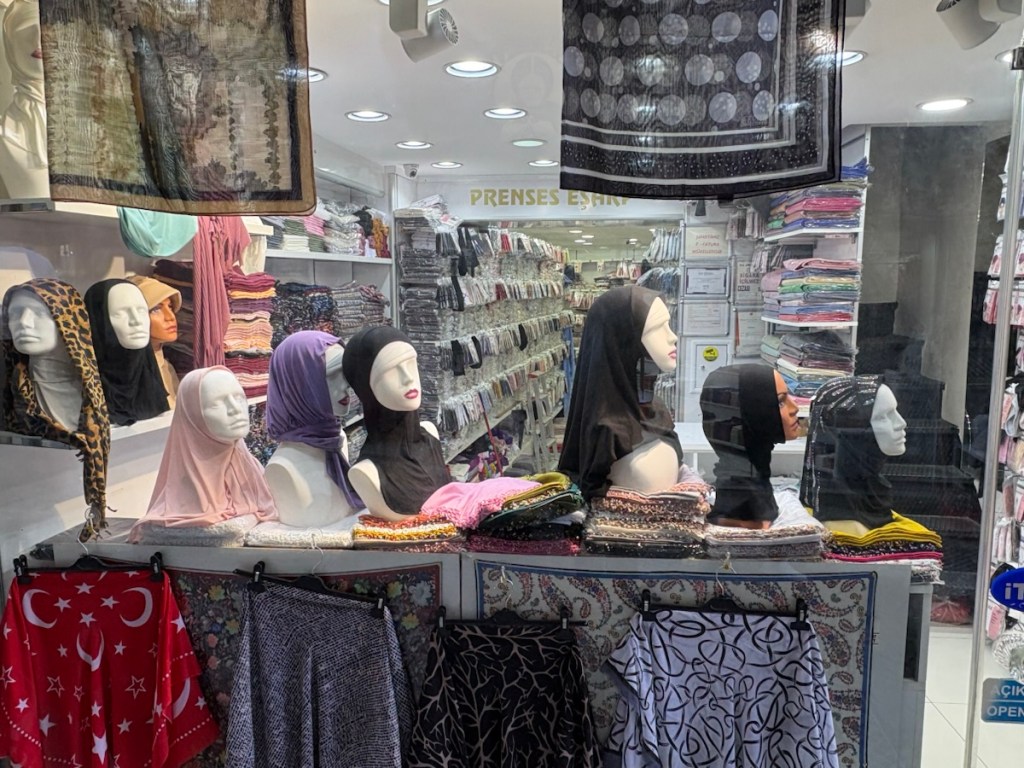
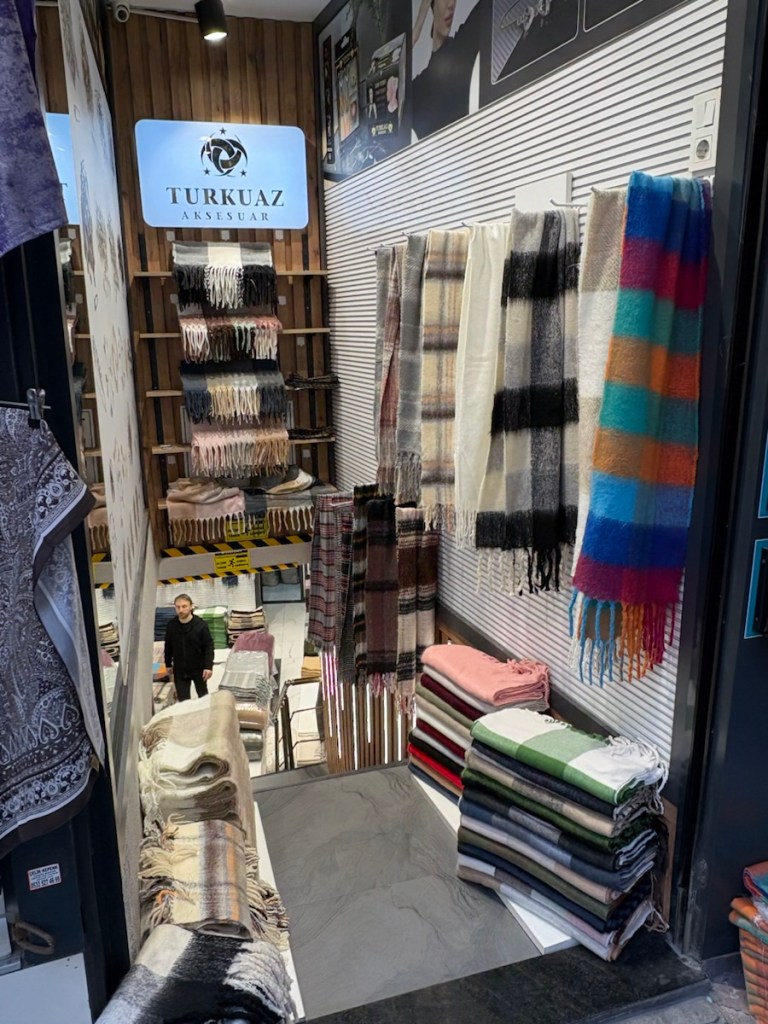
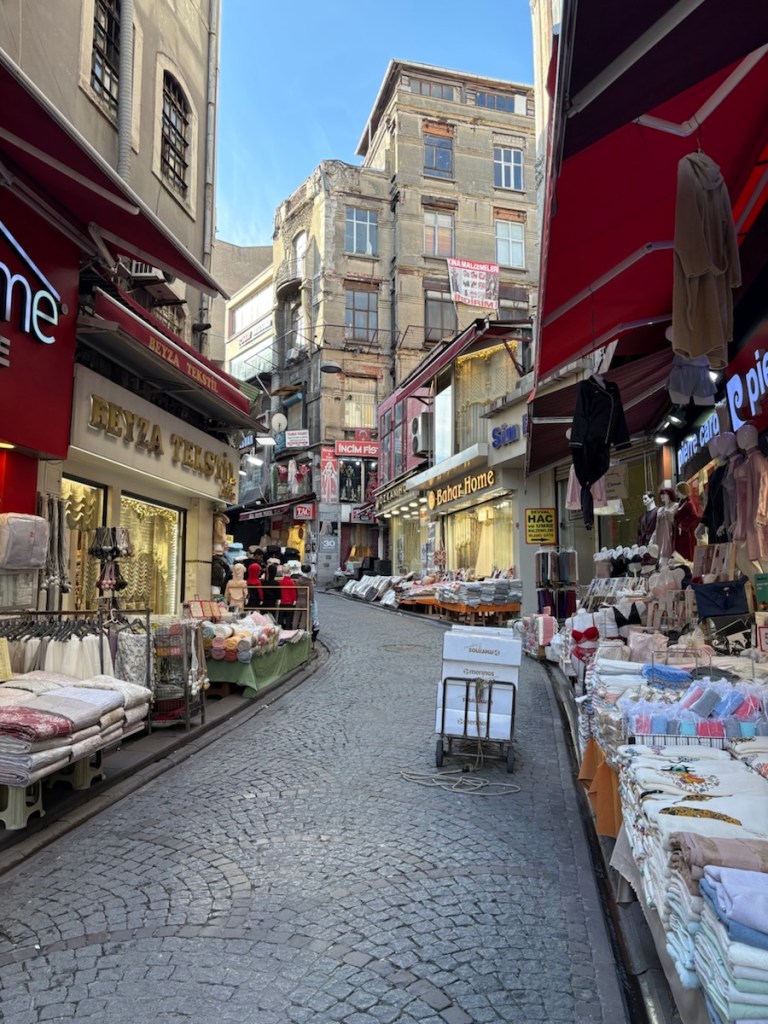
Surrounding the covered Spice Bazaar are additional streets with hundreds of shops selling nothing but scarves for women (to cover their heads, for warmth, for fashion, etc.).
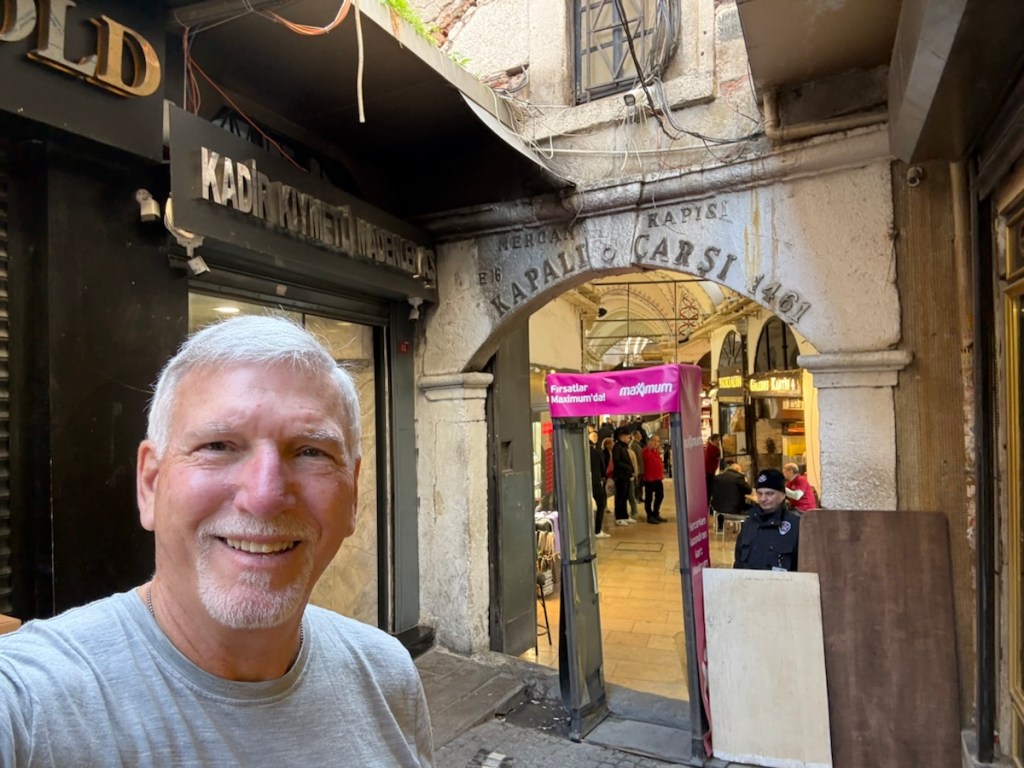
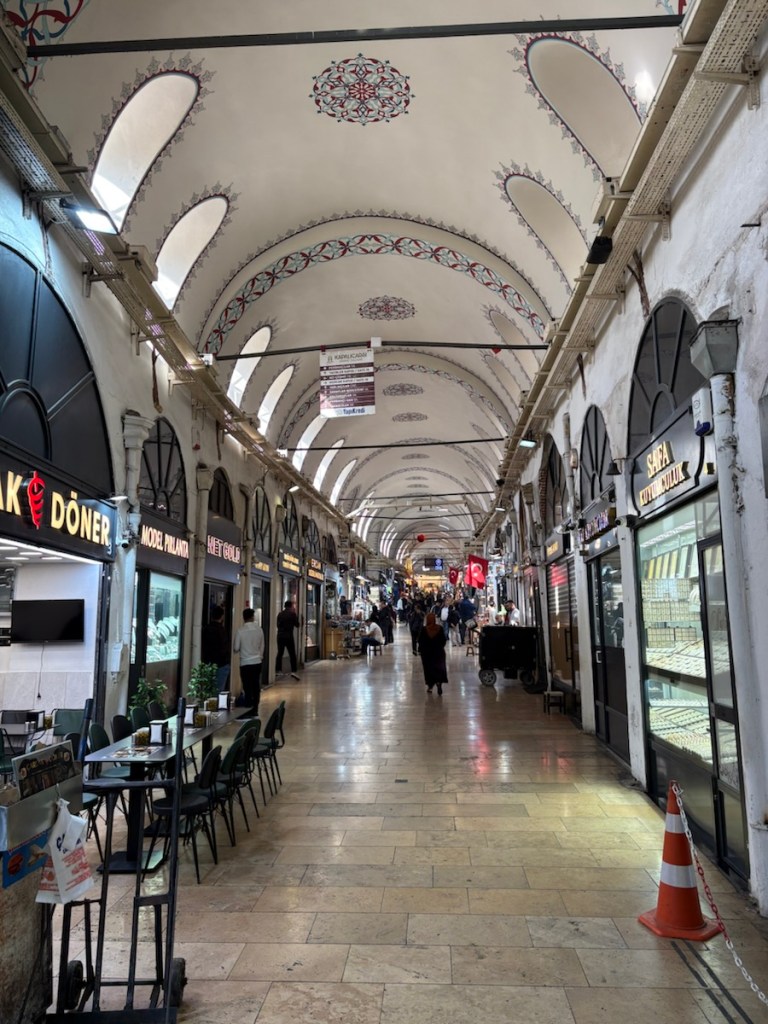
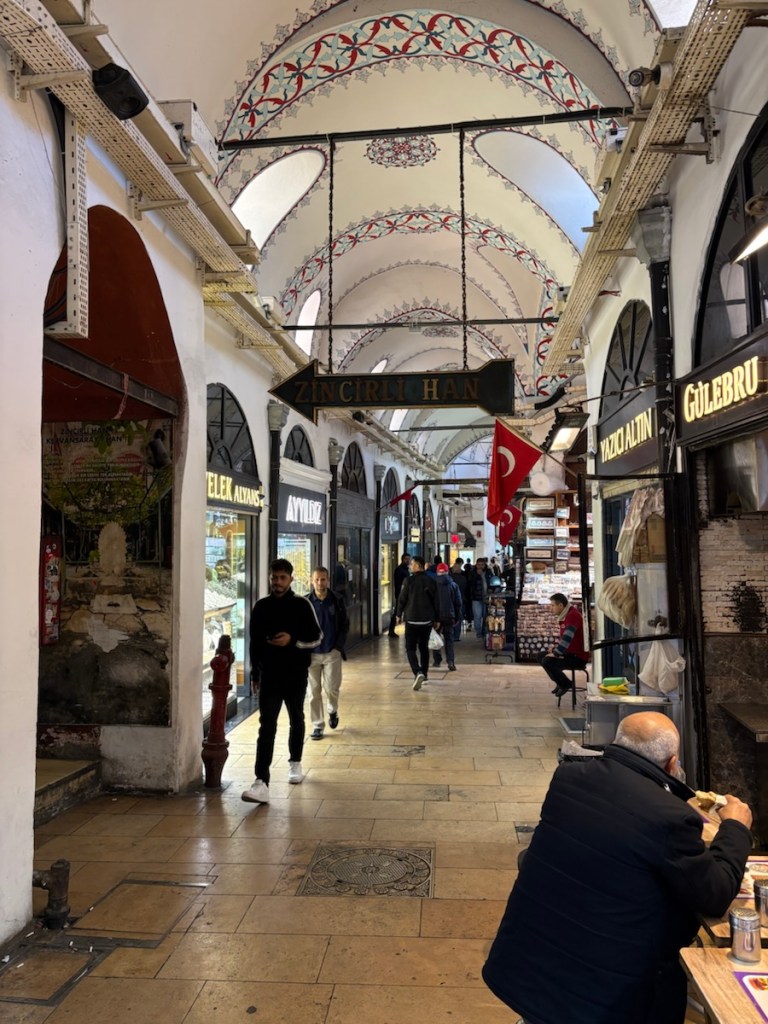
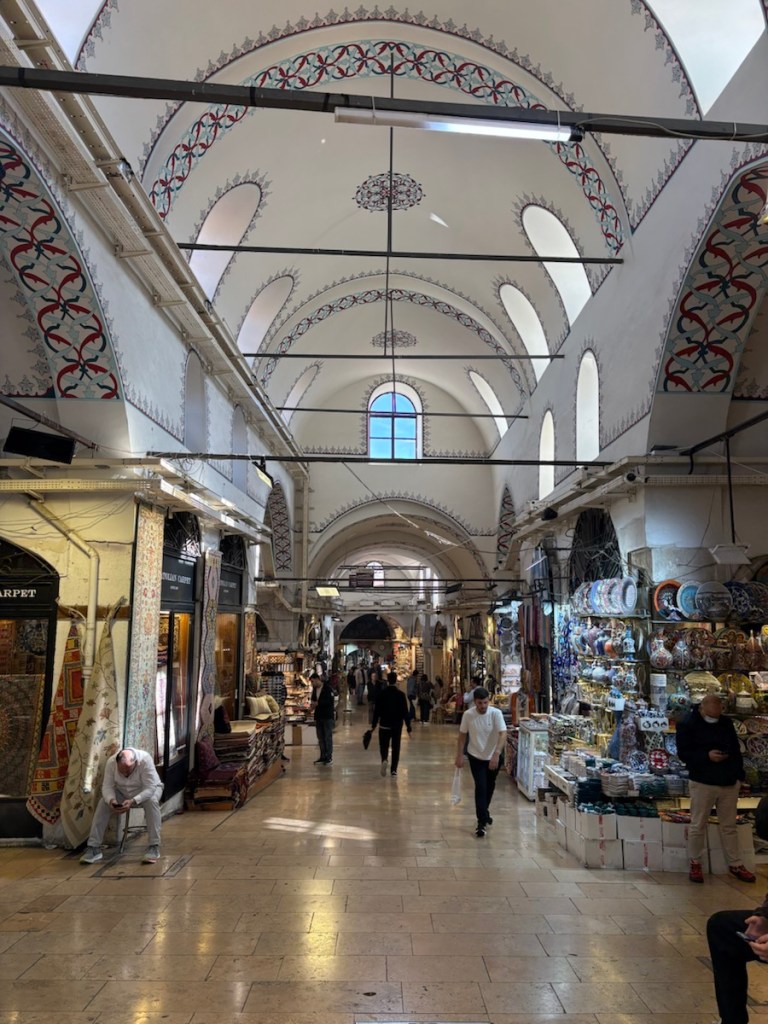
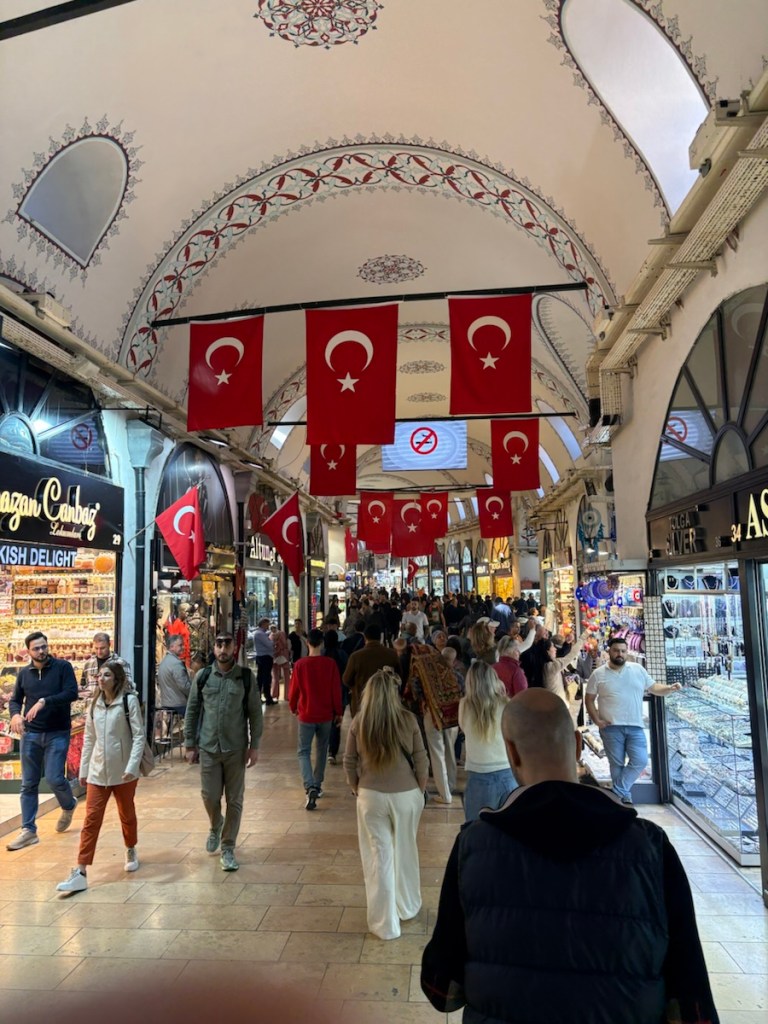
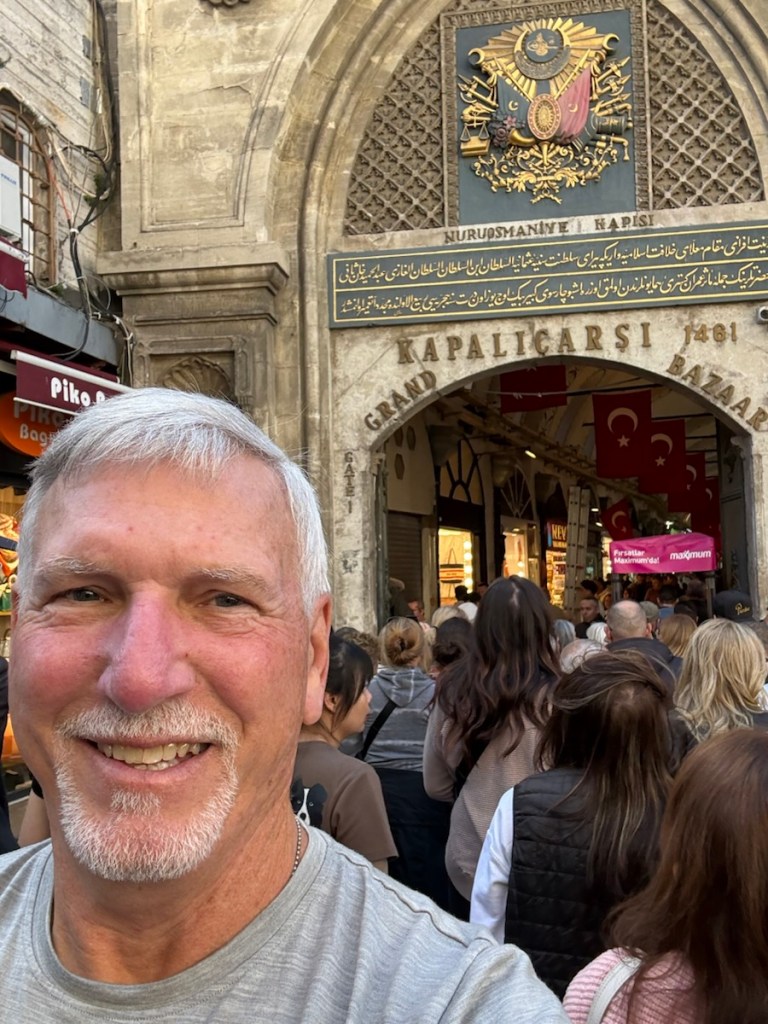
The Grand Bazaar in Istanbul is one of the largest and oldest covered markets in the world, with 61 covered streets and over 4,000 shops which attract between 250,000 and 400,000 visitors daily. In 2014, it was listed No. 1 among the world’s most-visited tourist attractions with 91,250,000 annual visitors. The Grand Bazar at Istanbul is often regarded as one of the first shopping malls of the world.
One of the many entrances to the massive Grand Bazaar
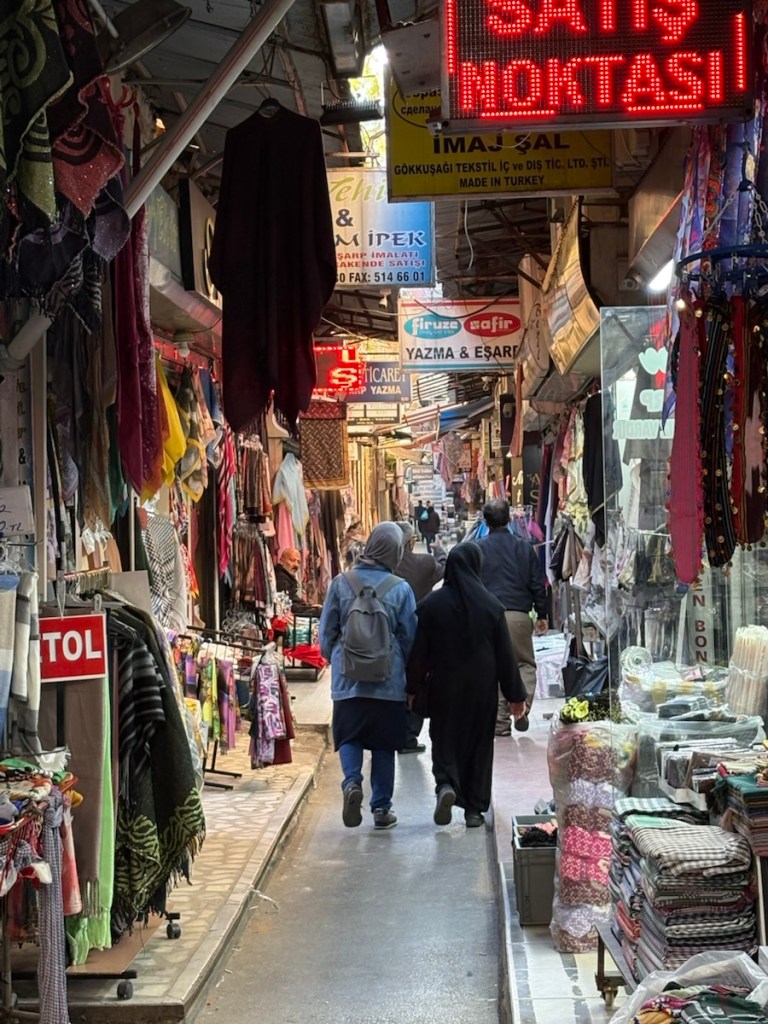
The Grand Bazaar is predominantly comprised of jewelry, clothing, handbag, and spice shops.
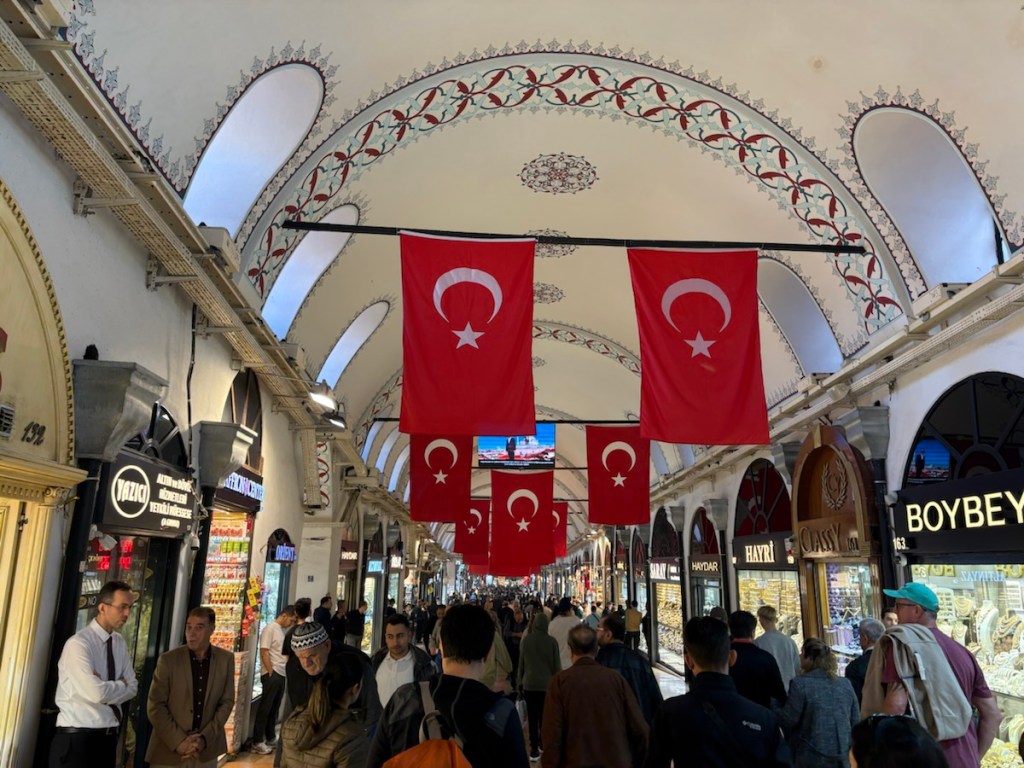
Nice time to shop…before the crowdsMassively more crowded late in the morning
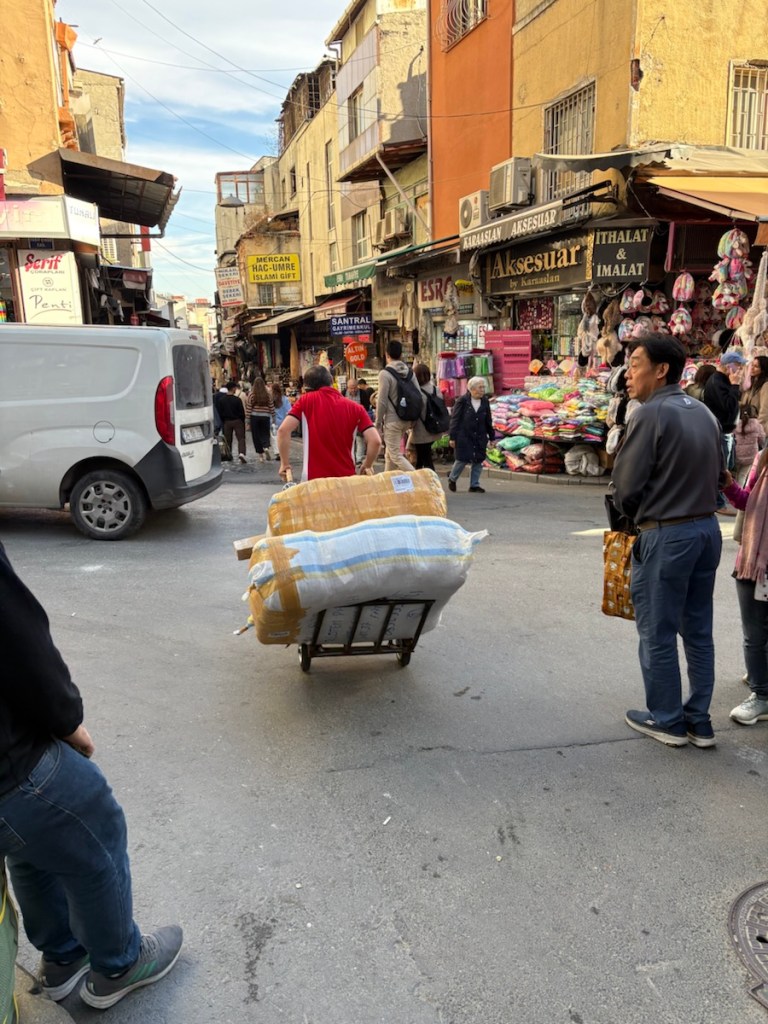
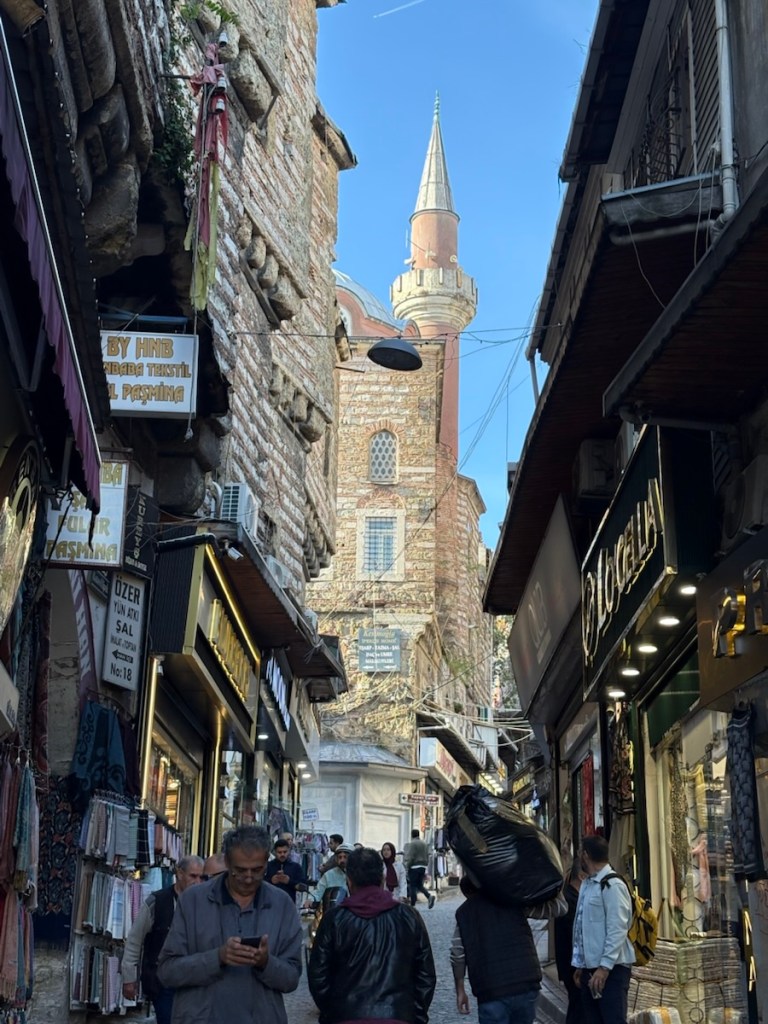
By noon the crowds were crazy in the bazaars and in the streets of Istanbul. It had been so peaceful in the morning up until about 11:00 am, and then, Voila! A crush of tourists, shopkeepers, shoppers, workers, delivery people, etc.
Leaving the Grand Bazaar while the crowds stream in
A Turkish carpet vendor I spoke with outside the Grand Bazaar showed me photos of rug shows that he did in McLean, Virginia, and at a church in Midlothian, Virginia, not far from Charlottesville! What a small world!
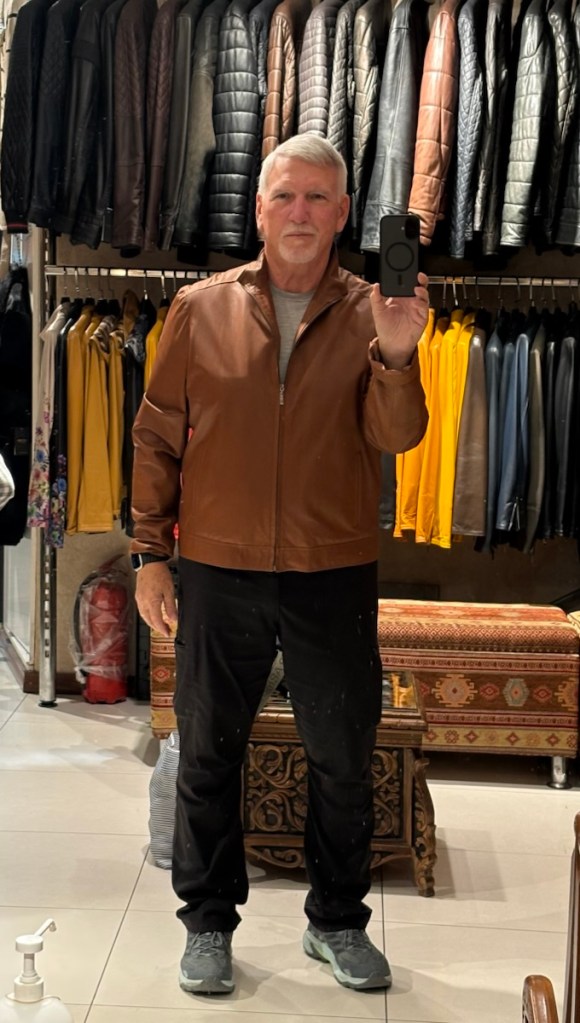
I have been very surprised with all the shop keepers I’ve dealt with in Istanbul. They’ve been universally friendly and kind. They offer you tea and sweets, and they are not pushy or aggressive at all, even though price bargaining is expected. And they are nice even when you decide not to buy something after trying on 15 leather jackets in each of three different shops (yes, I did).
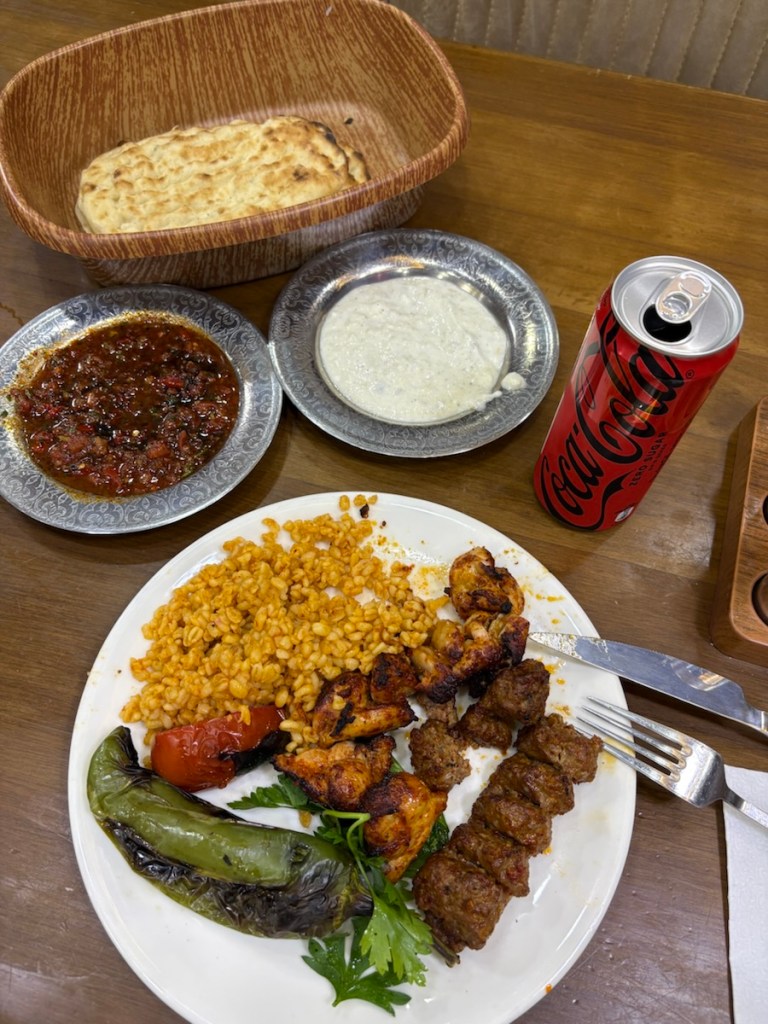
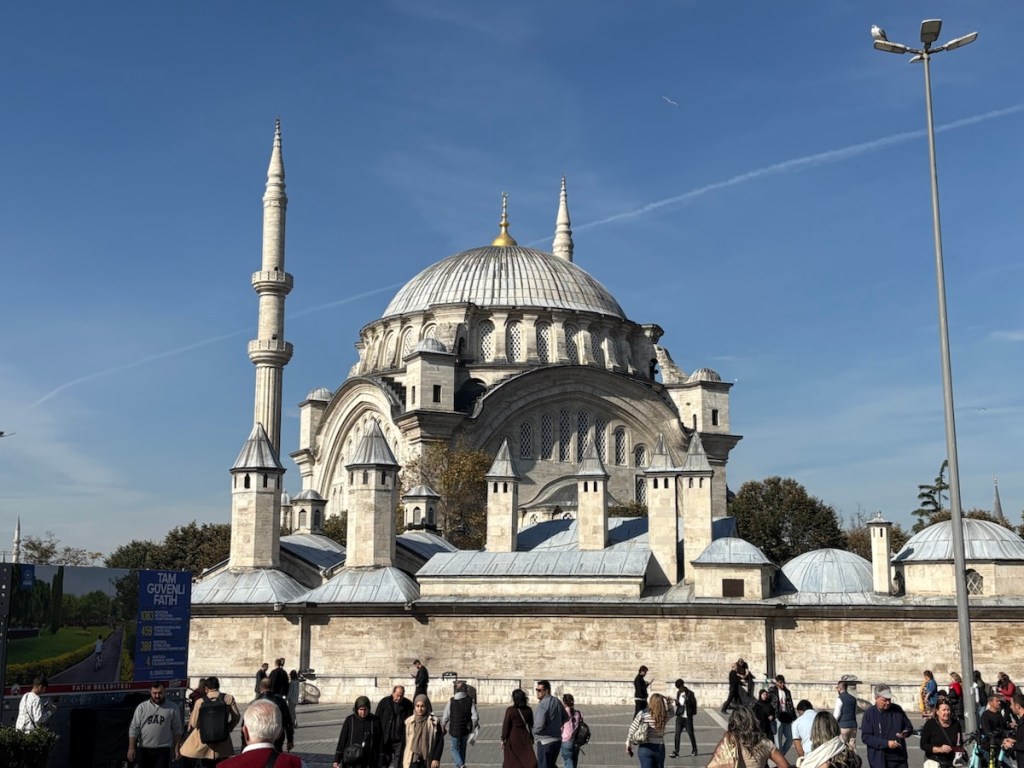
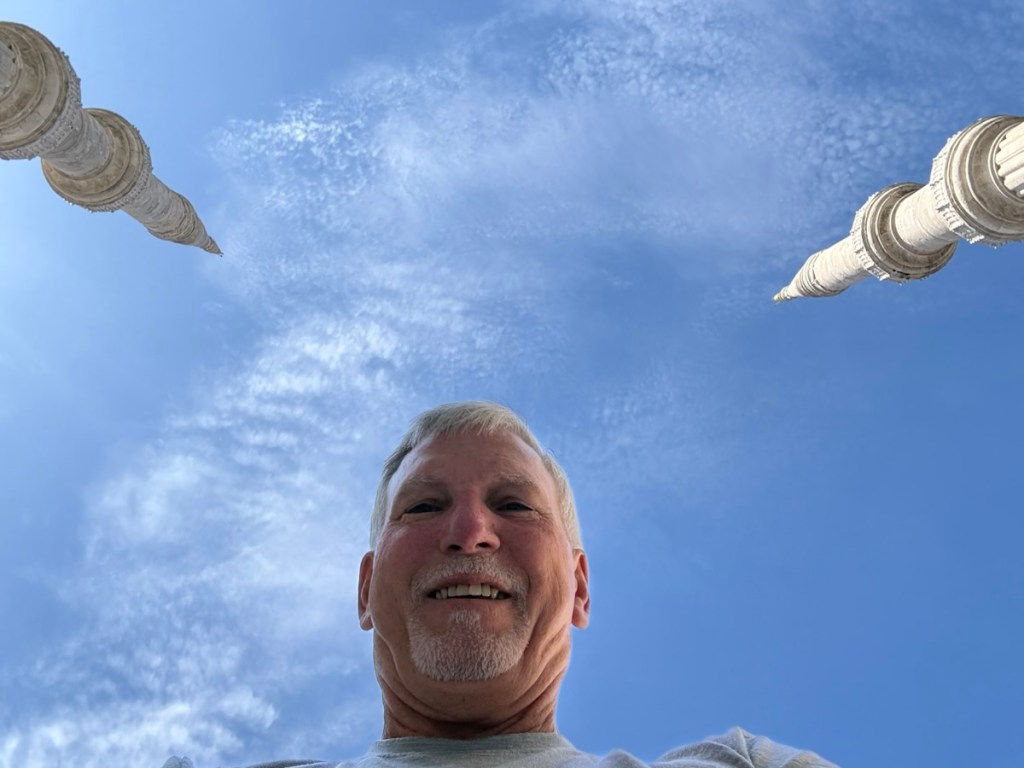
My final selection is coming home with me – a brown lamb’s leather jacketMy fantastic chicken and beef kabob lunch!Nuruosmaniye Mosque
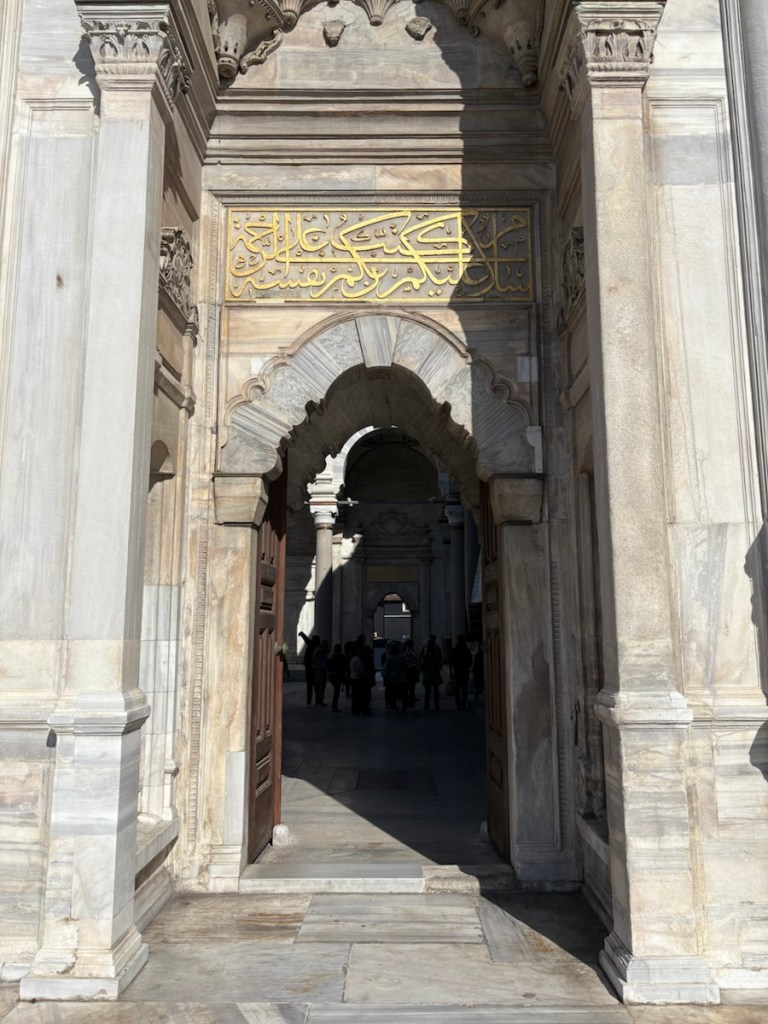
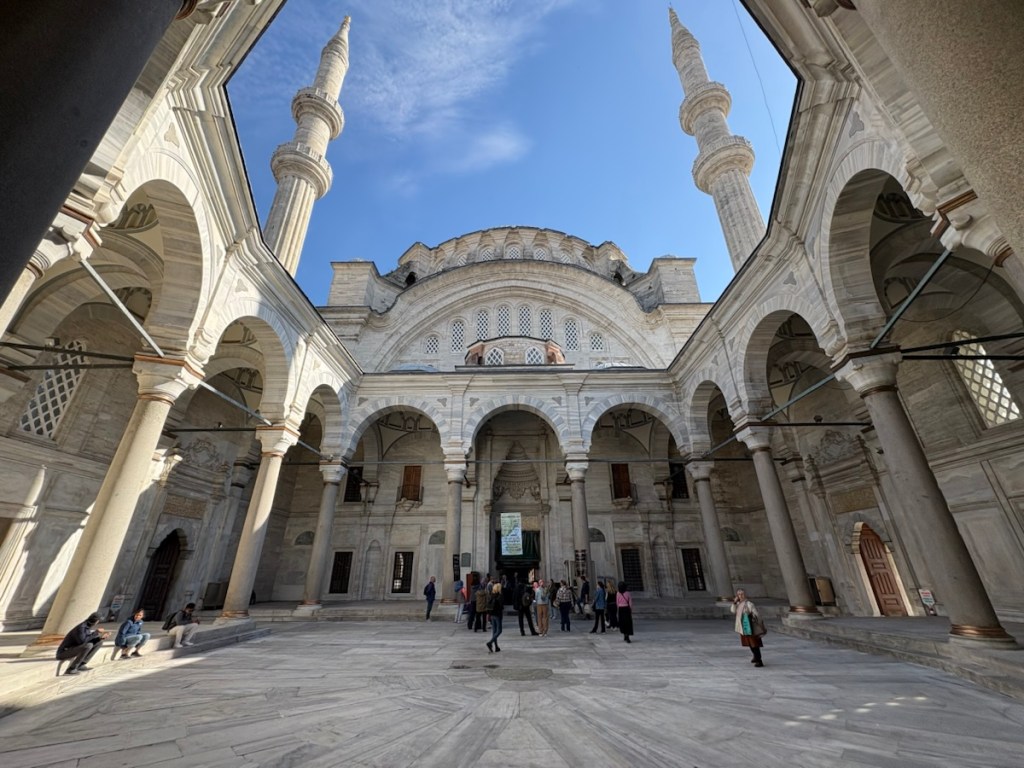
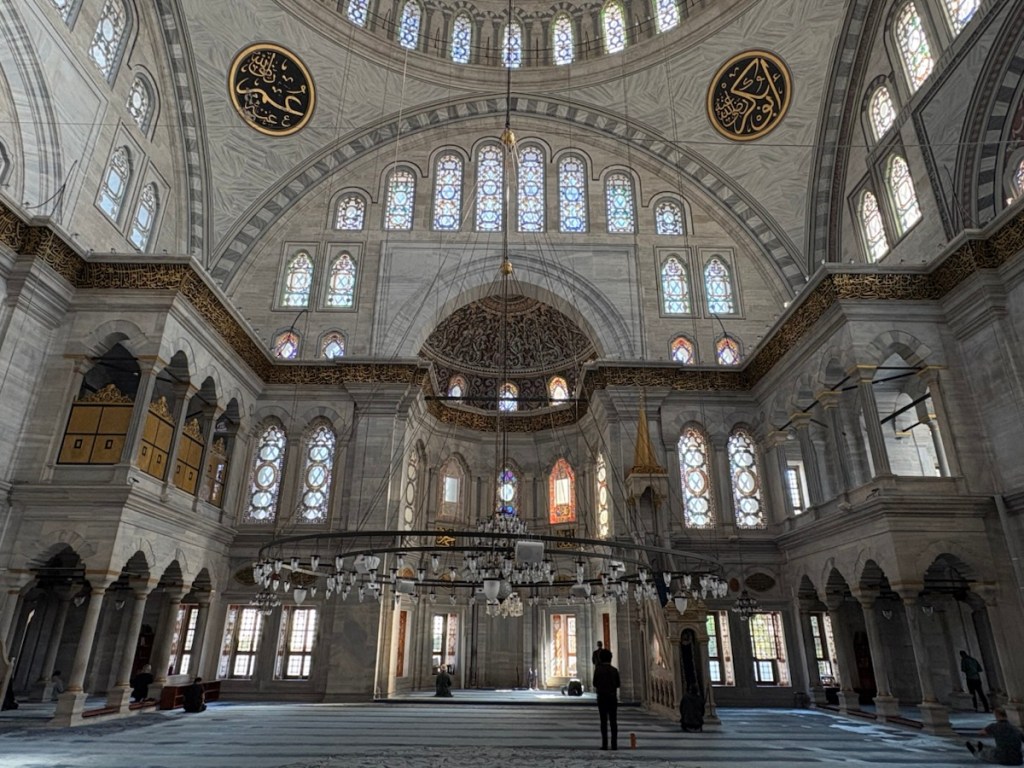
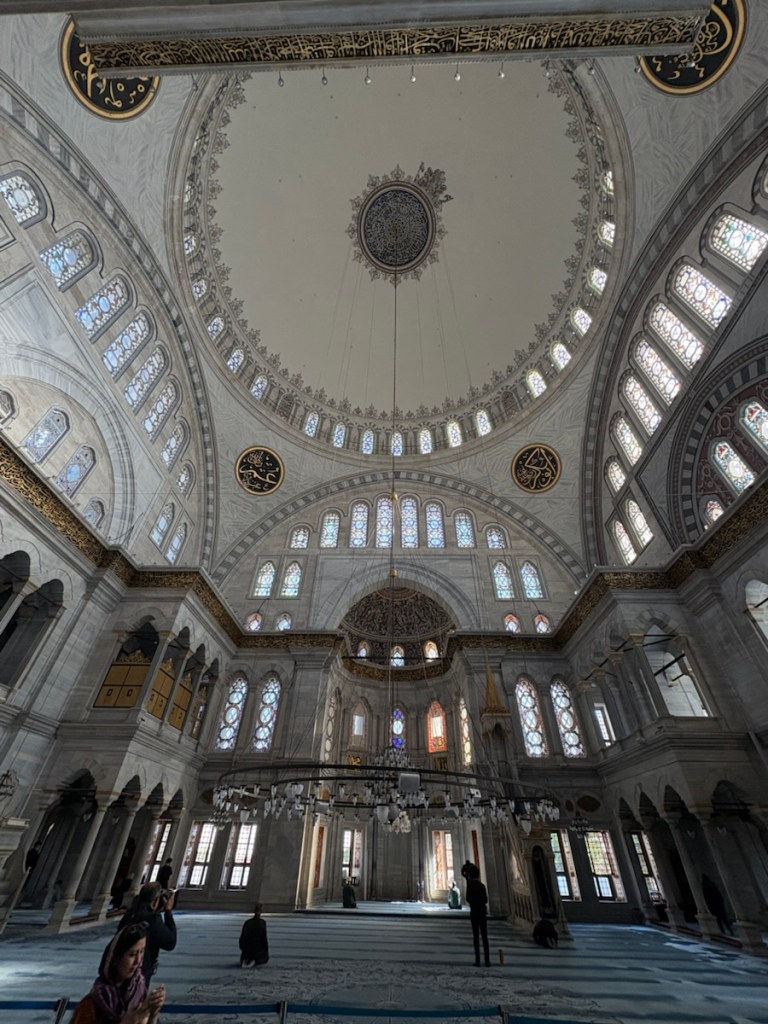
The Nuruosmaniye Mosque was the first to be constructed in baroque style in Istanbul. The mosque was completed with the name of “Nur-u Osmani” in the era of Osman III. It was built between 1749 and 1755. The mosque and its social complex, which were constructed in a period when the architecture was under the influence of westernization, are considered as a milestone in the Ottoman architecture. Besides the mosque, a social complex composed of a madrasa (school), an imarethane (soup kitchen), a library, a tomb, a fountain, and a sebil (public fountain), was constructed.
Courtyard EntranceA different view of the minaretsInterior
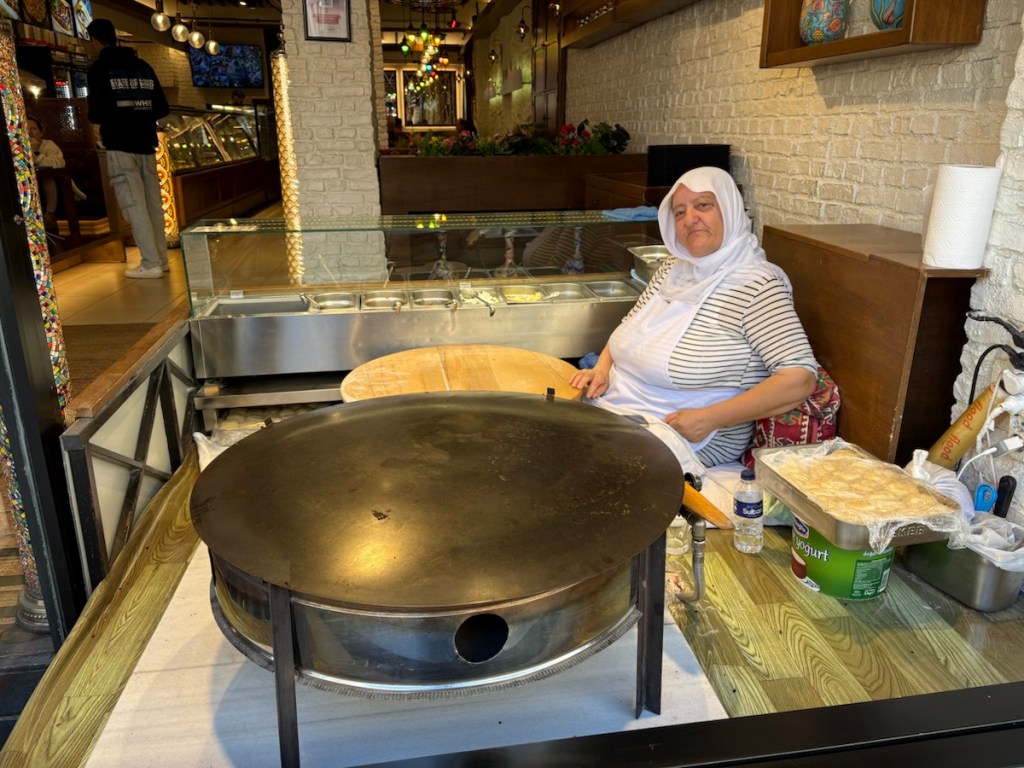
At a number of restaurants, someone is often sitting at the open air front near the entrance and making flat bread. The people are generally older women like the one pictured below. This woman seemed quite pleased to allow me to take her photo (and I think she also liked the Turkish Lira I gave her).
Well that was pretty funny – I ran into the shoeshine scam! Shoeshine guy walked by me and dropped a shoe brush. I picked it up and caught up with him to hand it back. He was thankful, and chased me down as I walked away, got down in front of me and started brushing my tennis shoes! When I said, “No, thanks,” and walked on, he came after again. “Hey, Mister, I need to finish.” “No, thanks,” again. Walked away, but one more time he followed. I finally figured out his shtick, and I kept walking. He finally relented and went off after another mark!
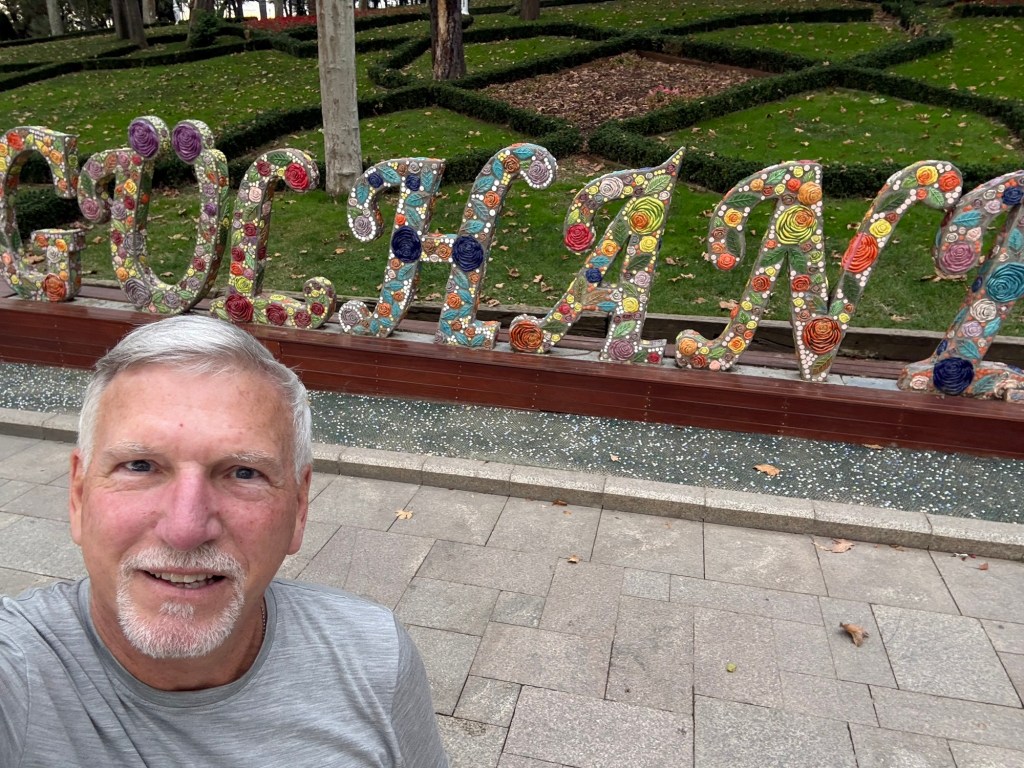
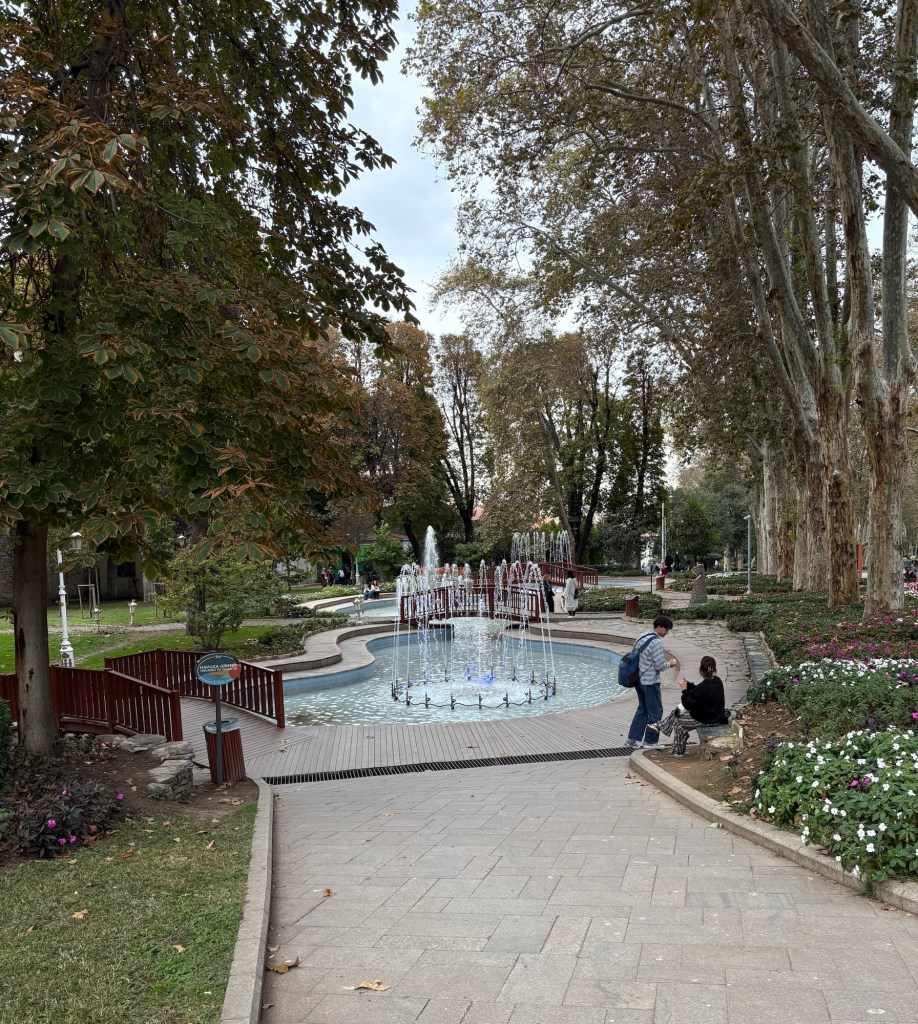
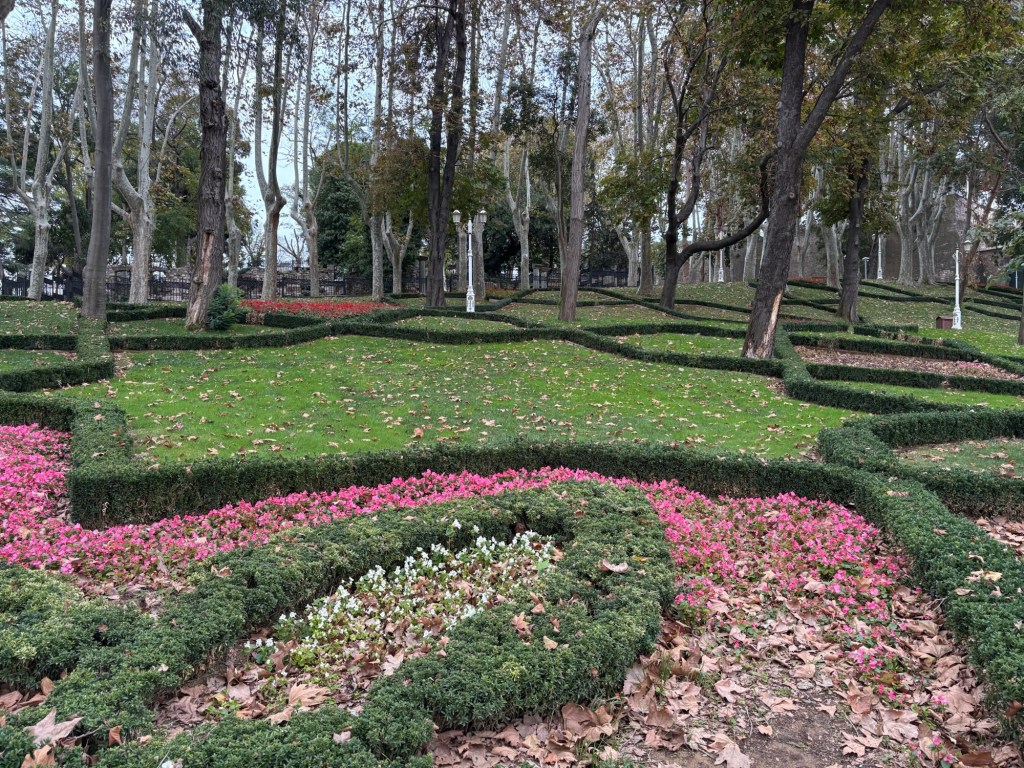
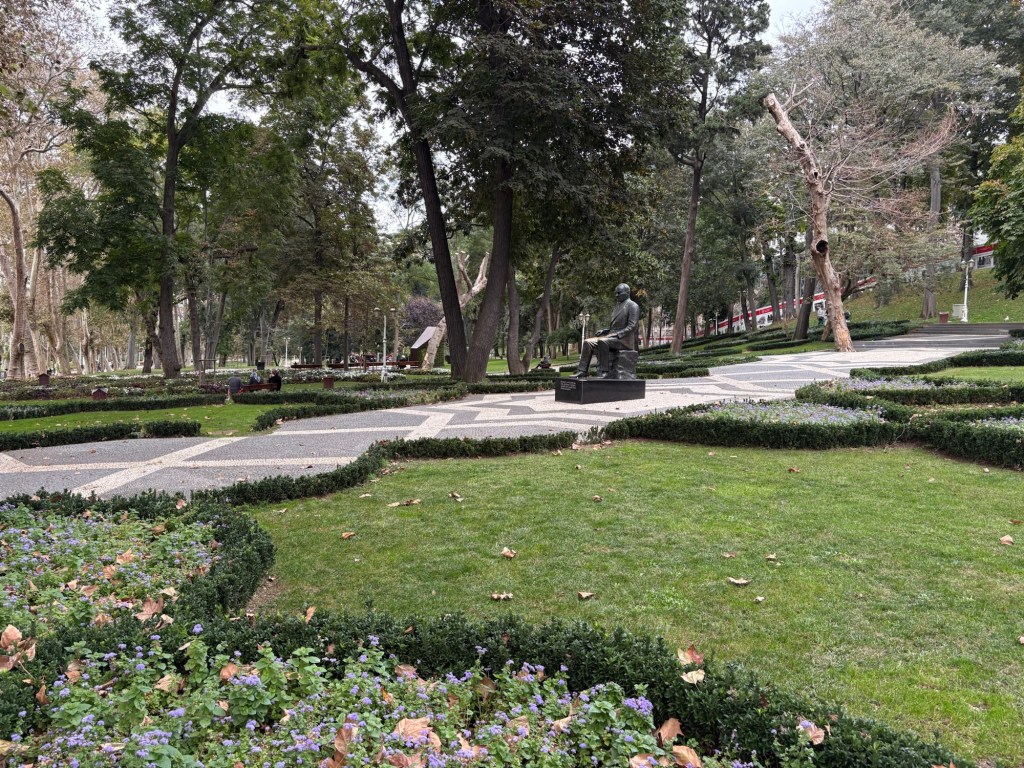
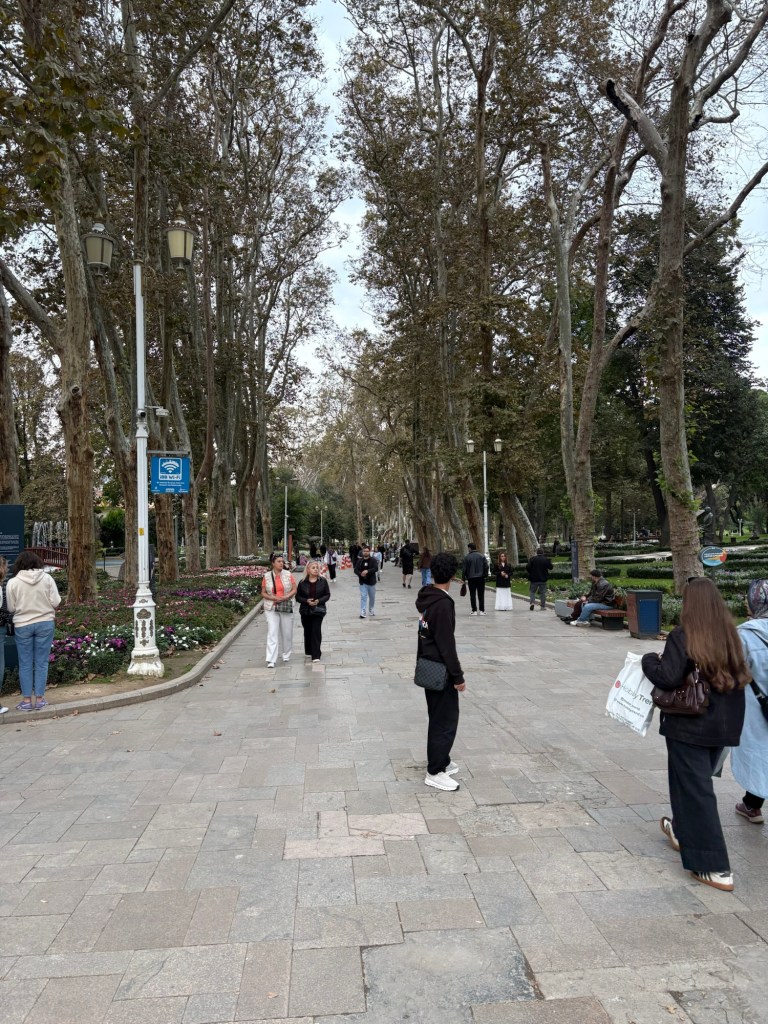
I walked through Gülhane Park, the nicest city park I’ve experienced on this trip.
“The park was once the garden of the Topkapi Palace, the former house of the Ottoman Empire Sultans. However, the Mayor of Istanbul opened the green space to the citizens of Istanbul in 1912. And Gülhane Park has grown even more and more beautiful over time. Located on about 163 acres of land, Gülhane Park awaits you with a pleasant route surrounded by rare beautiful trees, resting areas, benches, children playgrounds, artistic sculptures and historical artifacts.”
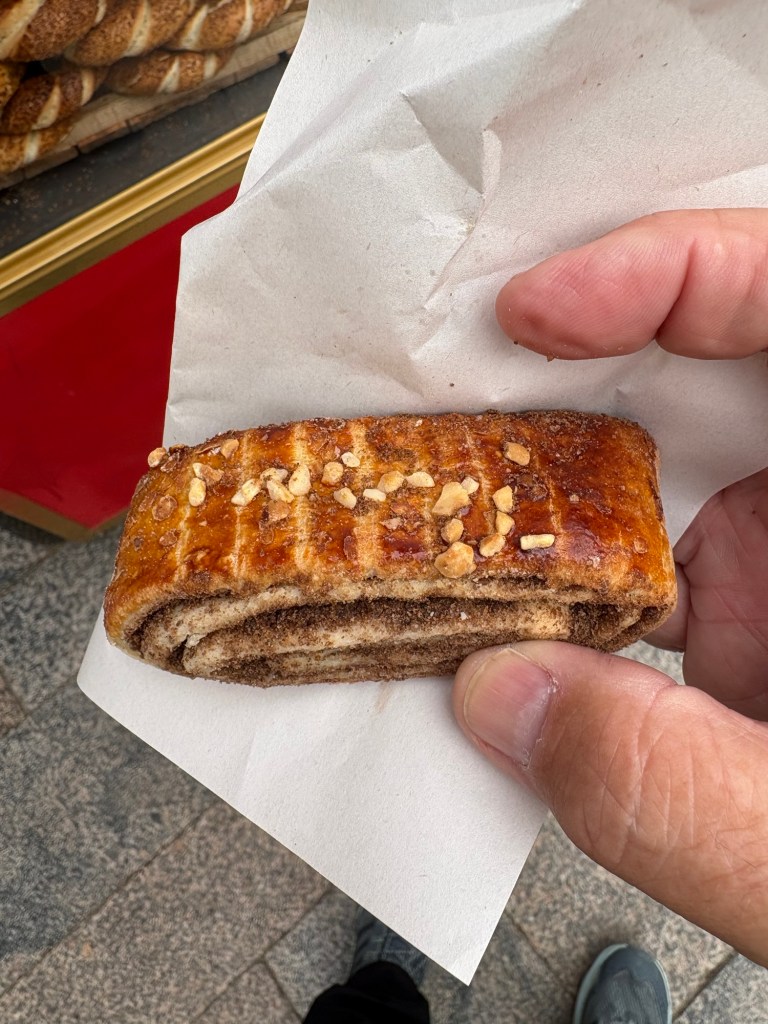
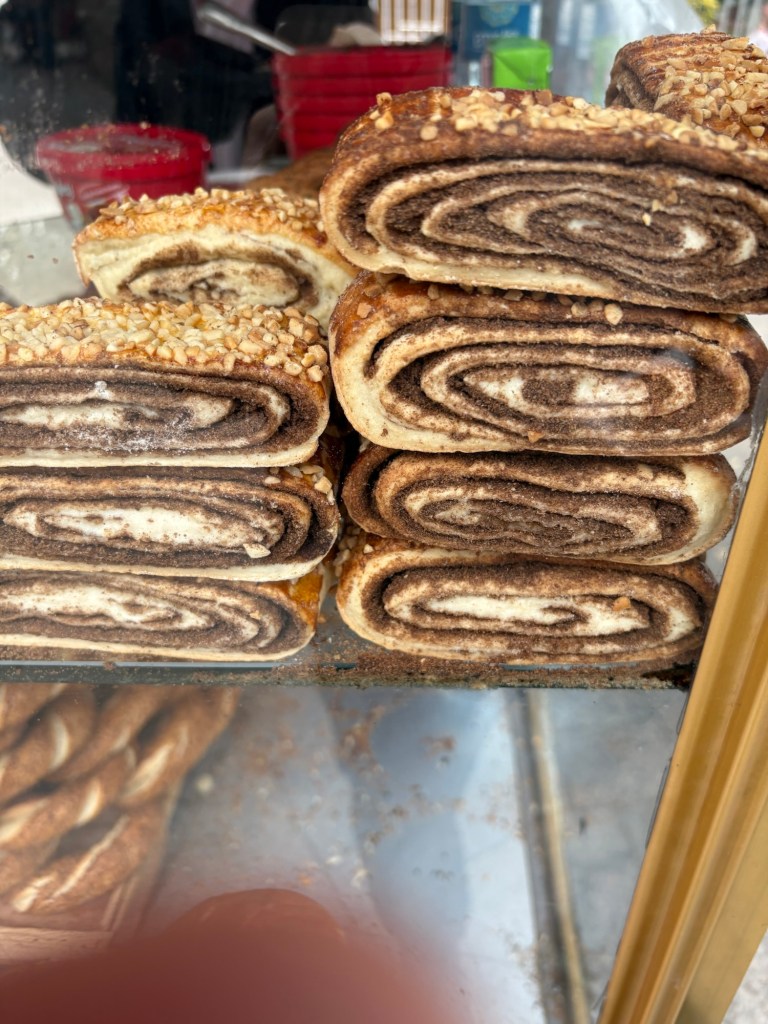
I enjoyed a small pastry in the park called, “Kek.” It’s pronounced like the English word, “cake.” It was a pastry with multiple layers of cinnamon. Very good and not too sweet, unlike most American baked goods. I’ve never understood why the rest of the world (most…) can make “sweets” that are not, but are still delicious!
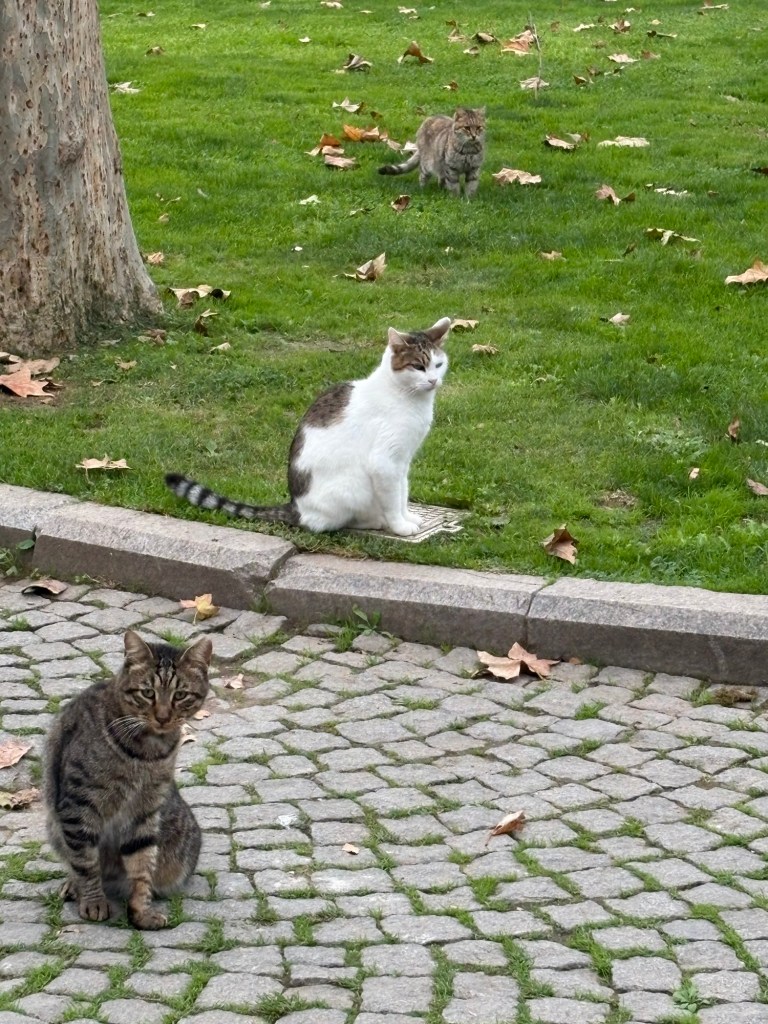
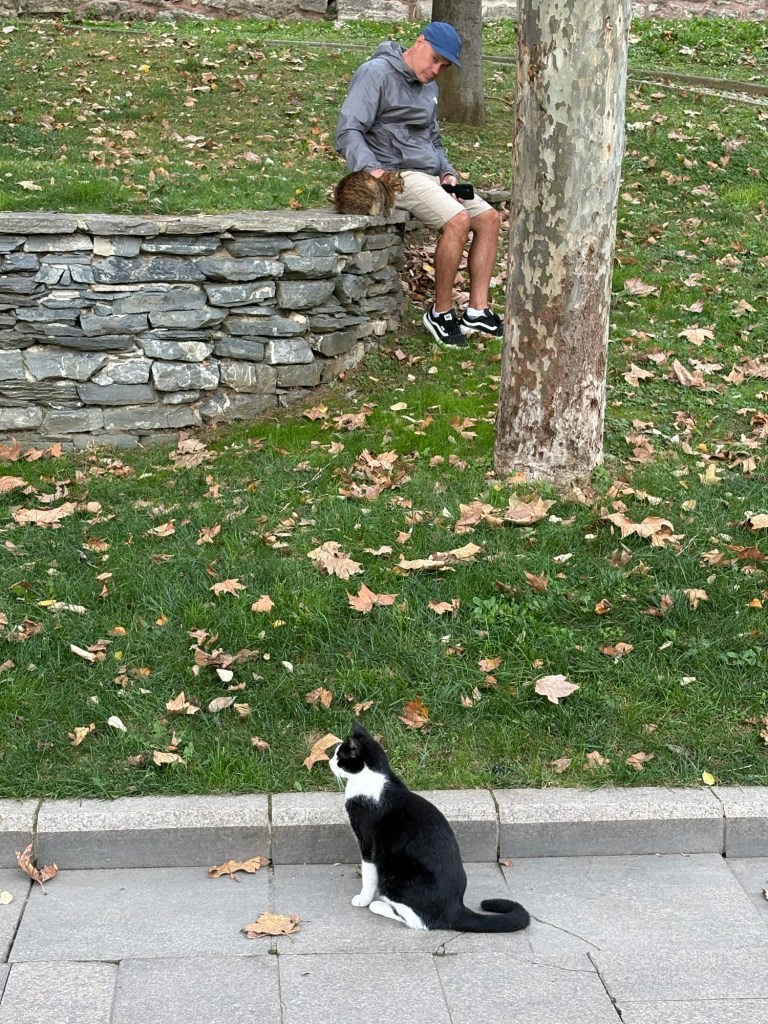
Cats, always more cats!
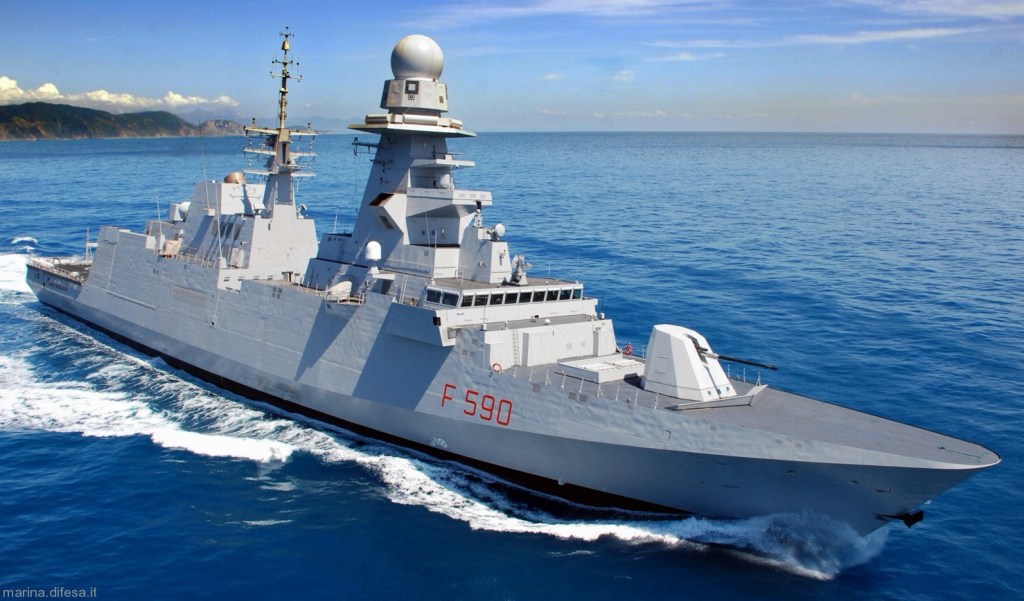
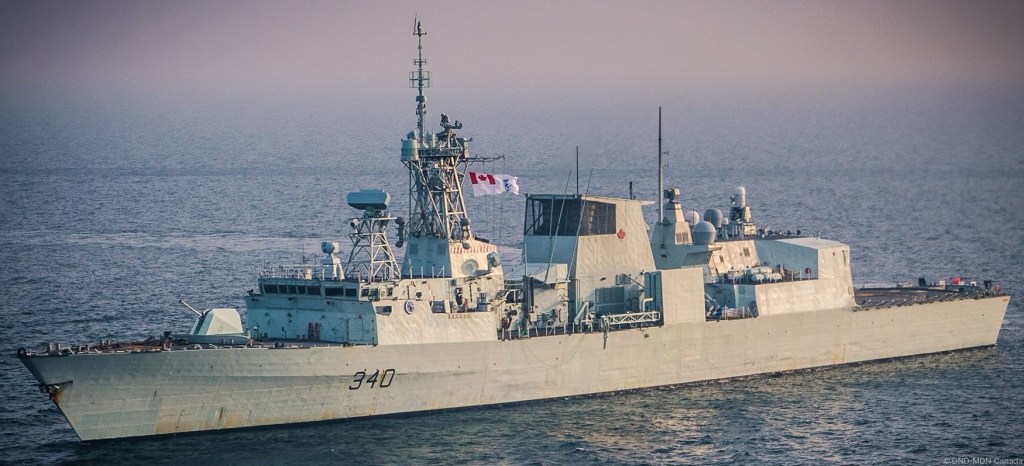
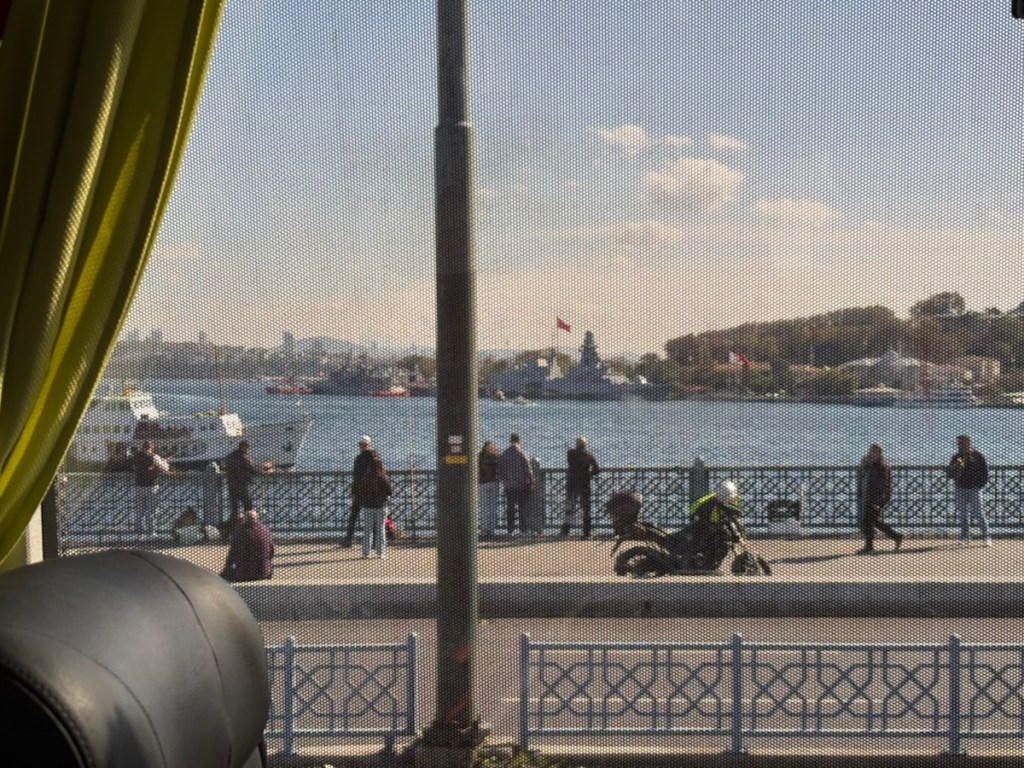
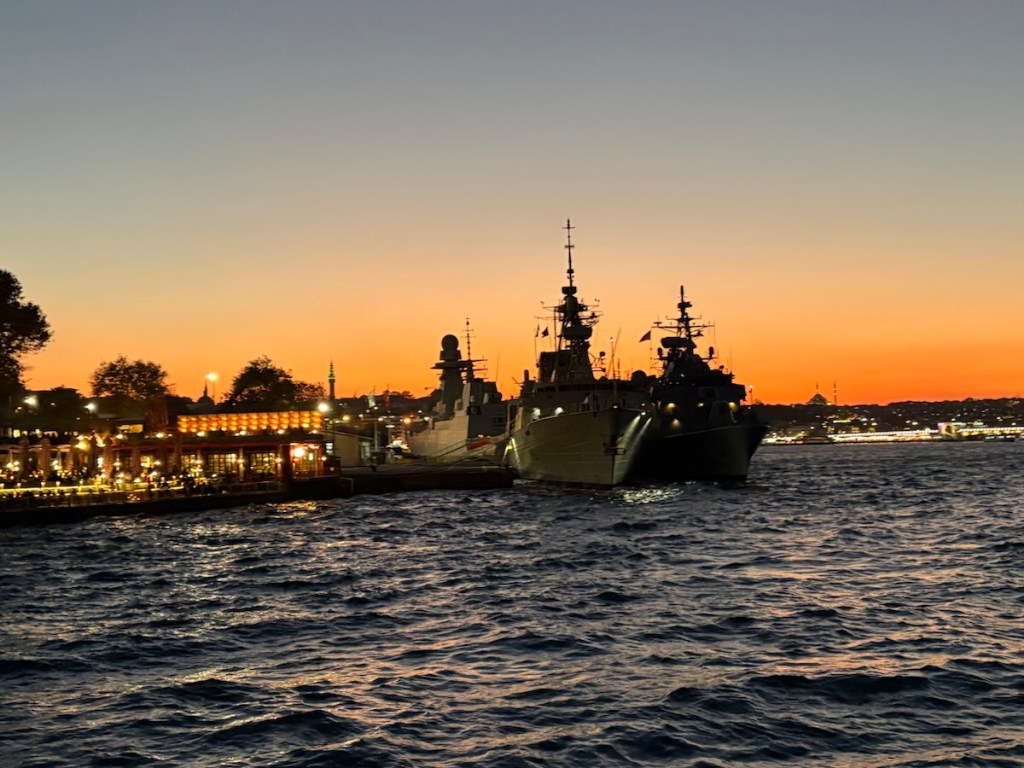
In the category of, “No One Cares but Me,” I noticed several warships in port during my evening cruise yesterday. It was too dark to determine their identity, so when I walked by the waterfront area today, I figured it out. There was a Turkish frigate, but since it was tied up outboard of another vessel, I couldn’t get the hull number. But the other two were the:
– ITS Carlo Bergamini (F 590), an Italian Navy frigate commissioned in 2013.
ITS Carlo Bergamini
– HMCS St. John’s (FFH 340) – a Halifax-class frigate that has served in the Canadian Forces and the Royal Canadian Navy since her commissioning in 1996.
HMCS St. John’s
All three were NATO member ships, so maybe they’re doing some joint exercises.
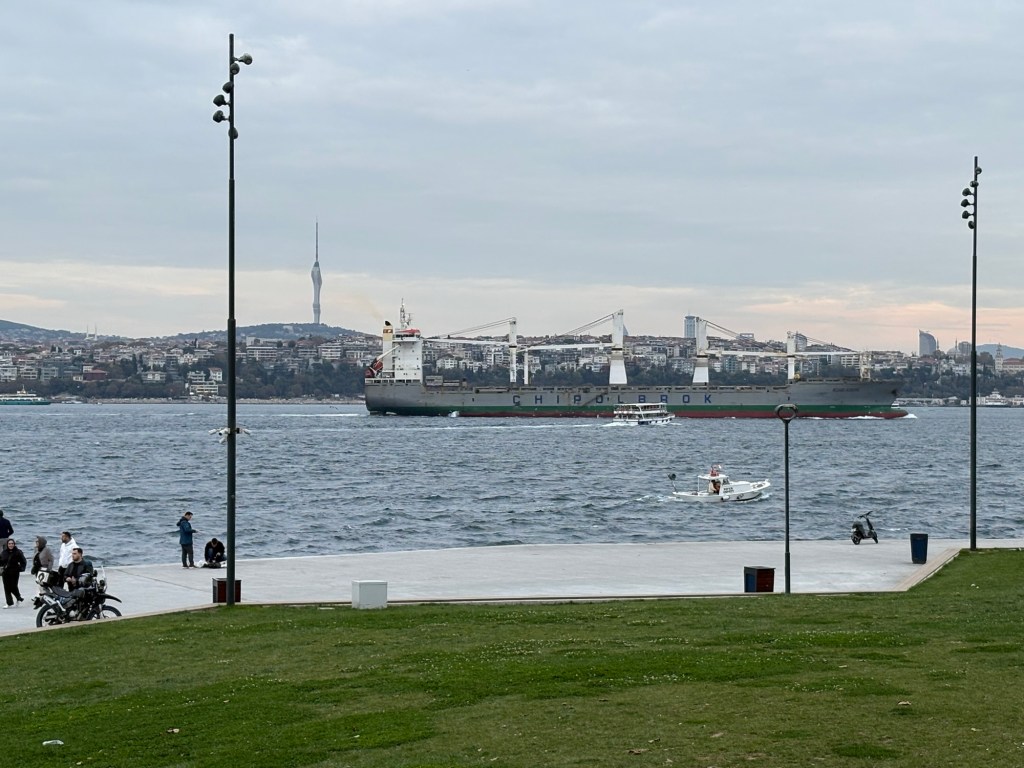
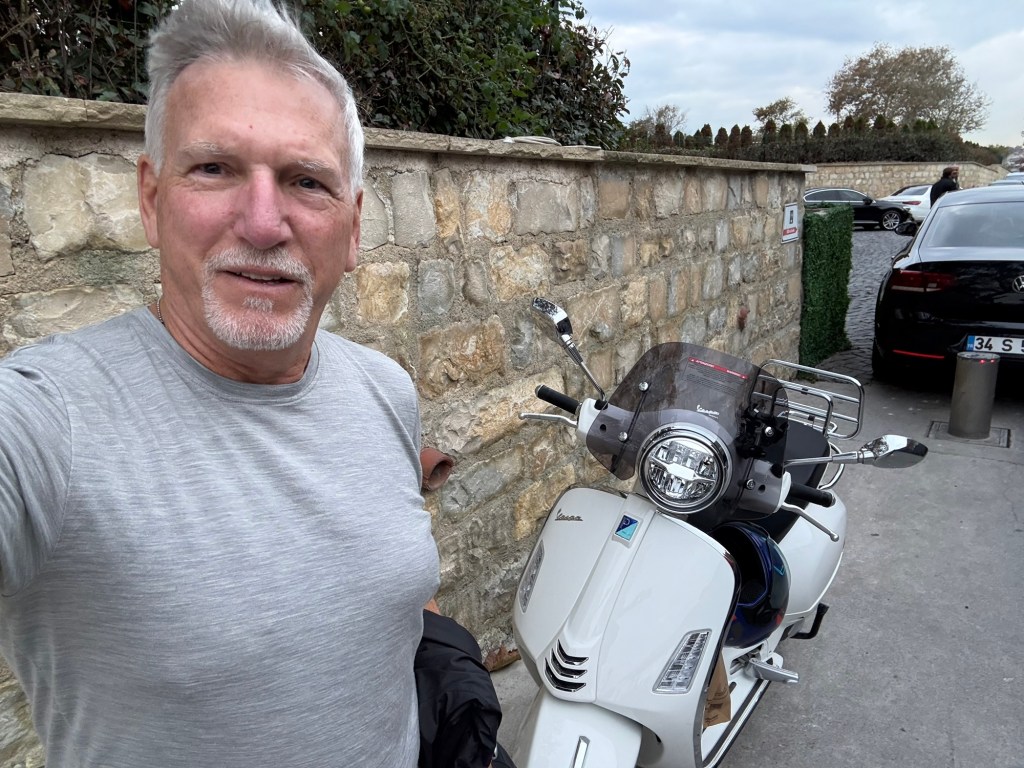
A ship transiting the BosphorusMaybe I could settle for a White Vespa…?
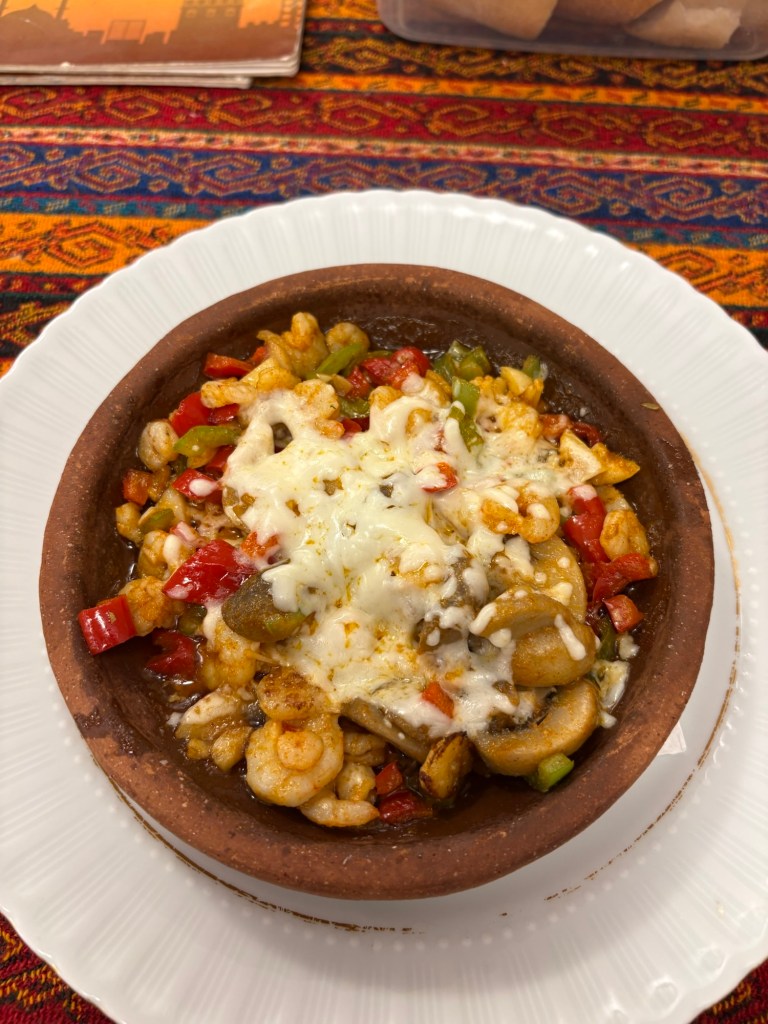
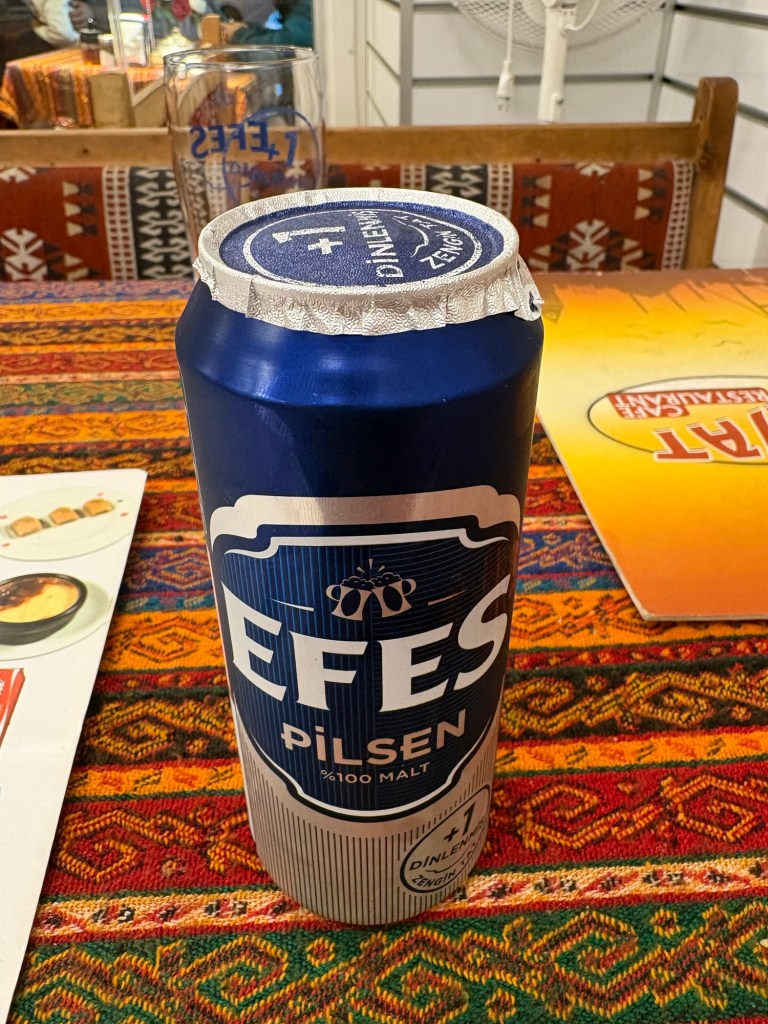
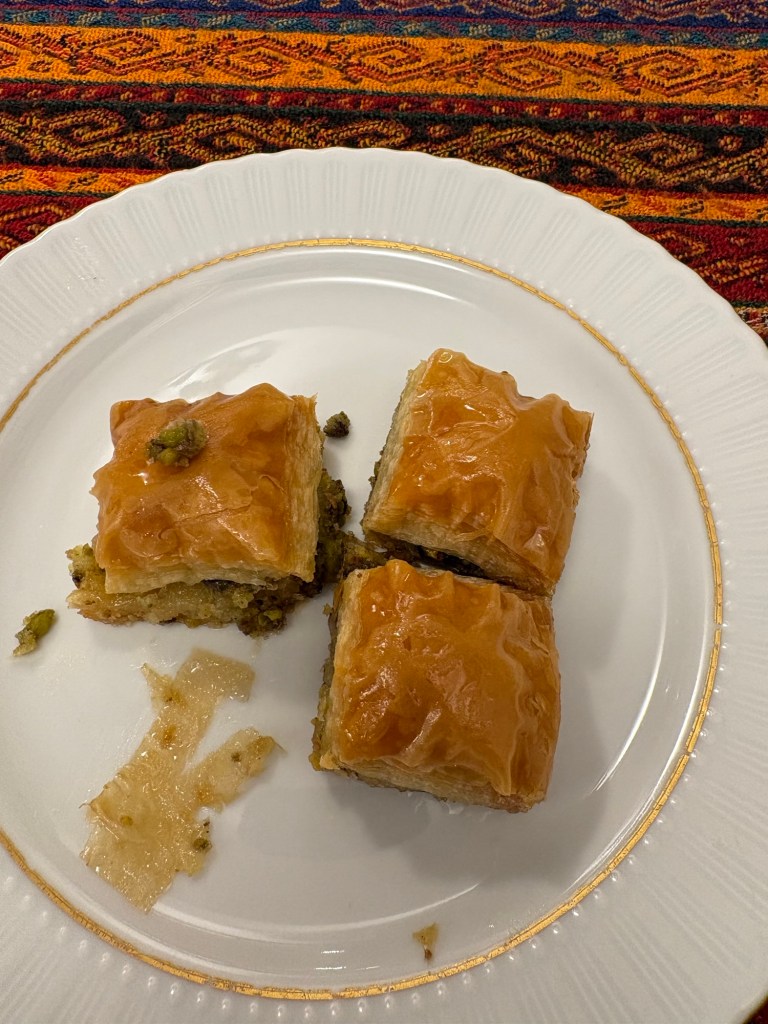
Dinner was a simple affair at a small cafe near the hotel. I had a delicious shrimp, mushroom, peppers, cheese, and garlic dish, with Efes, a Turkish beer (with a protective cover!), and a trio of very good Baklava bites (the exception to the not so sweet treats).
Before you go…
I only know 25 letters of the alphabet. I don’t know y.
Clear skies in Sofia again this morning, but the temp was down to 34 degrees at 6:45 am when I headed to the airport. Chilly! I had another comfortable flight on Turkish Airlines. They are very efficient processes and friendly staff. They even feed you a small meal on the short flight from Sofia.
After I got through through immigration and customs without any hiccups, I stopped at the “tourism desk” for Turkish Airlines. They directed me to the bus stops two floors below to head into downtown. The bus into town was only about eight dollars for the one hour ride! And the bus was actually pulling out as I walked up, but the attendant stopped it to allow me get on!
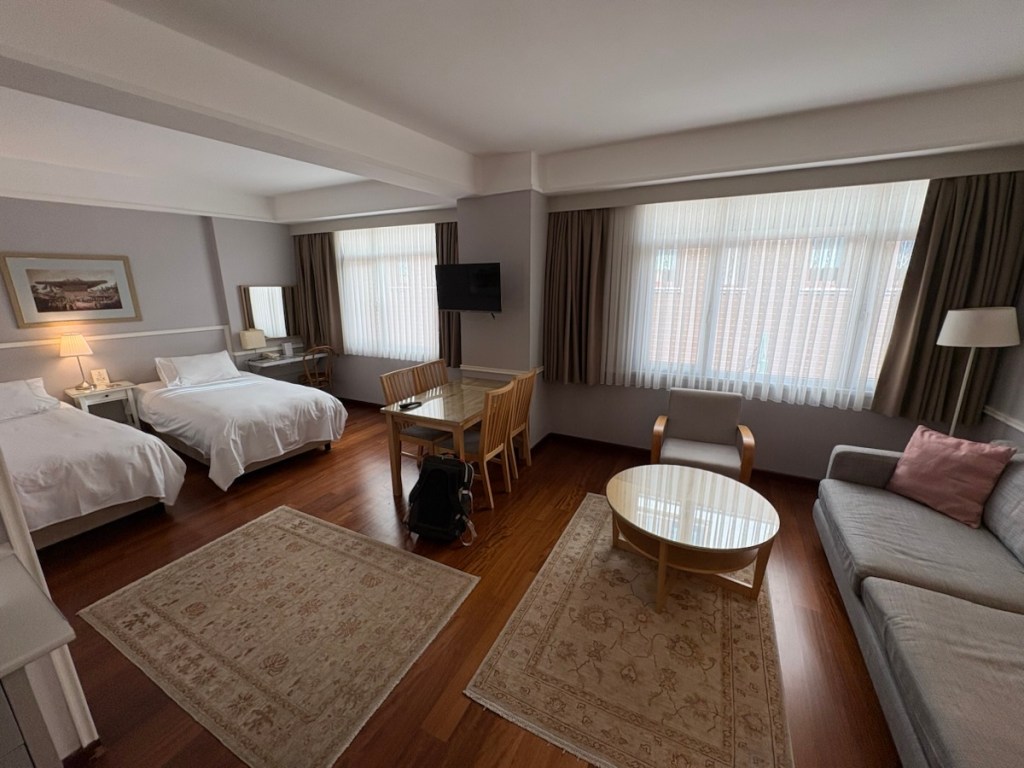
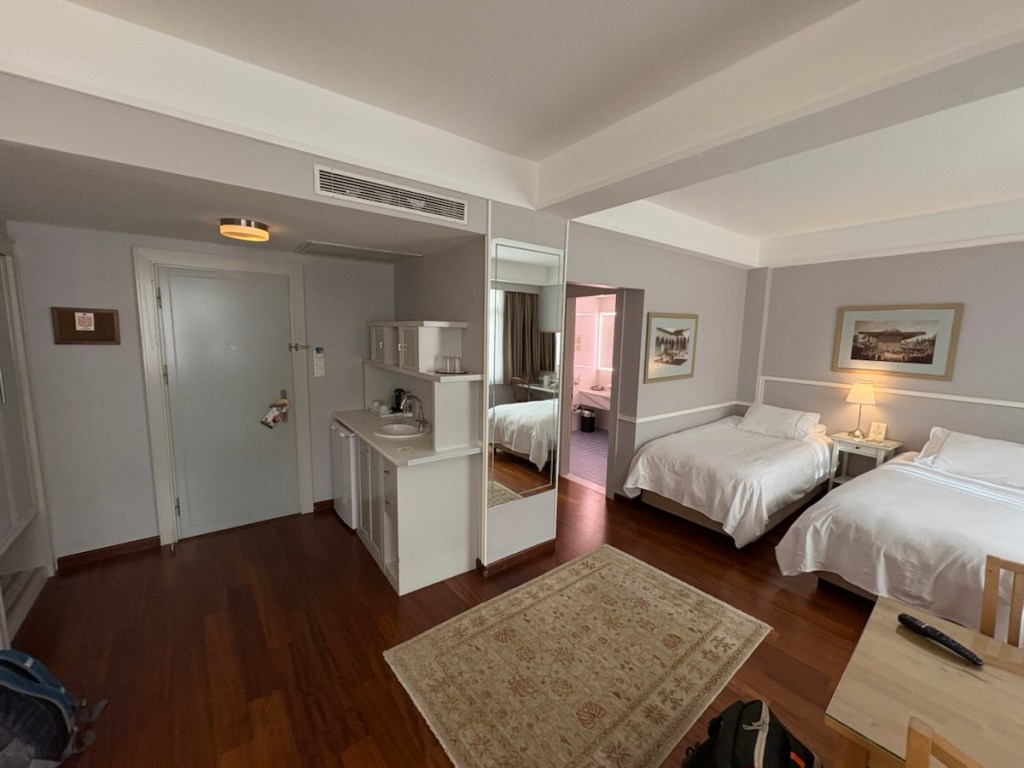
My hotel room in the city center for two nights was free – compliments of Turkish tourism and the airline. Because I was willing to book a layover in Istanbul between flights (which I planned anyway), I was able to select from several free lodging options. Great deal!
My FREE room for two nights!
Istanbul is a large city…at almost 16 million people! The Los Angeles metro area is only ~13 million. So I obviously will only be able to make a tiny scratch on what the city, and country, have to offer. But wow! This a really amazing place!
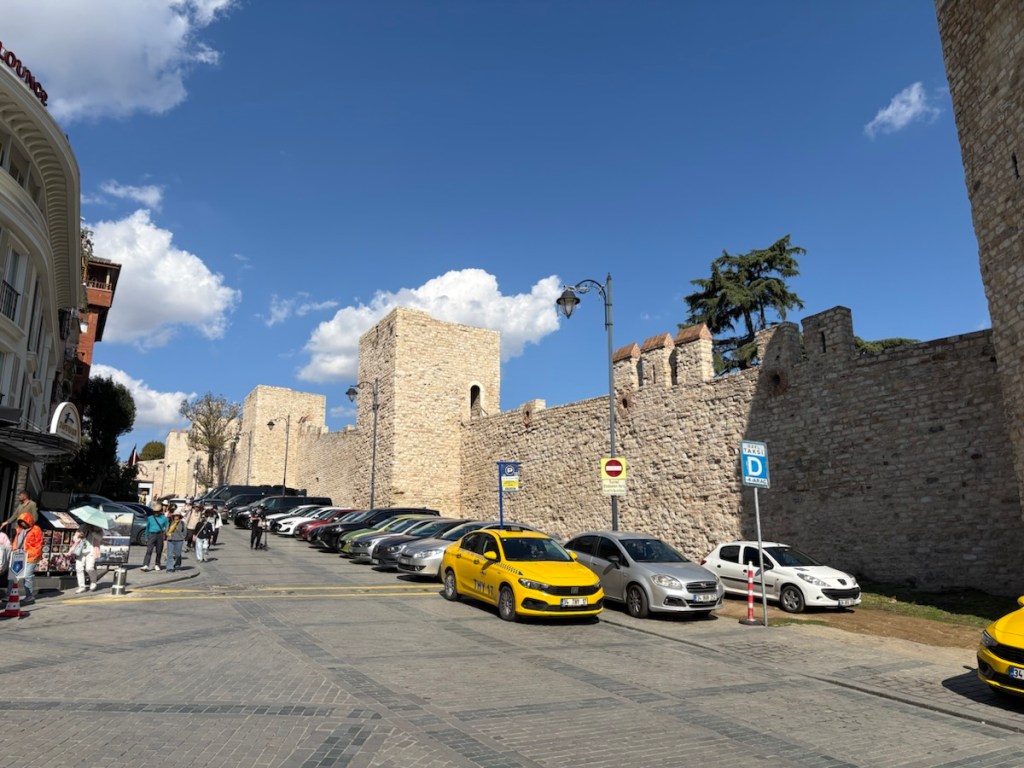
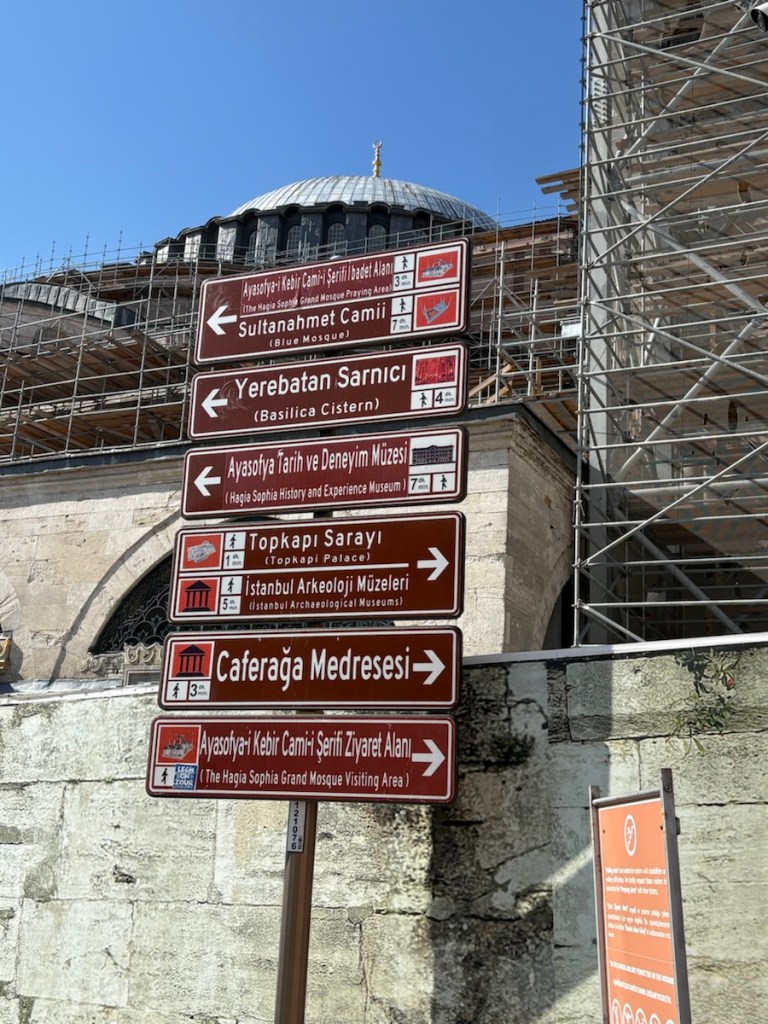
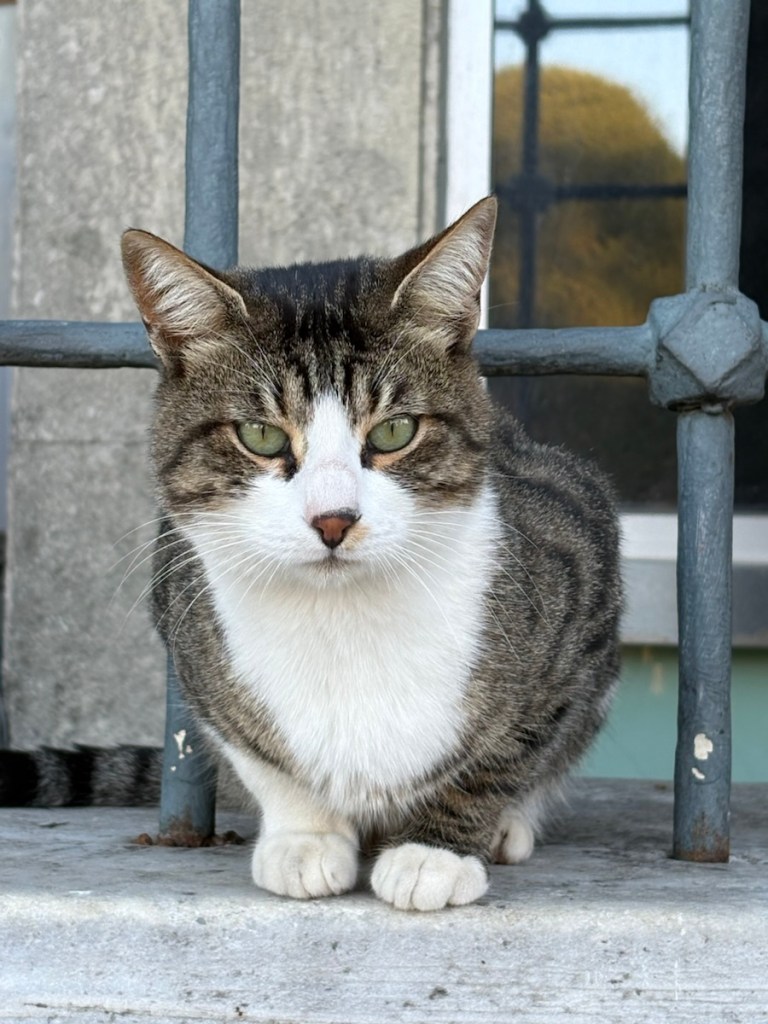
Part of the old city wallsPretty good signage!Istanbul is another cat city – they are everywhere!
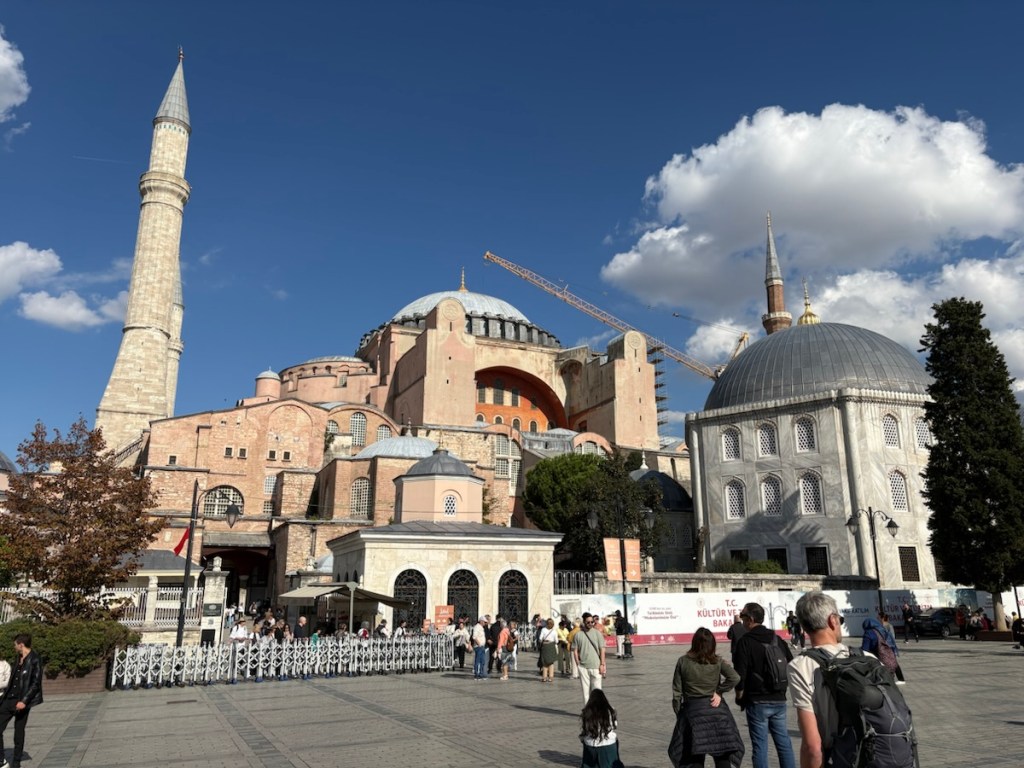
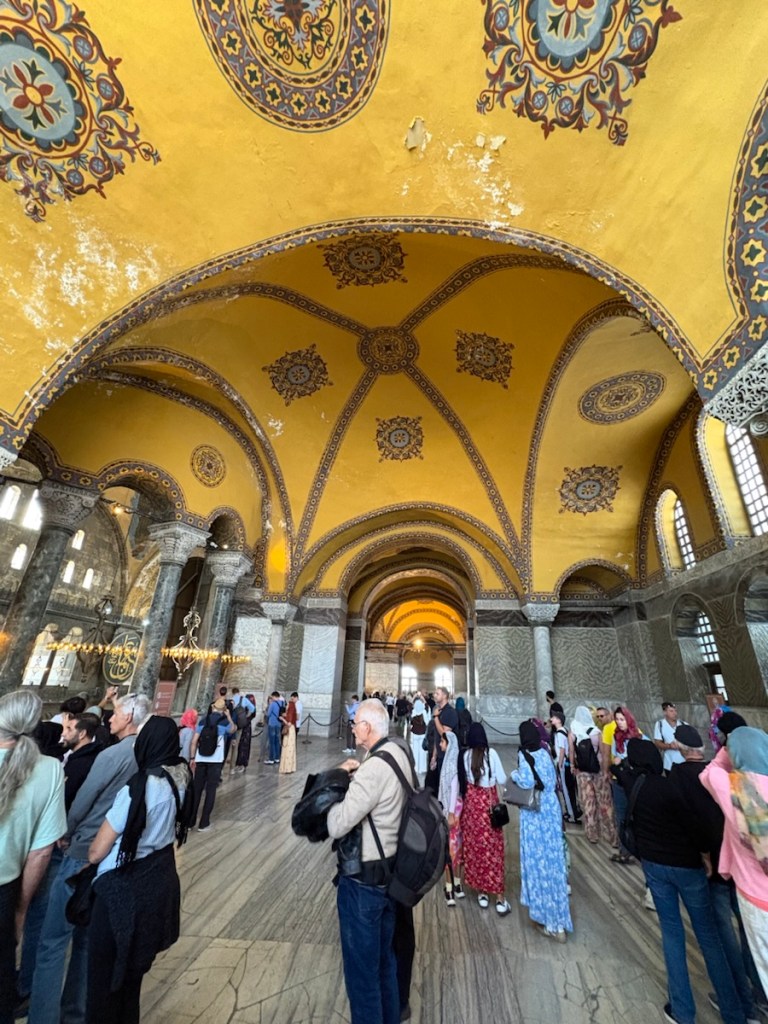
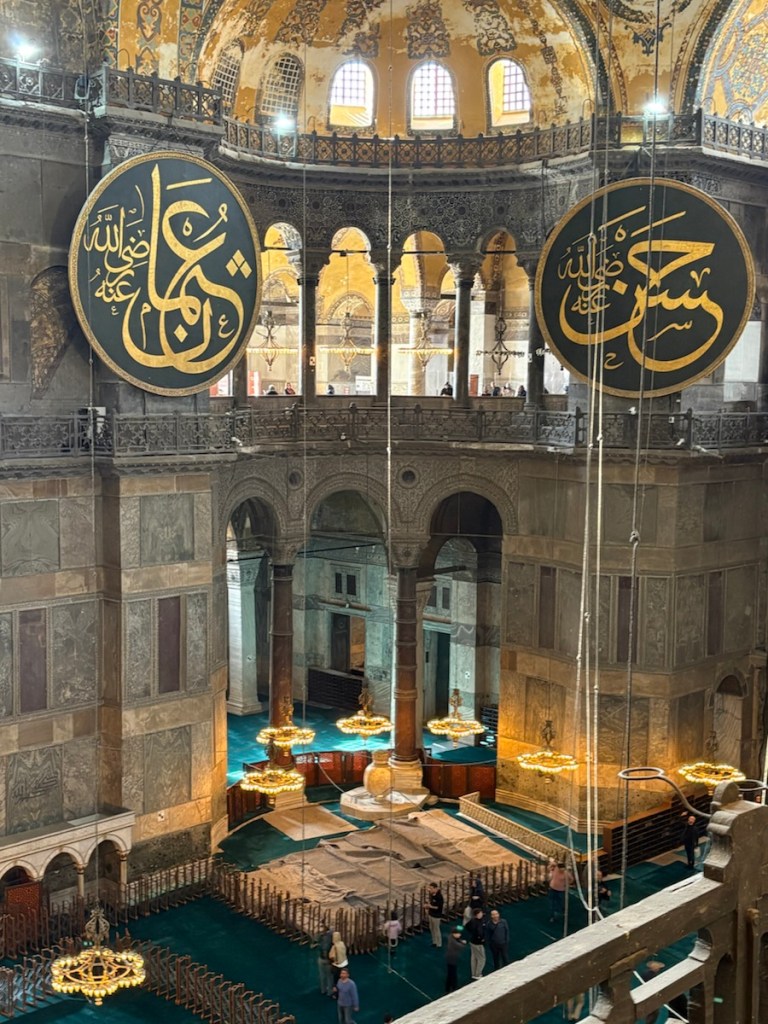
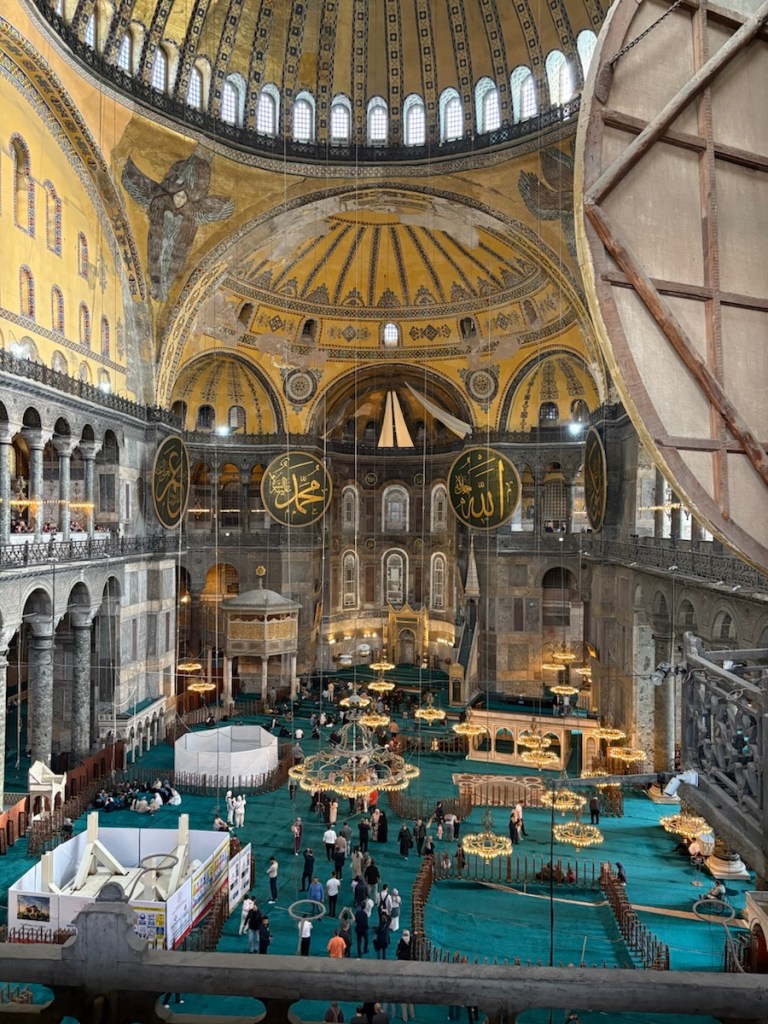
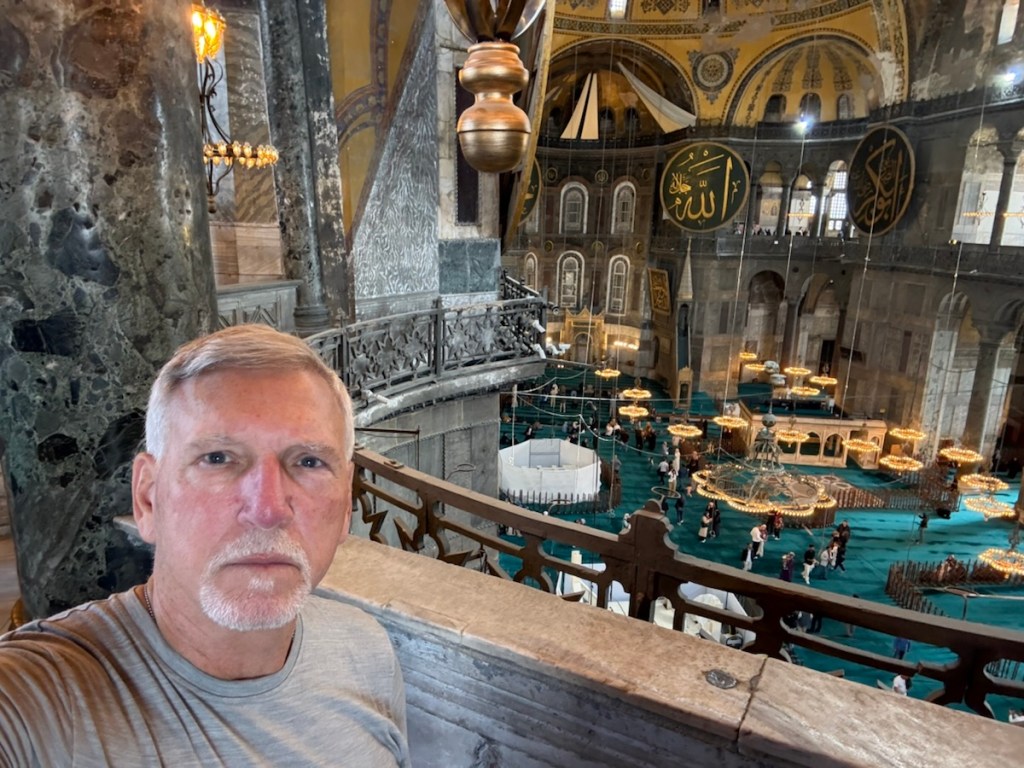
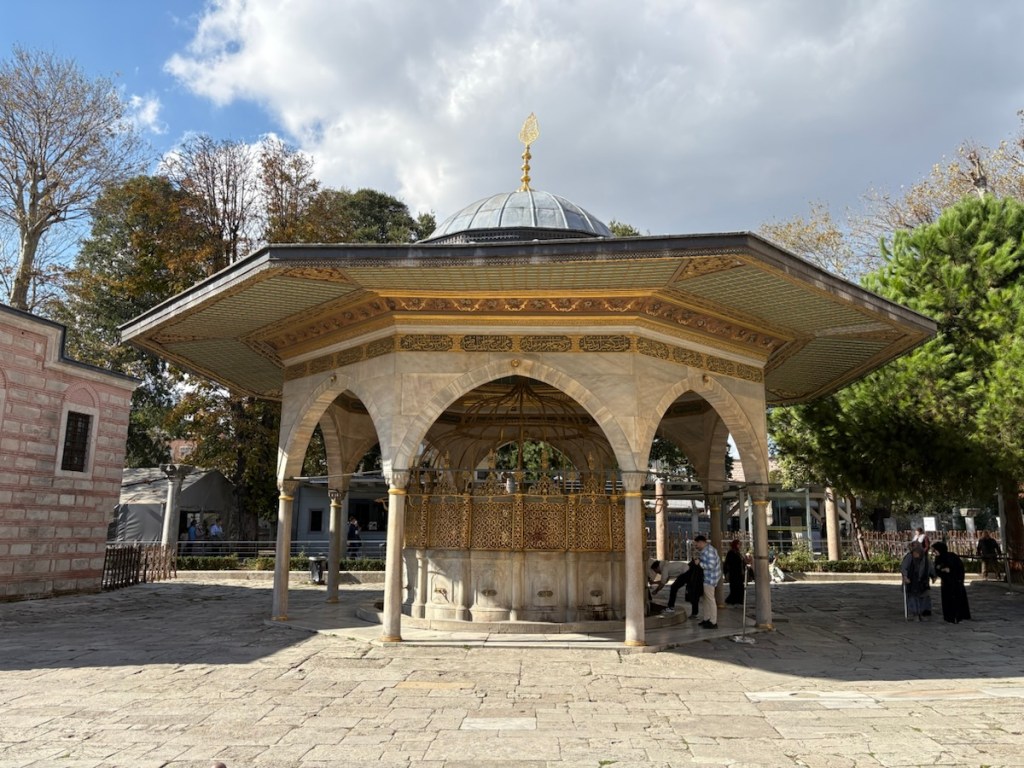
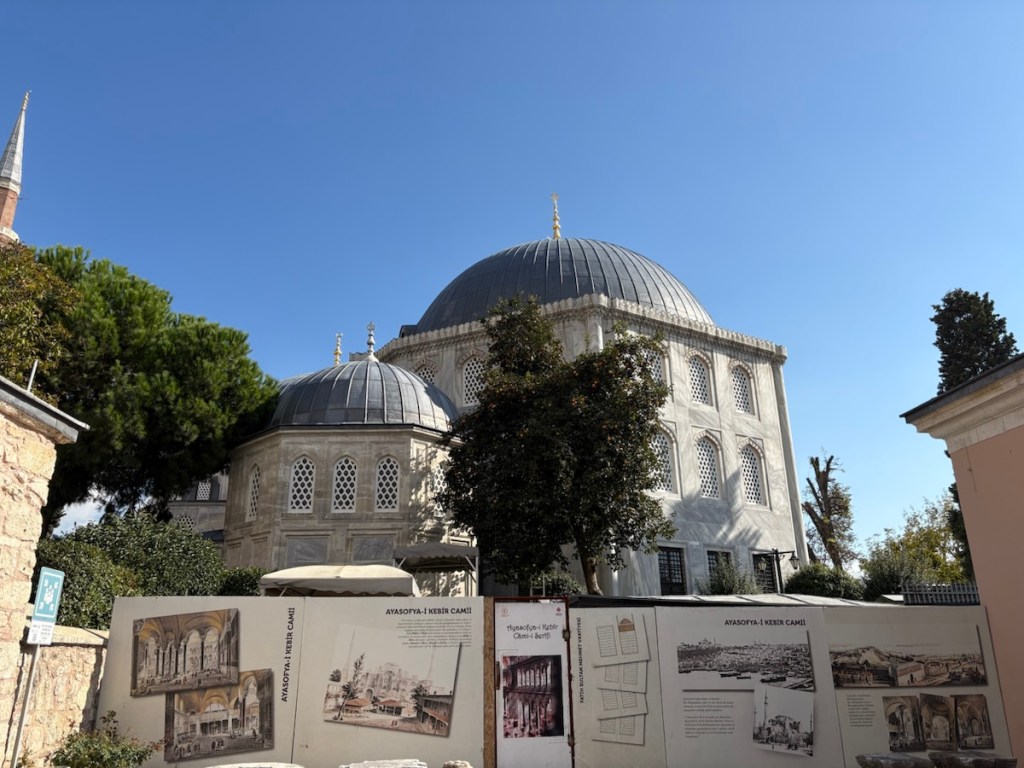
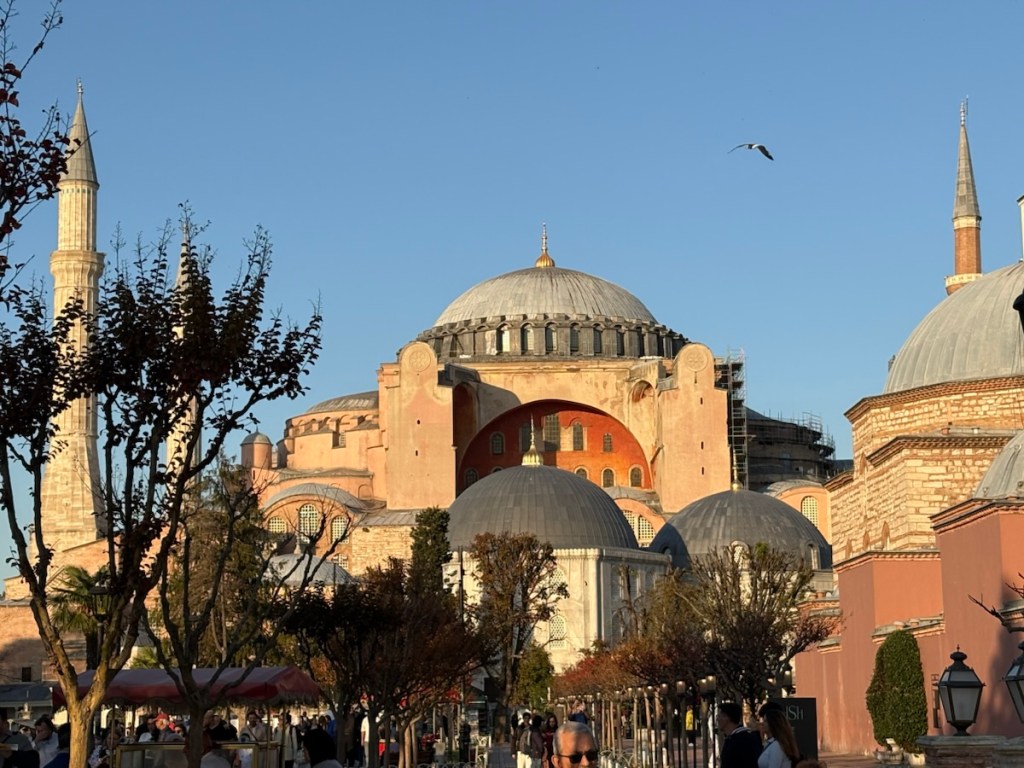
Hagia Sophia Mosque (Ayasofya Camii), nicknamed, “The Holy Wisdom,” is awe inspiring.
Really hard to gauge the massive scope of the Mosque from the photo
It is a magnificent Byzantine church turned mosque turned museum turned mosque again since 2020. Its impressive dome and intricate mosaics will take your breath away. Massive in scale and scope, it was originally intended by Roman Emperor Constantine to be the largest sanctuary ever. The original structure was built almost 1,700 years ago in the 4th century, back when Constantinople (now Istanbul) became the center of the Roman Empire.
I must have been giving my phone the evil eye!
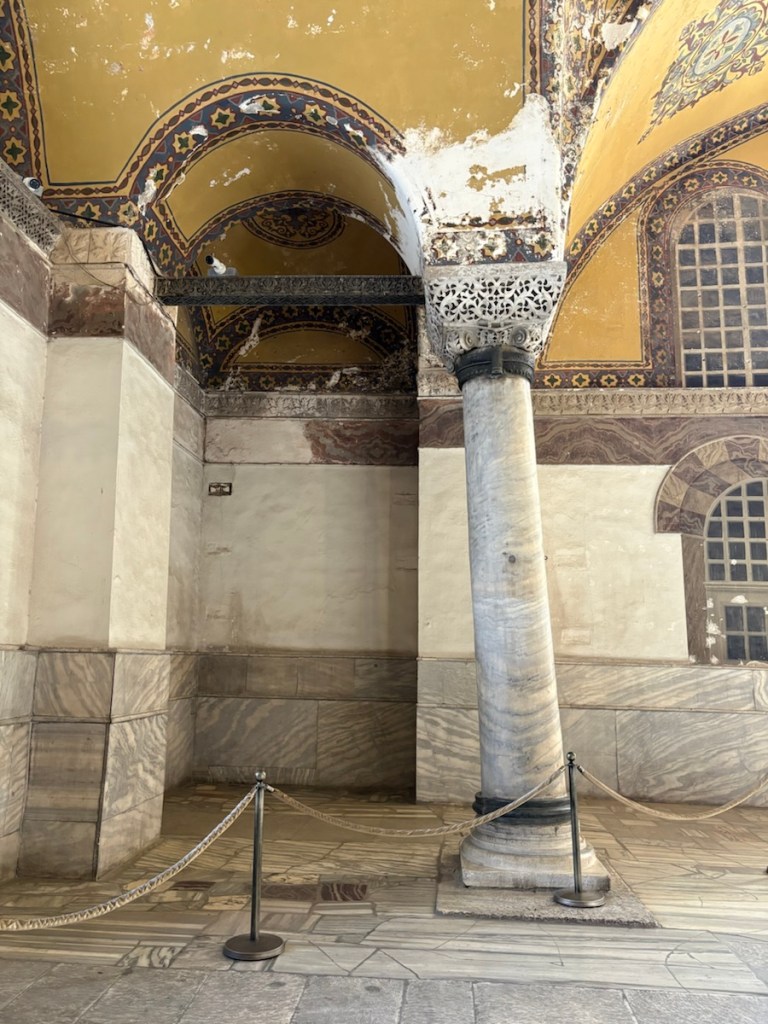
Subsequent Roman rulers rebuilt, added, expanded, and modified, including a massive expansion in 532 A.D. using 10,000 workers. That also included the largest dome on earth at the time. Stone came from sites across the Roman Empire. However, the dome actually collapsed a mere 20 years later. So the next emperor had the dome rebuilt, this time even higher than the latter. And that version still survives to this day.
Catholic and Orthodox Christianity split in the 11th century. And in 1204 during the Second Crusade, many of the treasures in Hagia Sophia were looted. In 1400s, Sultan Mehmet the Conquerer attacked and eventually defeated the Romans. Hagia Sophia was turned into a Mosque in 1453. And in the following centuries, Constantinople continued to flourish under the Ottomans.
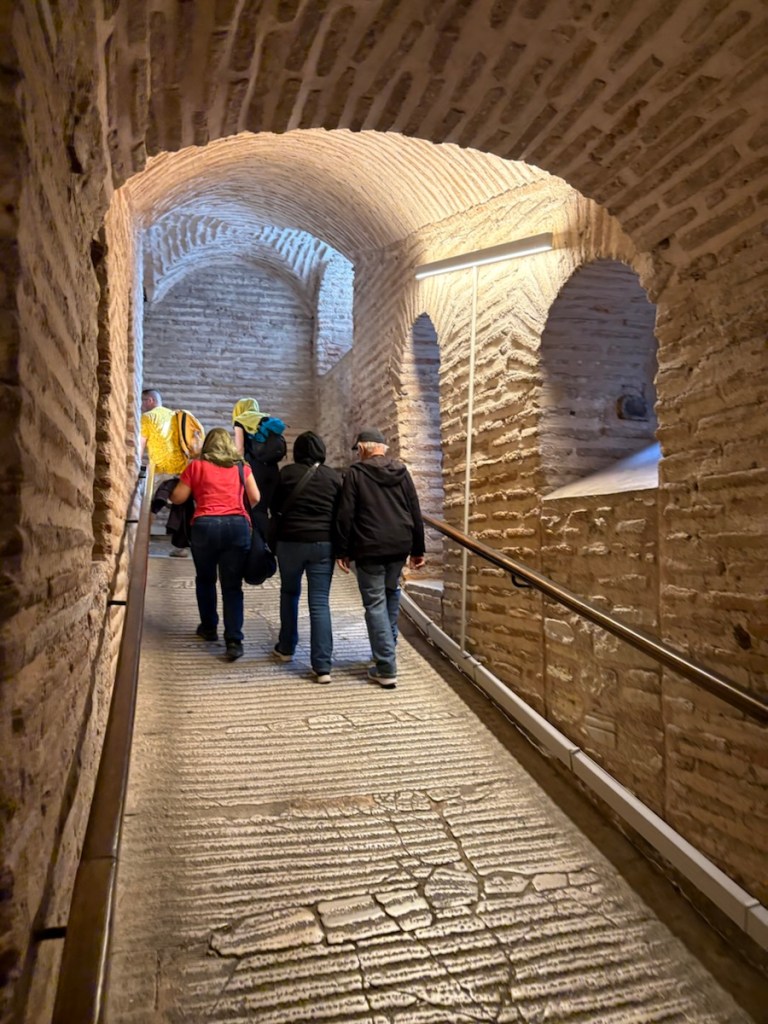
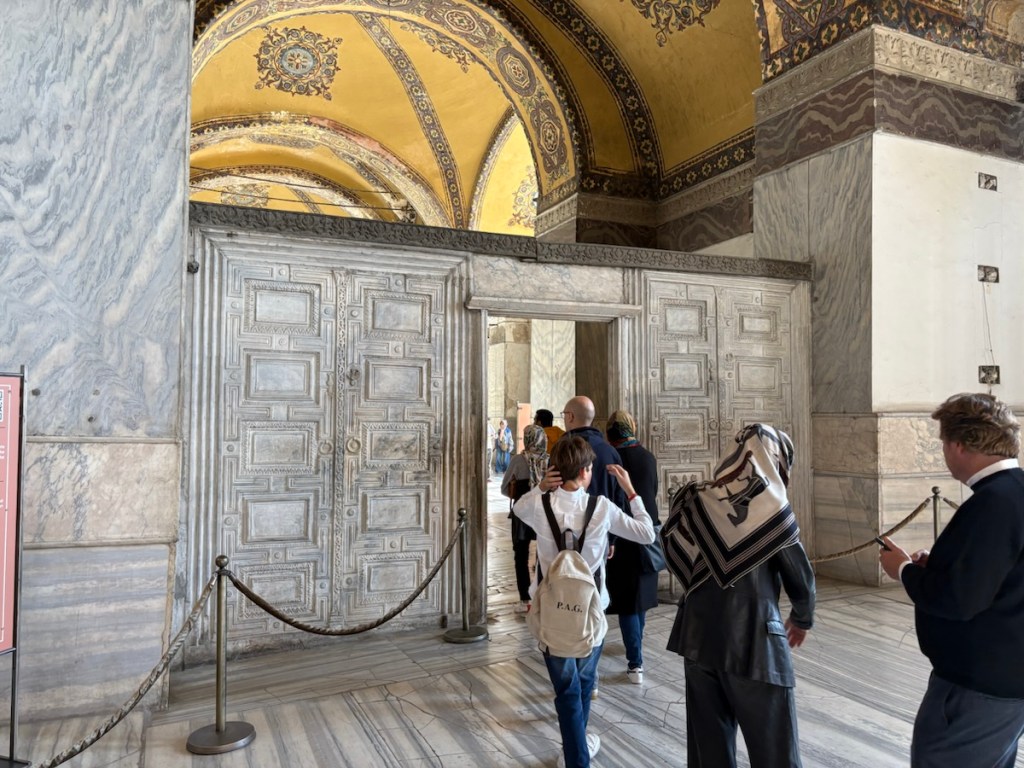
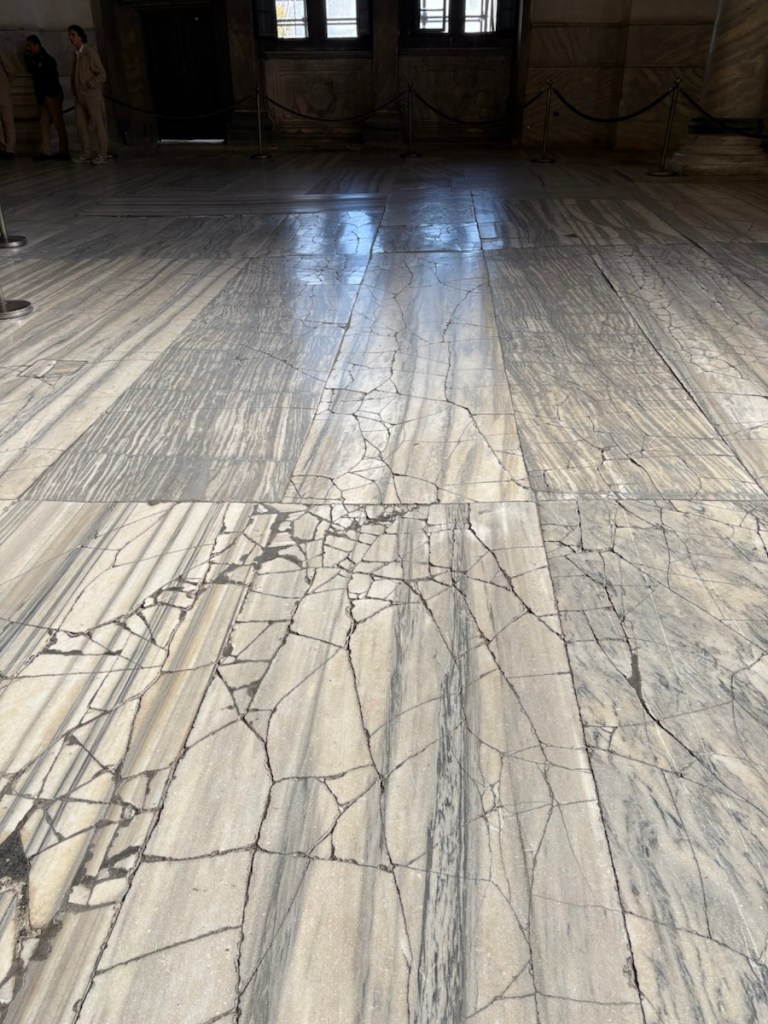
THE MARBLE DOOR The door that separates the Emperor’s private chambers (metatorion) and meeting place for the Synod’s members from the other areas of the Gallery. (6th Century)Looks like a bit of a tilt…And the floors are very uneven, although it’s hard to see in the photo. The stone floor dips and rolls several inches in various places.
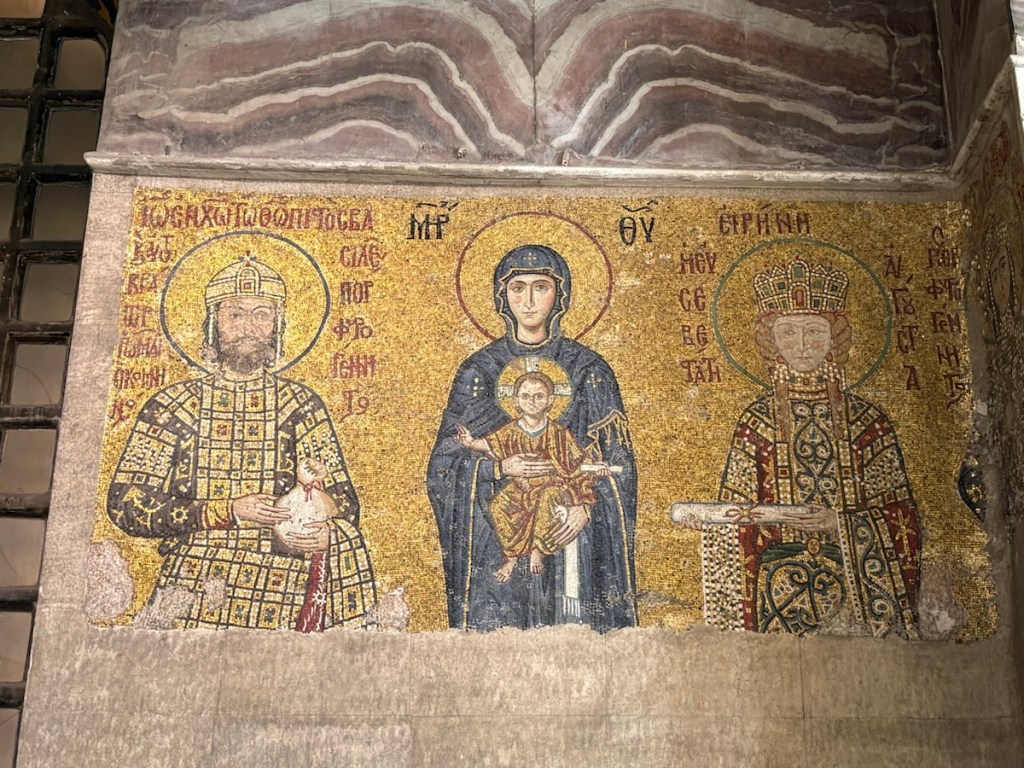
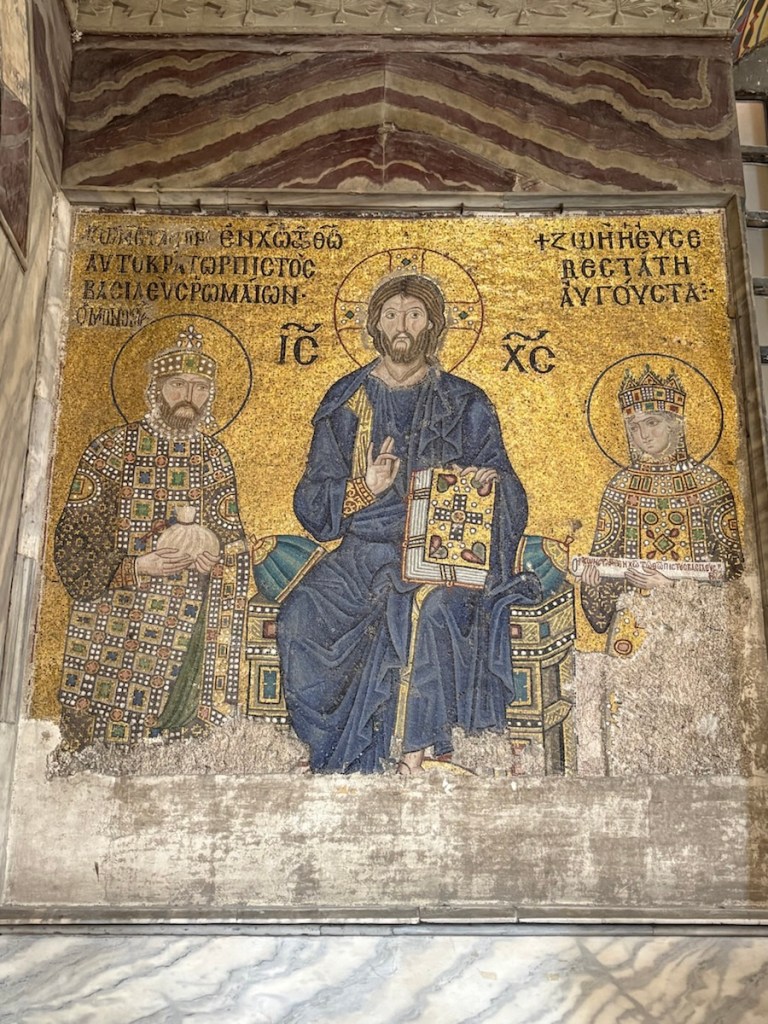
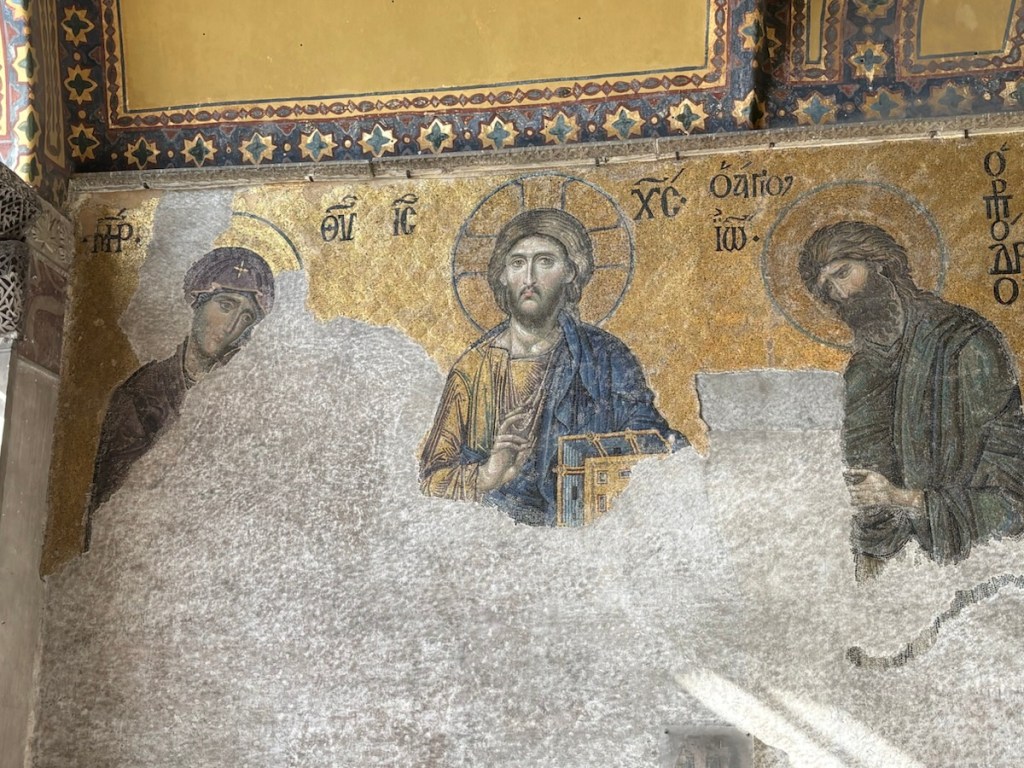
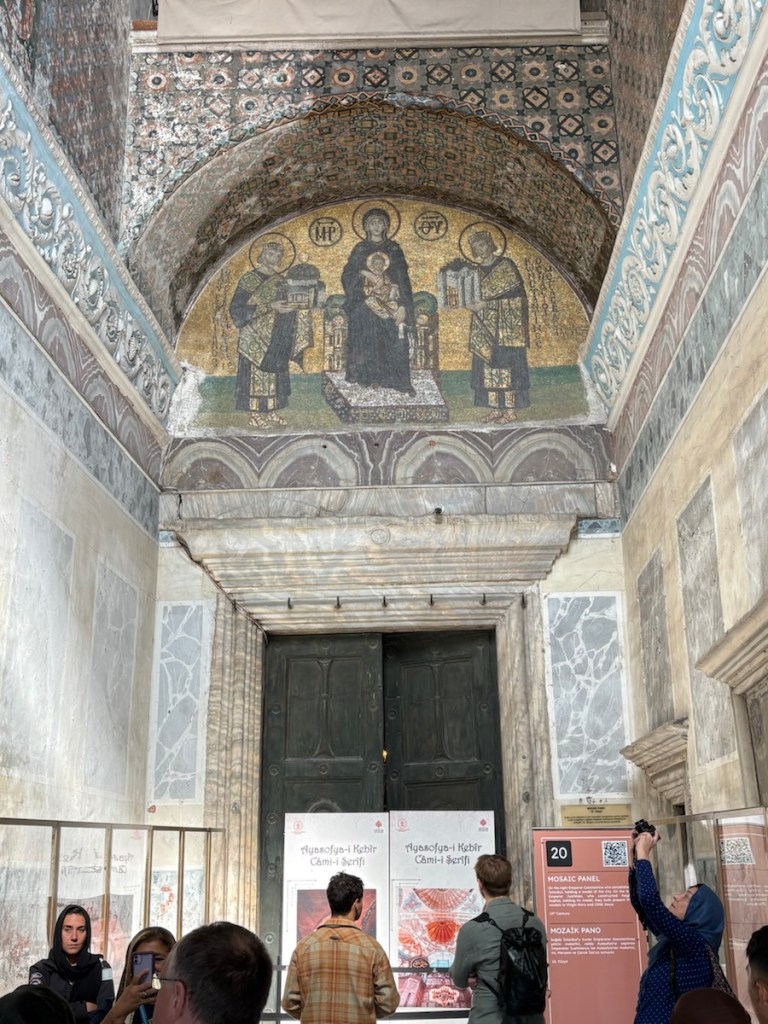
Many of the original Christian mosaics remain from the time when Hagia Sophia was a church and have now been restored. They were mostly covered over the past several hundred years.
In the middle – Virgin Mary and the Child Jesus in Her Arms, Emperor John II Komnenos on the left, his wife Empress Eirene on the right, and their son Alexios on the far right (on the buttress). Subject: The donation made by the Emperor and his wife to Hagia Sophia is portrayed. (12th Century)In the middle – Jesus, sitting on the throne; Emperor Constantine IX Monomachos on the left, and Empress Zoe on the right. Subject: The donation made by the Emperor and his wife to Hagia Sophia portrayed. (11th Century)Jesus in the middle, John the Baptist on the right, and Virgin Mary on the left Subject: Pray (Deesis) Virgin Mary and Saint John Prodromos (John the Baptist – Pioneer) wishing Jesus’s intercession for humanity. (13th Century)On the right Emperor Constantine who established Istanbul, holding a model of the city. On the left Emperor Justinian, who constructed Hagia Sophia, holding its model, they both present the models to Virgin Mary and Child Jesus. (10th Century)
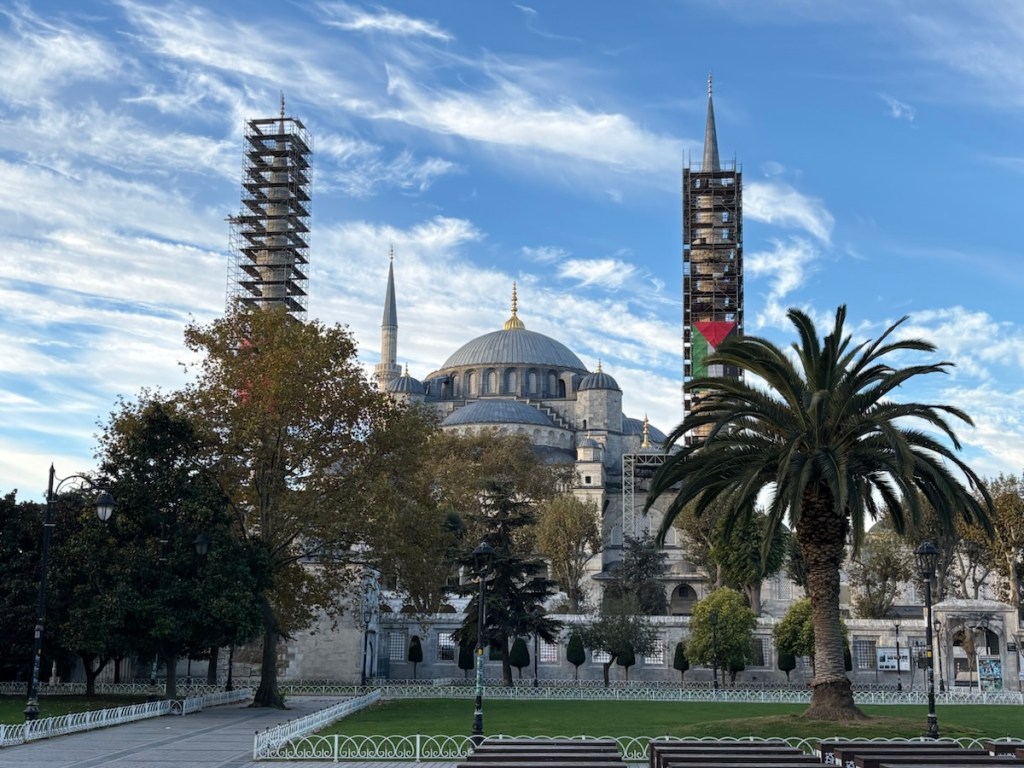
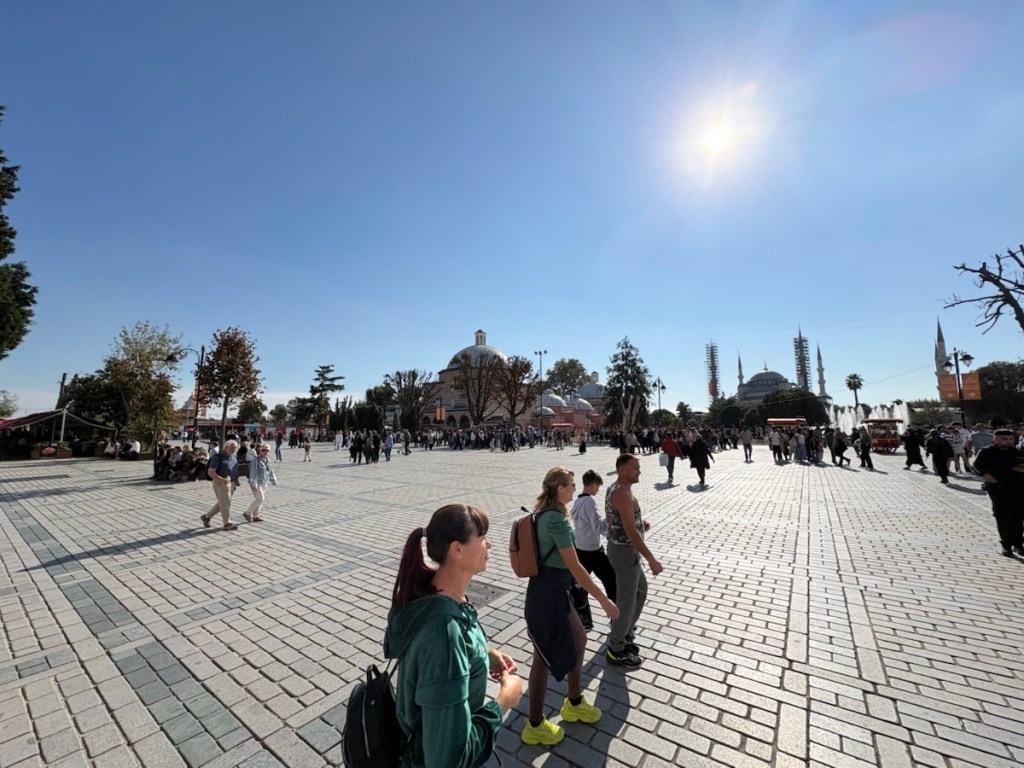
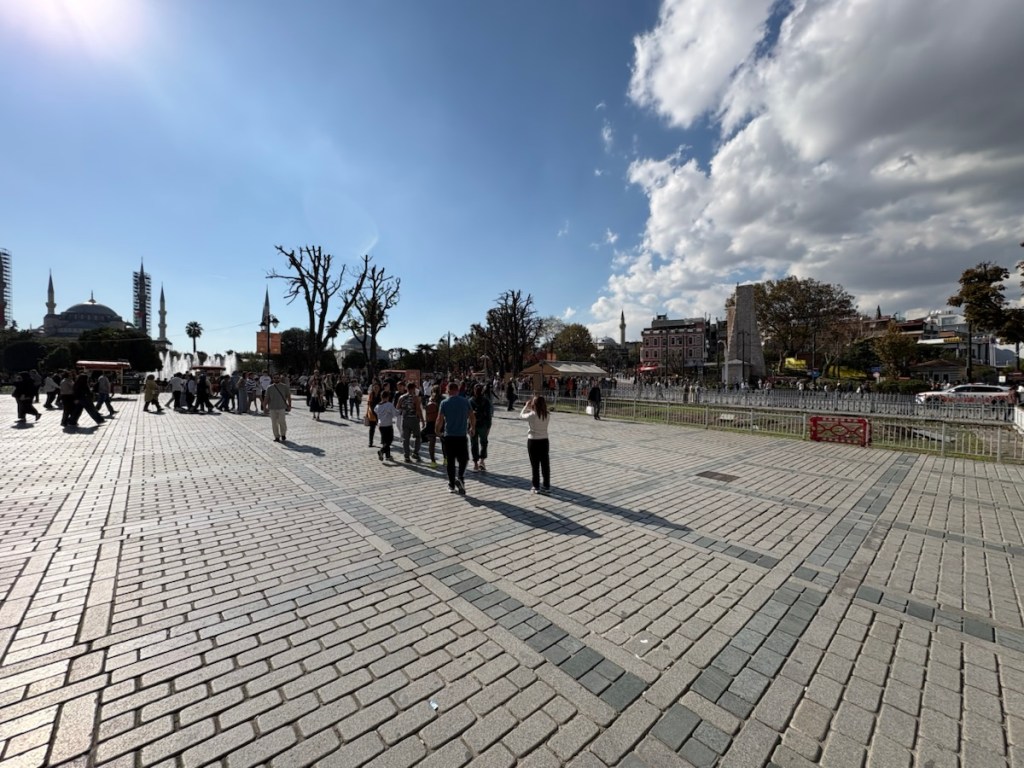
The nearby Blue Mosque.
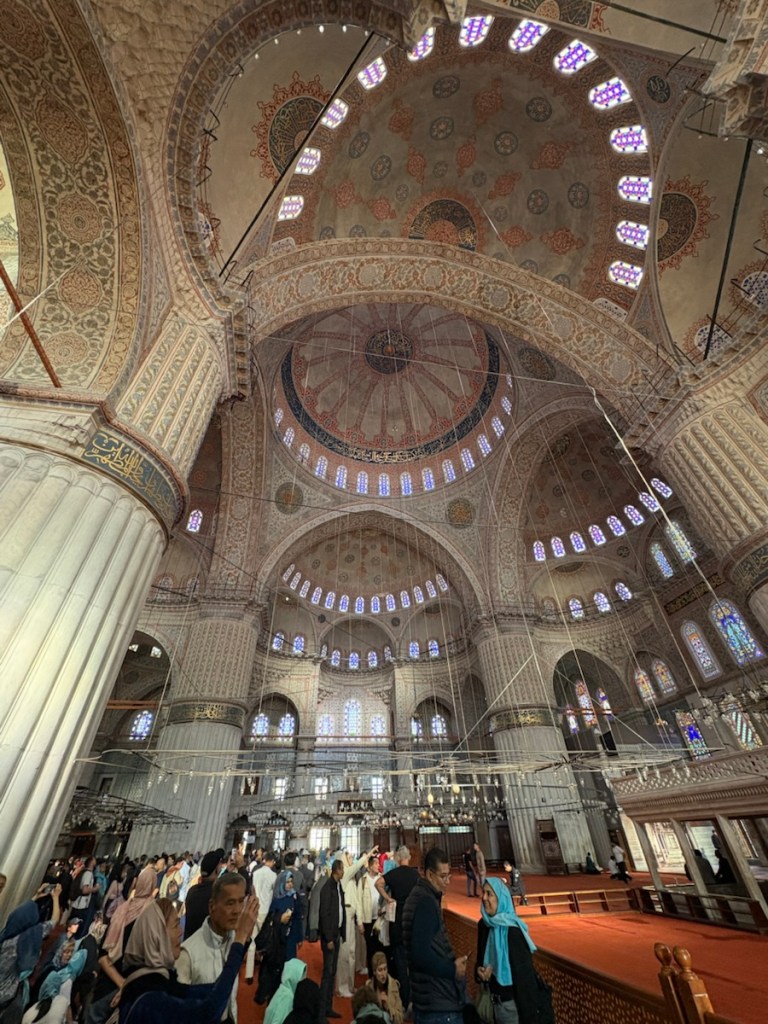
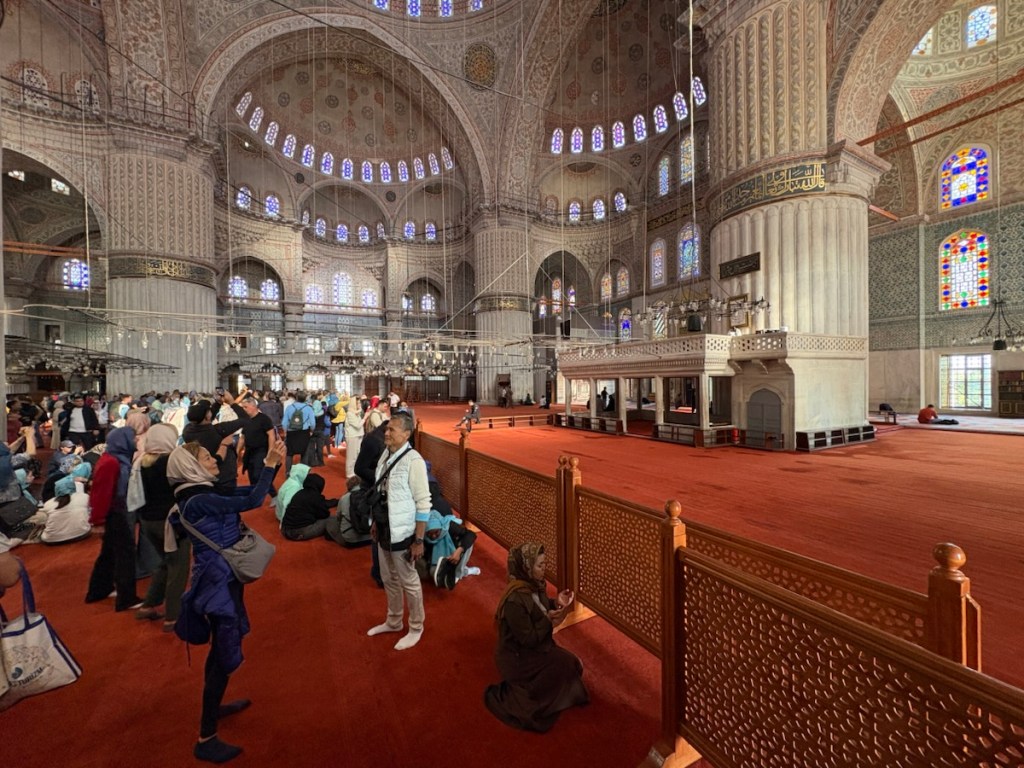
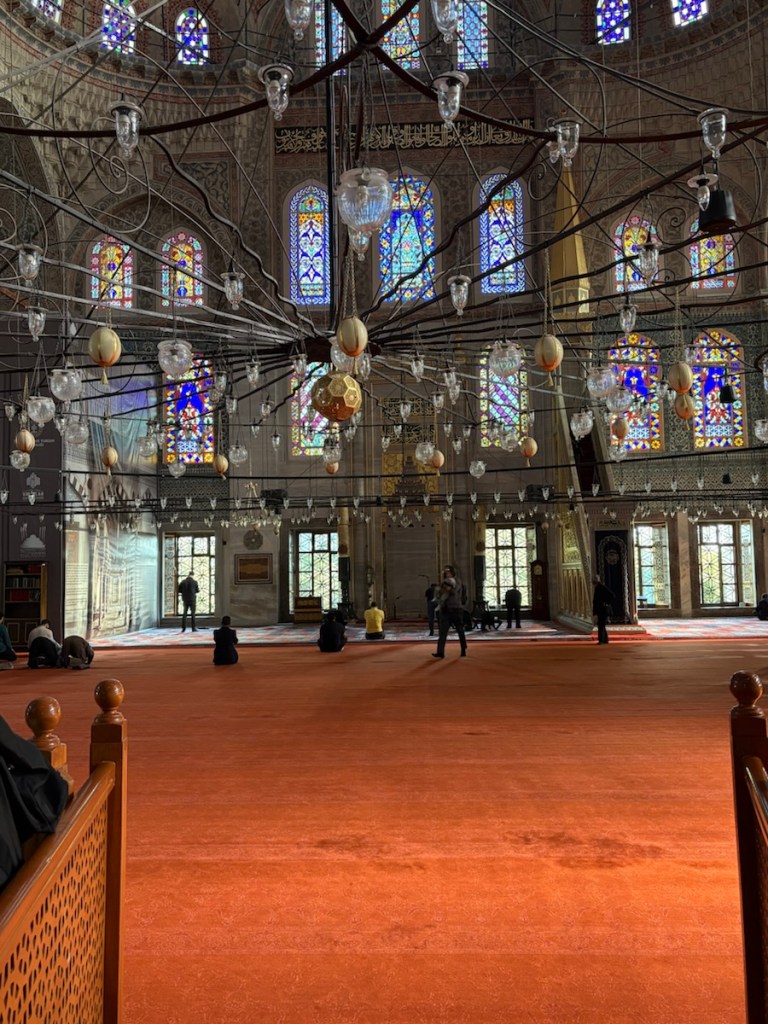
The Blue MosqueLunch
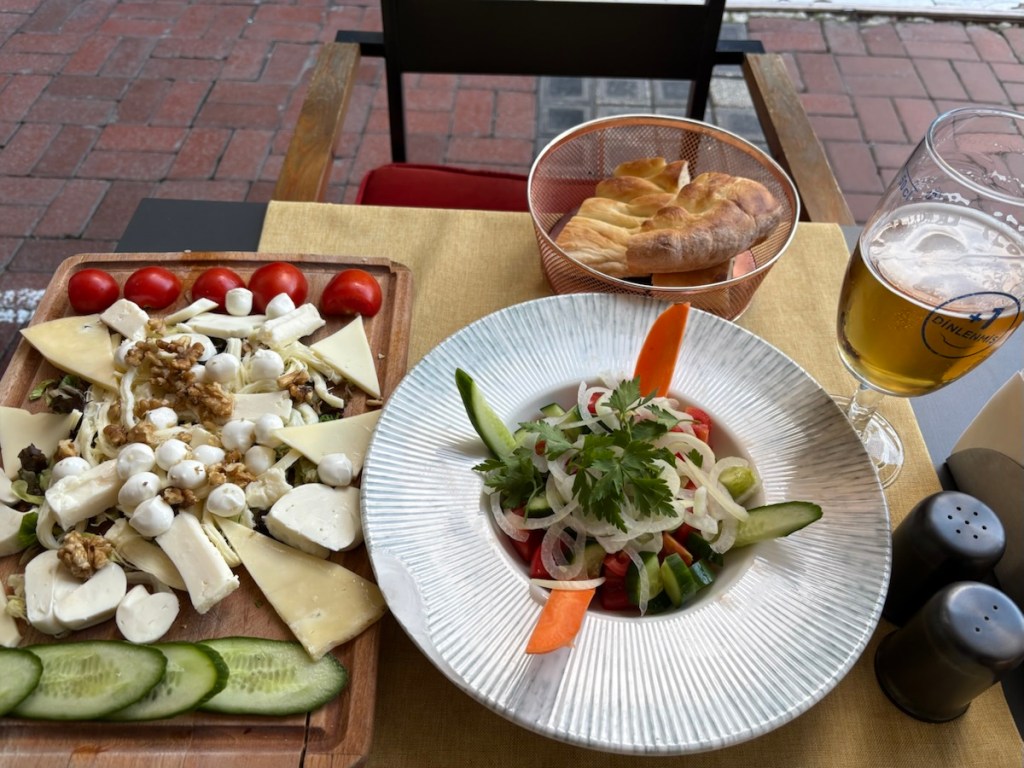
Dinner was another good meal!
Shepherd’s Salad, a Cheese Plate, Bread, and Turkish BeerDoesn’t really look like it fits in Istanbul
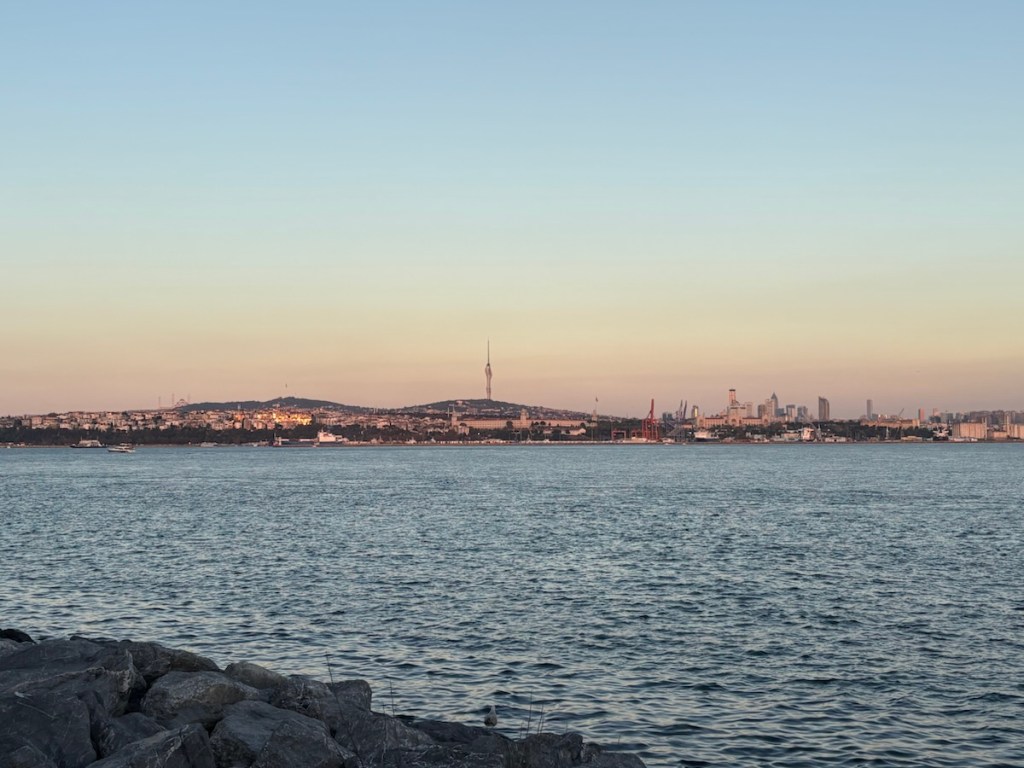
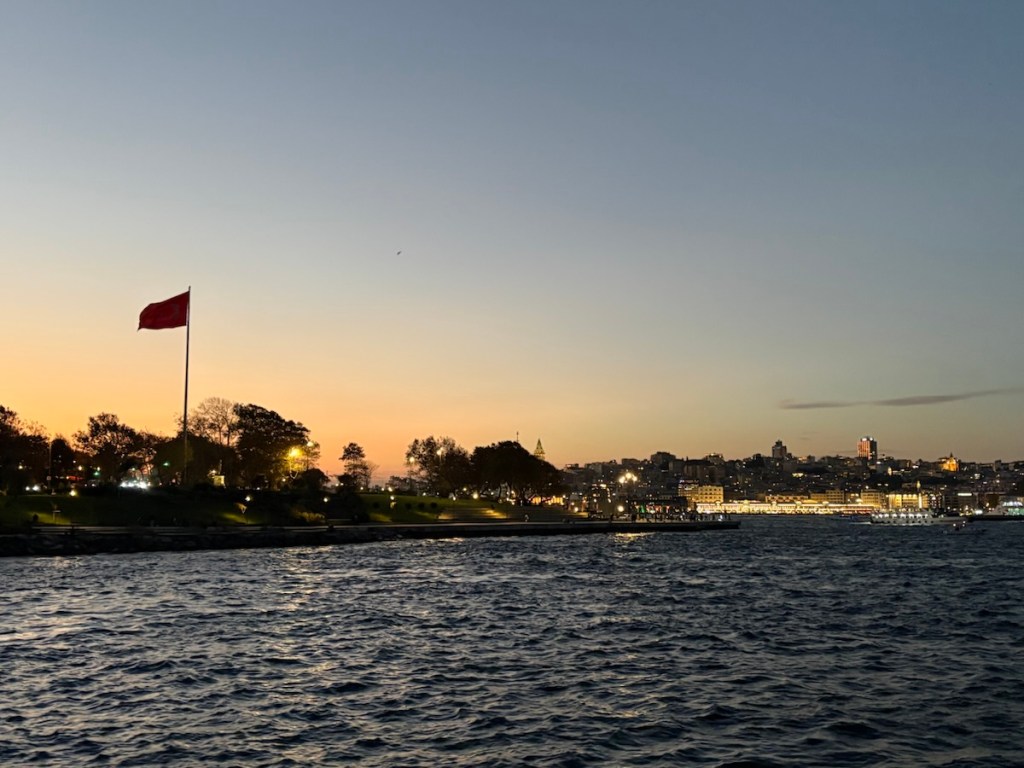
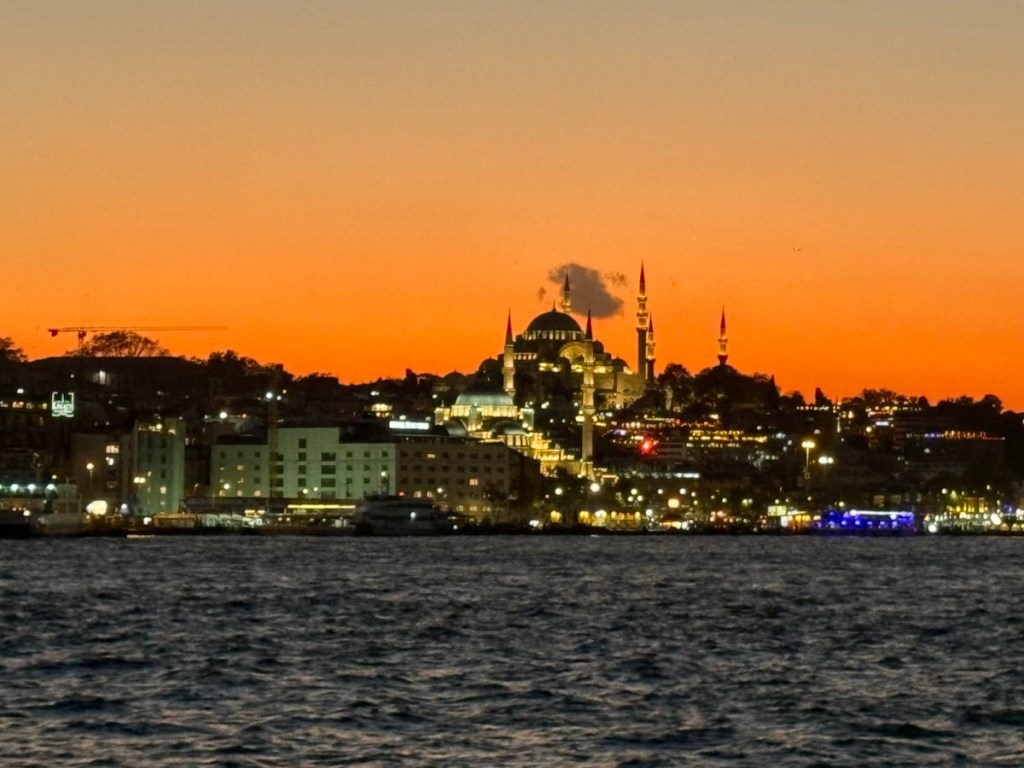
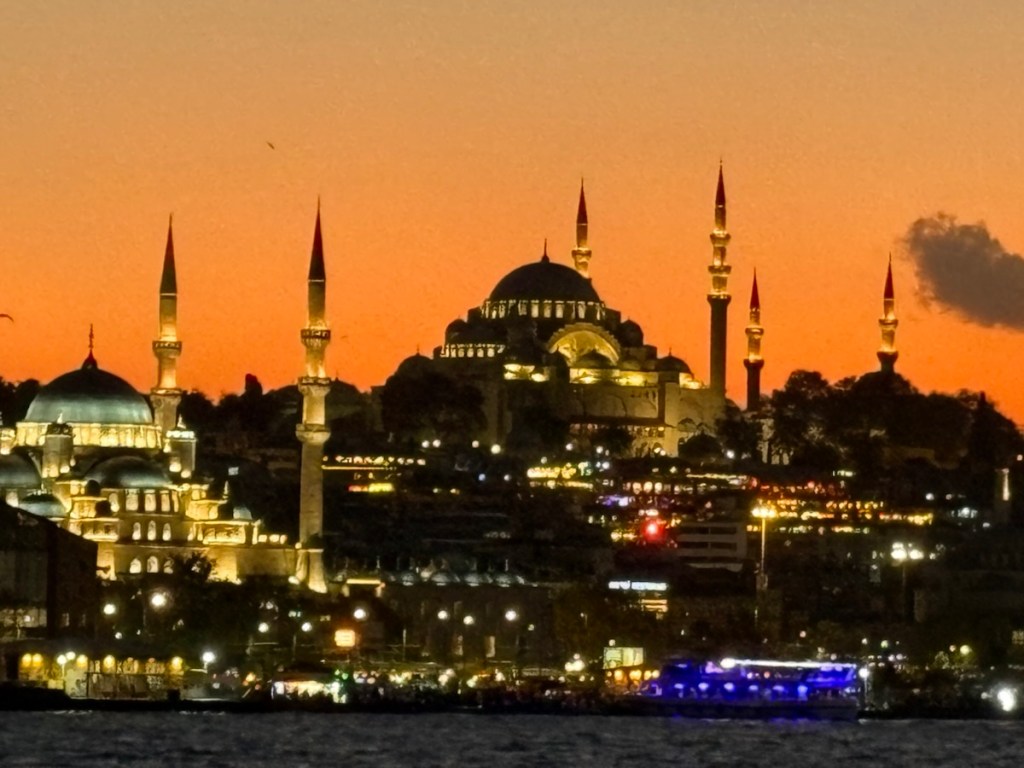
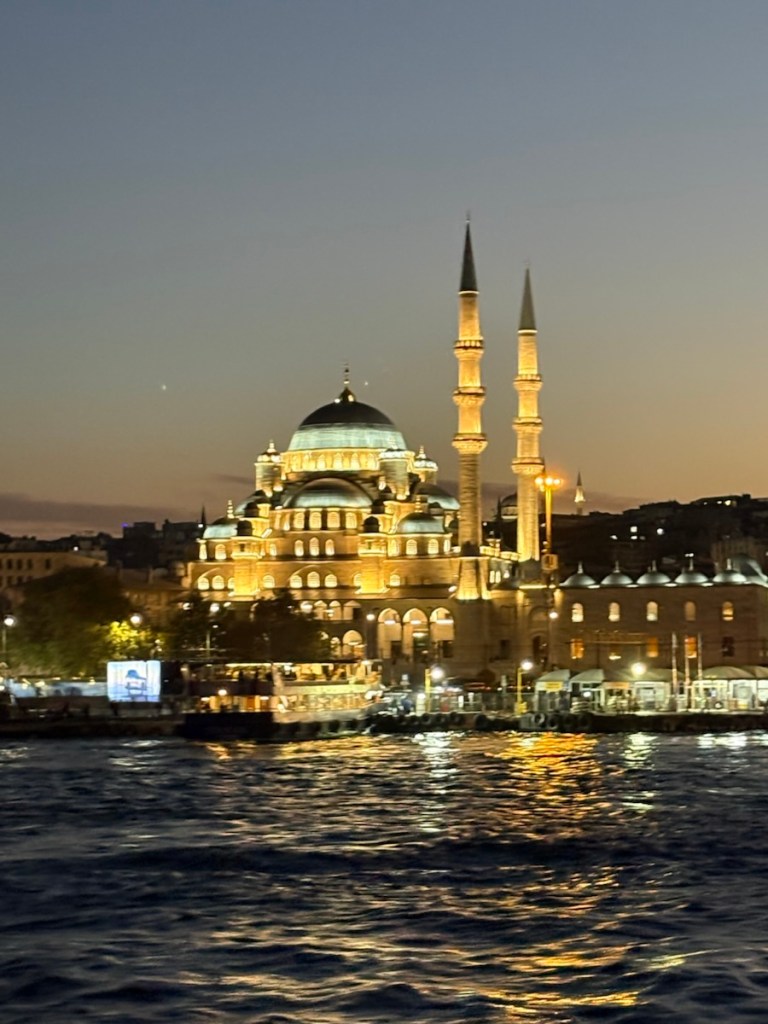
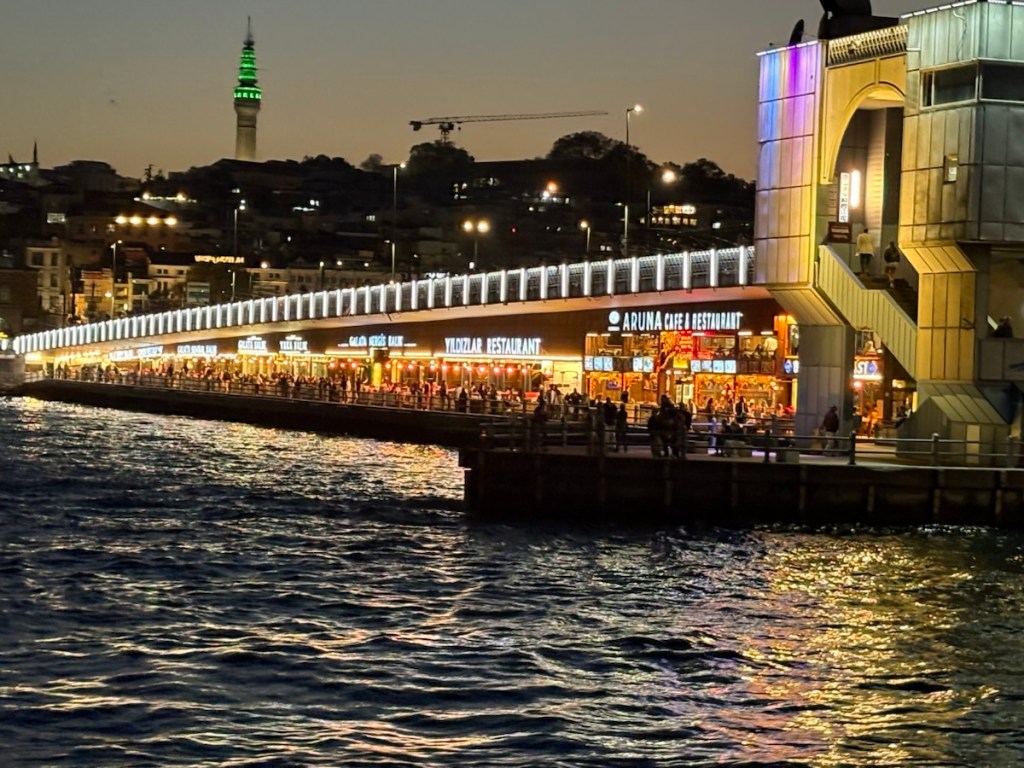
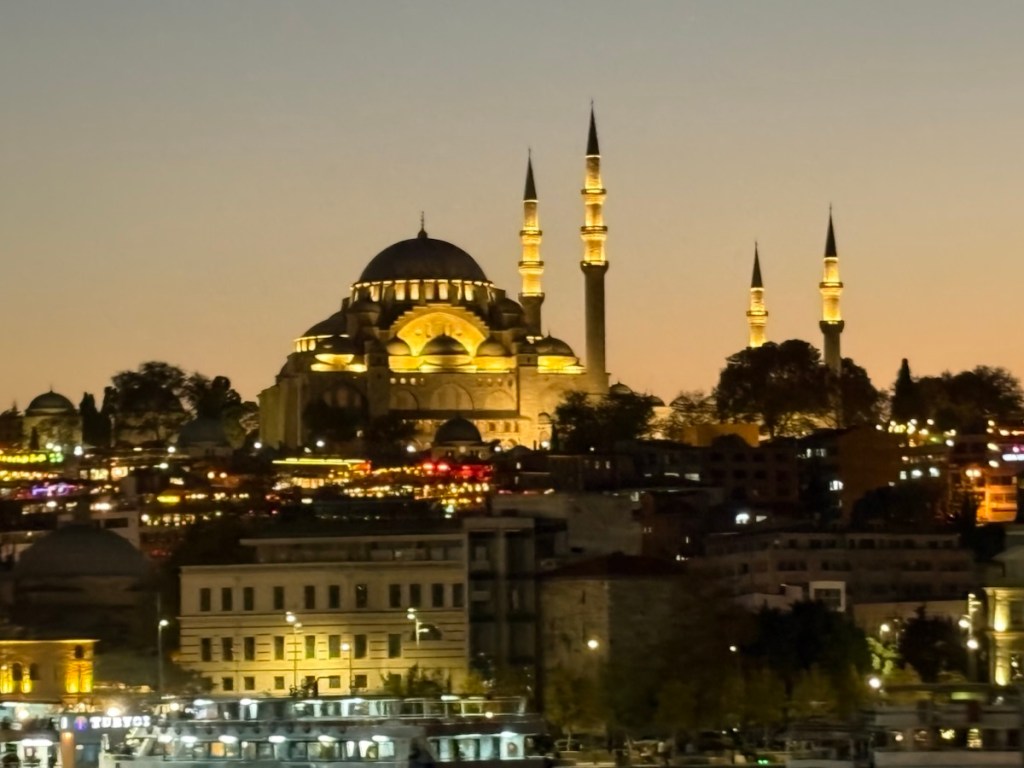
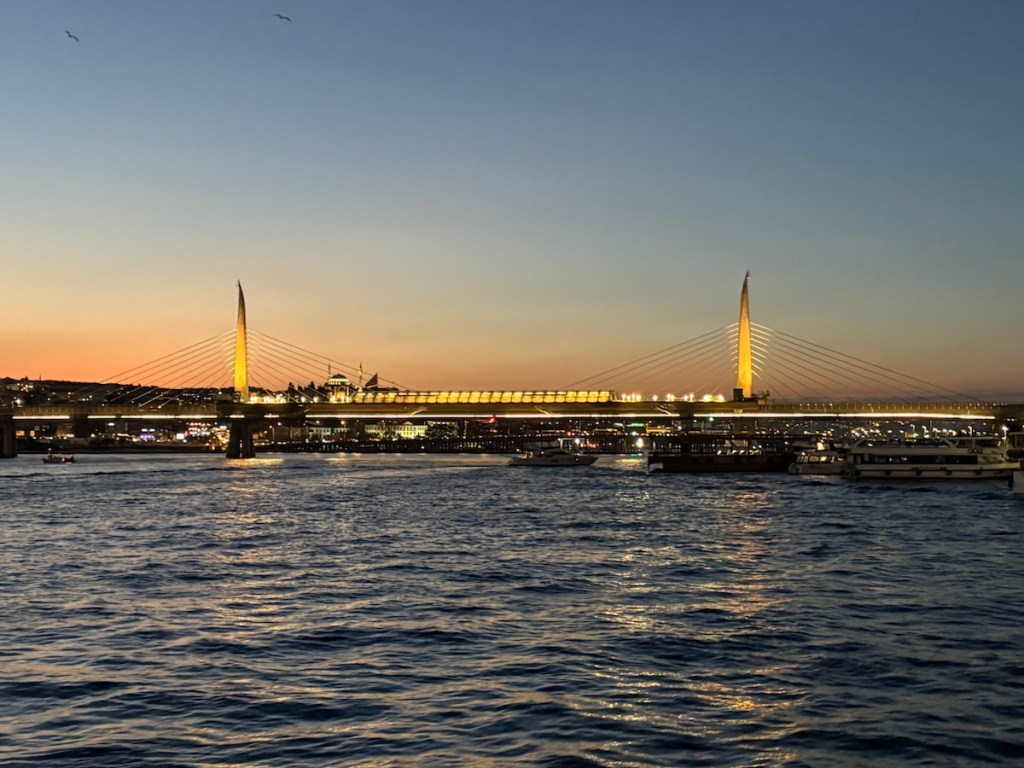
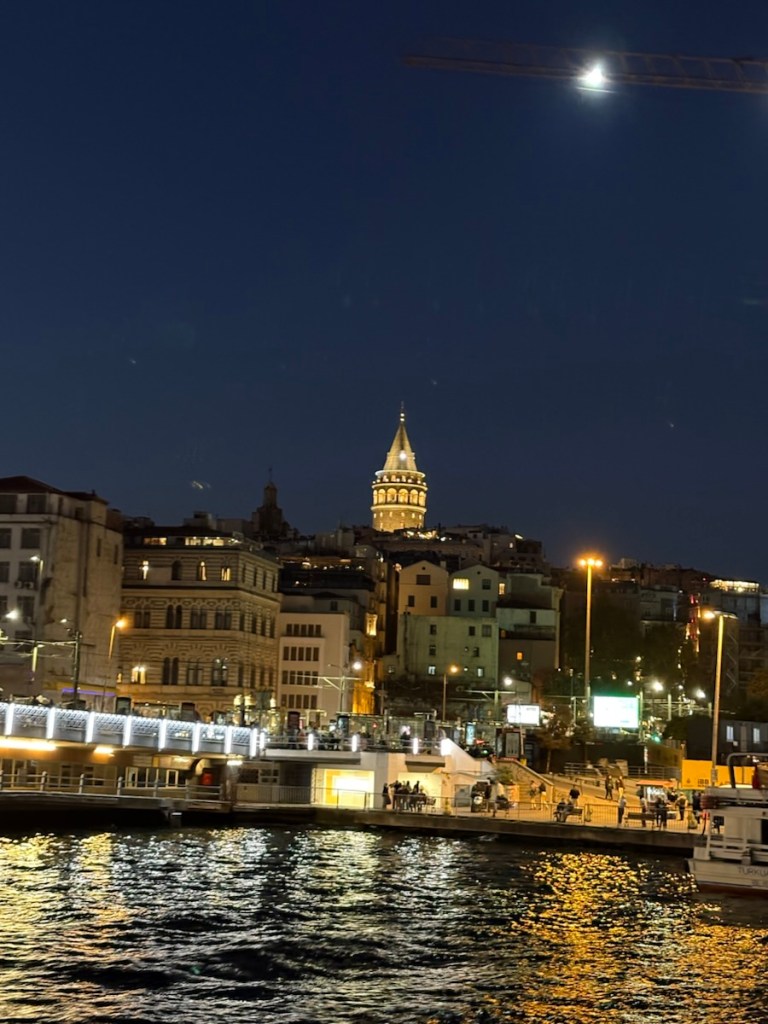
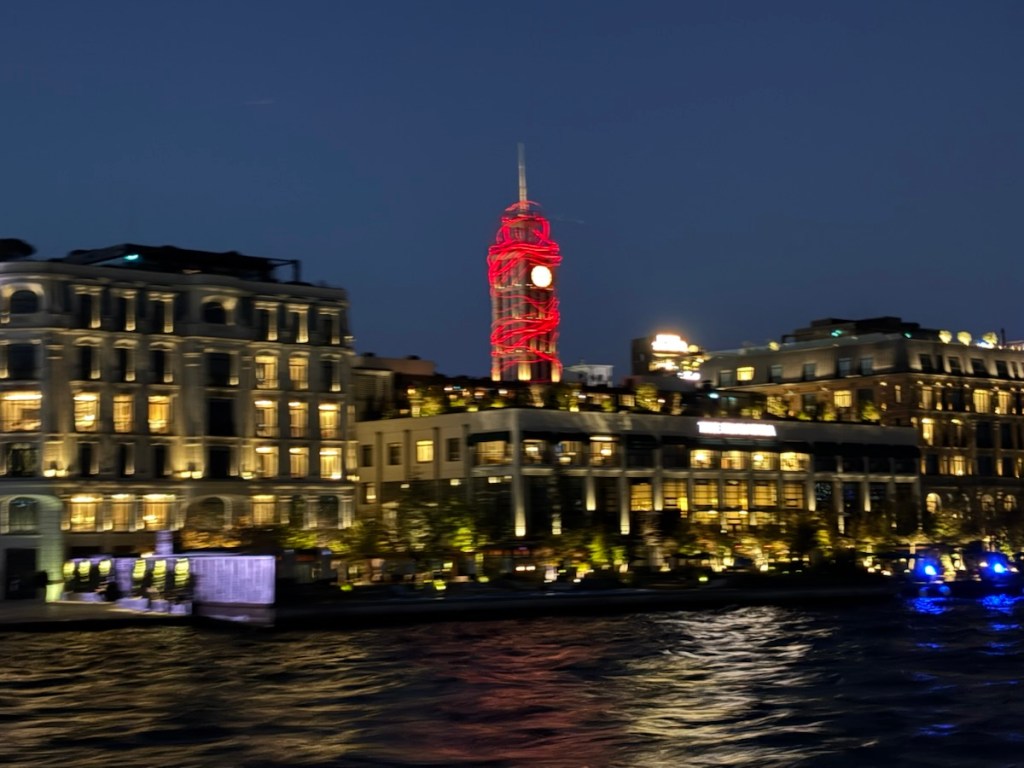
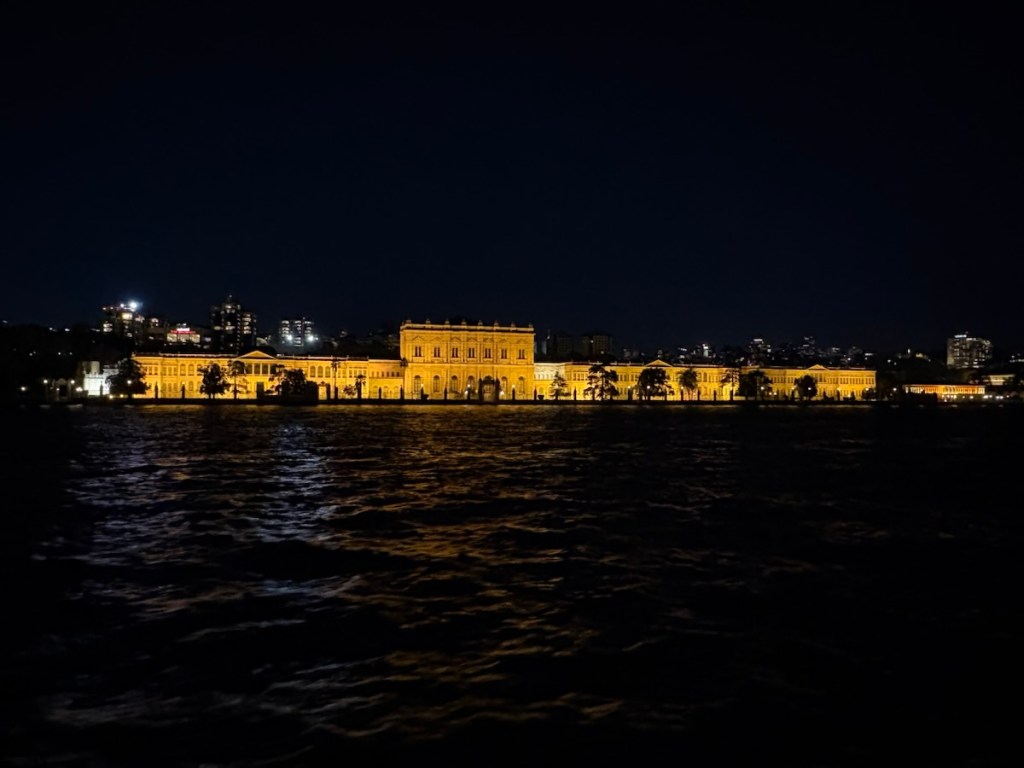
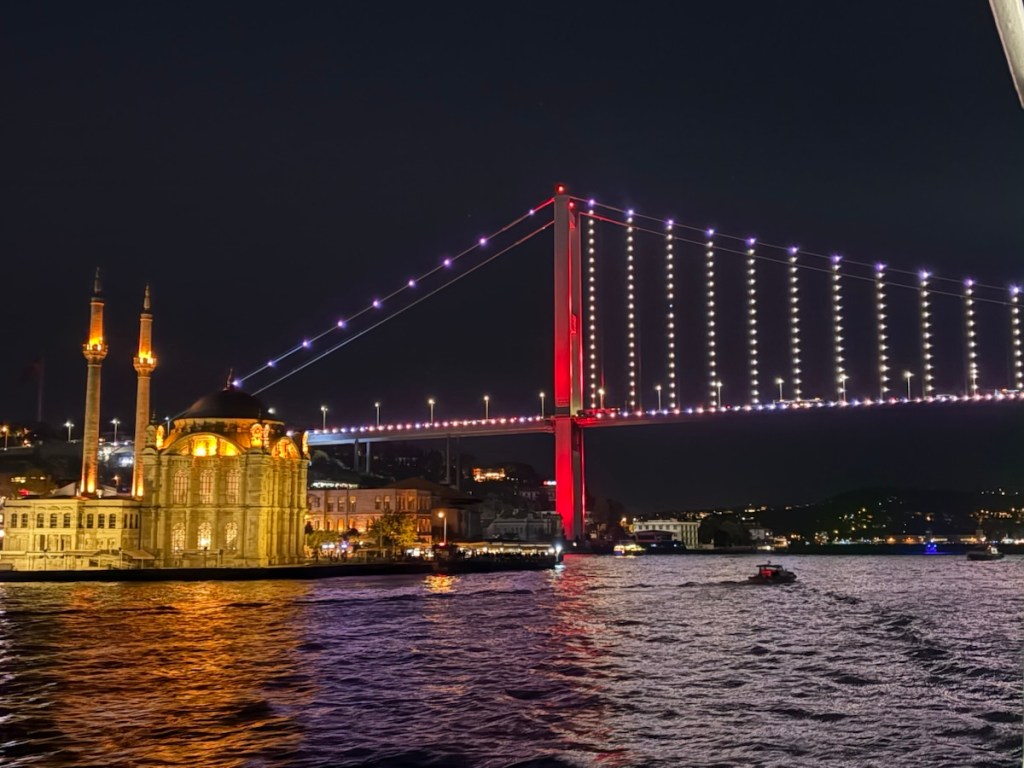
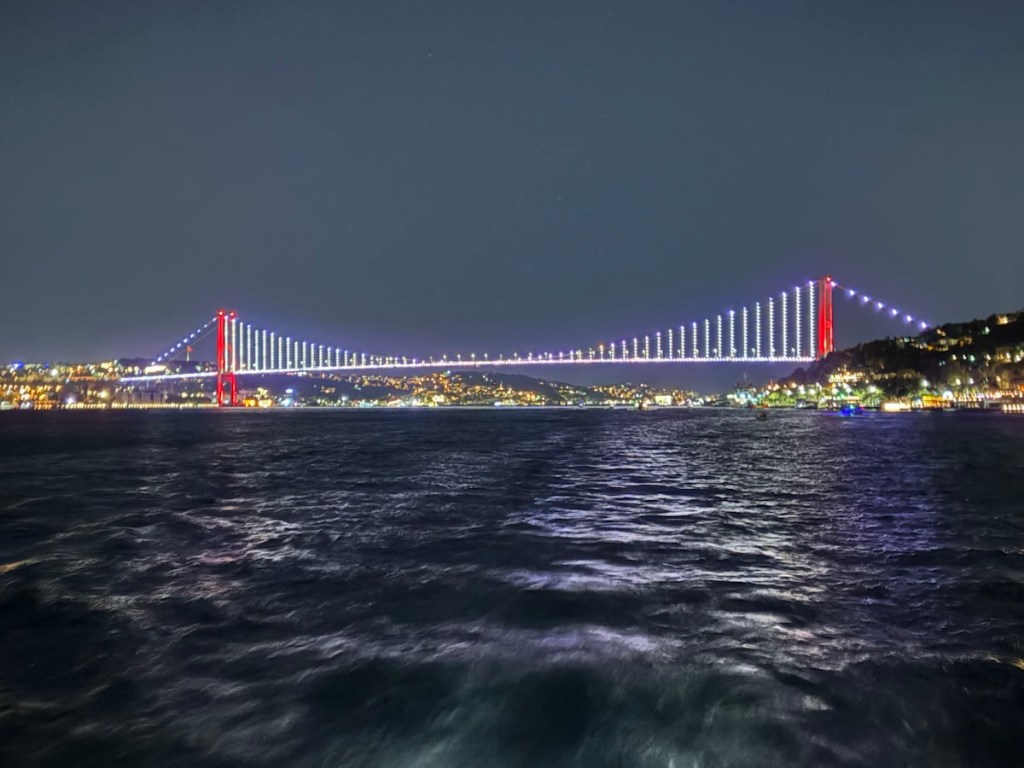
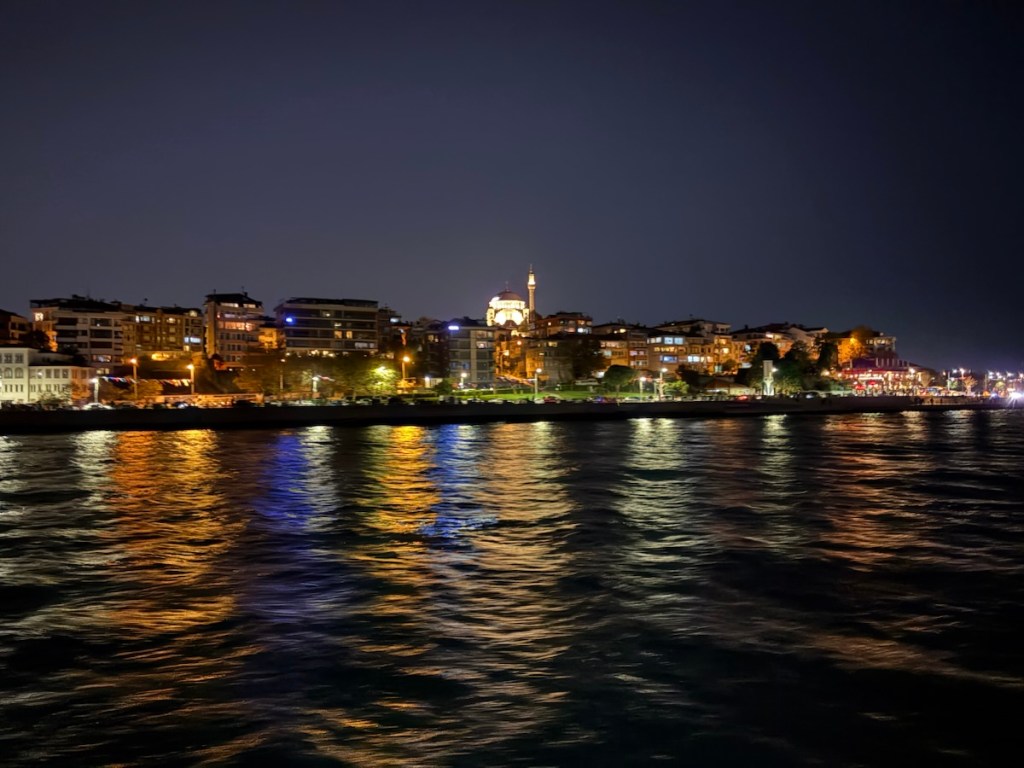
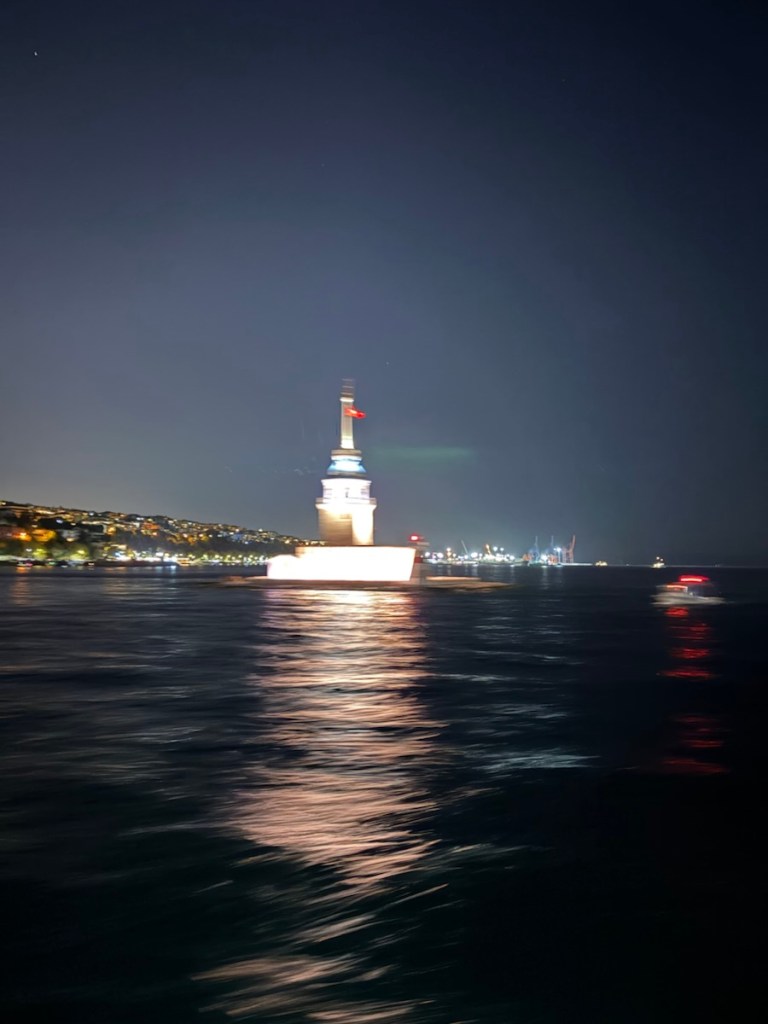
In the evening, I took a 2-hour cruise up the Bosporus or Bosphorus Strait, a natural strait and an internationally significant waterway located in Turkey which is straddled by the city of Istanbul. The Bosporus connects the Black Sea to the Sea of Marmara (and then to the Aegean Sea, and on to the Mediterranean). It forms one of the continental boundaries between Asia and Europe. It also divides Turkey by separating Asia Minor from Thrace (or European Turkey). It is the world’s narrowest strait used for international navigation. On average, 160 ships per day transit the Bosphorus into the Black Sea.
Notice all the shops under the bridge?The Bosphorus Bridge
Before you go…
“A mind that is stretched by a new experience can never go back to its old dimensions.” – Oliver Wendell Holmes, Jr.
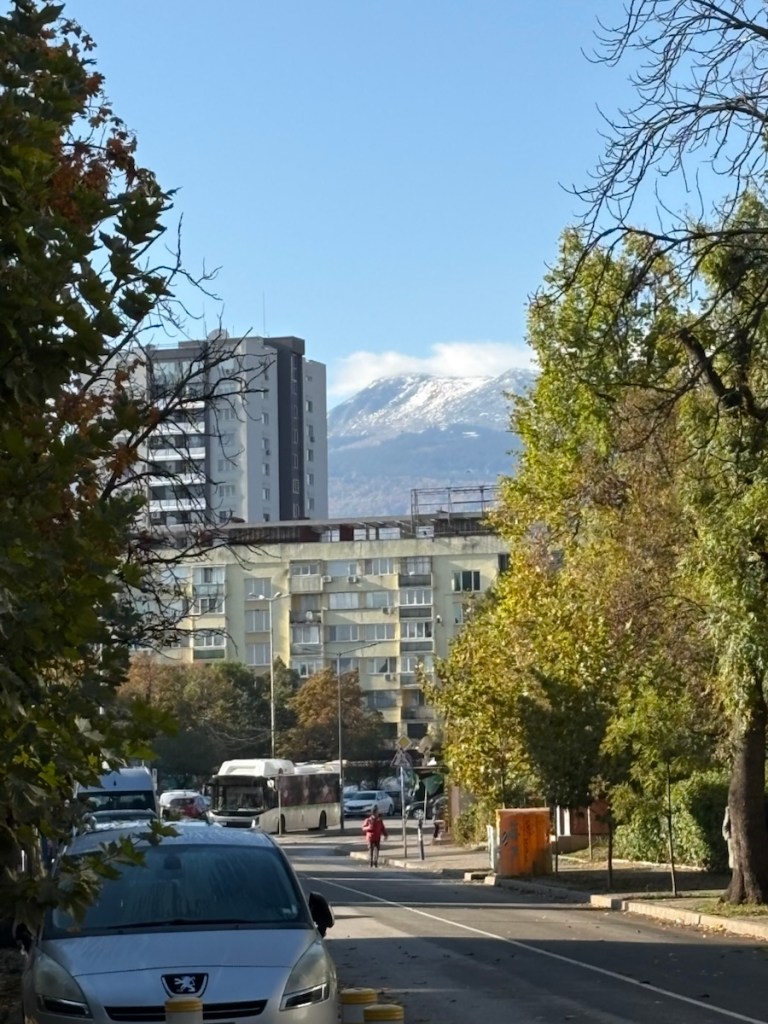
The morning dawned with crystal blue sunny skies with temps in the 40s and climbing. Well, I’m actually not sure what it was like when the sun was dawning since I didn’t roll out of bed until 9:00 am! But it was really nice by then! And what a great day for some walking and a museum tour in Sofia!
Snow on the mountains!
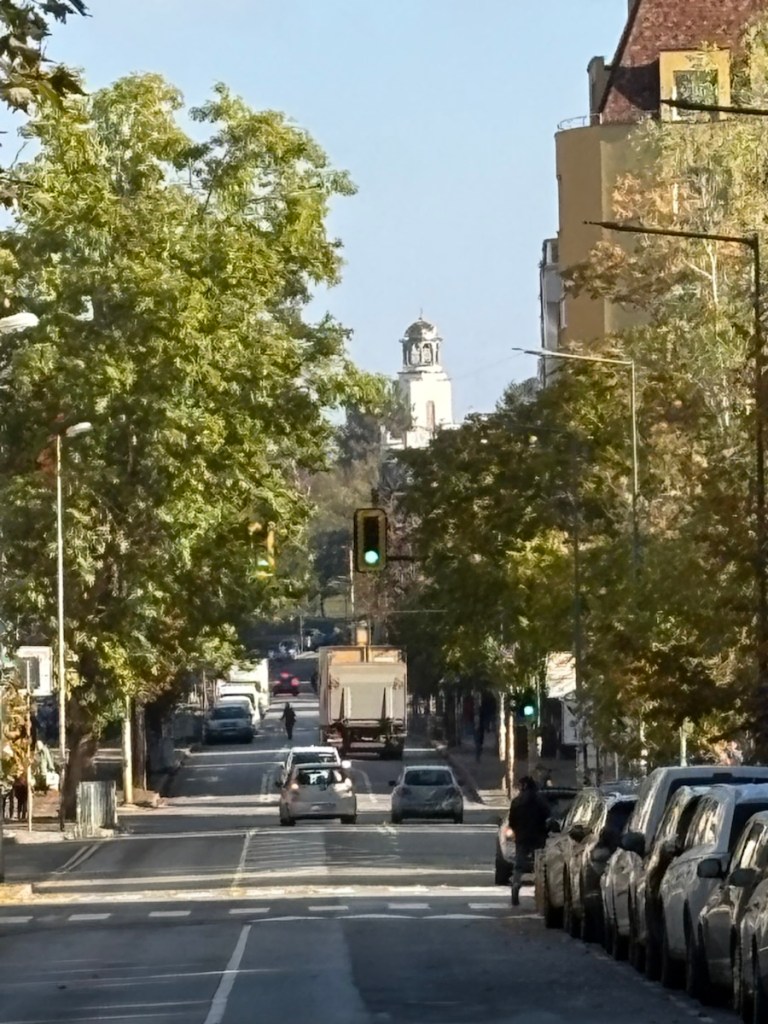
I think Sofia may be one of the nicest large cities in the Balkans. Seems cleaner, newer, and maybe friendlier than some of the others. The language is difficult and the signs impossible, but it’s rare when someone doesn’t speak English. And Siri knows her way around when I’m driving!
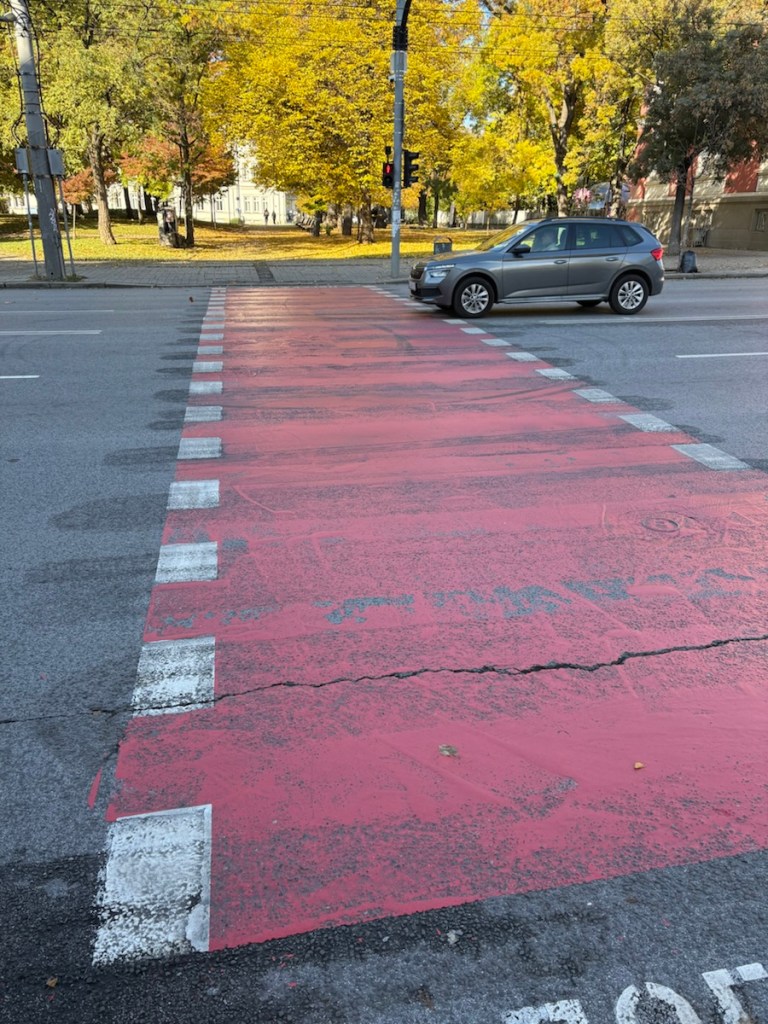
So is the red evidence of pedestrians who didn’t make it across…?
One thing Sophia has plenty of is liquor stores! I mean everywhere! In the city, there are liquor stores on practically every block.
My first stop this morning after a thirty minute walk was the National Museum of Military History. I was looking forward to that one. “Was” is the operative word since the dang thing was closed for renovation! Would have been nice if my phone or the website had let me know.
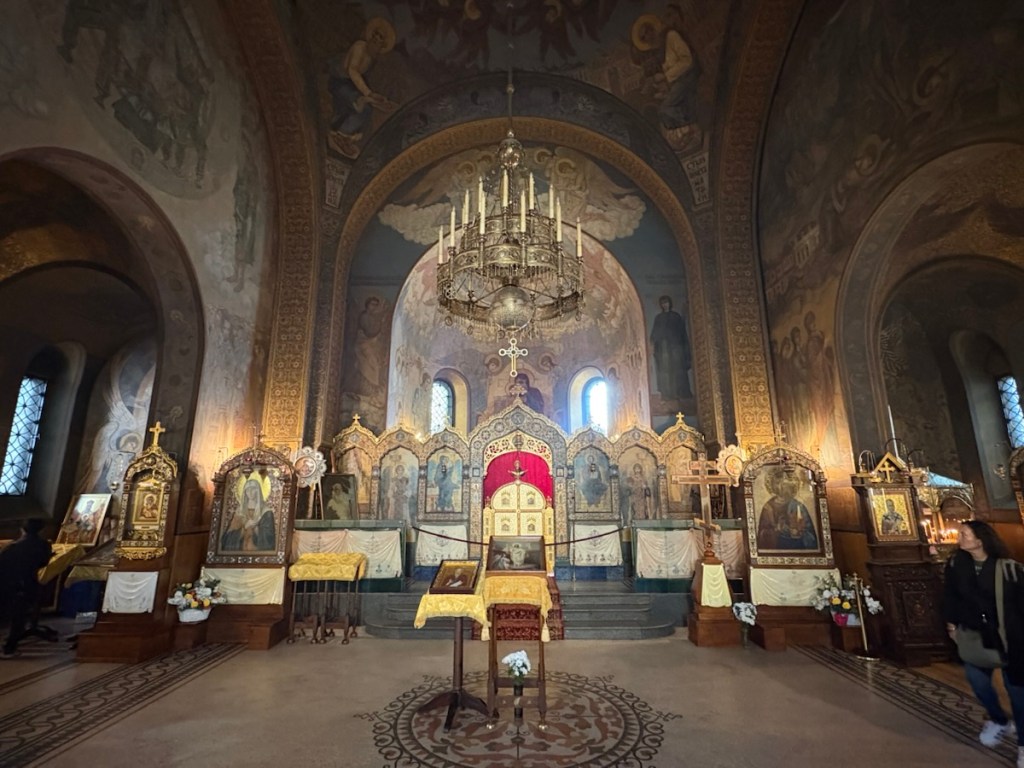
Church of St NicholasThe St Nicholas sanctuary
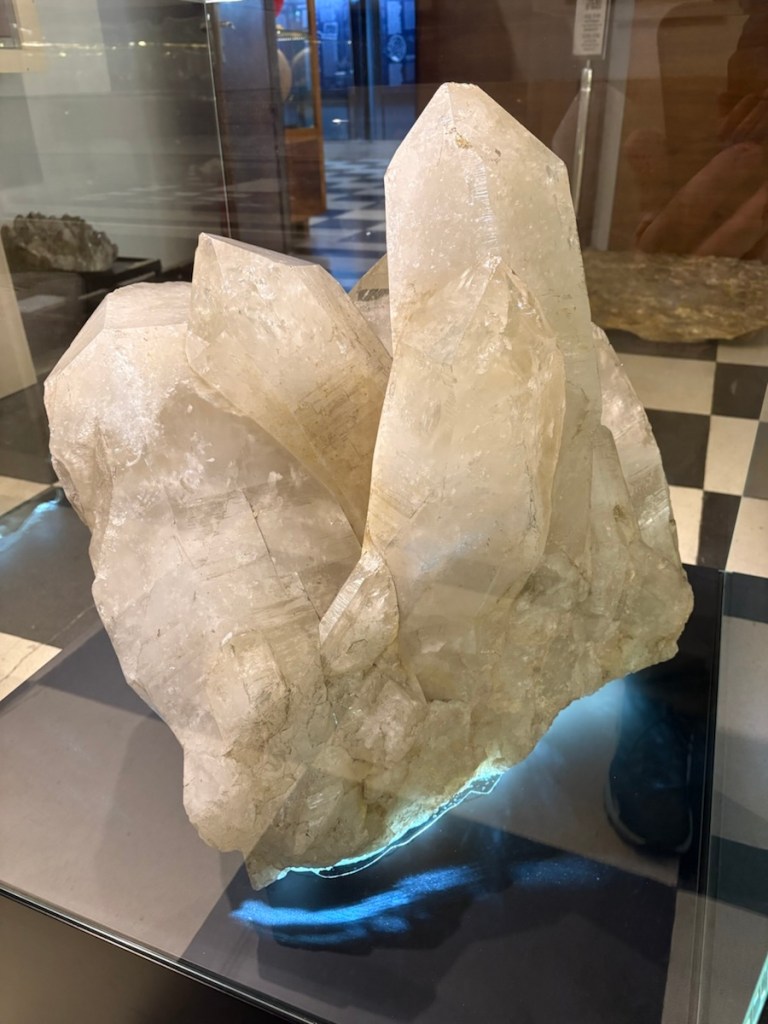
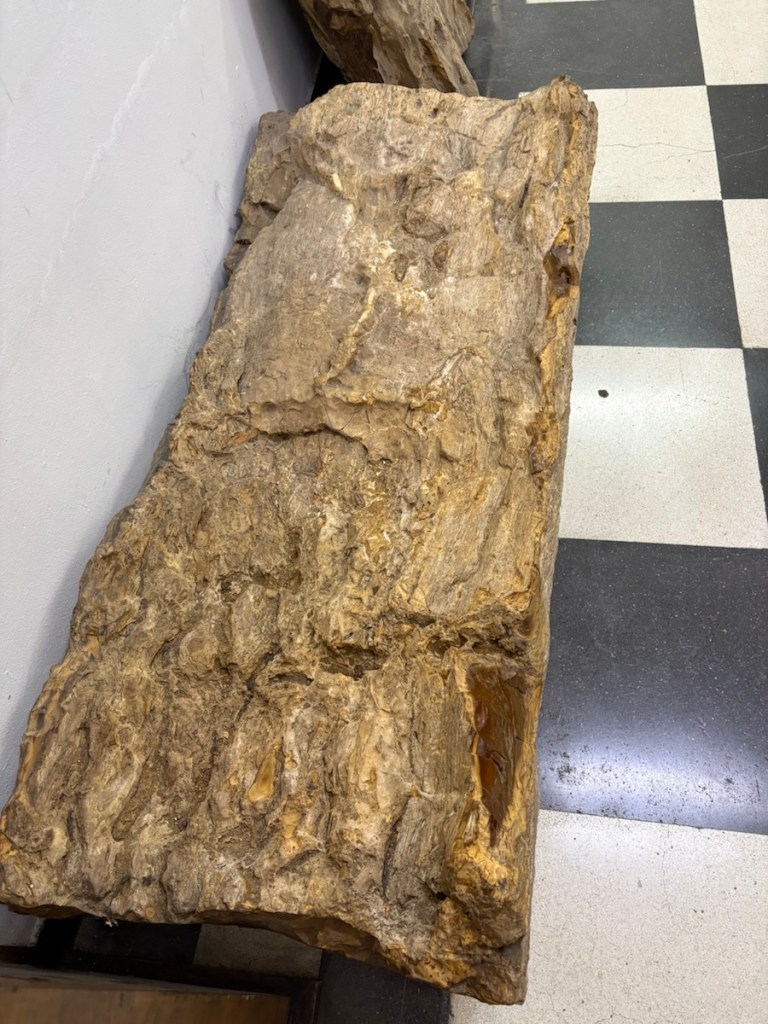
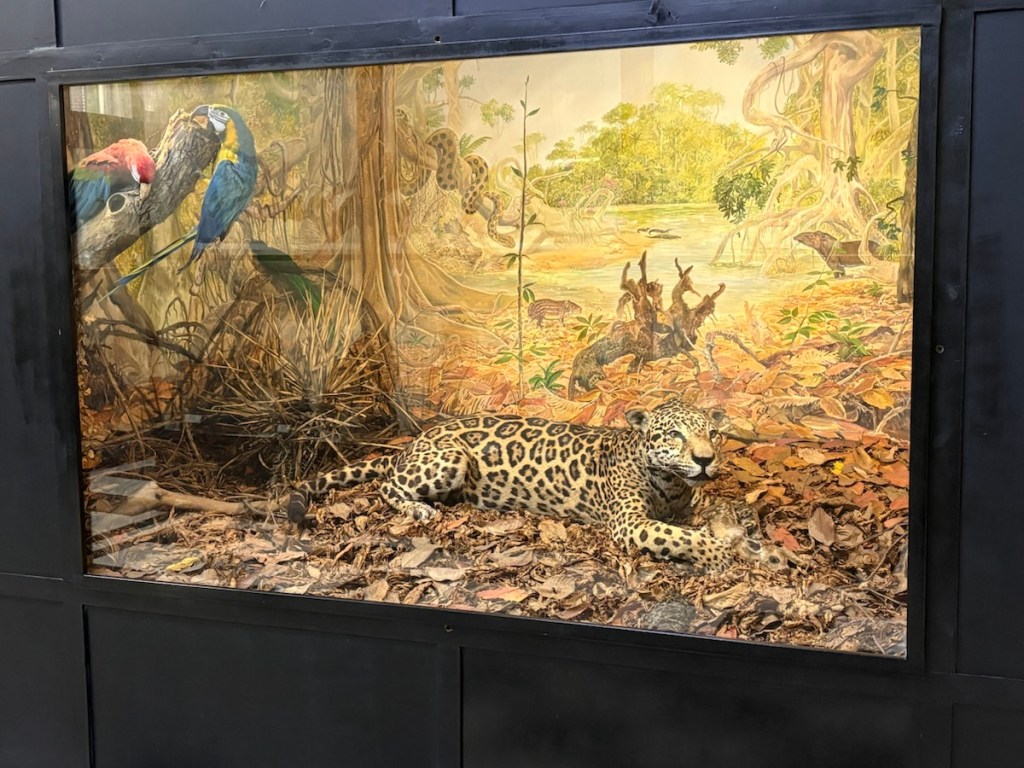
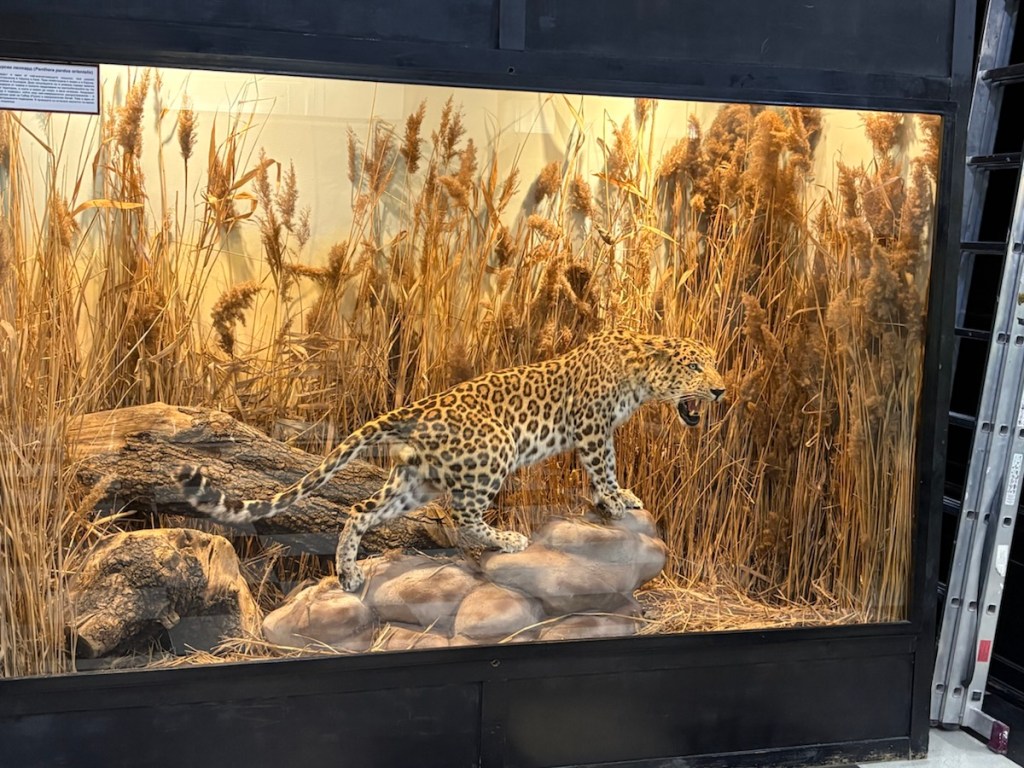
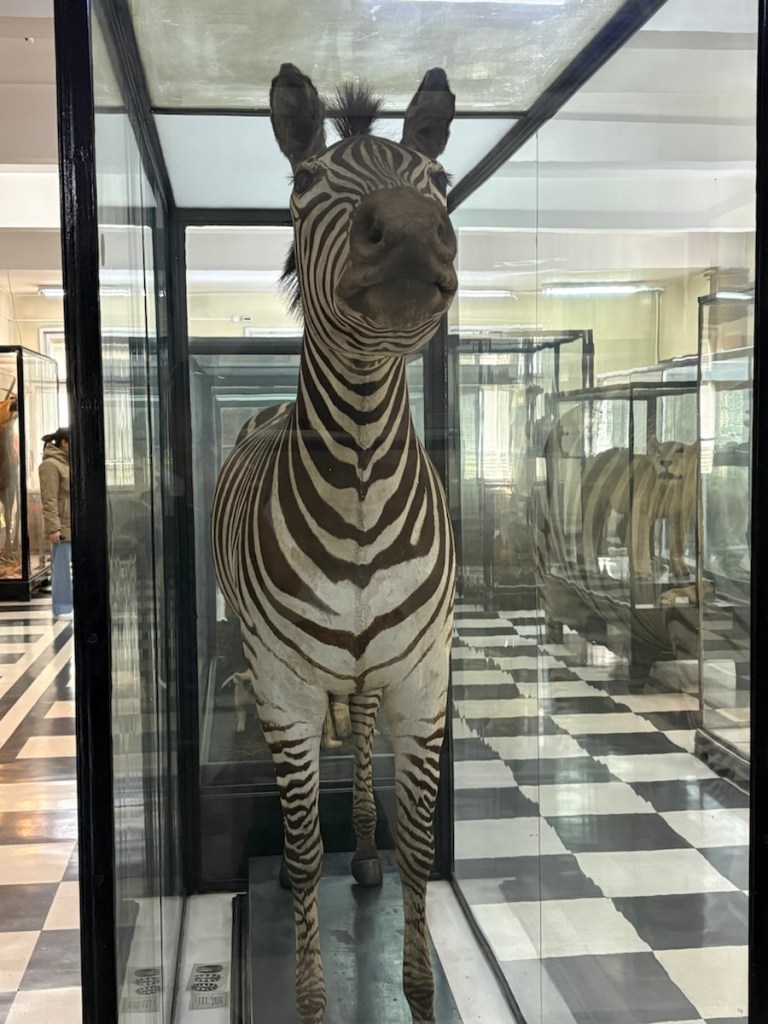
National Museum of Natural History
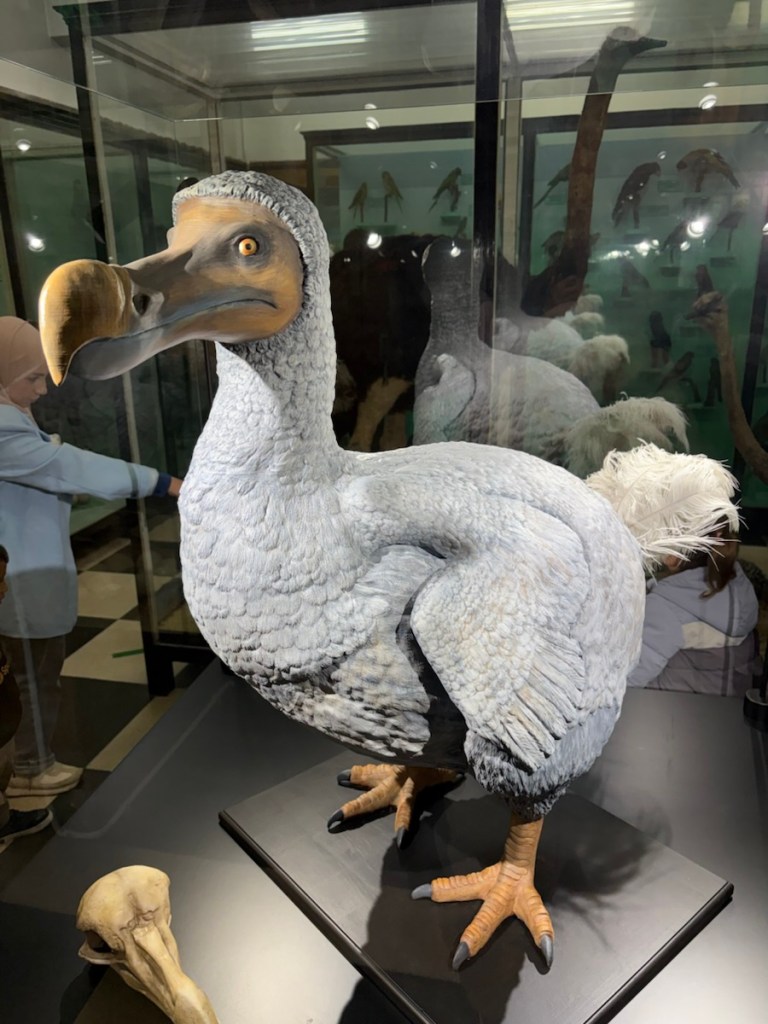
That is a big quartz crystalPetrified WoodThe Dodo
Info from the museum’s label. Probably more than some will want to read, but I found it interesting.
The dodo, also known as the dront, is one of the most famous extinct animals and a symbol of human impact on nature. This flightless bird inhabited only the island of Mauritius in the Indian Ocean and reached a height of 62 to 75 cm and a body weight between 10 and 18 kg. Its size is among the clearest examples of so-called “island gigantism” – a phenomenon in which, in isolated environments and in the absence of predators, organisms evolve significantly larger sizes than their relatives.
The biology of the dodo is no less remarkable. It was a ground-dwelling, slow-moving, flightless bird with extremely short, rudimentary wings, a reduced tail of soft feathers, and a massive, curved beak. Unlike most pigeon species, it laid only one egg per clutch, which greatly limited its reproductive potential. Its diet consisted of fallen fruits, fresh leaves, flowers and buds, bulbs, roots, and small terrestrial invertebrates.
The origin of the names by which the species is known is also intriguing. Dutch sailors from the ship Gelderland, who landed on the island in 1602, called the bird “dront” (“swollen”, likely referring to its rounded body shape. The more widespread name “dodo” has several possible origins: from the Dutch words dodoor (“sluggard”) or dodaars (“fat-bottomed”), the Portuguese doudo (“fool,” “mad”), or even as an imitation of the bird’s supposed two-tone cooing sound – something like “doo-doo” or “doh-doh.”
The dodo became completely extinct around the year 1700 – just 190 years after the discovery of the island by Portuguese navigators. The main causes of its extinction include excessive hunting, egg collection, the introduction of non-native predators by humans, and the bird’s low reproductive capacity. Today, its closest living relative is the Nicobar pigeon (Caloenas nicobarica).
Despite its tragic fate, the dodo remains vivid in the human imagination as a symbol of extinct species. The renowned British conservationist Gerald Durrell chose the bird as the emblem of his wildlife conservation trust, and the magazine he founded bears the name, Dodo.
Although no complete skeletons have survived, individual bones and partial remains are preserved in museums in Bucharest, Copenhagen, London, Moscow, Oxford, Paris, Prague, and other cities. The first known specimen to reach Europe was delivered to Emperor Rudolf Il in Vienna between 1605 and 1610. In 1626, another specimen was brought to Amsterdam, and in 1638, a live dodo arrived in London.
In 2025, 325 years after its final disappearance, the first scientifically crafted dodo model was exhibited in Bulgaria, commemorating this astonishing bird.
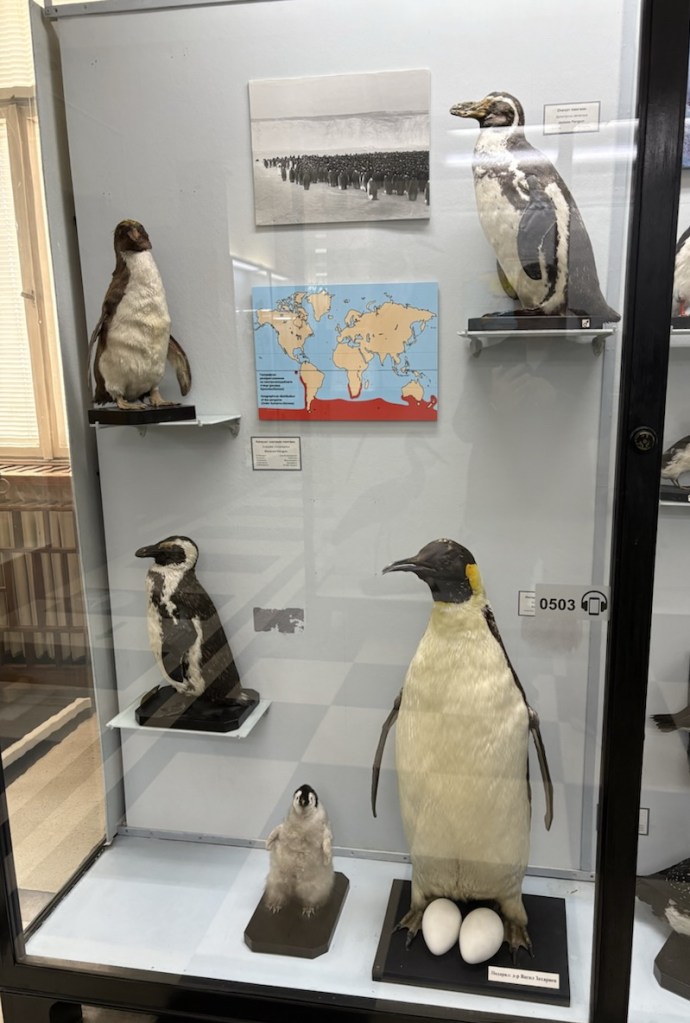
I’ve heard of Emperor Penguins (bottom right), but never Macaroni (top left) or Jackass (top right) Penguins!
The National Gallery of Art did not have a very impressive collection. Even the interior of the building could use a good cleaning and painting. I’m thankful I got in for the “Retired Persons” rate!
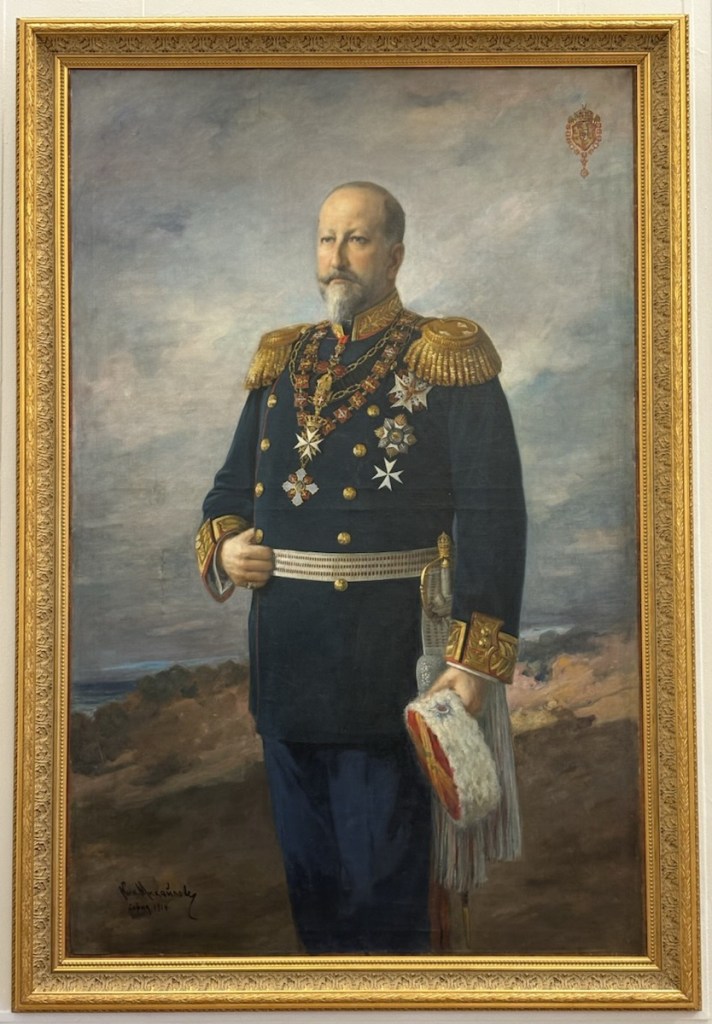
Bulgarian leader, Tsar Ferdinand I (1914)
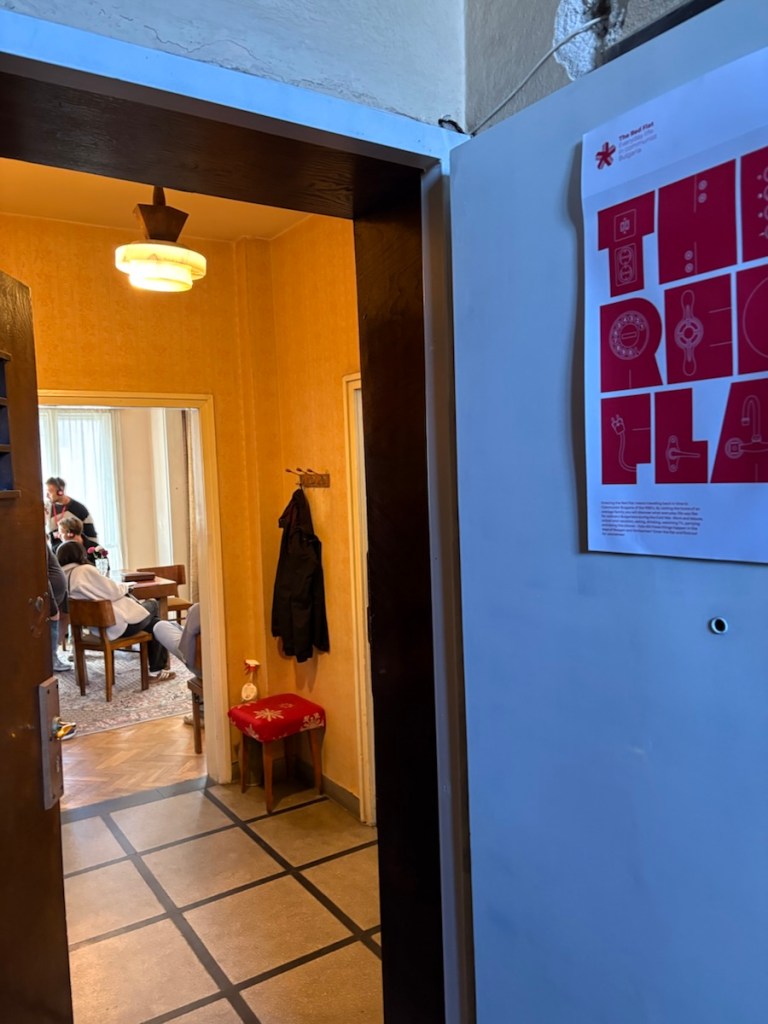
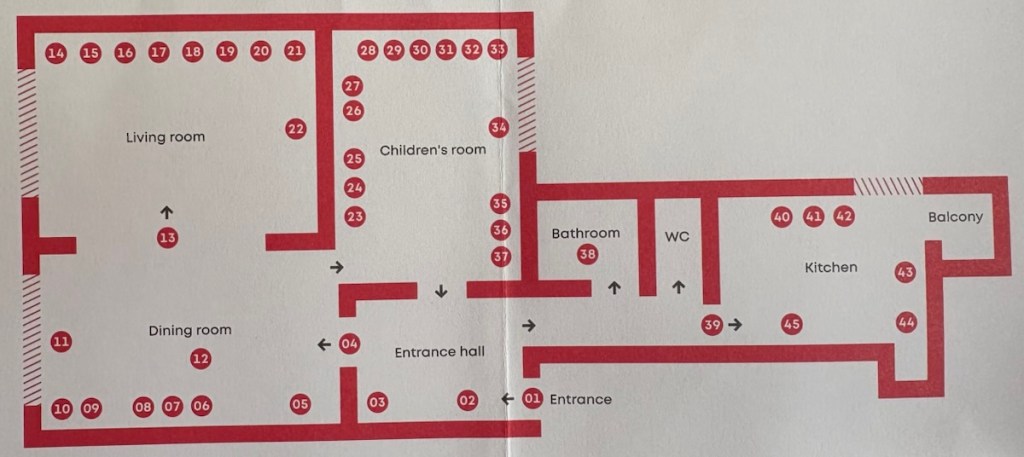
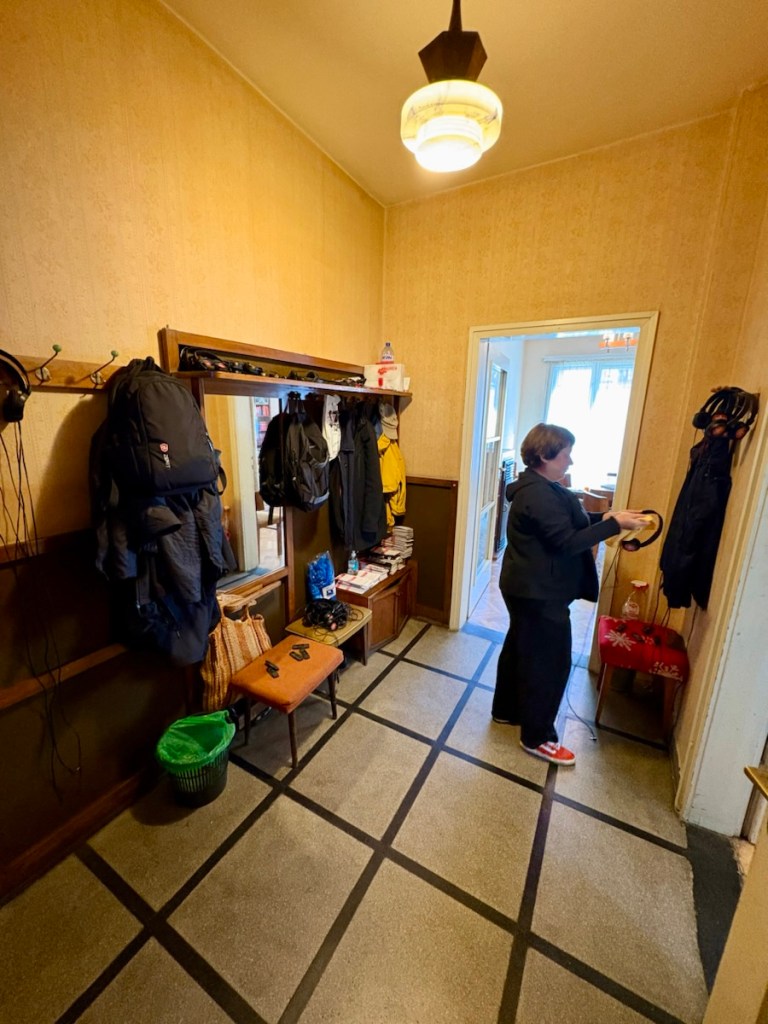
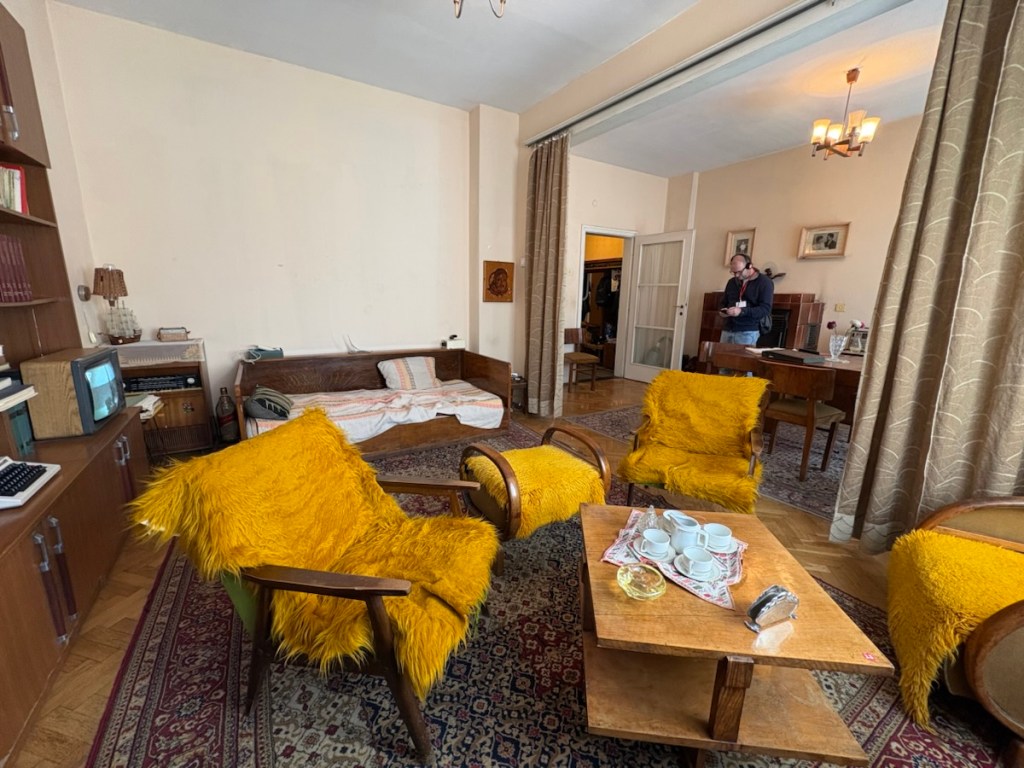
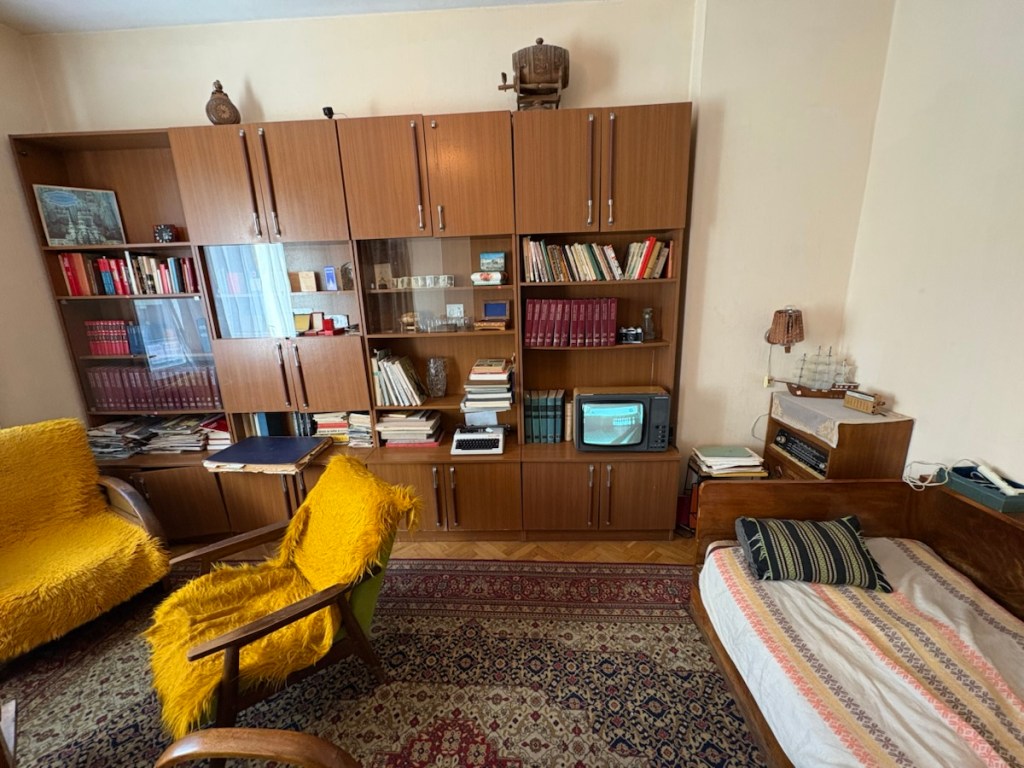
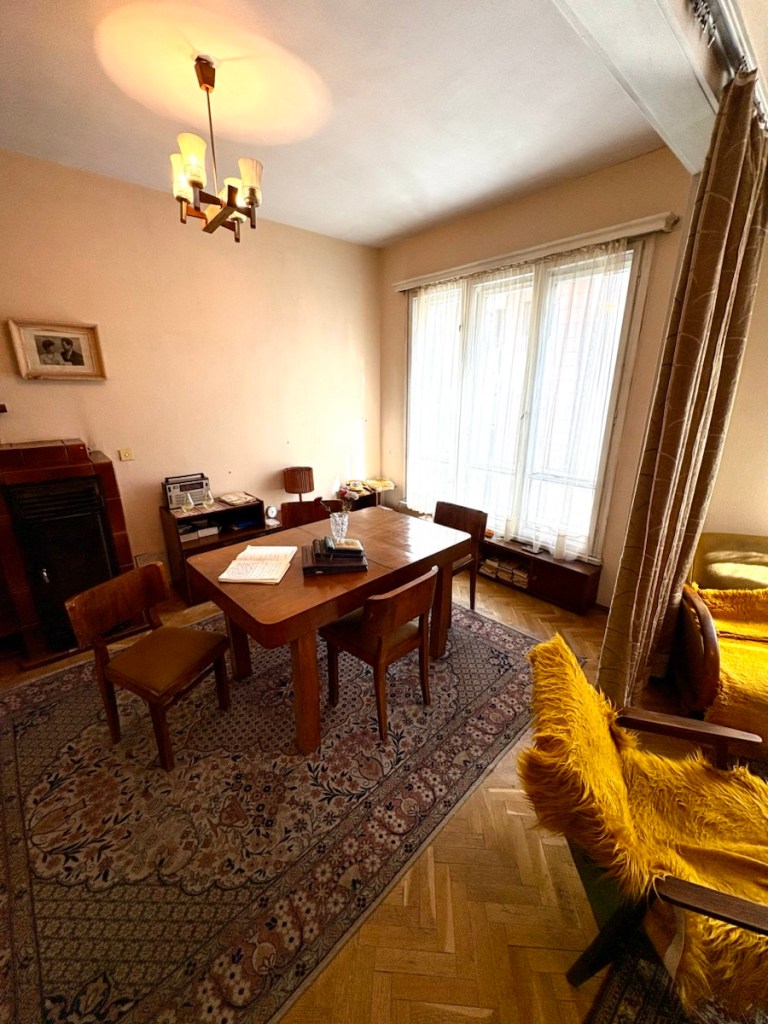
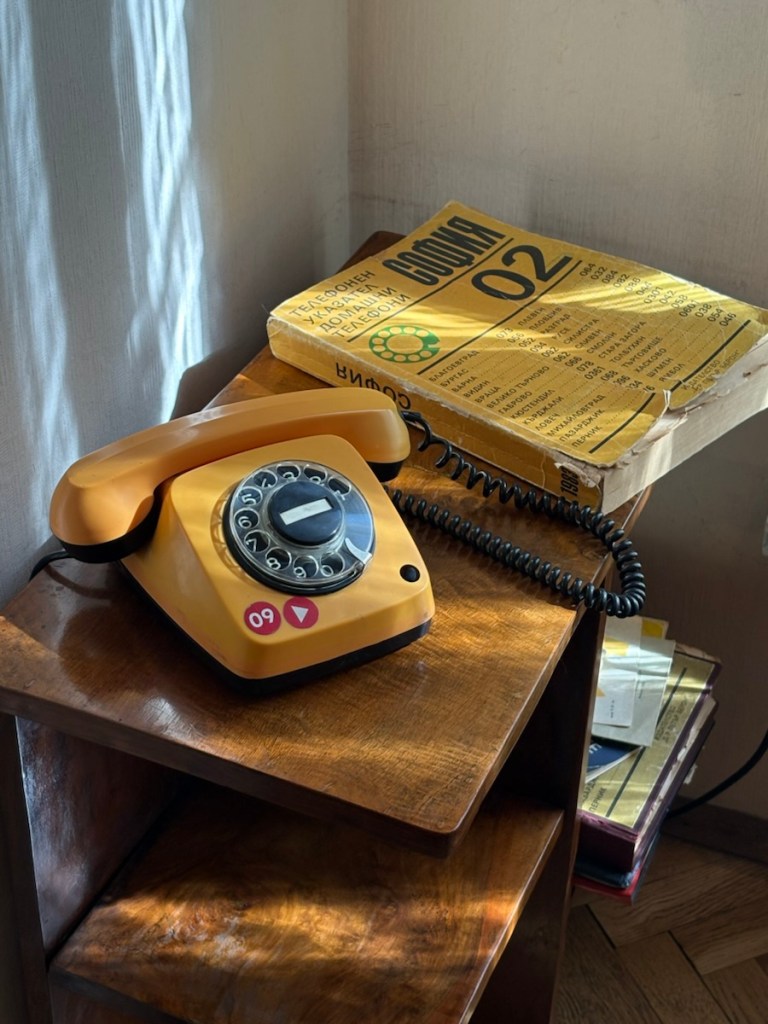
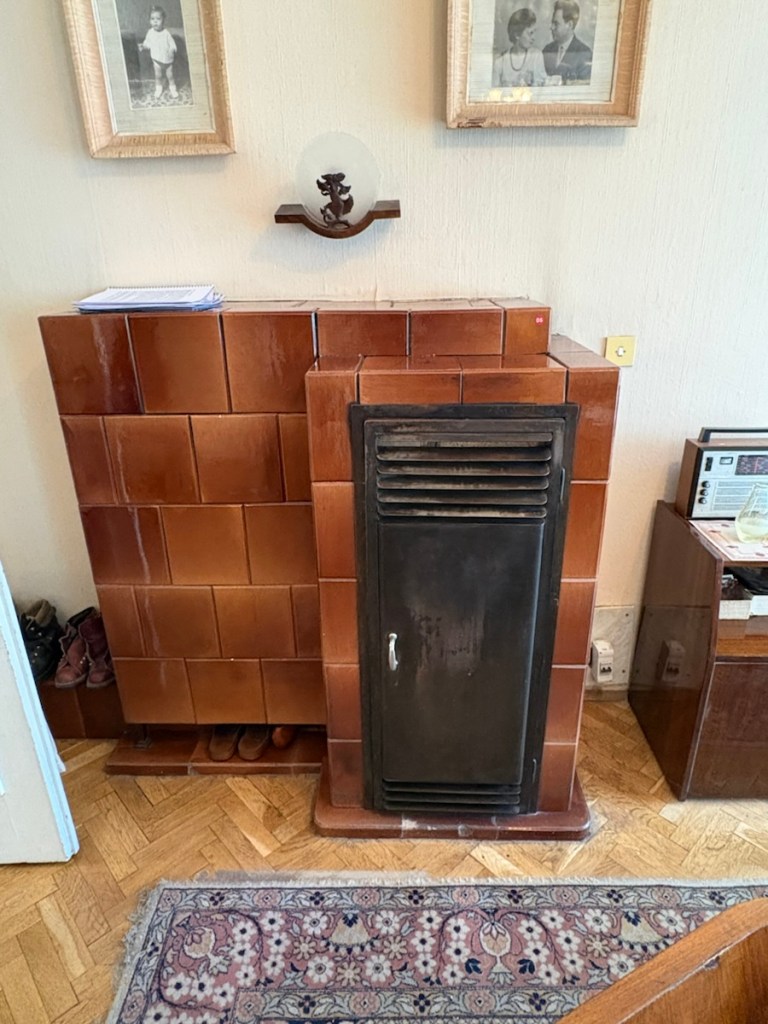
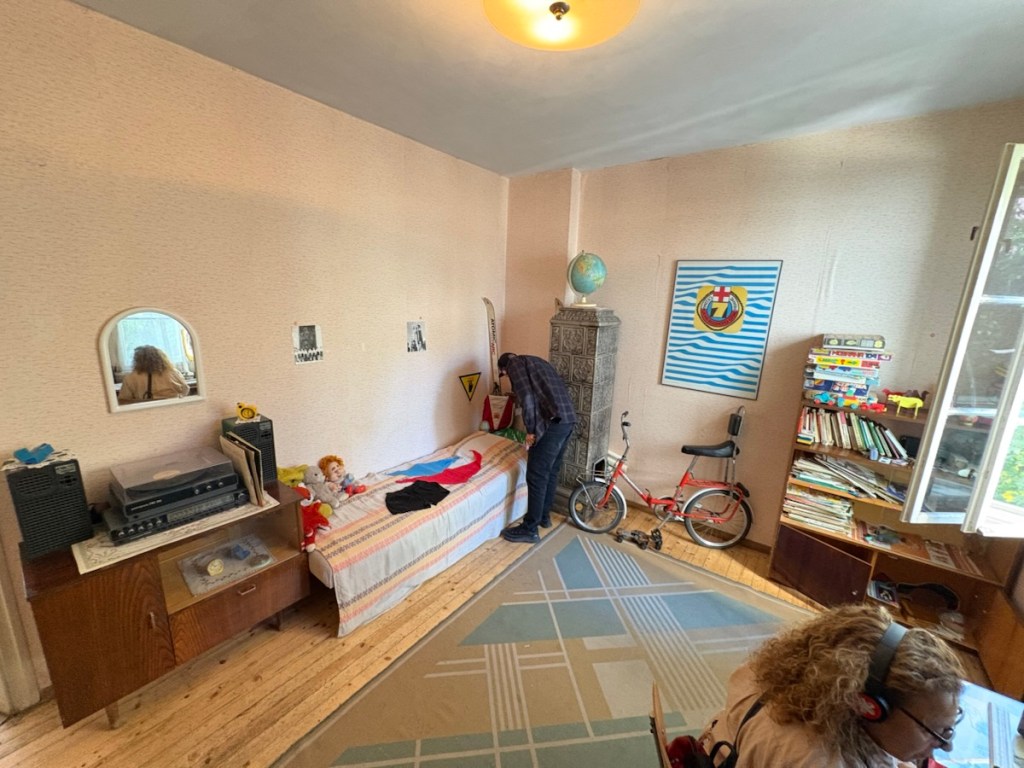
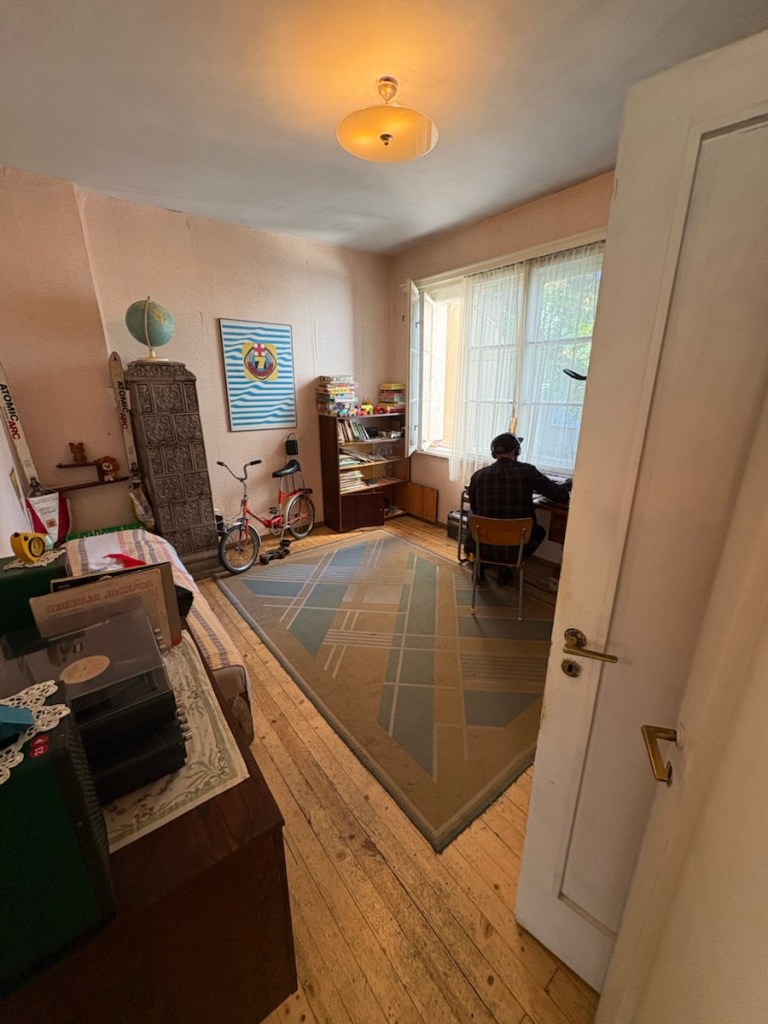
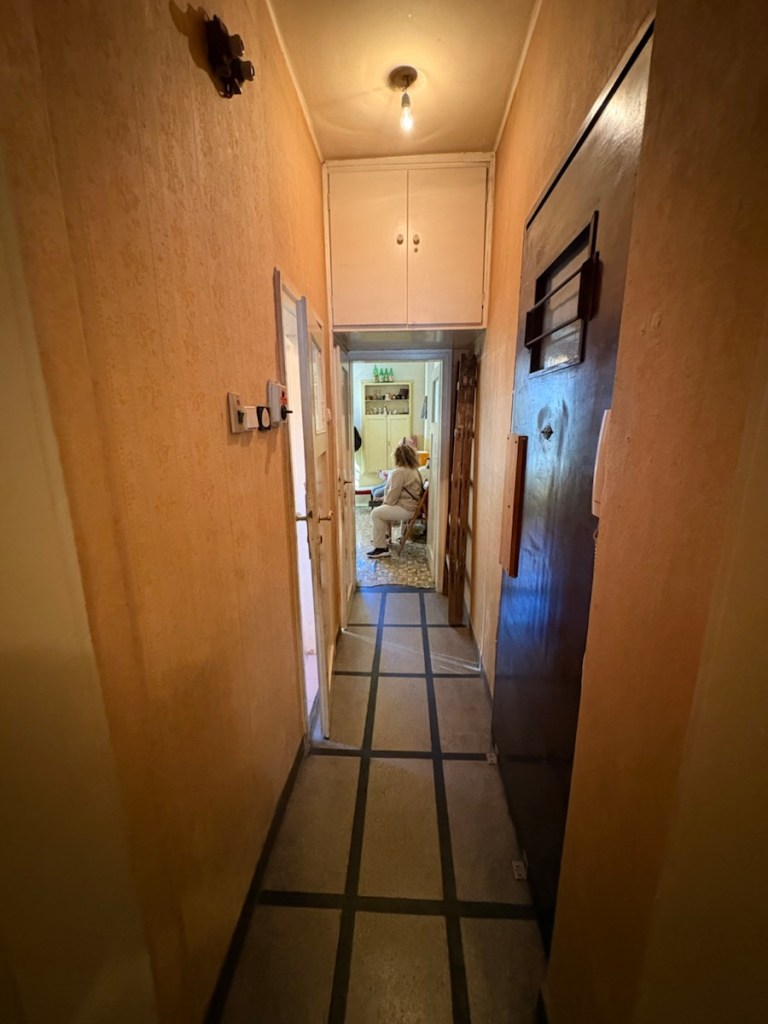
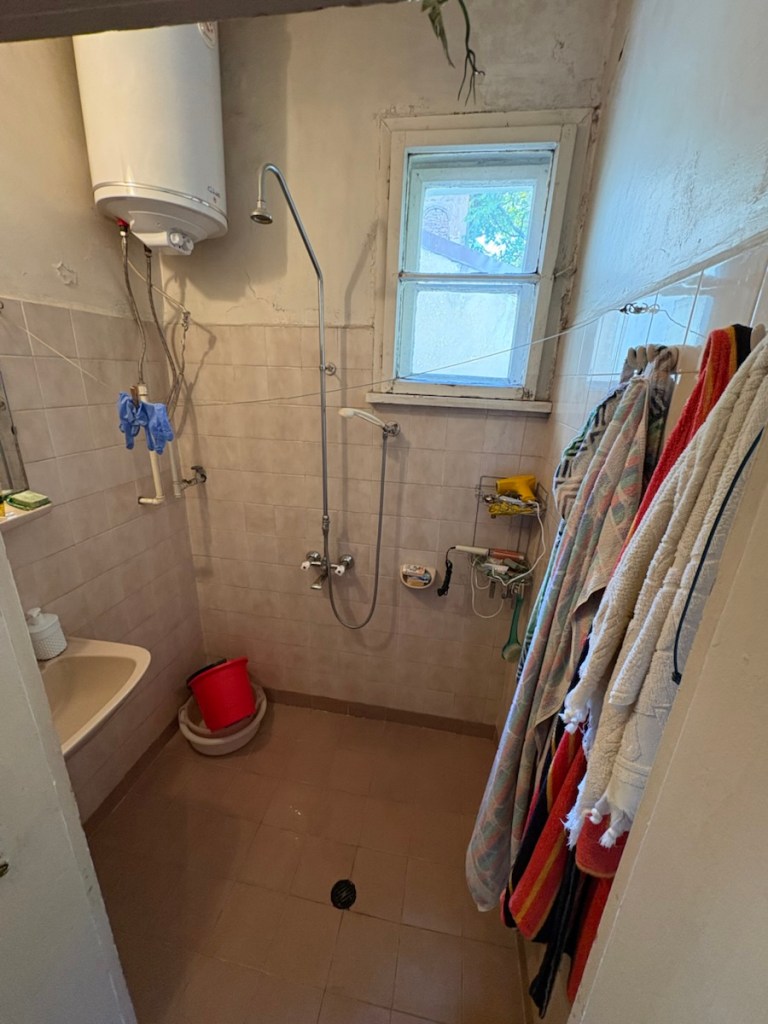
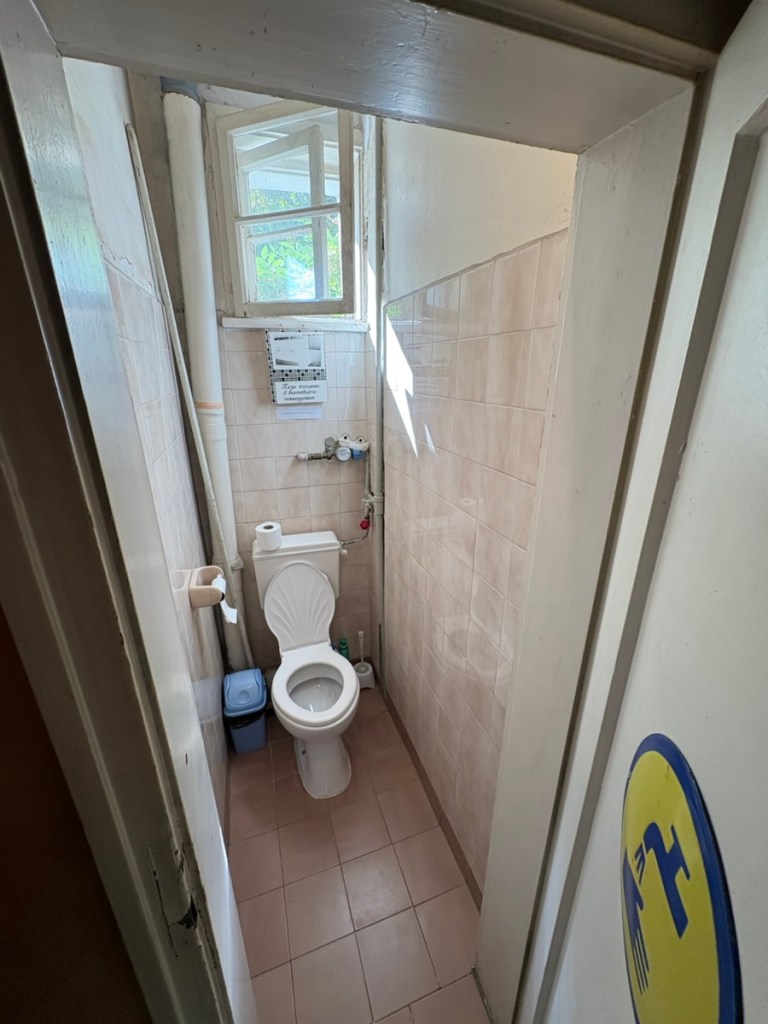
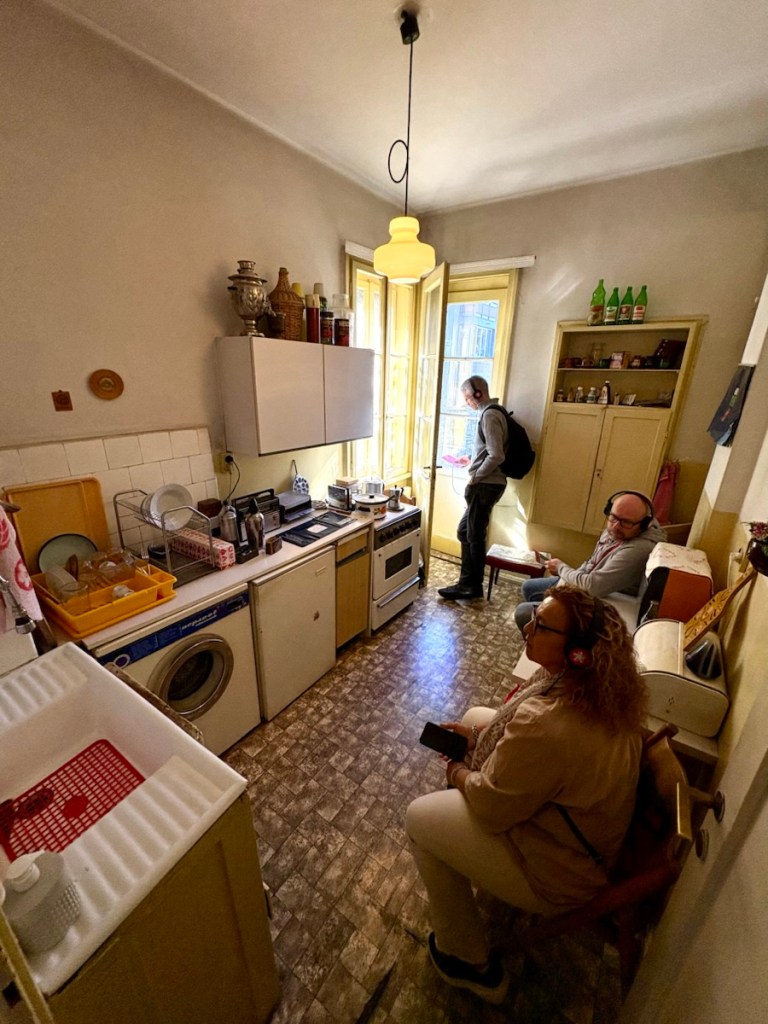
Next up was “The Red Flat” museum. It is a tour of an actual apartment in a pre-WWII building and was supposedly that actual home of a communist era family. The father, mother, and son lived there, although the father was often working in Libya or elsewhere as an engineer. The self-guided audio tour was very interesting. You could sit anywhere and even handle most of the contents. Like a time warp that sent me back to the 50s-70s.
“Entering the Red Flat means travelling back in time to Communist Bulgaria of the 1980’s. By visiting the home of an average family you will discover what everyday life was like for ordinary Bulgarians during the Cold War. Work and leisure, school and vacation, eating, drinking, watching TV, partying and doing the chores – how did these things happen in the days of Reagan and Gorbachev? Enter the flat and find out for yourselves!”
Here are some photos of the apartment and its furnishings.
The entranceFloor planEntrywayLiving RoomNotice the bed in the living roomDining RoomThe heaterSon’s BedroomHallway to Bath and KitchenBathroomKitchen
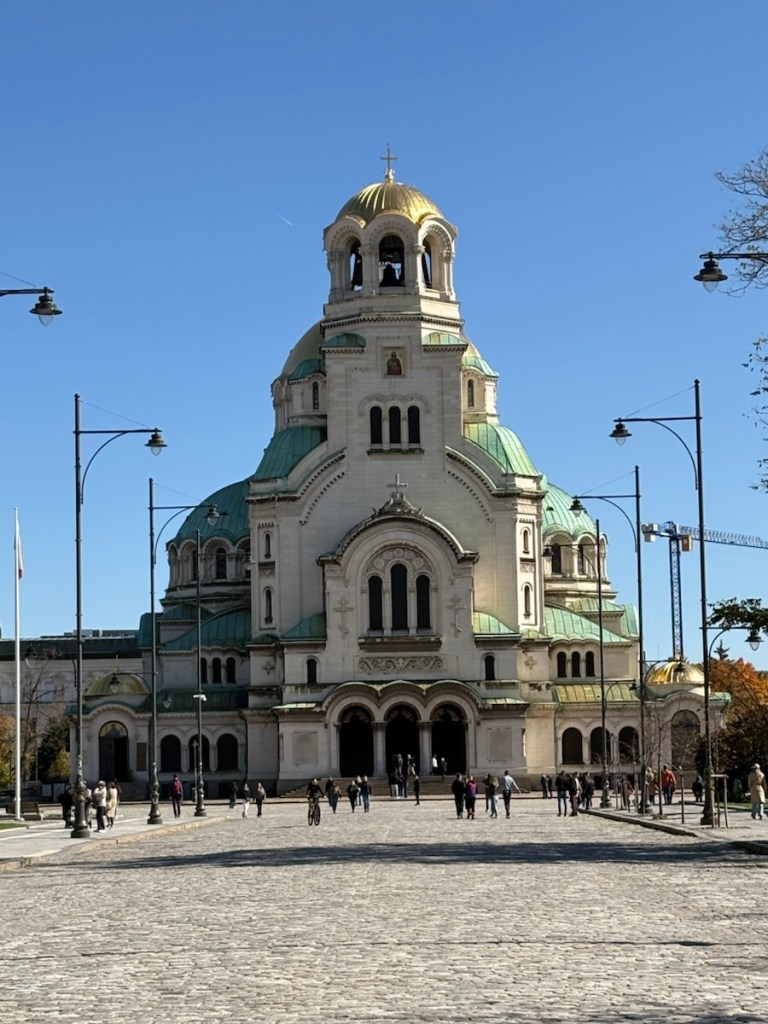
After the Red Flat, I stopped by the Aleksandar Nevsky Cathedral again to see it in the daylight on this stop in Sofia. While the outside is spectacular, especially at night, the inside is pretty underwhelming when compared to a number of the other beautiful churches I’ve seen on the trip.
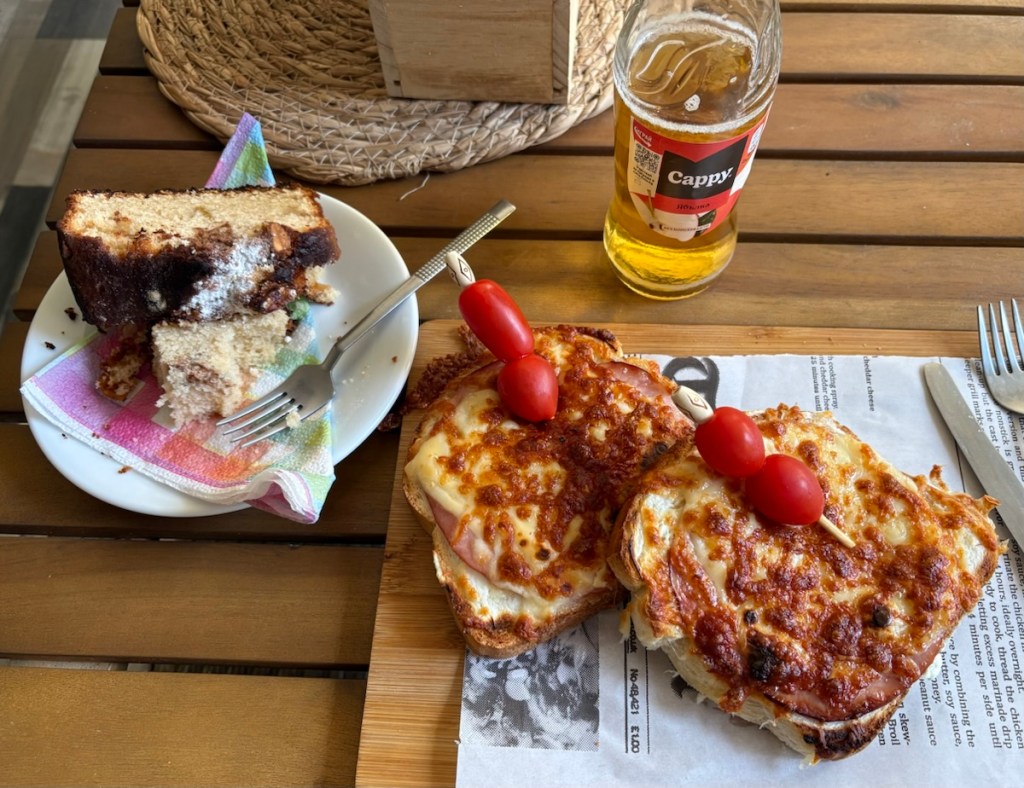
After finding many restaurants closed near my hotel, I was lucky to get into a small local restaurant a few blocks away. I think the husband and wife proprietors were getting ready to lock the doors for the day when I showed up. That was to my good fortune! My late lunch / early dinner was delicious! And the cake was the best ever! Like a light pound cake with cinnamon and nuts on top. Wow!
Toasted Ham and Cheese Sandwich, Cake, and Apple Juice
Before you go…
I love you more than coffee, but not always before coffee.
A really short post today…. It was mostly a driving day to get back to Sofia, and i had to contend with massive backups and stoppages due to road construction! I guess sat in highway traffic for over a couple hours overall. Good thing I’ve had plenty of audio books ready!
The day did start beautiful and sunny, but turned increasingly cloudy as I moved closer to Sofia. An hour outside the city and a steady rain started. So the rest of the day after I returned my Bulgarian rental car was a washout. I checked into my hotel and decided it was a good rest and repack day.
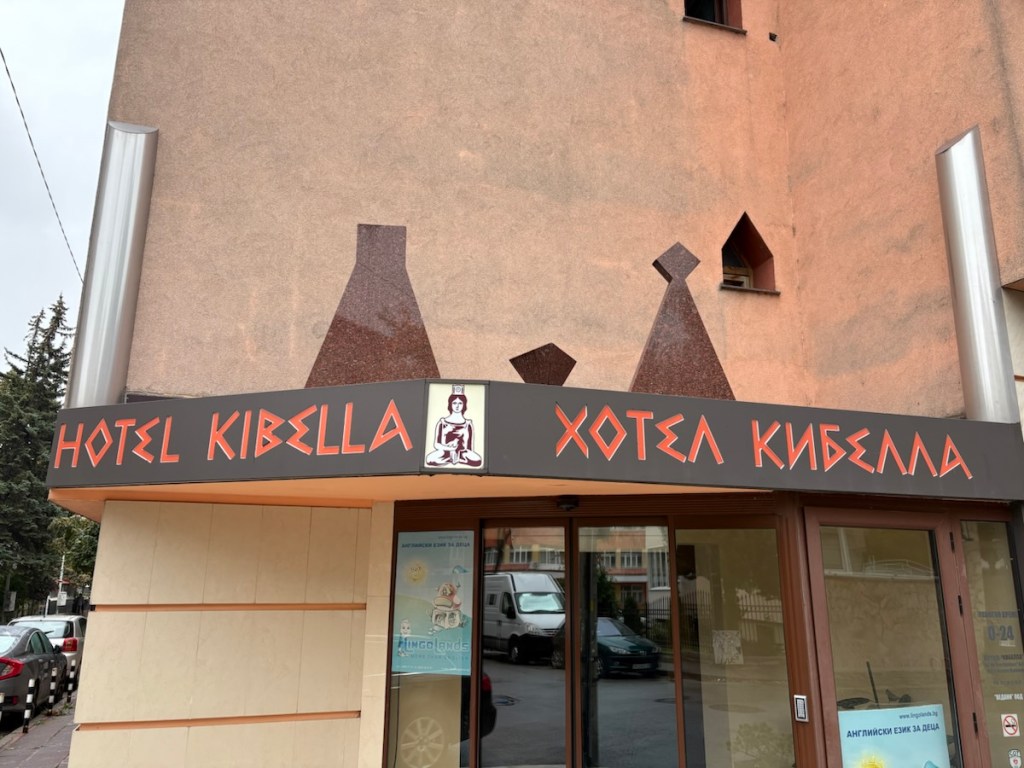
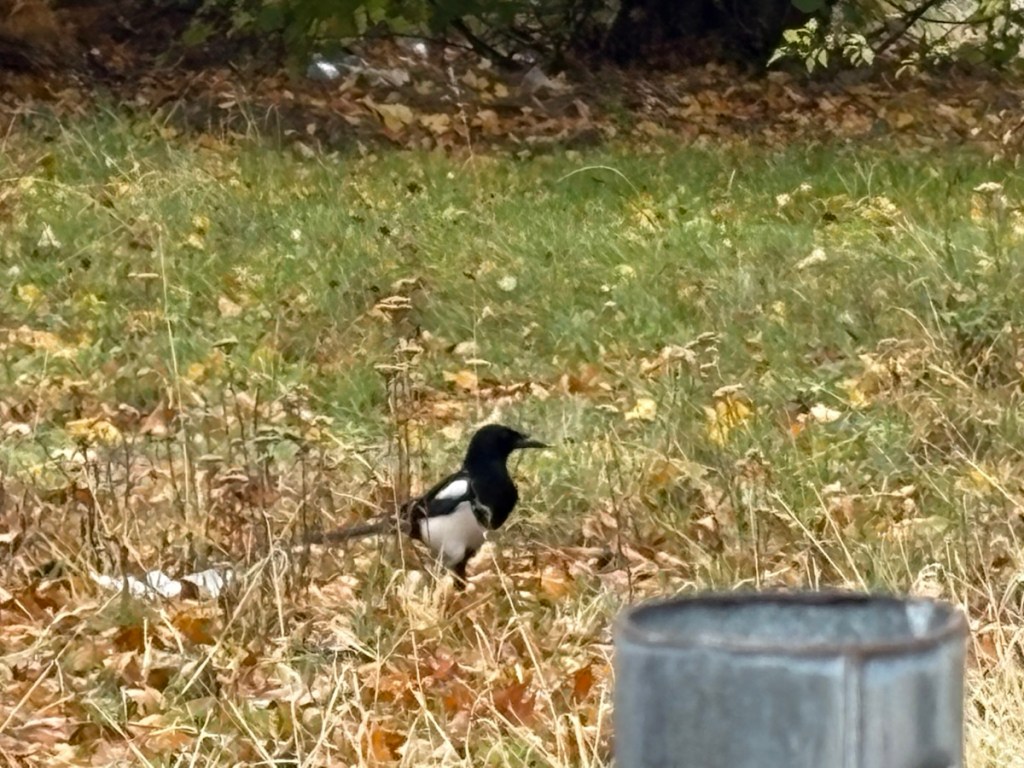
English on the left – Bulgarian on the right. And that’s why things are hard to understand here!A Eurasian Magpie
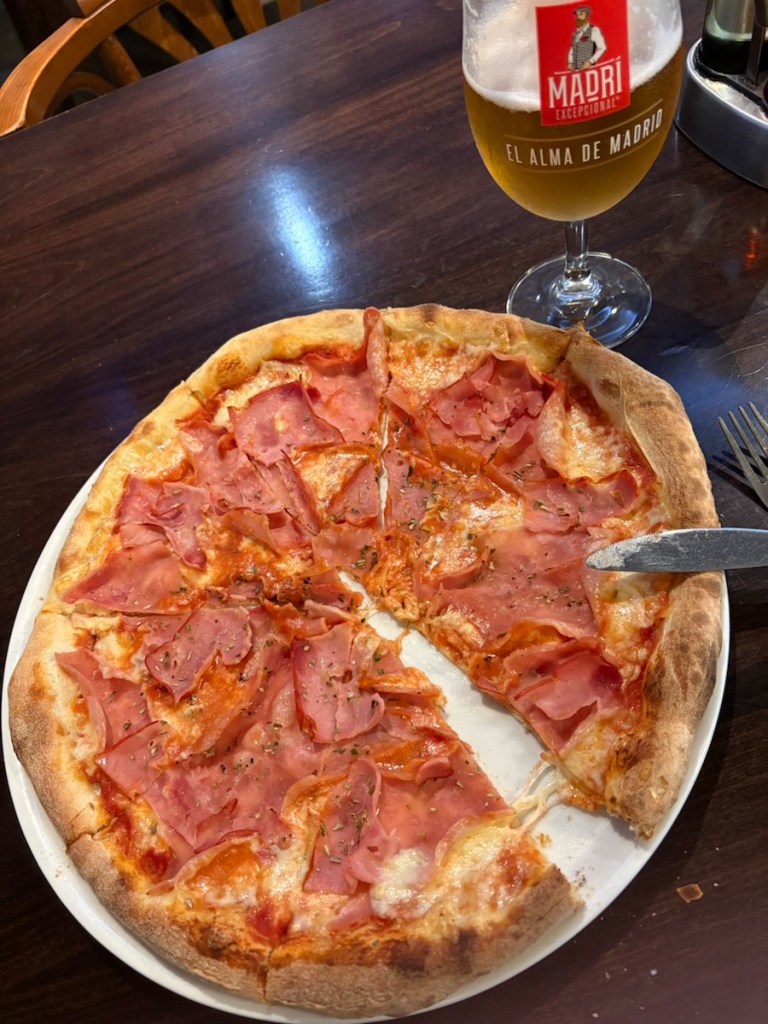
A lovely pizza for a late lunch, followed by a well deserved nap! Well, at least I think I deserved a nap.
Before you go…
How do you make holy water? You boil the hell out of it.
All the cars in the Balkans are required “by law” to ride on a line on the roadways. I swear, none of the local drivers can decide what lane they want! They are always on a line, even if it’s the center line facing oncoming traffic. And they merge or pull out in front of you without warning. And all this with very few horns. I haven’t seen any accidents, but wow, have I had some choice words for the more egregious crazies.
Balkan drivers are also crazy to pass – they cannot wait to get by any car, truck, or semi in front of them. And it doesn’t matter what the road is like, or how much space they’ll gain, even if it only gains them one car length! THEY ARE GOING TO PASS! 😉
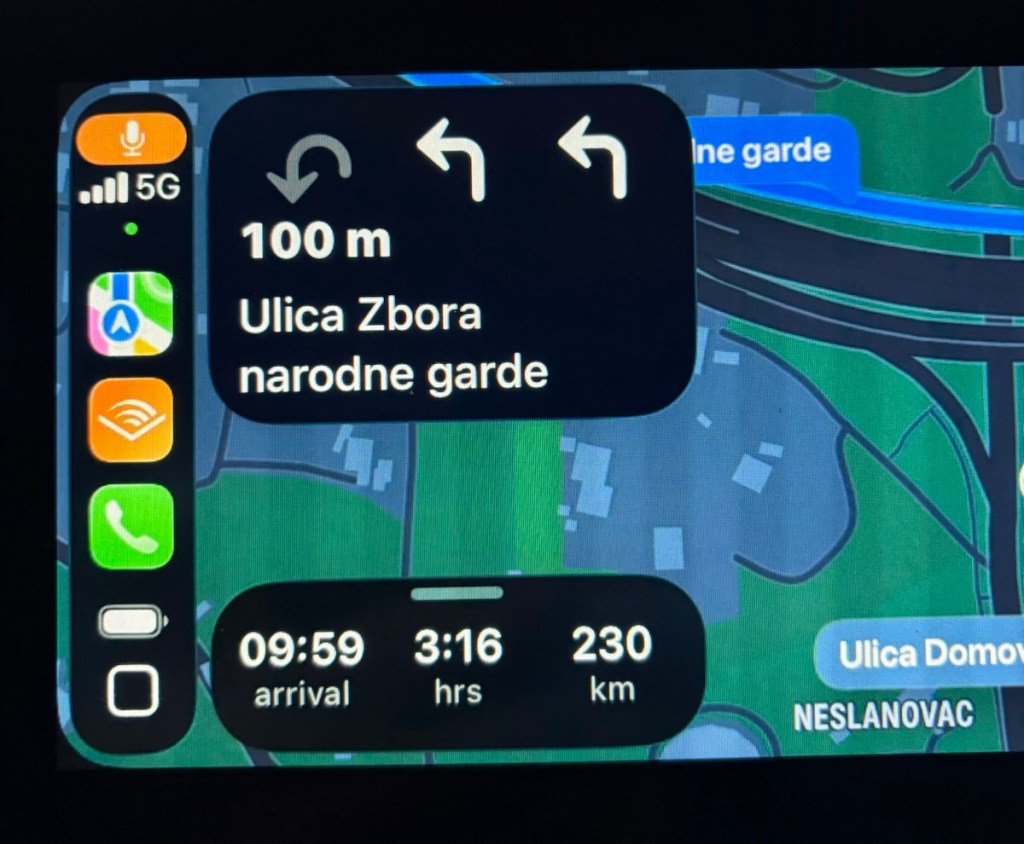
One of the funny things about driving in the Balkans is using my iPhone’s Apple Maps app and listening to Siri pronounce the road names! What a hoot!
Like this one – pronunciation!?!@?
By the way, how did we ever find our way around in countries where we didn’t know the language, couldn’t read the road signs, etc.? No Siri, no Apple Maps or Google Maps, no Google Translate, etc.. Everything is so much easier now, but somehow we survived just fine thirty and more years ago.
One thing good about driving in the Balkins is that the semi trailers (and sometimes other vehicles) in front of you on two-lane highways are very good about letting you know when it’s safe to pass. They will turn on their right turn signal indicating it’s good to go by them. Nice safety gesture, and one I started using for the cars behind me (who always want to pass)!
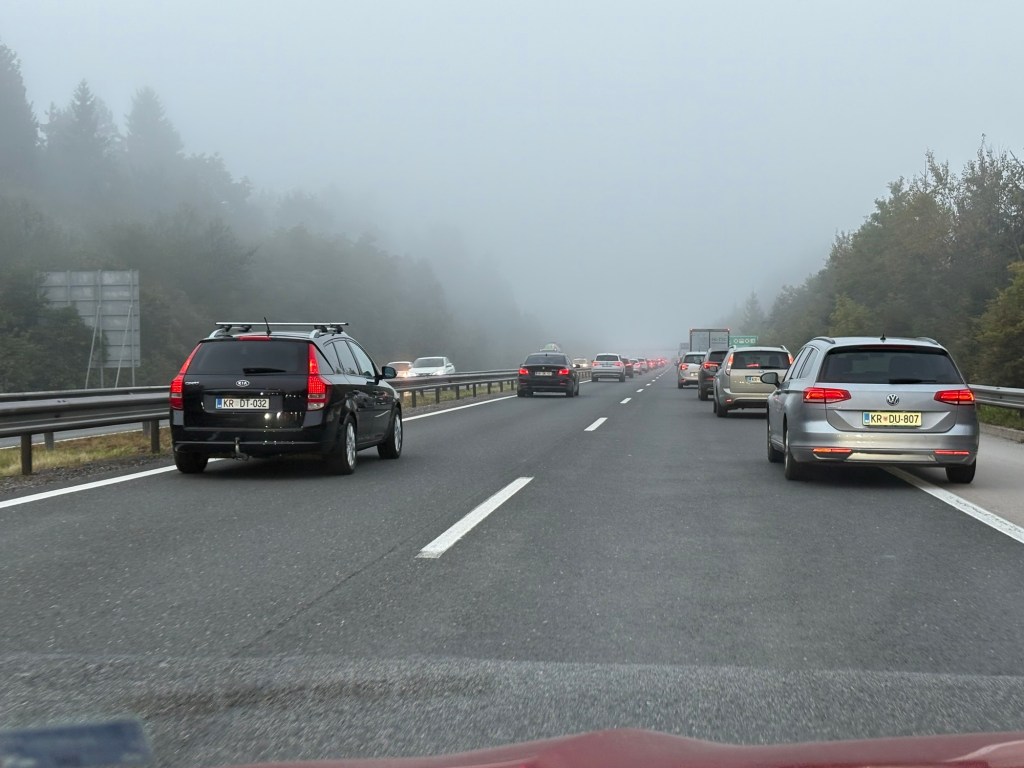
In the photo below, the traffic is stopped, or moving very slowly, on the highway. And when that occurs, the cars in the two lanes split wide, as shown. Not sure the reason, but they were consistent. It does seem like it would be good for emergency vehicle movement in jammed traffic.
I have been surprised by the number of police on the side of the roads in some of the countries. Standing along roadways and randomly pulling over vehicles for some reason – maybe safety or insurance checks? And speed cameras, as well as speed traps are widely evident.
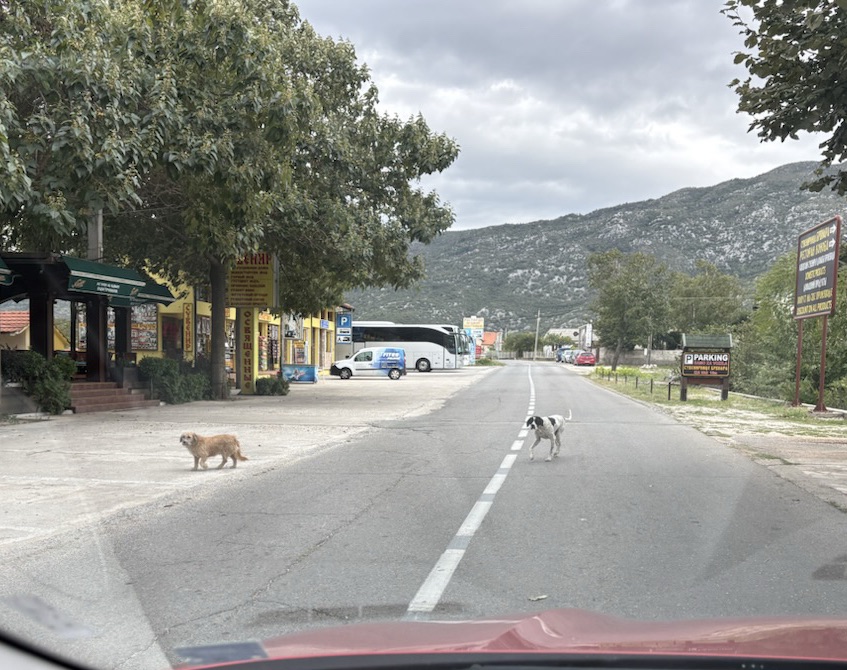
There have been a large number of wild or roaming dogs that are on the highways. And this has been out in the boondocks, on interstates, side roads, doesn’t matter. Truly a lot of dogs of all stripes. Some in packs of 5 or 6, some solo, and all just lazily walk in front of traffic like they haven’t a care in the world or they have a death wish, and some others who chase after cars like we’re something good to eat!
This was in a village, but you could see the same along interstate highways
So I pulled into a gas station in Montenegro at about 2:00 pm one day. As I pulled up to a pump, the attendant put his hands up and “scolded” me in the local language. After figuring out that I was an English speaker, he scolded me in English. “No, no gas, it is time for shift change. Come back in 25 minutes.” That was a first in my worldwide travels! Closed for shift change. Fortunately, my gas situation was not desperate and I drove on.
I was speaking to a host at one of my lodging stops one evening. She was uncomfortable with English, although she was perfectly clear to me. So she called her adult son out to assist. We talked for a couple minutes, and I mentioned something about Virginia. He said, “You are from America?” I said, “Yes.” And he replied, “Oh, so that’s why you speak English so well!” Funny! Apparently they thought I was just using English as a common language that we could both understand.
I haven’t seen one golf course in the Balkans!
The only wild animal I’ve seen along the entire trip was a pheasant next to the road in Serbia!
One of the things that surprised me about the Balkans is the clothing worn by the majority of people throughout my travels. Most everyone is bundled up in coats and sweaters, with many wearing down-style puffy jackets. The weather has been cool some days, but not uncomfortable. I’ve been mostly in short sleeves, with a very light jacket sometimes. I did wear a fleece quarter zip one morning when it was snowing heavily in the mountains, but that’s been it for warm clothes.
Before you go…
I told my suitcase there would be no vacation this year. Now I’m dealing with emotional baggage.
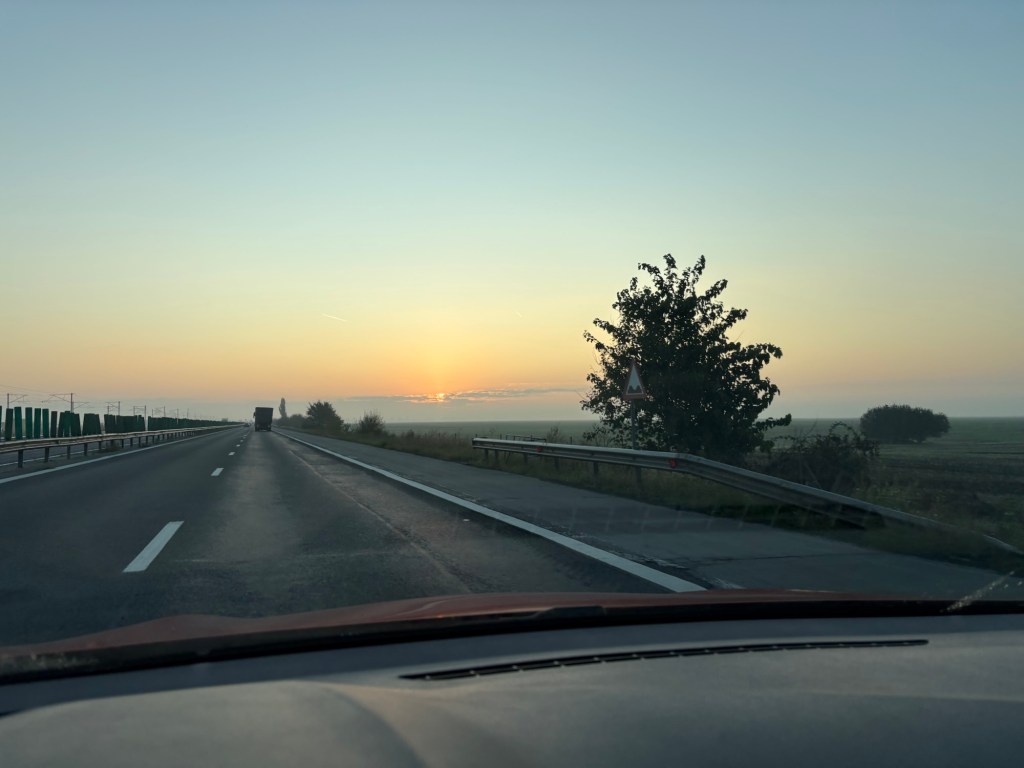
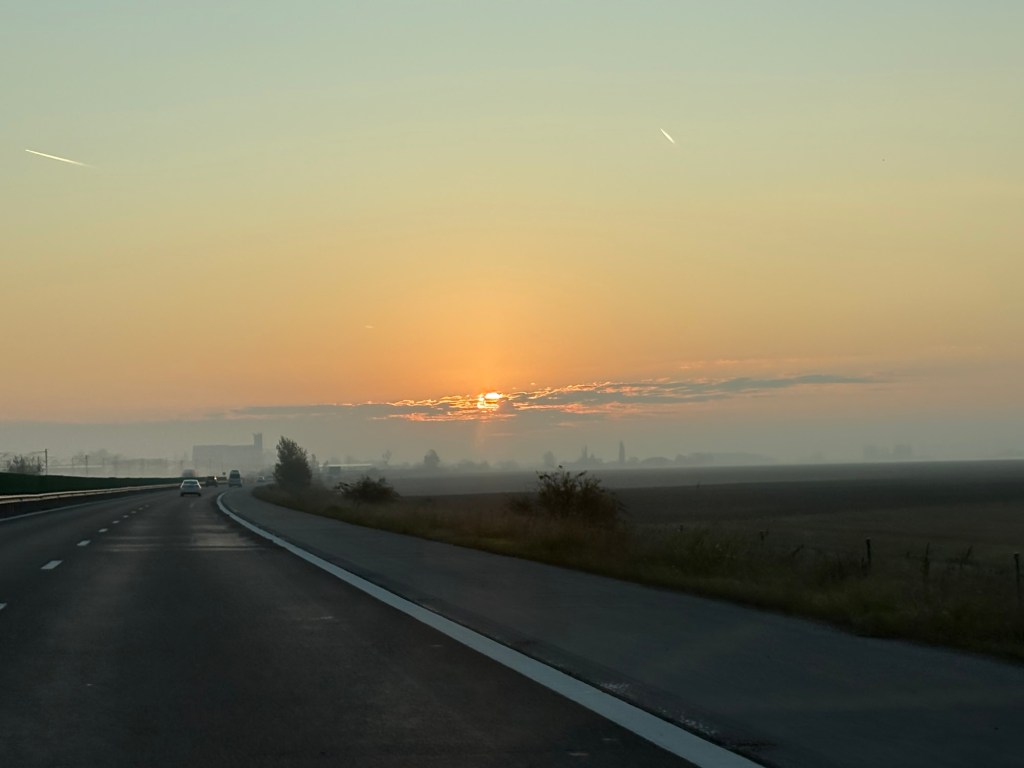
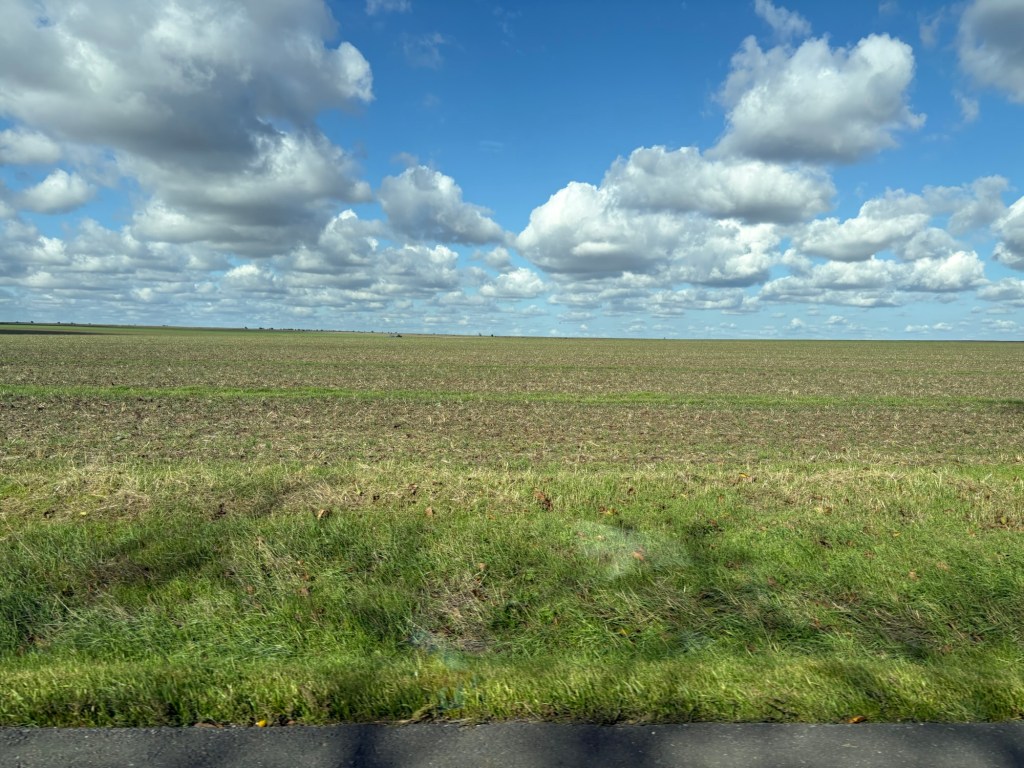
Not much to report today – just a day in transit back to Bulgaria. After an early departure from Bucharest, I headed to the Romanian city of Constanta, on the Black Sea. It was a peaceful two hour drive, and again over very flat terrain.
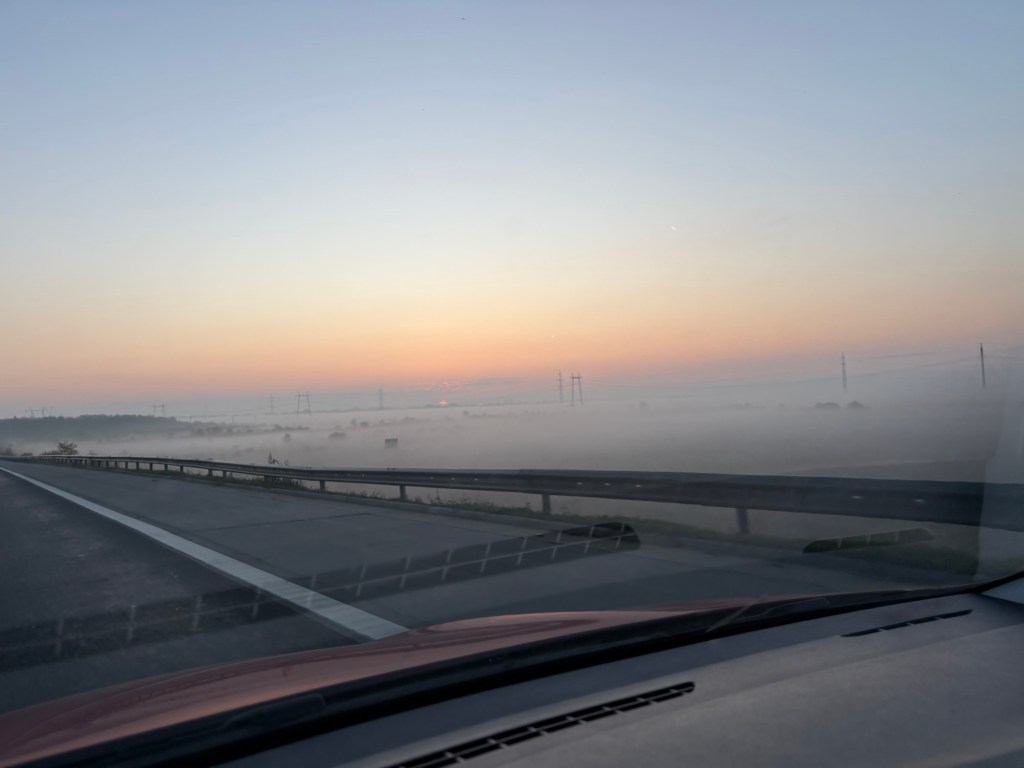
Heading east toward the rising sun
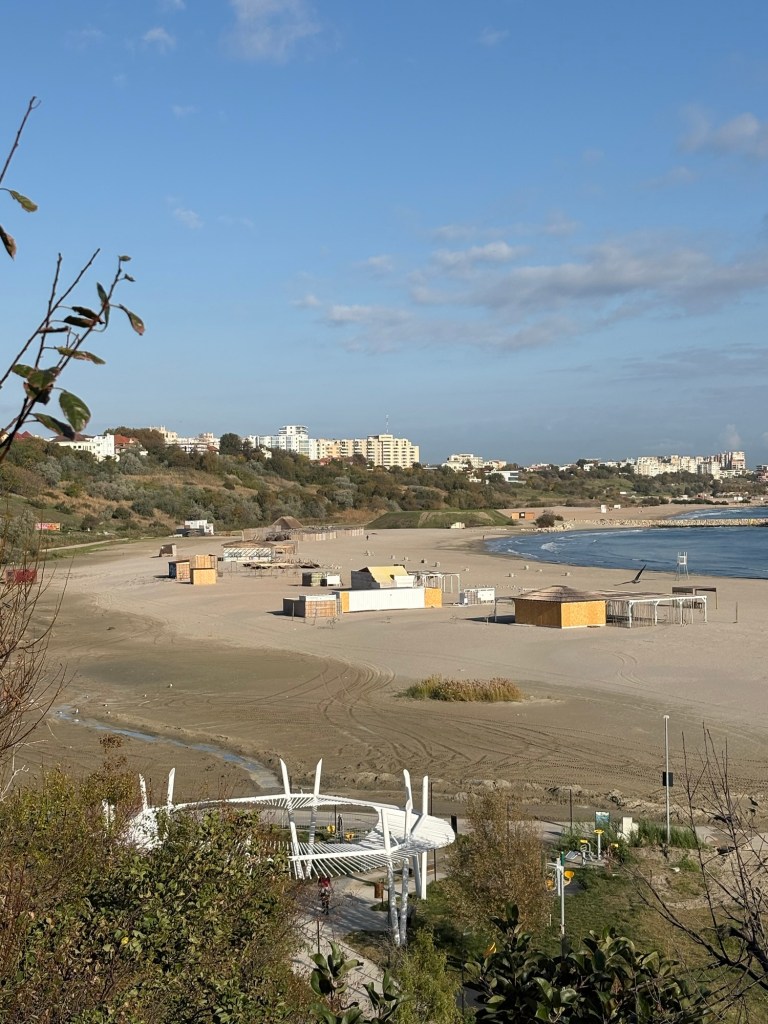
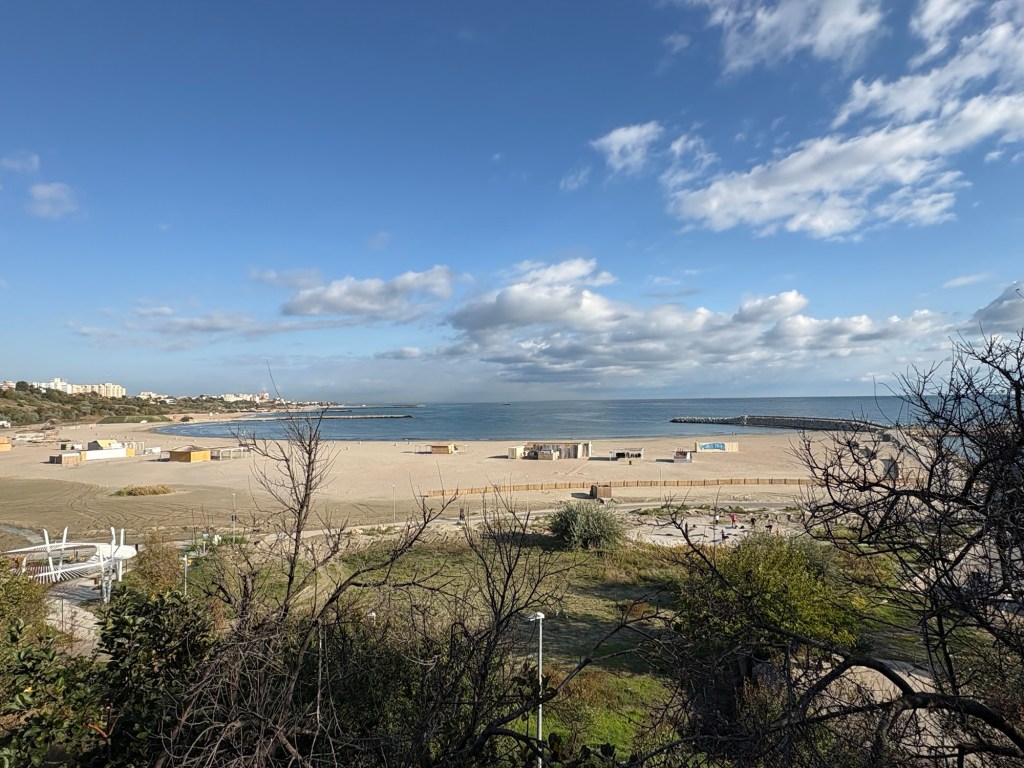
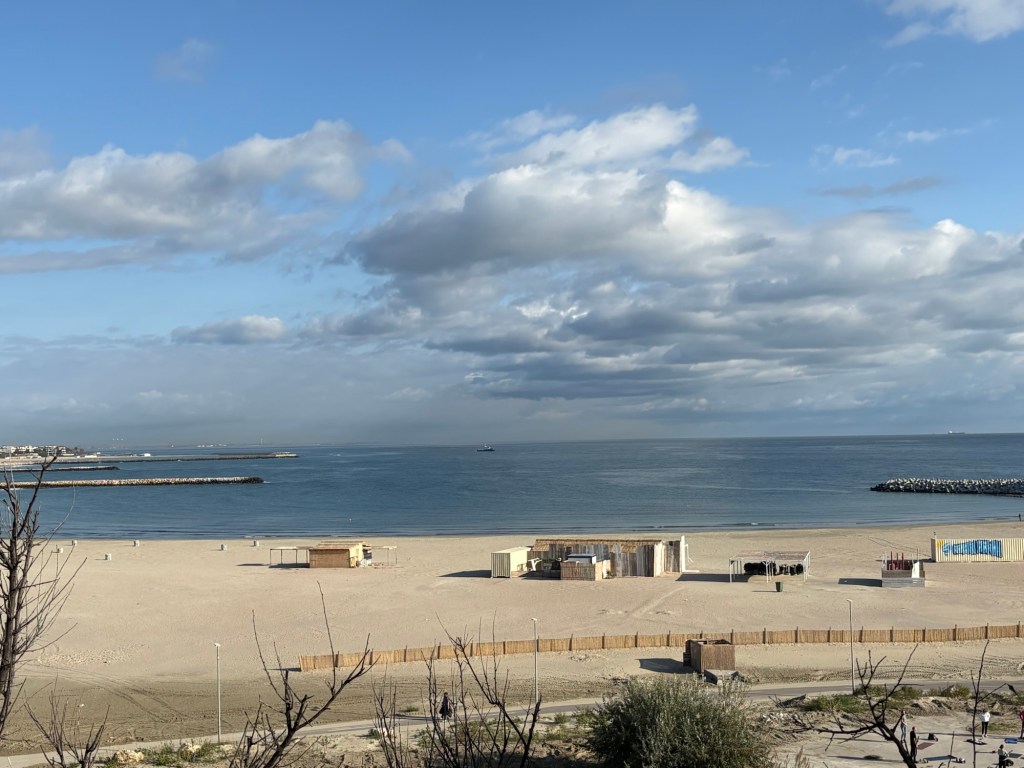
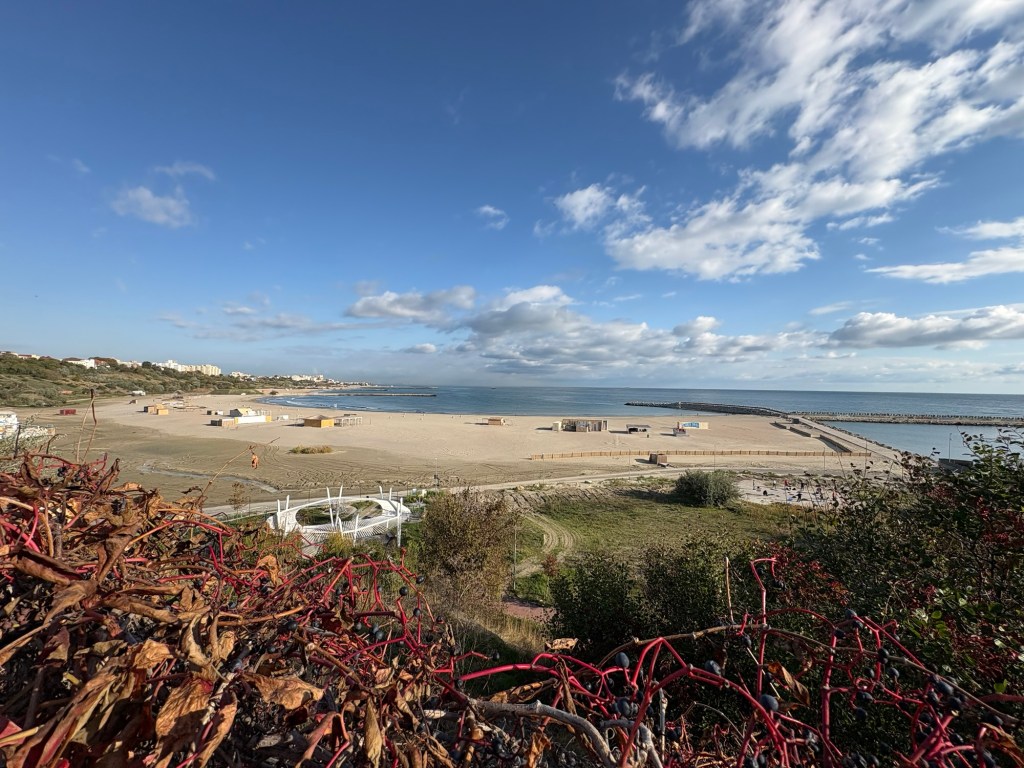
And Constanta was a lovely sea side city that I expect is hopping in the summer with the many resorts and beautiful beaches.
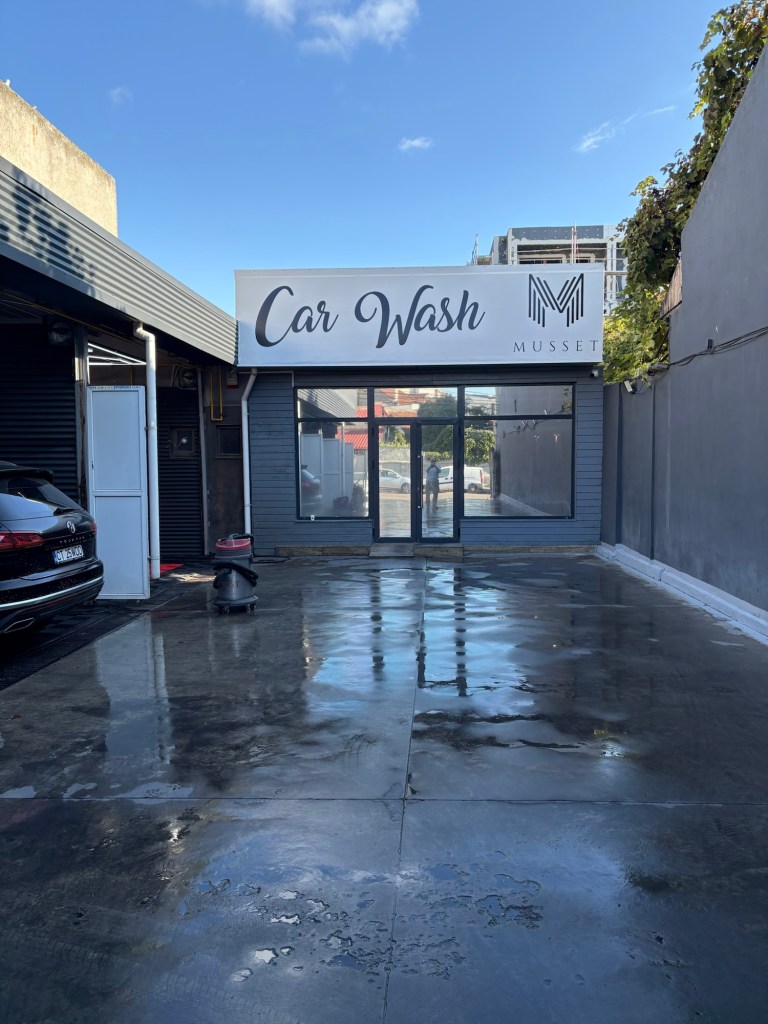
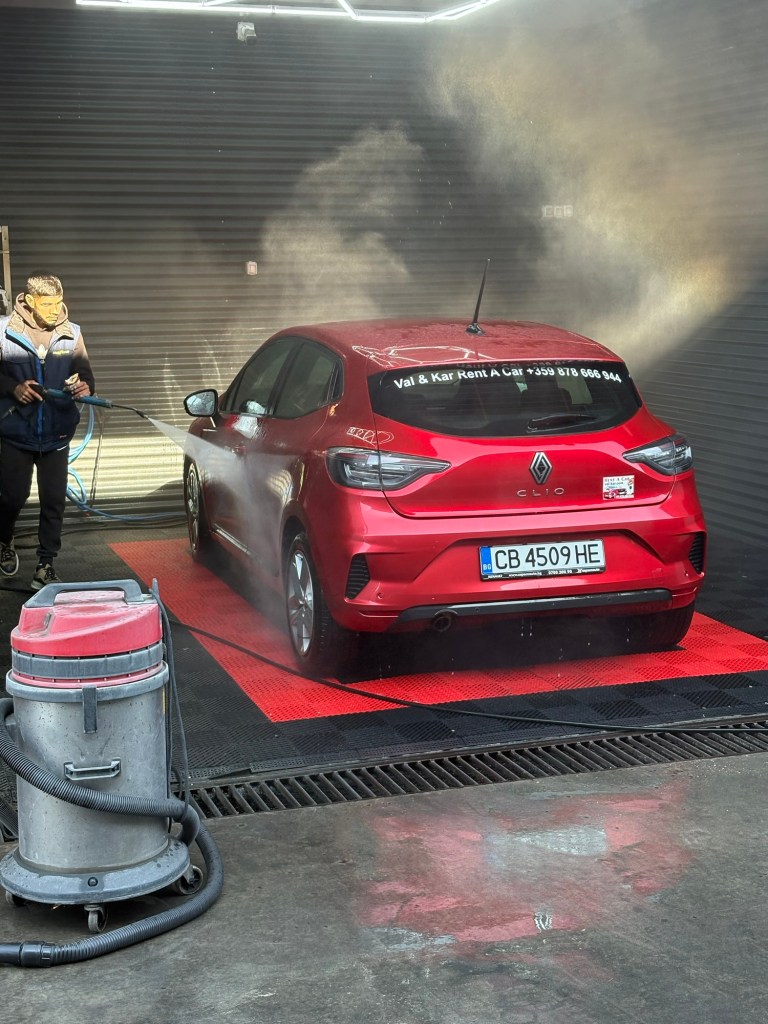
Also decided to get my dirty car cleaned up!
After leaving the sea side, I headed back southwest for another four hours to Veliko Tarnovo in central Bulgaria. I wandered around a bit after checking into my hotel, but not much to see close by.
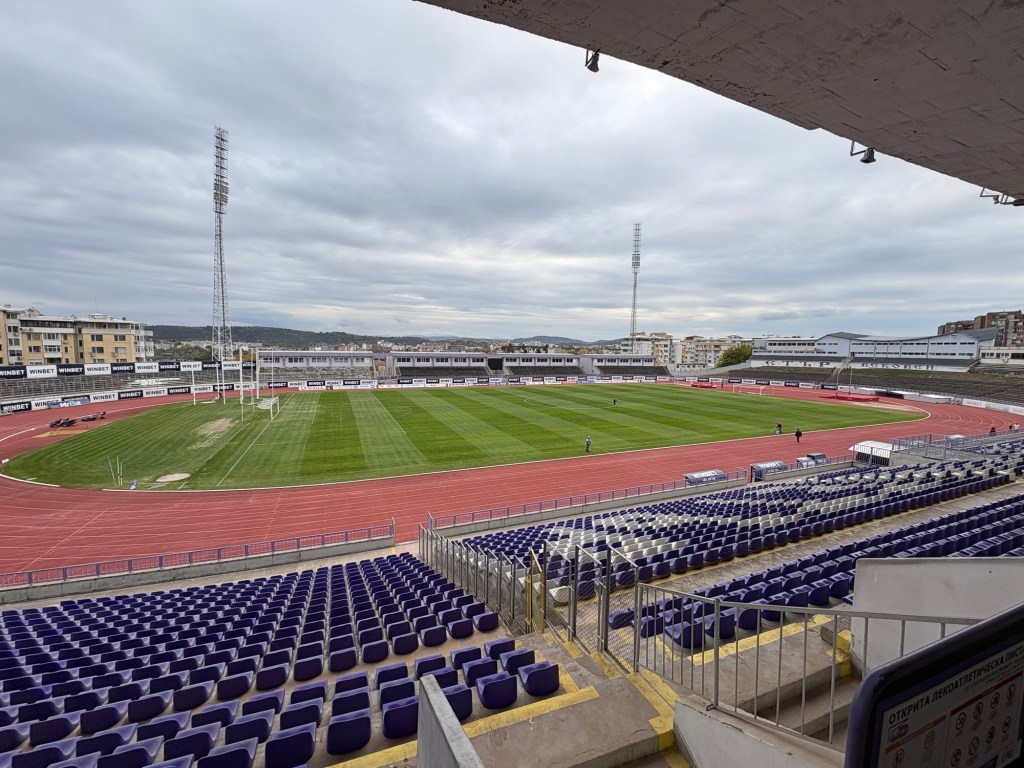
More flat terrain, with sunny skies!The local stadium next to the hotel
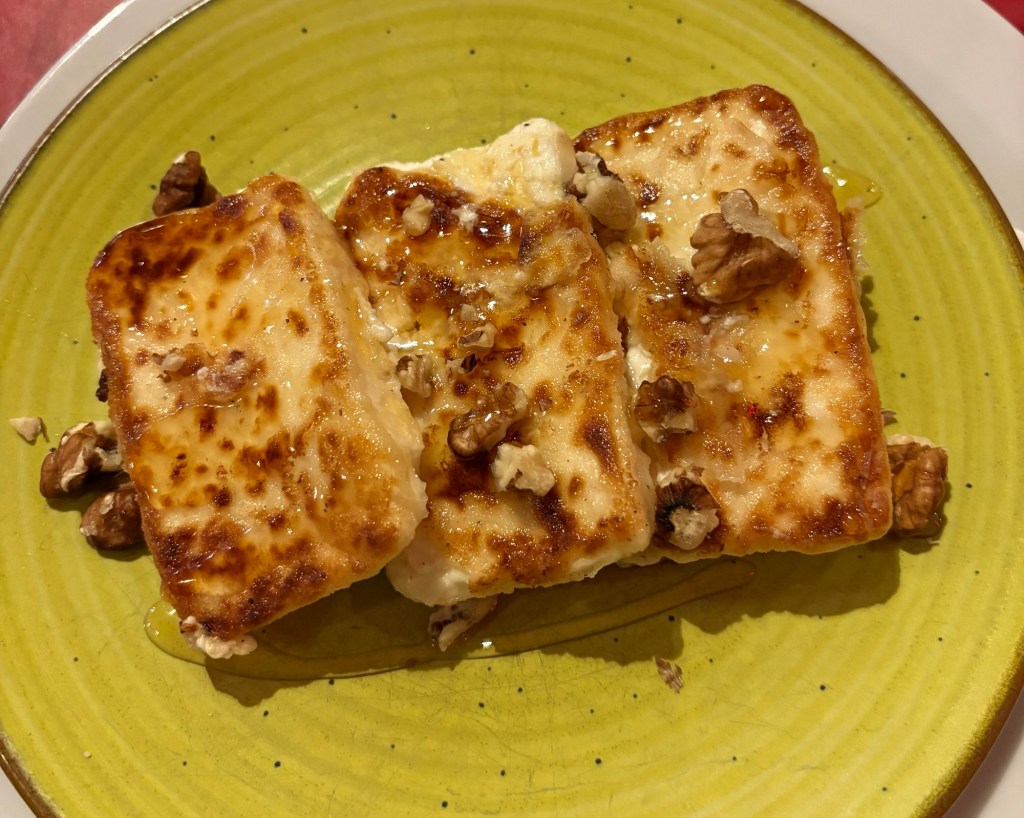
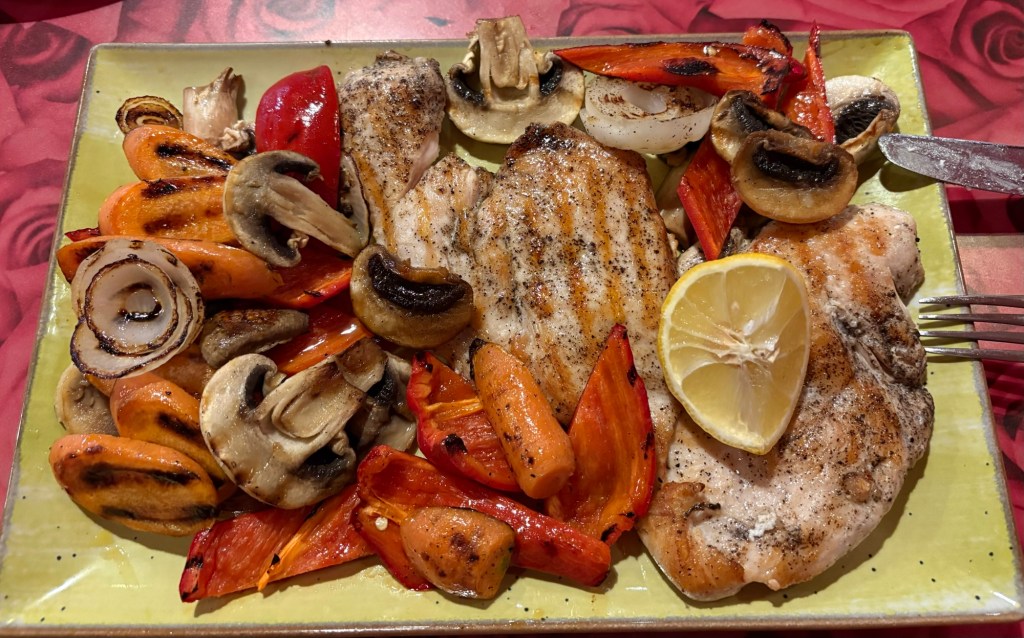
Then I ate dinner at a small restaurant next to my hotel and had another excellent Balkan meal!
Baked cheese with honey and walnutsGrilled chicken and vegetables
Being only 3 hours from the border with Ukraine got me thinking, what if I…? But I wisely decided that was best saved for a later trip! So with Ukraine off the table, there was no better way to spend a dreary and chilly day in Bucharest than a free walking tour! So that’s what I did instead.
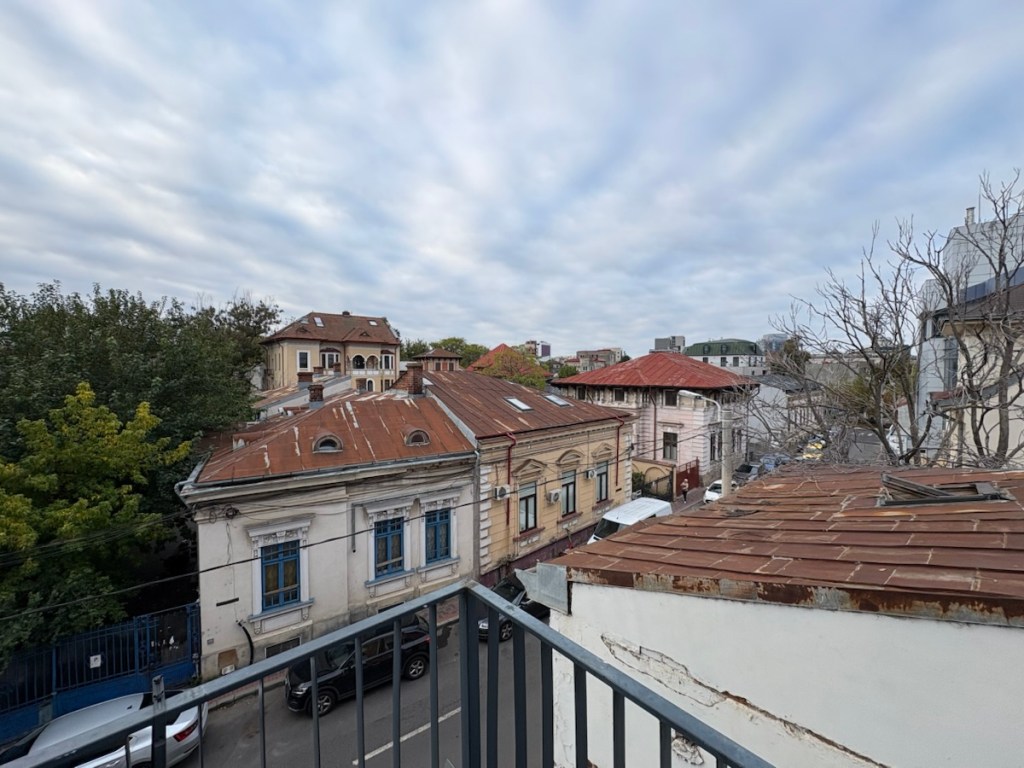
The view from my Bucharest apartment.
After a half hour walk into Old Town, I joined my free tour with Beatrice, our Romanian guide.
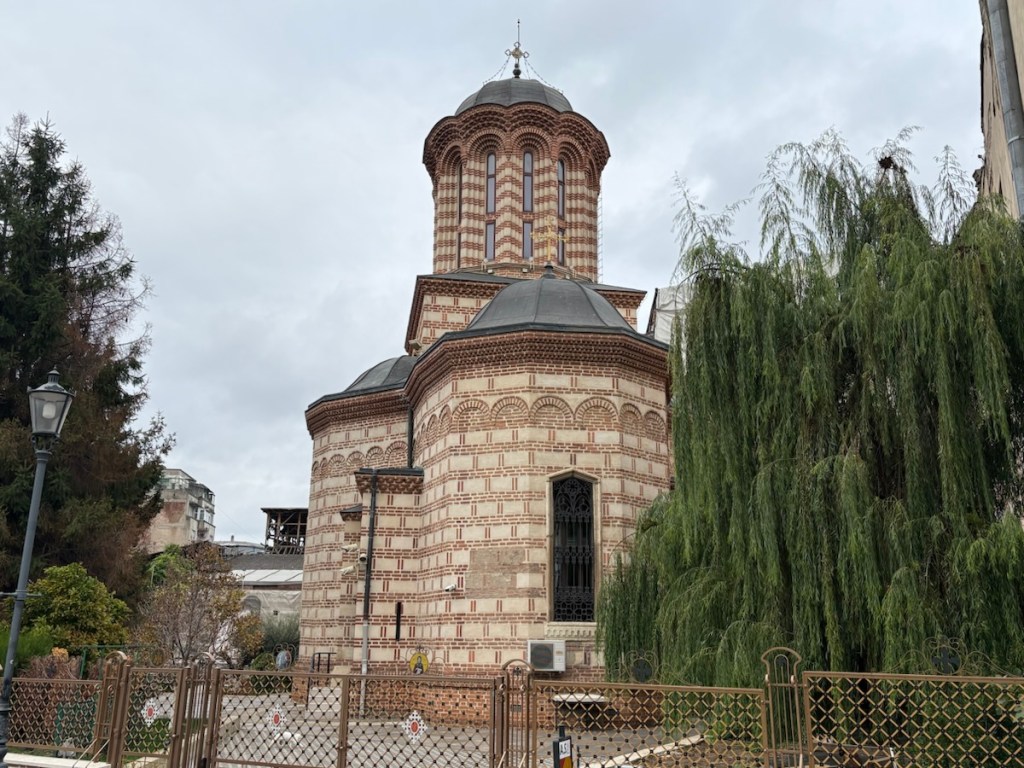
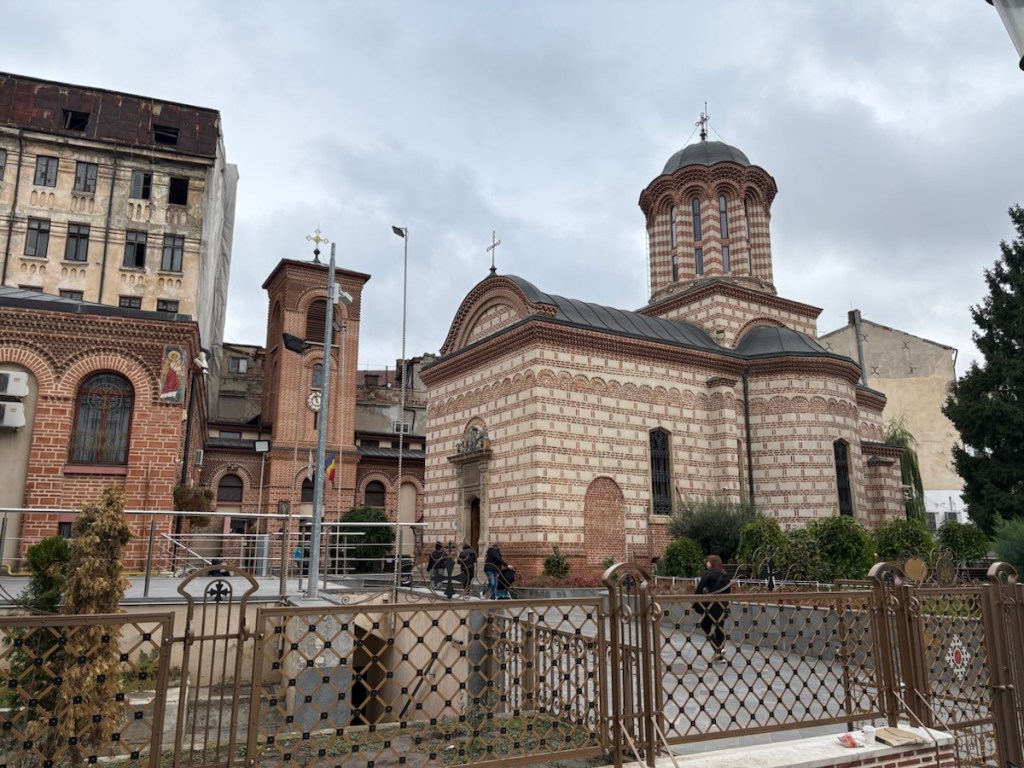
St Anthony’s Church (Biserica Sfântul Anton)
Founded in 1559, St. Anthony’s is considered the oldest church in Bucharest. It’s even been through the great fire of 1847 and restored in later years.
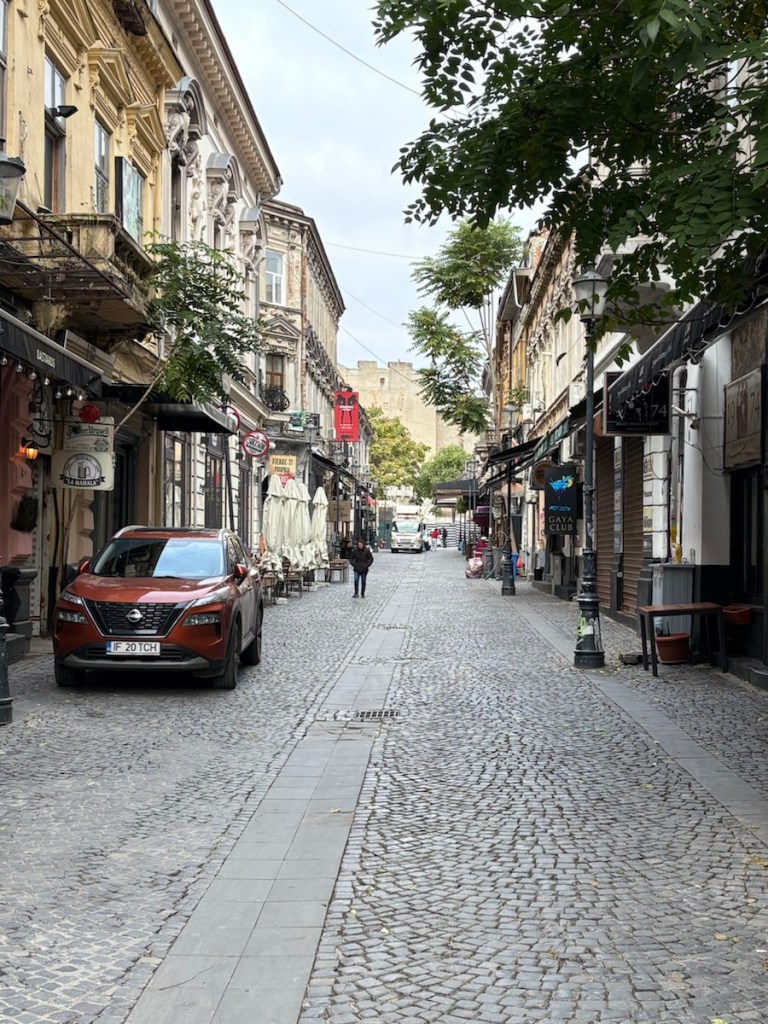
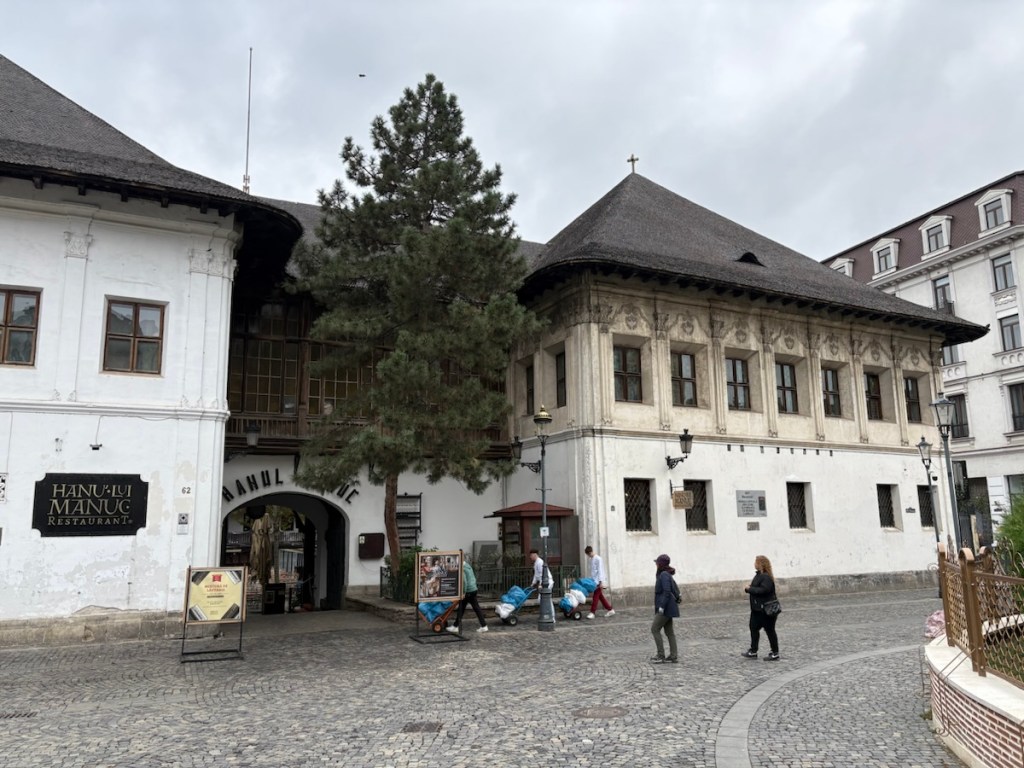
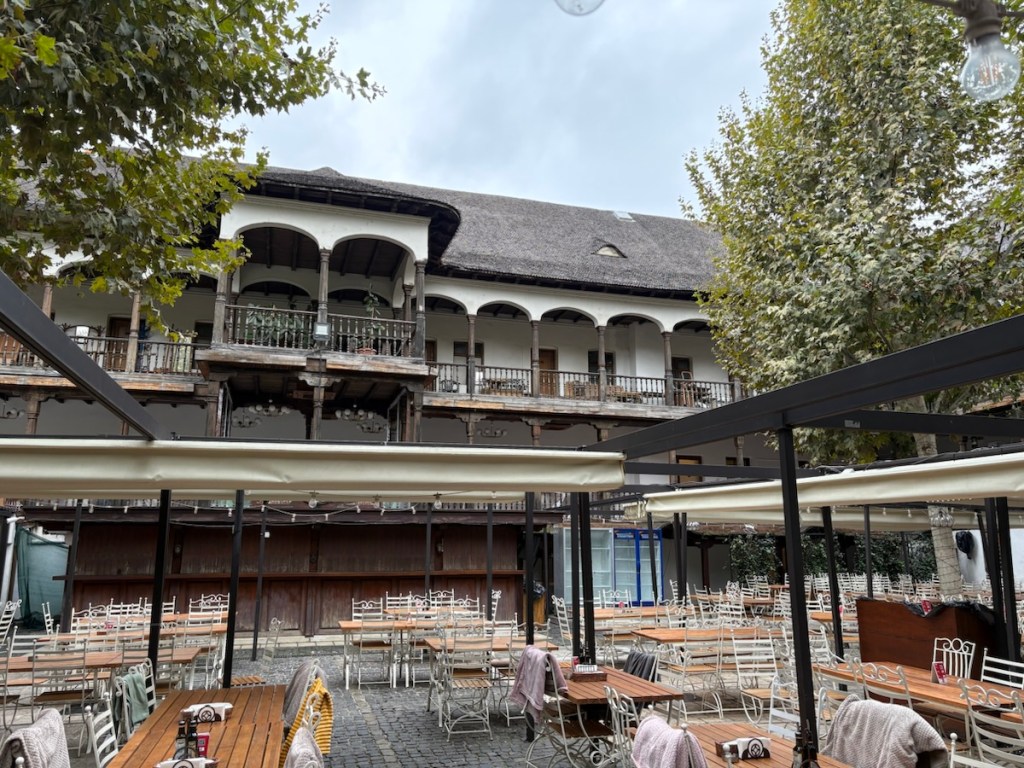
A LOT of cats in Bucharest! They were everywhere in the old town area.Manuc’s InnPart of the interior courtyard
Manuc’s Inn (Hanu’ lui Manuc) is a historic building dating back to 1808, known as the oldest operating hotel in the city. It was built by Armenian merchant Emanuel Marzaian and is a significant landmark in the city’s Old Town. Today, it is a popular venue with restaurants, a café, bars, and shops, and features a large central courtyard that hosts events. The top floor is currently being renovated to be reopened as a hotel.
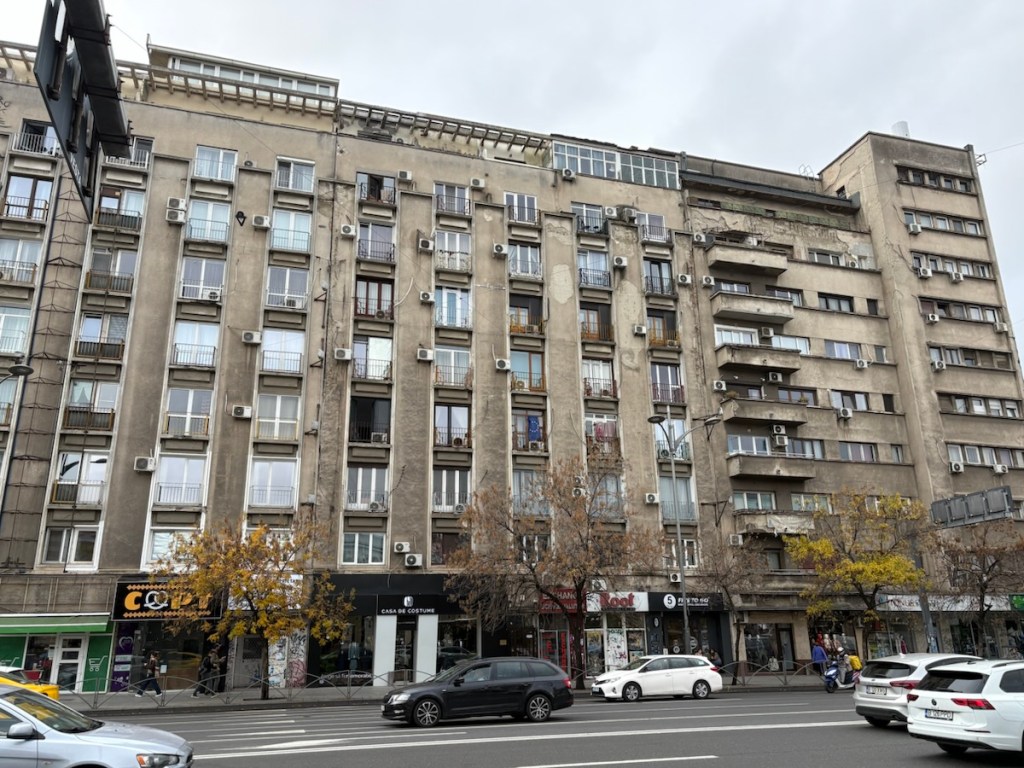
The finest in communist era buildings…
Pointing out some of the the old communist era buildings along the way, our guide said, “Look at the lovely shades of gray! What more could you want…besides freedom.”
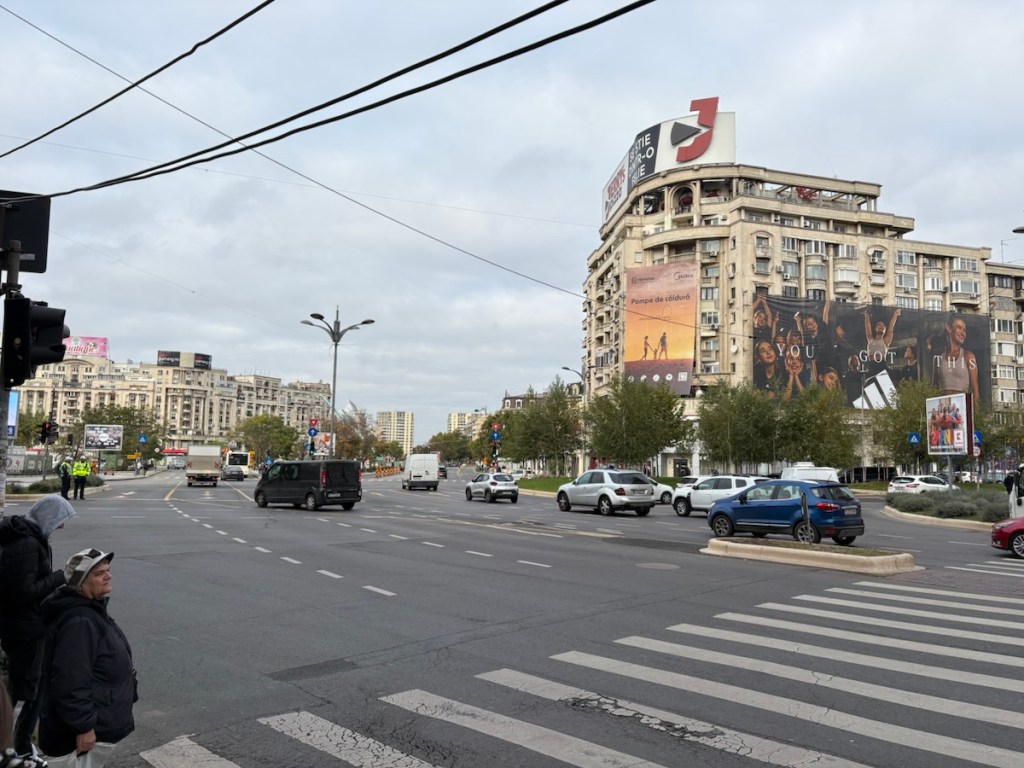
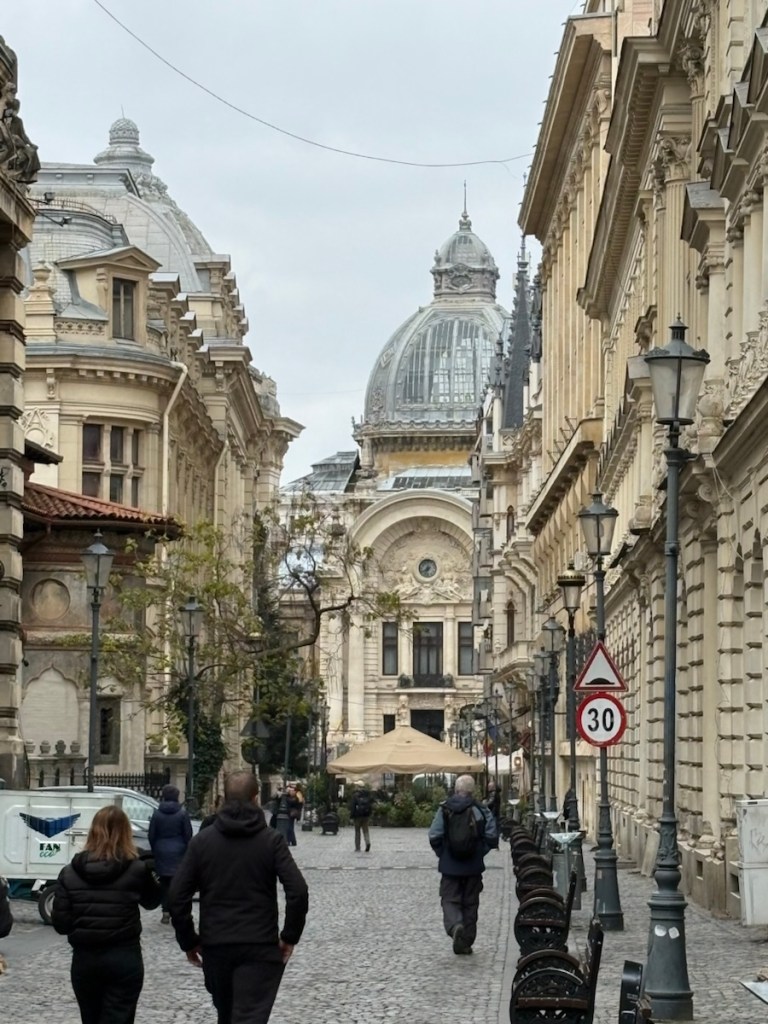
There are a LOT of crumbling buildings in Bucharest. And bad sidewalks. And bad roads. And trash. And cats! Although there are certainly some beautiful structures, they are the exception. The French, Portuguese, German, and communist influences show up in the varied architecture, too. And as a result, in combination with the decay, the city looks like a run down hodgepodge of buildings with no two alike. And to think it has been called, “The Paris of the East.”
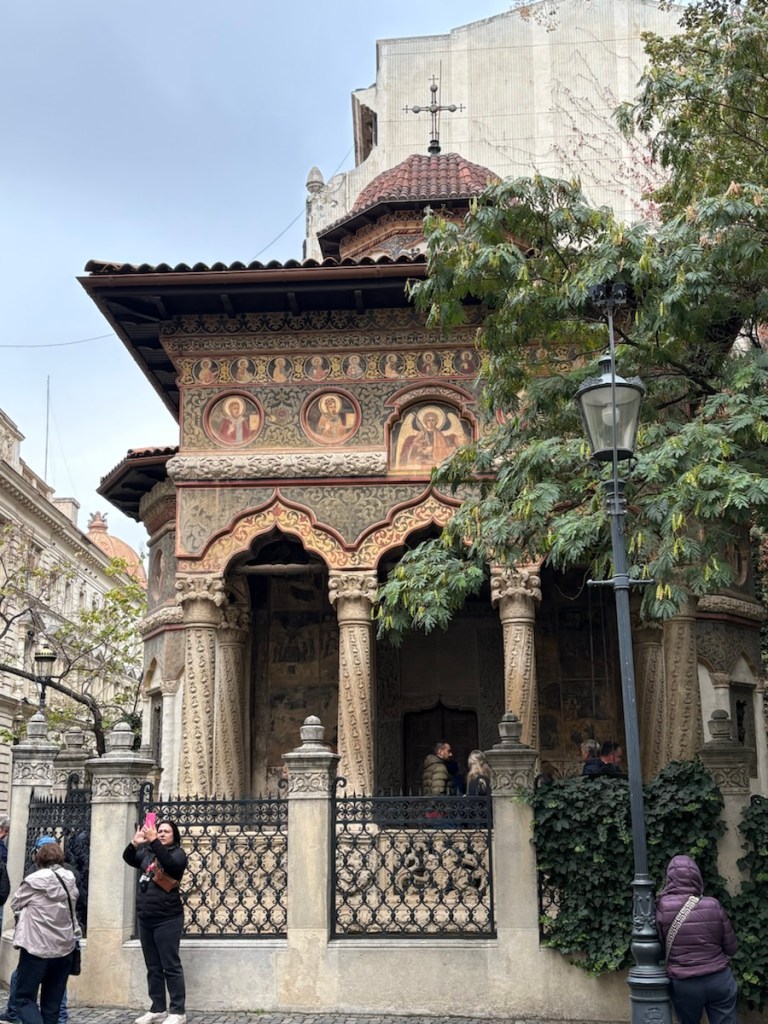
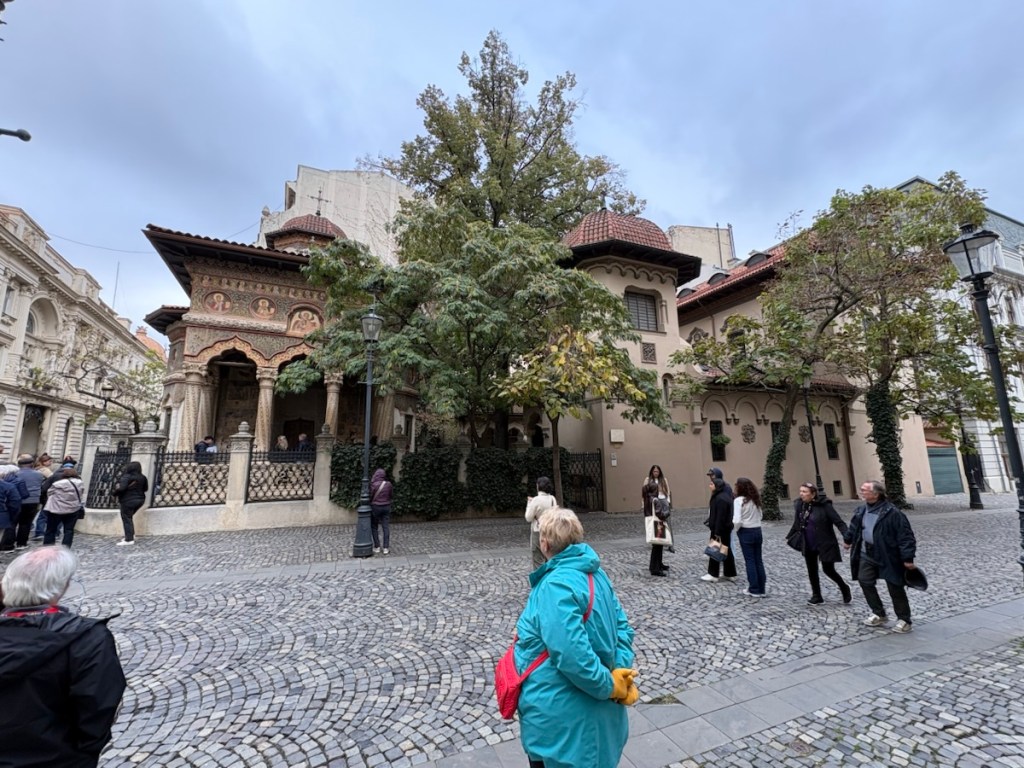
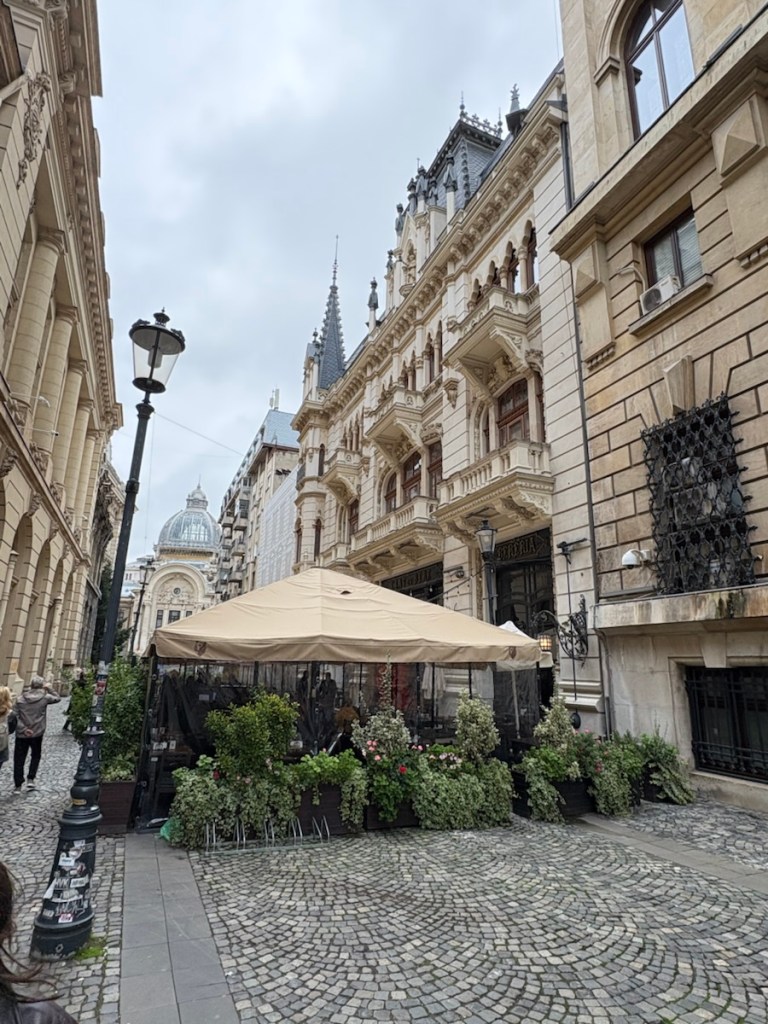
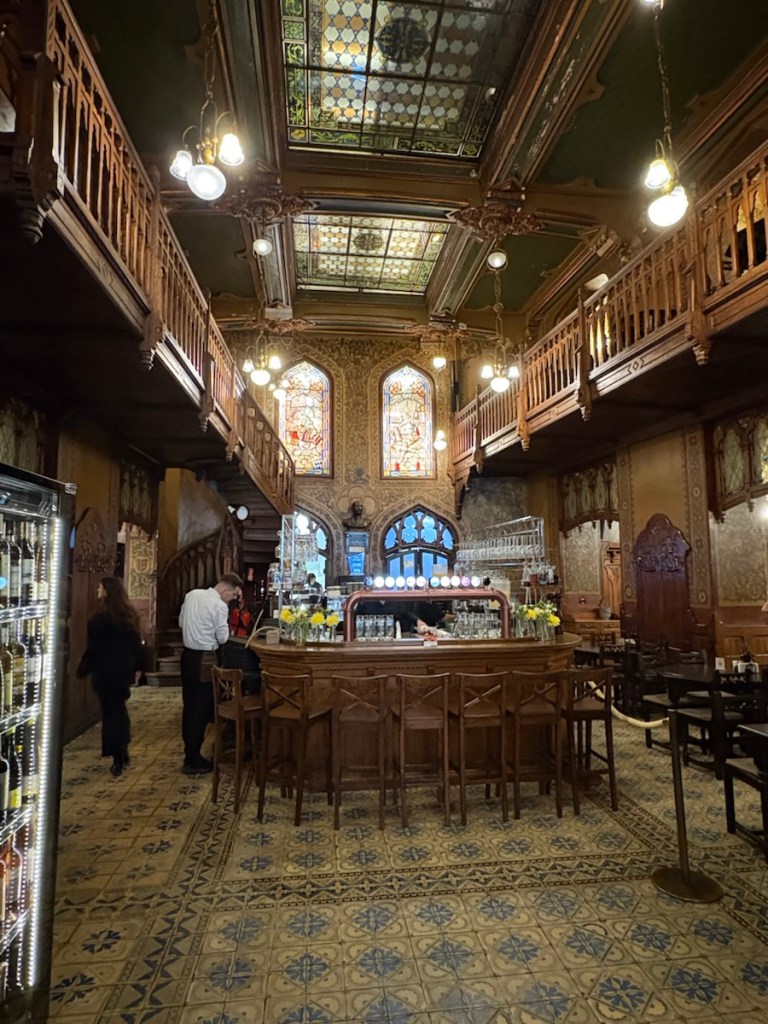
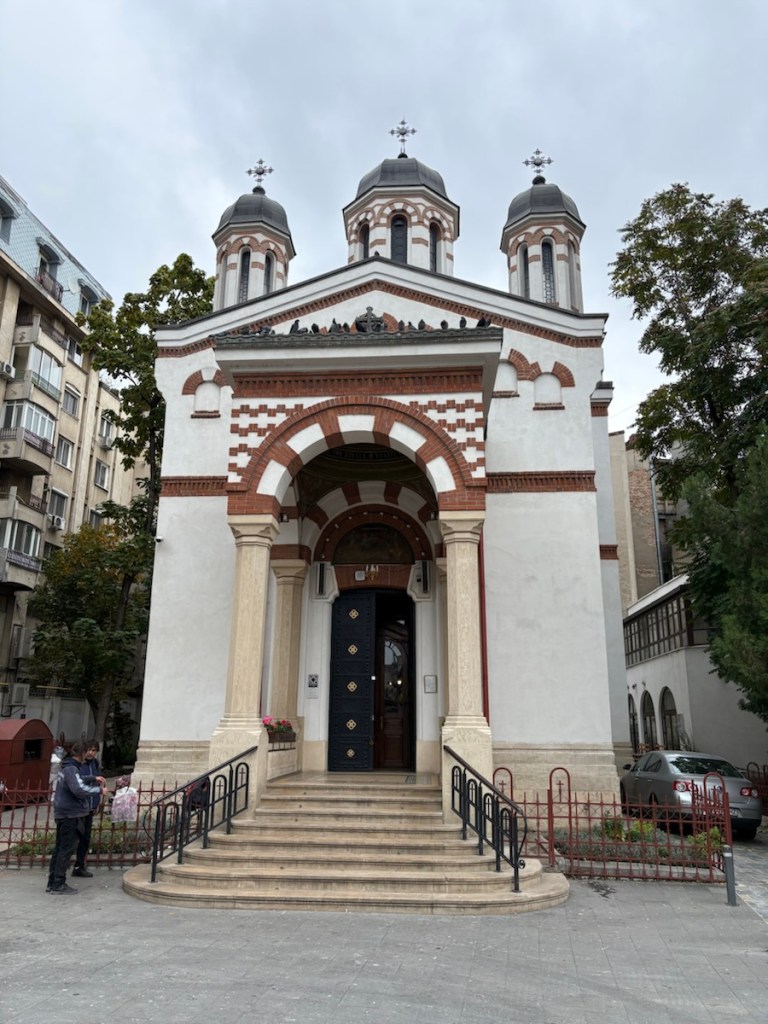
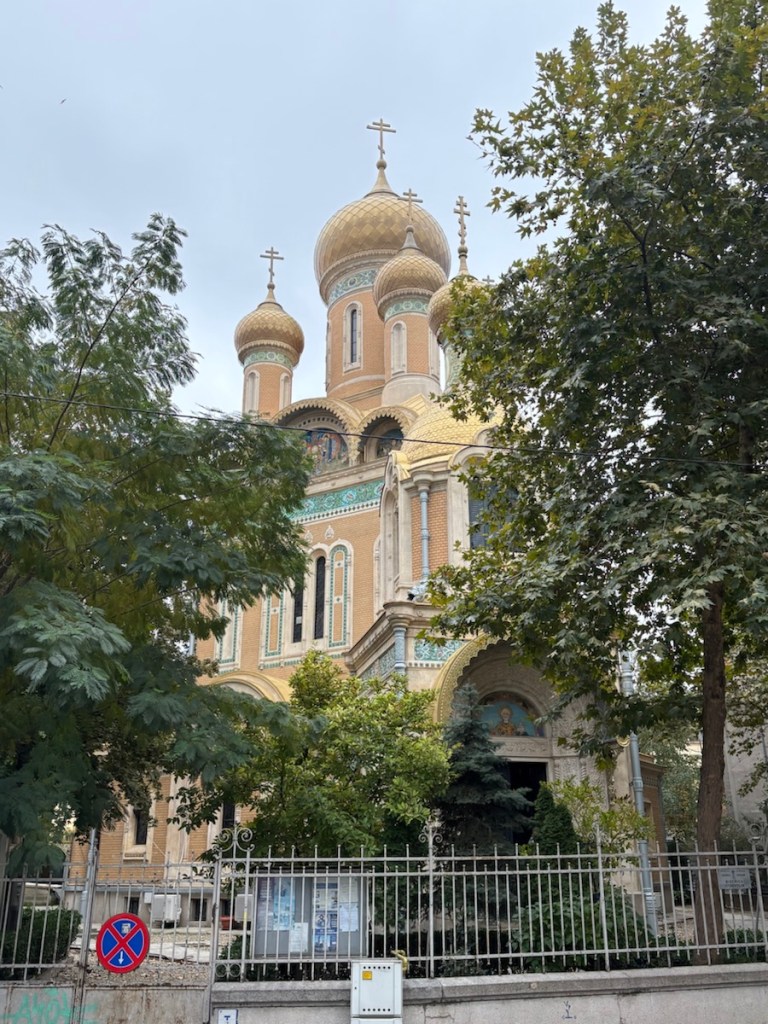
St Dimitri ChurchStavropoleos MonasteryThe “Church of Beer“Although it was never church, the interior sure looks like one.The “Church of Money” – Headquarters of CEC Bank
Picking up the theme? Everything was labeled as a “church” of some sort by our guide.
Goldsmith’s Church
Founded by constable Mihai Cantacuzino, on the site (or near) of an older 17″ century church, raised for the goldsmiths of “priest Manta’s” quarter. In 1850-1852, the church was rebuilt in its present form by abbots Calistrat and Athanasie.
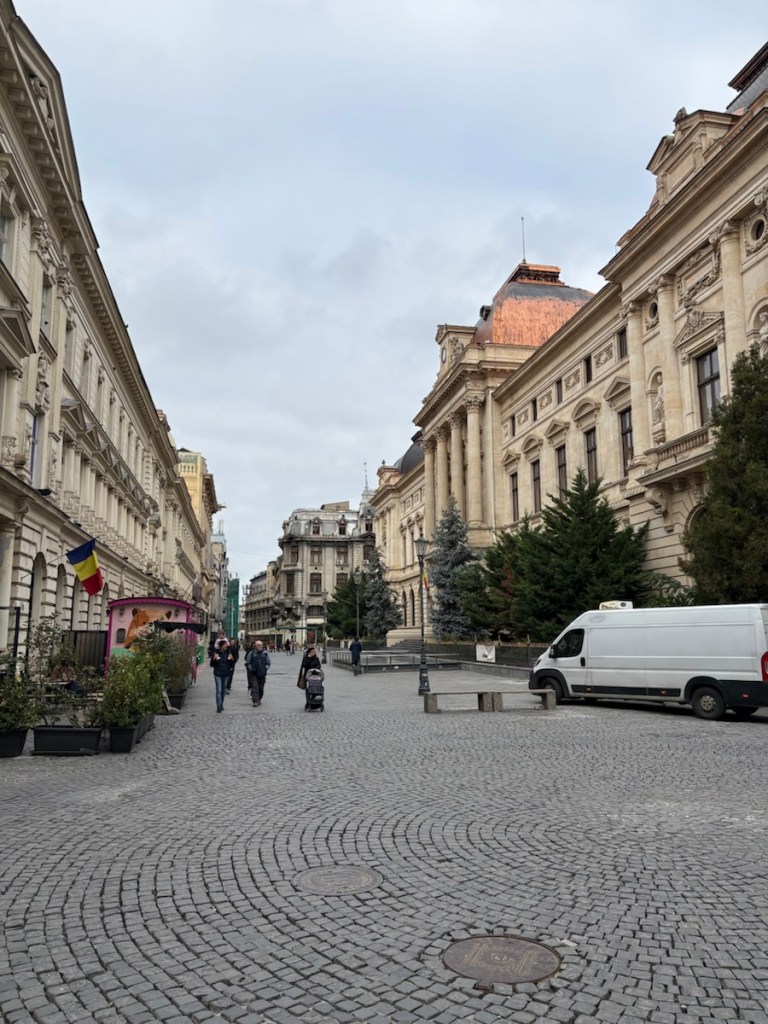
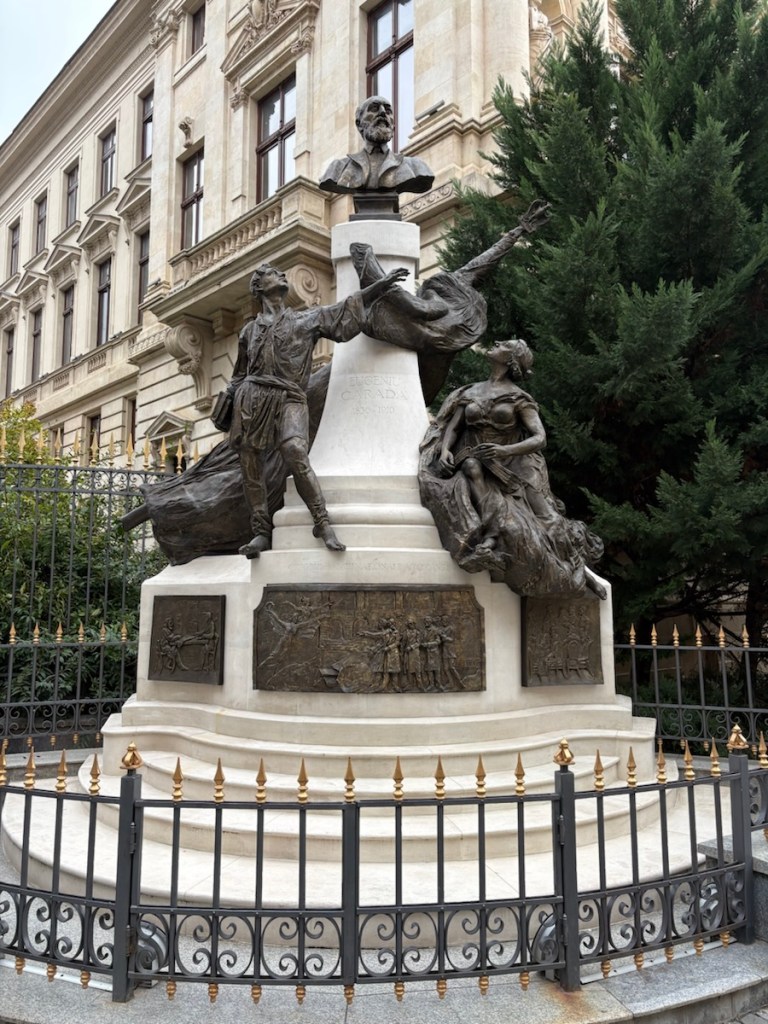
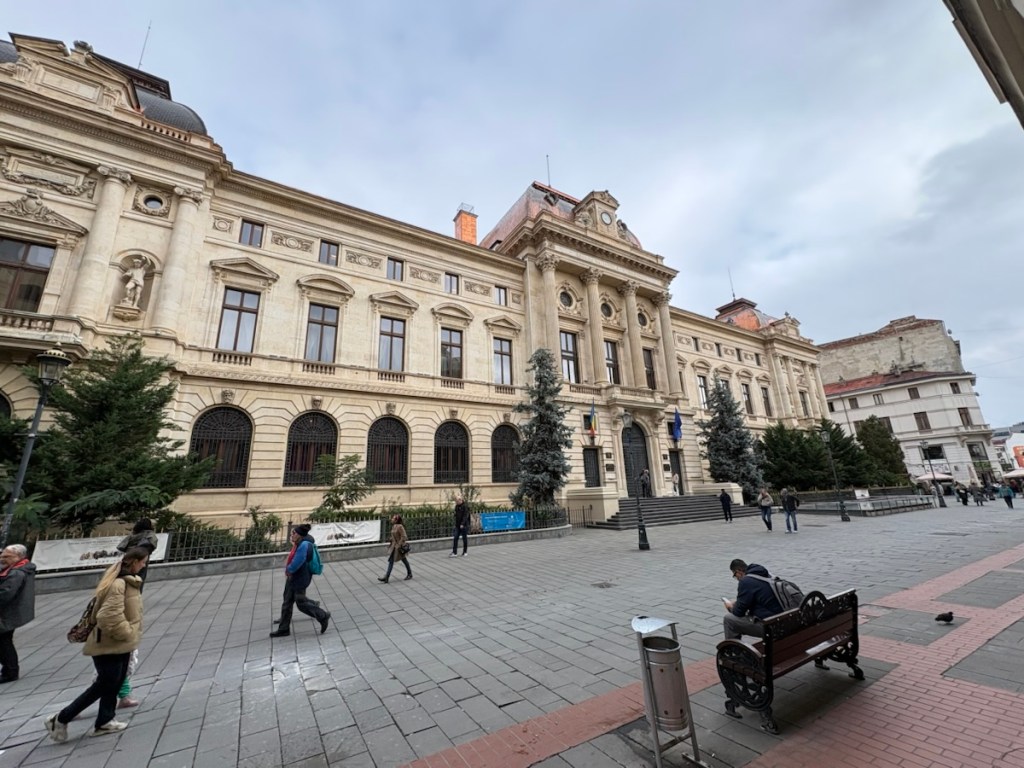
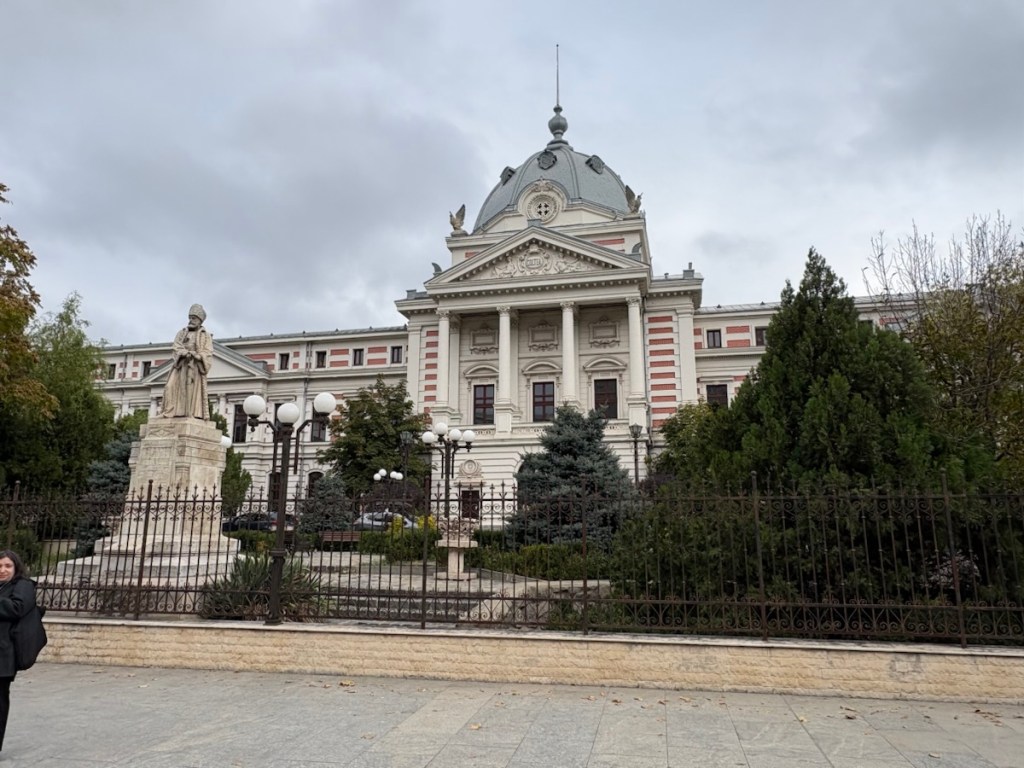
The “passage” with bars and restaurants on both sidesRomanian National Bank and MuseumColtea Hospital
French Academic style building, erected between 1867-1888, to the design of the architect Alexandru Freiwald, under the guidance of the building entrepreneur Conradt Schwenk, on the site of the former Coltea Hospital, founded in 1704 by the sword-bearer Mihail Cantacuzino (with later additions and transformations carried out by the architect Nicolae Ghika-Budesti between 1895 and 1942)
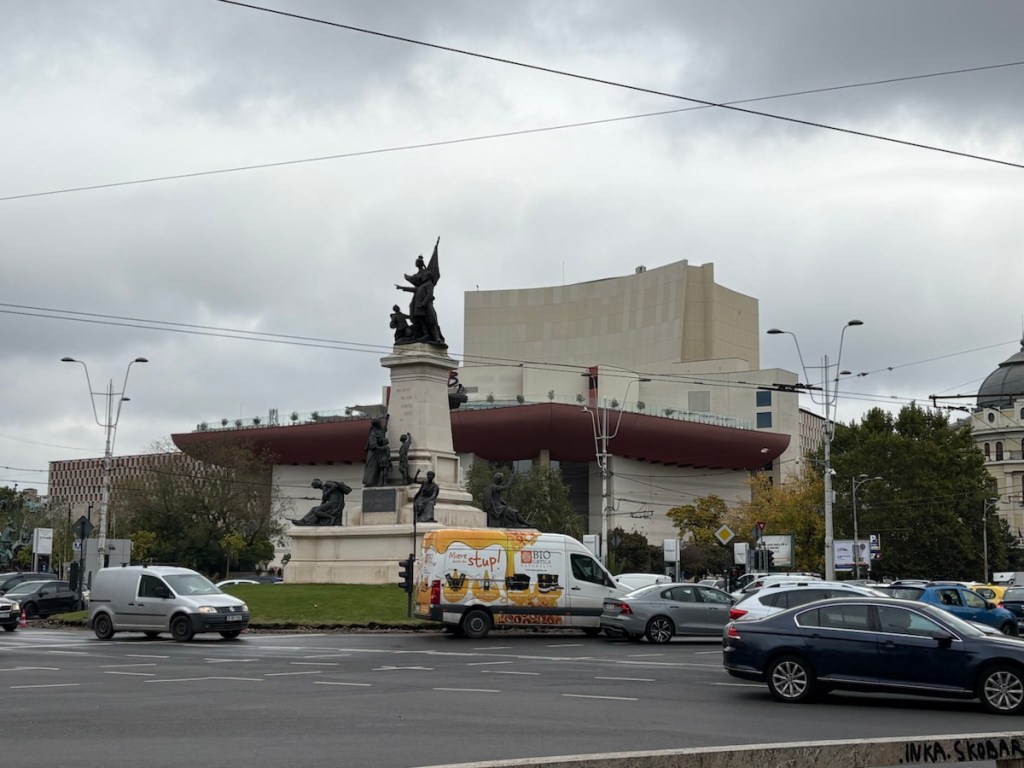
University Square and the National Opera House (in red)
Our guide described some of the prevailing sentiment – very unpopular – about the time of Nicolae Ceaușescu’s Communist rule until his violent overthrow in 1989. He was executed by firing squad on live TV in 1989.
A couple times during our tour, the guide reminded us that we were in “Bucharest,” not “Budapest.” It seems that many confuse the two famous city names. Even Michael Jackson made the mistake in the 90s when he visited here and saying, saying he was glad to be in, “Budapest.”
The guide also talked about the grilling of meat – seemingly a national pastime! Especially pork products. She went on to say that, “Pork is a Romanian’s favorite vegetable!”
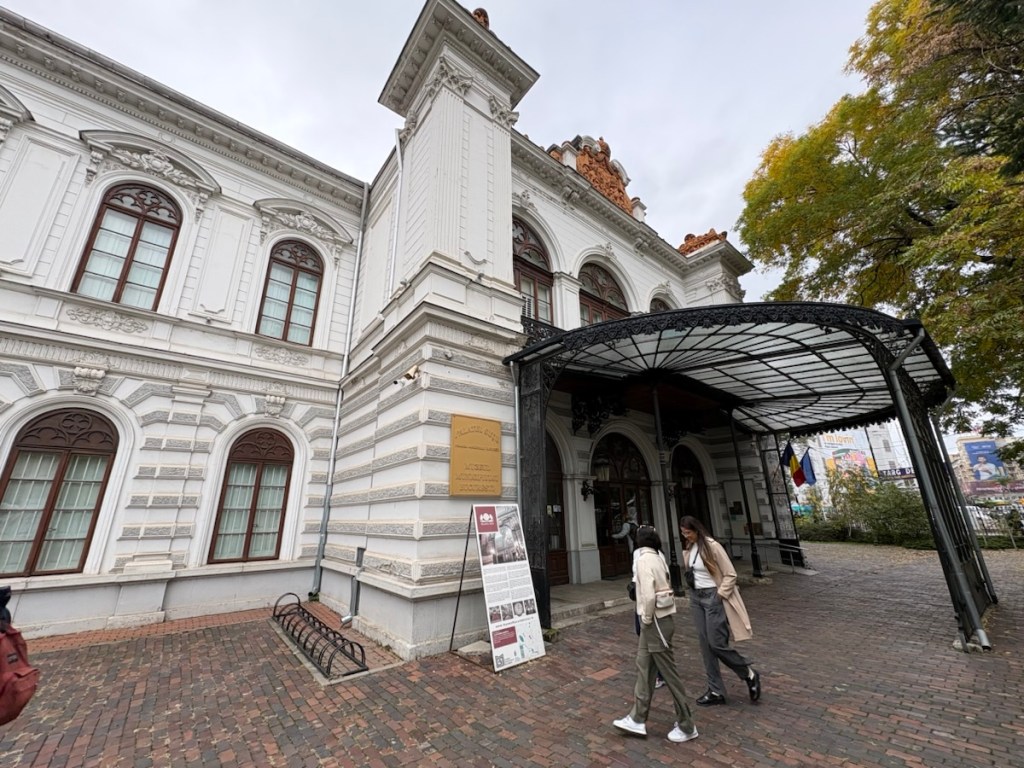
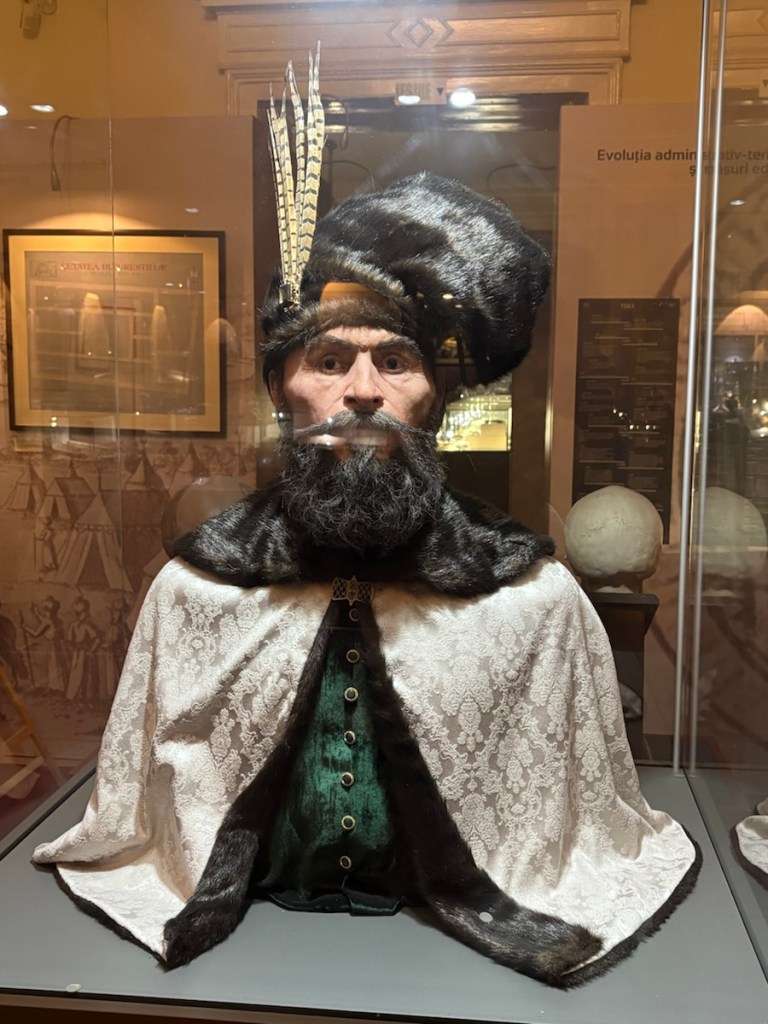
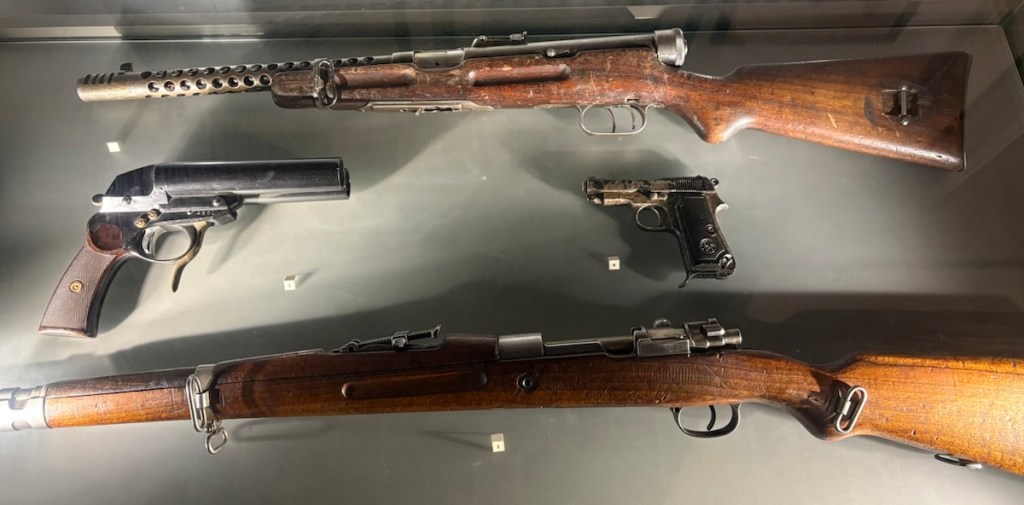
Sutu Palace – Museum of BucharestMichael the BraveBeretta weapons from WWIISt Nicholas Student ChurchMy Lunch – one of each – and both pretty bland.
National Museum of Romanian History
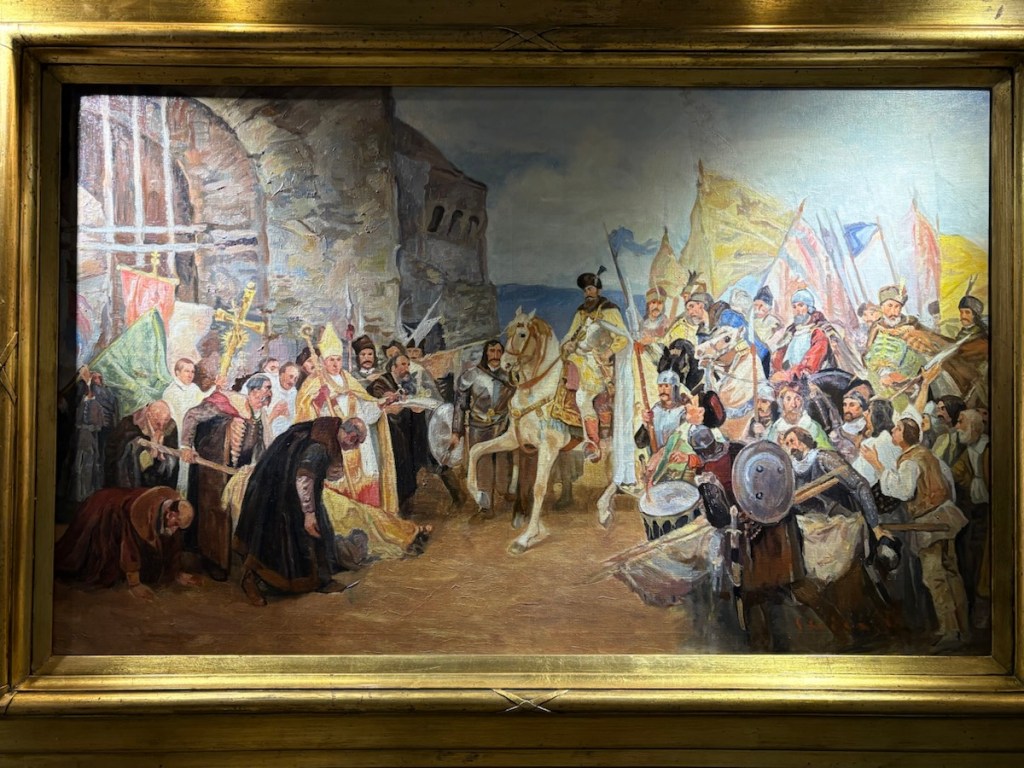
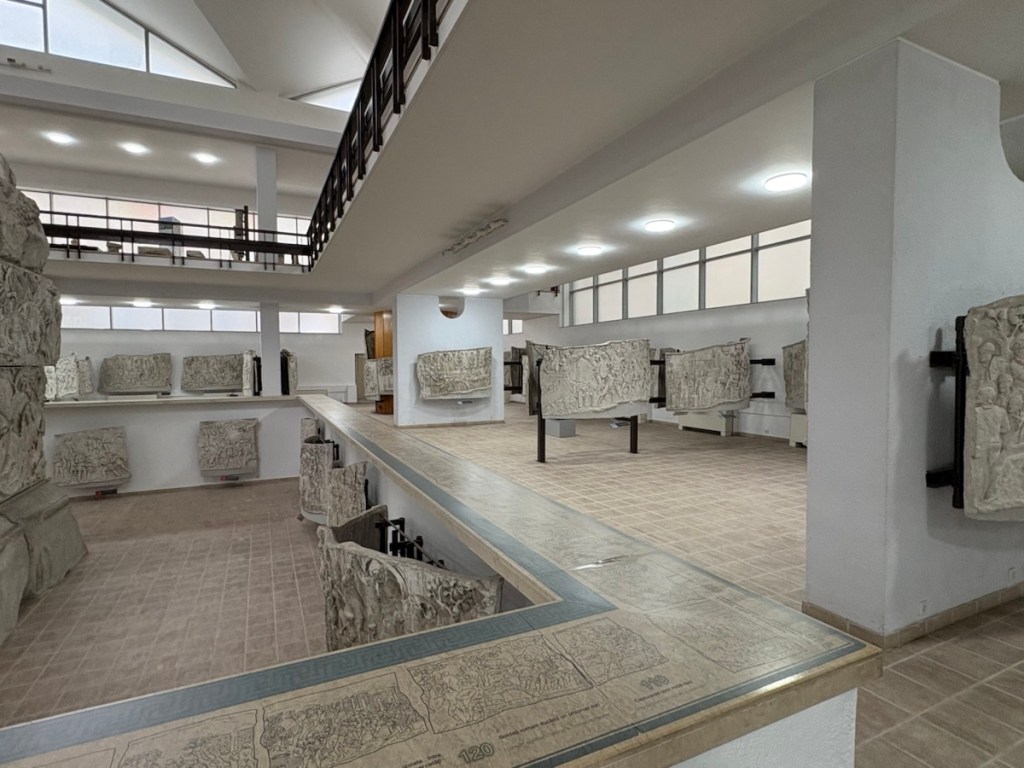
Restored paintings below in the museum, included interesting displays on how the restorations were accomplished.
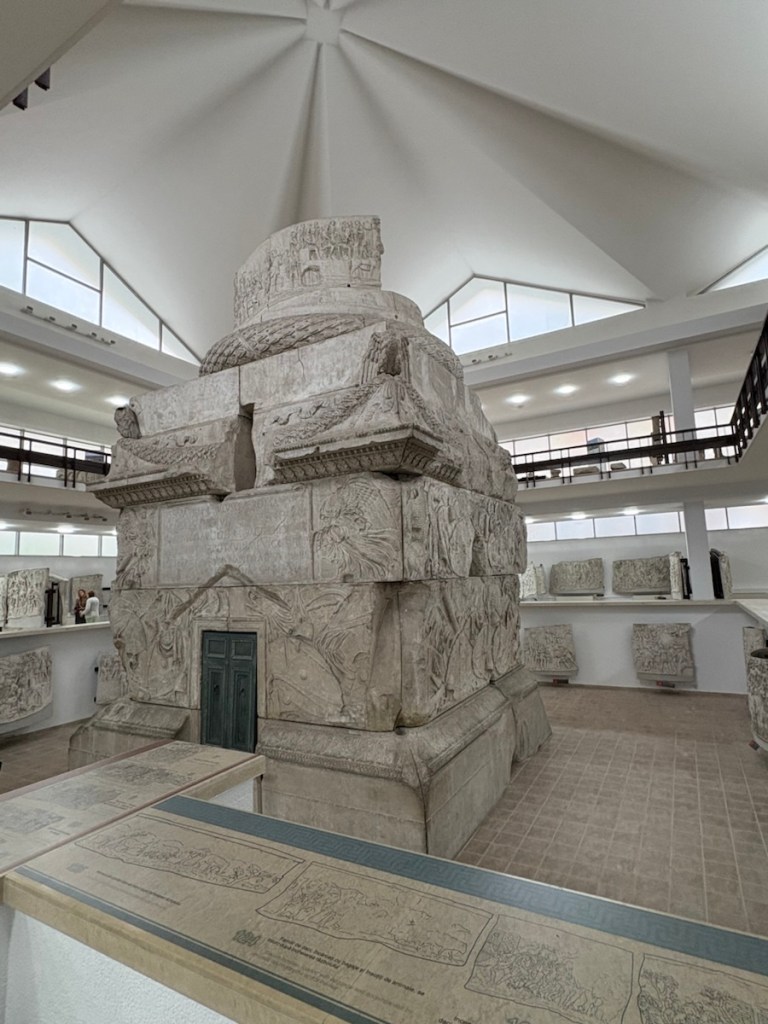
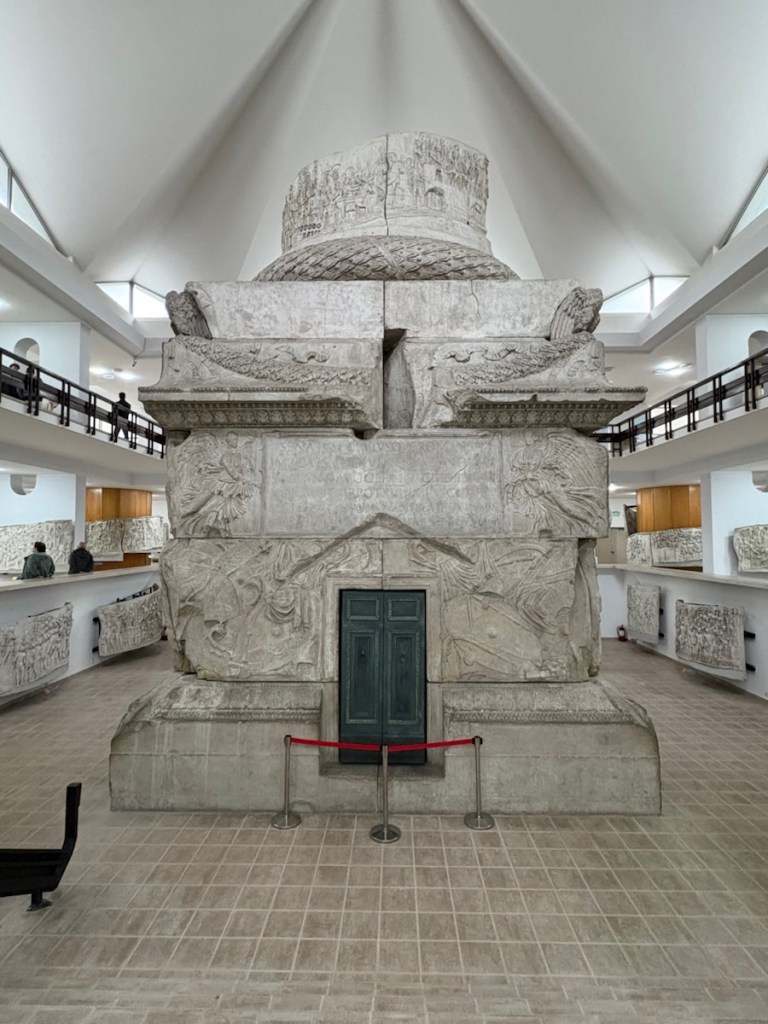
The triumphal entry of Michael the Brave into Alba lulia, on November 1, 1599, three days after the victory in the Battle of Selimbår.A replica of a famous Roman column
The museum had a replica of a famous Roman column – Trajan’s Column – that is in Rome. The short National Geographic video about the supposed column construction methods was fascinating. Here is the link to the five minute video. Check it out!
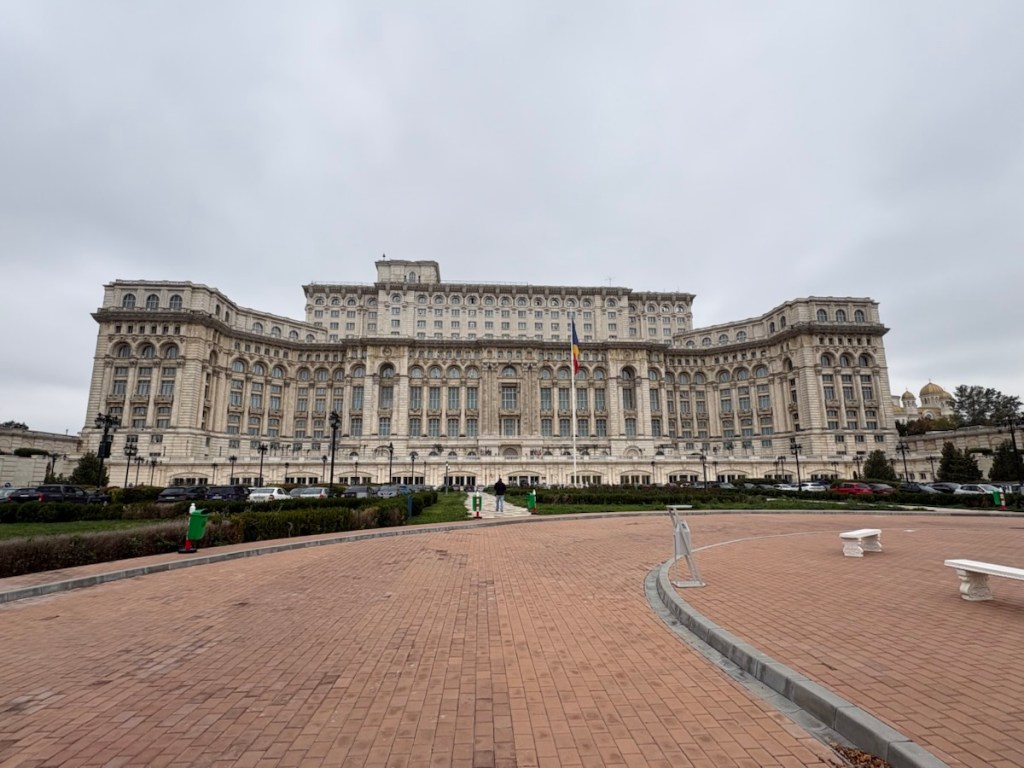
The Palace of Parliament
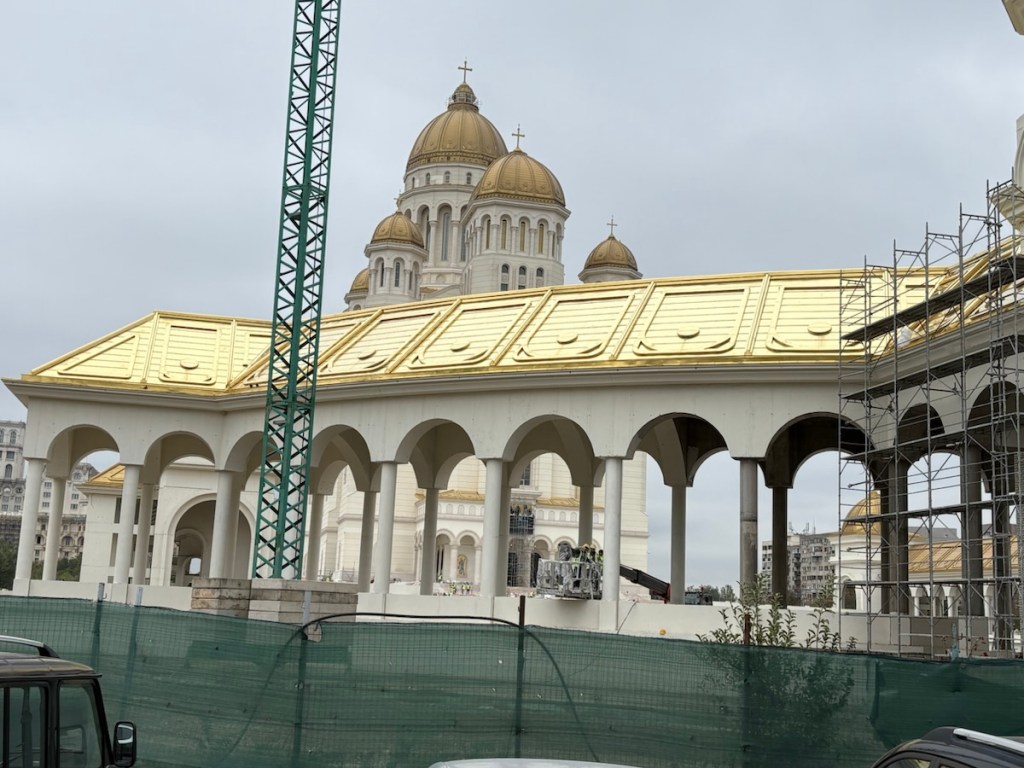
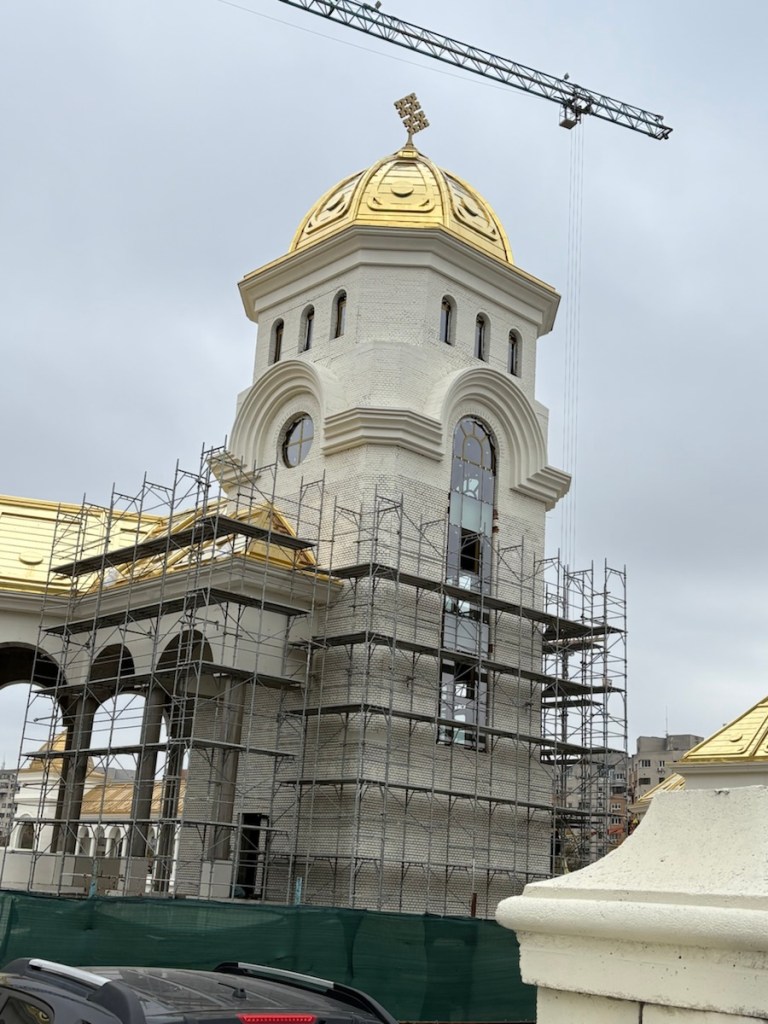
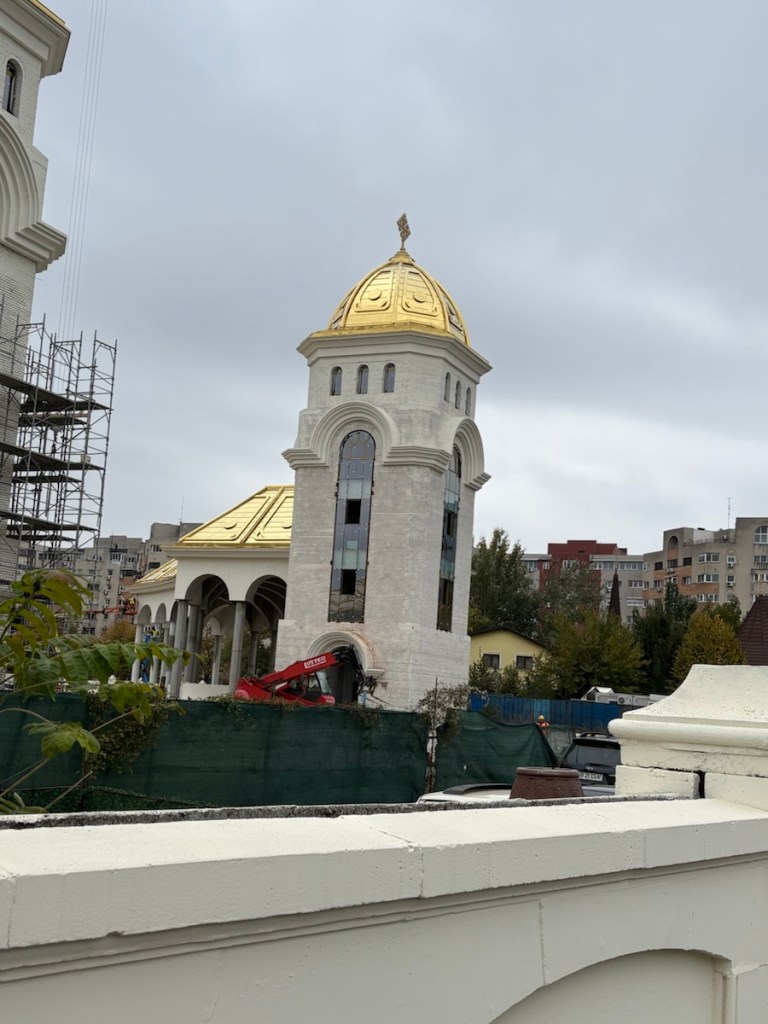
Under construction since 2007, the Consecration of the new National Cathedral of Romania (below) is scheduled for Sunday, October 26, 2025.
Also know as “The People’s Salvation Cathedral”(Web Image)
The National Cathedral in Bucharest is preparing to accommodate large gatherings by enabling the Divine Liturgy to be celebrated at an outdoor summer altar. This setup will allow greater participation during significant feast days and national religious events.
The summer altar will be arranged in front of the main western porch (pronaos) of the Cathedral, allowing the service to be held in open air. The square in front of the Cathedral can host around 23,000 worshippers during such celebrations.
The main entrance to the National Cathedral features a monumental porch with arches, flanked by side porticos that define the Cathedral’s architectural ensemble. The design combines Romanian architectural traditions—such as Moldavian niches, Brâncovenesc-style porches, and slender Transylvanian towers—with elements of Western monumental architecture, reflecting the spiritual and cultural unity of Romanians both at home and abroad.
Before you go…
“By failing to prepare, you are preparing to fail.” Benjamin Franklin
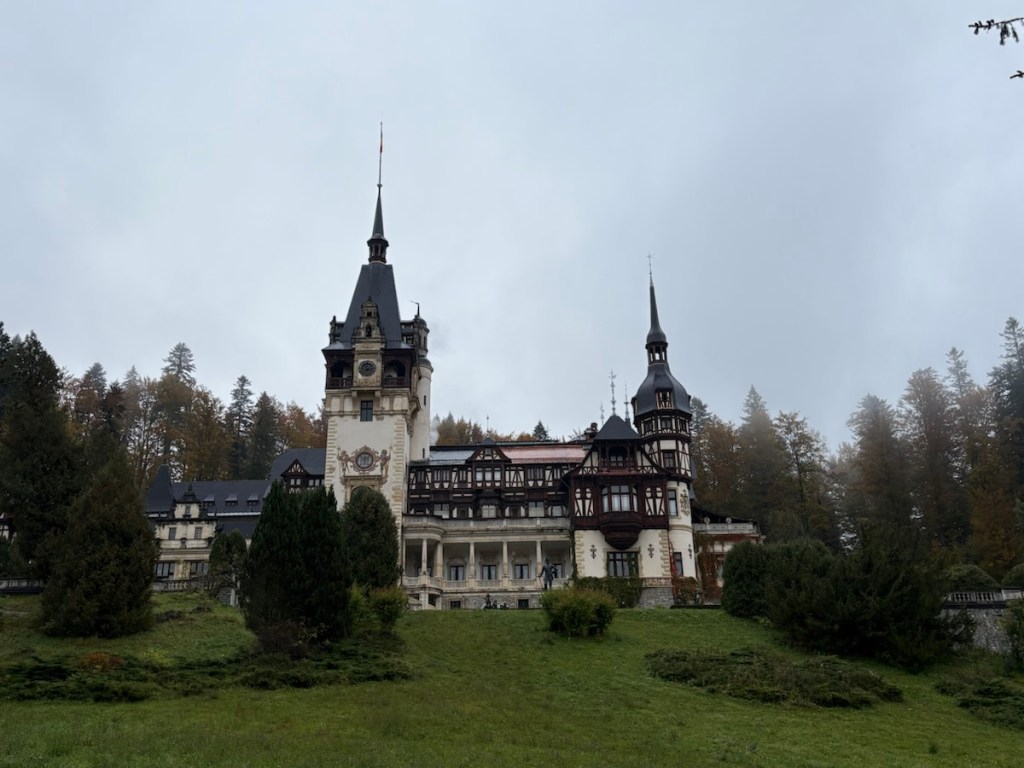
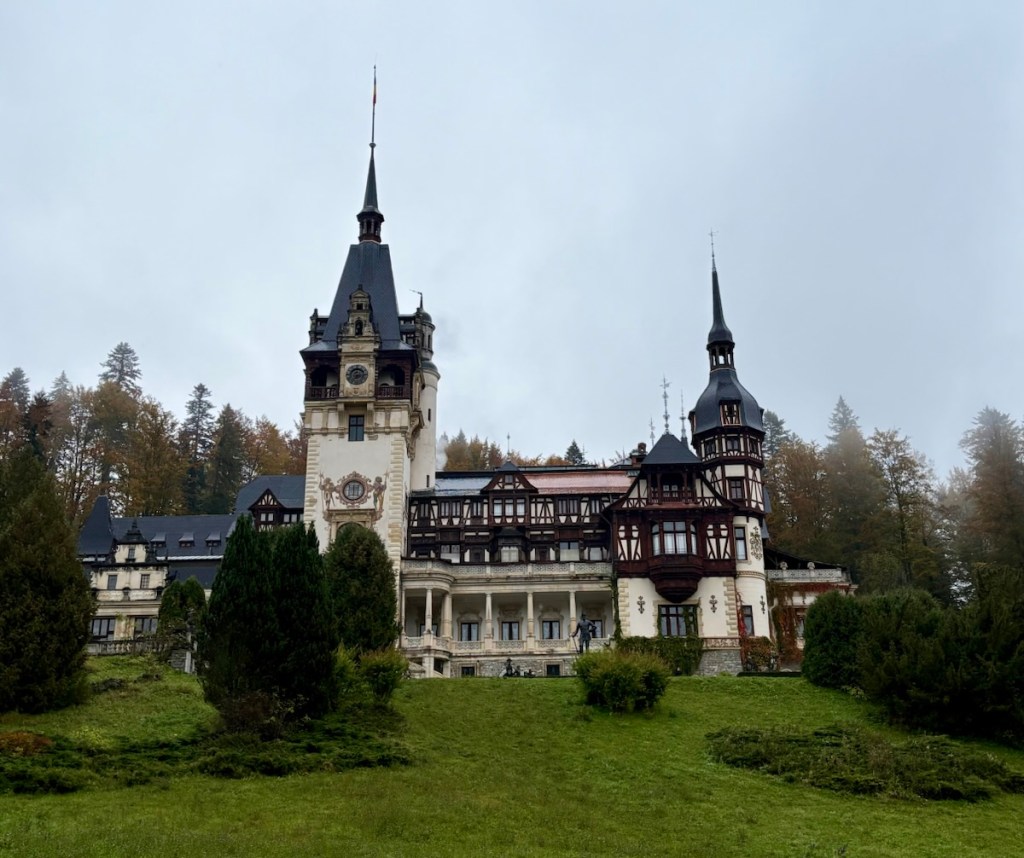
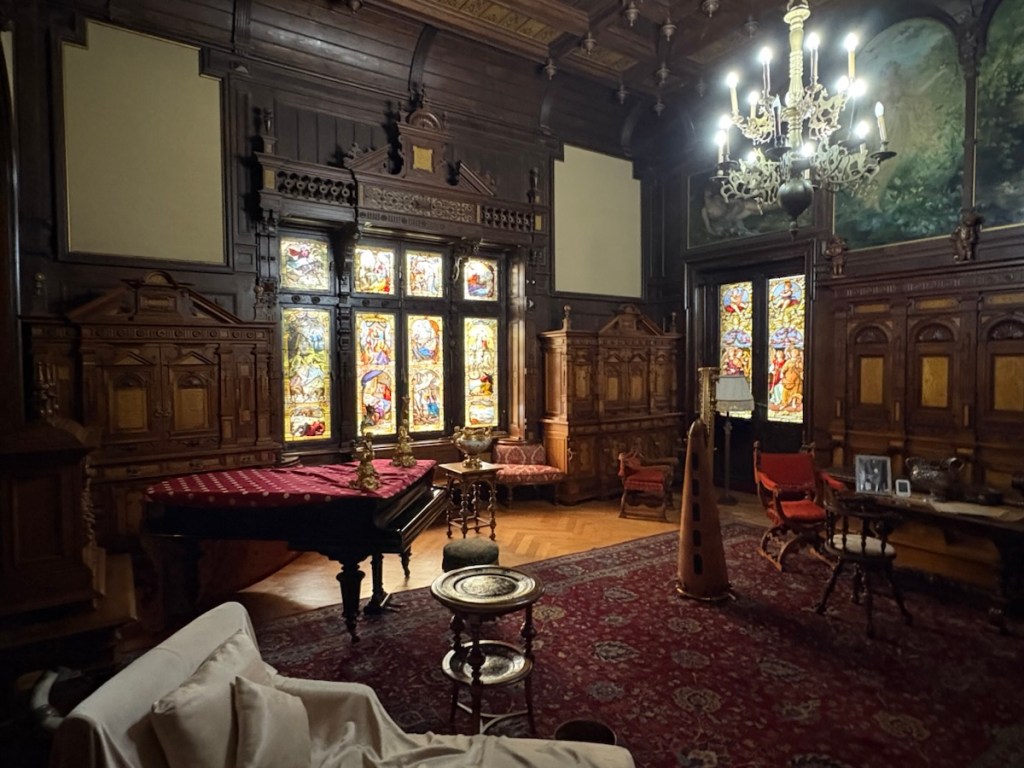
I woke this morning to rain and 40°, but the forecast looks better for the afternoon. I headed out for the hour drive to tour Peleş Castle as a quick side trip on the way to Bucharest.
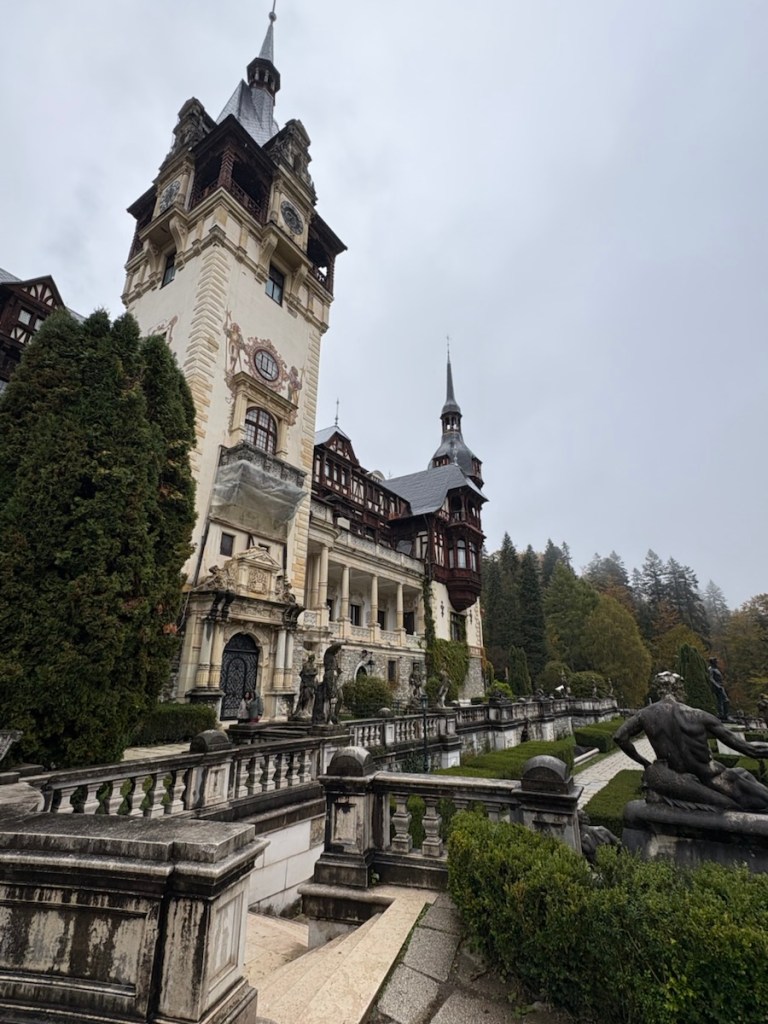
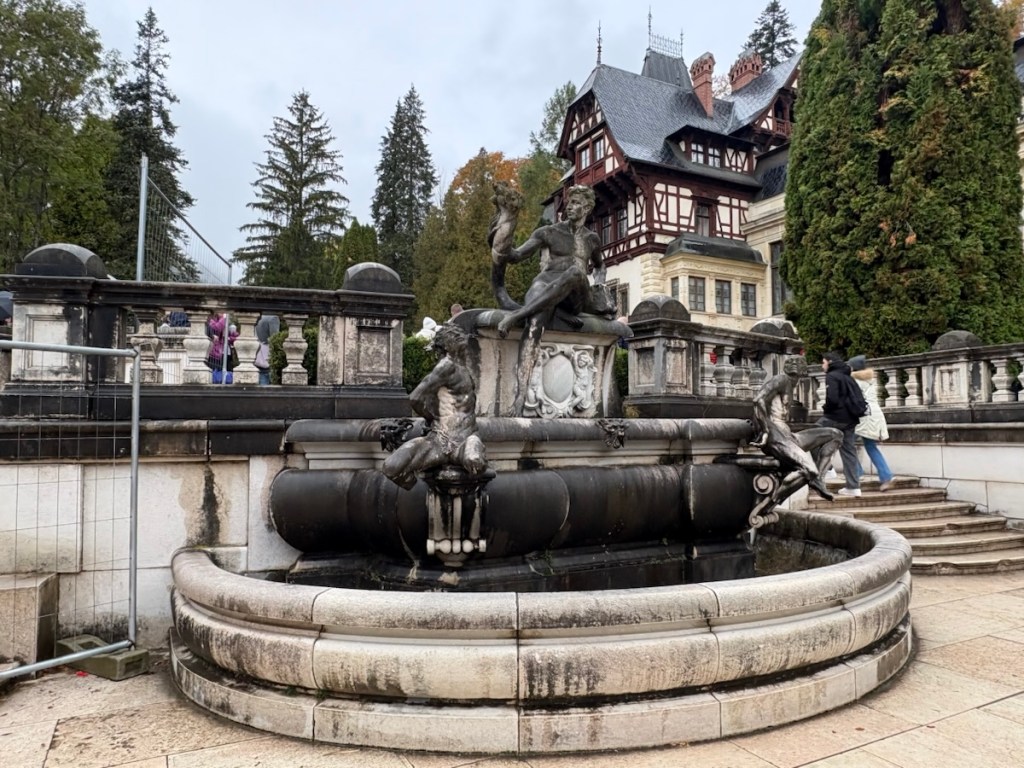
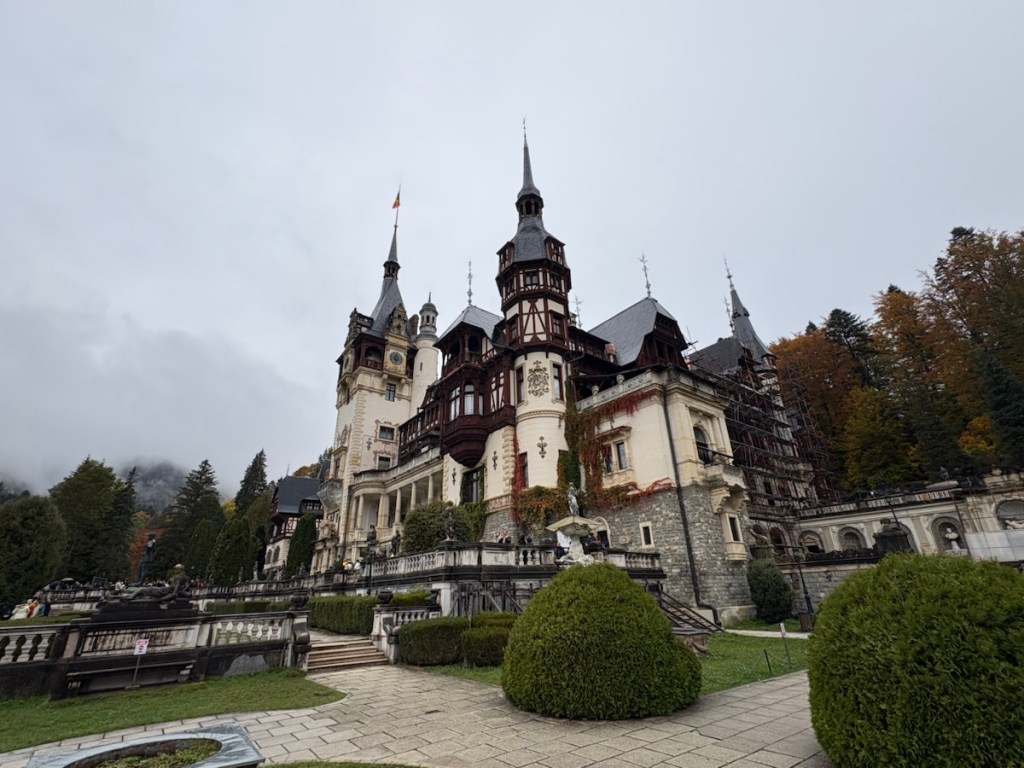
Peleş Castle
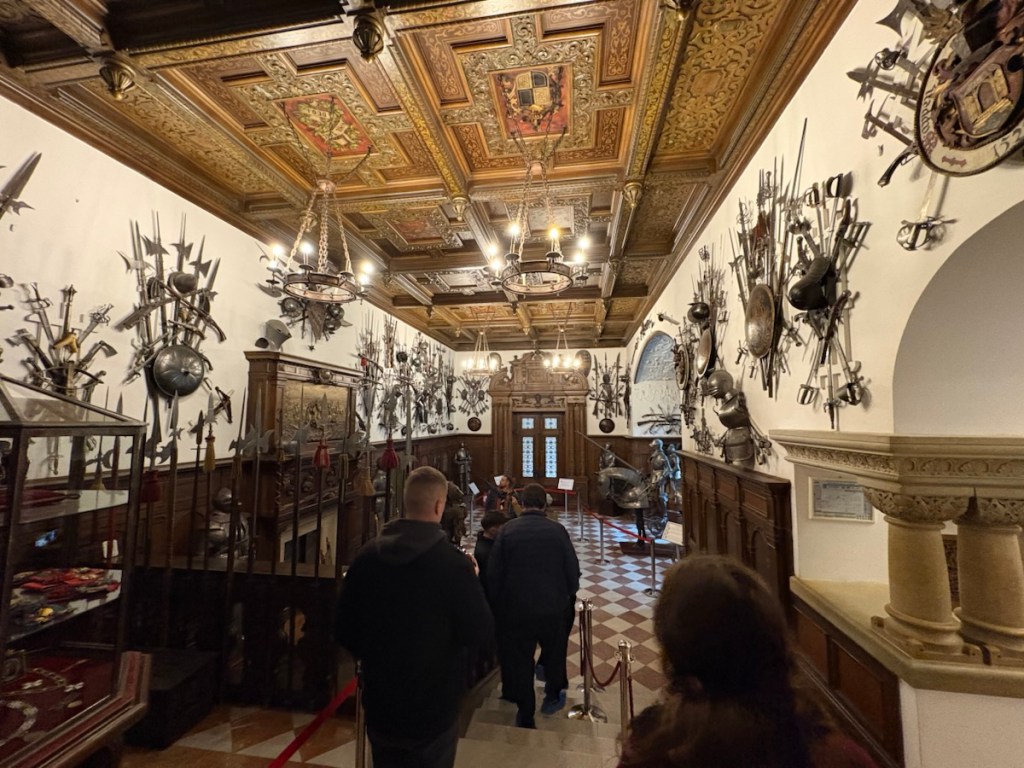
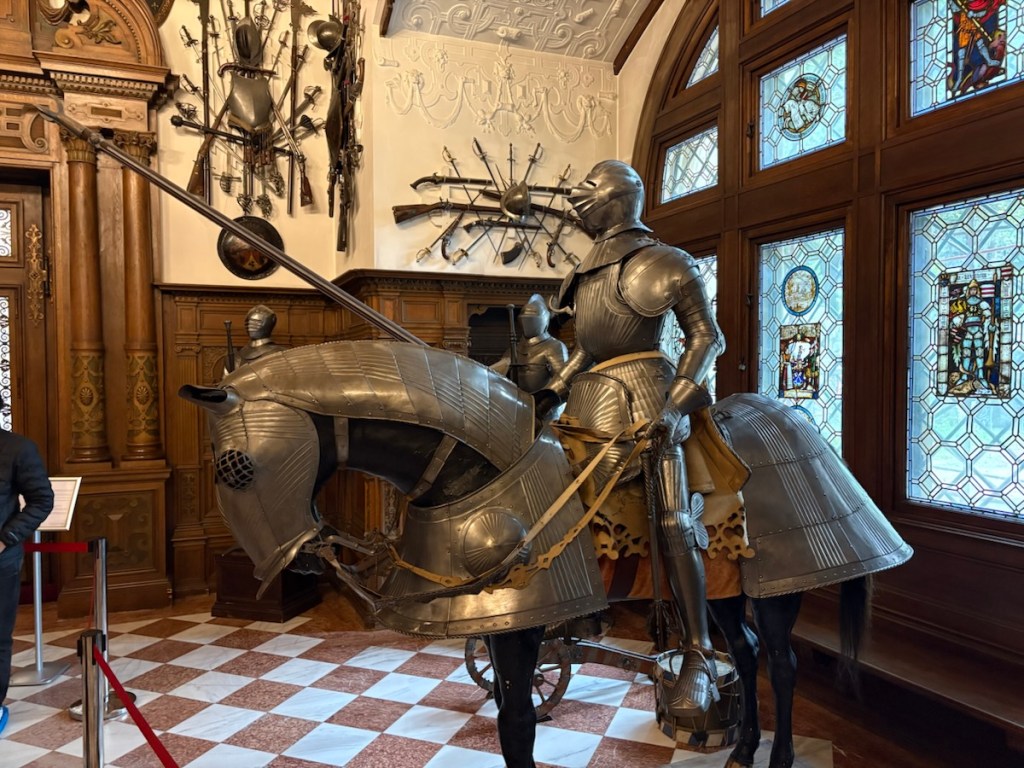
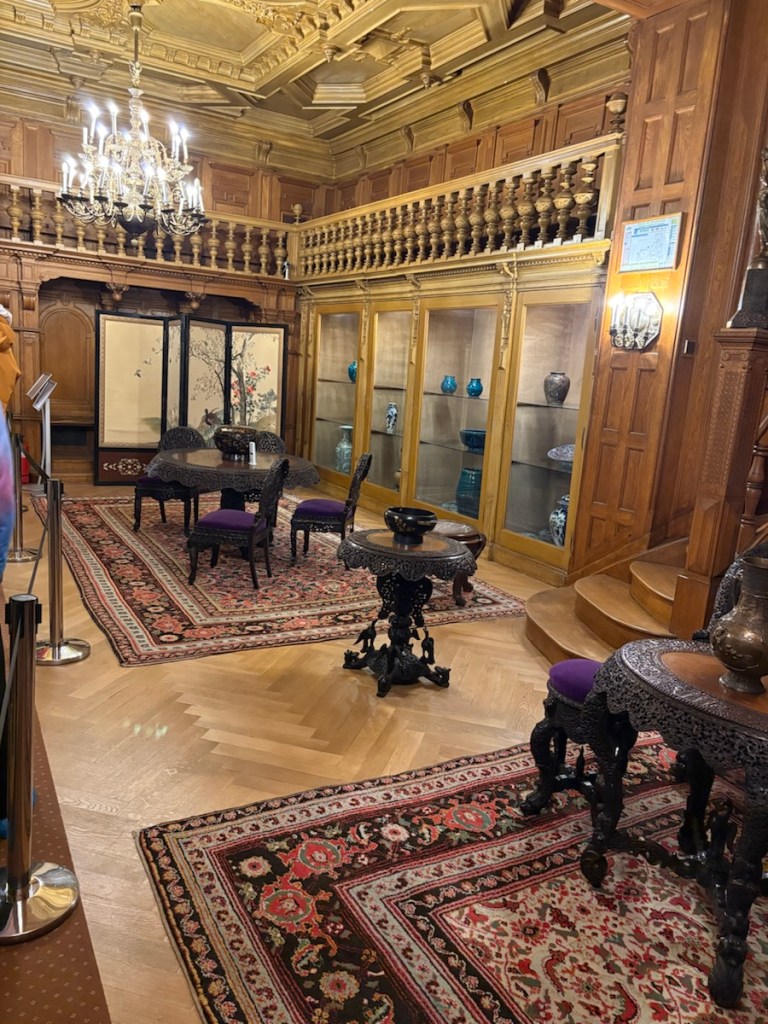
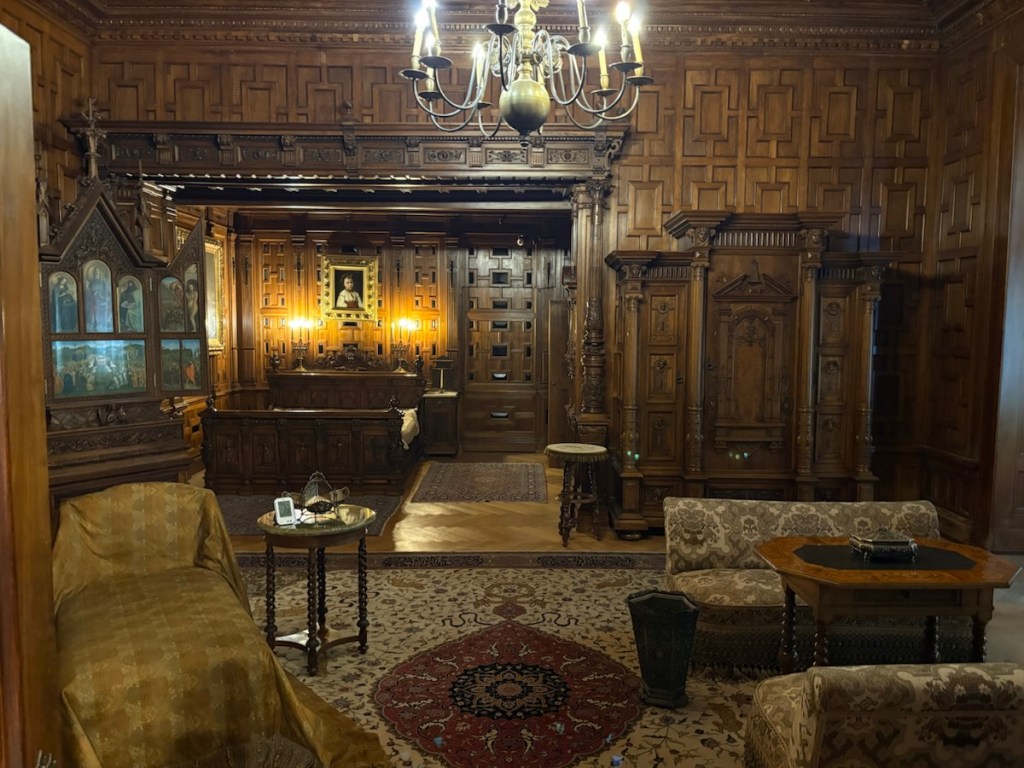
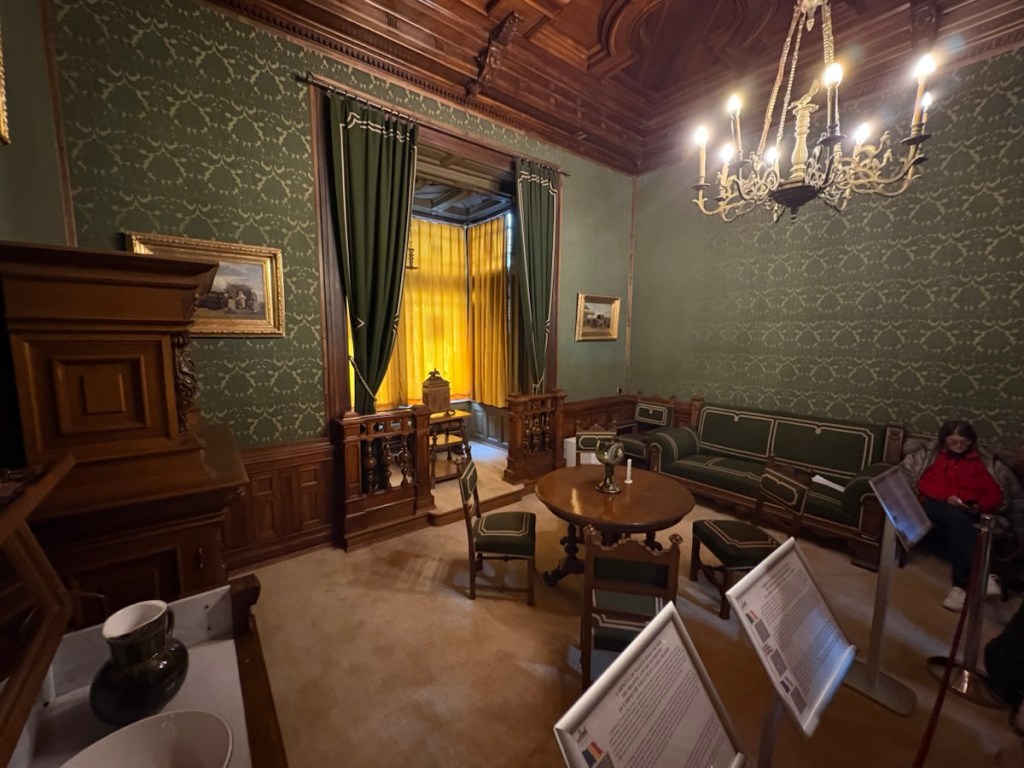
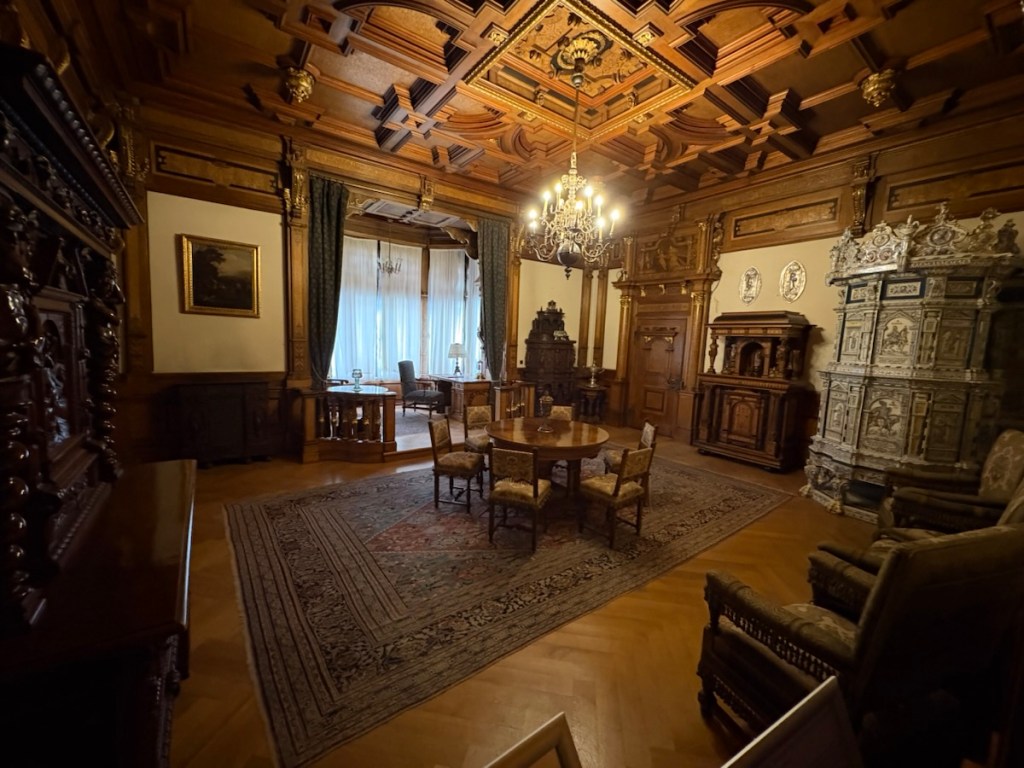
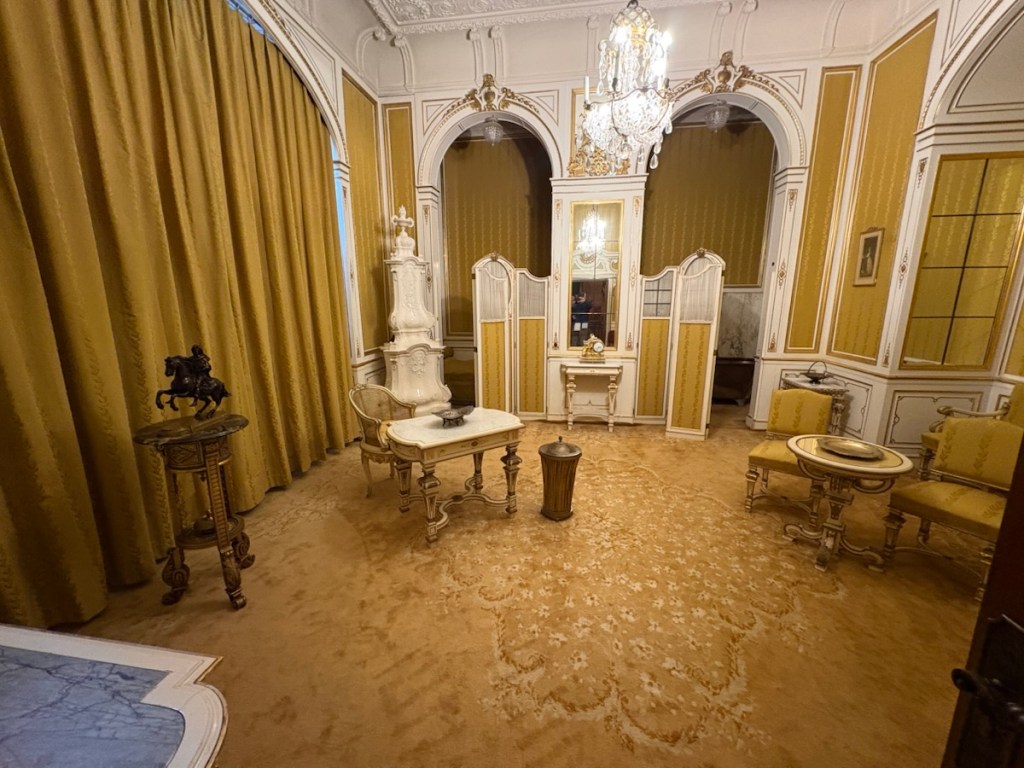
The former summer residence of King Carol I and Queen Elisabeth, Peles Castle became “the origin of the national dynasty,” a place for political decisions and an important European cultural centre at that time. Prince Carol of Hohenzollern-Sigmaringen was brought from Germany to the Romanian throne in 1866 and ruled the country until 1914, the year of his death.
Peles Castle was built between 1873-1914, following the plans of German architects Wilhelm Doderer and Johannes Schultz, then amplified and modernized after 1890 by the Czech architect Karel Liman. The first shape was inaugurated in the year 1883. Peles Castle was the first building in Romania to have central heating, an electric system, a central vacuum cleaner, a ducted air heating system, and an electric elevator!
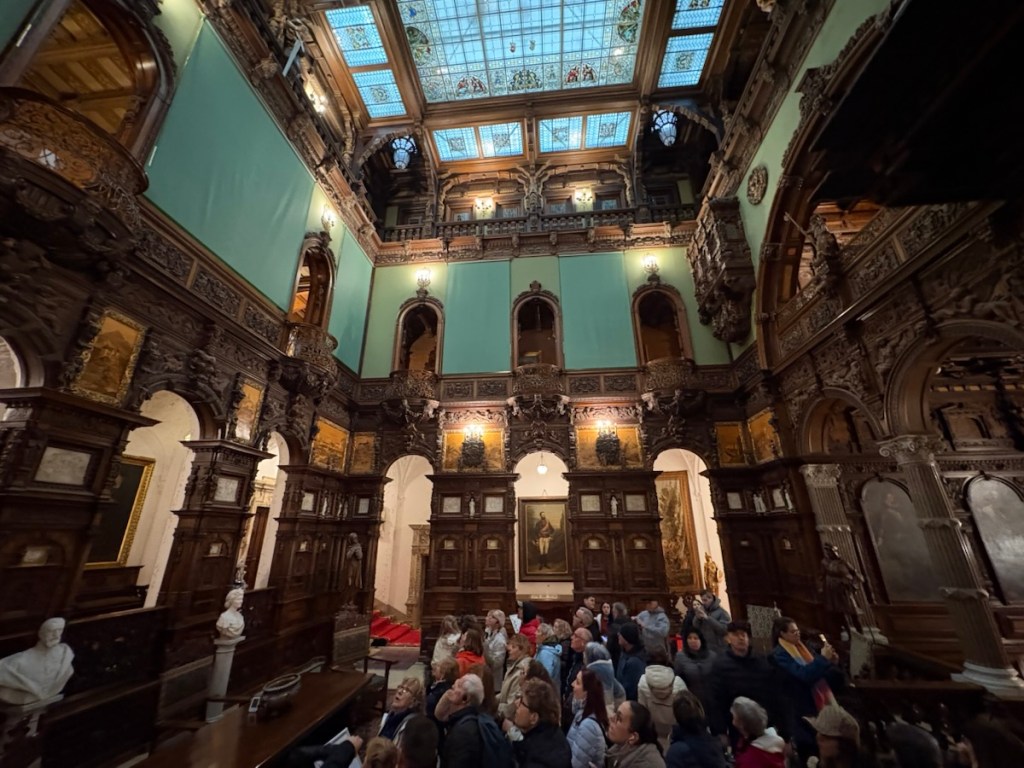
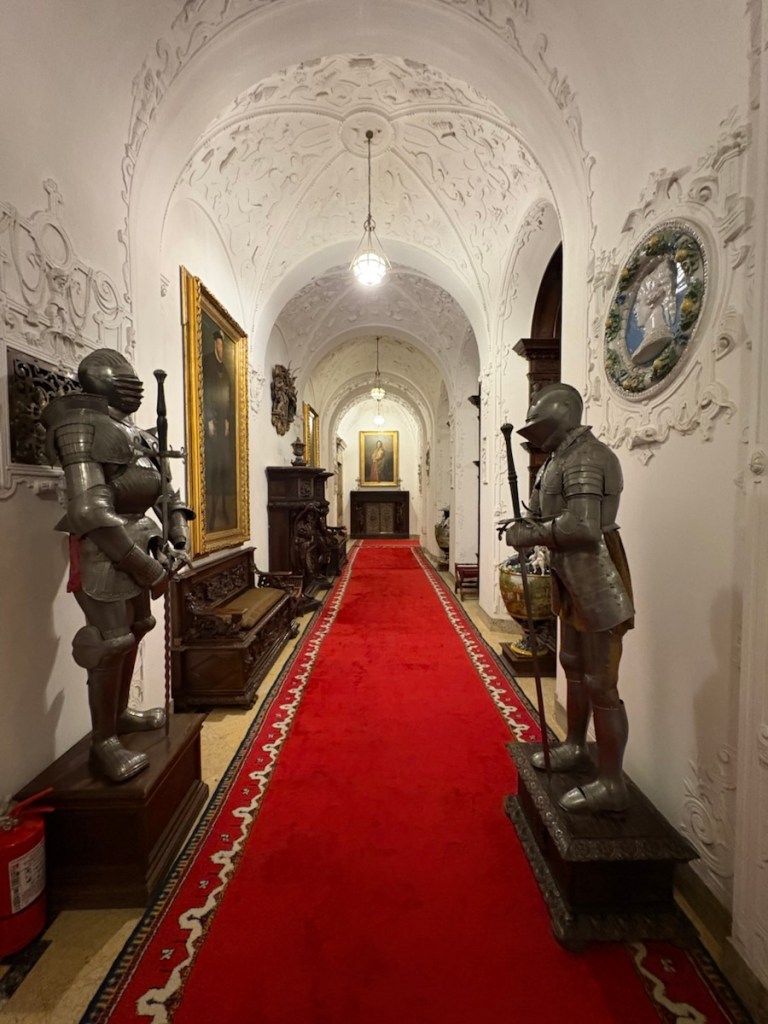
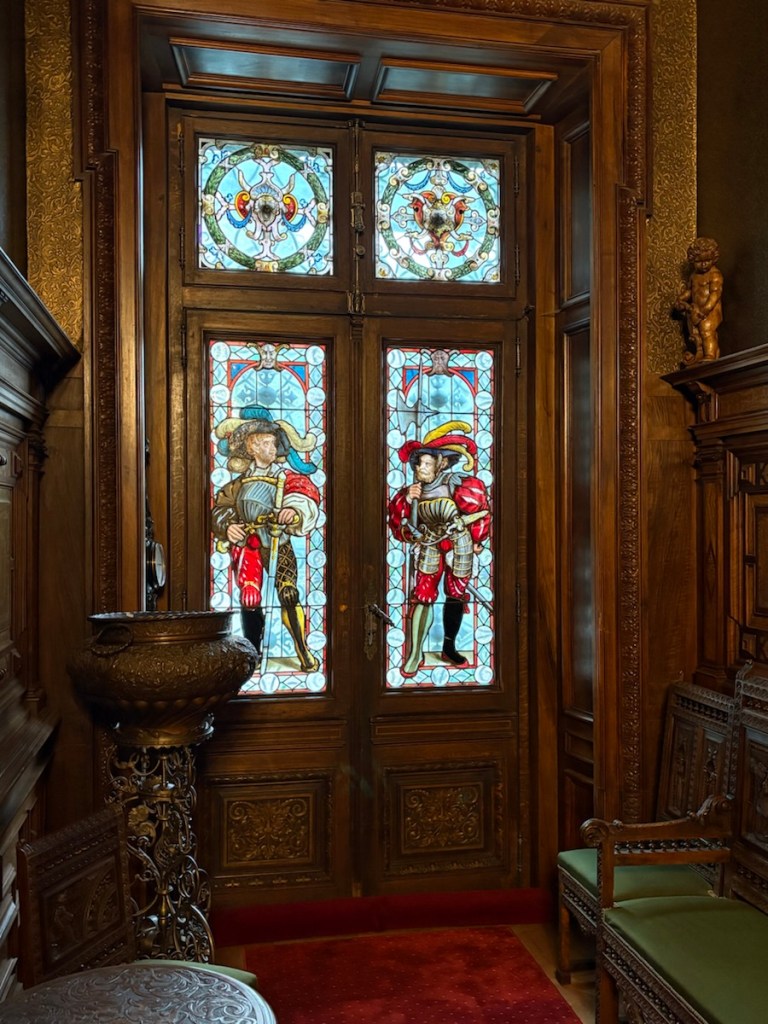
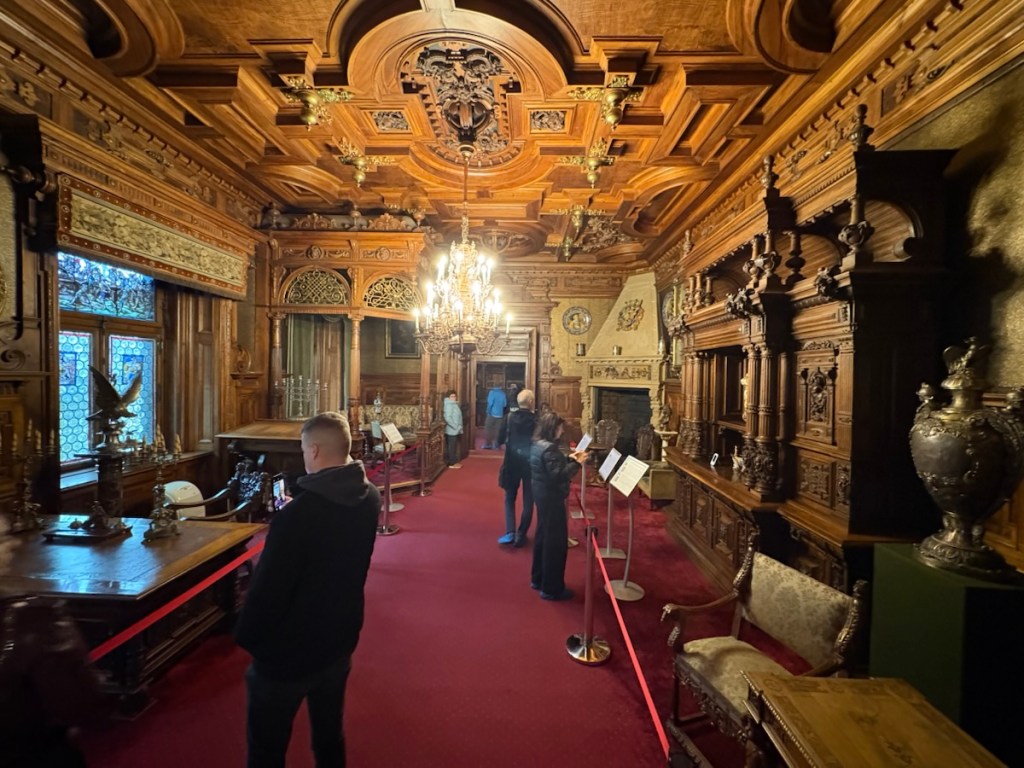
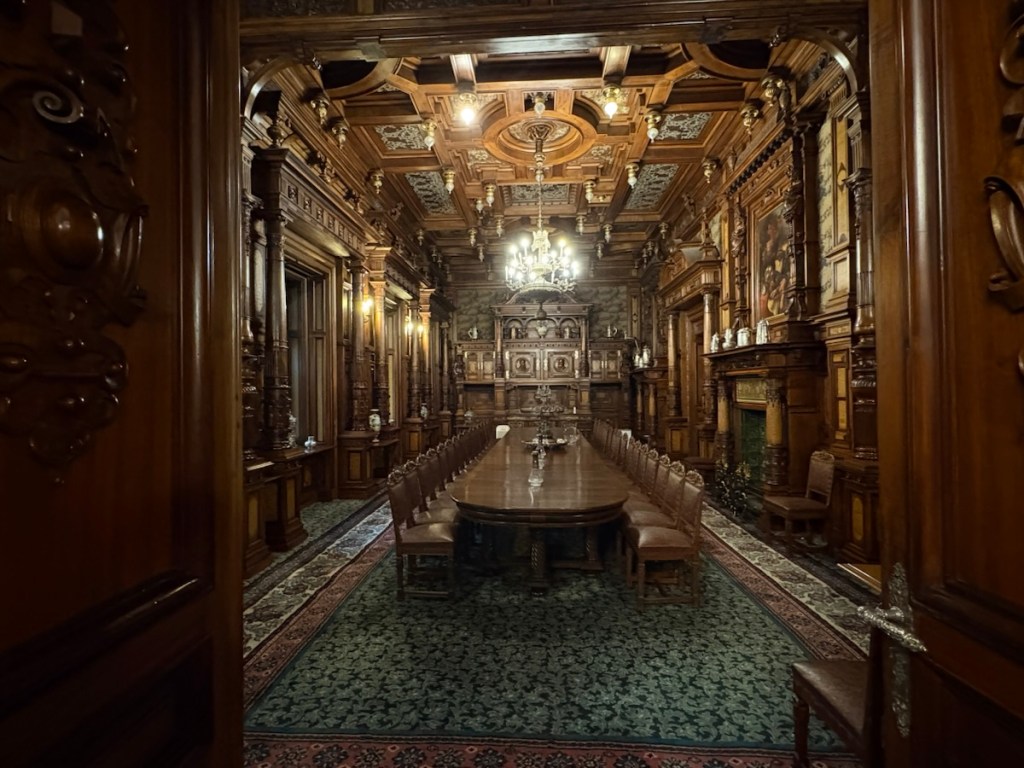
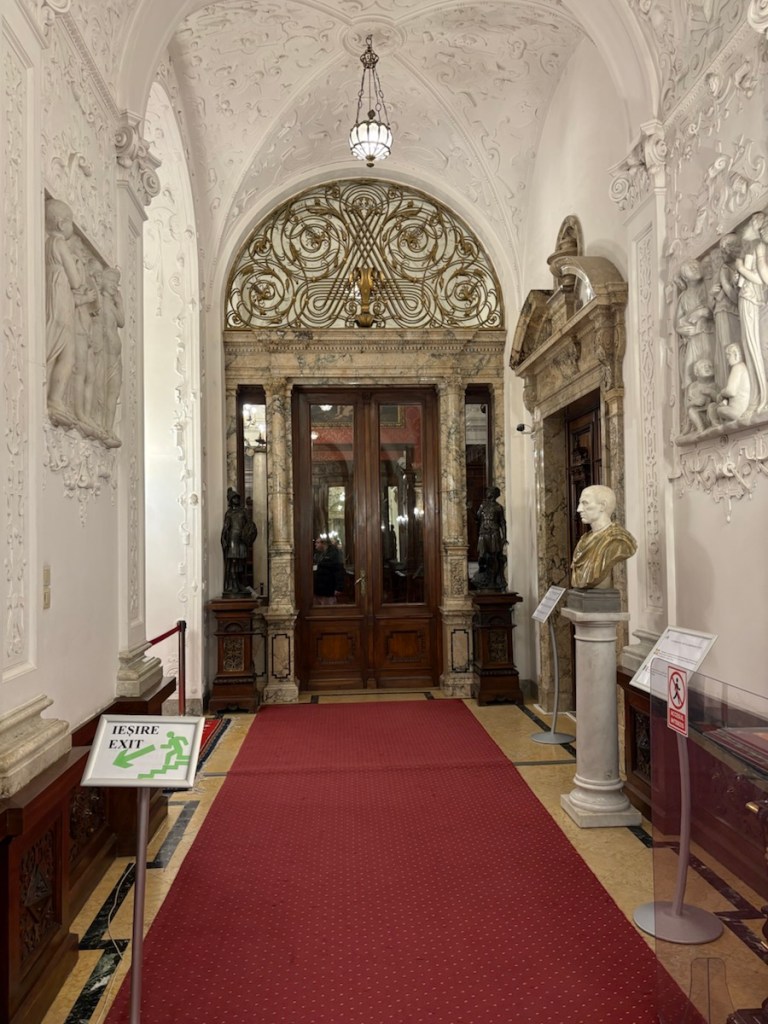
Since 2007, Peles Castle is the property of the Romanian Royal House and it is rented by the state and open as a public museum. The castle has an extraordinary value as a monument of European architecture, typical for late 19th and early 20th century. Its interior decoration revealed by the halls, is a remarkable stylistic synthesis: German Neo-Renaissance, Italian Neo-Renaissance, Neo-Baroque, with elements of Louis XIV, Louis XV, Rococo, Empire, oriental styles and the Style of 1900.
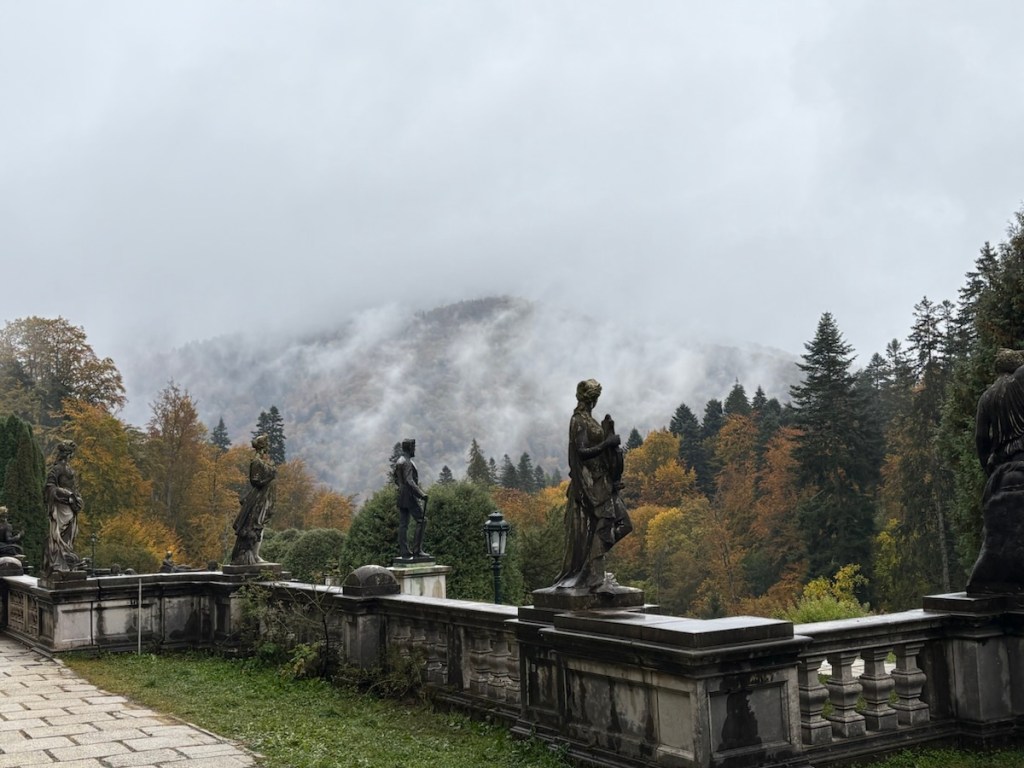
The dramatic mountain scenery surrounding Peles Castle is often compared to Neuschwanstein Castle in Bavaria.
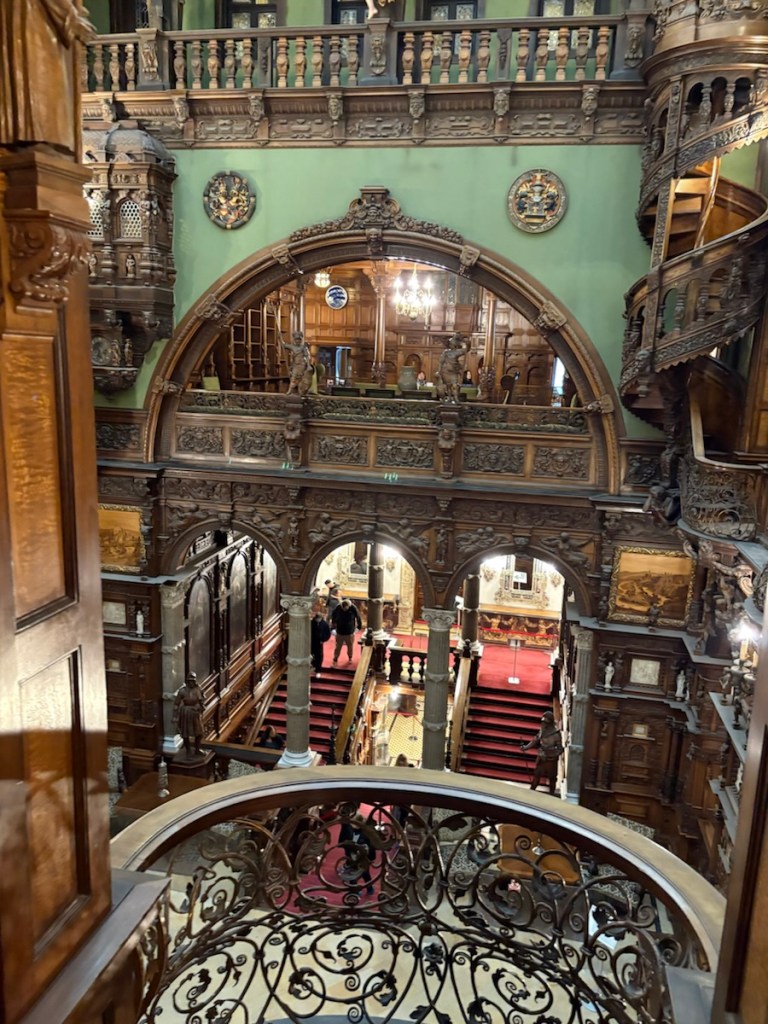
The castle boasts 160 rooms, each uniquely decorated with influences from Turkish, Florentine, Venetian, Gothic, and Oriental styles.
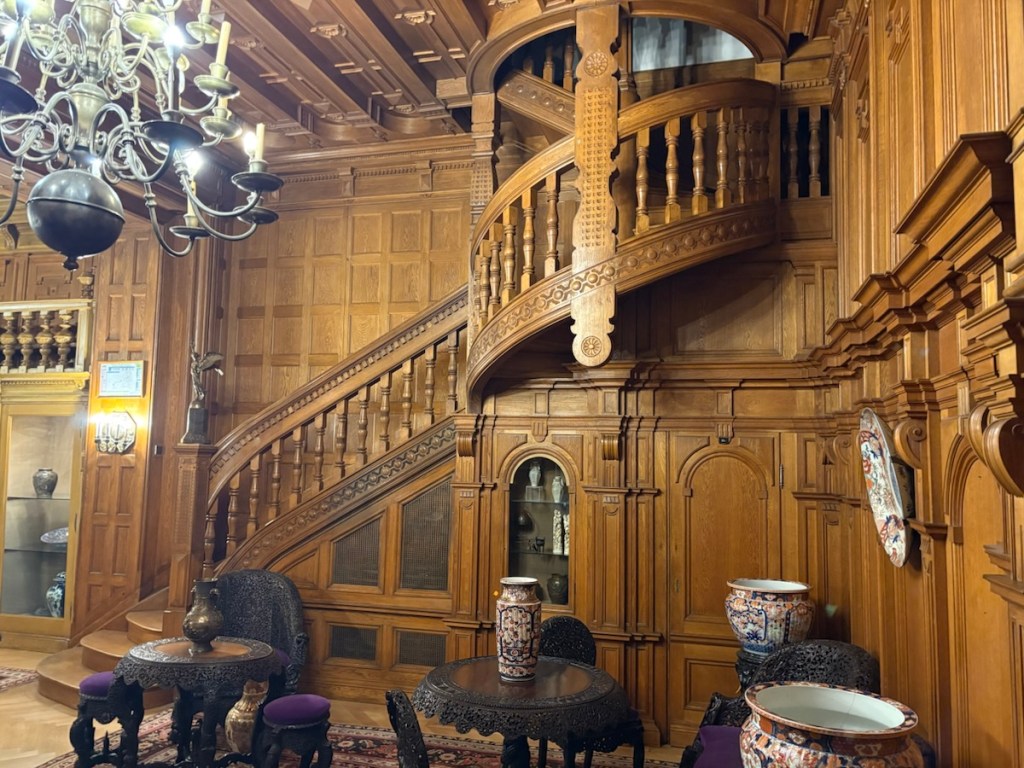
Discover features like ornate balconies, secret passageways, rustic wooden spiral staircases, and Murano crystal chandeliers.
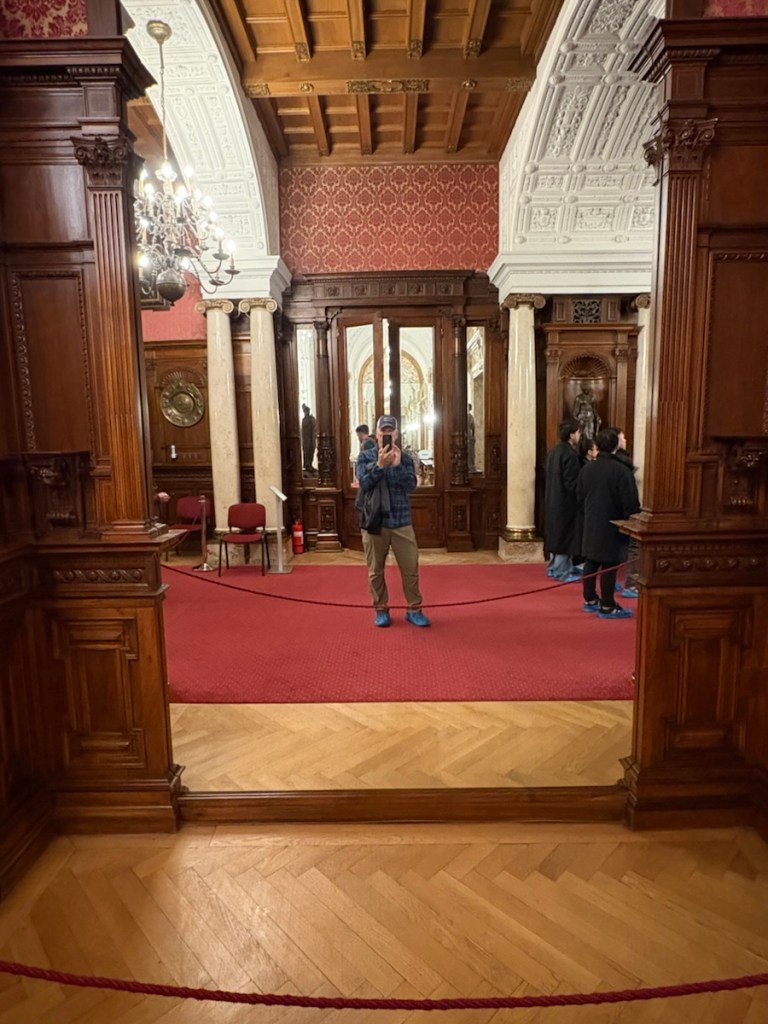
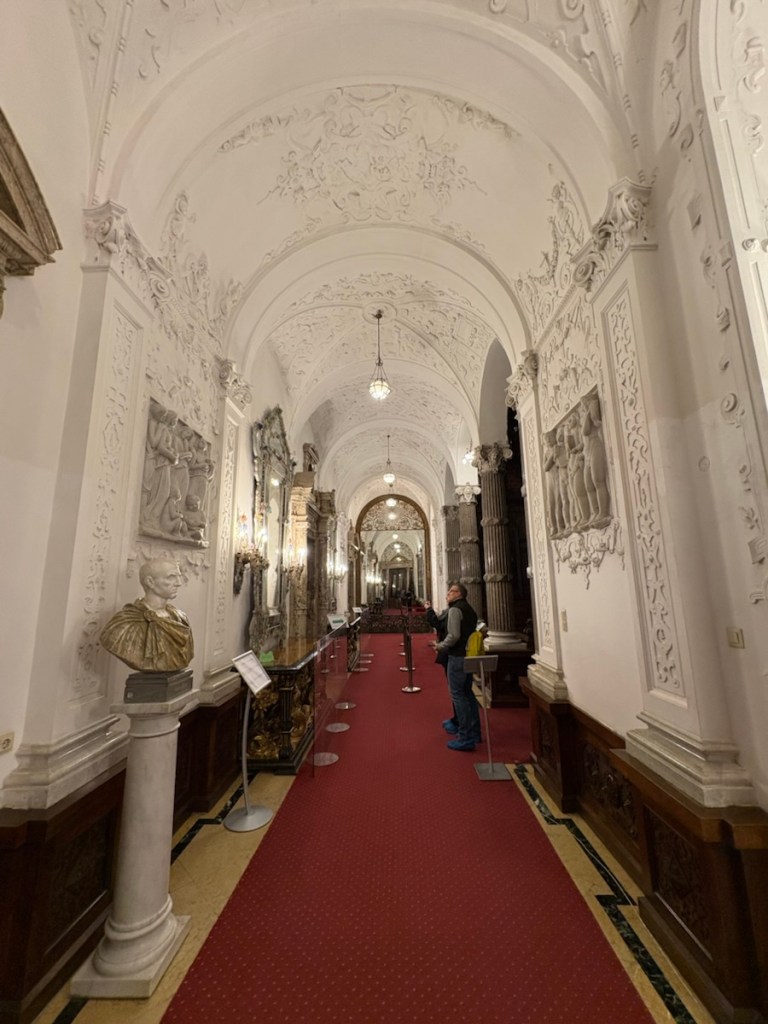
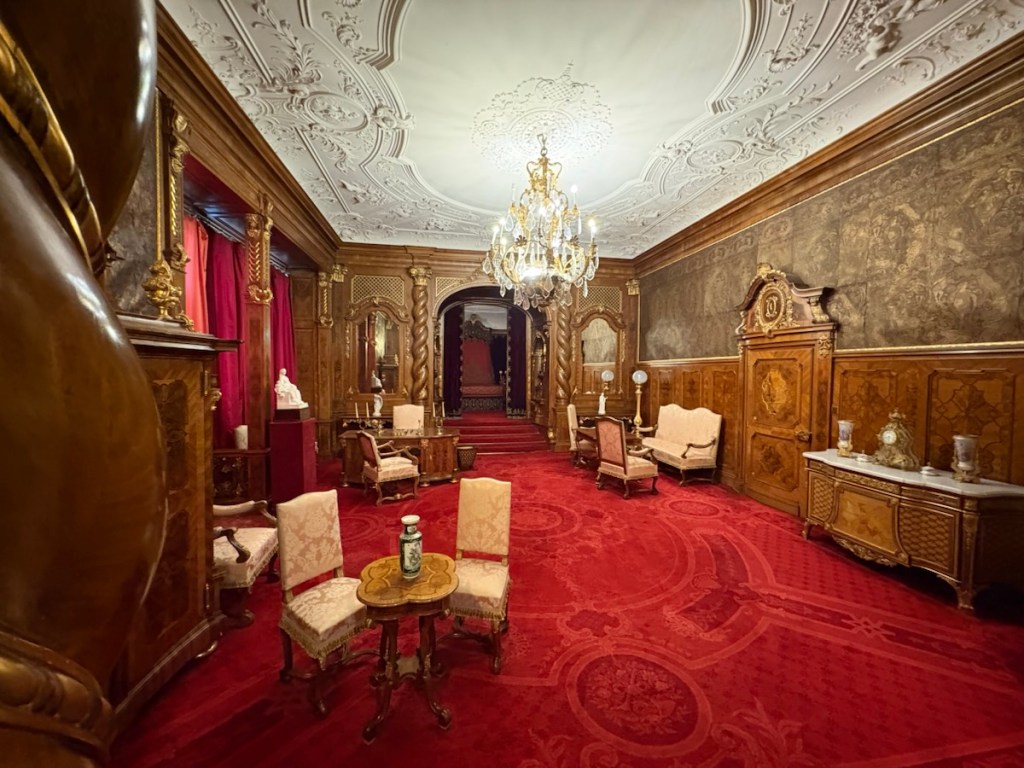
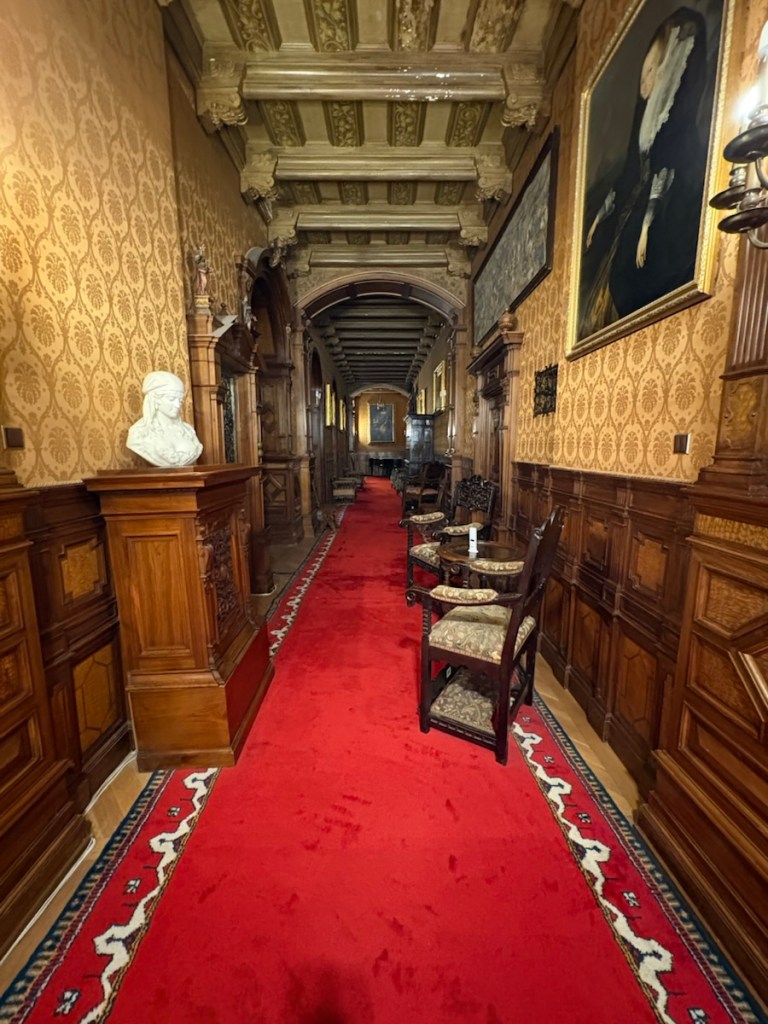
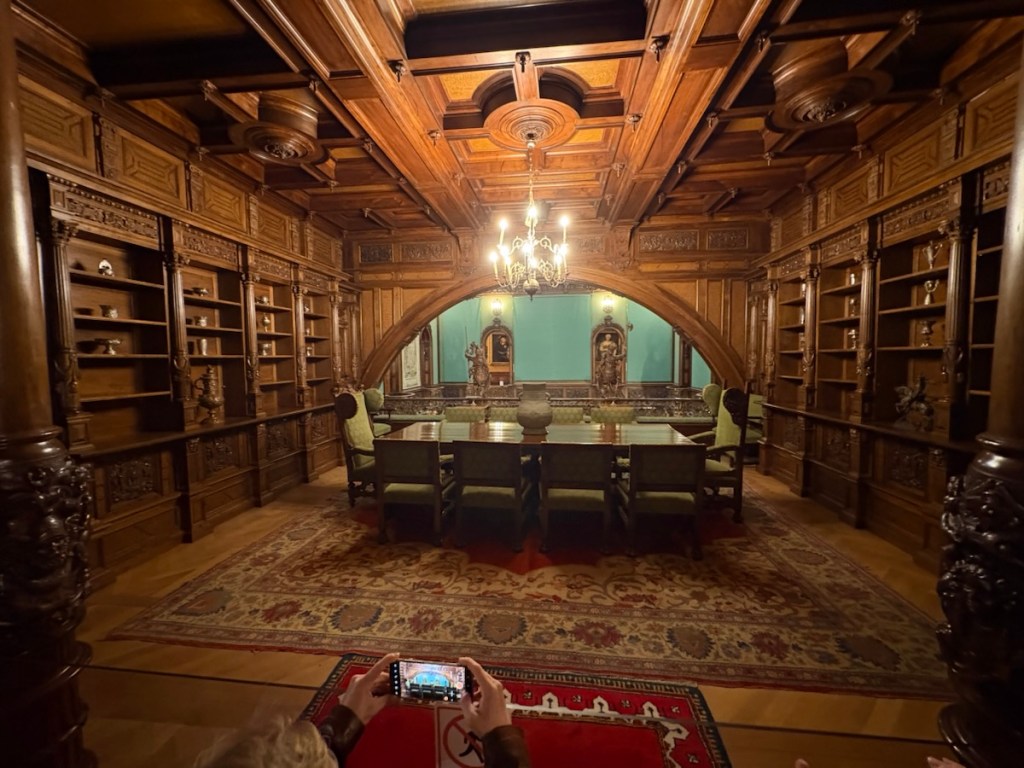
And the castle was VERY spectacular! Here are photos from the tour:
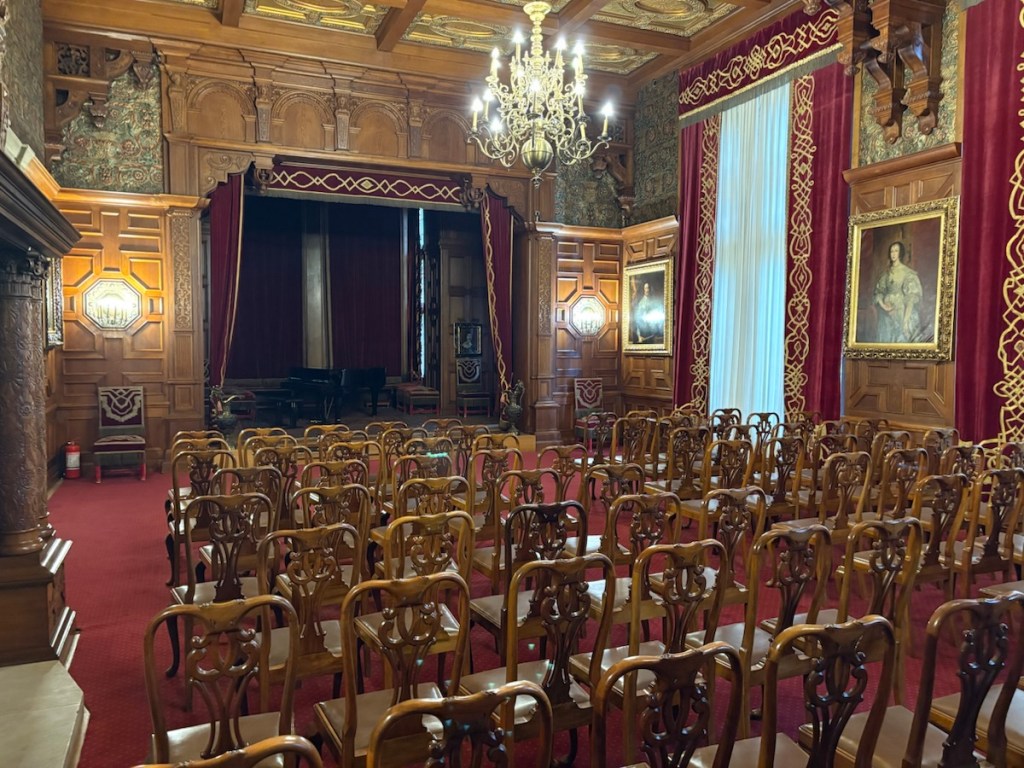
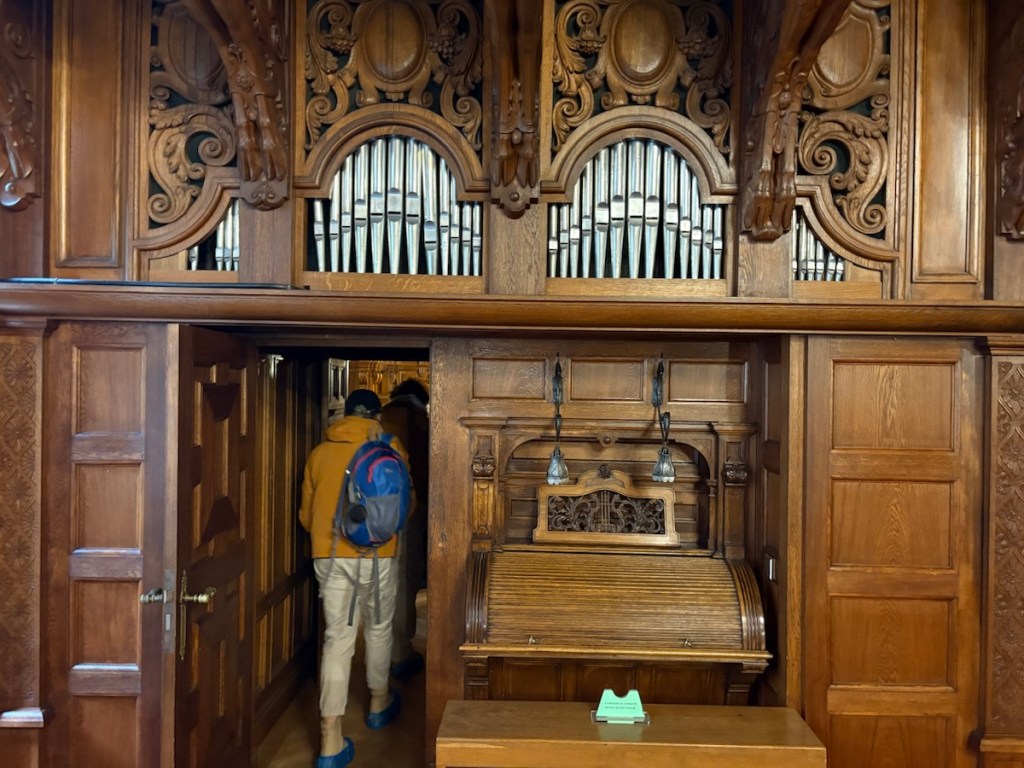
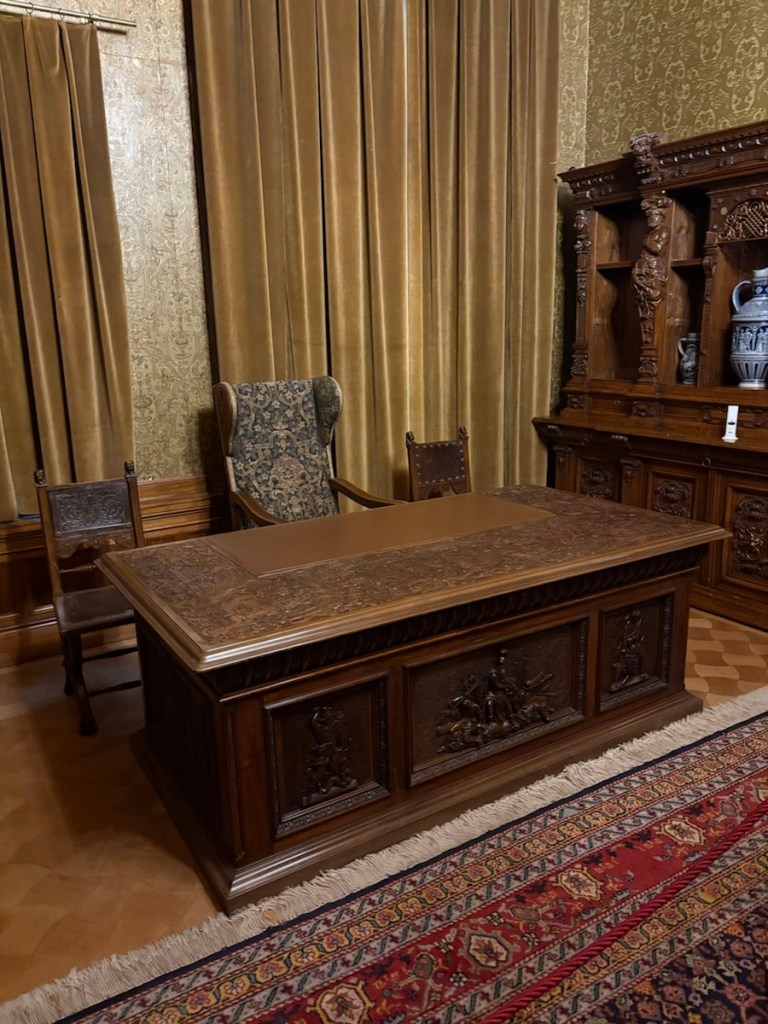
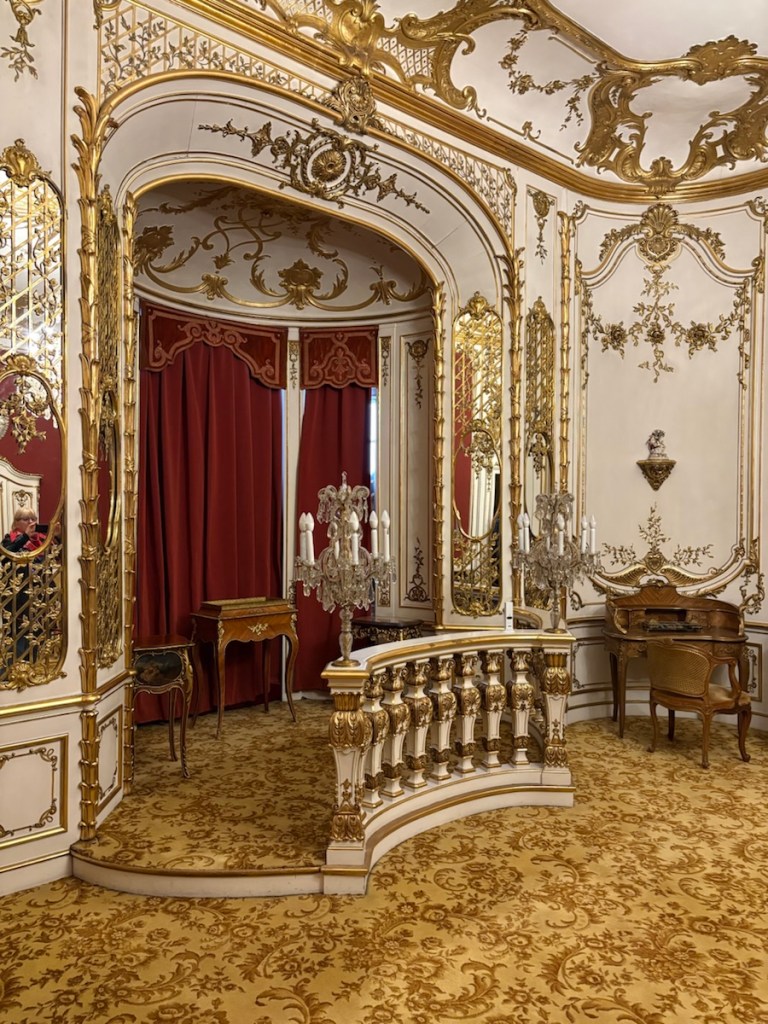
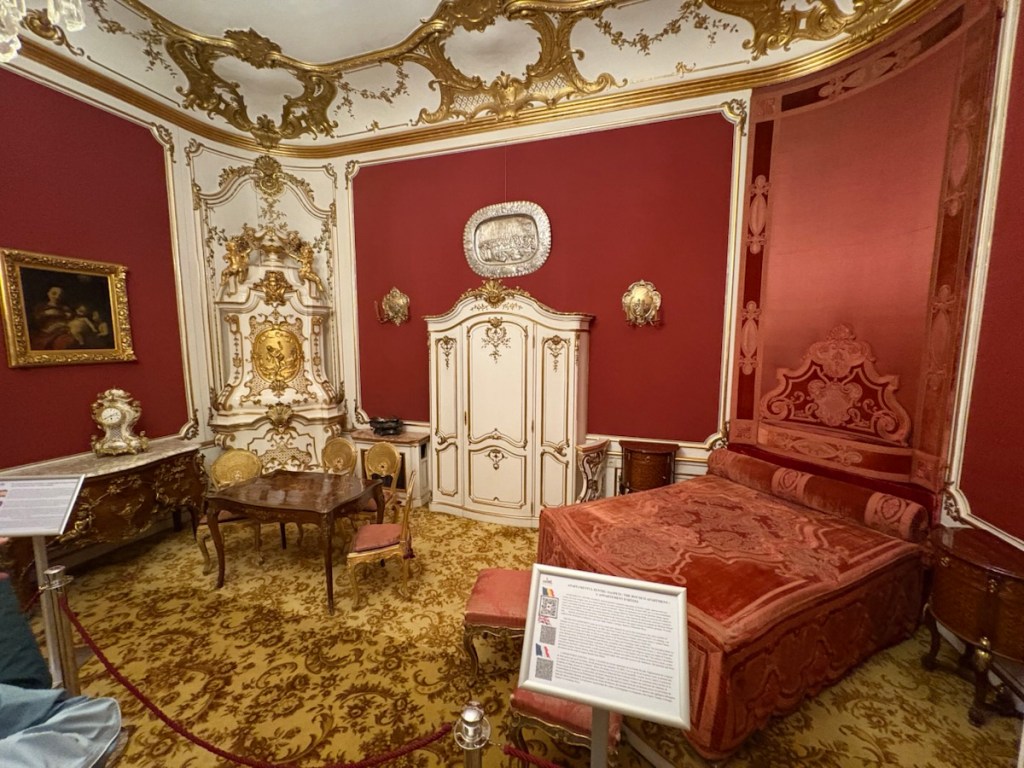
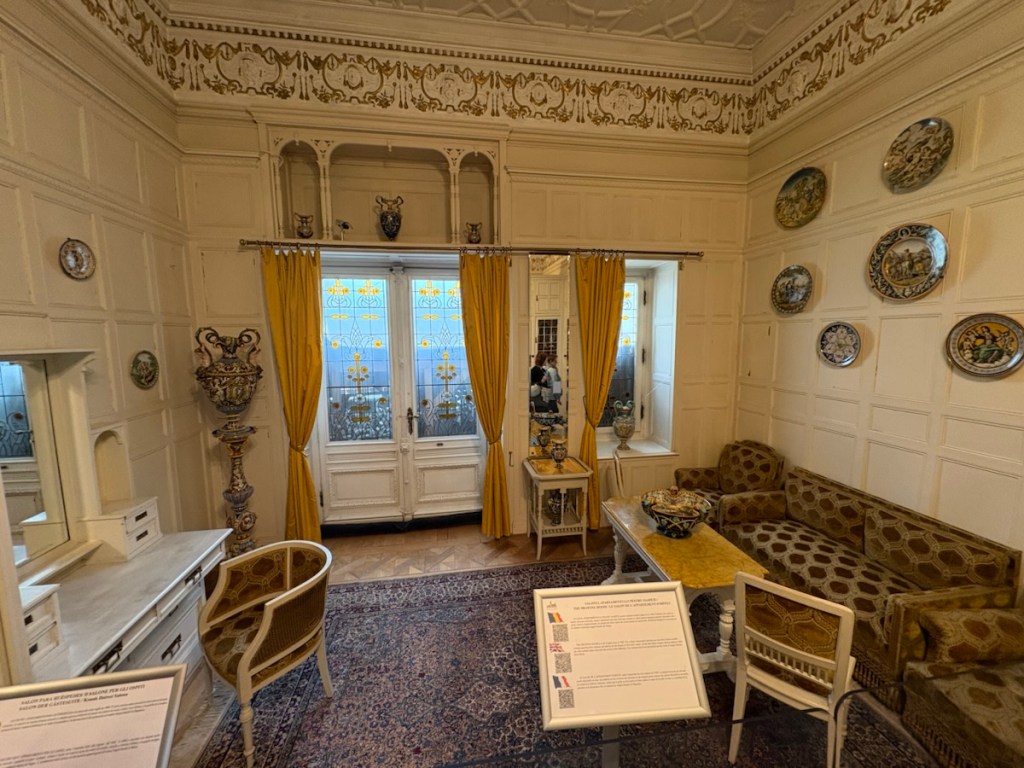
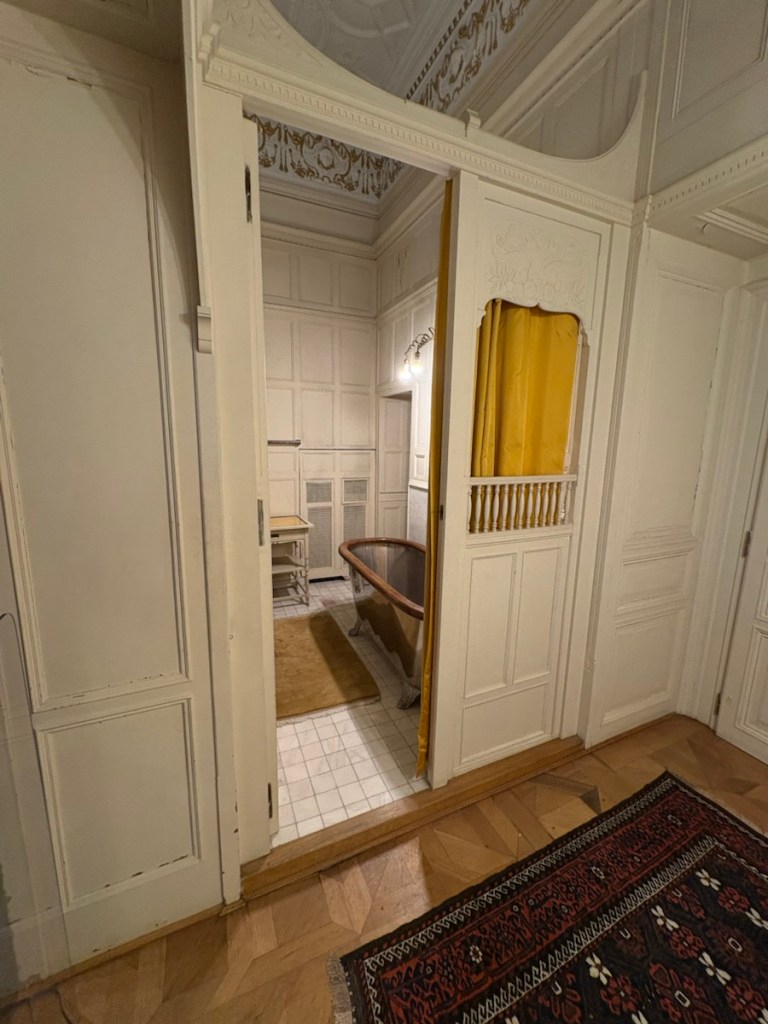
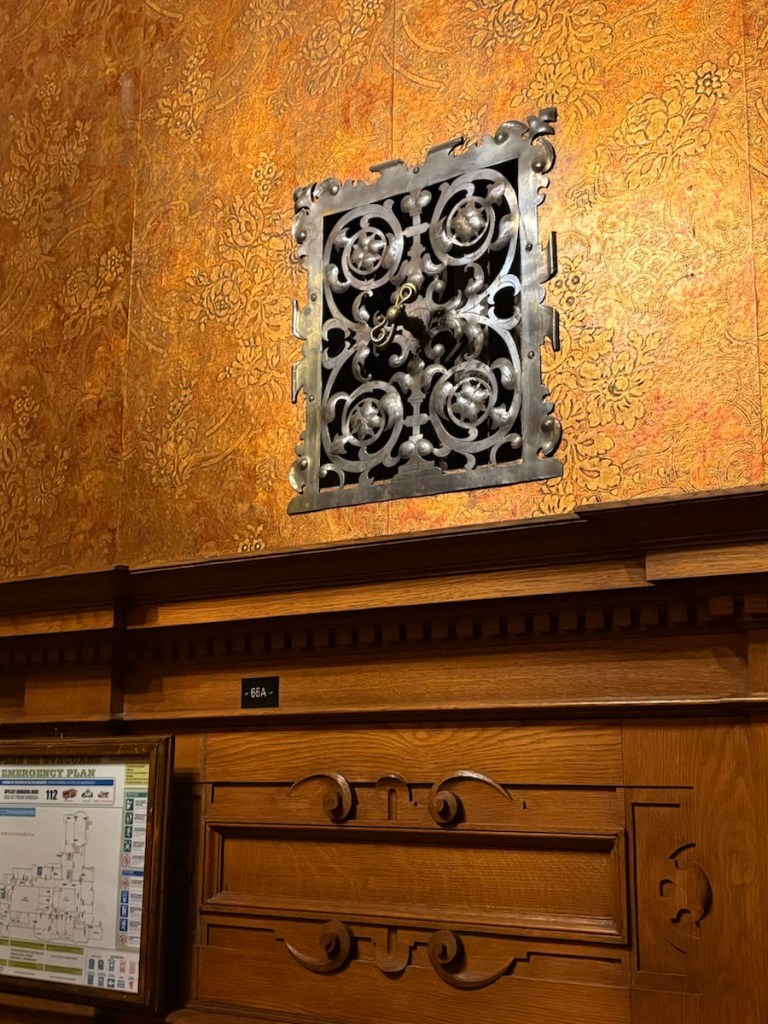
Entrance HallWeapons RoomSitting RoomA tourist…A dining roomAnother touristThe music roomAnd the organ in the music roomThe King’s BedroomThe ornate heating vents
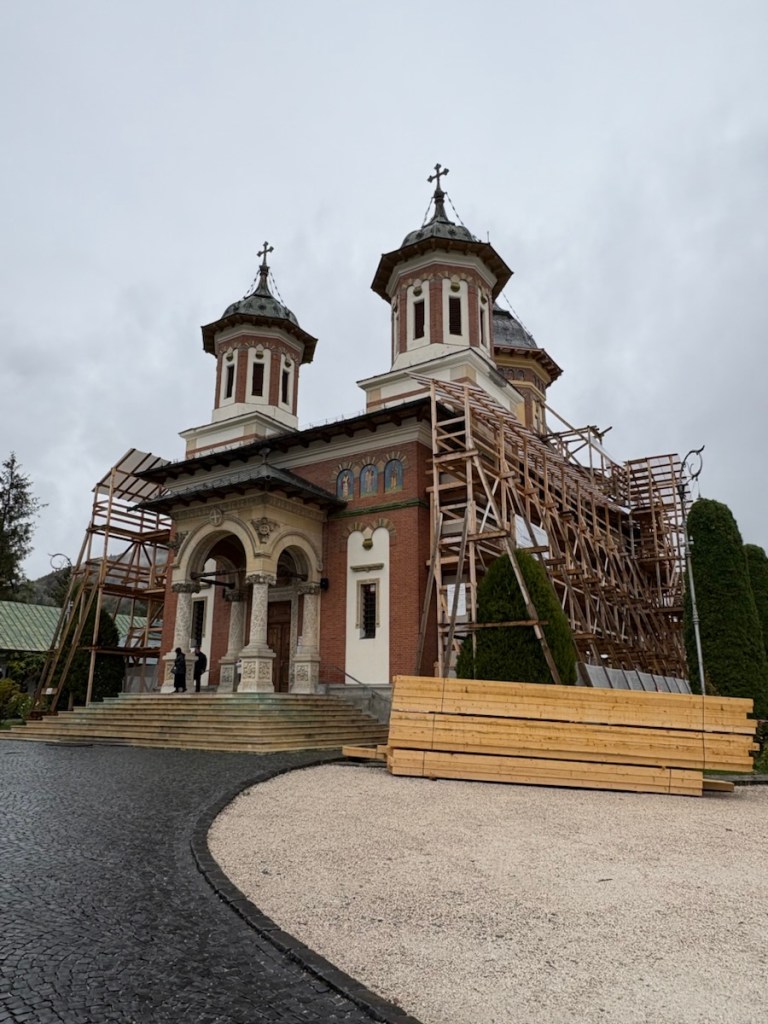
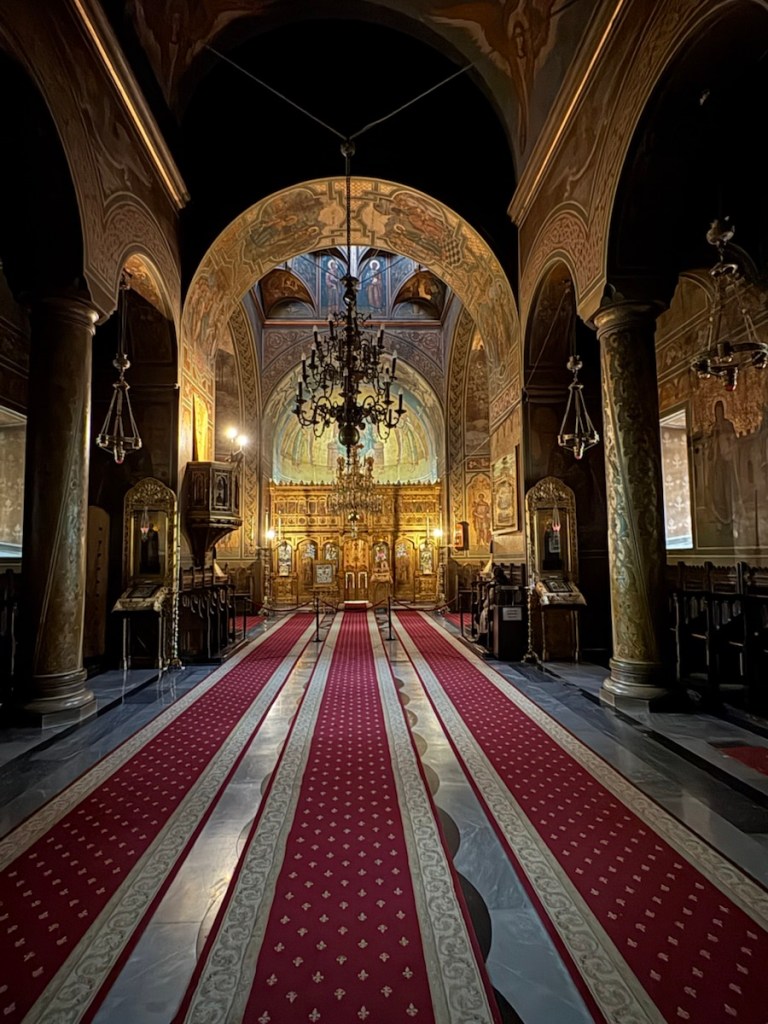
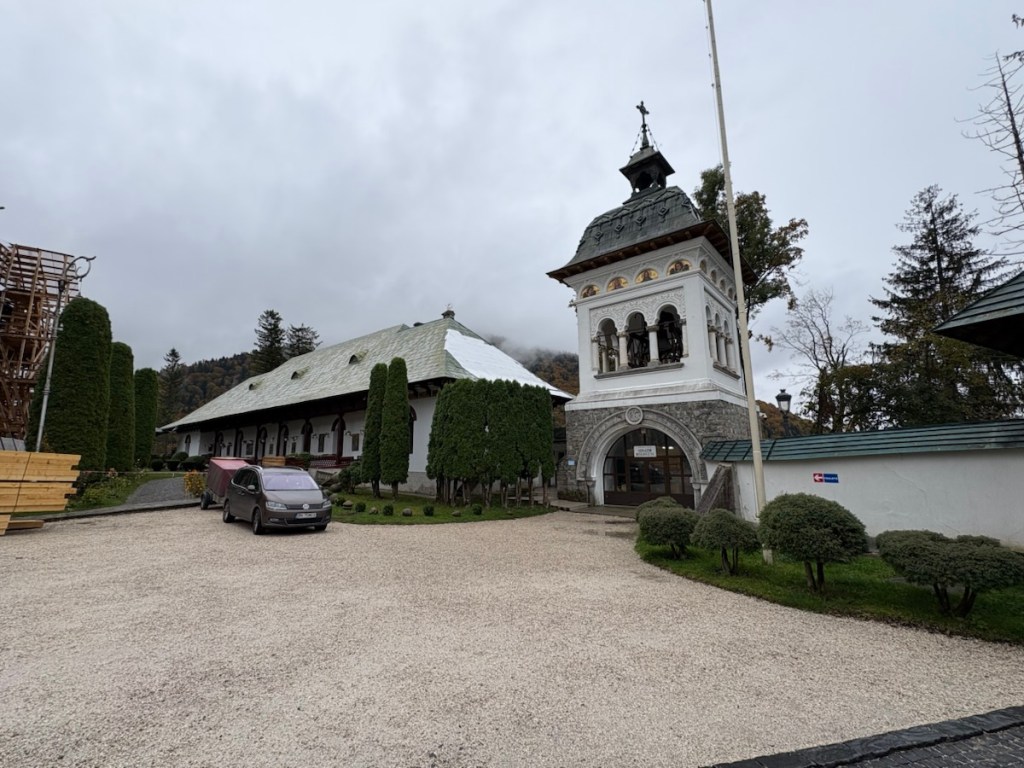
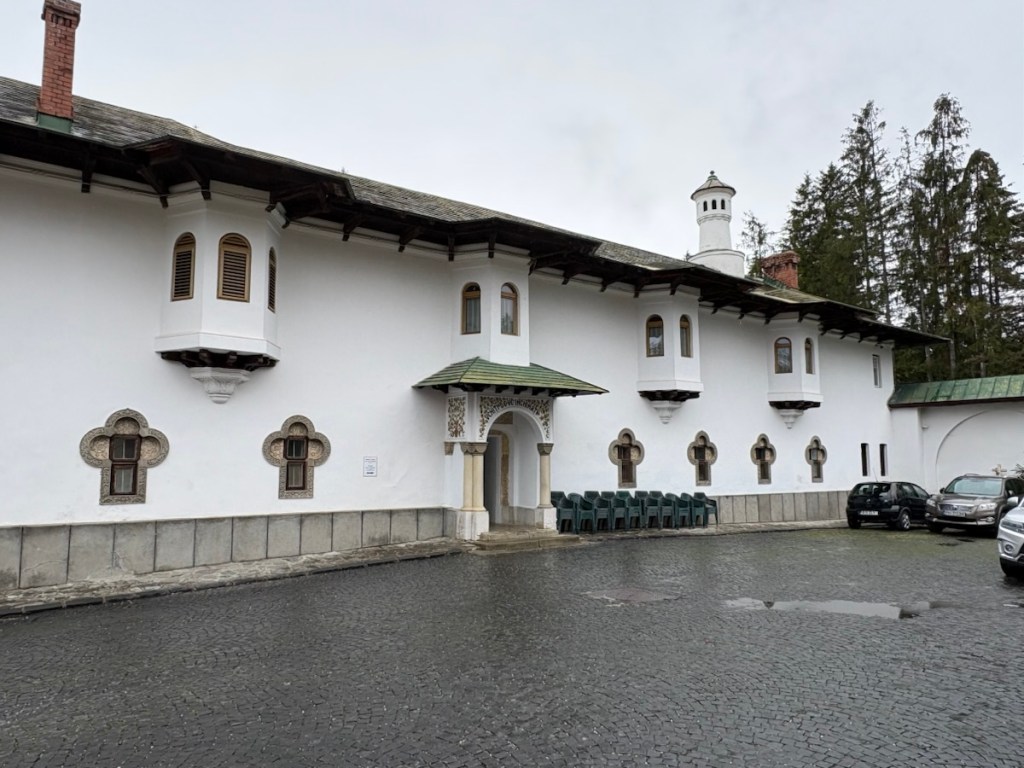
I also made a quick stop at the nearby Sinaia Monastery. The Monastery was founded between 1690 and 1695 by Prince Mihai Cantacuzino after a pilgrimage to Mount Sinai. Initially a fortified monastery for 12 monks, it grew to become the first settlement in the area, and the town of Sinaia was named after it. Notable additions include the 19th-century “New Court” church with electric lighting and an 1892 bell tower, and a 1895 museum containing the first Romanian Bible. Of note:
During the Russo-Turkish War, the monastery’s valuables were buried inside a bell, and the monastery was attacked and partially burned by Ottoman troops.
The royal family used the monastery as a temporary residence before the completion of Peleș Castle.
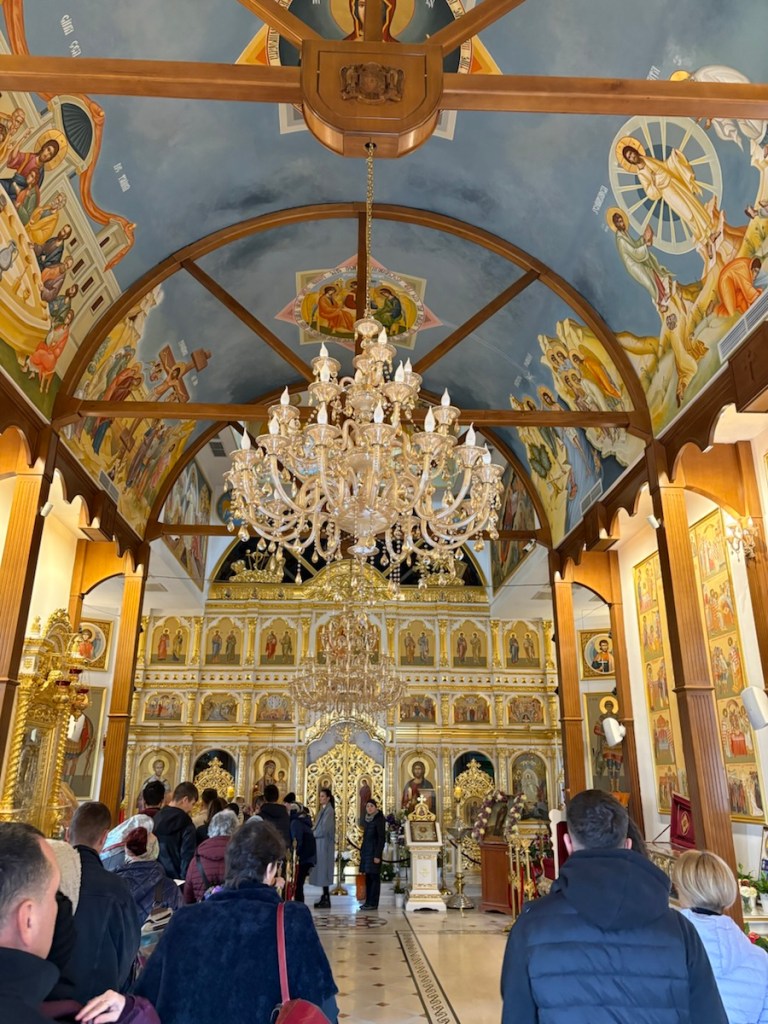
The monastery actually has two churches. The original church at the monastery, called the “Old Church” (Biserica Veche), with the official name, ”Assumption of the Virgin Mary Church.” It was founded around 1695.
The second, newer church is called, the “Great Church or New Court Church” (Biserica Mare) and named, the “Holy Trinity Church.” It was built between 1842 and 1846 to accommodate a larger number of monks and was the first church in Romania to be electrified.
The “New Church”Bell TowerA wing of the Monastery
The weather did clear up by the time I reached Bucharest in the afternoon. But the rest of the day I was just lazy – picking up groceries, relaxing in the apartment, laundry, dinner in the room, and I watched a movie on TV. Tomorrow will be for some Bucharest sightseeing!
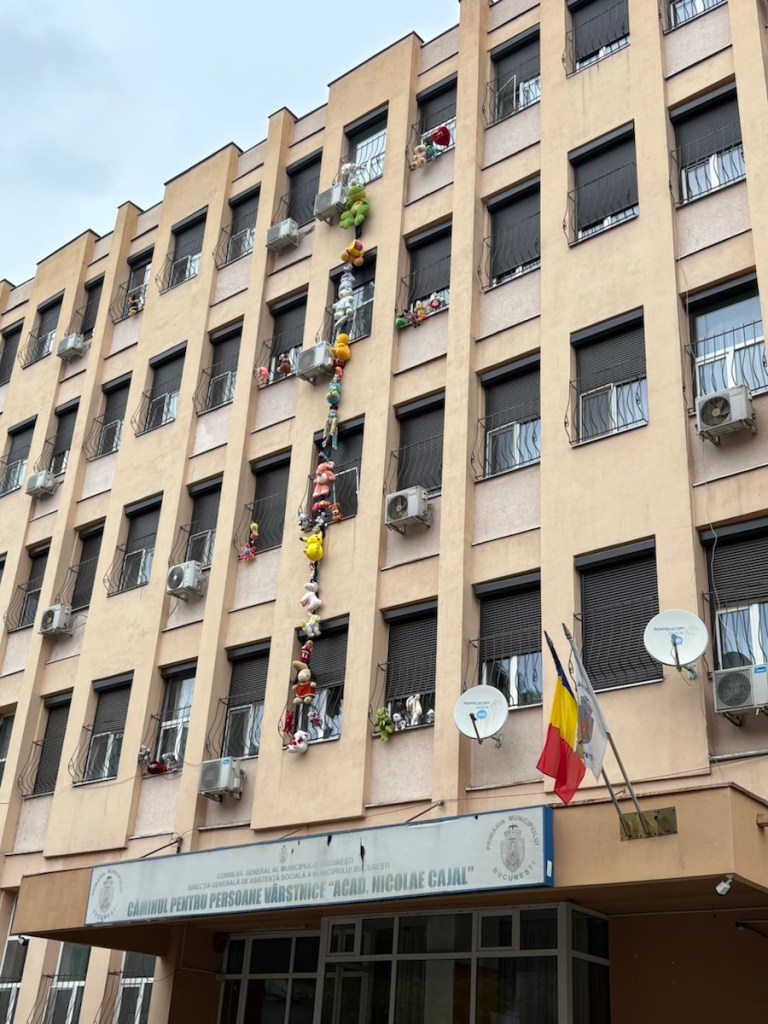
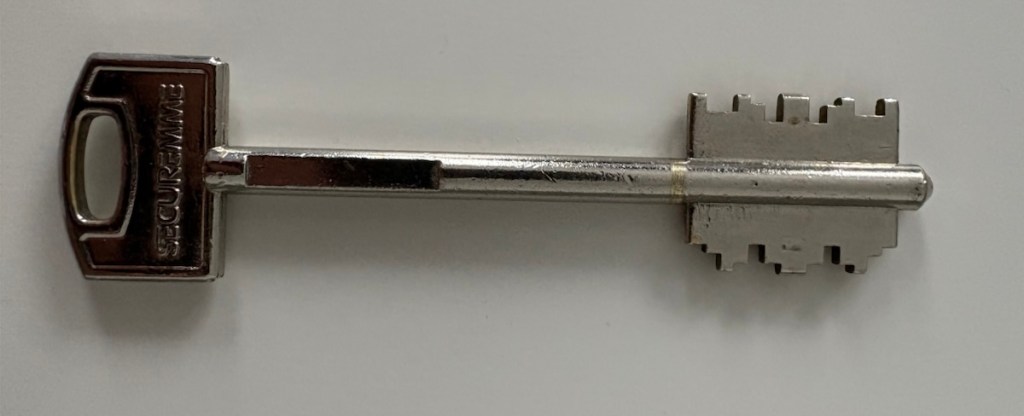
According to the sign, it is a “Home for Elderly People.” So why are there a ton of stuffed animal hanging on the building? Strange sight.The odd key to my apartment!
Before you go…
I once wrote a song about a tortilla… but it was more of a wrap.






 A Captain’s Adventures