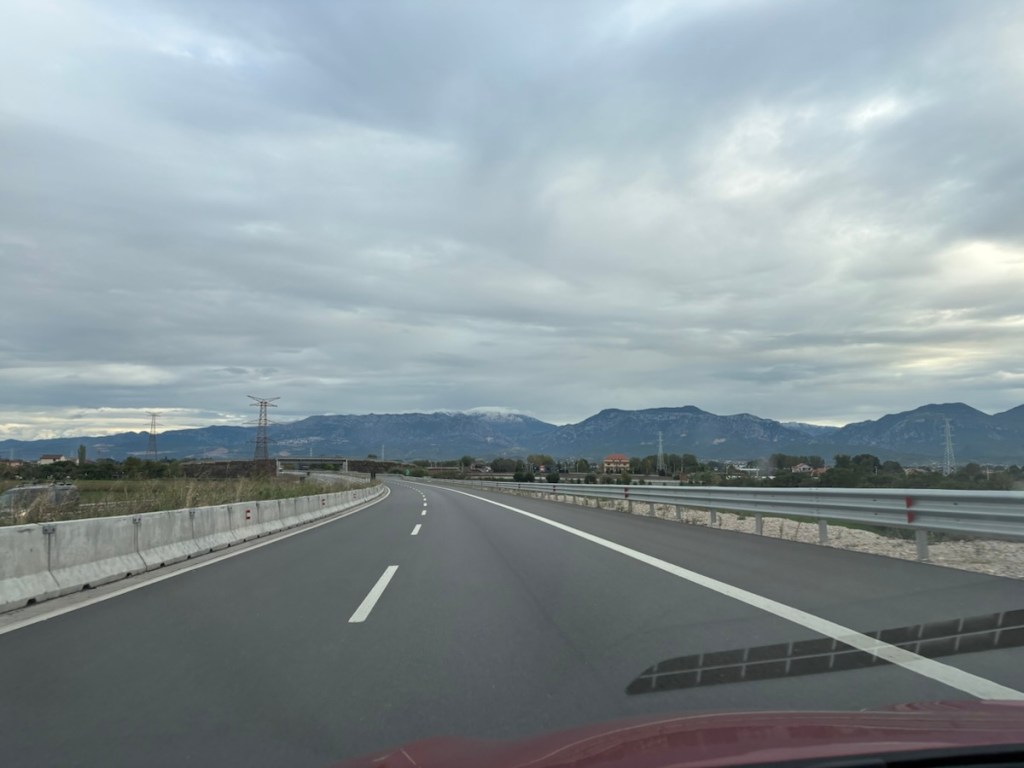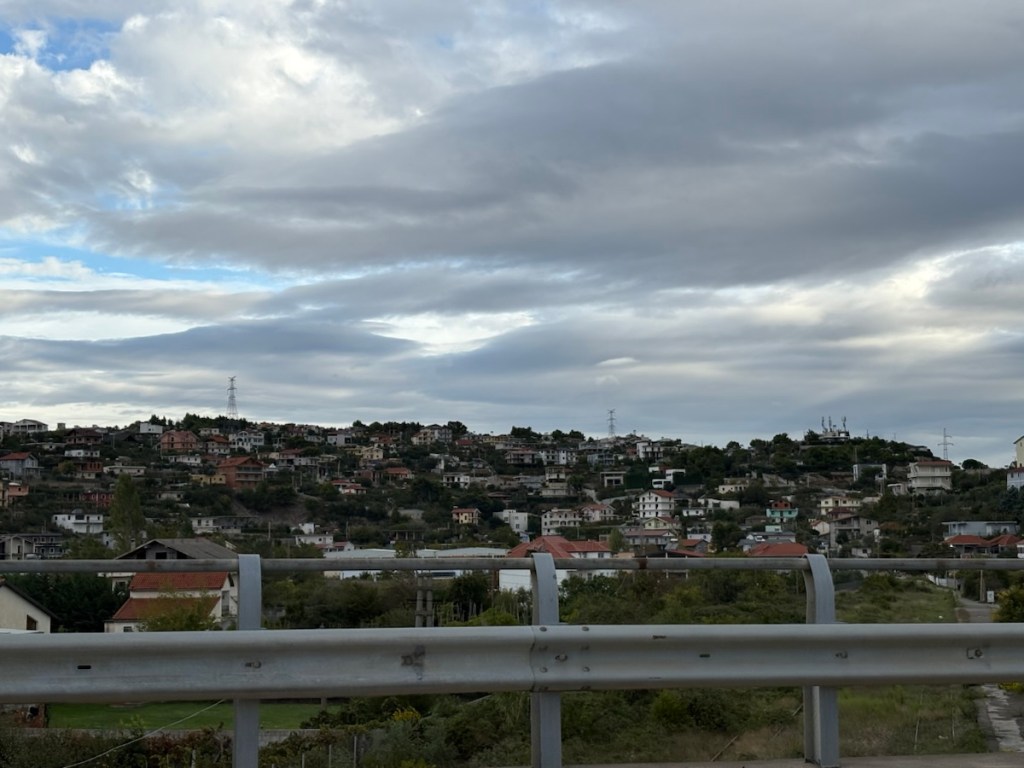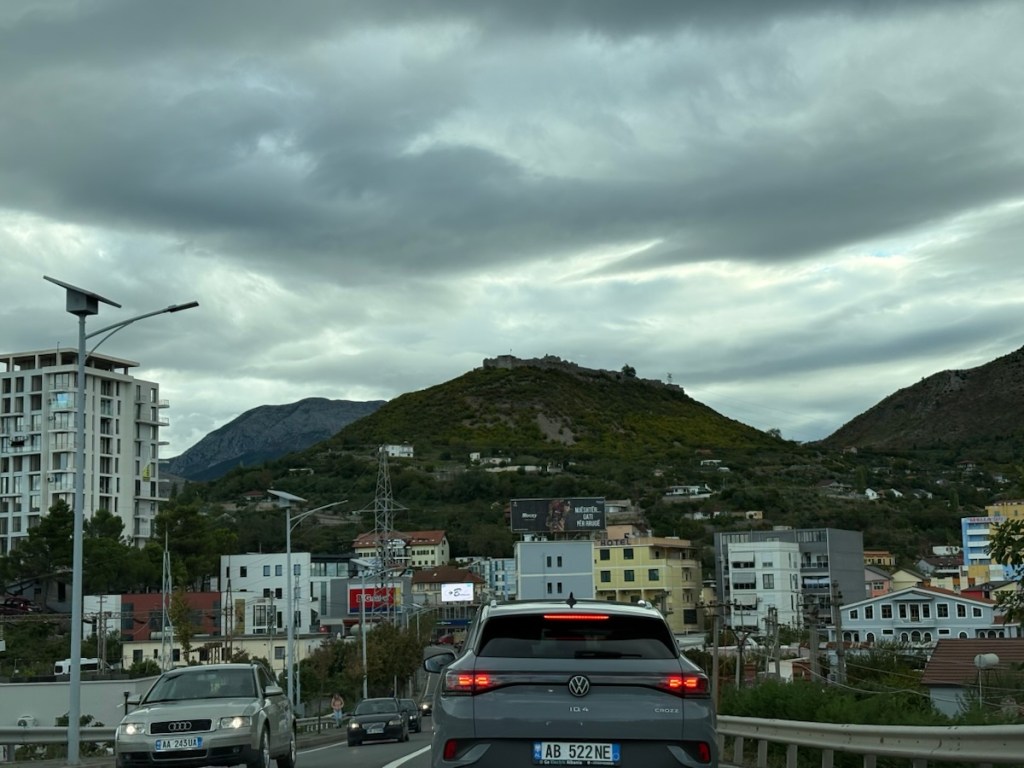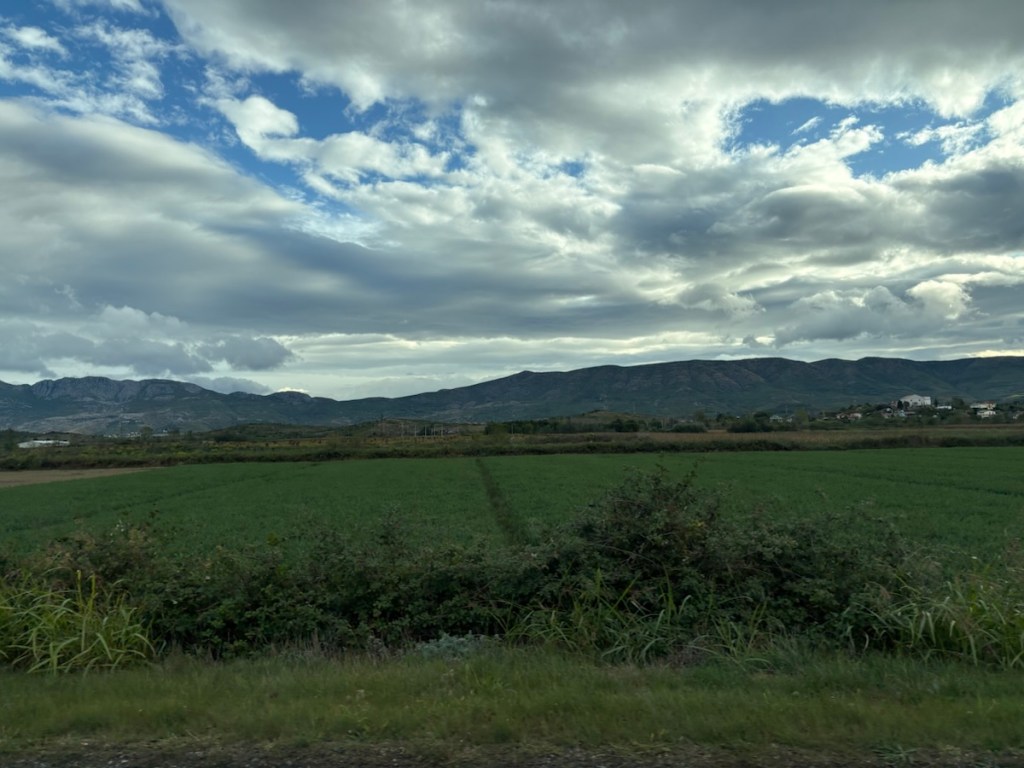
Off to Split, Croatia — with Stops in Mostar and Medjugorje in Bosnia and Herzegovina

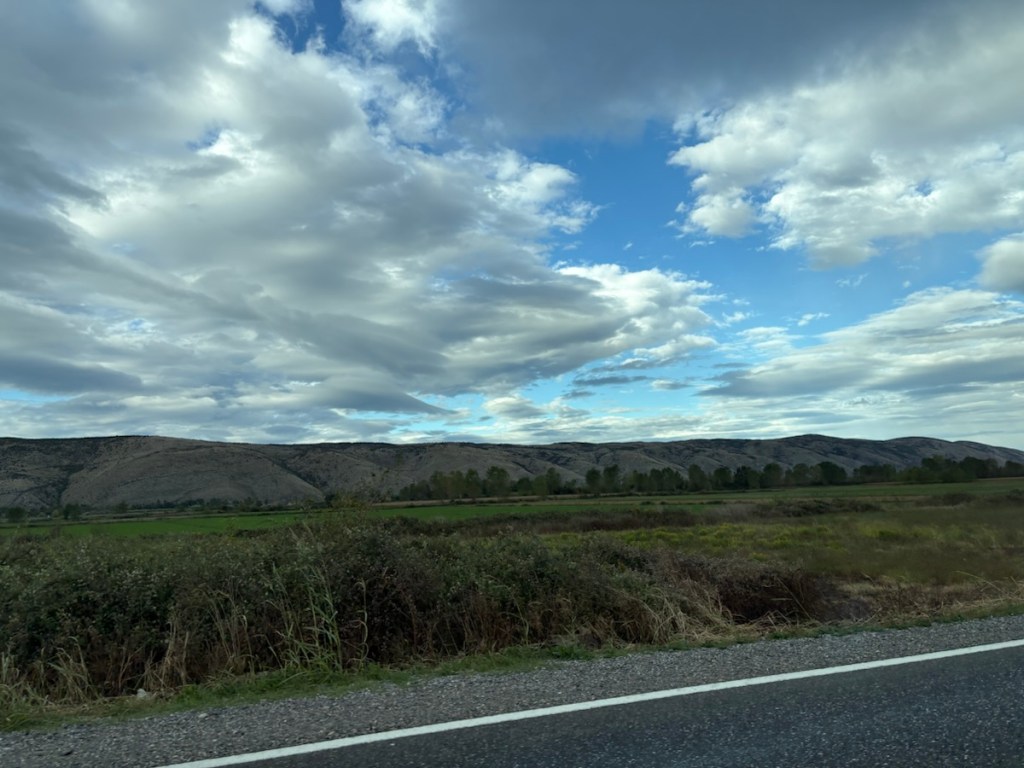
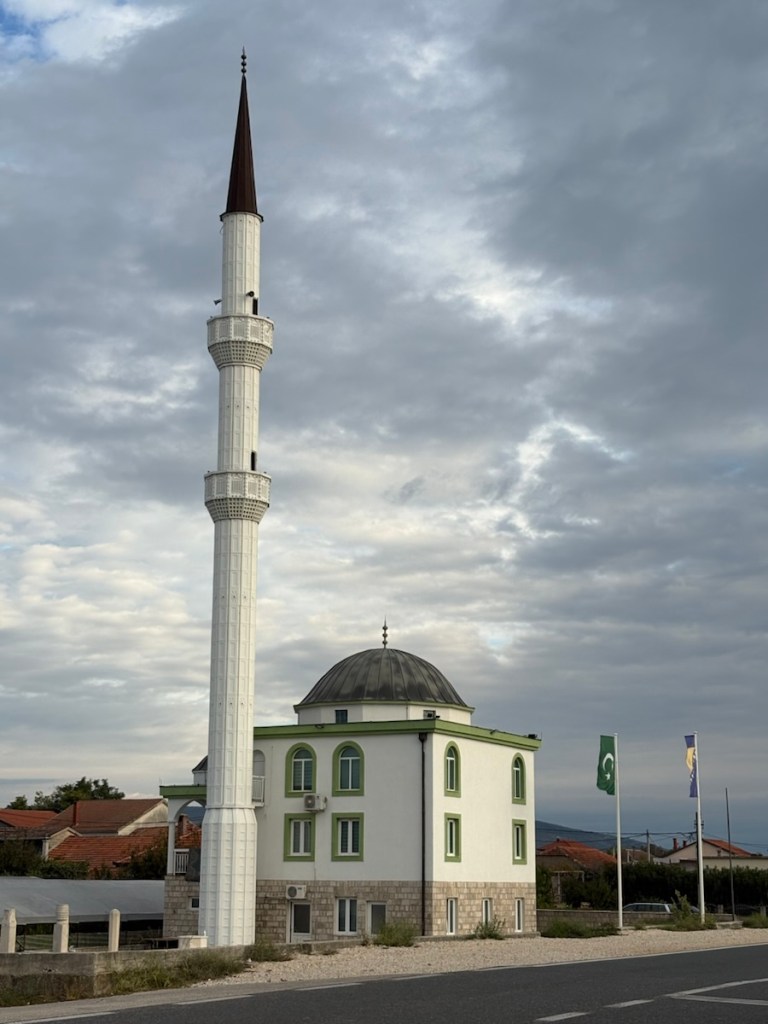
A lovely time for a peaceful Sunday morning drive through the Bosnian countryside!  
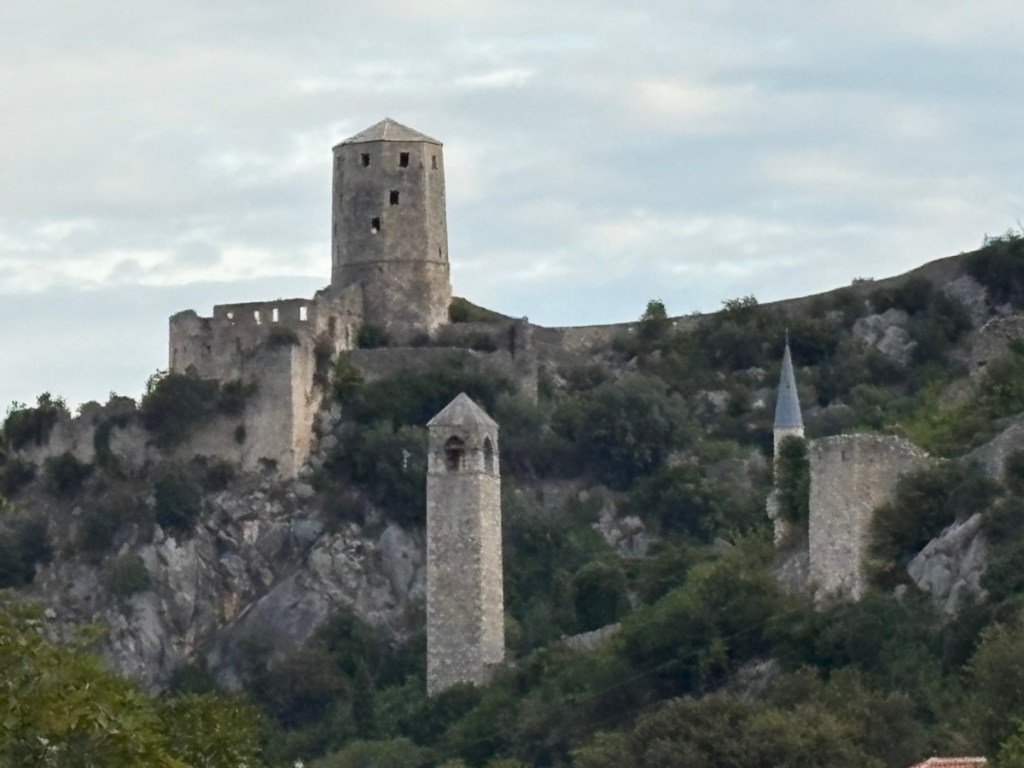
First stop was Mostar, a city in southern Bosnia and Herzegovina, straddling the Neretva River. It’s known for the iconic Stari Most (Old Bridge), a reconstructed medieval arched bridge. 
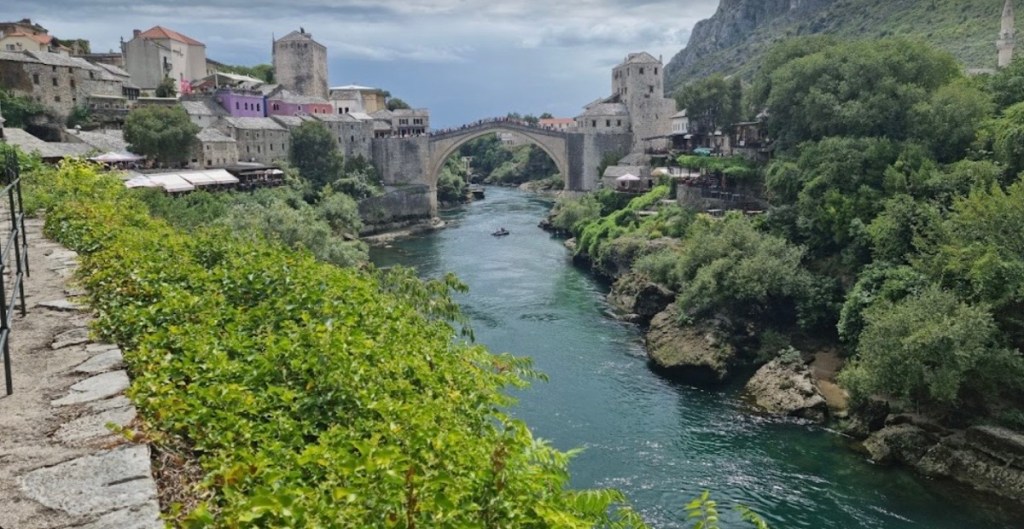
From the internet

The nearby alleys are full of shops and market stalls, and the Old Bridge Museum explores the bridge’s long history. A narrow staircase leads up to the Koski Mehmed-Pasha Mosque’s minaret for panoramic city views.
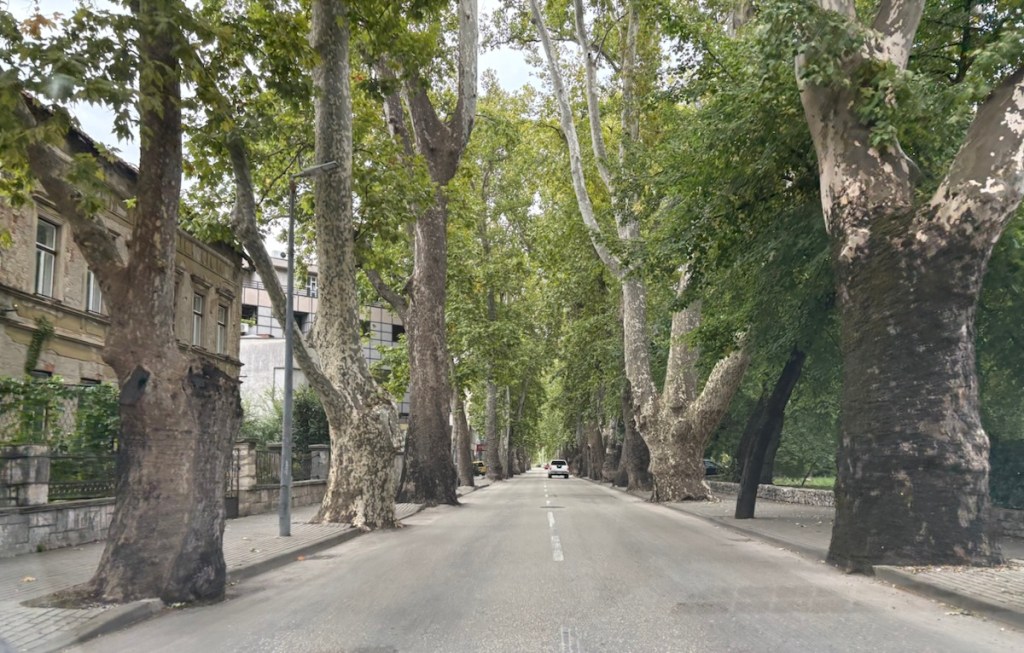
Some huge sycamore trees lining streets in Mostar

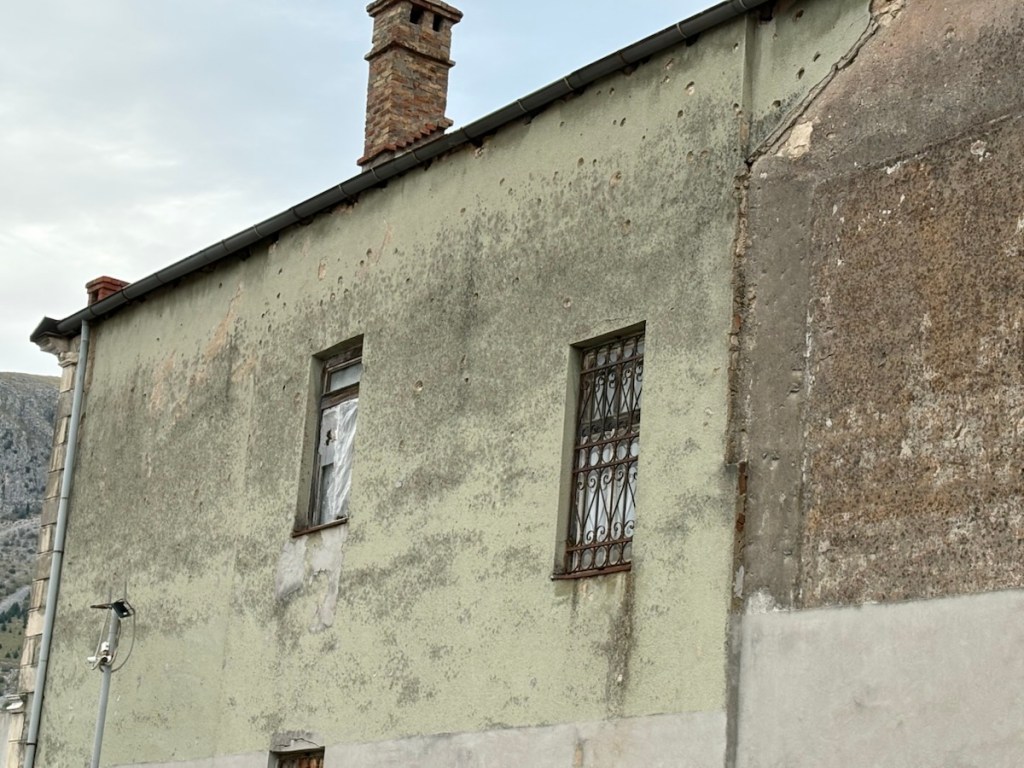
The Siege of Mostar occurred during the Bosnian fight for independence in the early 90s (See more info).  You can certainly still see evidence of the fighting on some buildings.
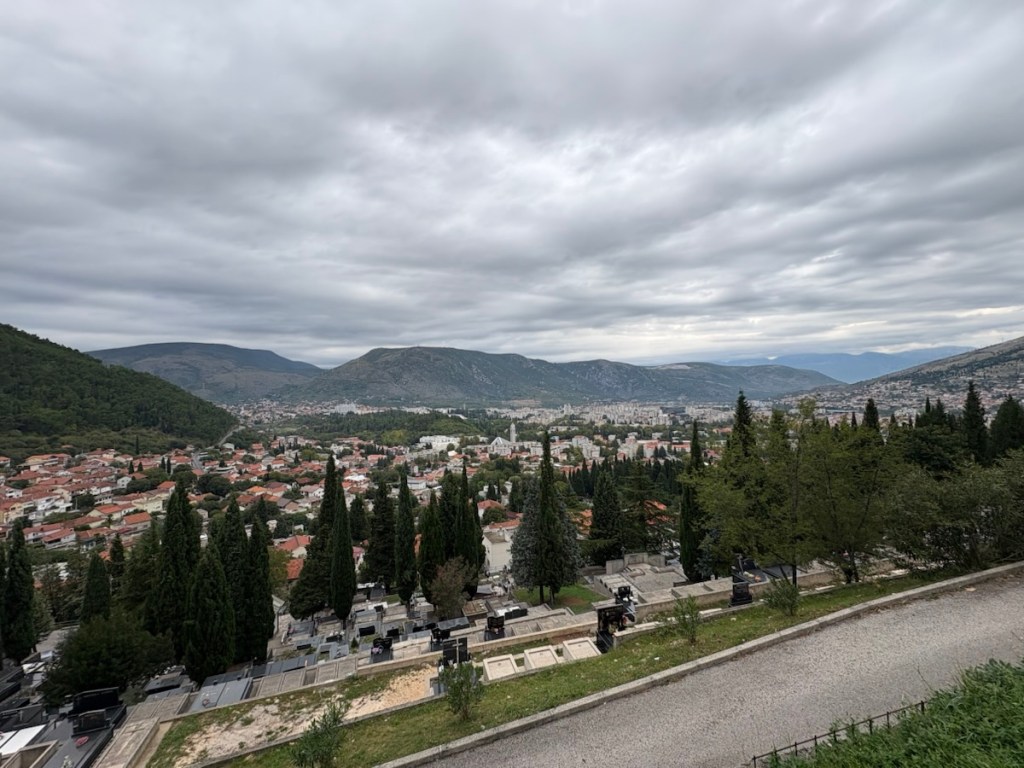
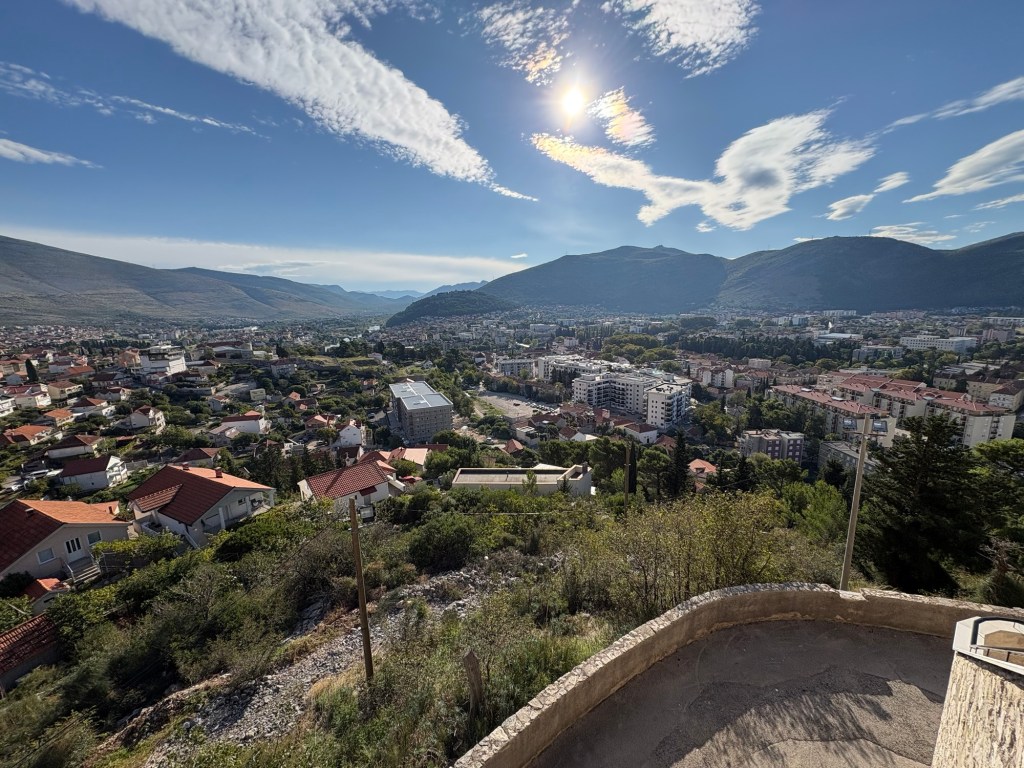
Looking down into Mostar in the valley

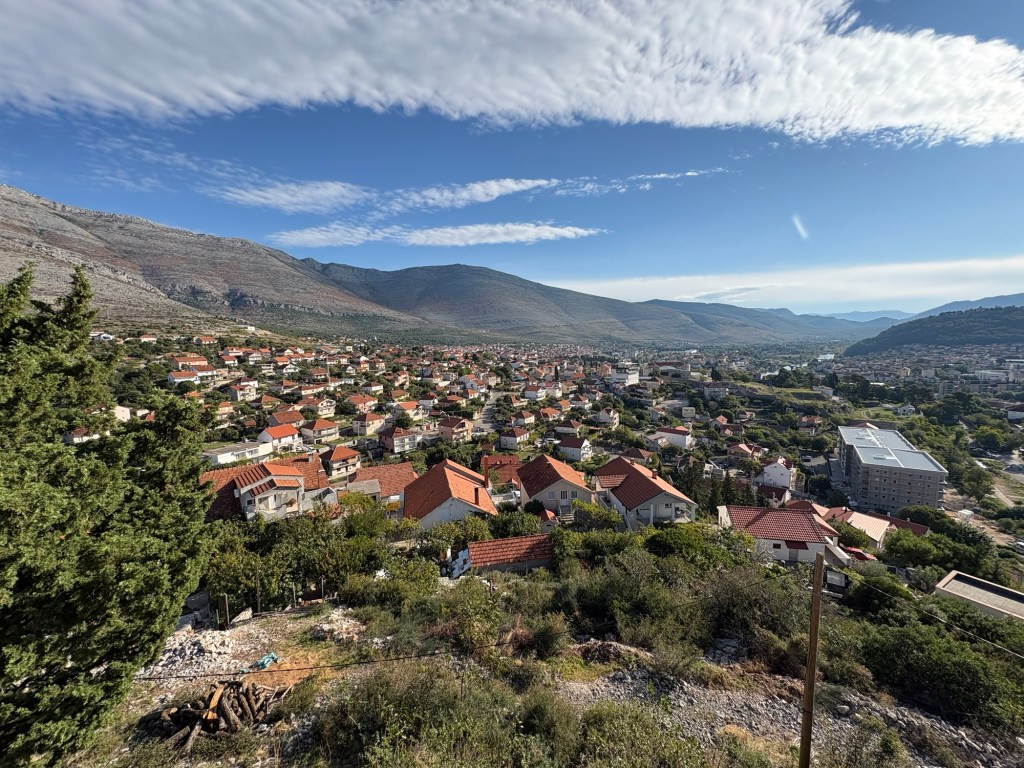
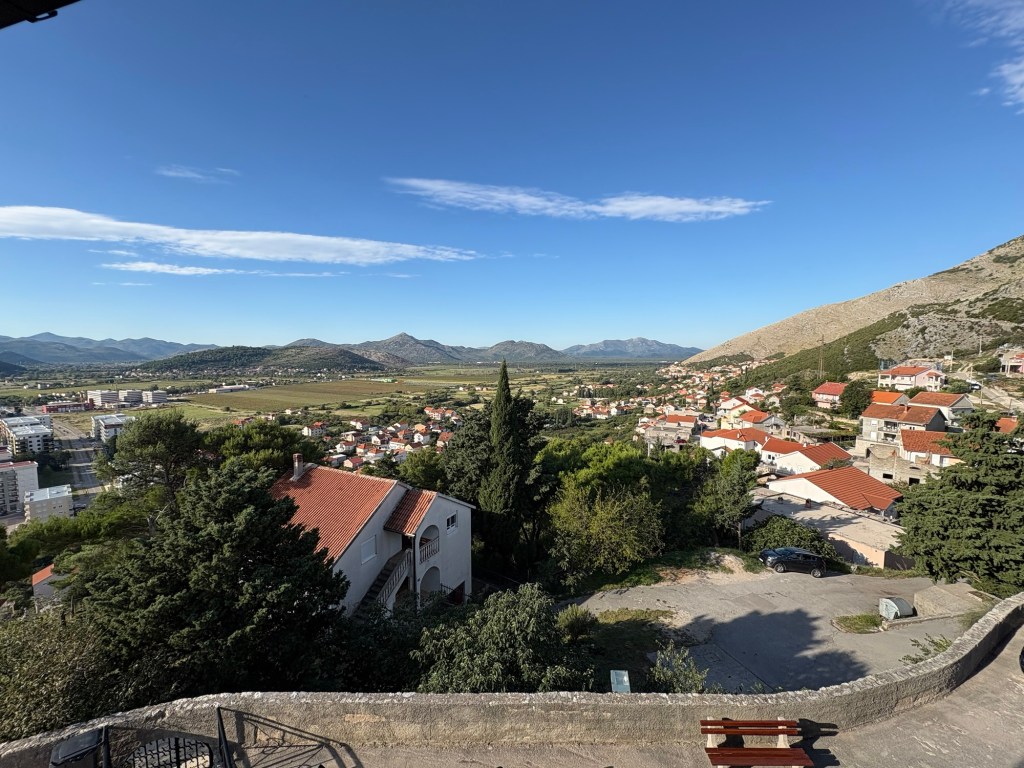
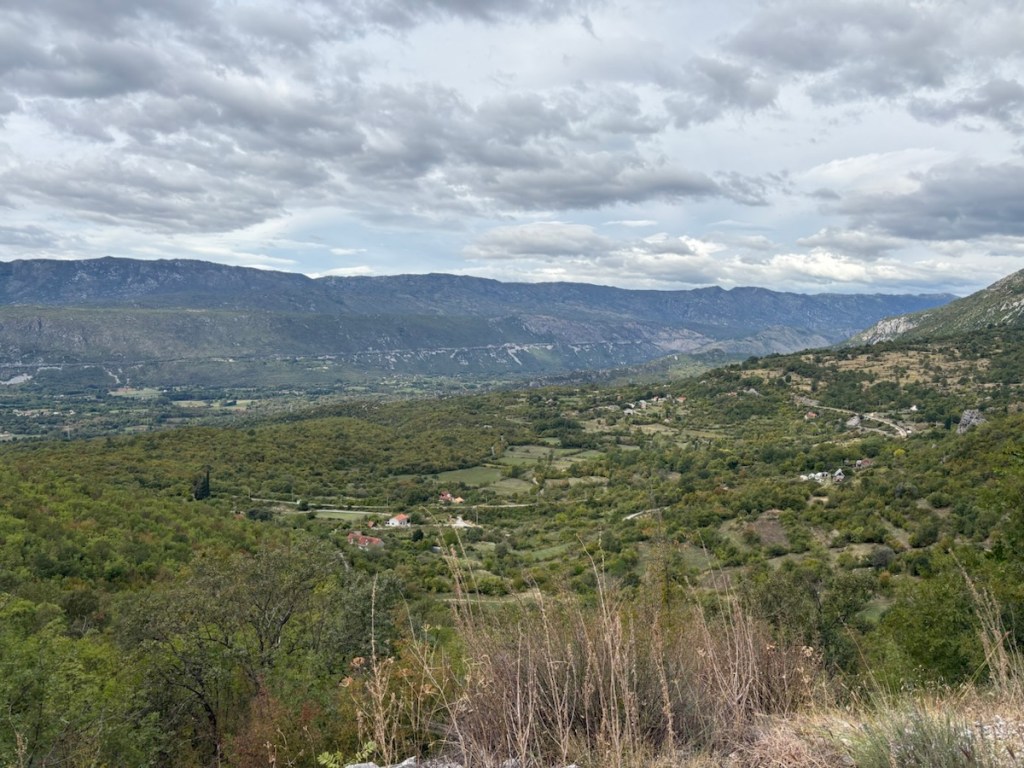
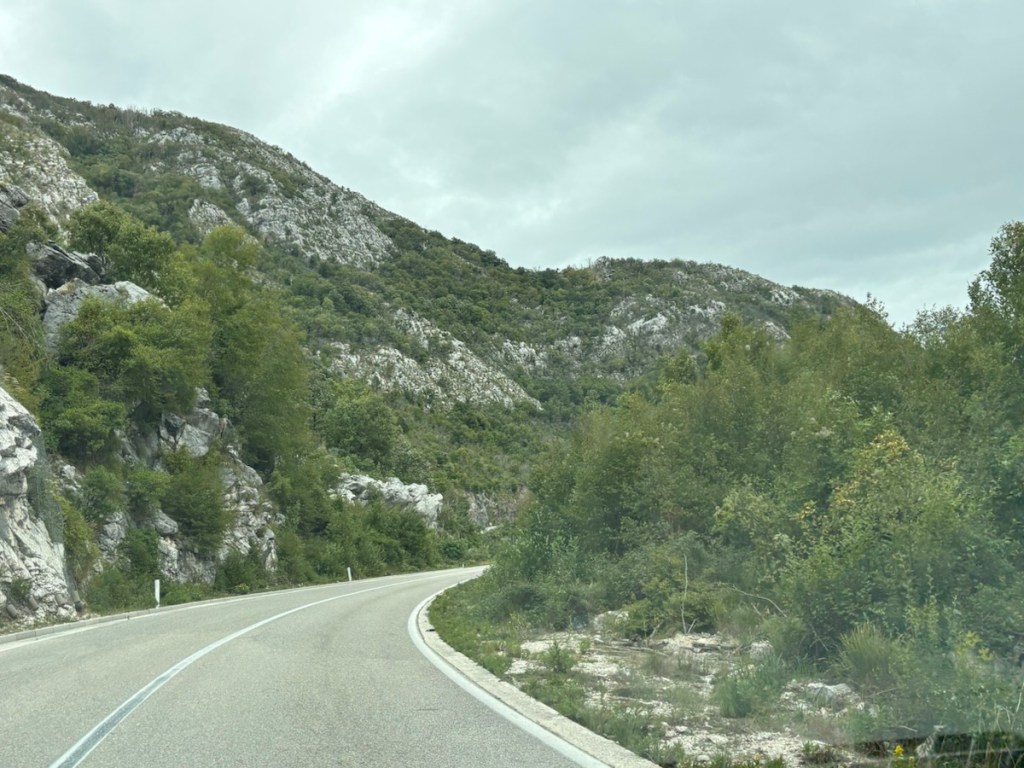
After leaving Mostar, I drove up the mountain on a steep road with many switchback turns. At the top, I reached a plateau to see another wide valley on the other side.  Along that route there was also a memorial by the road to commemorate the assassination of Blaž Kraljević, a commander of the HOS, and his eight HOS members.
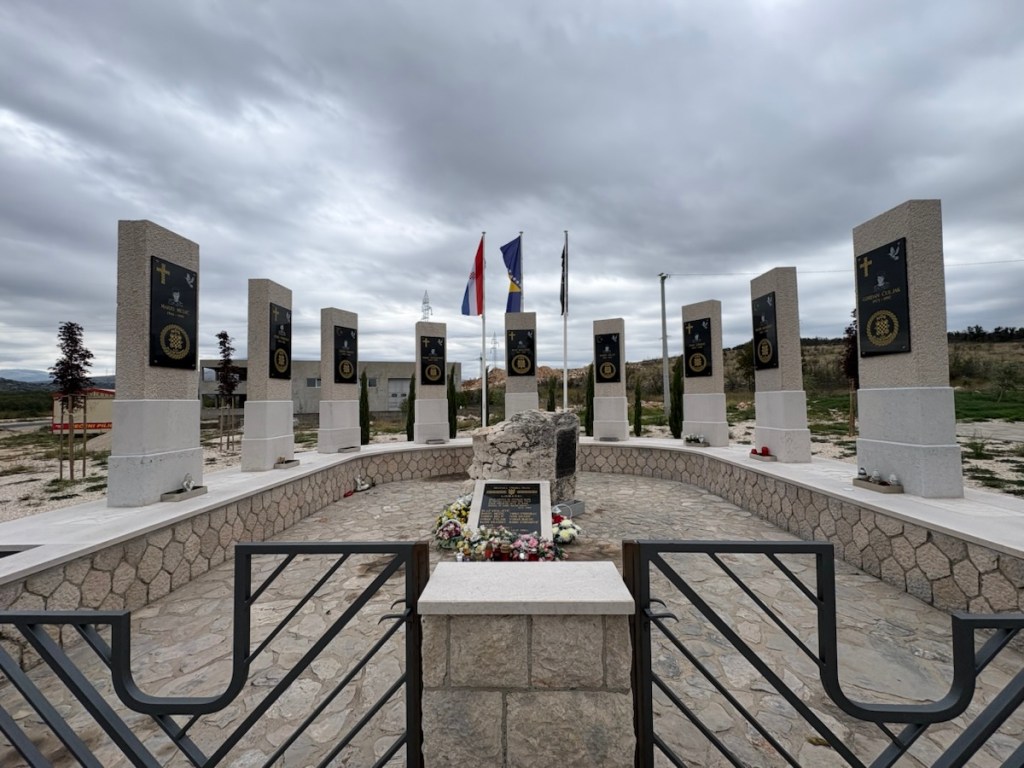
From web research:  In August 1992, the assassination of Blaž Kraljević, a commander of the HOS, and his eight HOS members remains one of the greatest mysteries in recent Croatian history to this day. Their bodies were discovered quite by accident, in a van in Omiš. To this day, it has not been clarified what exactly caused the shooting between two sides that were practically fighting on the same side, in which all the passengers were killed, nor why the bodies were found a hundred kilometers away.  The HOS (Hrvatske obrambene snage, Croatian Defence Forces) was a paramilitary wing of the far-right Croatian Party of Rights that fought in the Bosnian War, initially as an ally of the Bosnian Croat (HVO) and Bosniak (ARBiH) forces against the Serb forces. The assassination led to the HOS’s disbandment and the absorption of its remaining assets by the HVO and the Army of the Republic of Bosnia and Herzegovina (ARBiH) as the Croat-Bosniak War began to escalate. 

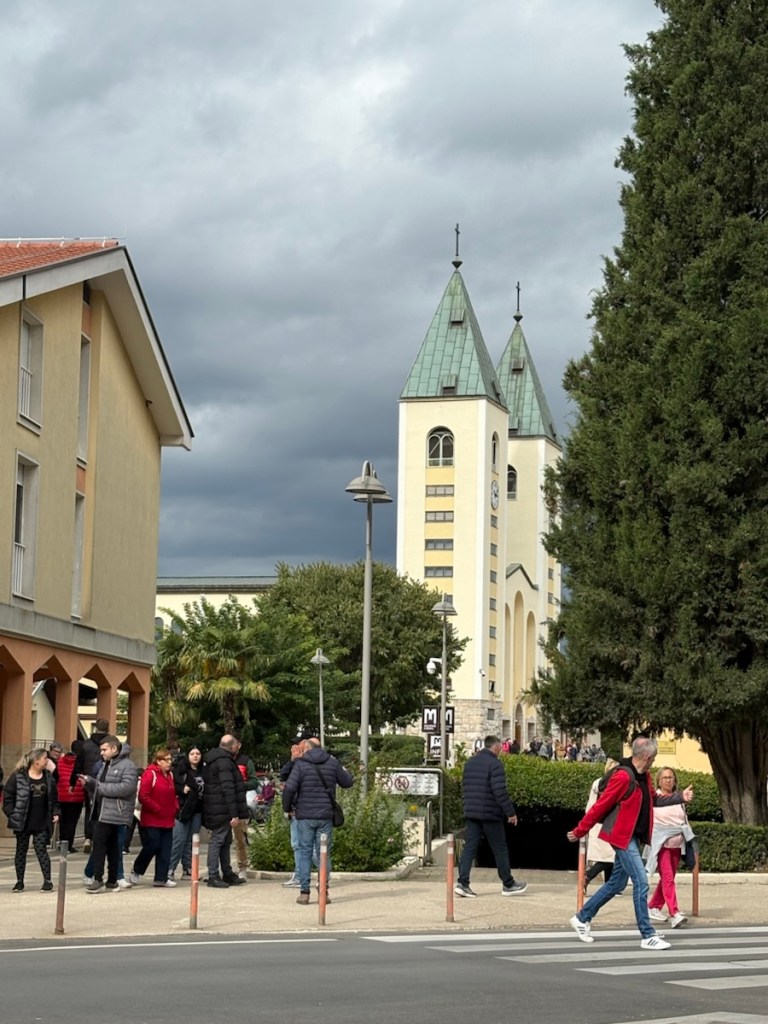
I then drove through Medjugorje (MED-joo-GOR-yay), another town in Bosnia and Herzegovina. It’s been an unofficial place of Catholic pilgrimage since the Virgin Mary allegedly appeared on Apparition Hill in 1981. There is a “Queen of Peace” statue marking the site of the 1st apparition and one in front of the St. James Church (below). Liquid has been said to drip from the “Risen Christ” statue near the church. A concrete cross also tops Cross Mountain, to the south.  (More Info: https://www.catholicjourneys.com/the-spiritual-significance-of-medjugorje/)
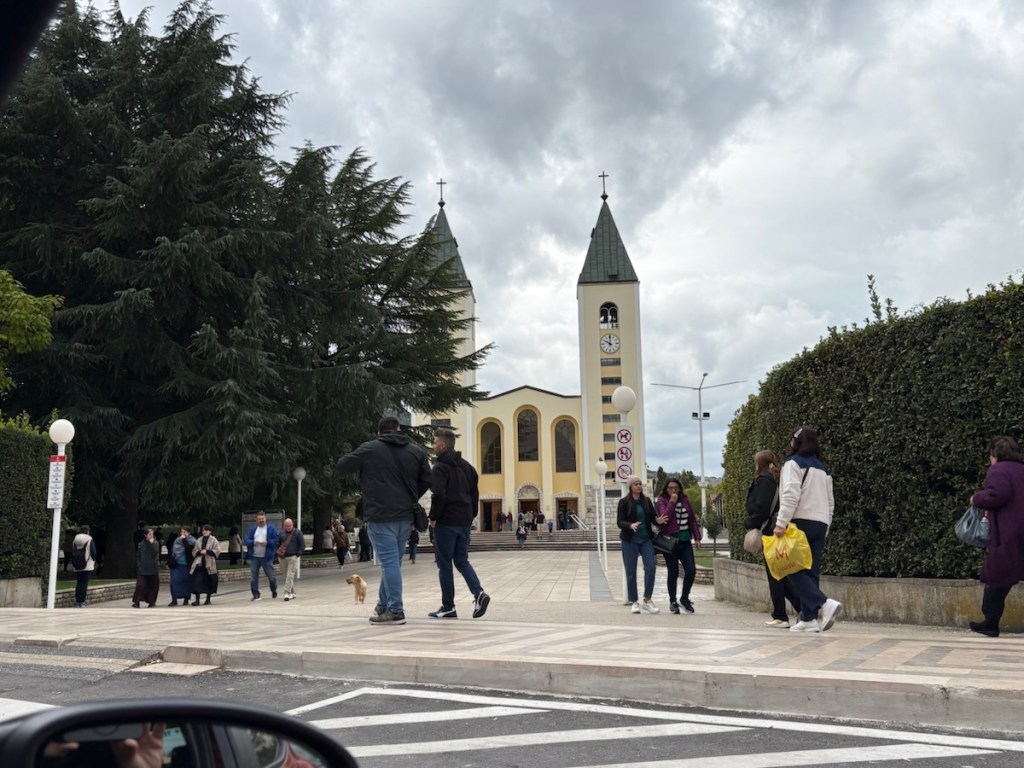
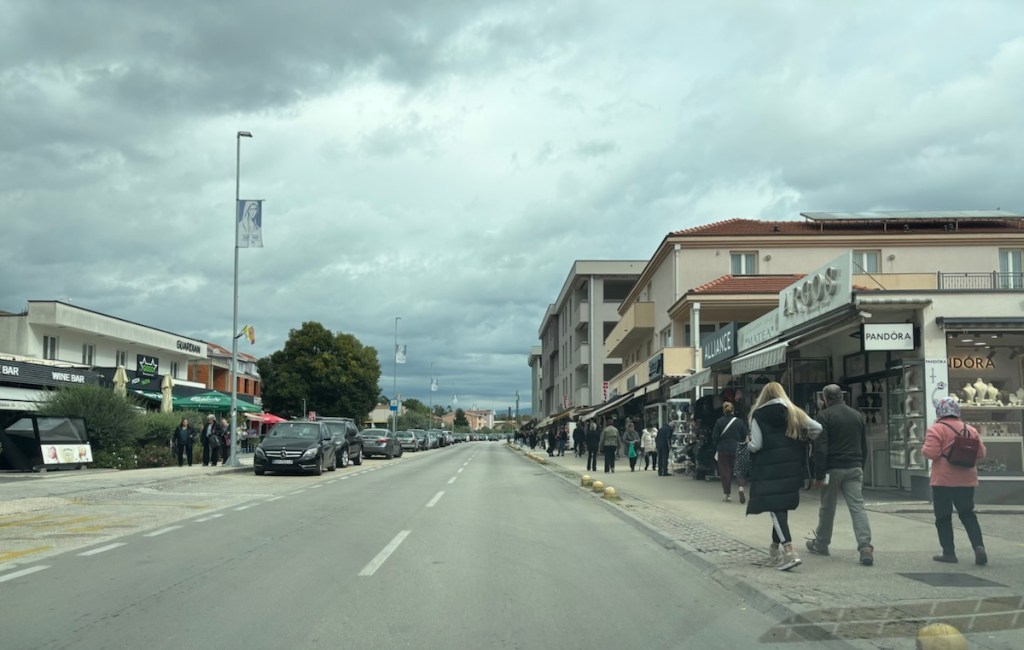
The town was chock full of tourists and pilgrims since it was Sunday morning.  But more than a hundred shops lined the streets near the holy sites hawking every type of religious memorabilia or other more secular souvenirs.
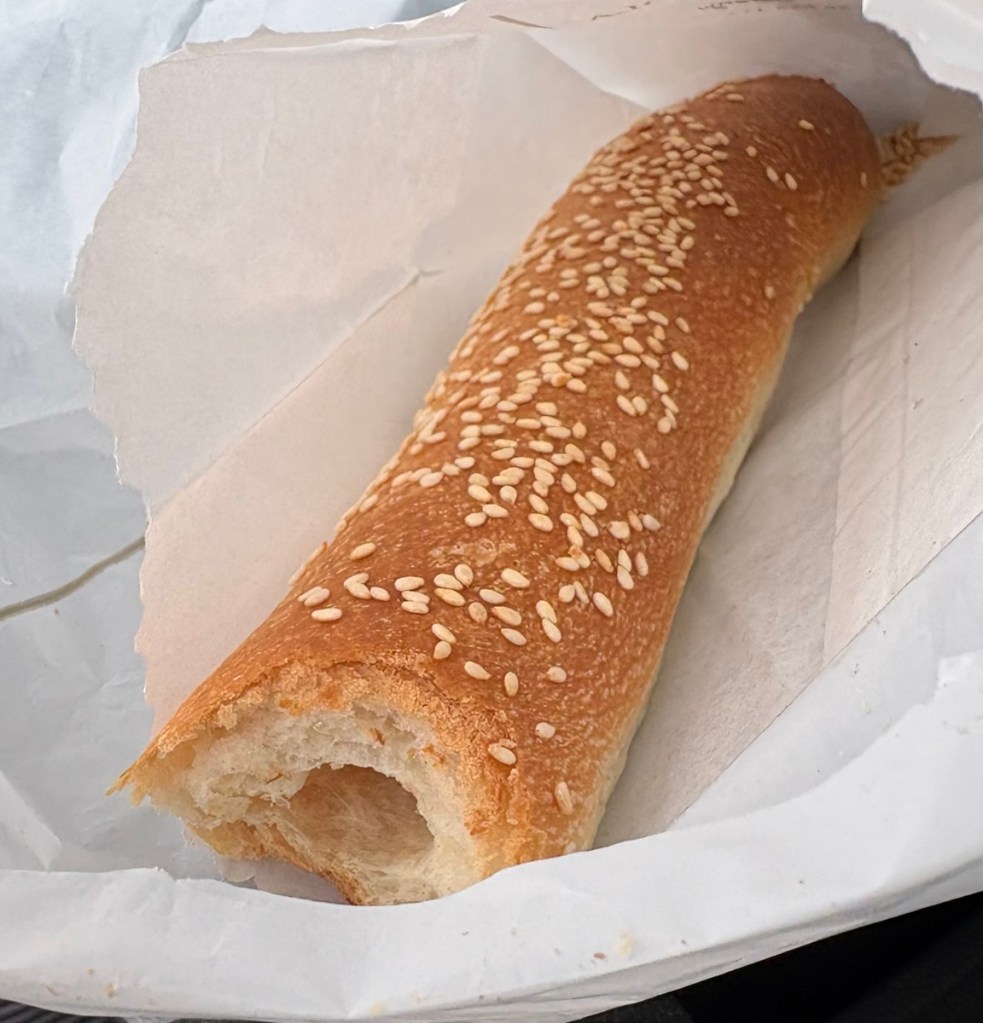
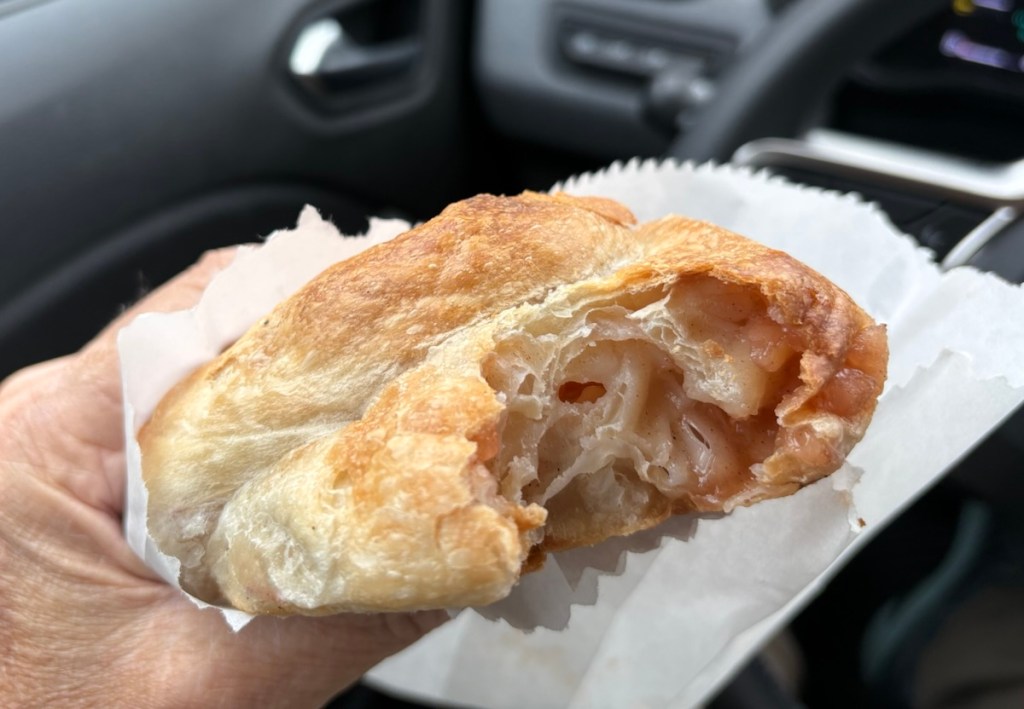
I also found a bakery to get a pastry and some bread.  Delish!
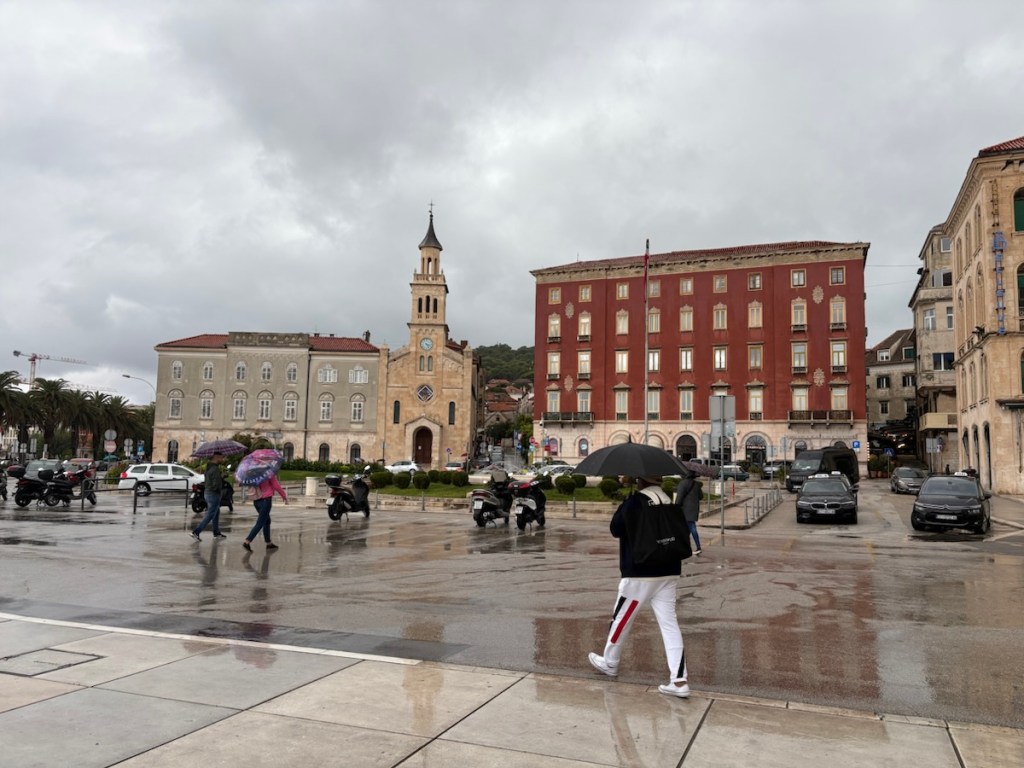
It was storming when I arrived a couple hours later in Split, Croatia, with a very strong winds and a heavy downpour.  I dropped my bag at my room for the night, then hit the neighborhood grocery for dinner items and snacks, and hunkered down to wait out the worst of the rain.

Speaking of my room… Tonight’s room was very small, but the attached bathroom was miniature!  Seriously, I had to scrunch my shoulders in to stand at, or sit on, the toilet.  I prayed I didn’t get stuck 😁 — that would have been an embarrassing predicament!  Still, the room was clean, the grocery store was close, parking was only two blocks away, and I had a place to be out of the pouring rain. So dinner ended up as a repeat of a few days ago – breads, butter, jam, cheese, salami, prosciutto, etc.  Can’t go wrong with that!

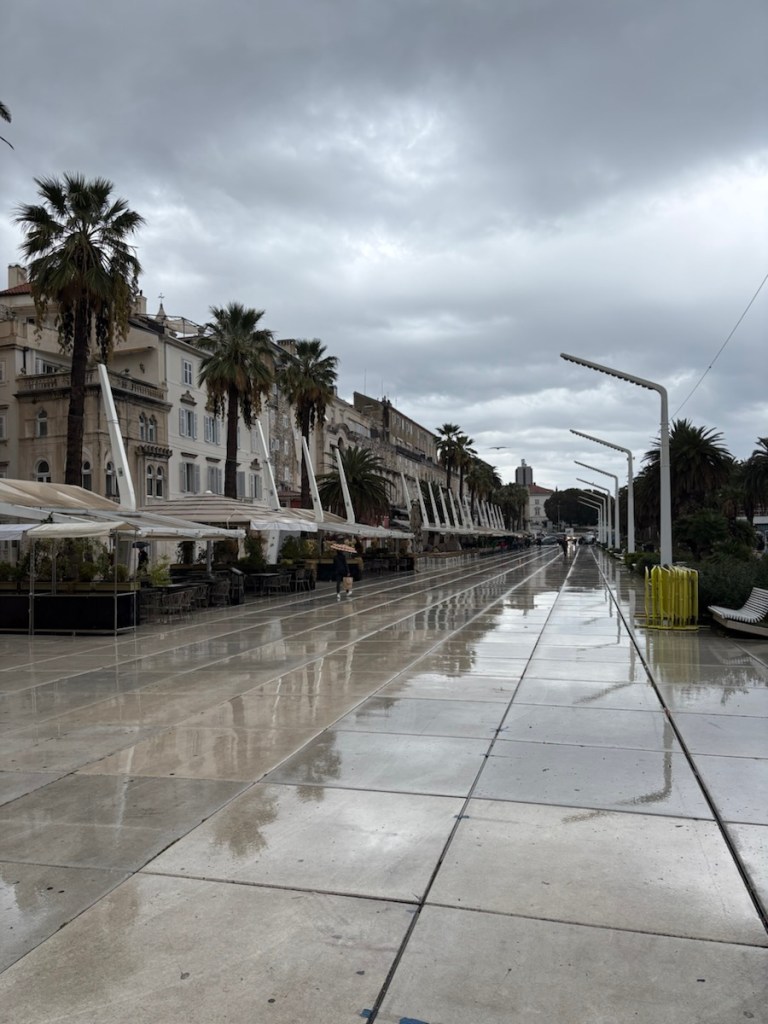
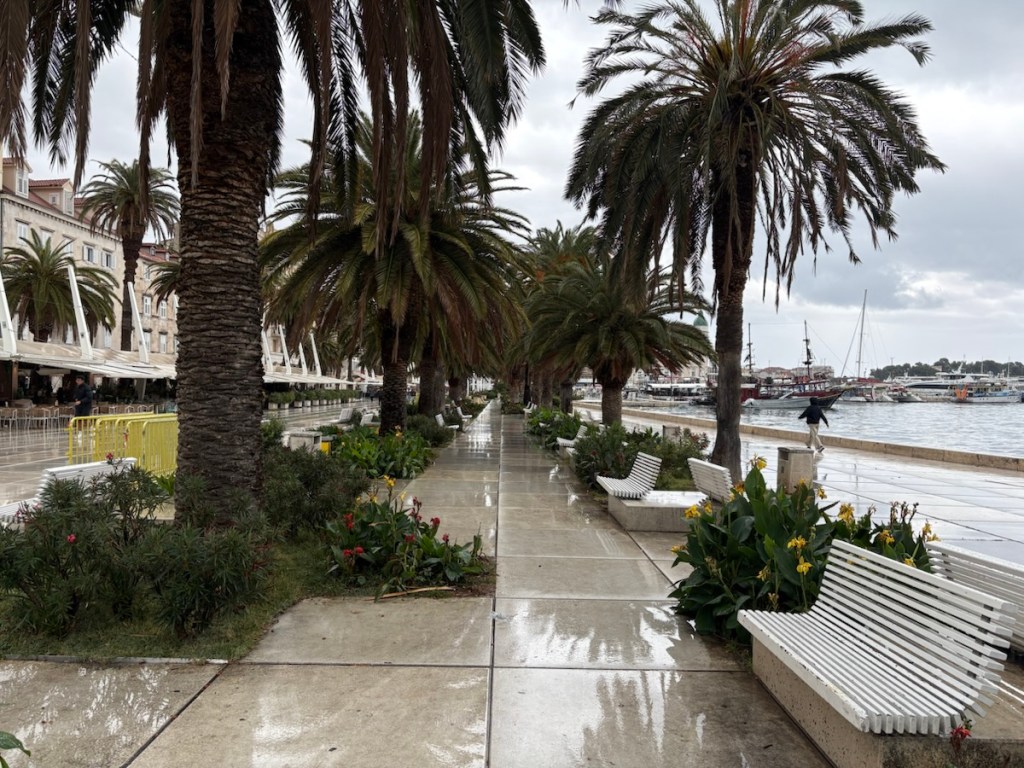
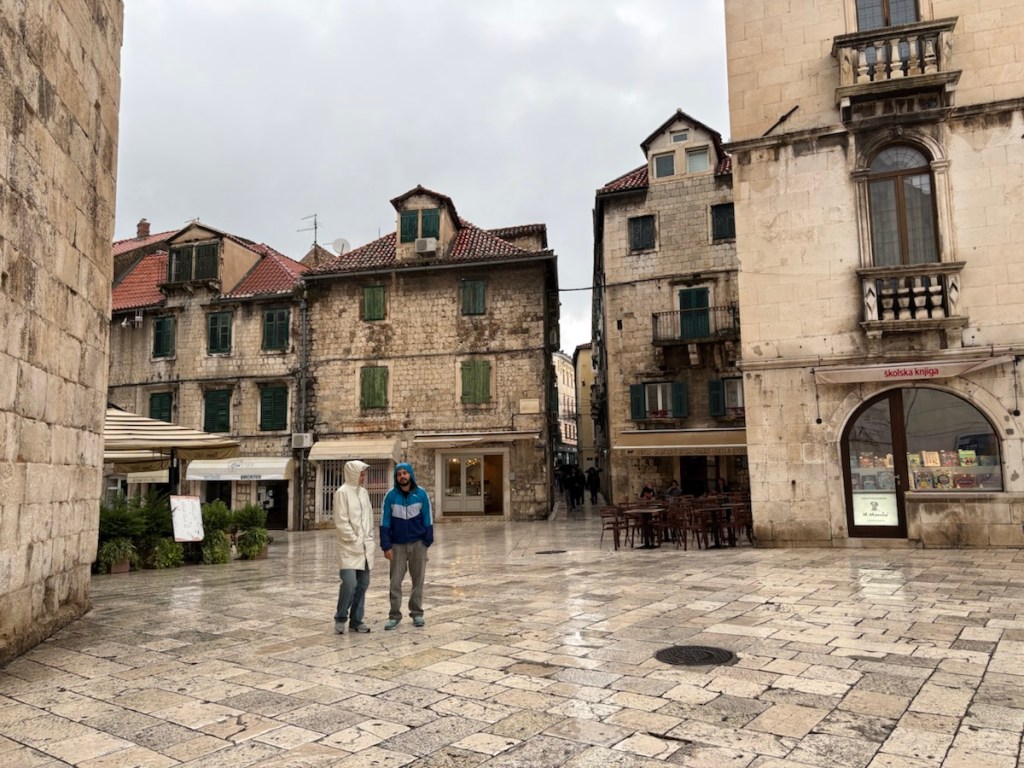
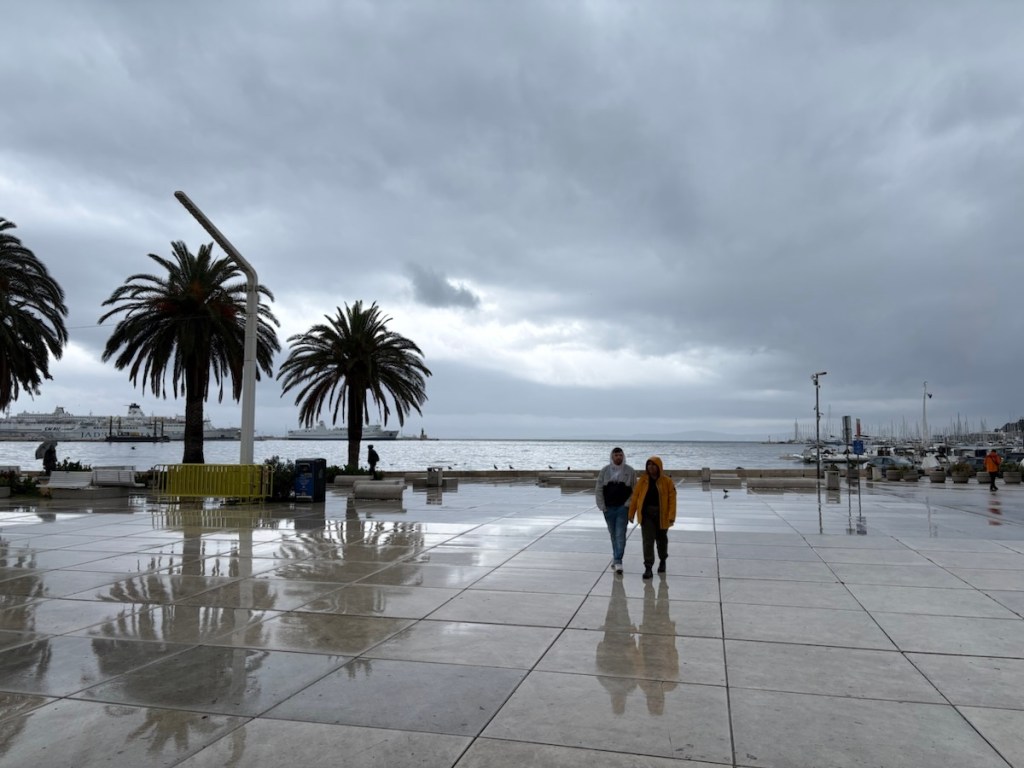
After the worst of the rain passed, I walked down to the Old City area and the waterfront.  A beautiful, clean area with many shops and restaurants, and a lot of people, considering it was a dreary, rainy day.
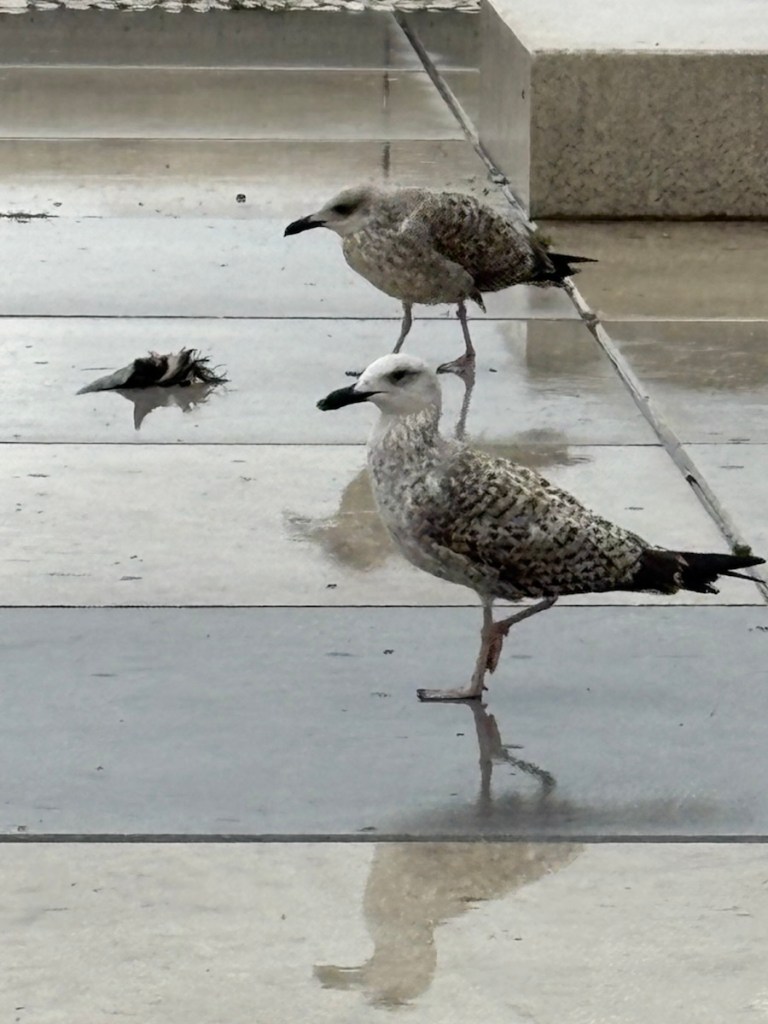
He’s just a bird brain!
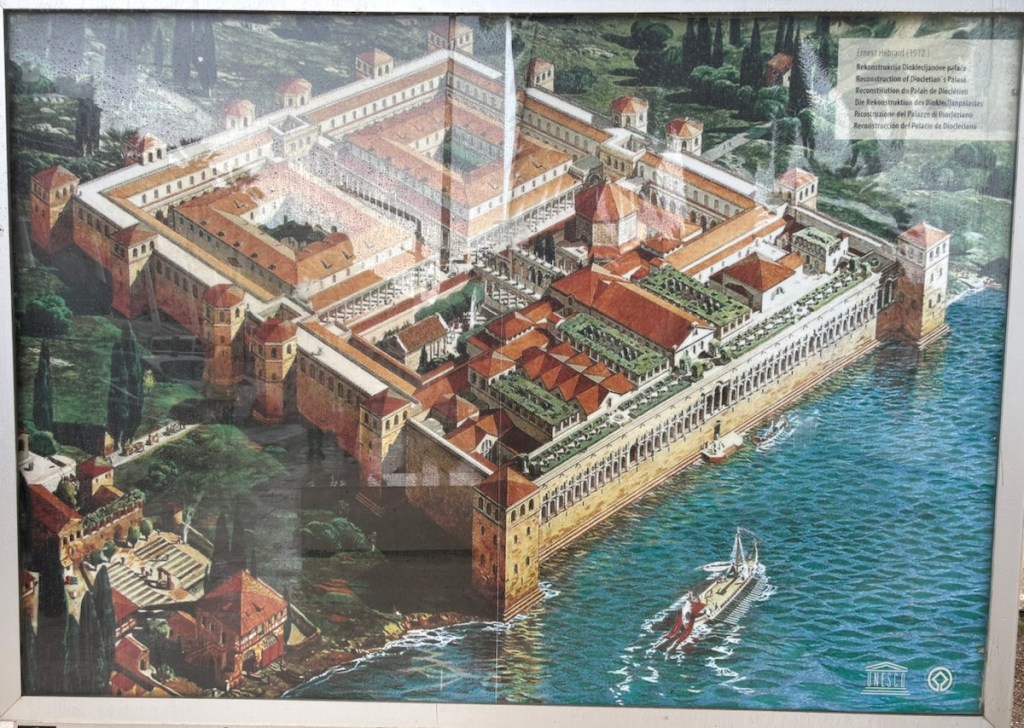
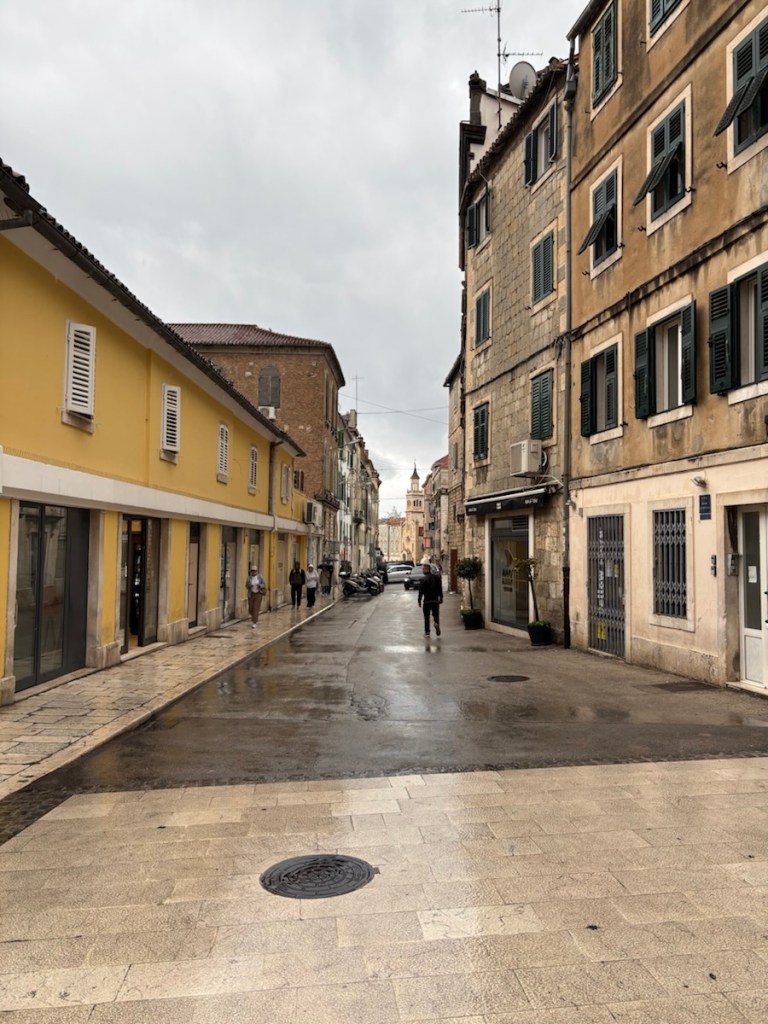
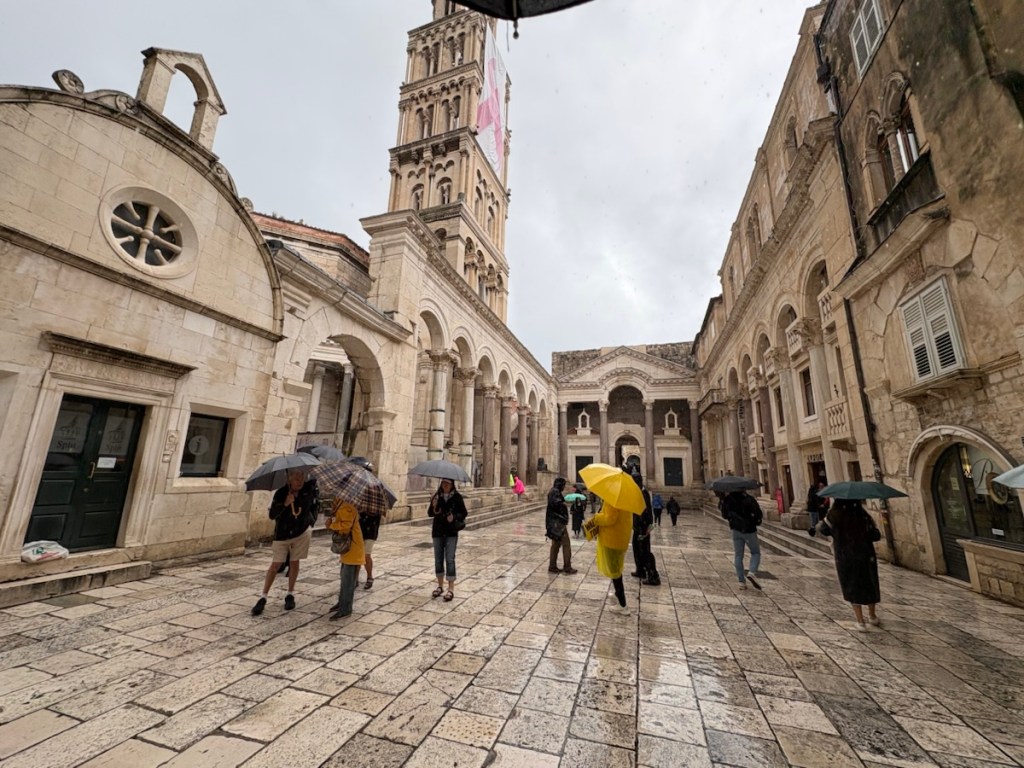
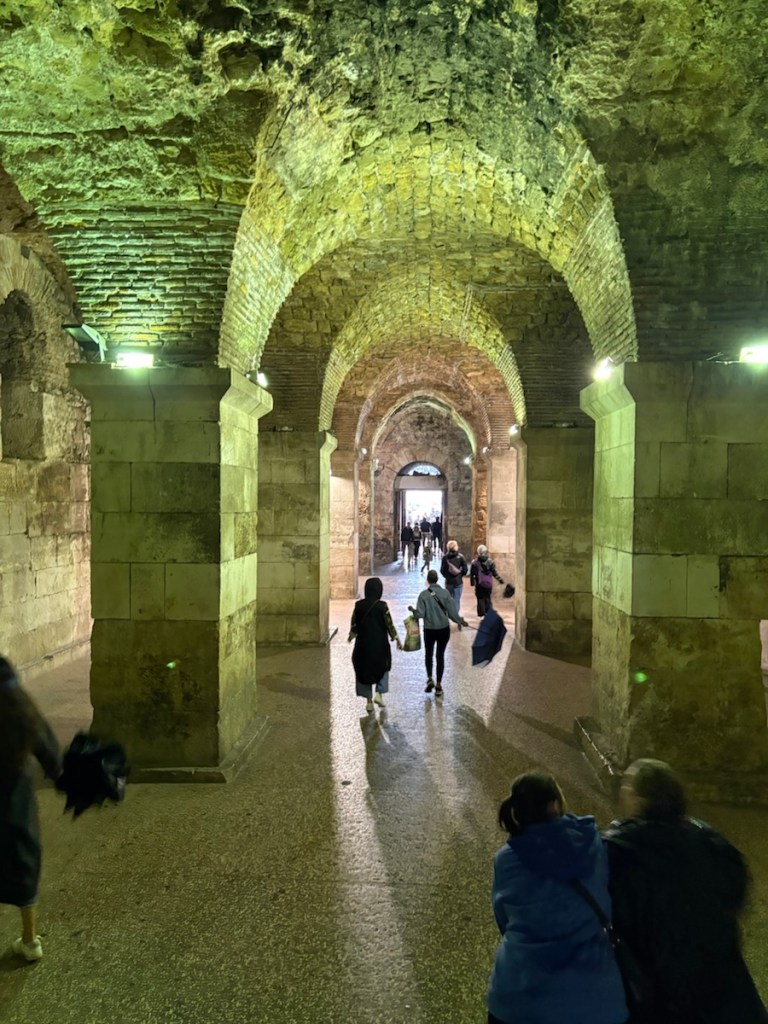
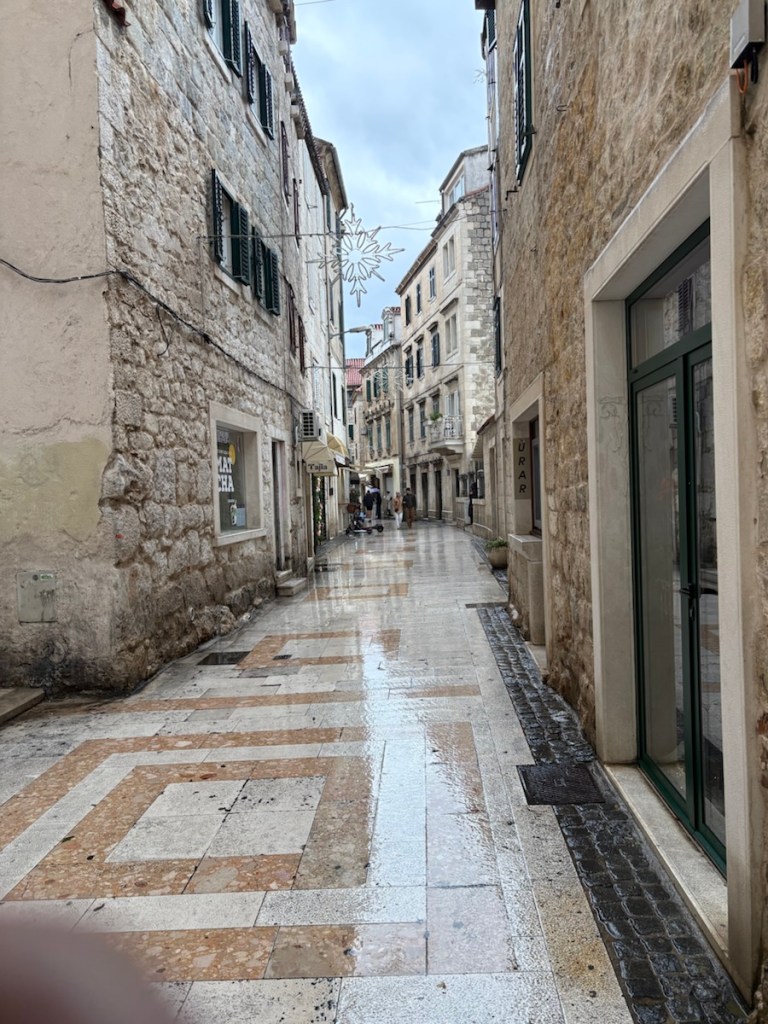
Diocletian’s Palace – The heart of Split with Roman architecture and narrow alleys.

Diocletian’s Palace is a monumental palace complex in Split, Croatia, built for Roman Emperor Diocletian in the early 4th century AD as his retirement residence and now forms the historic center of the city. The UNESCO World Heritage site is a “living museum” where ancient Roman architecture blends with a vibrant modern city, featuring shops, cafes, and apartments within its walls. 
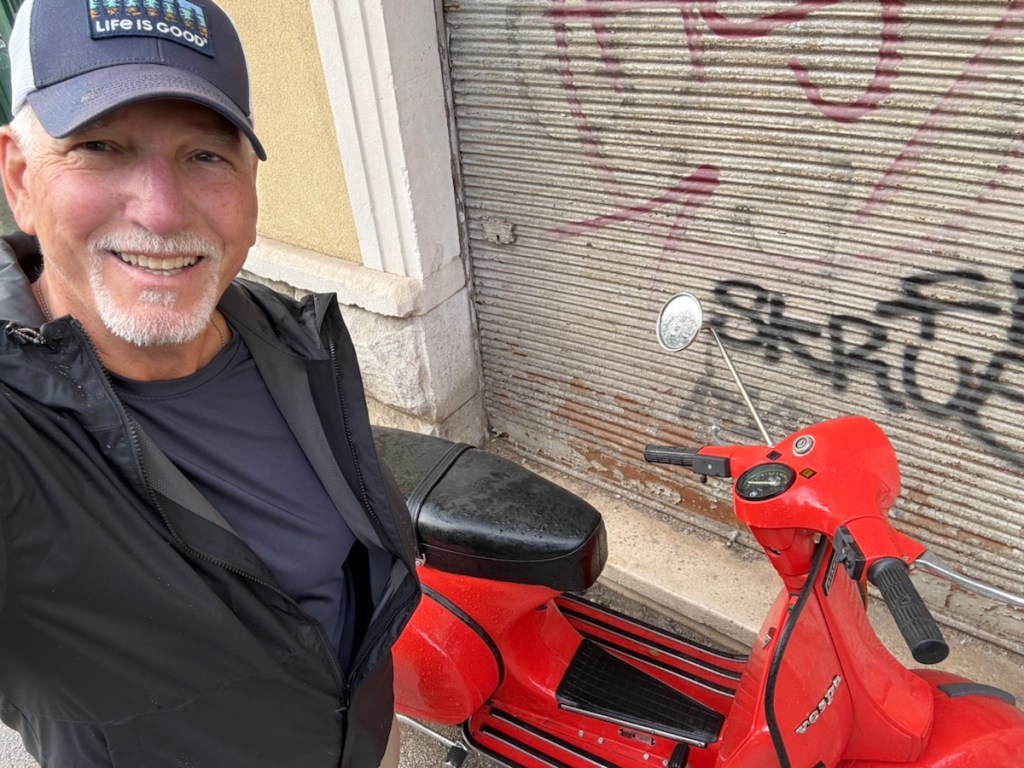
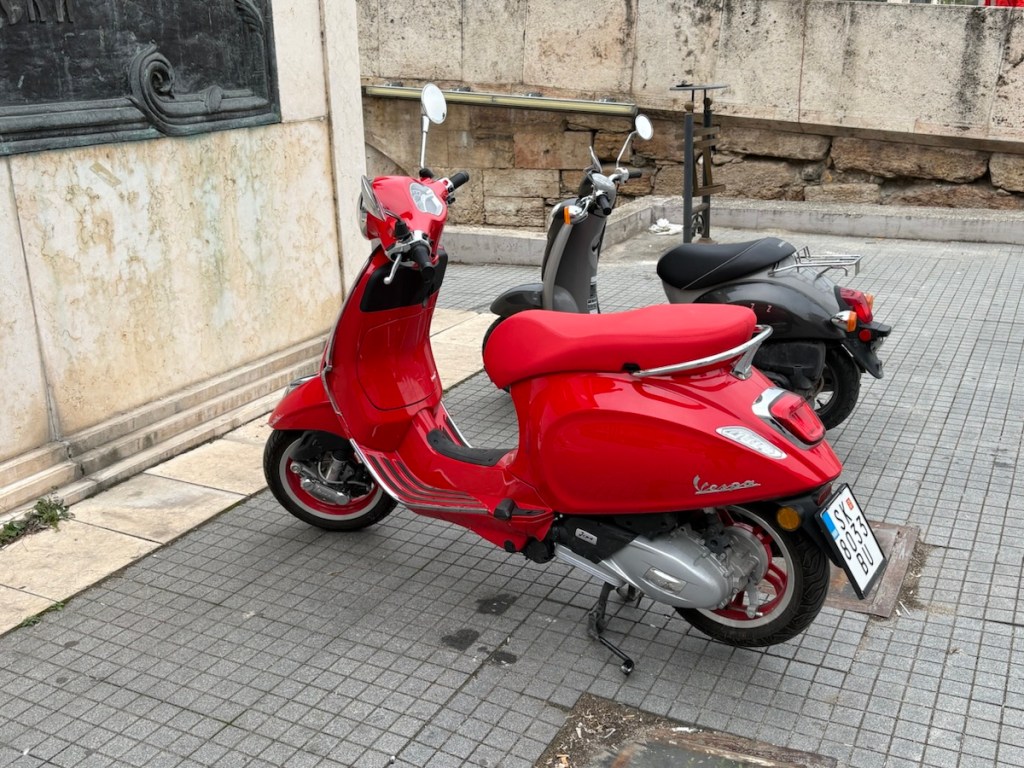
Yes, I need a red Vespa!

Before you go…

“The only normal people you know are the ones you don’t know very well.” — Anonymous
On to Trebinje, Bosnia and Herzegovina, and then Dubrovnik and Slano, Croatia

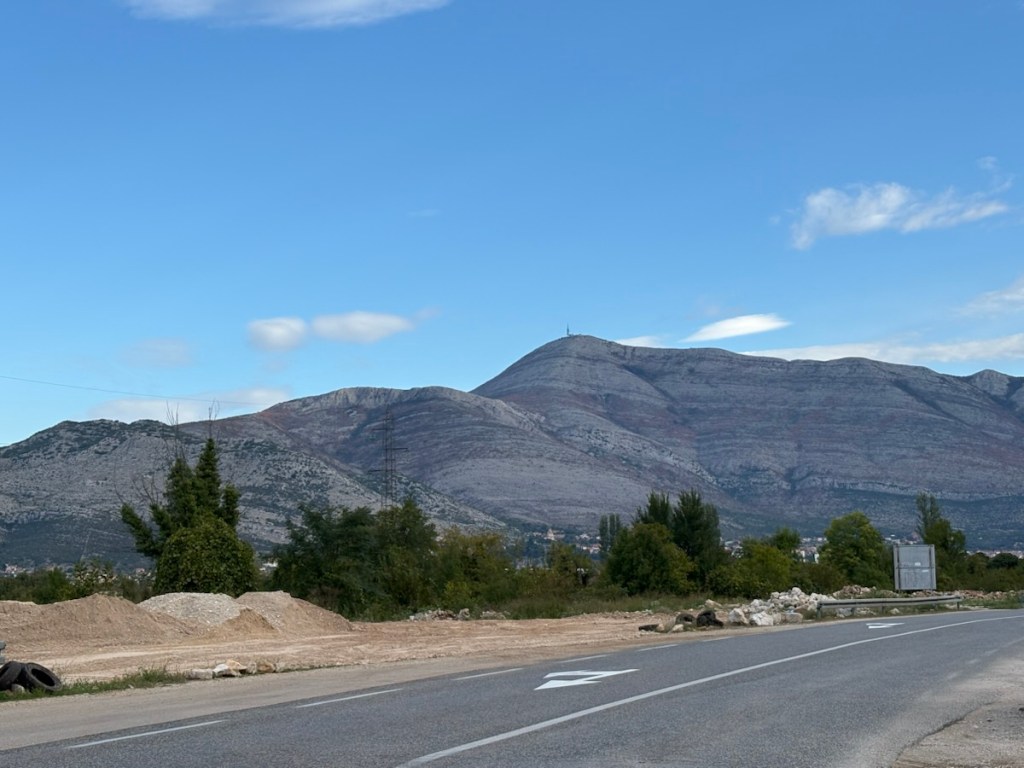
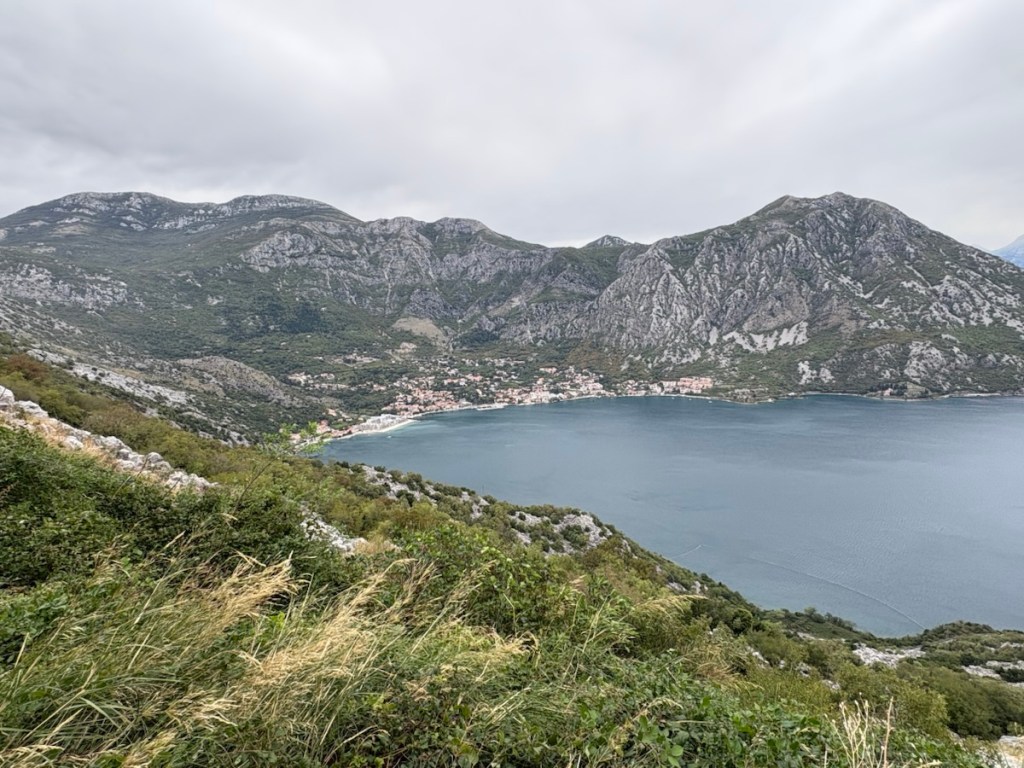
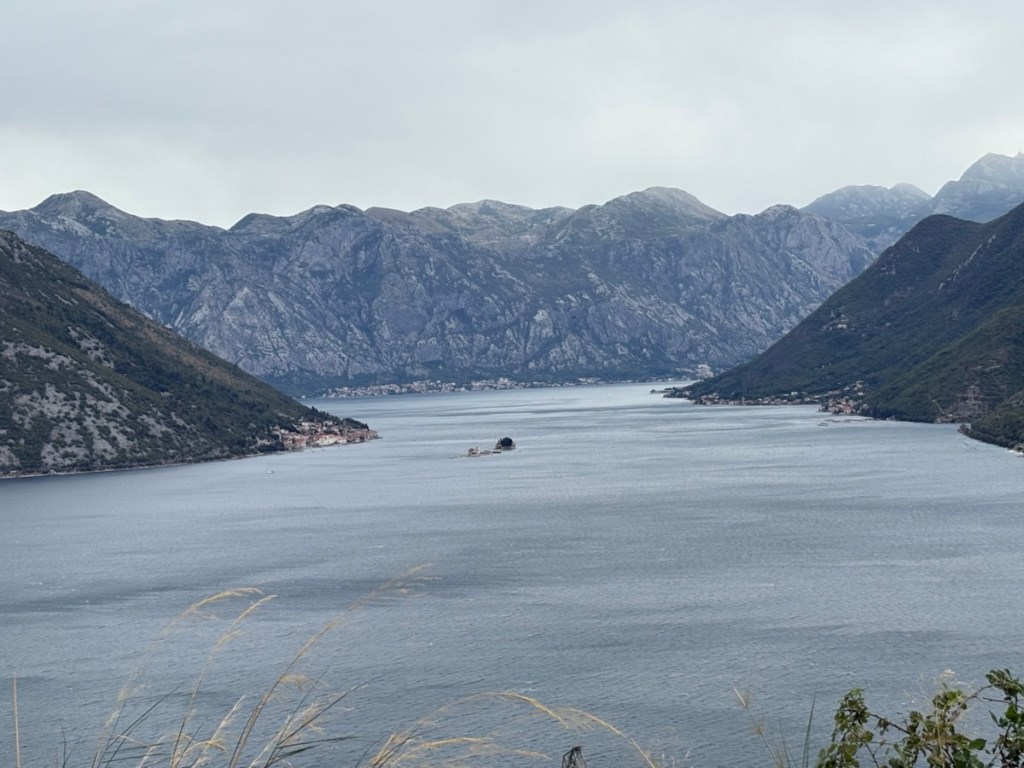
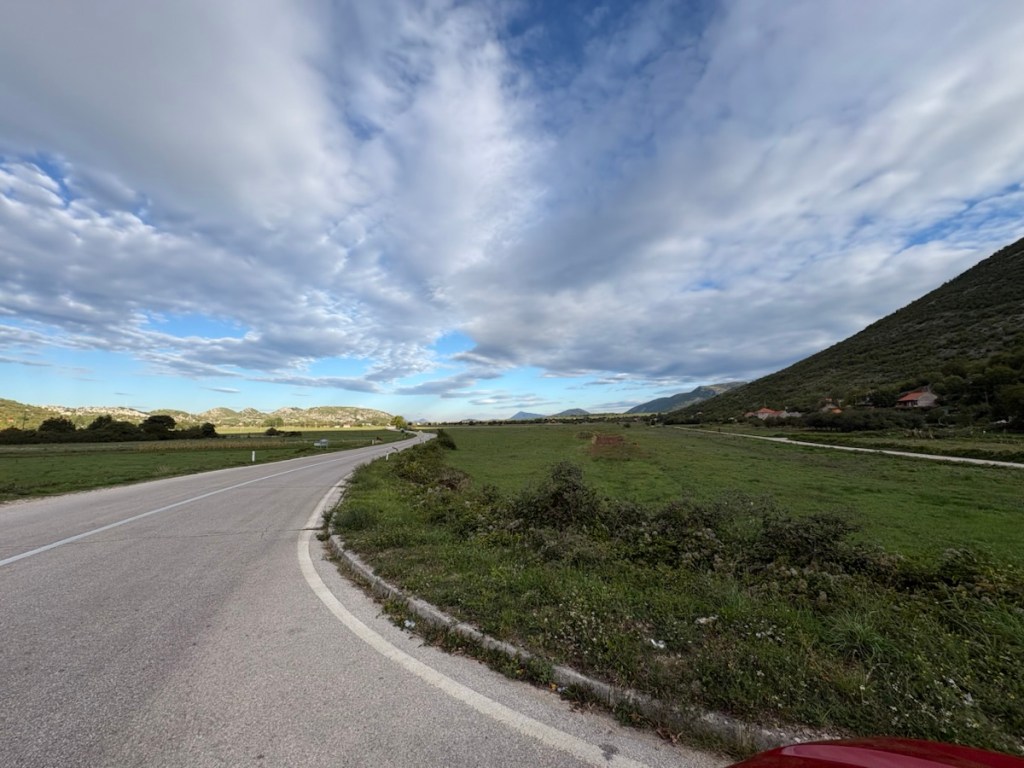
It was a lovely sunny morning as I looked down on the Gulf of Kotor after I awoke.  So the drive this morning was refreshing in the sunshine! 

I headed toward the town of Trebinje in Bosnia and Herzegovina.  No problems at all crossing the Bosnia and Herzegovina a border.  I just reminded myself to remain on well used roads and trails – land mines remain are still a problem.

“By 2020, the mine suspected area in BIH amounts to 965 square kilometres, representing over 1,97 % of the country’s territory. According to the most current Bosnia and Herzegovina Mine Action Center (BHMAC) estimations, there are still around 79,000 mines and explosive remnants of war (unexploded ordnance, cluster munitions) remaining in the ground throughout Bosnia and Herzegovina and over 500,000 residents living in approximately 1,400 mine/ERW affected communities. Since 1996, mine and UXO accidents severed the lives of 1,766 local residents, turning them into mine/ERW victims (617 persons were fatally injured-died).” (Source)

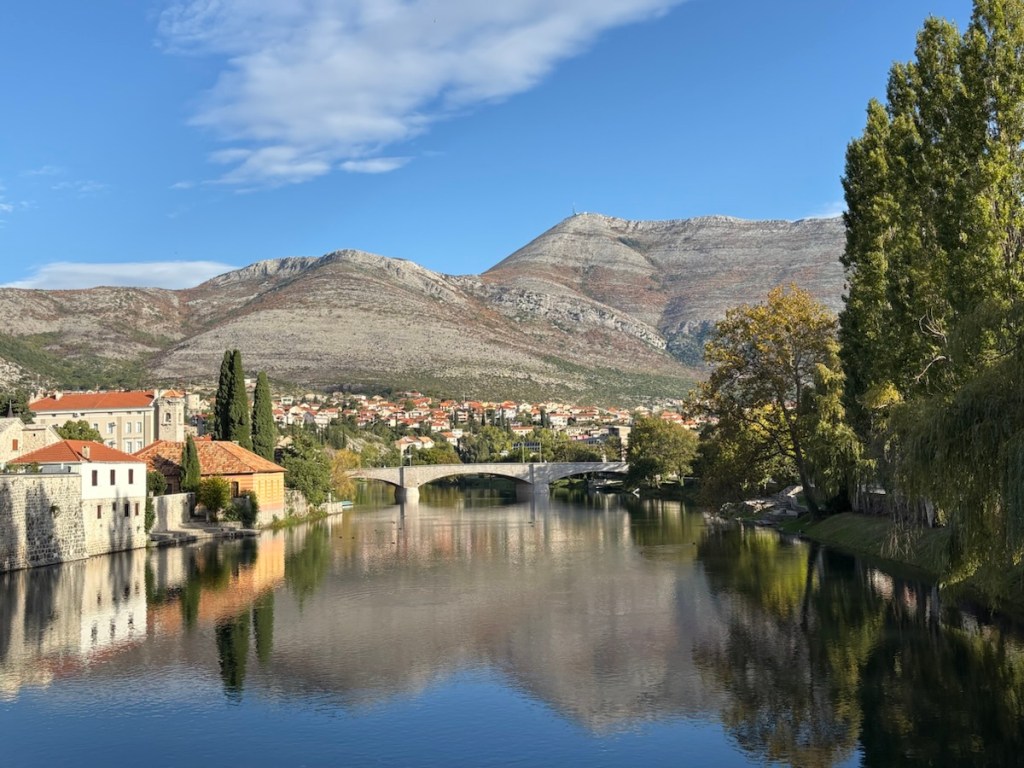
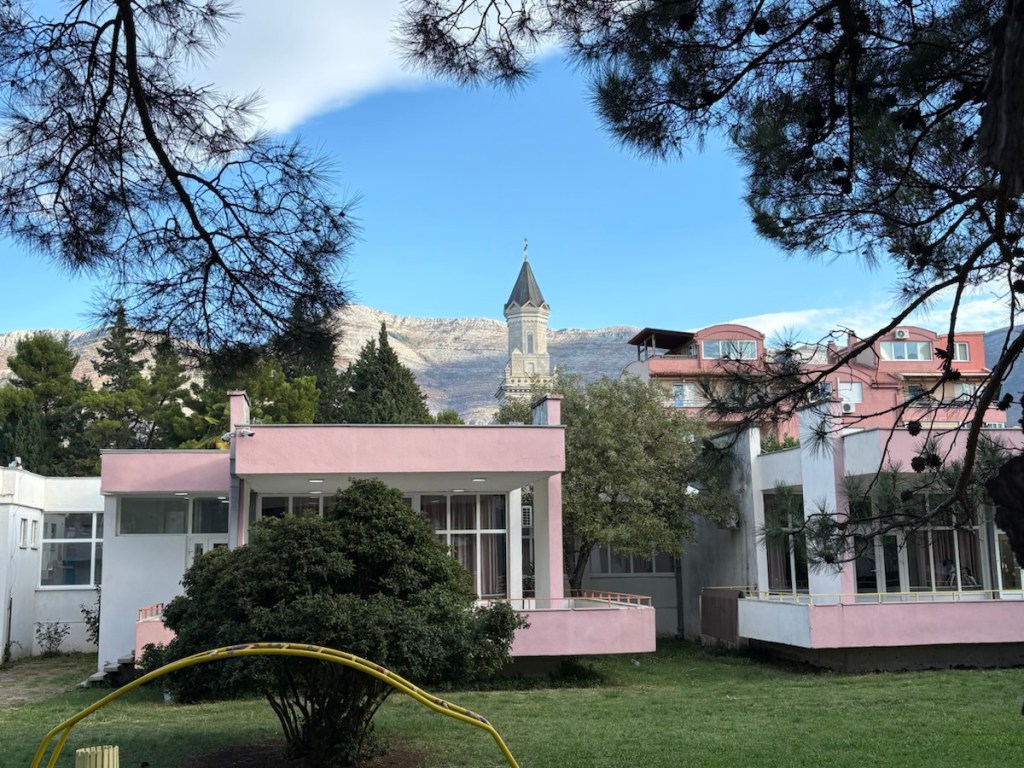
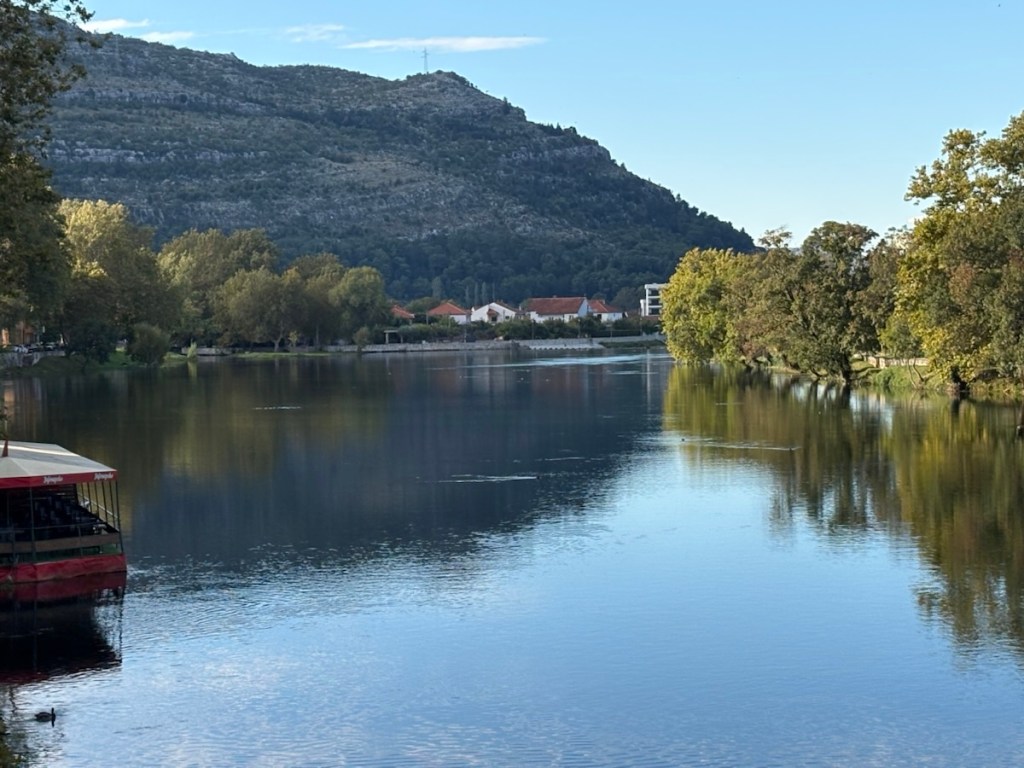
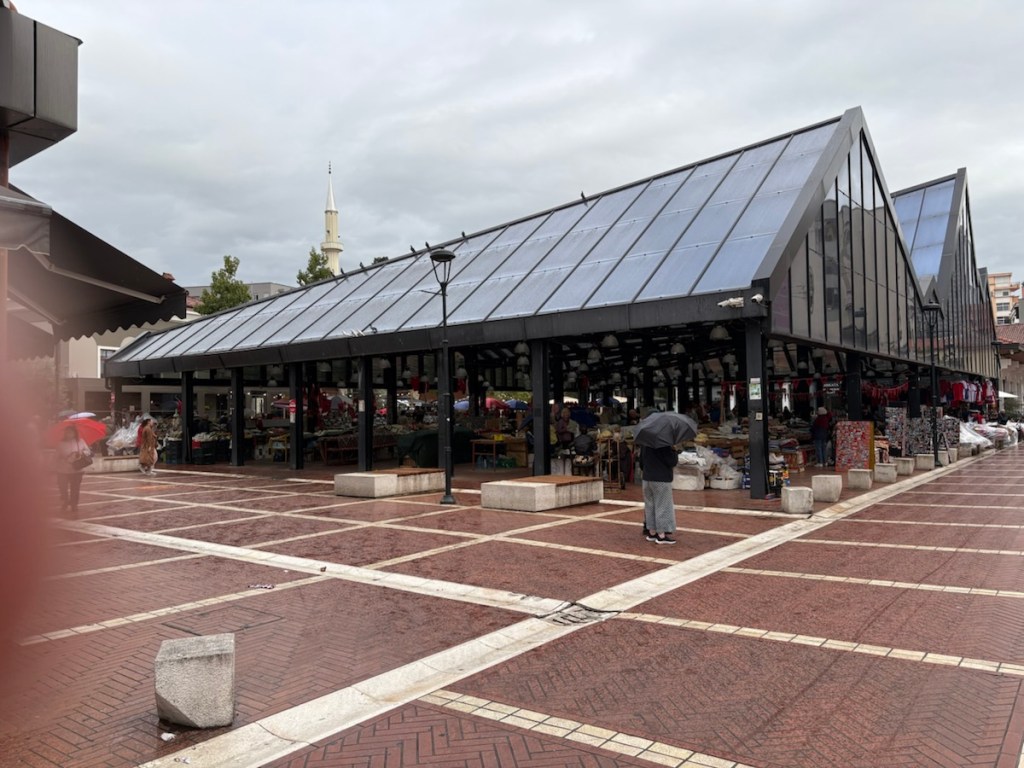
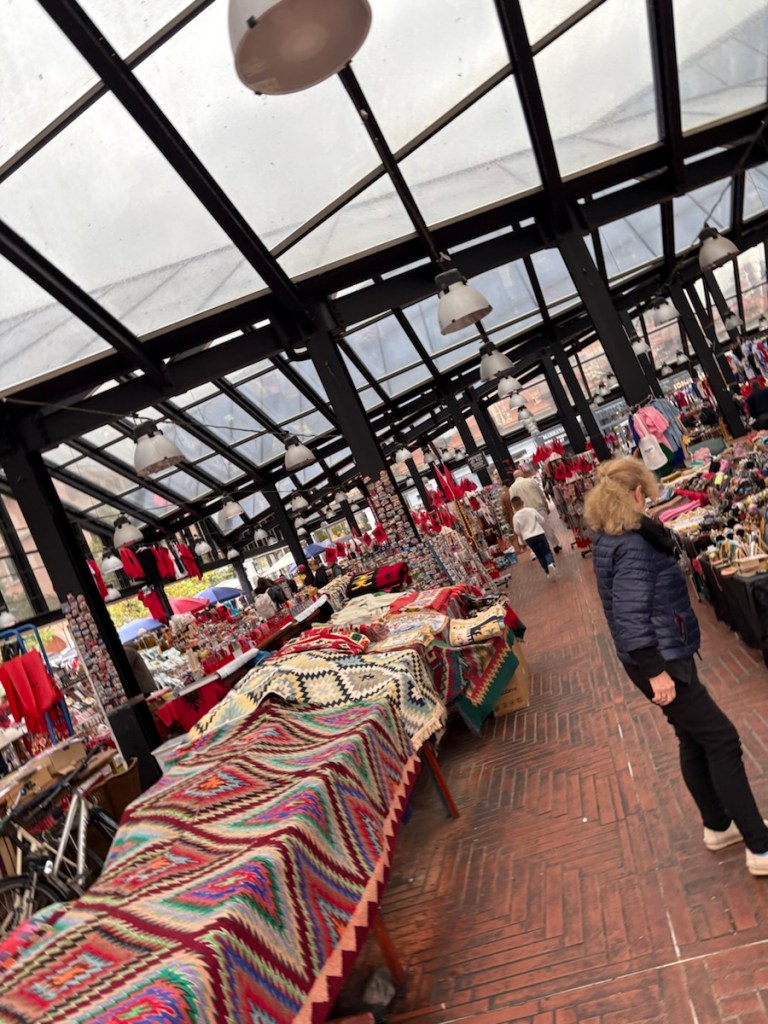
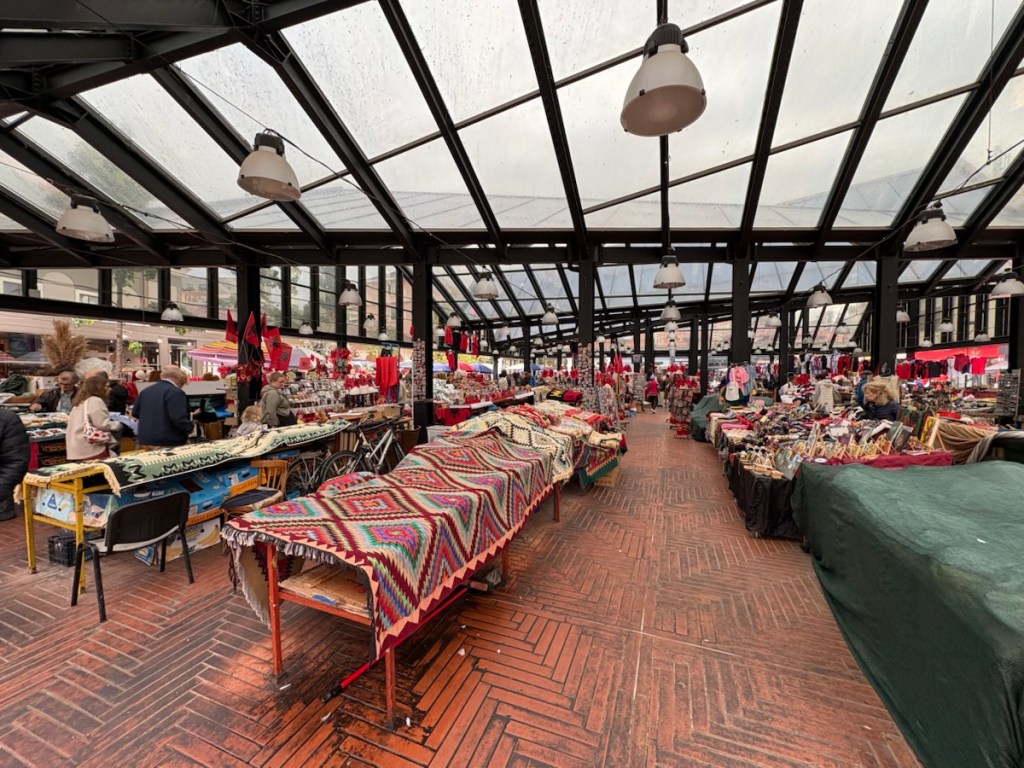
Trebinje is a beautiful city of about 35,000 residents in the southwestern part of the country.  There was busy market underway near the lovely and scenic river running through the town.

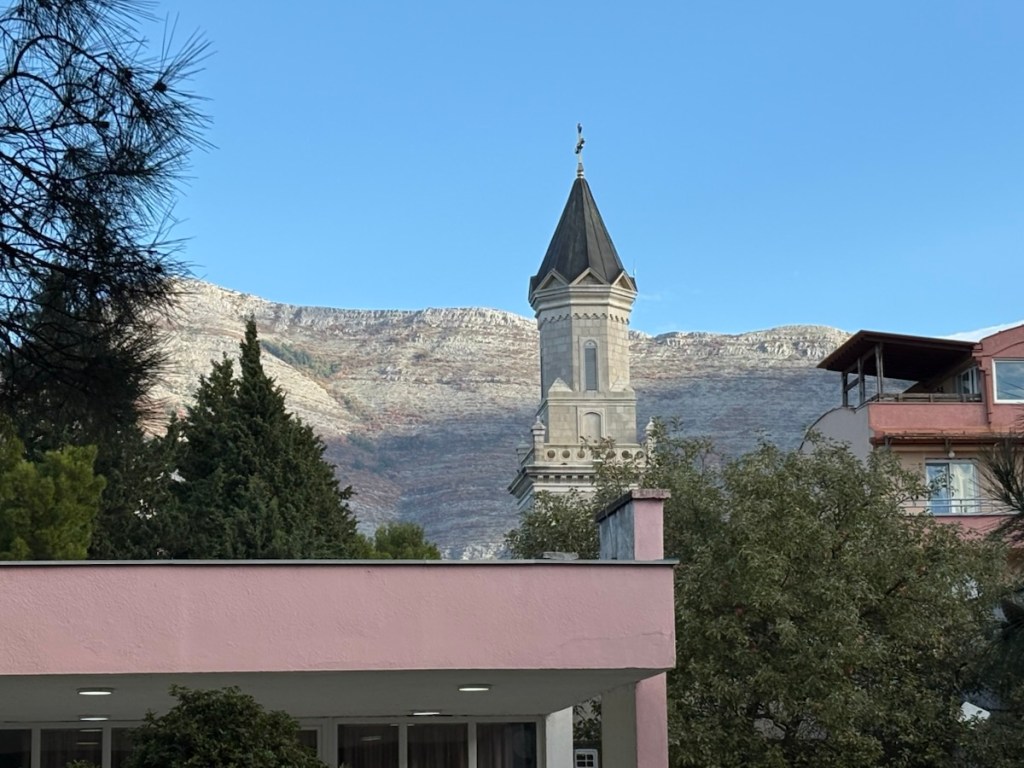
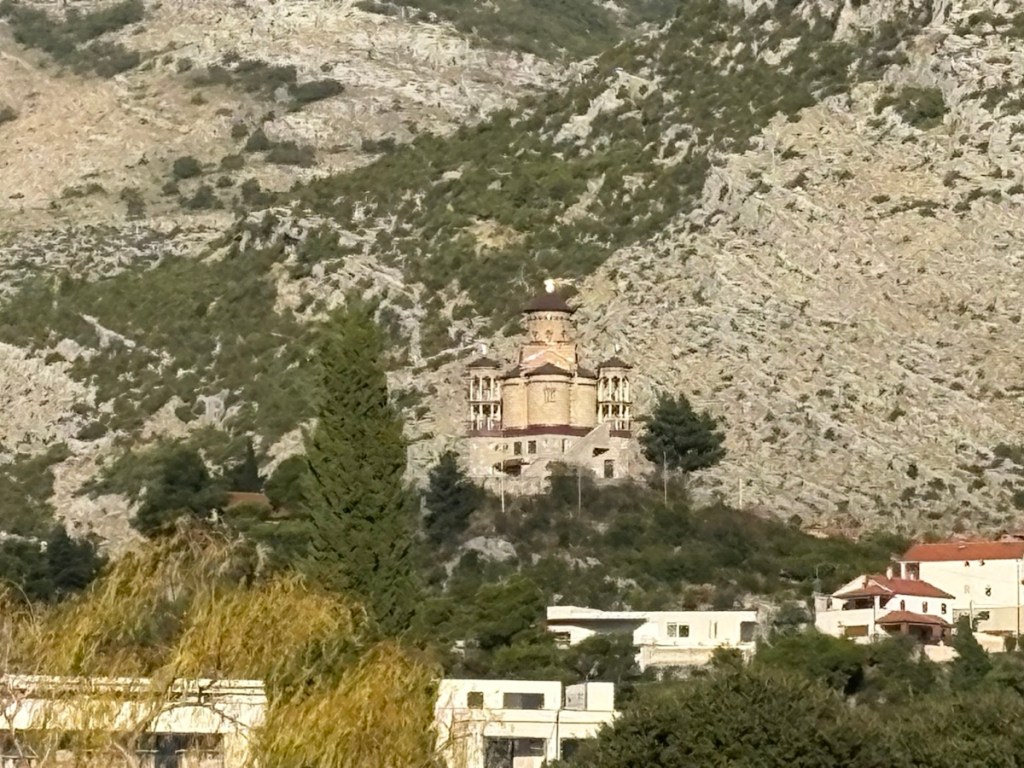
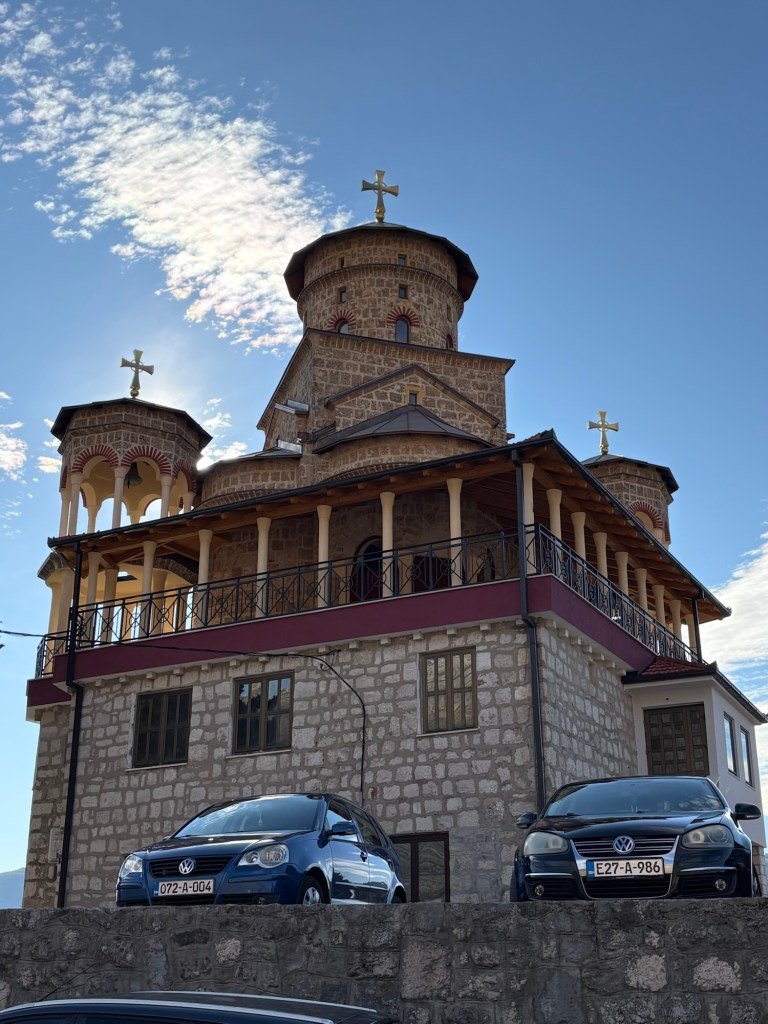
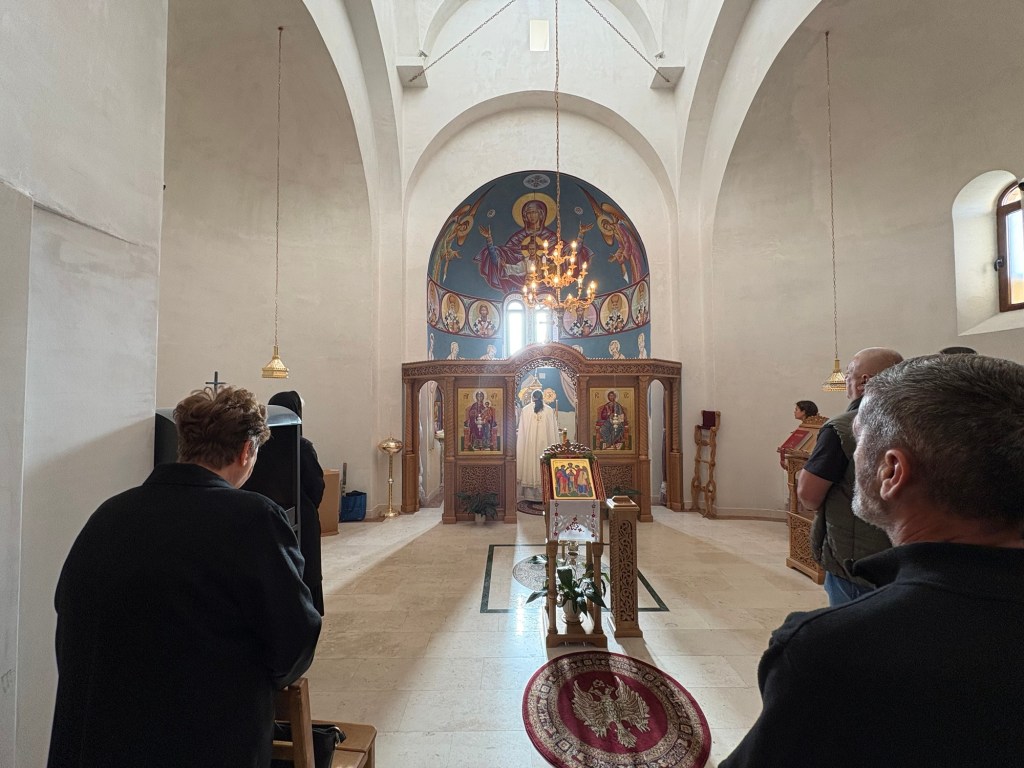
I also visited a very small, but stunning Orthodox Church set high on a hill overlooking the city.  They actually had a service underway when I slipped in, but no one shooed me out.

Another 30 minutes or so had me near the Croatian border. And the views coming down out of the mountains toward the border and the Adriatic Sea were stunning!

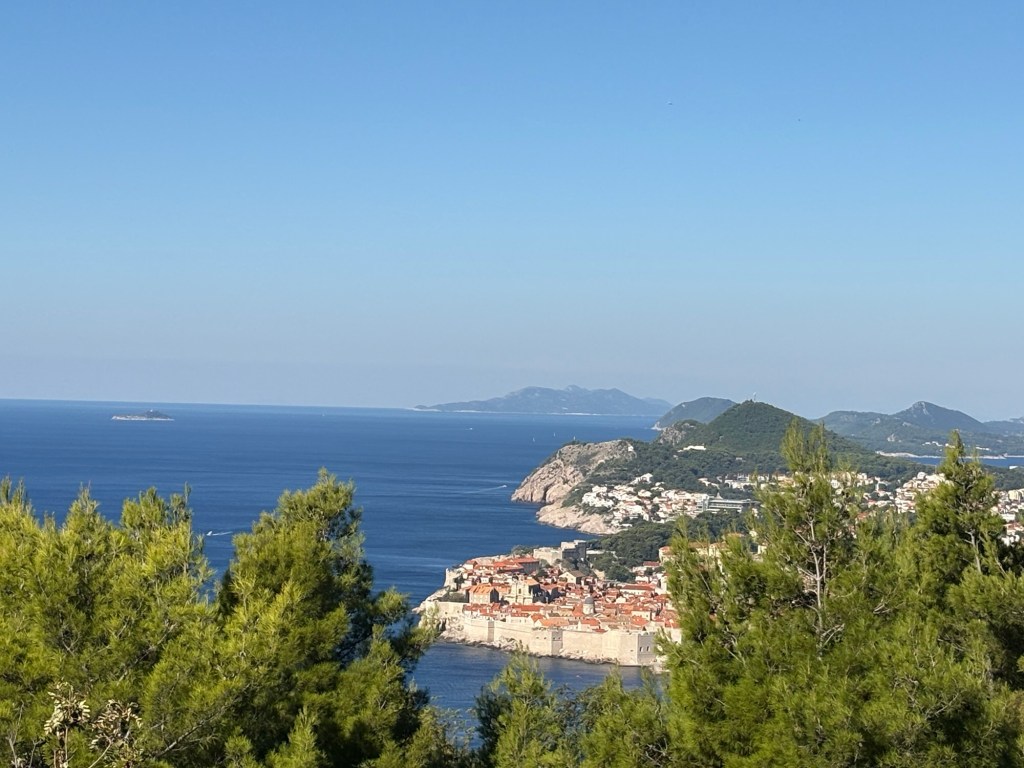
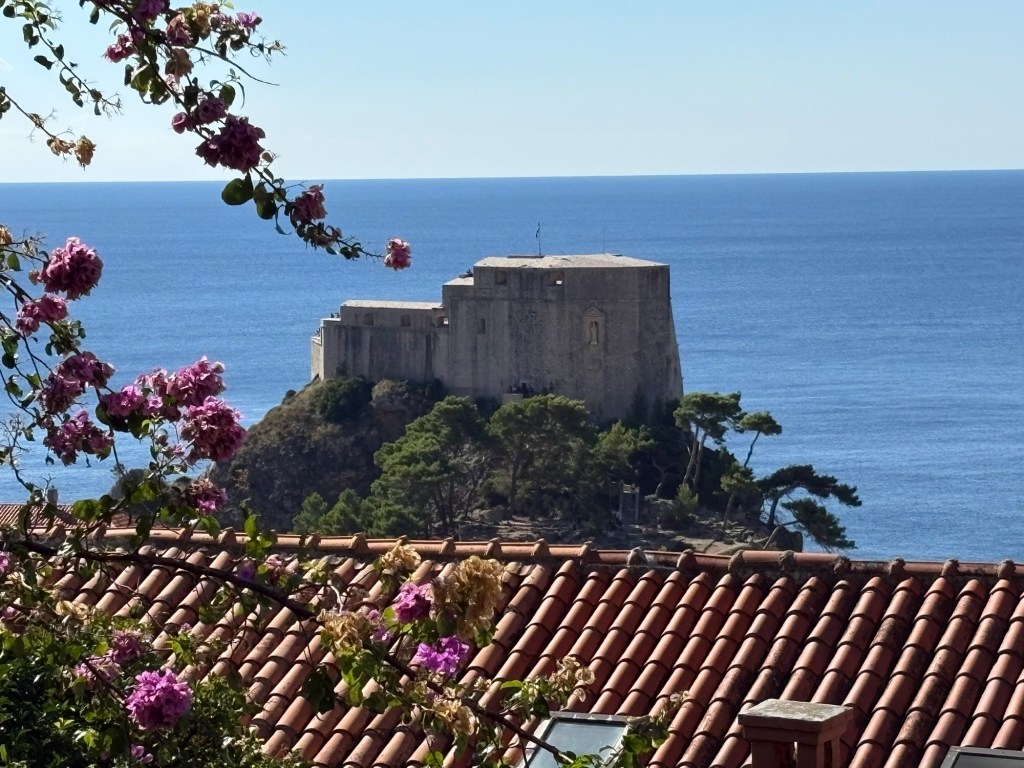
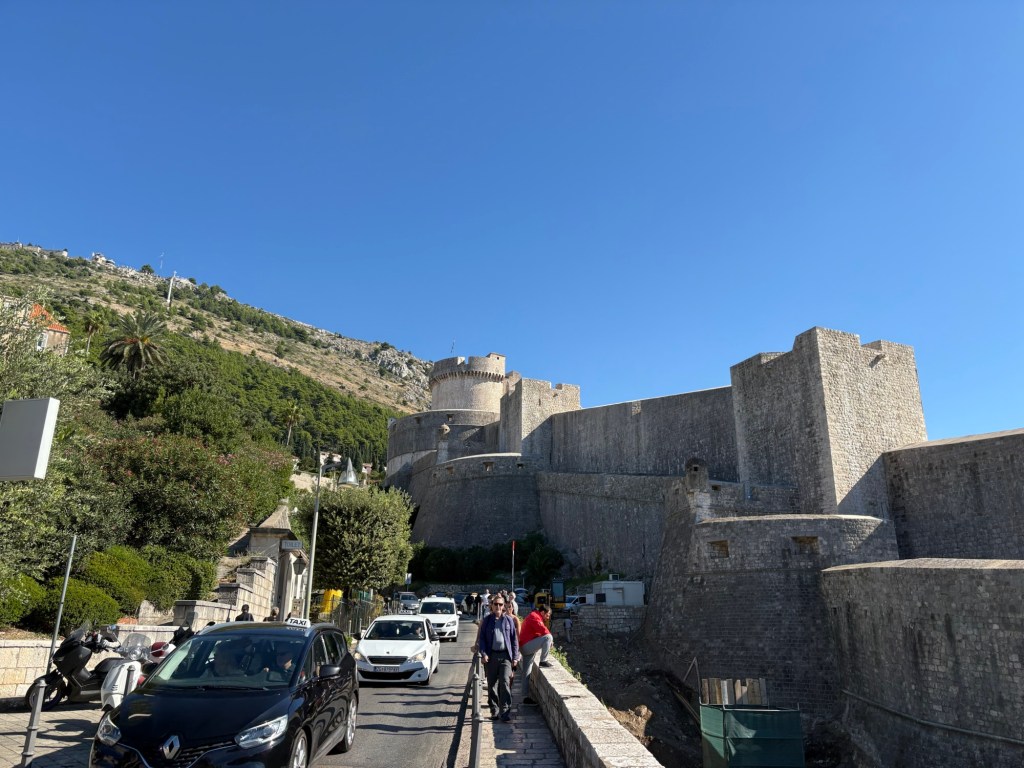
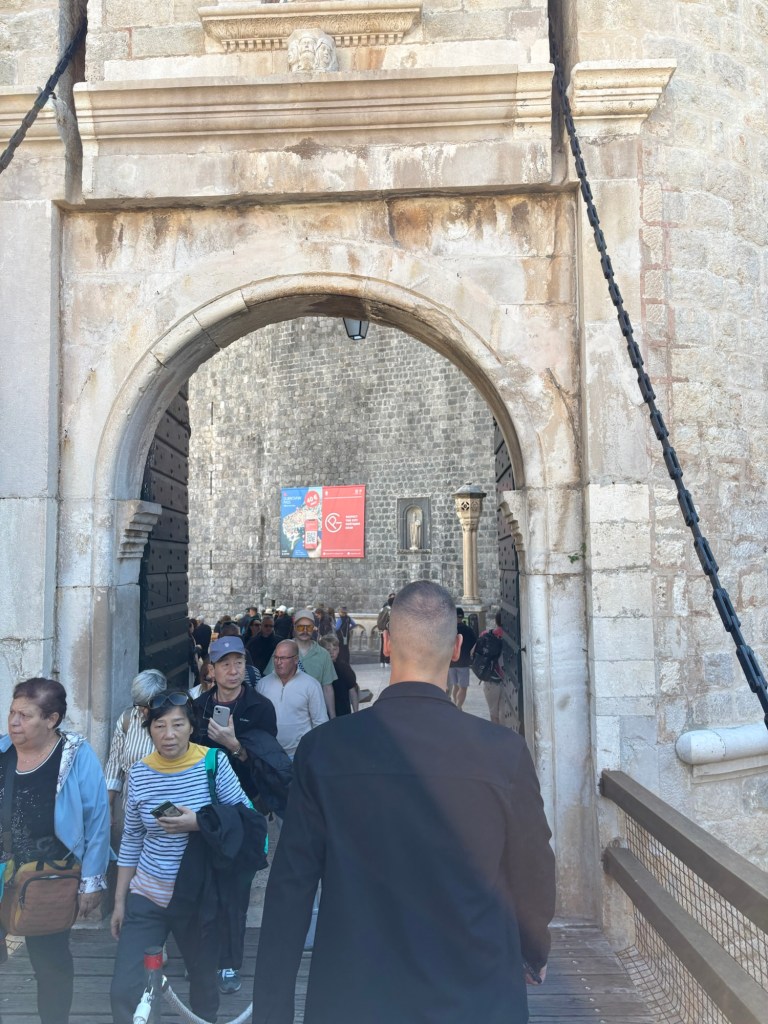
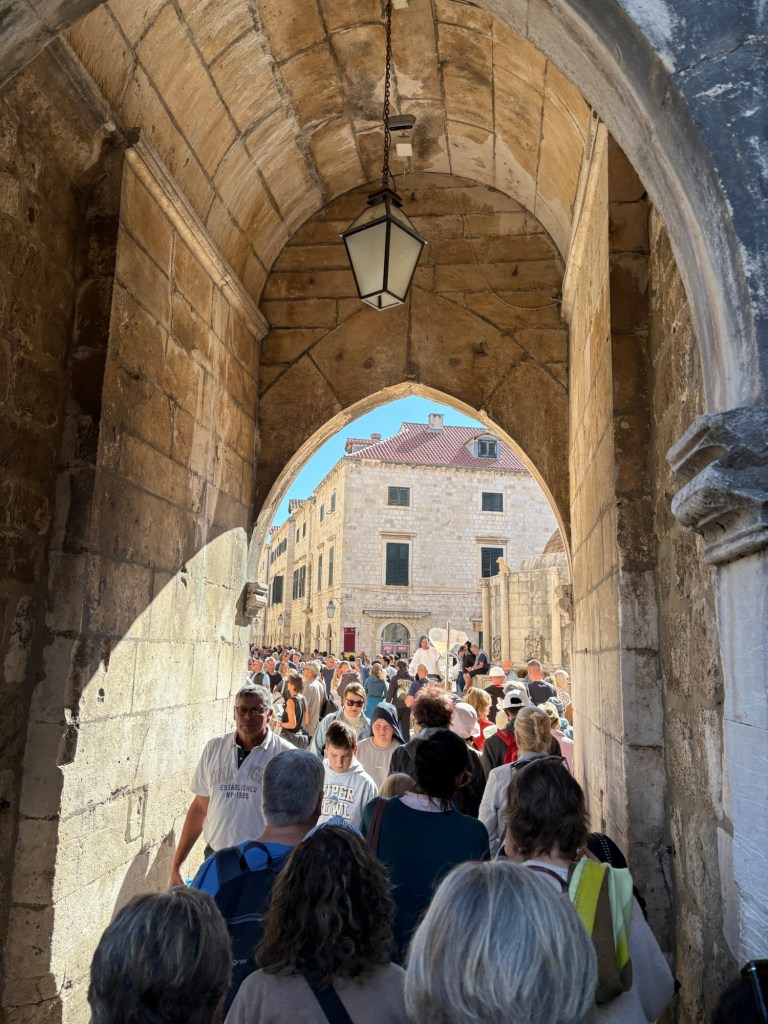
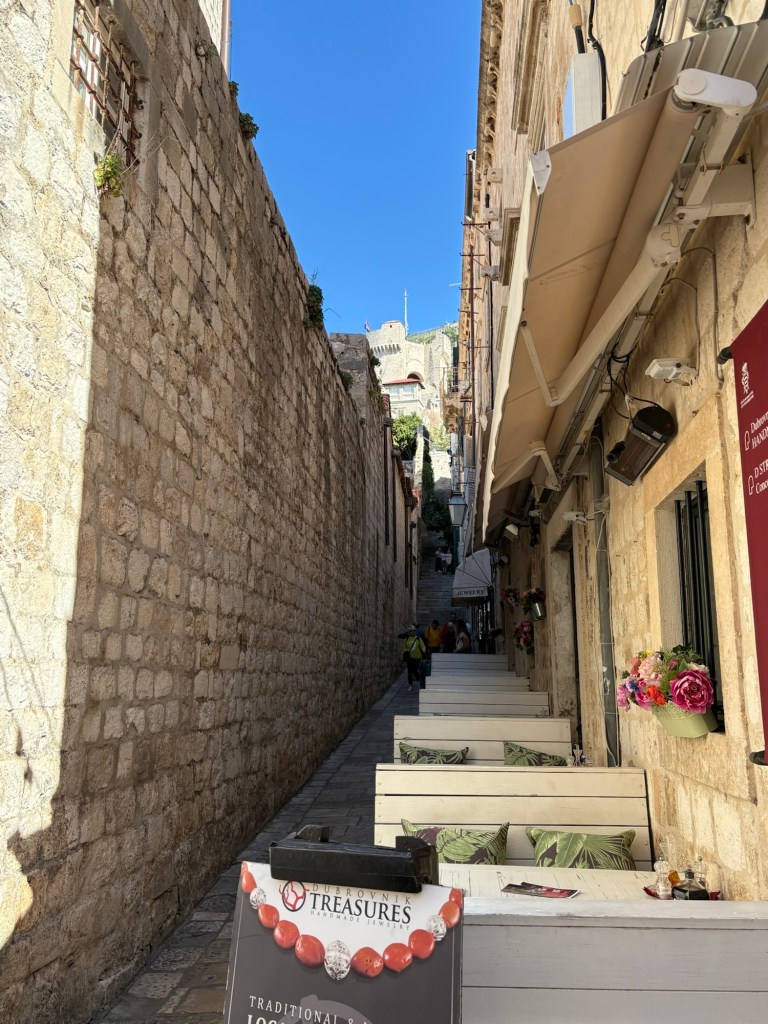
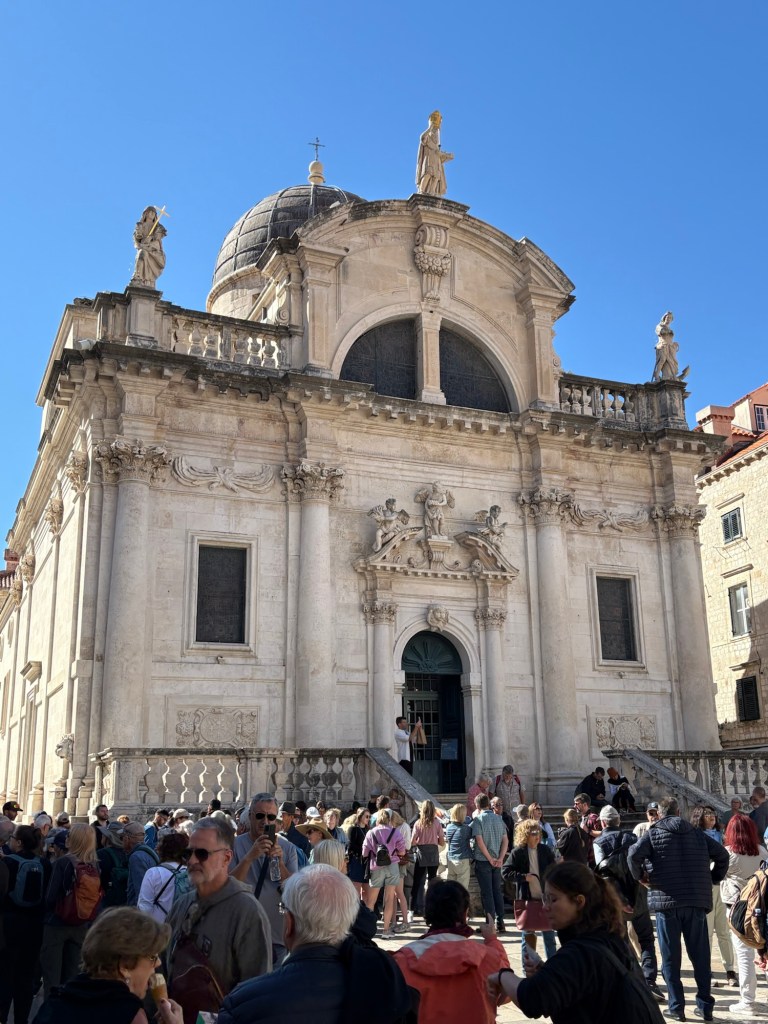
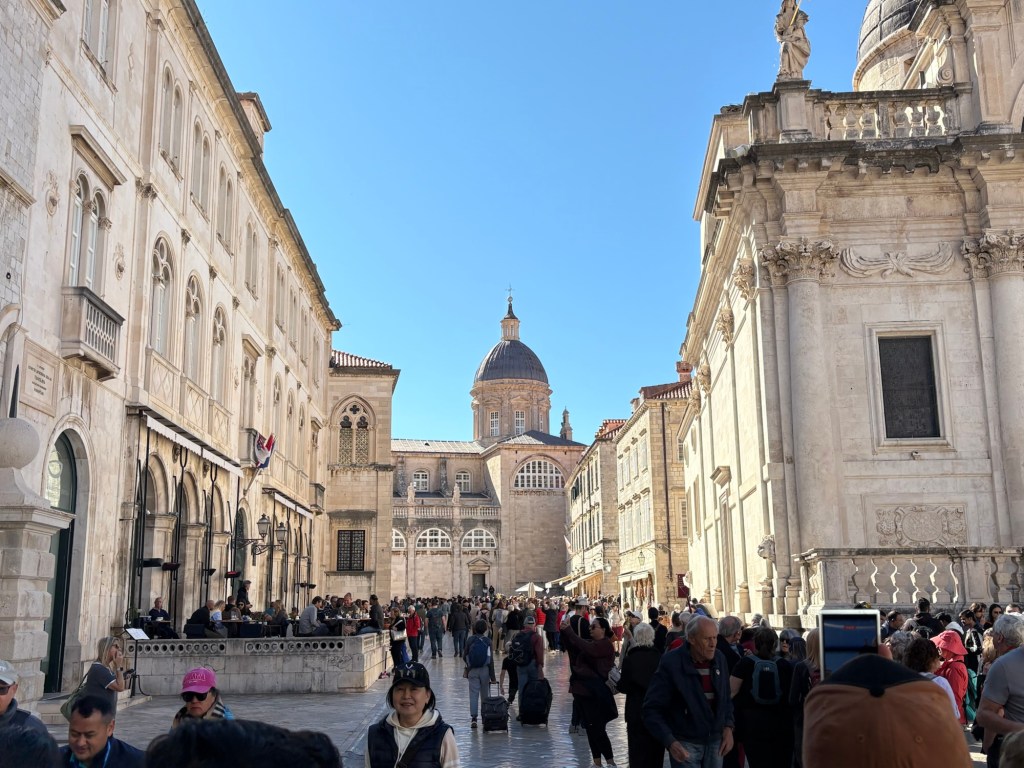
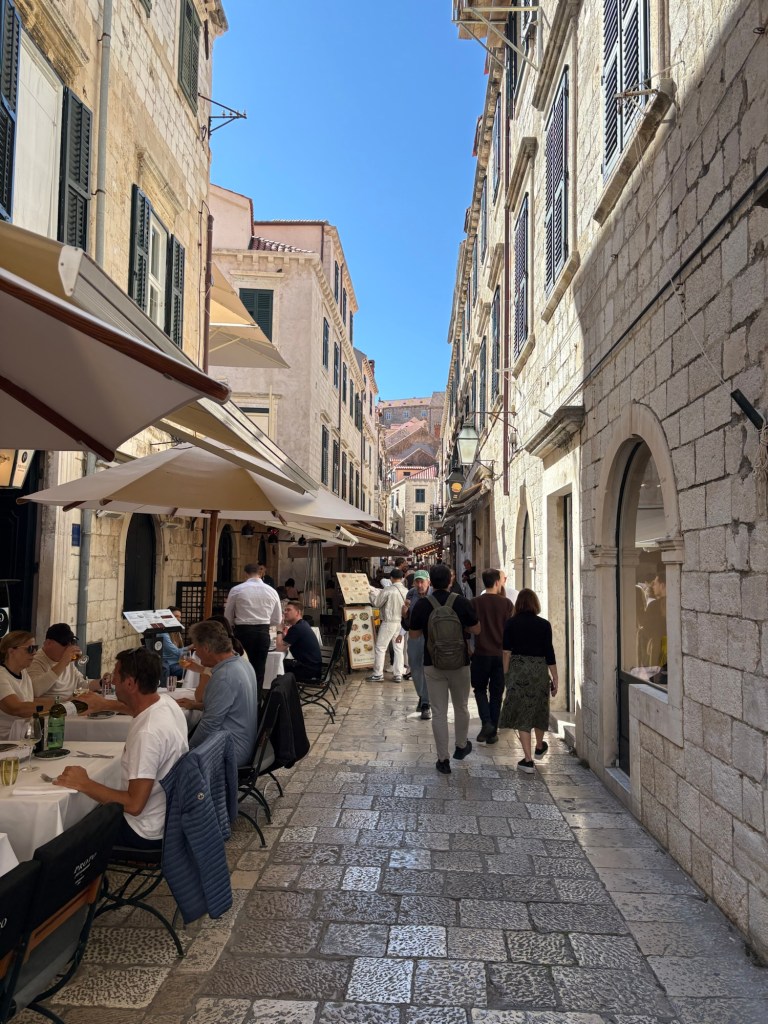
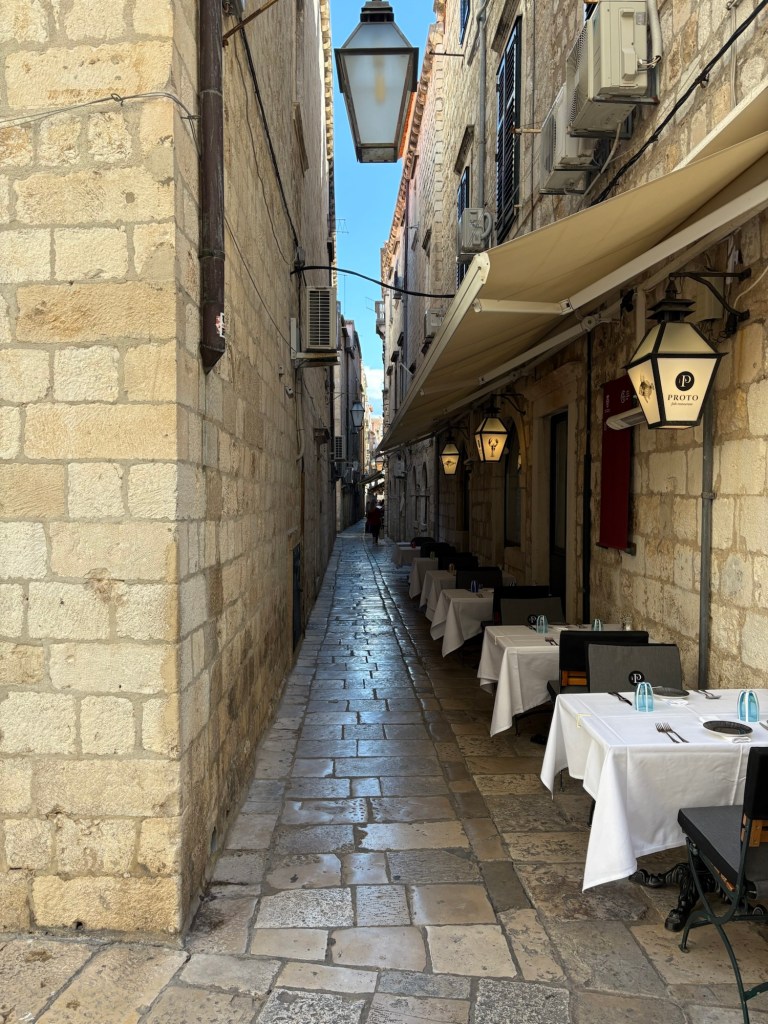
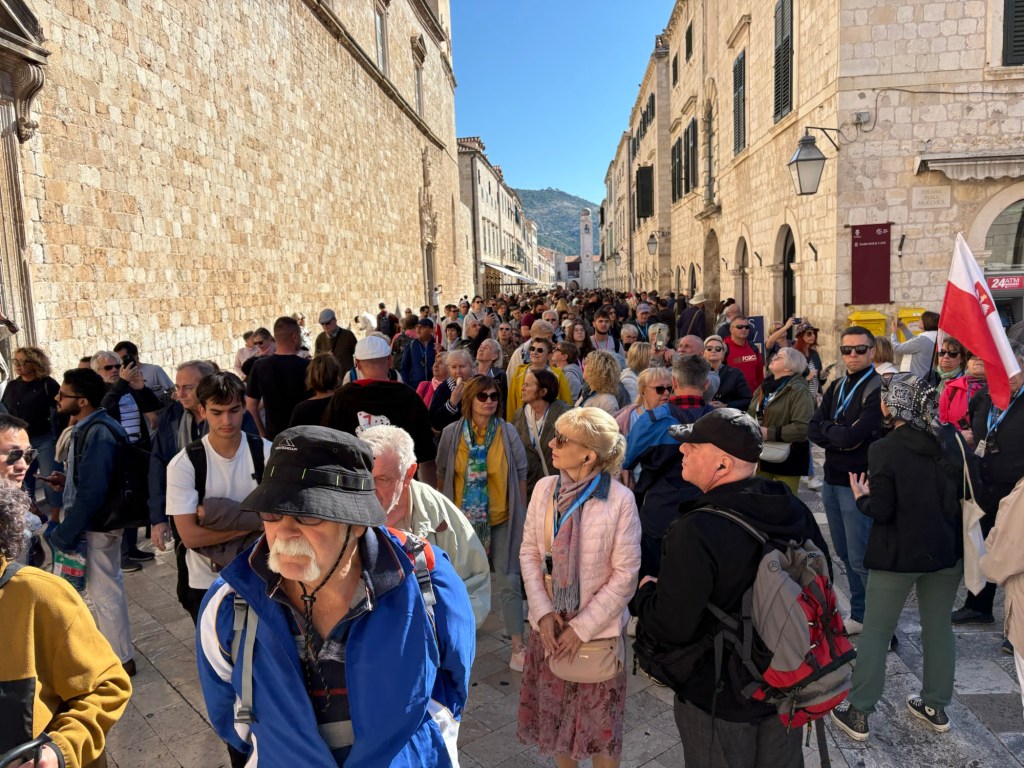
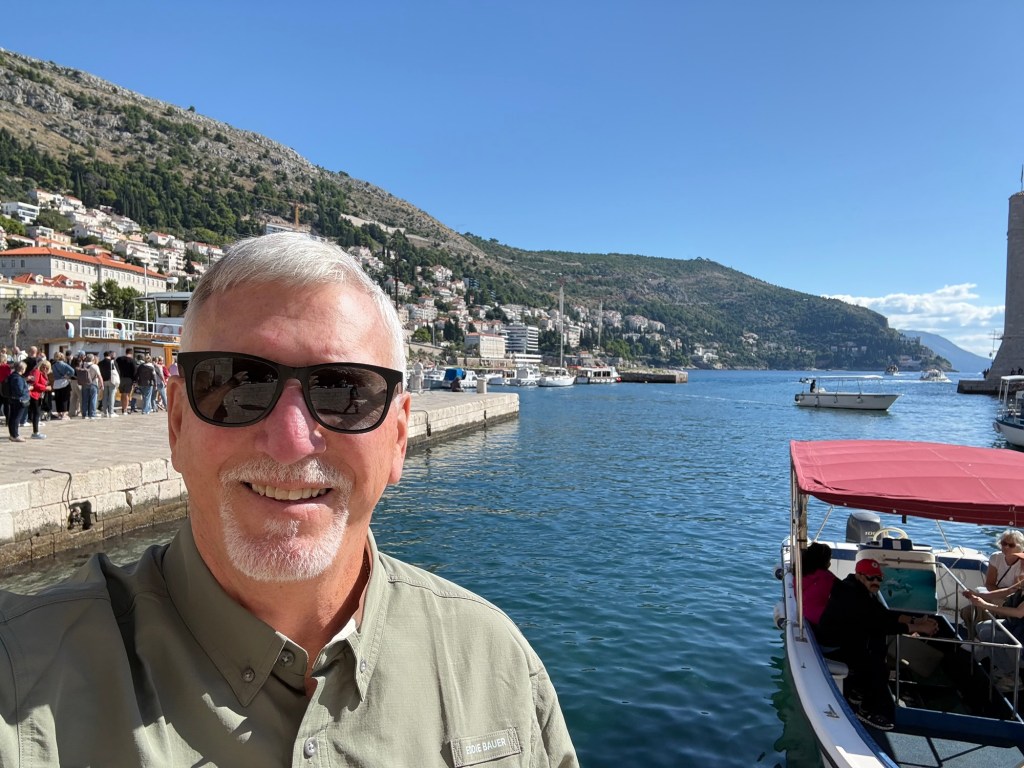
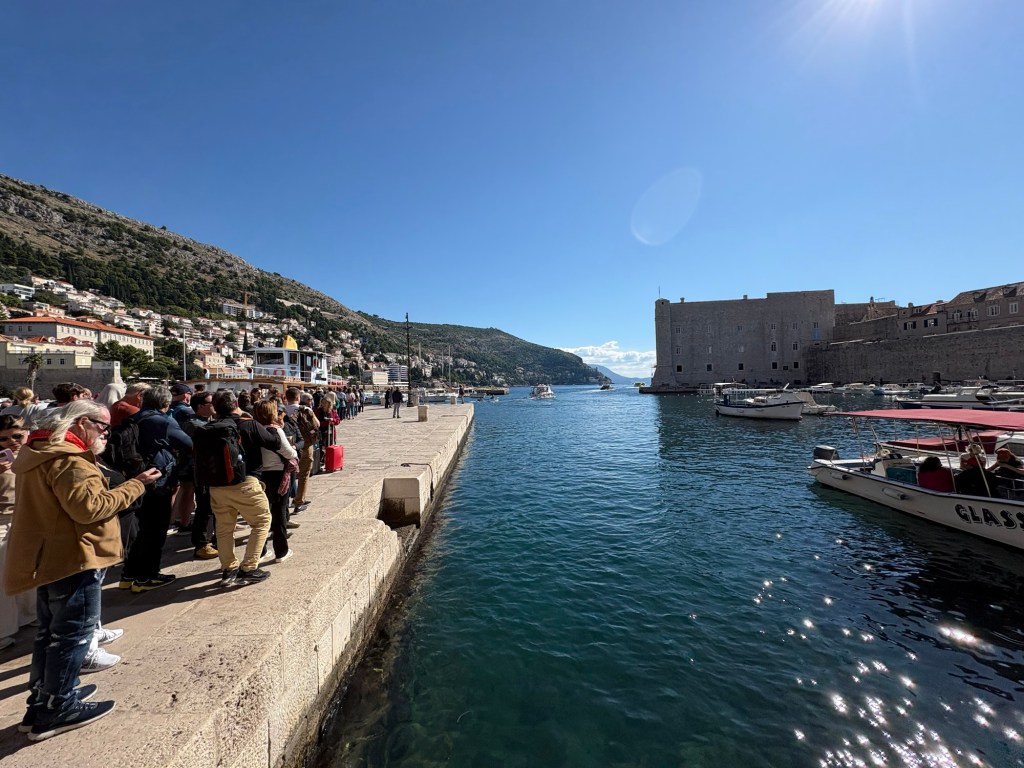
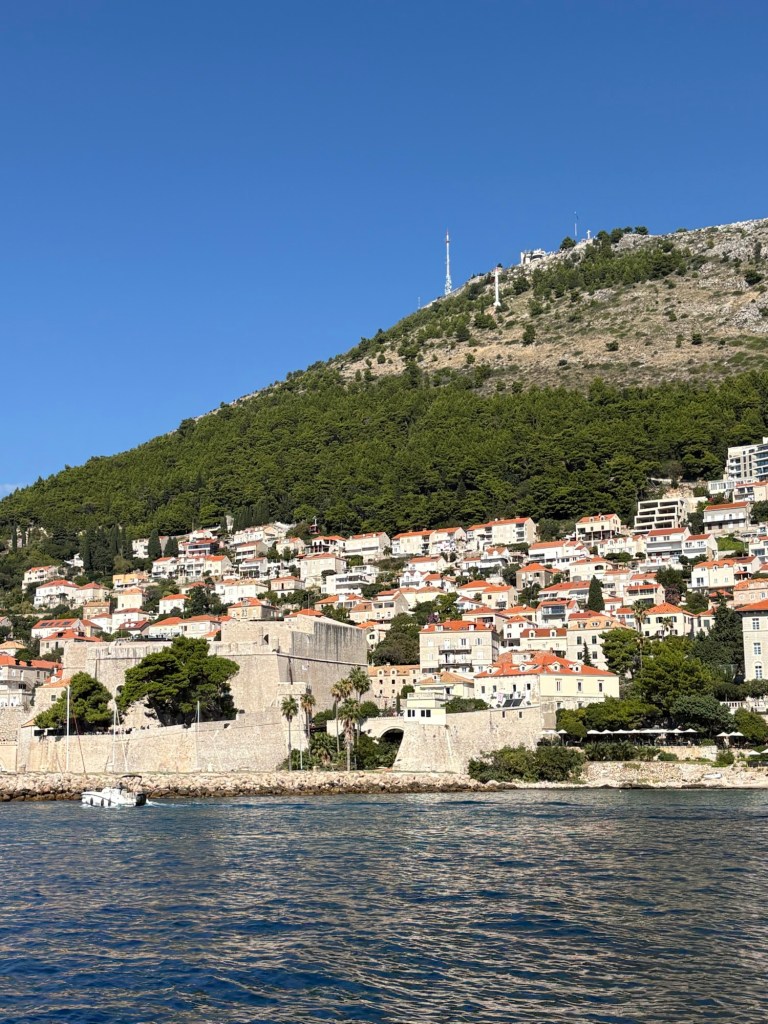
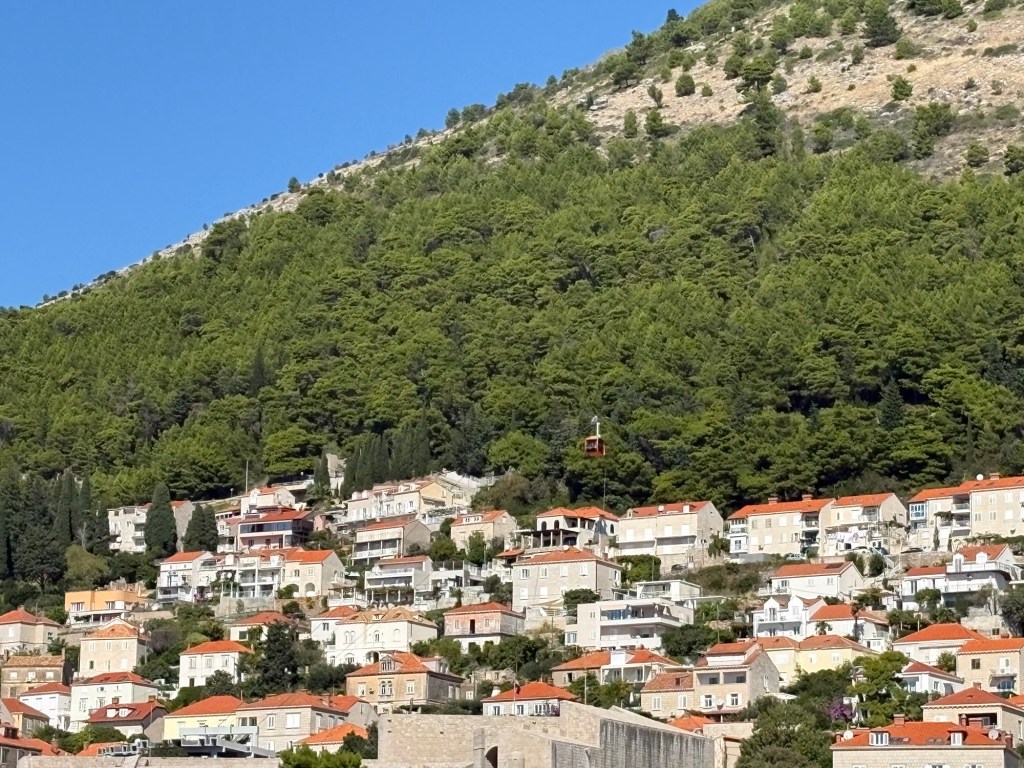
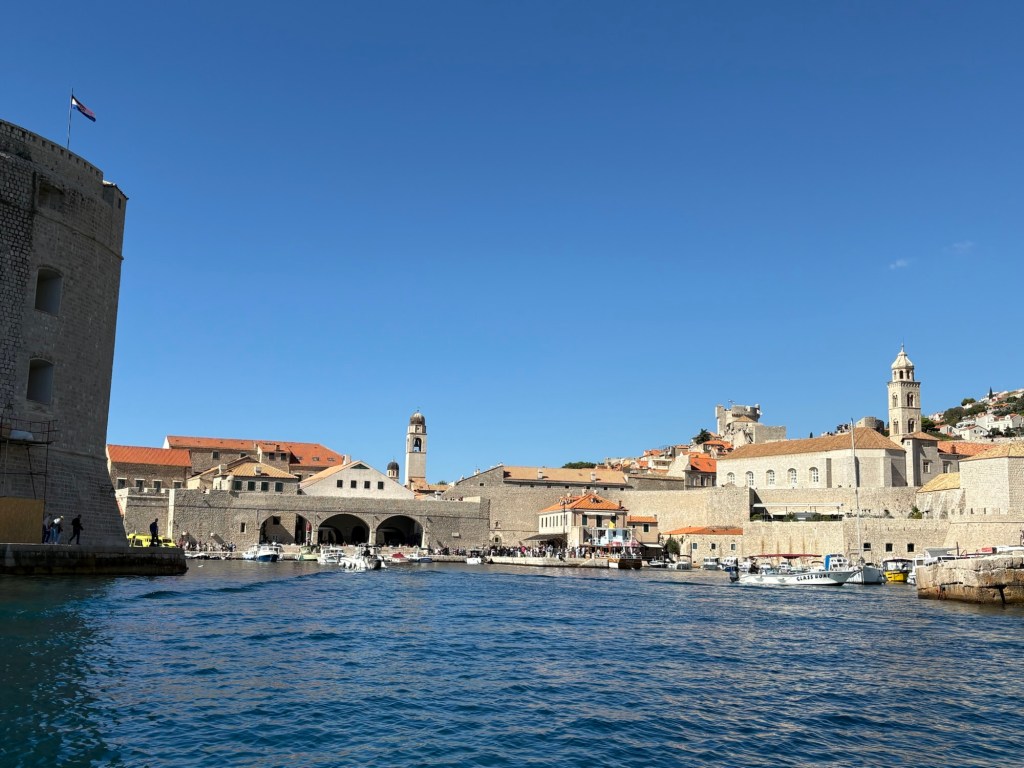
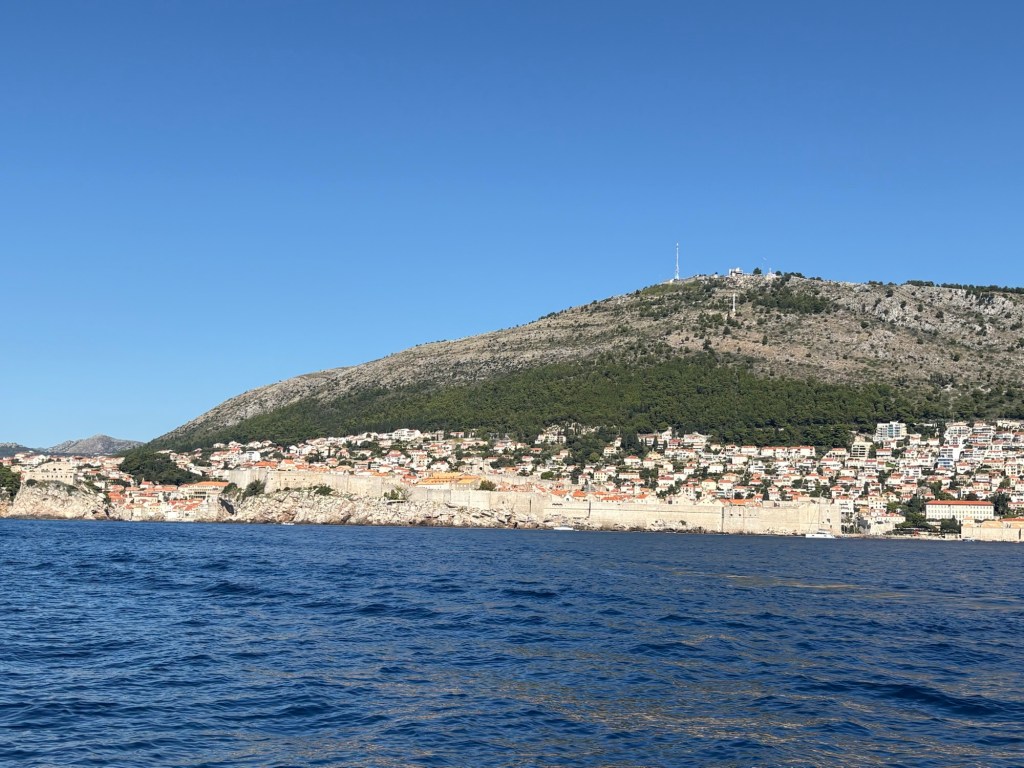
Next up was a stop in the famous and popular sea side city of Dubrovnik, Croatia.  The city and the geography reminded me very much of another popular sea side city – Biarritz, on the Atlantic in southwestern France.  Same modern look, same coastal city, touristy vibe.  The Dubrovnik Old City is beautiful, filled with shops, restaurants, hotels, and narrow stone streets.  It was also incredibly crowded (even for a sunny Saturday), so I can’t imagine what it would be like in the summertime when it’s really crowded and the temperature is high!
Like sardines!

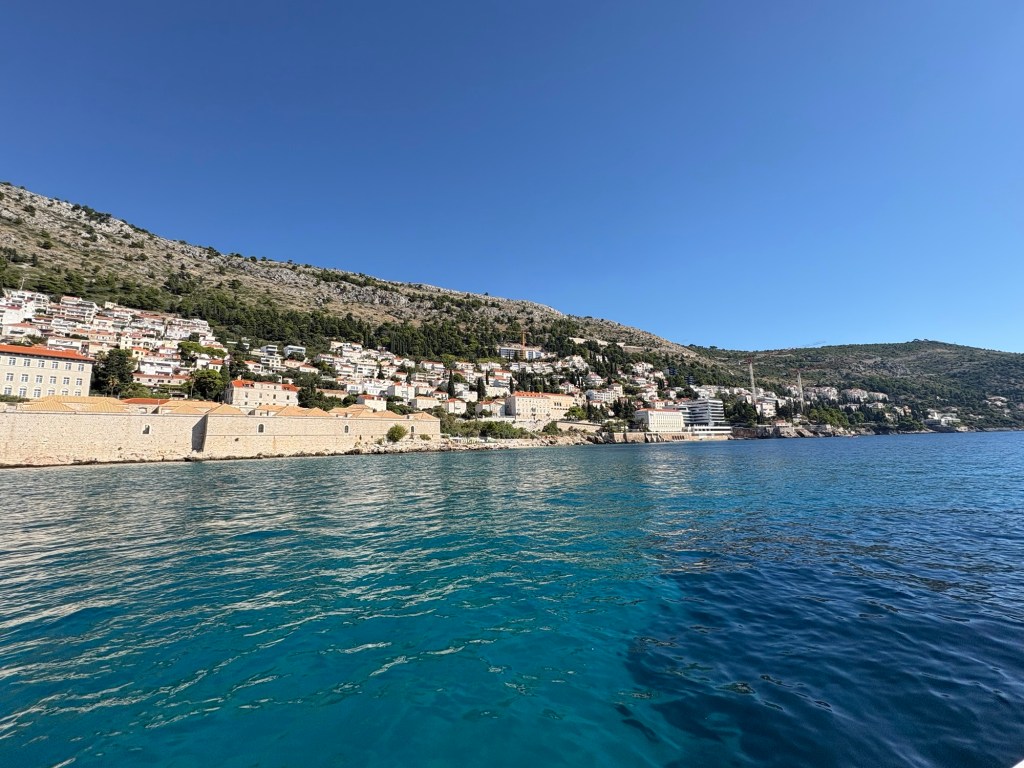
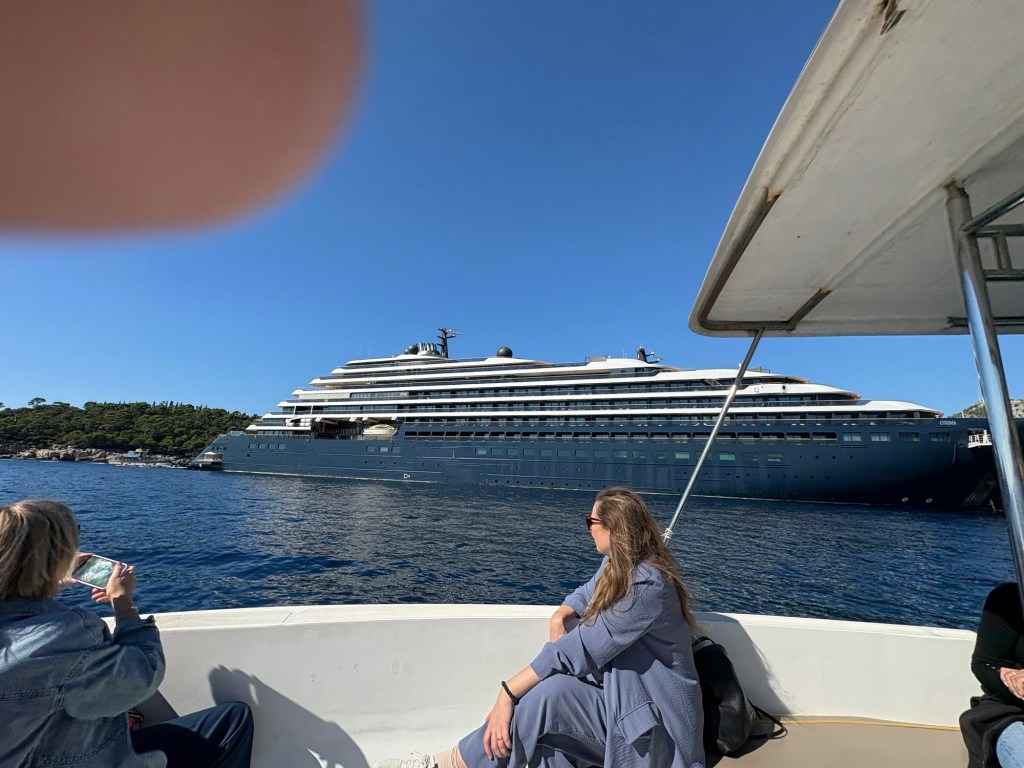
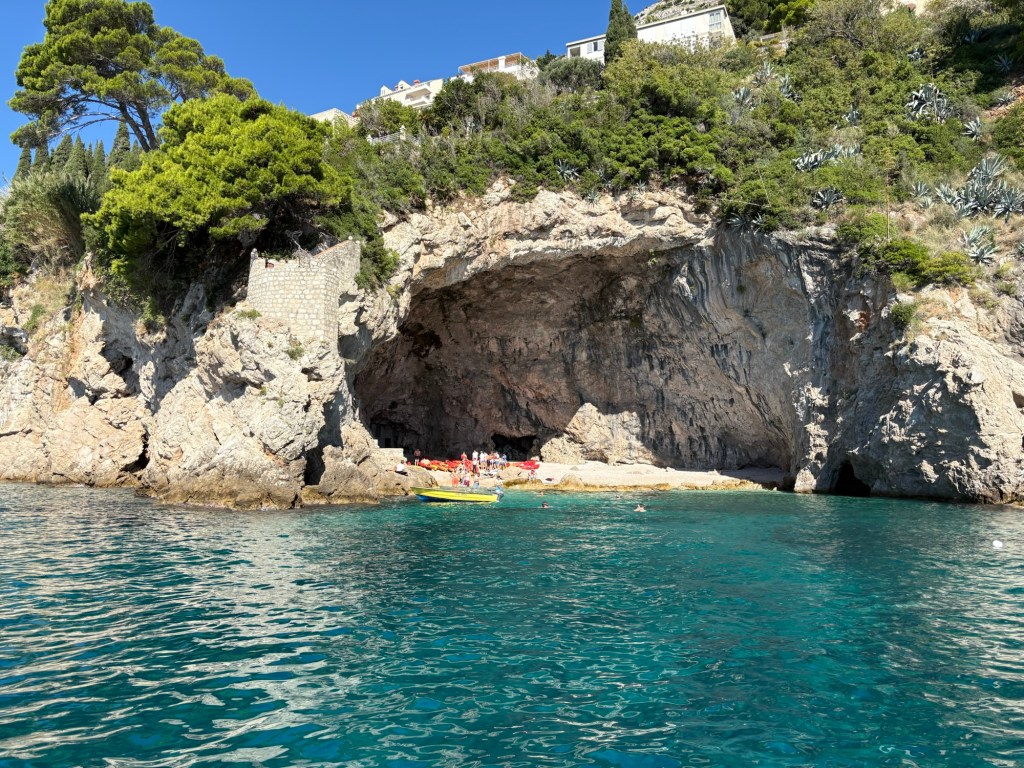
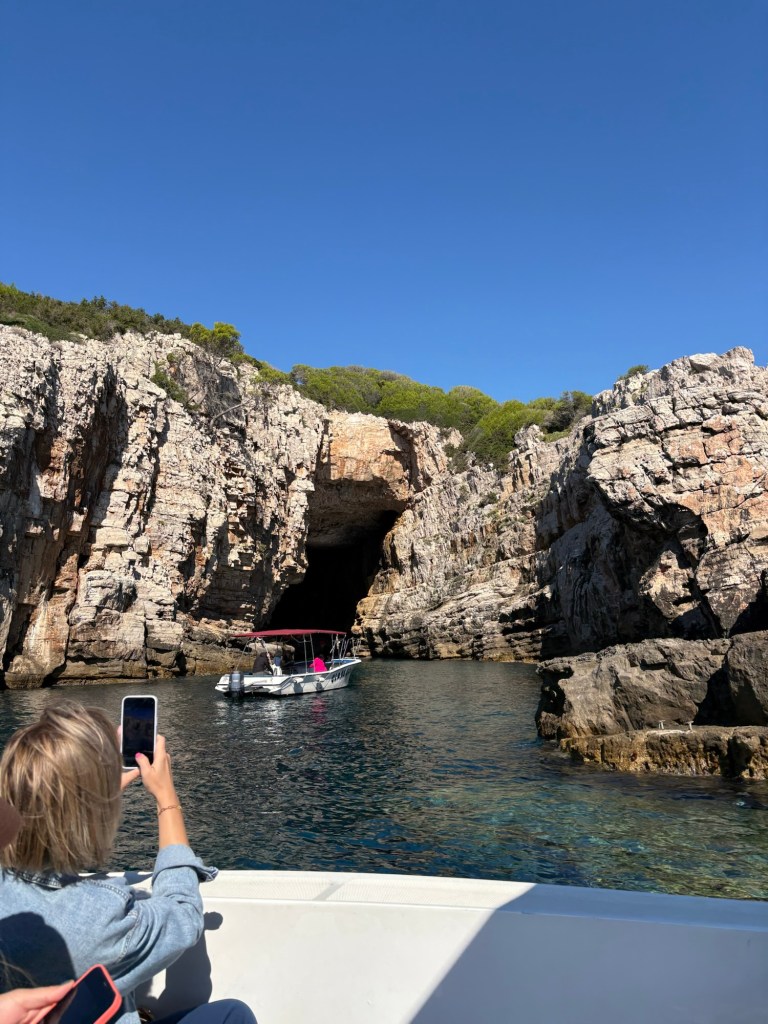
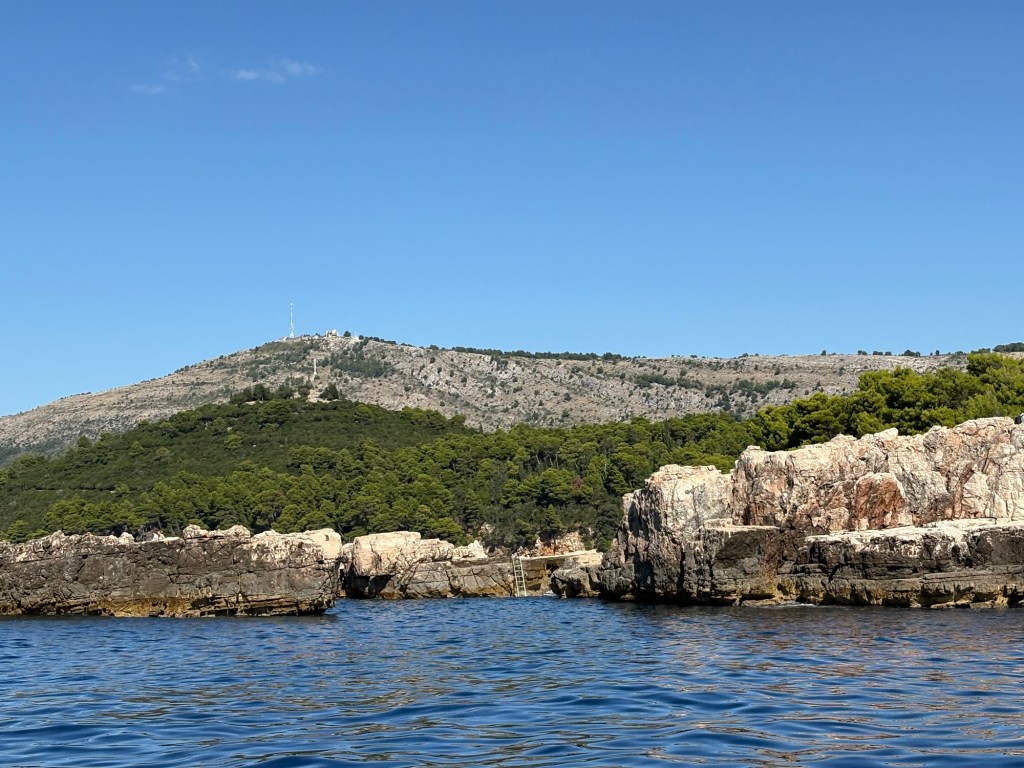
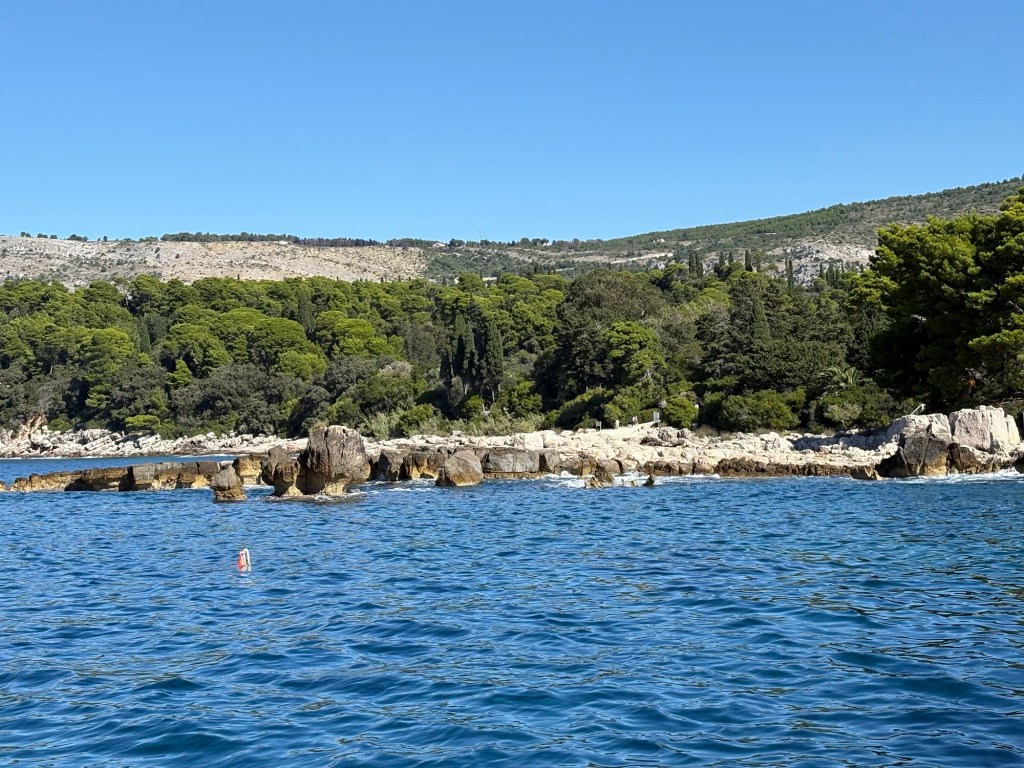
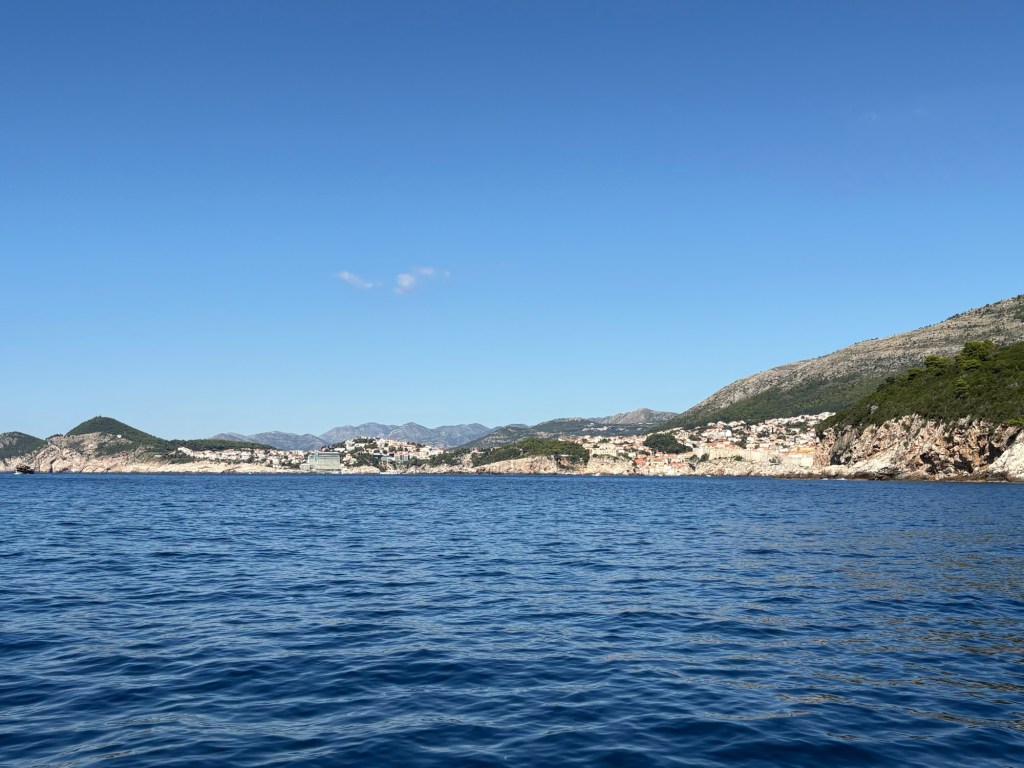
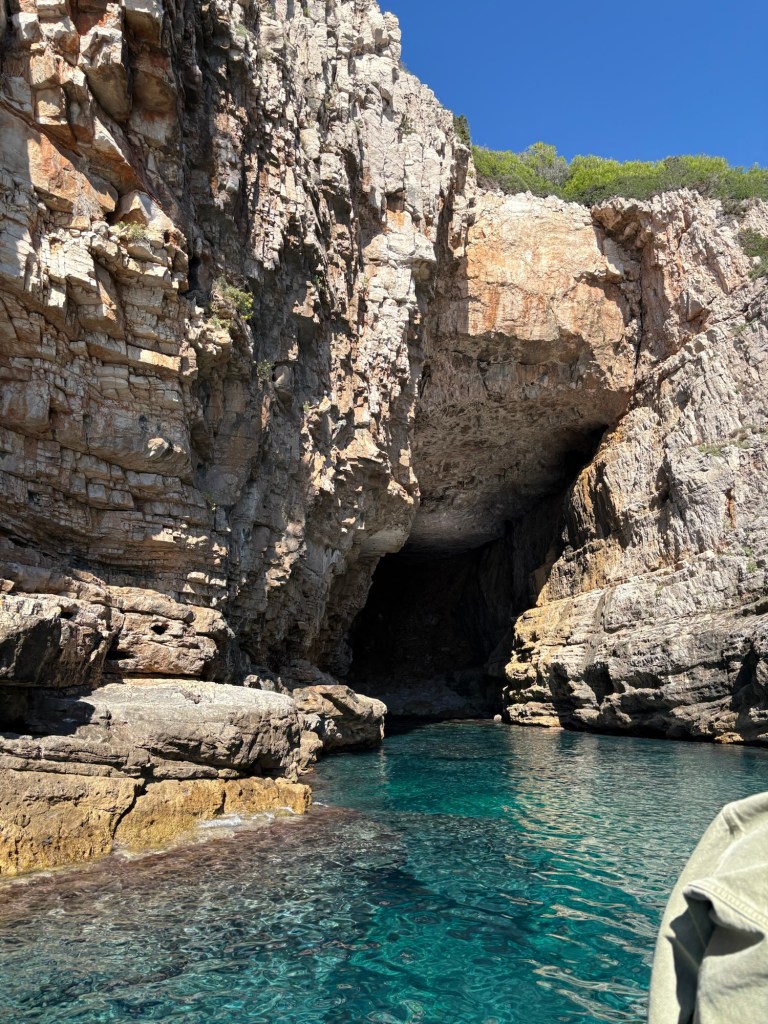
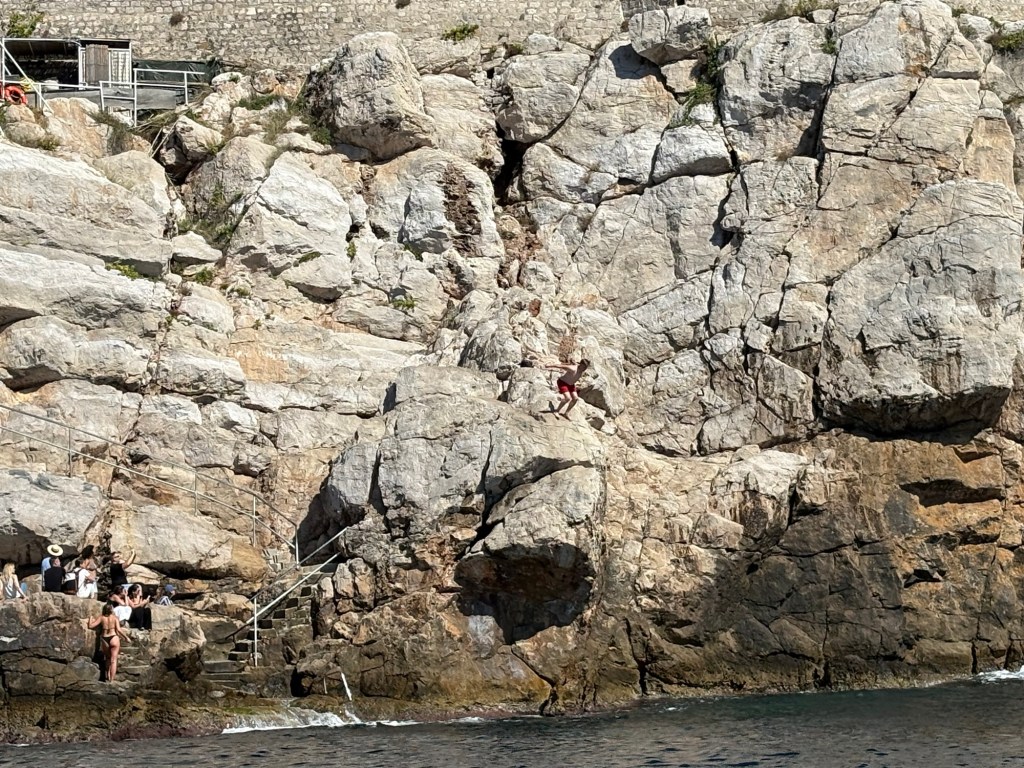
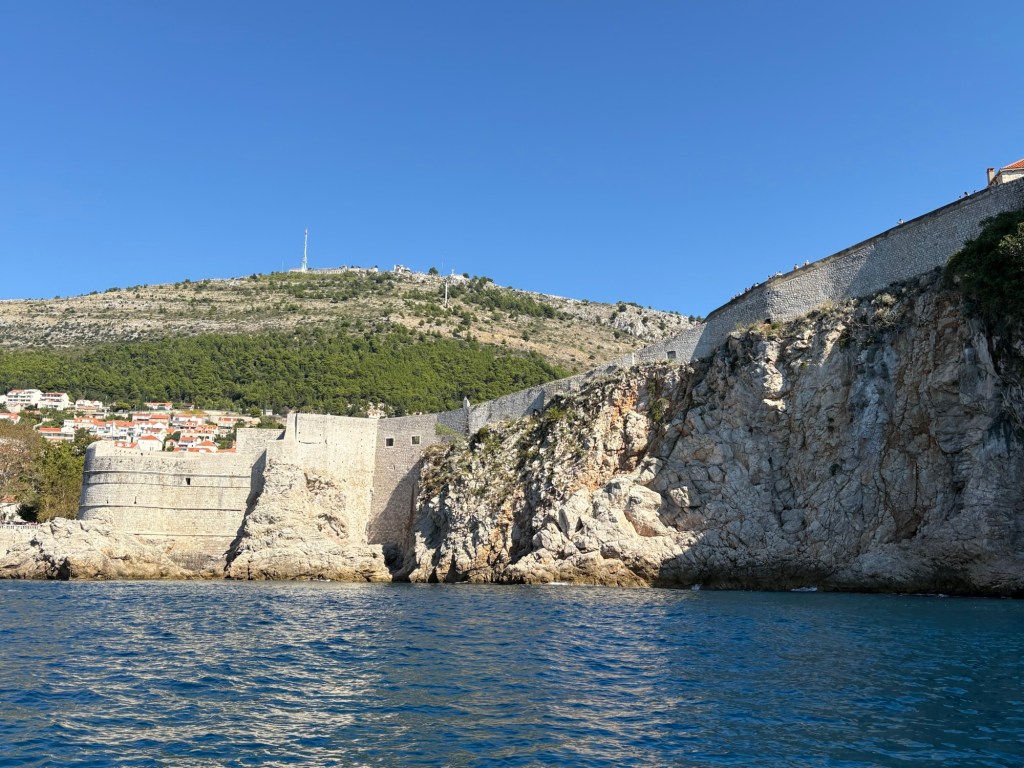
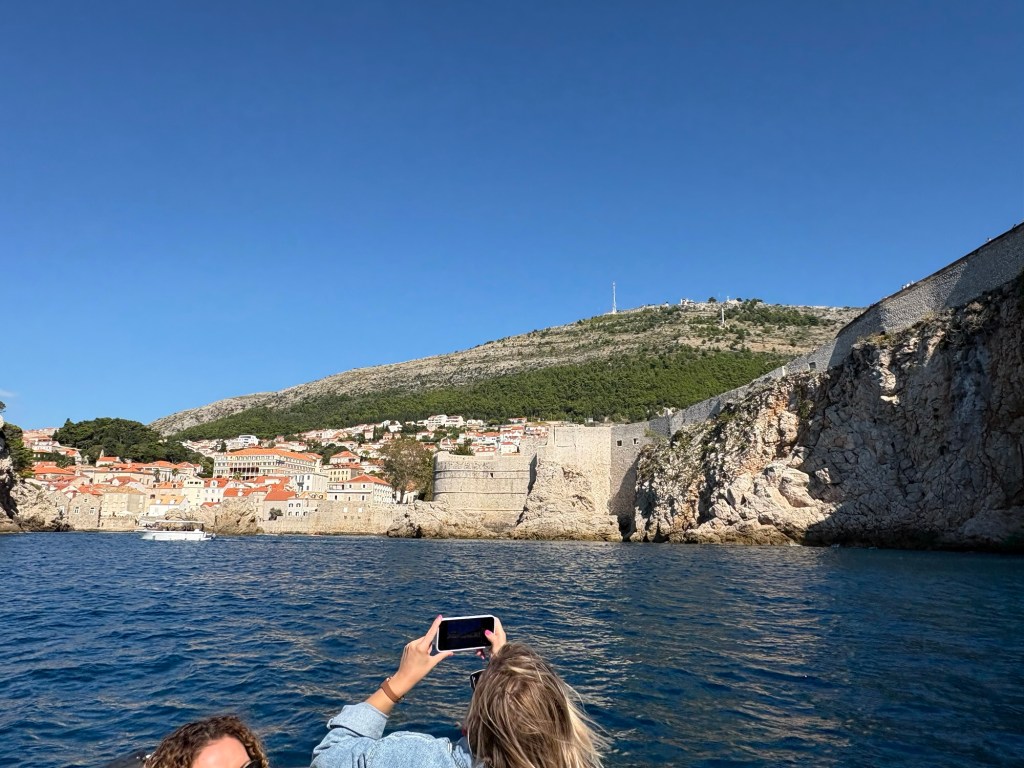
I also took a 45 minute boat tour around the nearby tourist island, the harbor, and along the waterside of the old city.  The water is so deep blue and incredibly clear!  There were many people swimming and sunbathing (and some sans clothing, again similar to France!)

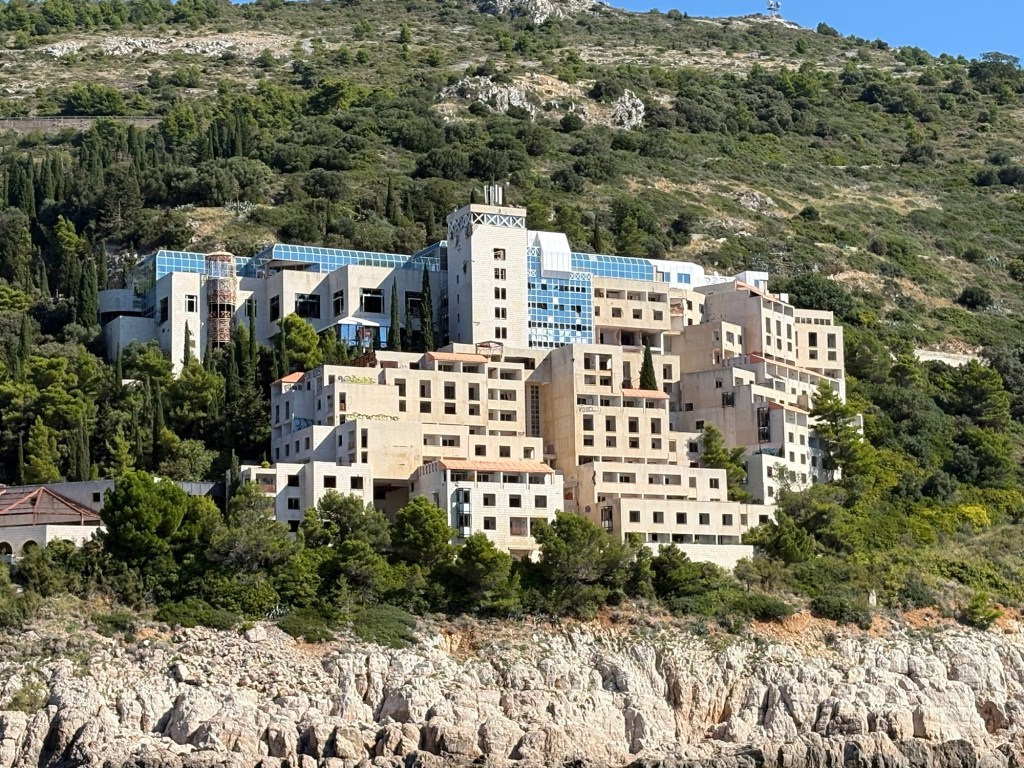
Up close you can still see battle damage on this abandoned building

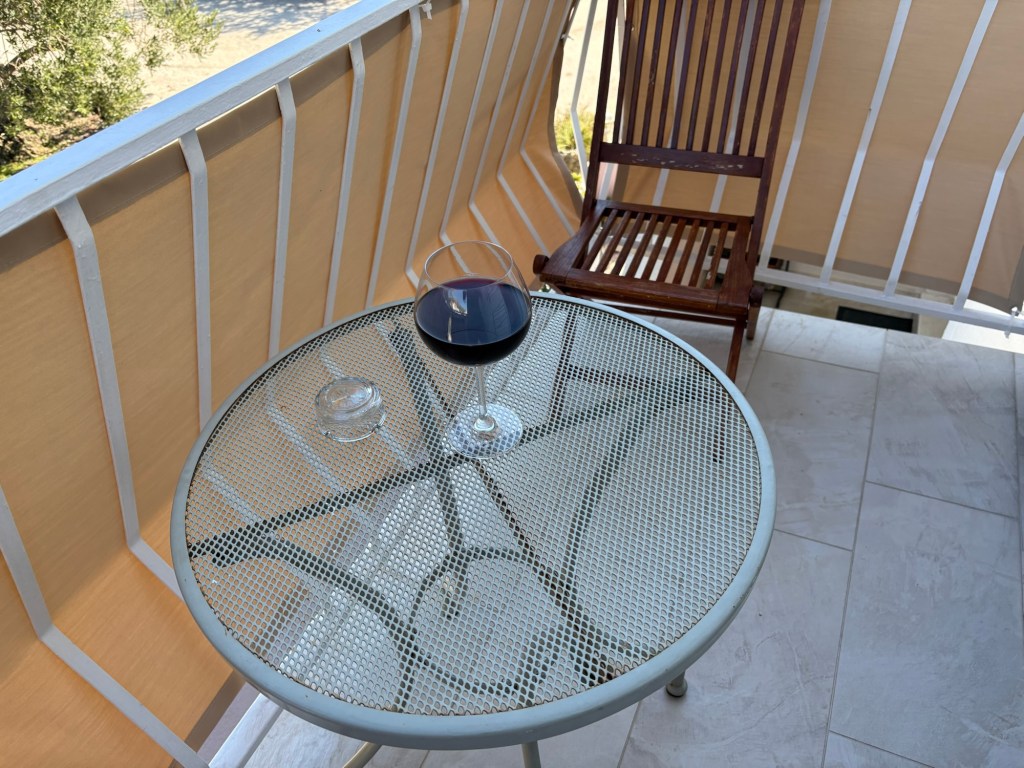
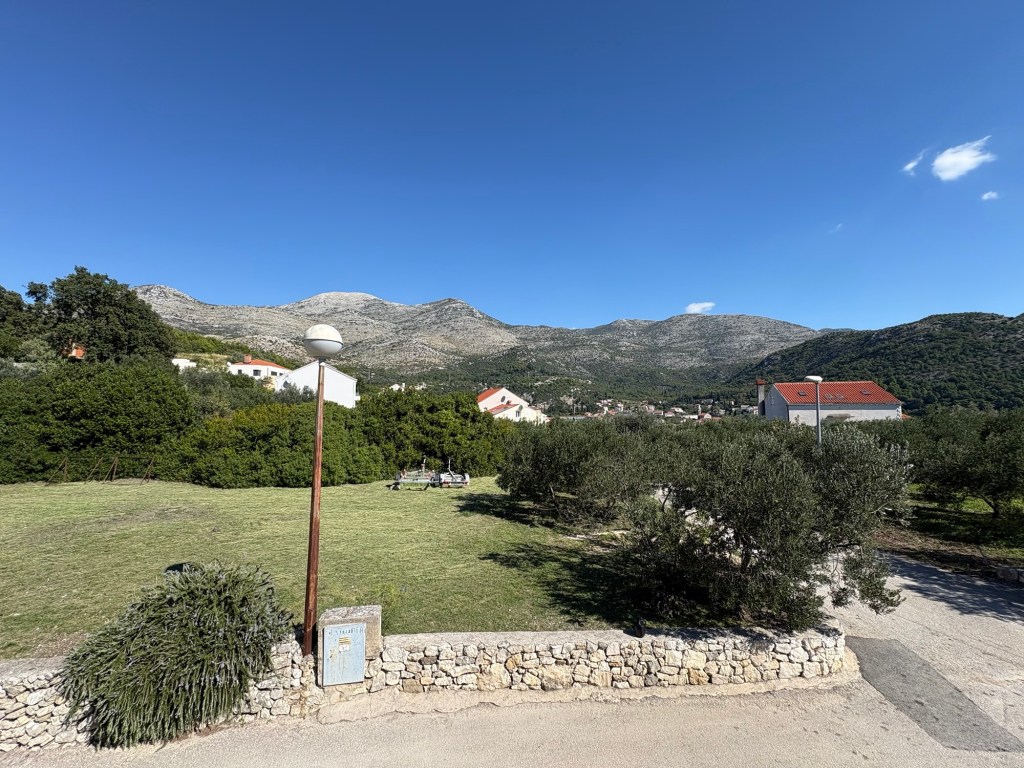
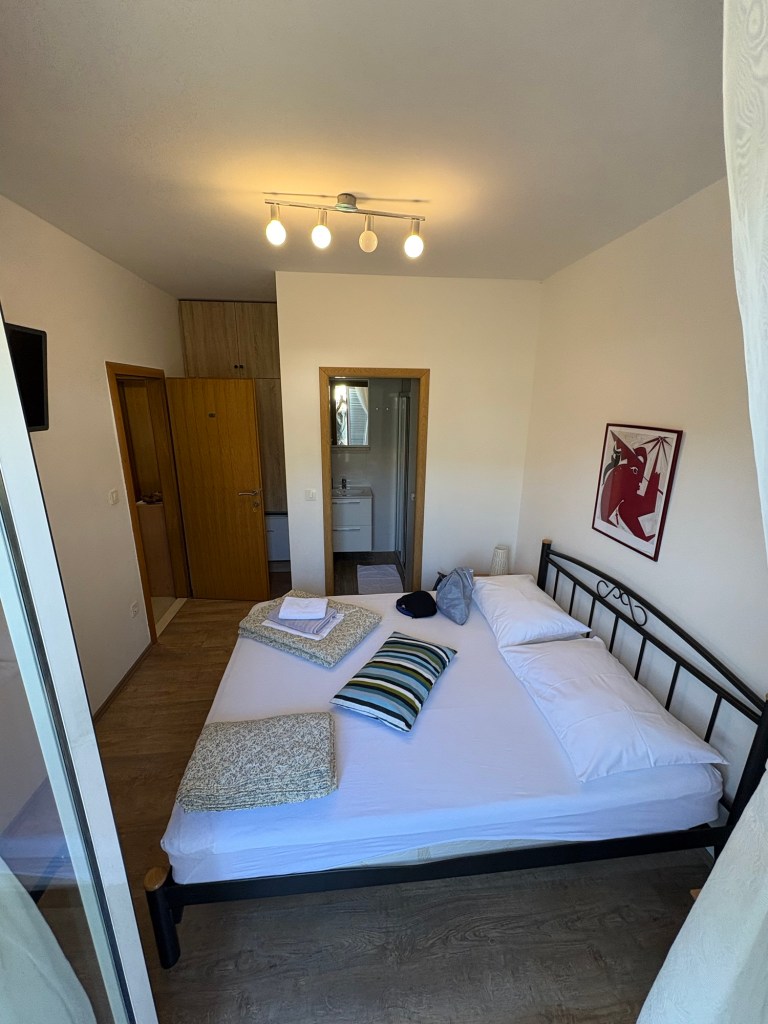
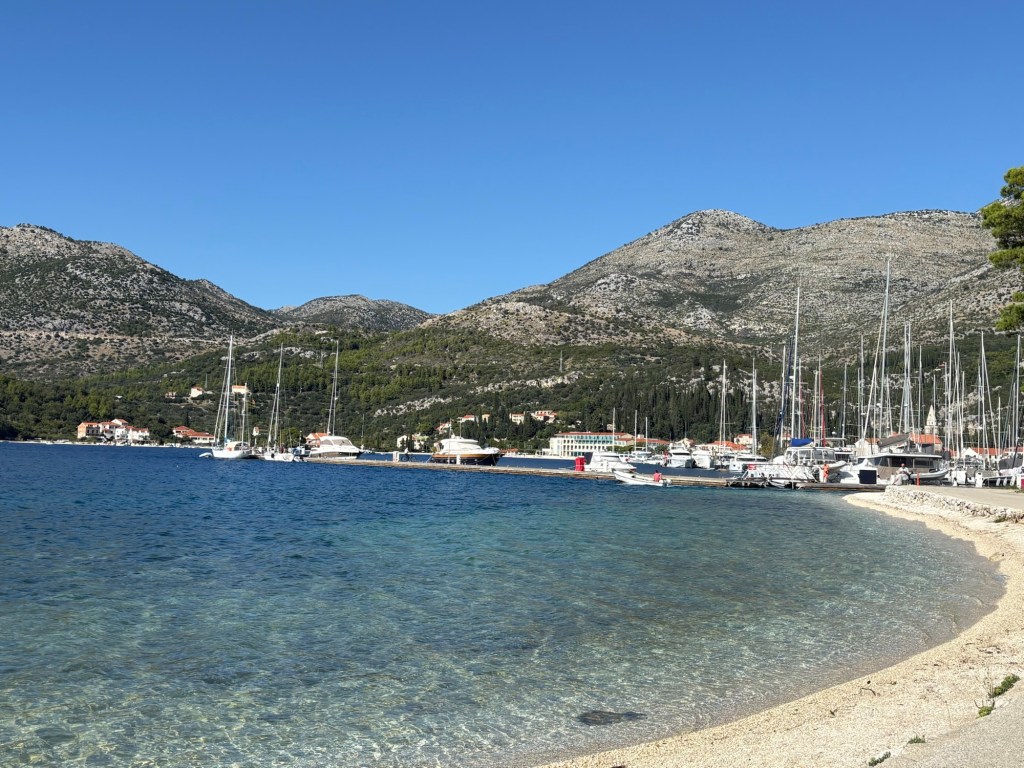
Another 45 minute drive north along the coast took me to my stop for the night, the small Croatian waterfront town of Slano. When I arrived at my lodging for the night, my host brought me a glass of homemade red wine to relax with on the balcony of my room.  Amazing wine and a gorgeous afternoon!
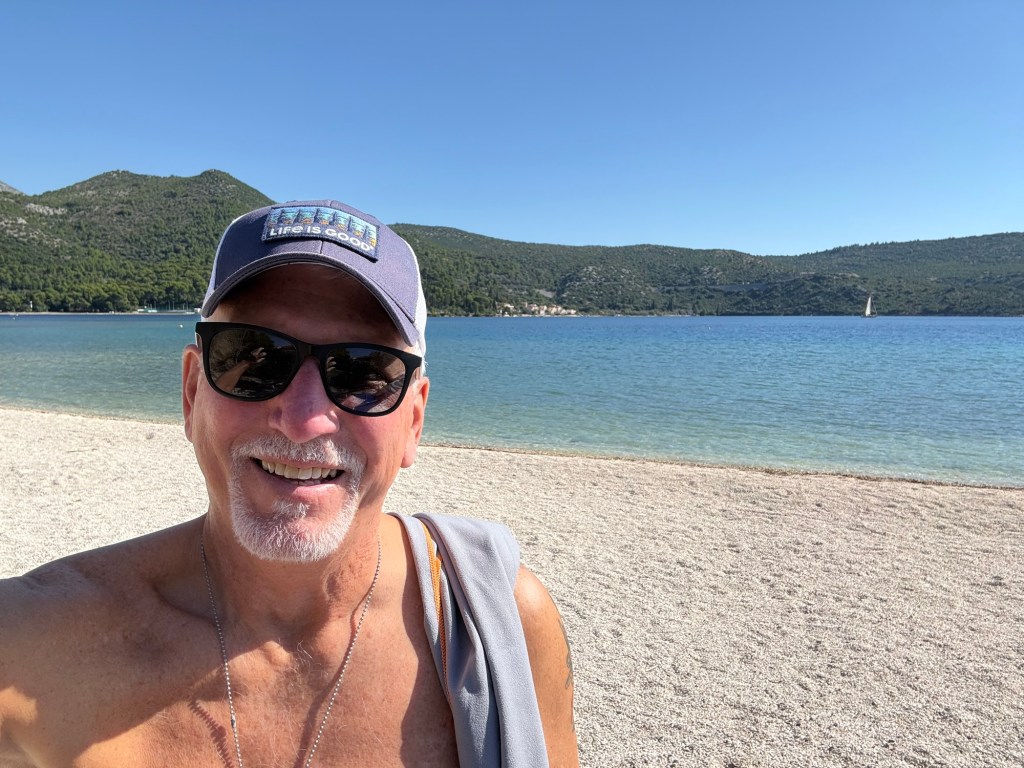
Since the beach was only 5 minutes away, I decided, “why not?”  A swim in the Adriatic on a sunny 60 degree day – perfect! And it was actually quite comfortable! The water was very clear and very salty!  The beach was clean, empty, and even the beach chairs were all chained together and locked up.  Maybe it’s post swim season…  But I actually did see a number of people in swim suits on the numerous beach areas around the large cove.
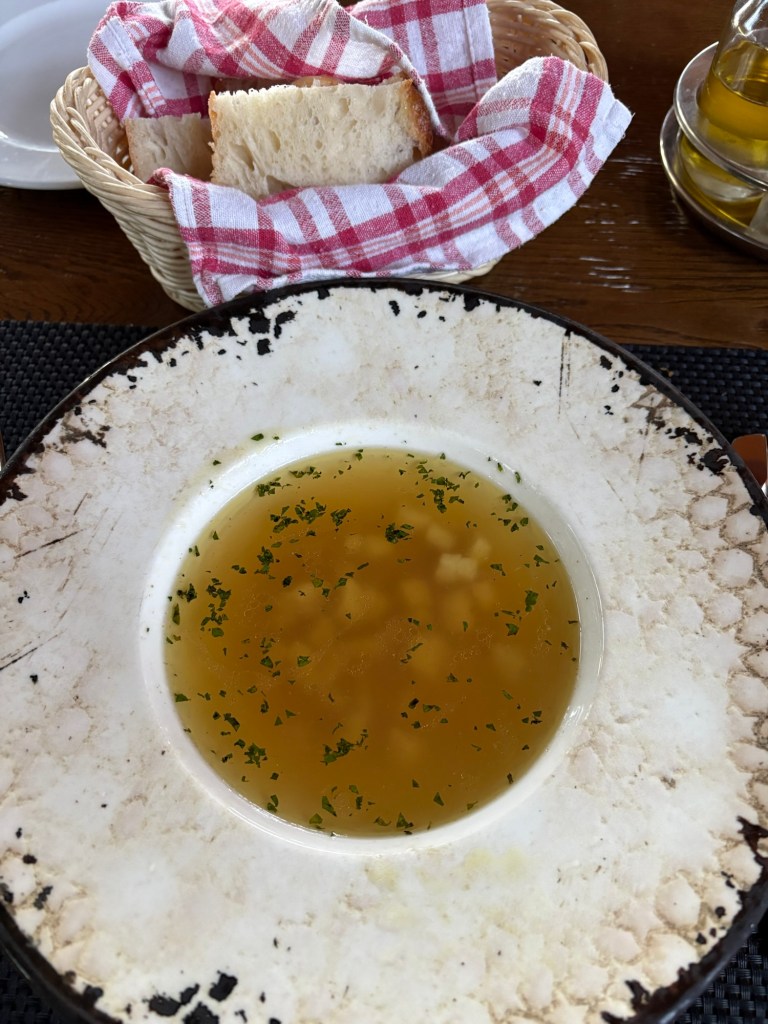
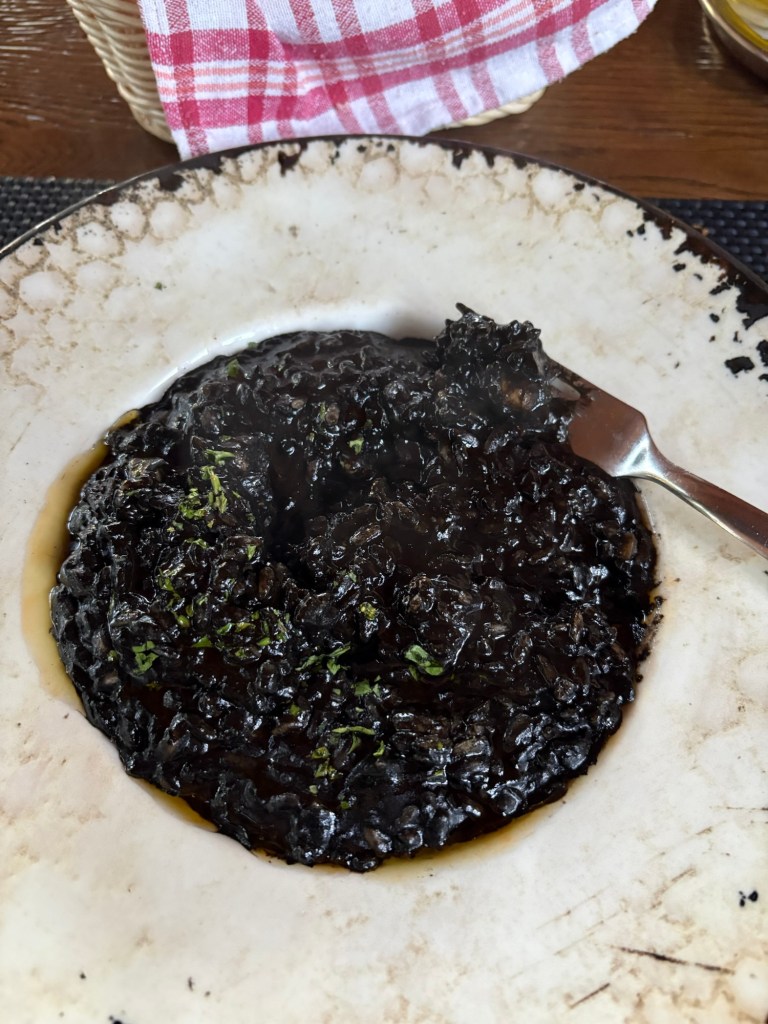
Dinner at a local restaurant was excellent! I enjoyed a couple specialties from the Dalmatian Coast, as the southern area of Croatia is known.

Dalmation Fish Soup
Black Risotto with Cuttlefish

In Dalmatian homes this seafood specialty is most often eaten as a light appetizer. It has an intensive taste and represents a real delicacy which will delight lovers of fish specialties. Its preparation begins with the brief toasting of the rice which is then poured over with a small amount of water, wine, stock or chosen sauce. A freshly caught cuttlefish, which is the star of black risotto, should be cleaned well and then the black ink, which the animal otherwise uses as a defense mechanism against predators, needs to be carefully removed. Only the diluted ink is added to the dish just before the end of cooking in order that this risotto assumes its recognized look.

Apart from the cuttlefish, the special flavor of this risotto is also achieved by the addition of Prošek, the Dalmatian dessert wine which is added to the rice during cooking and which gives it a particular aroma. Although it has a strong taste of the sea, this risotto is easily digestible and is an ideal starter at feasts of many courses, and the fresh ingredients, of which in Dalmatia there is no lack of. (Source)

I washed it all down with a local beer, Ožujsko, some bread, and ice cream for dessert!

Before you go…

Exercise makes you look better naked.  So does tequila.  Your choice.

BALKANS FACTS AND ANECDOTES

The Balkans, a region in southeastern Europe, is known for its diverse cultures, stunning landscapes, and complex history. It’s a place where East meets West, with influences from various empires and a rich mix of traditions. Here are some interesting facts: 

Geography and Nature:

  • The Balkan Peninsula is surrounded by the Adriatic, Mediterranean, and Black Seas. 
  • The region is dominated by mountain ranges like the Dinaric Alps and the Balkan Mountains, which are called “Balkan” meaning “mountain” in Turkish. 
  • The Balkans boast a diverse landscape, including high snowy mountain peaks, deep river valleys, fertile plains, and a beautiful coastline. 
  • Plitvice Lakes in Croatia: and Lake Ohrid in North Macedonia are just two examples of the region’s natural beauty. 

History and Culture:

  • The Balkans is a region with a long and complex history, marked by the rise and fall of empires, including the Ottoman Empire and Yugoslavia. 
  • The region has been a crossroads of different civilizations and religions, including Christianity, Judaism, and Islam. 
  • It’s home to some of the oldest cities in Europe, such as Plovdiv and Sofia, both in Bulgaria. 
  • Cultural traditions vary significantly between countries, with distinct languages, music, and cuisine. 

Unique Facts:

  • In Albania, nodding your head up and down means “no” instead of “yes”. 
  • Bosnia and Herzegovina is home to the only public clock that measures lunar time. 
  • Bulgaria is a leading exporter of rose oil. 
  • Croatia has over 1,000 islands. 
  • The word “vampire” is of Serbian origin. 
  • Montenegro technically uses the Euro as its currency without having an official agreement to do so. 
  • Nikola Tesla, the famous inventor, was born in an area that is now part of Croatia. 
And there’s so much more to Balkans history and life in the Balkans. Just do a quick Google search sometime.

Before you go…

Exercise makes you look better naked.  So does tequila.  Your choice.

Off to Montenegro

I was up early to avoid some of the crazy Tirana drivers.  Traffic wasn’t bad under blustery winds, overcast skies, and no pouring rain, so that must have helped.  It was only a 2 1/2 hour drive north to Podgorica, Montenegro’s capital.

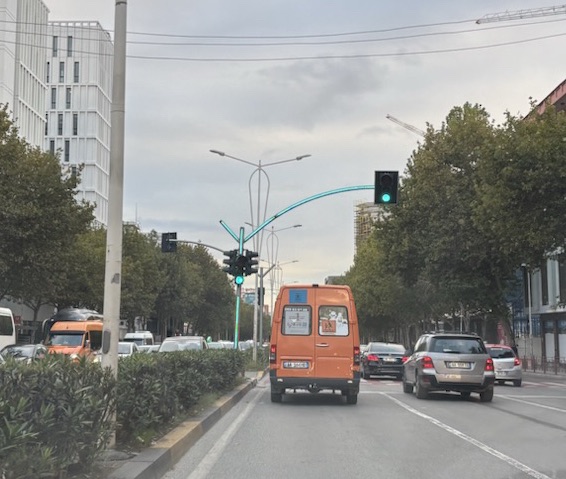
The coolest traffic lights ever! Look closely – the entire pole lights up!

It was a peaceful drive through rolling hills and flat valleys to Podgorica. Christian church steeples and/or Muslim minarets are the highest peaks in most of the small towns and villages.

Podgorica is a beautiful upscale looking town with a river running through the center.  The town is surrounded by small mountains and hills covered with small trees and exposed rock.  Very picturesque! All that I’ve seen so far driving through Montenegro looks newer, more up-to-date, and well kept.  The roads are also excellent.

Some of the exposed rock terrain today

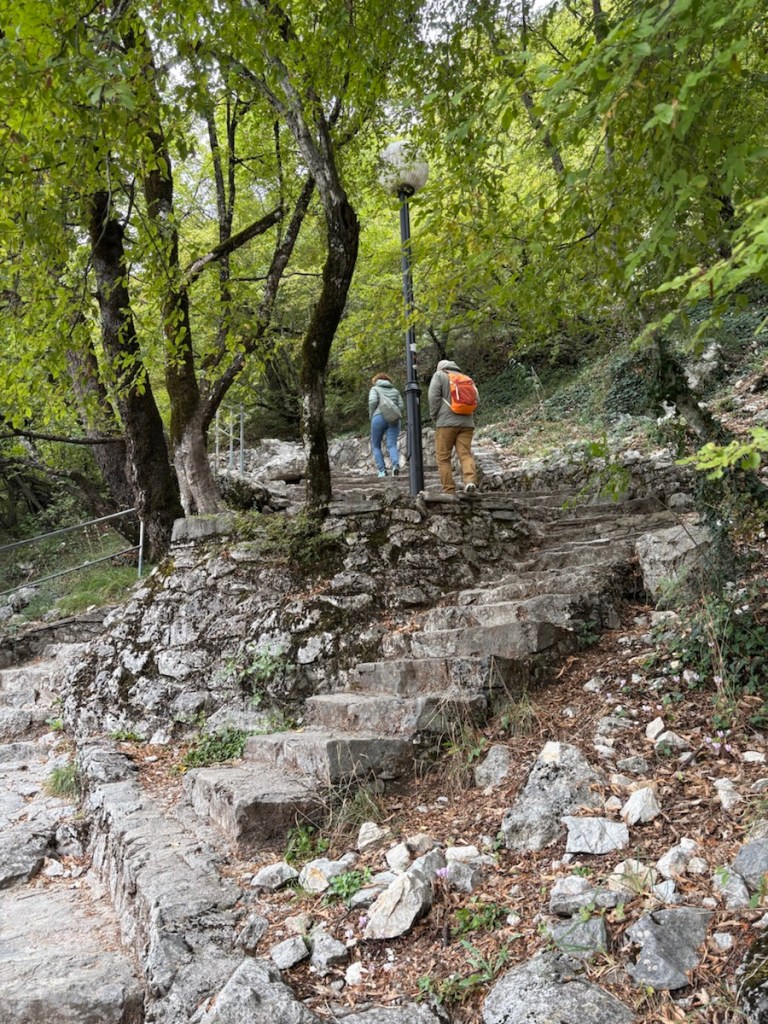
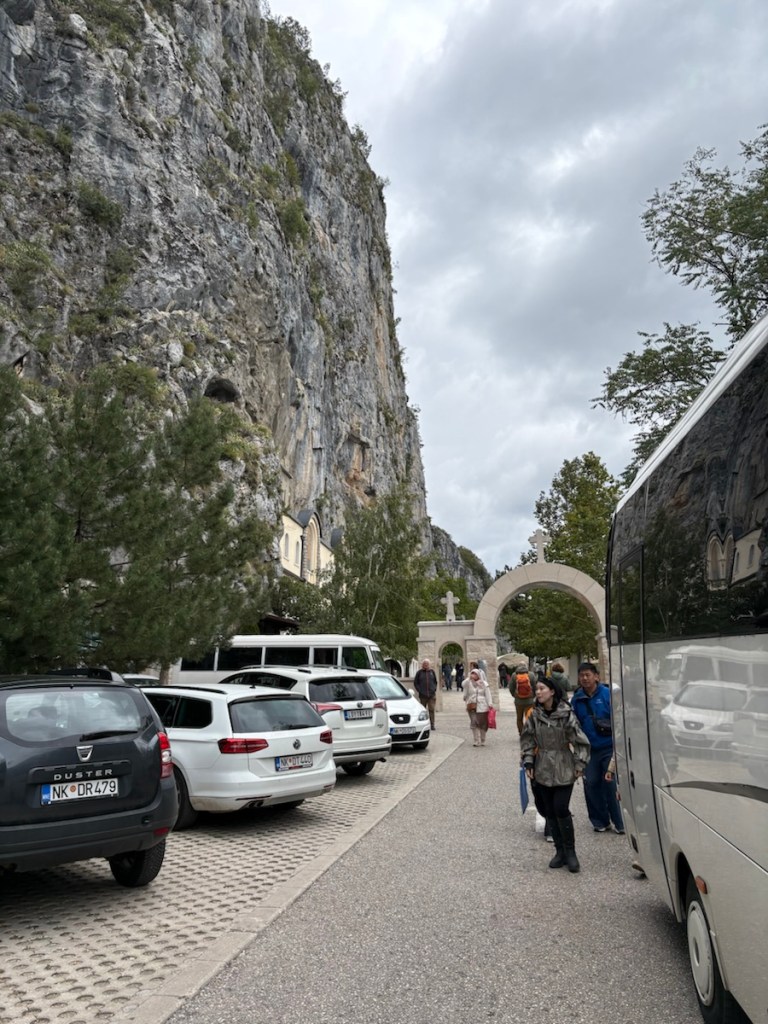
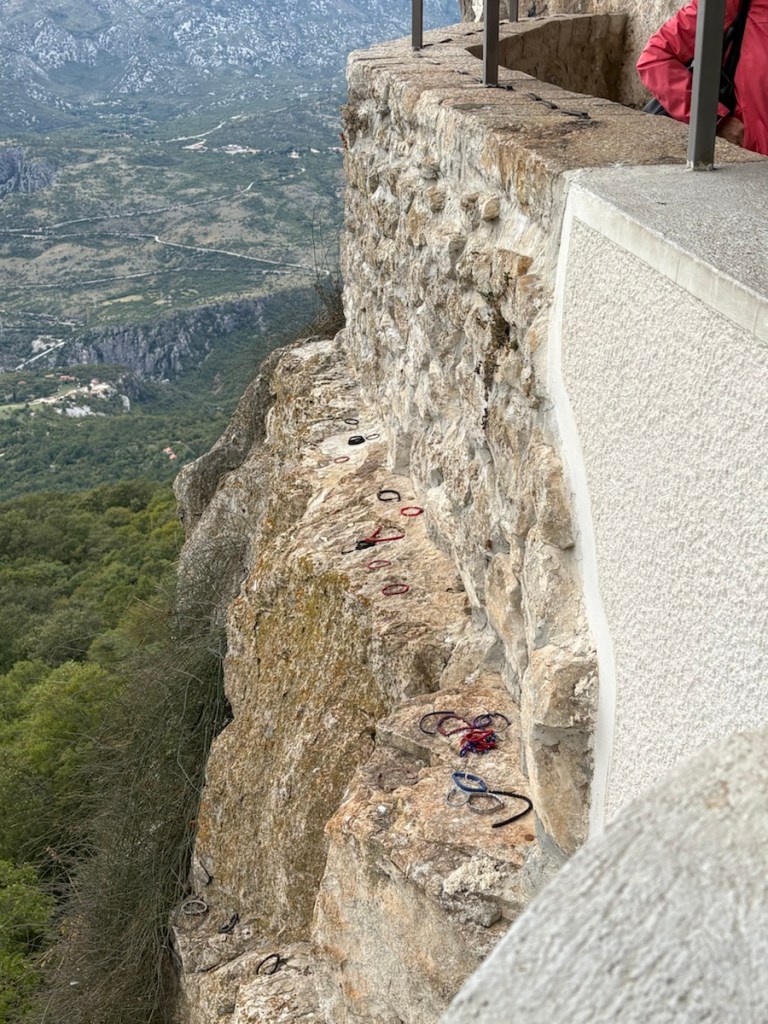
After Podgorca, I headed up into the low mountains for the hour drive to the famous Ostrog Monastery.  After navigating the final few miles on an amazing switchback road, I arrived near the Ostrog Monastery. I parked in the parking lot.  That was because I didn’t know there was another option, the “upper parking lot.” I found out after I walked up about a thousand steep stone steps through the woods and into the Upper Parking Lot adjacent to the monastery!  Fortunately, the thousand steps back down to the lower lot were not so bad…
A few of the MANY steps
And the steps led to the very convenient “Upper” Parking…
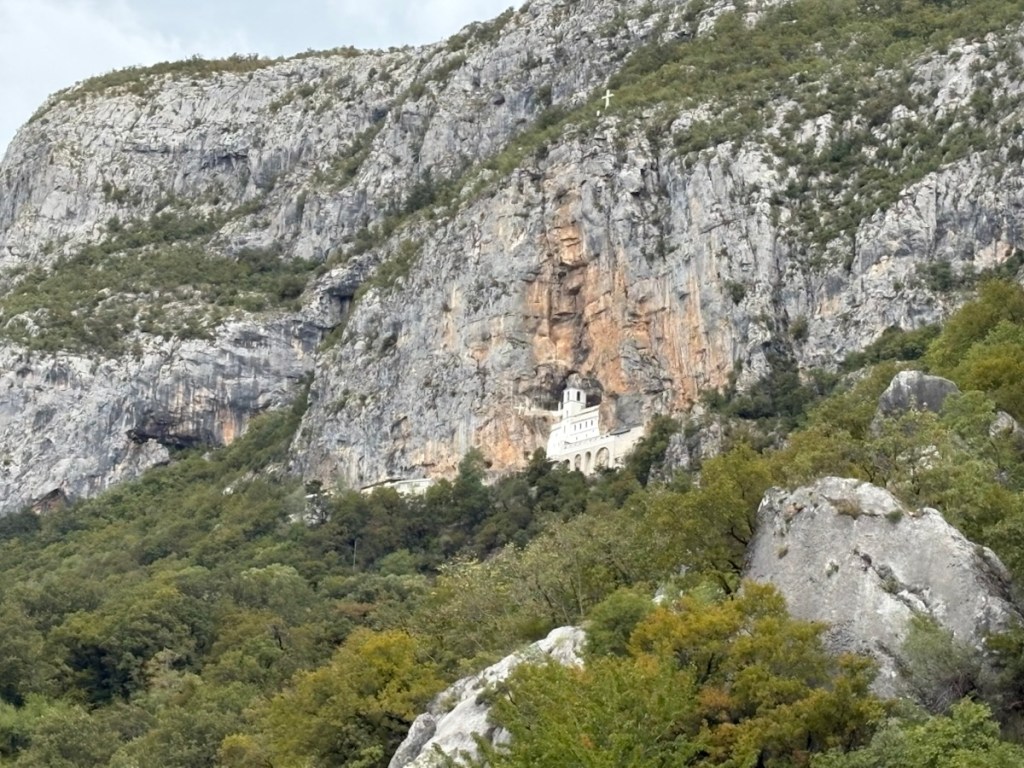
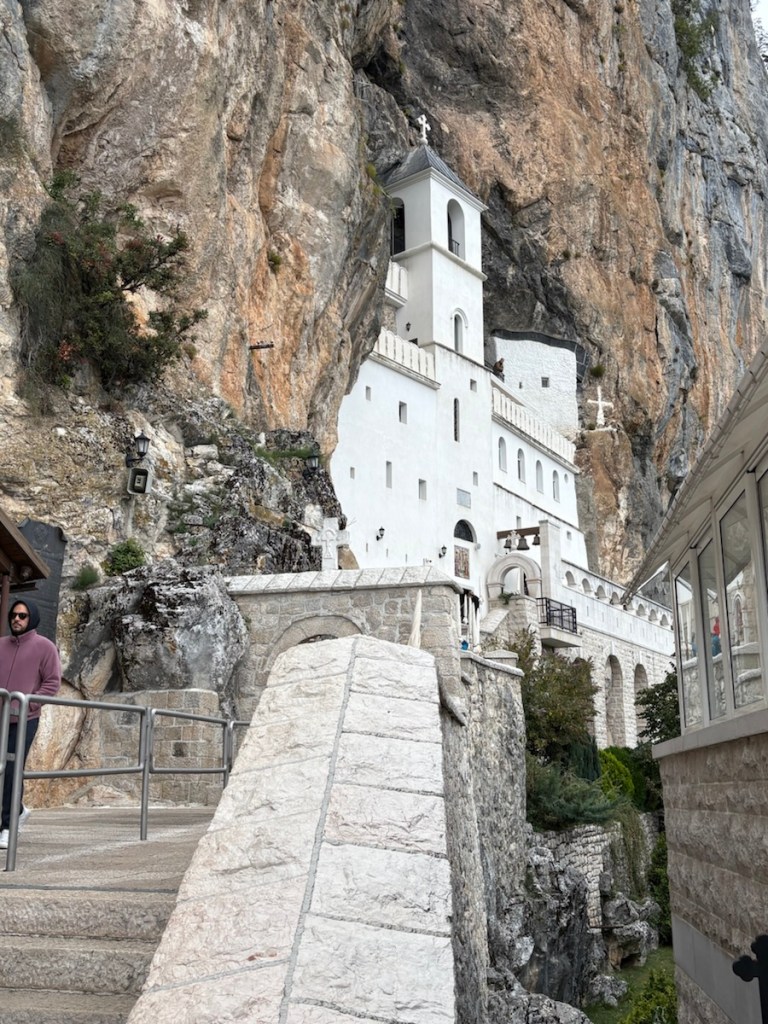
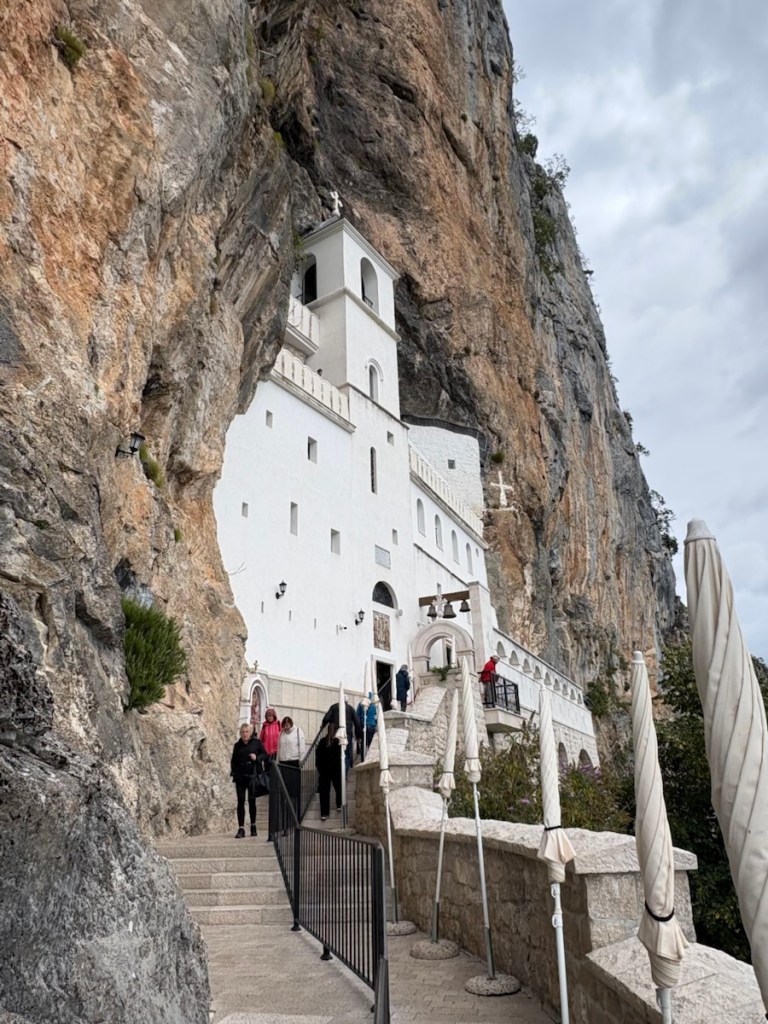
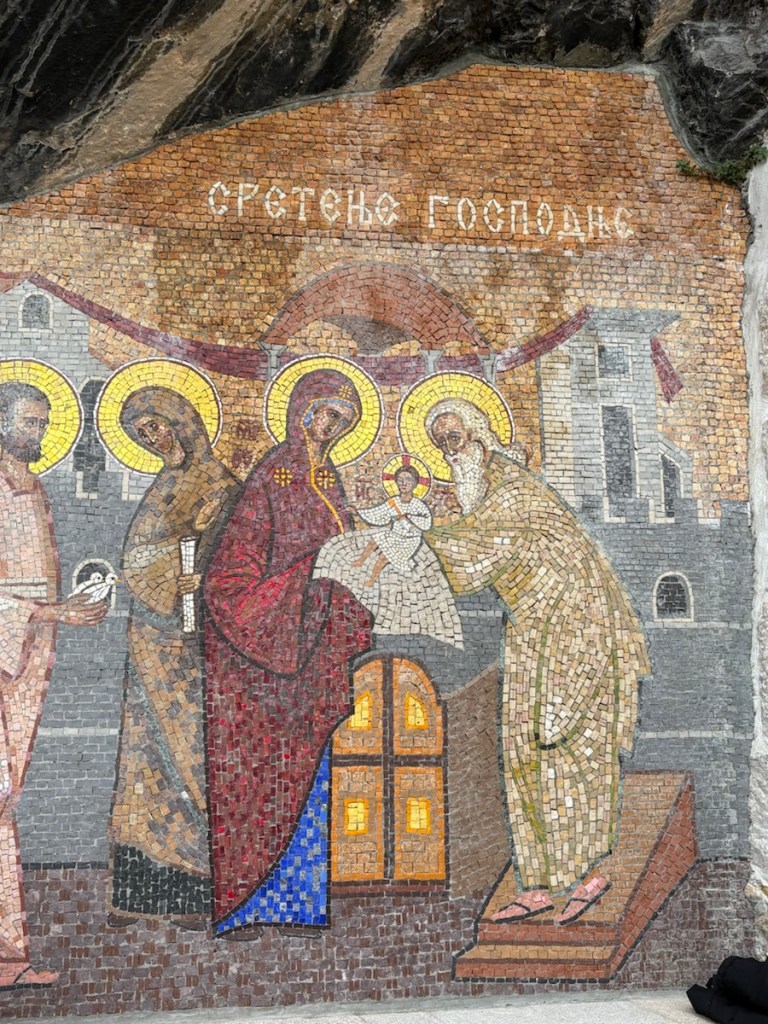
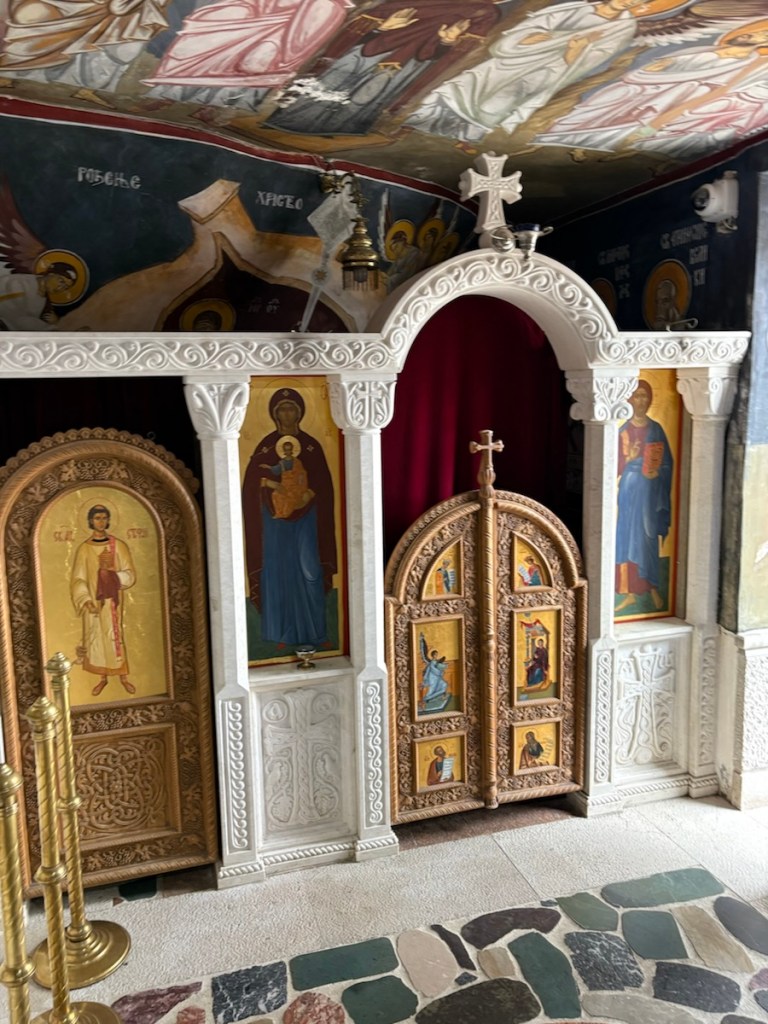
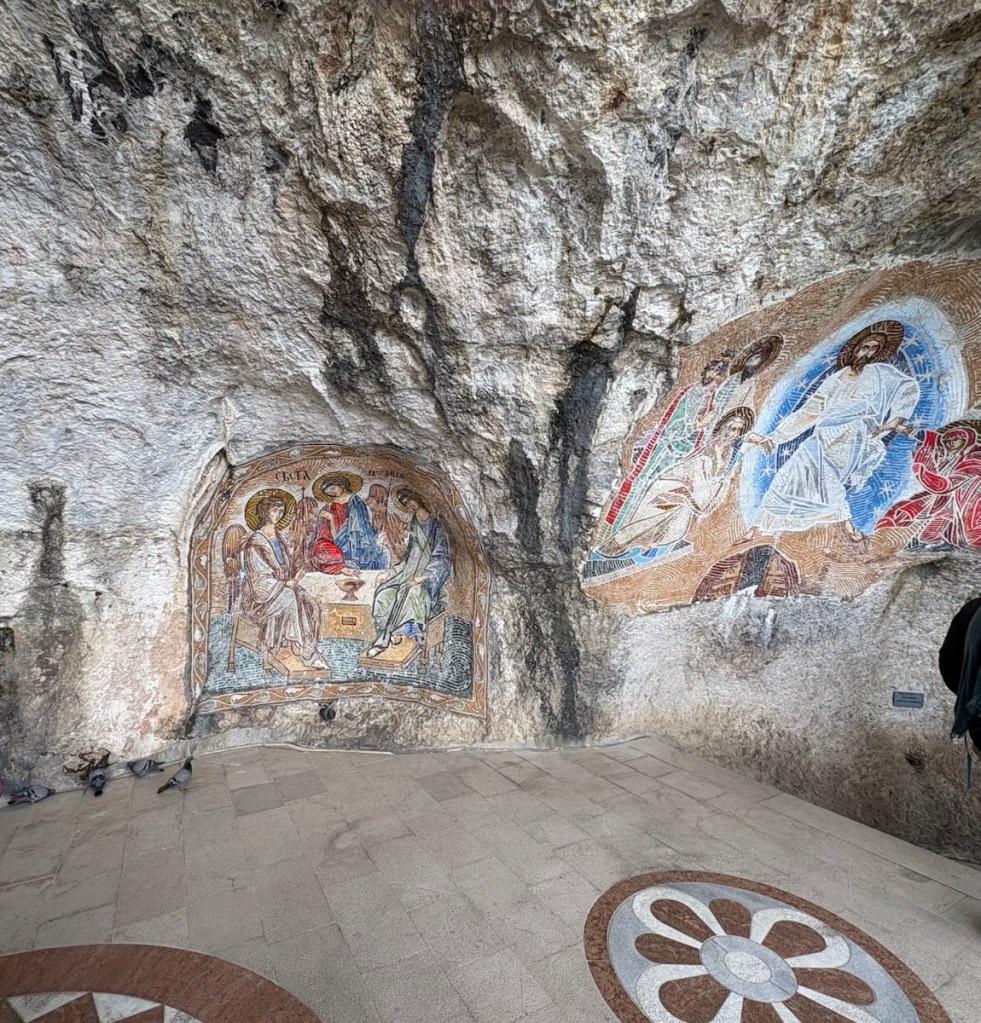
The Monastery – built into the rock wall at about 3,000feet above sea level.

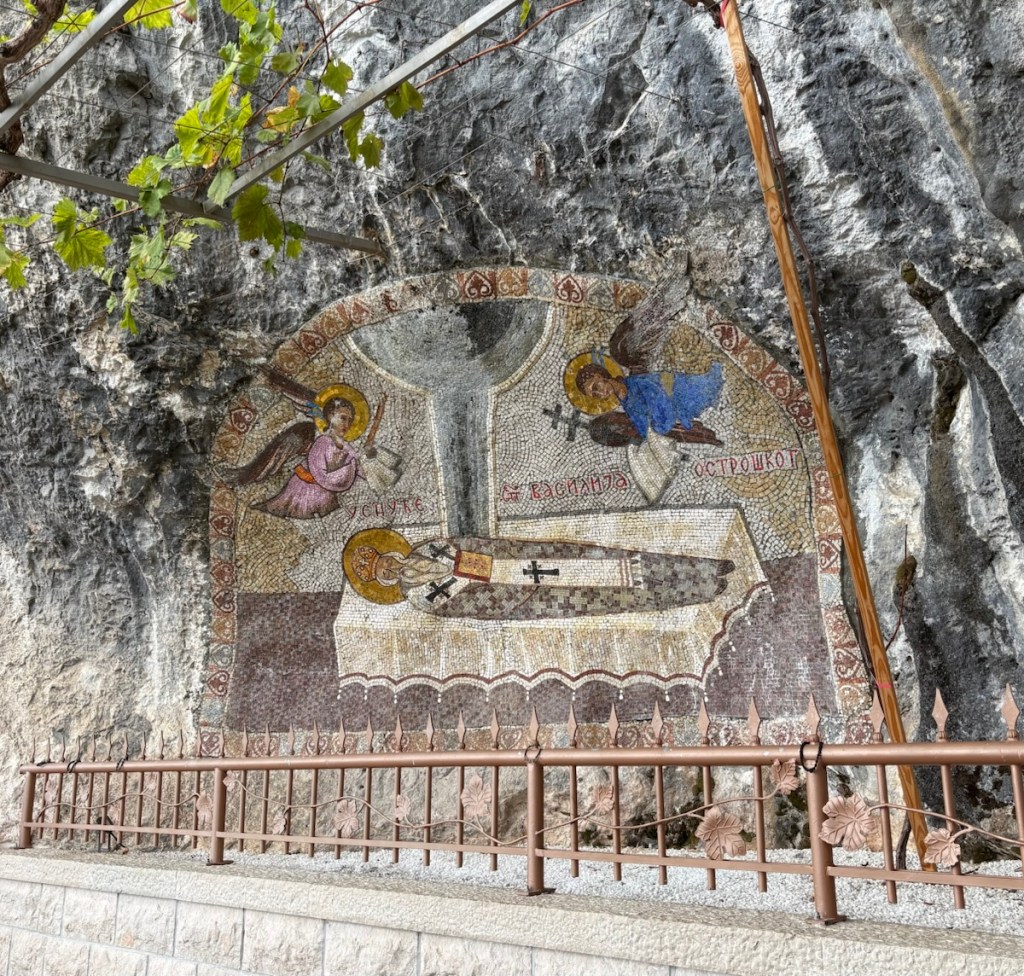
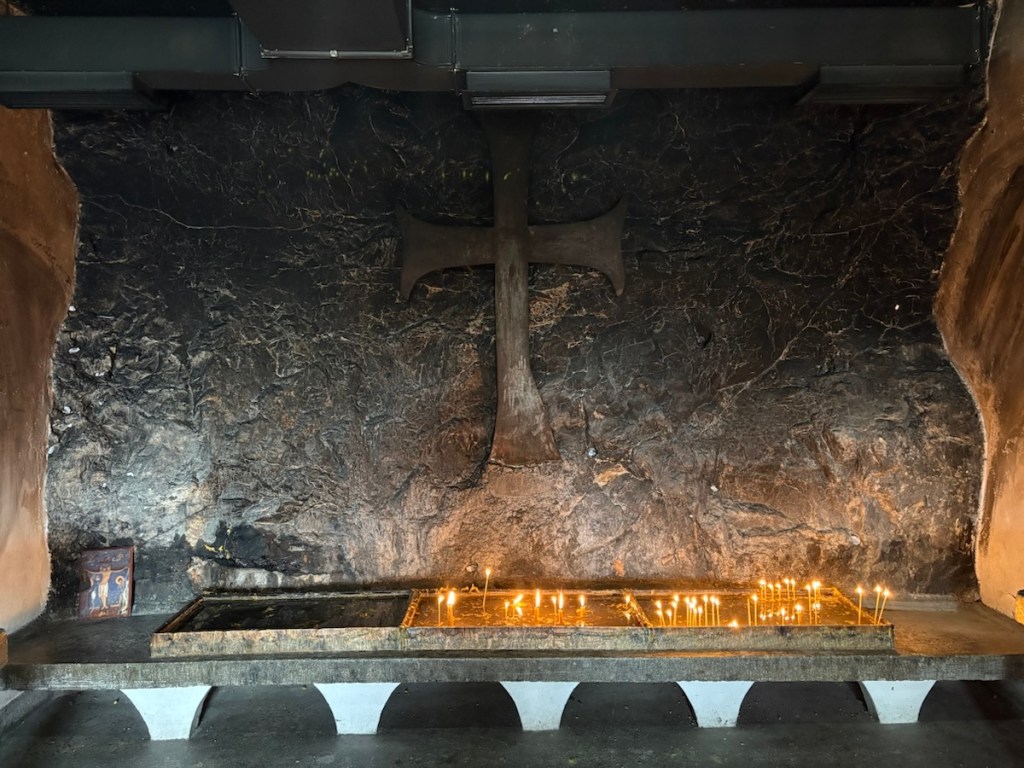
Ostrog Monastery is one of the most important religious sites in Montenegro, and it is known across the world. It welcomes not only Orthodox Christians, but also Catholics, Muslims, and people of other faiths. Visitors from all over the world come to pray, reflect, or seek blessings from the relics of Saint Basil. The Ostrog Monastery is a monastery of the Serbian Orthodox Church situated against an almost vertical background, high up in the large rock of Ostroška Greda, in Montenegro. It is dedicated to Saint Basil of Ostrog, who was buried here. From the monastery, the Bjelopavlići plain can be seen. Ostrog monastery is the most popular pilgrimage place in Montenegro. (Wikipedia)
Perast and Our Lady of the Rocks

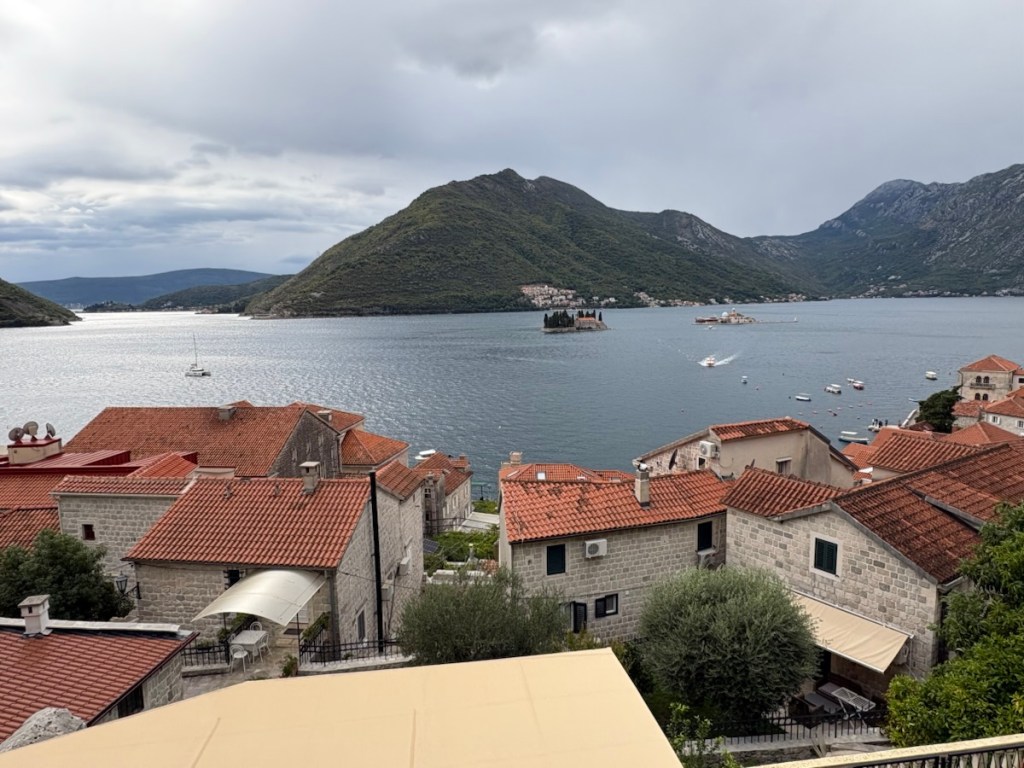
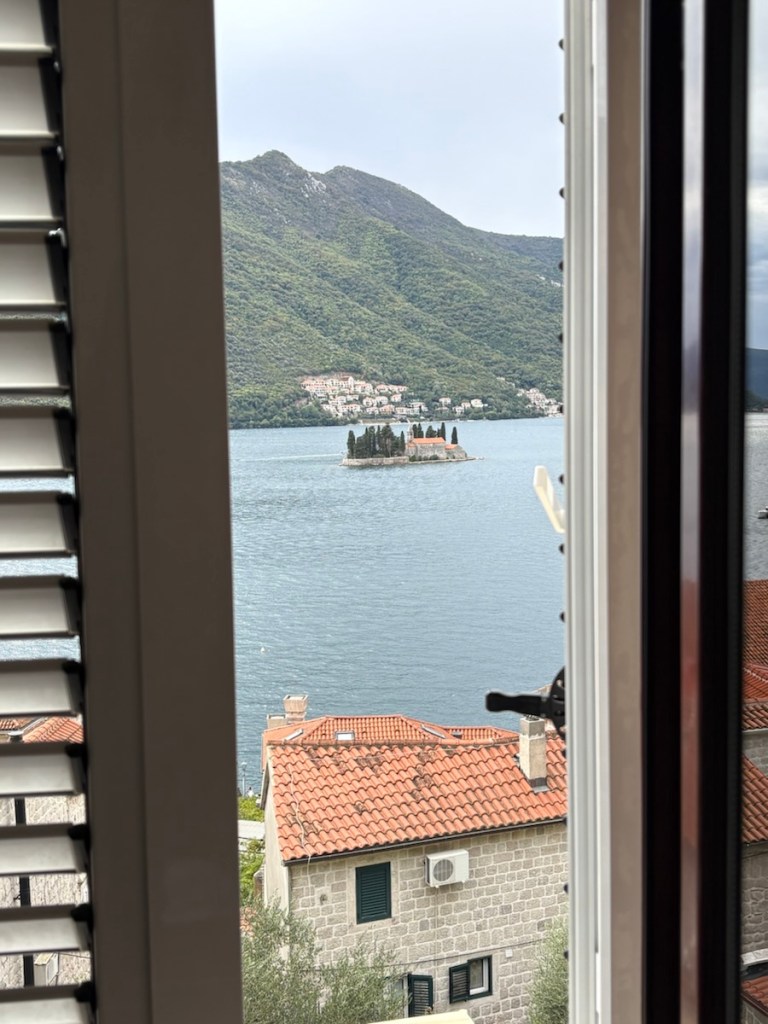
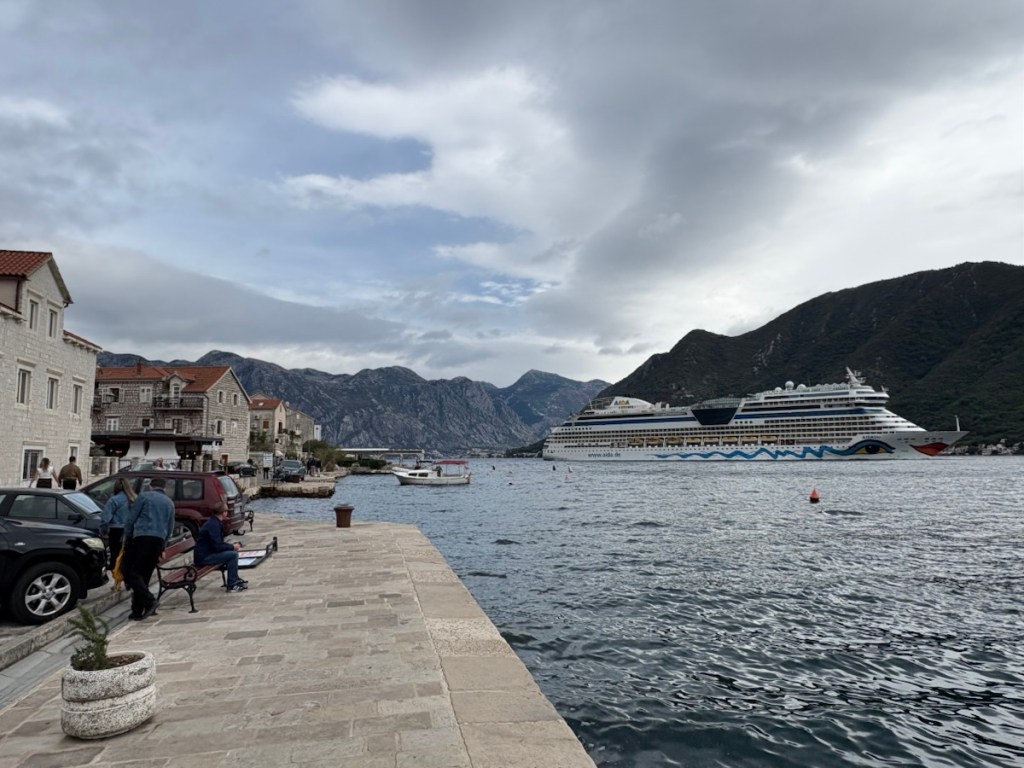
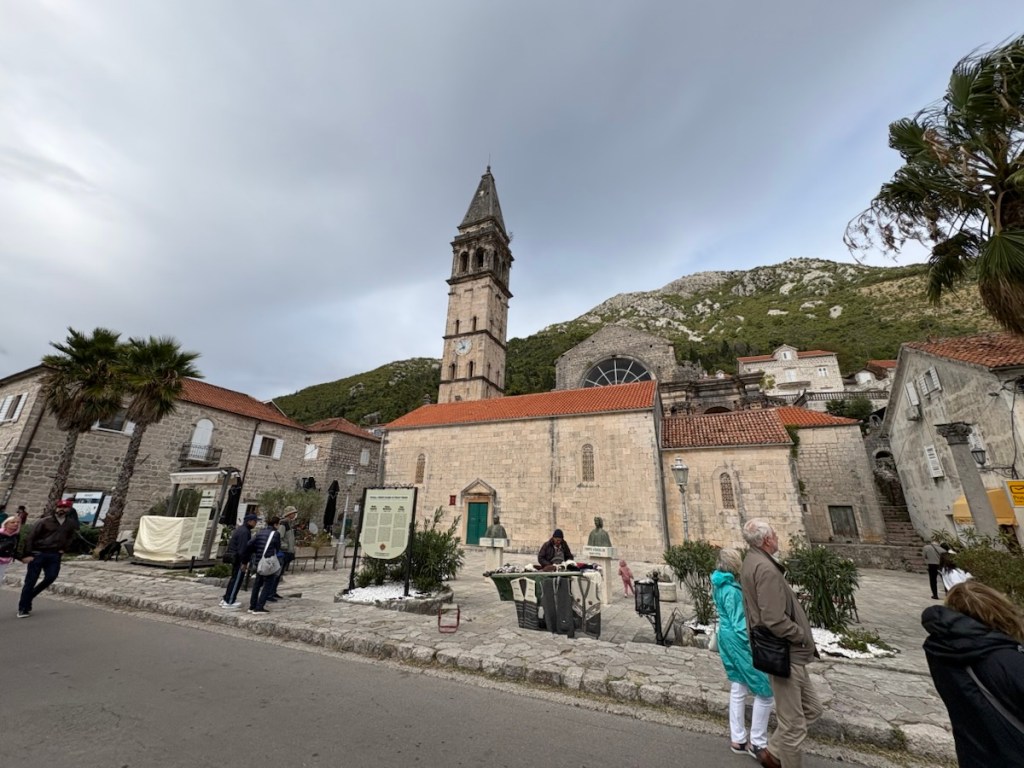
Another hour of travel on windy roads found me in Perast, Macedonia, my bayside home for the night! Perast is a charming baroque town located along the stunning Bay of Kotor, recognized for its well-preserved architecture and serene ambiance. The picturesque waterfront, lined with traditional stone houses, provides an enchanting backdrop to explore the narrow cobbled streets filled with quaint shops and cozy cafes. One of the highlights of Perast is the opportunity to visit the island church of Our Lady of the Rocks, an iconic symbol of the town. According to local legend, the island was formed by seatarers who laid stones and sunk old vessels over the years, creating a man-made island.

The Church of Our Lady of the Rocks, constructed in the 17th century, is central to the community’s maritime heritage. Visitors can marvel at its stunning frescoes, crafted by the famous painter Tripo Kokolja, and admire the carefully curated nautical-themed artwork displayed within. The church houses a museum that reveals the rich history of Perast and its surrounding waters, showcasing artifacts, historical relics, and maritime traditions that date back centuries.

A boat ride to the island offers not just a scenic cruise, but also a sense of connection to a community that has celebrated its maritime culture for generations. Upon arrival, visitors can stroll through the church and its surrounding paths, taking in panoramic views of the bay and the nearby mountains. The island is also a popular spot for photography, as the interplay of the church’s white façade against the blue waters creates breathtaking visuals. (Source: Regional Travel Guide)

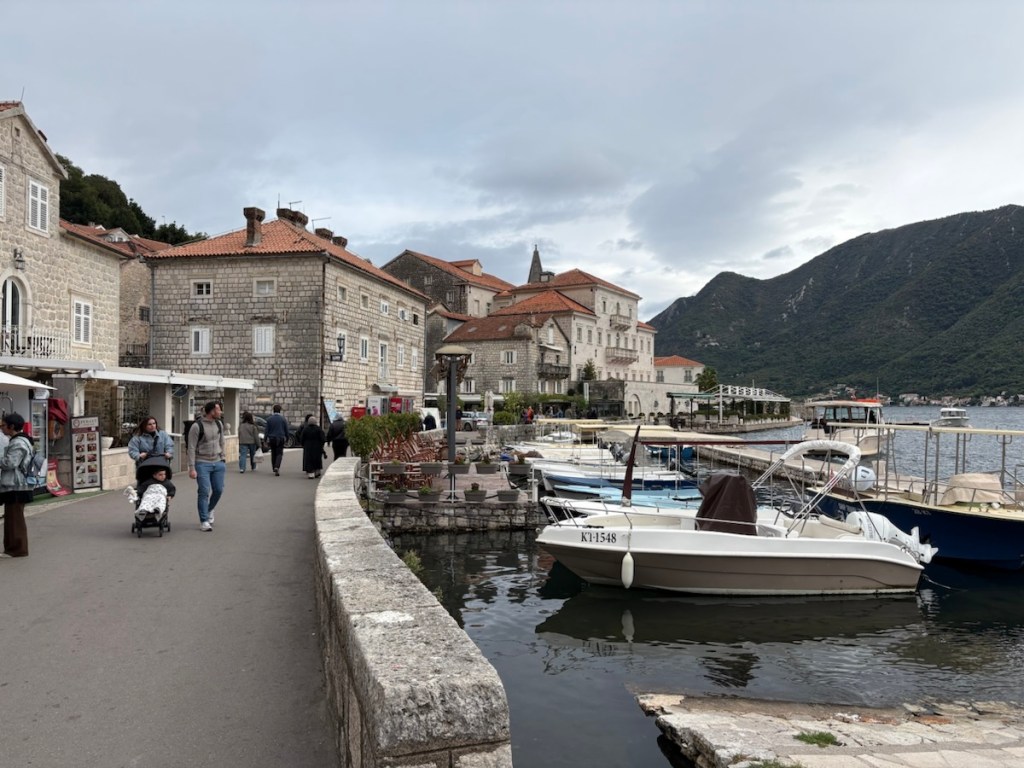
A portion of the Perast waterfront

The Great Ravage of Perast (excerpt from the town’s remembrance celebration)

On June 22, 1624, a fleet of about fifteen galleys carrying around two thousand Barbary pirates from Tunisia and Algeria sailed into the Bay of Kotor. Passing by Herceg Novi, then under Ottoman control, they headed towards Perast, which, along with Kotor, was part of the Venetian Republic. In the evening, the pirates attacked ,Perast, which lacked sufficient defenders as many men were at sea. They ravaged the town, plundering houses and churches, and kidnapping residents, including children, women, and the elderly, leaving behind devastation and 415 abducted souls.

Despite significant losses, the people of Perast did not surrender. They refused to abandon their homes and strove to reclaim the kidnapped, demonstrating their resilience and bravery during the difficult times that followed. The total damage from the raid was estimated at over one hundred thousand ducats. The effort to liberate the kidnapped population involved direct ransoms, diplomatic efforts, and the sale of property. In the face of these hardships, Perast managed to survive and strive onwards, continuing to fight against pirates and Ottoman domination and proving its indefatigable will and resilience.

The commemoration of the 400th anniversary of the Great Ravage of Perast, an event that deeply impacted the history and spirit of this Adriatic jewel, is demonstrative of the unflagging commitment of the locals and local institutions to further illuminate and interpret the circumstances of the event and its consequences, and to explore the key factors that enabled Perast’s recovery and development.

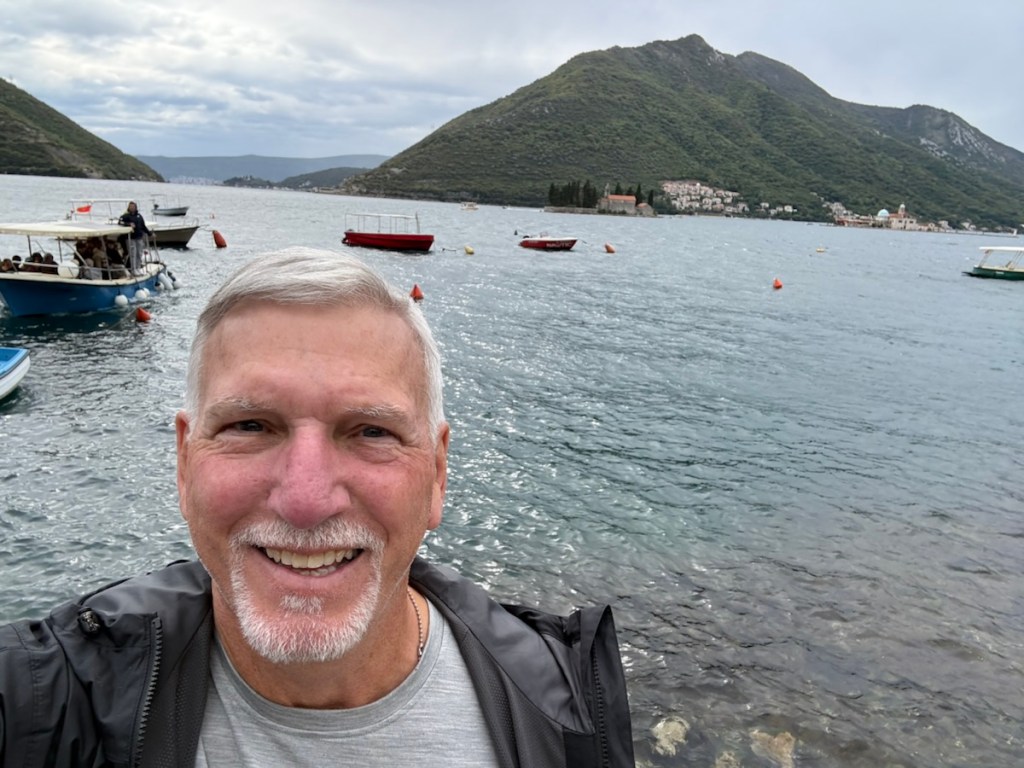
An old guy on the Bay of Kotor
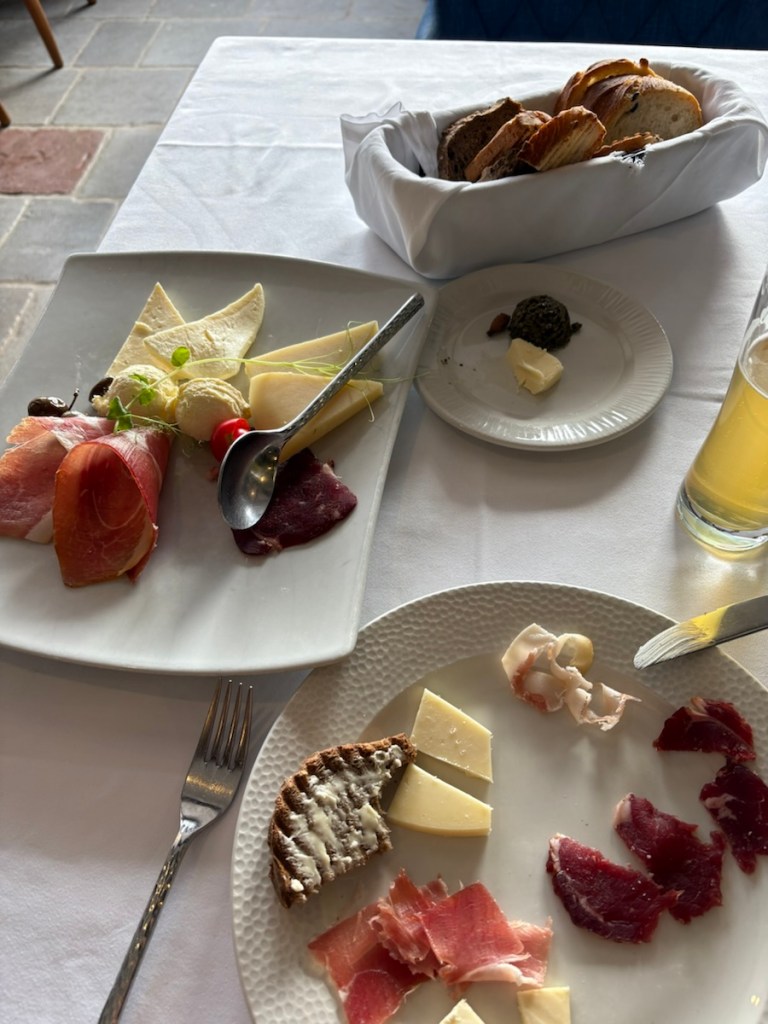
My delicious early dinner

Before you go…

“I find that the harder I work, the more luck I seem to have.” — Thomas Jefferson

A Rainy Day in the Balkans

I went through a brief customs screening leaving North Macedonia, but all customs and immigration stations were closed at the Kosovo border.  Oh well, just another tourist (or terrorist) entering without screening!

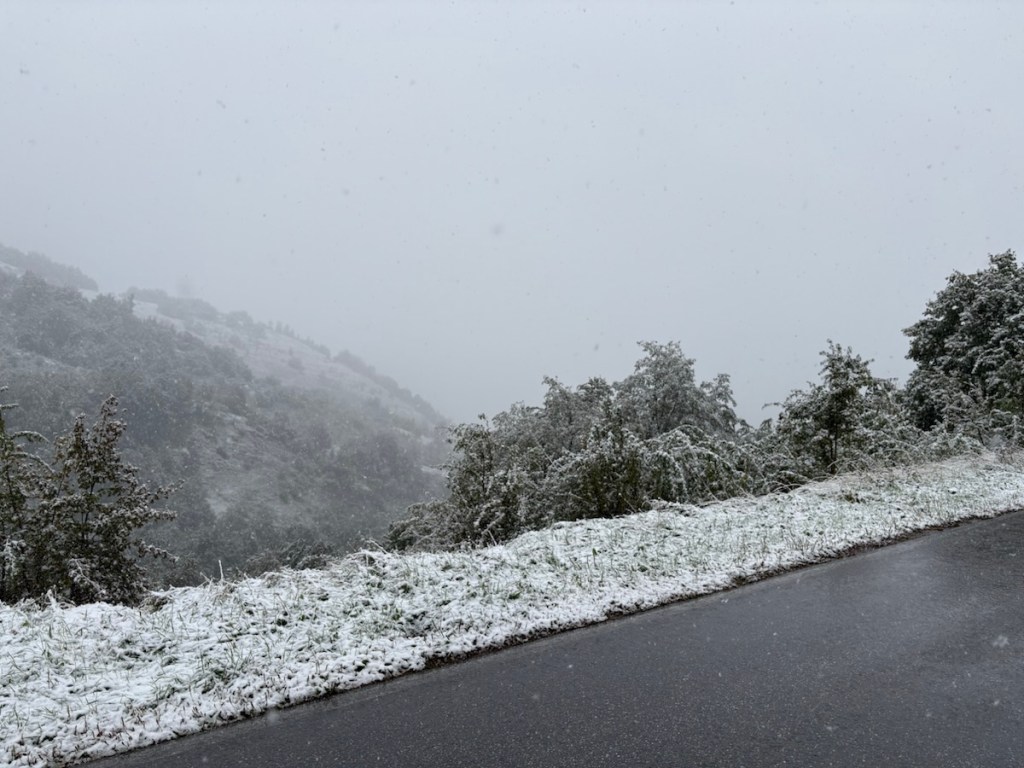
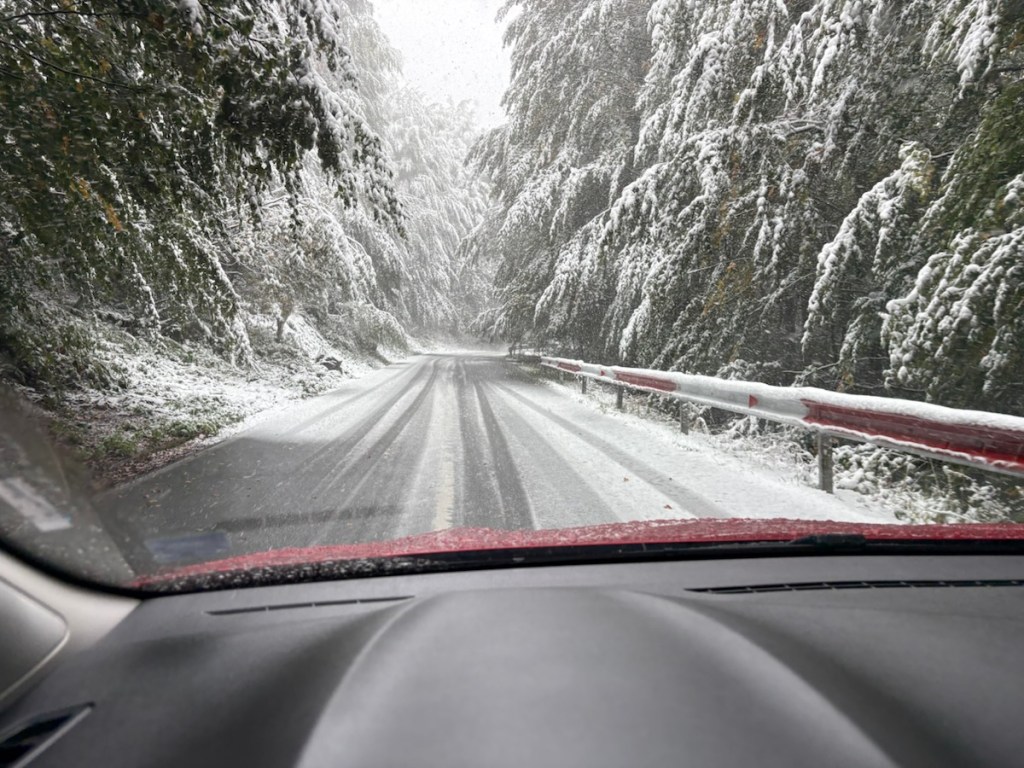
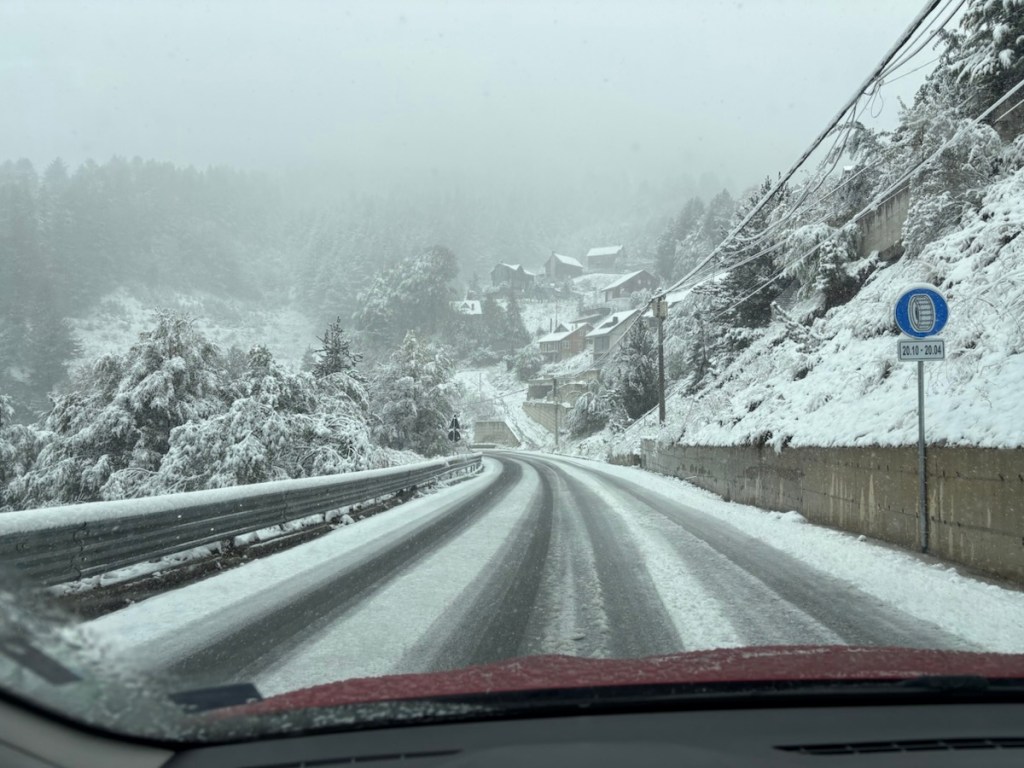
So the whole day was continuous heavy rain as forecast, with the exception of two hours through the mountains in Kosovo.  There it was heavy snow in the place of rain!  Fortunately, the winding mountain road was in good shape and traffic was light.  Of course it was! The locals were not silly enough to be out driving!  Only crazy American terrorists tourists. 

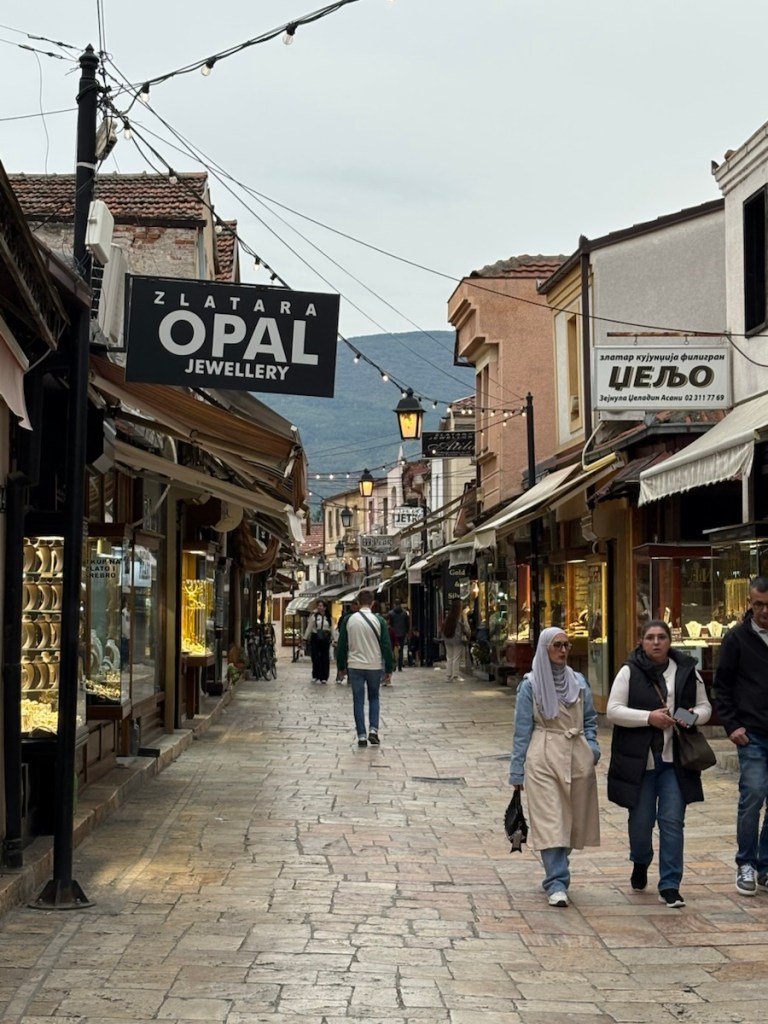
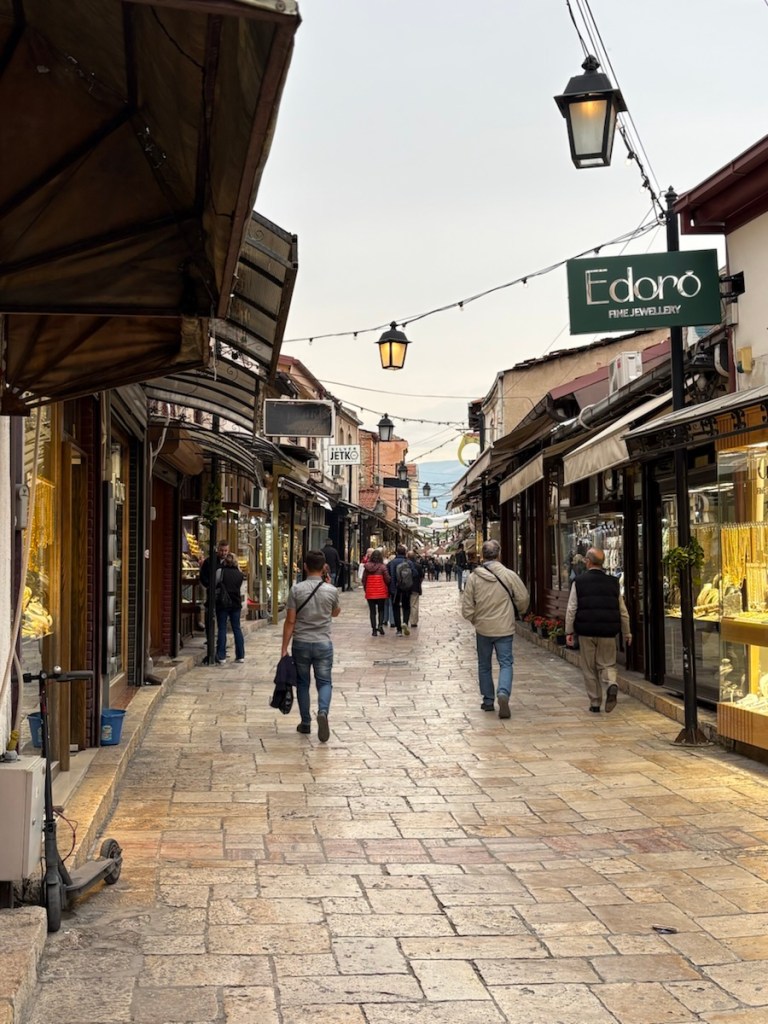
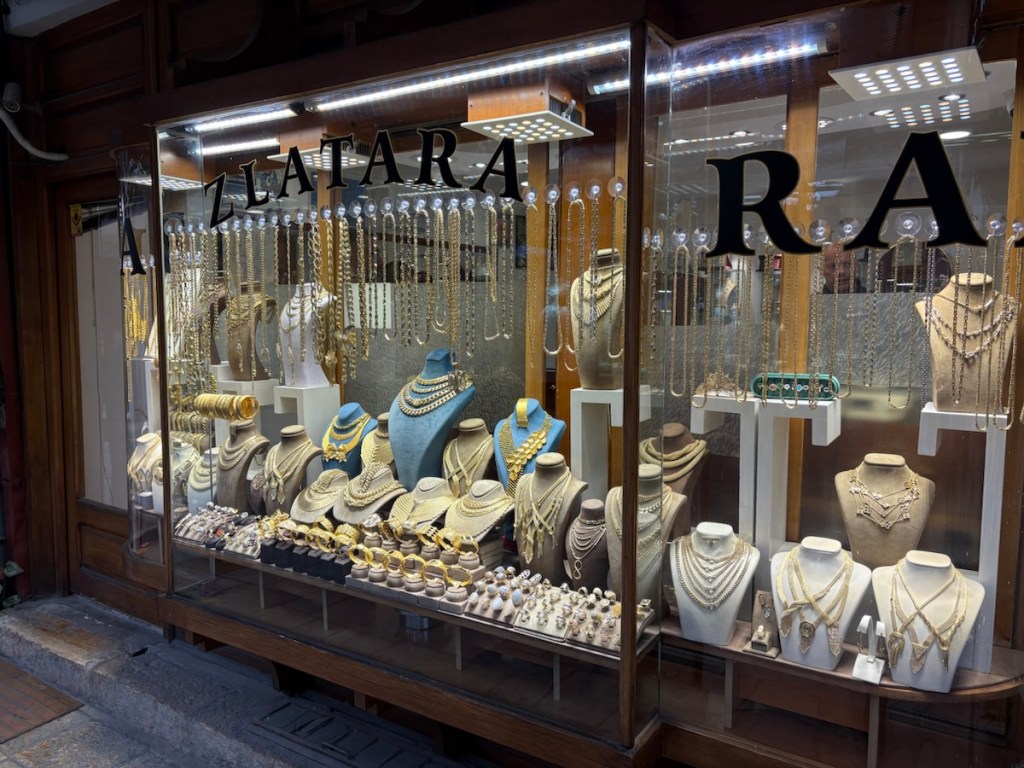
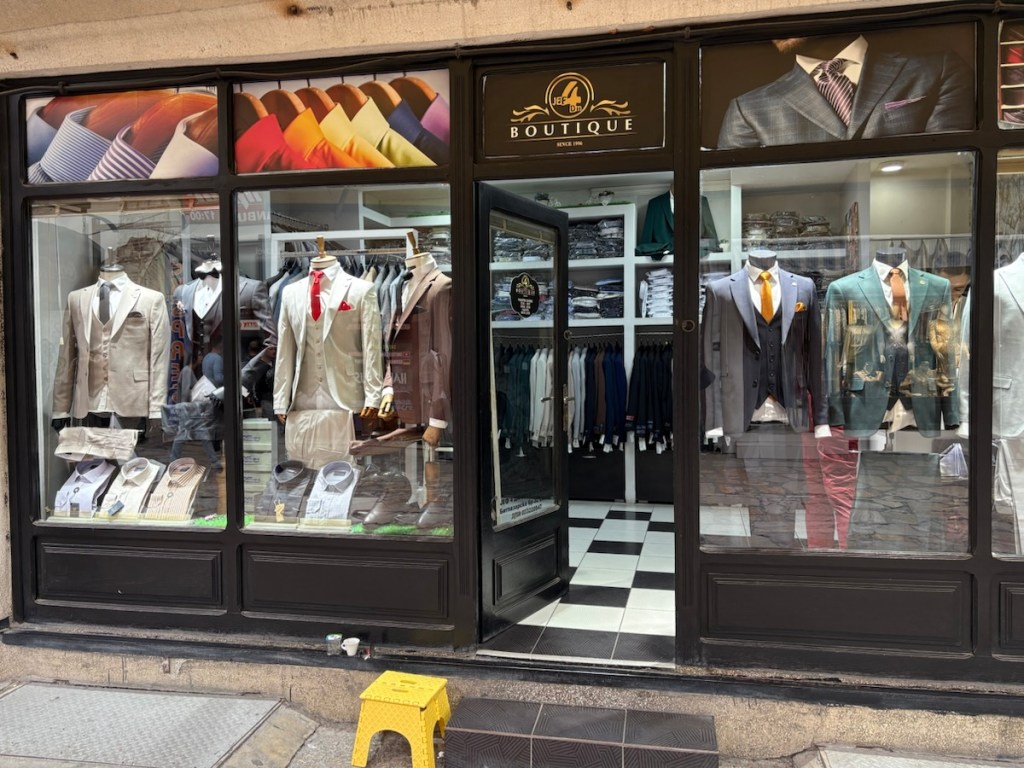
In Prizren, Kosovo, a picturesque town in southern Kosovo, there are dozens and dozens of men’s and women’s tailor shops and jewelry stores side by side in the shopping area.  Guess the place to come for tailored clothing is the Balkans!  I haven’t checked jewelry prices yet, but with so much competition, maybe that’s a good value here, too.

Now that I’m in Albania, I finally have an “easy” languageto deal with, relatively speaking. Albanian is not a Cyrillic alphabet language like some of the other Balkan countries. Albania uses the Latin alphabet…with only 36 letters. So there are at least a few words that seem familiar.

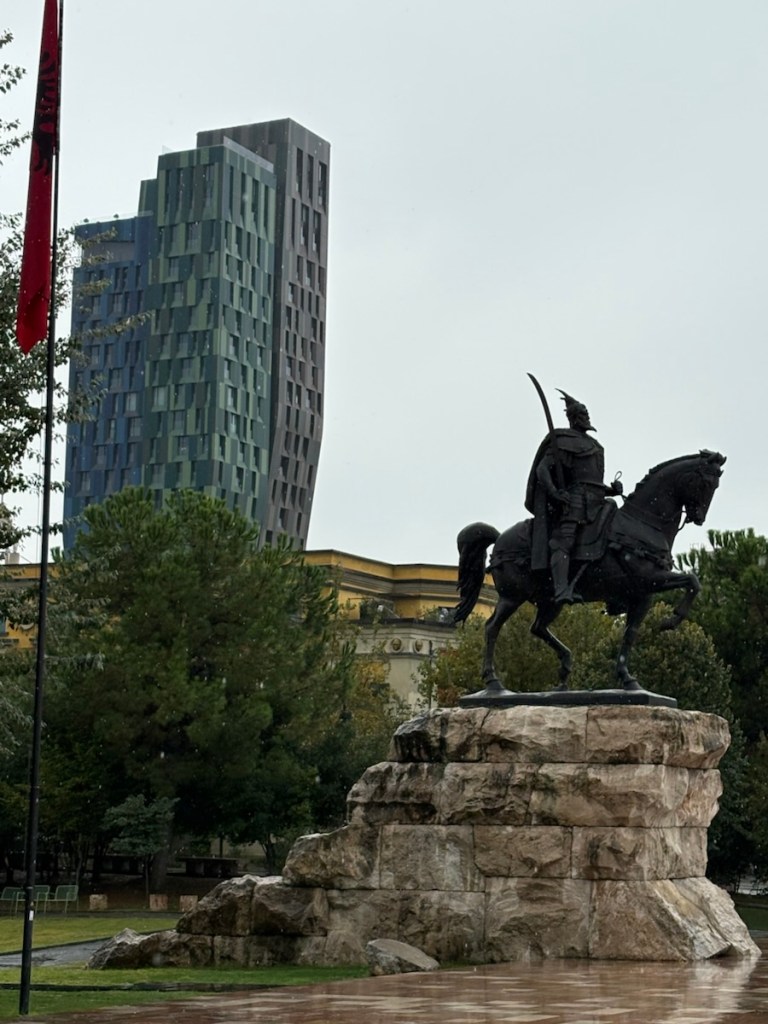
Tirana is the capital of Albania, and I’m quite sure the capital for driver’s,too (at least on a rainy day)!  Not a lot of horn honking like some countries, but bad drivers abound and lane markings are mere suggestions!

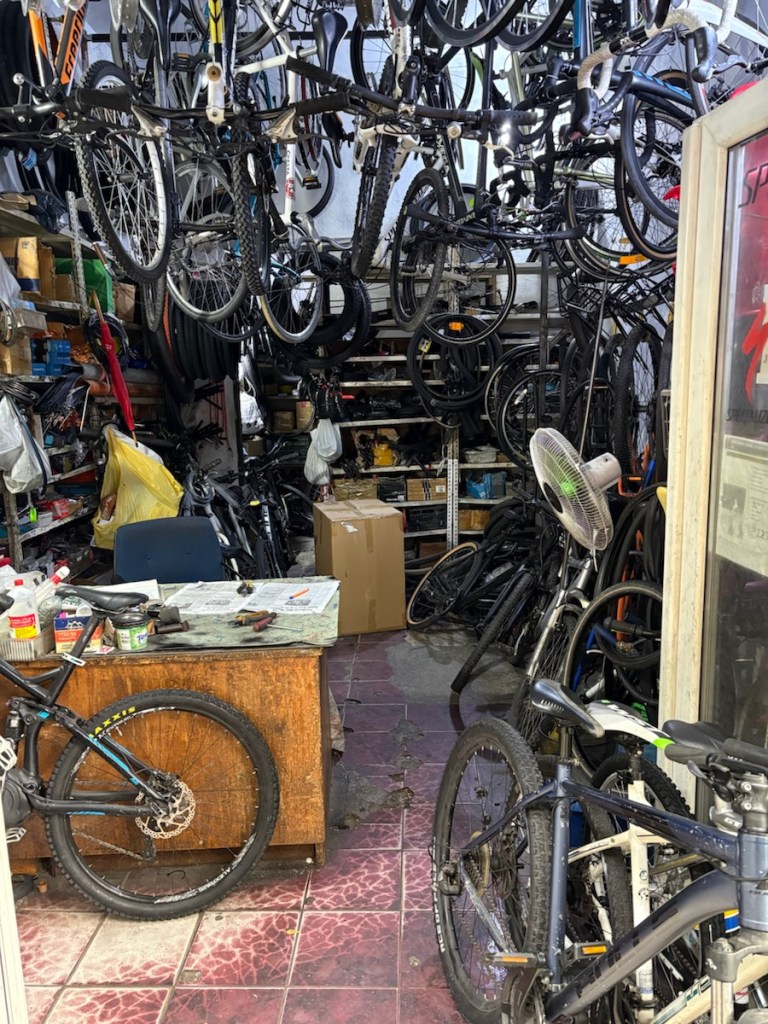
A shopping area near my apartment has a string of 30 or 40 bicycle sales and repair shops along one street! Seems odd since I don’t see very many bikes in the city.  And certainly nothing like Holland where bikes outnumber cars more than 2 to 1!

One of the many, many bike shops along one street.

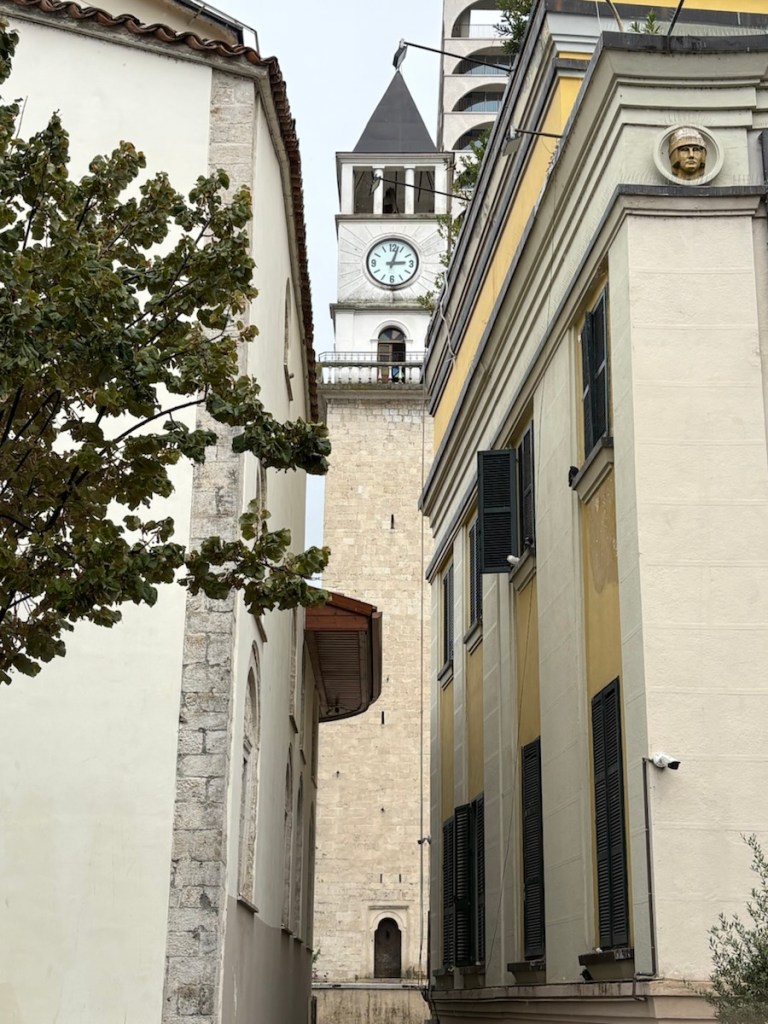
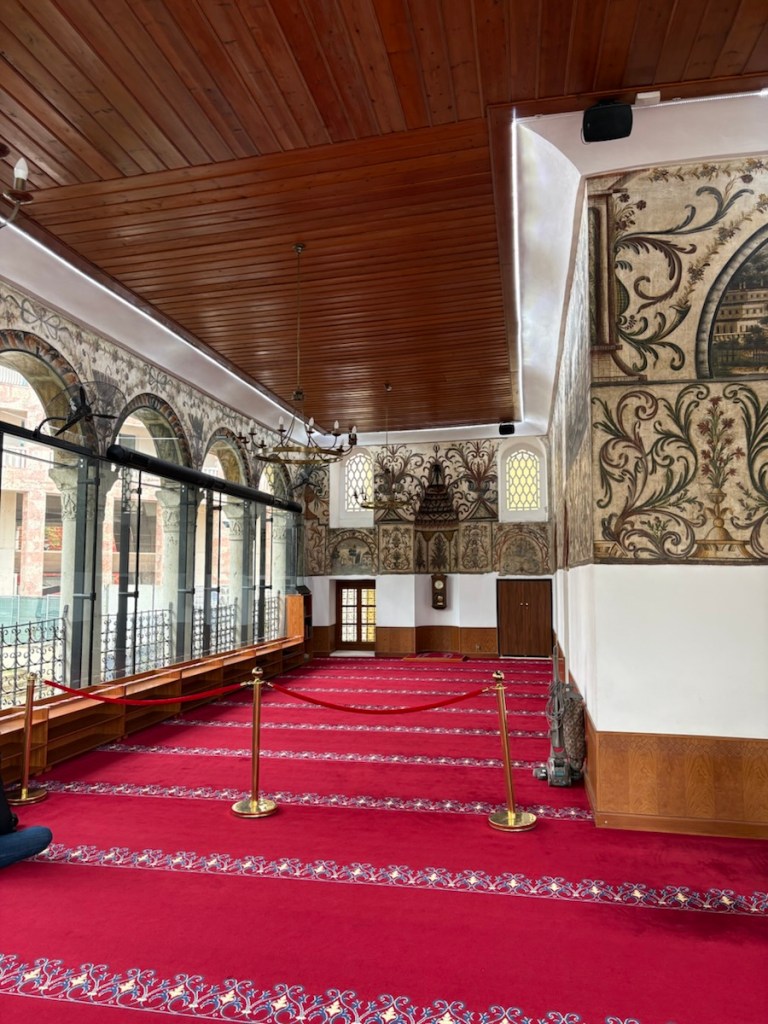
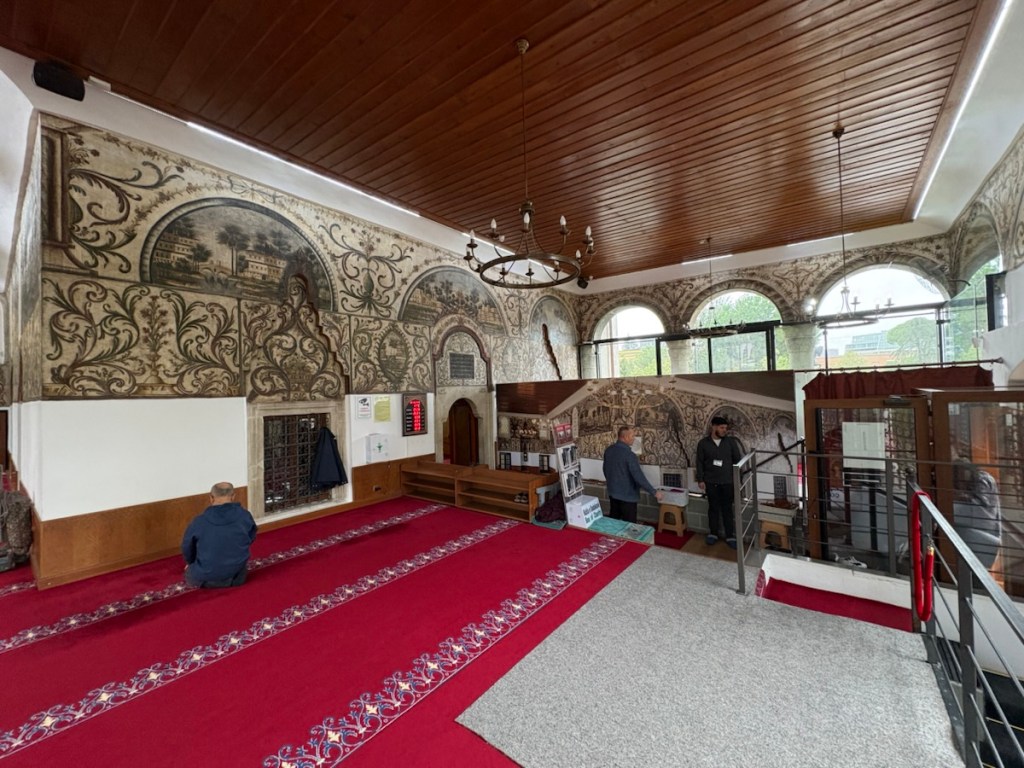
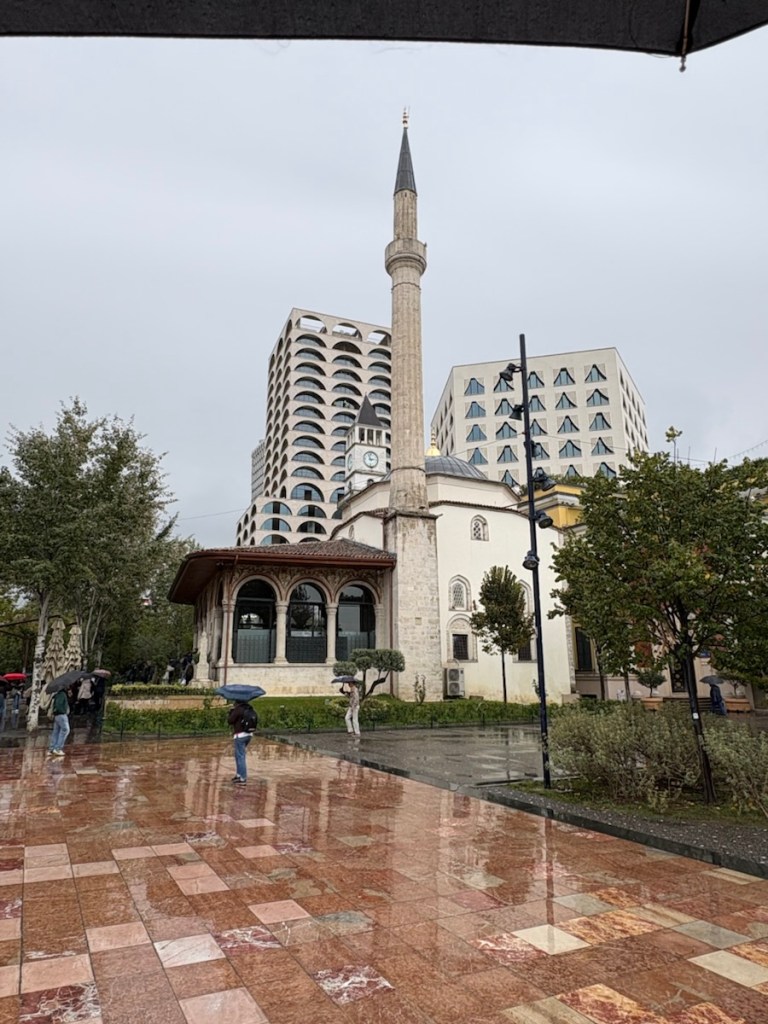
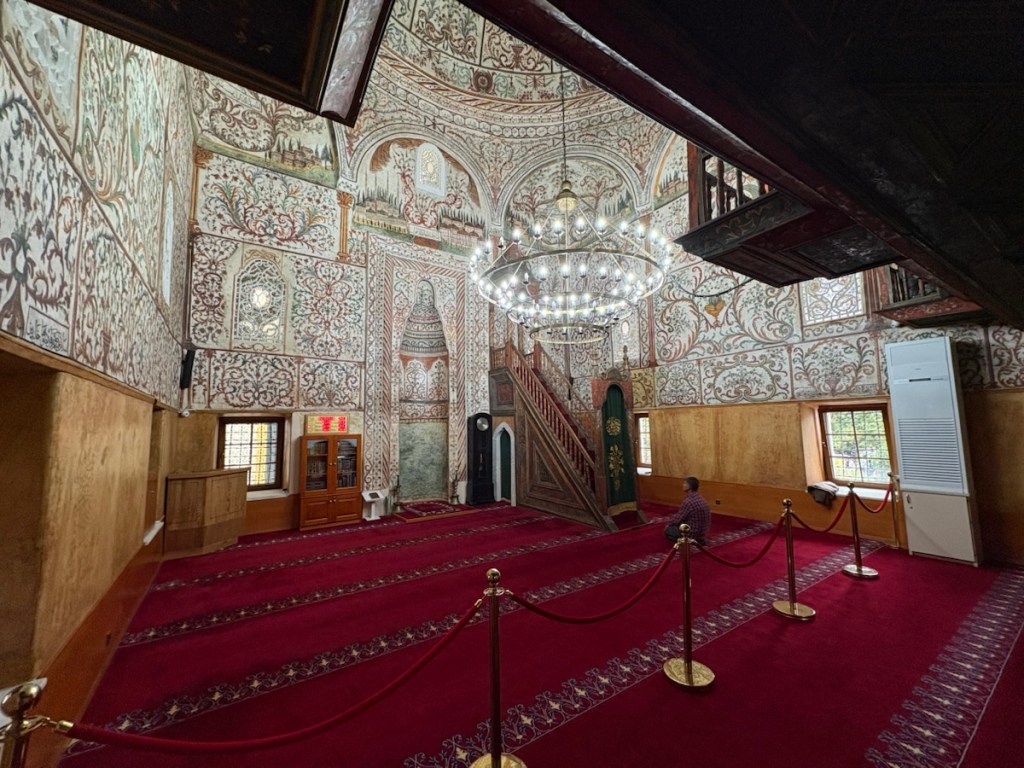
I visited the famous Et’Hem Bey Mosque in Tirana. And as I write this (sitting outside at a bar, drinking beer), I am listening to the call to prayer, one of five times during each day for Muslims.  Albania is about 60% Muslim residents nationally.

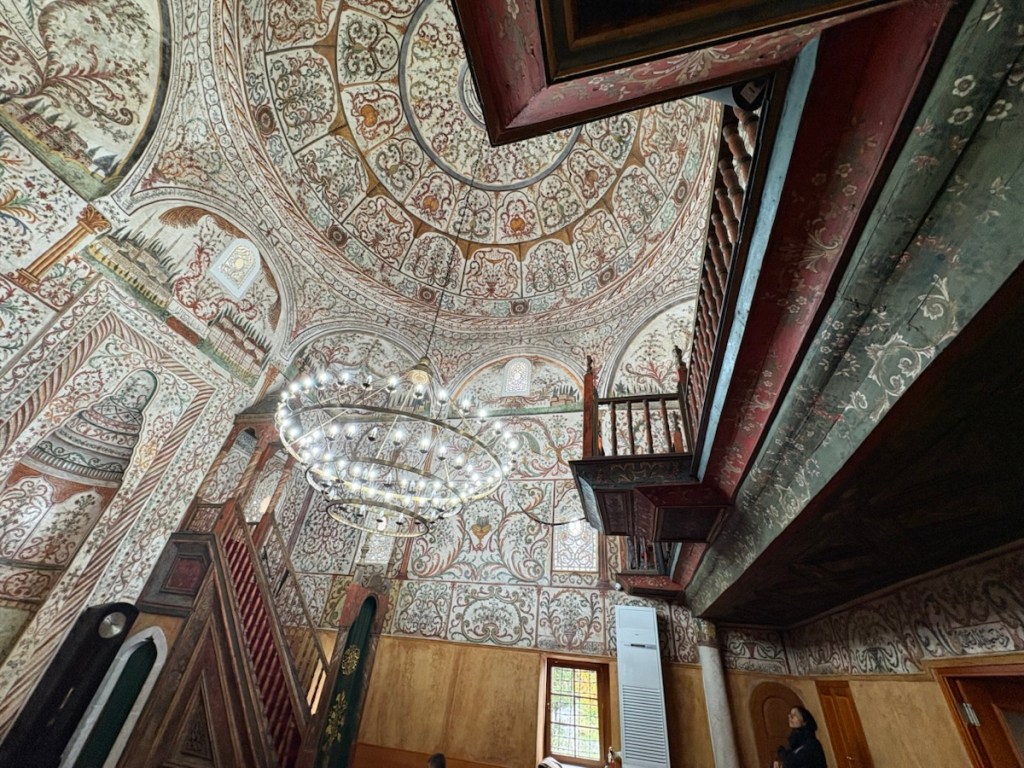
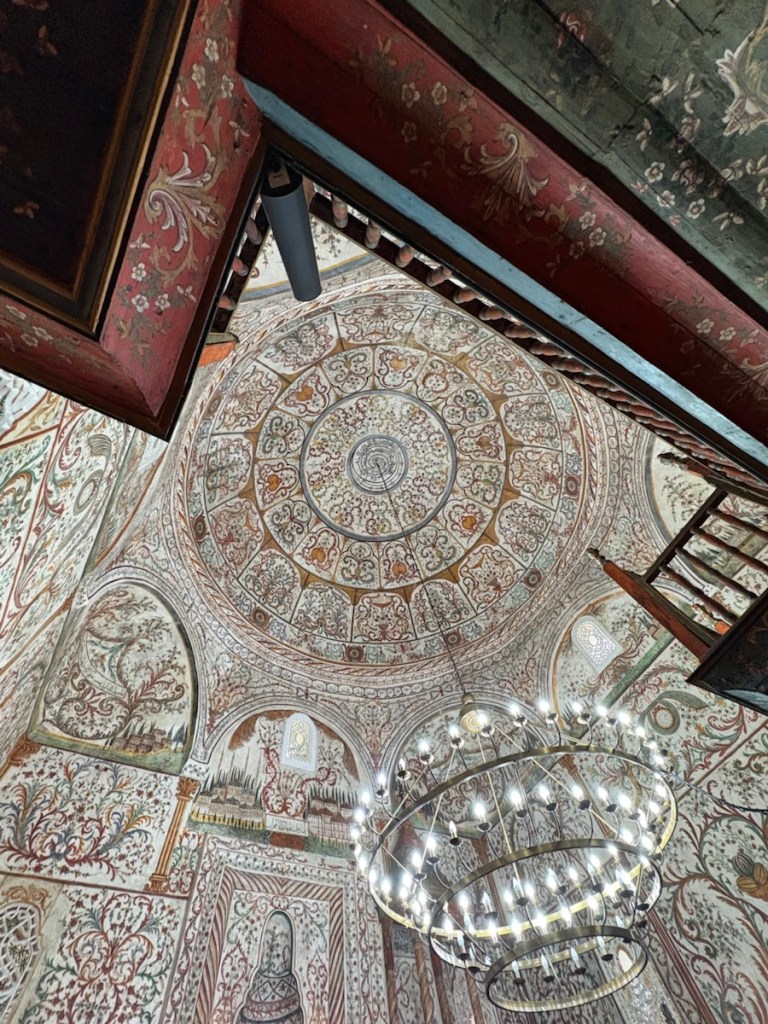
Et’Hem Bey Mosque
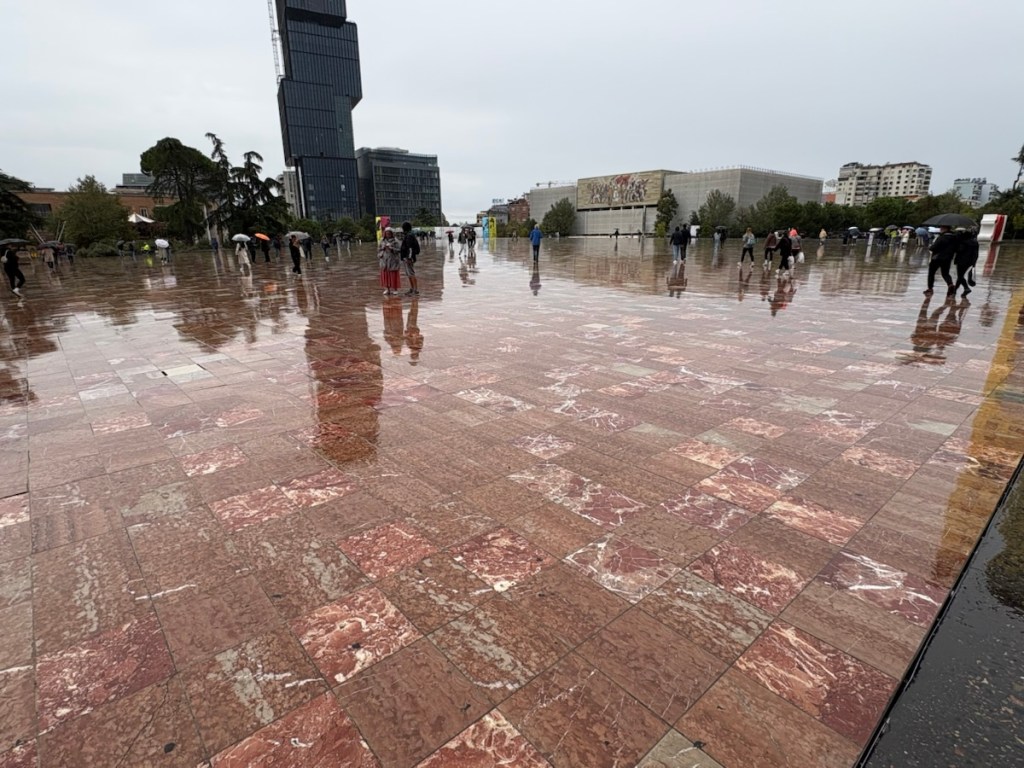
Looks nice, but the adjacent stone plaza is very slippery when wet, and it was really wet today!
  • The construction of the mosque was started in 1791 or 1794 by Molla Bey and it was finished in 1819 or 1821 by his son Haxhi Ethem Bey. During the totalitarianism of the Socialist People’s Republic of Albania, the mosque was closed; it was declared a historical monument and underwent restorations in the late 1960s and early 1970s.
  • On January 18, 1991, despite opposition from communist authorities, 10,000 people entered the mosque carrying flags. The event was a milestone in the rebirth of religious freedom in Albania. The Mosque was restored back in 2018.
  • It is composed of a prayer hall, a portico that surrounds its north and early minaret. The frescoes of the mosque depict trees, waterfalls and bridges.
  • Most of the scenes that appear in mural paintings, are not realistic paintings, but imaginary scenes. The portico of the mosque is decorated by numerous landscapes as well.

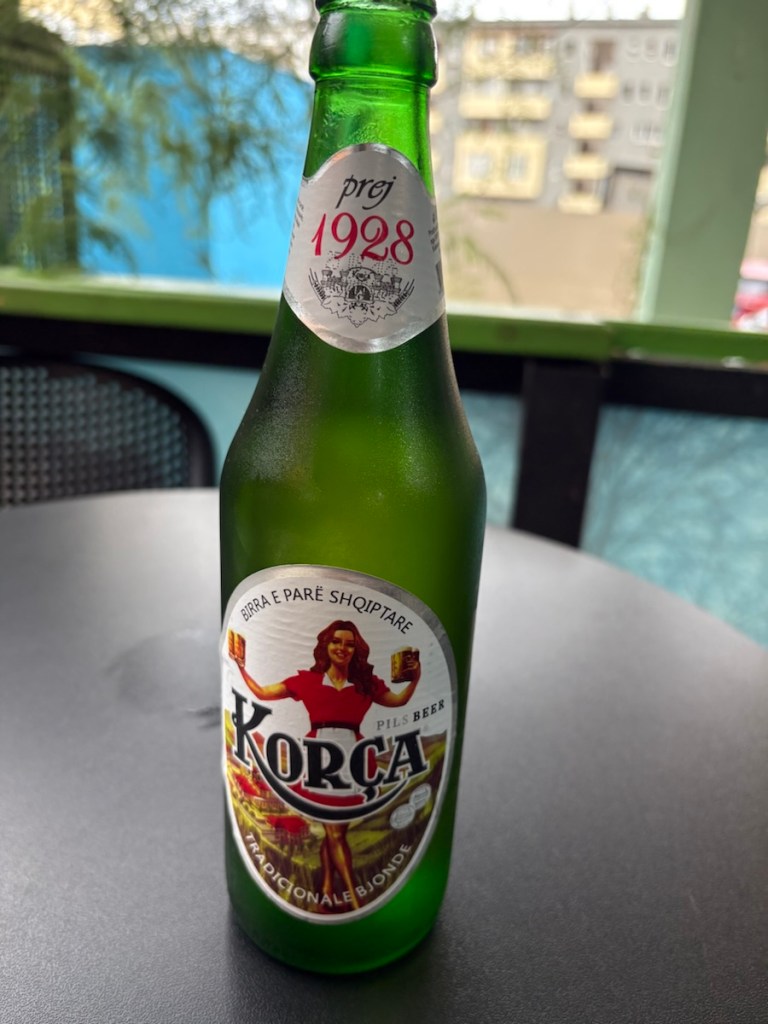
My first beer on the trip was an Albanian beer, Korca, a traditional blond ale. I say it tastes just like Heineken, my fav!  “But wait,” some would say, “why can’t the Heineken taste like Korca?” Easy, Heineken was originally bottled in 1874, but Korca only came on the scene in 1928. So Heineken wins.

I brought 50 small American flag lapel pins as giveaways, and wow! They have been a huge hit with everyone so far – lodging folks, border guards, gas station attendants, bartenders, etc.

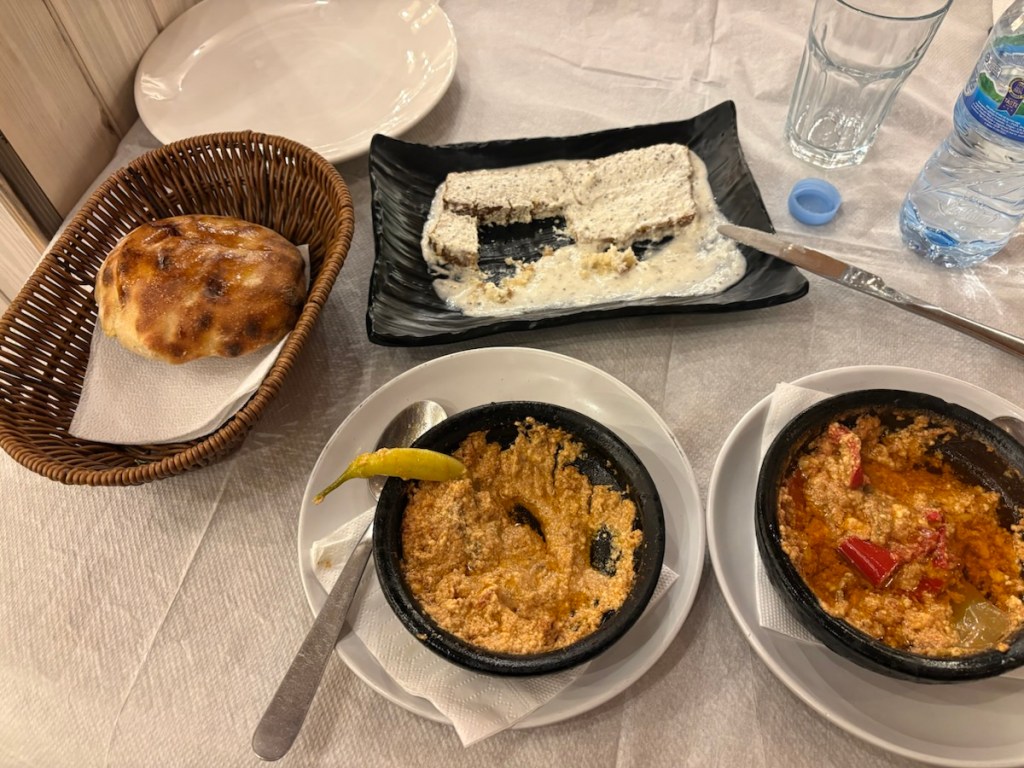
Dinner was interesting, although not very tasty. I had three traditional Albanian dishes – cheese with beef, cheese with peppers, and corn bread covered in sauce. At least the small loaf of bread was good. Oh, well.

Before you go…

“Never regret anything that made you smile.” — Mark Twain

Picked up my Car and Hit the Road!

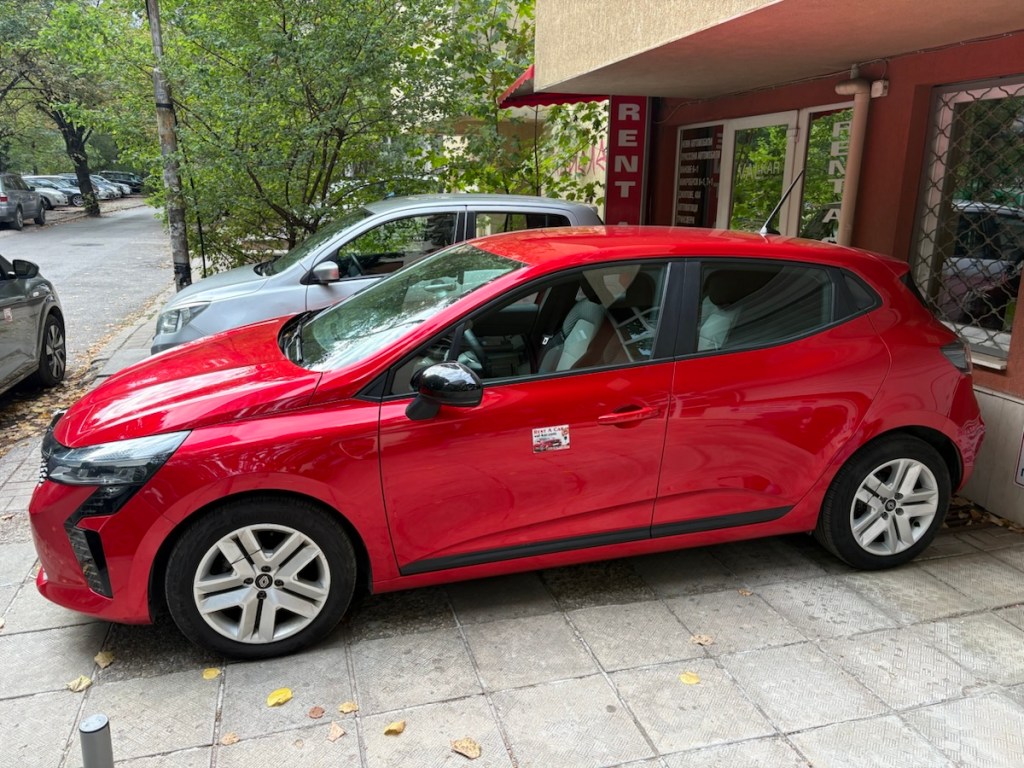
On to North Macedonia – in my almost brand new Renault Clio 5!  It drives very nice and it has Apple CarPlay for my maps, music, and audio books.  I’m all set!  I left Sofia under overcast skies and light sweater weather about 9:00 am.

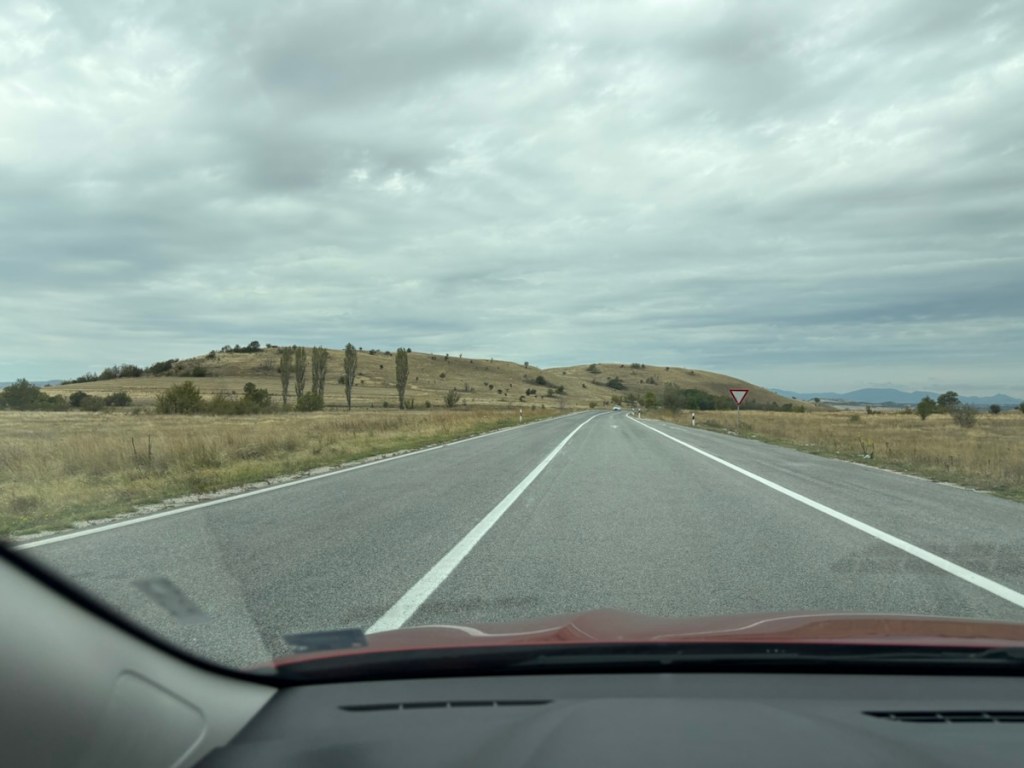
The 3.5 hour drive to North Macedonia’s capital city of Skopje (pronounced, “Mack-a-donia,” and “Skopp-gee”) was quiet and uneventful, with little traffic on the route.  The highways and country roads were all excellent with nary a cobblestone in sight, unlike the cities where cobblestones are plentifully bouncy. 

The only stop along the way was at the border crossing.  With my Bulgarian-tagged rental car, I wasn’t sure what to expect.  The Macedonians are not fond of the Bulgarians since Bulgaria helped deny Macedonia entrance into the European Union (although both are part of NATO)!  Thankfully, my U.S. passport elicited only smiles from the border guards and I was passed through easily after telling them about my extended Balkans sightseeing trip.

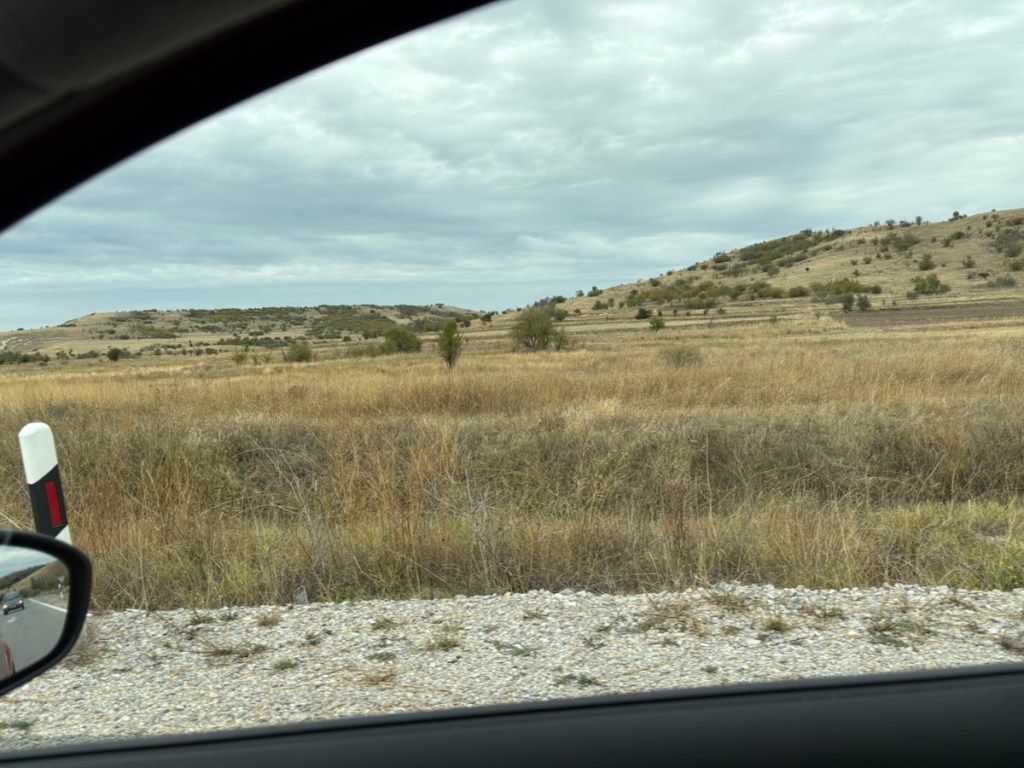
The scenery driving between both countries was reminiscent of north central Spain and southern California – dry, brown grasses, scrub trees and bushes, and craggy rolling hills.  Not much to see along the route.

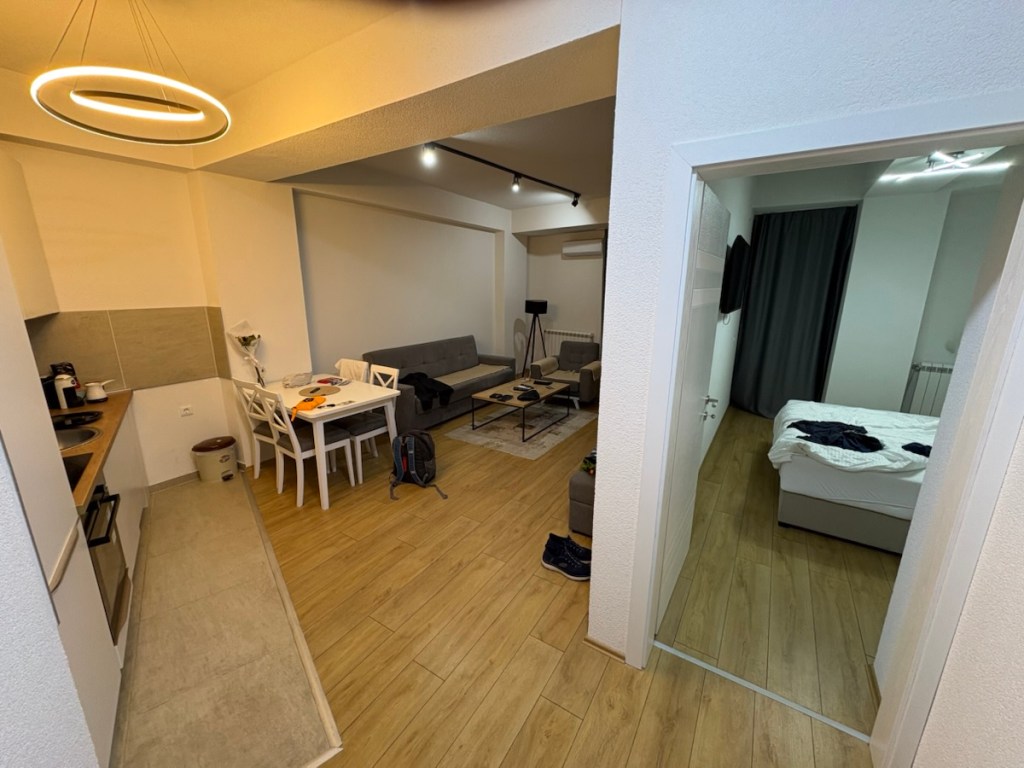
After I checked into my $30 apartment, I hit the streets to do some afternoon sightseeing.  I was only 15 minutes from the main tourist areas and the city is pretty flat, making the walking easy.  Also the temps came back up to short sleeves weather along with some sunshine.

Crossing the Street – If you want to cross a road at a crosswalk, you need to be bold and walk out into traffic while looking directly at the oncoming traffic. If you look them in the eye, they’ll stop. If you don’t, watch out!

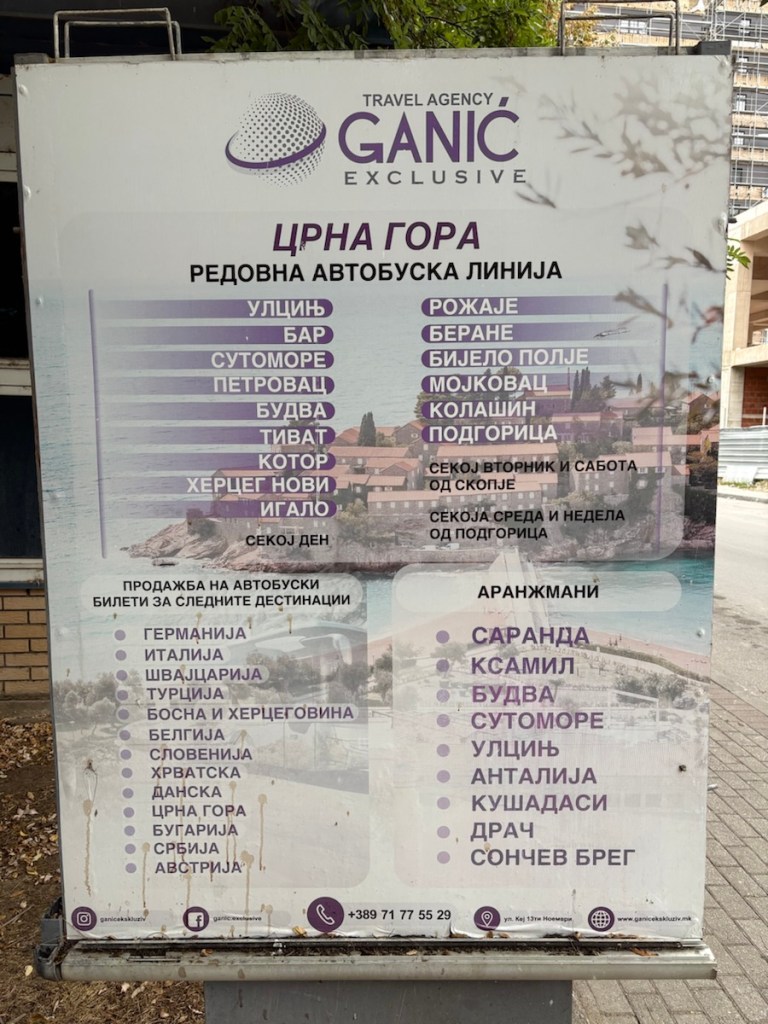
OBTW, the Cyrillic alphabet is challenging!

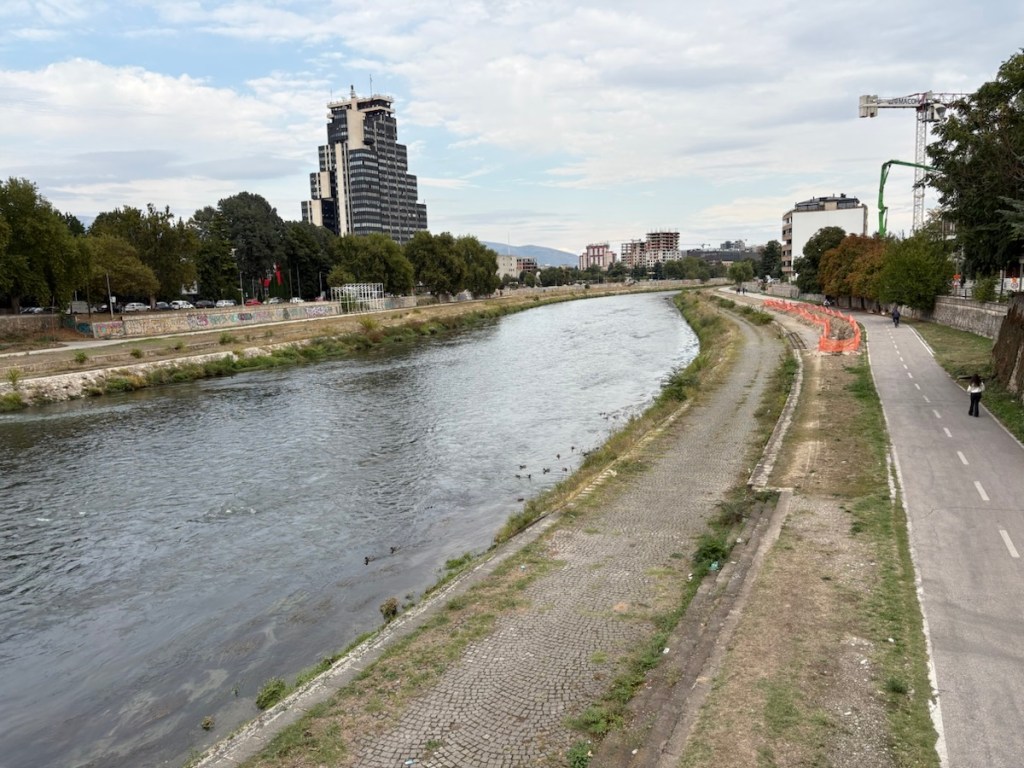
The waterfront of the Vardar River which runs through Skopje could use some upgrades!  Many cities have made the riverfront a focus of efforts to attract visitors and residents.  Apparently, Skopje spends on other priorities because the lack of maintenance and care are quite apparent.

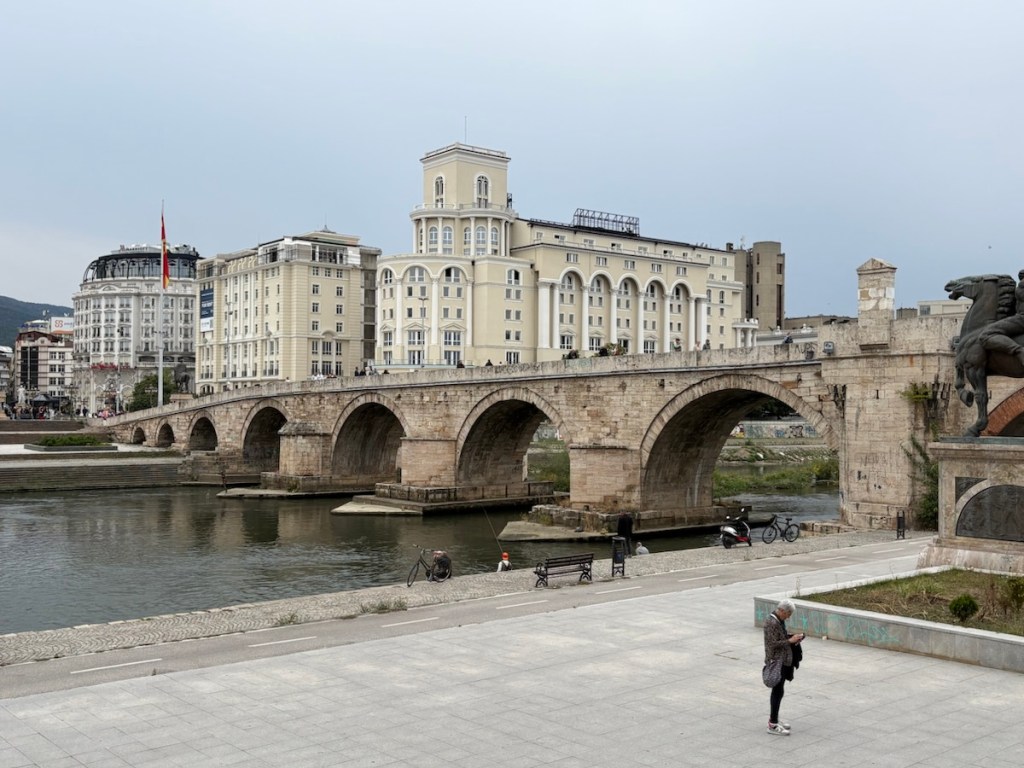
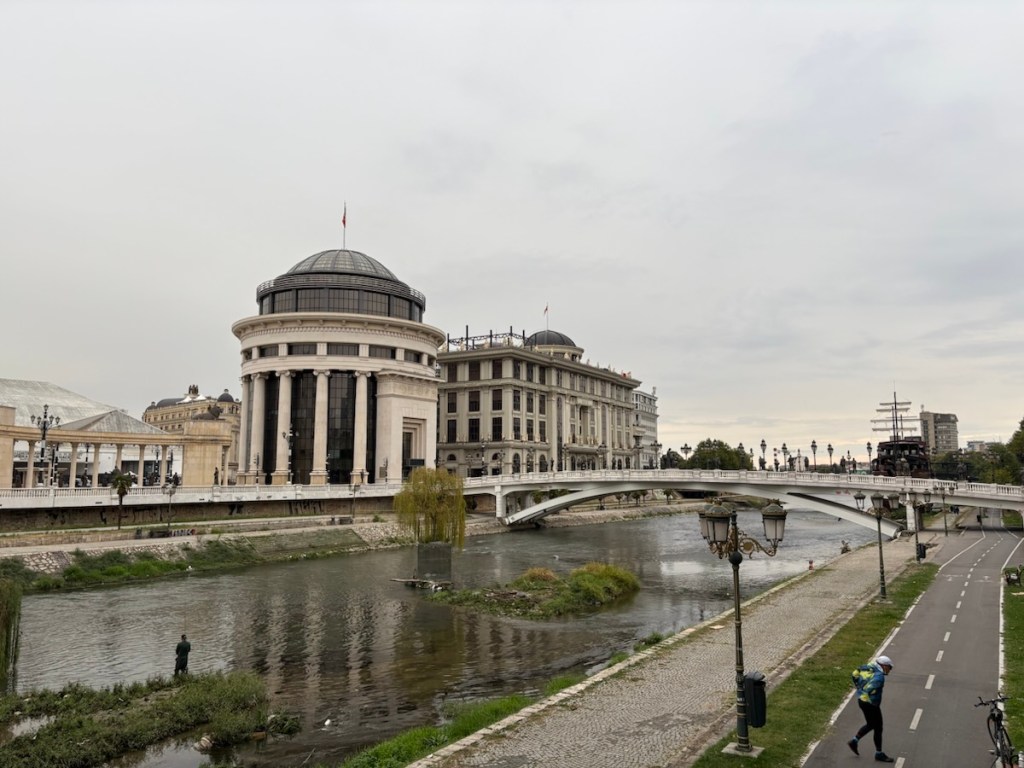
The beautiful Stone Bridge was built by Sultan Mehmed the Conqueror in the mid-1400s (now used for pedestrians only).

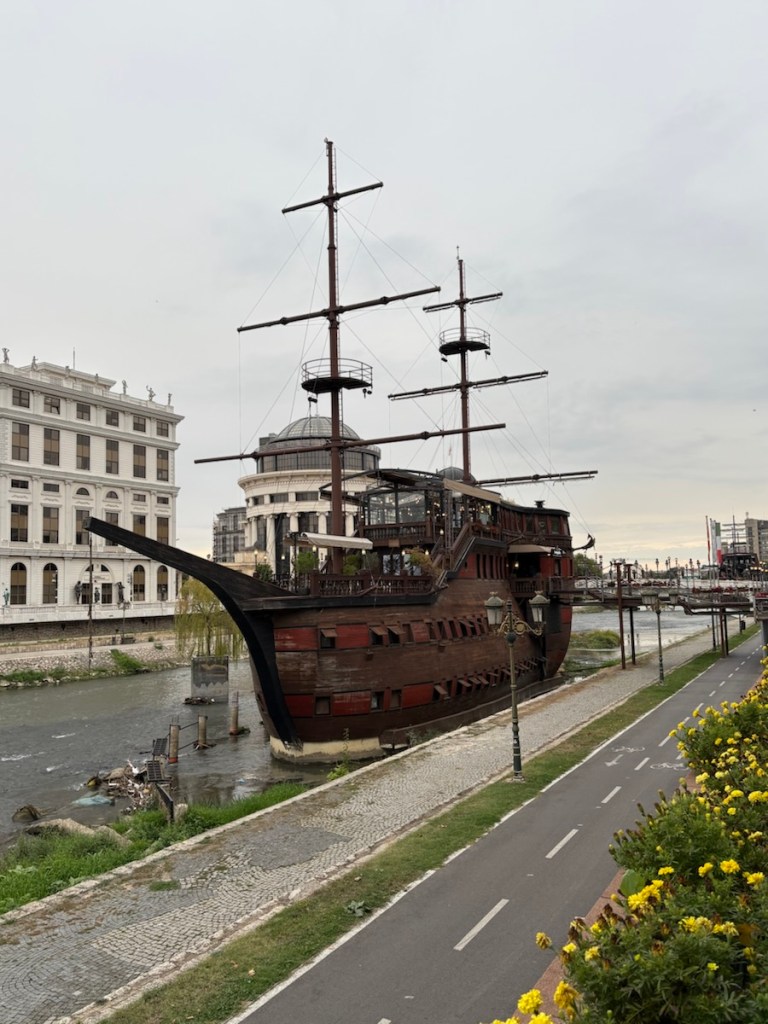
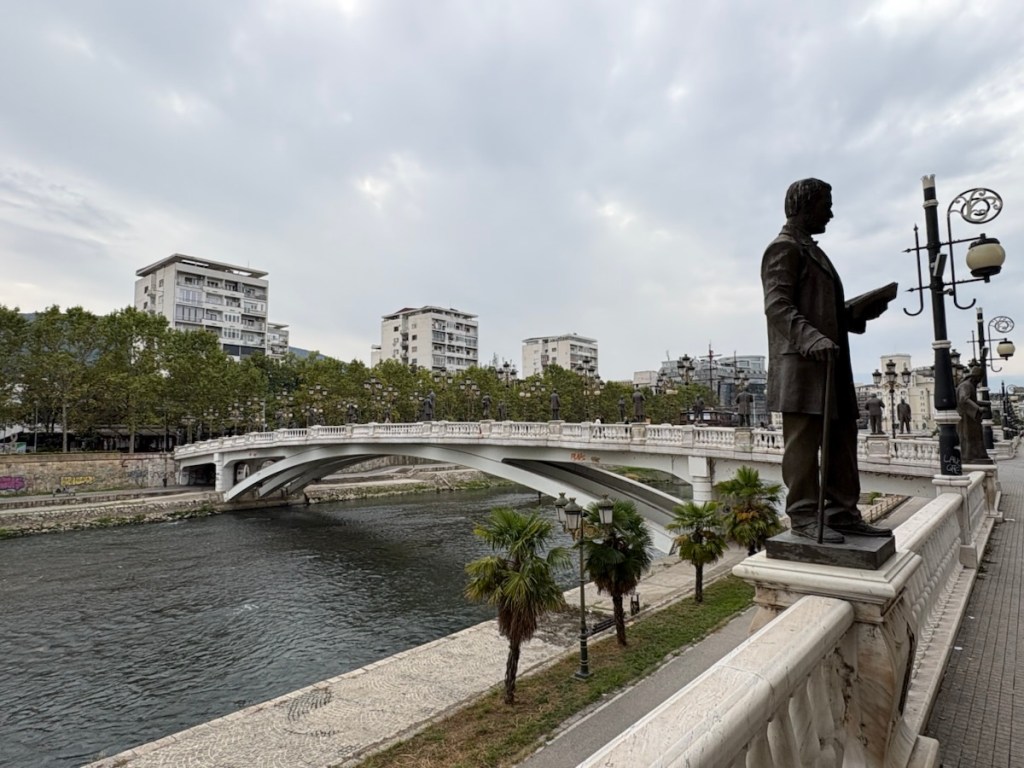
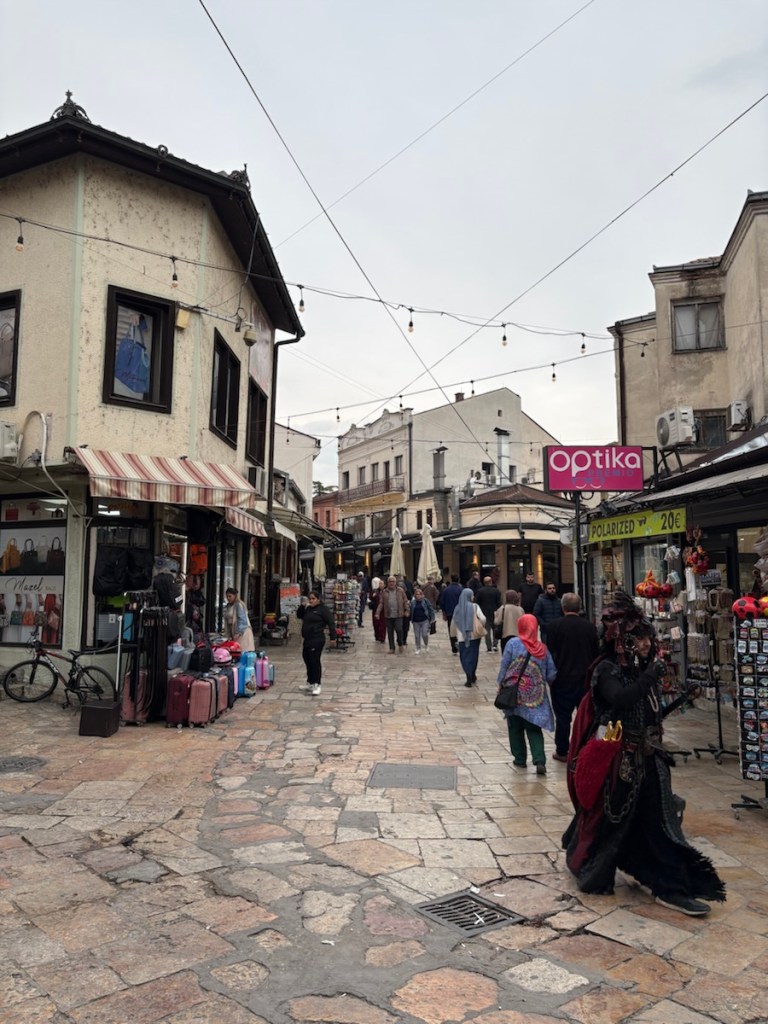
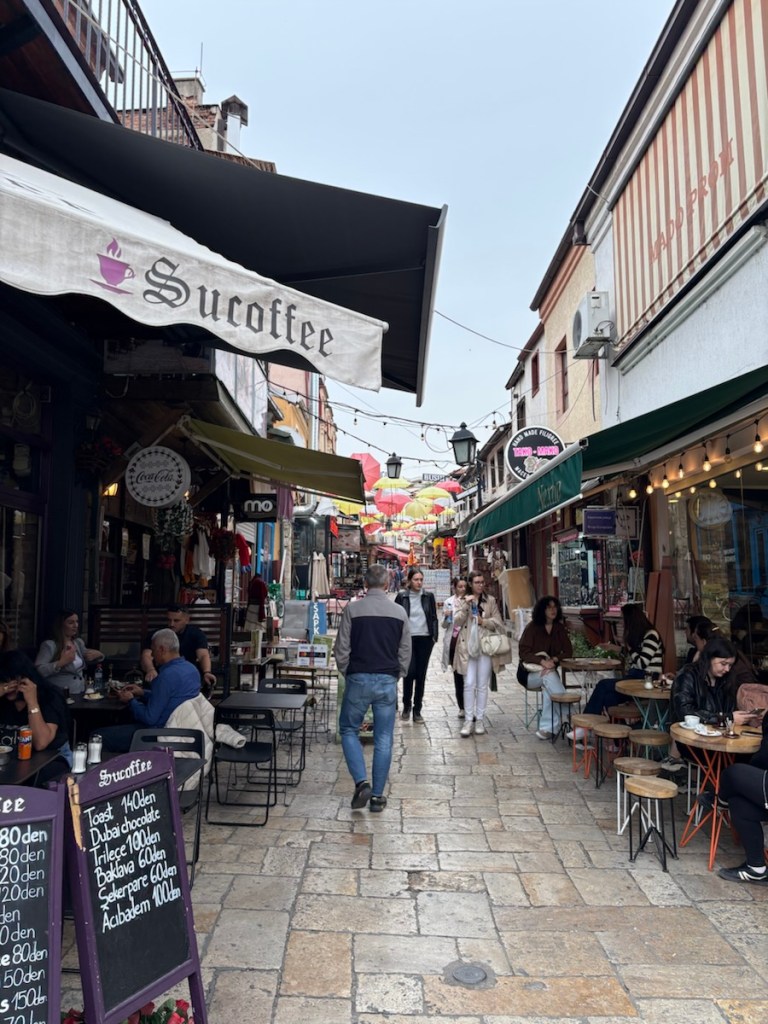
I visited the Archeological Museum of North Macedonia (ho hum). But here are some more photos from the rest of my walk around the city center…

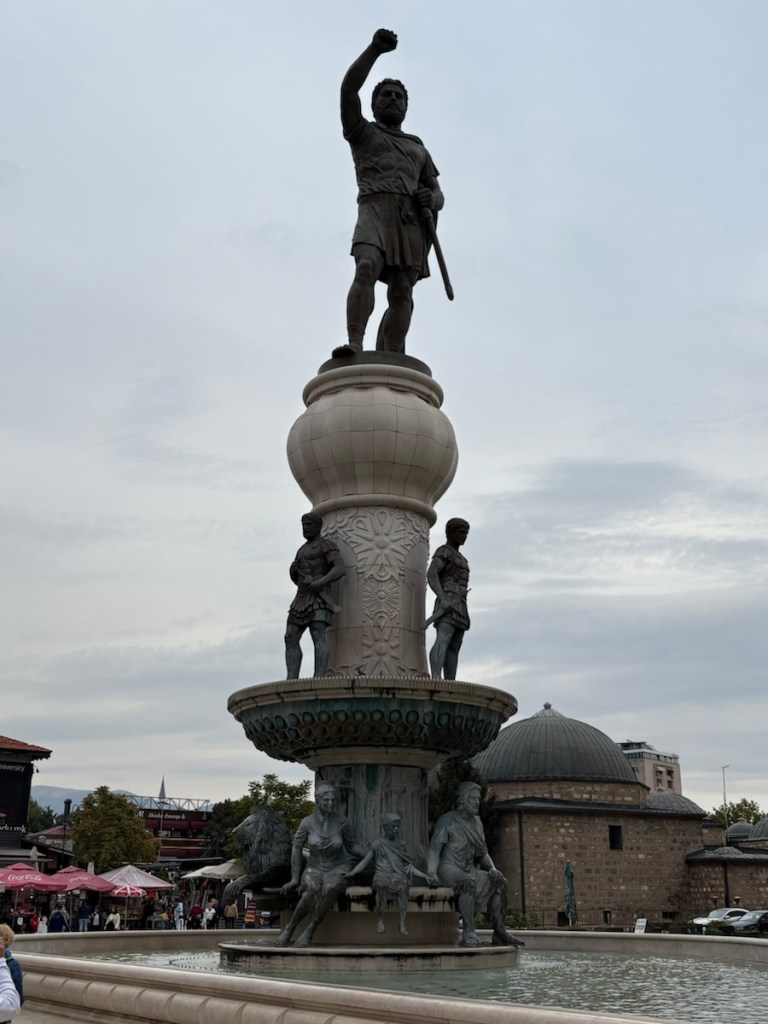
“Statue in honor of Philip II of Macedon, a historic figure belonging to the ancient Hellenic history and civilization
and to the world culture and historic heritage.l
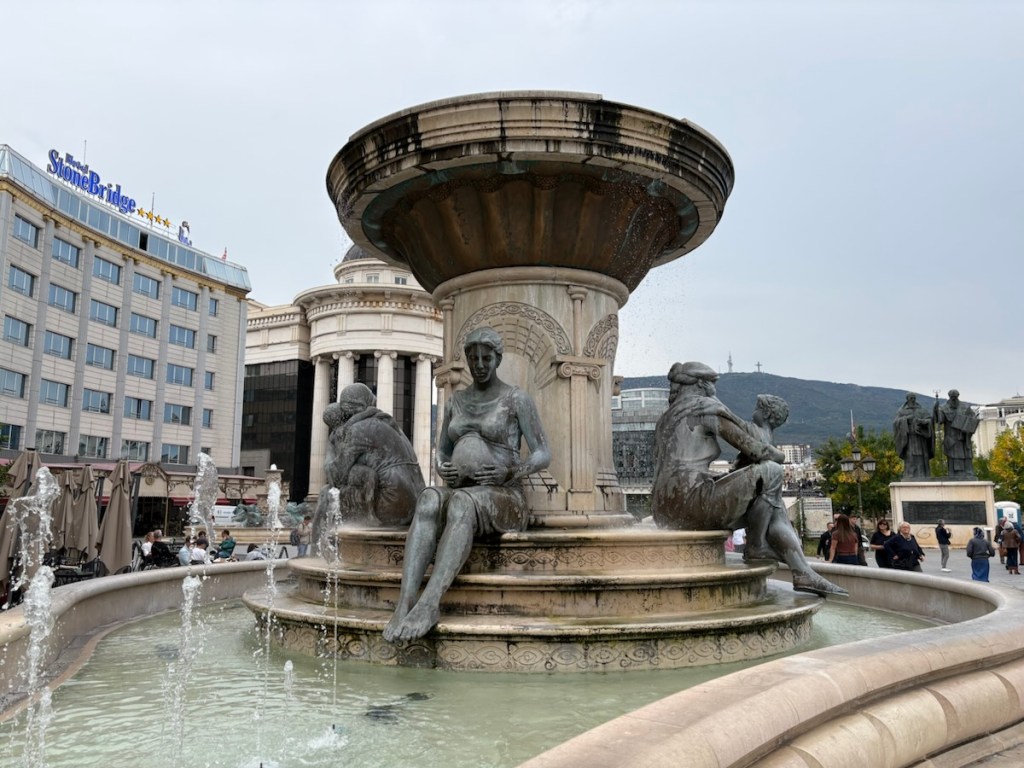
Fountain Olympia, the Mother of Alexander III of Macedonia
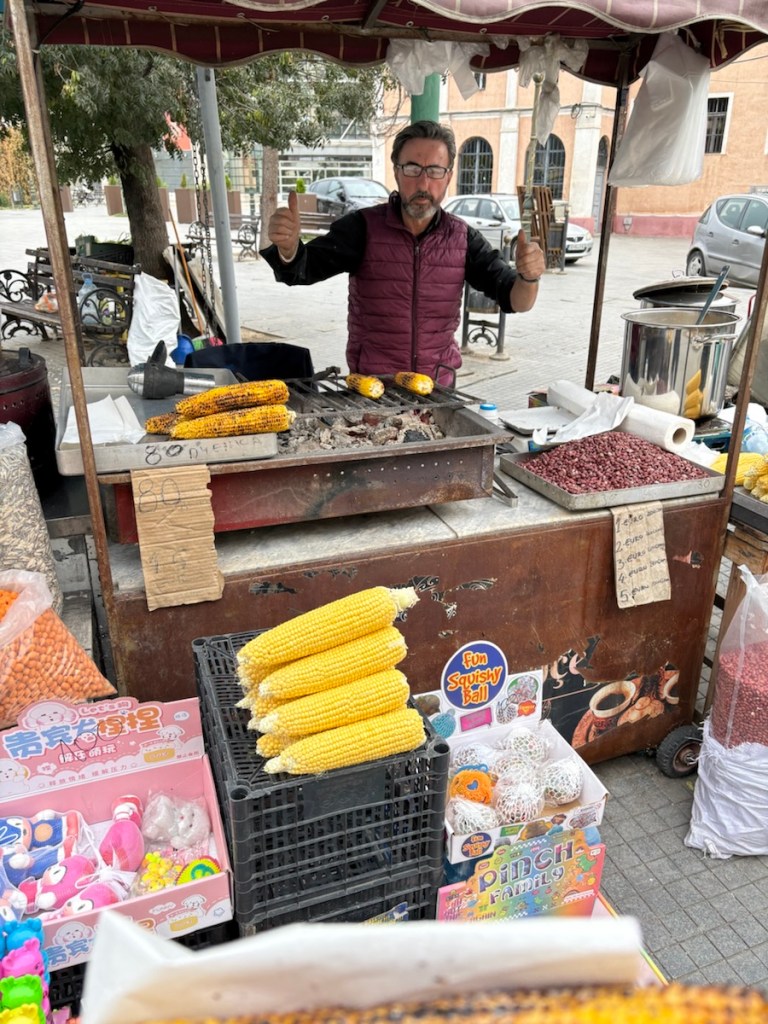
The street corn vendor where I got my lunch – grilled corn on the cobb! Yum!

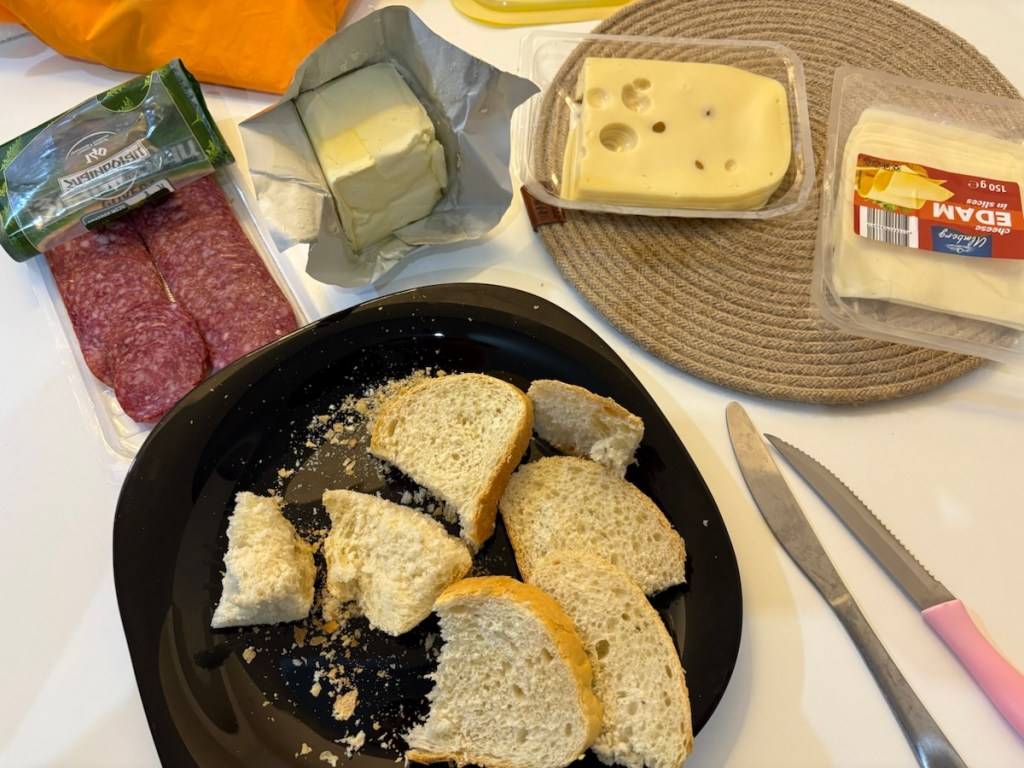
And since rain was threatening, I decided to eat a cheap dinner meal in the room.

Expecting very heavy rain for the next 36 hours as I travel to Kosovo and Albania.

Before you go…

I told my wife she was drawing her eyebrows too high. She looked surprised.

In Sofia, Bulgaria

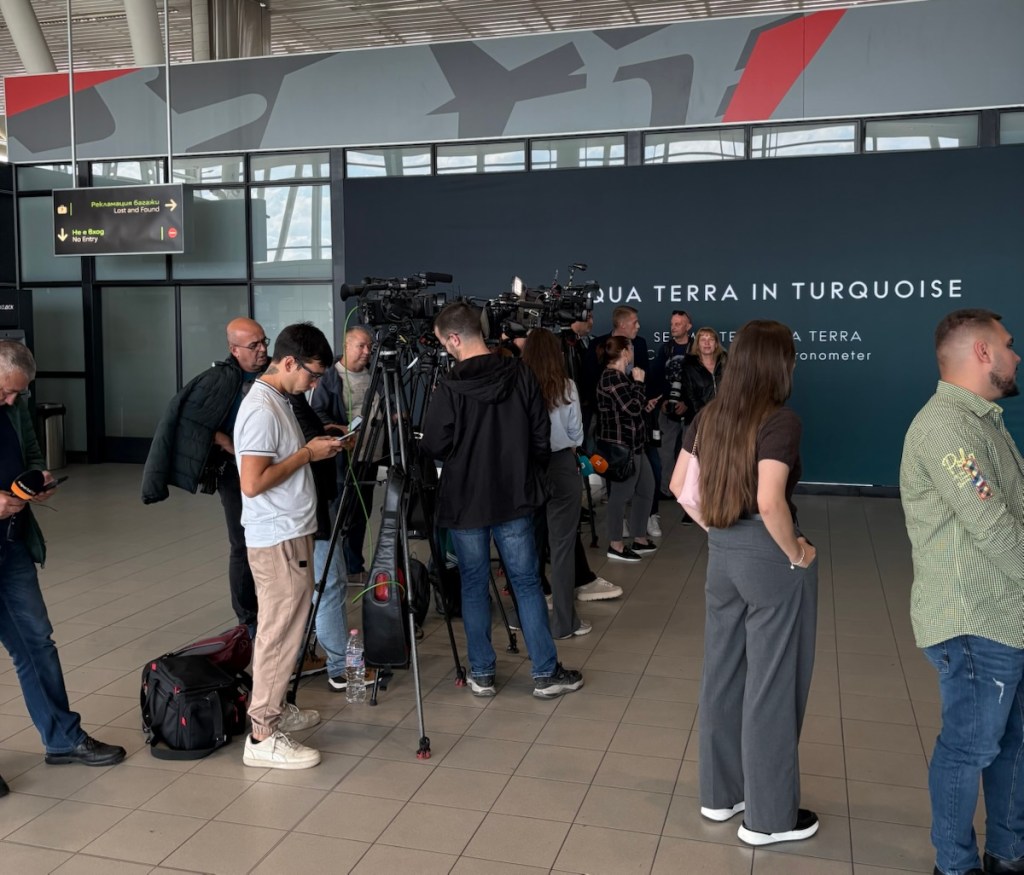
After a short 90 minute flight from Turkey, I arrived in Sofia at about 3:00 pm local (7 hrs ahead of East Coast).  As I was exiting customs, I walked right into a dozen or so camera crews waiting for me! (Or at least waiting for someone, along with a strong police presence). So I waved and greeted my adoring crowd, and they laughed…seriously, a couple of them actually chuckled. (Found out later it was for the Bulgarian Men’s National Volleyball Team returning from the World Championships where they placed 2nd overall!)

My Adoring Paparazzi at the Airport…

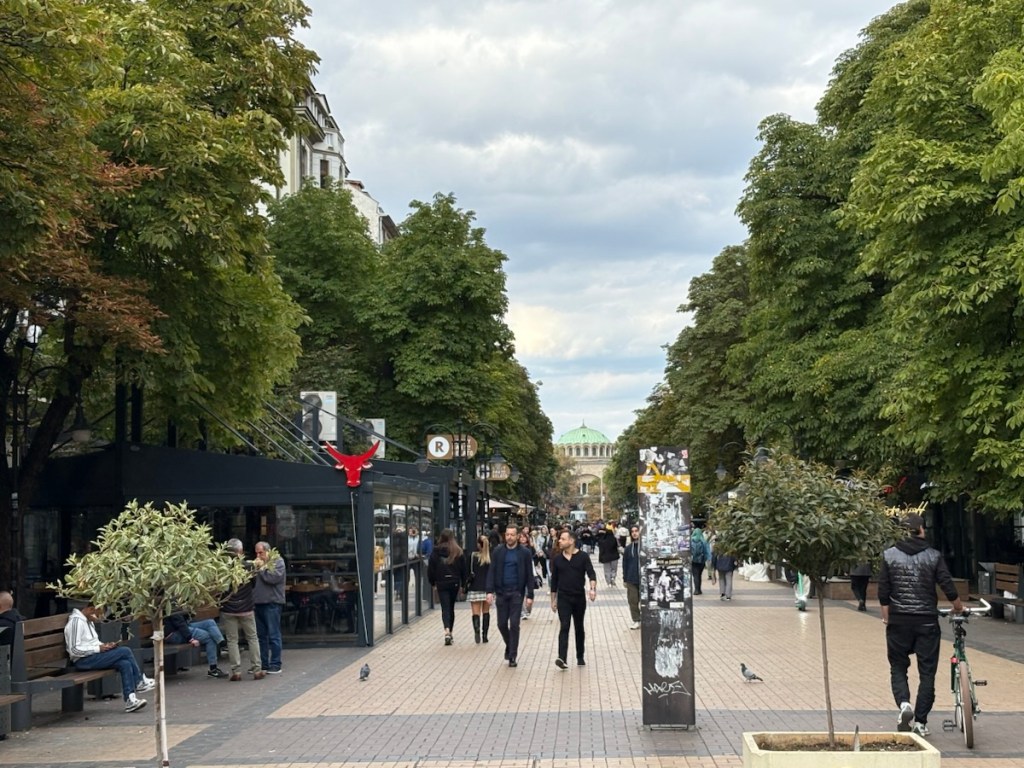
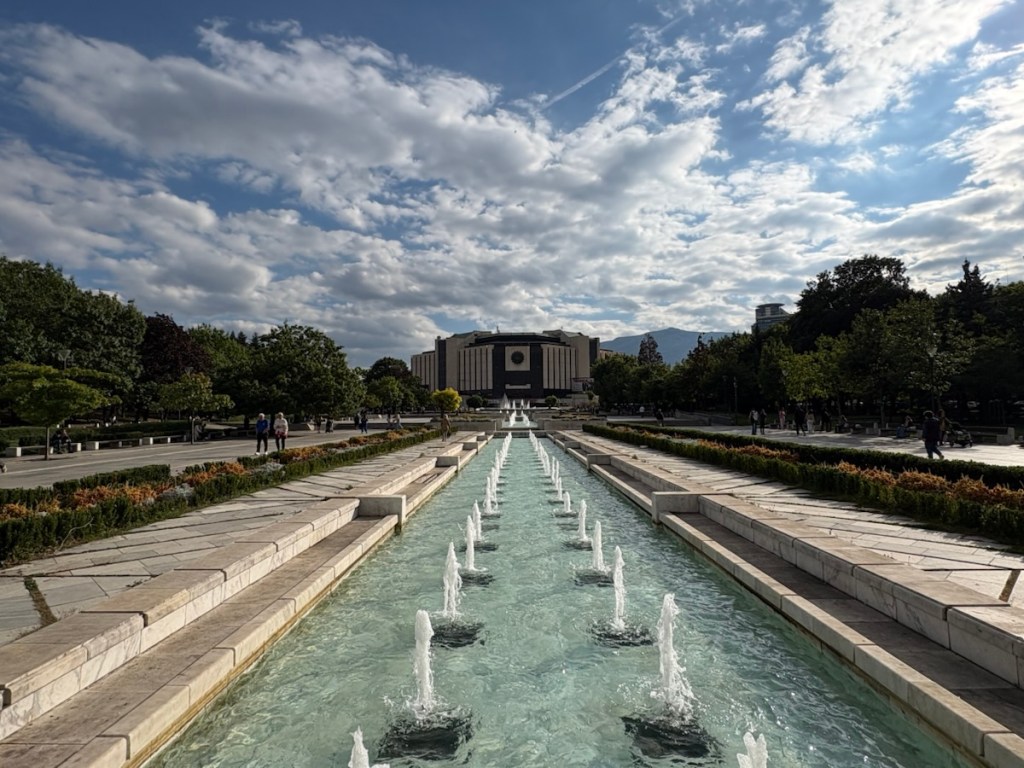
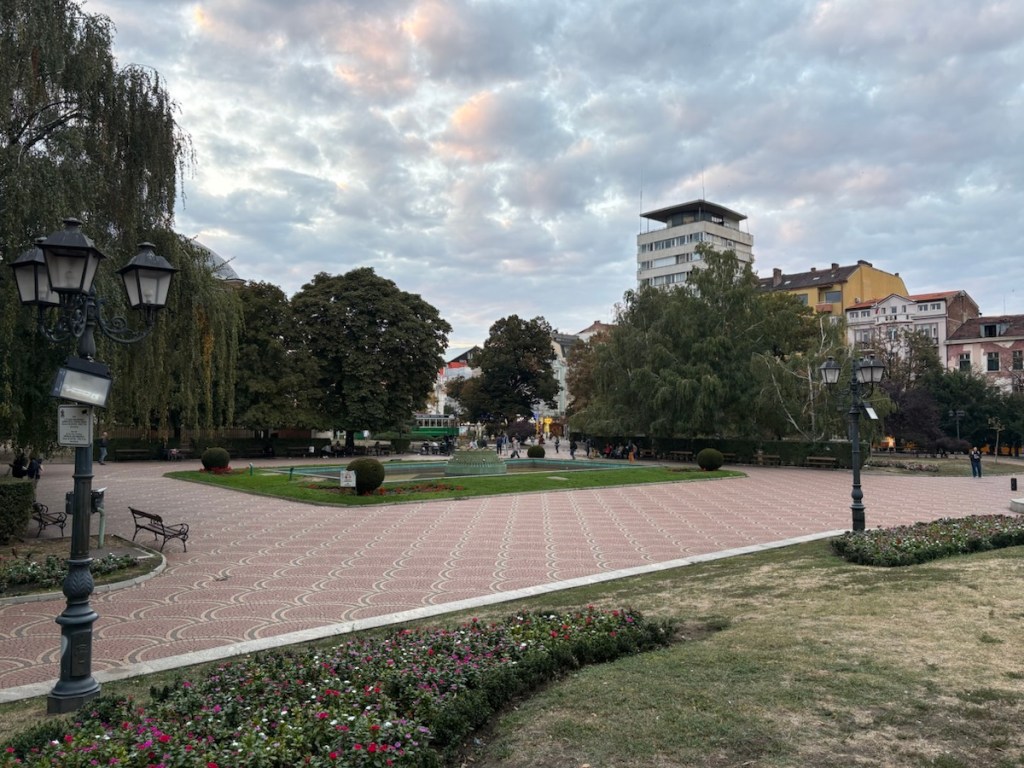
It was a cool and sunny day when I arrived in Sofia.  A 20 minute taxi got me to my hotel in the heart of the city.  Sofia is situated in a wide valley with mountains nearby on one side of the city.  And Sofia looks a lot like an old Soviet bloc style city (which it is).  Older, with some rather boring architecture and a lot of block buildings.  I don’t mean to imply ugly, since there are many beautiful parks and other nice areas.  Just a lot of traditional eastern bloc looking structures.  And did I say that the spray painting taggers are everywhere here!  Not many surfaces are spared. Wow!

Not sure if this is the same in the U.S., but in Sofia, long straight hair is the predominant style for women under 60.  And similar to some other European cities, smoking is definitely common among young and old.

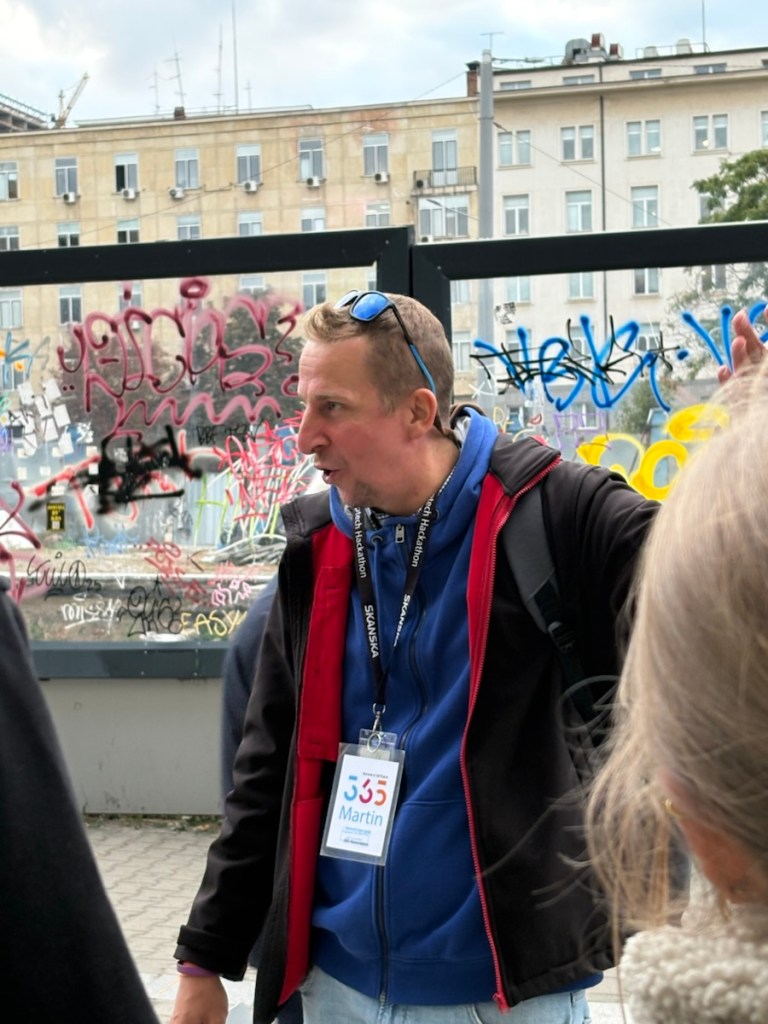
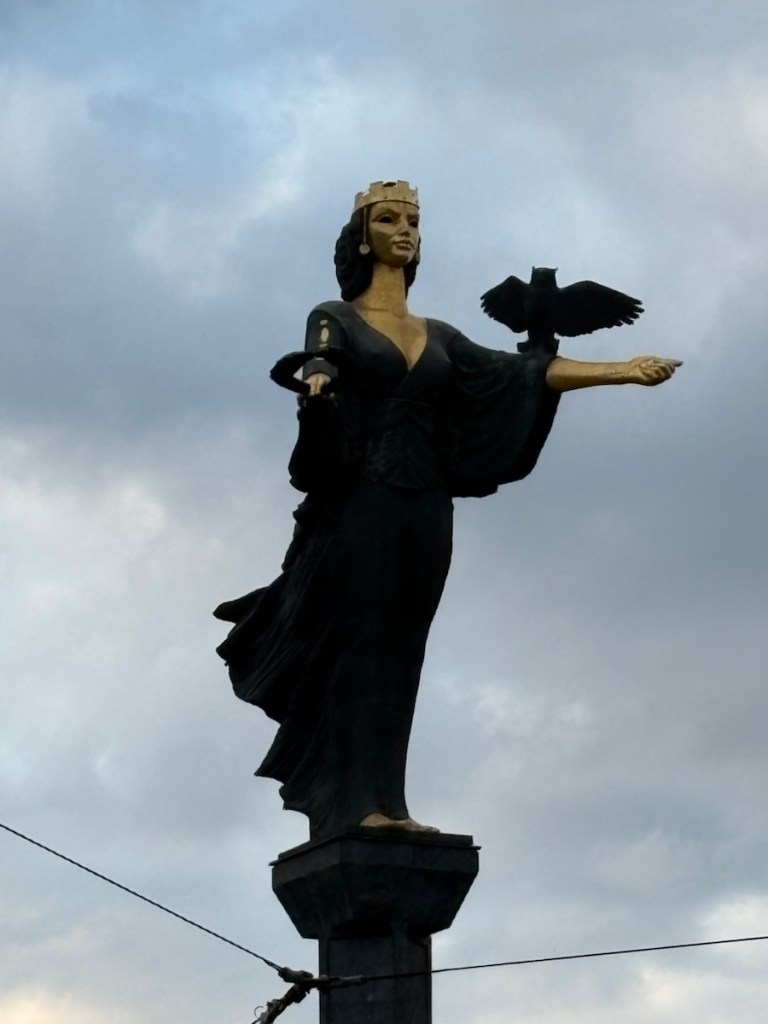
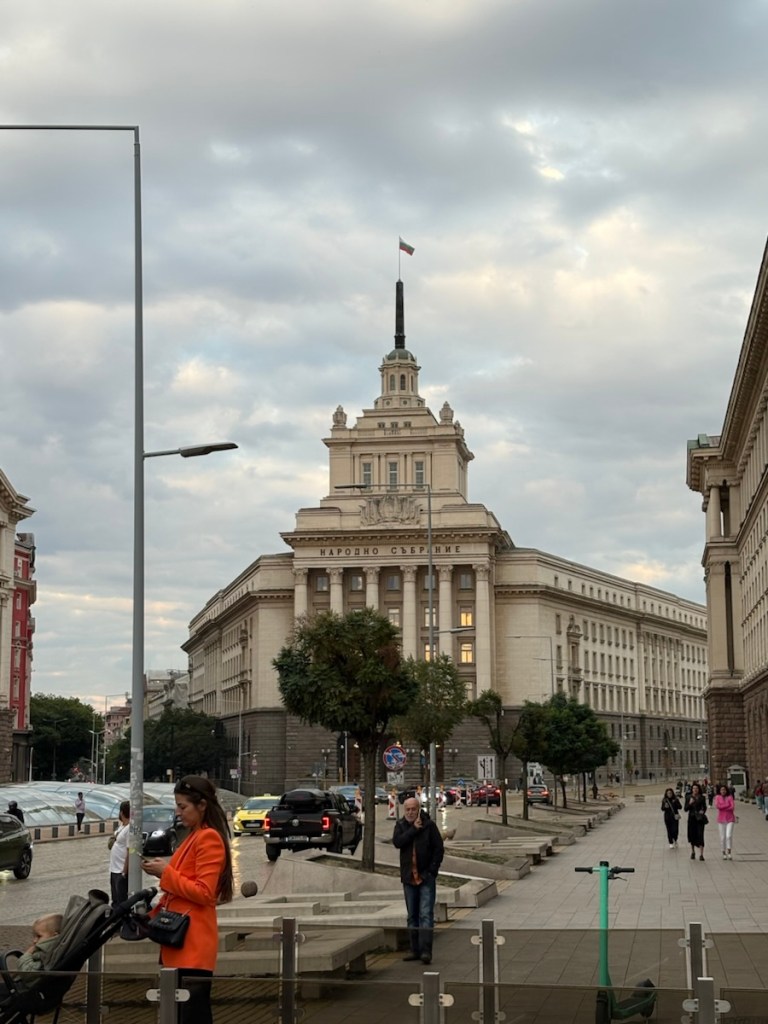
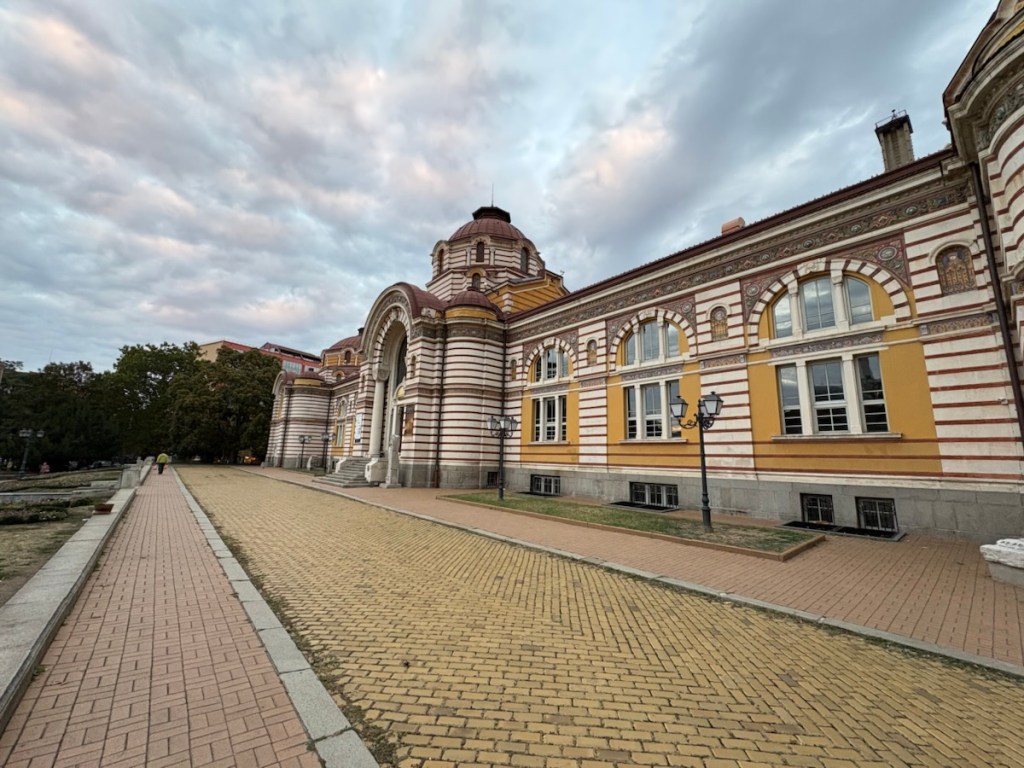
So after a very long first flight, long layover, short second flight, and an afternoon walking around, what did I decide to do?  Take a “free” 2-hour, evening walking tour in the city!  That got me good and tired so I can crash hard and wake refreshed in the morning.  Here are some photos from the group walking tour.

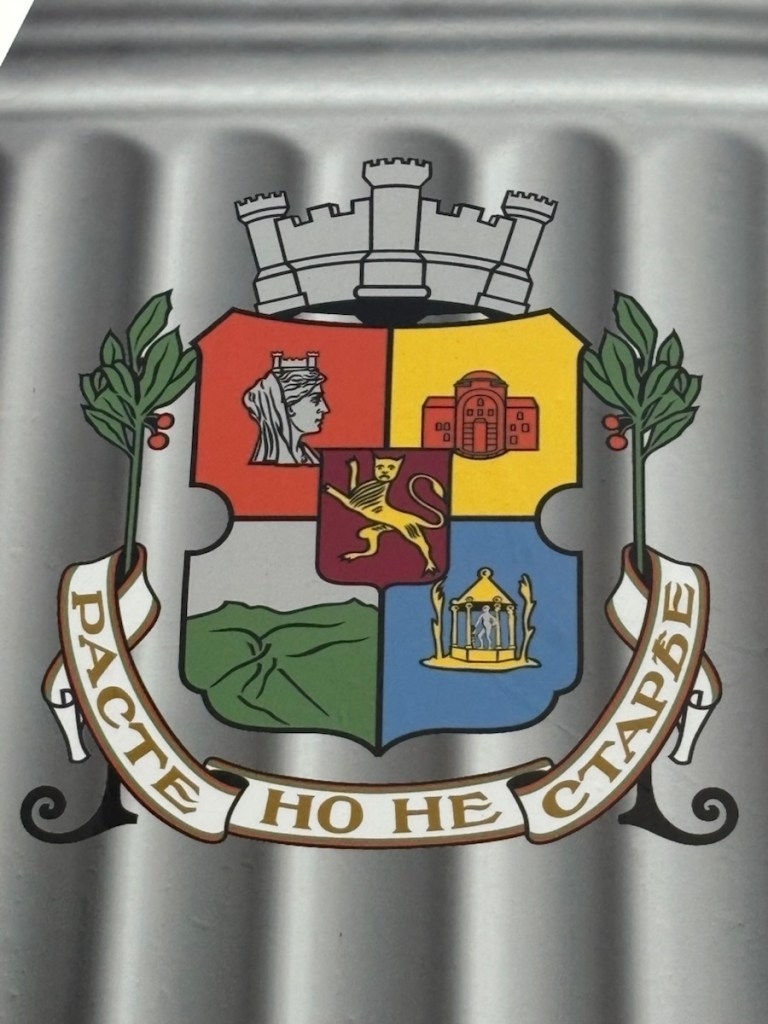
The Sofia Coat of Arms – the motto reads, “Always growing, never aging.”

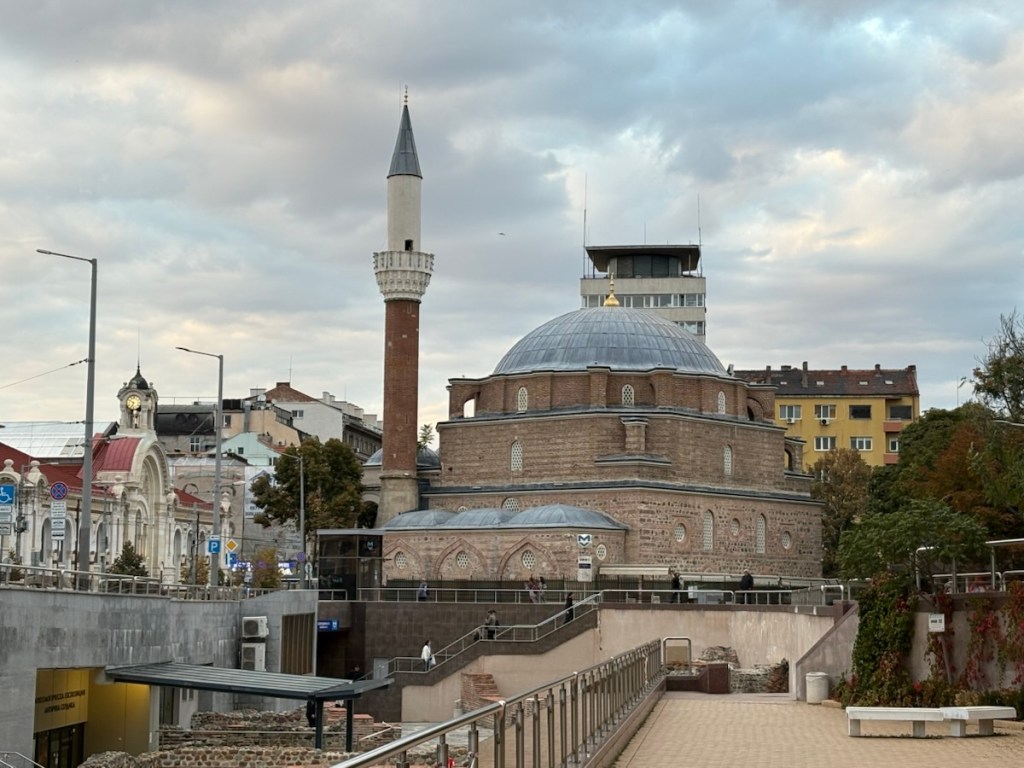
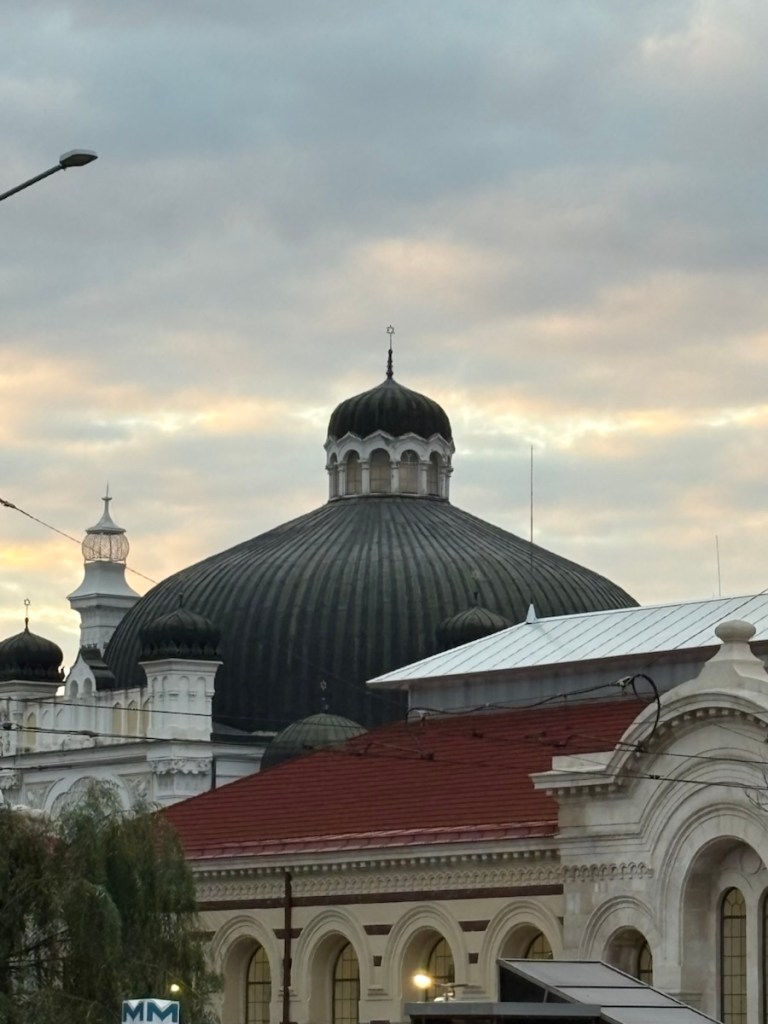
Bulgaria is largely a Christian Orthodox country. Even in Sofia, a city of 1.5 million residents, there are only 10,000 Muslims, and even fewer Jews.

Like many European cities, Sofia has an excellent trolley car network and a subway. But the trolley cars here are much noisier than I recall in other places. They shake the ground and rumble quite loudly when they pass by.

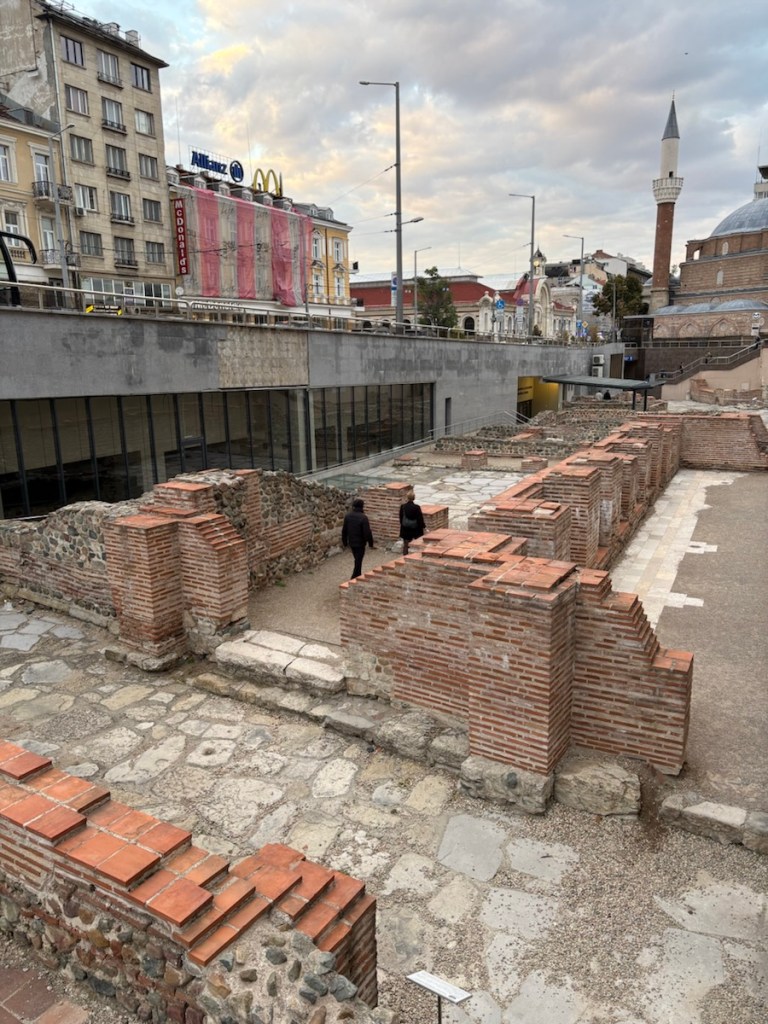
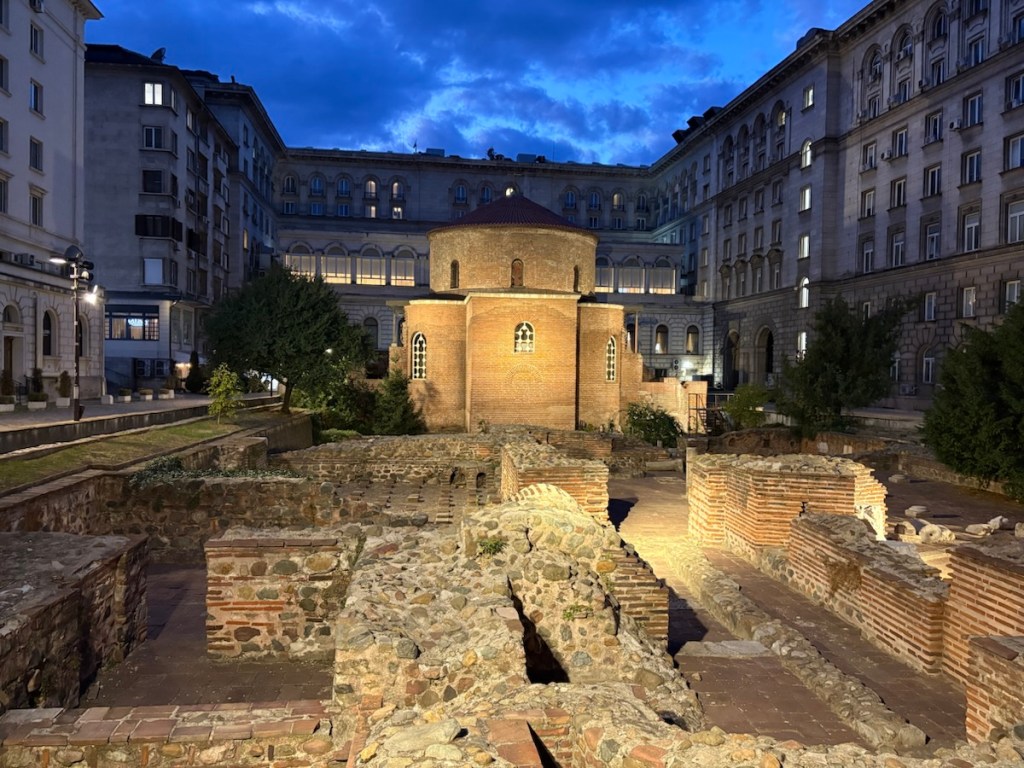
The Round Church of St George – 1,700 years old, with Roman ruins in the foreground.
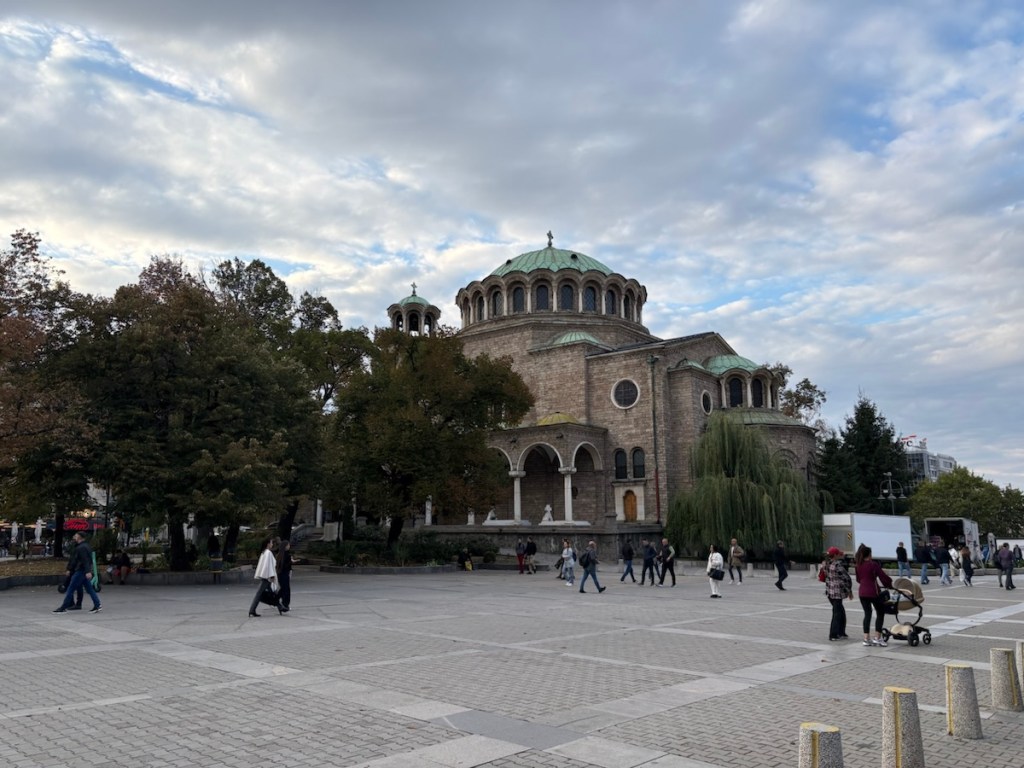
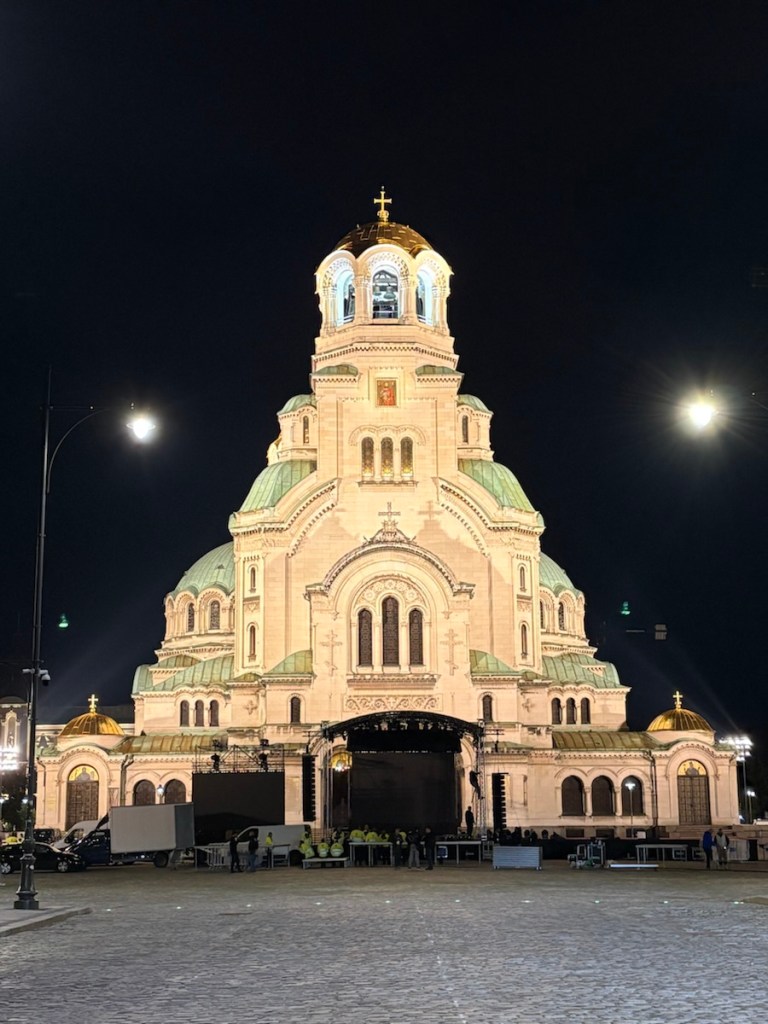
The famous Alexander Nevsky Church which can hold 5,000 people!
A beautiful apartment building
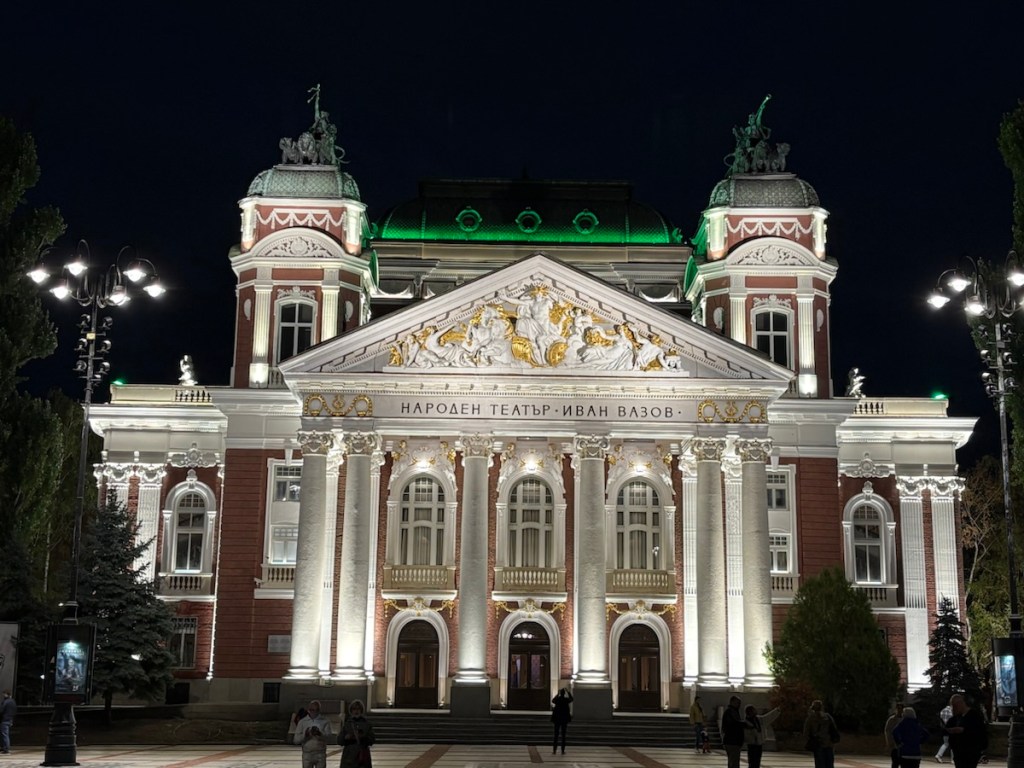
The Theater
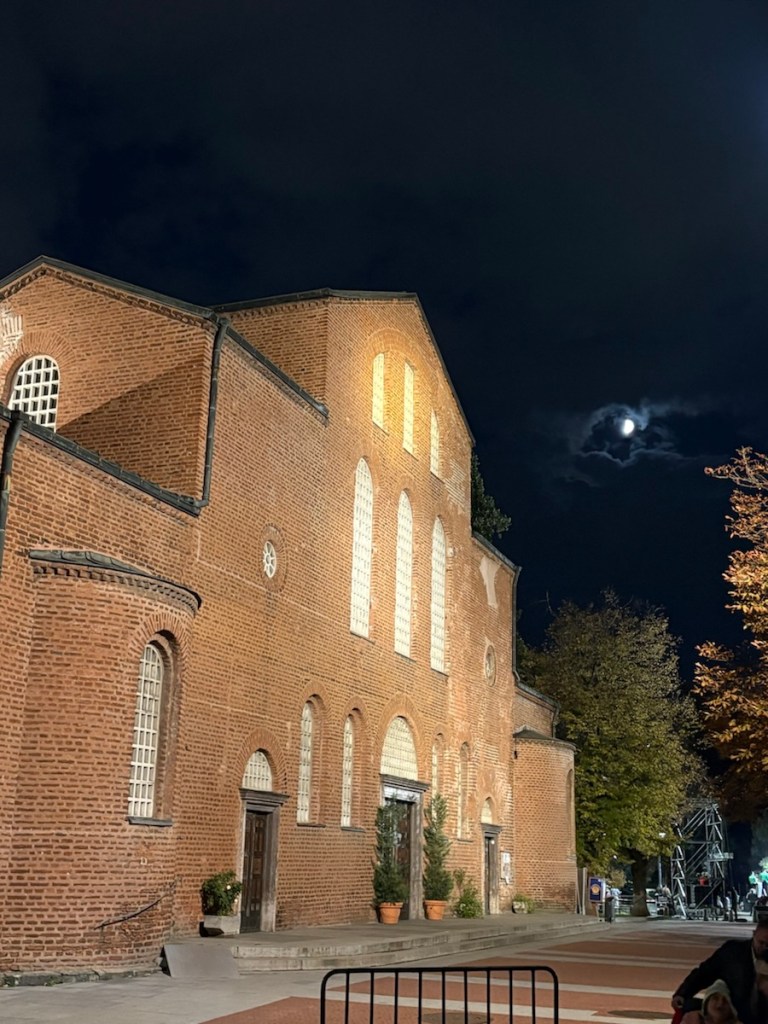
The Saint Sofia Church dating from the 4th Century

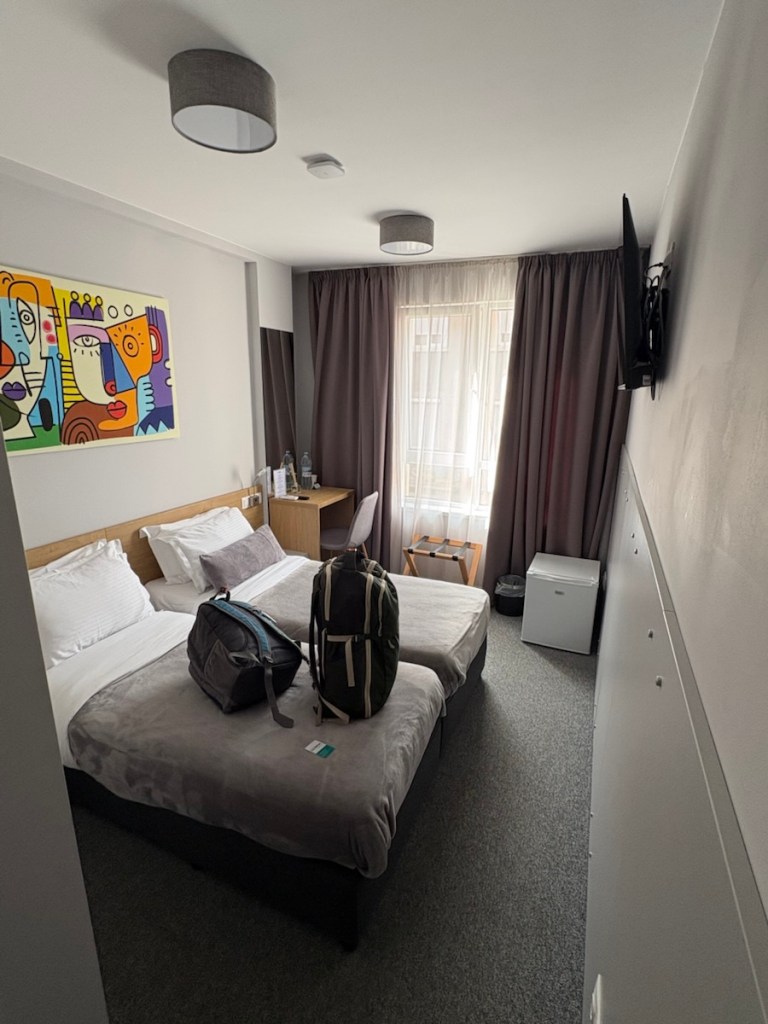
My lodging for the night is quite comfortable and right in the main shopping, touristy section of town.  I may stay here again when I come back in a couple weeks.

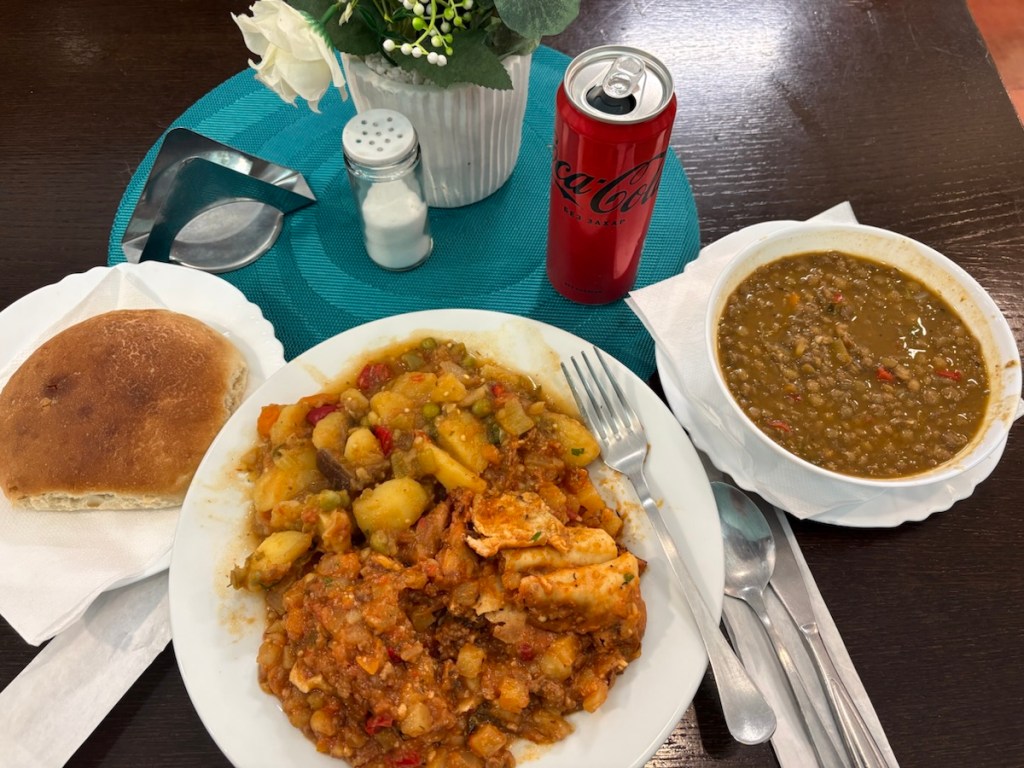
And my dinner for tonight – delicious hot bread, a type of potato salad, some type of pasta, vegetable, and mystery meat dish, and a bean soup. All excellent and way too much food for less than $15.

Off to Skopje, North Macedonia, in the morning.

Before you go…

I asked the librarian if the library had books on paranoia. She whispered, “They’re right behind you”.

Wow!  What a Busy Airport!

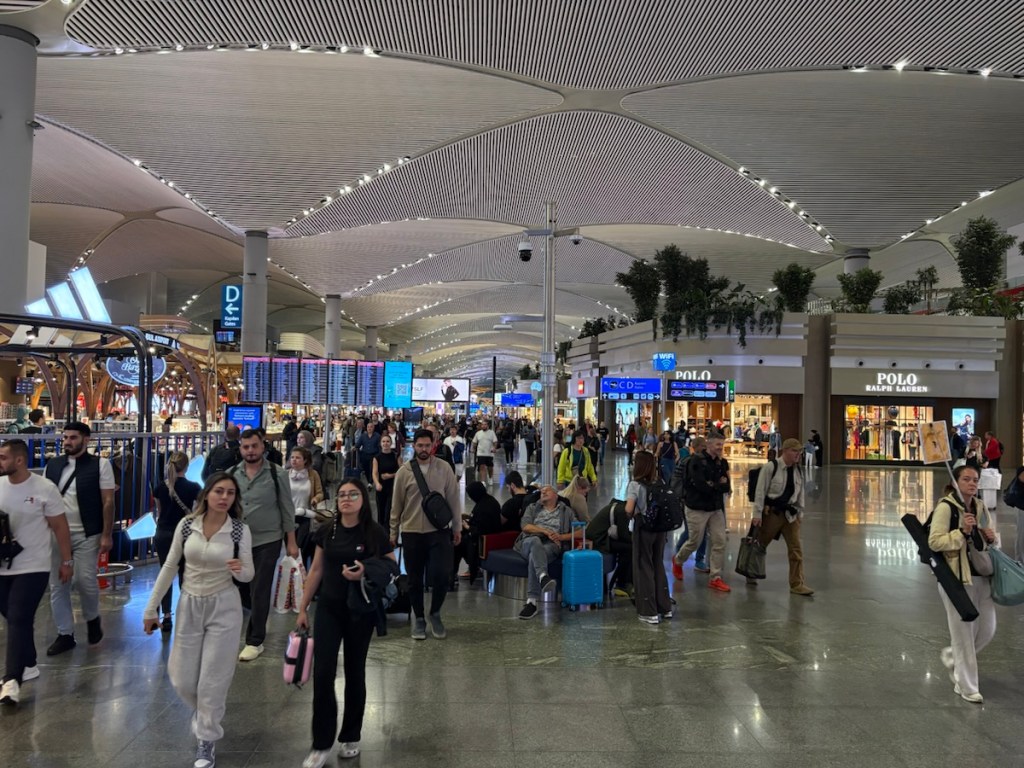
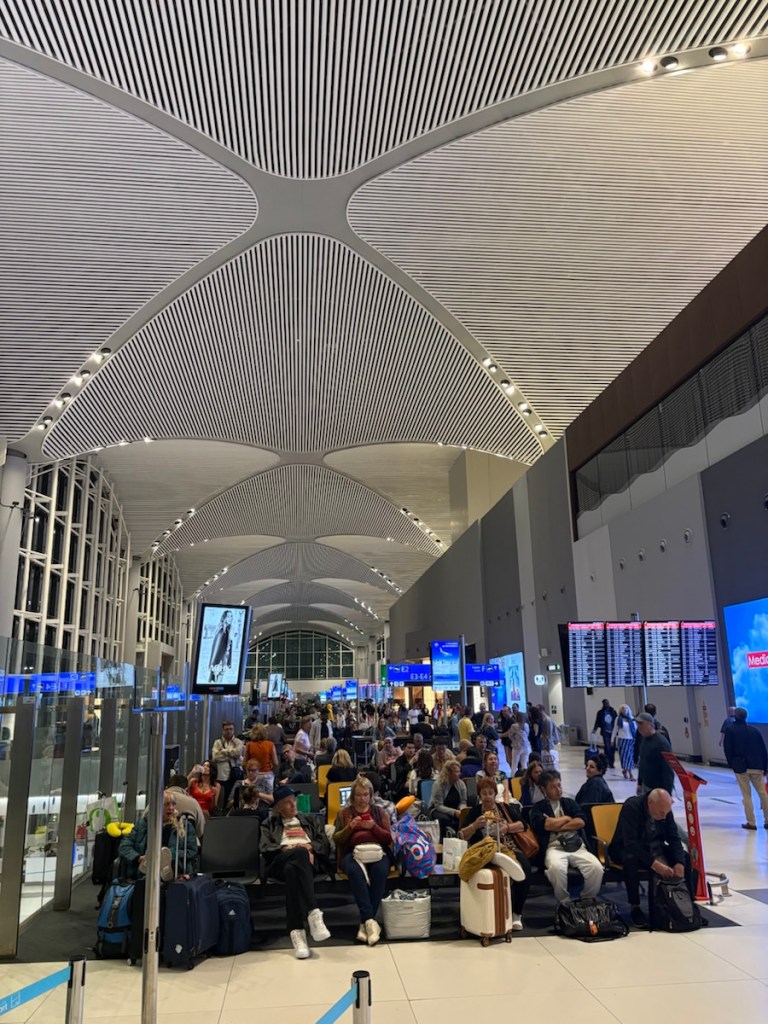
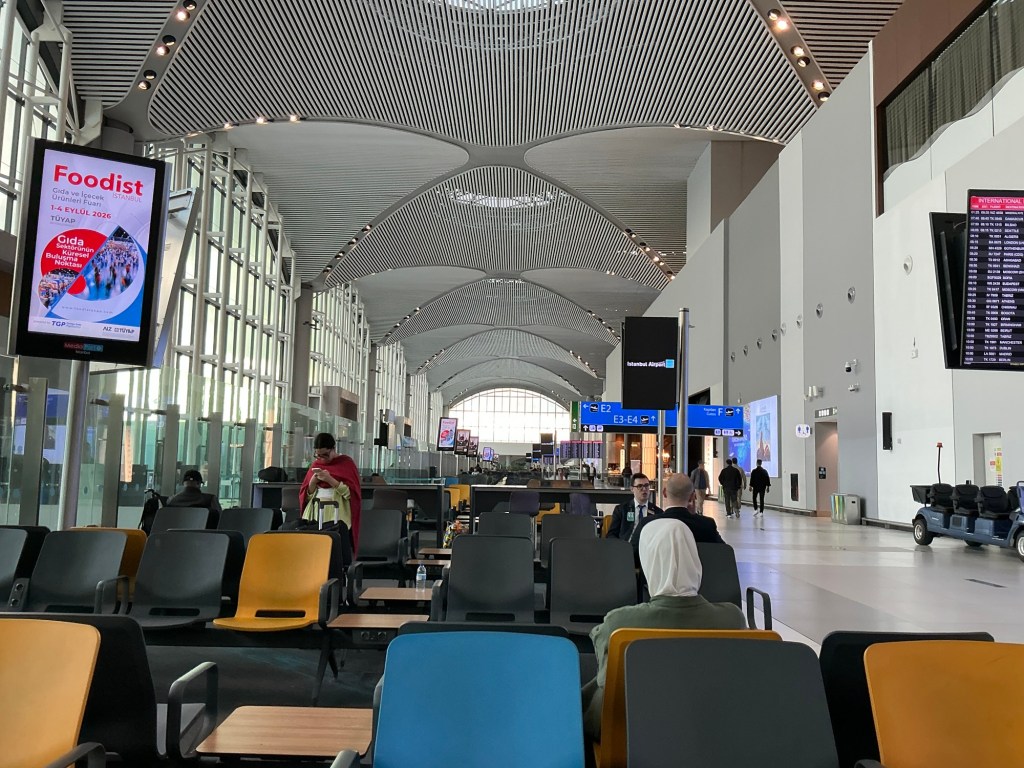
My comfortable Turkish Air flight to Istanbul arrived almost an hour early, and I was surprised to find the massive, beautiful, new airport jam packed before 6:00 am.  But 2 hours later, it looked deserted!

Sadly, the early arrival just makes my layover longer since my next flight to Sofia doesn’t leave until 1:30 pm.  Although I arrived in time to take an earlier flight, it was 100% full – rats!

Before you go…

Parallel lines have so much in common. It’s a shame they’ll never meet.

Departure Day

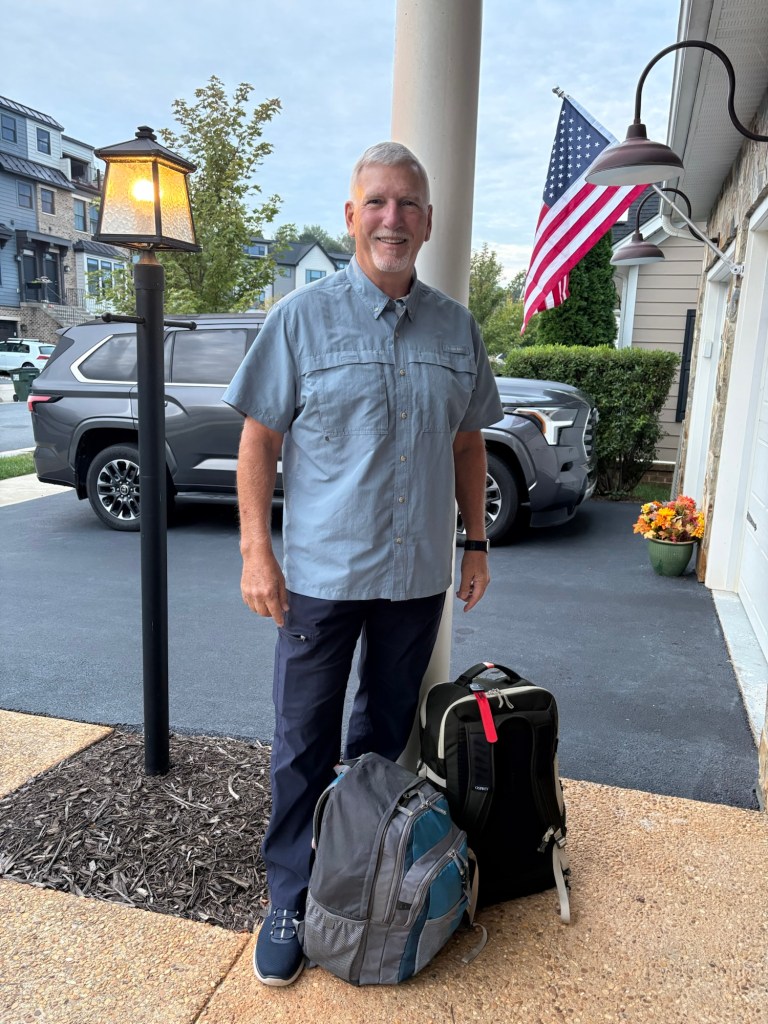
Just a 2-hour drive to Washington Dulles to catch my 10-hour flight to Istanbul, Turkey.

Unfortunately, I also have a “delightful” 6+ hour layover in Istanbul before my flight on to Sofia, Bulgaria.

Before you go…

I accidentally swallowed some food coloring. The doctor says I’m OK, but I feel like I’ve dyed a little inside.

Well, I’m off again!  

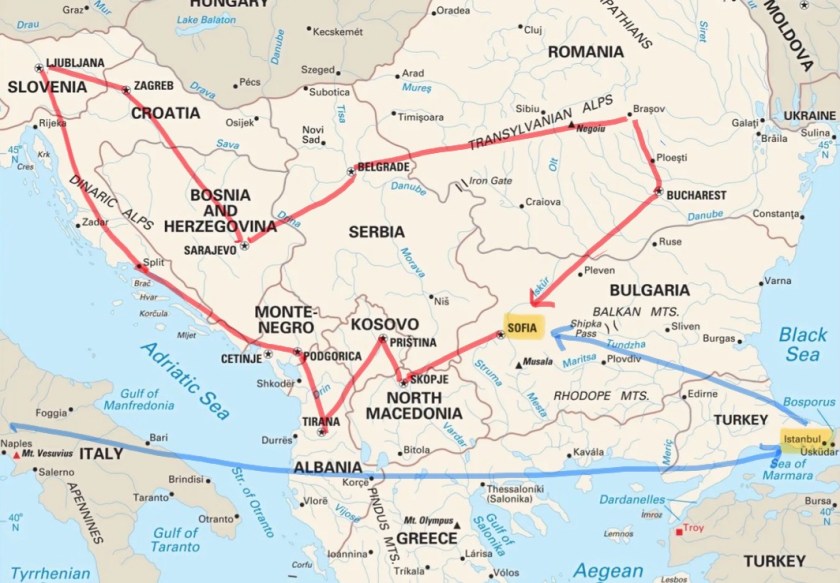
This time for 3+ weeks to the Balkans in southeastern Europe (named for the Balkan Mountains in Bulgaria).  The Balkan area is comprised of a dozen countries, including parts of Greece and Turkey, and the ten countries to their north (Albania, Bosnia and Herzegovina, Bulgaria, Croatia, Kosovo, Montenegro, North Macedonia, Romania, Serbia, and Slovenia).  Those countries largely comprised the former Yugoslavia. And all are either 6+ or 7+ hours ahead of East Coast time.

I’ll have a car on this trip, so a lot of driving back roads, sightseeing, museum hopping, and hiking.  The weather should be spectacular this time of year, with warm-ish days and cool, crisp nights. The languages will be particularly difficult in many of these countries, but I’m trying to learn a few words or phrases to be polite. And Google Translate is a life saver! Plus, only four of the countries use Euros; the others all have their own national currencies. Definitely not easy like traveling in Western Europe.

My planned driving route

I leave Monday, September 29th, flying to Sofia, Bulgaria, via Istanbul, Turkey.  I hope you have a chance to follow my blog to check out the posts and the pix.

Before you go…

“Yesterday’s the past, tomorrow’s the future, but today is a gift. That’s why it’s called the present.” (A quote often attributed to American cartoonist Bil Keane, whose Family Circus comic strip featured the line in 1994.)