After a 4:00 am rise, a 30-minute Uber to the airport (my first Tesla ride), a 90-minute flight to Copenhagen, a 5-hour layover in Copenhagen, a 8-hour flight to Washington, a 2-hour rental car drive to Charlottesville, and a 20-minute ride from the rental car drop off — I’m home!
Ten countries, 21 days, and lots of new memories. It was an amazing trip (aren’t they all?)! The train was simple and convenient using my 22-day Eurail pass. Still, I do like to drive and see more of the countryside. I may do that for next year’s trip to the countries in the southern part of Eastern Europe. TBD.
So…what’s next? Ski season! I’ve got six weeks booked in Colorado, New Hampshire, Pennsylvania, and North Carolina. There will also be many days on the slopes at my home resort, Massanutten, here in Virginia.
I am continuously thankful to my wife who encourages my travels, and for my health and the resources to support my habit. Hope you will follow along on my next blog!
Words of wisdom, or just to amuse…?
I gave my friend 10 puns hoping that one of them would make him laugh. Sadly, no pun in ten did.
You can go anywhere you like; you must only look serious and carry a clipboard.
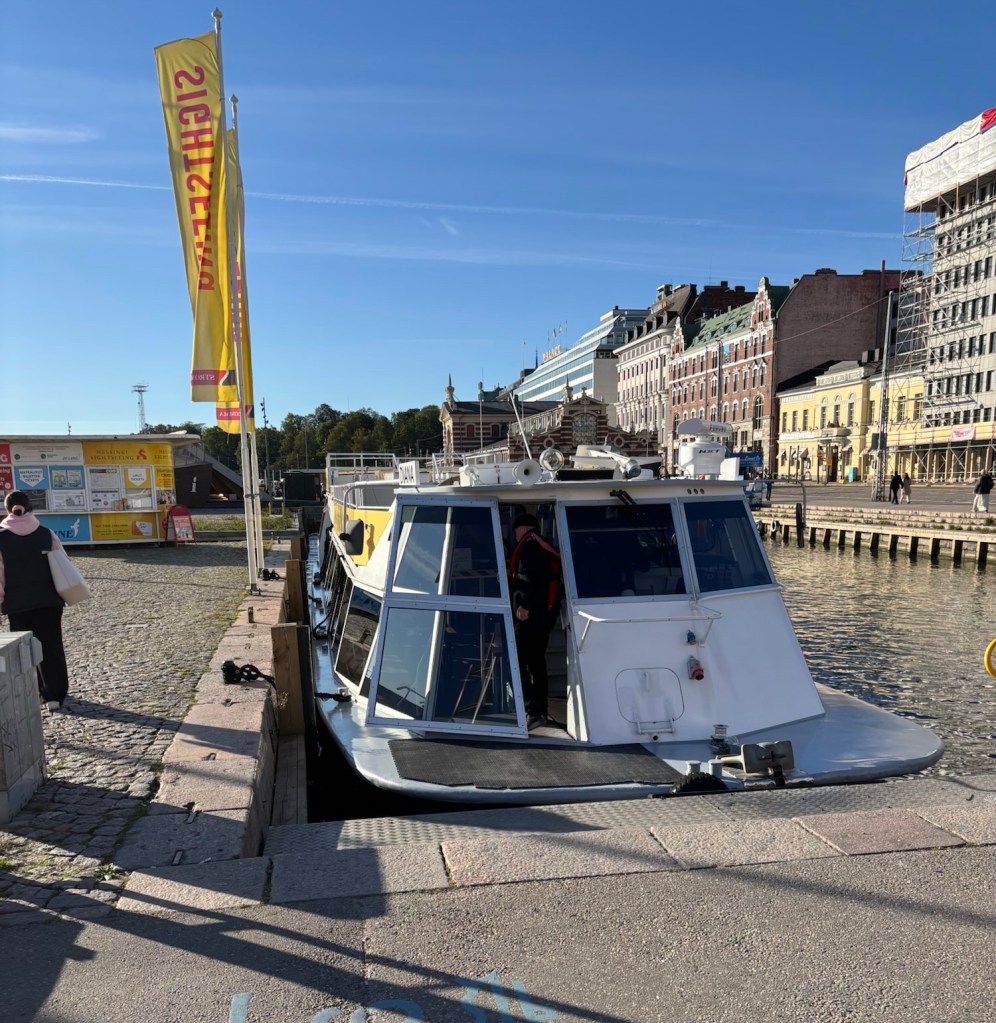
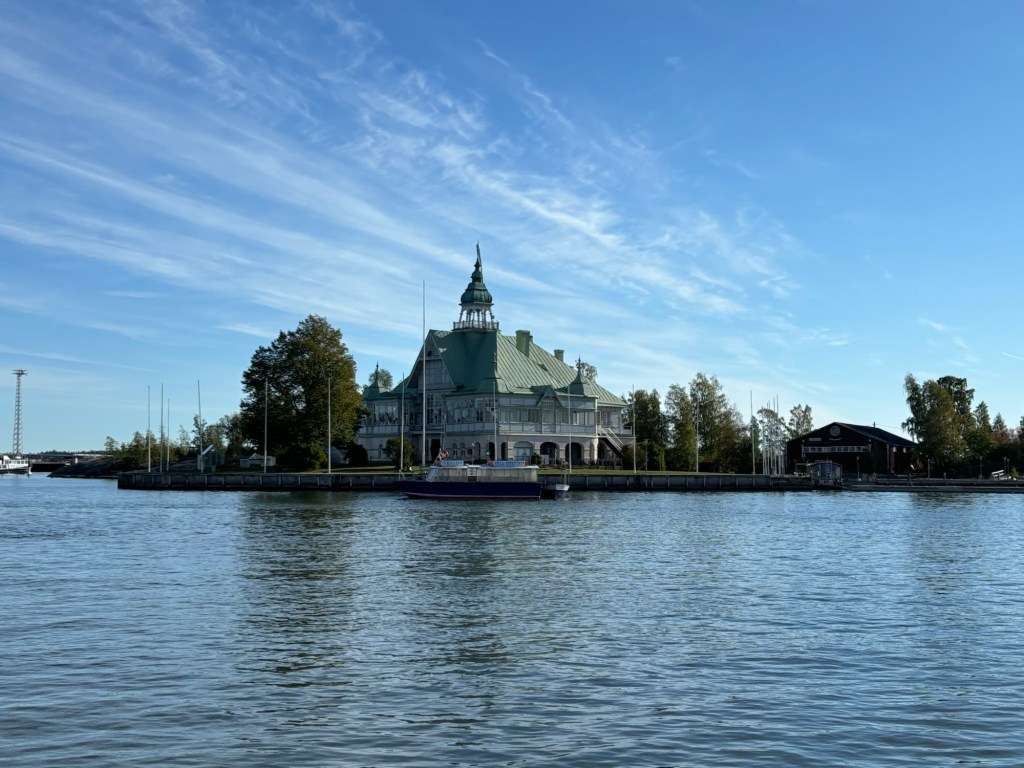
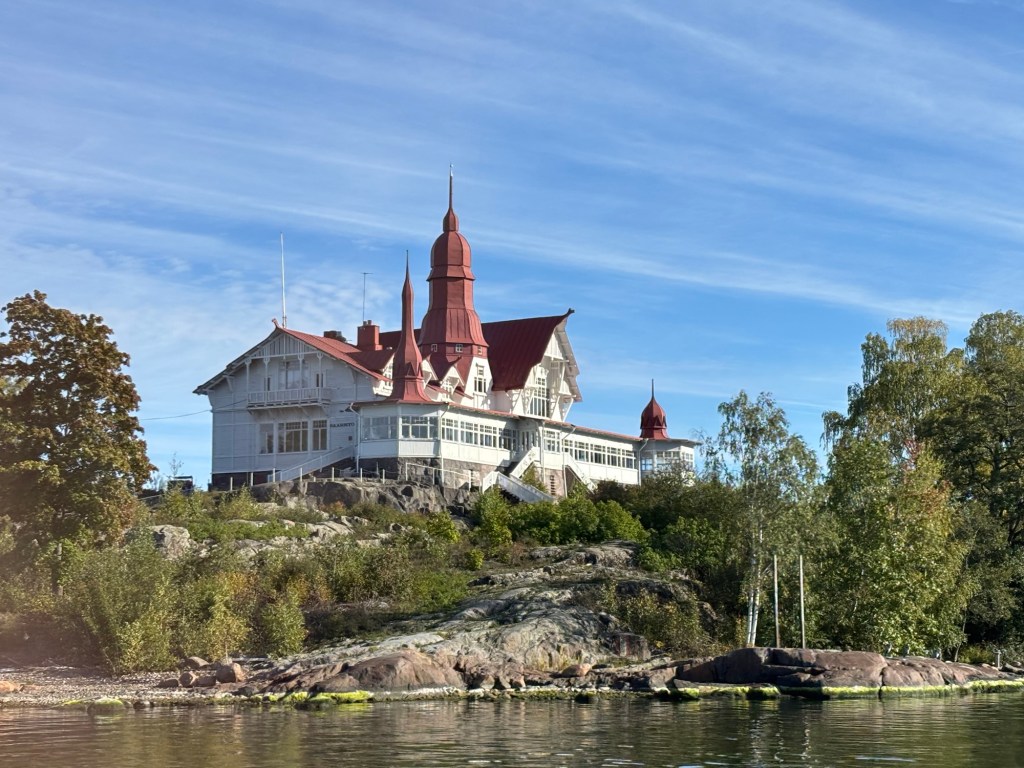
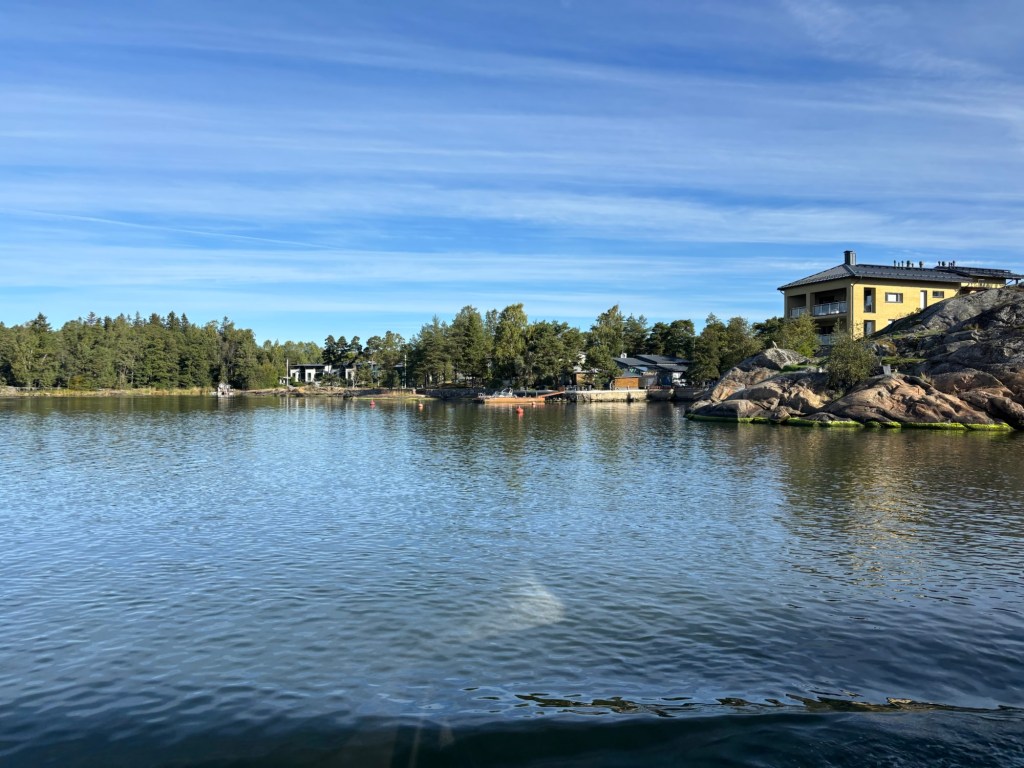
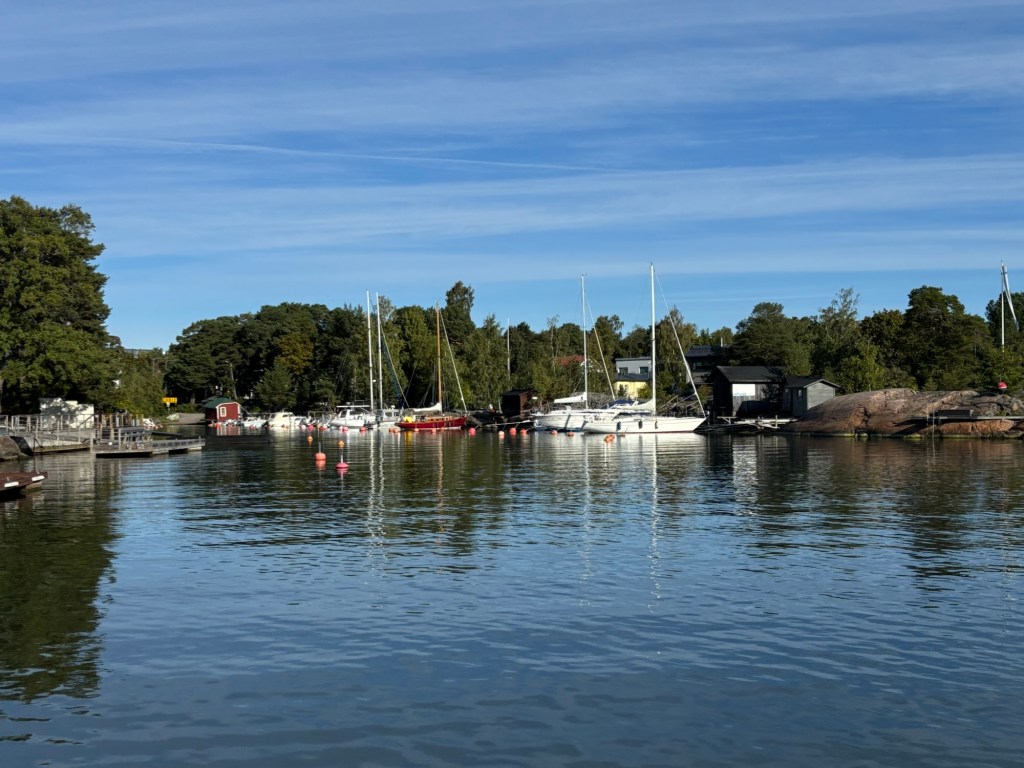
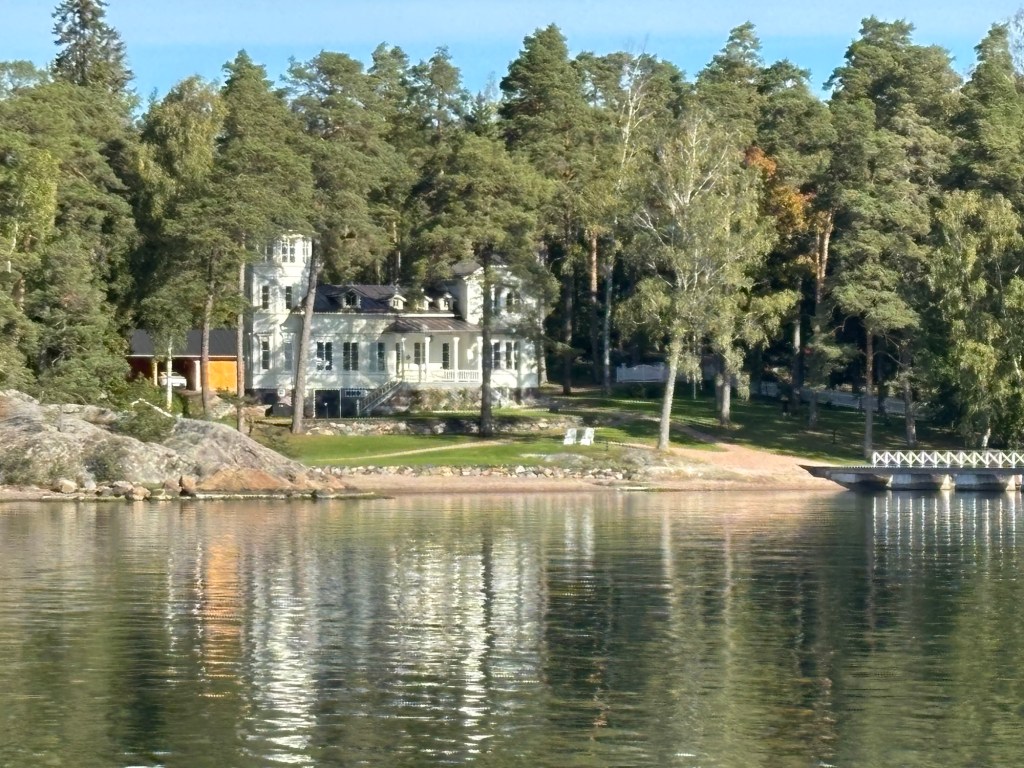
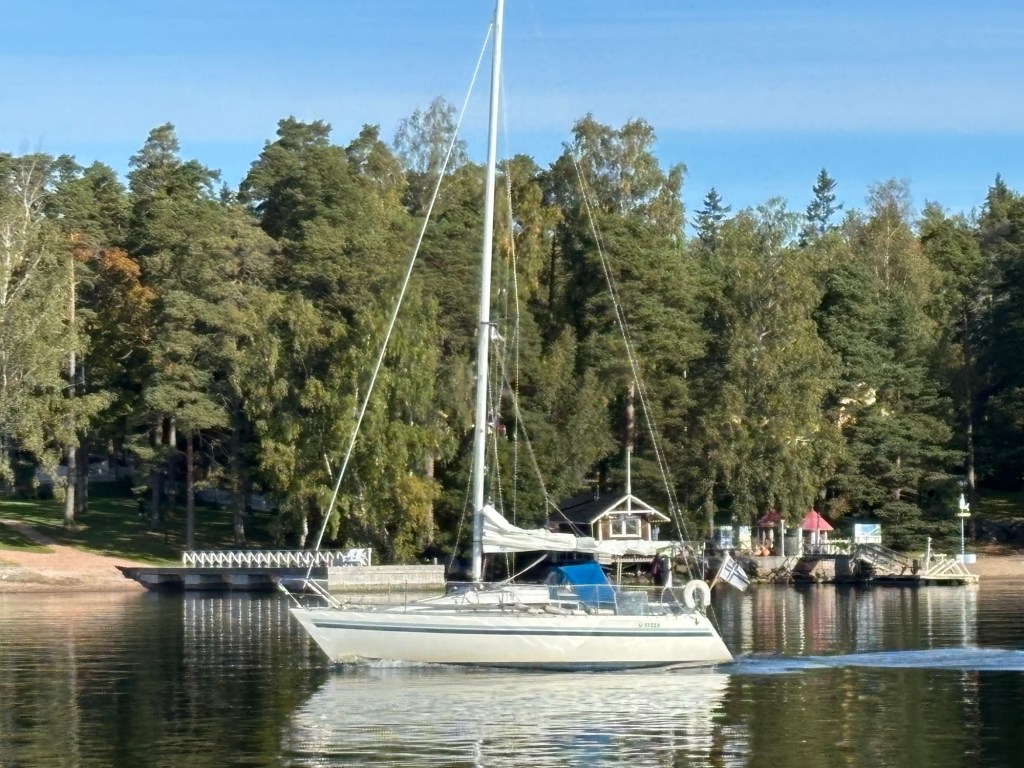
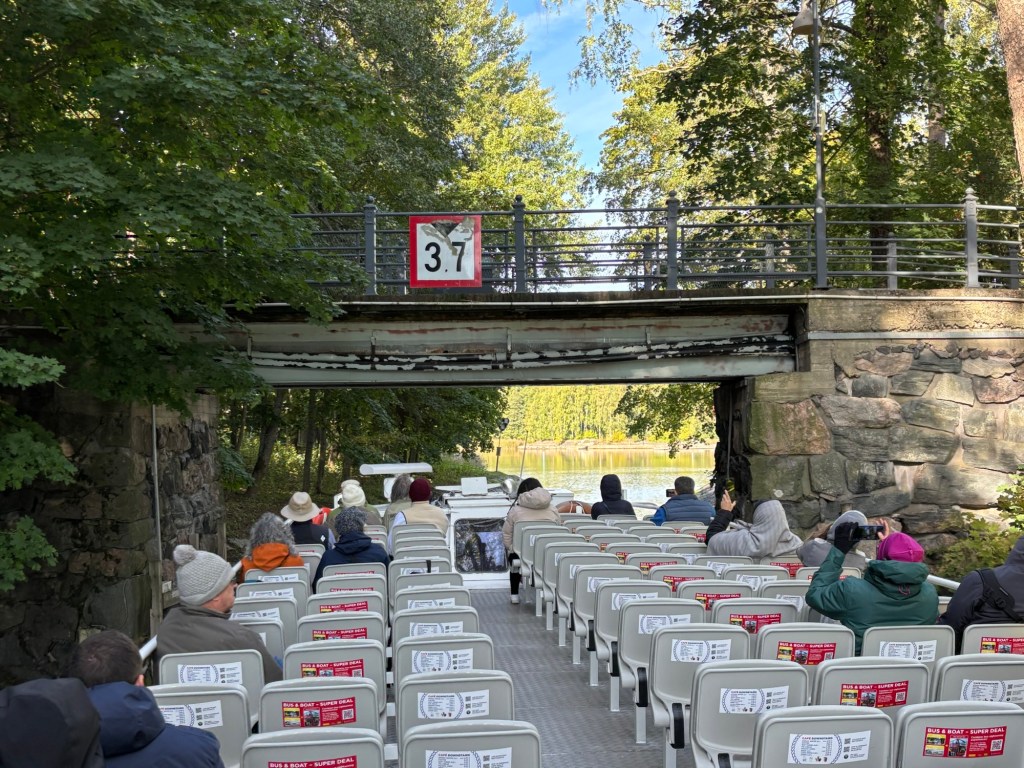
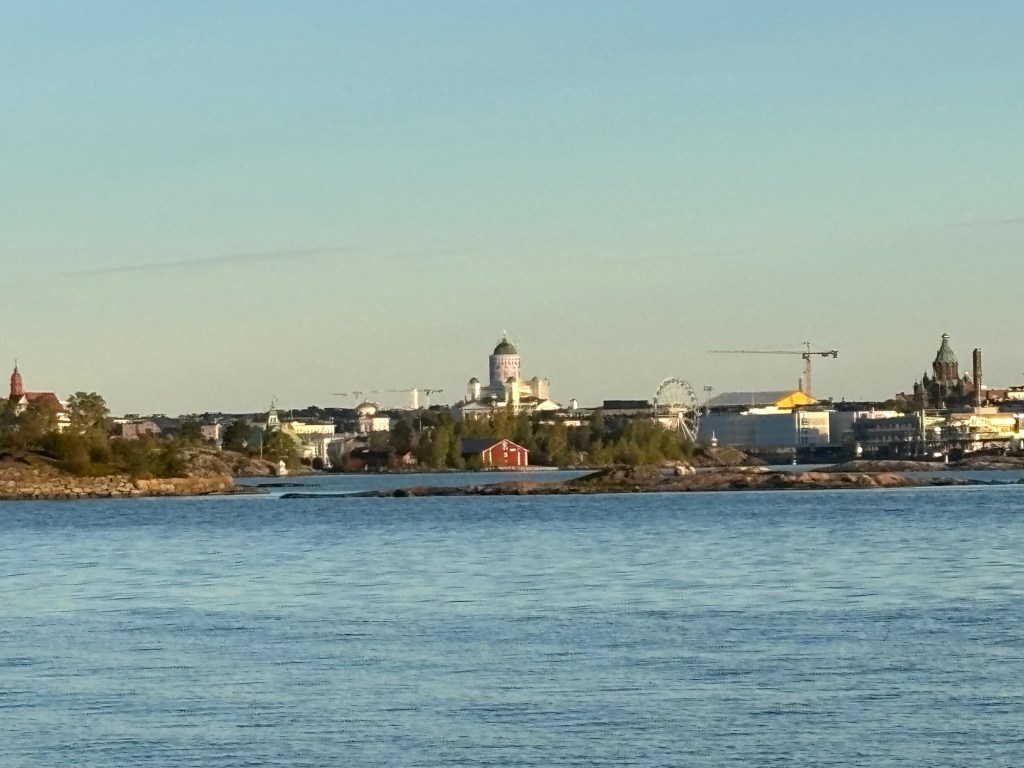
Last day in Helsinki and I started it with a Canal Sightseeing Cruise. It’s another free benefit of my Helsinki Card Pass. The pass has been useful and worth the initial cost.
My yacht for the morning
Weather was clear again this morning, although temps are remaining below 60 all day. Fall is here! Surprisingly, most folks are bundled up in sweaters and coats. I thought the weather was comfortable with just short sleeves and a light jacket.
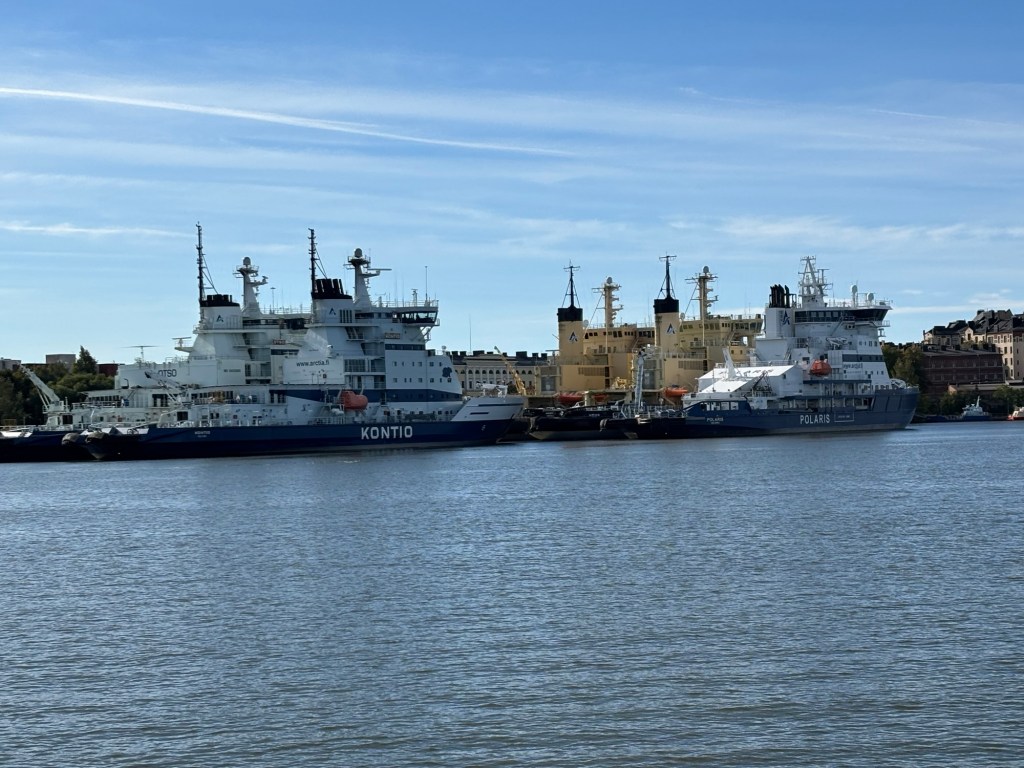
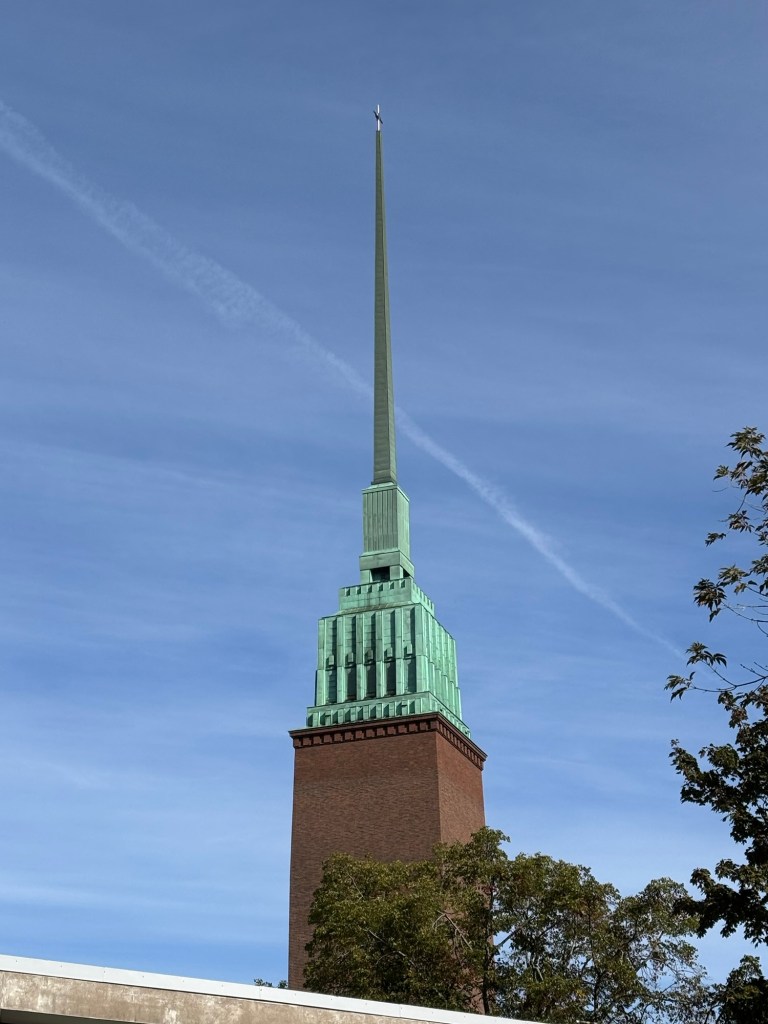
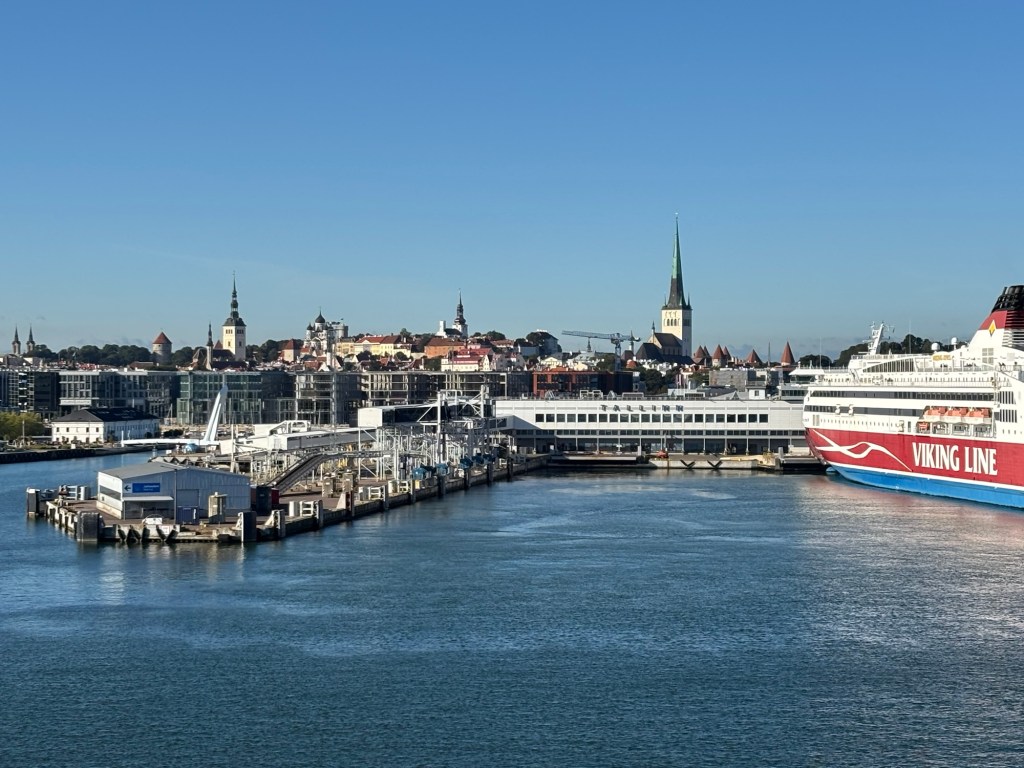
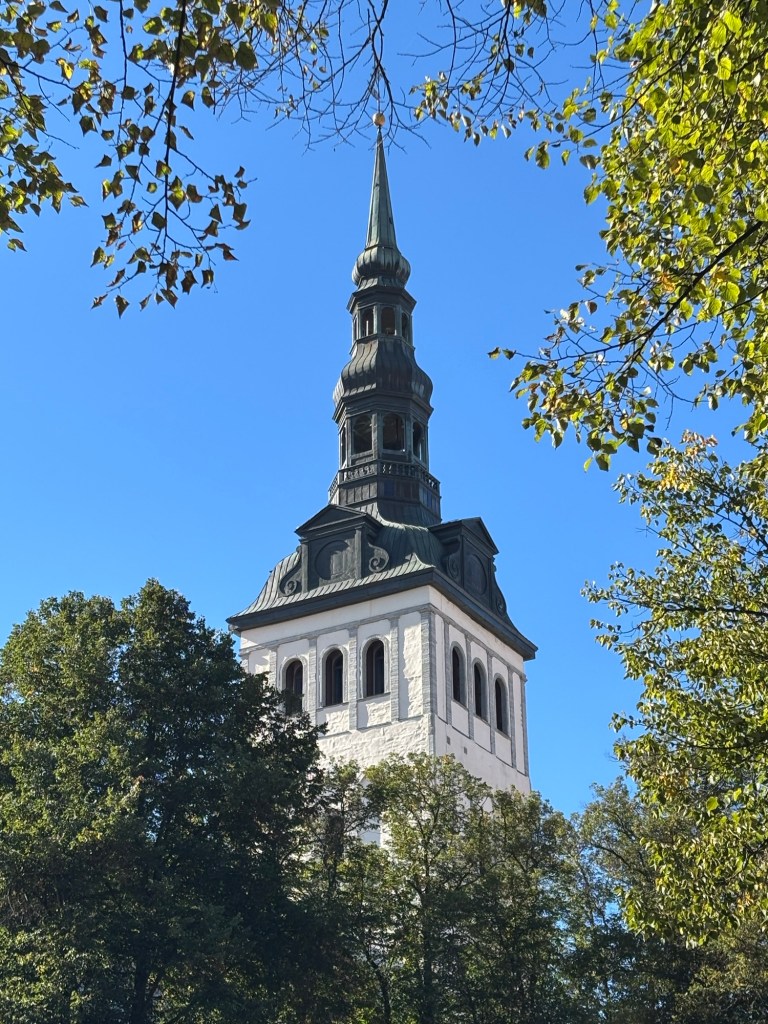
Icebreakers that keep the sea lanes of the Baltic navigable during winterThe spire of St Nicholas’ Anglican Church
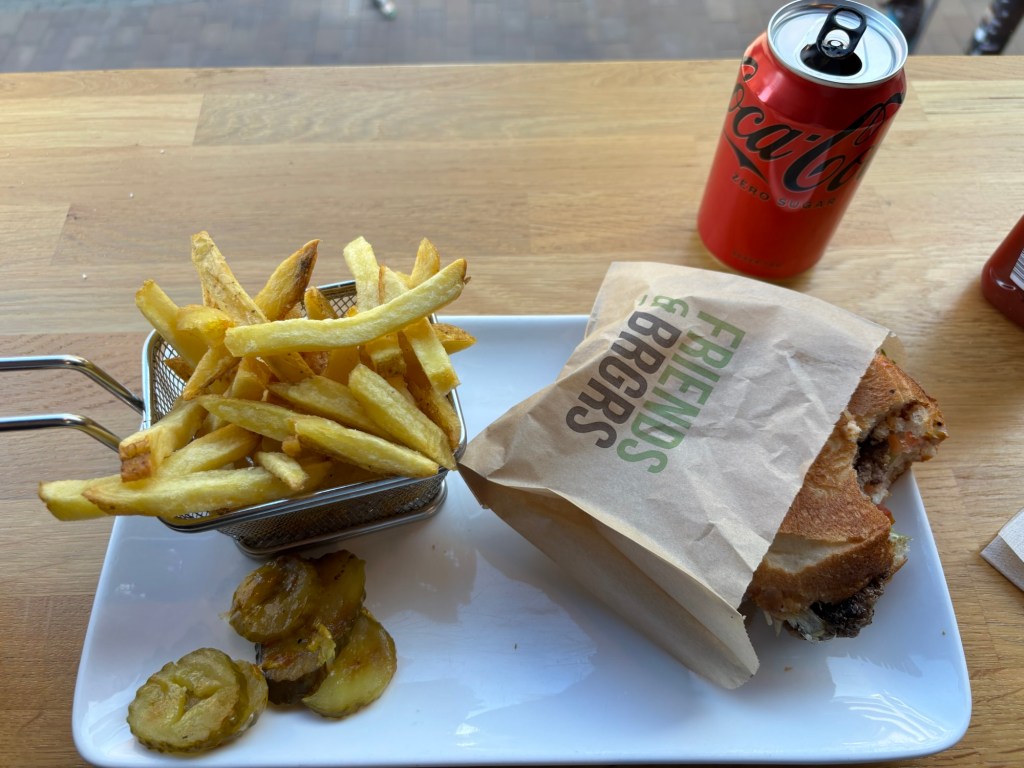
For lunch I picked my first burger of the trip. Sure glad I did – similar to Five Guys, but with more flavor!
Short day seeing the sights and I headed back to the hostel by late afternoon. I have a 4:00 am start time tomorrow for my flight to Copenhagen.
Words of wisdom, or just to amuse…?
If you’re using the phrase “easy as taking candy from a baby,” try taking candy from a baby.
Another spectacular, nearly cloudless morning in Finland!
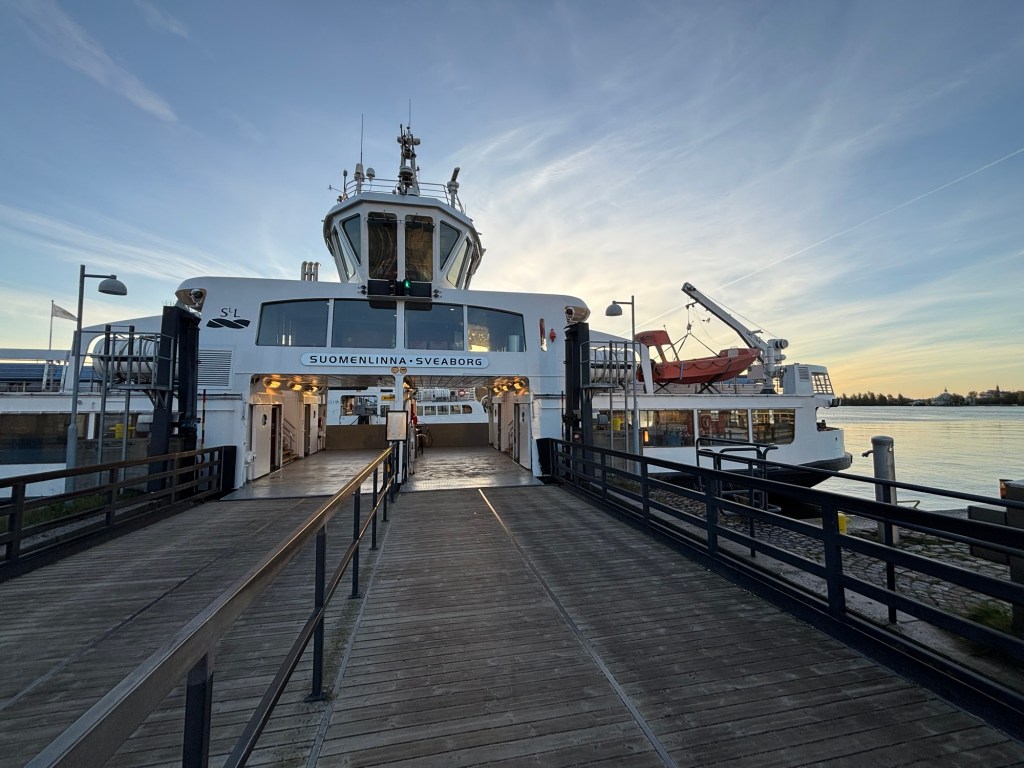
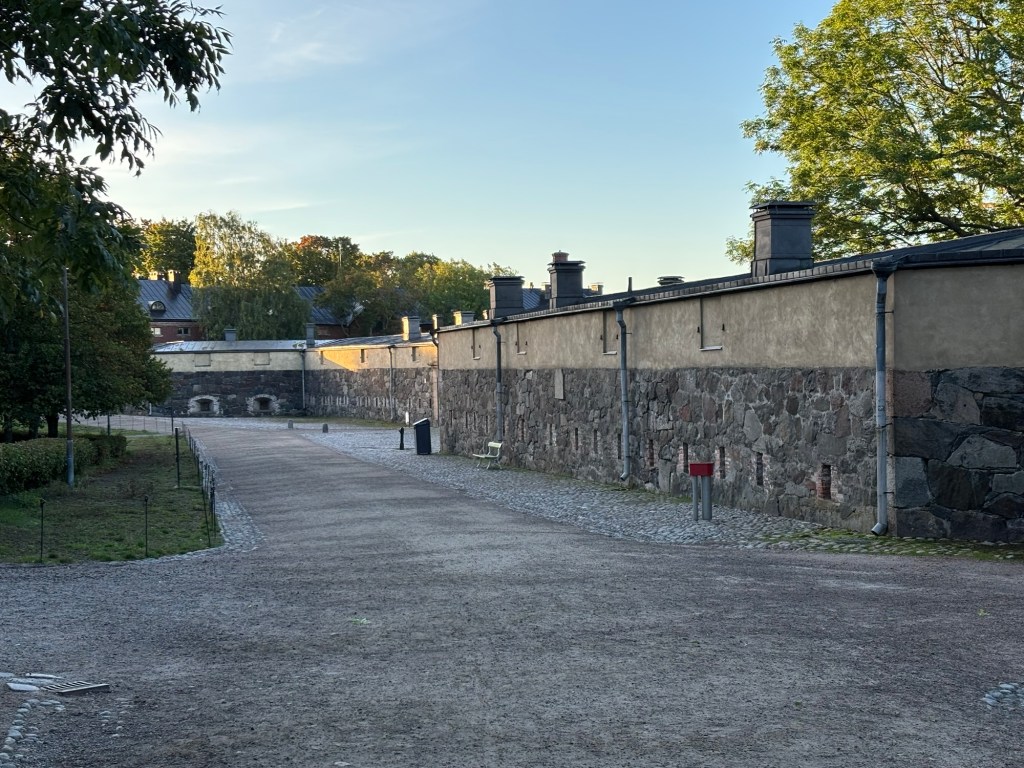
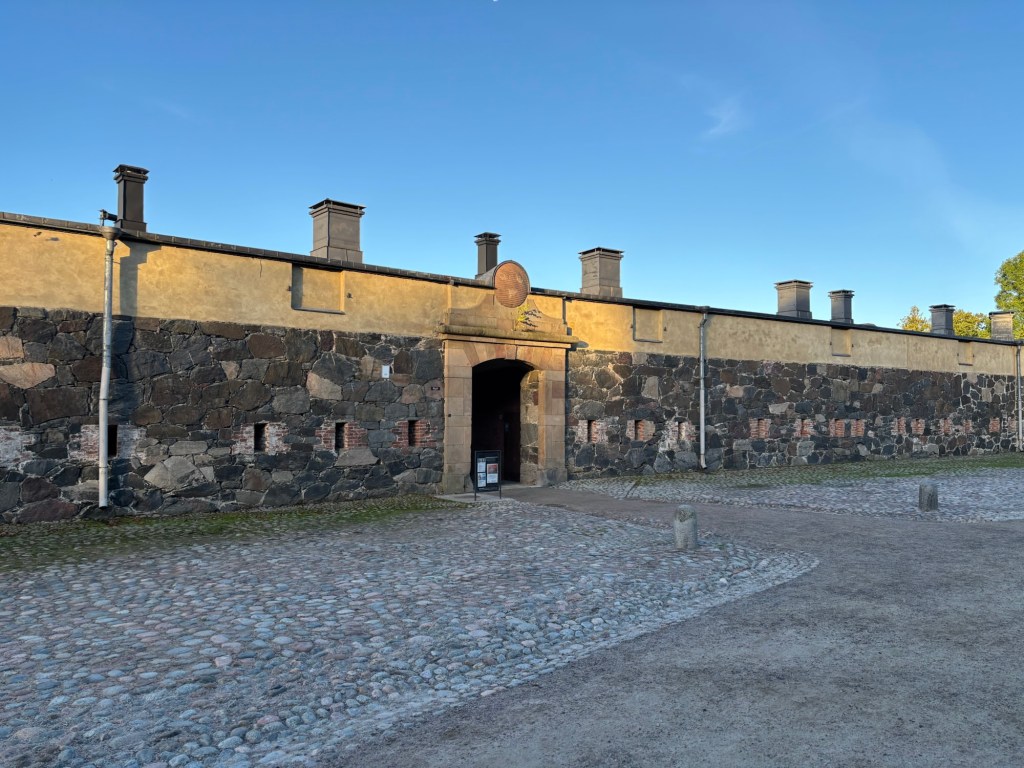
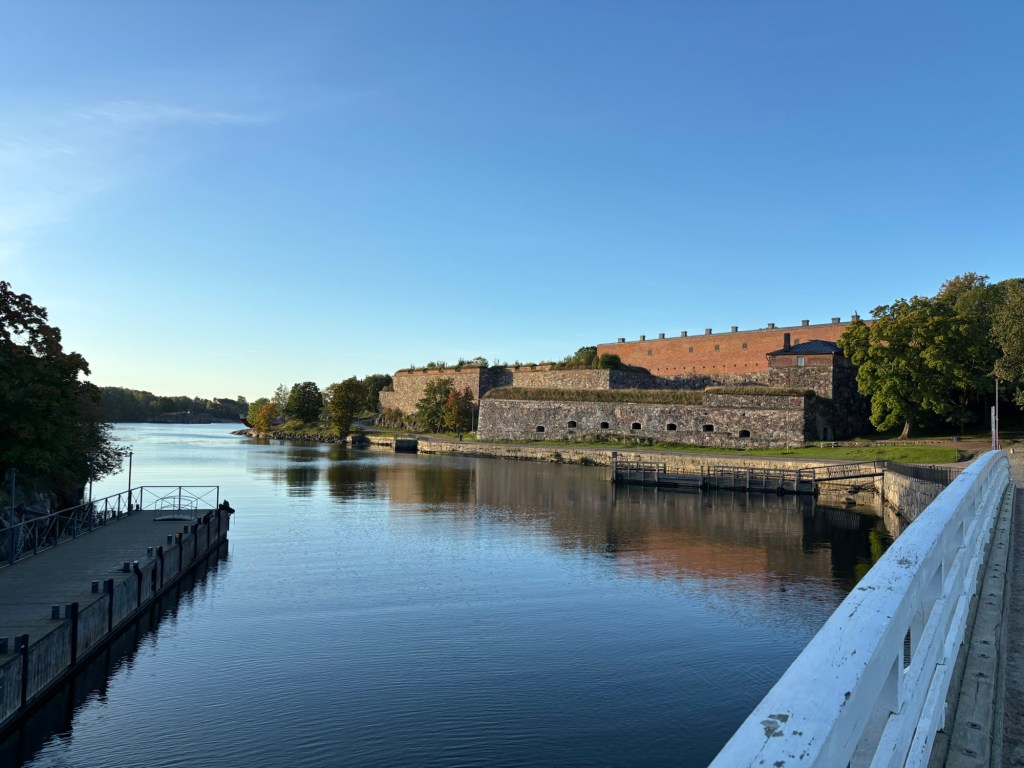
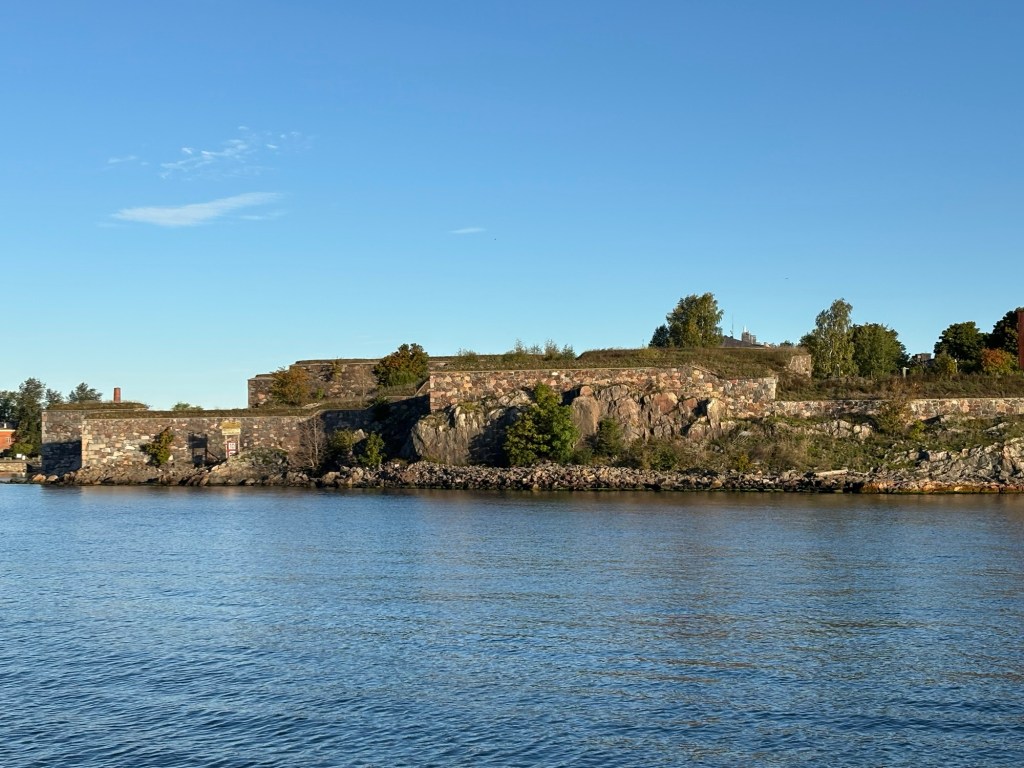
After a short tram ride, I caught the 8:00 am ferry to Suomenlinna Sea Fortress, an island fortress near the city.
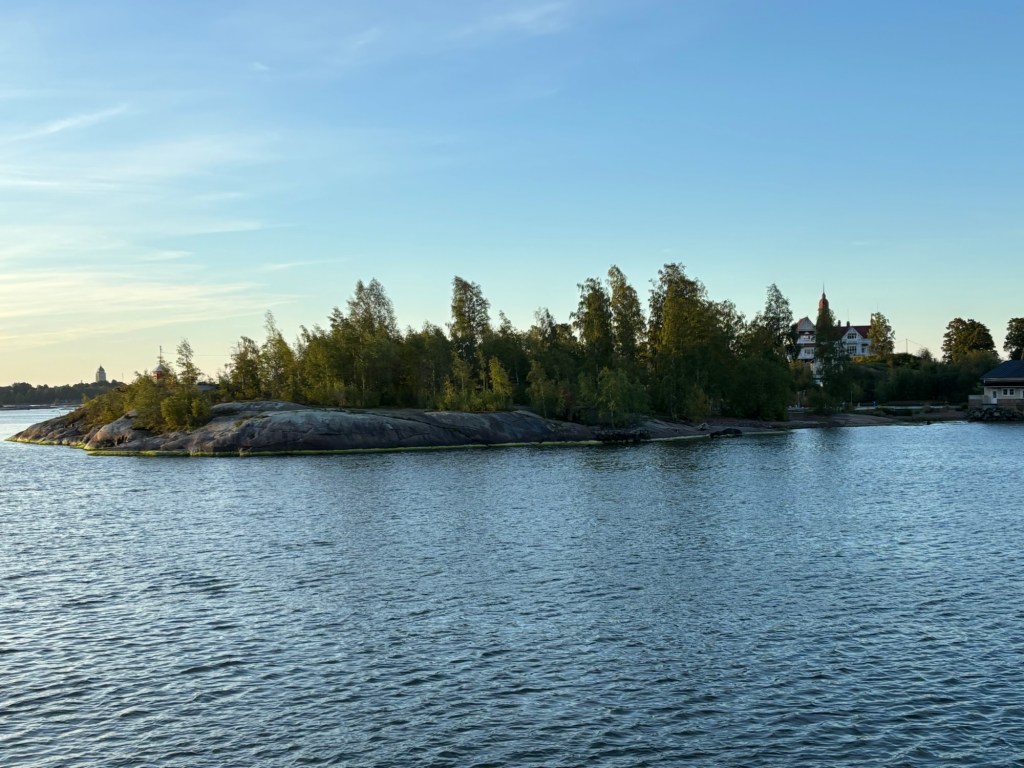
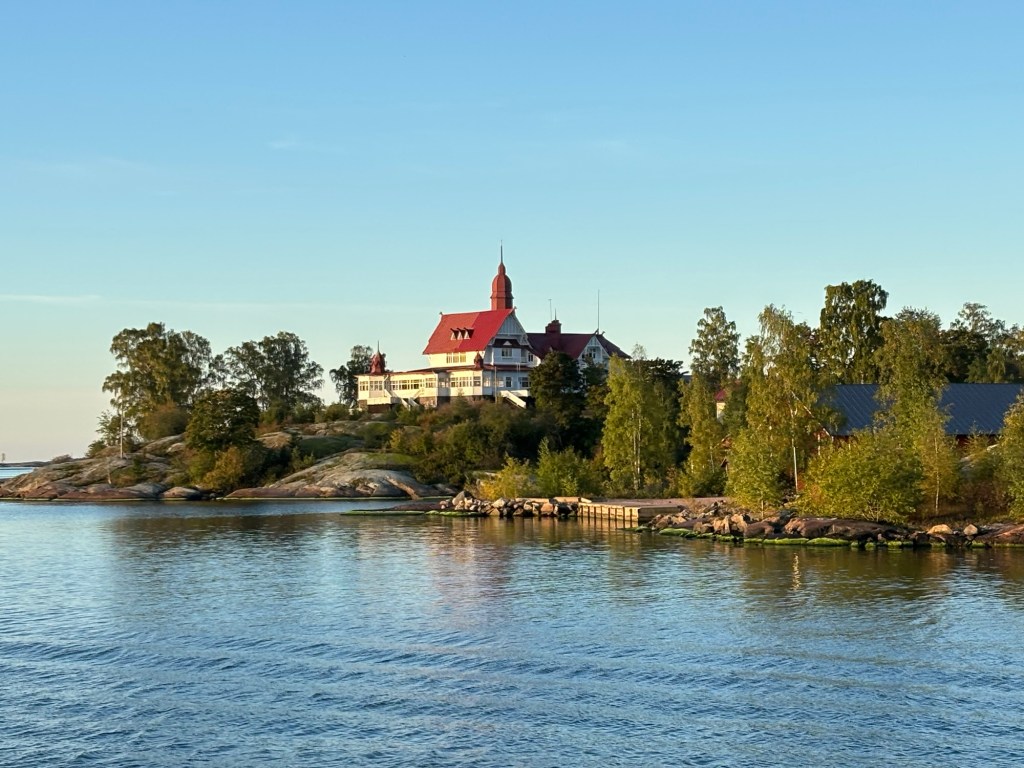
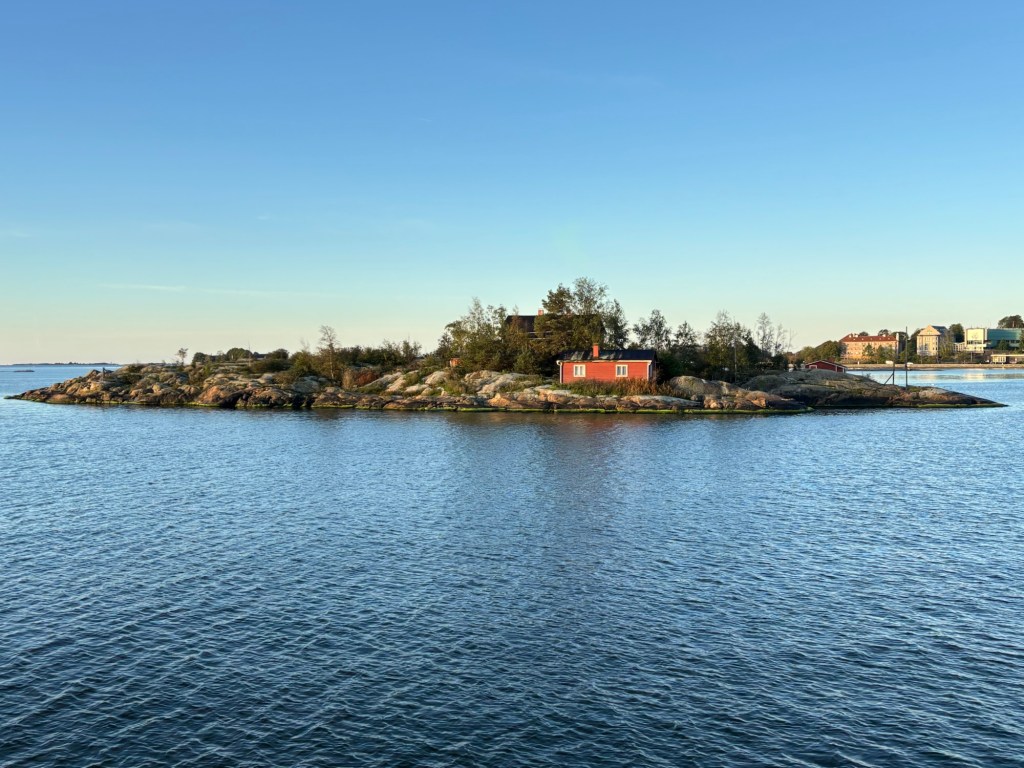
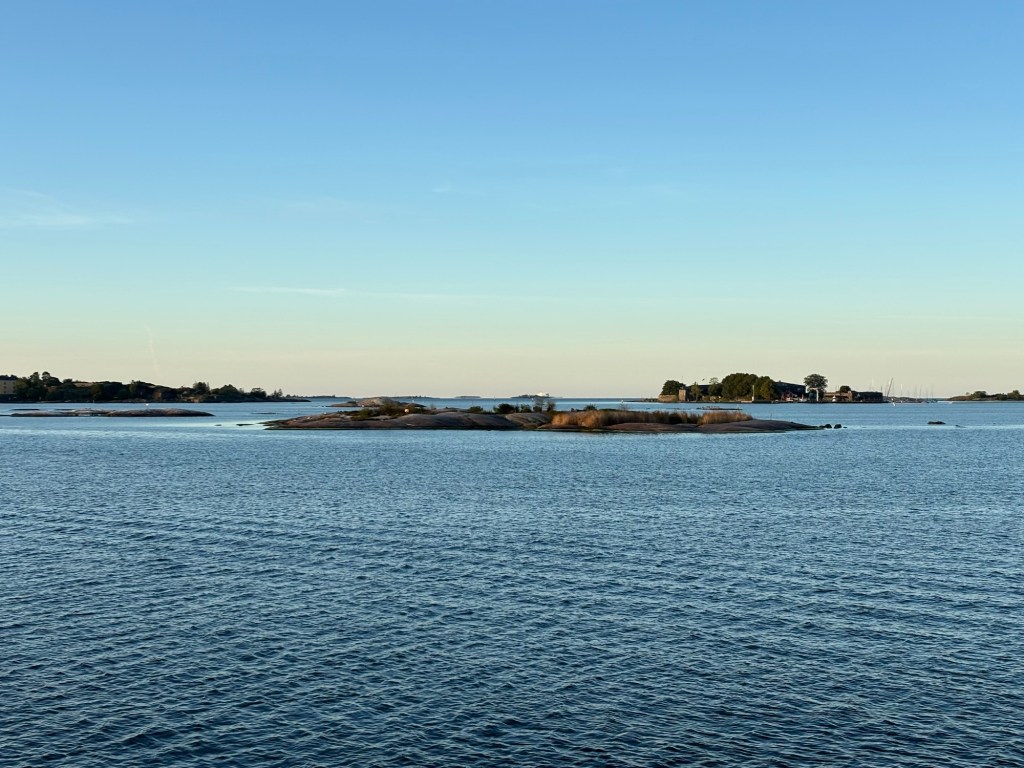
Helsinki is definitely a city of water – there are more than 30 islands that are part of the city. (Over 300 as part of the archipelago). And in the winter the water around the islands freezes and people ice skate between islands! Finland is also the least densely populated country in Europe.
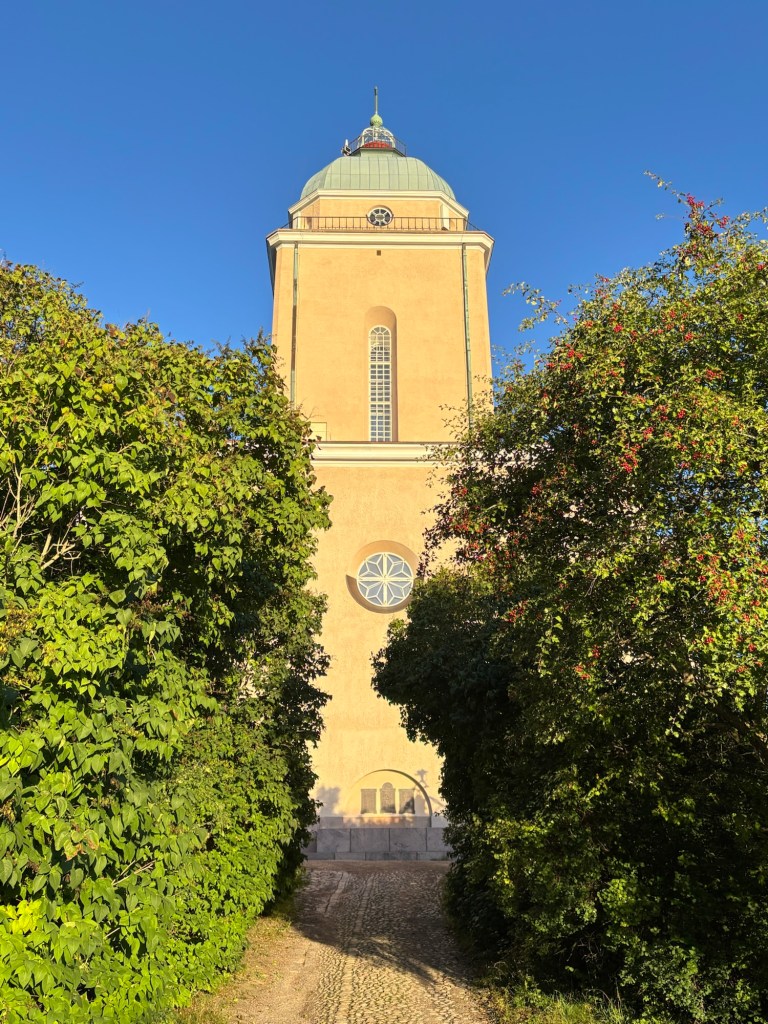
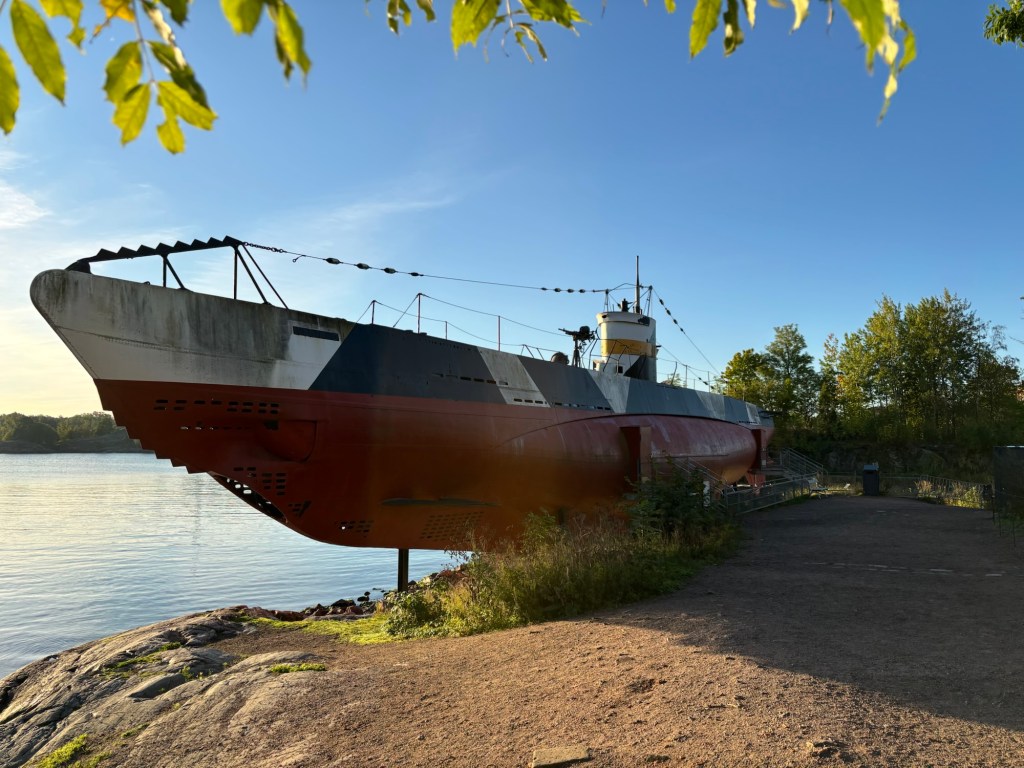
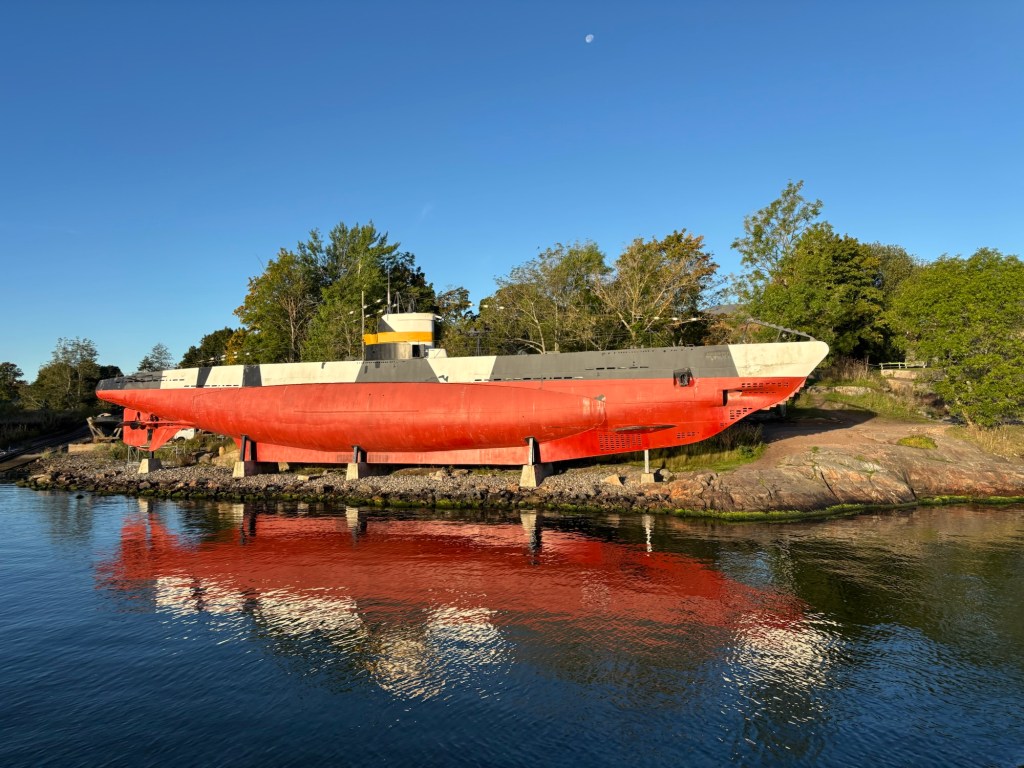
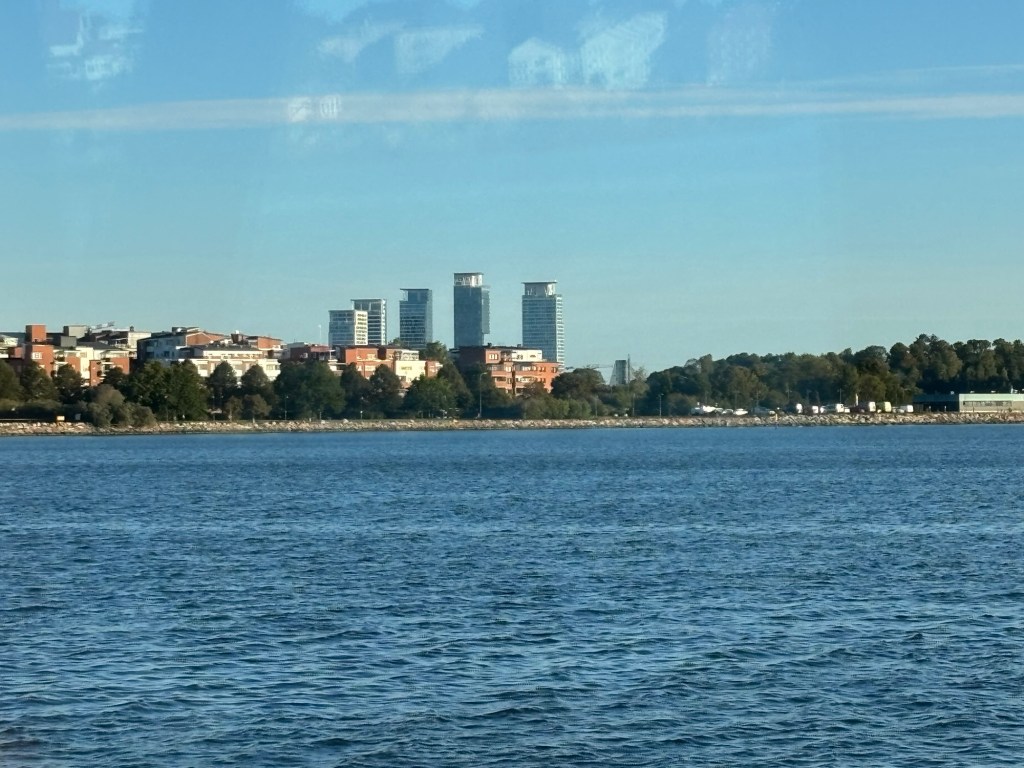
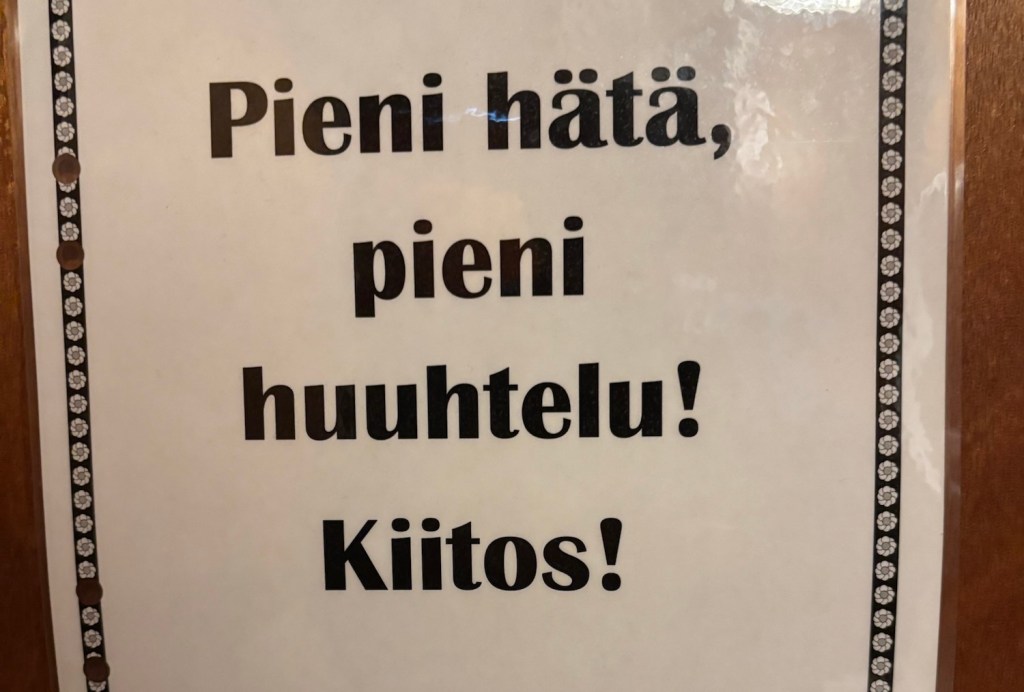
Sights on the wayThe Suomenlinna Church was build during the Russian regime, by order of Czar Nikolay I, to function as a military church. The Alexander Nevsky garrison church was completed and inaugurated in 1854. After Finland gained independence the church was consecrated, at Christmas 1918, to function as a Lutheran church.WWII Finnish submarine – VesikkoThe only tall buildings in HelsinkiA funny sign in the bathroom on the ferry – in English – “A little trouble, a little rinse! Thanks!”
Interesting Finnish Facts
Finland is actually “Suomi” in Finnish.
Alcohol is most heavily taxed in Finland as compared to almost anywhere else in the world!
Ice Hockey is Finland’s second religion!
Finland’s biggest goal always is to beat Sweden in ice hockey.
There are hordes of Japanese, Chinese, Taiwanese, and Korean tourist groups in Helsinki. And nothing gets in their way for a photo! Be ready to get pushed around.
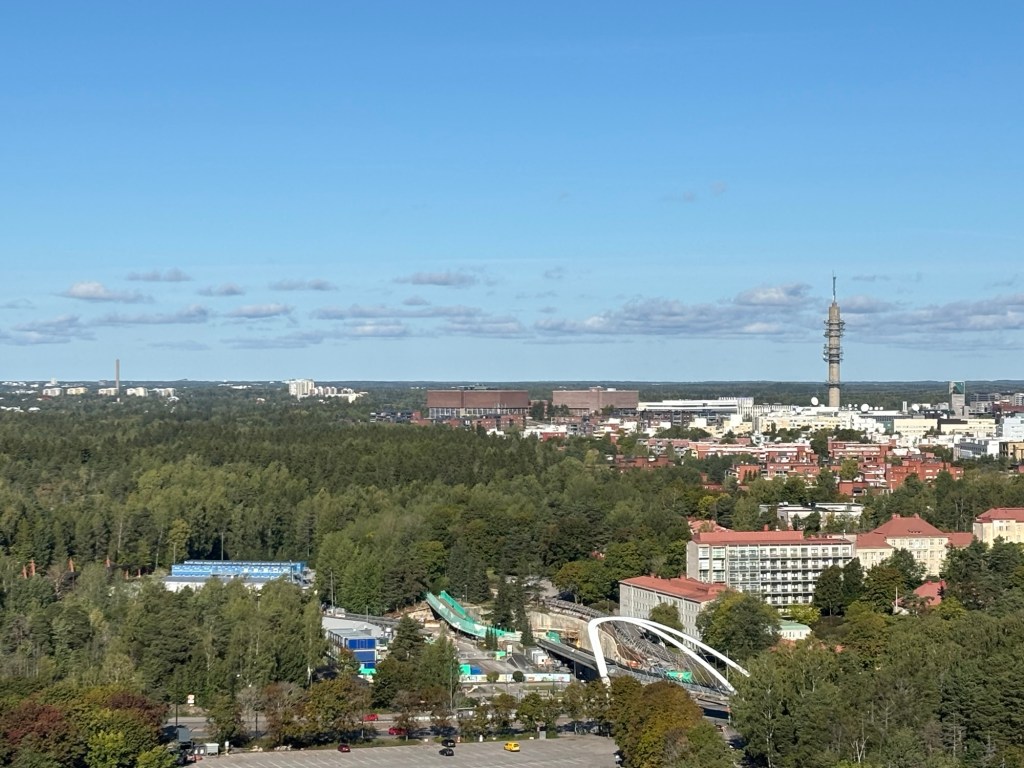
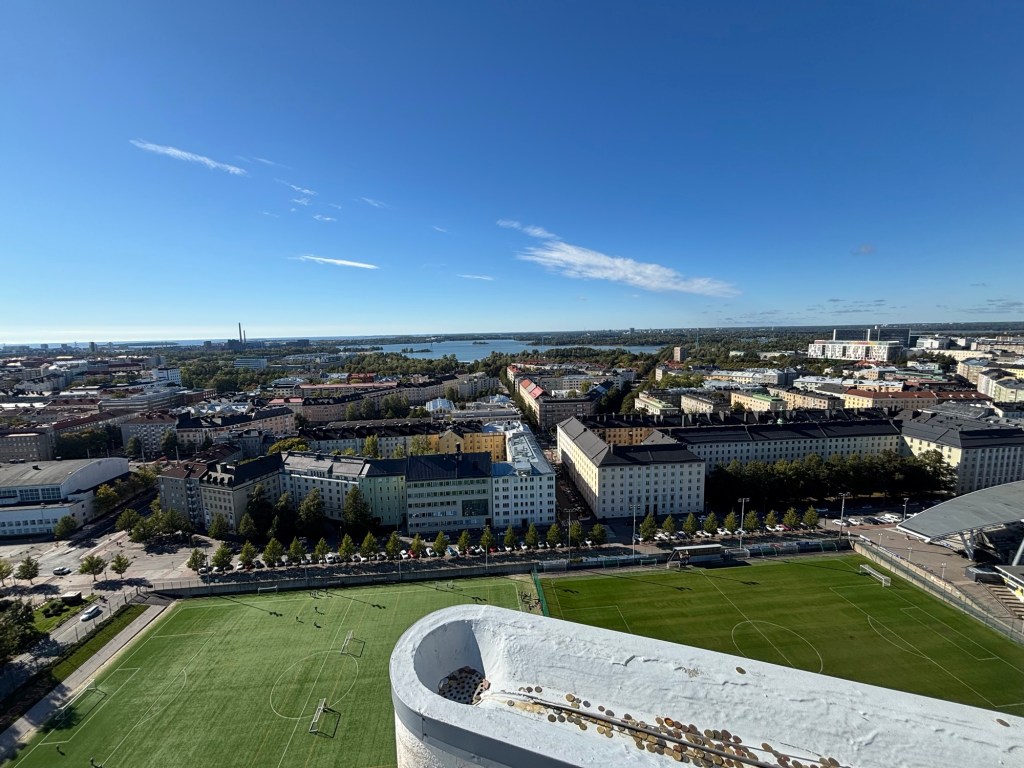
Helsinki and the surrounding areas are flat for as far as you can see northward from the Olympic tower. And even in the north there are no high mountains like Sweden and Norway. Highest point is 4,300 feet.
Finland was classified as an ally of Nazi Germany in WWII.
The Paris Peace Treaty imposed heavy war reparations on Finland and stipulated the lease of an area near Helsinki as a military base for fifty years.
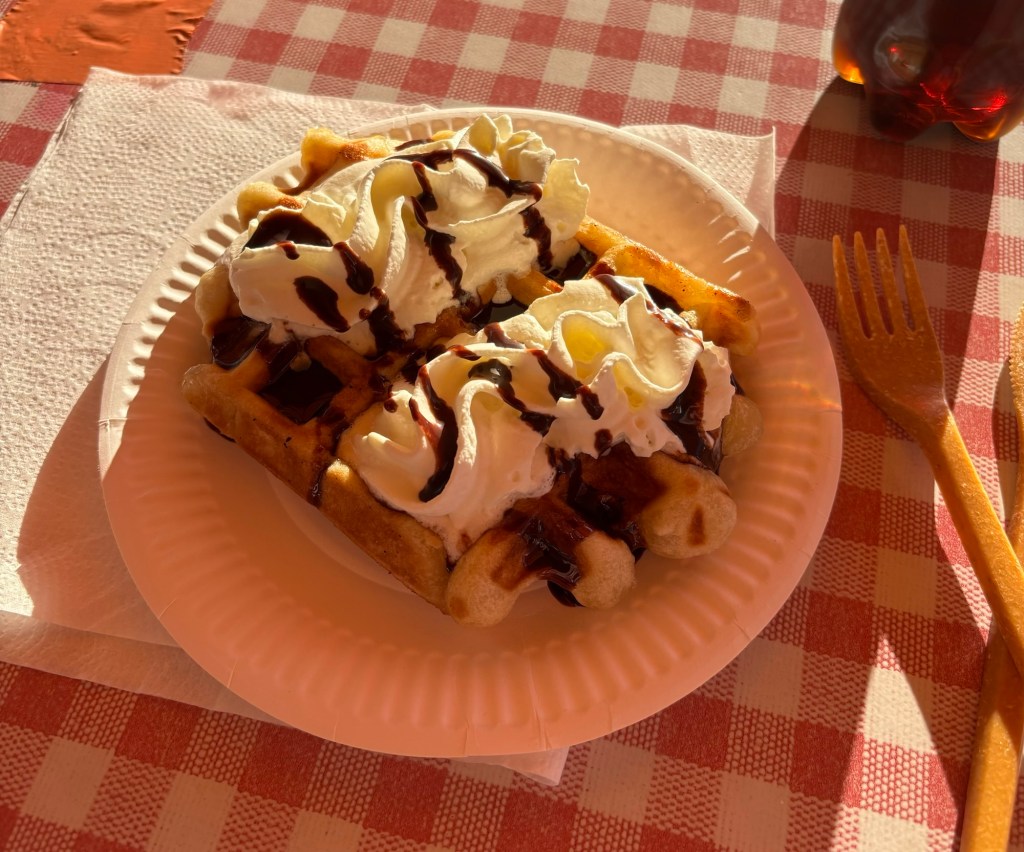
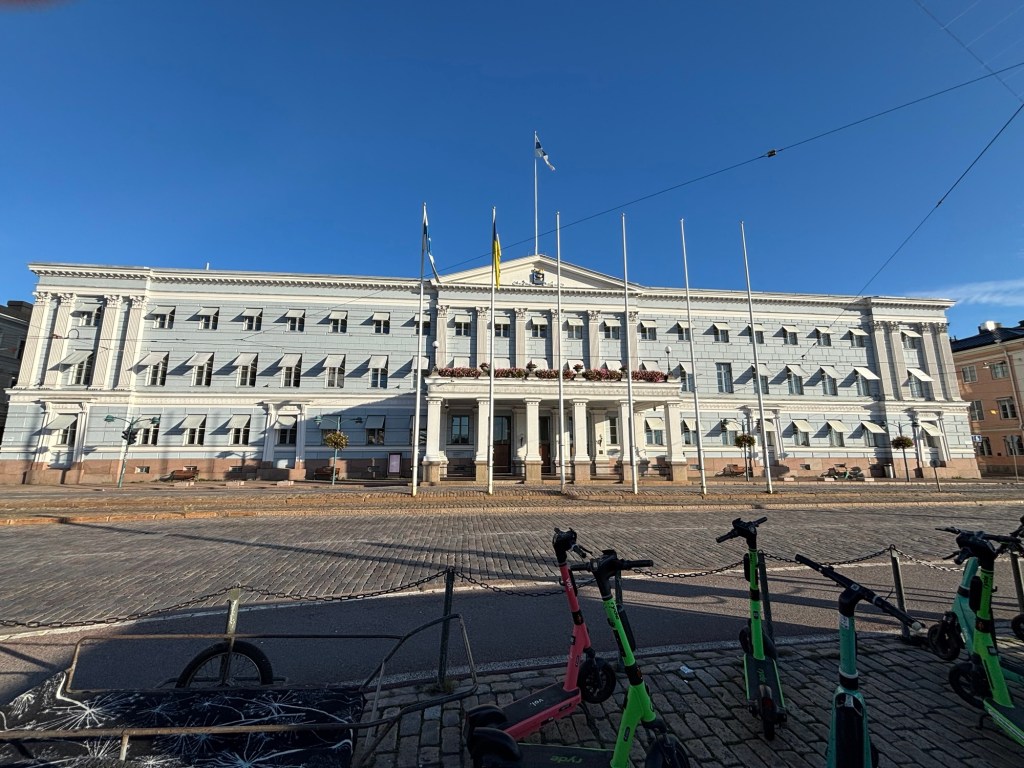
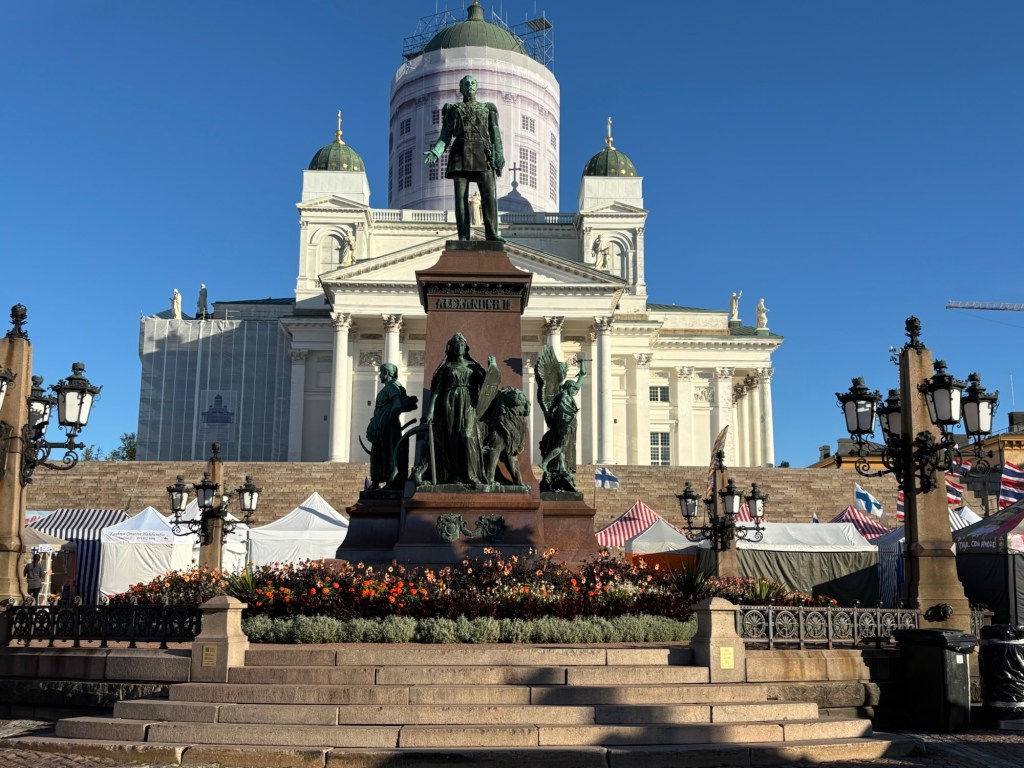
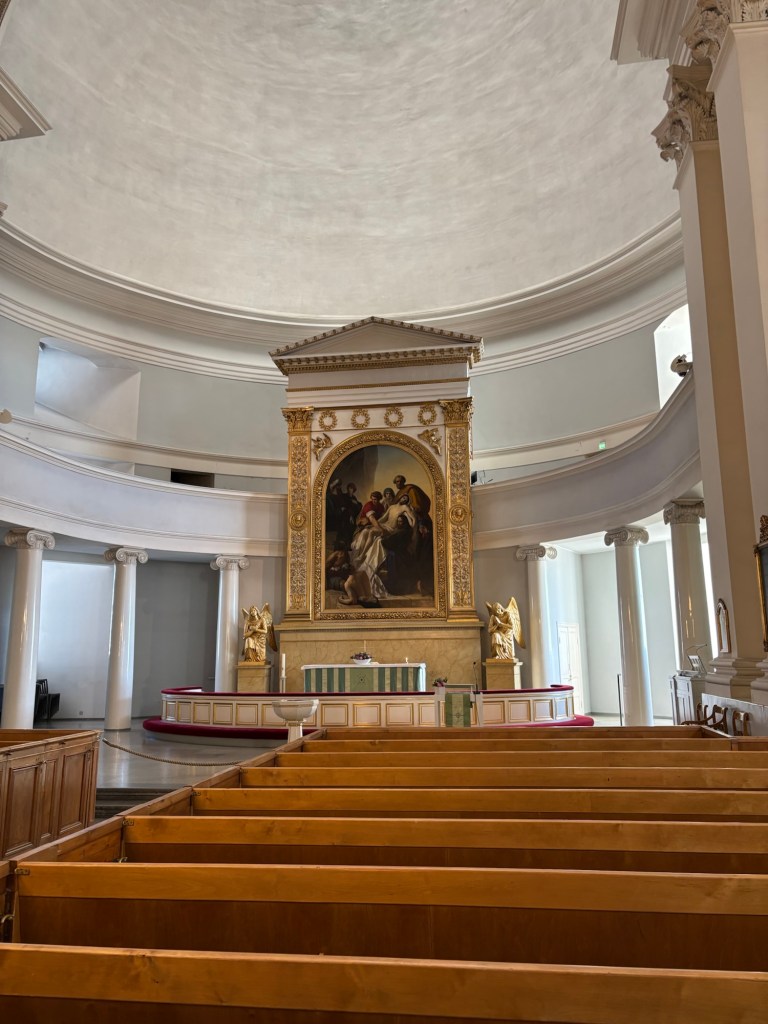
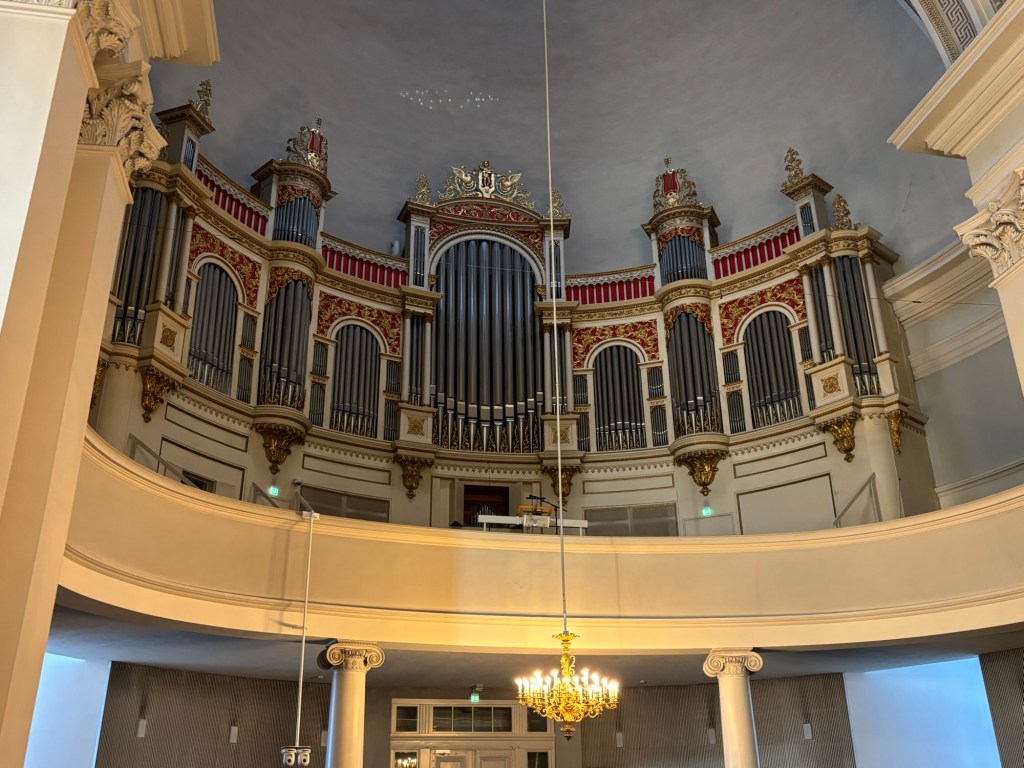
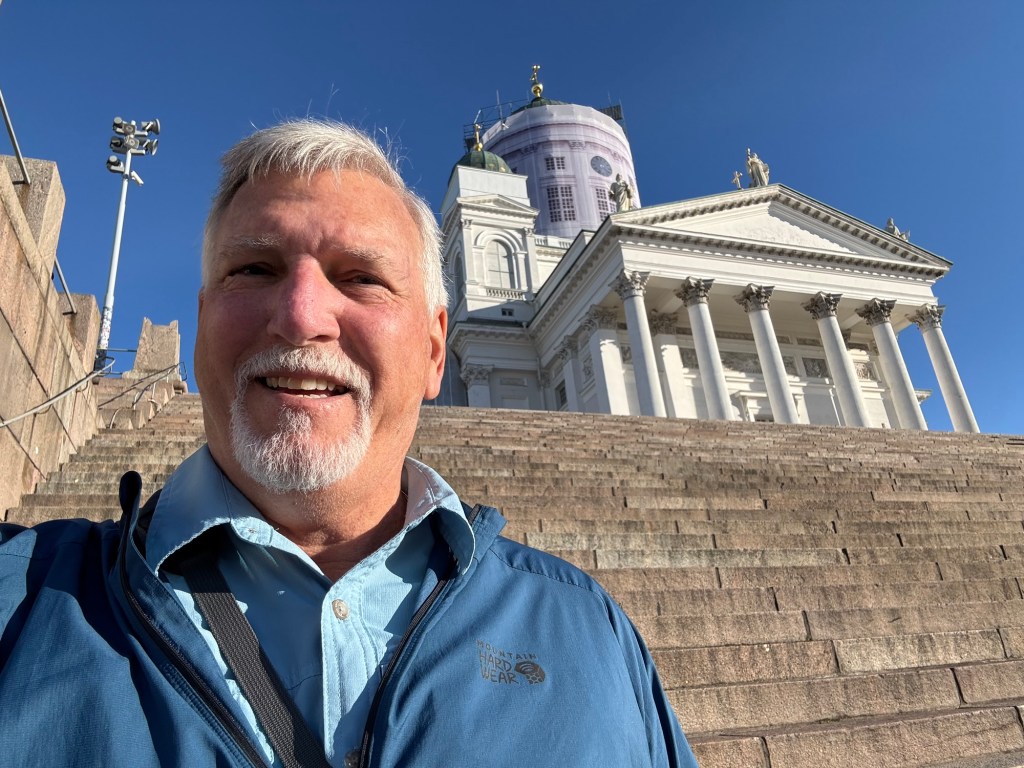
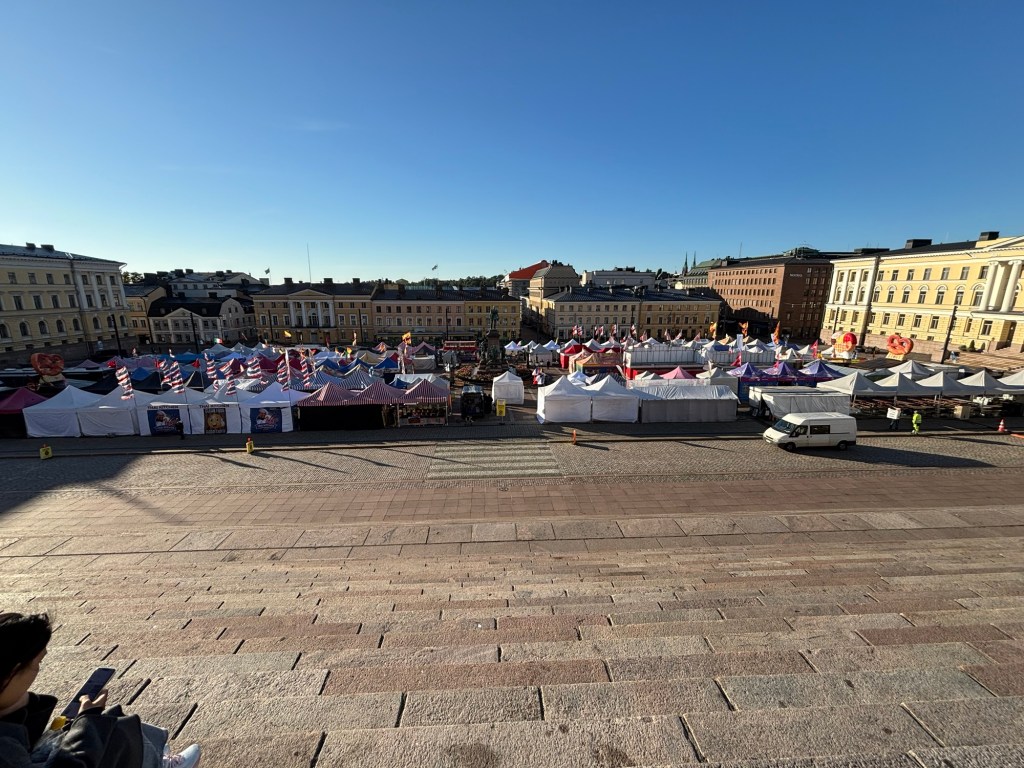
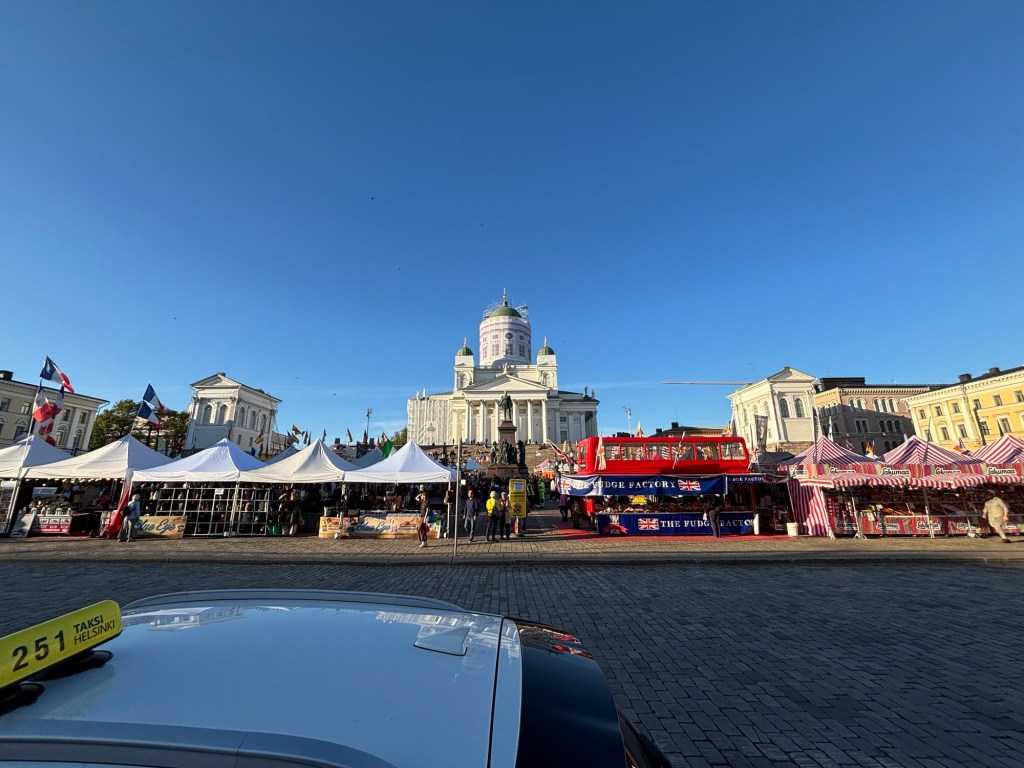
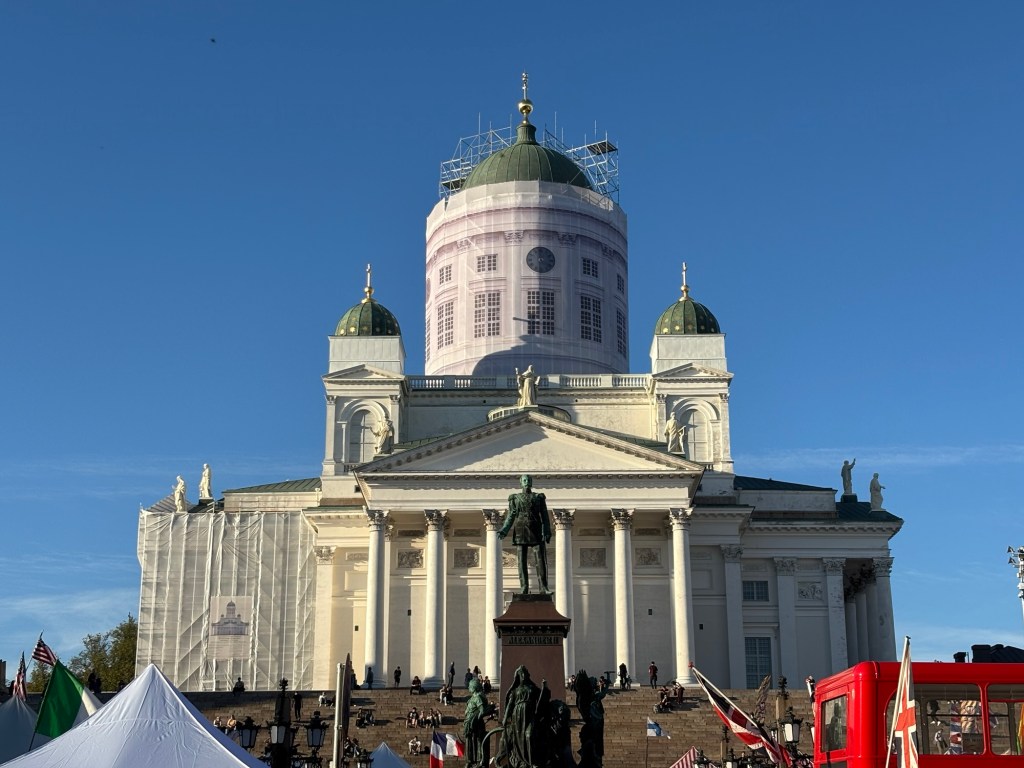
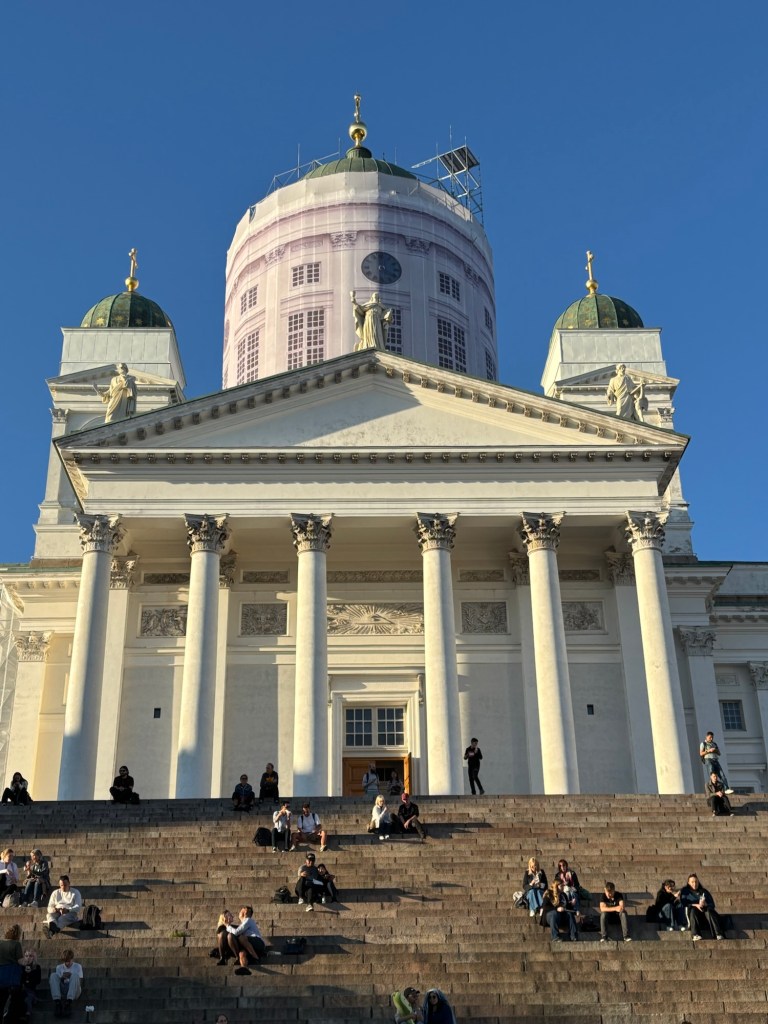
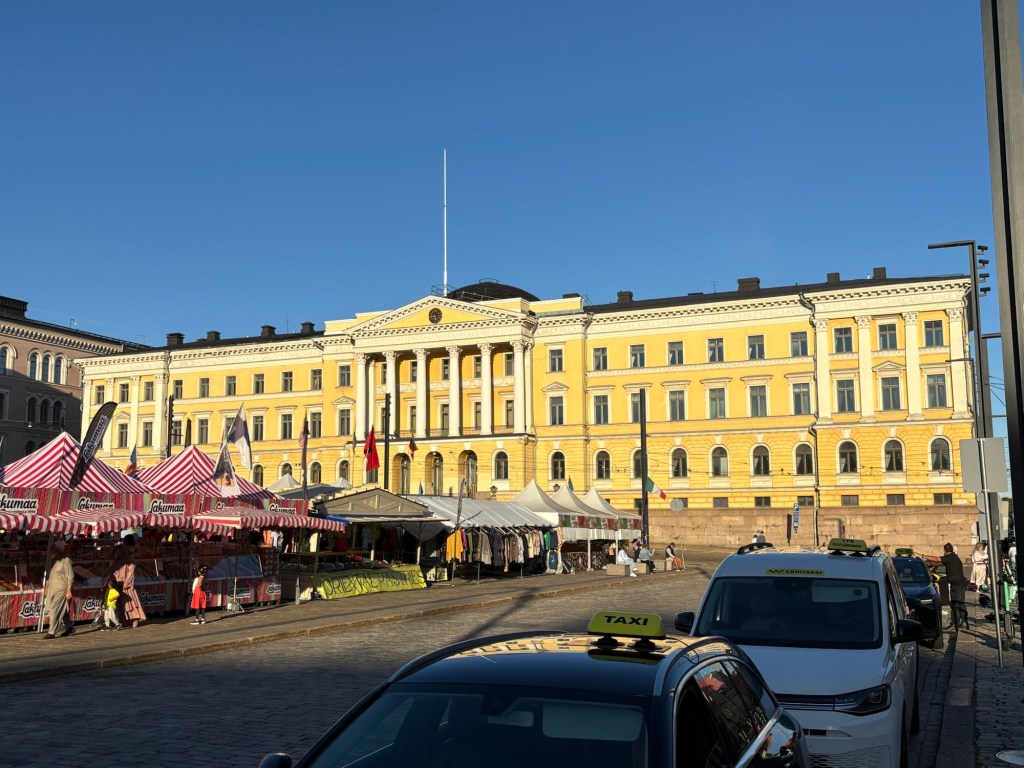
And for breakfast? “Belgialaiset vohvelit” or Belgian waffles!City HallAlexander II in front of the Lutheran Helsinki CathedralThe interiorThe International Market in Senate Square below the Cathedral
The market had flags from: Finland, Thailand, Spain, France, Hungary, Nepal, America, Greece, Poland, Columbia, Italy, Morocco, Belgium, Ukraine, Nigeria, Great Britain, and maybe some others I missed. A lot of food and shopping choices!
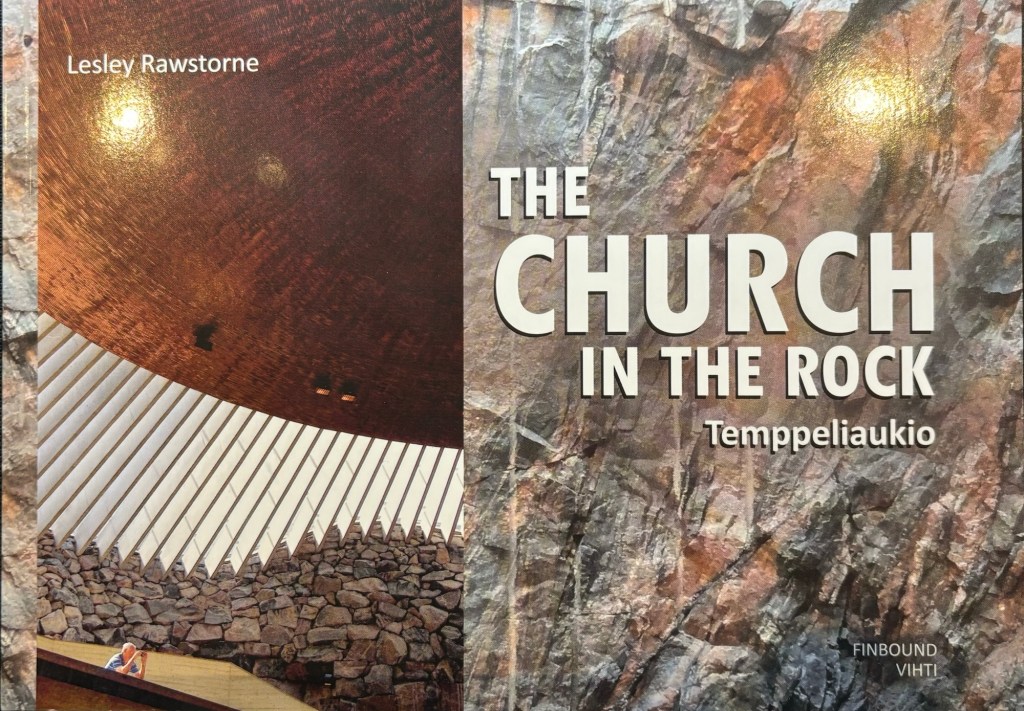
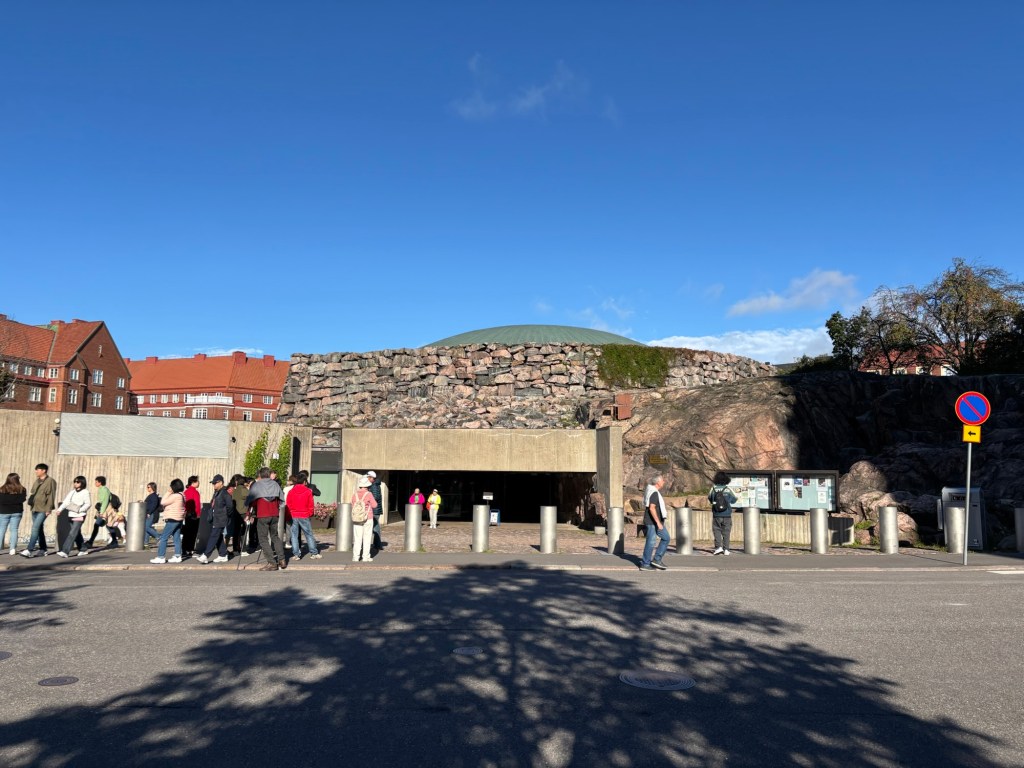
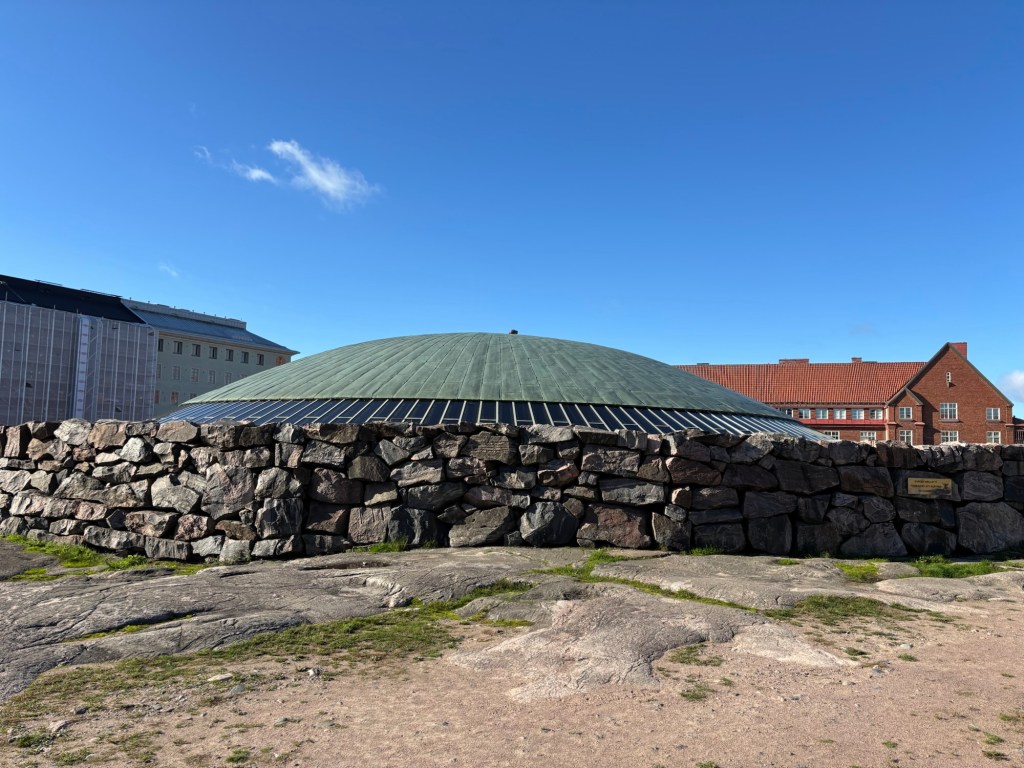
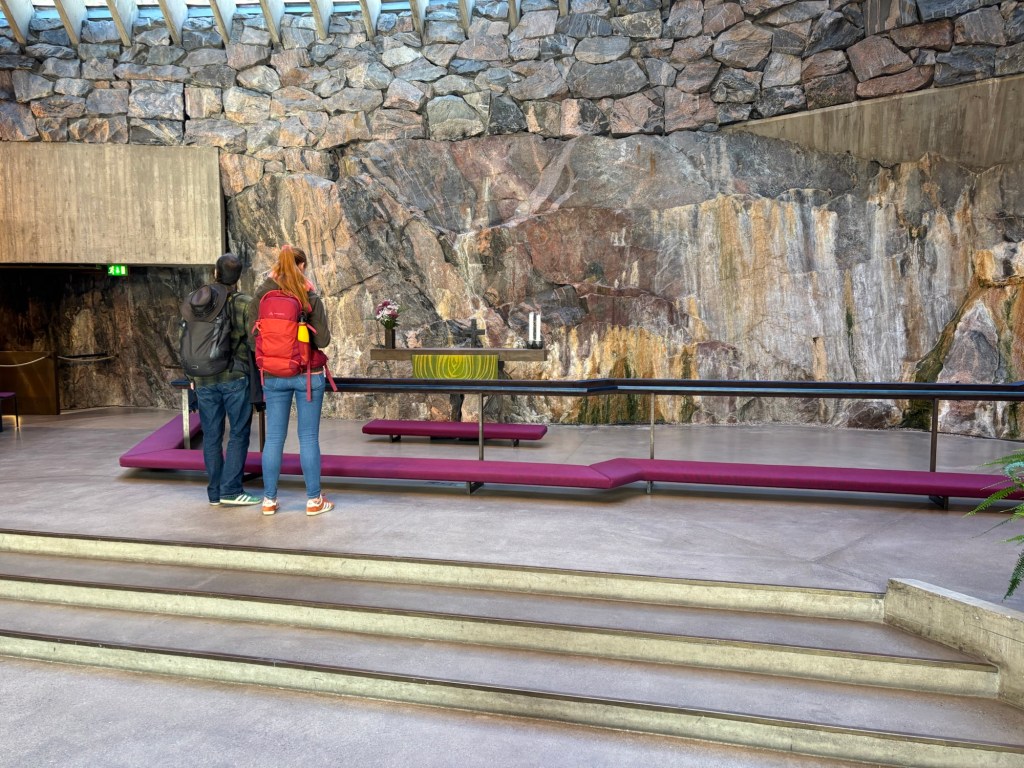
Built directly in the rock mound on the site.Entrance
Can’t be a Frank Lloyd Wright creation, too many round corners!
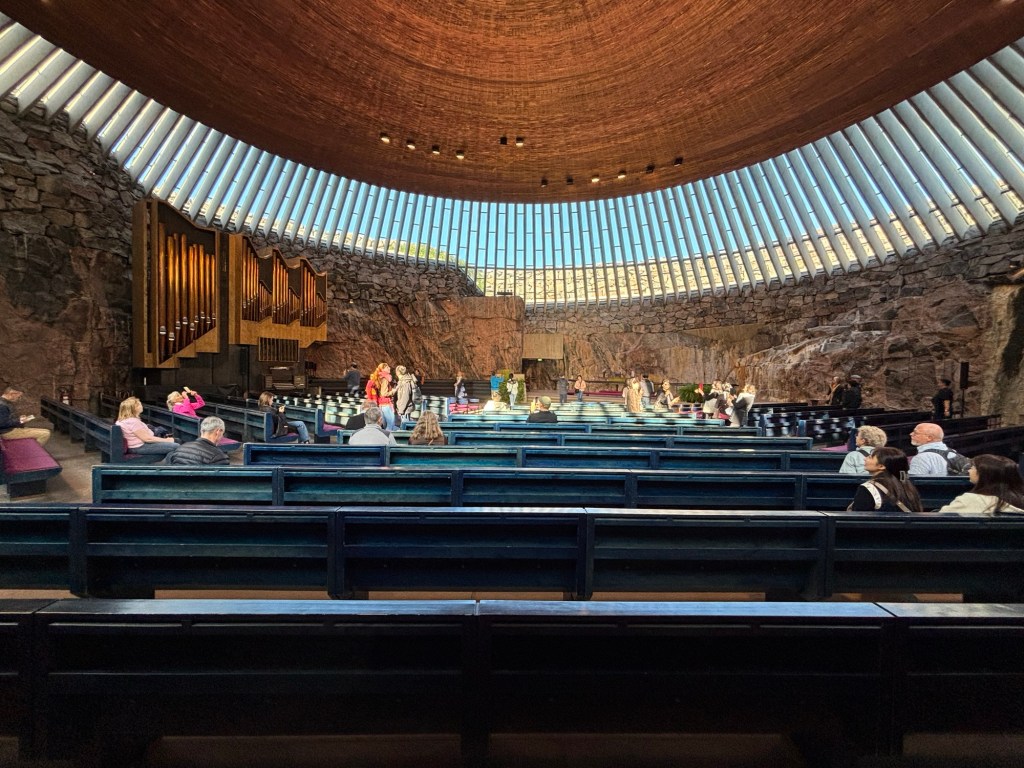
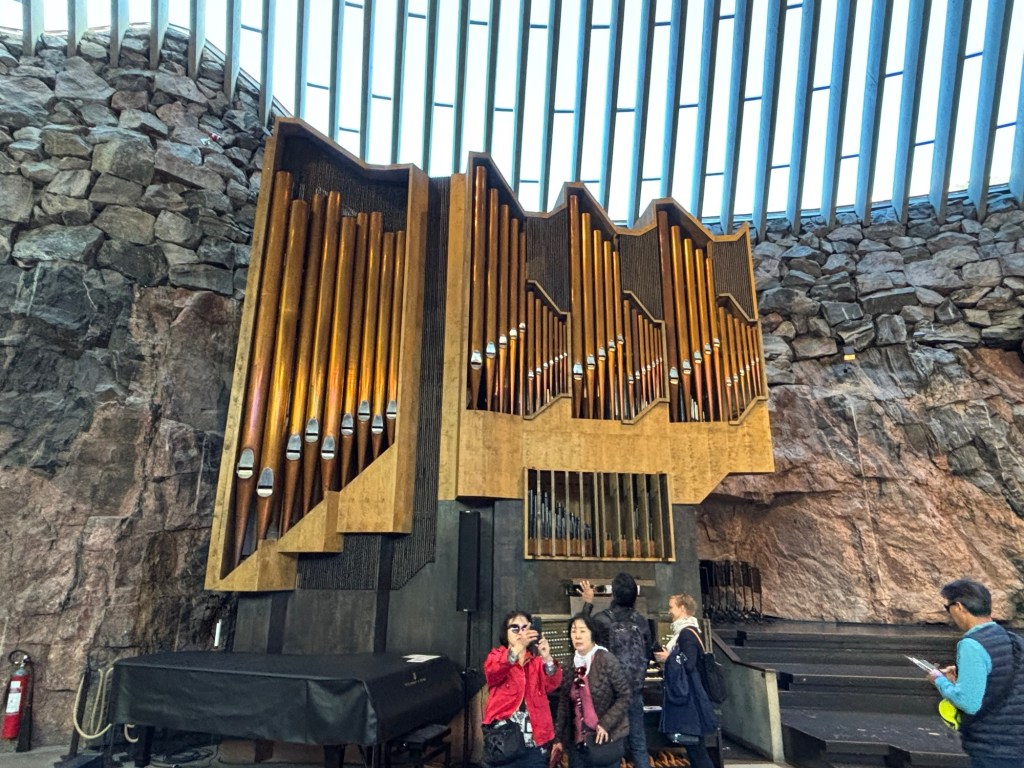
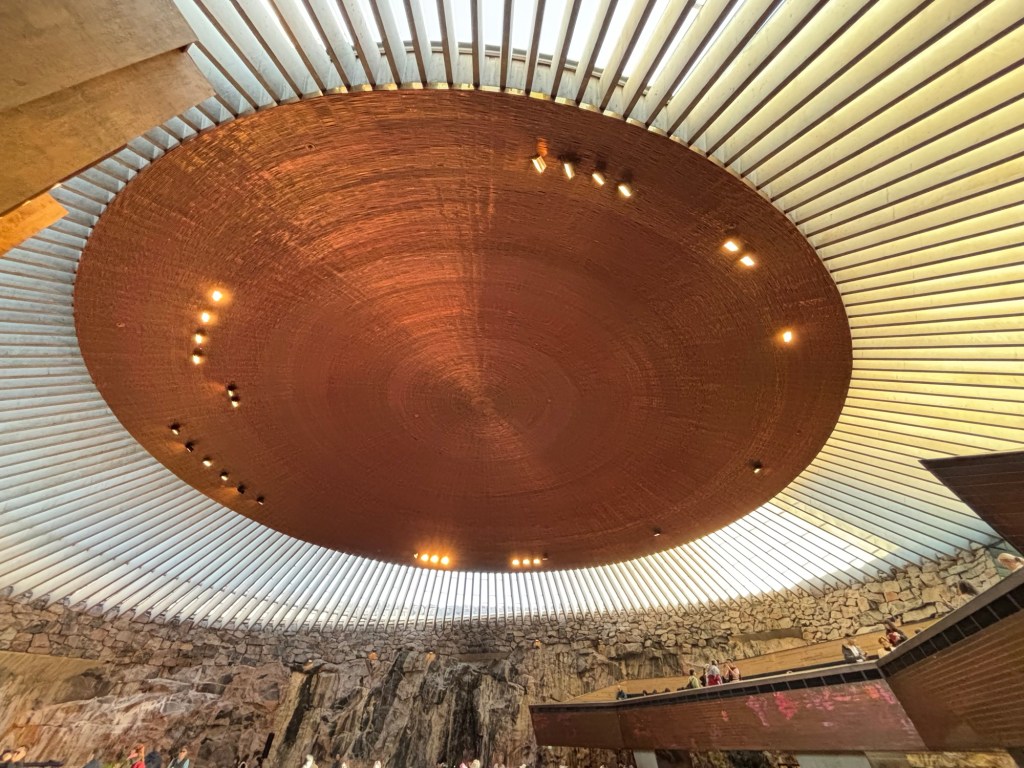
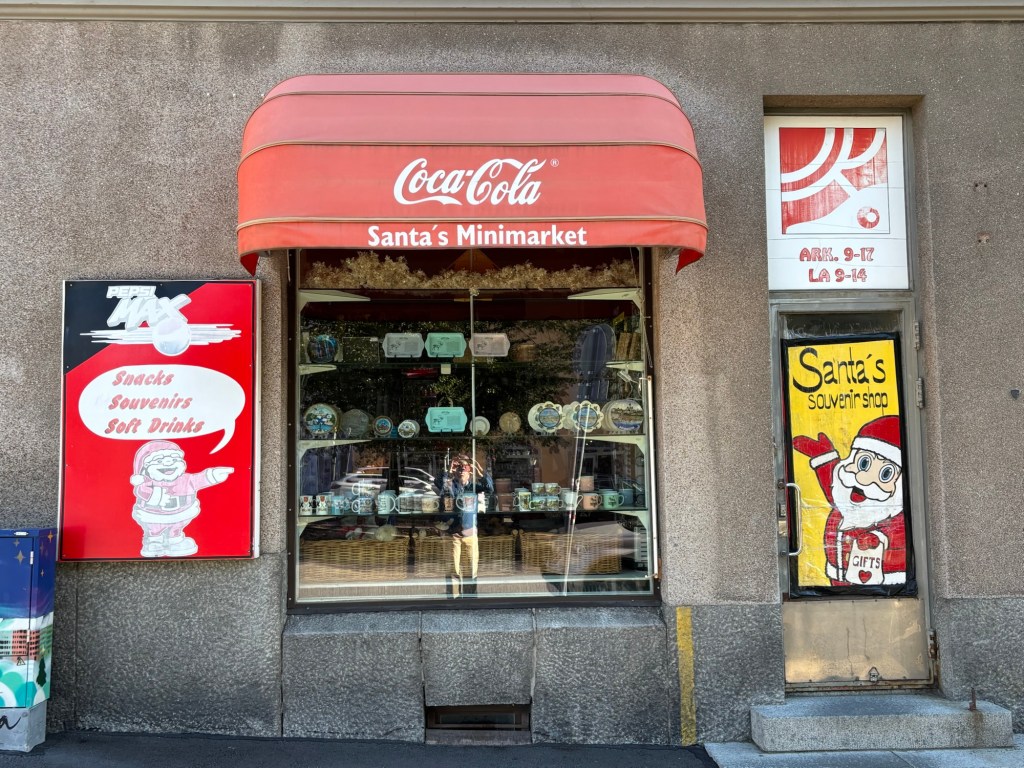
Interior – notice the 360 degree vertical glass that lets all the natural light in.Pipe OrganThe Copper Wire CeilingThe PulpitSanta’s Mini-market and Souvenir Shop
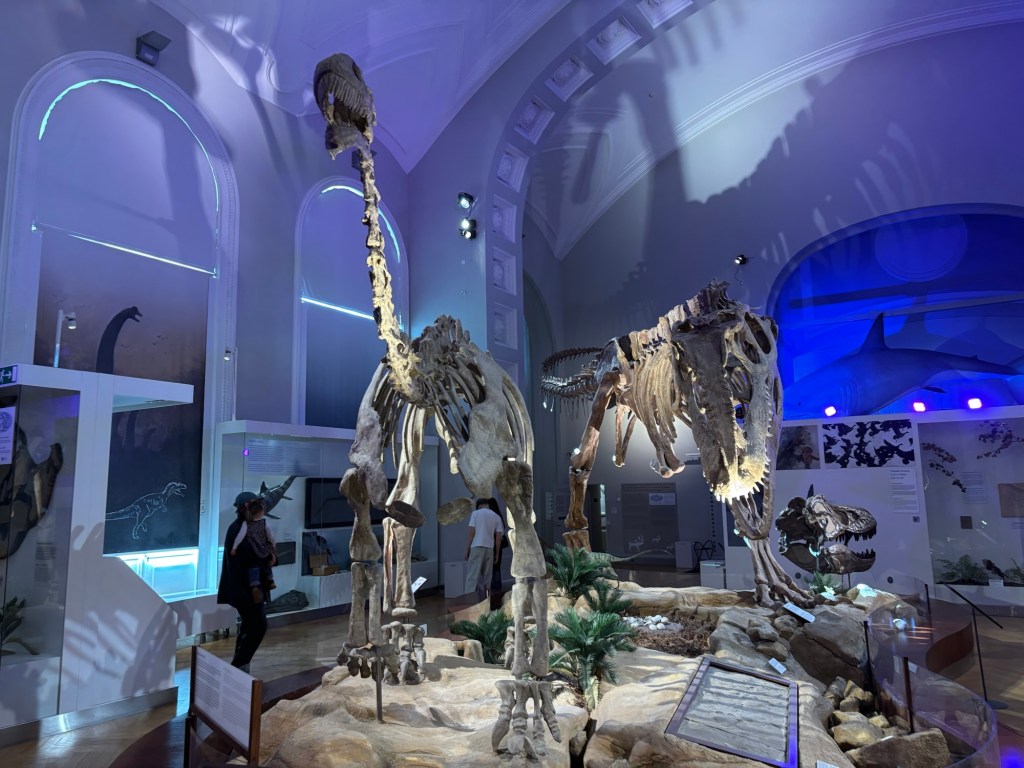
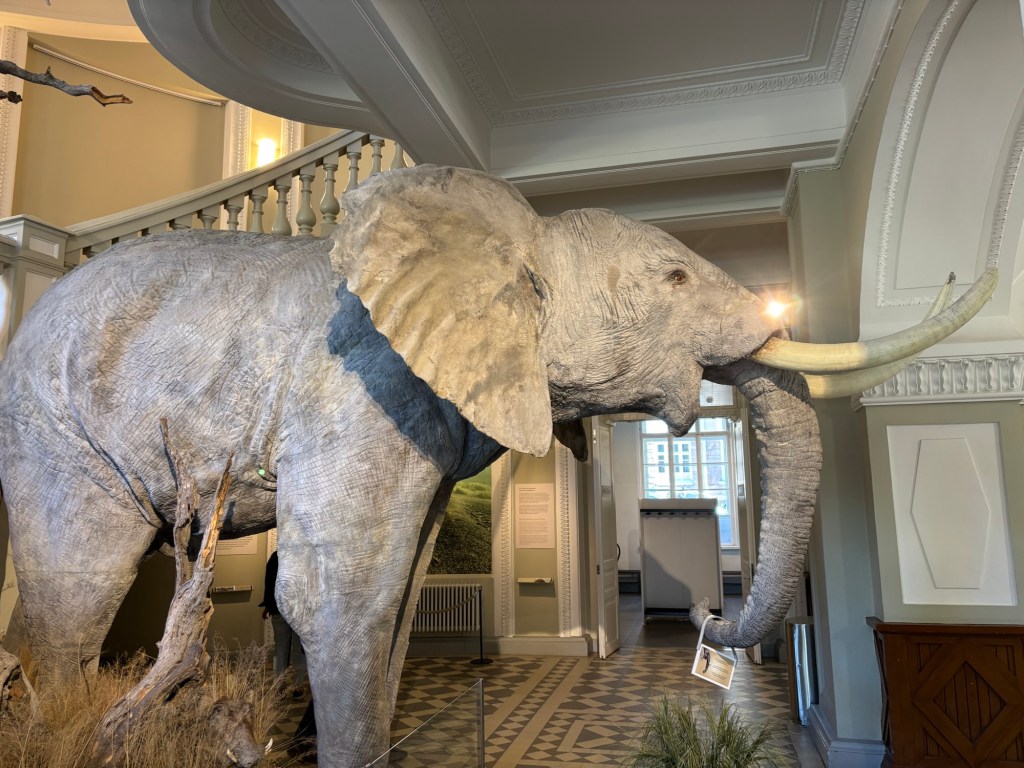
Museum of Natural History
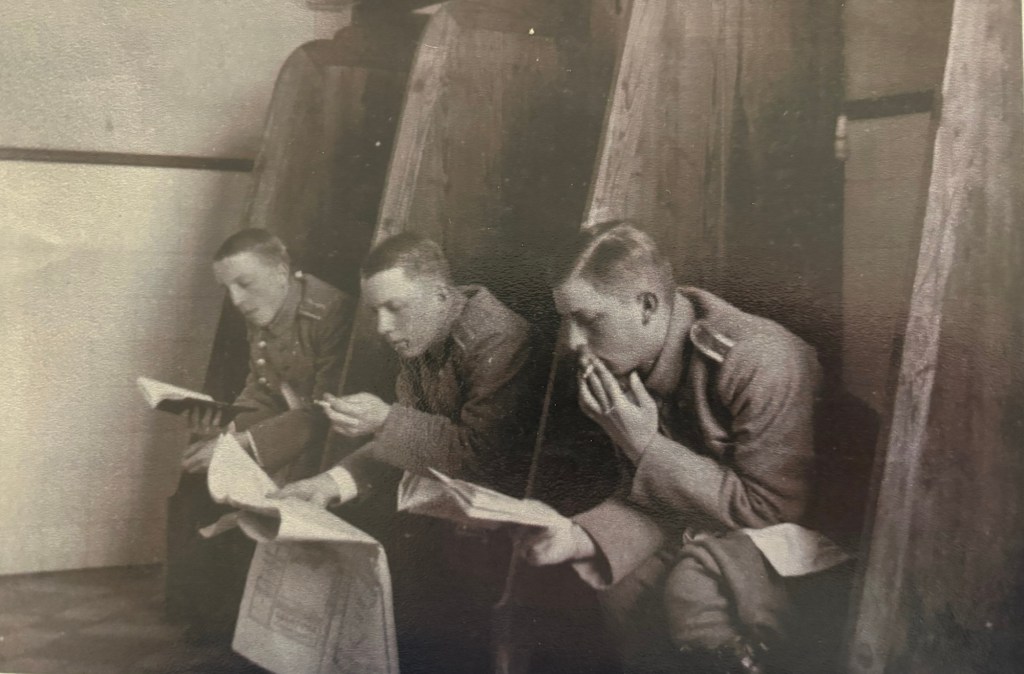
Originally built as a Russian boys “gymnasium” or school. After Finland’s 1917 independence, the building served as headquarters of the Finnish Army, then as a Military Cadet School for a couple years until 1923. The University of Helsinki bought the building and it turned it into the Zoological Museum, and then the Natural History Museum in 1996.
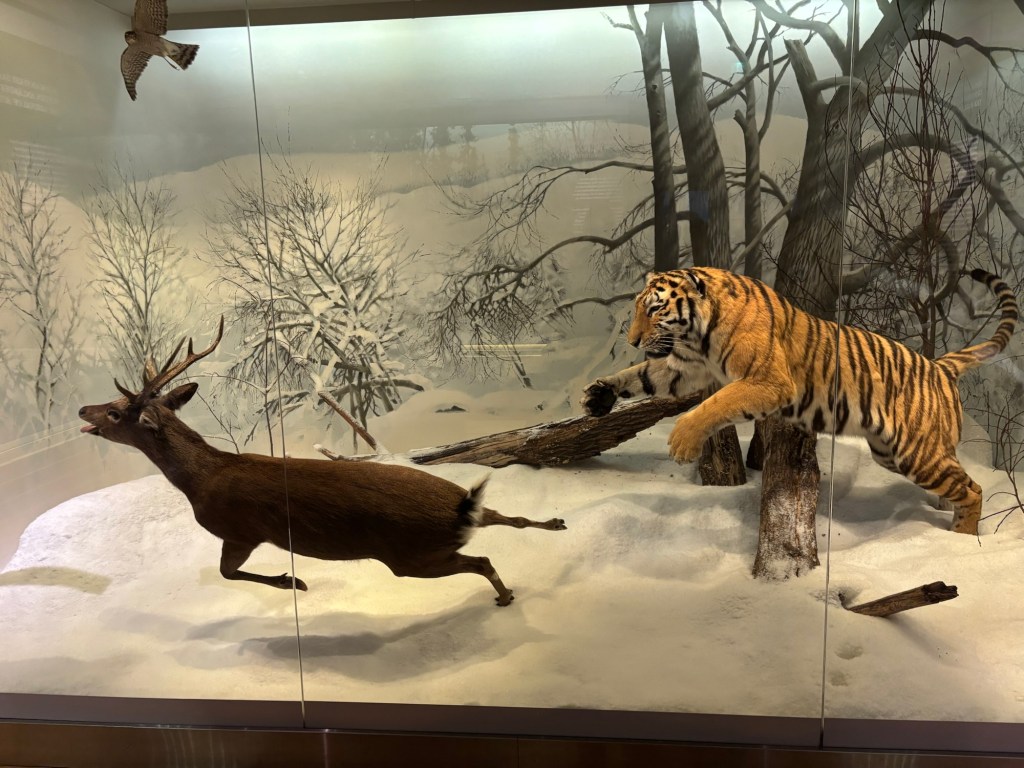
Cadet bathroom break This was one of the photos they have in the history of the building.Late Winter in the Siberian TaigaHelsinki Olympic Stadium
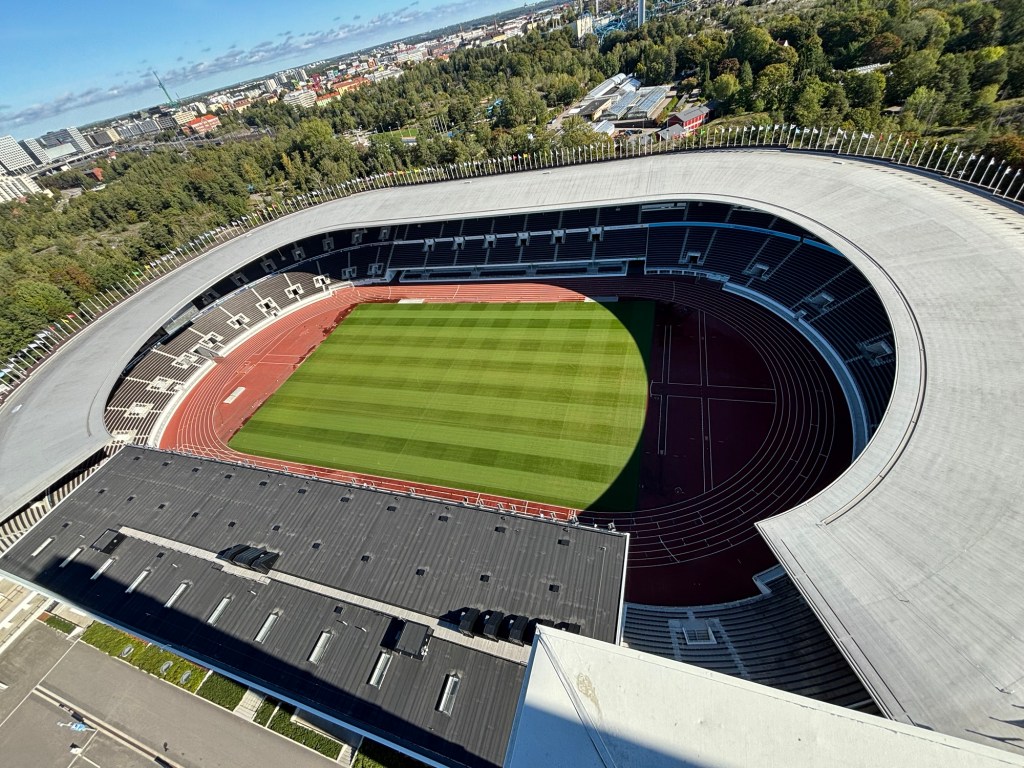
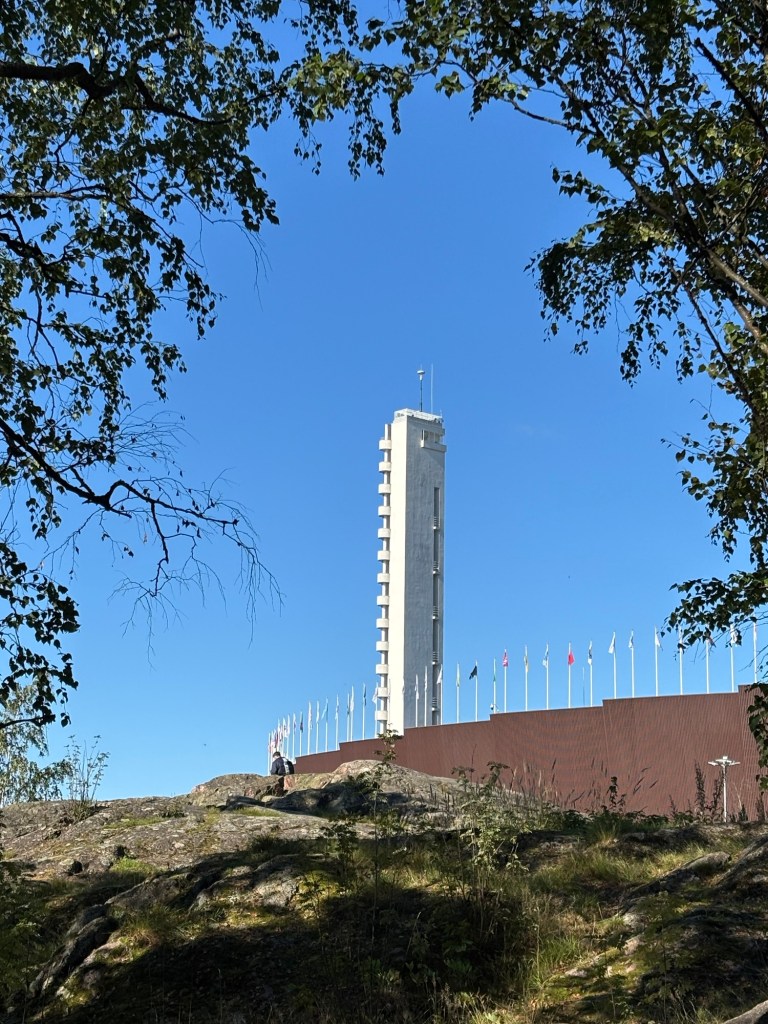
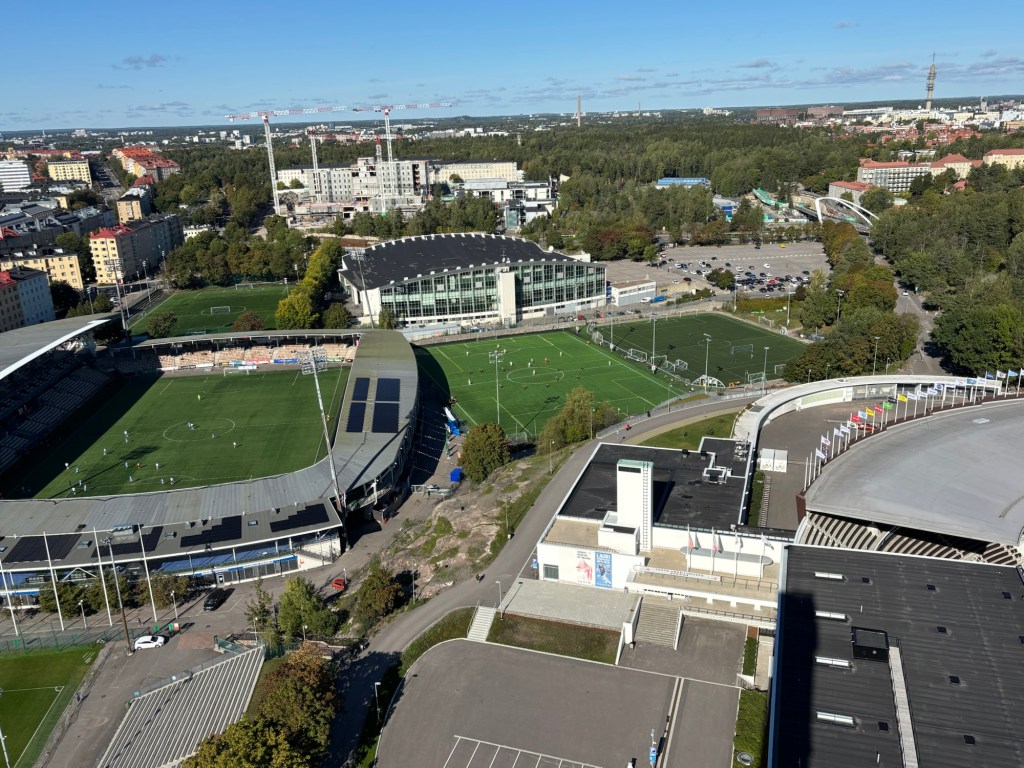
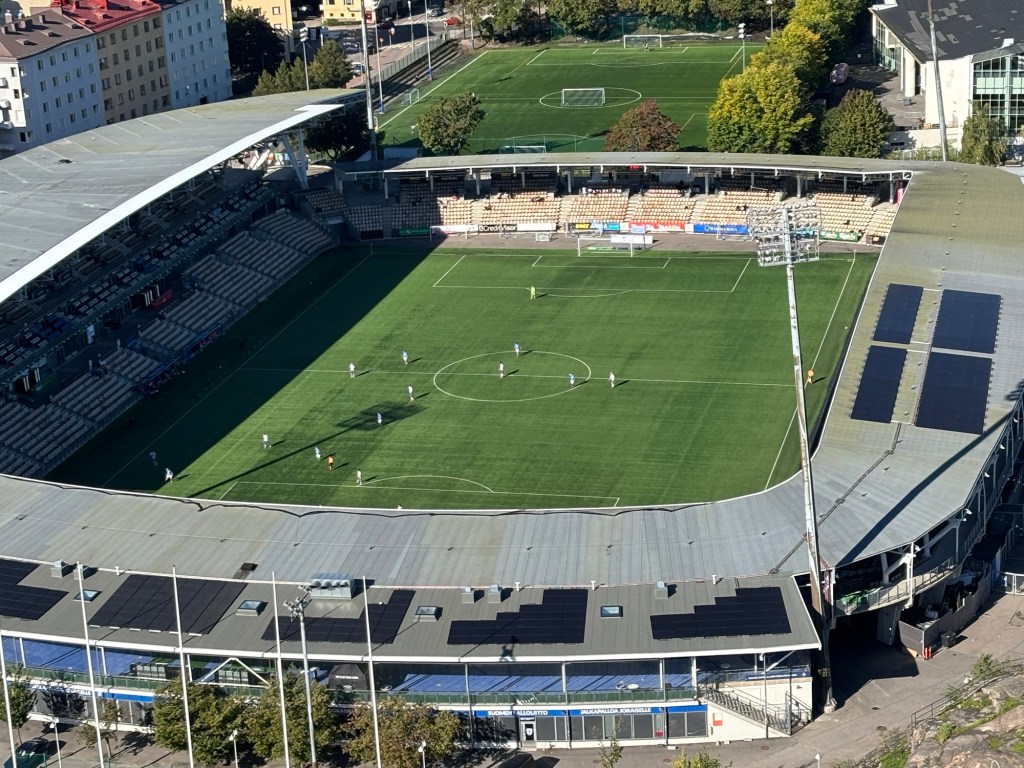
Site of the 1952 Summer Olympics. It’s still used for major sporting events (National team matches), concerts, etc. Also the stadium tower was a great place to view the city and surrounding area!
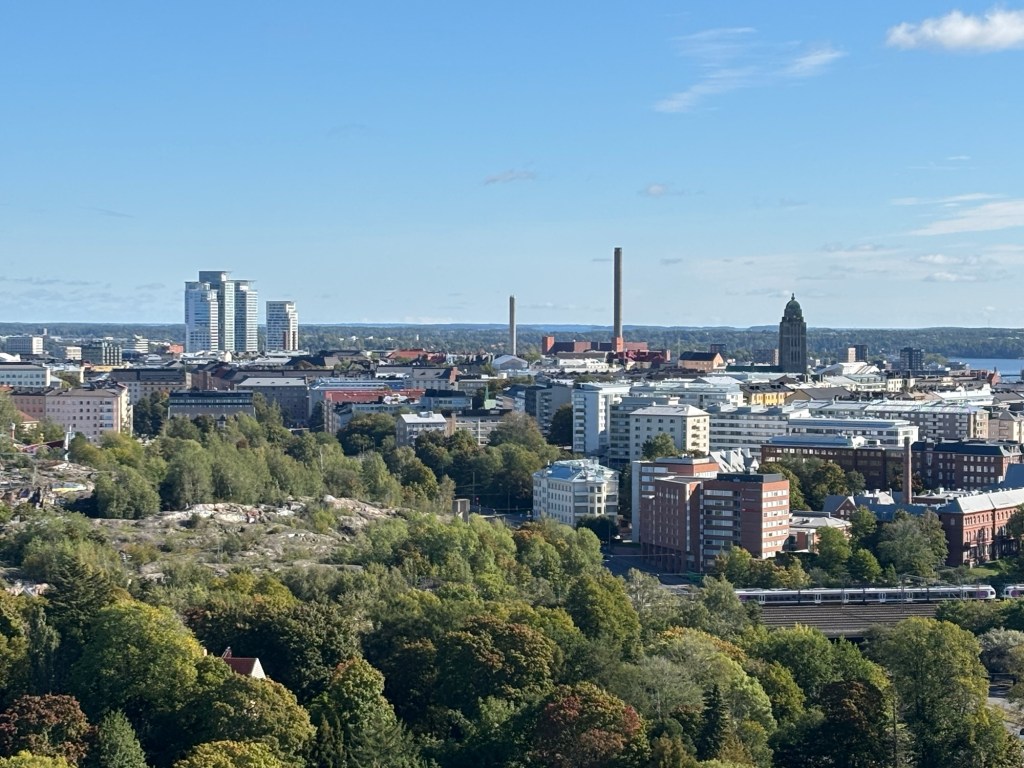
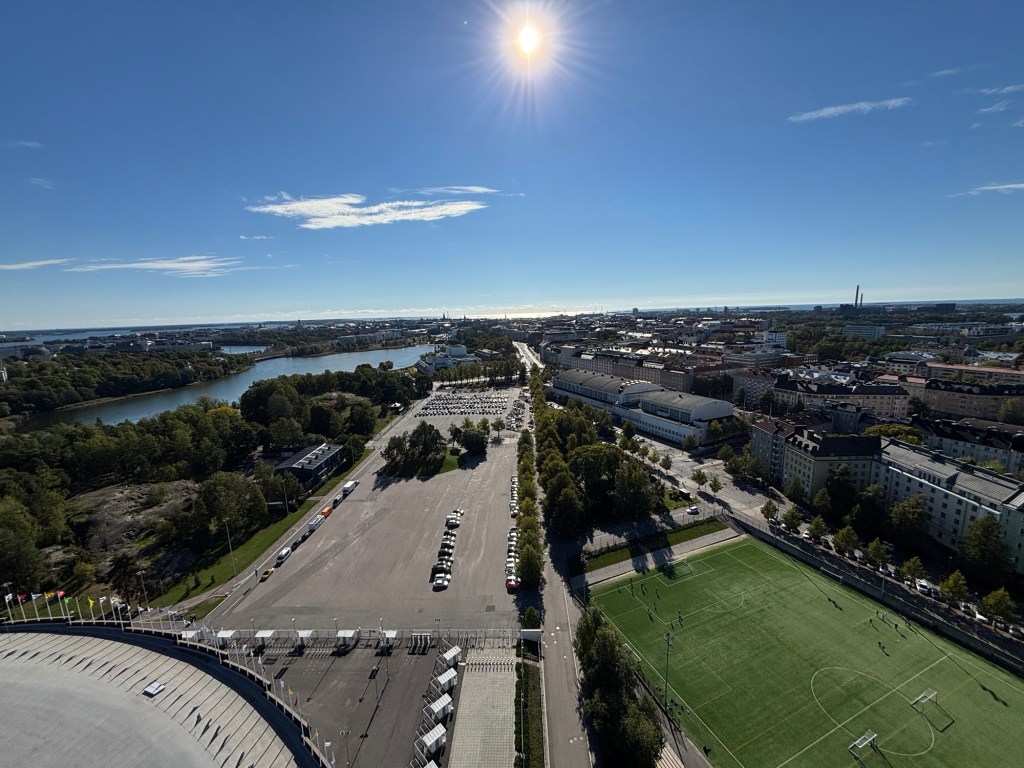
At almost 250 high, the stadium tower is a great place to see Helsinki from.
I also visited the Finnish Museum of Sport next to the stadium. Quite interesting!
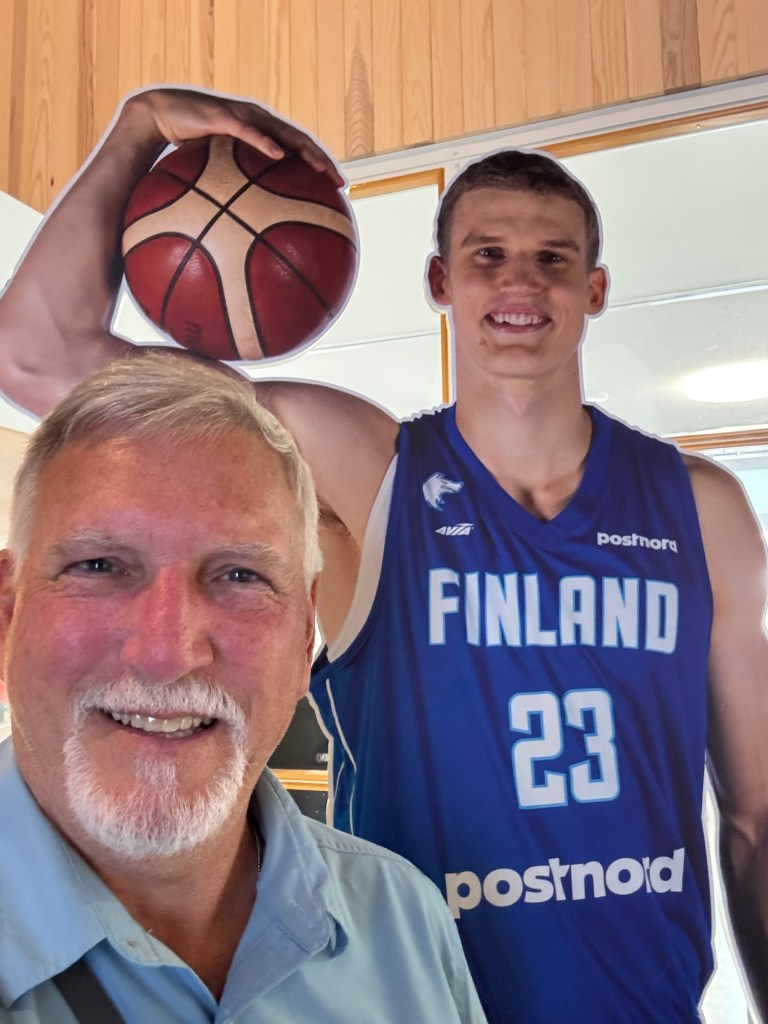
Lauri Markkanen, Finnish NBA player with the Utah Jazz
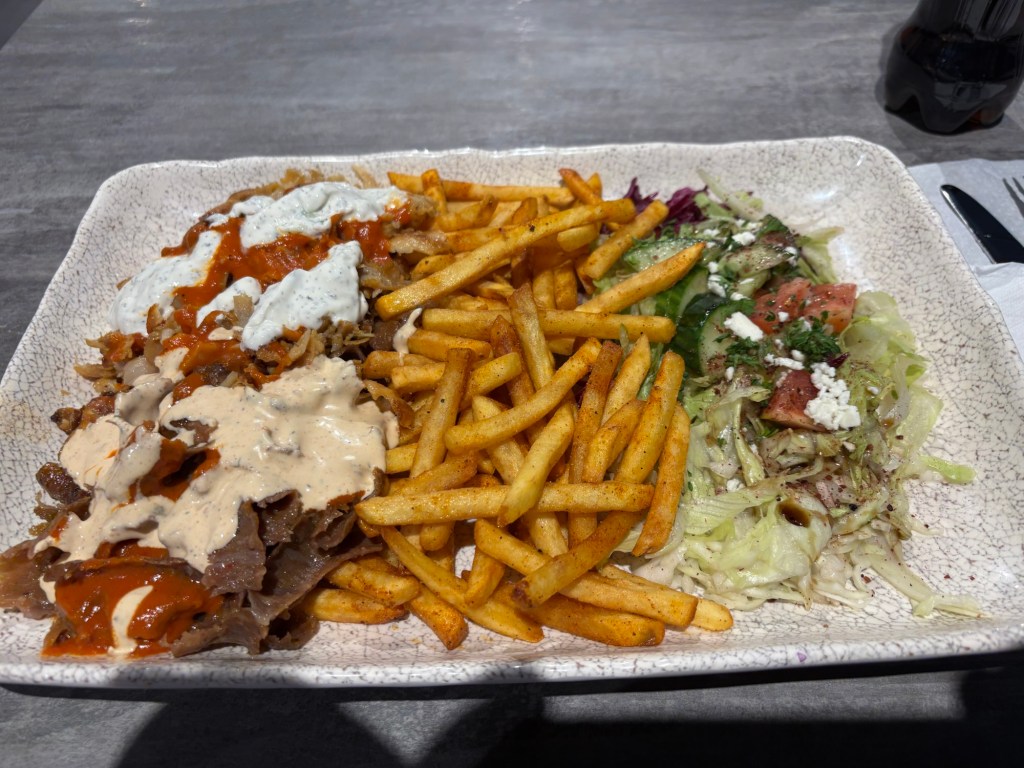
Since it was late afternoon, I decided to find some “linner” – lunch/dinner. Some kebab meats, salad, and fries.
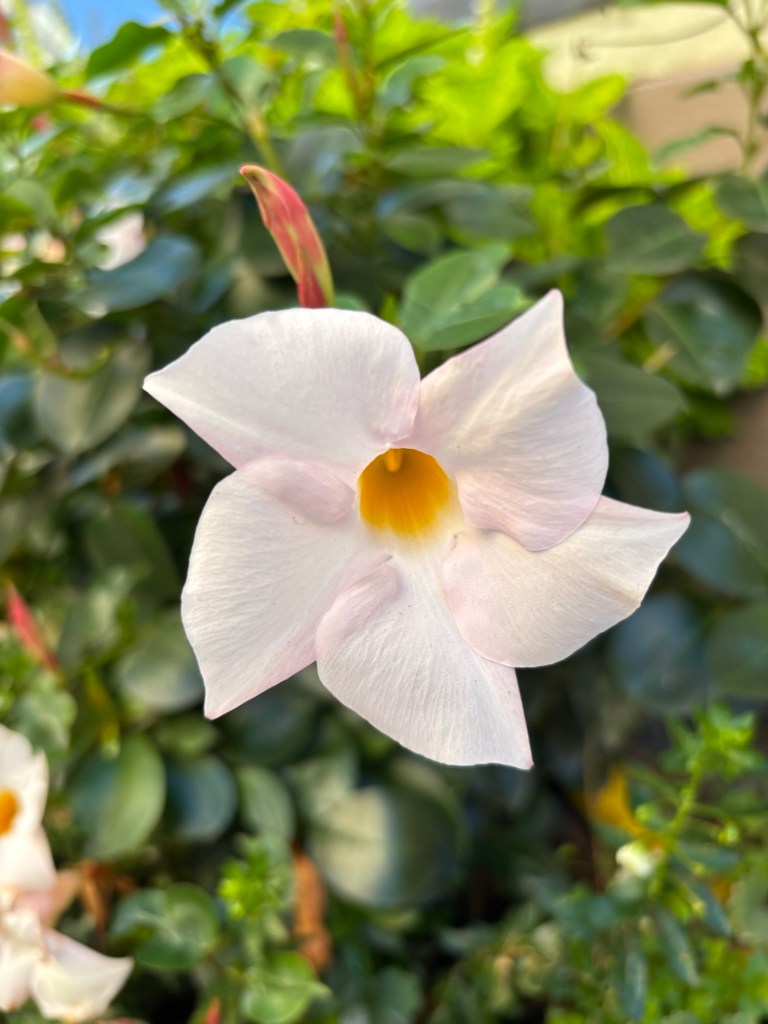
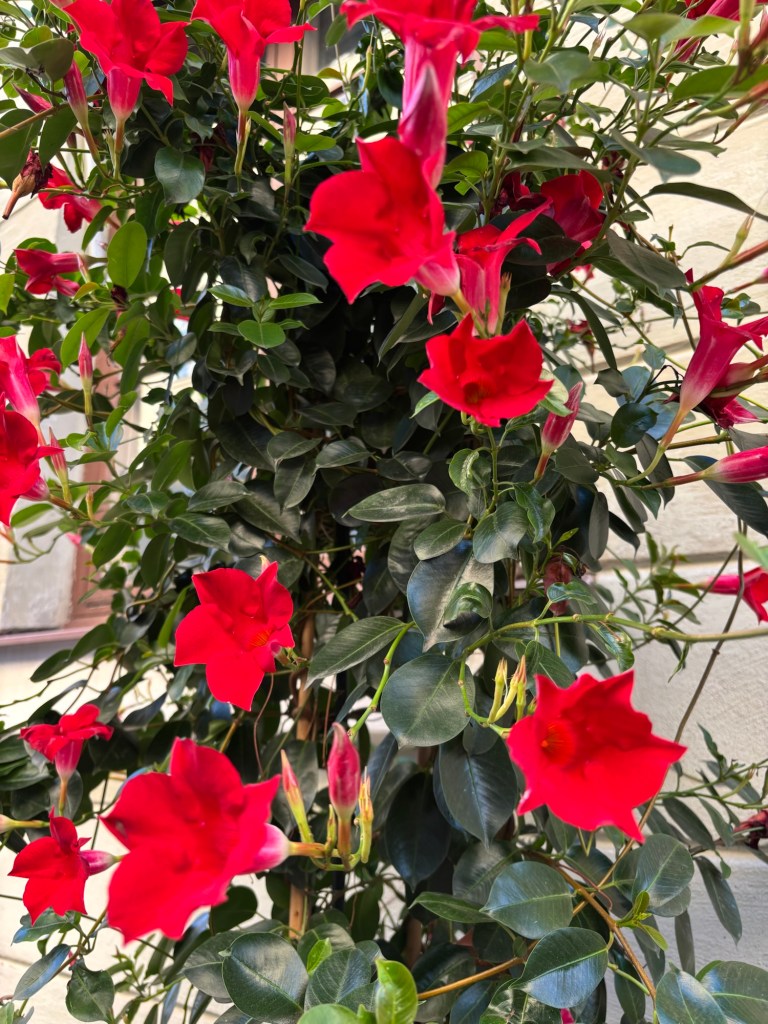
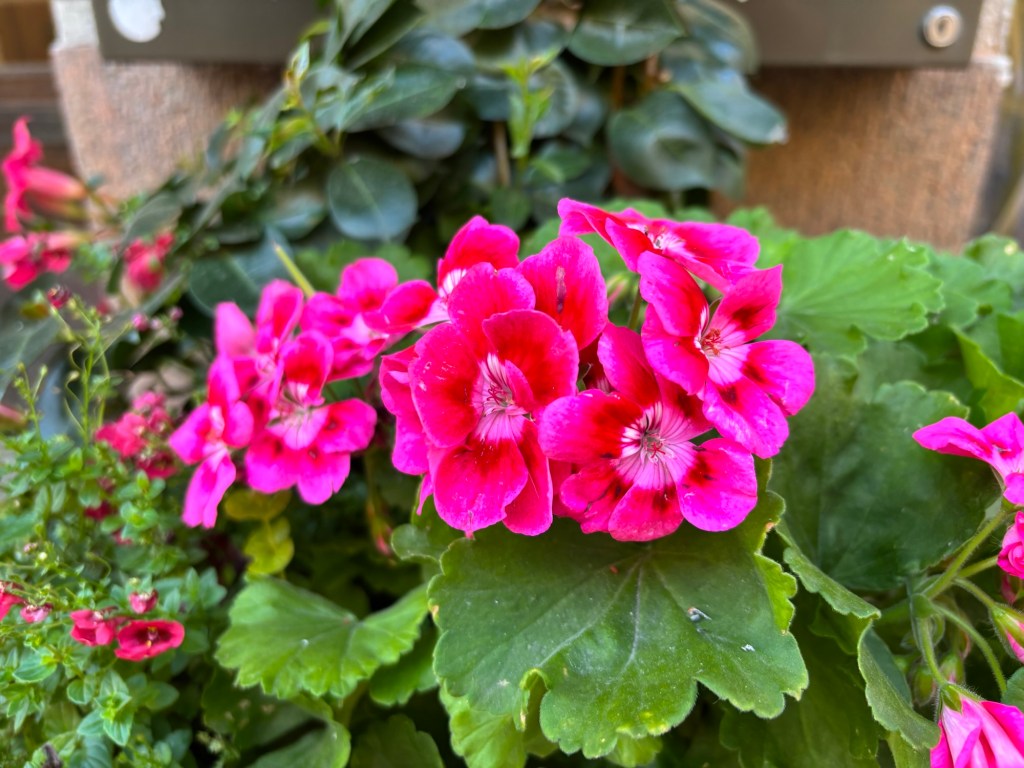
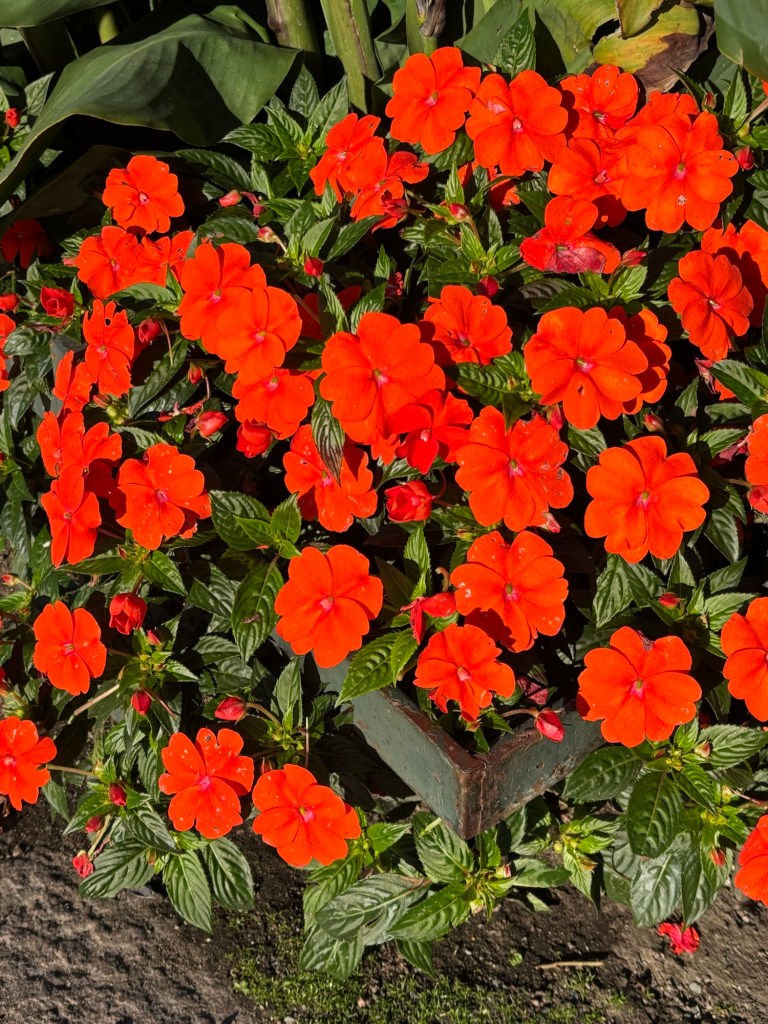
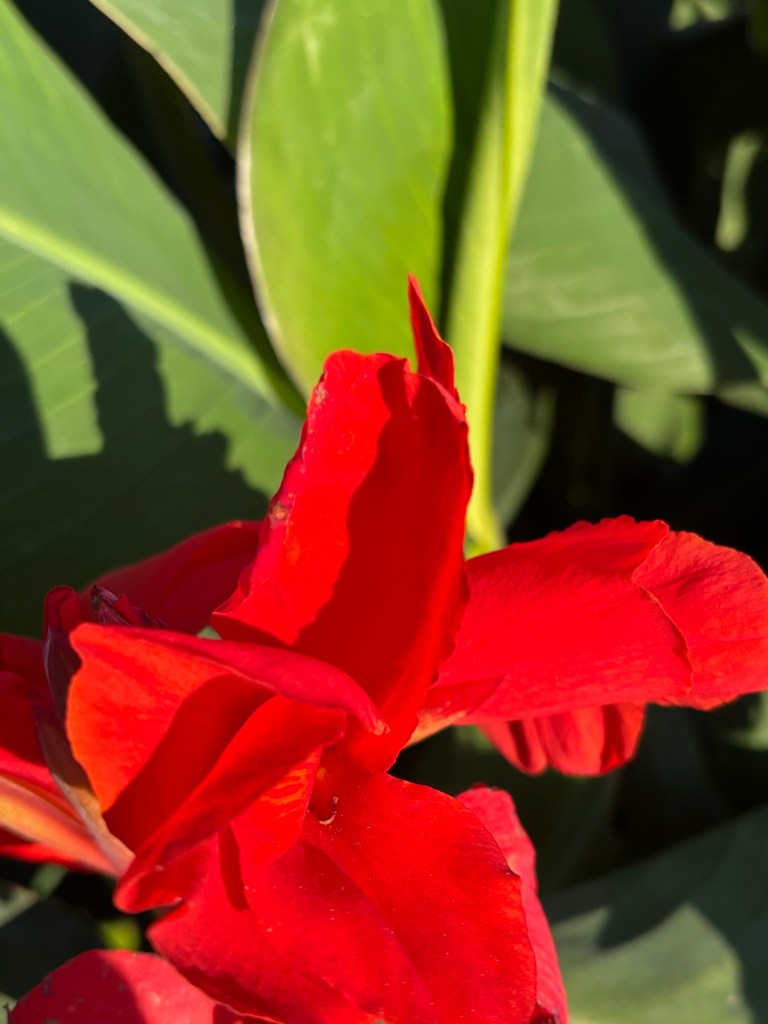
Really goodFlowers along the way
And a last day of sightseeing tomorrow, then on a jet plane!
Words of wisdom, or just to amuse…?
Married men face a significantly lower risk of kidnapping, nobody can be certain that the ransom would actually be paid.
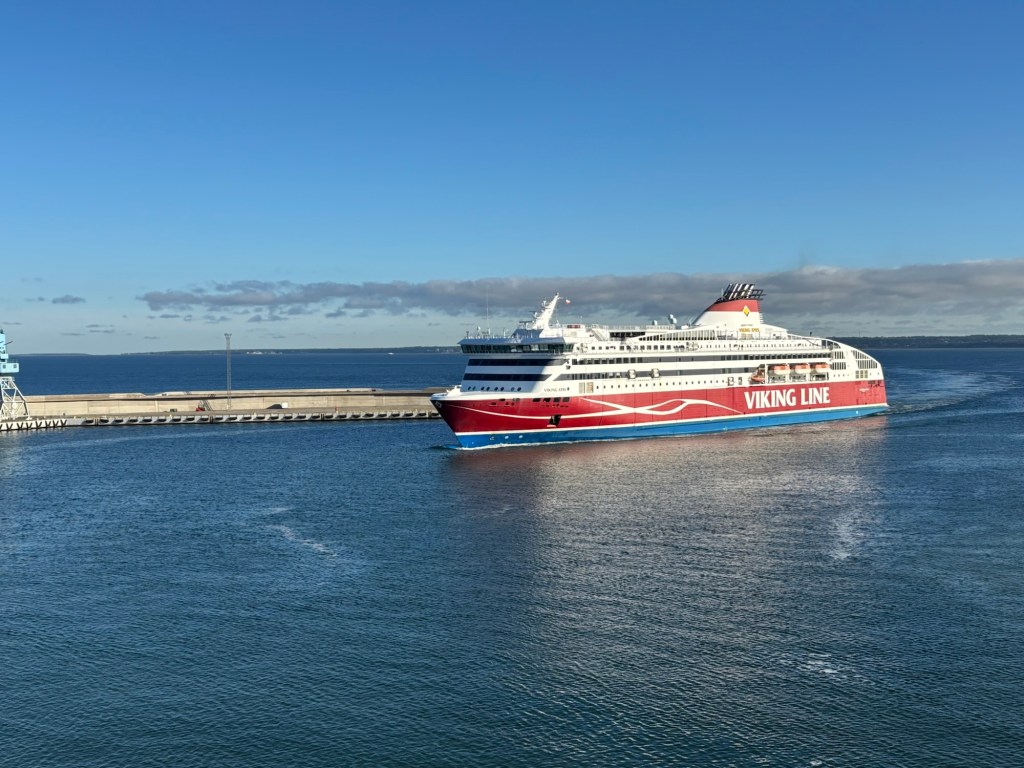
A 2-hour ferry ride to start the day! And beautiful clear skies again. The ferries are huge, like the size of a smaller cruise ships. And with similar amenities! Restaurants, bars, karaoke, gaming machines, shopping stores, lounges, etc.
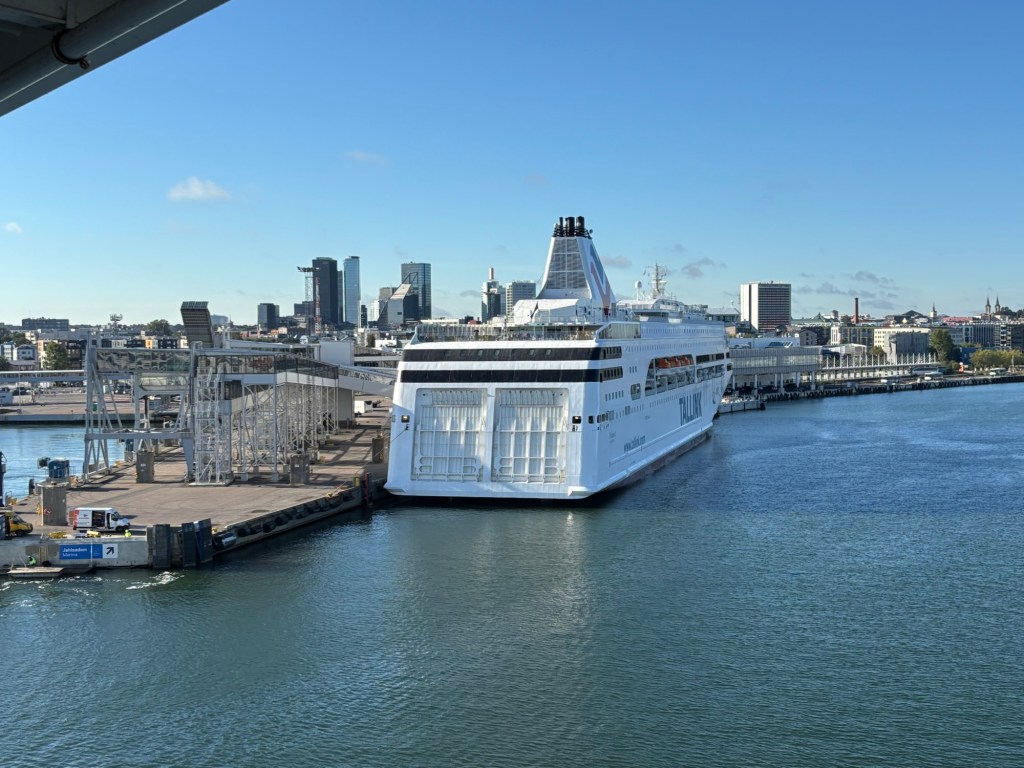
The Megastar, the Tallink Line ship I sailed on, is 700 feet long, reaches speeds of 27 knots, and carries 2,800 passengers and 150 vehicles!
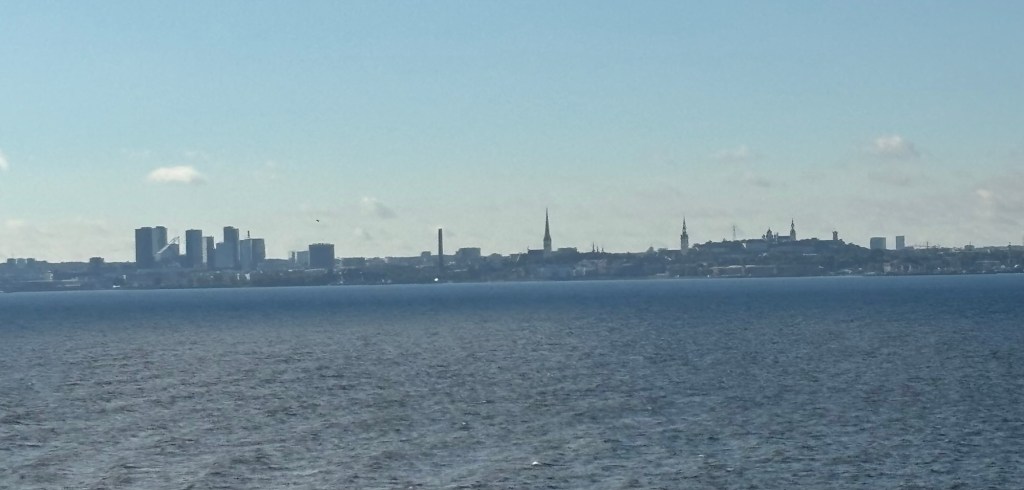
Tallinn’s Old Town on the slight hill on the right — and “New Town” on the left
More glorious weather upon arrival in Helsinki and I hopped on a tram to get to my hostel. Beautiful city, and the hostel room and facilities are great!
Finland has two official languages (Finnish and Swedish) because it was part of Sweden until 1809. Both are used on Helsinki public transportation, street names, public notices and signs, etc. And officially, it’s difficult to pronounce either version!
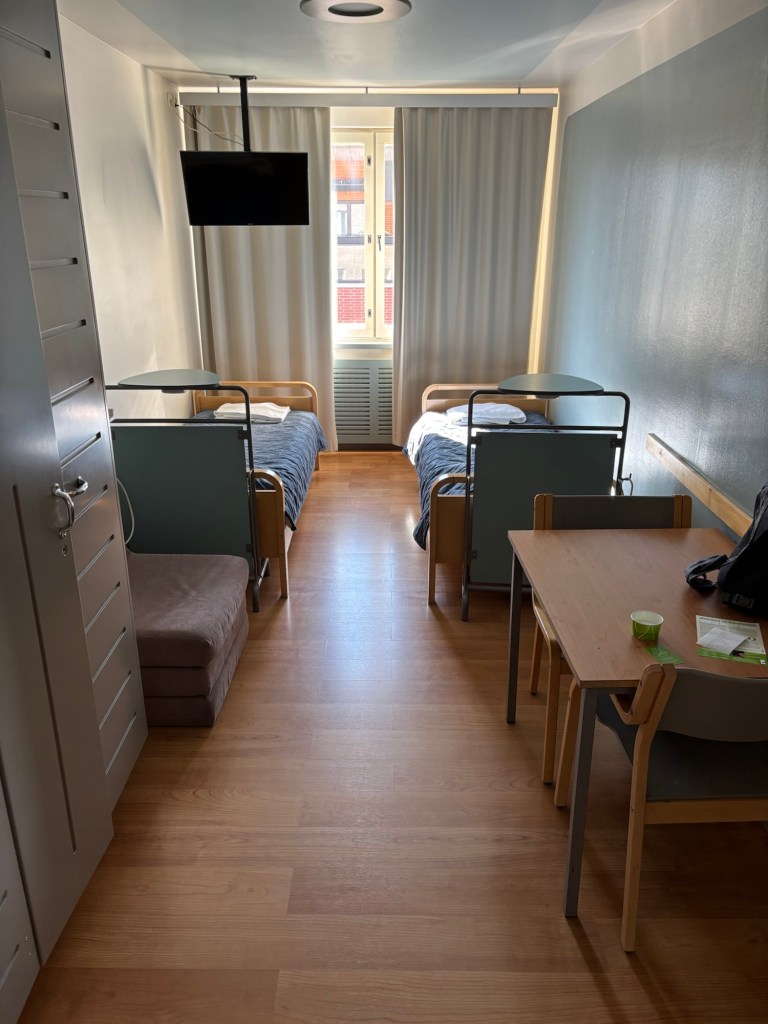
My Eurohostel room – upgraded me free to a larger two bed room, and right across the hall from the bathroom! Lucky!
Since it was available, I threw some laundry in the very inexpensive machines at the hostel (only ~$1 a load!). I also bought a Helsinki Region Card that gives me free public transport, museum admissions, tours, etc., for the three days I’m here.
Another good thing – I’m in a Scandinavian country so licorice is abundant in many variations! A fave of mine! (Note: Finland is not really a Scandinavian country. More traditionally, the Scandinavian countries include Norway, Sweden, and Denmark. But Iceland and Finland are included with them as part of the Nordic countries.)
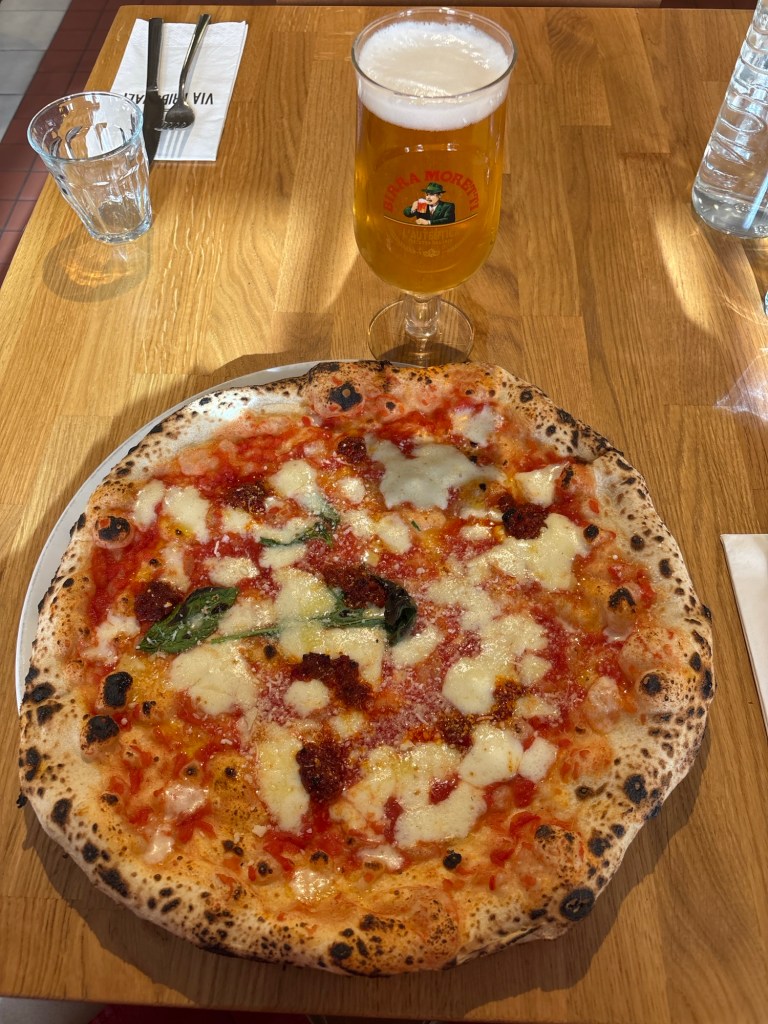
There was a well recommended pizza place near the hostel, so that’s where I got a late lunch. Pizza and Italian Moretti beer!
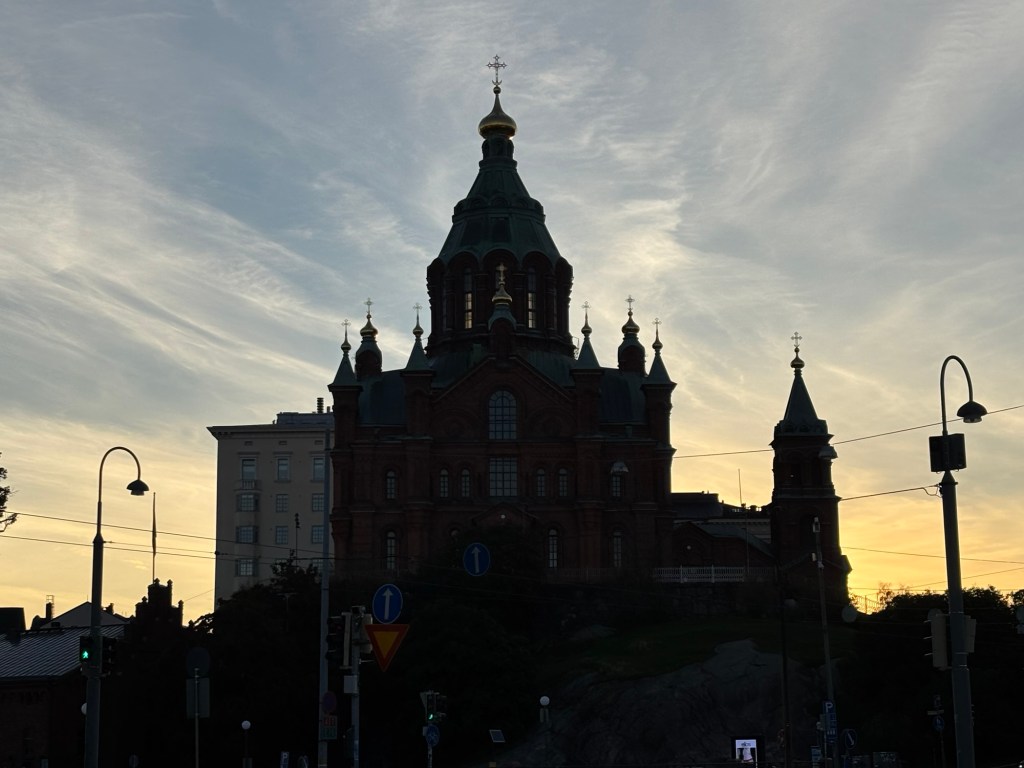
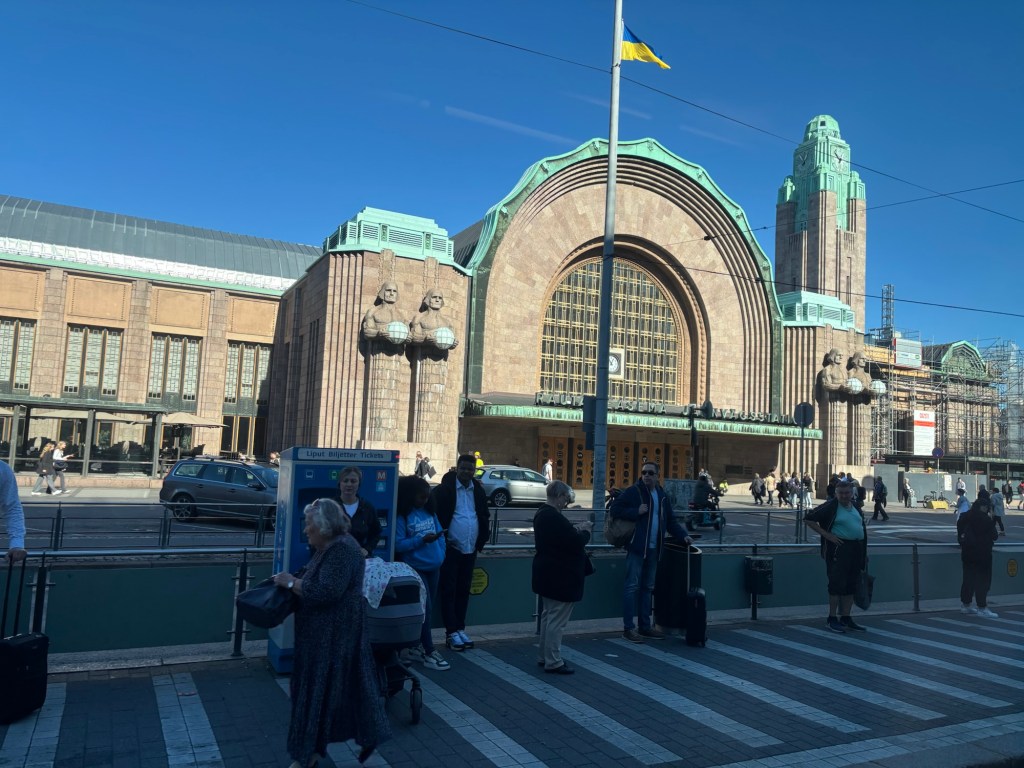
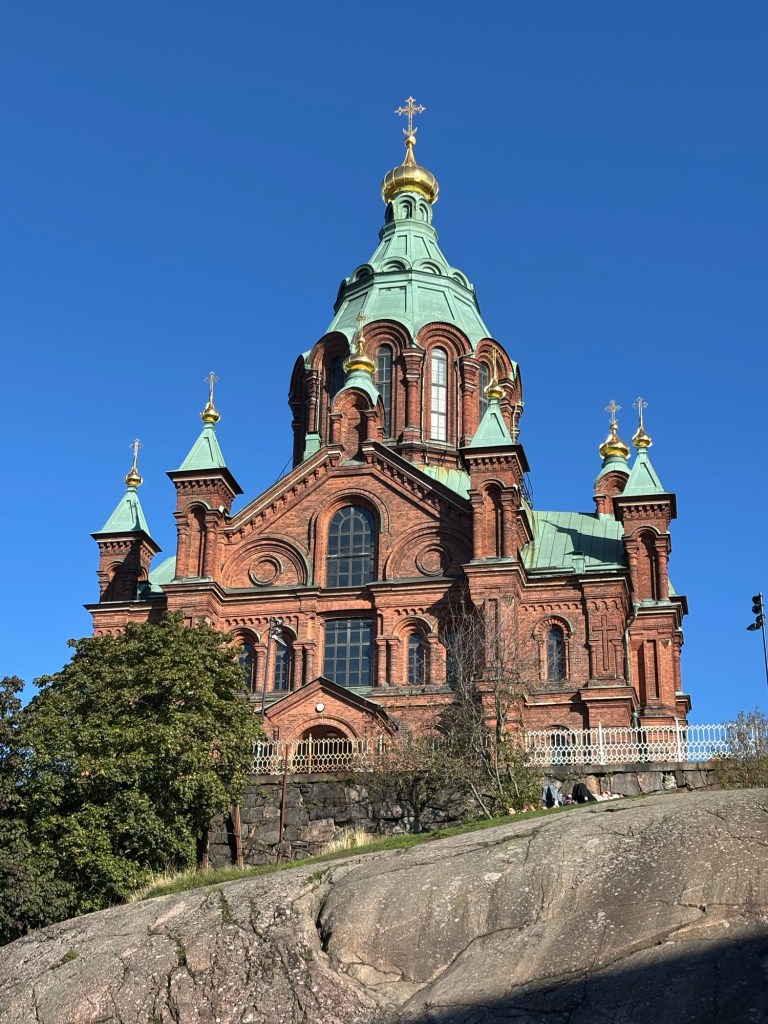
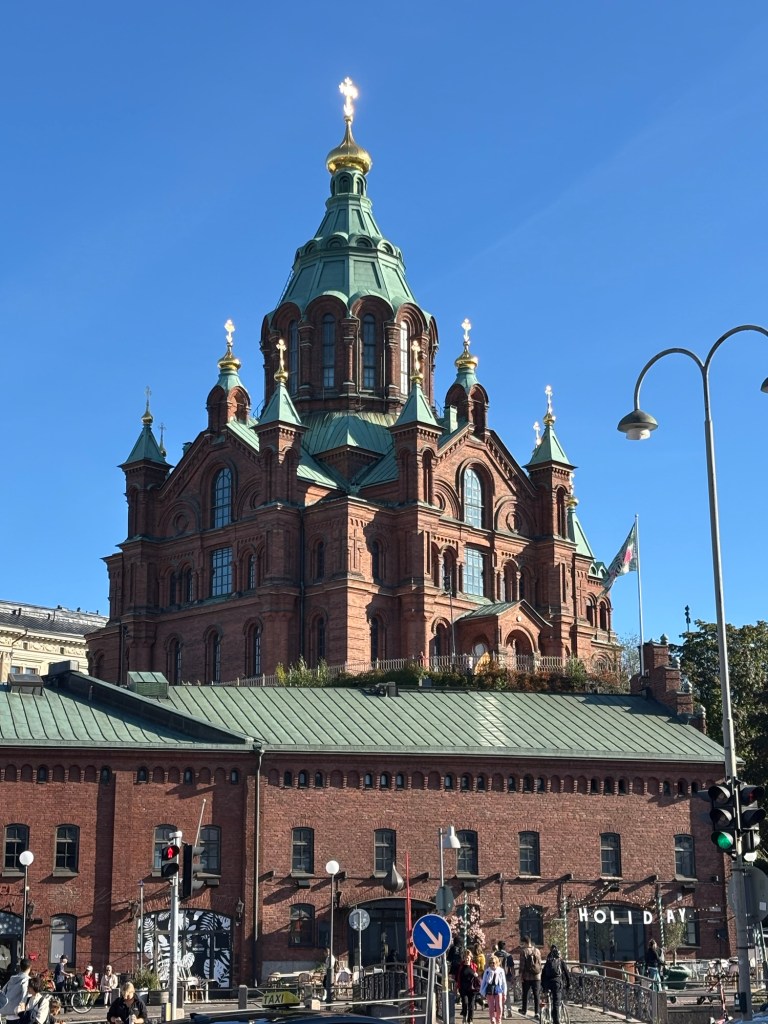
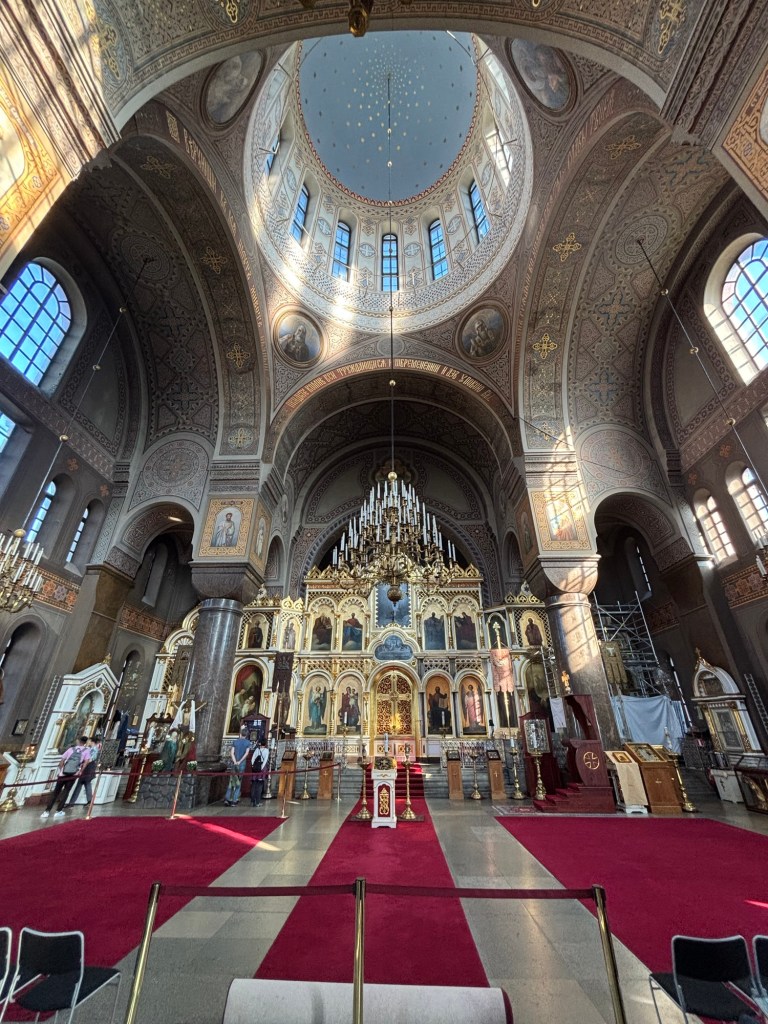
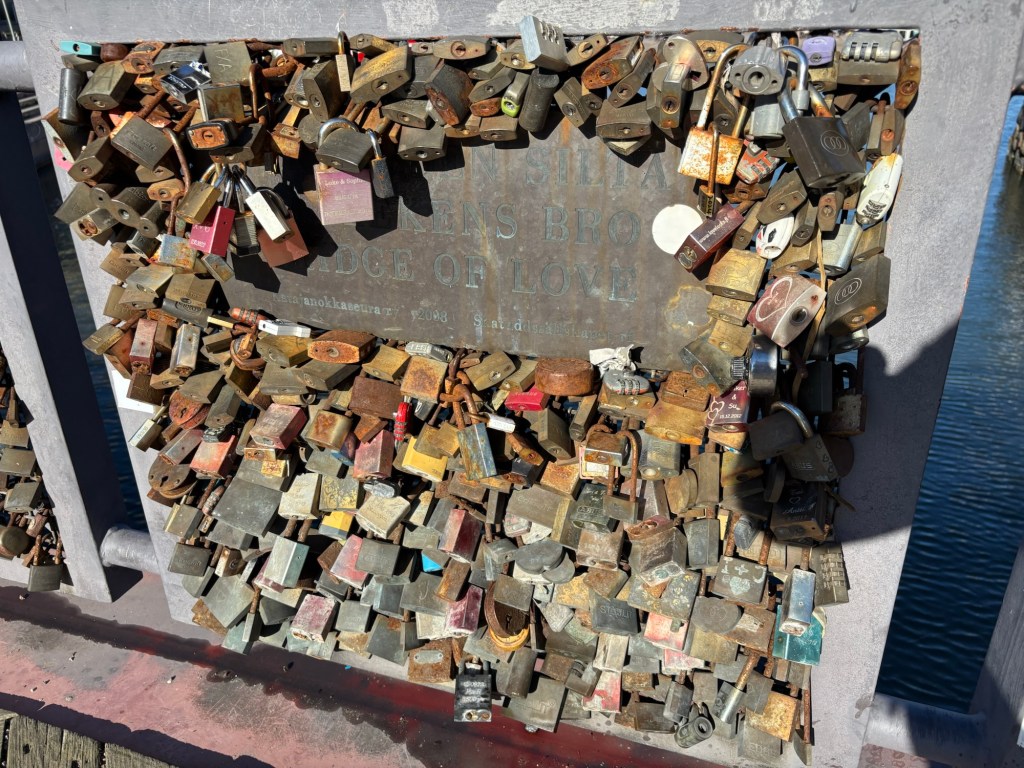
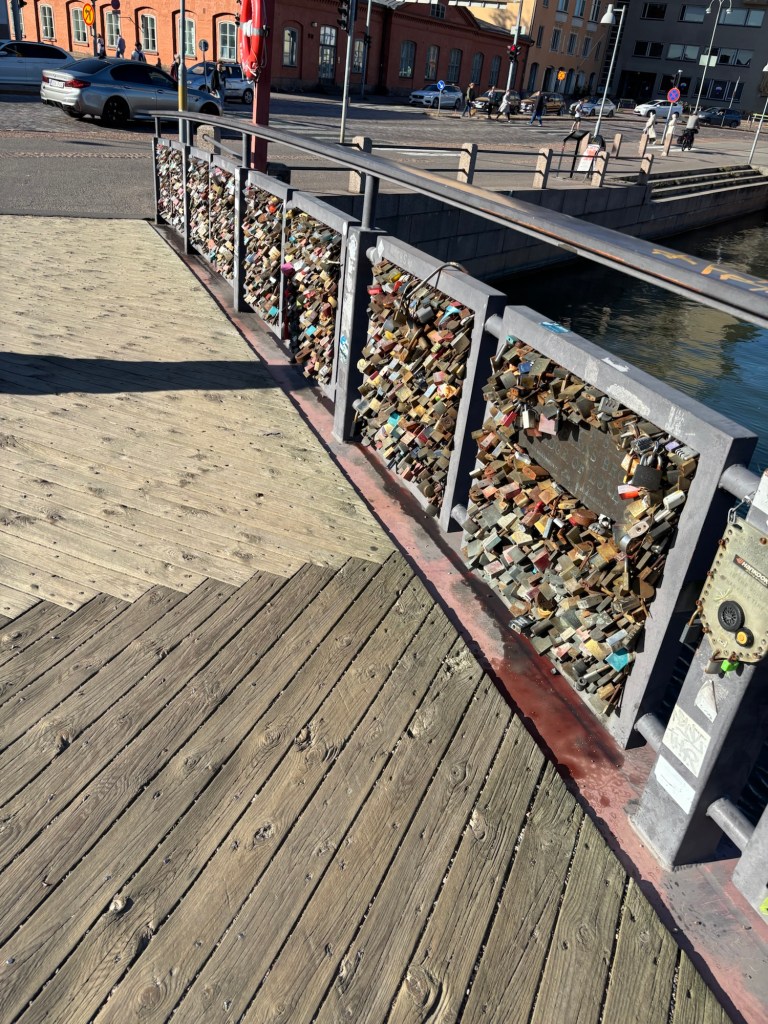
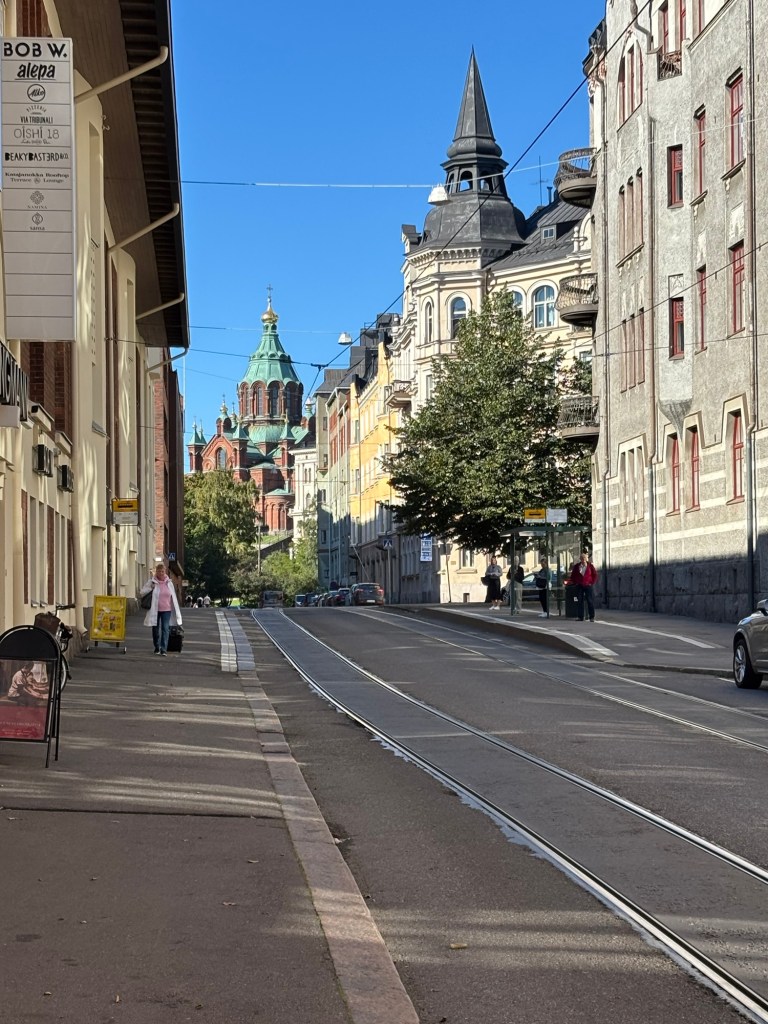
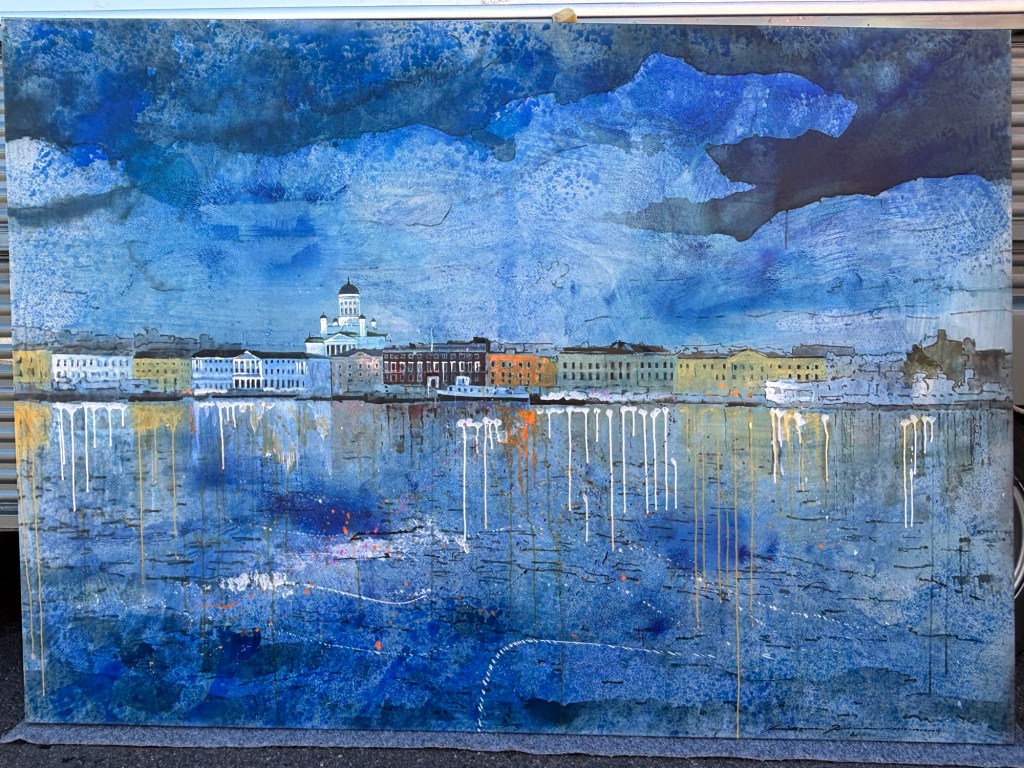
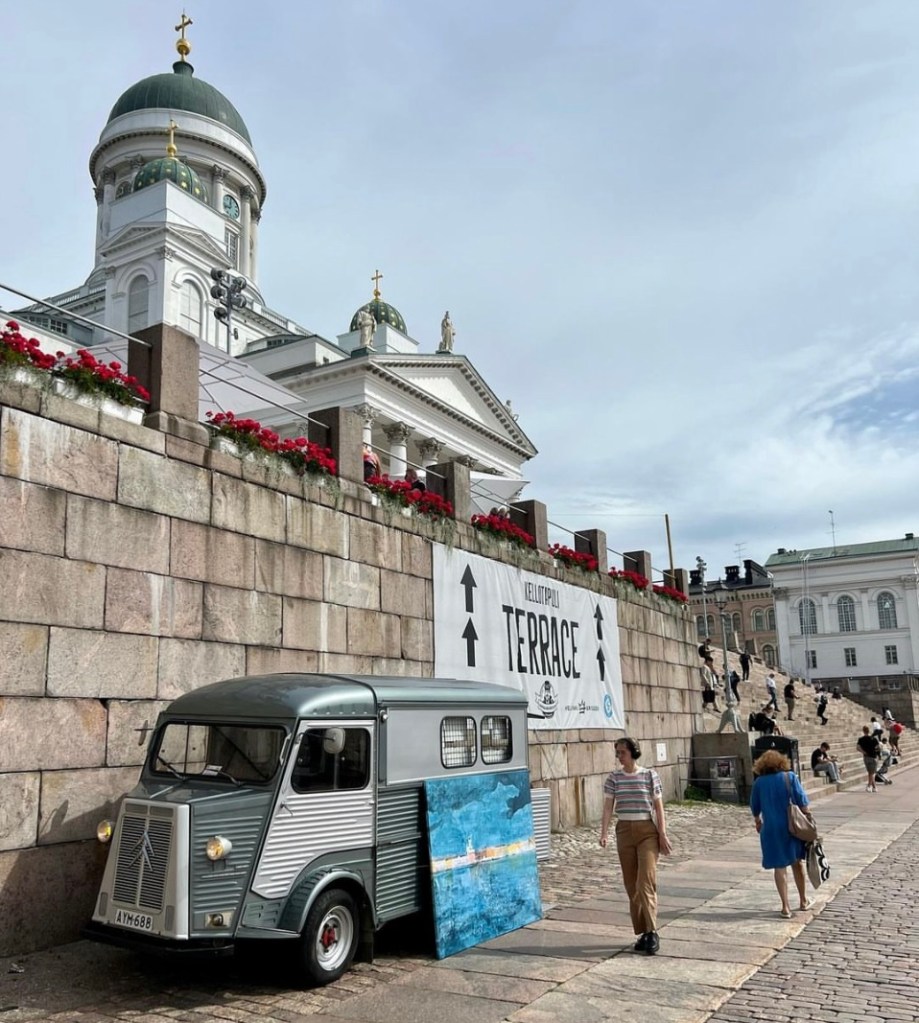
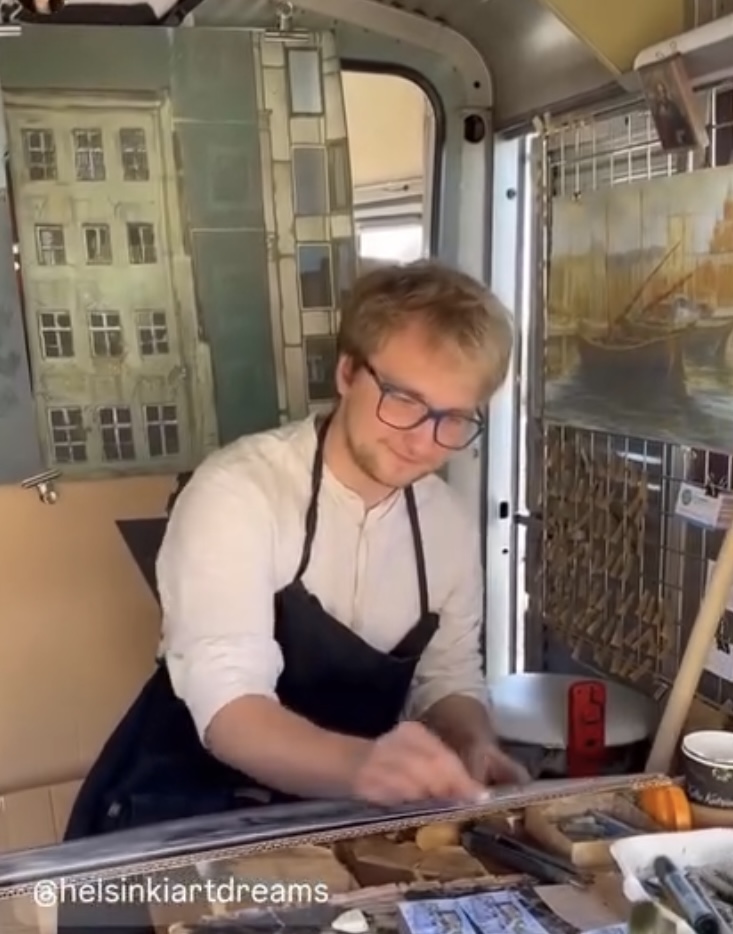
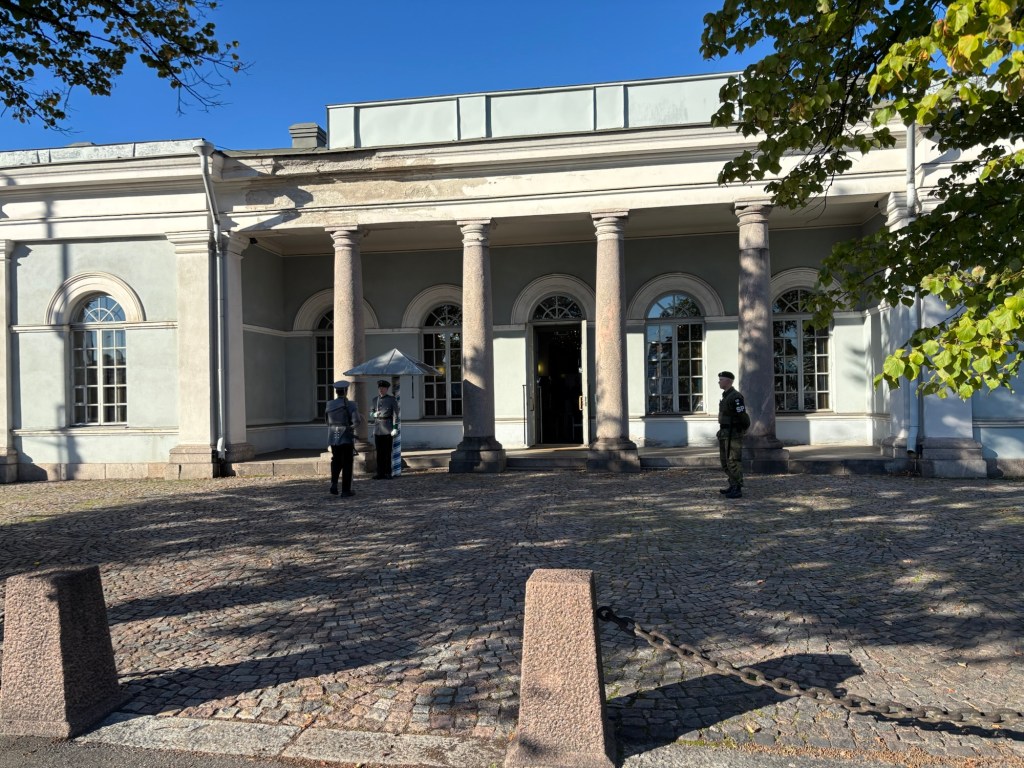
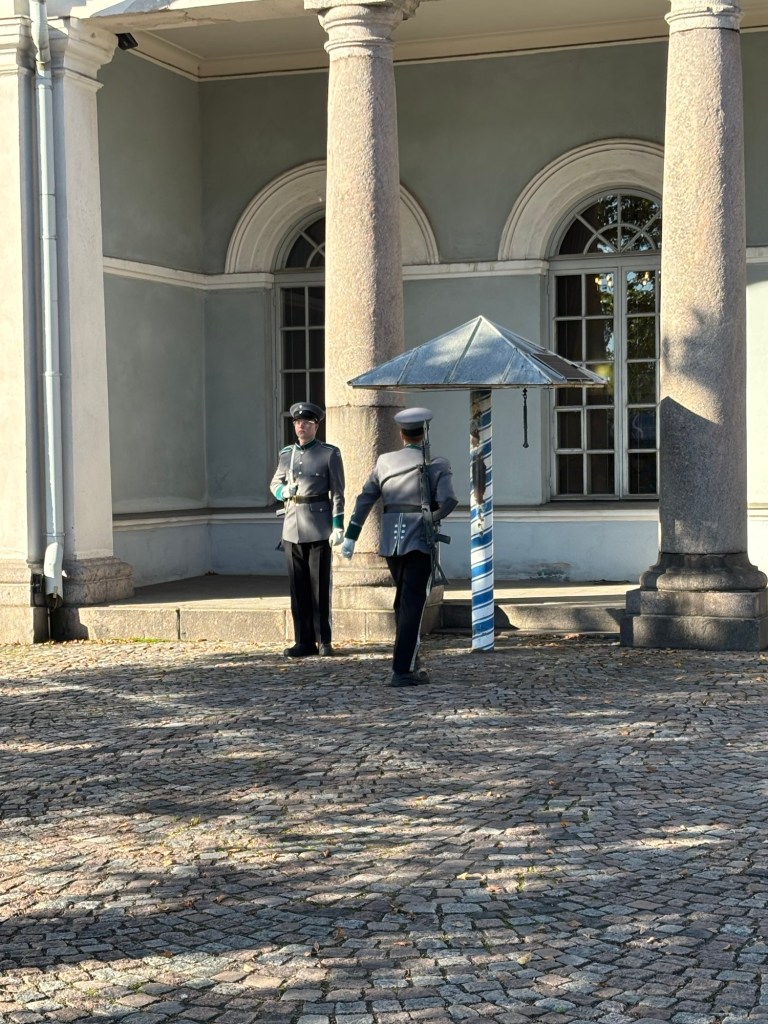
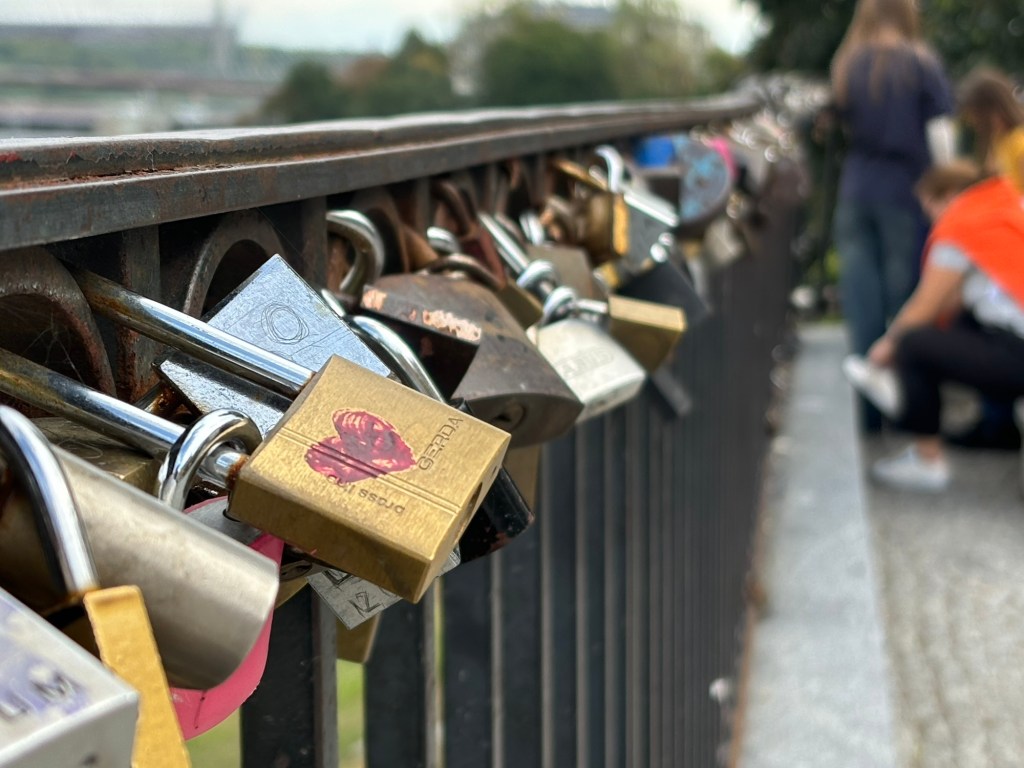
The Central Train StationUspenski Cathedral, the main church of the Orthodox Parish of Helsinki and the Orthodox Church of Finland.The Bridge of Love with thousands of padlocksA large 3’ x 4’ painting by a local artist who paints and sells his work out of a tiny box van (Helsinki ArtDreams). Amazing work! Liked his art so much I bought a small print for myself.The Main Guard Post near the Presidential Palace
The Main Guard Post has a guard in front of its main entrance. Enlisted men serving as guards are selected from the military police. The guard shift lasts an hour at the most, only 20 minutes in cold winter weather. During their shift, guards must stand absolutely still.
Video of the Guard Changing
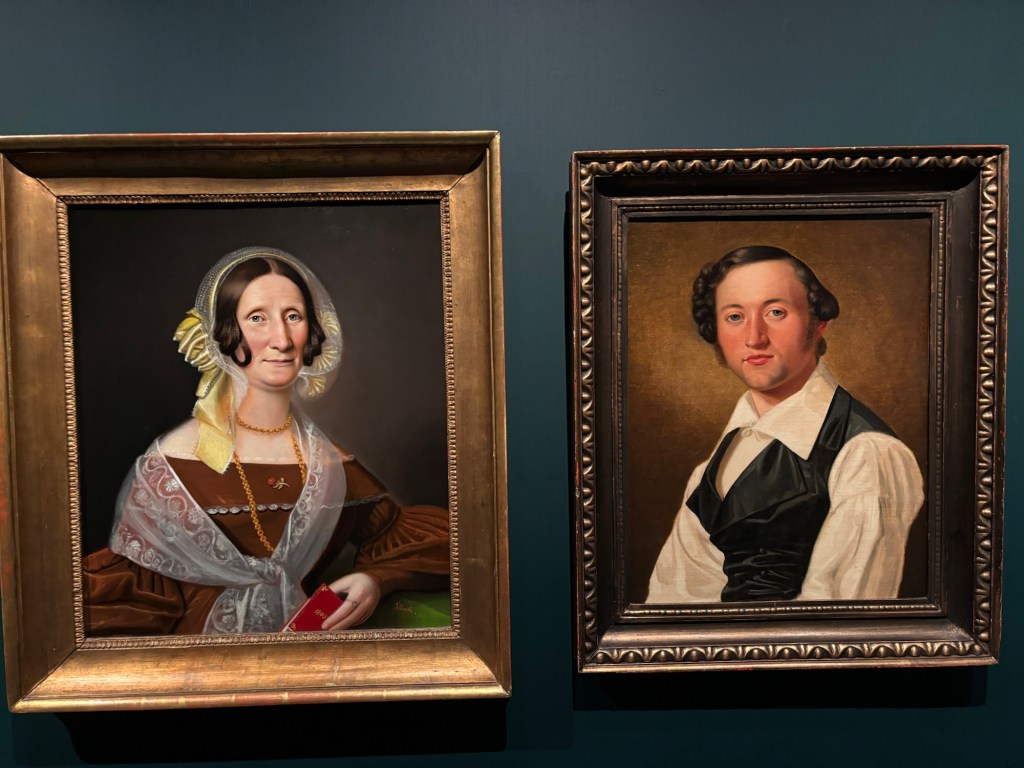
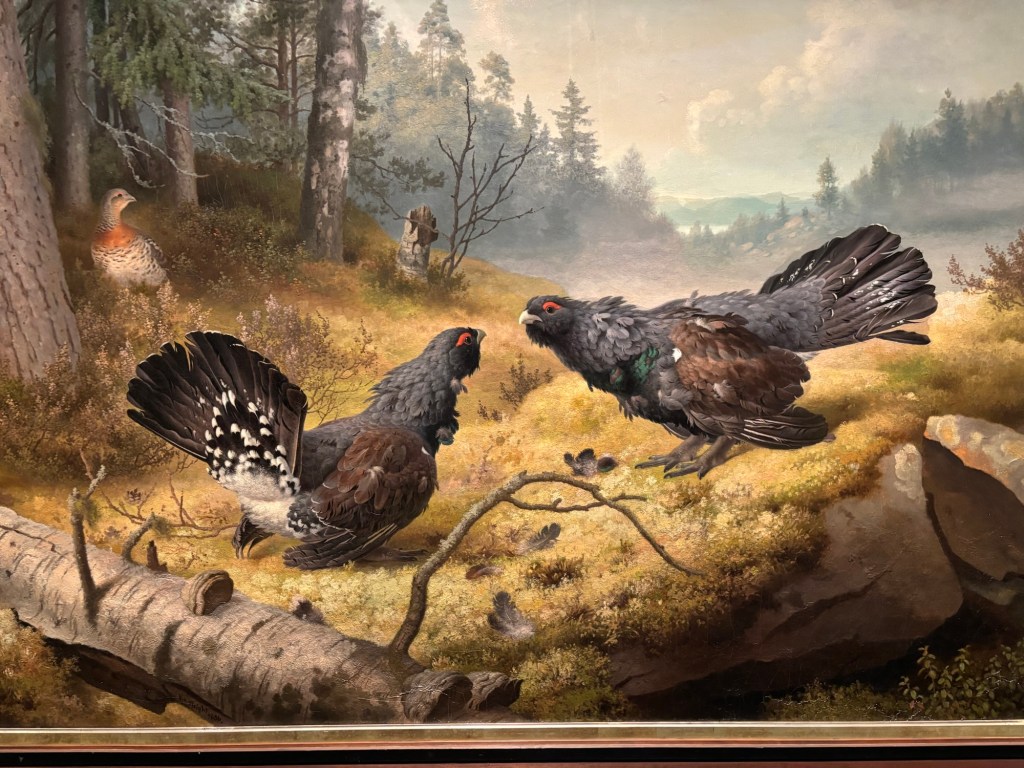
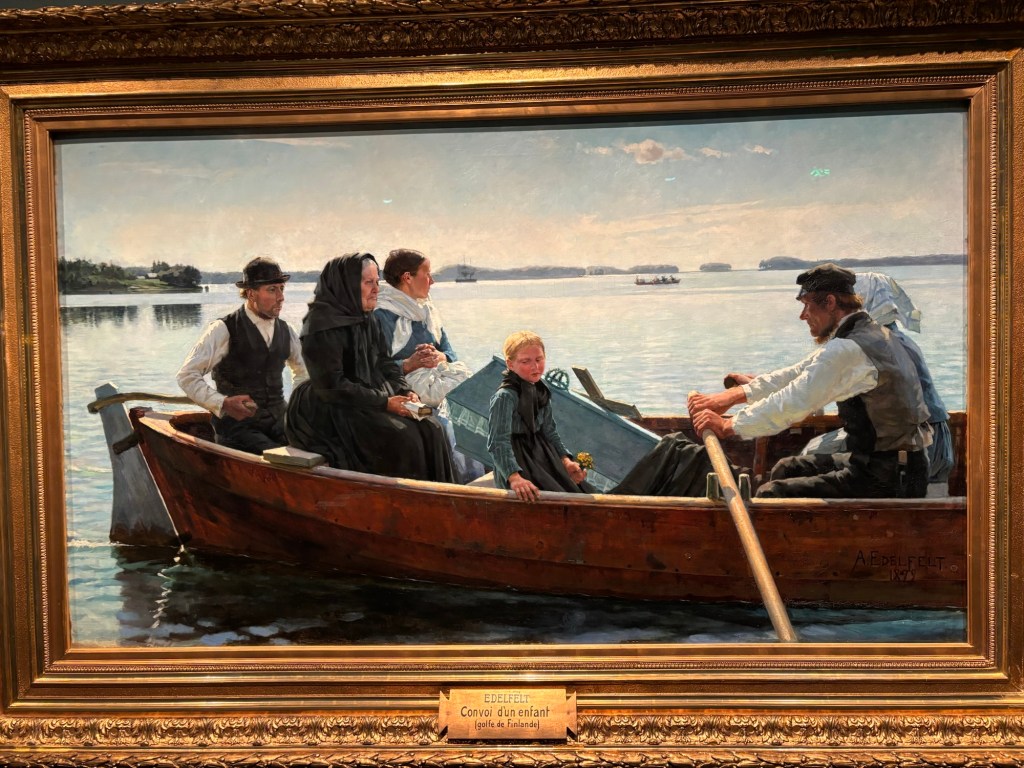
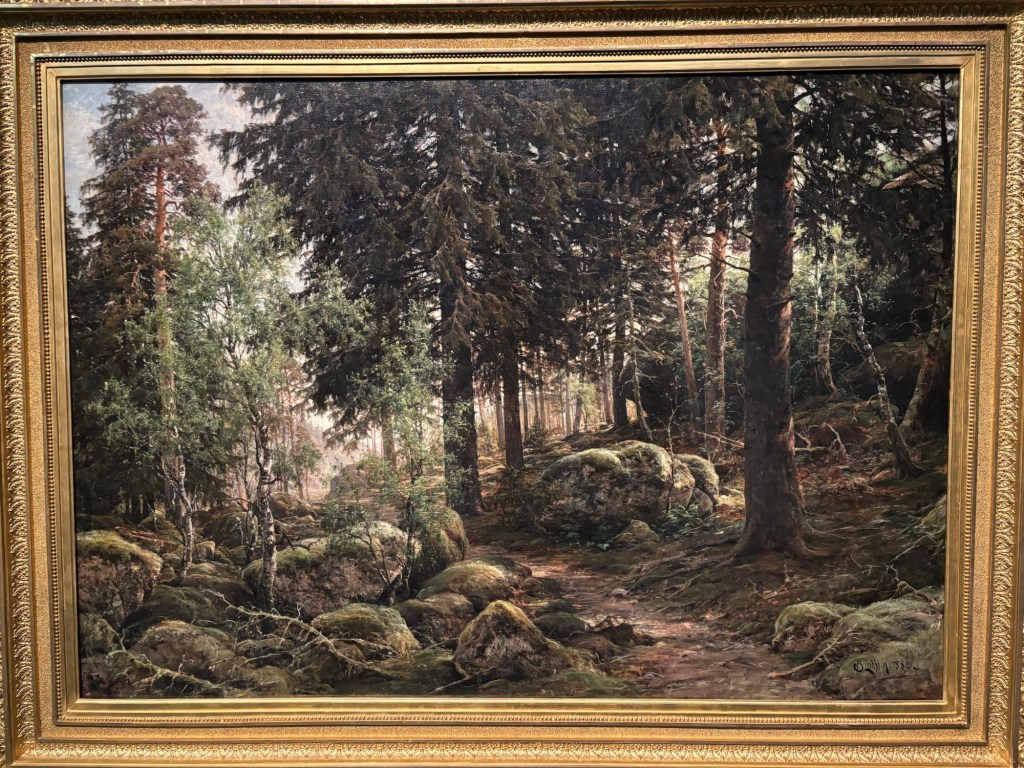
A few of my favorites from the Ateneum Art Museum, most by Finnish artists.
Maybe the most famous Finnish painting – “THE FIGHTING CAPERCAILLIES” by Ferdinand Von WrightFinnish painter, Albert Edelfelt, and his work, “Funeral of a Child” – 1879Finnish/Swedish painter, Berndt Lindholm, “Forest Interior,” 1882Senate Square with a large international market underway.The Helsinki CathedralAn old friendAnd some flowers
Long day so just dinner in the room. And relaxing. And blogging. And watching TikTok junk.
More sightseeing tomorrow.
Words of wisdom, or just to amuse…?
Looking at the size of these chicken fingers, that chicken must have been around 8 or 10 feet tall.
A 7:00 am bus on a beautiful morning! The 4+ hour ride to Tallinn was uneventful, but the route was through endless forest on both sides of the highways.
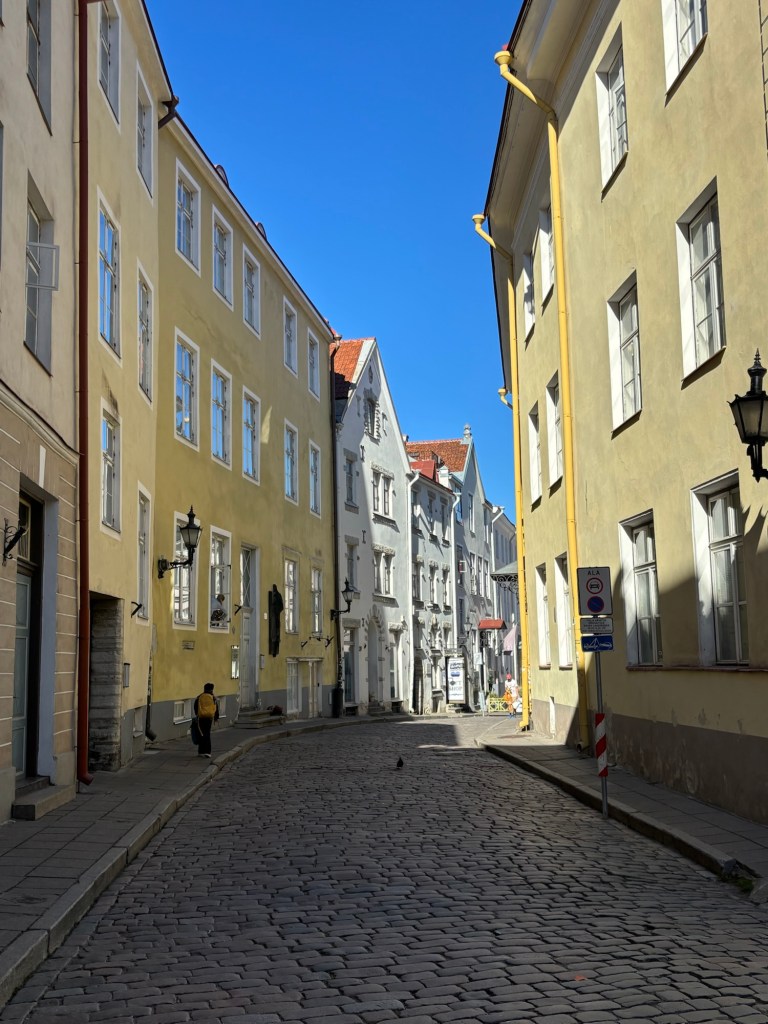
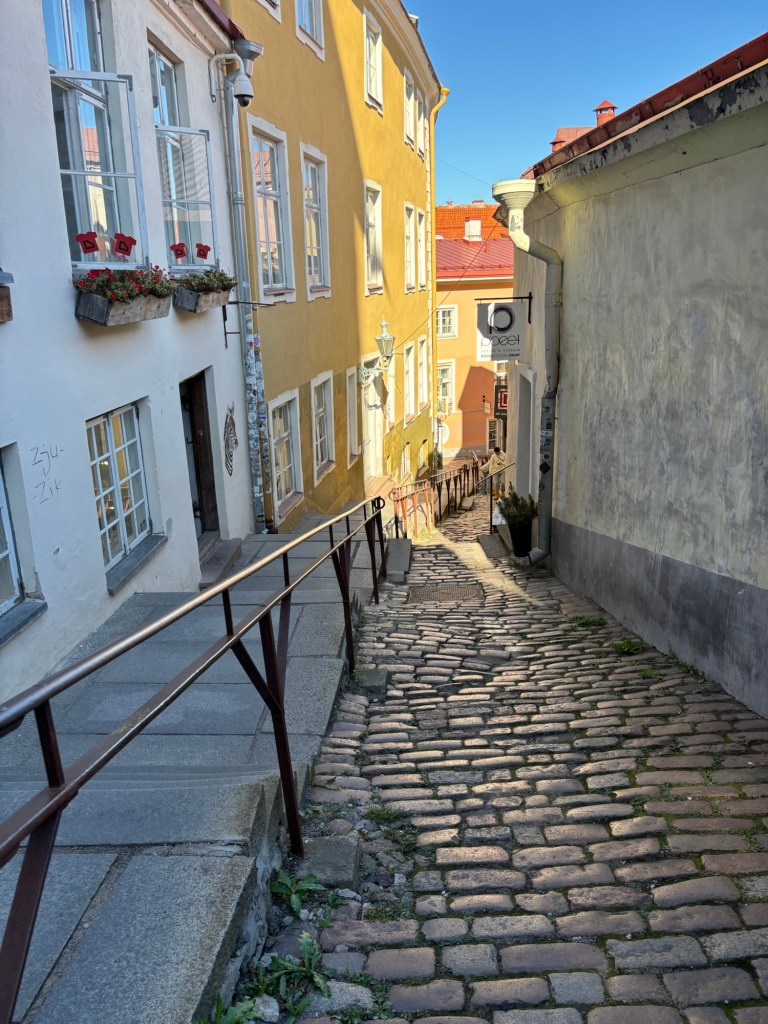
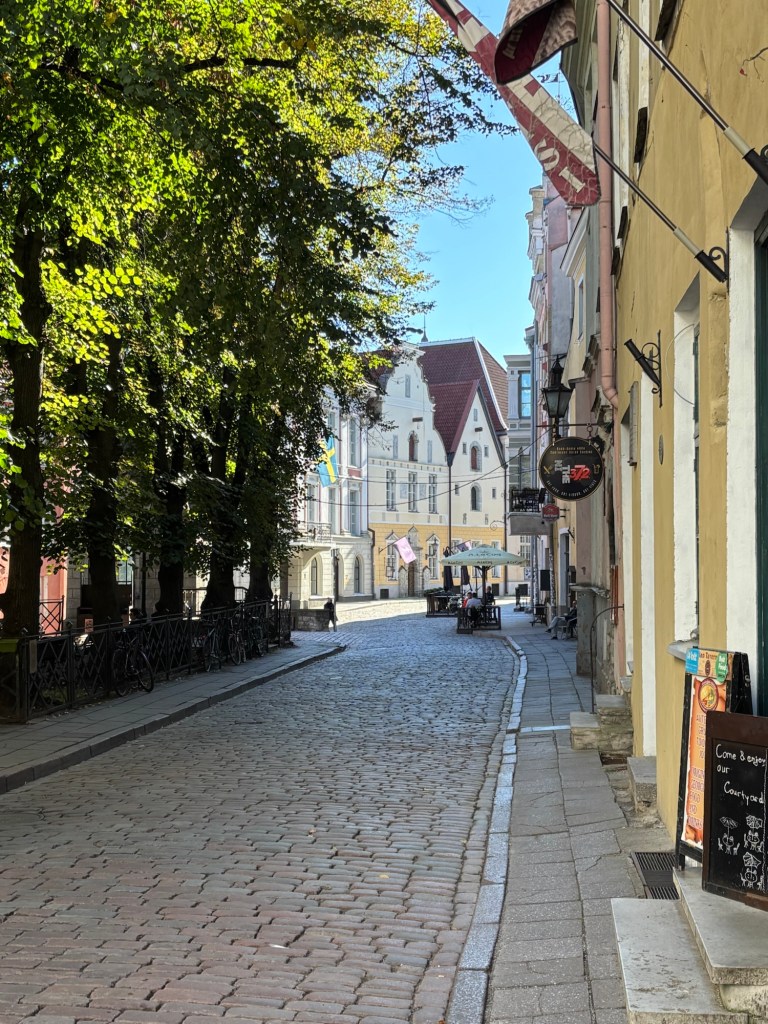
Tallinn – what a beautiful city on the Gulf of Finland! At only about 400,000 inhabitants, it is smaller than the other cities I’ve visited on this trip. But very nice and easy to get around (except for the hilly, cobblestone streets of Old Town).
The Danes invaded in 1219 from the sea. The German Army had the same idea, but they decided to march to the area so they could conquer other lands along the way. Since the Danes arrived first, they took the prize and became the first European rulers of the last pagan tribes of the area. The Germans ended up sending many merchants to the area and dominated the commerce side.
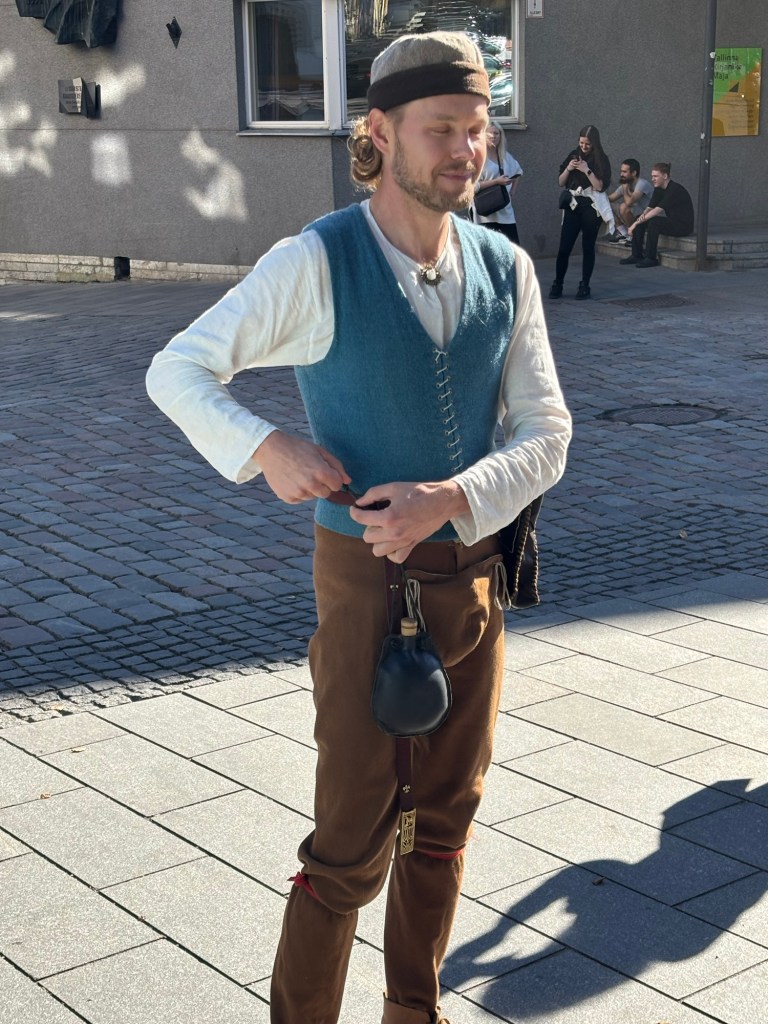
I had signed up for a Walking Tour for the afternoon. Along with a dozen others, I met our Guide, Ivar, at the Tourist Office. He was easy to find dressed as he was in traditional medieval dress.
He talked briefly about the beautiful medieval Old Town of Tallinn, of which only 10% was destroyed in WWII. As a result, most of the buildings are original from medieval times. When he visited the U.S. and showed pictures of the Tallinn Old Town, people said, “Man, you live in Disneyland!” There are a lot of spires, castles, etc.
Sadly, it went quickly downhill from there! Boring, unless you enjoyed listening to him being impressed with himself and his “performance.” I gave him $5 and walked away after ten minutes. My first “free tour” bust. Oh, well.
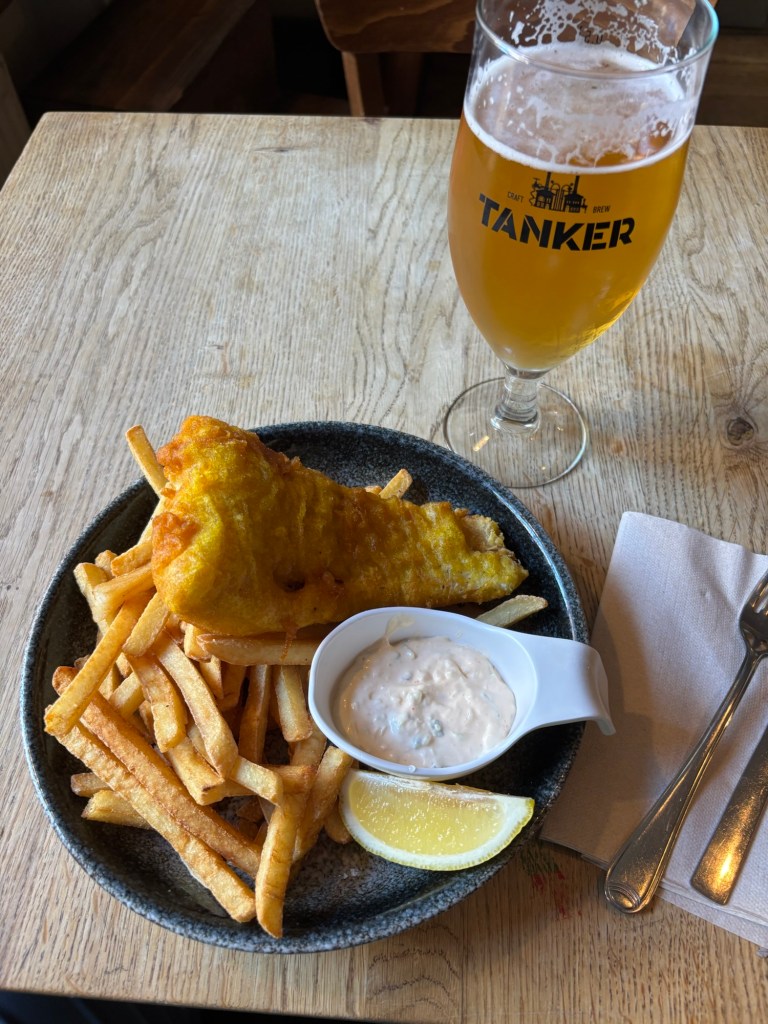
By then it was after 1:00 pm and I had not eaten yet, so I went in search of food. Surprisingly, almost every restaurant in Old Town has a hawker outside trying to get customers. While I’ve seen this obnoxious practice many times, especially in tourist areas, this is the first city on this trip where it has occurred. You can’t walk the sidewalk or through a square without being accosted!
In response I picked the first restaurant that did not have someone out on the sidewalk to annoy me. Worked out well for me, the food was good!
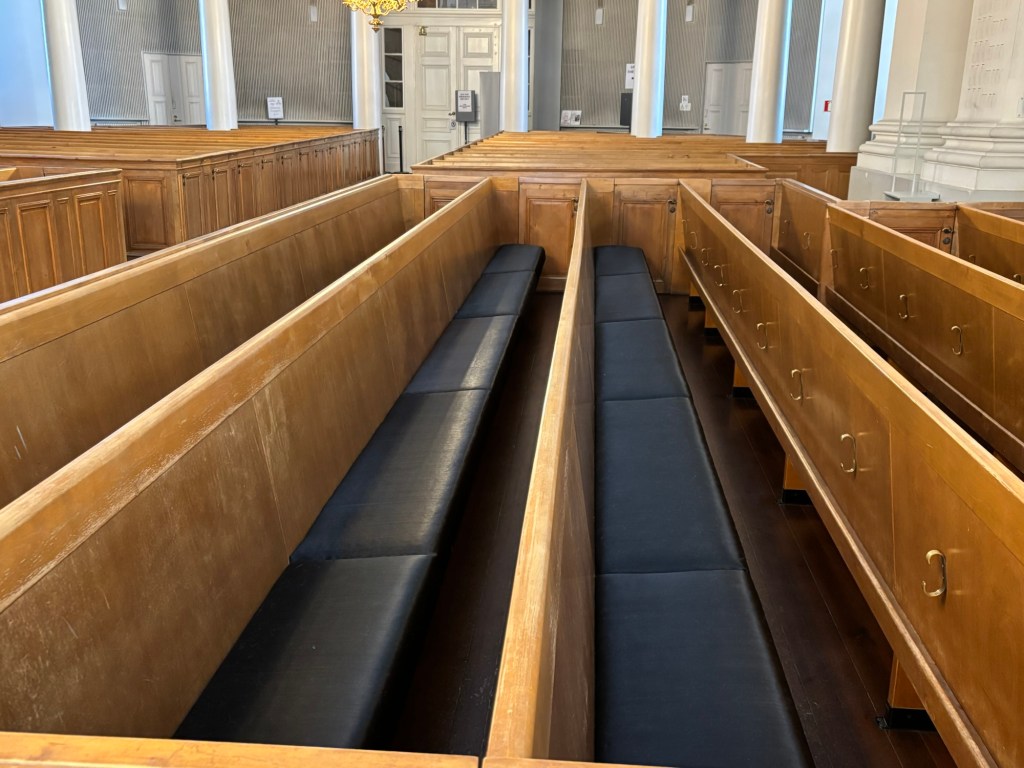
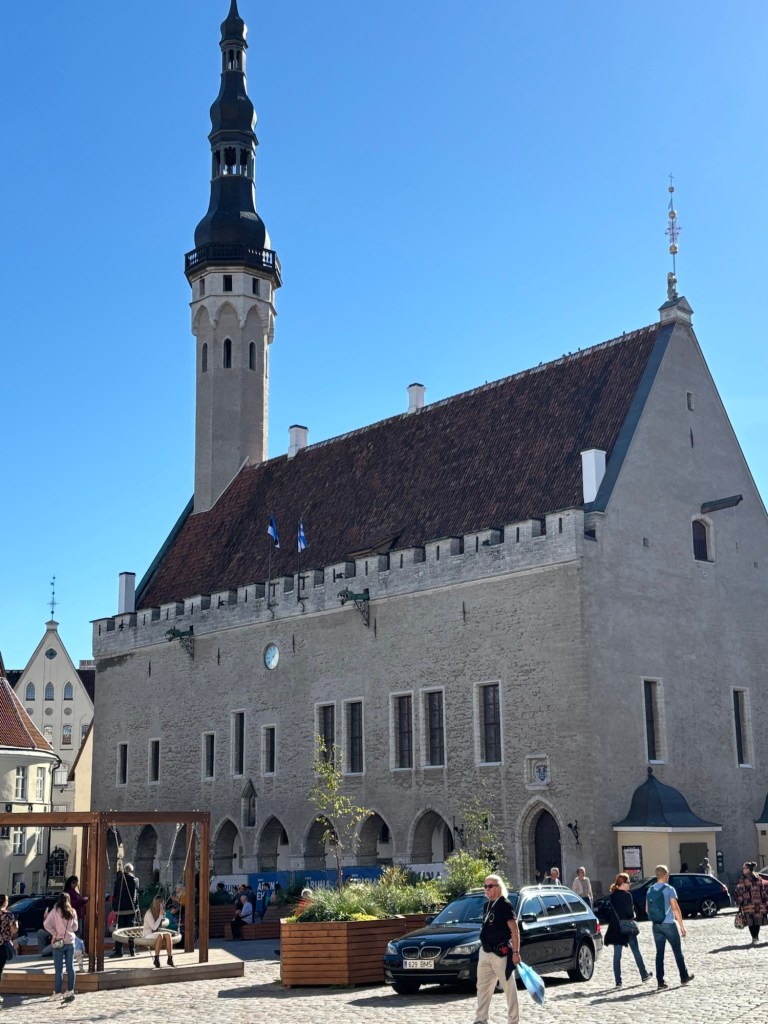
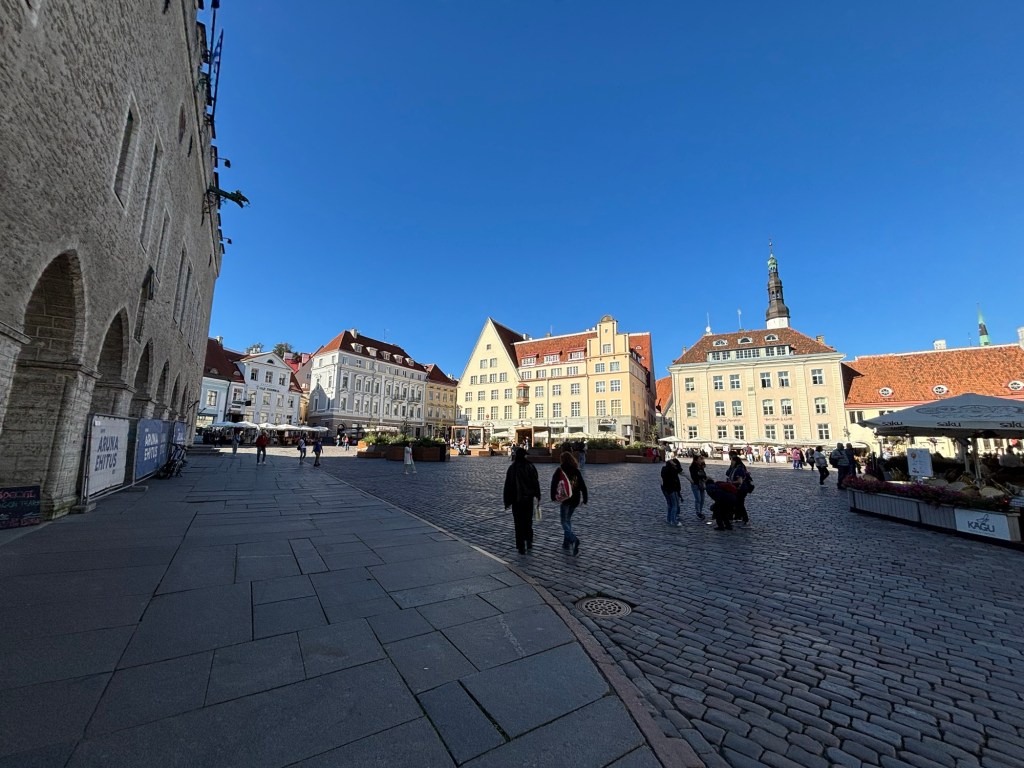
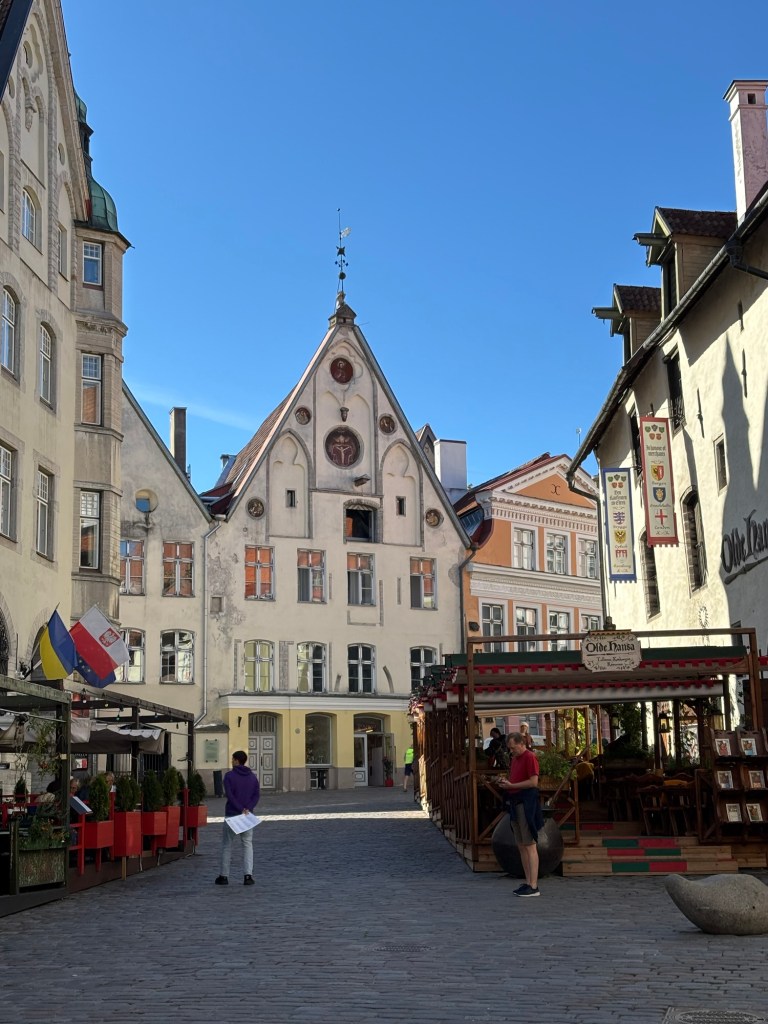
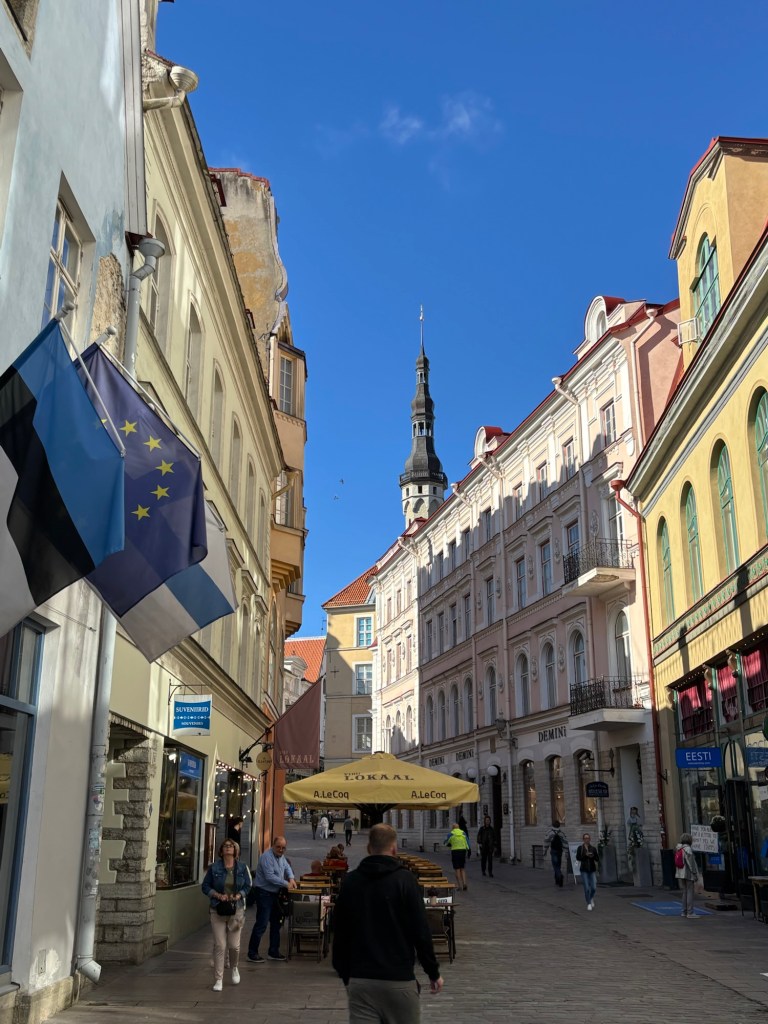
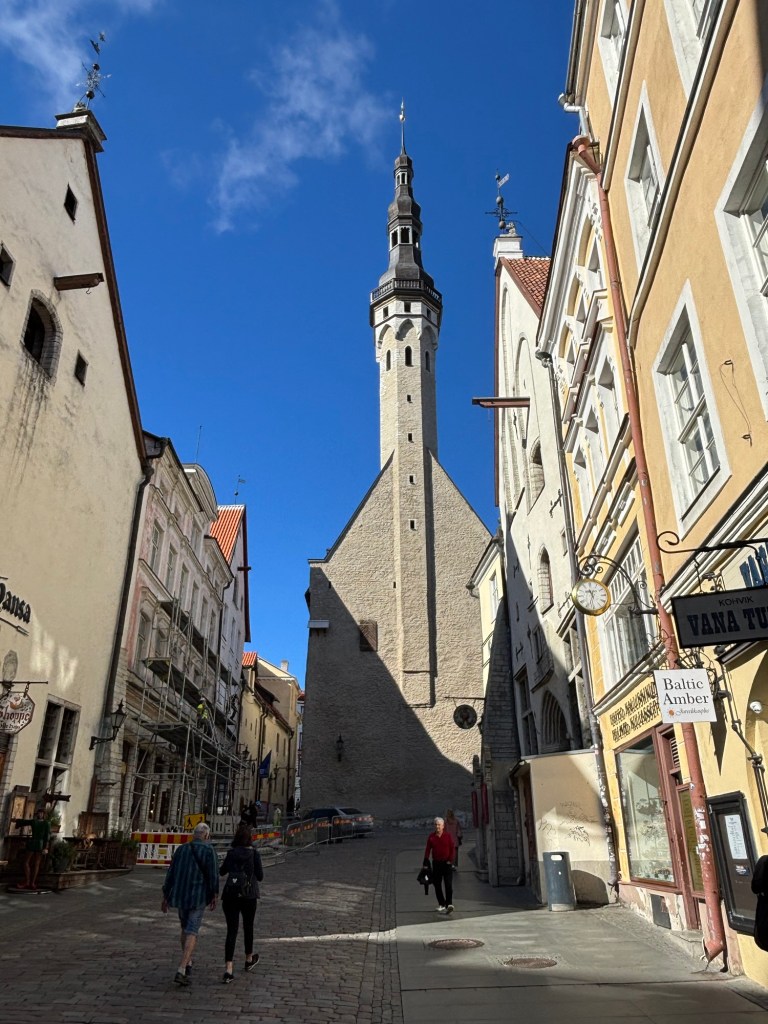
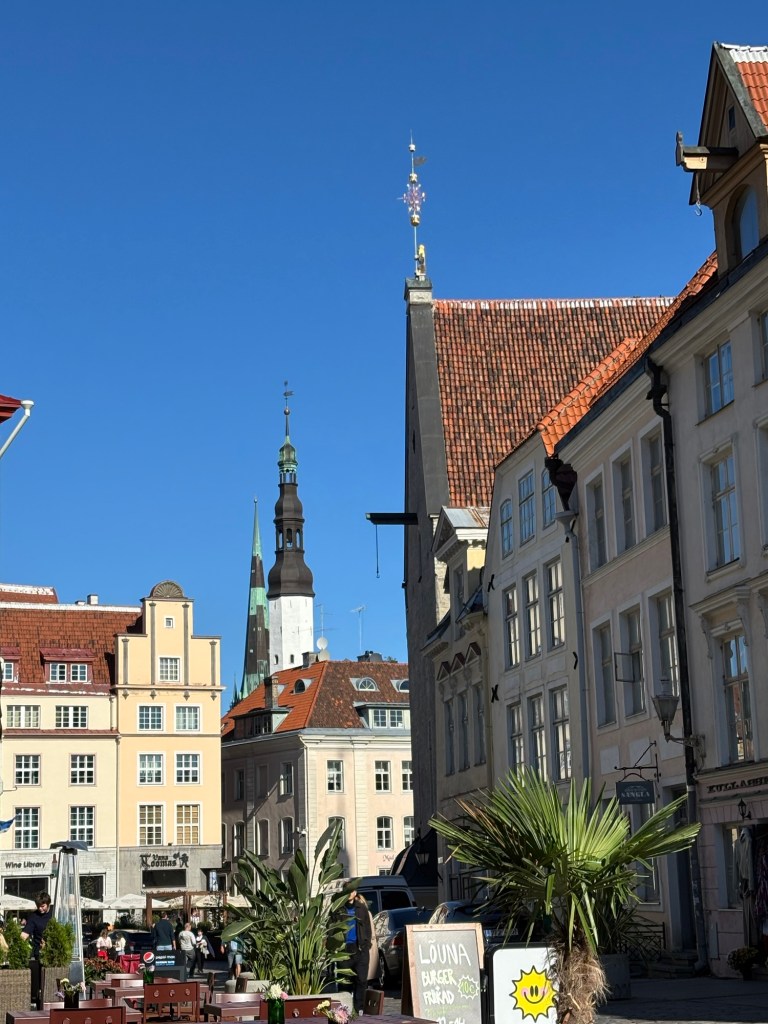
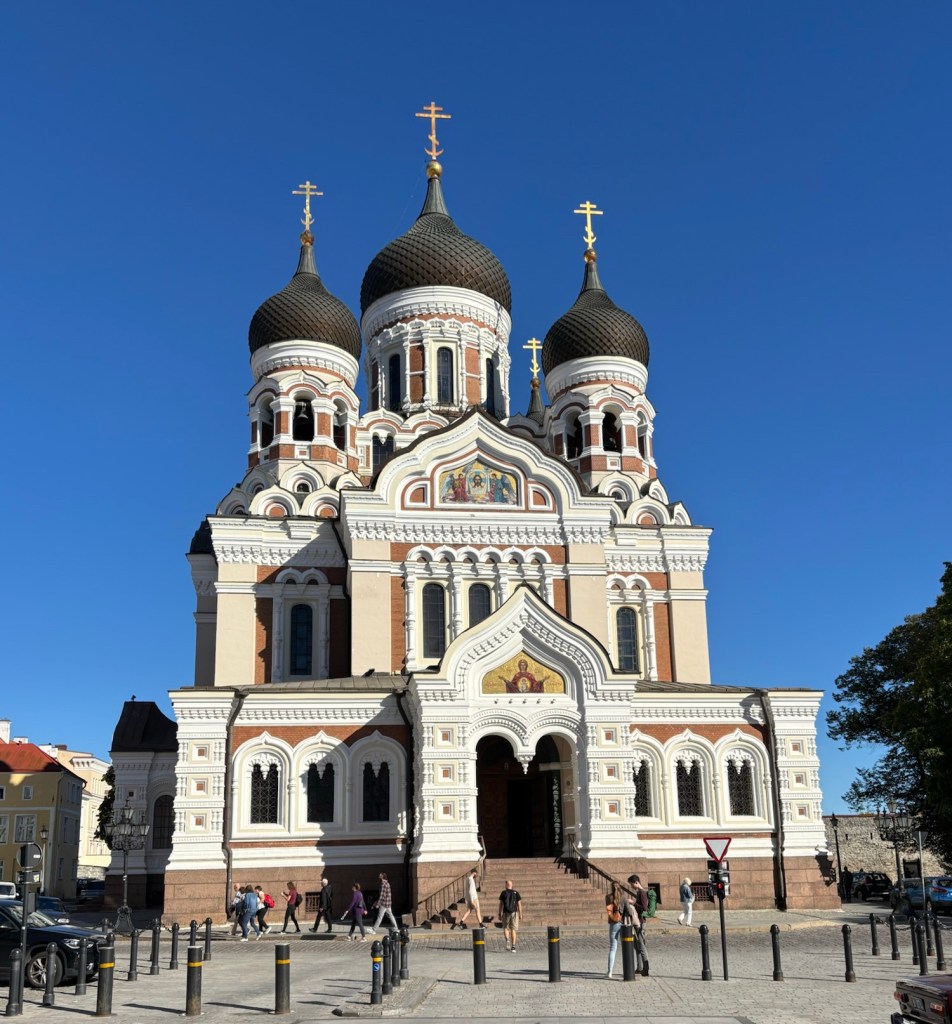
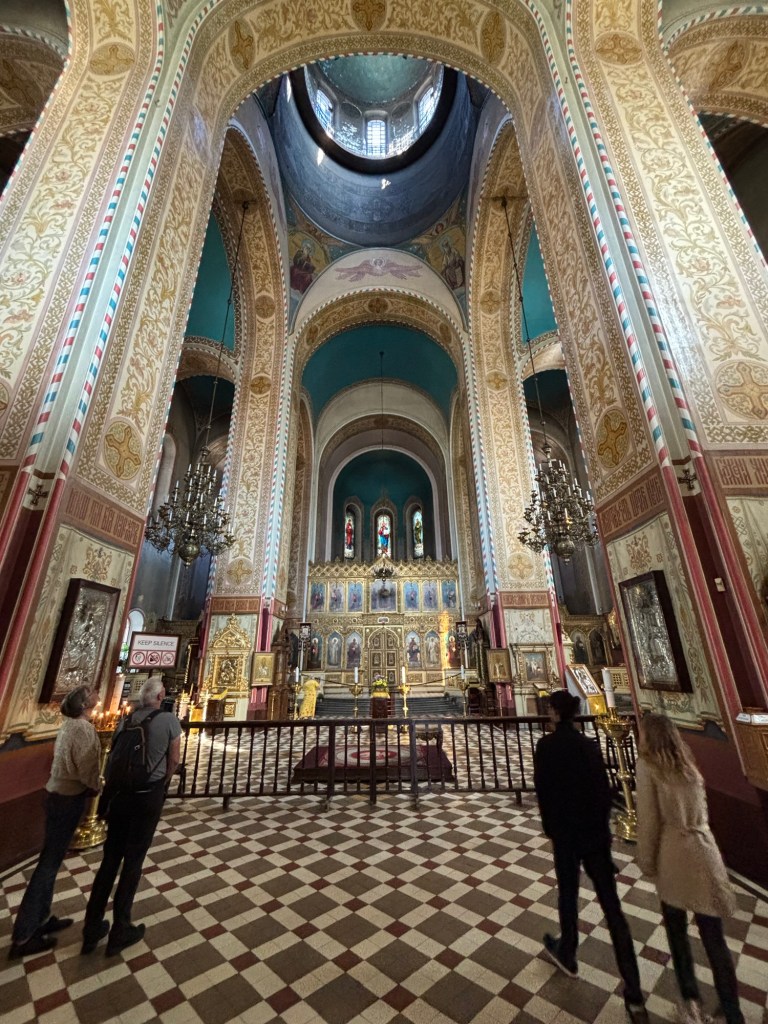
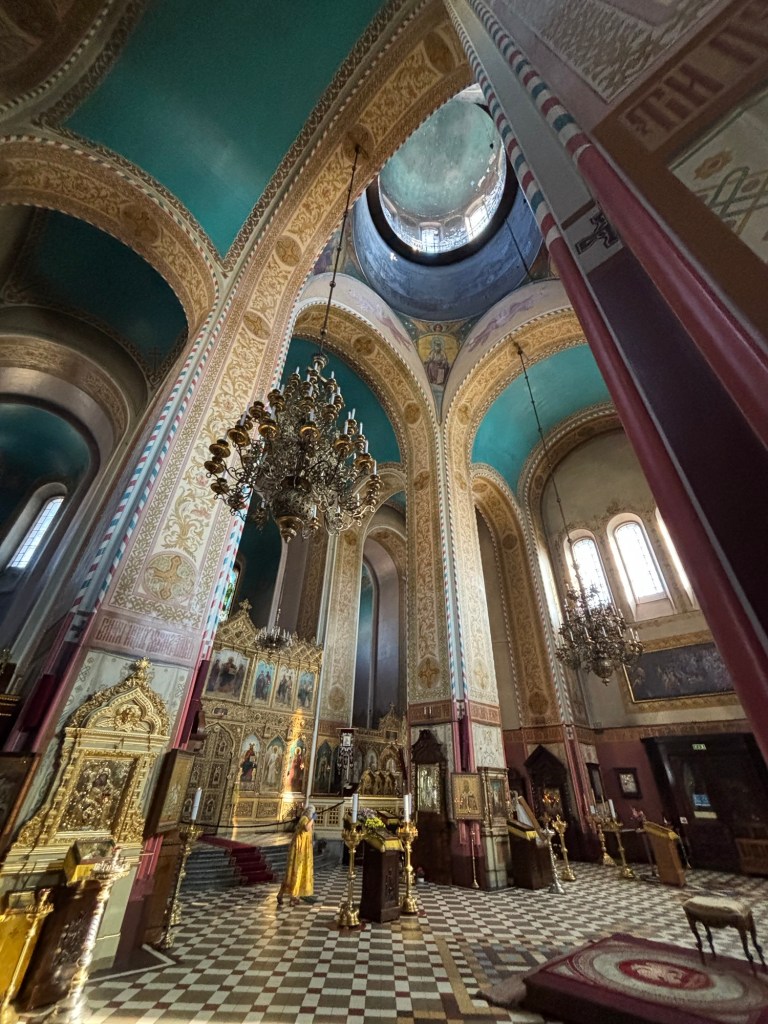
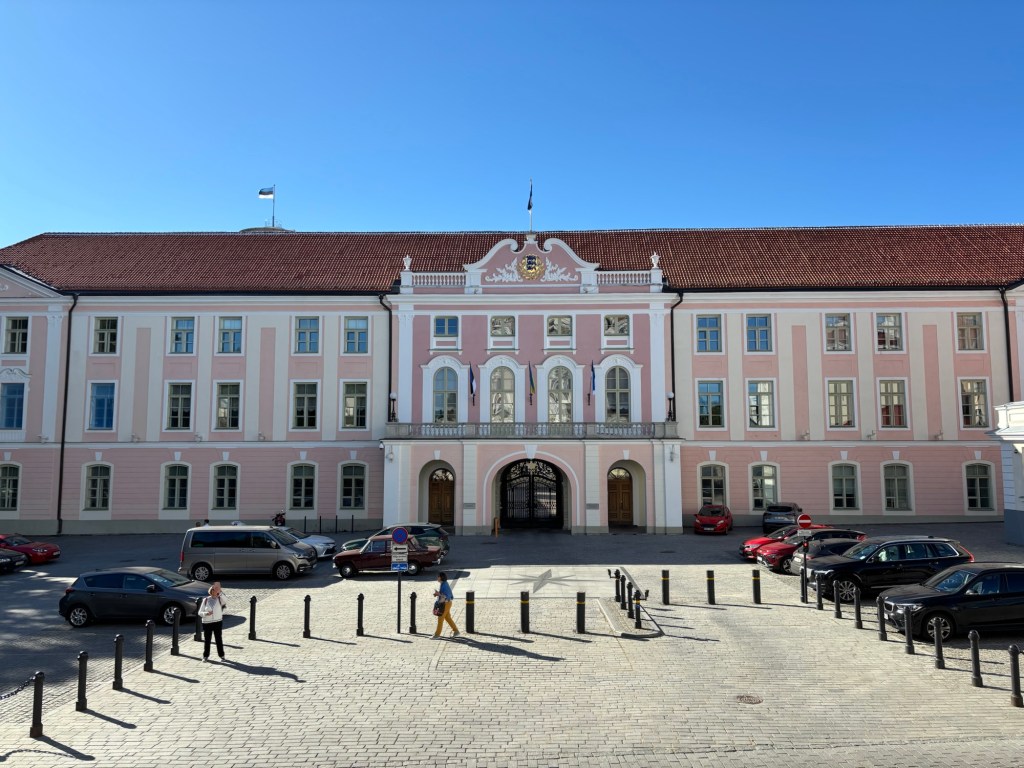
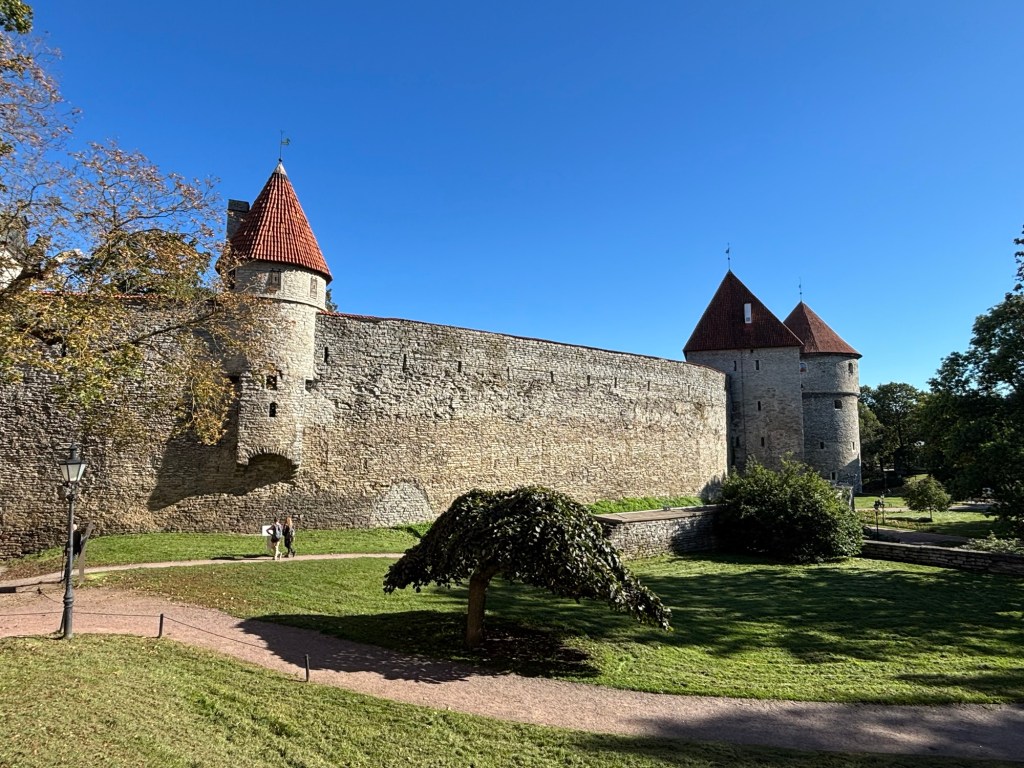
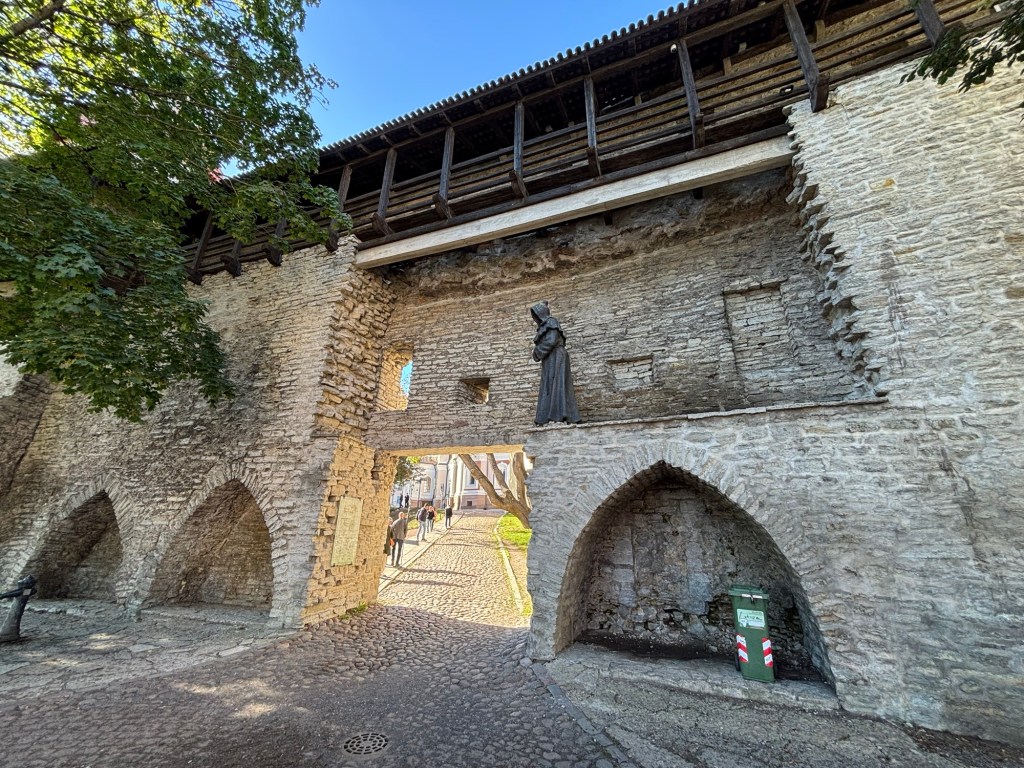
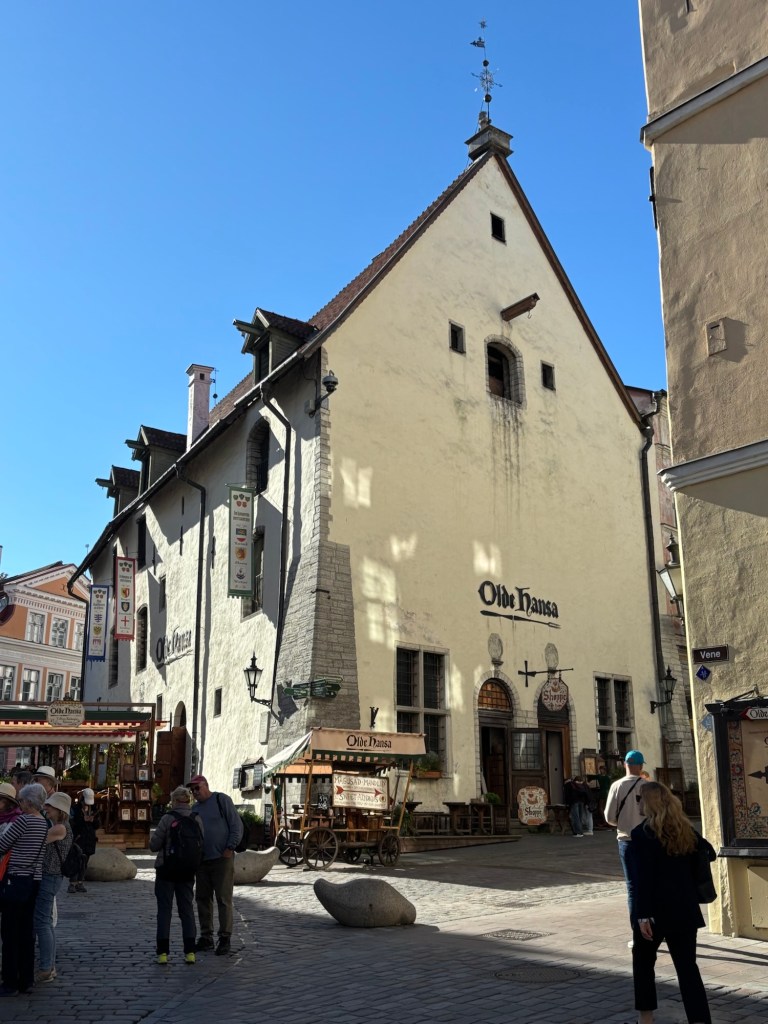
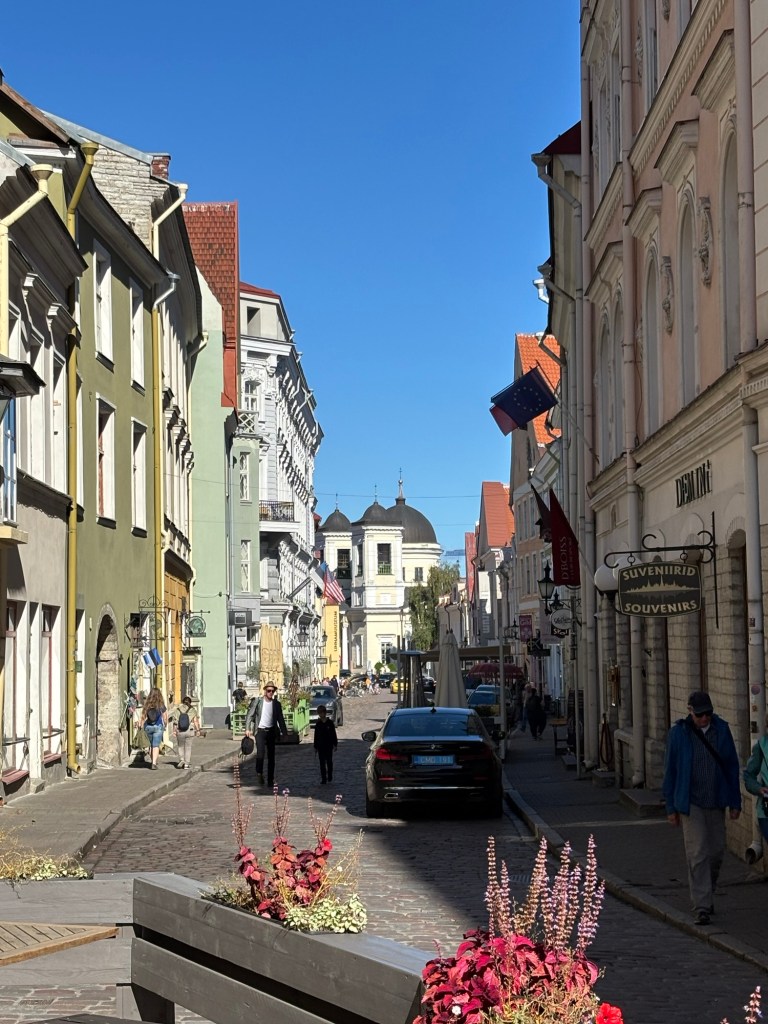
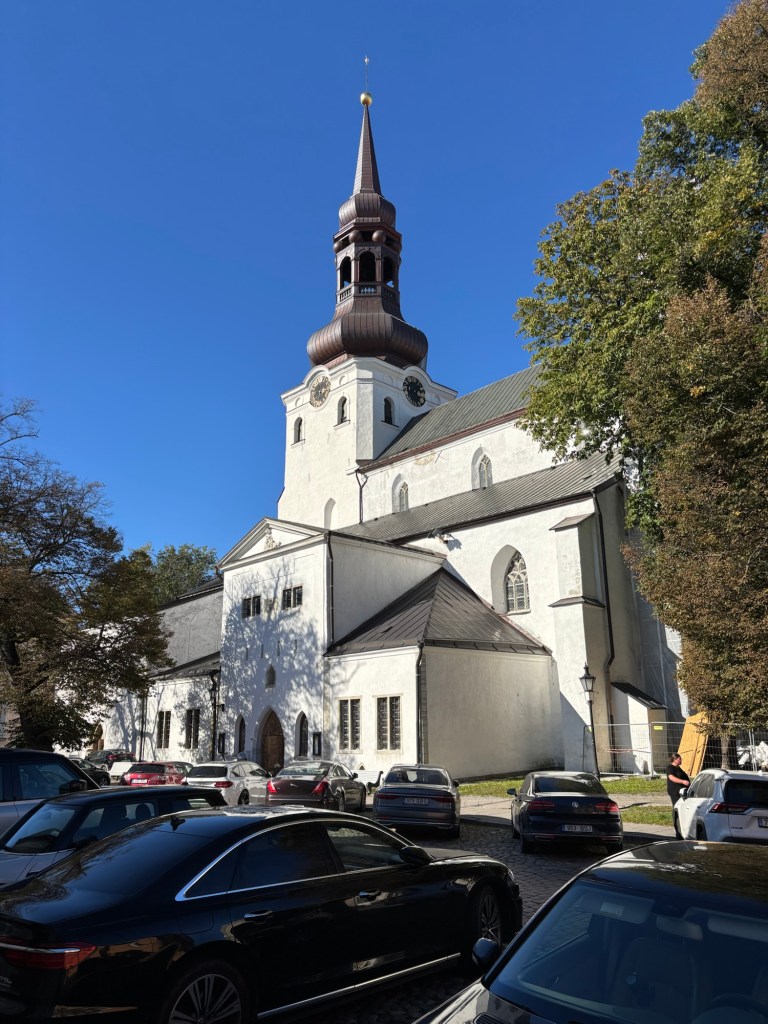
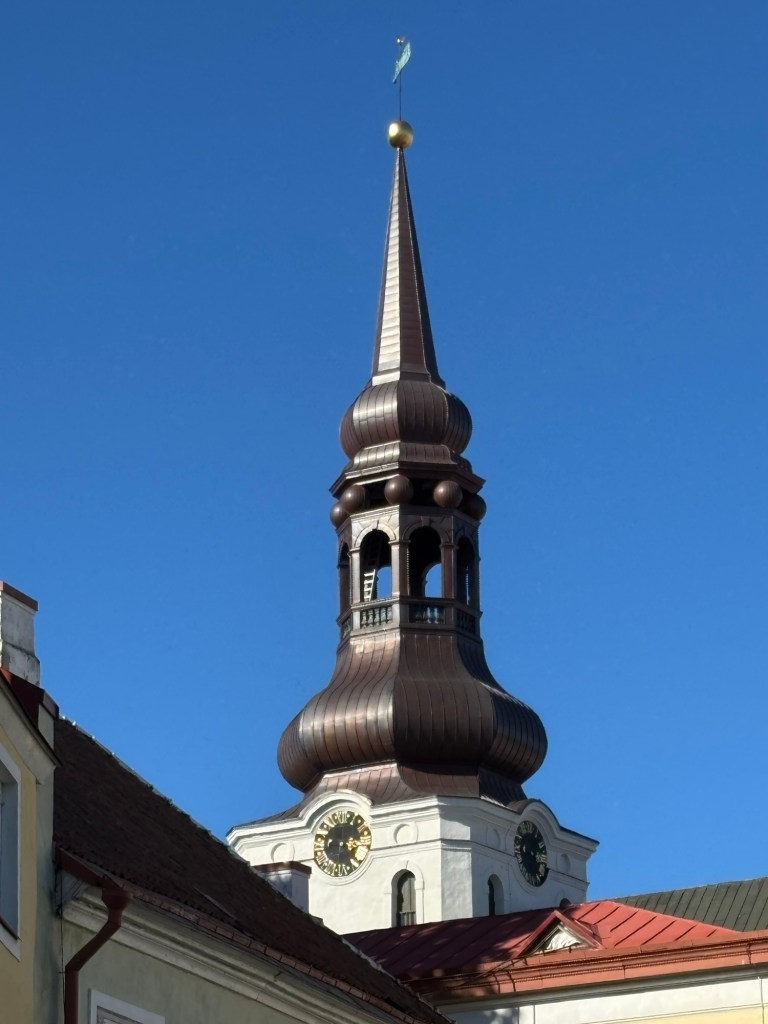
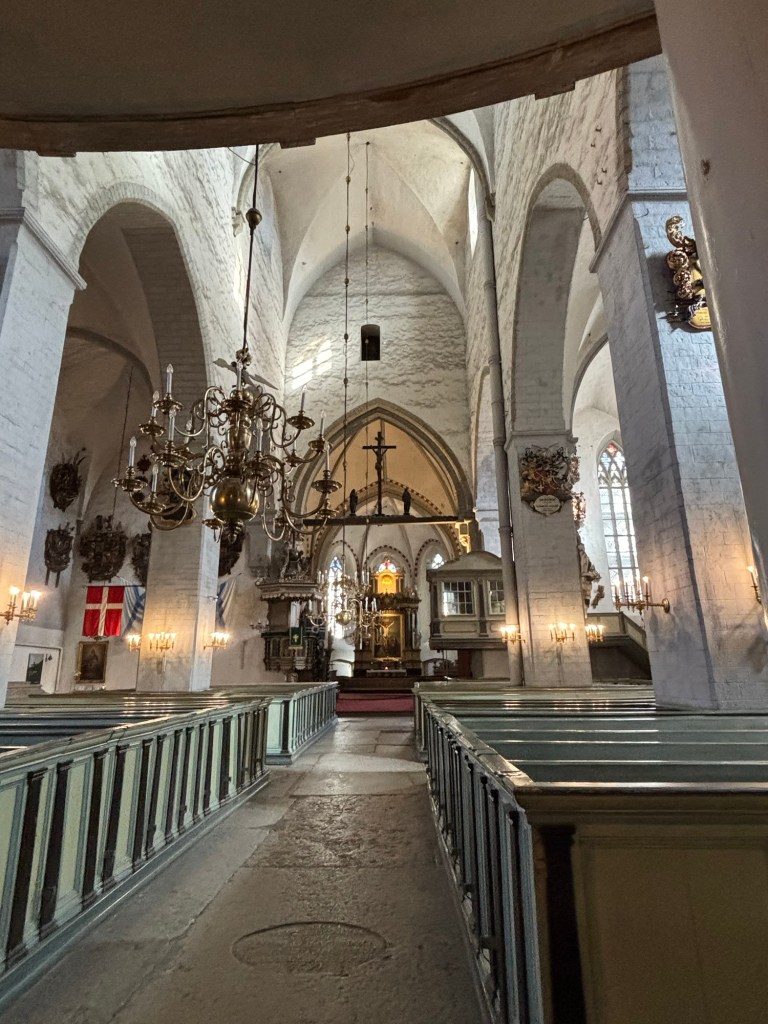
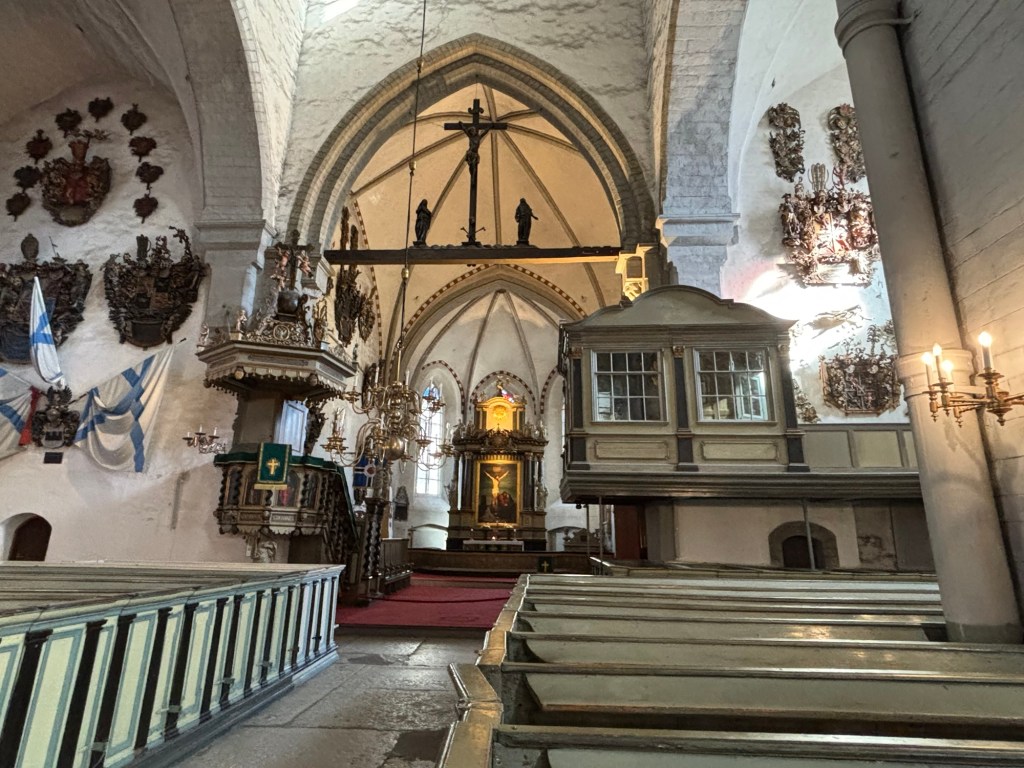
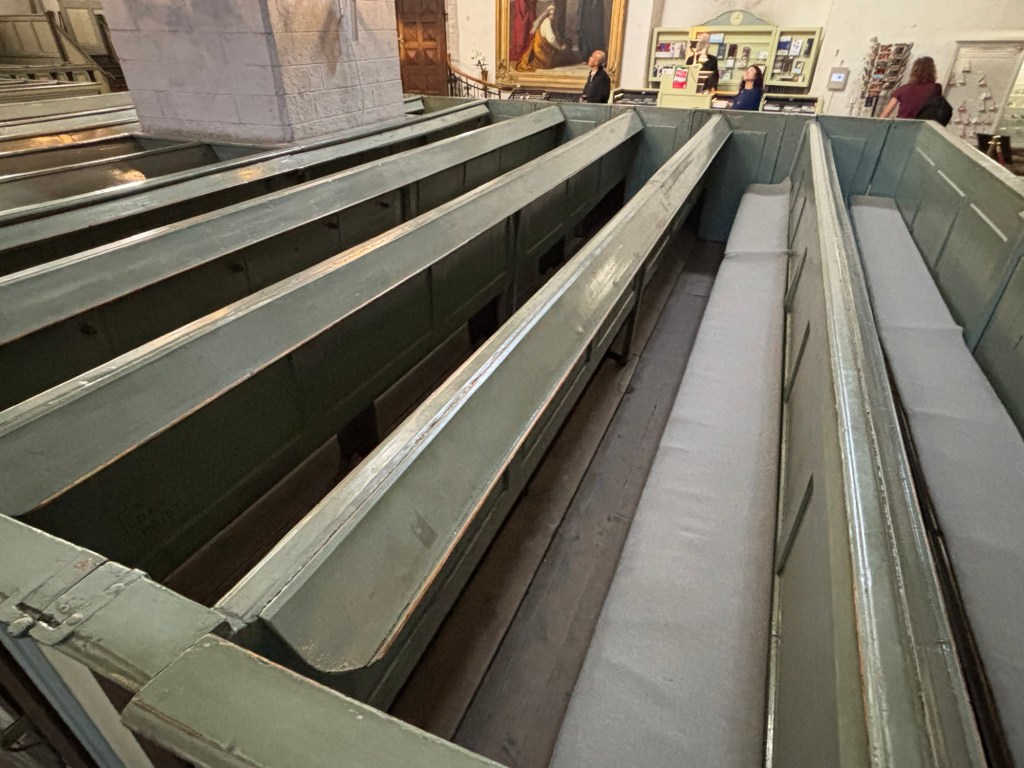
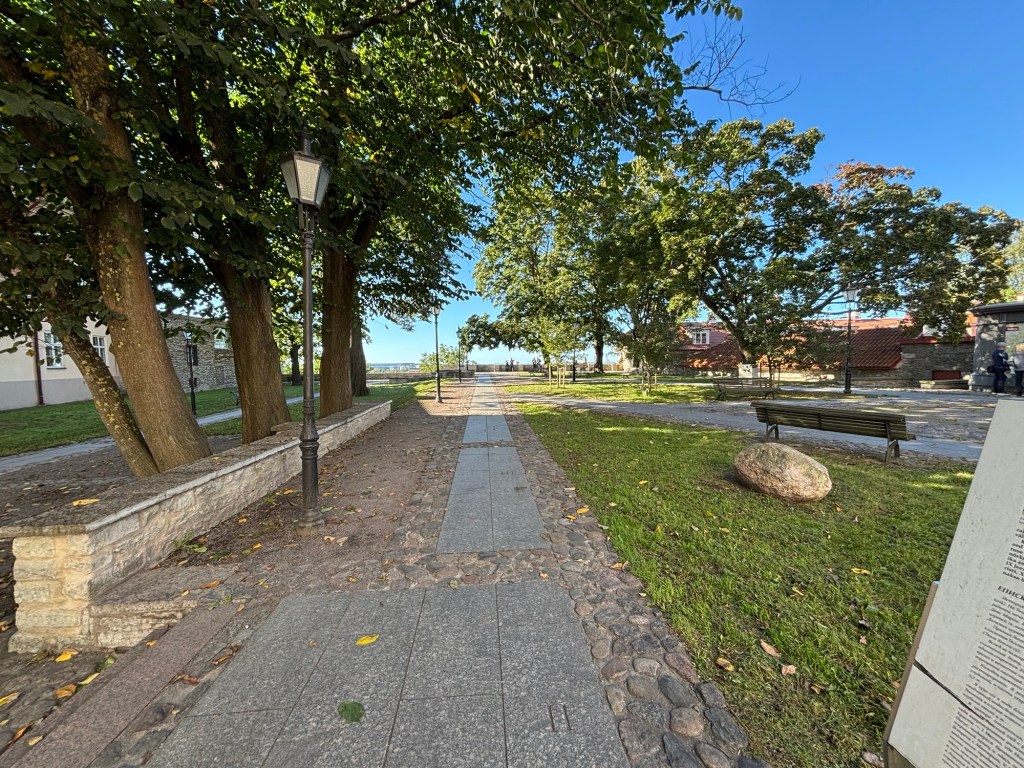
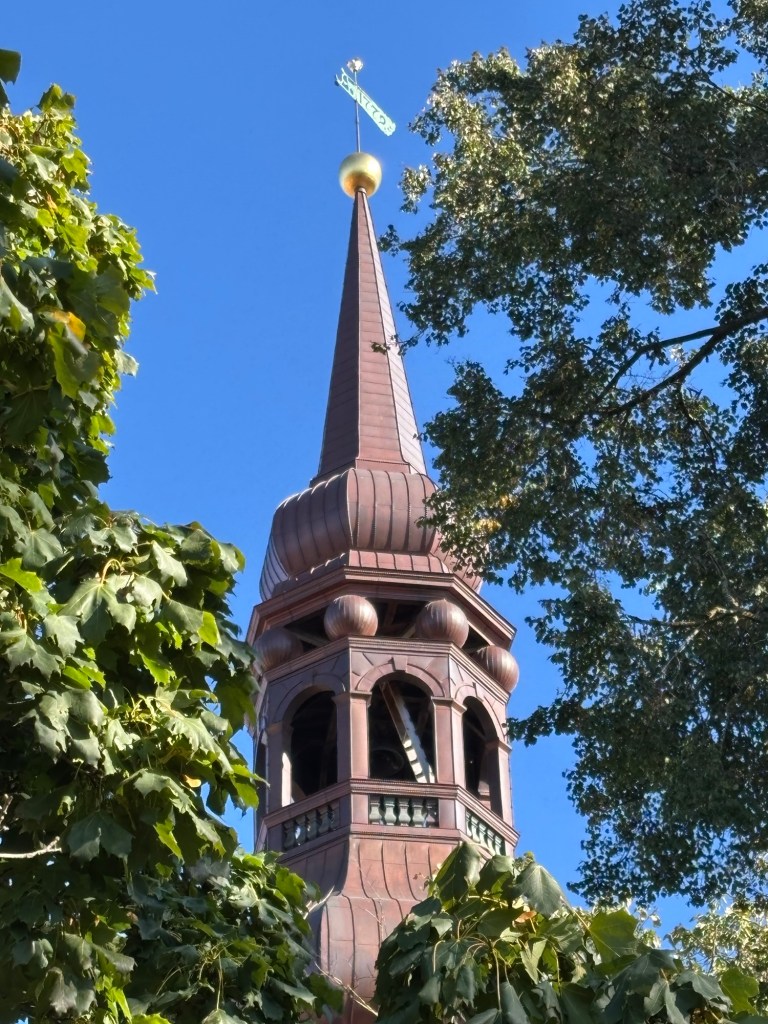
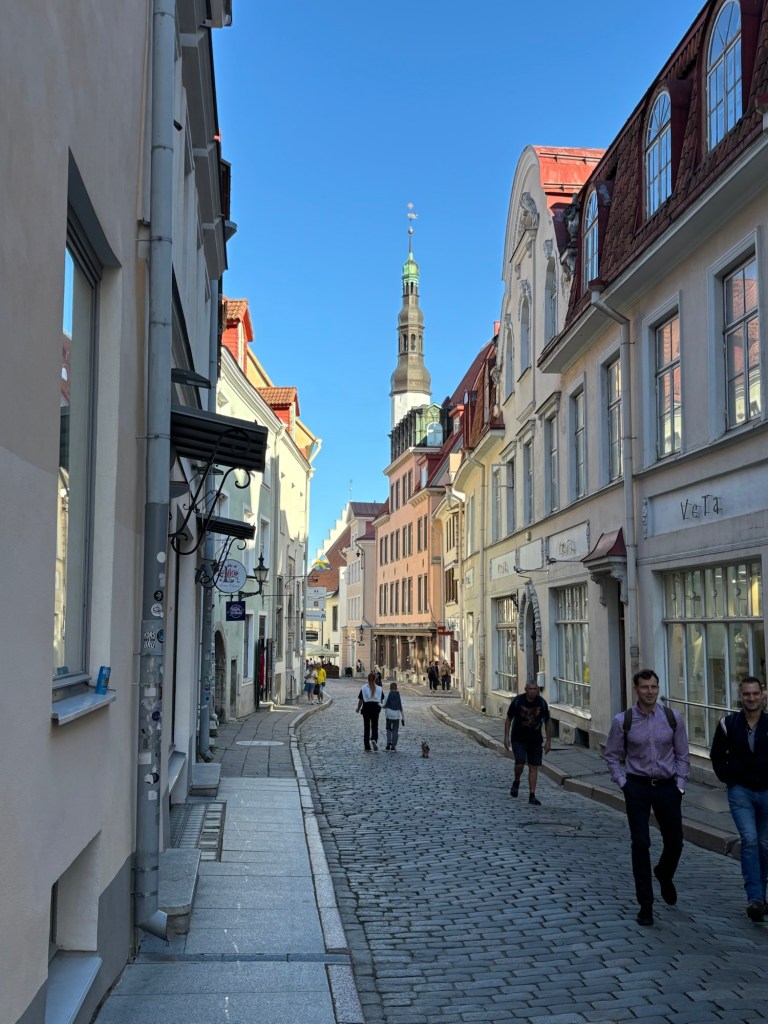
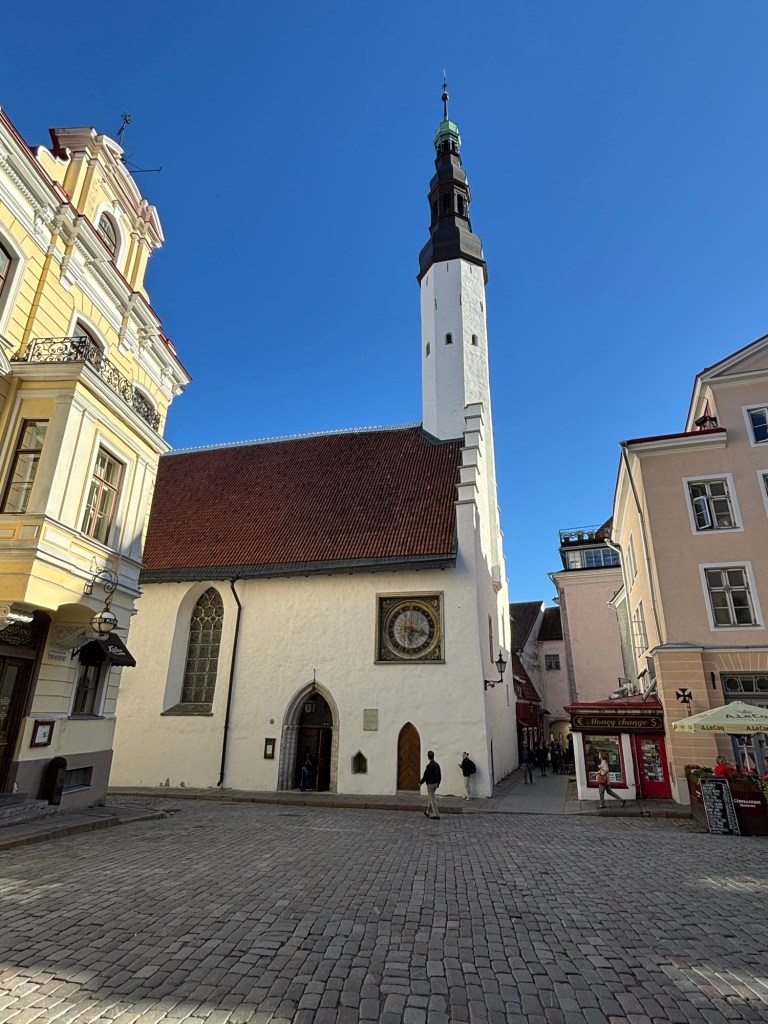
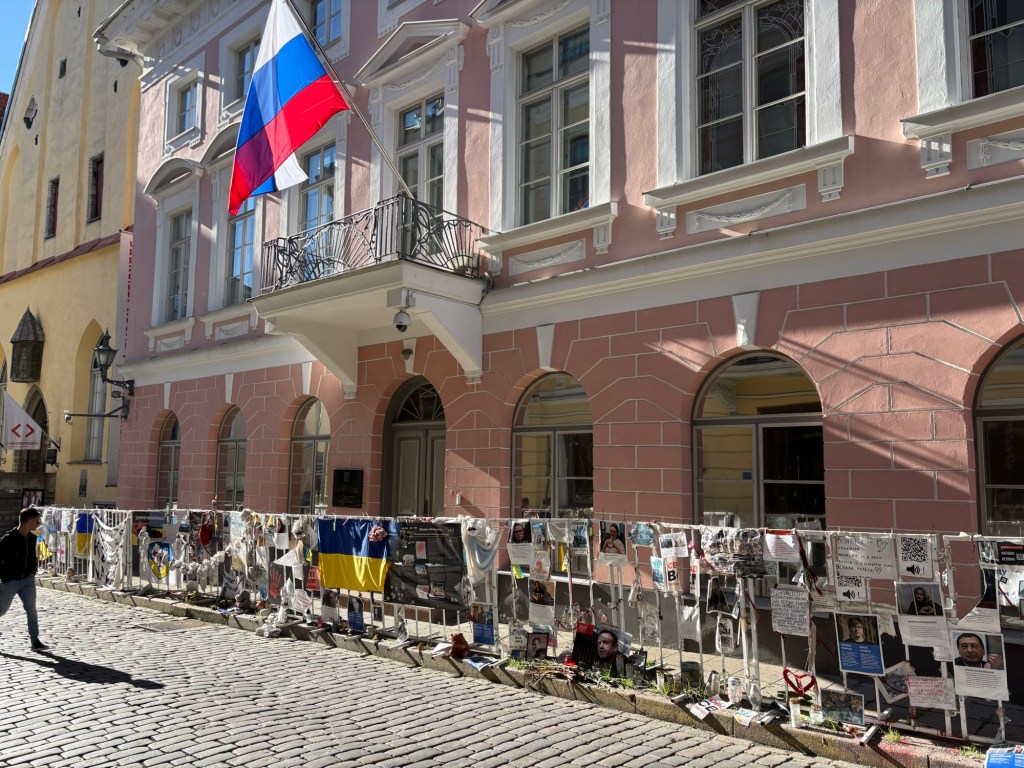
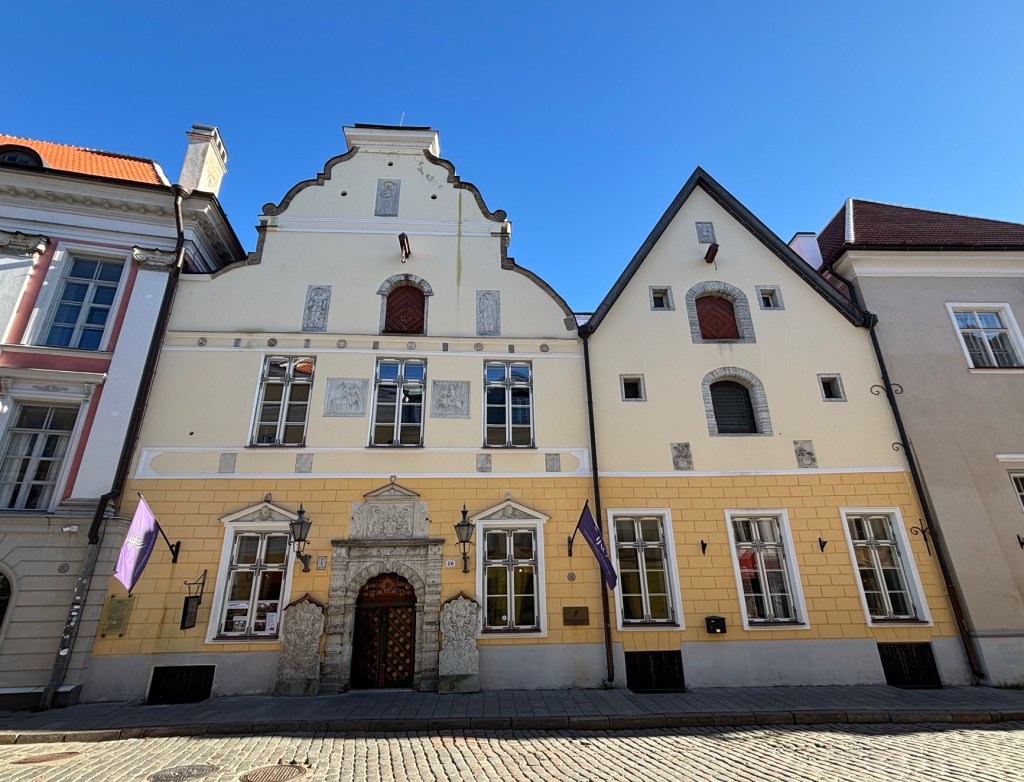
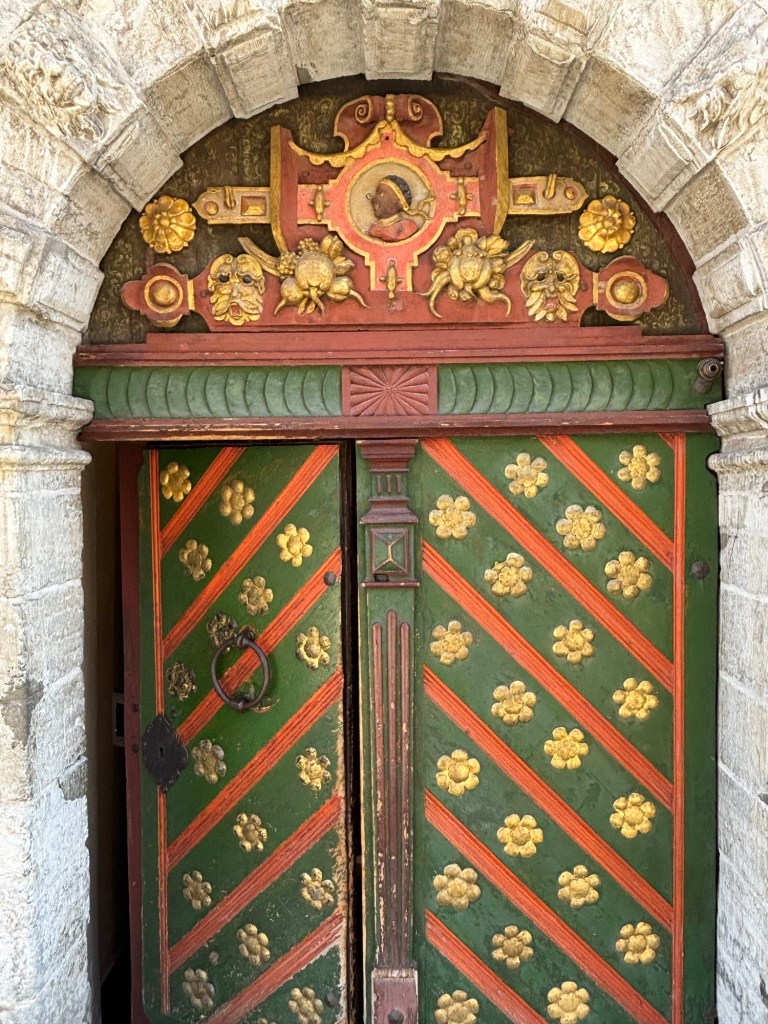
Estonian beer and fish and chipsTallinn Town HallMeeting new friends everywhere!Looking toward the ferry terminals – to Finland and other places on the Baltic SeaEntering Old TownTown Hall Square The Alexander Nevsky Cathedral is an Eastern Orthodox cathedral that was built in 1894–1900, when the country was part of the former Russian Empire.The Estonian Parliament Building Toompea Castle was erected on the foundations of the crumbling eastern wing of the fortress built on this site in the 13th and 14th centuries. The castle with its late Baroque façade was built between 1767 and 1773.The Cathedral of Saint Mary the Virgin (or The Dome Church)Boxed pewsThe Bishop’s GardenHoly Spirit ChurchThe Russian Embassy, with hundreds of Ukraine war protest signs and banners in frontFormer House of the Blackheads in Tallinn (now home to the Tallinn Chamber Orchestra)Notice St. Maurice over the door
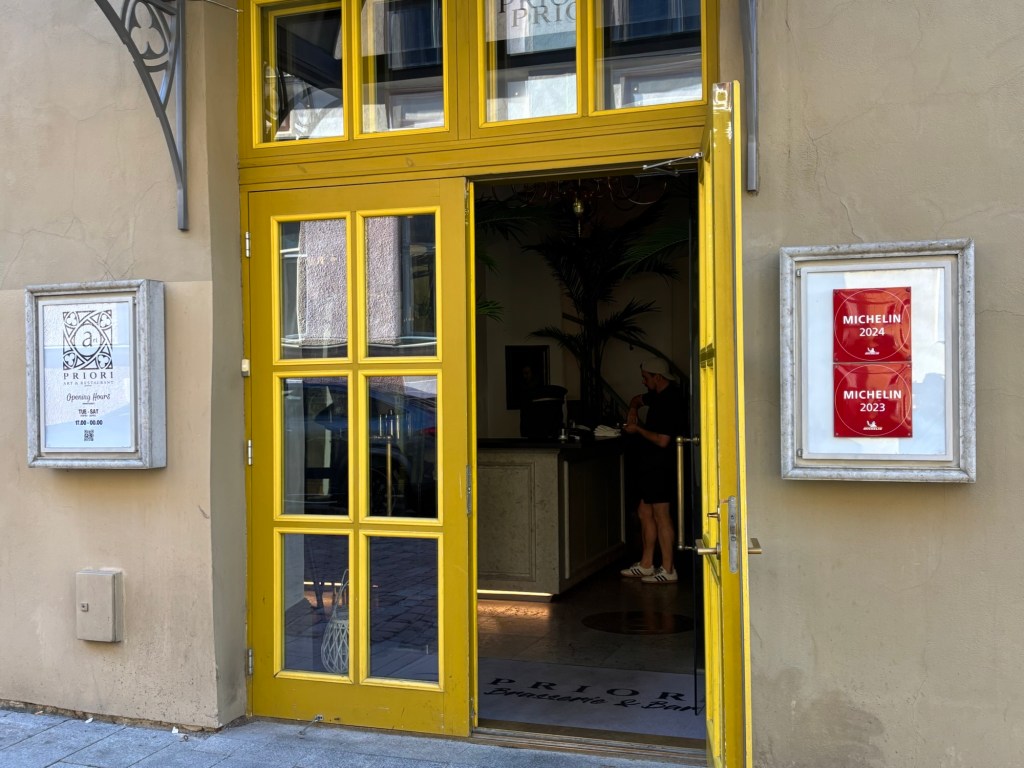
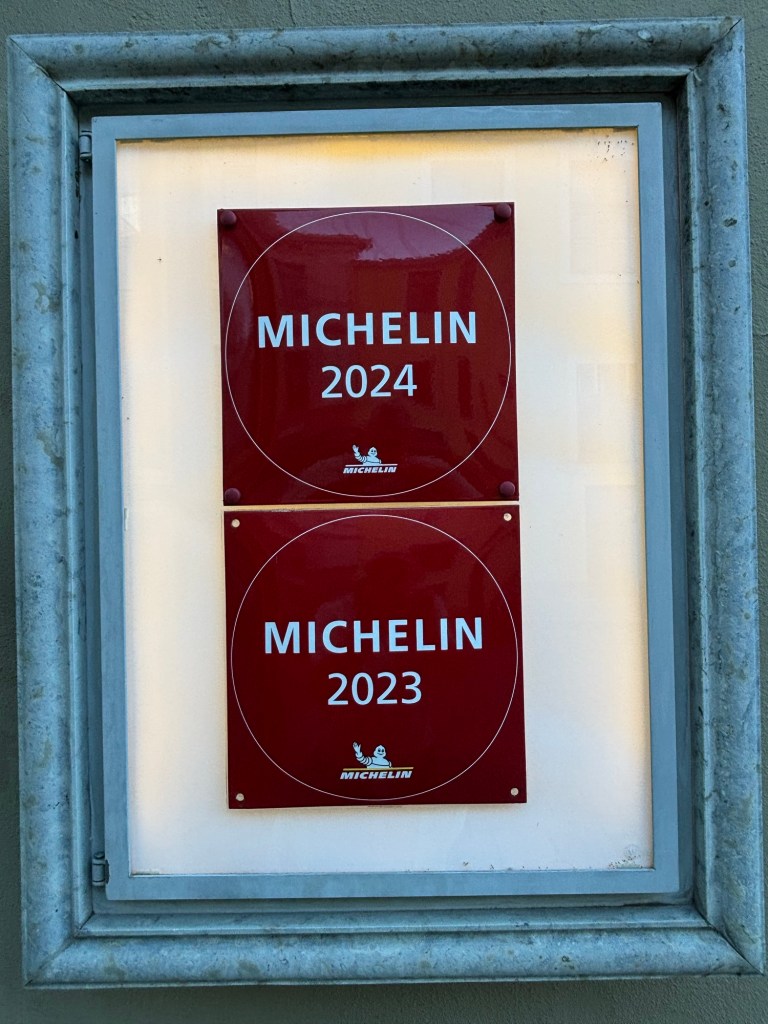
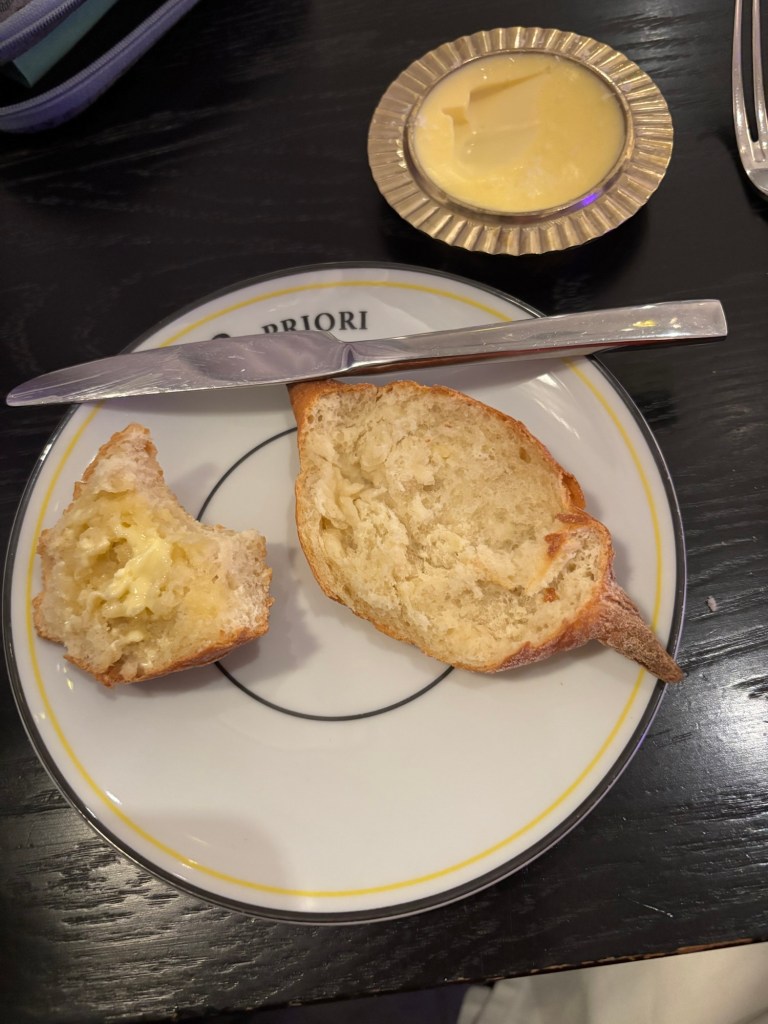
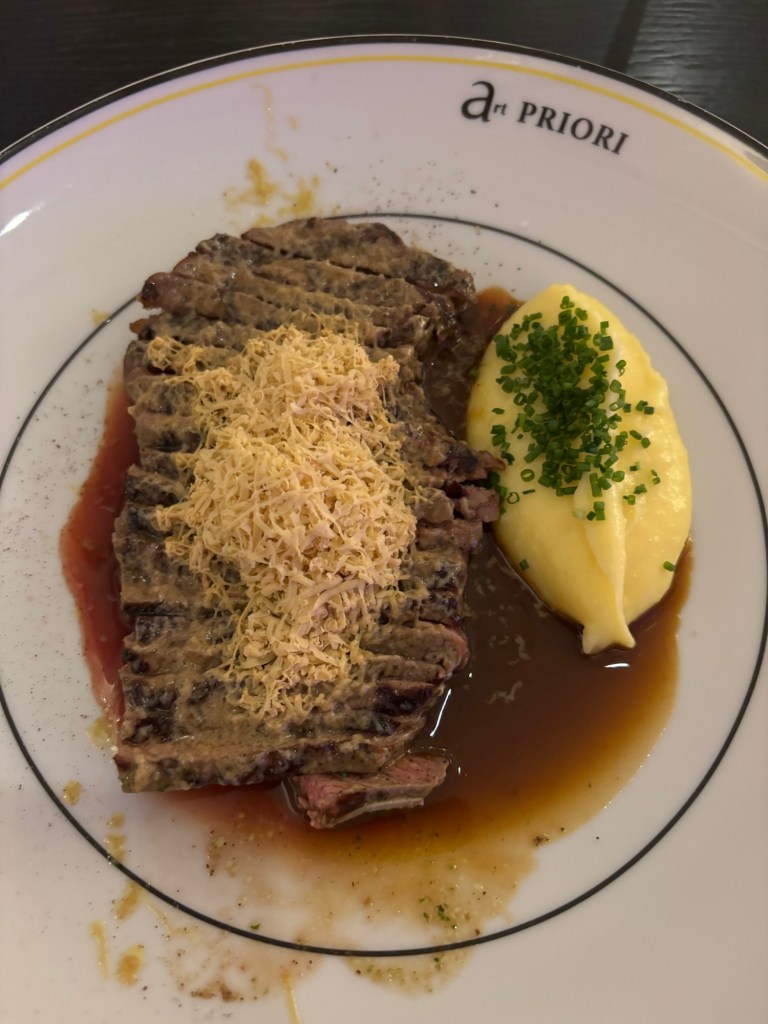
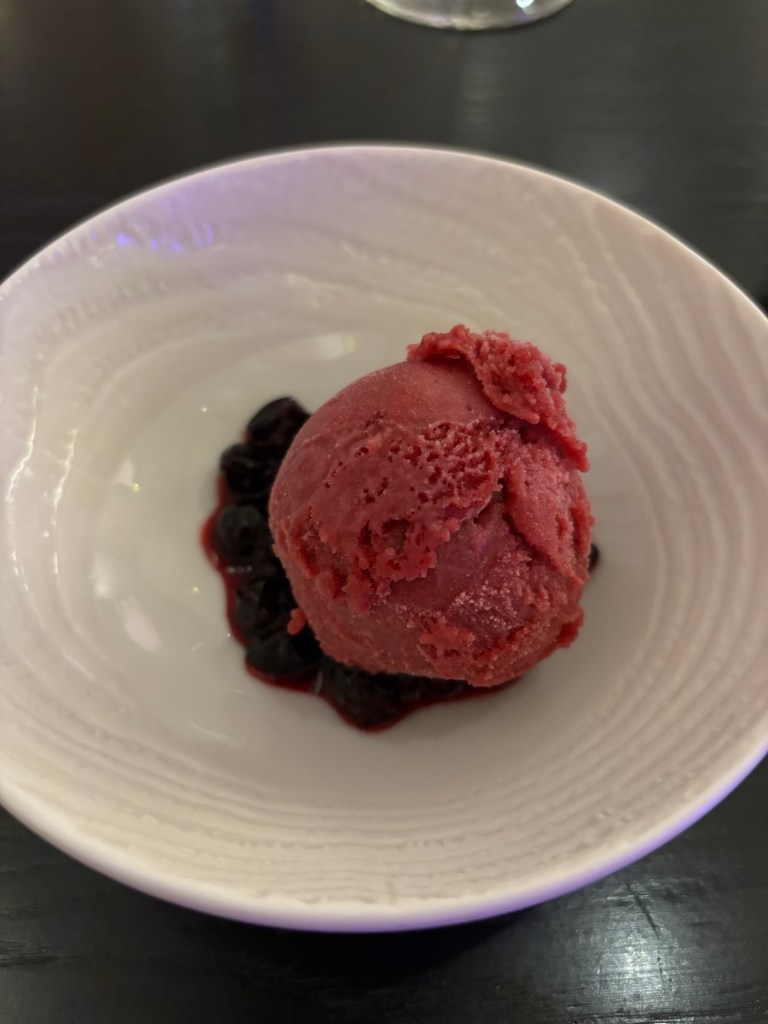
Dinner was a lazy splurge – lazy because it was across the street from my hostel, and a splurge because it was a Michelin rated restaurant!
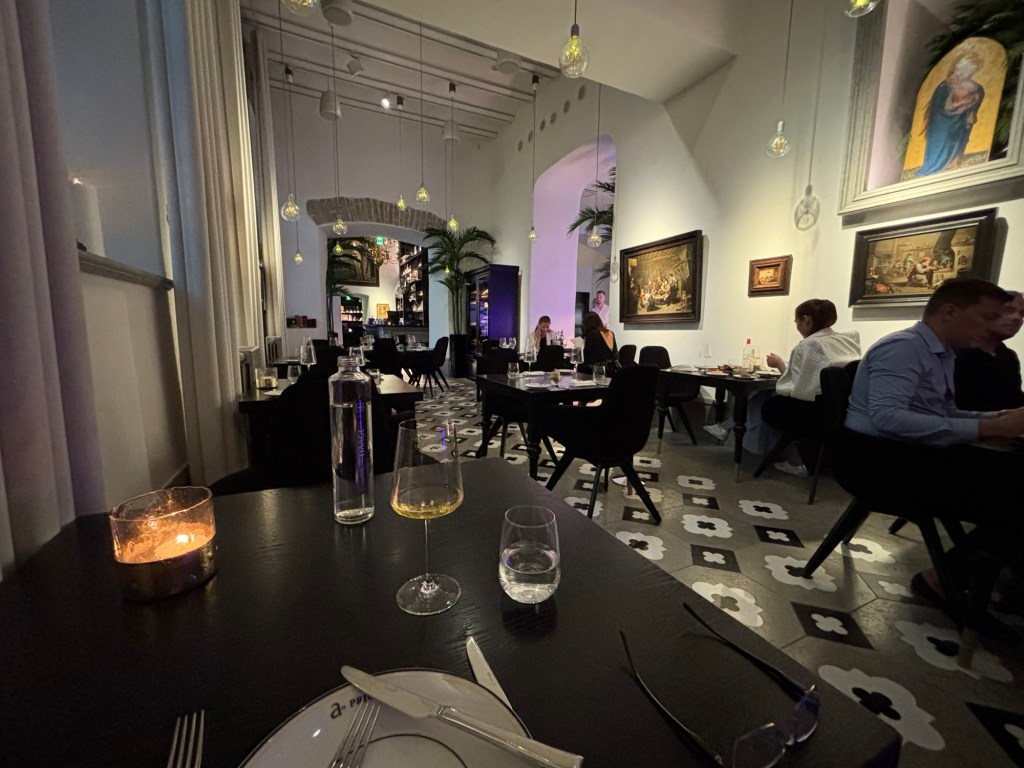
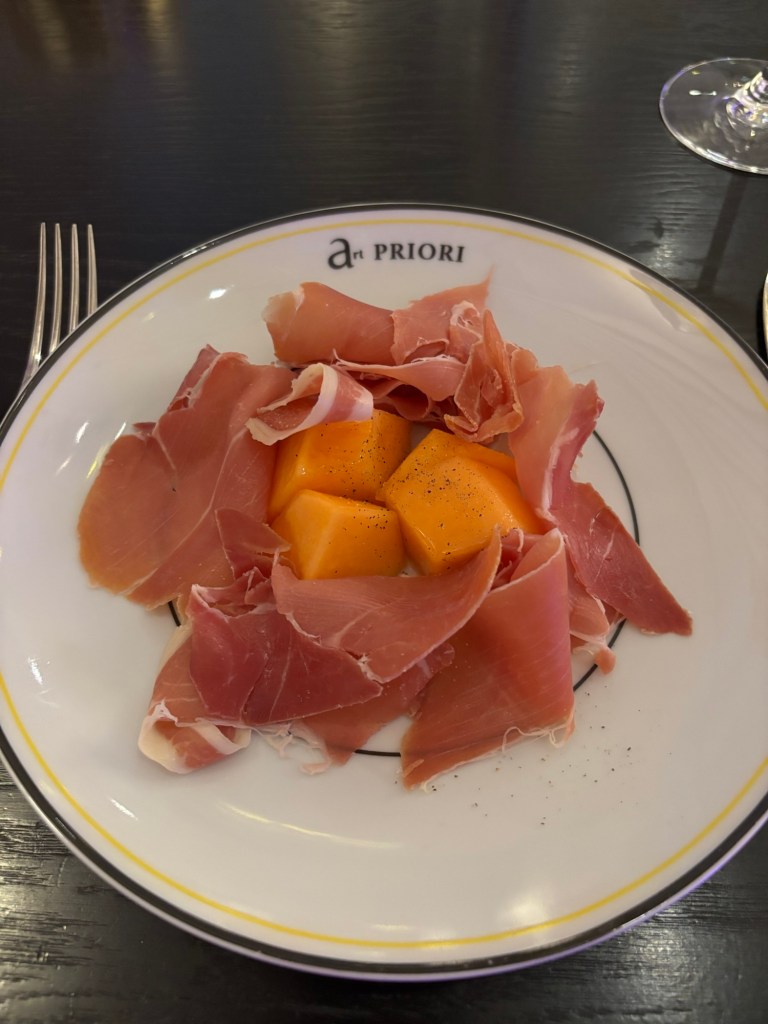
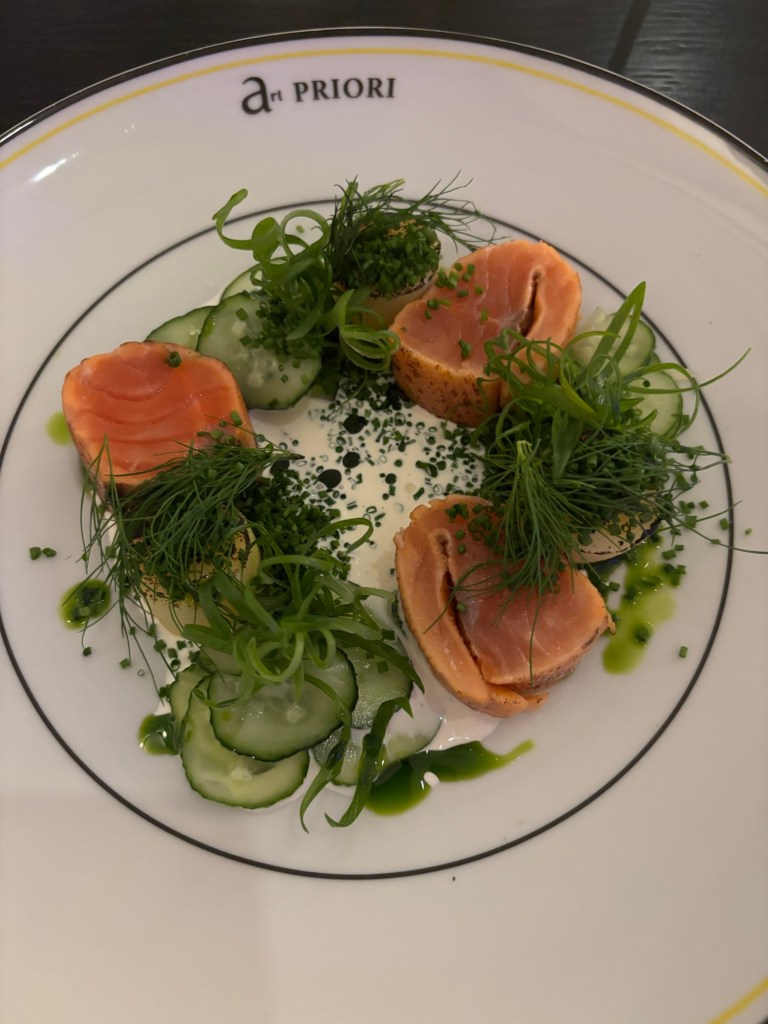
The Michelin Guide says, “Set in the heart of the Old Town, this is a wonderfully elegant, romantic spot, where two striking rooms ooze period charm and an eclectic mix of artwork fills the walls. In contrast, the food is modern and understated. Well-formed dishes give each core ingredient the space to shine, with unadulterated flavours fitting together seamlessly. You might find earthy yellow beetroot paired with soft goat’s cheese or wonderfully mature venison with a silky celeriac purée. Friendly service and a great choice of cocktails and wines by the glass finishes things off perfectly.”
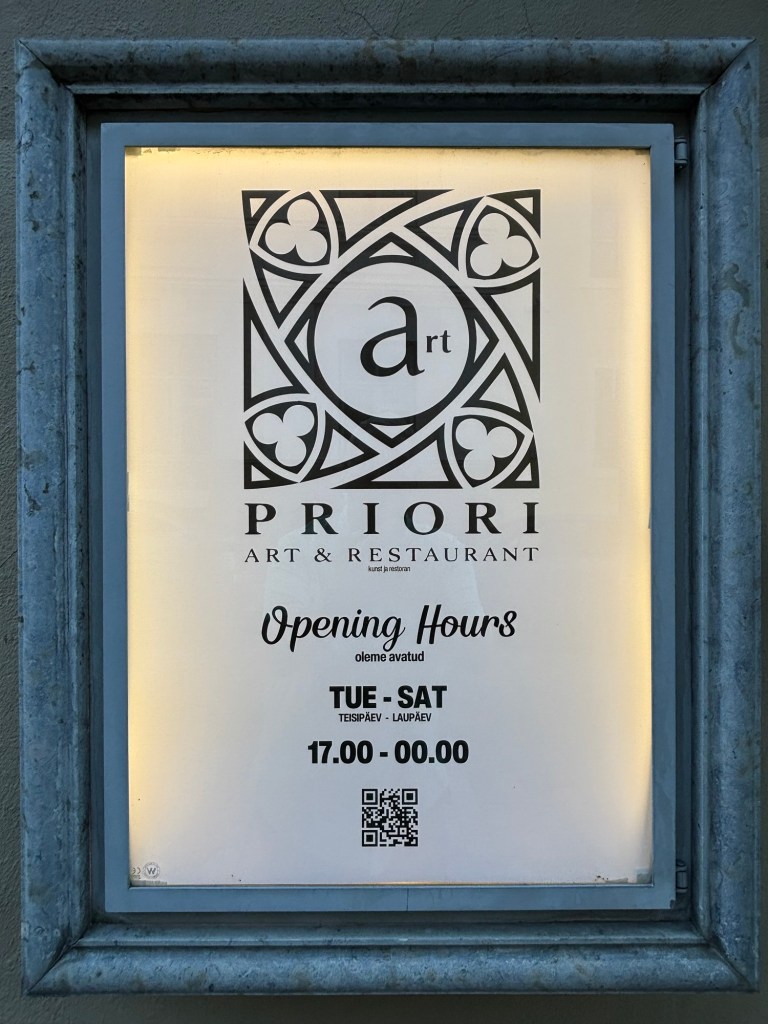
Art Priori Restaurant – “At Art Priori, delicious food, wonderful cocktails, high-quality art and nice music!”Michelin Star in 2023-24Part of the interior
Atmosphere in spades, aggressive, but nice background music, exquisite service, the perfect timing between courses, perfect wine pairings – amazing.
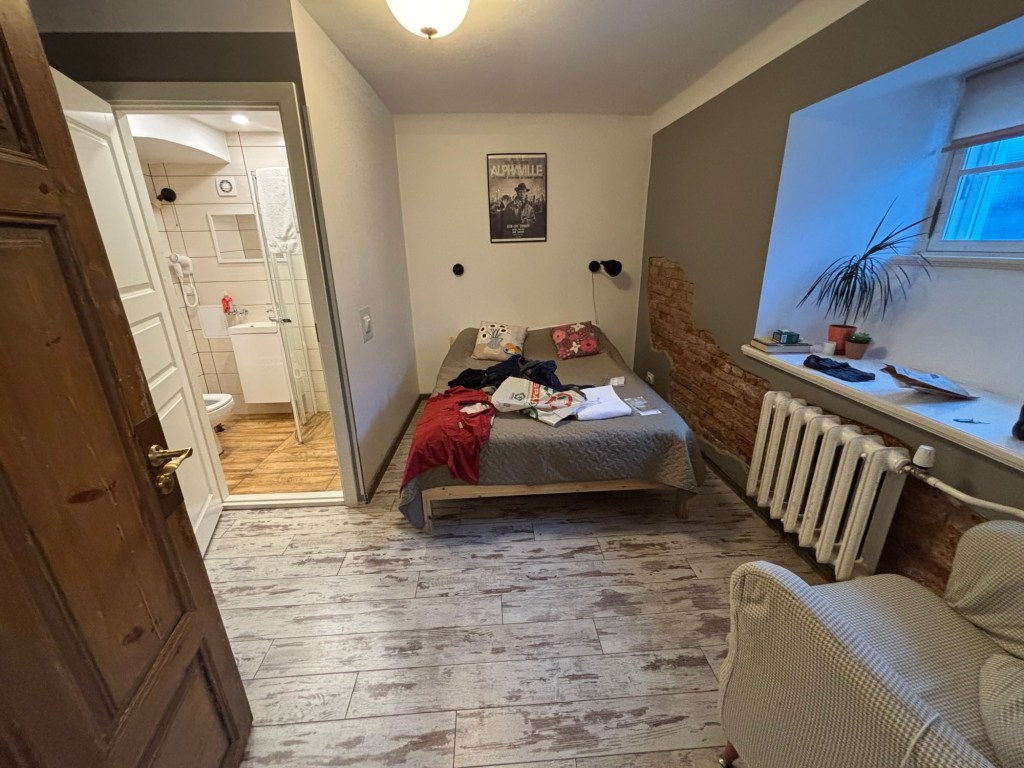
So… I had a great dinner and a I got a lucky room booking all in the same day. A private, ground floor hostel room right across the street from the restaurant! My first private and first ground floor room this trip. Lucky me!
Tomorrow morning a 2-hour ferry trip to Helsinki!
Words of wisdom, or just to amuse…?
It may seem like I’m doing nothing, but I’m actively waiting for my problems to disappear.
A very early rise this morning to catch my 6:30 am train to Riga, the capital of Latvia. But a beautiful morning, with stars shining and a partial lunar eclipse!
The street is still sleepy…
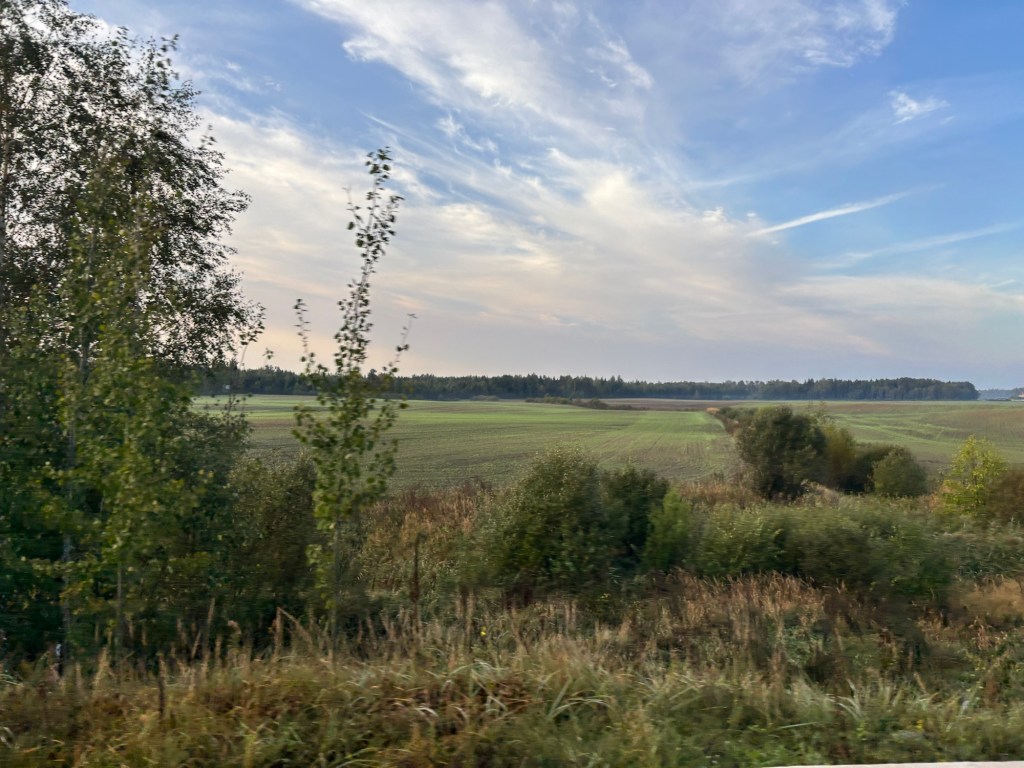
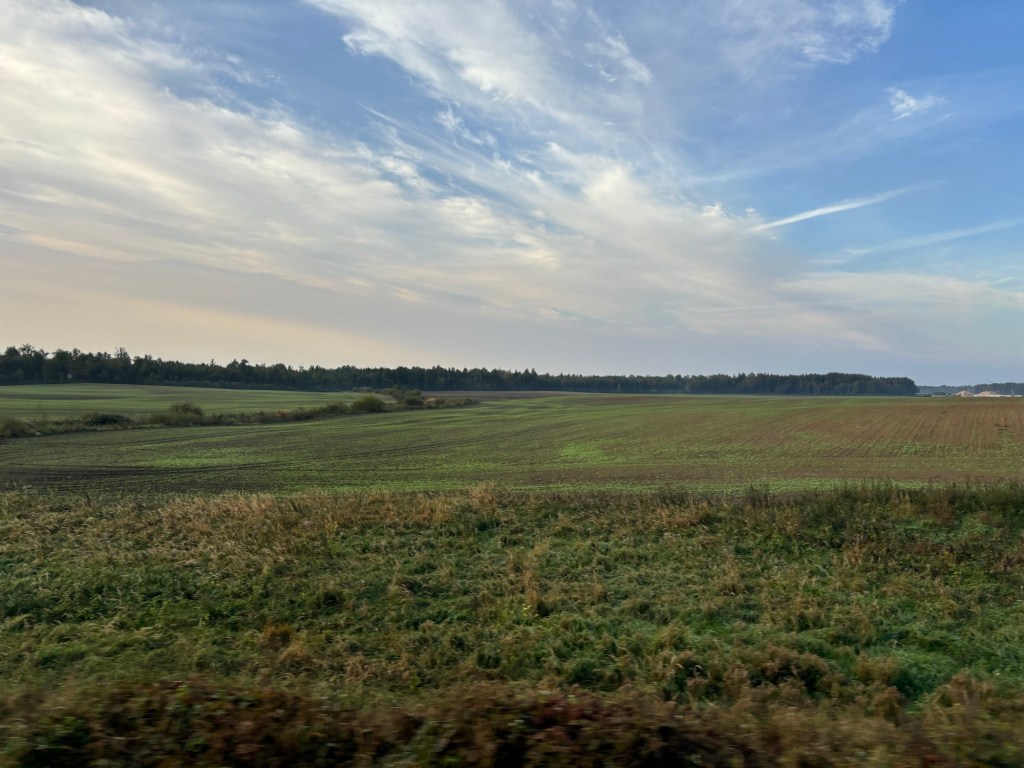
Flat farmland and forest most of the four hour ride to Riga. Could be anyplace in the Midwest.
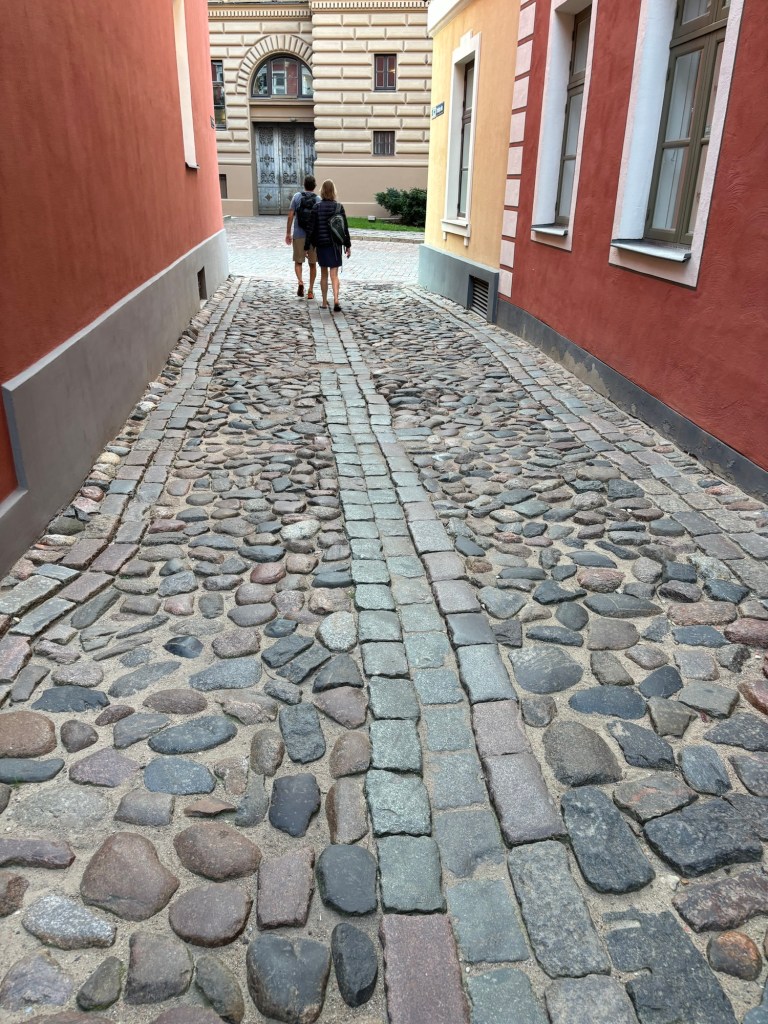
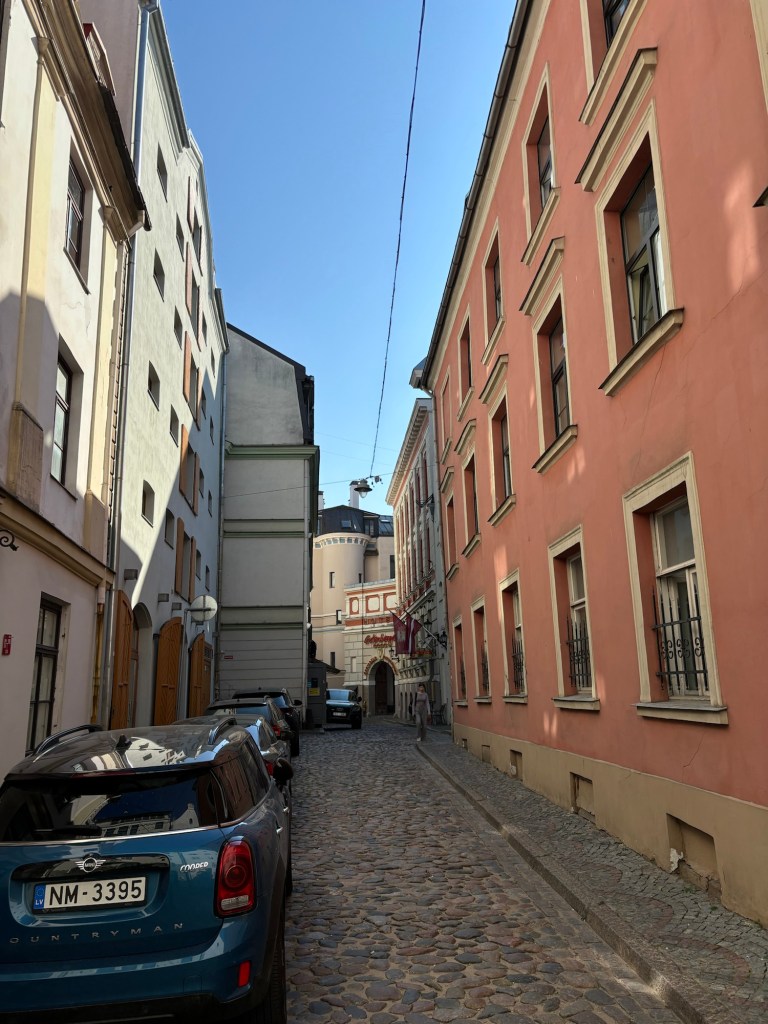
After a comfortable train ride, I arrived to nothing but blue skies in Riga! But I quickly found that Riga’s Old Town is a darn Mecca of cobblestone streets! And that there used to be a massive amount of road construction going on all around the city. Makes it tough getting around a on a scooter!
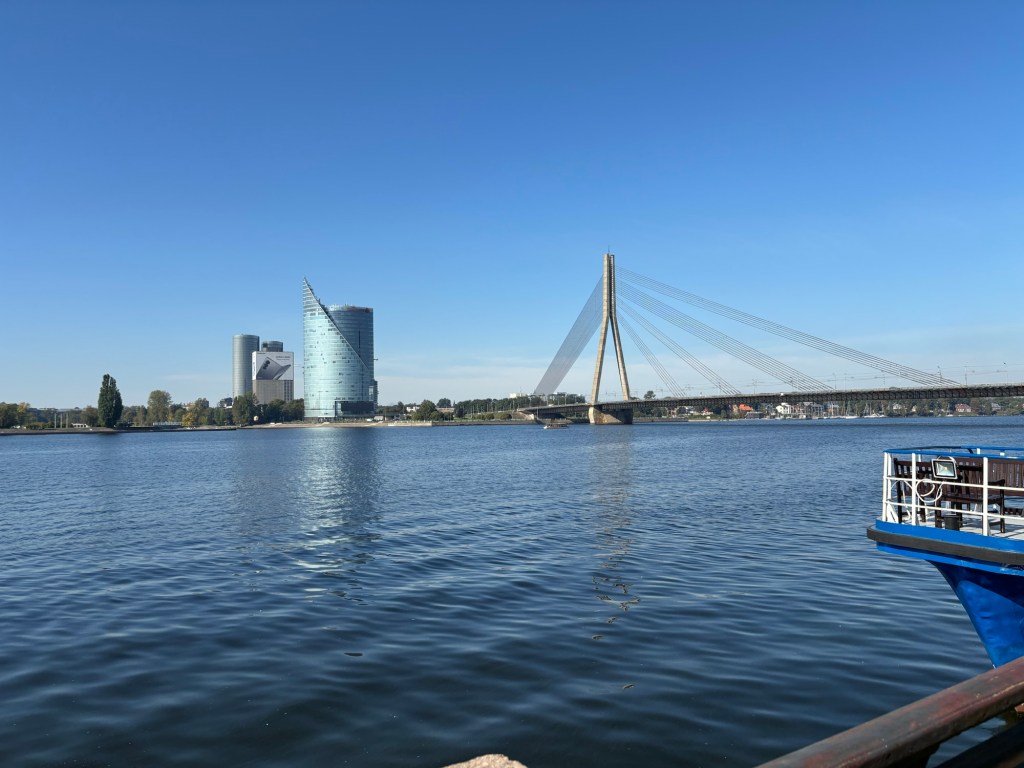
The Daugava River
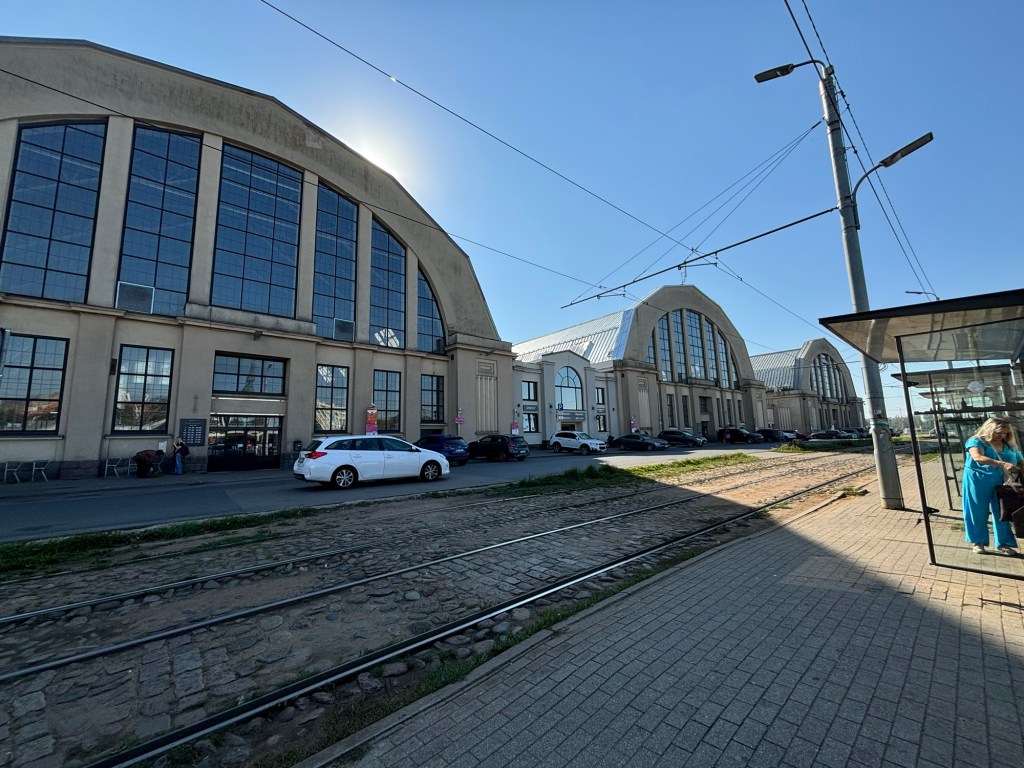
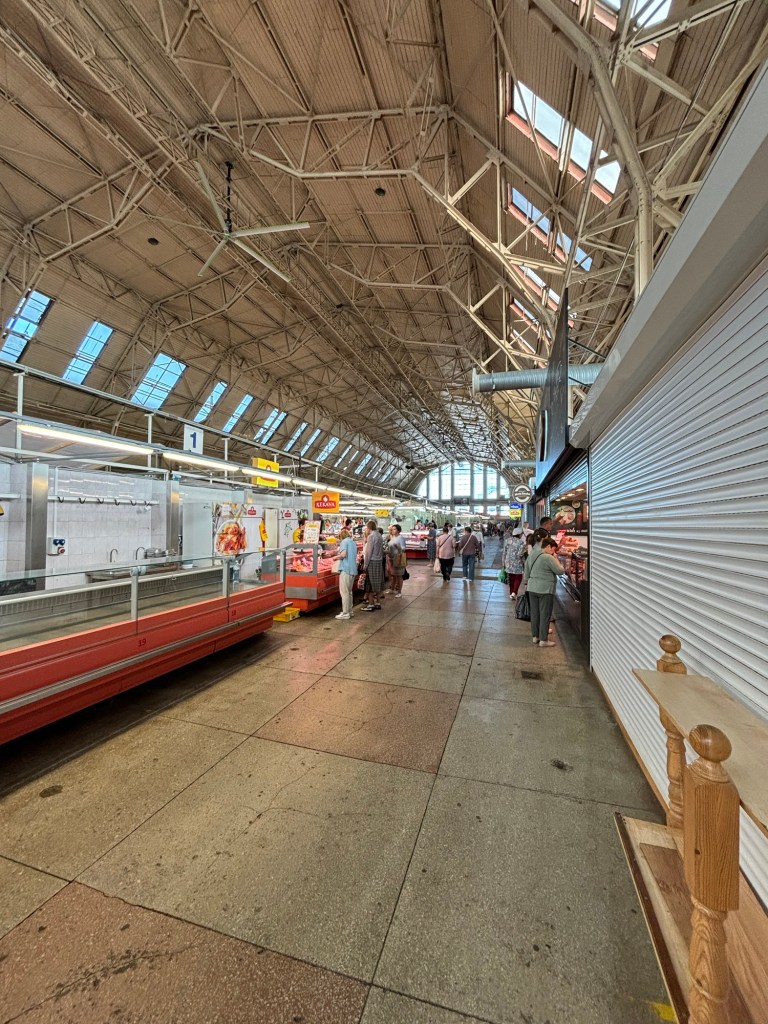
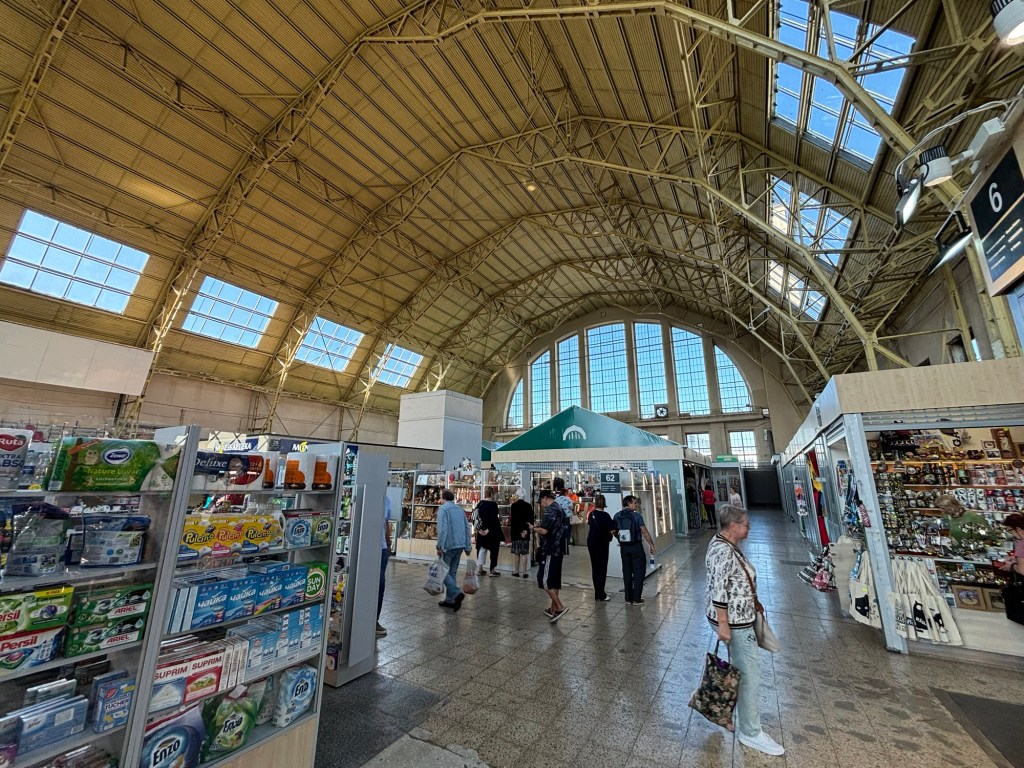
I headed toward a huge and popular market area away from Old Town where I’m staying. The market is in six huge old Zeppelin airship hangers! A different hanger for clothes, crafts, food stalls, vegetables, meat, fowl, and fish, etc.
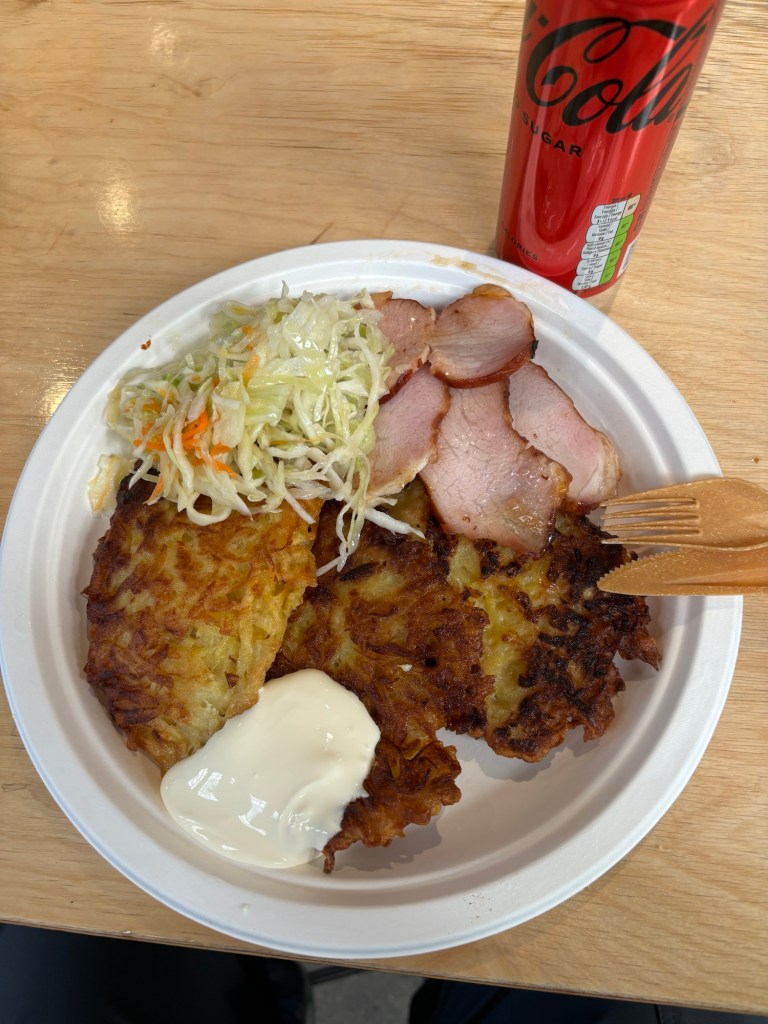
I had lunch at a stall that consisted of: potato pancakes with bacon (ham), cabbage, and some type of mayo/sour cream sauce. Not jump off the plate flavorful, but I was satisfied.
OBTW, you even have to pay for your plastic silverware!
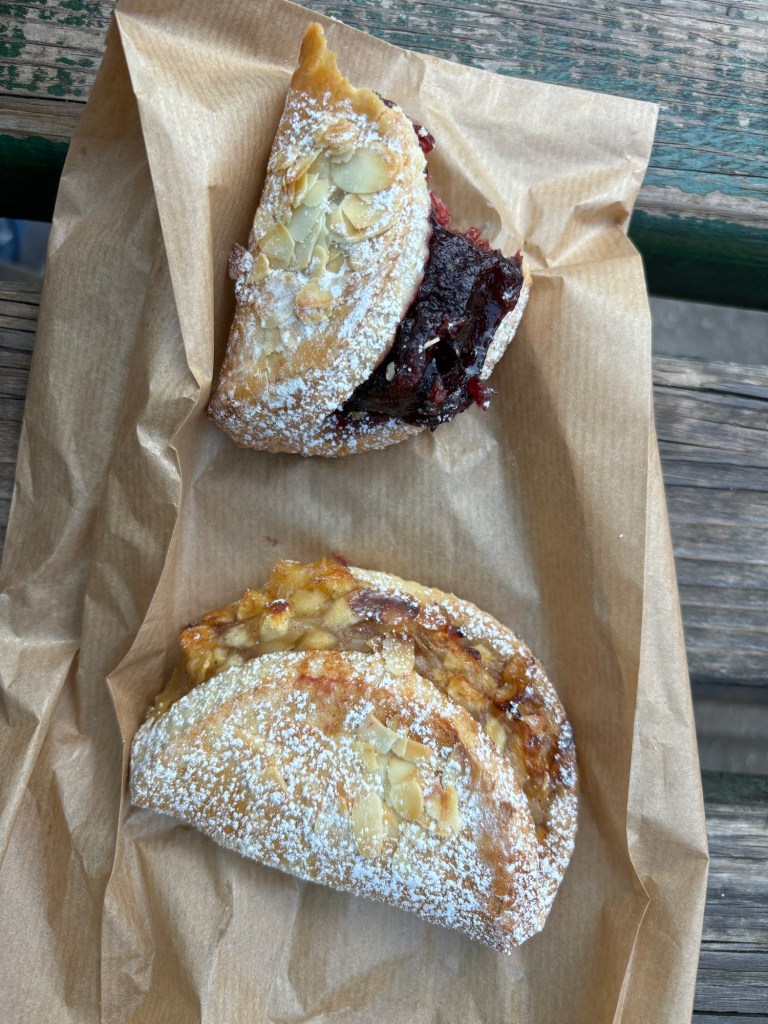
Fortunately, I left room for dessert – a cherry and a apple cookie. Like big shortbread cookies folded over to hold the filling. Good, not great.
A side note: In every city I’ve stopped in there have been people, almost always men, going through trash cans on the streets. I think they were all going for aluminum cans and plastic bottles. Must be some reasonable value in turning them in somewhere. I’ve seen 2 or 3 pickers in Riga already.
In the late afternoon, I joined another “free” Walking Tour. Our Guide, Ulrika, was a Riga native, a graduate student, and an excellent salesperson for her city and country. Our group of twenty tourists include folks from Finland, Holland, UK, Poland, Germany, and America.
Riga was founded in 1201 by a German. But there were actually older Pagans tribes in the area long before western culture was established (brutally). Germans remained in the ruling/upper class on Latvia until the 20th century. But Riga had a long history of foreign domination going forward.
Riga fell hard for the Protestant Reformation in the 1500s and became the first Protestant center outside of Germany. That, of course, created problems between the previously dominant Catholics and the new upshot Protestants
In the mid-1500s, the first Russian Czar, Ivan the Terrible, attacked and Livonia (as it was known then) came under Russian rule for some 50 years.
Then Sweden battled and took over control of the territory for the next 90 years. And Russia came back on the scene and took over for about 200 years.
Latvia finally gained its independence after WWI. But, then WWII exploded. First, the Soviets took over Latvia in 1940, and in 1941, began the transport of dissidents to the Soviet labor camps in Siberia.
Later in 1941, the Germans invaded and took over control of Latvia for the next three years. Note: Guide today referred to the, “‘Latvian Jewish community who suffered from the Nazi Holocaust.” First time I’ve heard a guide refer to Jews in some way other than, “the Jews.”
What next? The Soviet “liberators” took over again in 1944. And deportations to the Siberian labor camps began again. Finally, after the fall of the Berlin Wall, the Latvian Parliament voted for independence in 1990. Although the Soviets came back in force in 1991, the Latvian “Barricades” proved to be too strong a movement and the Soviets finally retreated.
Now, Latvians were once again “barefoot and free!”, and an independent nation. The country subsequently joined NATO in 2004.
Here are some photos from around Riga
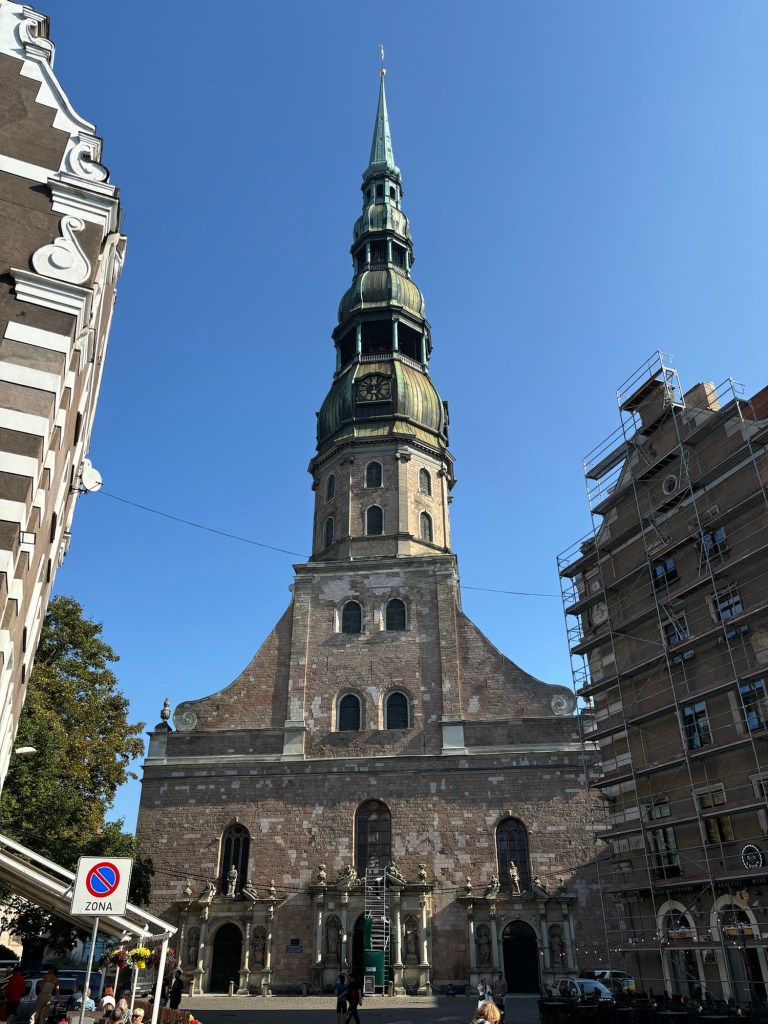
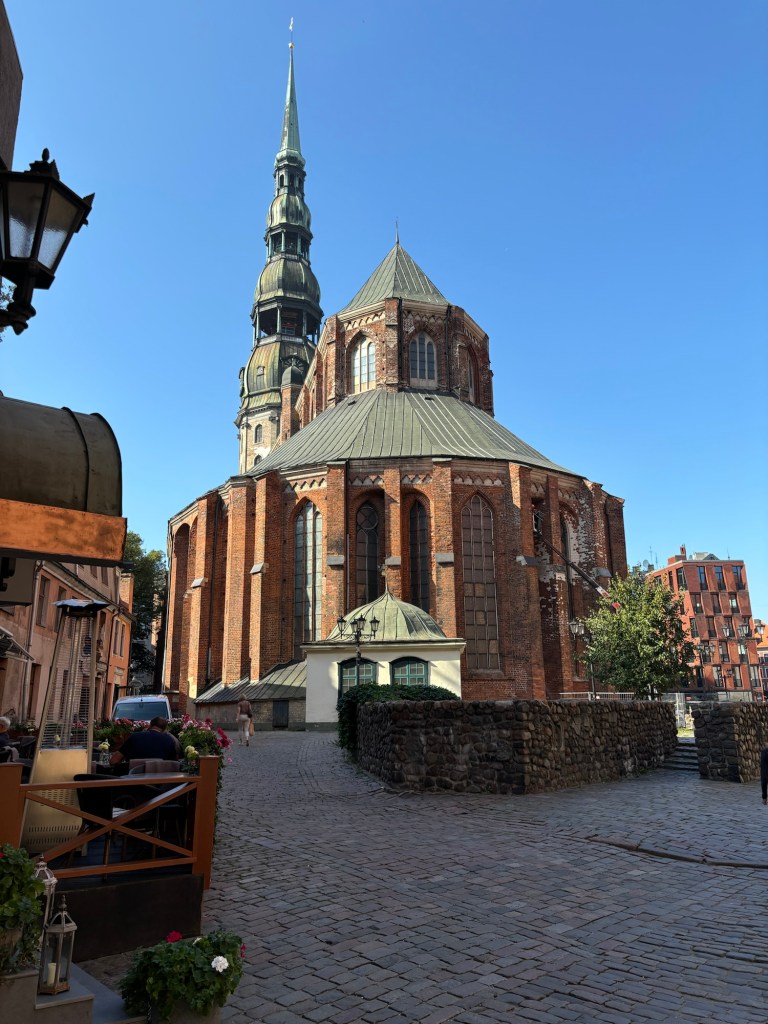
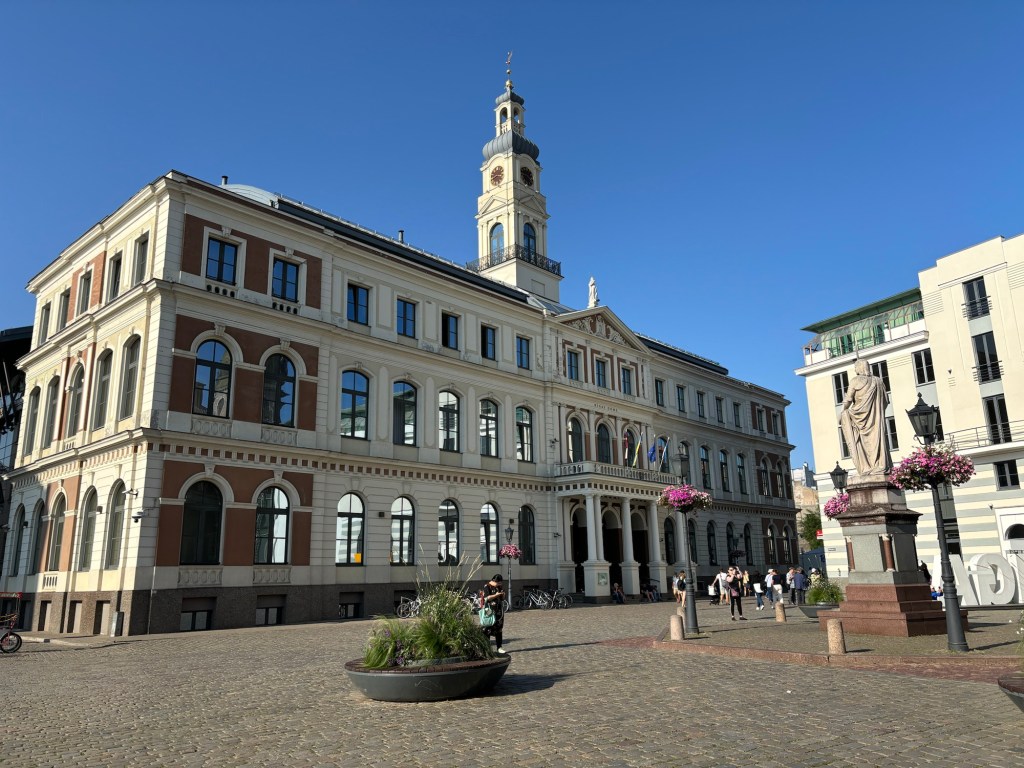
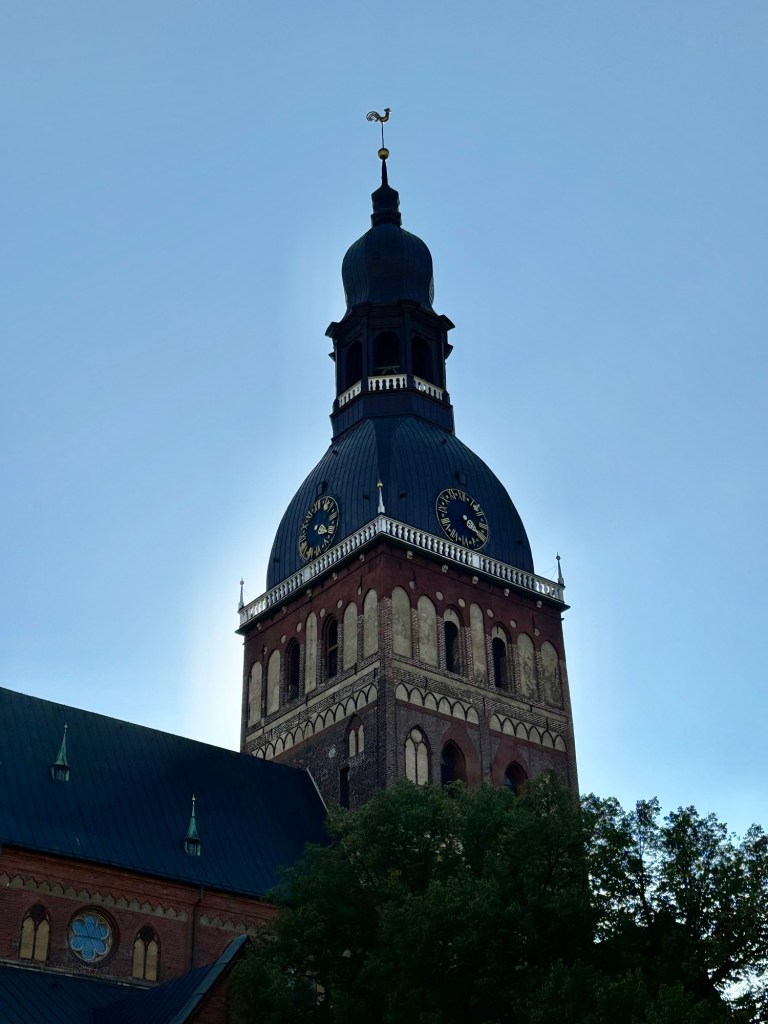
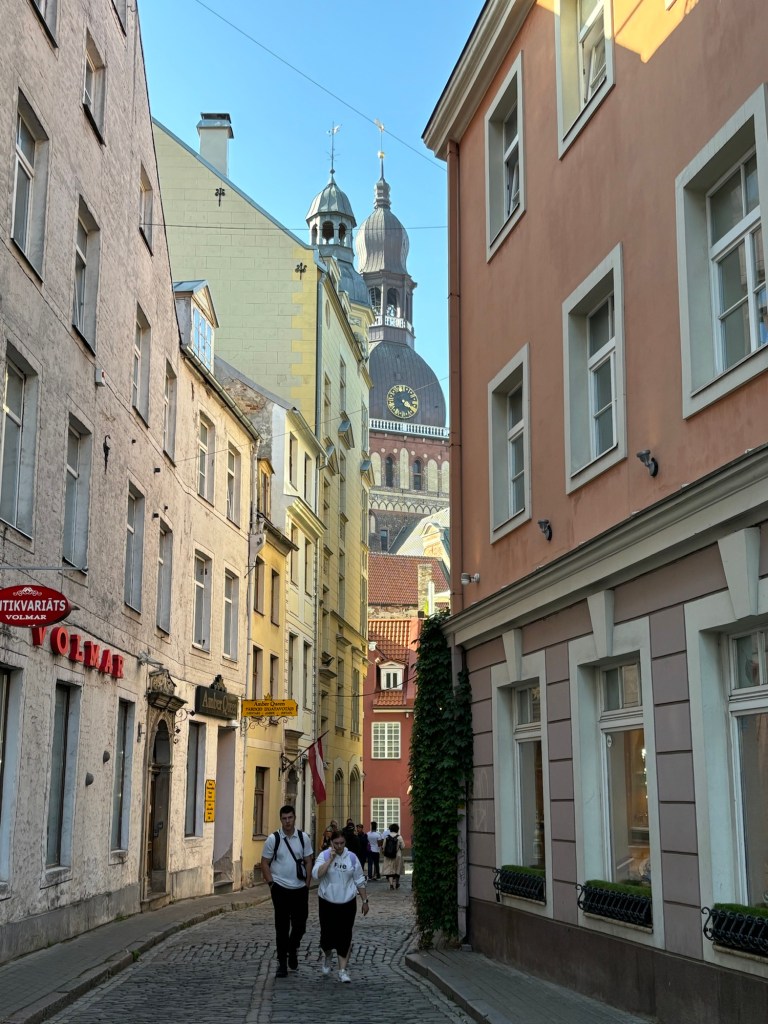
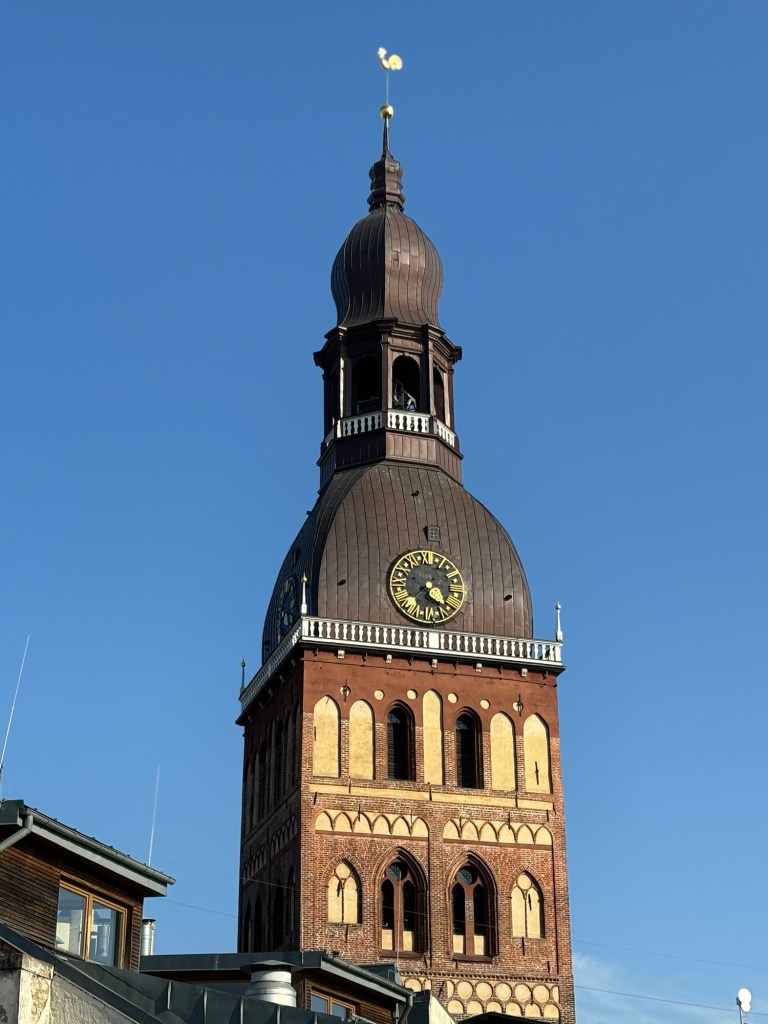
St. Peter’s CathedralThe St. Peter’s Cathedral tower has been struck by lightning and burned six times!The Town Hall and Town Hall Square
Town Hall Square was one of the few places destroyed in WWII, so the buildings around the square are much more recent than others in the Old Town.
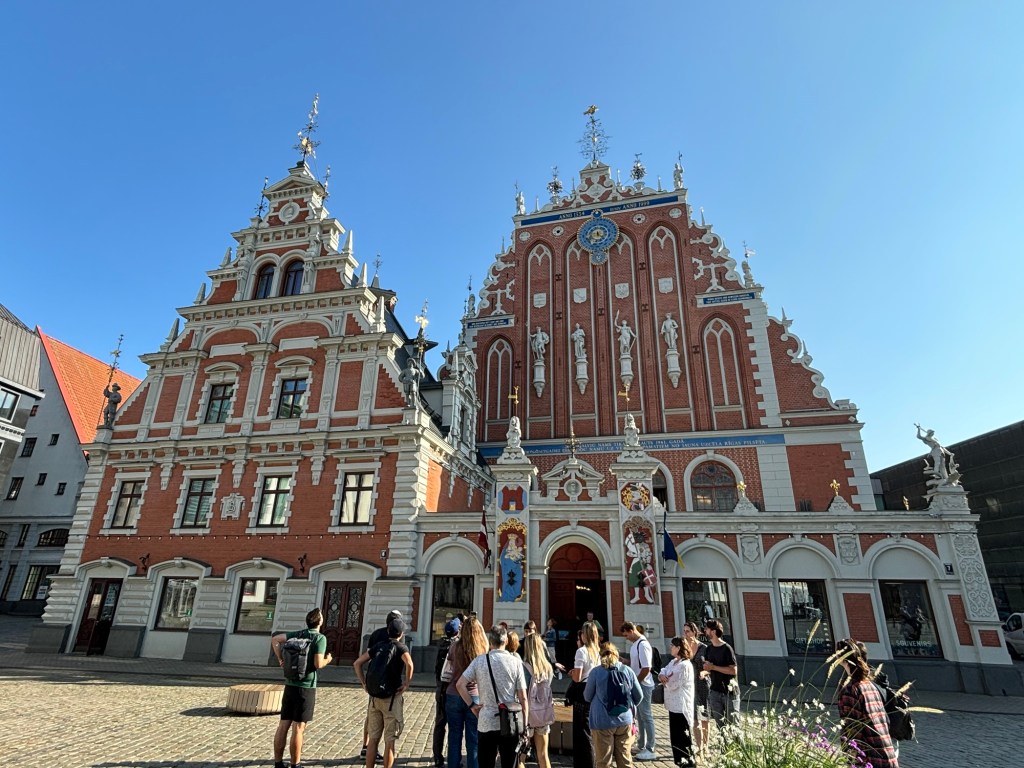
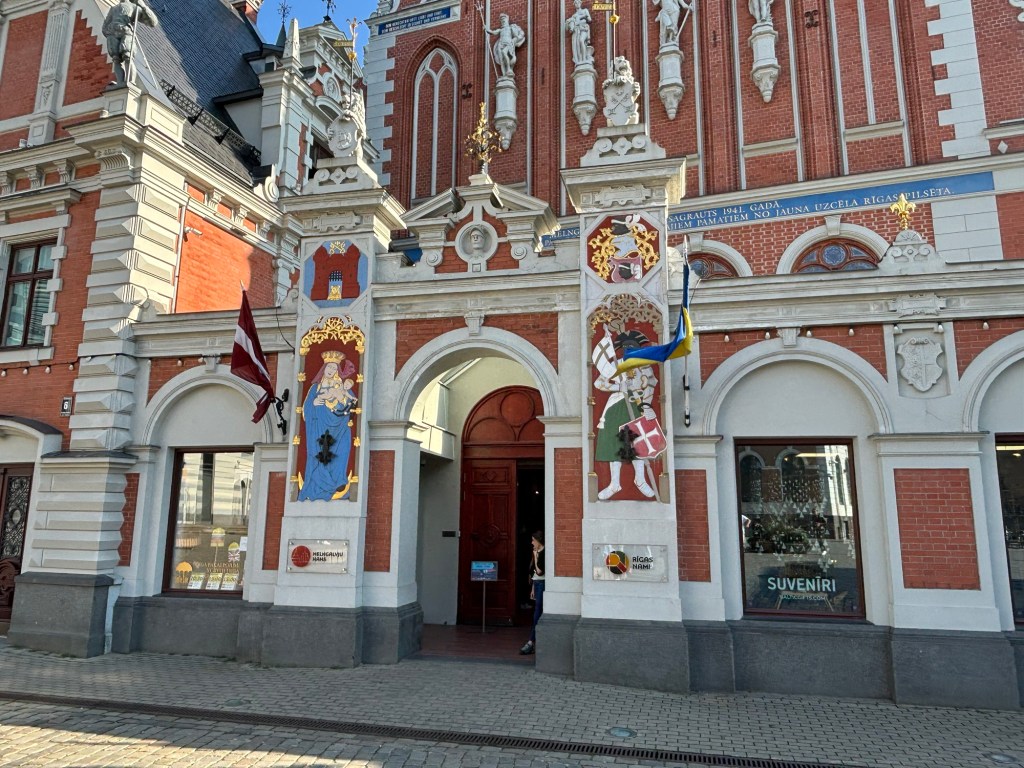
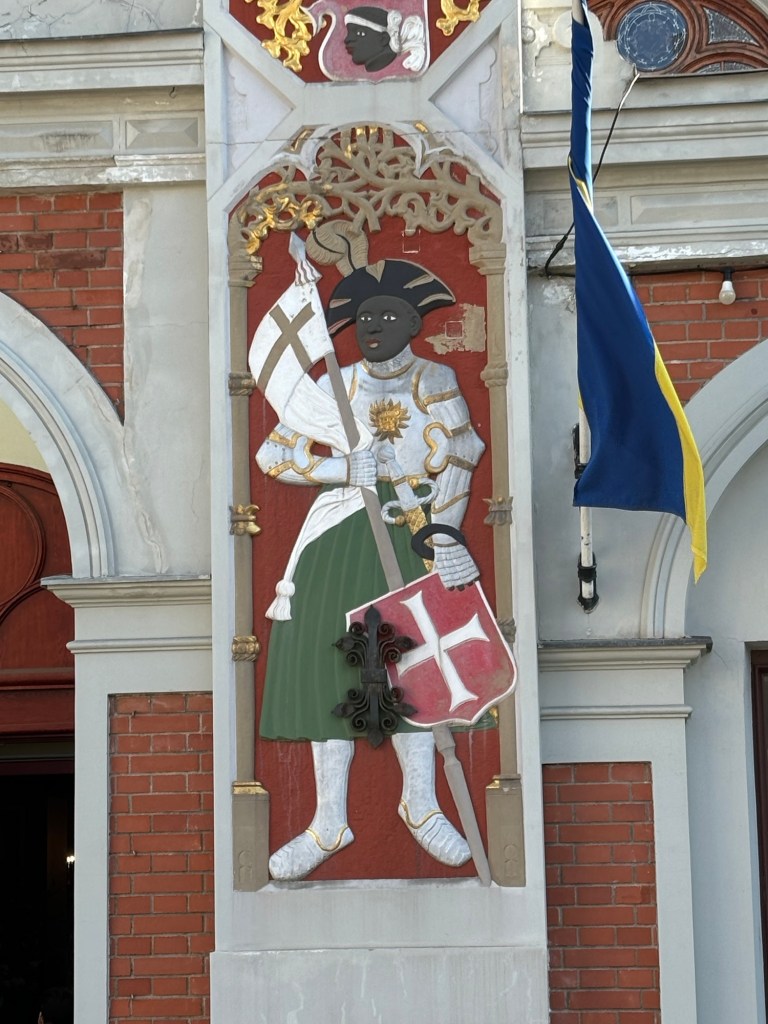
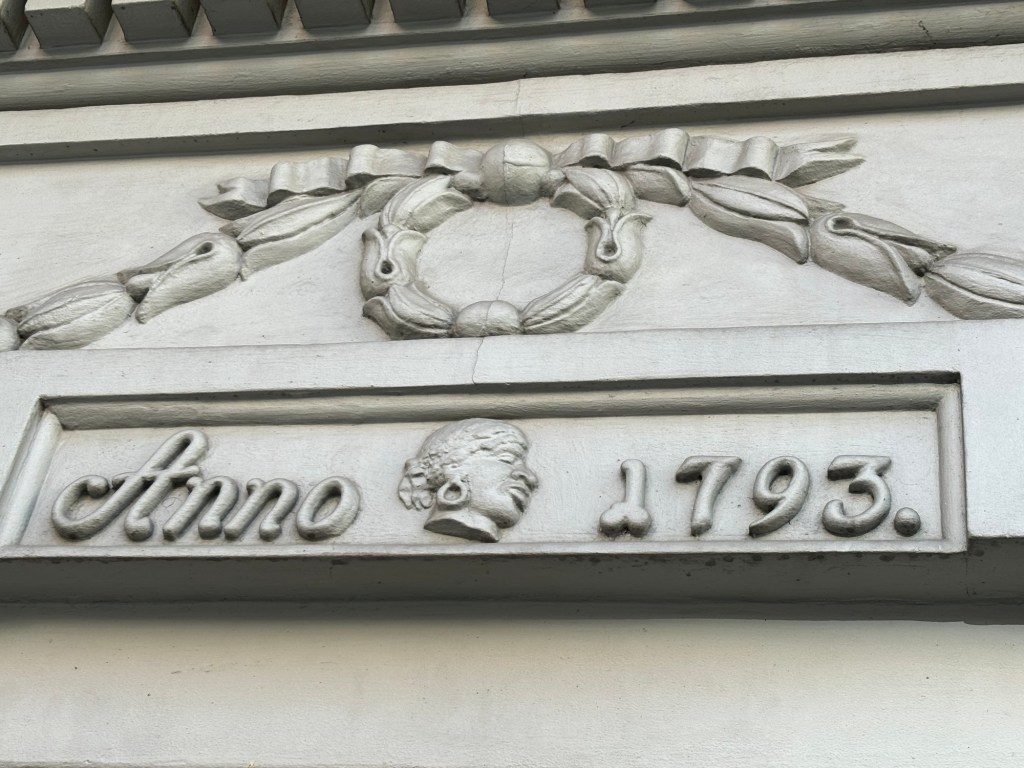
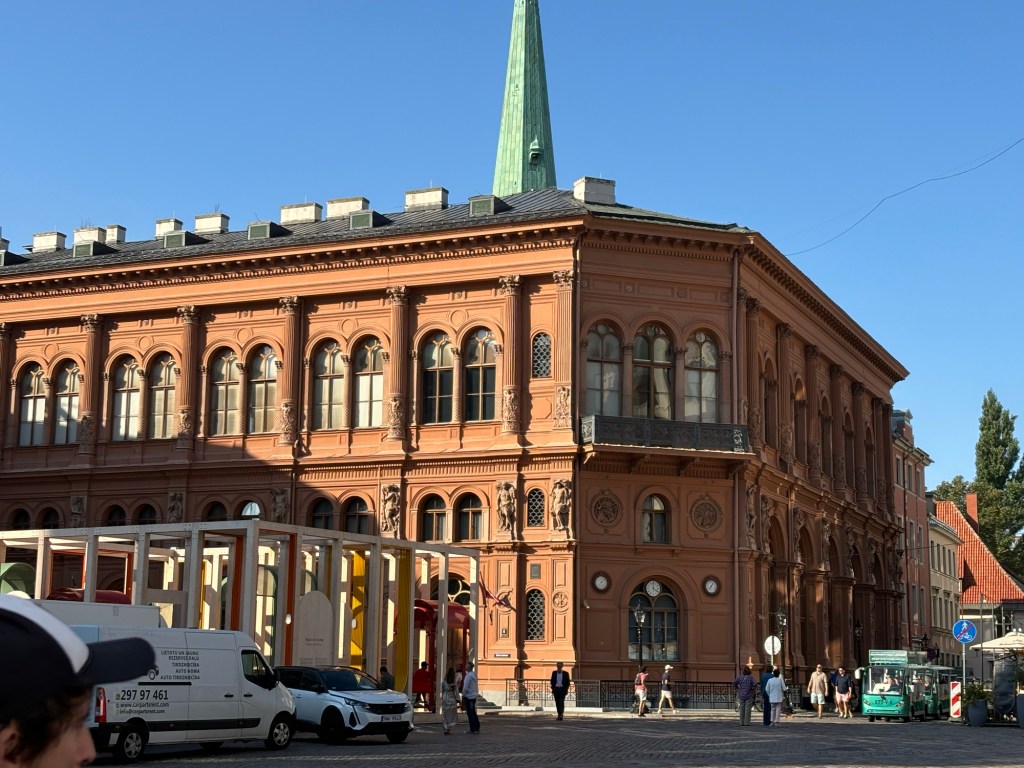
House of the BlackheadsSt. MauriceNotice the stylized “1” in the date above a side entrance. Blackheads humor!
The Brotherhood of Blackheads is an association of local unmarried male merchants, ship-owners, and foreigners that was active in Livonia (present-day Estonia and Latvia) from the mid-14th century until 1940, but still remains active in present-day Hamburg. The Brotherhood originated as a military organization, but the non-military aspects of the association gradually became more pronounced until the Brotherhood became a predominantly social organization after the end of the Great Northern War in 1721. (Source: https://en.m.wikipedia.org/w/index.php?title=Brotherhood_of_Blackheads&wprov=rarw1)
The Brotherhood most likely acquired their name from their patron saint, St Maurice. He is depicted on the emblem of the brotherhood.
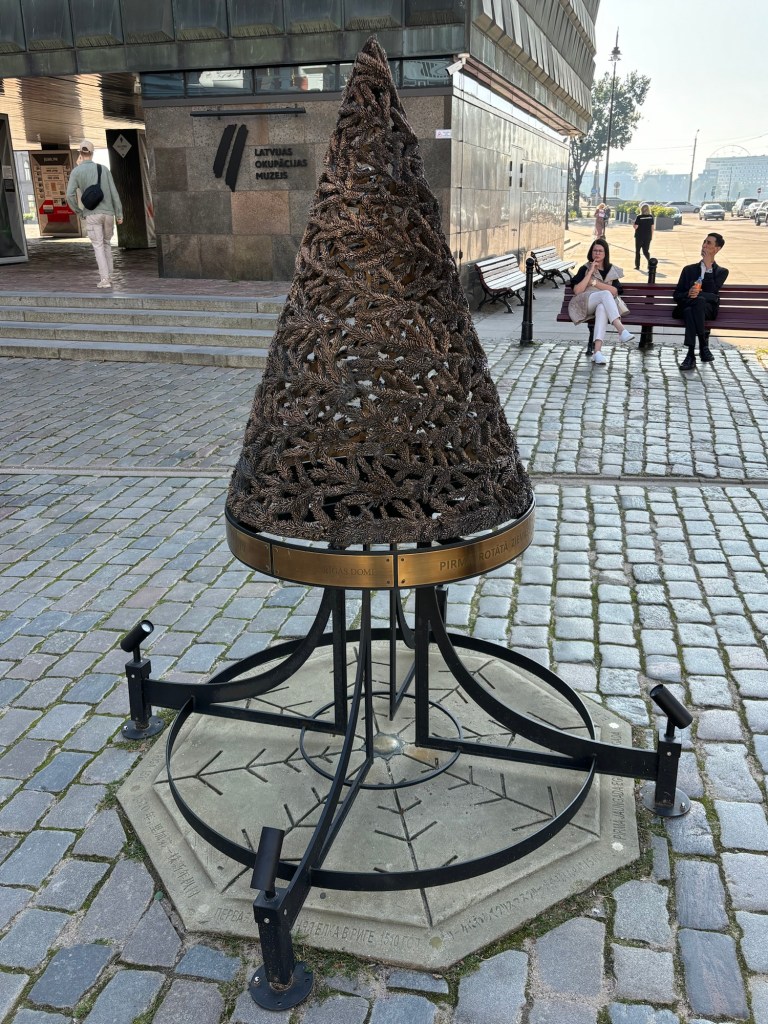
Latvians also claim they created the first Christmas tree! Of course, so do the Estonians (and maybe others).
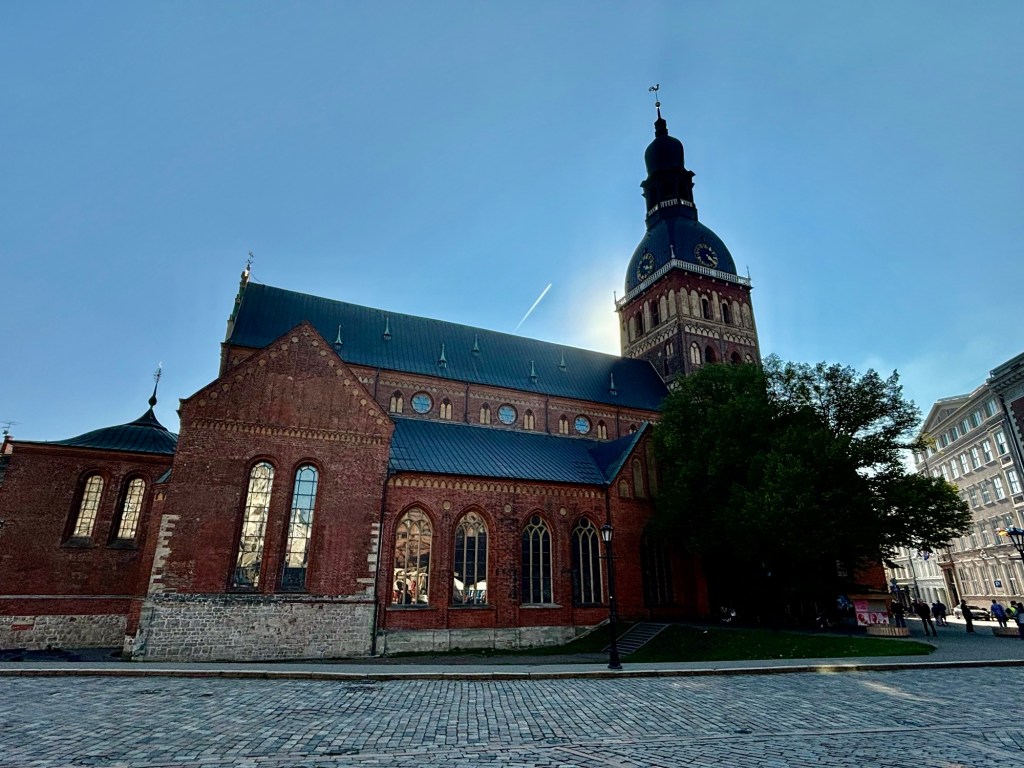
Monument to the First Christmas TreeThe Riga (or Dome) Cathedral sits along Dome Square
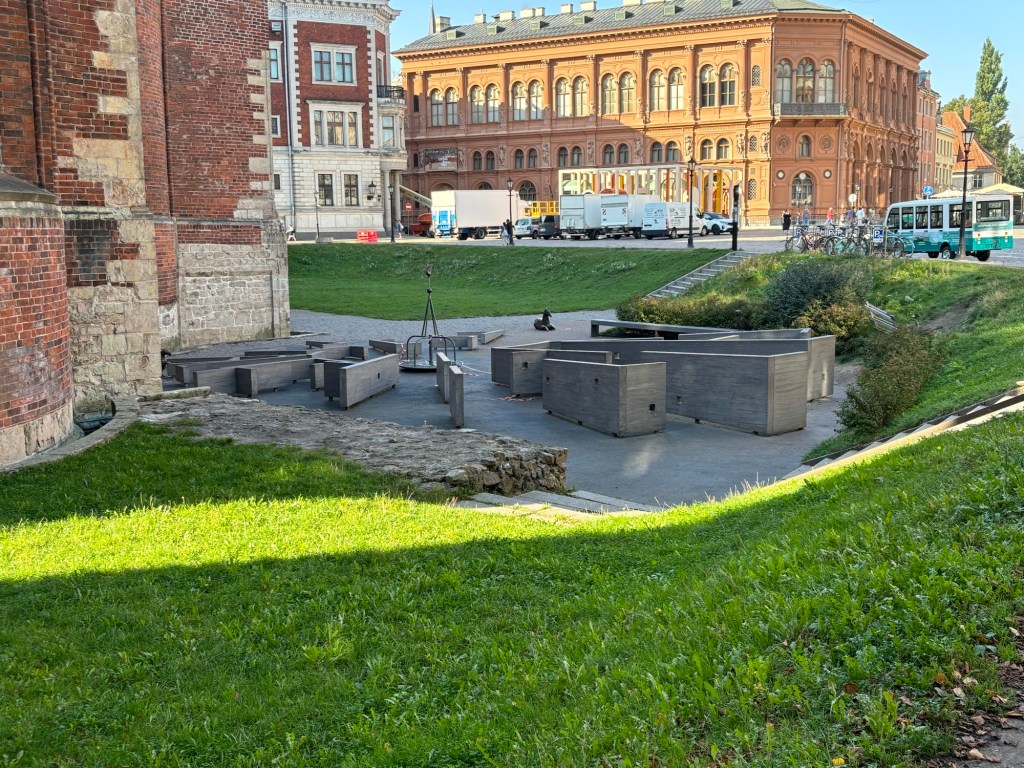
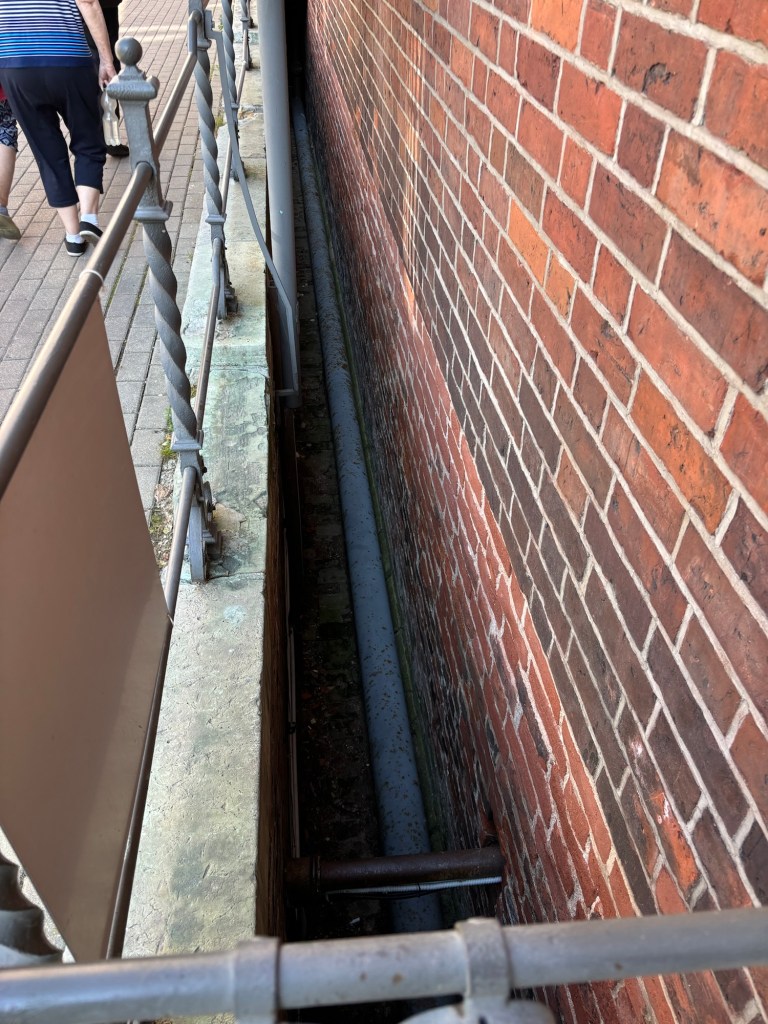
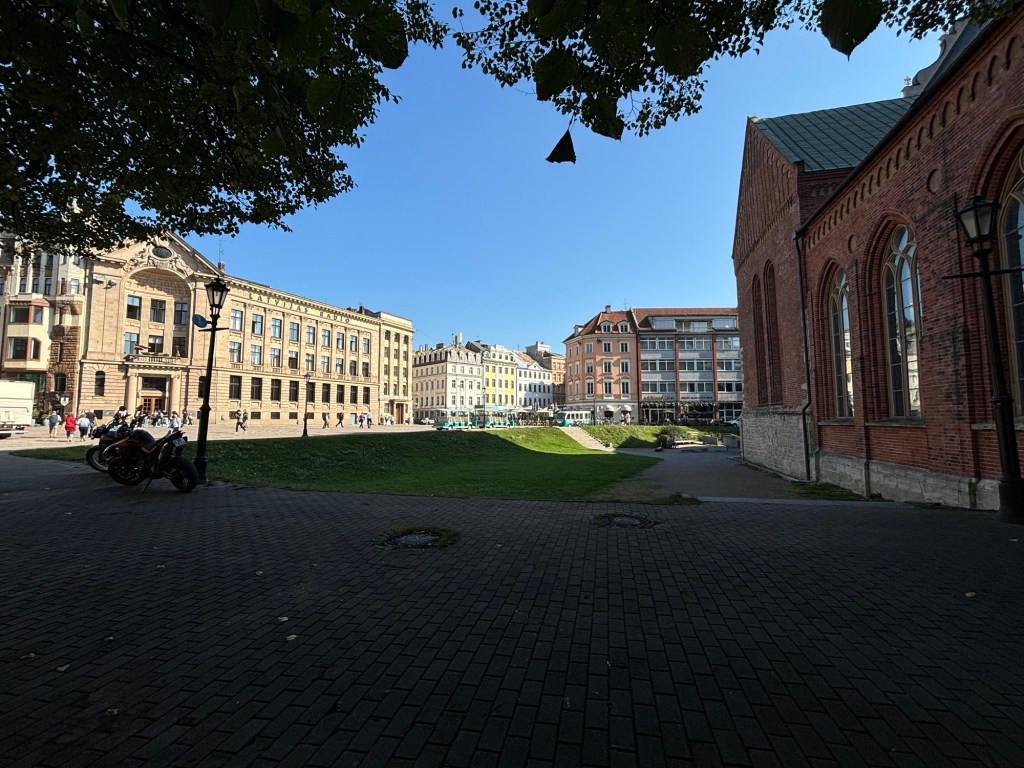
Looking at the ground around the Cathedral shows how much the city streets have been raised over the centuries. The bottom of the church is actually 8-10 feet below current street level.
Dome Square
Dome Square is also Riga’s main square. The local government actually destroyed many houses in the 30s to create the Dome Square. And it’s where Latvians’s gather for special events and festivals. They even set up giant screens when National sports teams have big games / matches, like when the Latvian ice hockey team when they came in 3rd at the World Championships in 2023!
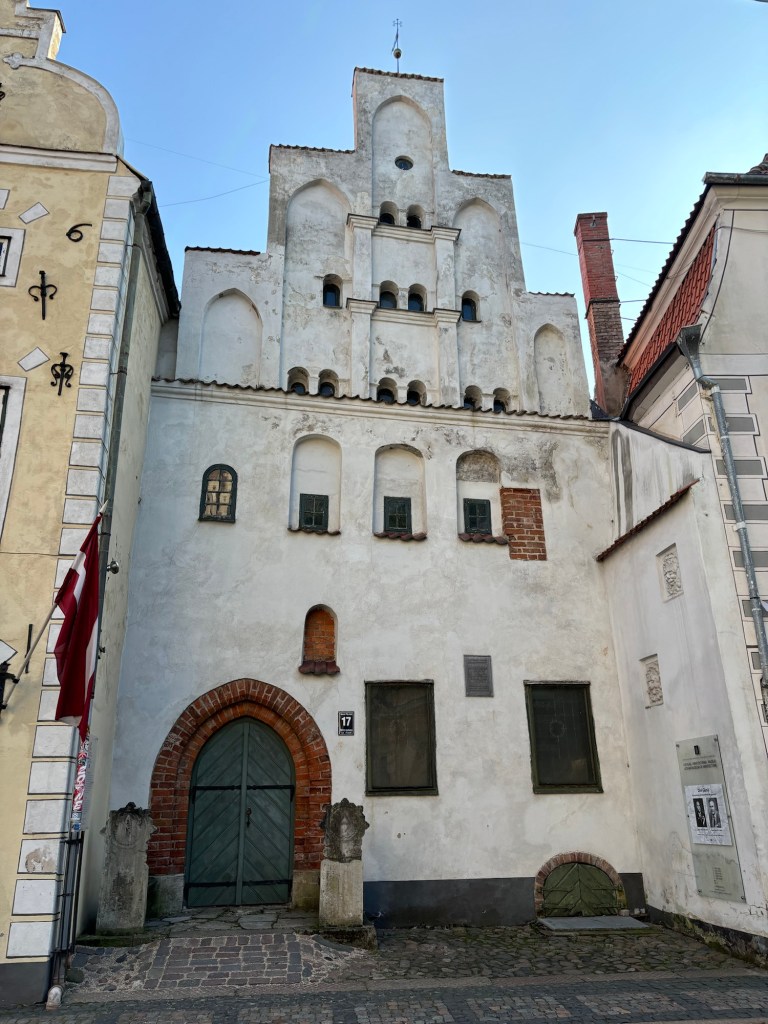
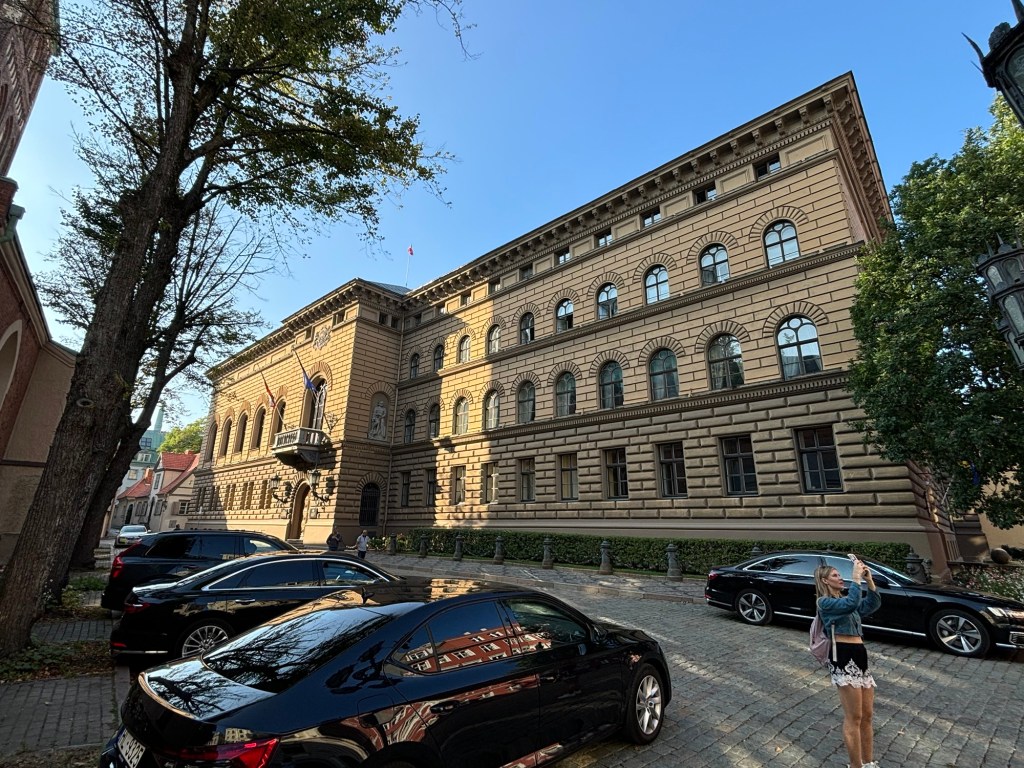
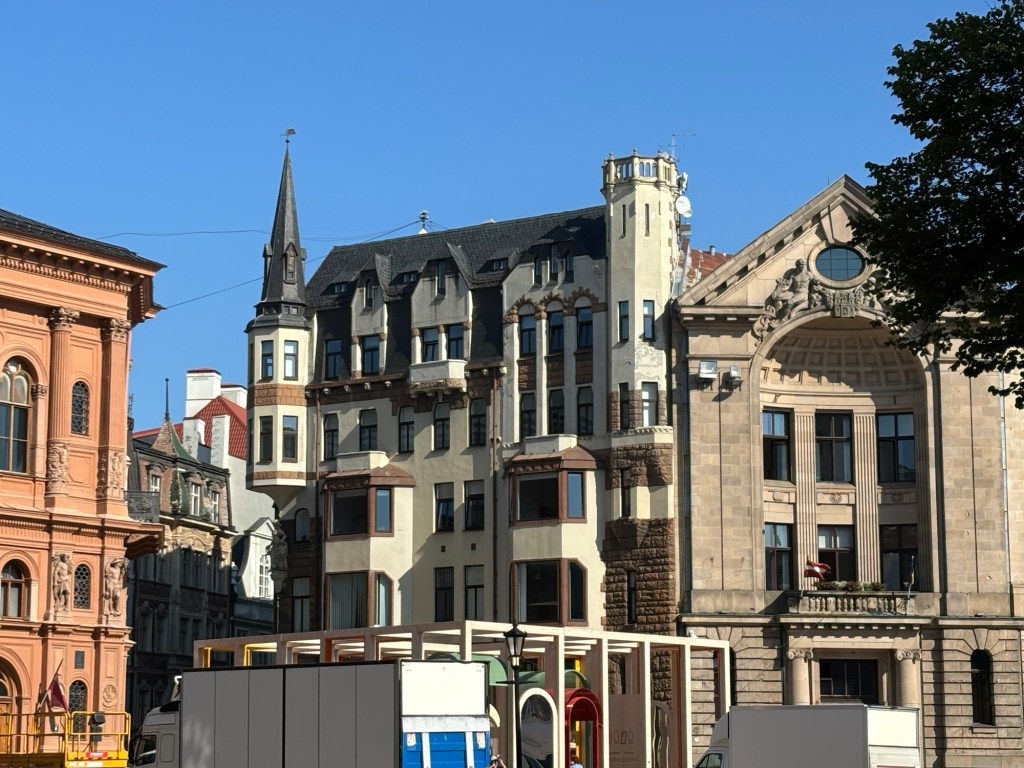
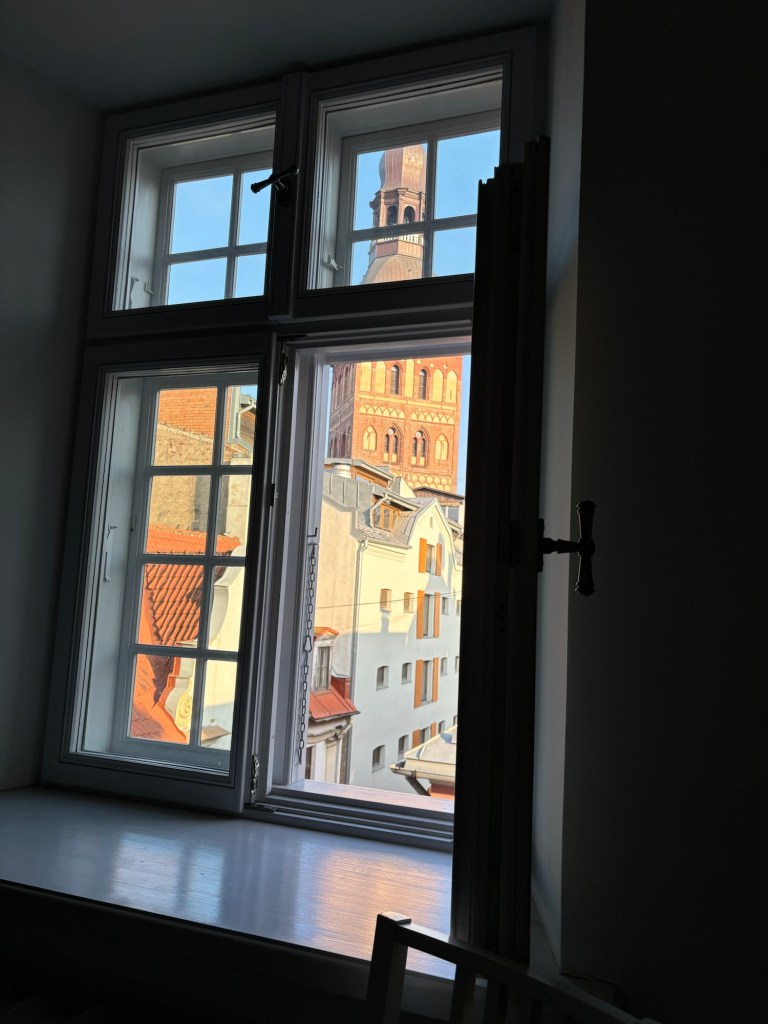
Oldest residential house in Riga – from 15th CenturyLatvian Parliament BuildingAnd the view from my window!
For dinner I tried a Himalayan Restaurant and ordered the “Appetizers Mixed” to get several tastes. The menu had the name in Latvian, of course (Uzkodas Mixed).” But the menu also had it in Russian: “Закуски смешанные.” Wow!
It consisted of: 2 samosa, 2 tiger prawns, 4 dumplings, and 2 fish pring rolls, along with a glass of Tervetes, a Latvian lager
Off to Tallinn, the capital of Estonia, early tomorrow!
Words of wisdom, or just to amuse…?
It is a truth universally acknowledged that your urge to pee intensifies as you are unlocking the door.
Woke up the perfect weather! Clear skies, bright sunshine, comfortable temperature. After breakfast I headed out to pick up a walking tour.
Our Guide, Kristina, led us on a 2 1/2 hour tour, mostly around the Old Town area.
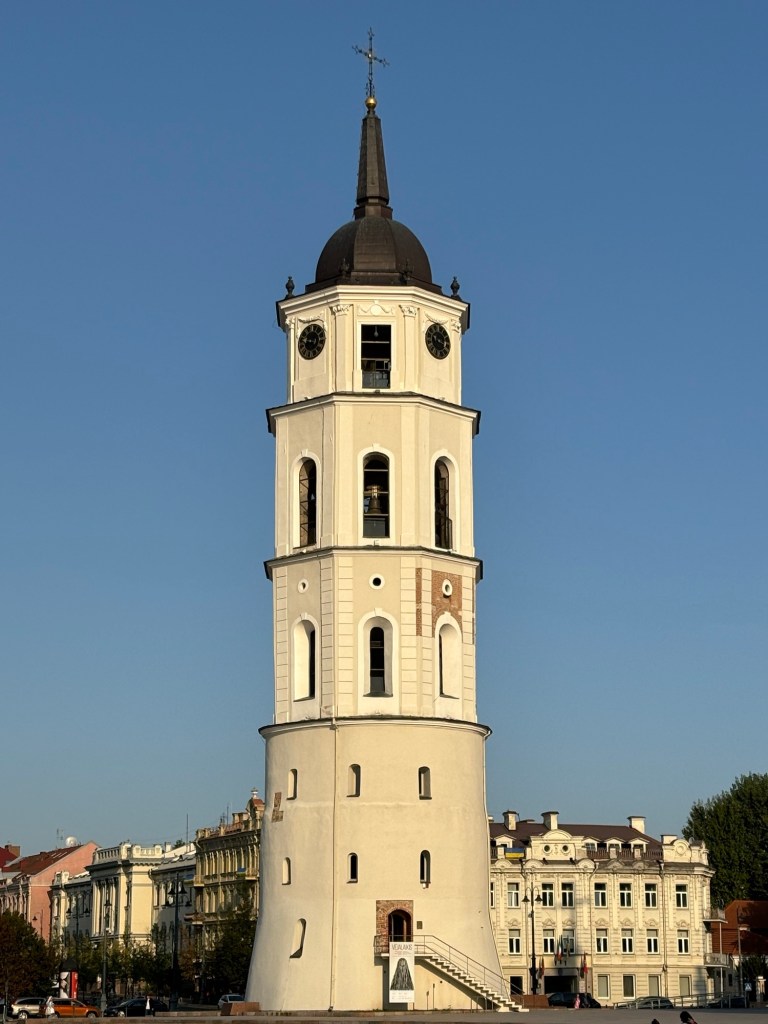
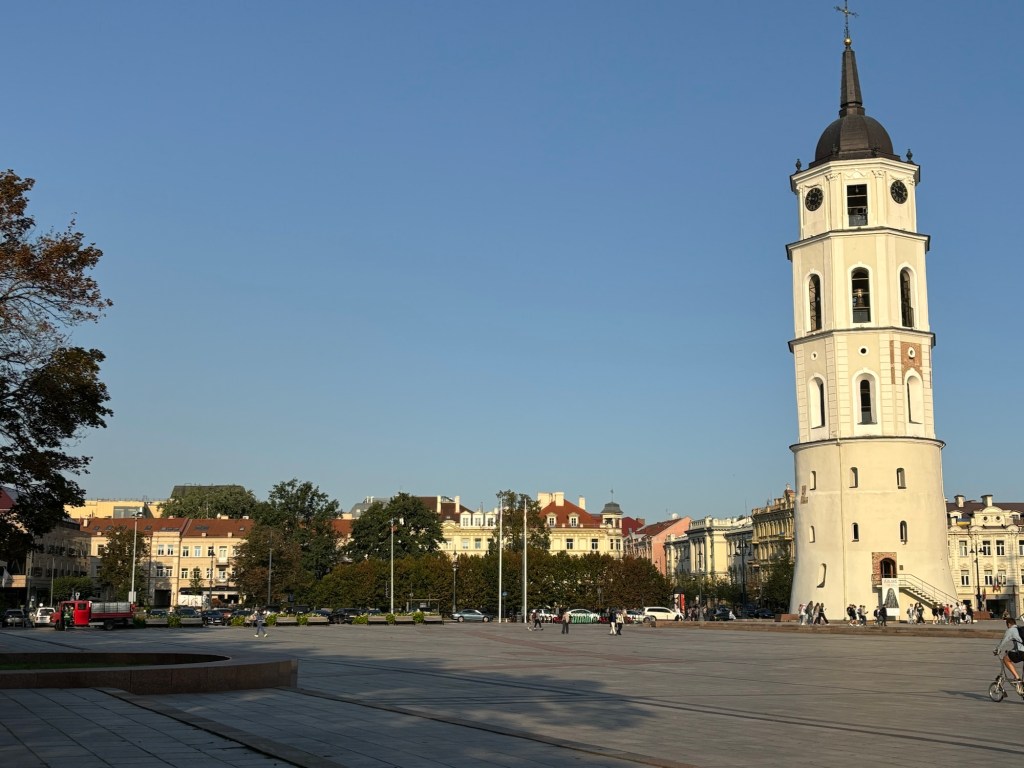
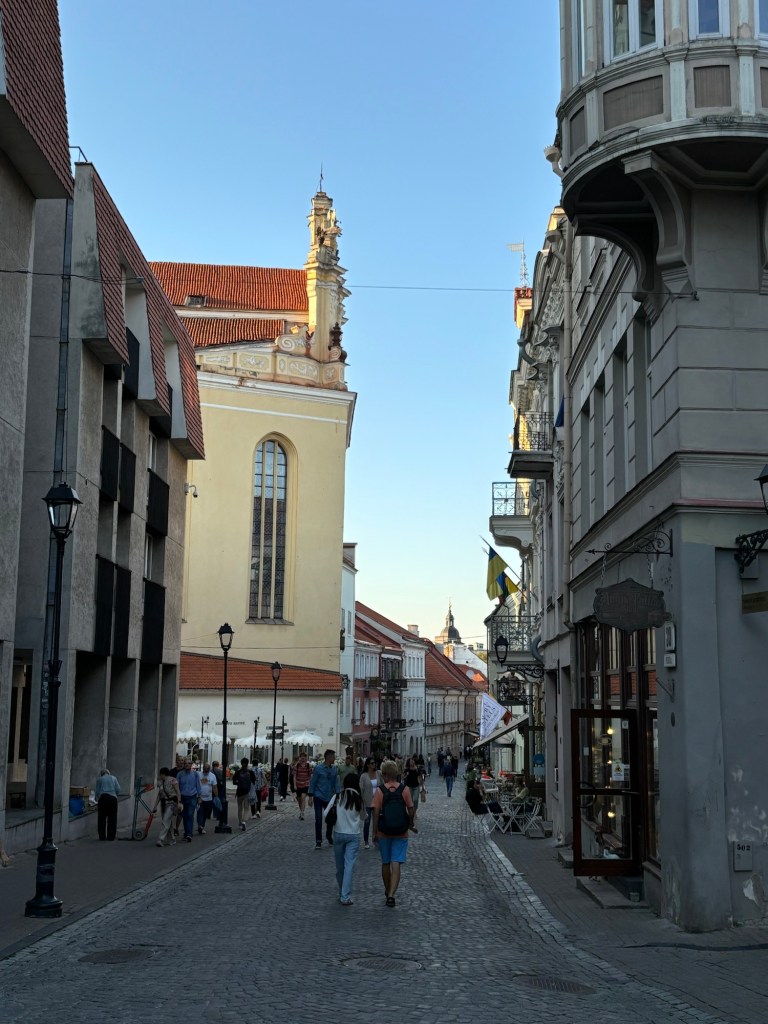
We started at the Vilnius Cathedral and the adjacent square.
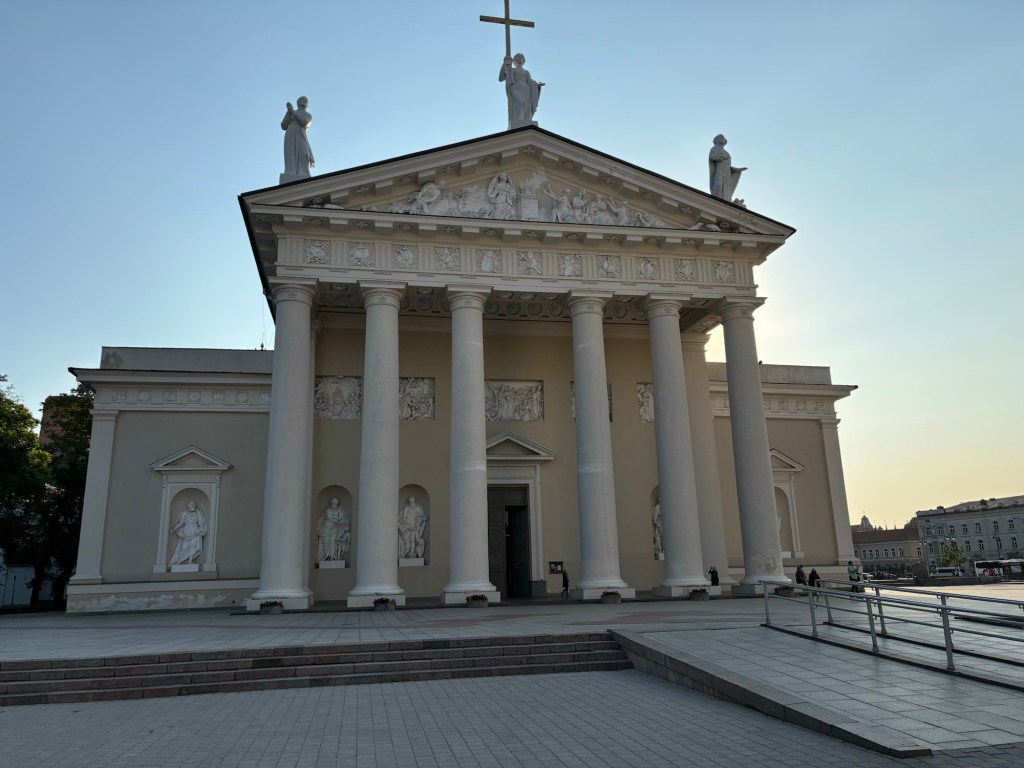
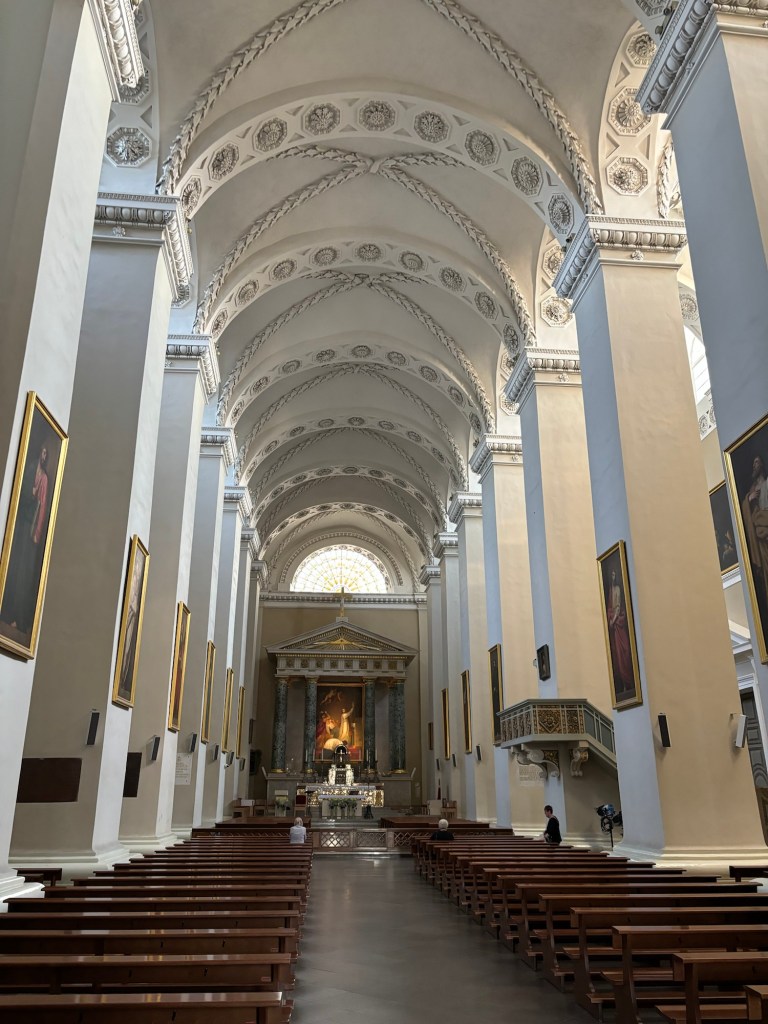
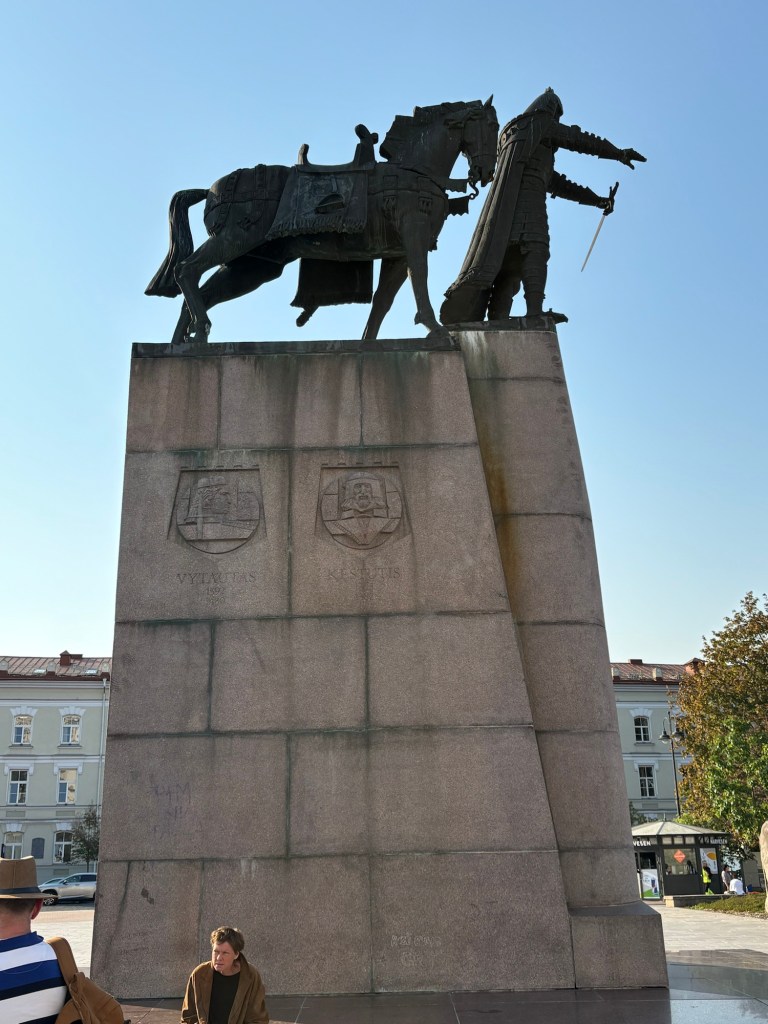
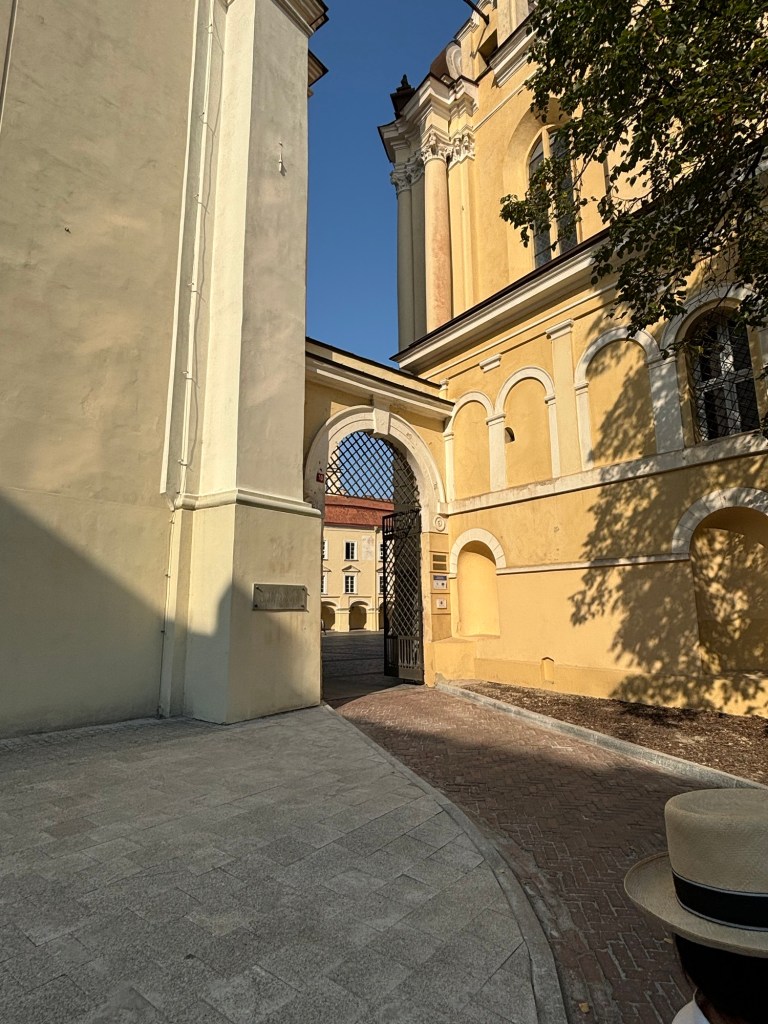
Vilnius CathedralVilnius Cathedral Bell Tower (originally part of the city’s defensive wall)Lithuanian Grand Duke Gediminas
Vilnius was founded In 1323. Since it was not on the Baltic Sea, it was more difficult to participate as an important trade center. Grand Duke Gediminas sent letters around Europe to invite people to bring their businesses to the city. As a result, the city grew rapidly and grew into a significant business center.
It was also controlled in much of its history by Germans, Poles, French, and Russians. It finally gained independence in 1918 after WWI. However, domination occurred again starting in 1940 by the Soviets. And Lithuania remained part of the Soviet bloc until 1990.
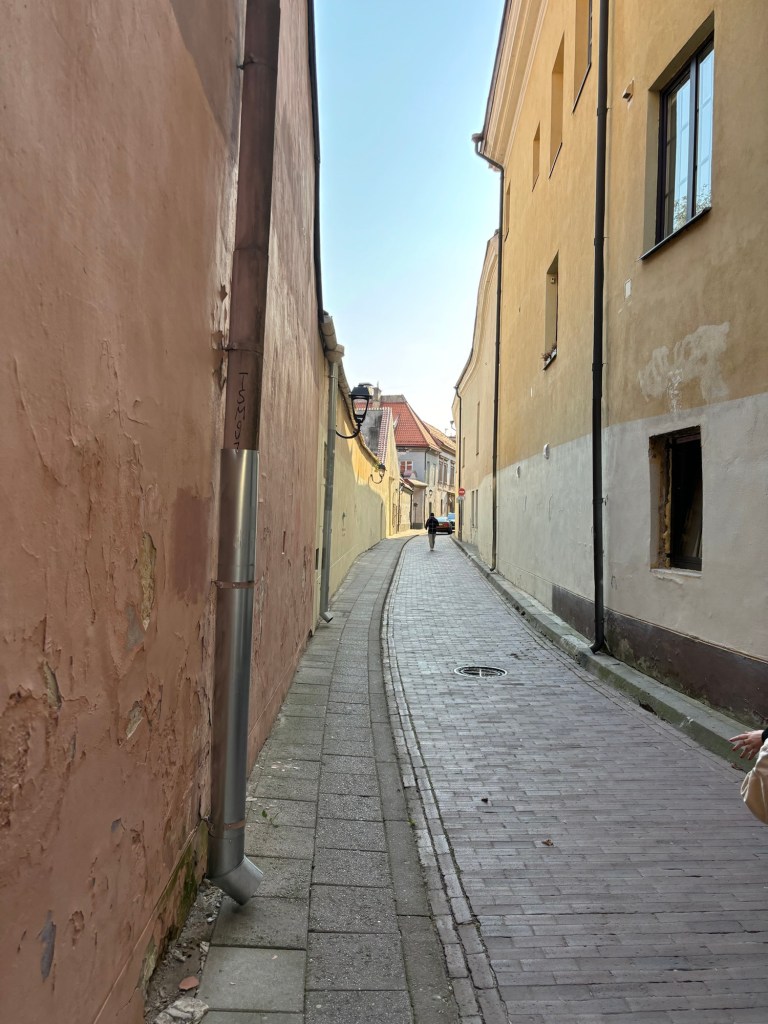
About half of Old Town was destroyed in WWII, the majority of Vilnius at that time. The area is still dominated by narrow and winding roads, although many green spaces were added as the city was rebuilt after the war.
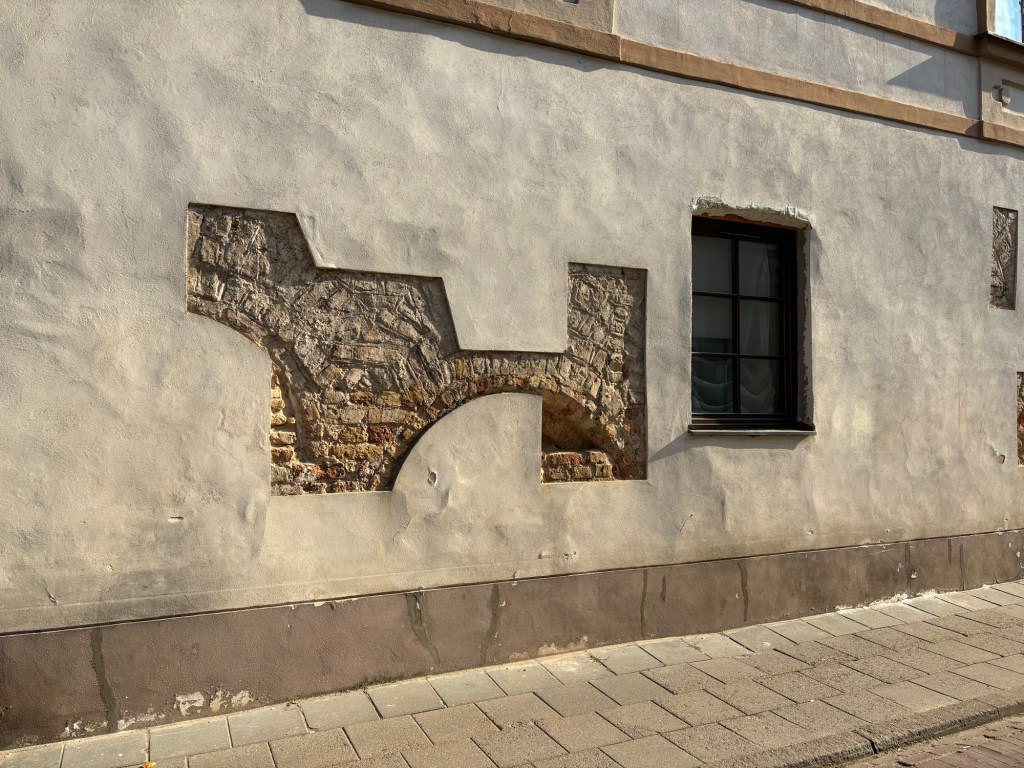
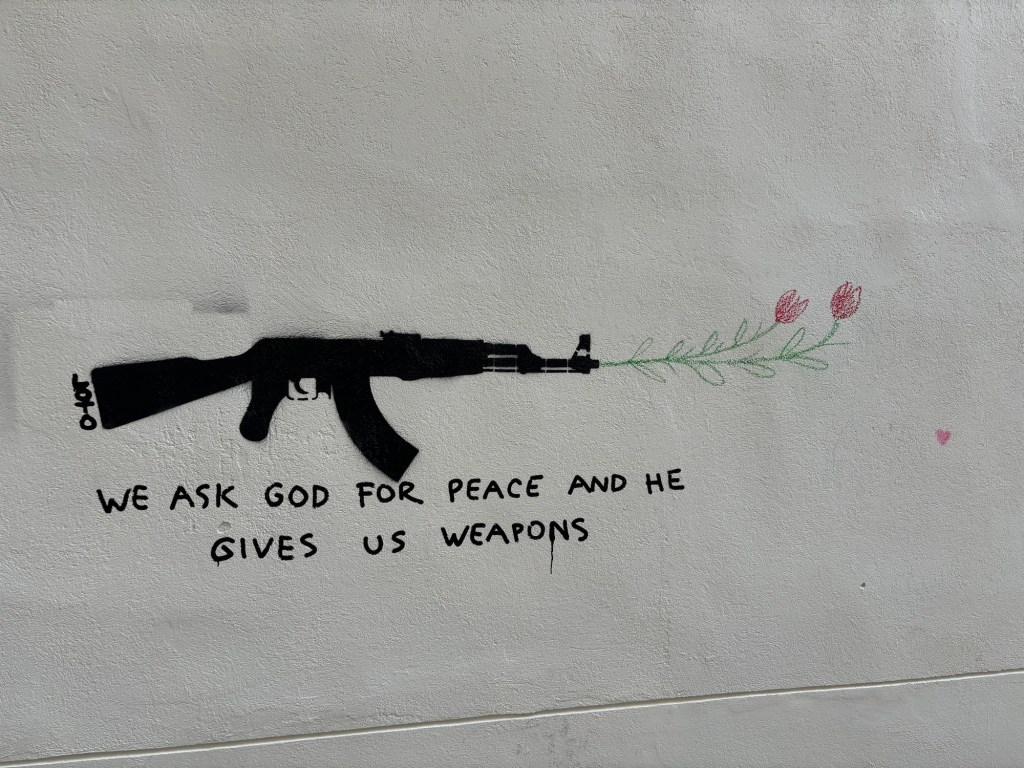
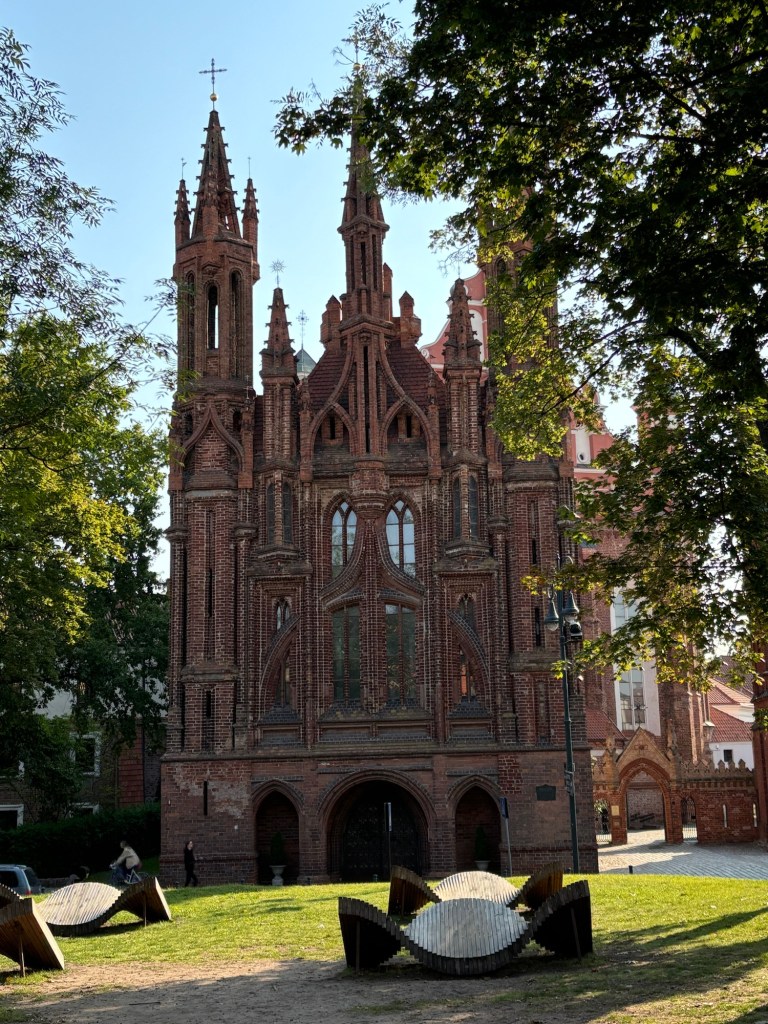
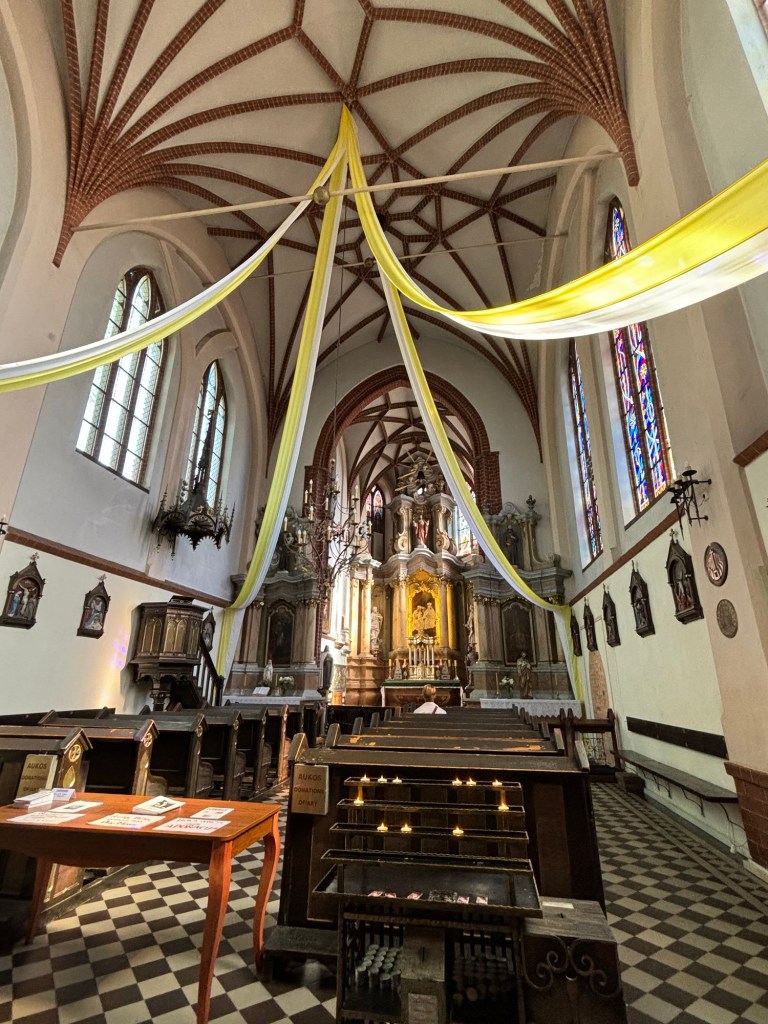
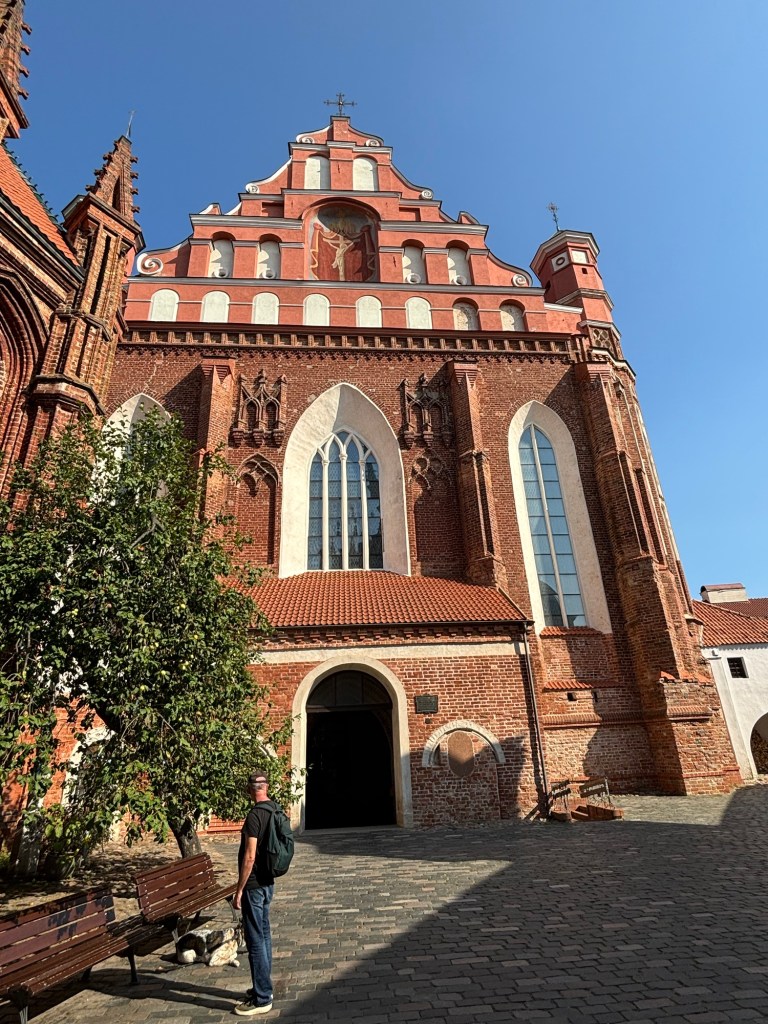
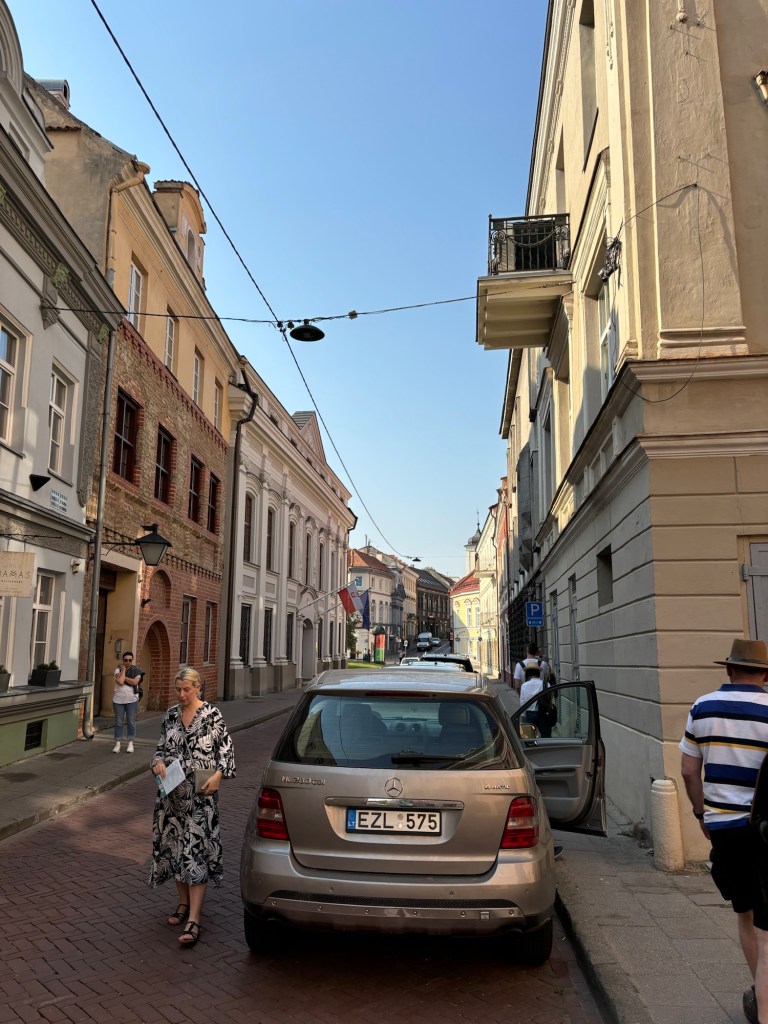
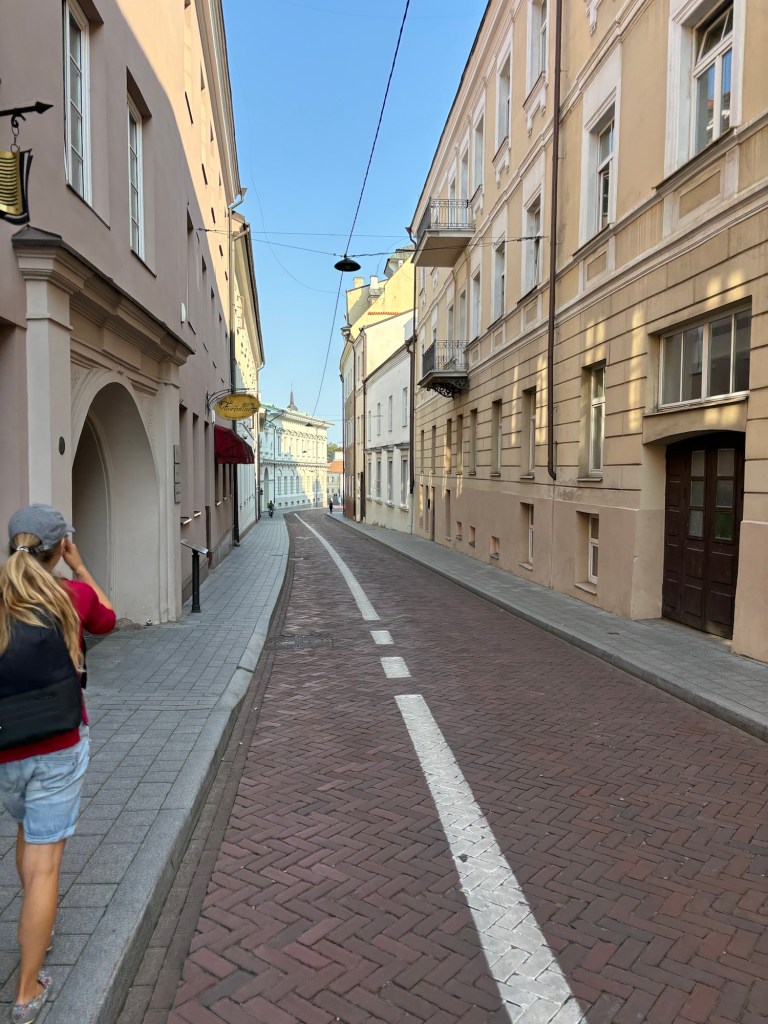
Narrow streetsOriginal brick under plasterWall art…A Gothic style church that survived the war’s destruction was St Anne’s ChurchRight behind St Anne’s is another Catholic church — St. Francis of Assisi (Bernardine) Roman Catholic Church
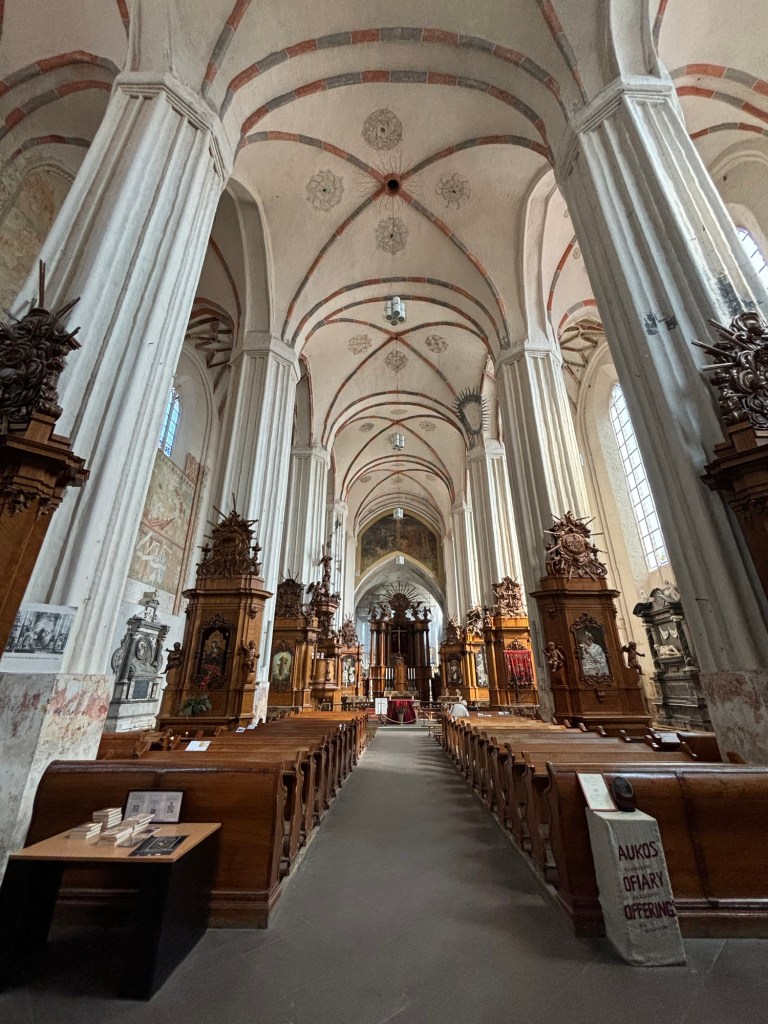
There has been a strong Catholic influence here over the centuries and remains largely intact today. There are about 60 churches and 20 monasteries in Vilnius!
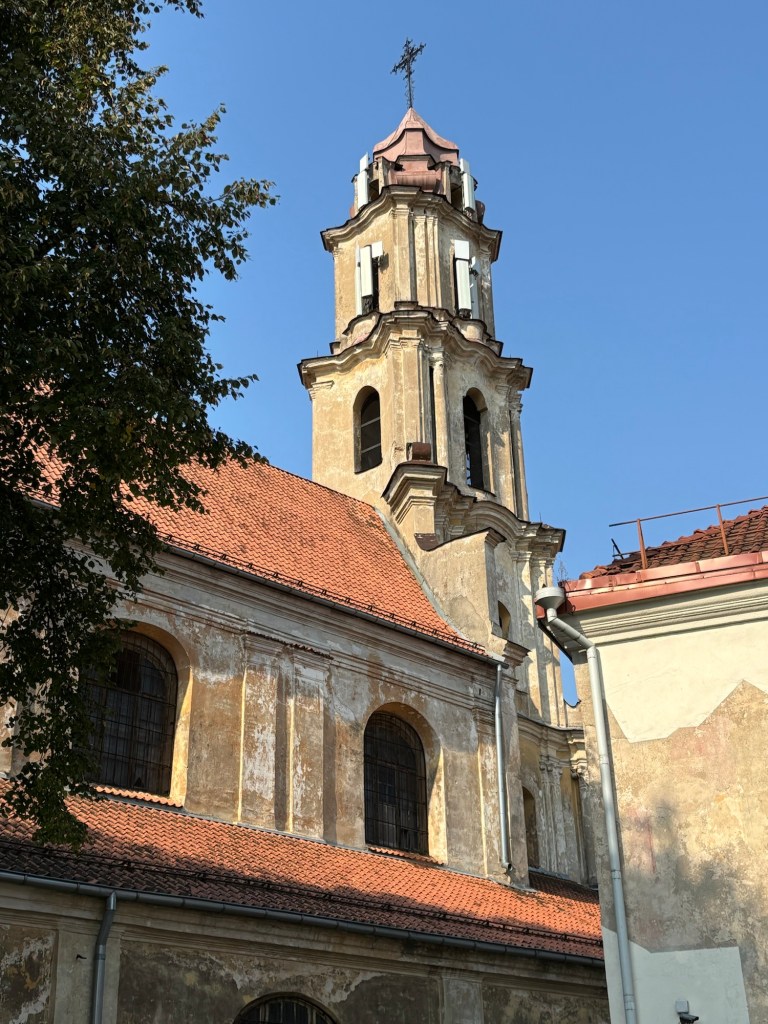
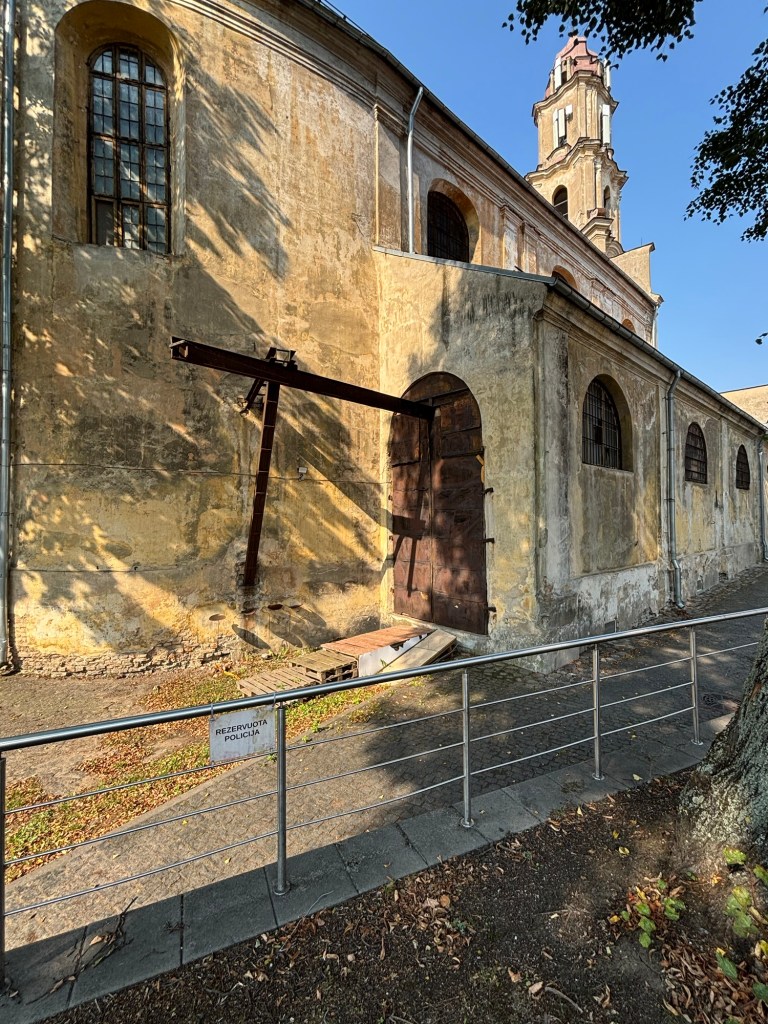
However, during the Soviet bloc period, the Soviets turned almost all churches to other purposes – museums, sports, factories, etc. One of the only remaining examples of Soviet repurposing is the old church below which has not been renovated.
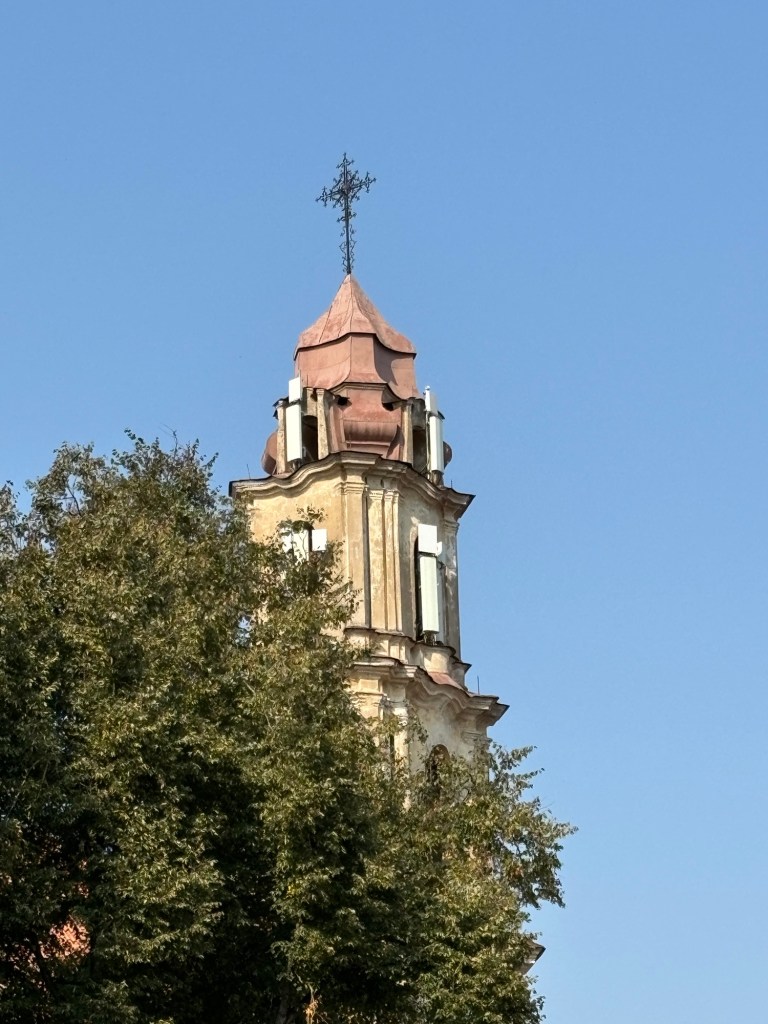
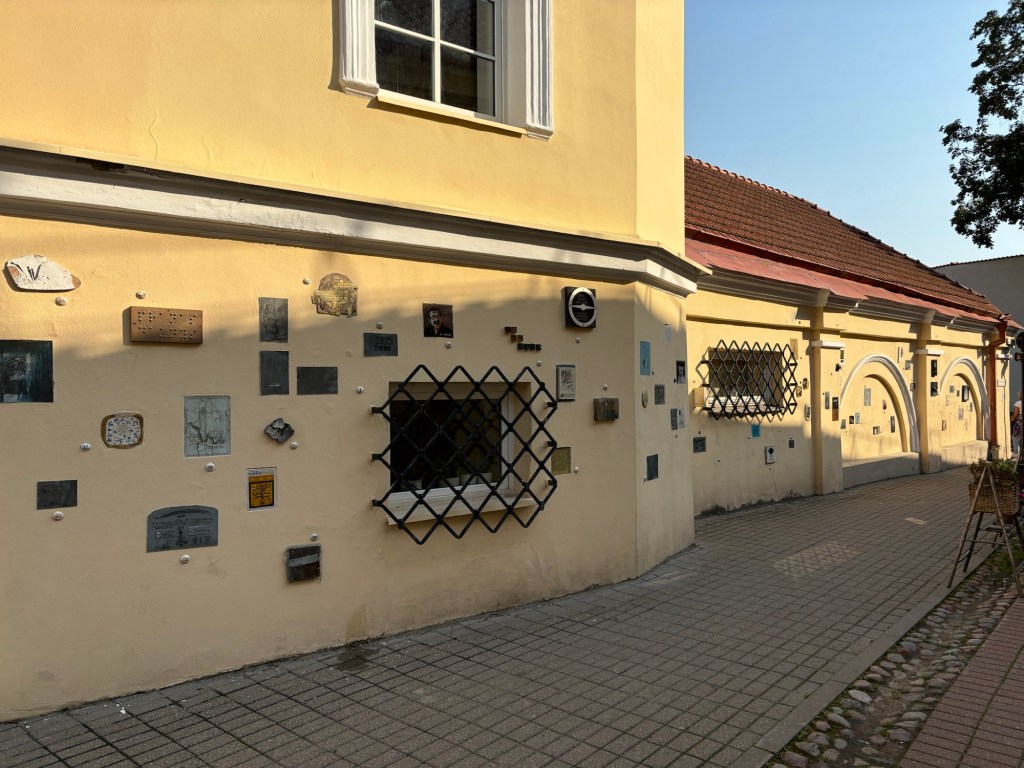
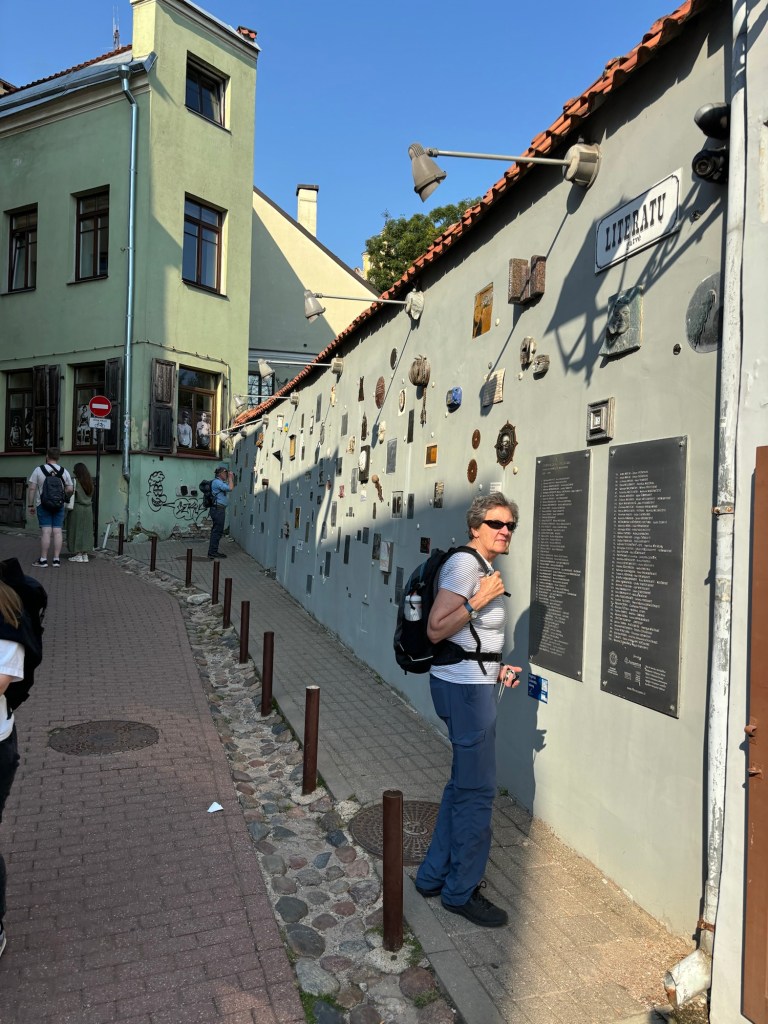
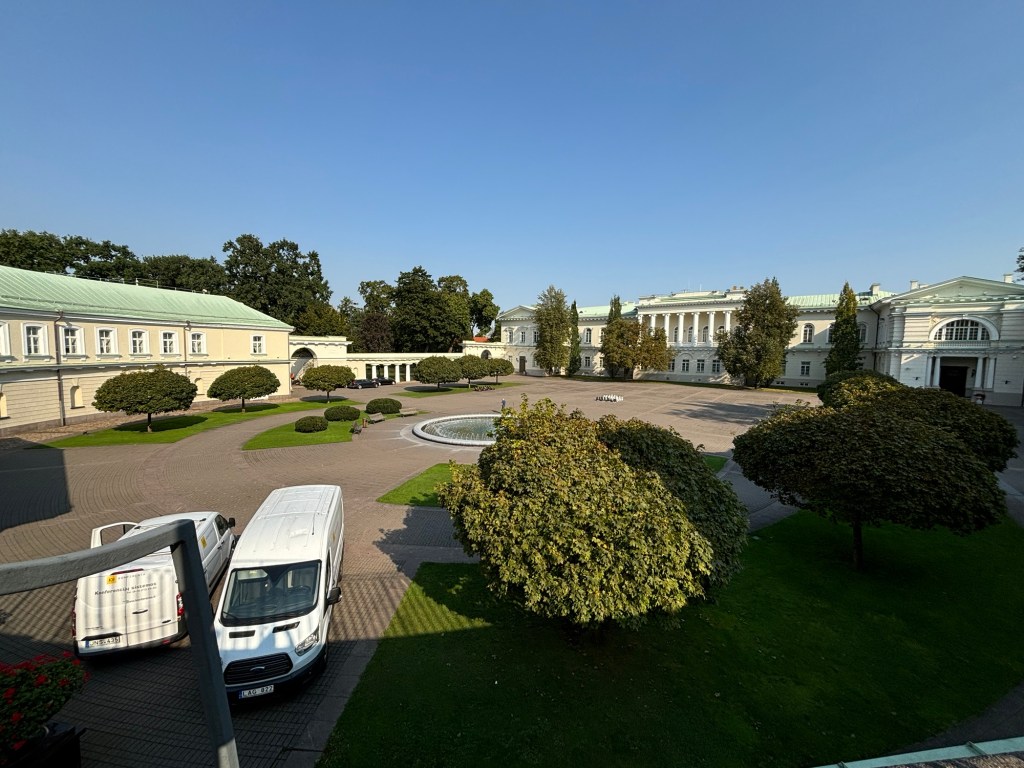
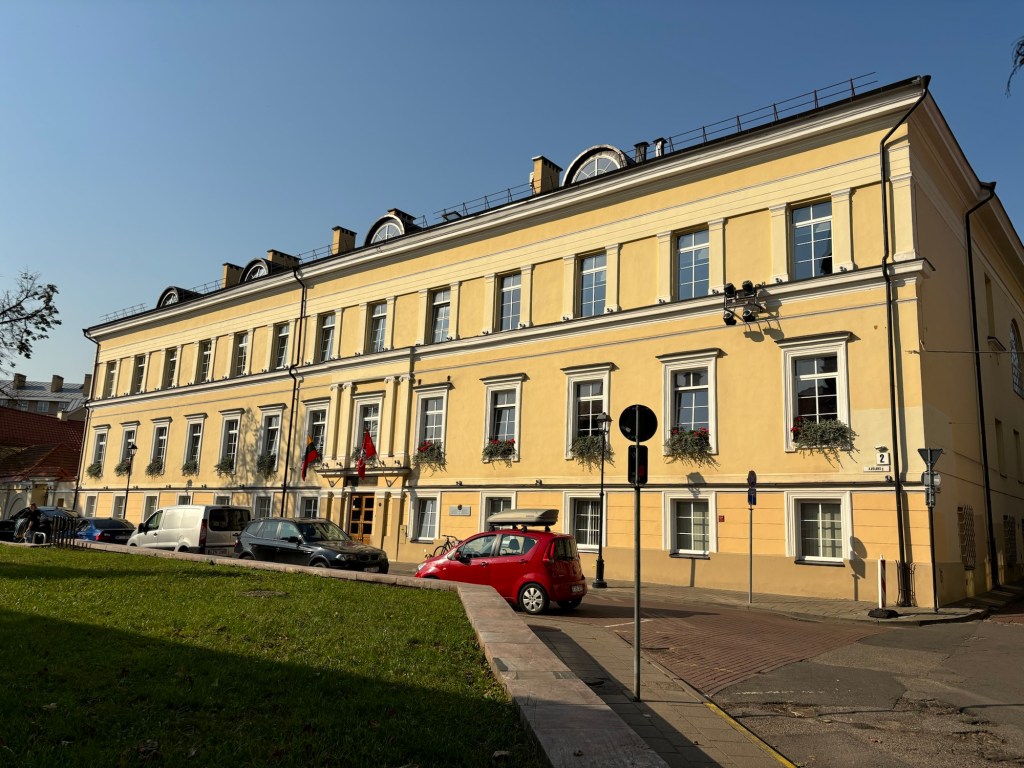
Notice the communications antennas in the bell tower?Note the I-beam lift jutting out of the steel doors, and bars on the windows. Repurposed as a factory.Decorated “Artist’s Walls.”Vilnius University, originally set up in 1500s by the Catholic Church in response to the Protestant Reformation. Now a secular institution serving almost 20,000 students!Complex built by Russians in St Petersburg style. Now houses the President of Lithuania.
The Lithuanian flag is yellow, green and red 🇱🇹. Our guide said there are many opinions about the meaning of the three colors, but she likes the version that says: yellow is for the sun or hope, the green for the forest, and red stands for blood, from all the history.
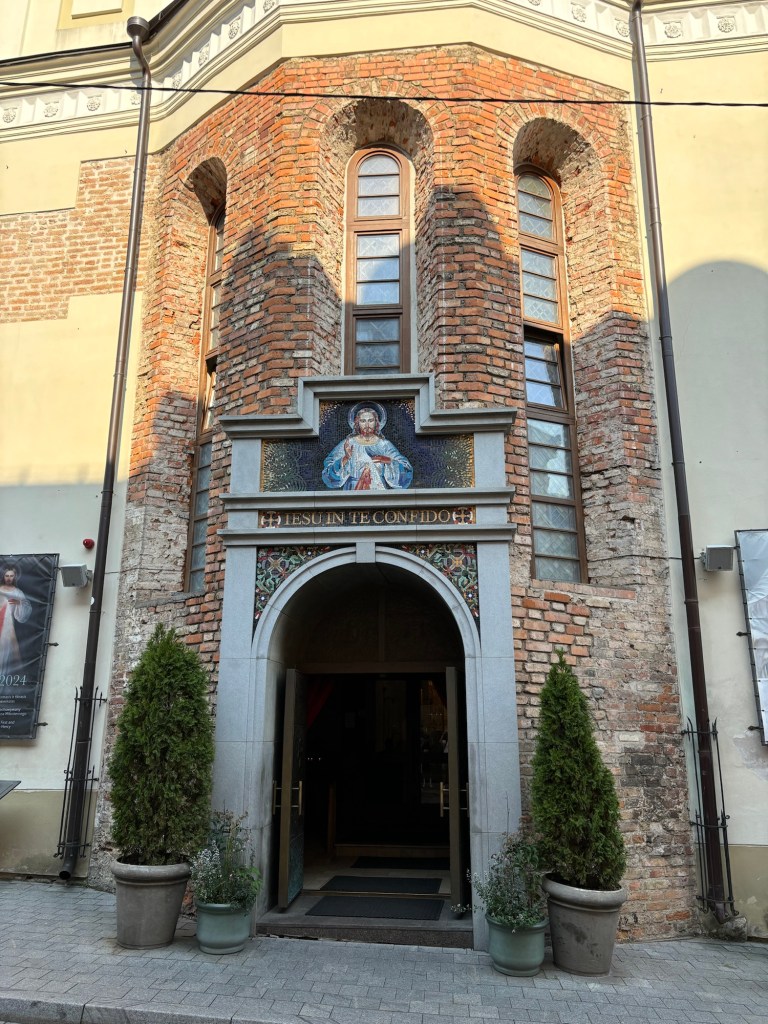
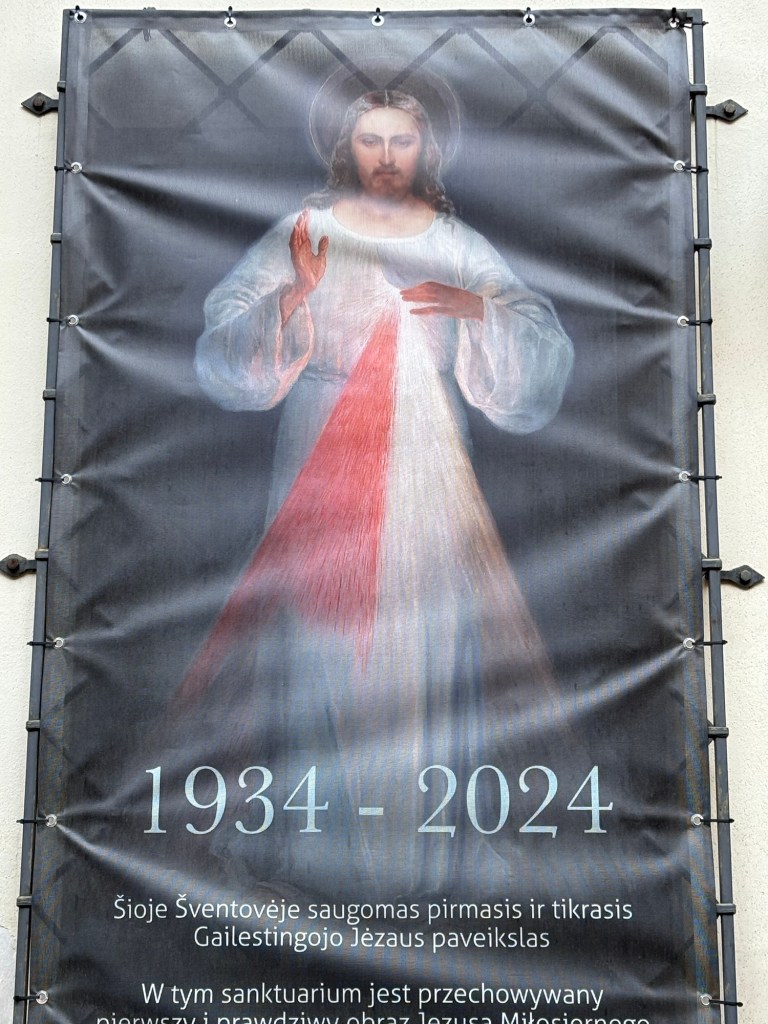
This small church has the original of a famous and much copied painting on display. The original painting of Jesus was created by a Lithuanian artist in 1934.Copied and displayed around the world
The Image of the Merciful Jesus (also called the Image of Divine Mercy), painted in Vilnius by artist Eugene Kazimirovsky, is based on visions experienced by the mystic Sister Maria Faustina Kowalska in 1934, faithfully following her instructions. (Info: https://gailestingumas.lt/en/story-of-the-painting/)
An Observation — I find it interesting about how most guides on this trip have talked about “the Jews” as almost another race. They often say things like, “Many people settled here including Russians, Poles, Germans, and the Jews.” They don’t say “the Catholics,” or “the Muslims.” And rarely do they even refer to Jews by nationality, like, “the Polish Jews” that settled here. An interesting discussion on this topic can be found at: https://www.myjewishlearning.com/article/are-jews-a-race/.
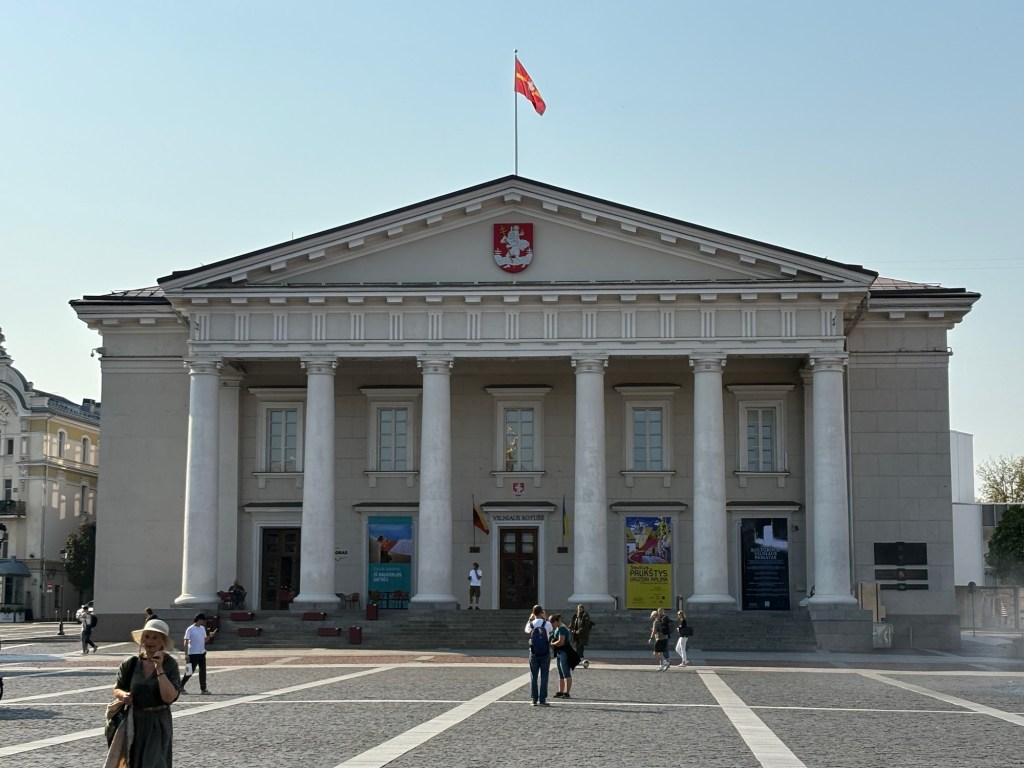
Town Hall and the Town Square
In 2002, President George Bush made the first visit here by a U.S. President, and on the steps of the town hall, said, “From now on Lithuania’s enemies will be America’s enemies.” This was leading up to Lithuania’s membership in NATO.
Info stat: Lithuania’s population has fallen from 4 million to 2 million due to emigration, largely to Western Europe.
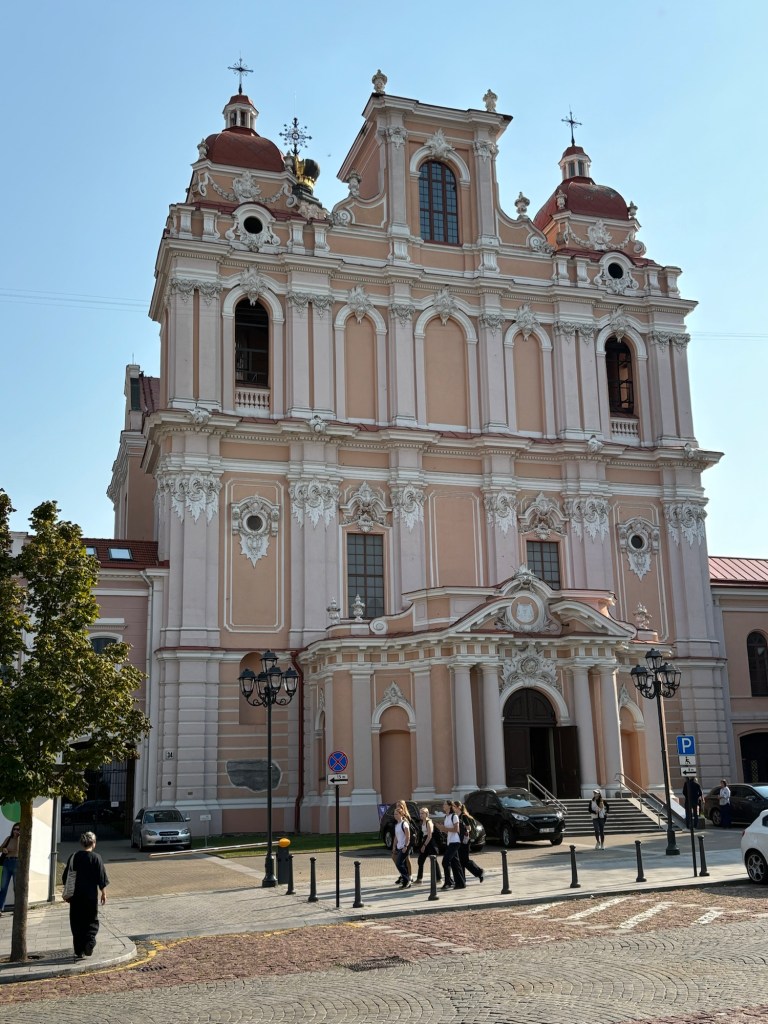
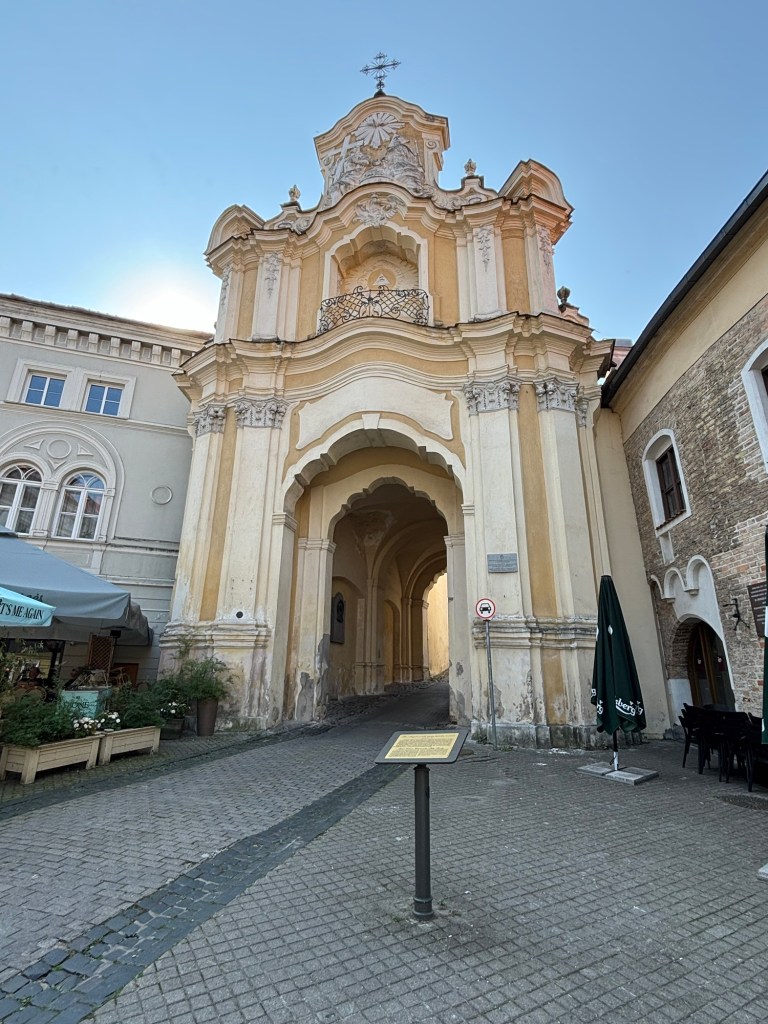
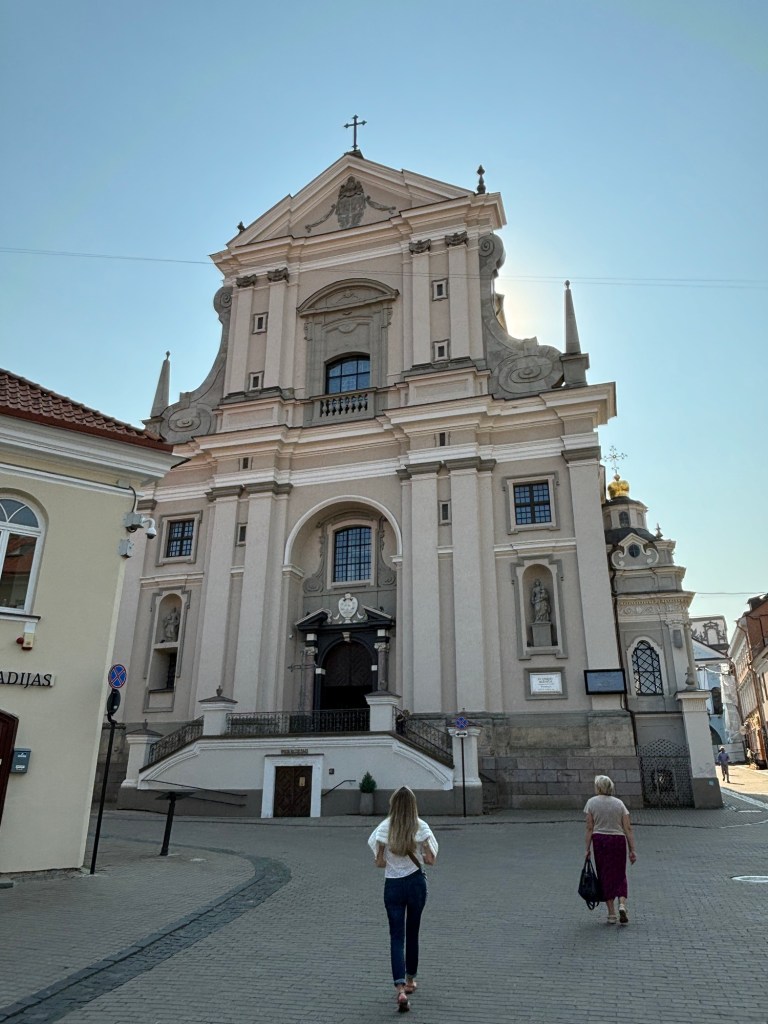
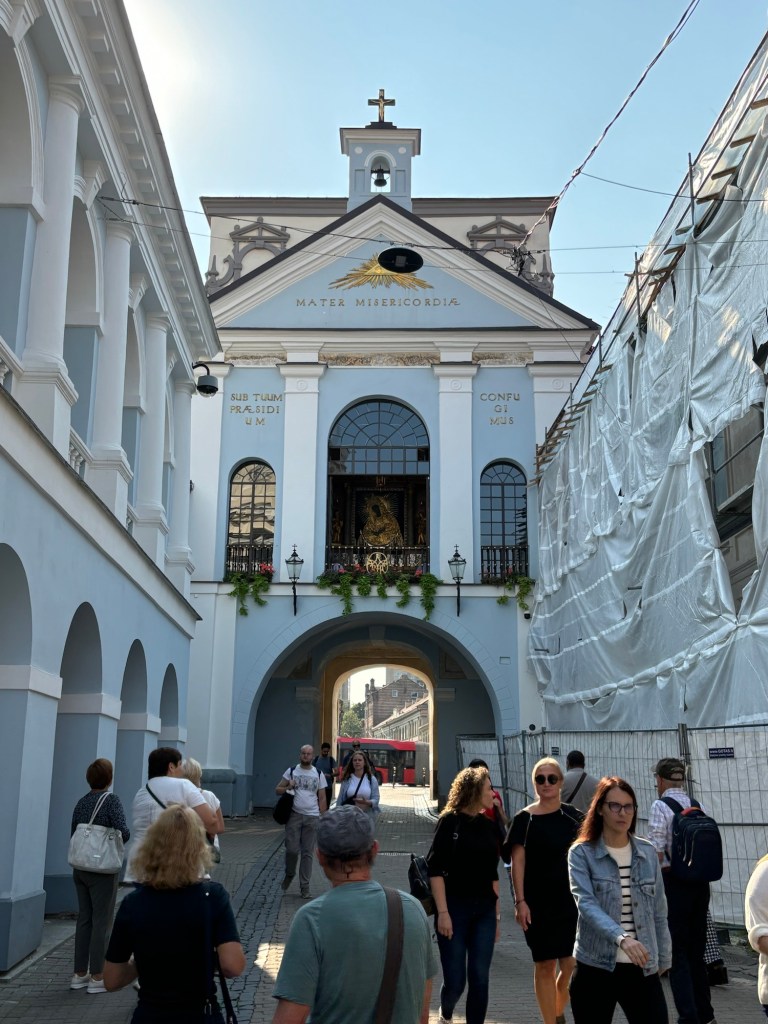
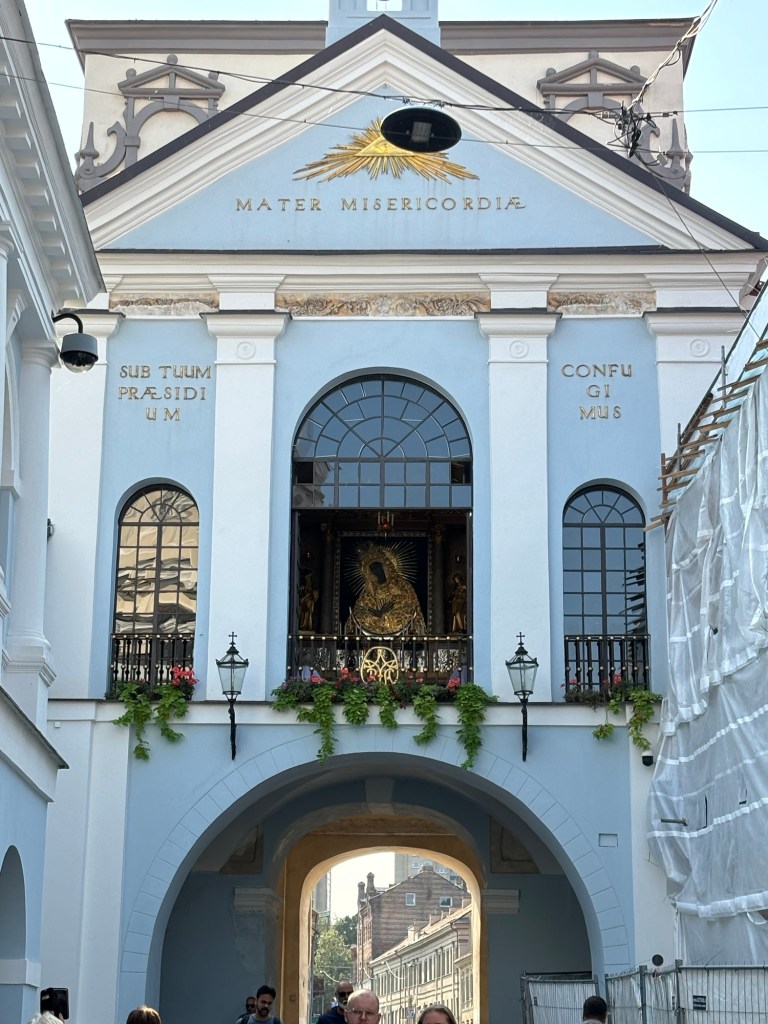
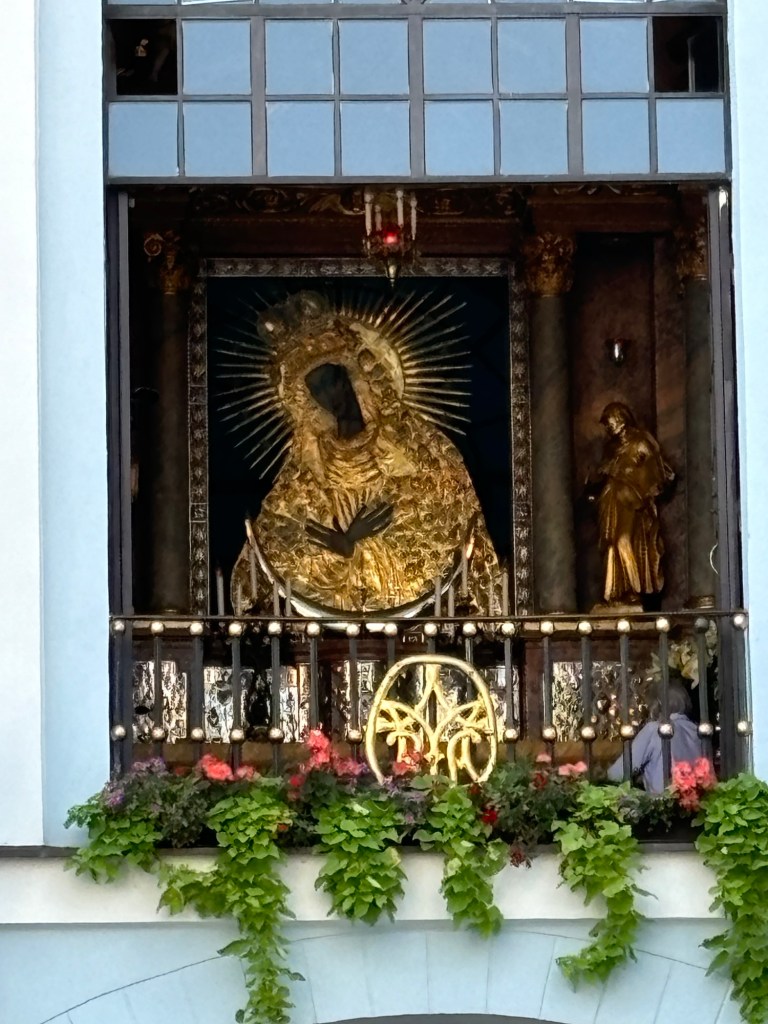
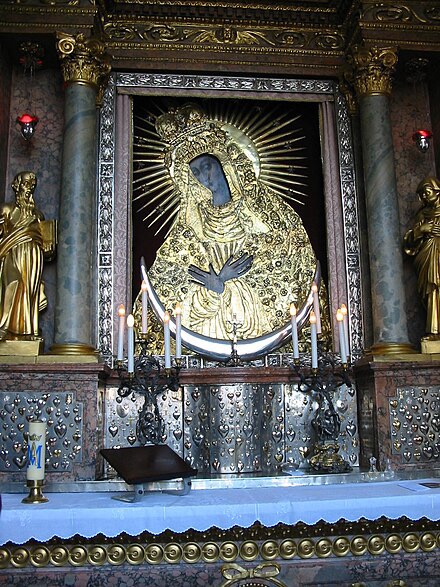
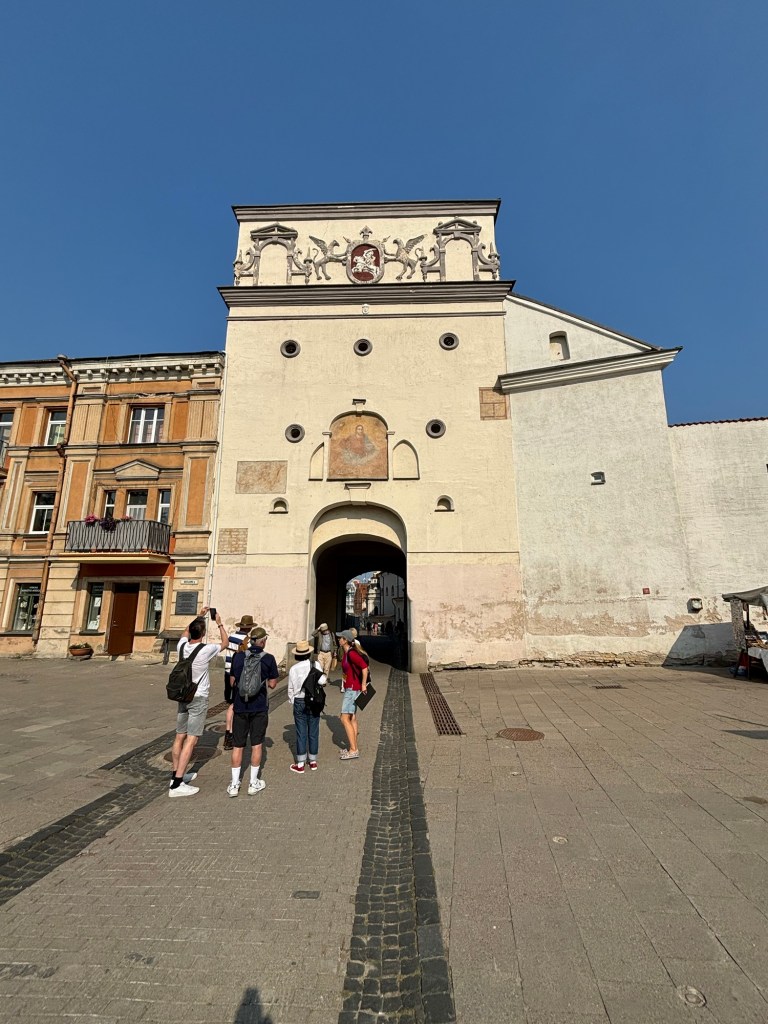
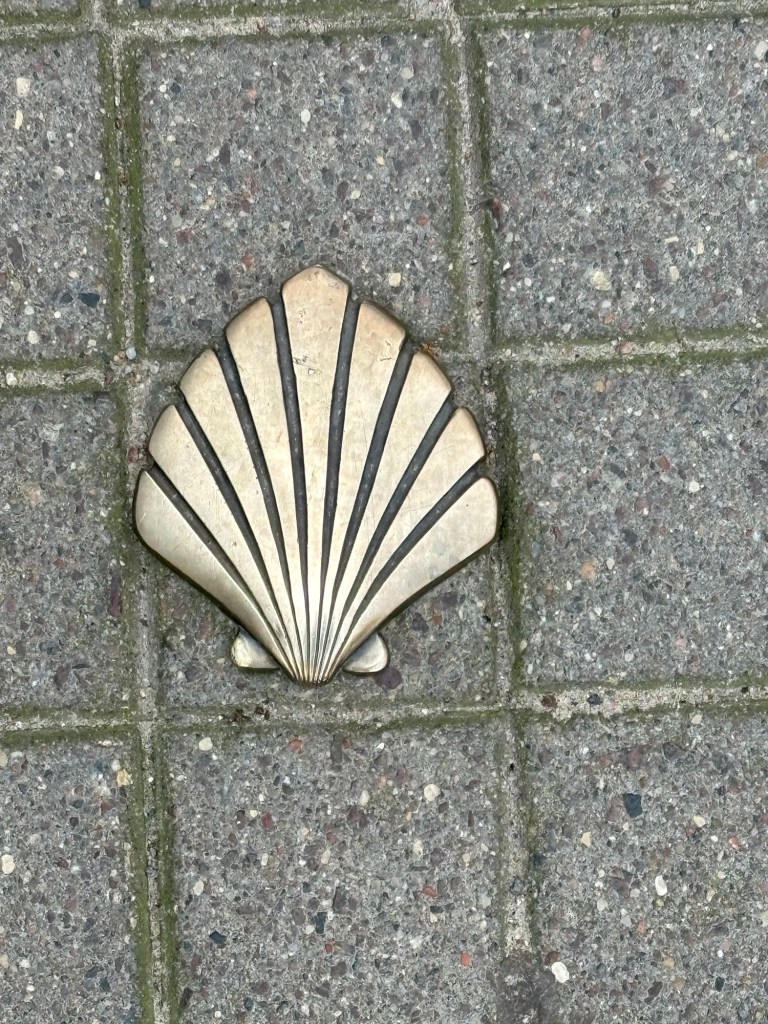
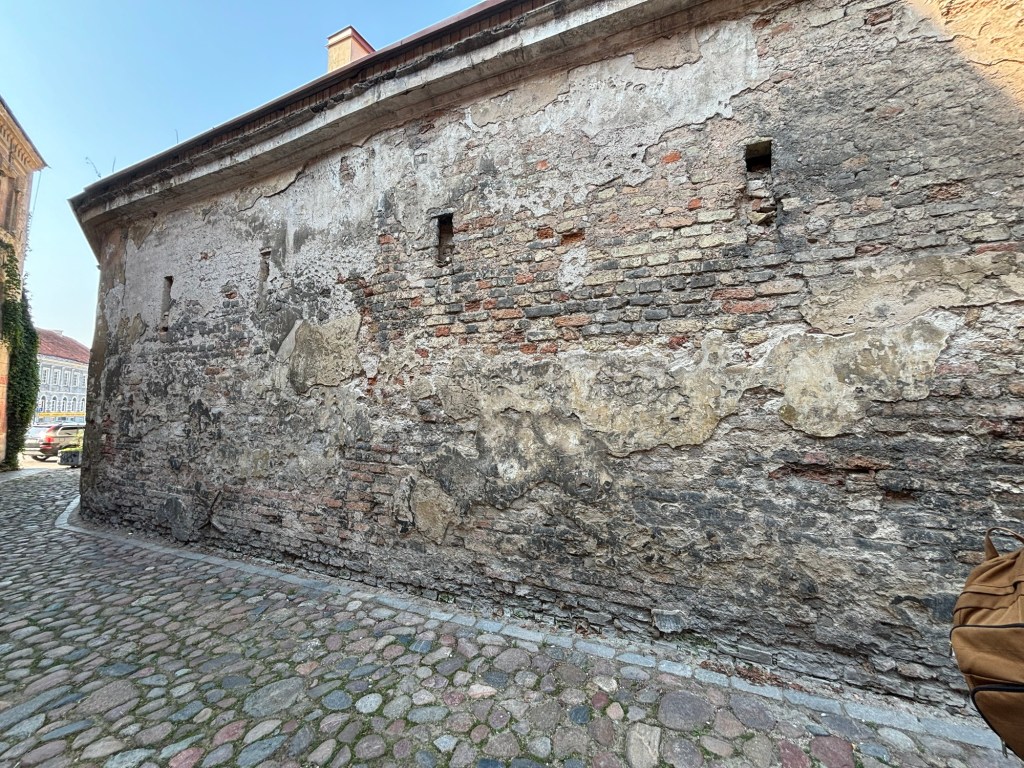
The Church of Saint Casimir, the only Lithuanian Catholic Saint. It is the first and the oldest baroque church in Vilnius, built in 1618.Greek Catholic Church of the Holy TrinitySt. Teresa’s ChurchThe Gate of Dawn in Vilnius, the chapel of Our Lady of the Gate of Dawn is in the middle behind the glass windowThe icon of Our Lady of the Gate of Dawn (painted on wood). It is a major site of Catholic pilgrimage in Lithuania.The other side of the GateCamino shells, even in Lithuanian!Part of the medieval wall – 1500sMonastery and churchSoviet style bldg
Lunch at a sidewalk cafe with a $11, fixed menu. Excellent meal!
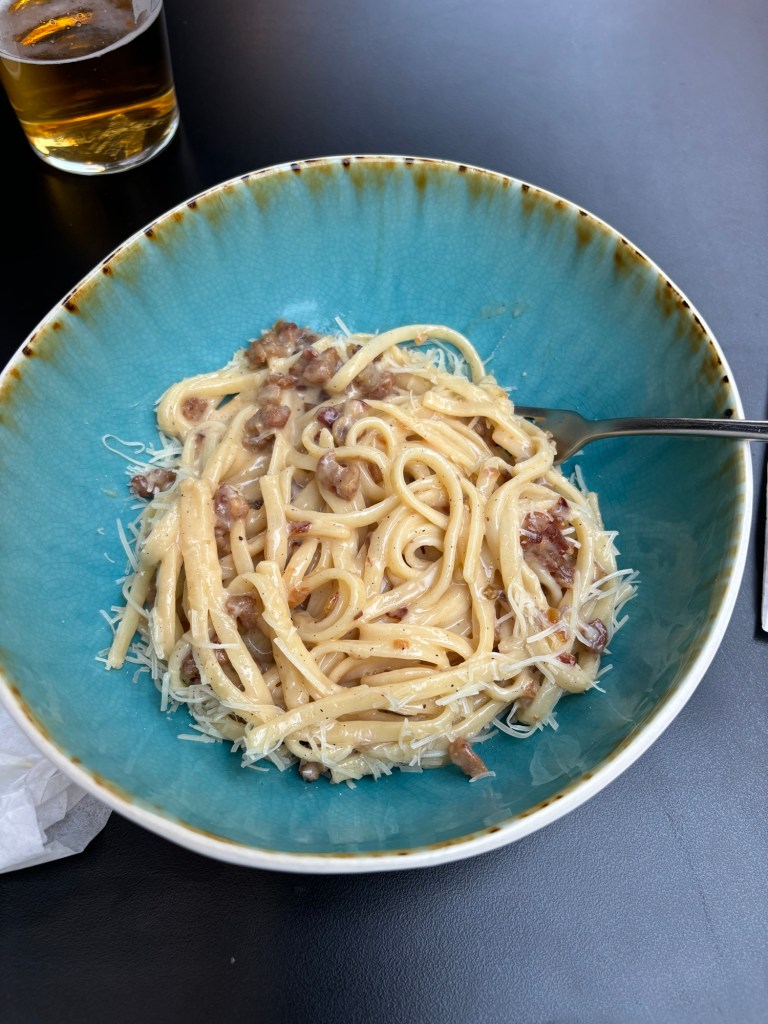
The lunch special today was: Beetroot soup and Pasta Carbonara. I washed it down with a local Lithuanian lager (it was a great beer! Or “geras alus” in Lithuanian)
There is still lot of Russian architectural influence in Lithuania. That’s different from Latvia and Estonia, both of whom are more tied to Finnish architecture and culture.
Some other photos:
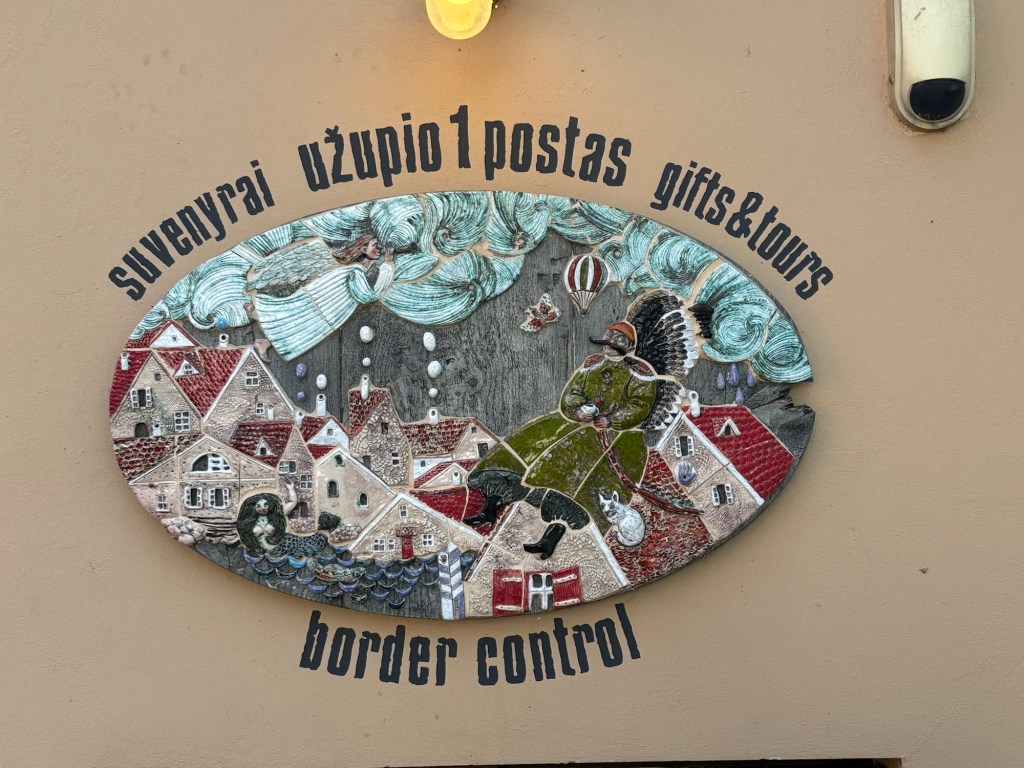
The Republic of Uzupis (who knew?)
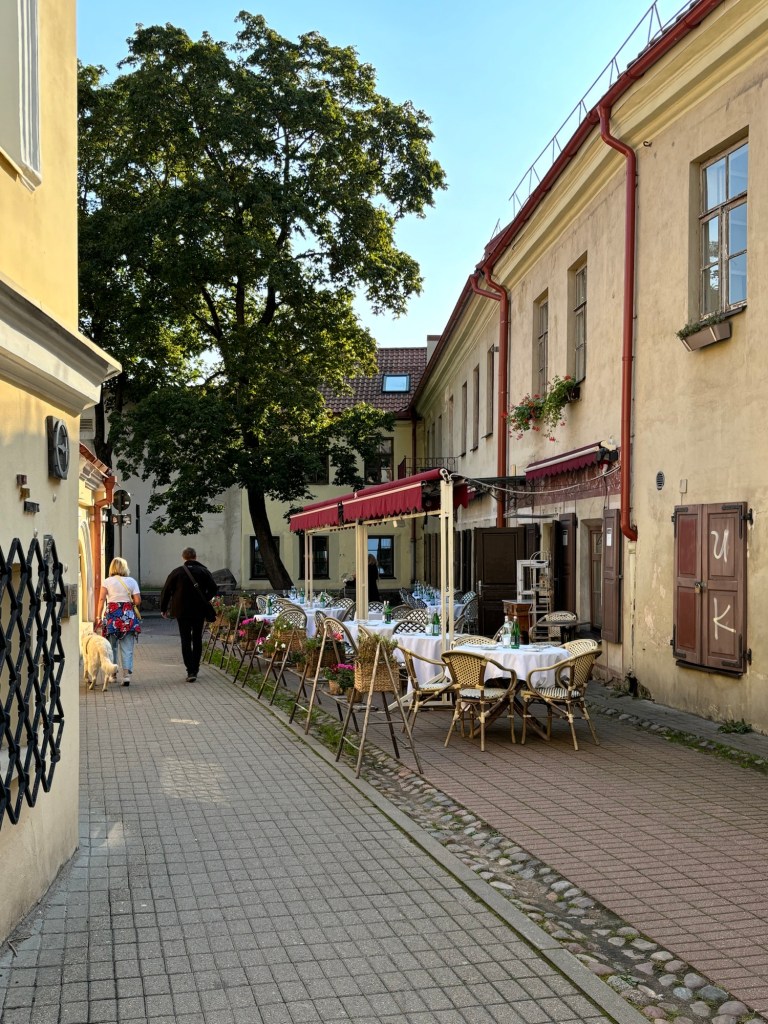
In a neighborhood behind St Anne’s Church is the independent Republic of Uzupis! Užupis is largely located in Vilnius’ Old Town. Užupis means “beyond the river” or “the other side of the river” in the Lithuanian language and refers to the Vilnia River.
The district has been popular with artists for some time, and has been compared to Montmartre in Paris and to Freetown Christiania in Copenhagen, due to its bohemian and laissez-faire atmosphere.
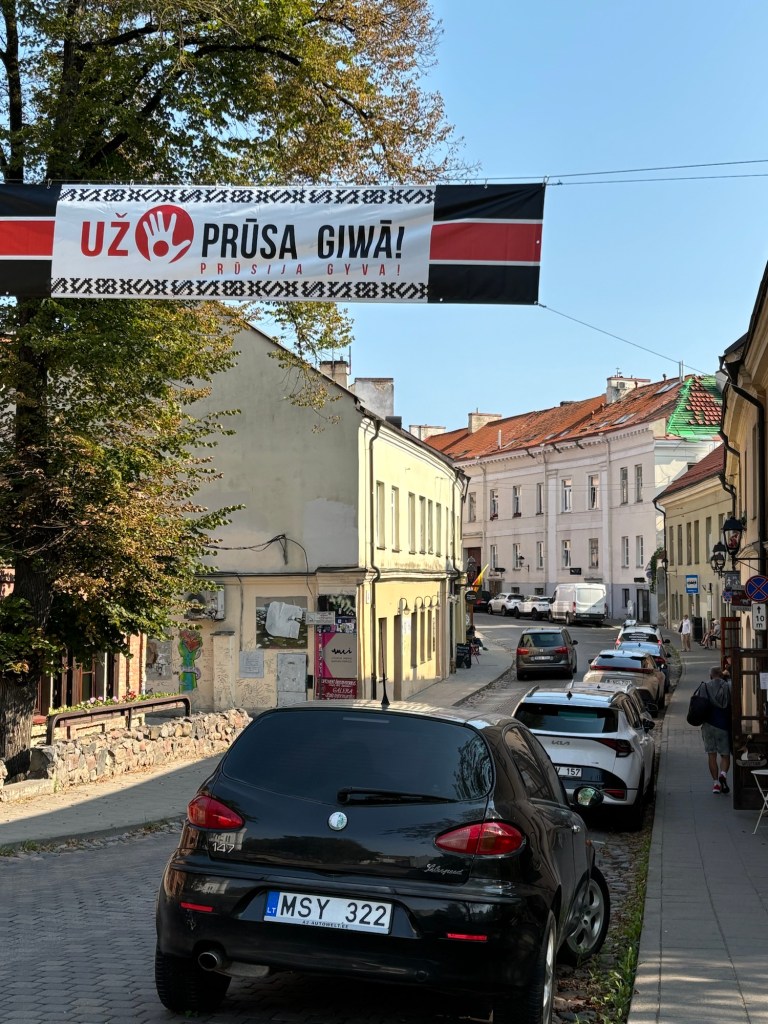
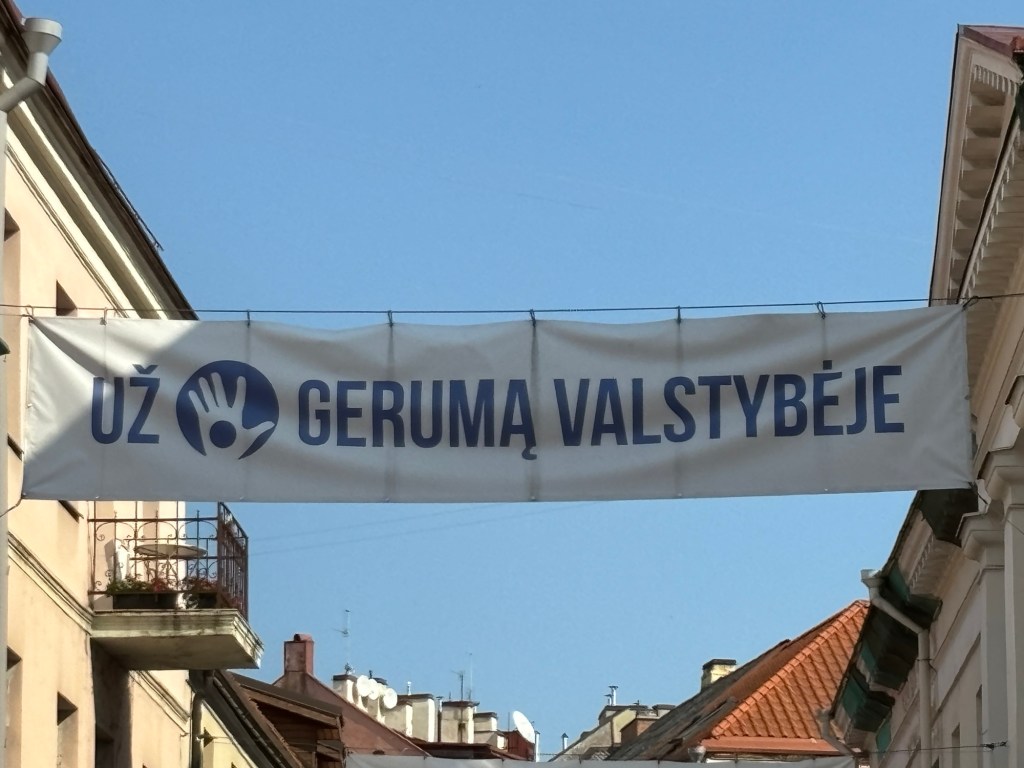
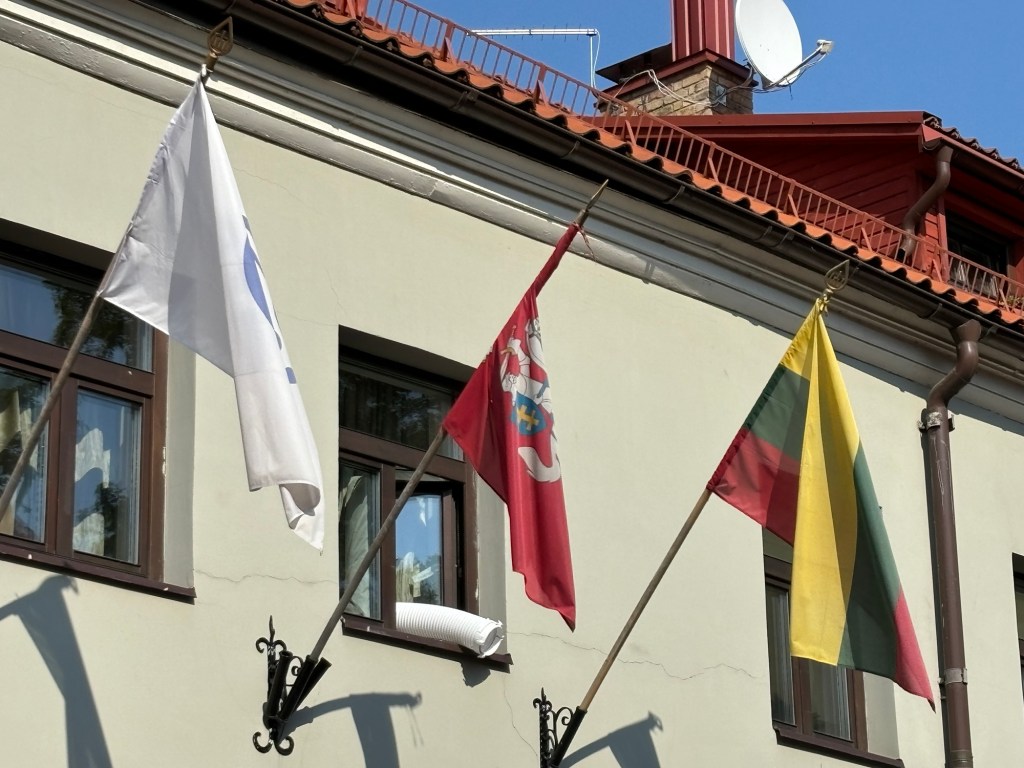
One of the bridges entering the Republic of UzipisBorder Control Office – Even got my Passport stamped!The banner says, “Prussia is alive” – huh?This one says, “Goodness in the state” – OK…Uzupis flag, Lithuanian Coat of Arms flag, and Lithuanian flag
Everything seems to be arts and crafts based. Galleries, tea houses, boutiques, jewelry stores, etc. An “artsy” republic!
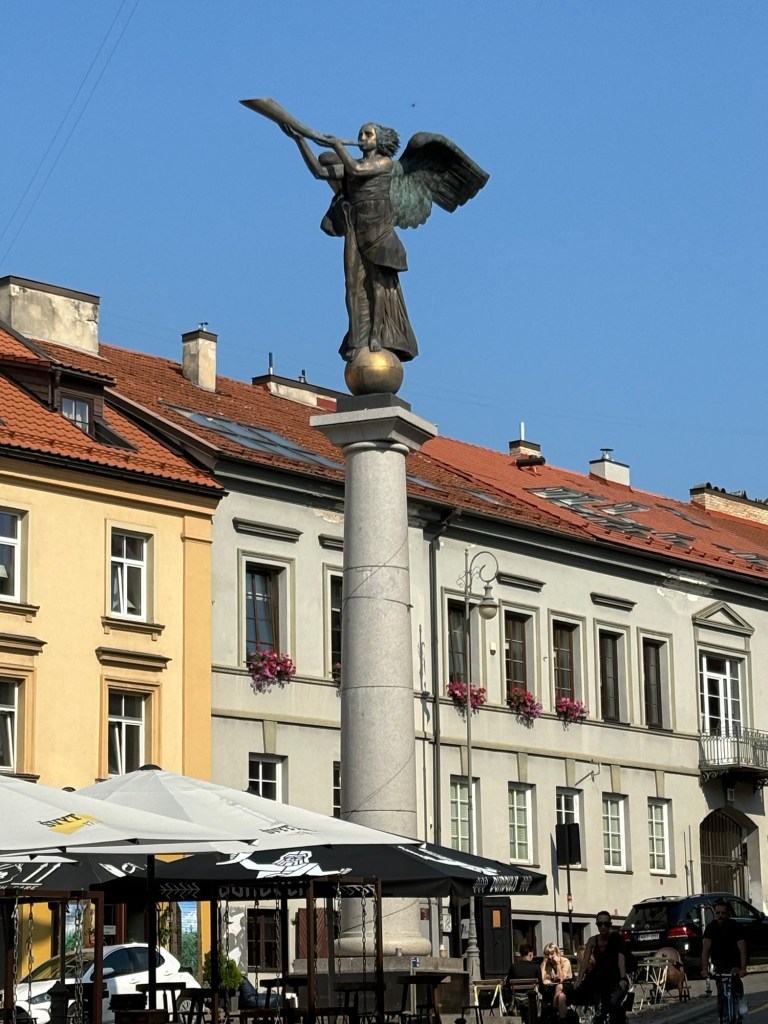
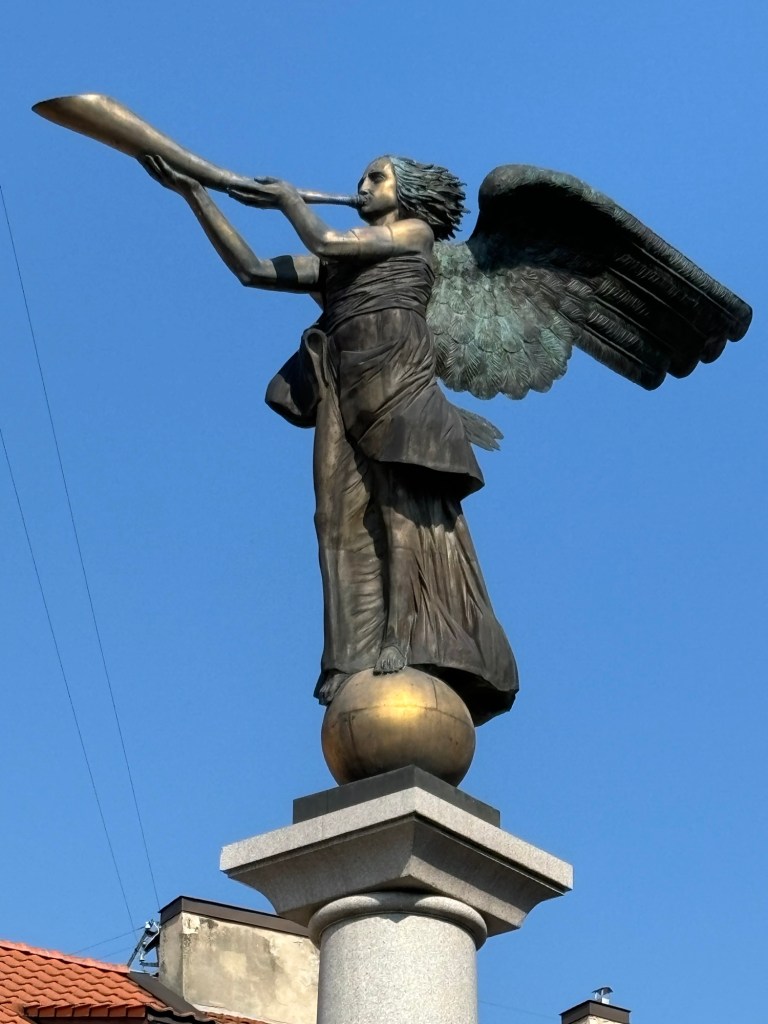
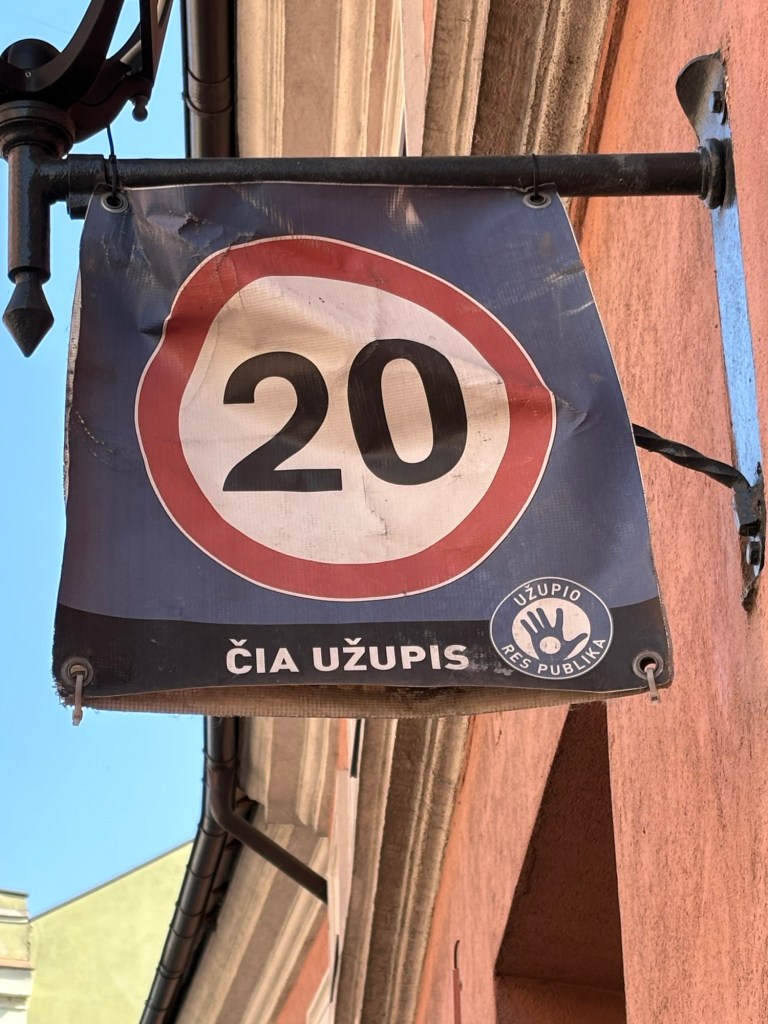
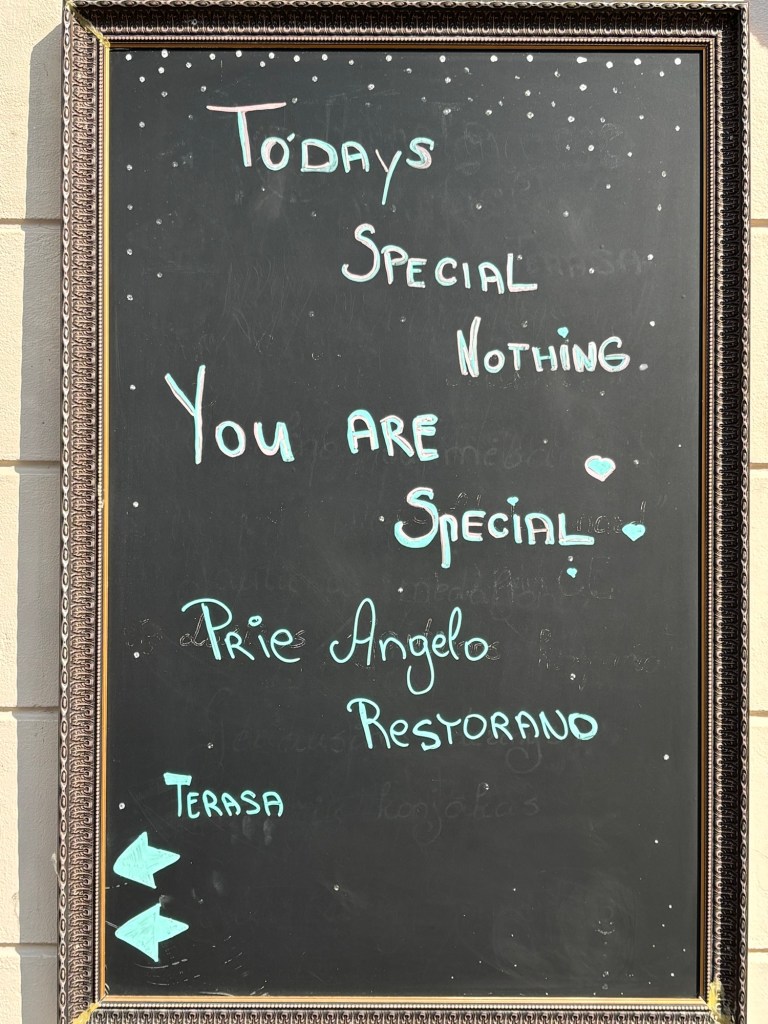
The Uzupis AngelUzupis traffic speed limit sign-flagSign outside a restaurant in UzupisA street in Uzupis
Just had a light dinner tonight – a small chicken Caesar salad.
Tomorrow it’s an early morning (6:30 am!) train ride to Riga, Latvia.
Words of wisdom, or just to amuse…?
It is a fact of nature that light arrives faster than sound. Which is why some people can appear quite bright, until they speak.
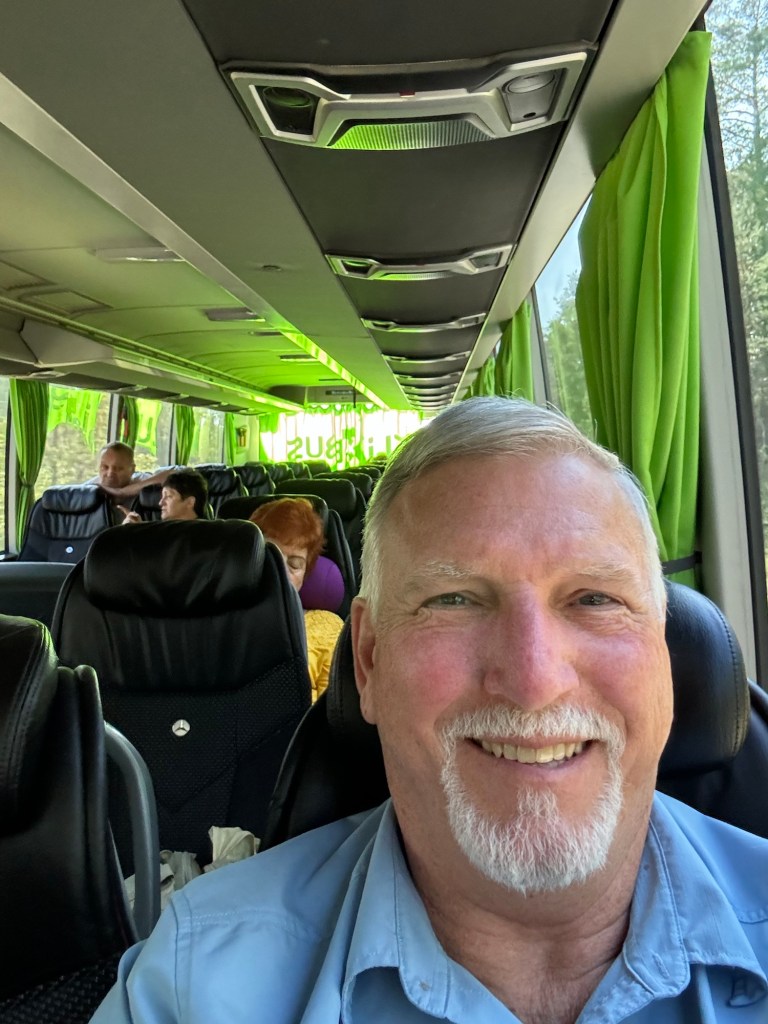
An early rise to sunny skies for a 8+ hour ride to Vilnius, Lithuania. The train was sold out, so I caught a bus instead. Surprisingly, the bus was faster than the train route. Go figure.
I’m headed northeast out of Poland toward the capital cities of the three Baltic states of Lithuania, Latvia, and Estonia, before finishing my last couple days in Helsinki, Finland.
We had a surprisingly aggressive bus driver who would pass other vehicles, especially semis, on two-lane highways with little room to spare. Always smooth so I guess he knew what he was doing. Gotta schedule to keep, ya know!
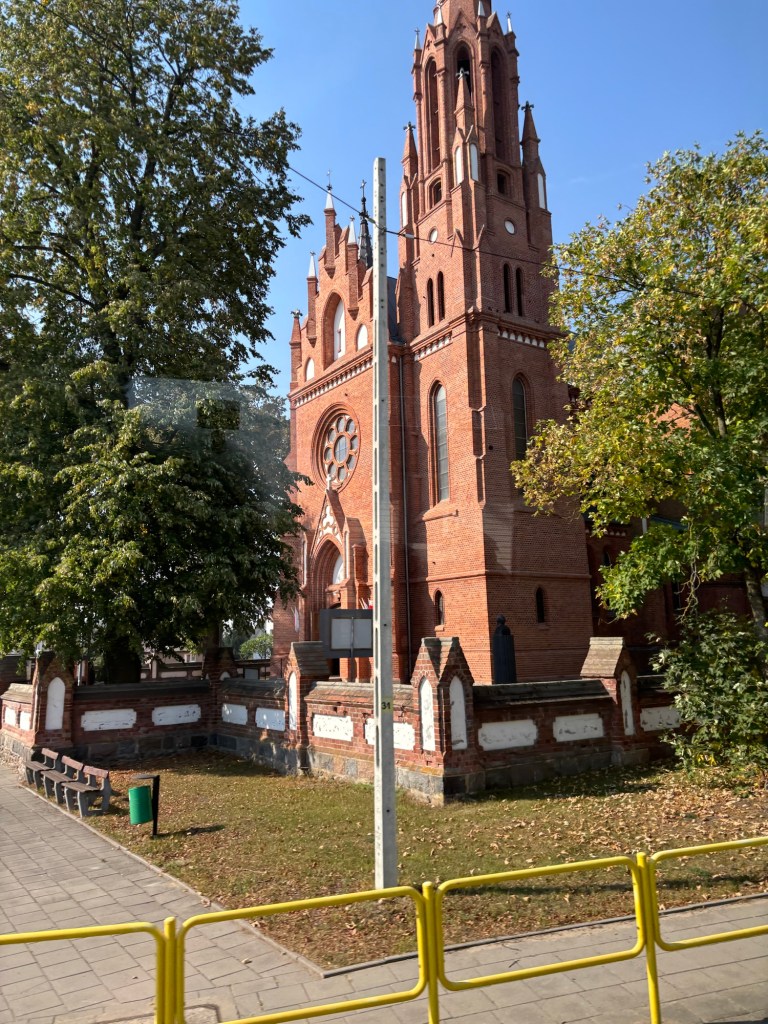
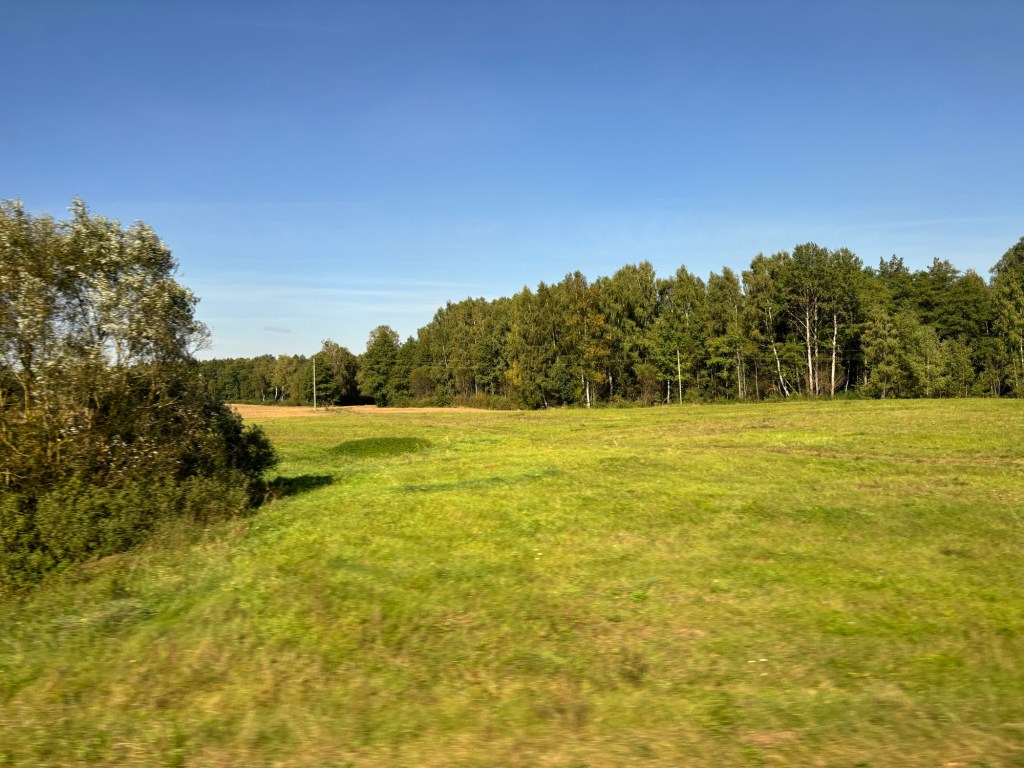
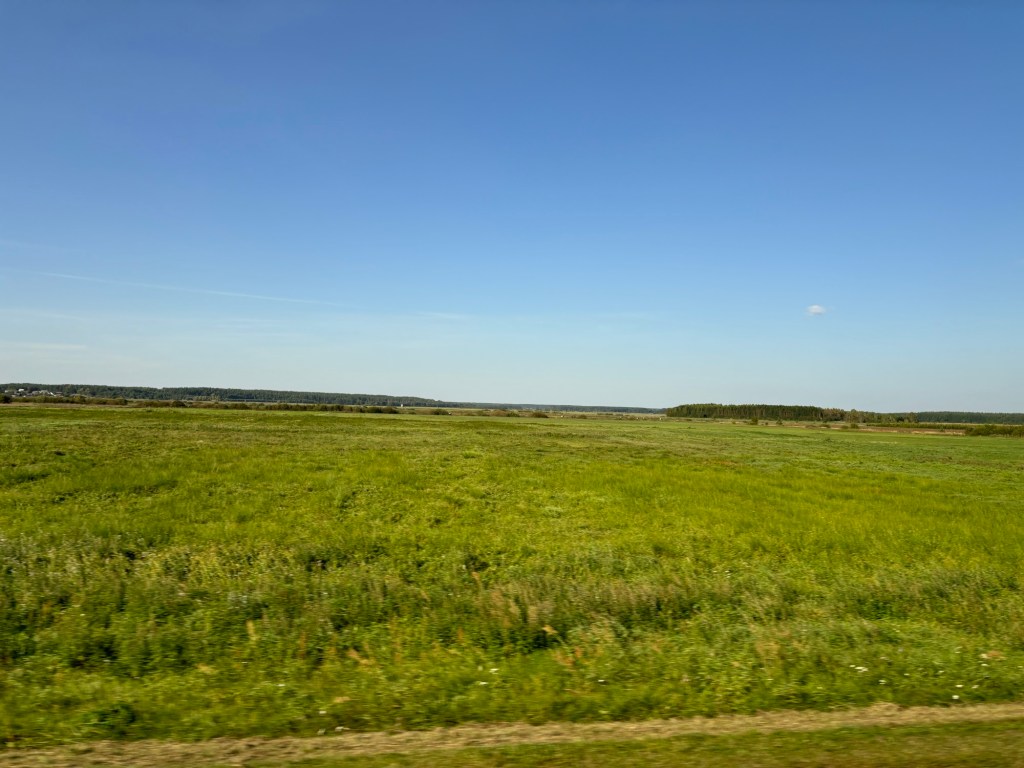
Northeastern Poland was pretty flat, with just a few rolling hills. Lots of farmland and forested areas of pines, cedars, and birches. There were also numerous lakes with resorts and cabins, and numerous hiking trailheads along the rural highways.
After 5 hours we crossed into Lithuania and moved the clock ahead an hour. The Baltic states and Finland are all an hour ahead of the rest of Europe. The scenery in Lithuania was largely the same, although the roads were clearly not as smooth or well maintained.
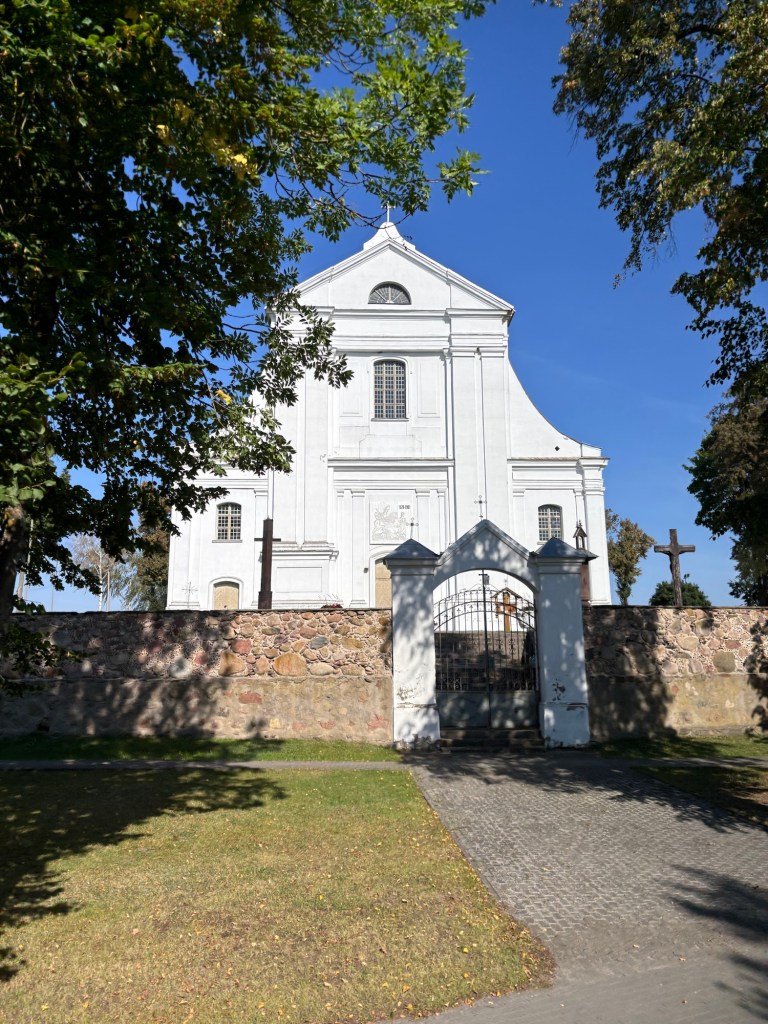
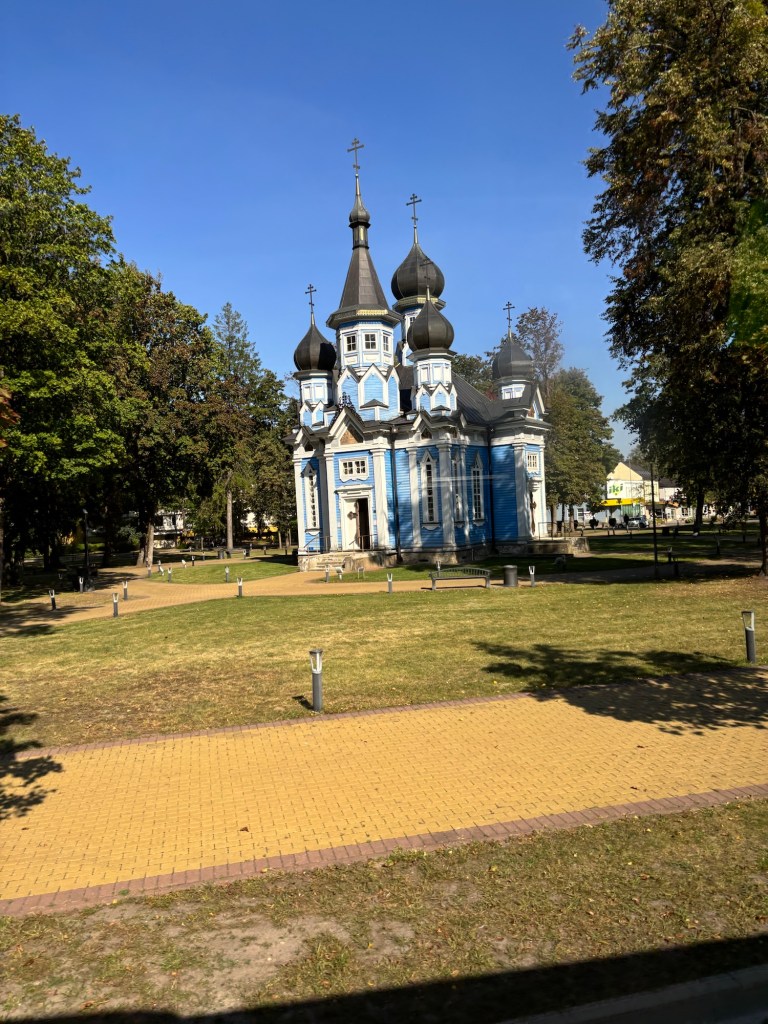
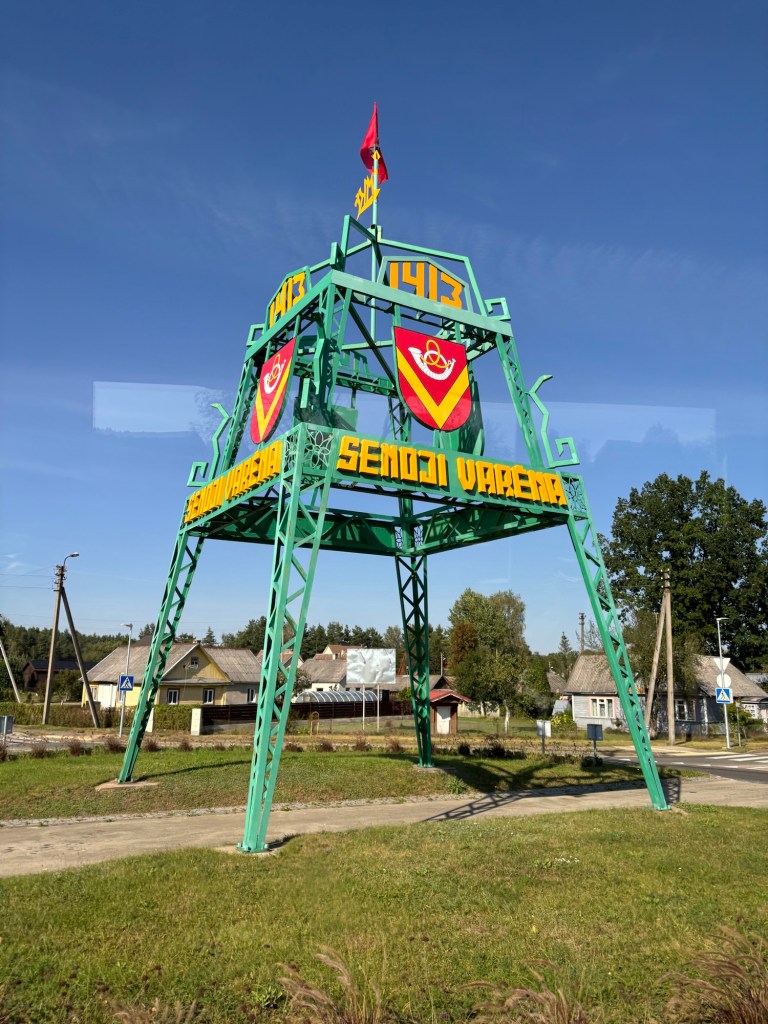
We passed through a beautiful town named, Druskininkai. It must be a popular resort town with massive parks, resorts, and rental cottages. There were also a much higher percentage of wooden houses as compared to the previous countries. Almost Scandinavian in appearance.
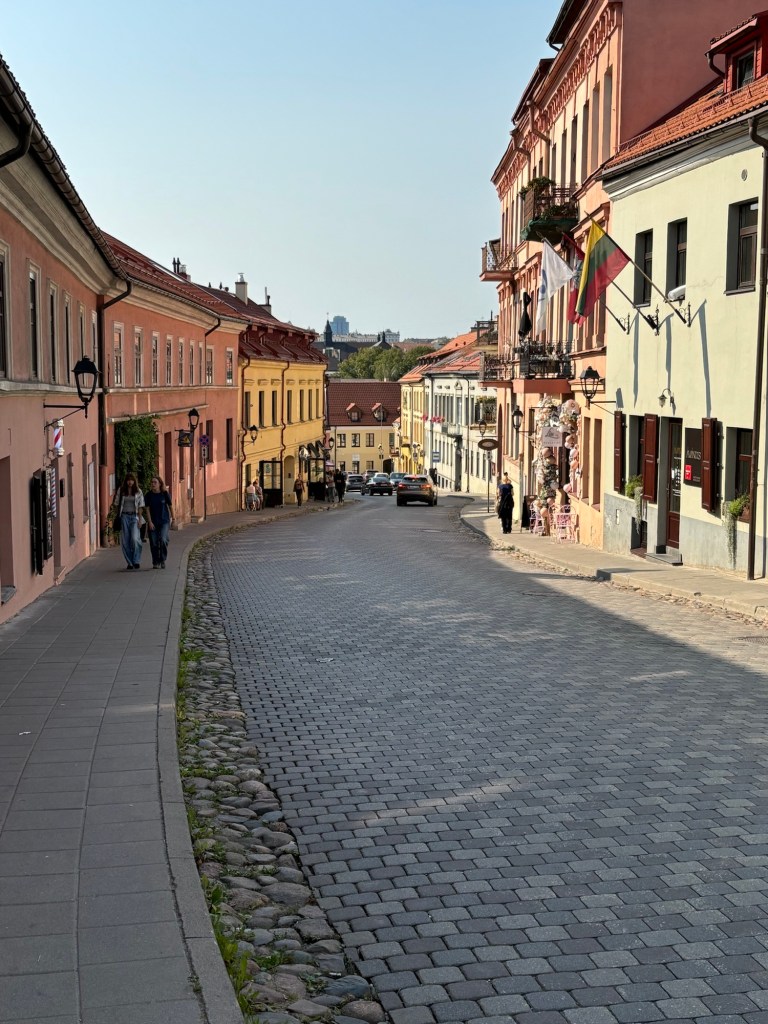
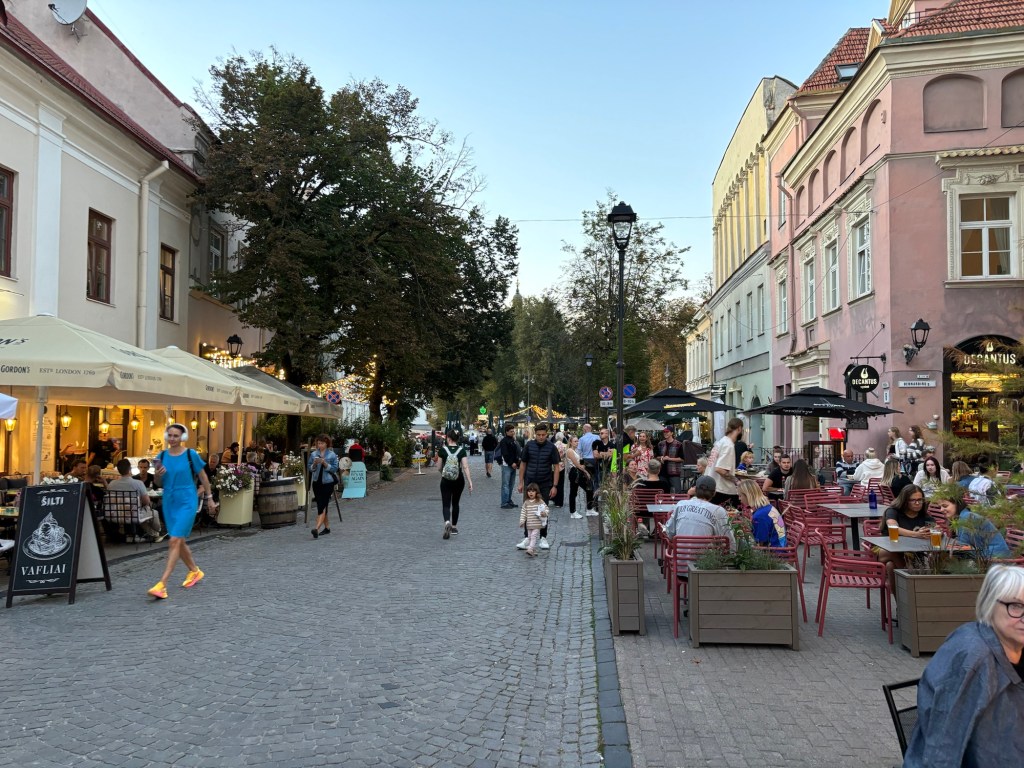
The bus arrived a couple minutes early to spectacular weather in Vilnius, the capital of Lithuanian. It’s a beautiful city of 550,000 inhabitants. I’ve already-y-y-y found-d-d-d that-t-t-t, like Prague, there are too many cobblestone streets here, although still a lovely city it seems.
A fifteen minute bouncy scooter ride got me to my hostel for the next couple days. Quite nice and conveniently located. After dropping my bag I headed out to see the local area.
There is a TON of road construction going on around the city that made navigation a challenge. Plus bike lane markings are limited, so a lot of guess work is involved on road / sidewalk routes.
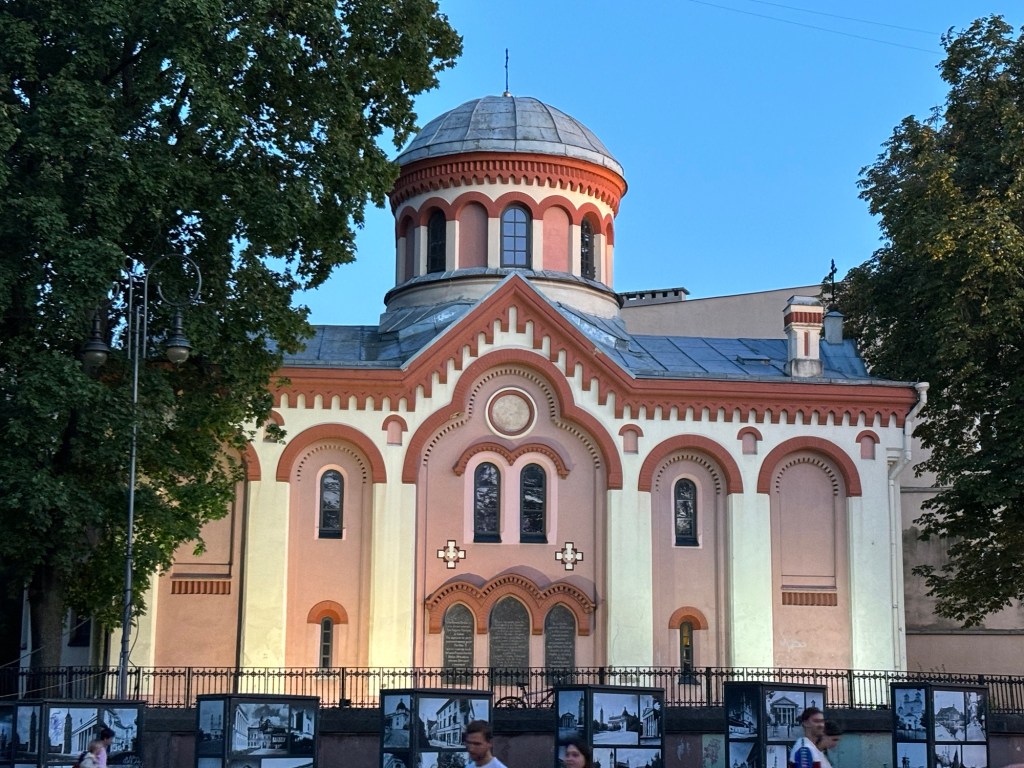
Church of the Ascension of the Lord
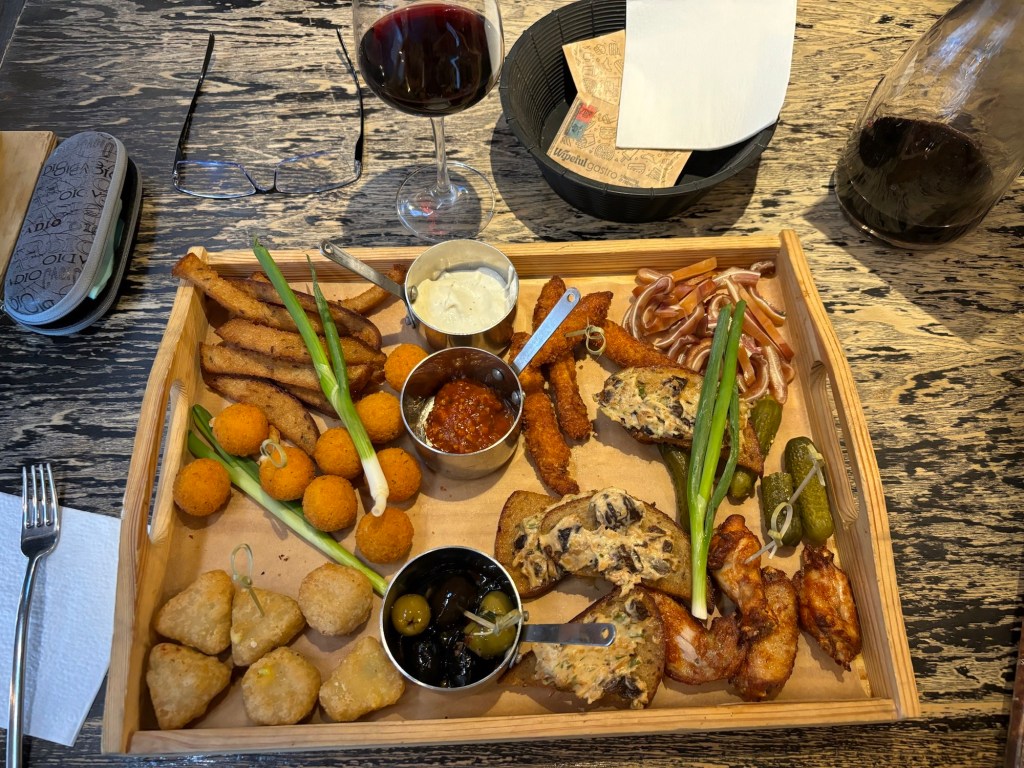
Dinner was an amazing sampler of various Lithuanian favorites and some red house wine.
A Huge Lithuanian Set of Snacks (Lithuanian: “LIETUVISKAS DIDELIS UŽKANDŽIŲ RINKINYS”)
Try saying that…once! Anyway, the meal included: Fried bread sticks, fried bread with cheese and plum spread, fried chicken nuggets, chicken drumsticks, fried cheese donuts, fried pieces of cheese with spicy Jalapeño peppers, smoked pig ears, pickled olives, pickled cucumbers, and green onions. Served with garlic mayonnaise and adjika (spicy) sauces.
Now I’m full! Time to relax and plan out tomorrow’s day.
Words of wisdom, or just to amuse…?
In books, there hides great knowledge; knowledge is power; power corrupts; corruption is a crime; crime doesn’t pay… basically, if you keep on reading, you’ll end up a beggar.
A lazy morning getting ready for a day of sightseeing starting off with a Hop On-Hop Off bus. The rain was supposed to hold off until evening, and with fingers crossed, it did.
I tried to find some breakfast before I boarded the bus, but most restaurants don’t open until 10 am on Sunday morning. Even the American style fast food places – McDonald’s, BK, KFC, Subway, etc. – were open, but didn’t offer breakfast. I just wanted a dang donut or bagel or muffin or something!
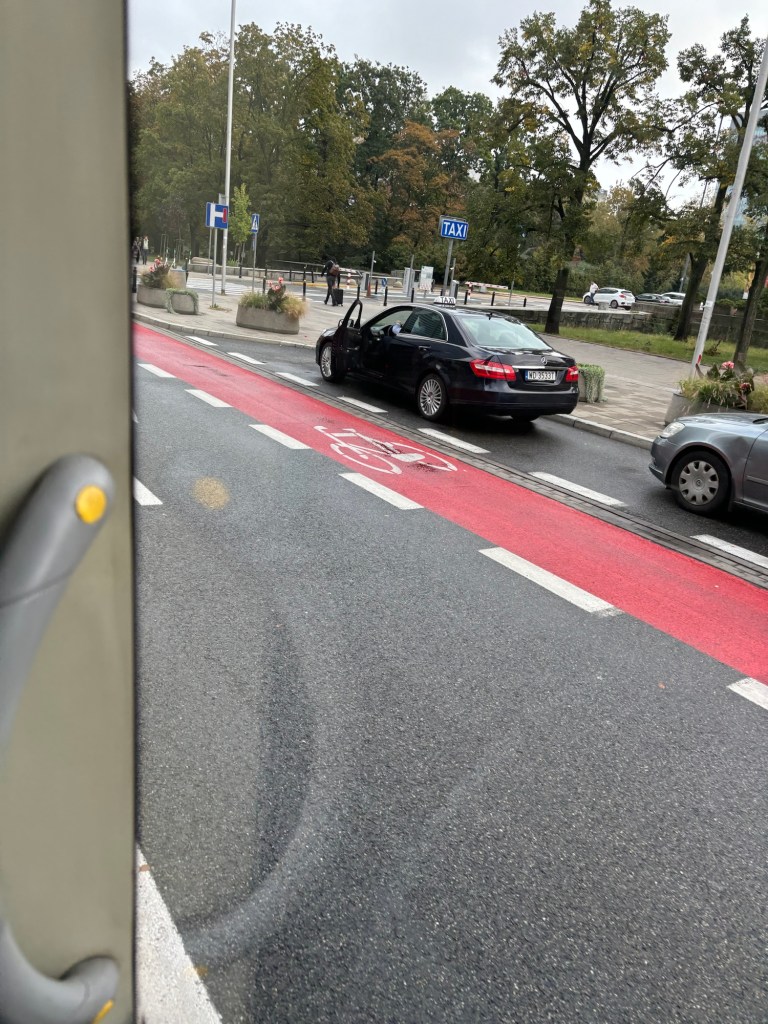
OBTW: Bike and scooter lanes are very nice and clearly marked in red and white, just like the Polish flag! 🇵🇱 Polish drivers are also very courteous and invariably stop at any crosswalk for pedestrians, bicyclists, and scooters riders.
Prominent bike lanes on all the main routes in Warsaw
So without breakfast I boarded the 10:00 am Red Bus to carry me to the places I wanted to stop.
Warsaw was largely destroyed in World War II, and then rebuilt, so the city has a pretty modern feel. Although some buildings look old, it’s rare. Only a few had survived intact.
The Germans crammed 450,000 people into the Jewish Ghetto they created in Warsaw, segregated and walled off from the Aryan side. Unbelievably, the daily food ration for people in the Ghetto was only 270 calories!
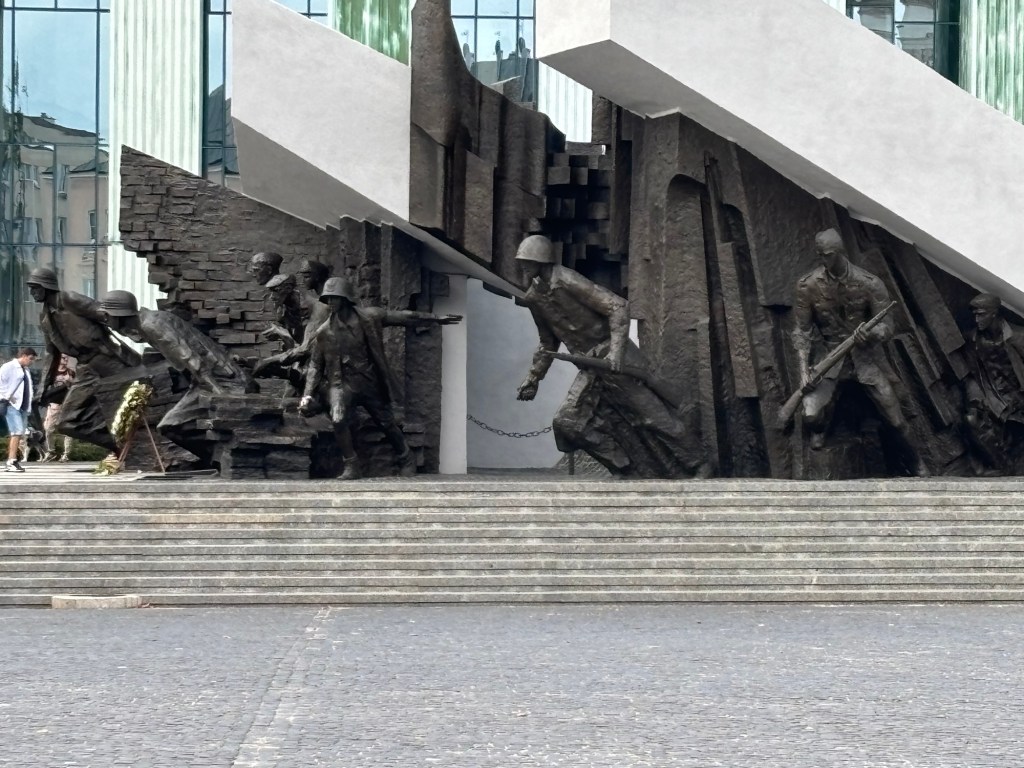
The Warsaw Uprising, sometimes referred to as the August Uprising, was a major World War II operation by the Polish underground resistance to liberate Warsaw from German occupation. It occurred in the summer of 1944, and it was led by the Polish resistance Home Army.
The uprising was timed to coincide with the retreat of the German forces from Poland ahead of the Soviet advance. While approaching the eastern suburbs of the city, the Red Army halted combat operations, enabling the Germans to regroup and defeat the Polish resistance and to destroy the city in retaliation. The Uprising was fought for 63 days with little outside support. It was the single largest military effort taken by any European resistance movement during WWII.
Over 200,000 people died during the time (the majority civilians), and the Germans destroyed 80-90% of Warsaw to put the uprising down. (Source: https://en.m.wikipedia.org/wiki/Warsaw_Uprising)
I got off the bus in the Old Town section and joined a free walking tour that was going to begin in a few minutes.
Interlude: A funny story heard on the bus dialogue.
“A man walked into a Warsaw jewelry store. He had a servant with him and his right hand was in a cast. The buyer picked out a beautiful and expensive bracelet, but did not have money with him to pay for it.
The buyer said that he had recently had surgery on his hand. He requested the jeweler to write a note to his wife so his servant could take it and retrieve the money for the bracelet.
The jeweler pulled out pen and paper and wrote what the buyer requested. The servant then took the note and departed to retrieve the money. The servant returned some time later with the cash and the purchase was completed. The cost was over $22,000 in U.S. currency.
When the jeweler returned home that night, his wife asked him why he sent a servant to fetch such a large sum of money? The jeweler then realized he’d had robbed himself!”
If it’s not a true story, it should be. It was a brilliant deception.
Here are some photos from the walking tour:
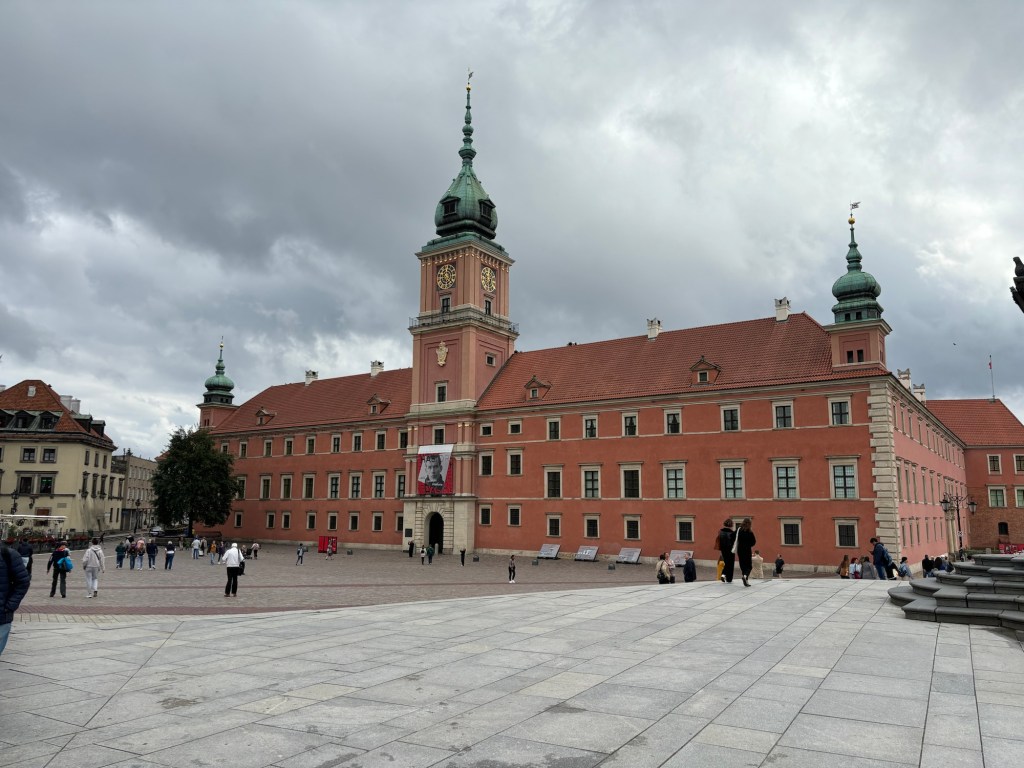
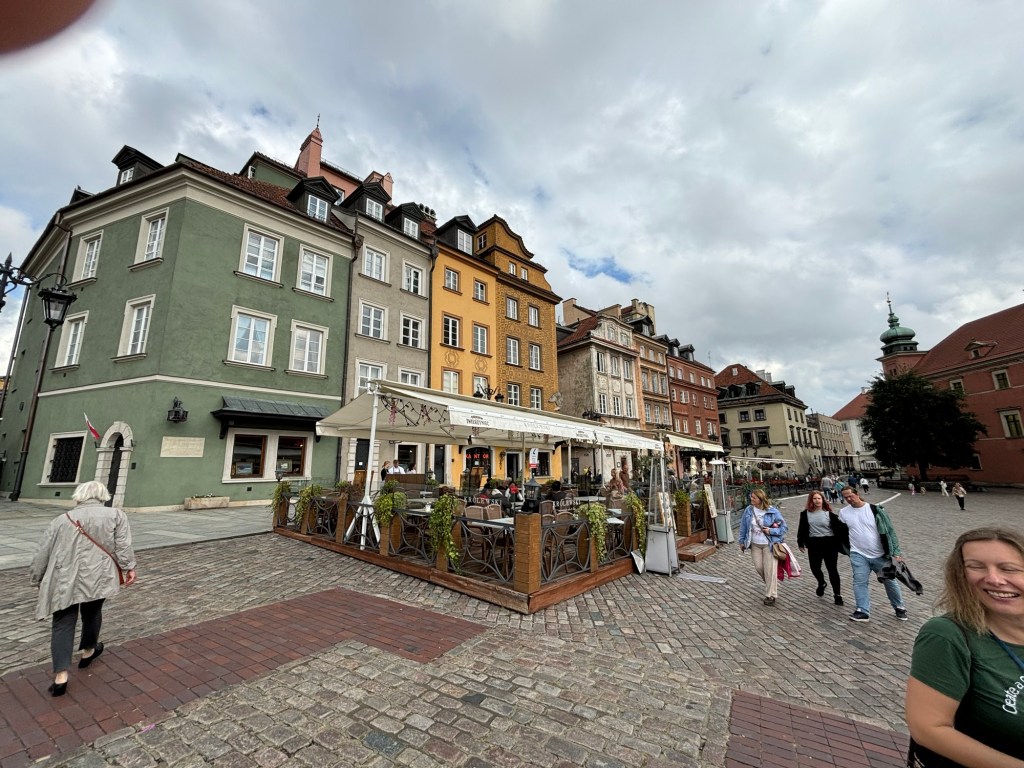
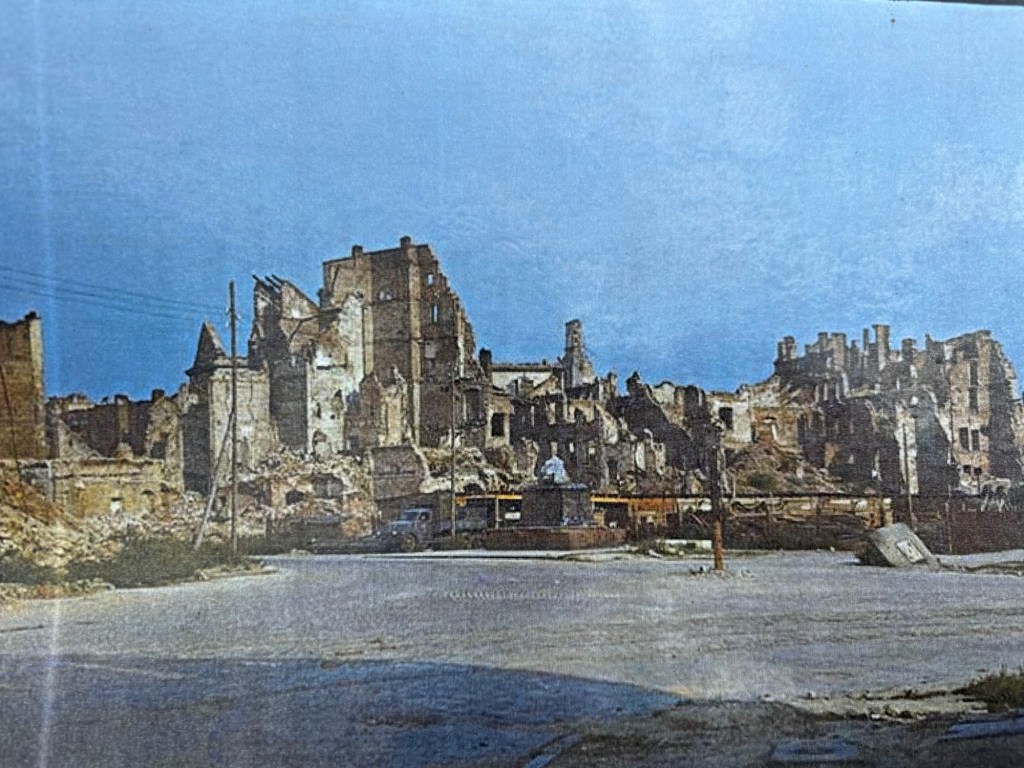
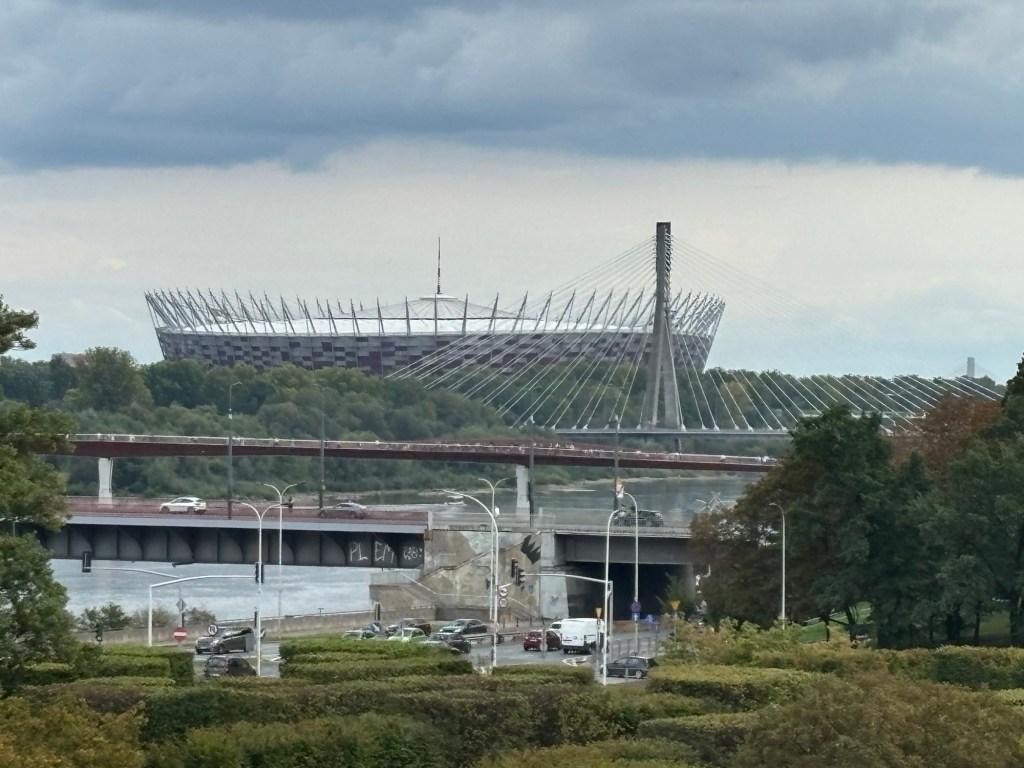
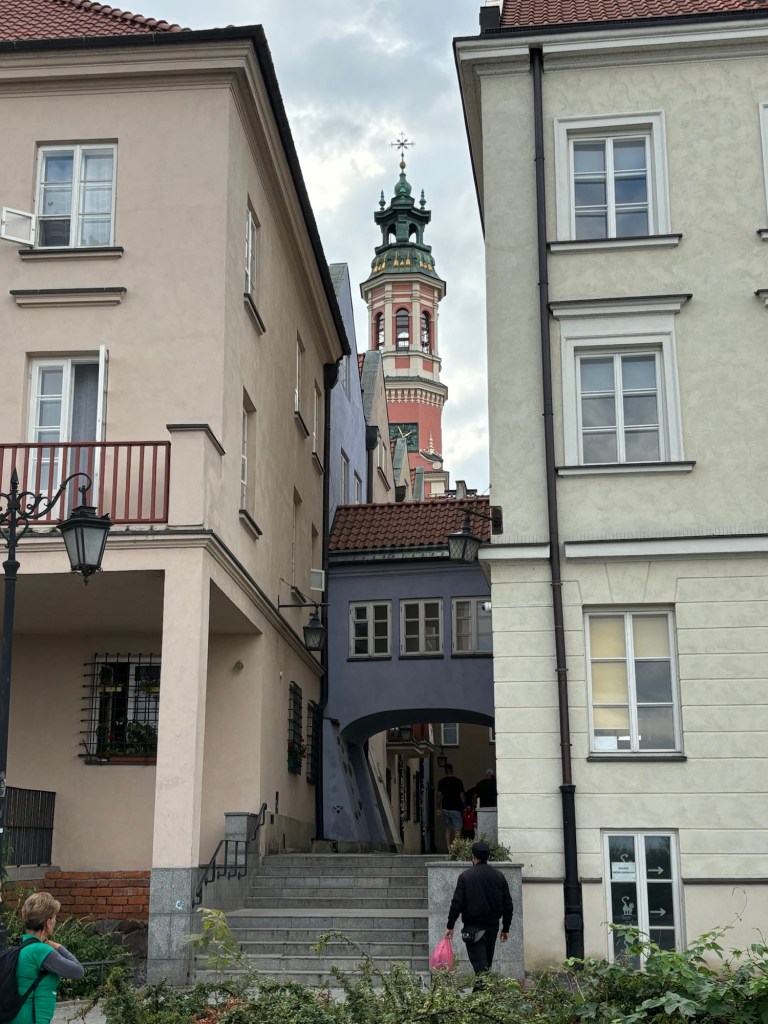
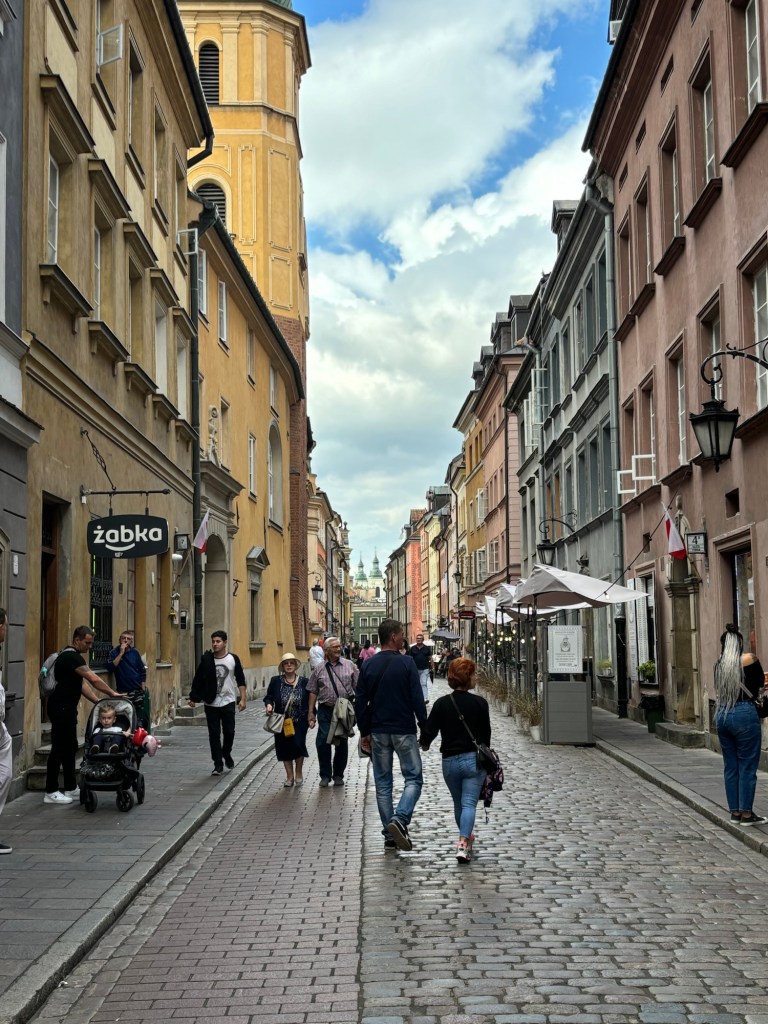
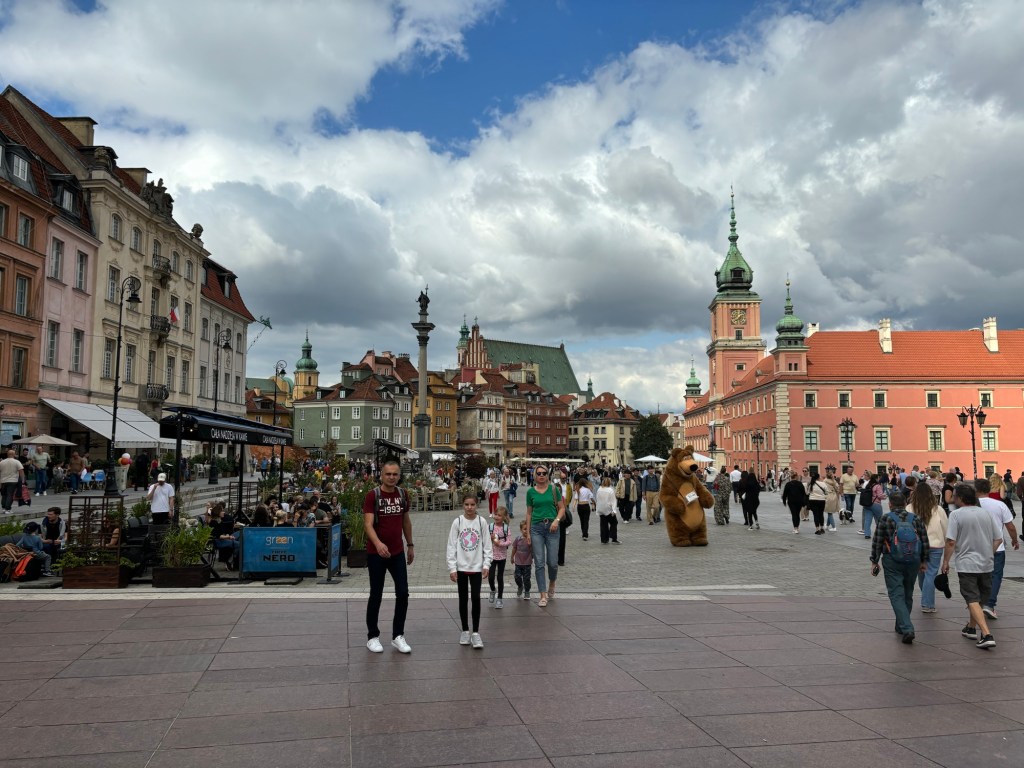
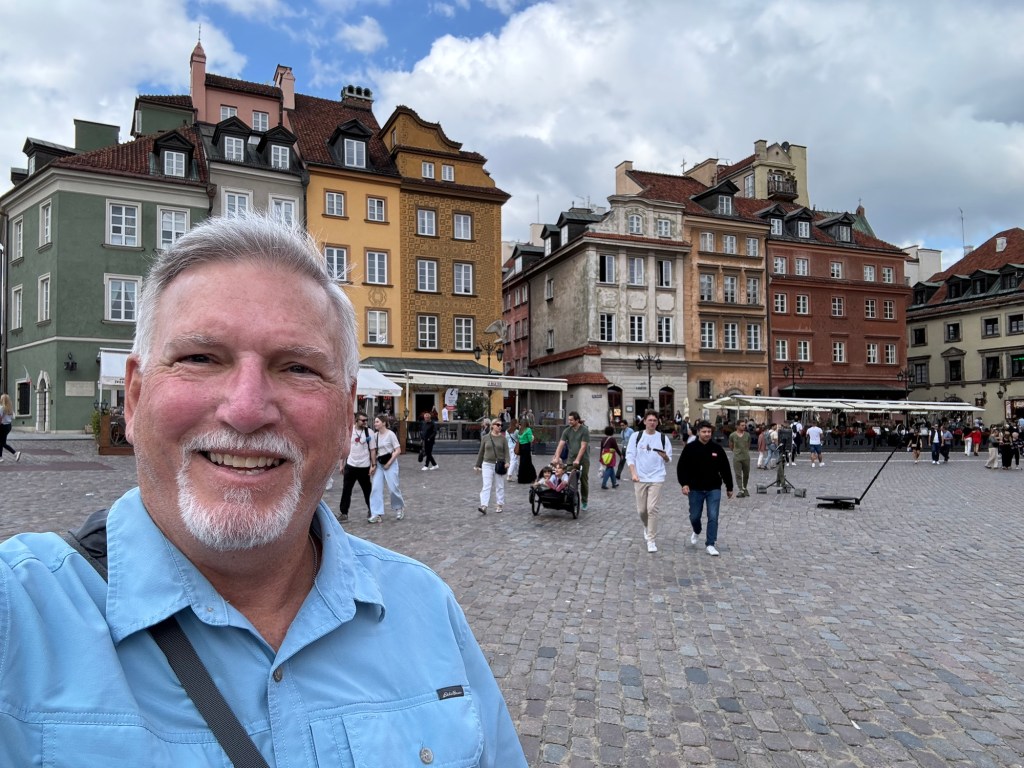
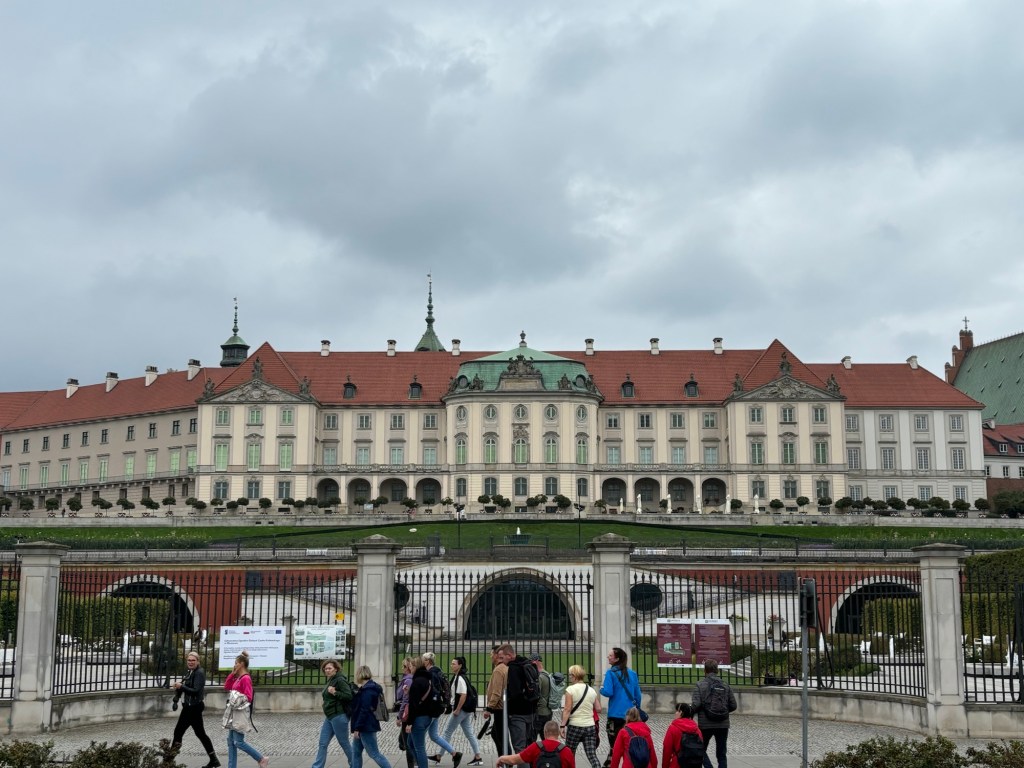
Castle in Old Town Square – Youngest Royal Castle in Europe. Completely rebuilt and finished in 1984.Row houses in Old Town SquareWhat the same view above looked like after the Warsaw Uprising in WWIINational stadium where Polish football (soccer) team plays. Taylor Swift had a concert there last month and the city was crazy according to our guide.
Some Interesting Tidbits
Used to be near 400,000 Jews in Warsaw. Now only about 1,000 today.
Many immigrants today, but overall unemployment of less than 1%!
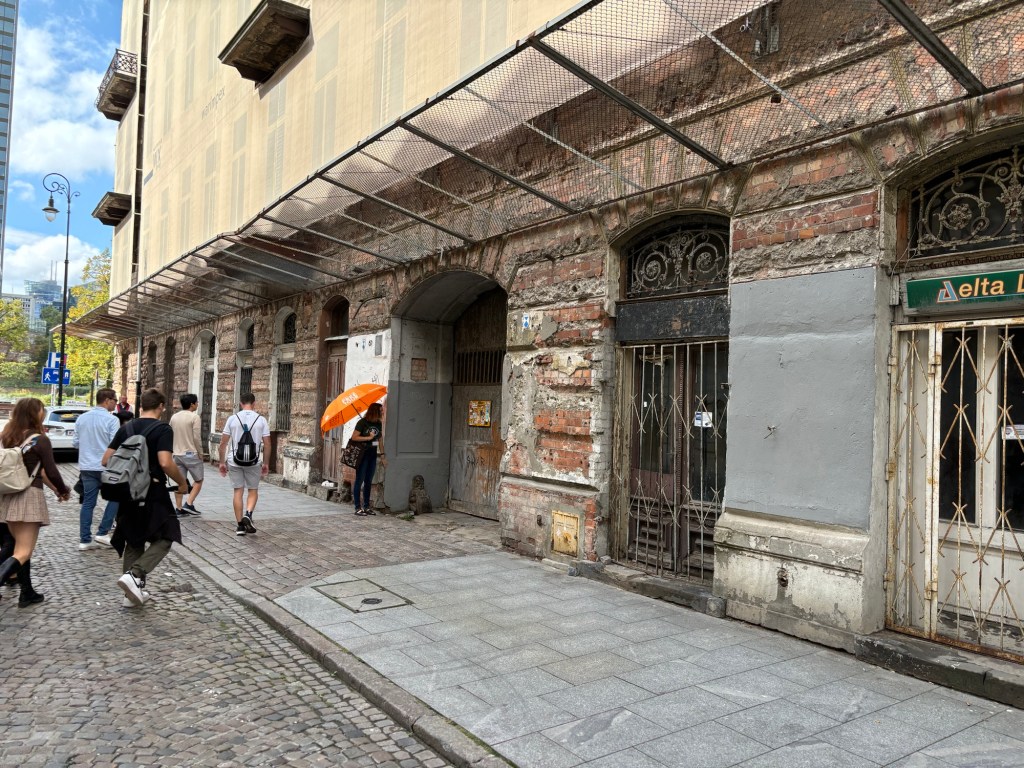
Old Town was destroyed in WWII, but totally reconstructed following the previous plan.
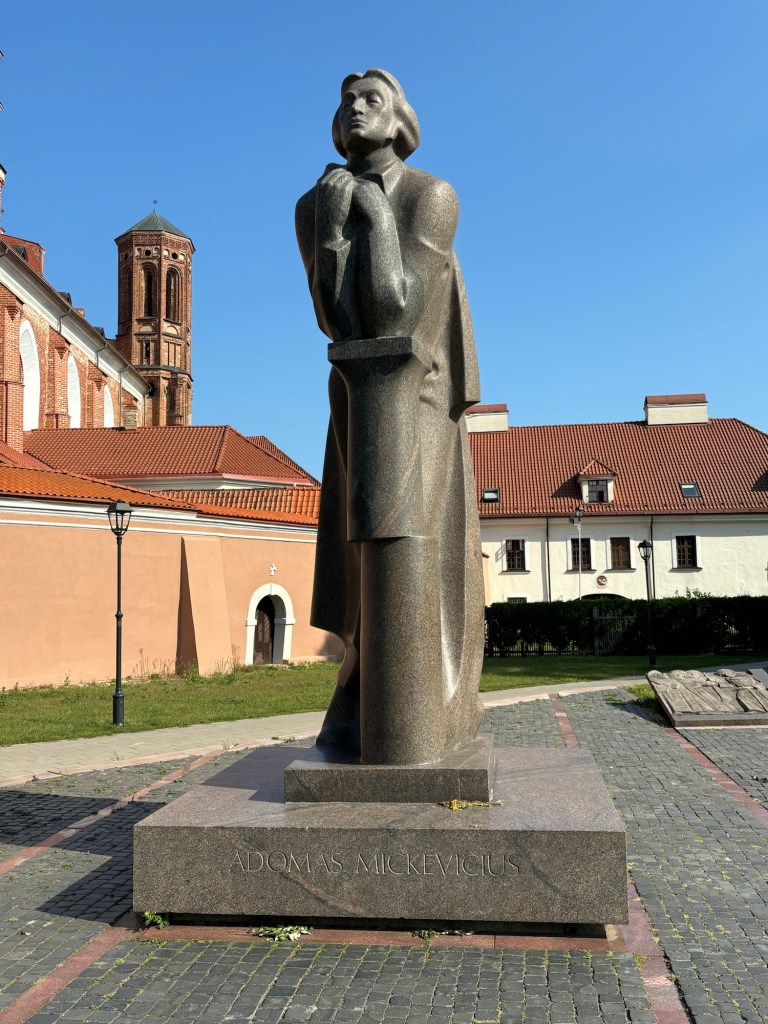
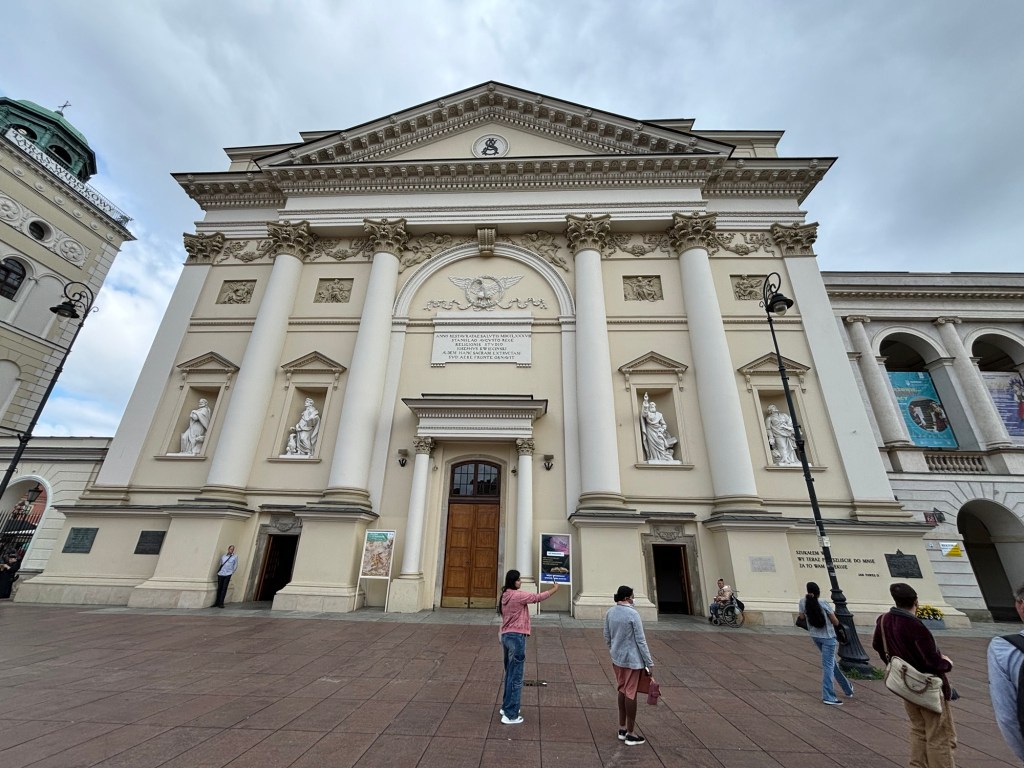
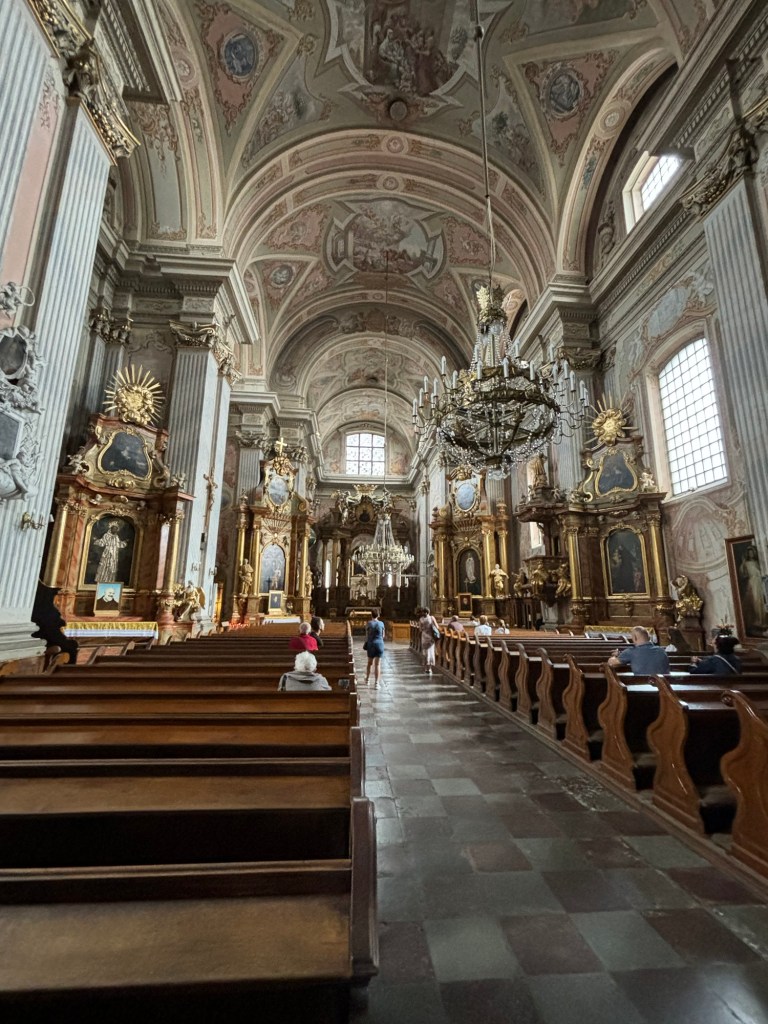
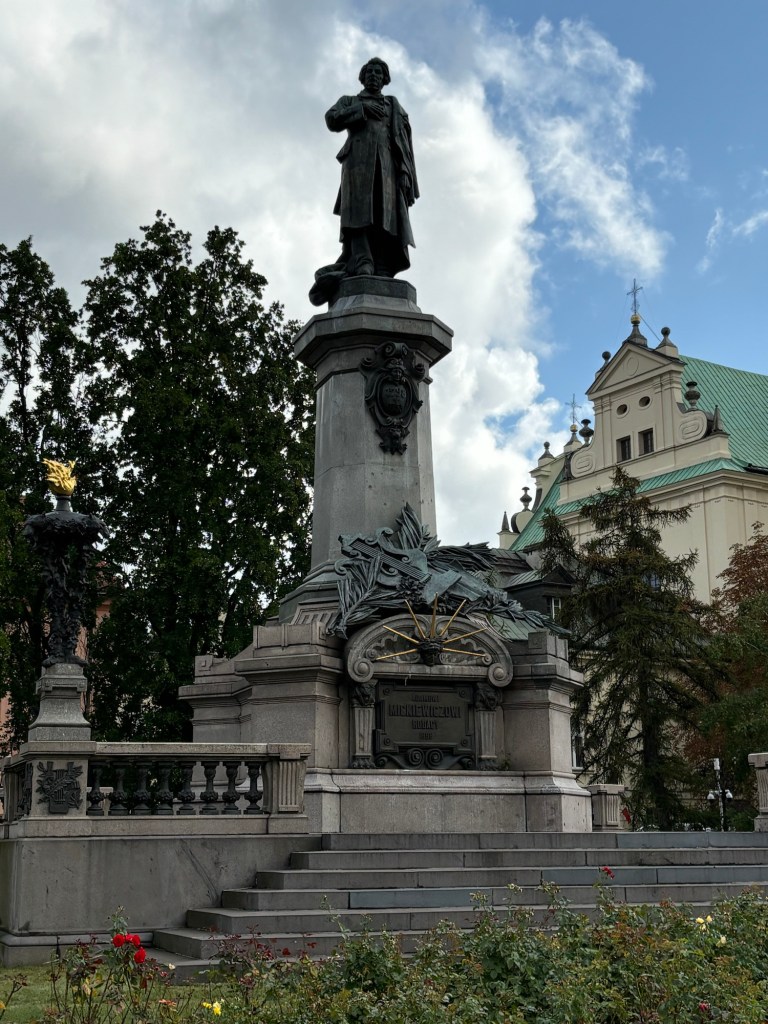
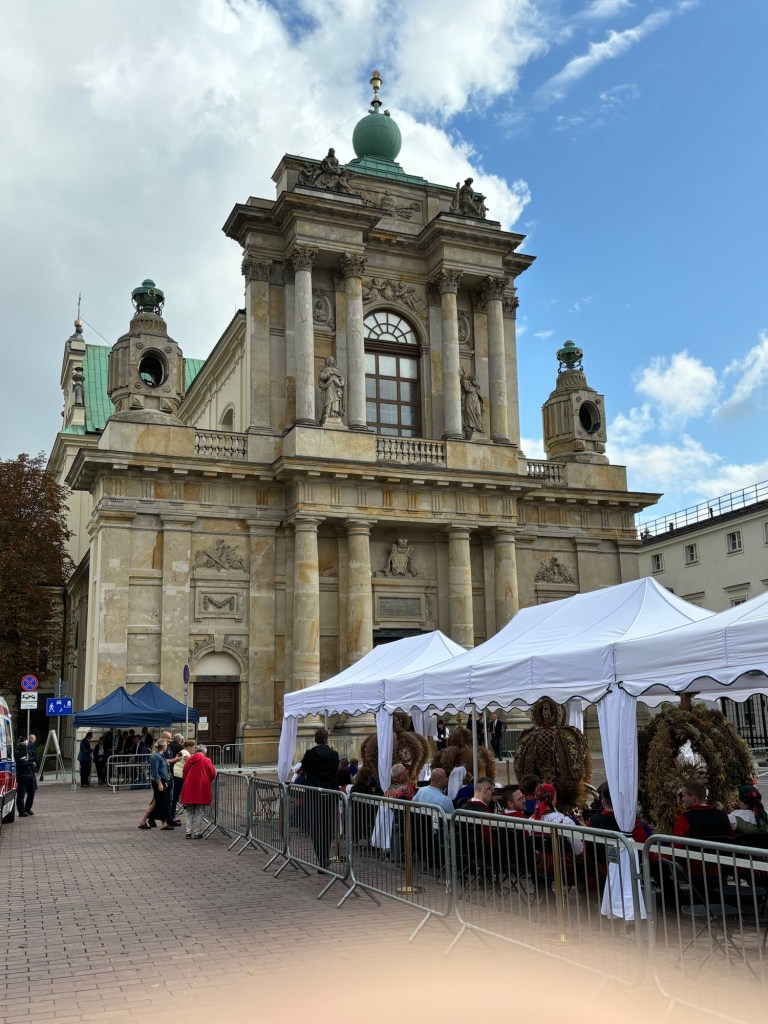
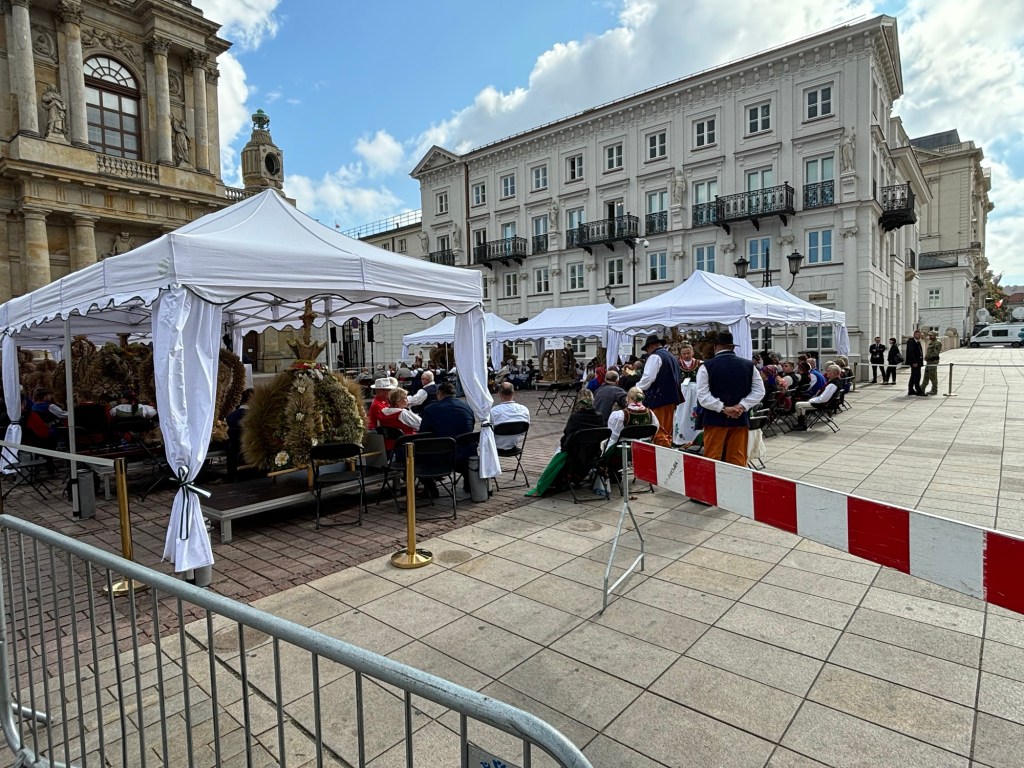
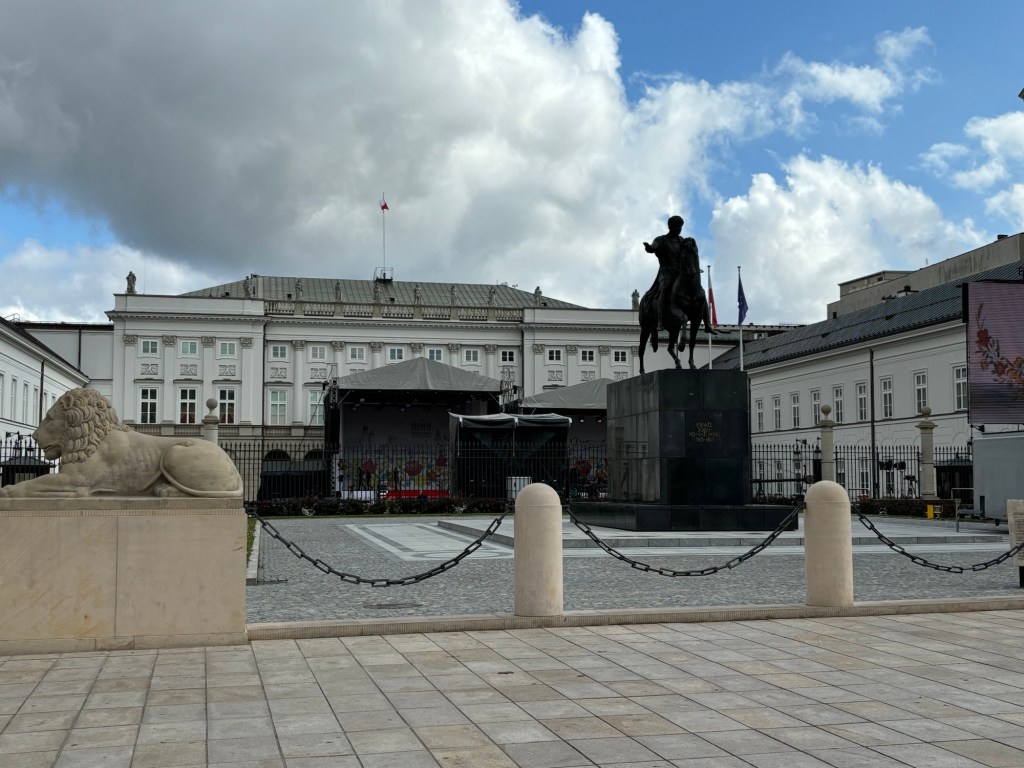
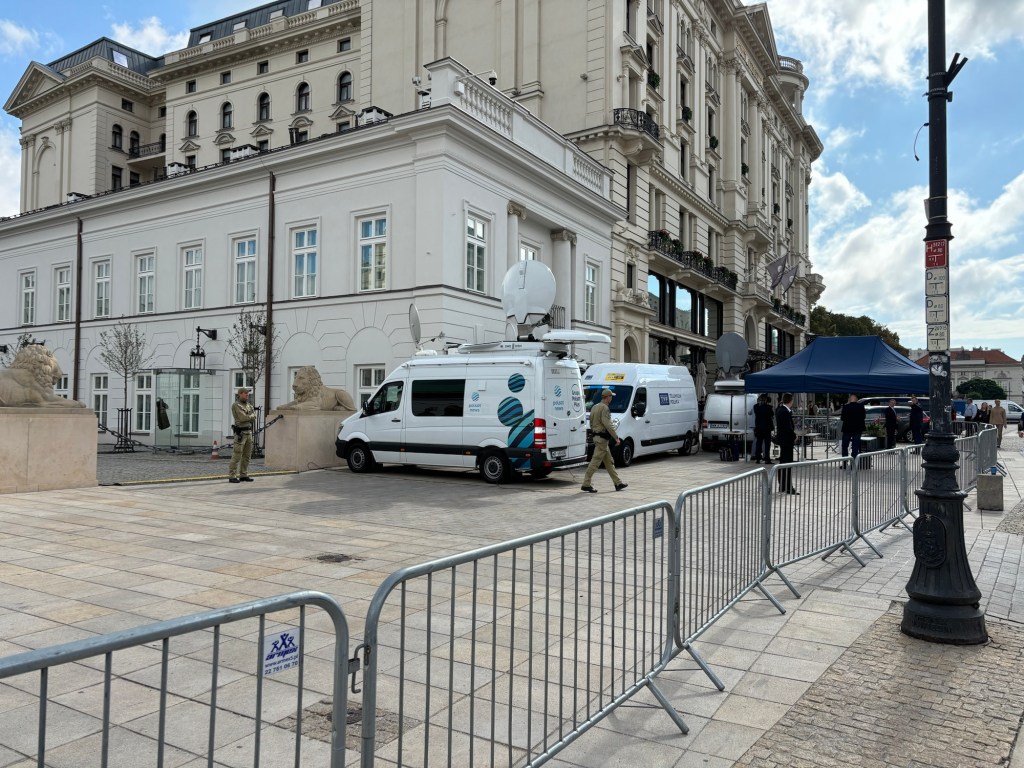
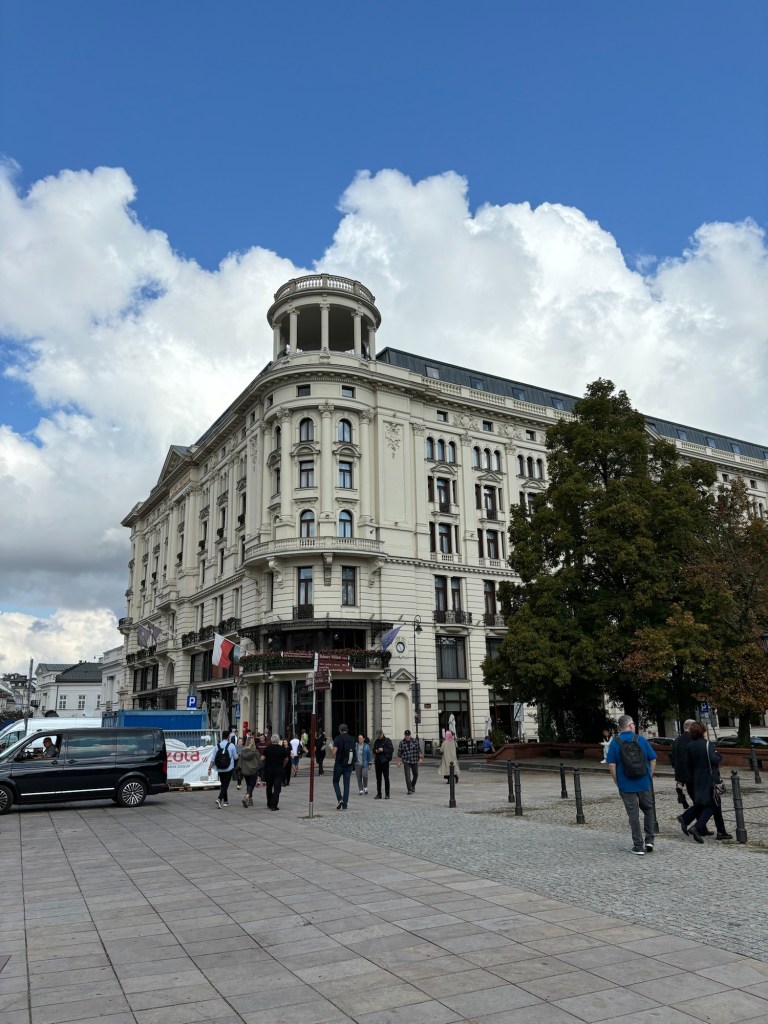
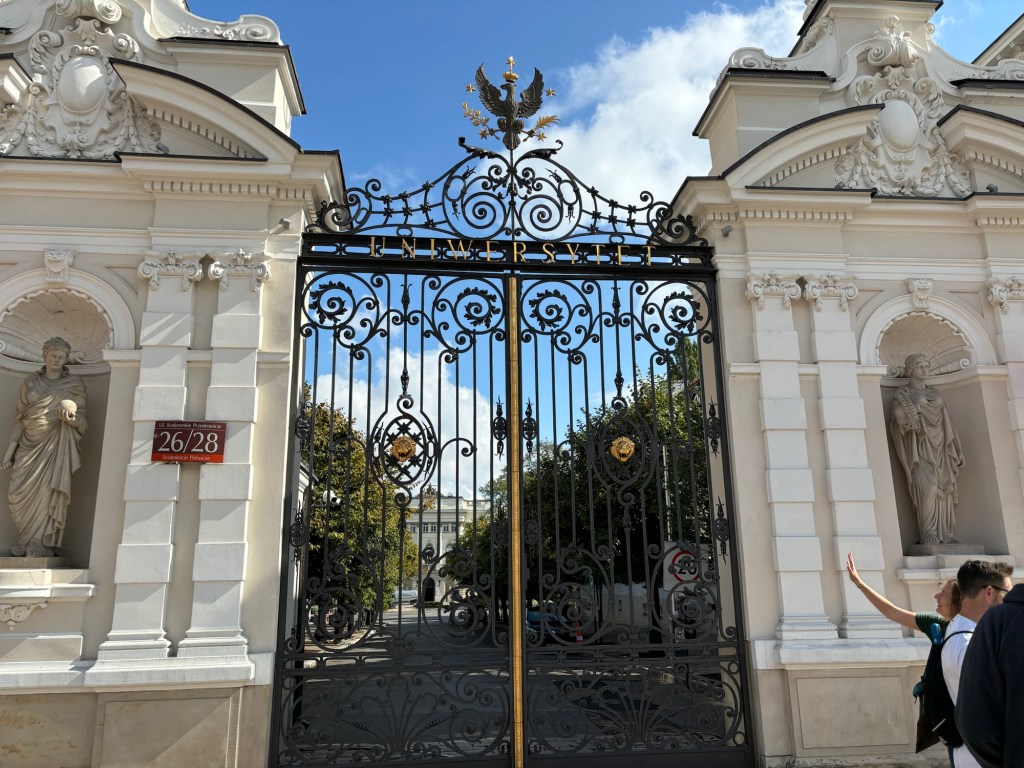
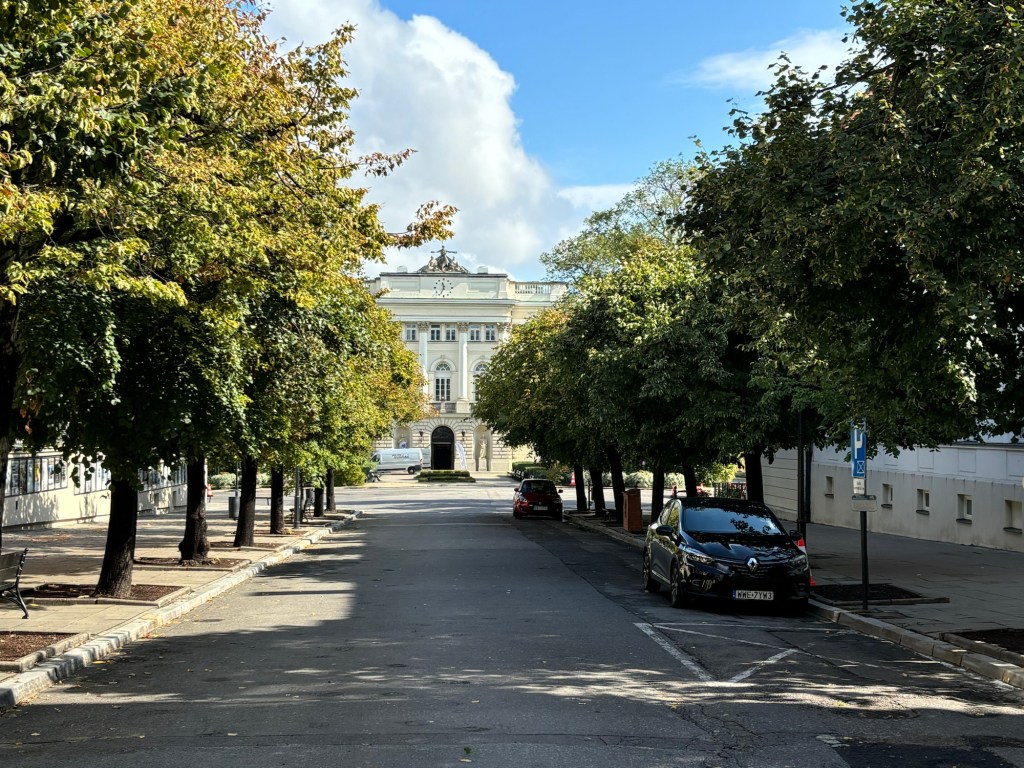
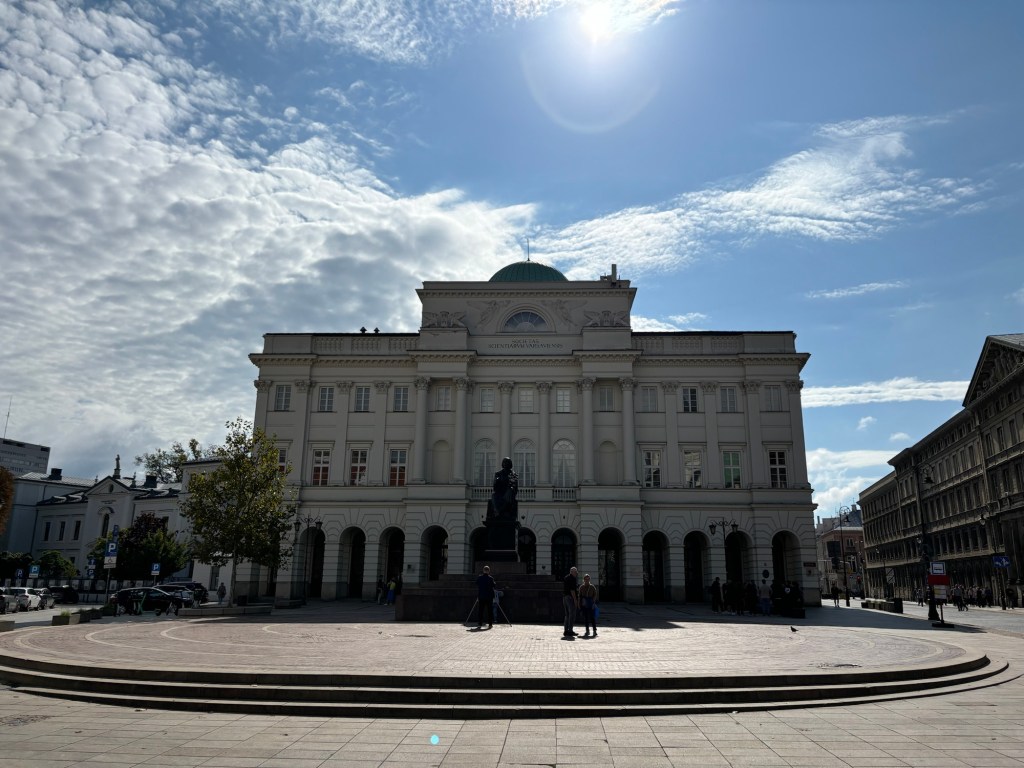
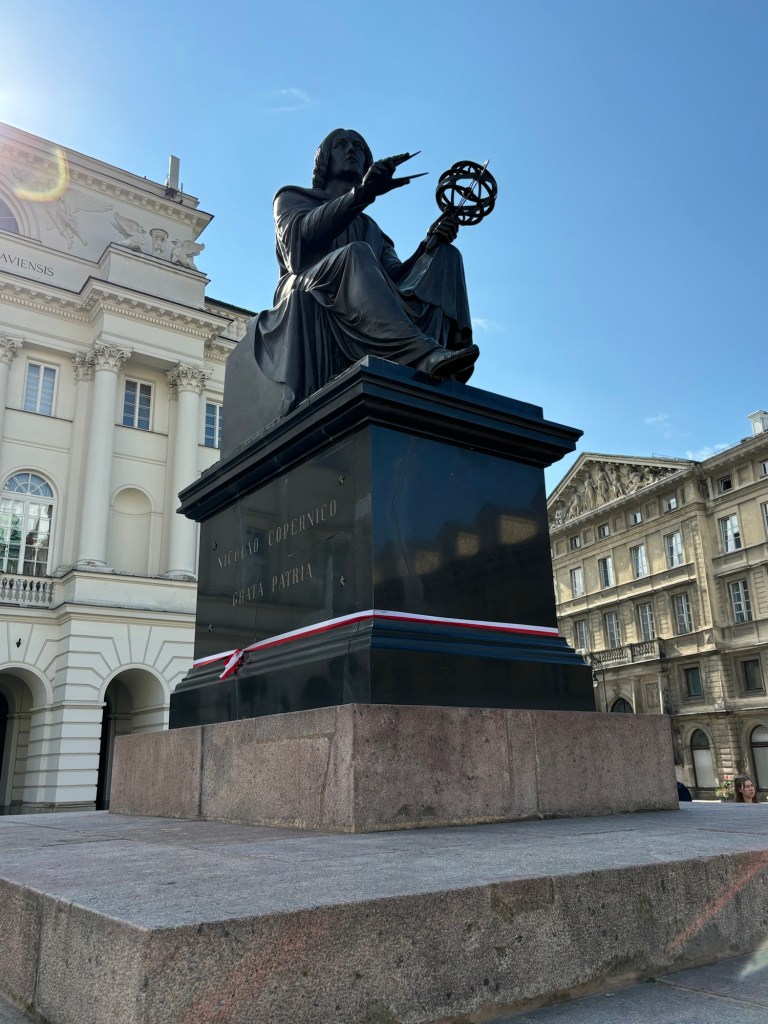
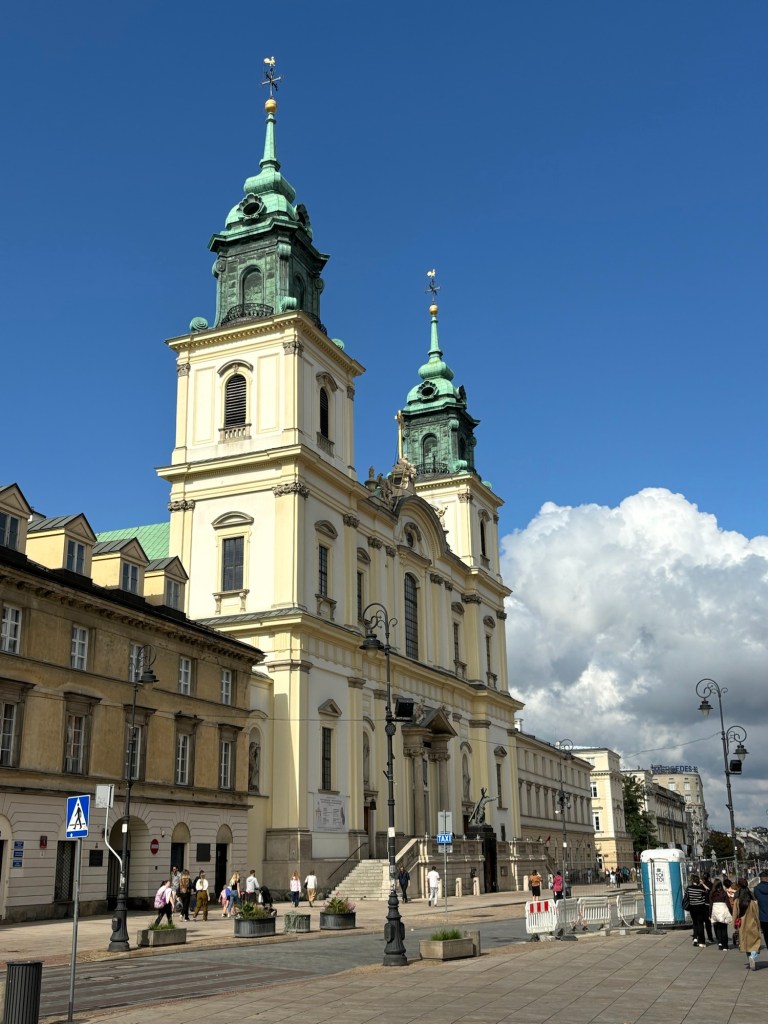
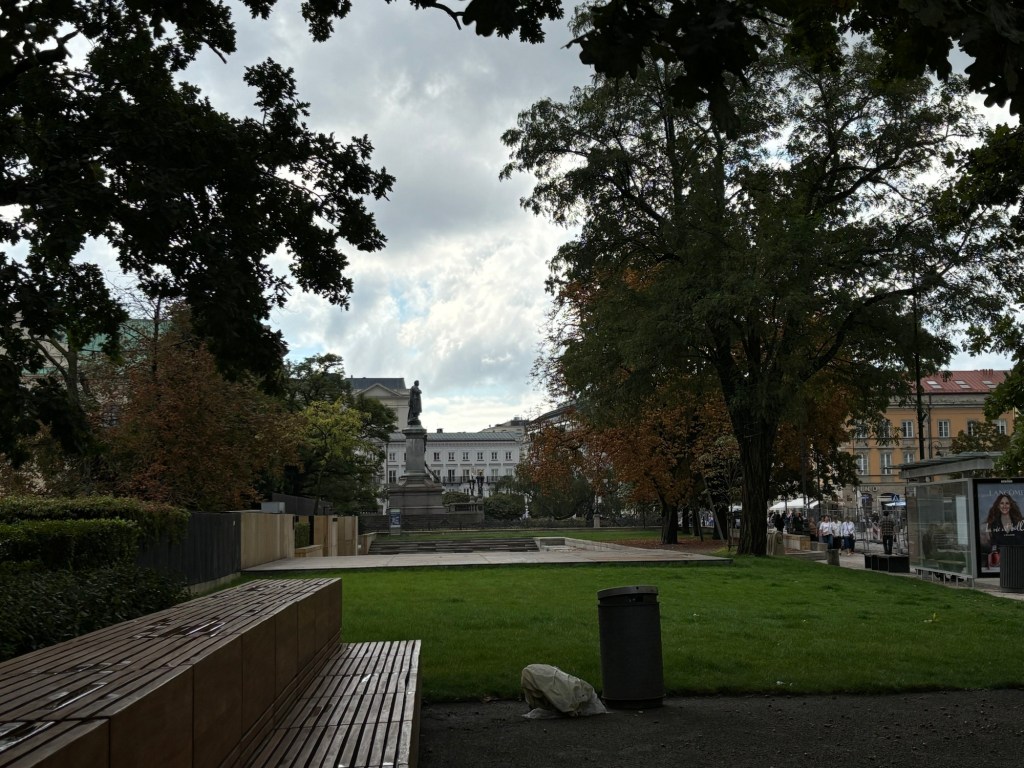
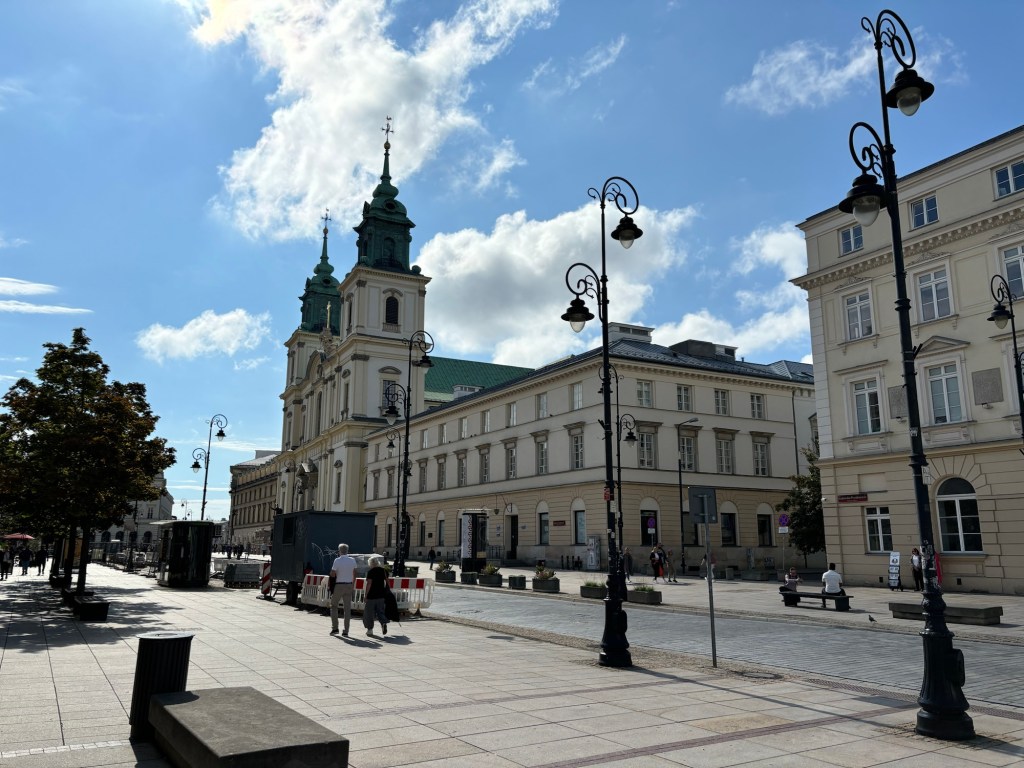
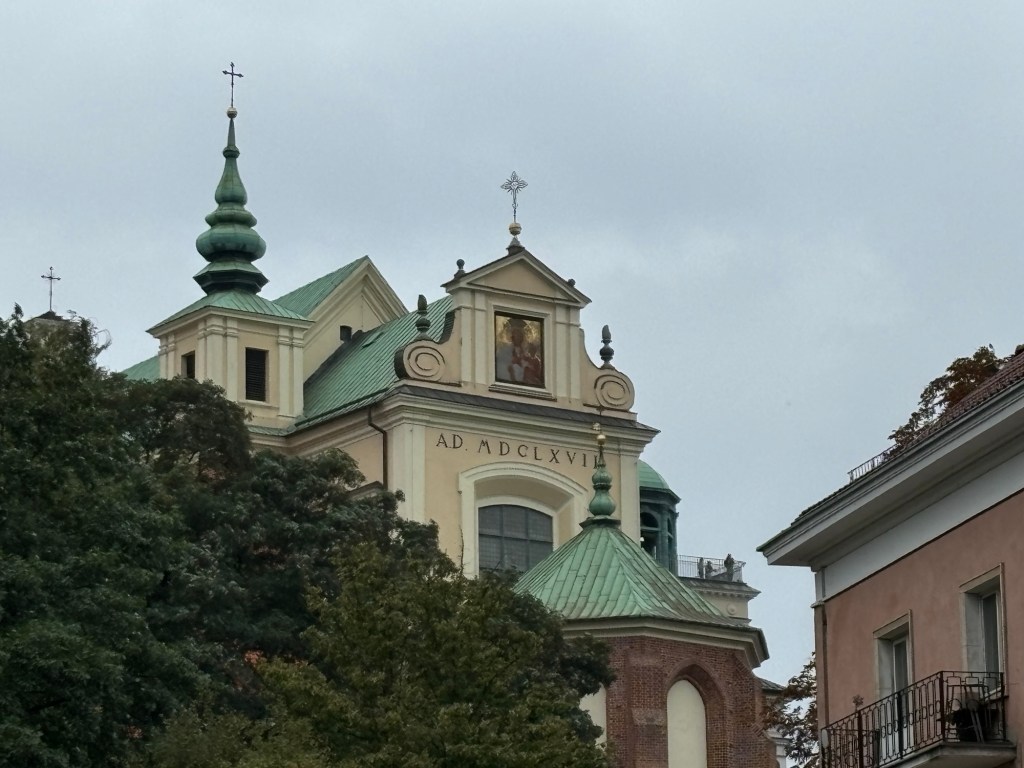
Church of St Anne, one of the only buildings that survived the war.Famous poet / writer, Mickiewiczowi (if you look closely you can see bullet holes in the statue base from the war)Harvest festival celebration with many people in traditional Polish costumes. The Polish President will also attend, hence the heavy police presence.Famous Bristol Hotel, where hundreds of dignitaries and luminaries have stayed (e.g., Queen Elizabeth, The Rolling Stones, etc.)Warsaw University, and Chopin studied there.Polish Academy of ScienceCopernicus, famous Polish astronomerChurch of the Holy Cross, which holds the actual heart of Chopin!
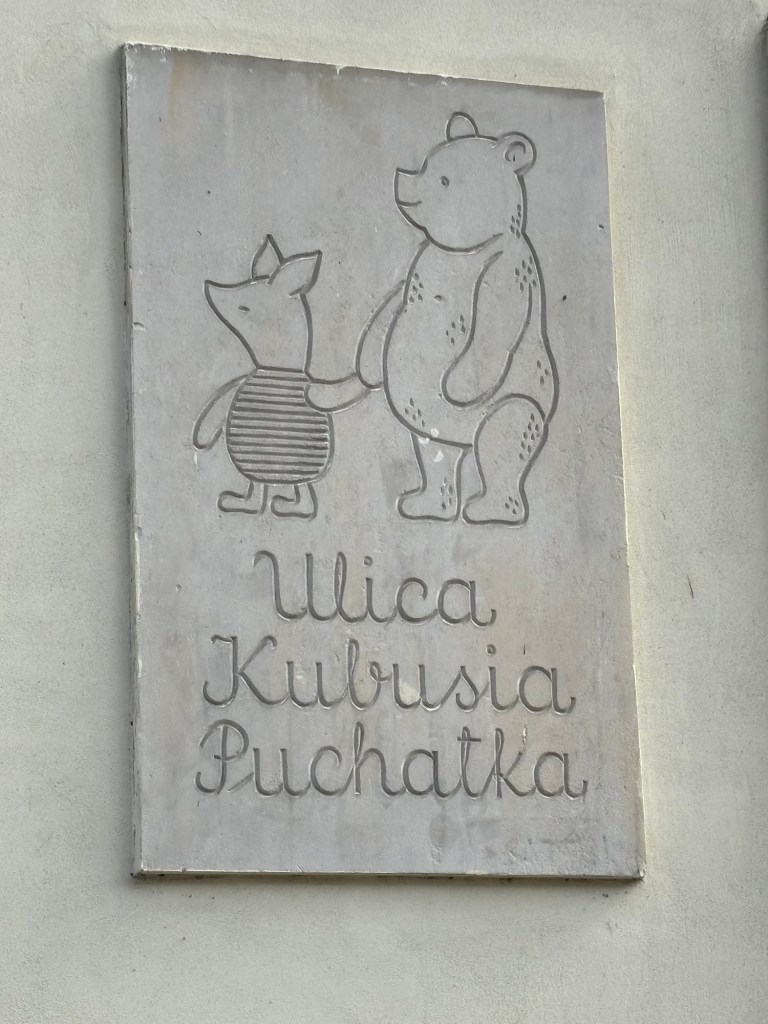
Winnie the Poo Street! No one actually has an address on the street. Half of the buildings use addresses on the street on one end, half on the other. Because no one can actually live on Winnie the Poo Street!
We also walked by the National Bank of Poland. Our guide said, “Maybe you come from wealthy countries and sleep on stacks of gold bars, but not I! I liked visiting the National Bank because you can actually lift a bar of gold and I could see how heavy it was!”
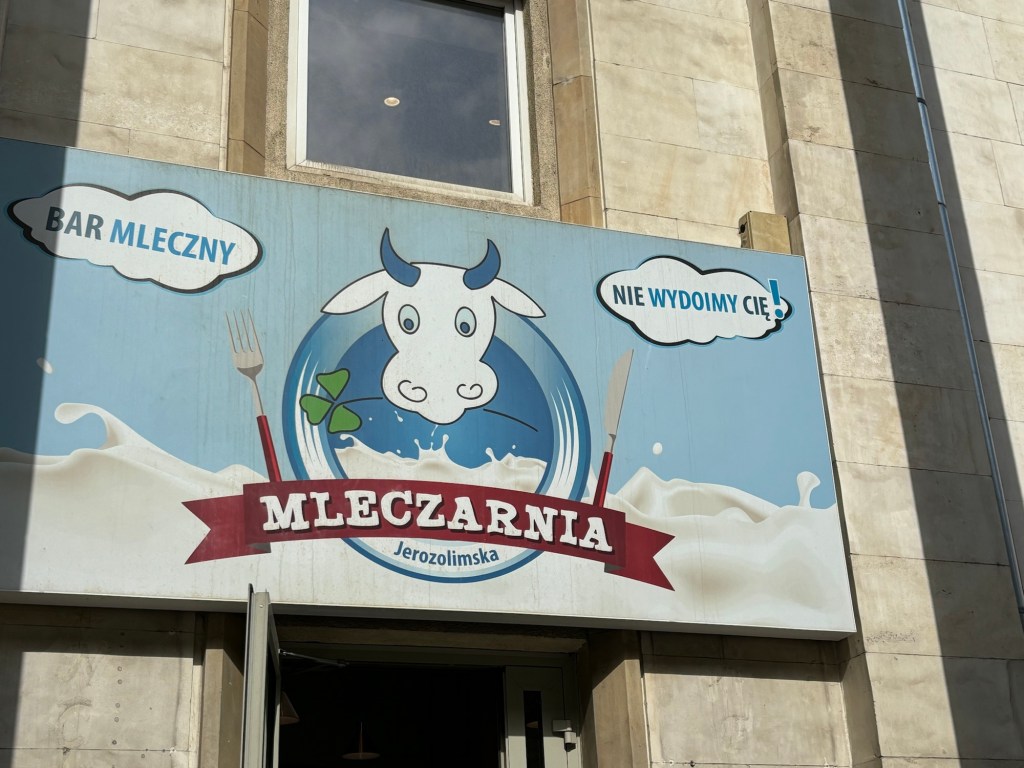
A Milk Bar – a cafeteria-style dining place. They are becoming more popular again with their good food and low prices.
When several car horns started honking at once, our guide said,“Ah, maybe some Italians come here!”
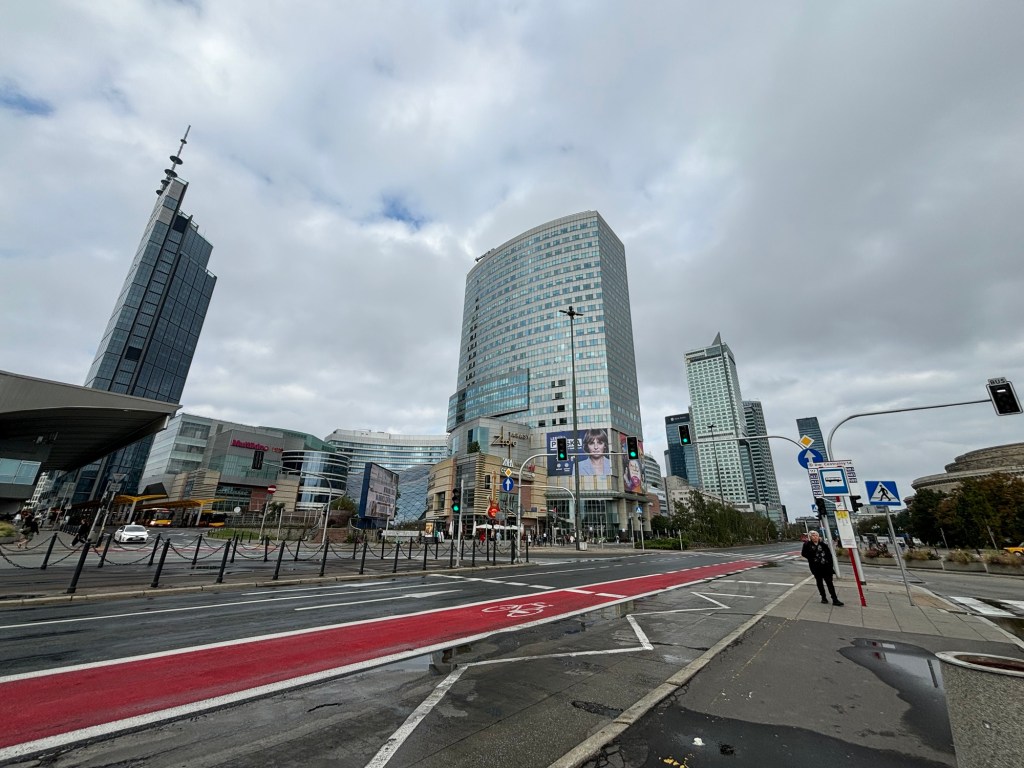
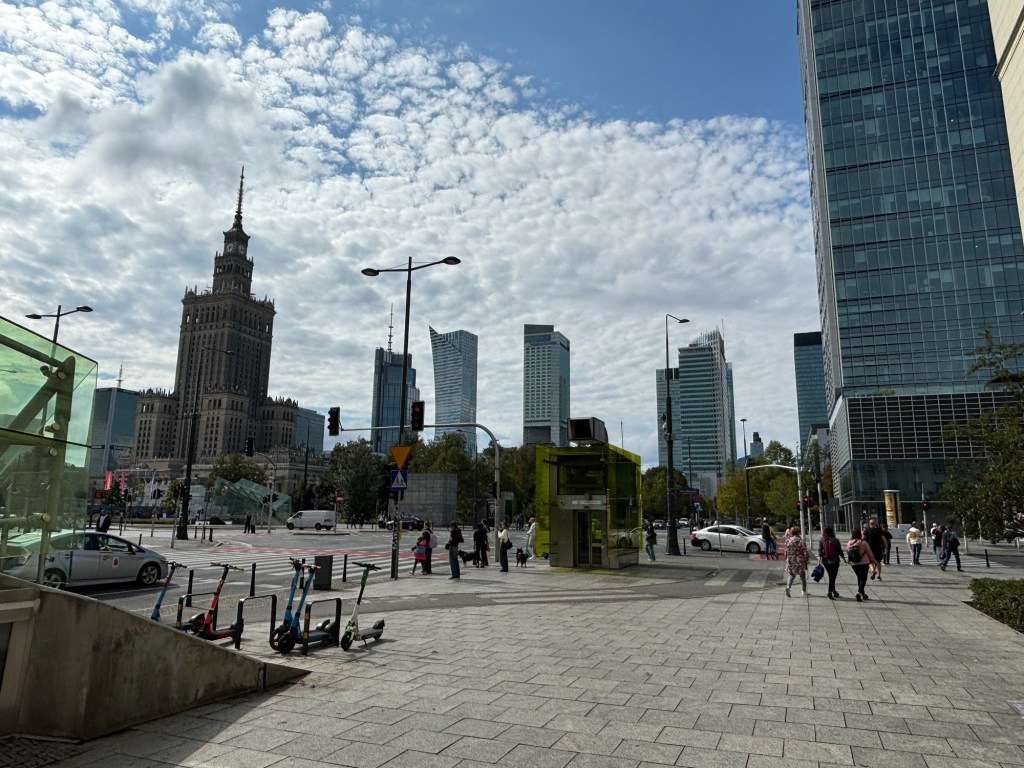
21st Century Warsaw – with skyscrapers!
When the first McDonald’s opened here in 1992, the queue was a mile long! And a priest had to bless the place before they sold the first burger (which the priest ate!).
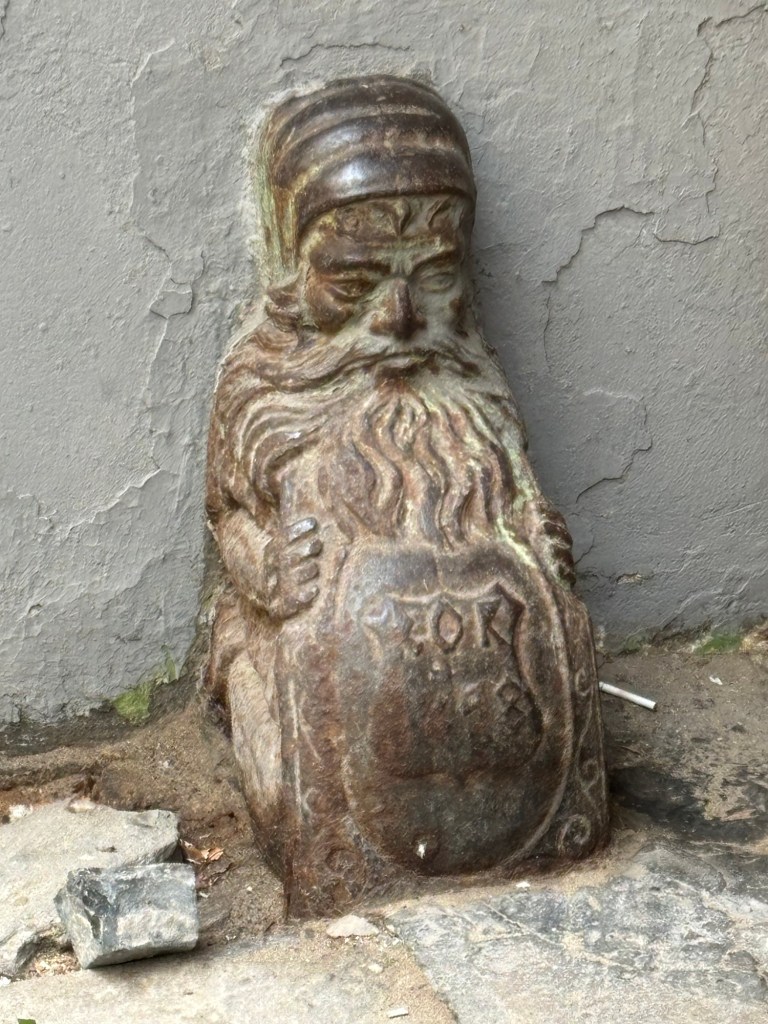
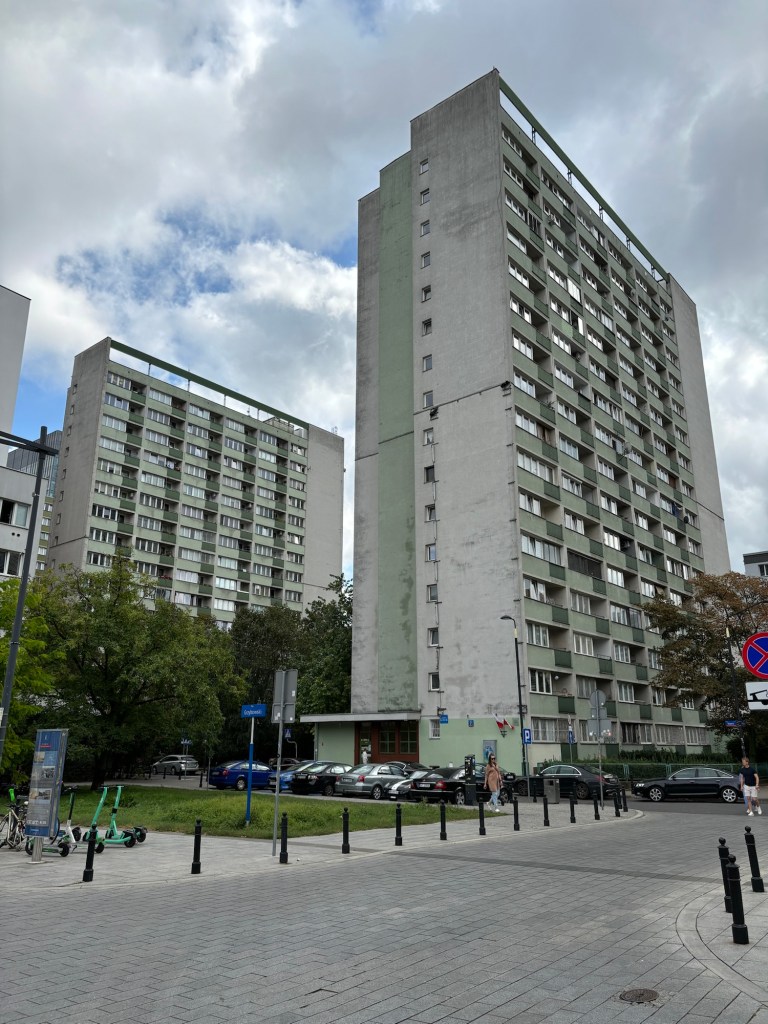
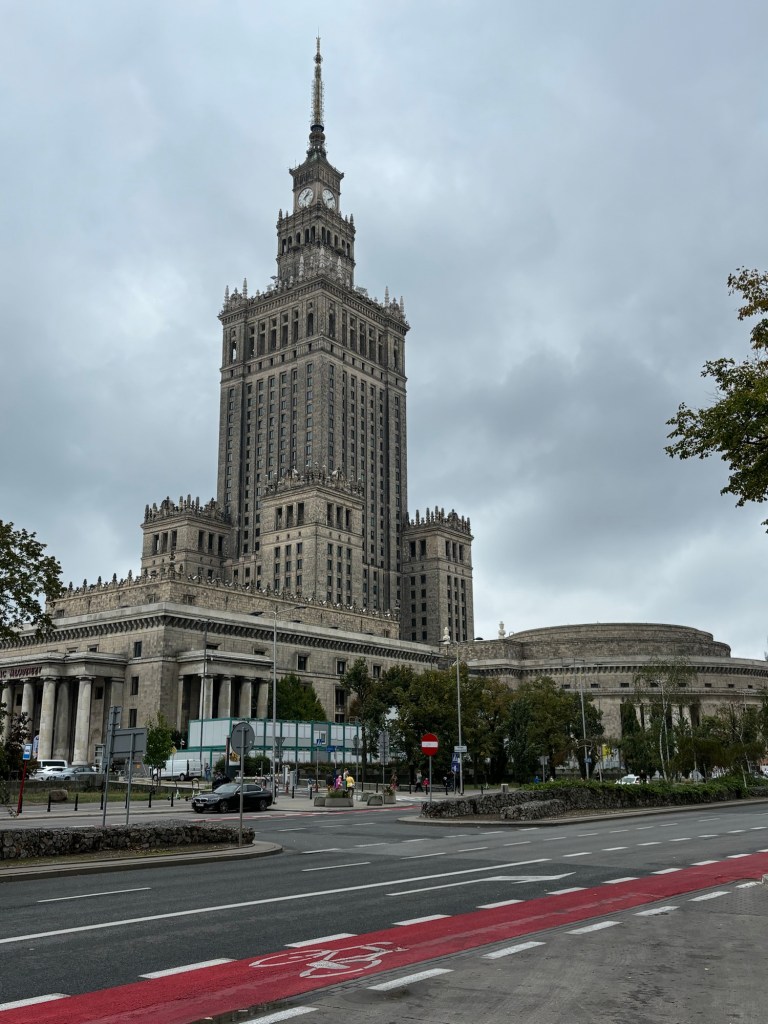
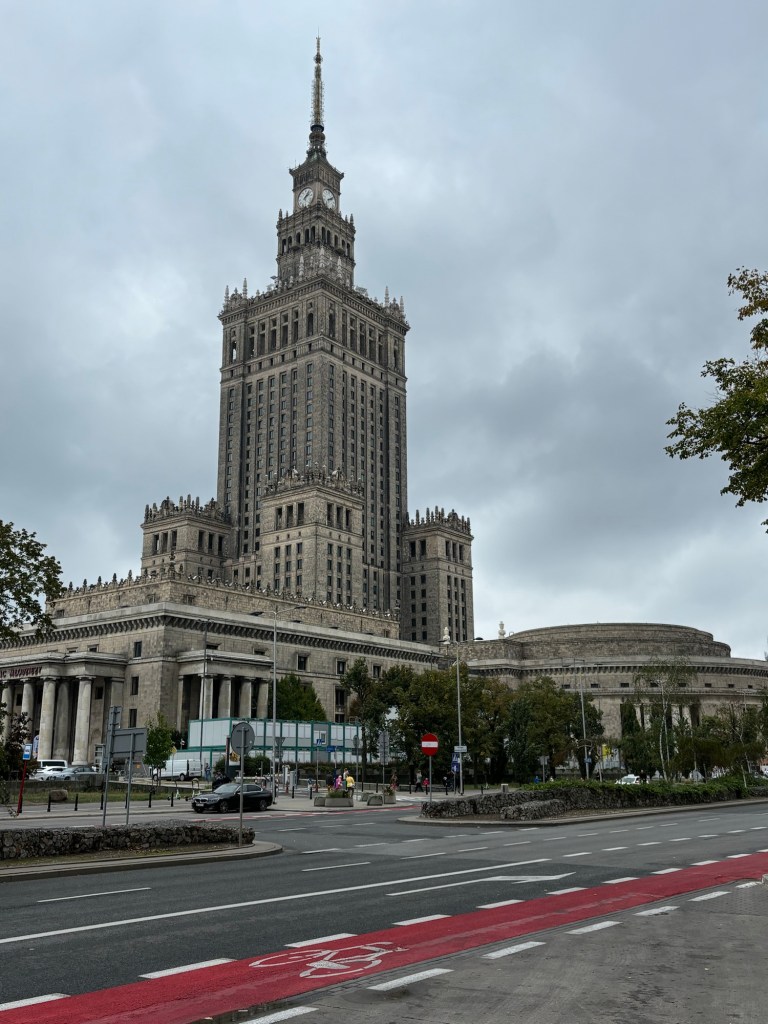
Carriage guides to keep horse-drawn carriages from damaging the walls of a building as it entered the courtyard.Some utilitarian Communist-style buildingsAs I said yesterday, this building is the Palace of Culture and Science. It was a gift from Josef Stalin in the 50s during Communist rule. The Olkes are not particularly fond of it, and sometimes call it, “Stalin’s Middle Finger!”
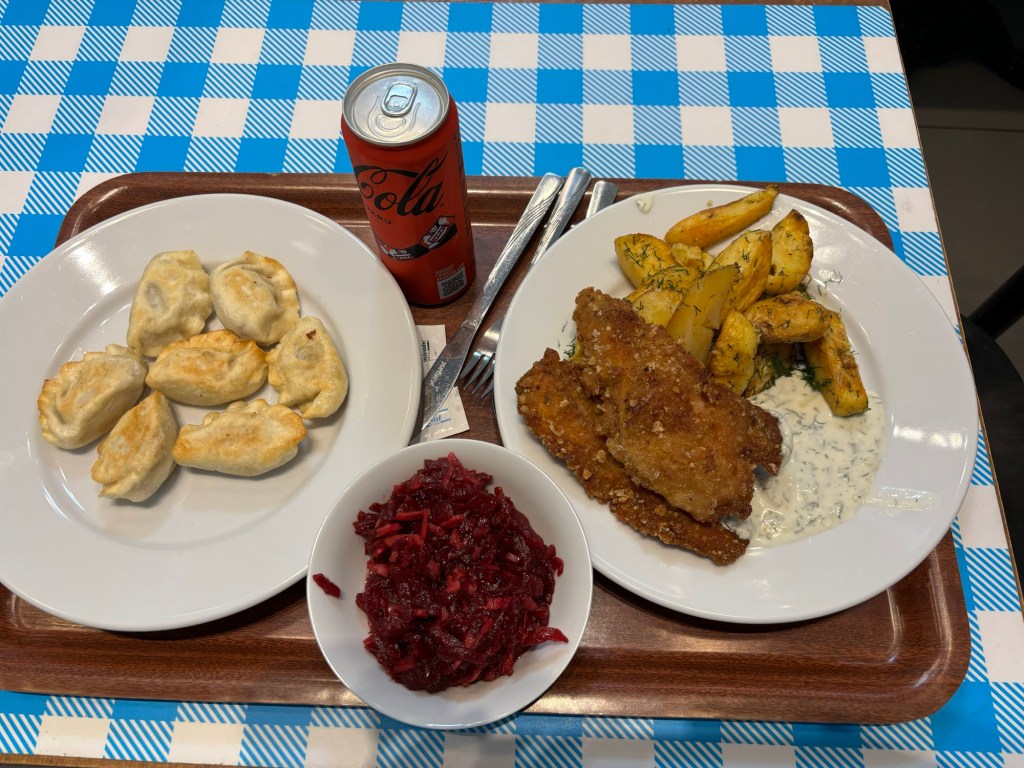
After the walking tour, I hit a Milk Bar cafeteria at 1:00 pm for lunch and had a hearty meal to make up for missing breakfast. All excellent!
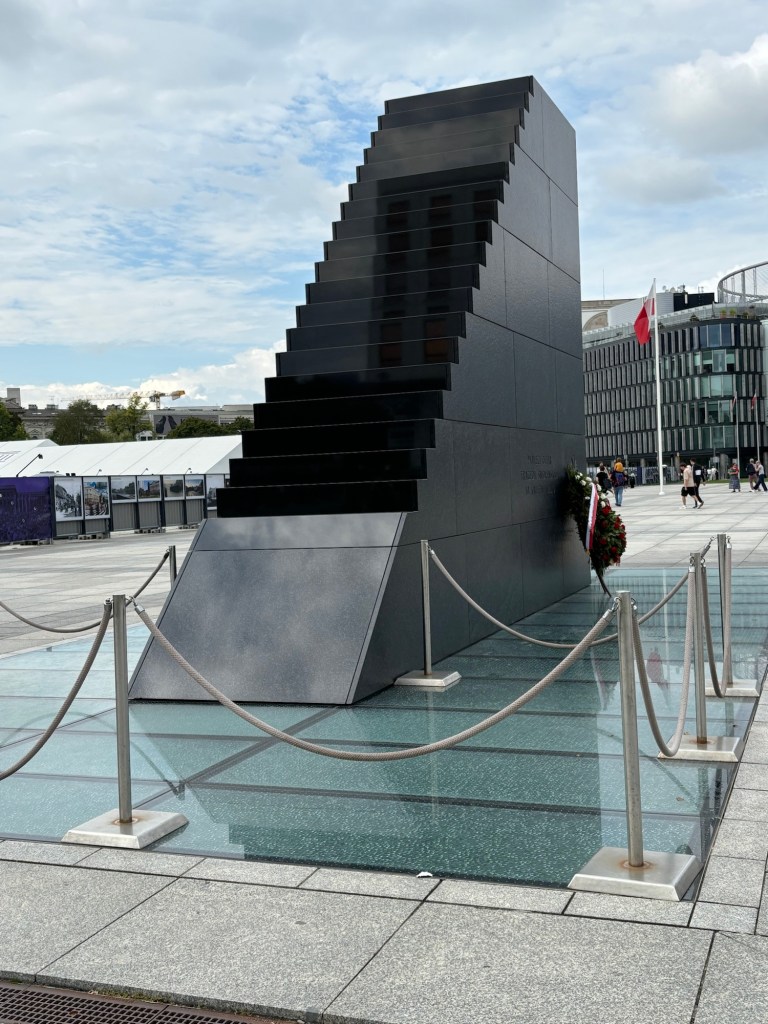
Fried Pierogi with Meat, Chicken cutlets, Potatoes, and Beetroot SaladMemorial to the Smolenski plane crash in 2010 that killed the Polish President and 94 others.
And a few final pictures.
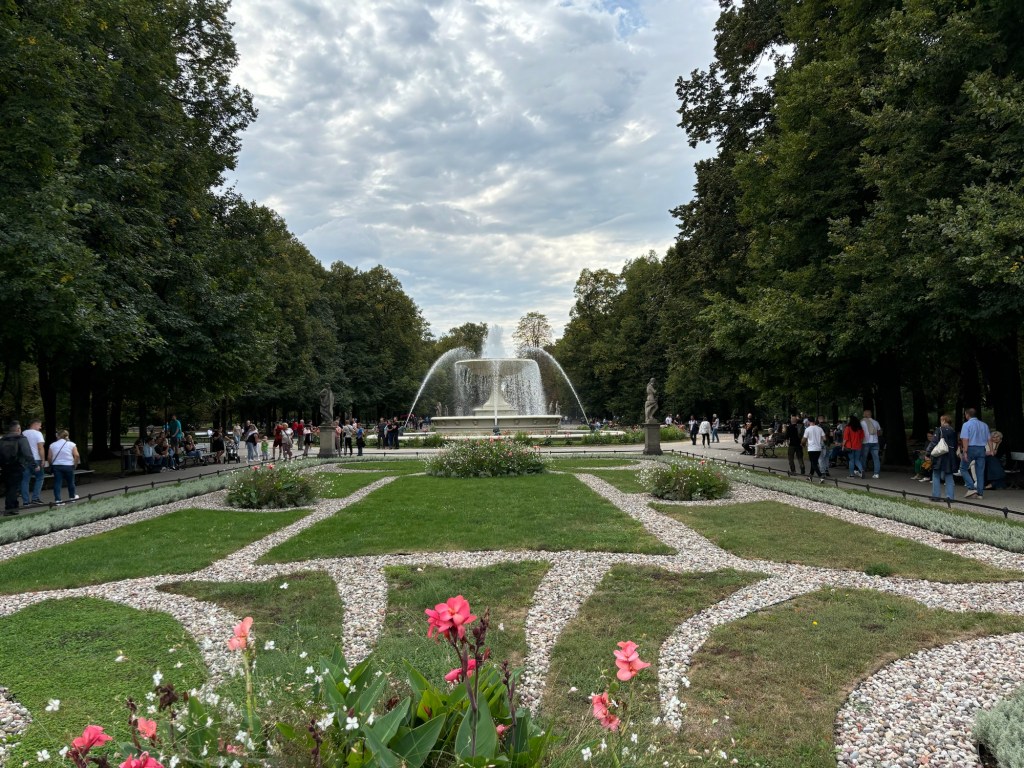
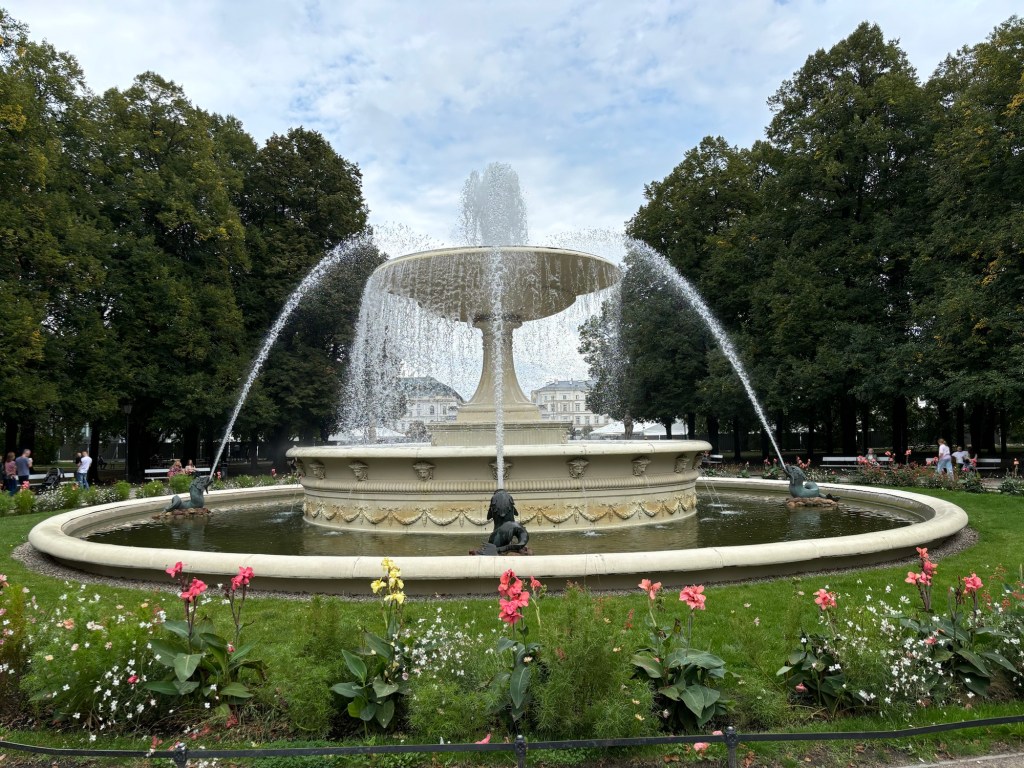
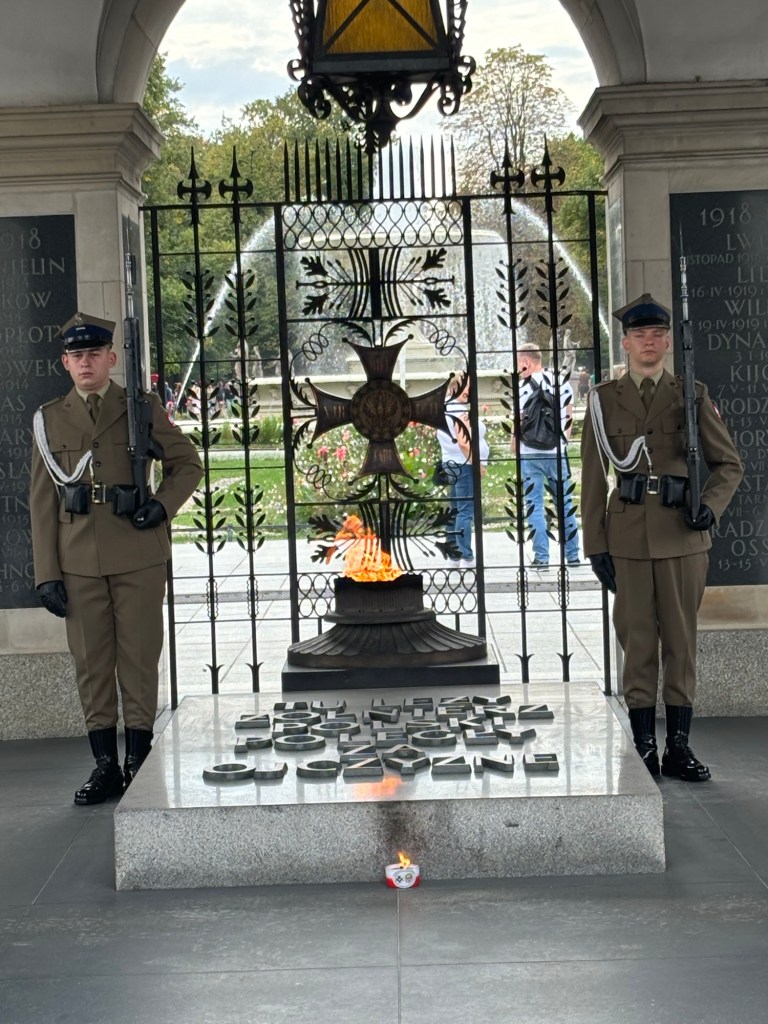
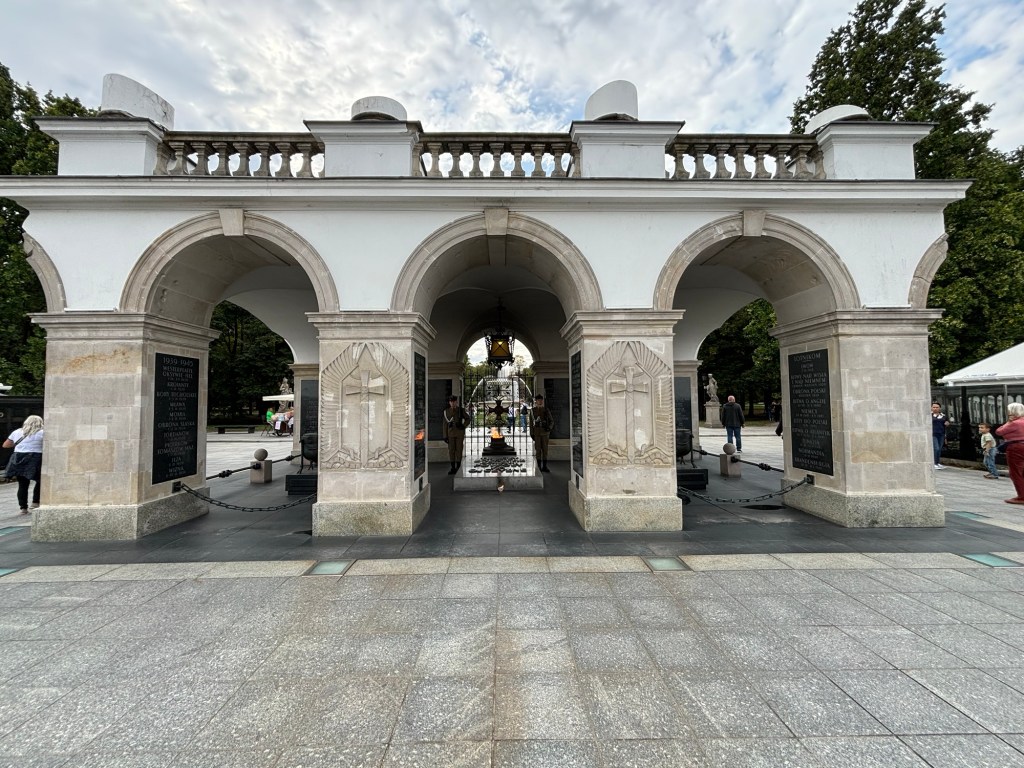
A beautiful fountainPolish Tomb of the Unknown Soldier
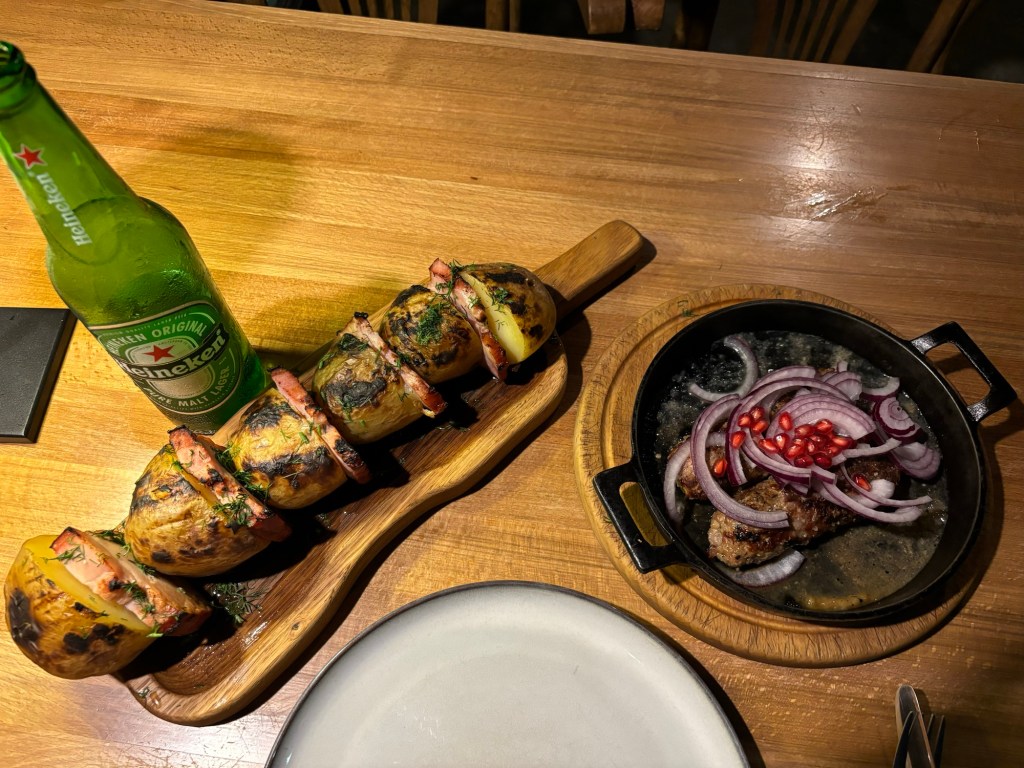
I’ve decided that Georgian food is my new favorite! I went back to the same restaurant from lunch yesterday and had a delicious meal again!
Potatoes with bacon, and beef and veal with onions, garlic, and pomegranate seeds
Tomorrow, on the way to Vilnius, the capital of Lithuania.
Words of wisdom, or just to amuse…?
Getting cheated occasionally is the small price for trusting the best of everyone, because when you trust the best in others, they generally treat you best.
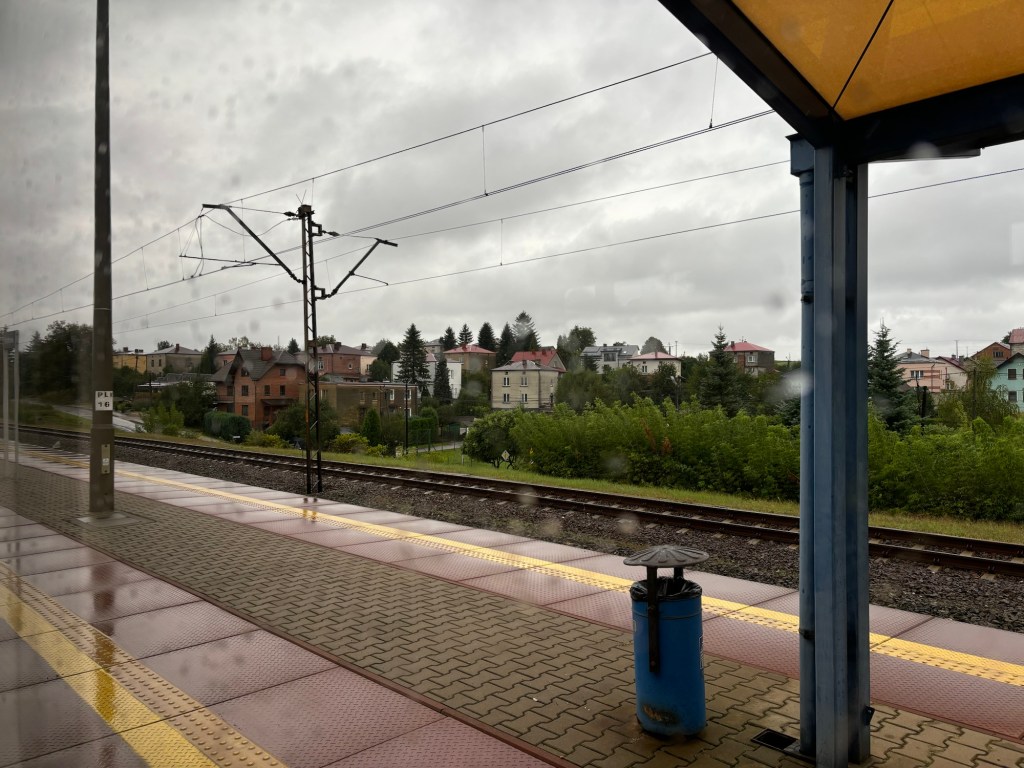
Still raining in Krakow this morning, but it was just a three block walk to the train station. I boarded the 8:30 am train for a 3+ hour trip to Warsaw. With the cooler temps outside the train was actually comfortable today, although crowded.
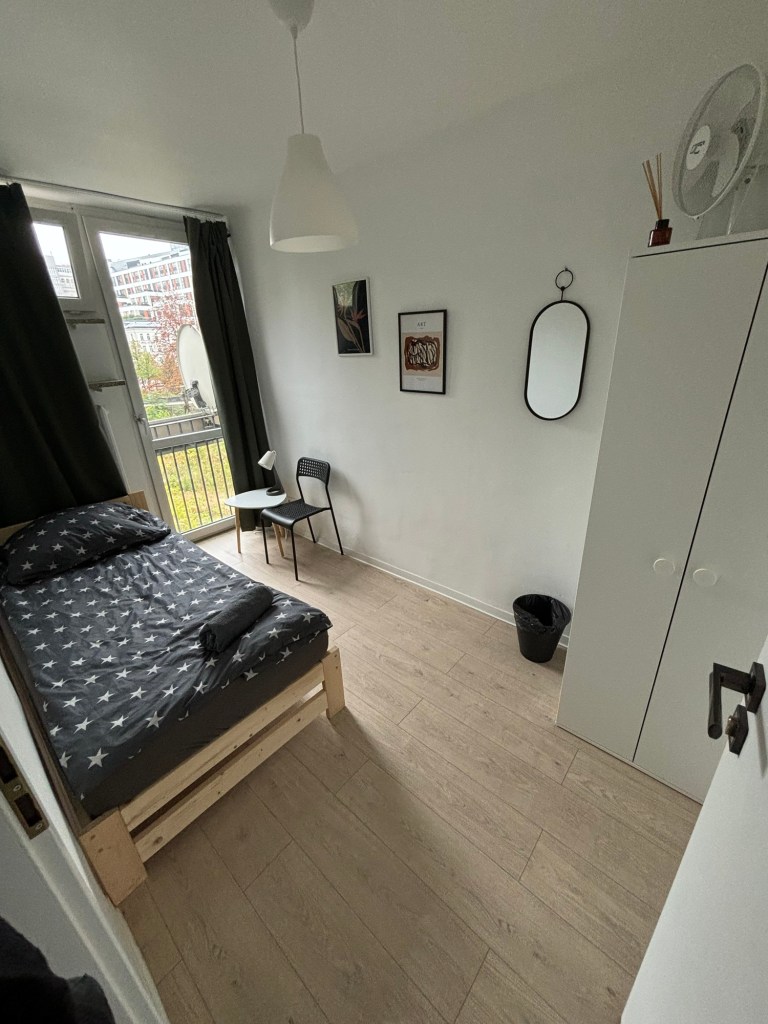
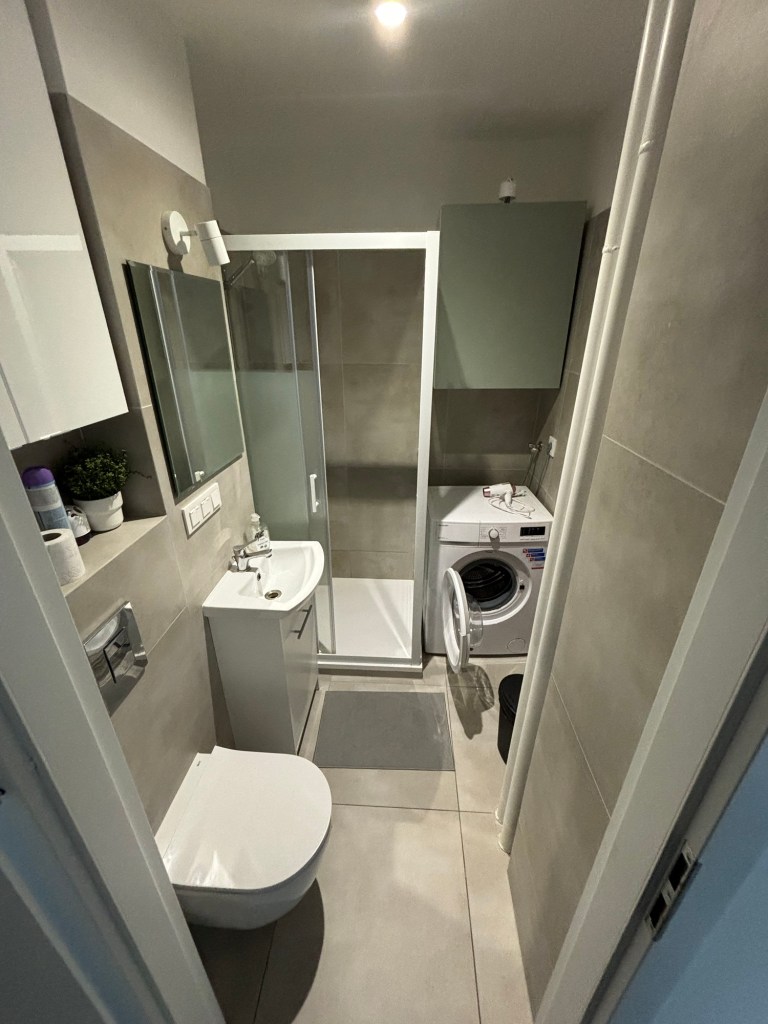
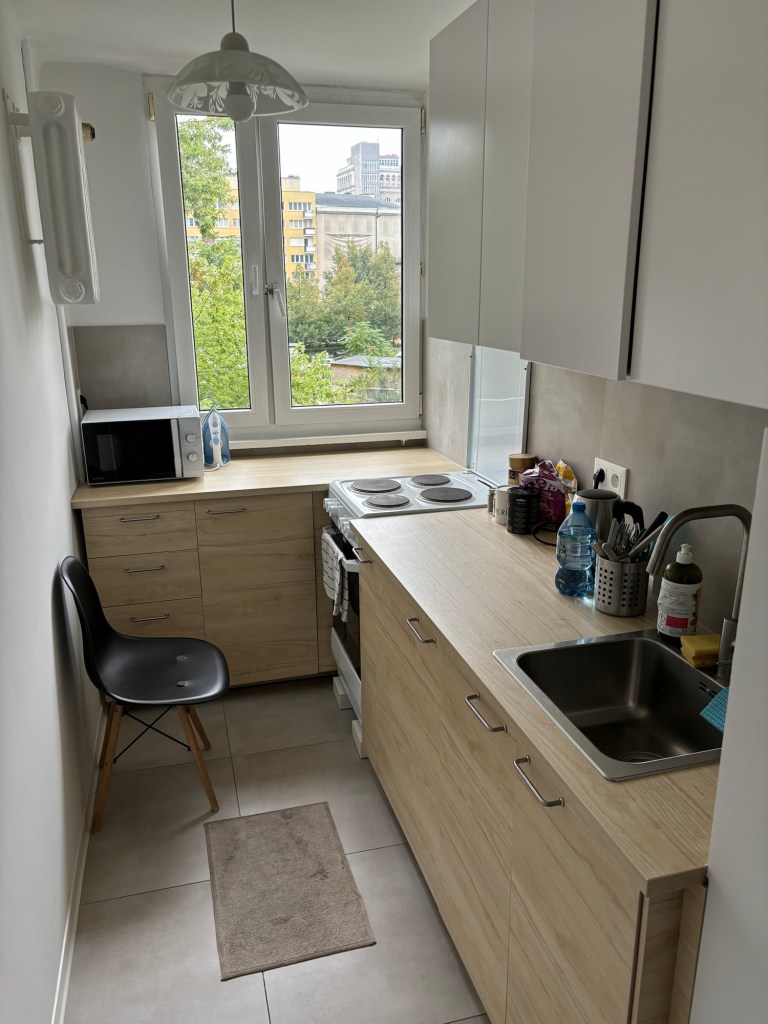
The mini-apartment in Warsaw is perfect! Private room with shared bathroom, kitchen and free laundry. And in a great location.
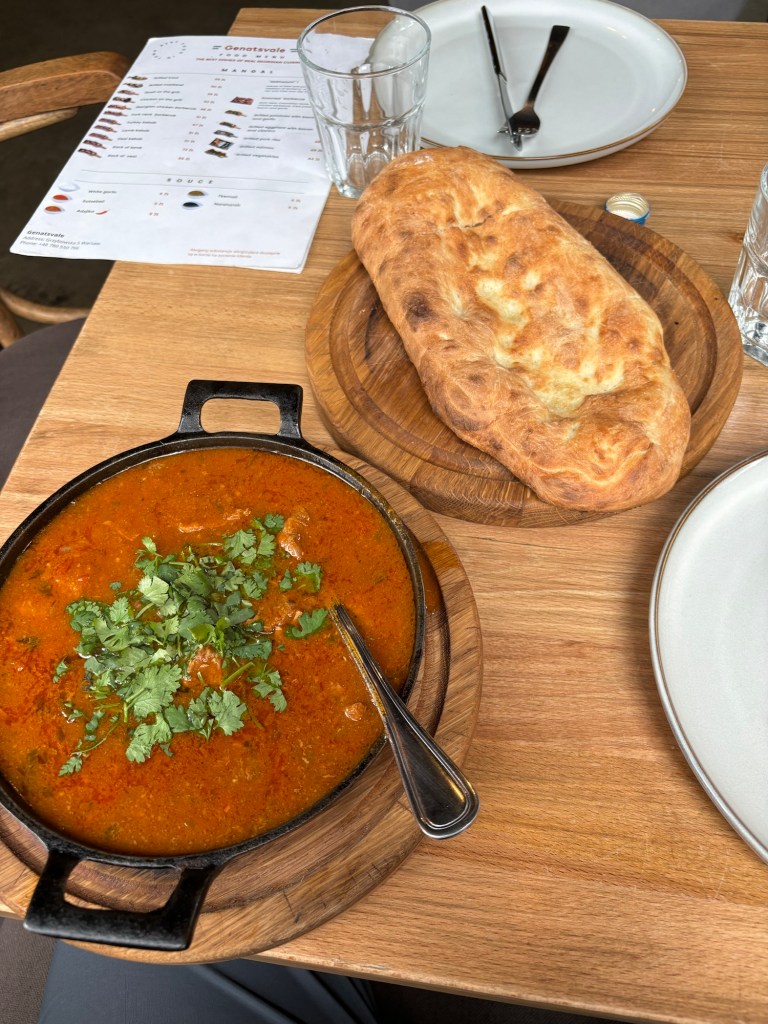
I found a Georgian restaurant on the ground floor of my building. Even the menu was in Georgian, with Georgian folk music playing. The food was outstanding, so I may go back for dinner to try more dishes!
Chashushuli — a fragrant dish of Georgian cuisine: pieces of veal stewed in a thick tomato sauce, with the addition of spices and garlic. Shoti — Georgian bread from the oven.
After lunch, I scootered around town scoping out sights. Then the rain started again, so I called it a day and hightailed it back to my room.
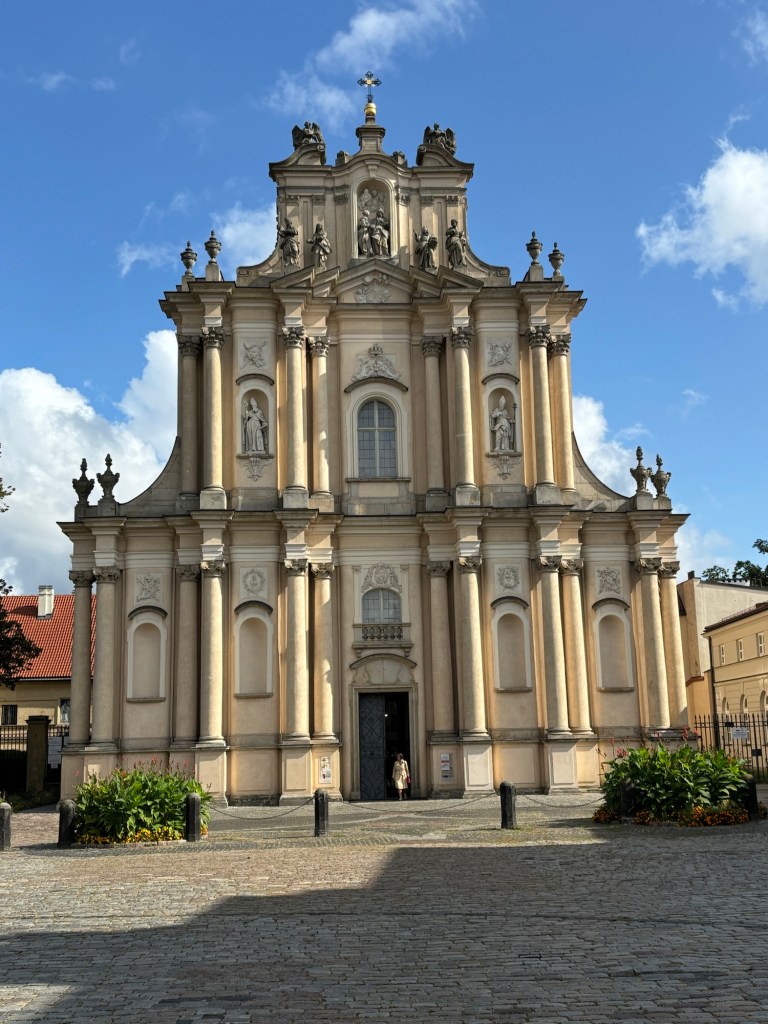
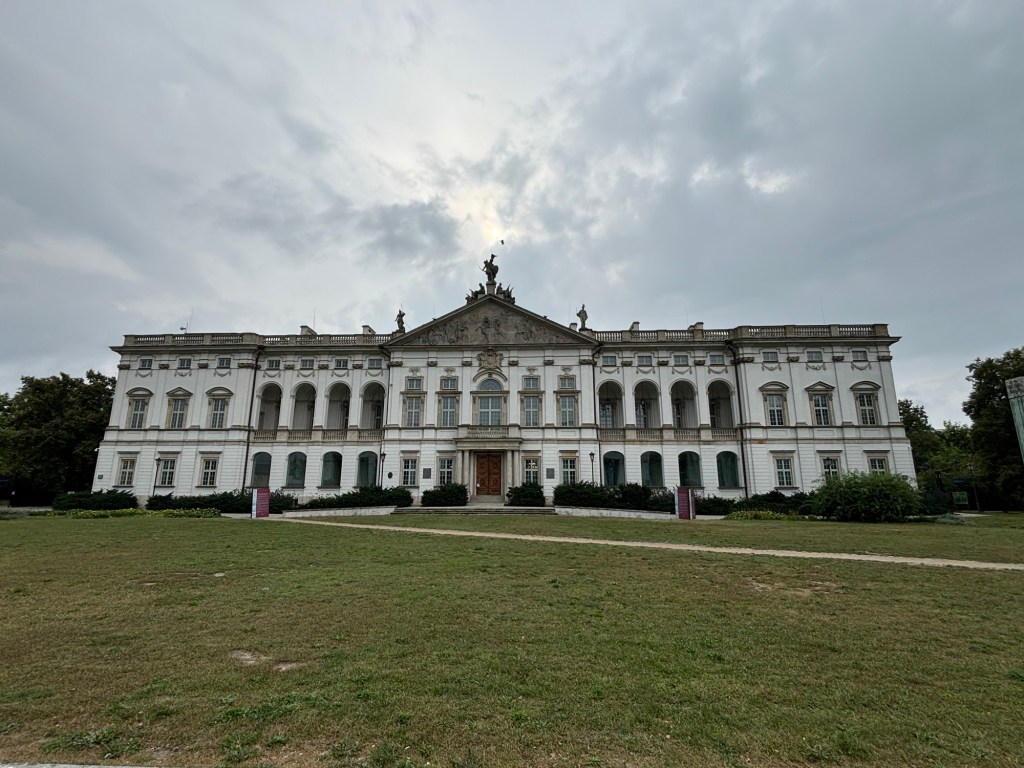
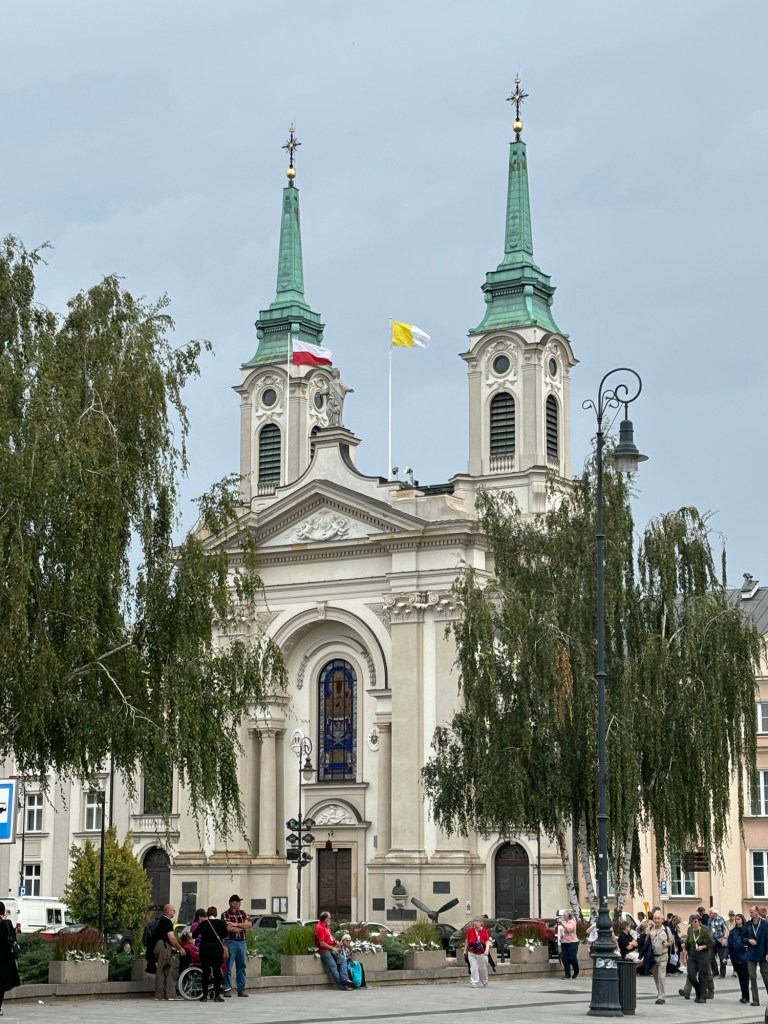
Palace of Culture and ScienceRoyal Castle in WarsawFIELD ARMY CATHEDRAL (not the Church of the Cross as I said originally. The spires look similar on both churches)
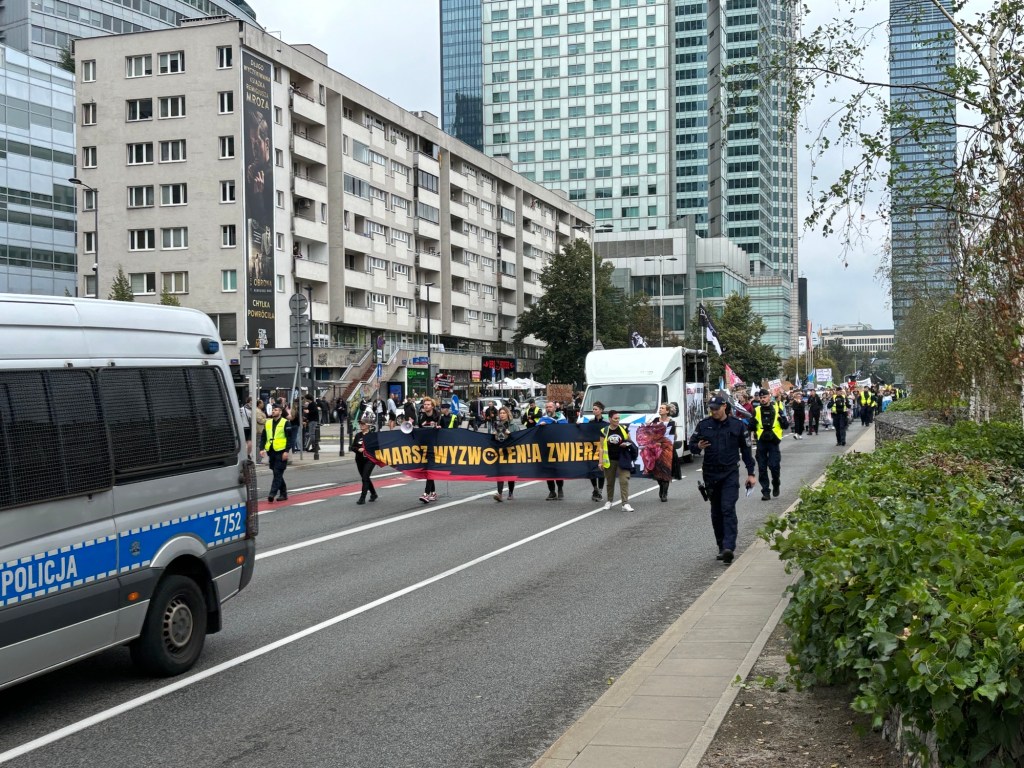
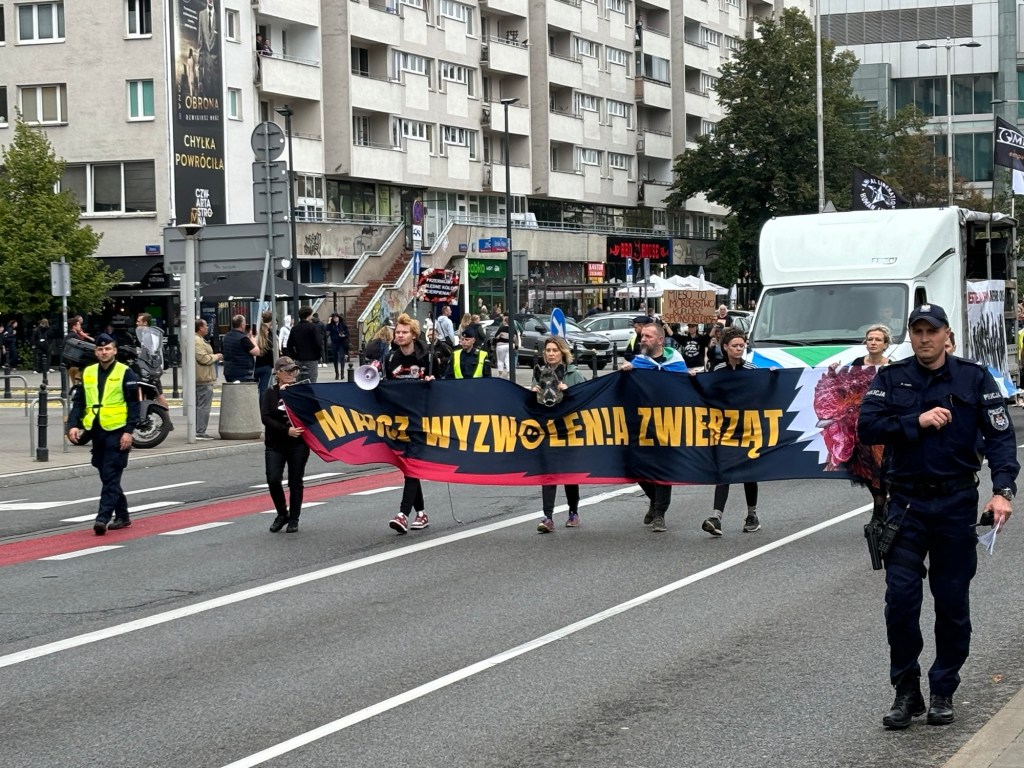
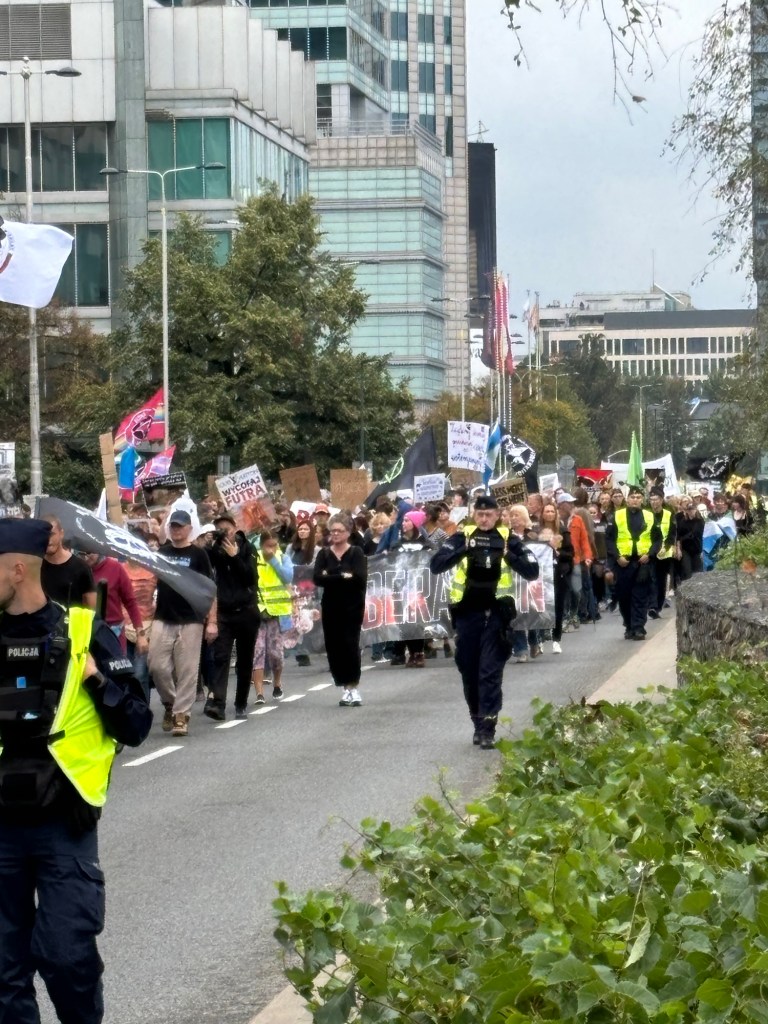
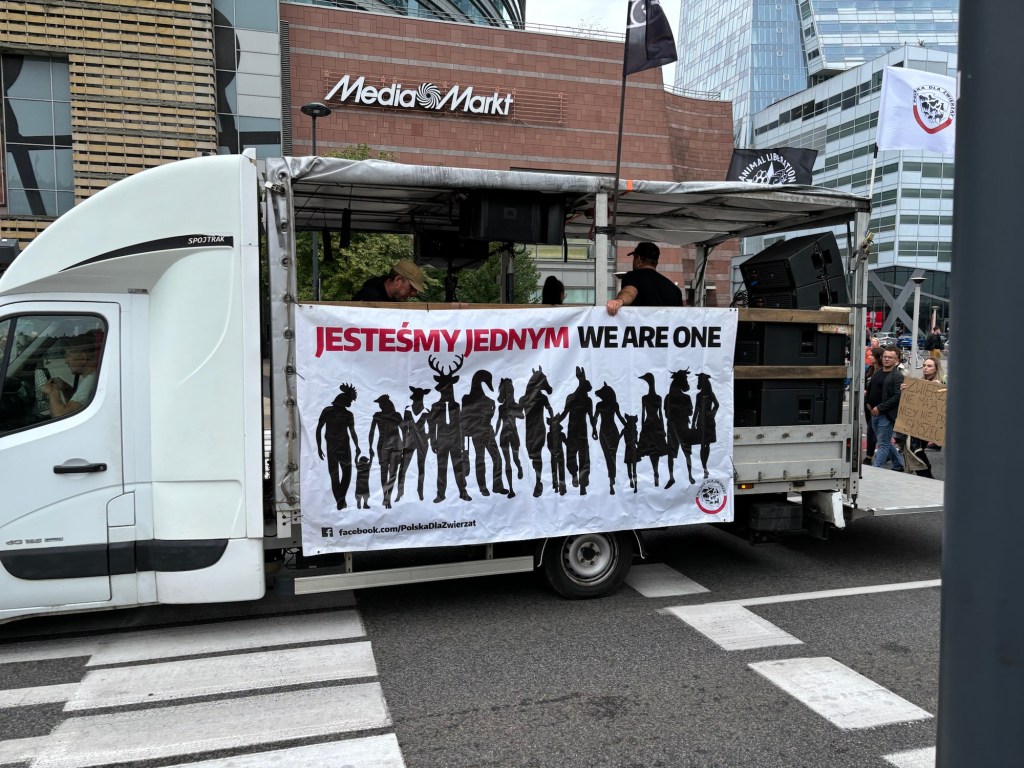
There was also some type of demonstration happening, with marchers being escorted by police down main roads in the city. Lots of shouting and repeating of slogans, marchers carrying signs, etc. The main banner said, “ANIMAL LIBERATION MARCH.” Apparently, it is an annual event in Warsaw that advocates for the welfare and humane treatment of all animals – whether companion, farmed, or wild.
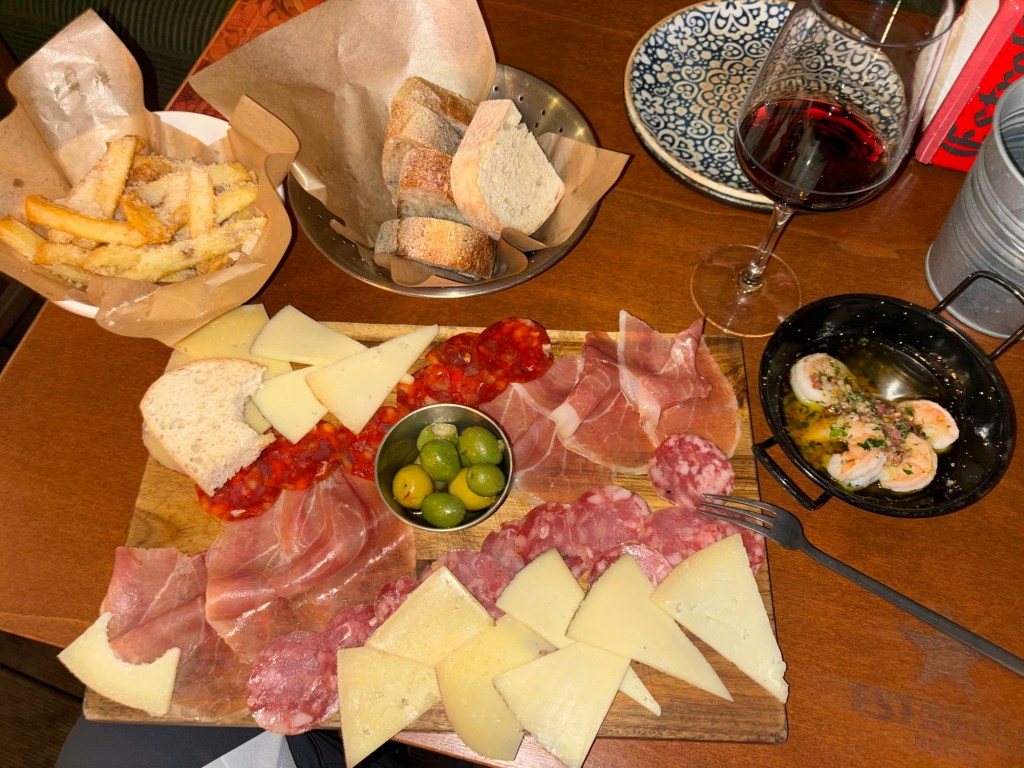
I decided to save the Georgian restaurant for a Sunday evening meal. But in an adjacent building, I found a great Spanish Tapas Restaurant – one of my favorite ways to eat – bits and bites of a variety. It was delicious and the house red wine took me back to my many nights in Spain.
Meats, cheeses, shrimp, Parmesan truffle fries, bread, and red wine
Words of wisdom, or just to amuse…?
It’s possible that a not so smart person, who can communicate well, can do much better than a super smart person who can’t communicate well. That is good news because it is much easier to improve your communication skills than your intelligence.







 A Captain’s Adventures