A dreary overcast day – perfect for some time underground! So I went to the Wieliczka Salt Mine for a tour. The van picked me up at 10:00 am, and then seven additional folks (all American!). After a 30 minute ride we arrived at the mine.
NOTE: After 2 1/2 hours underground in salt, I am now well preserved.
This salt mine is 750 years old, although they stopped mining here in 1996. There are a number of others still operating in Poland.
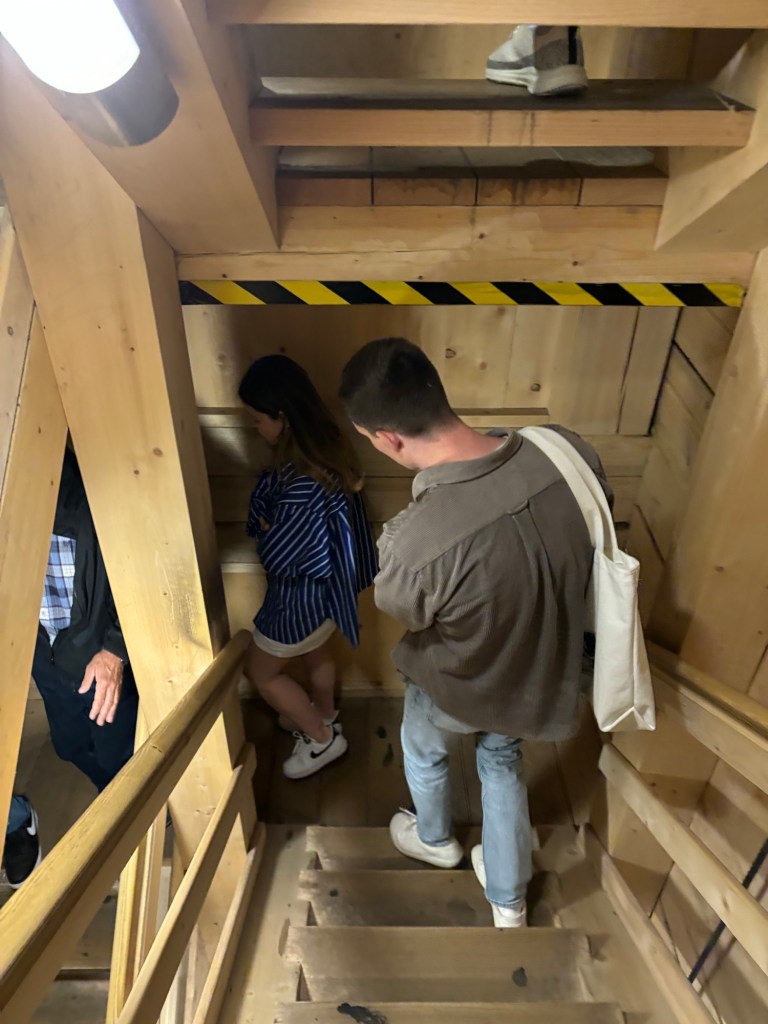
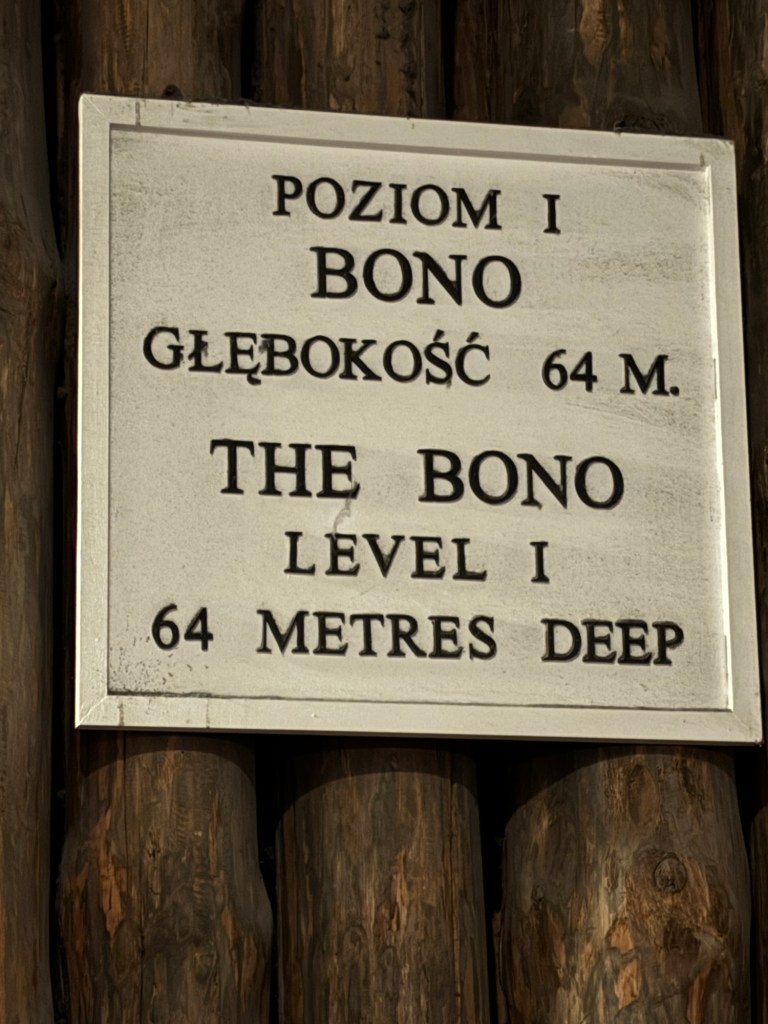
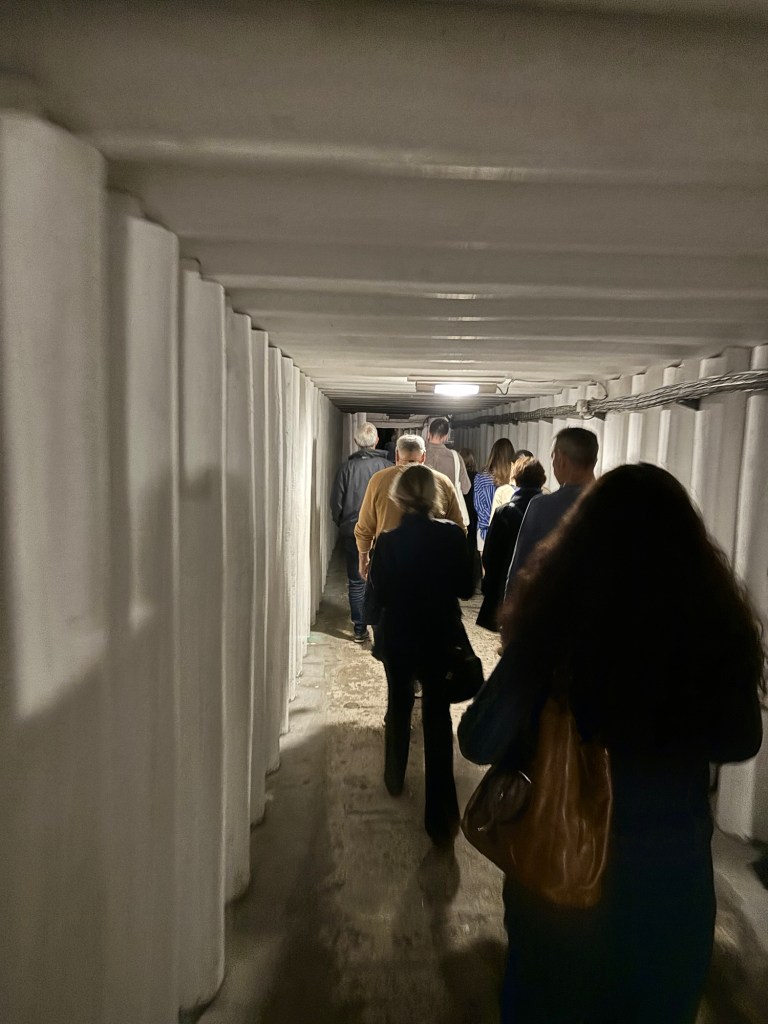
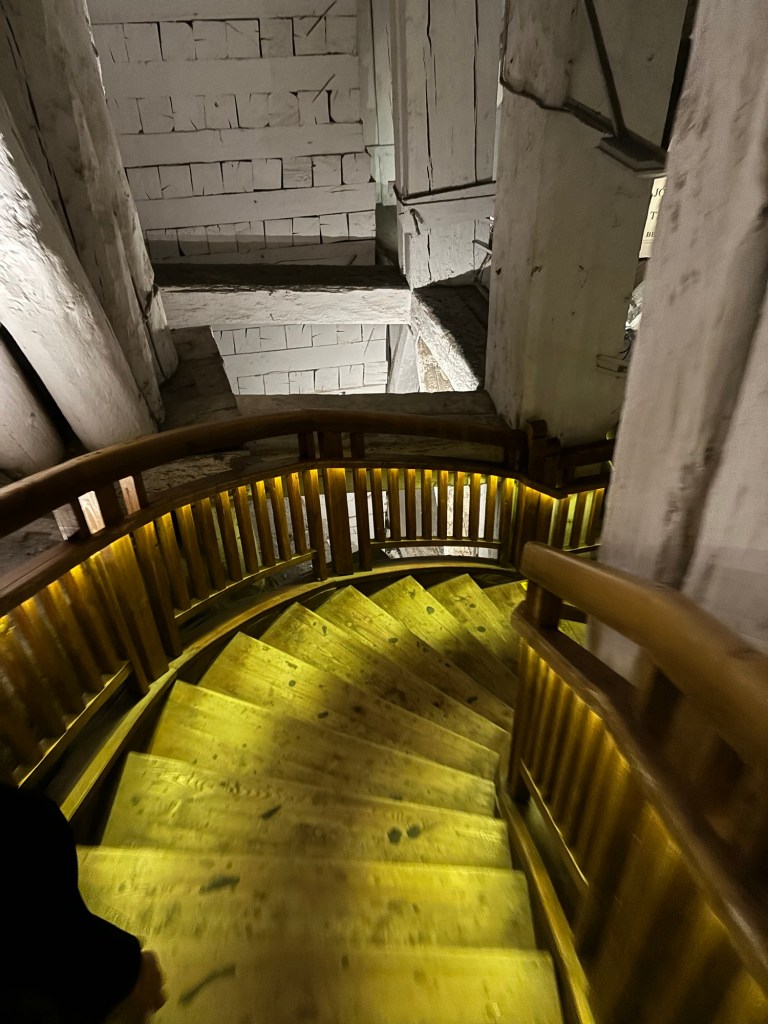
From the surface, we descended 800 steps to levels 1, 2, and 3 (of the 9 levels in the mine), to almost 500 feet below the surface. The 9th level is another 600 feet down.
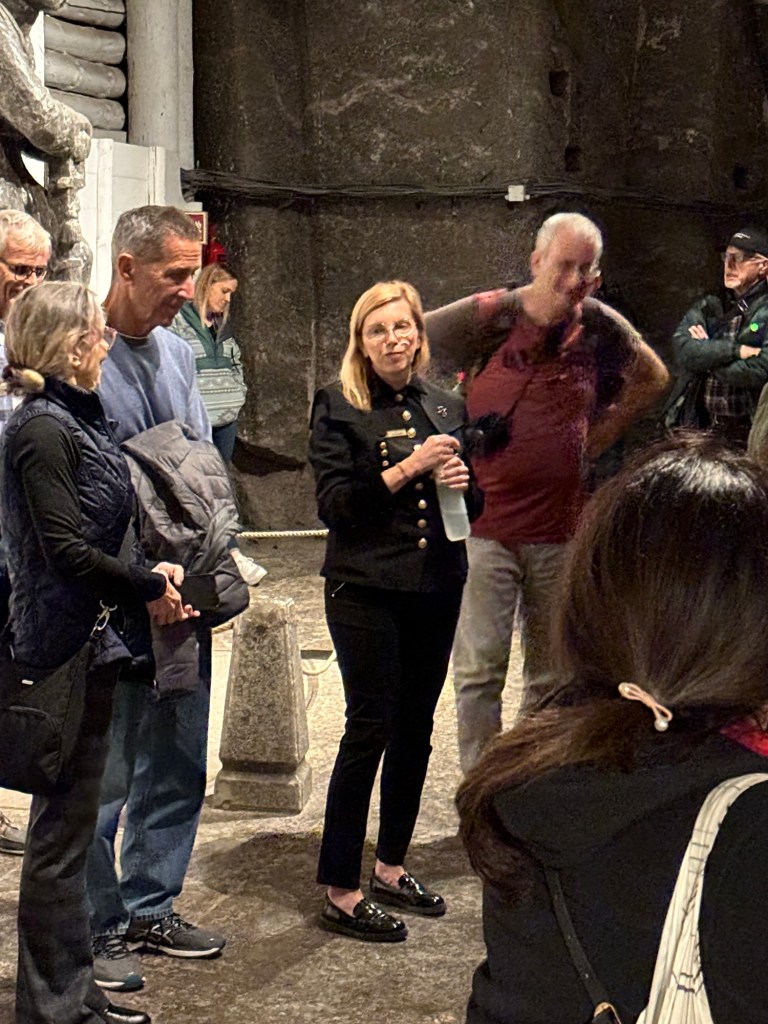
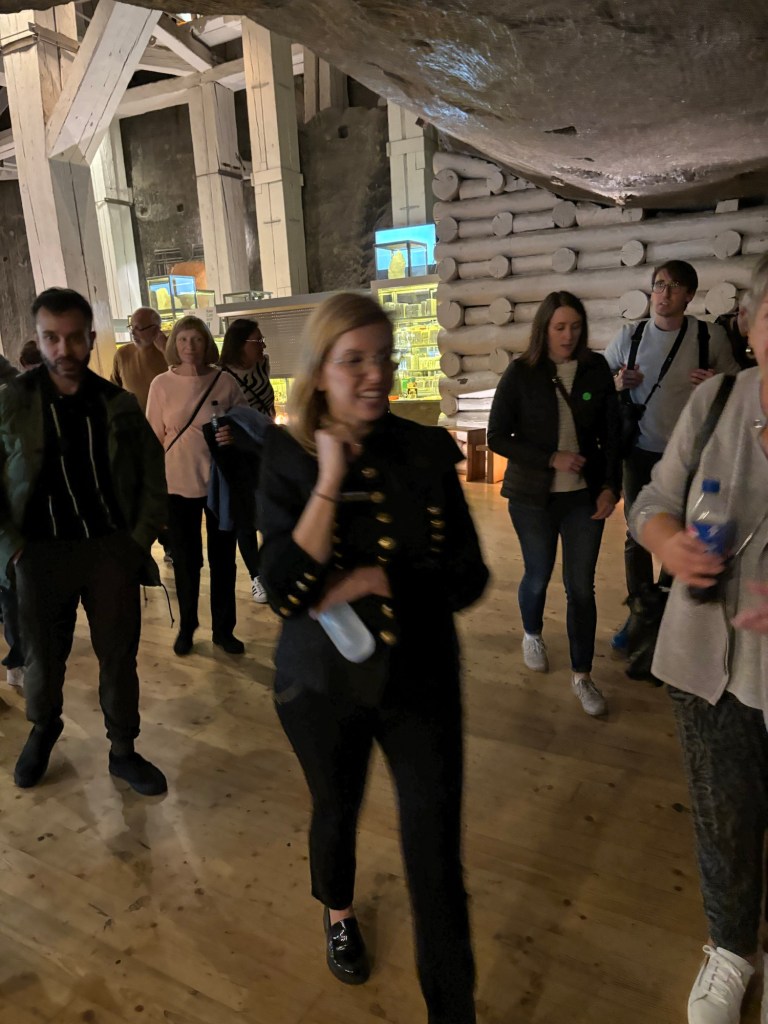
Our guide, Patricia, was fabulous. Full of facts and very funny!
Guide Patricia (center)
GUIDE: As we were walking down the steps, she told our group, “Yes, it’s hotter here, maybe we are getting closer to hell!
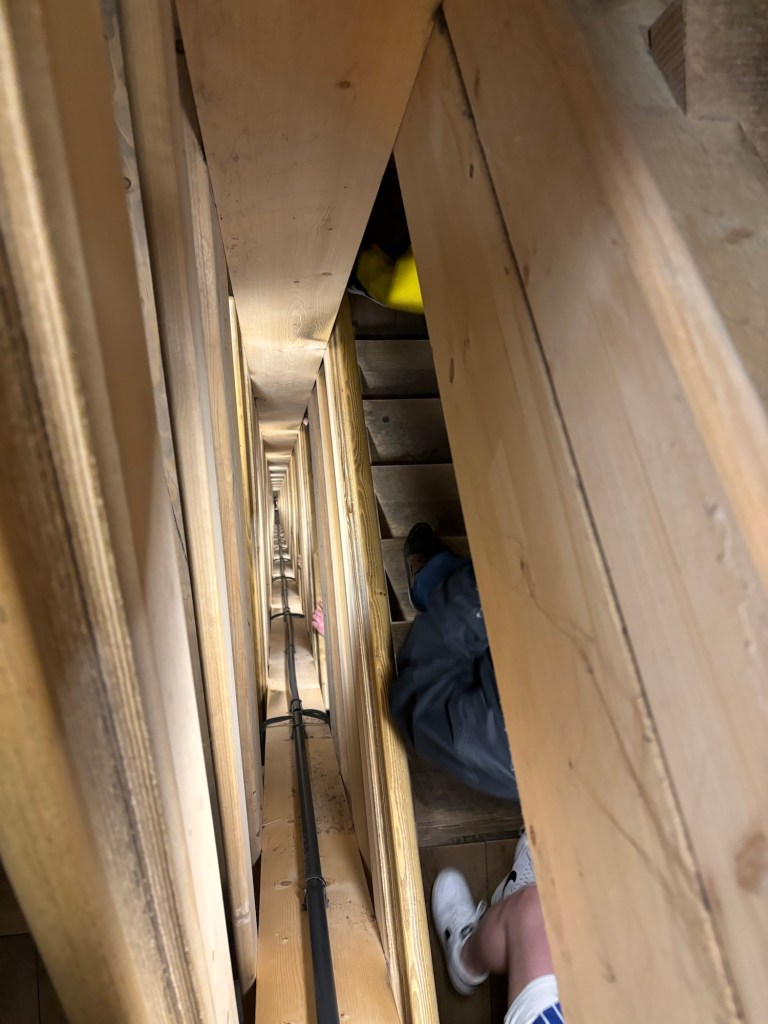
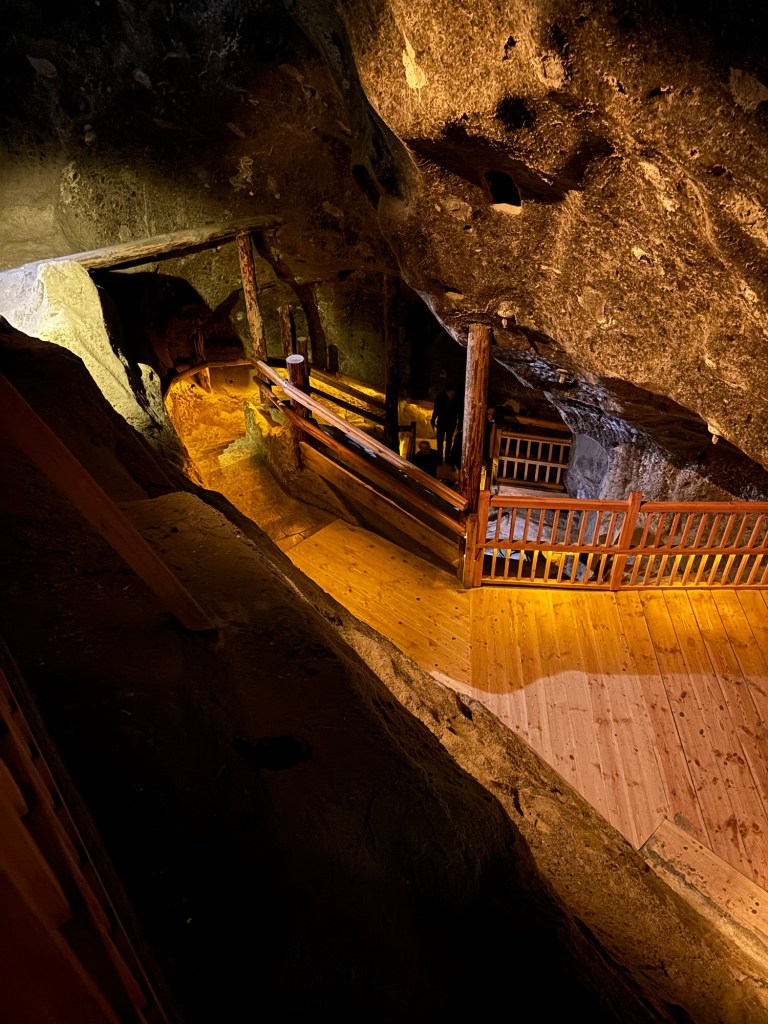
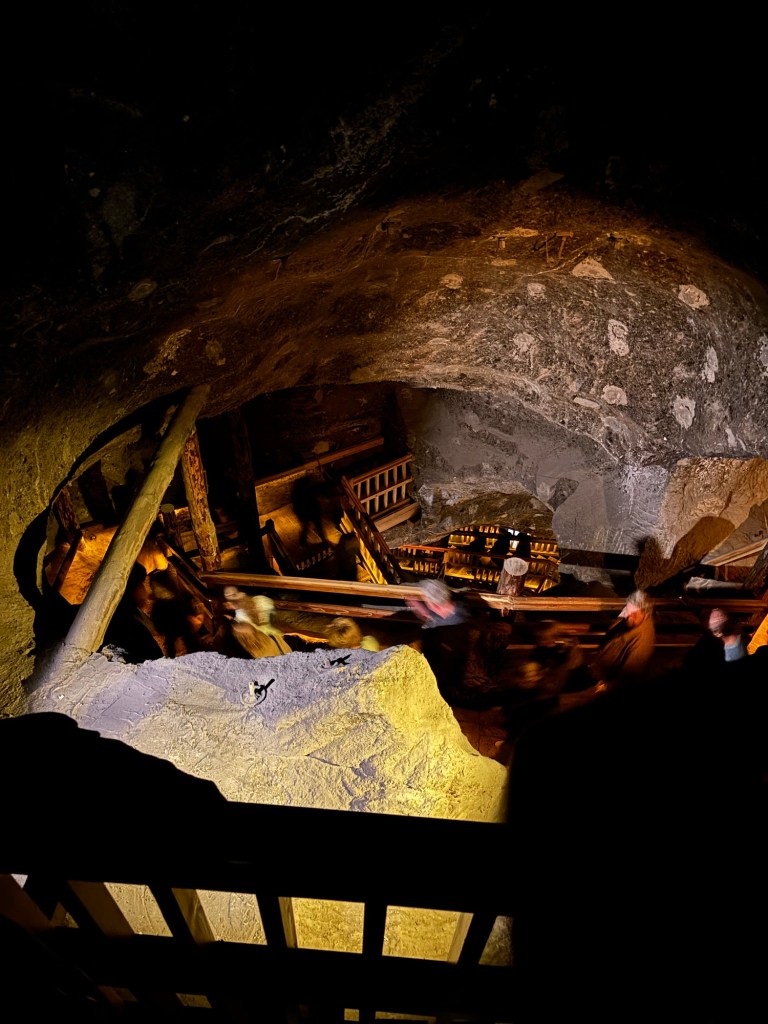
Looking over the center railing in the staircase – That’s still a really long way down…
GUIDE: Talking about how immense the mine is, she said, “Do not get lost, because we will not look for you. We are allowed to lose 10% of our visitors every year!”
Fun Facts
There are 180 miles of passages in the mine, and we only saw 1% of it!
At one time 36% of state income came from the salt mines.
A fire one time burned for 8 months in the mine – they cannot use water to fight fires in a salt mine.
Salt has even been used as currency.
Mining salt was a much easier than other types of mining. And salt miners had healthy lungs.
Once a year, firemen have a competition running up from the 2nd level to the surface in full gear and masks.
GUIDE: “And I want to marry the winner!”
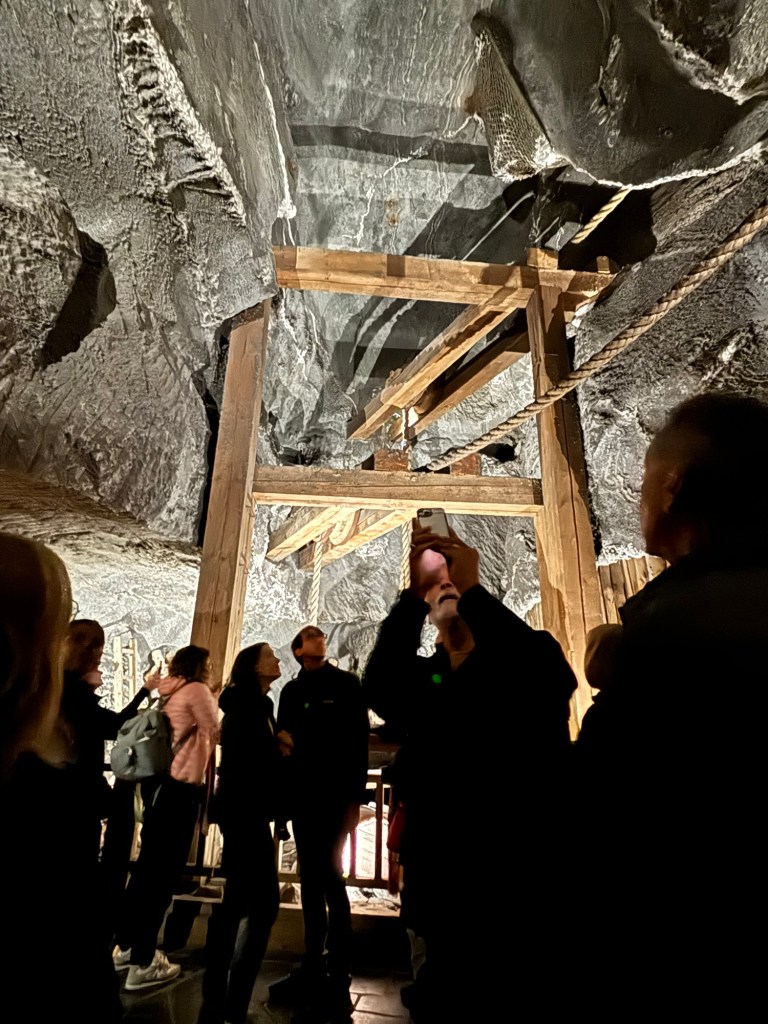
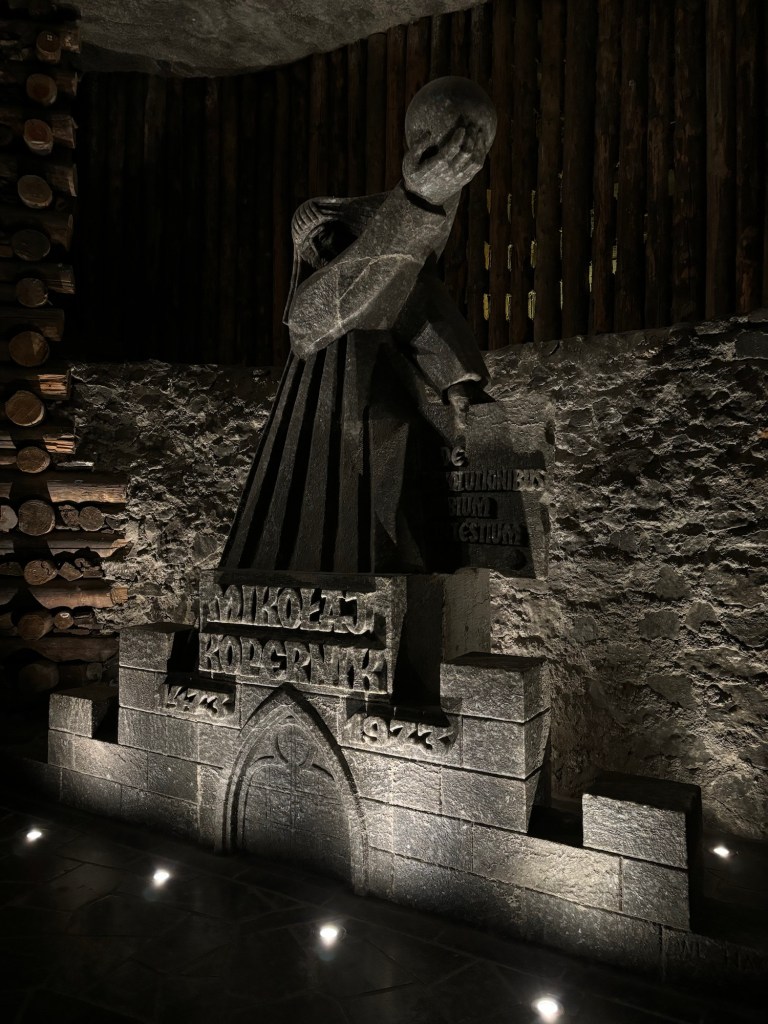
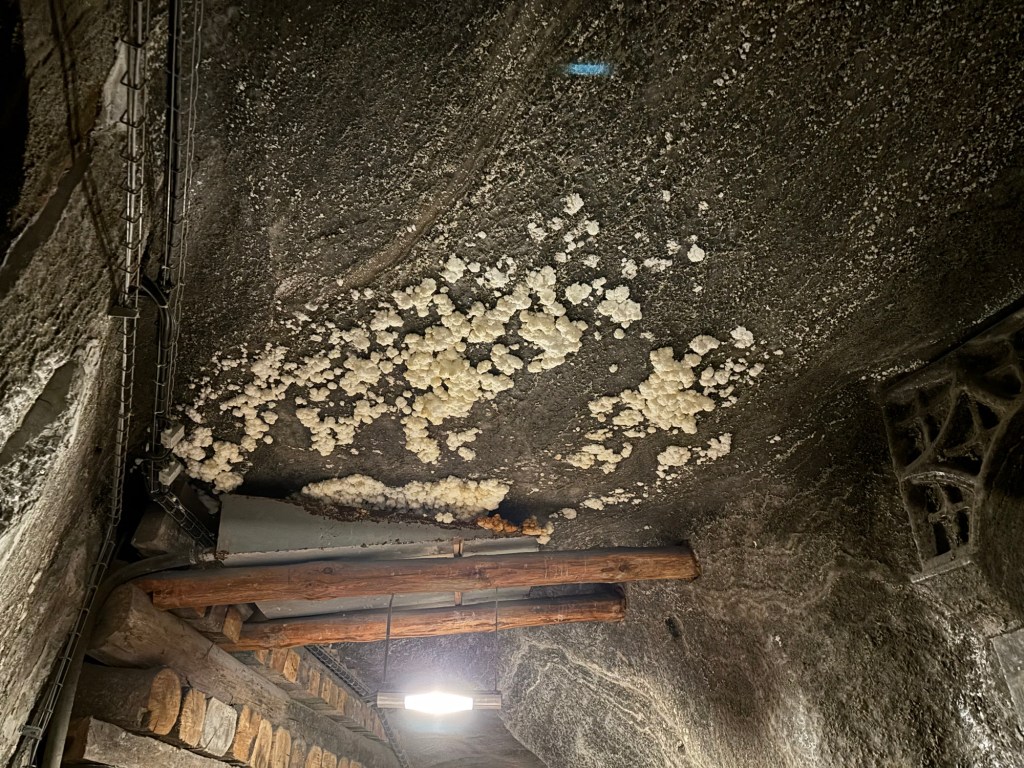
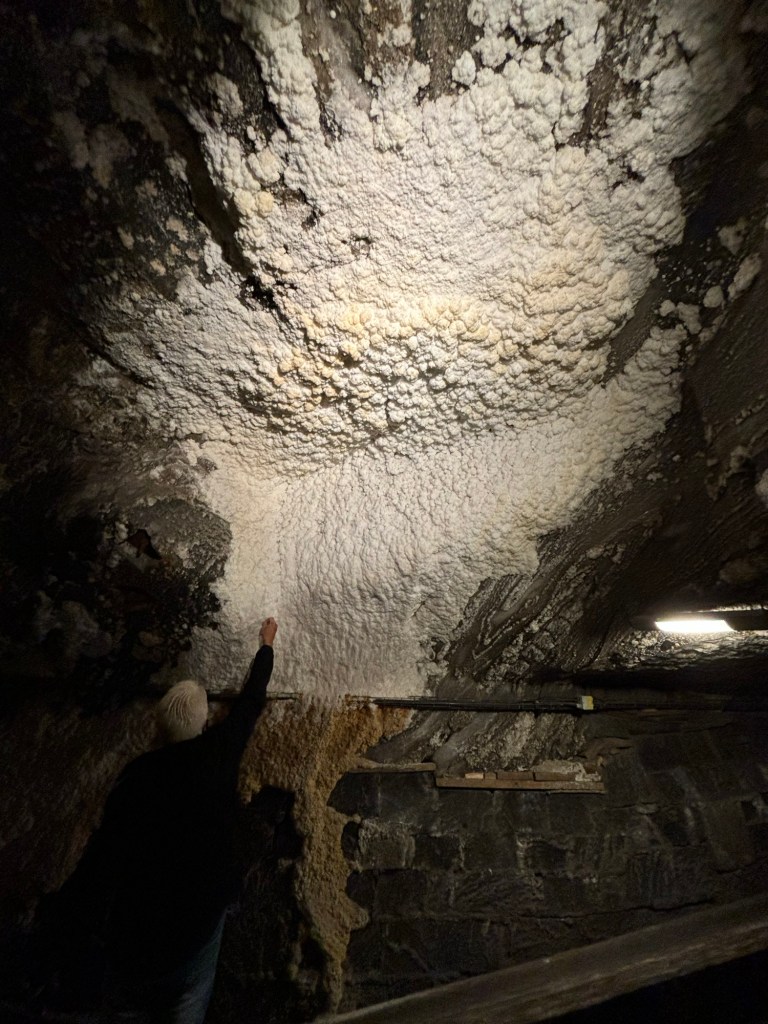
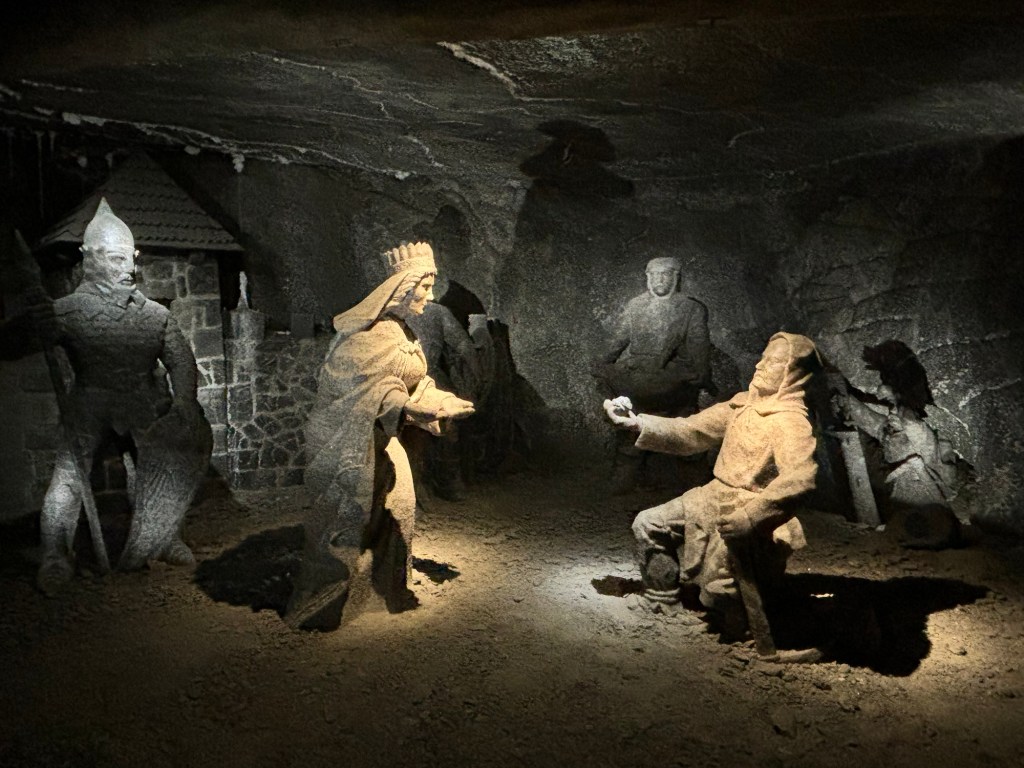
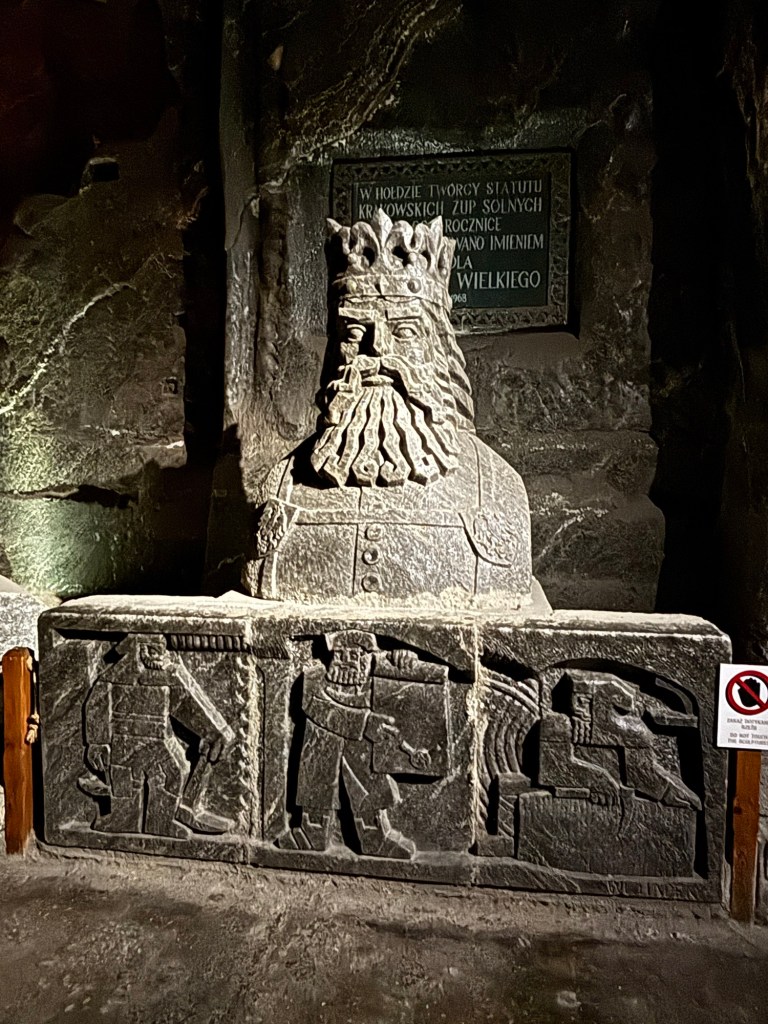
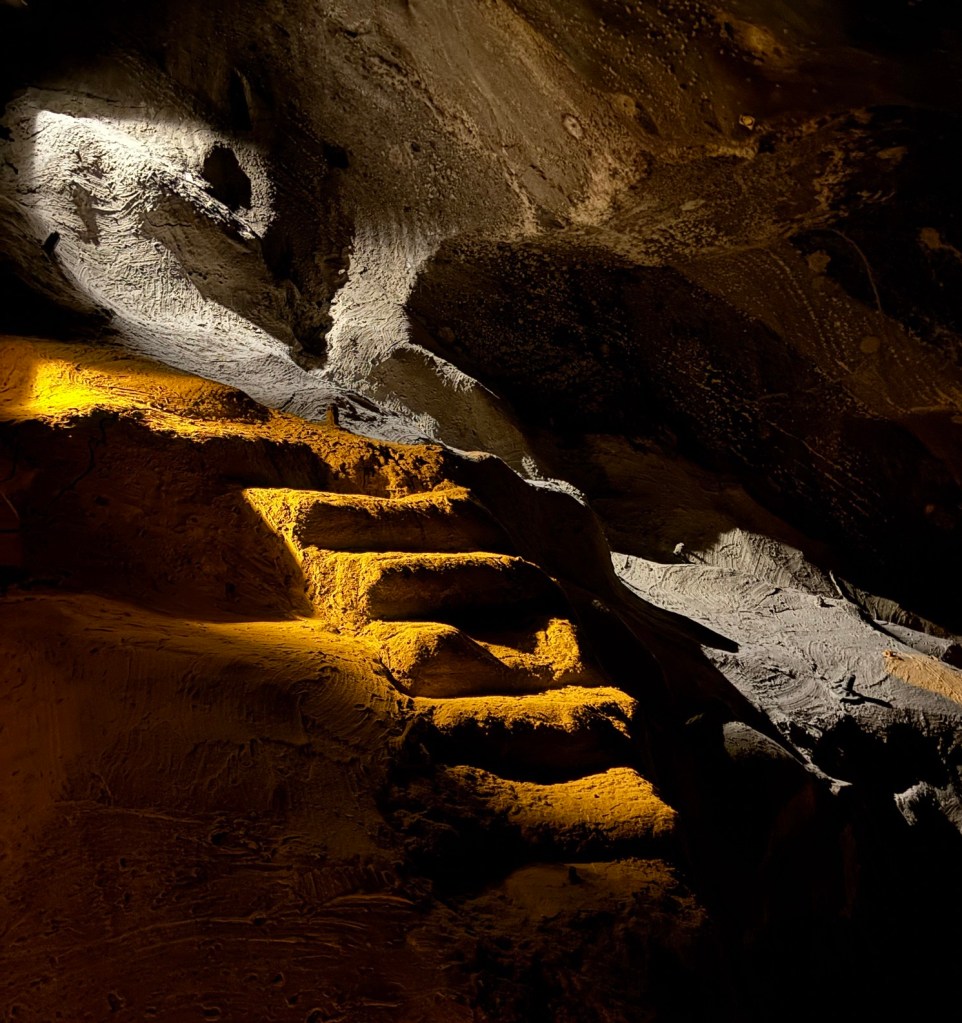
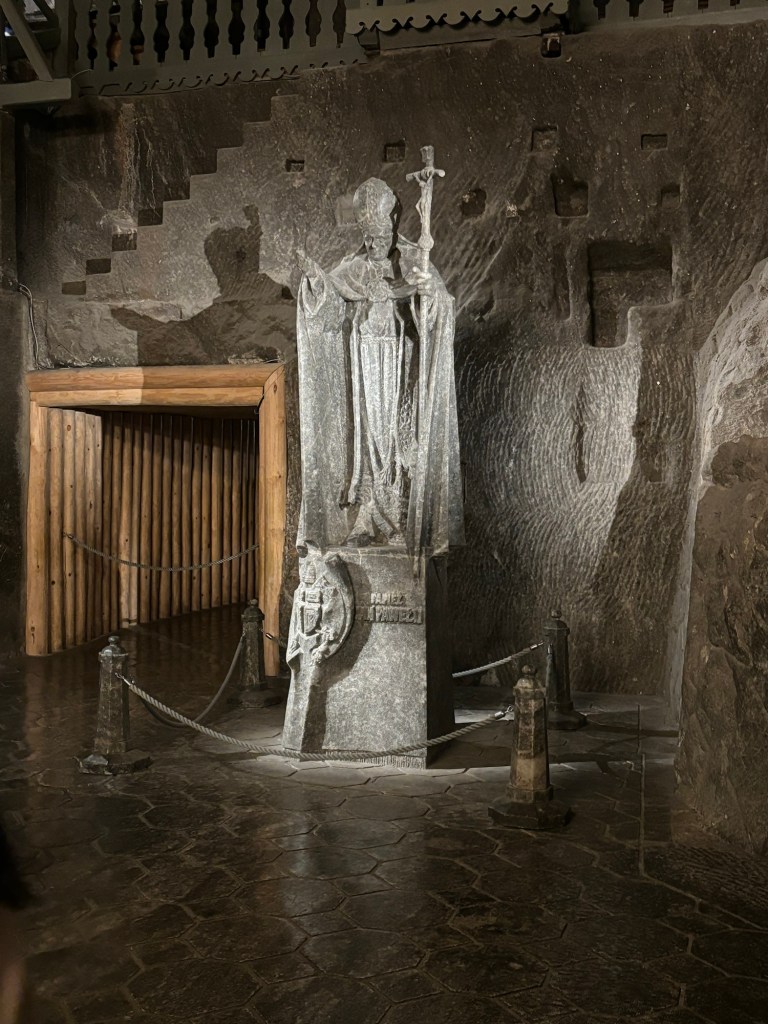
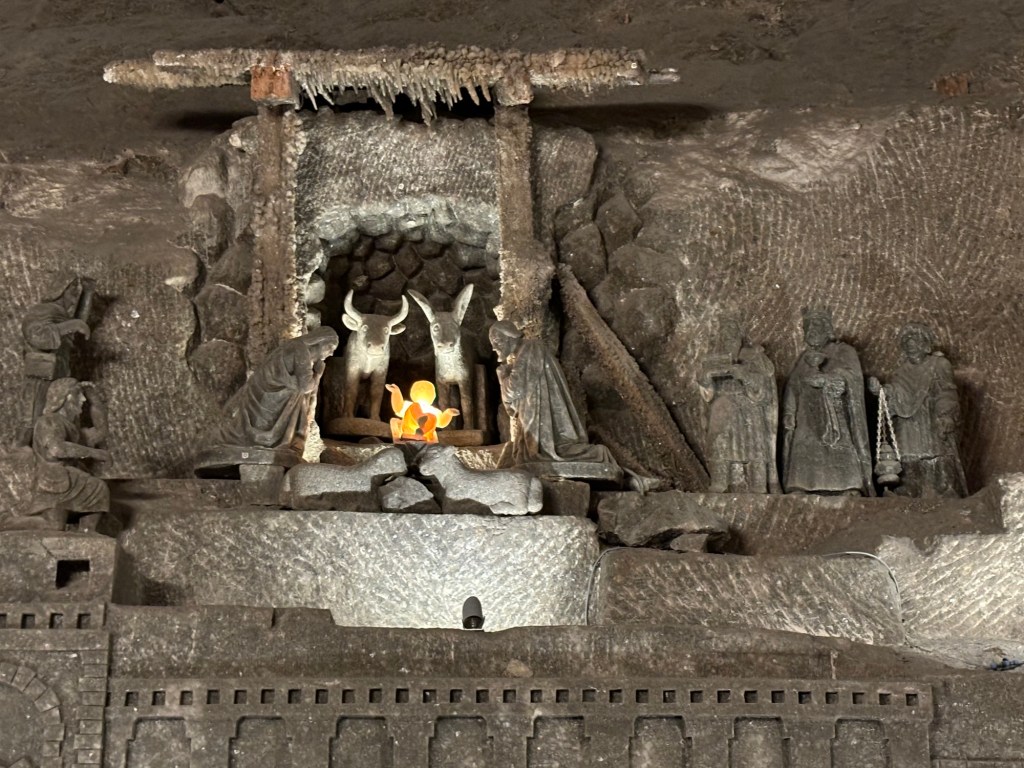
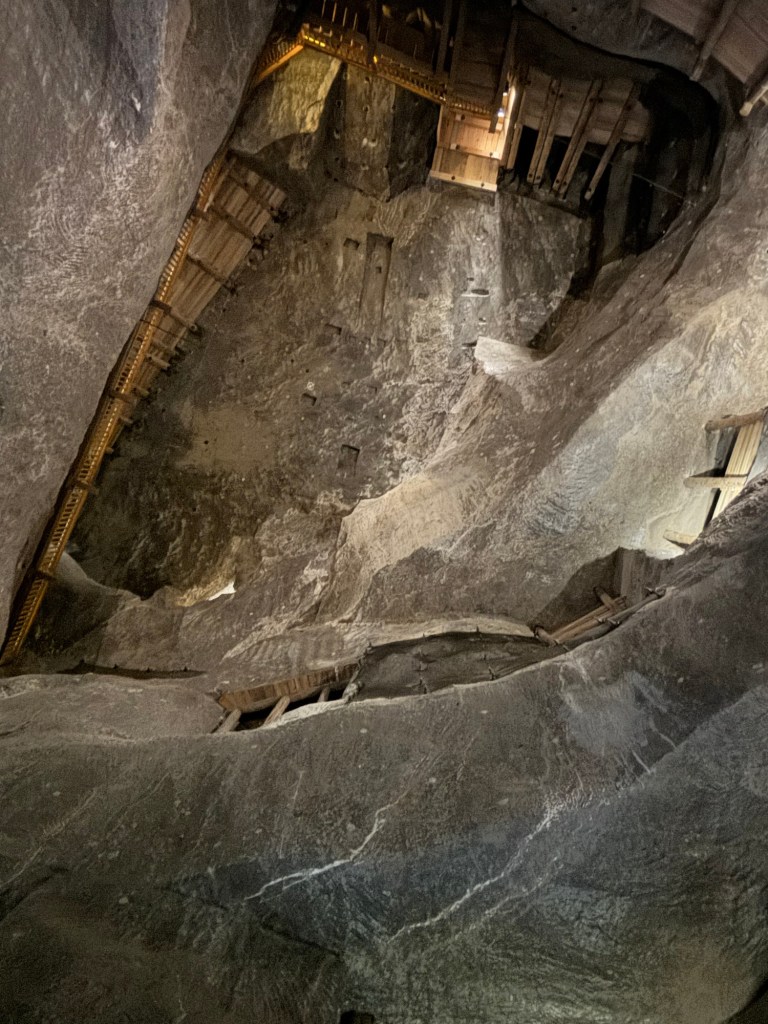
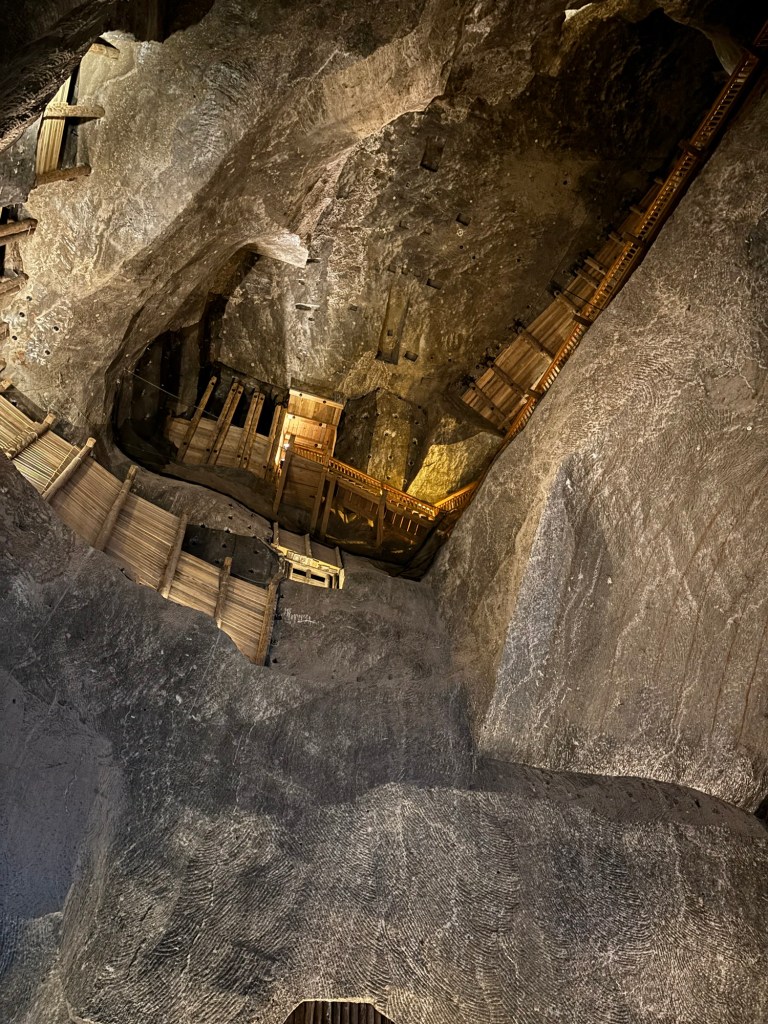
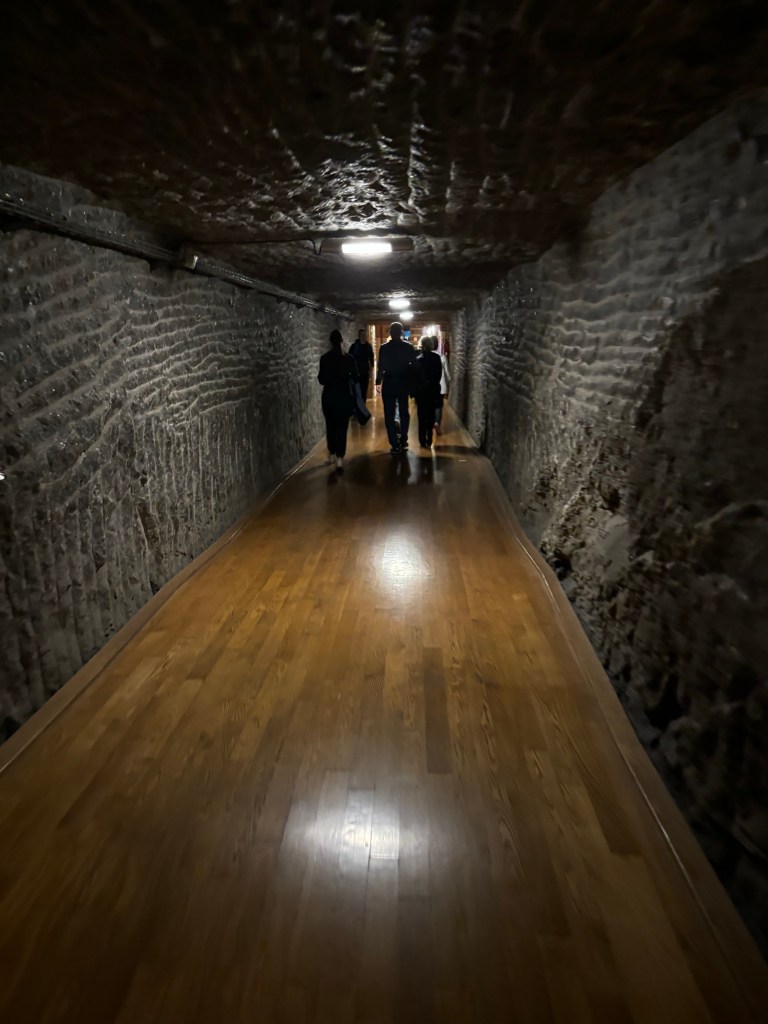
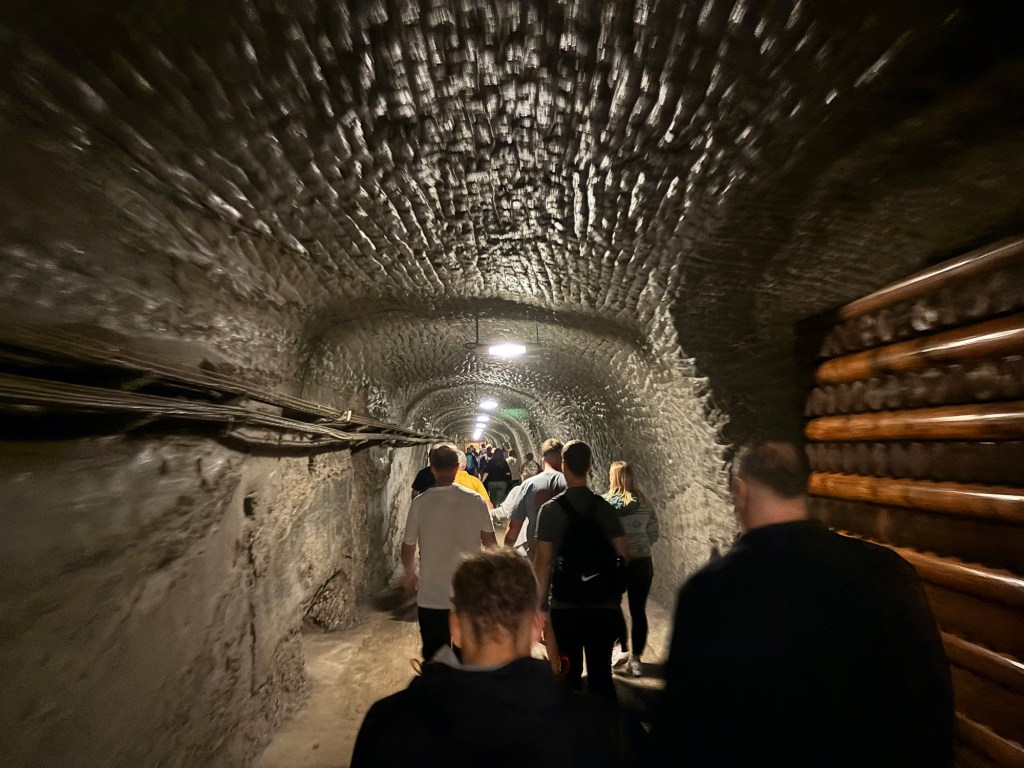
The gray walls and ceiling in all the photos is raw salt!Salt sculpture – carved in 1973Water damage called “Cauliflower” – water in a salt mine is bad.
GUIDE: “Later you can touch it and even pinch some off and put it in your pocket. But be careful at the airport, you will look suspicious.”
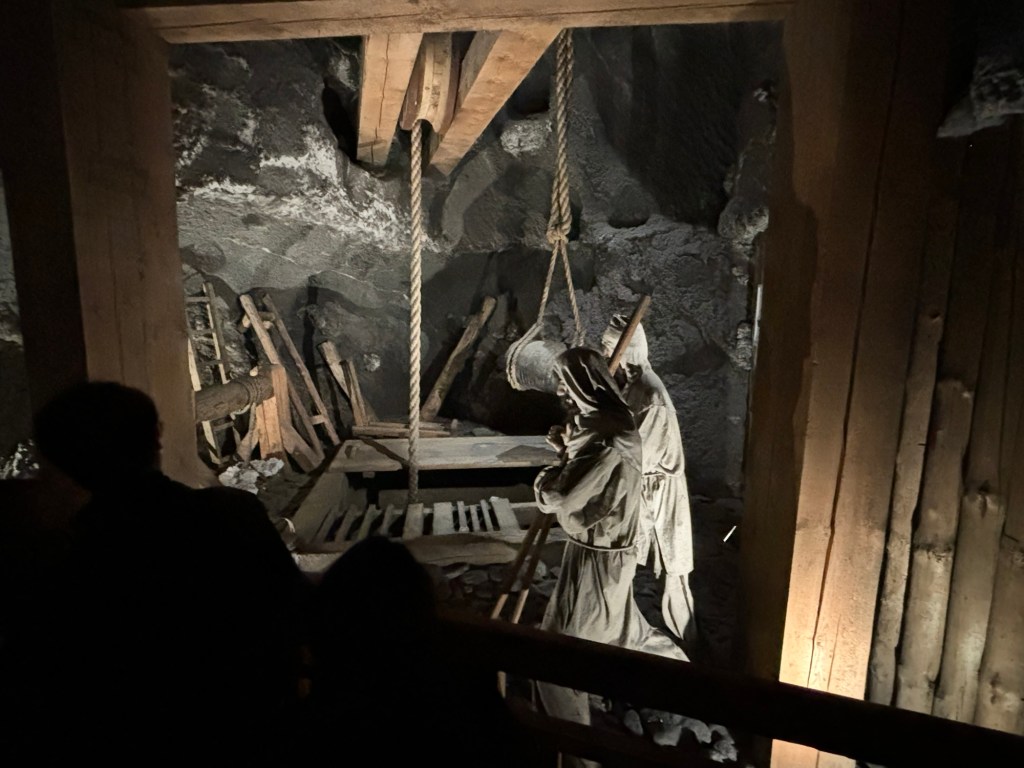
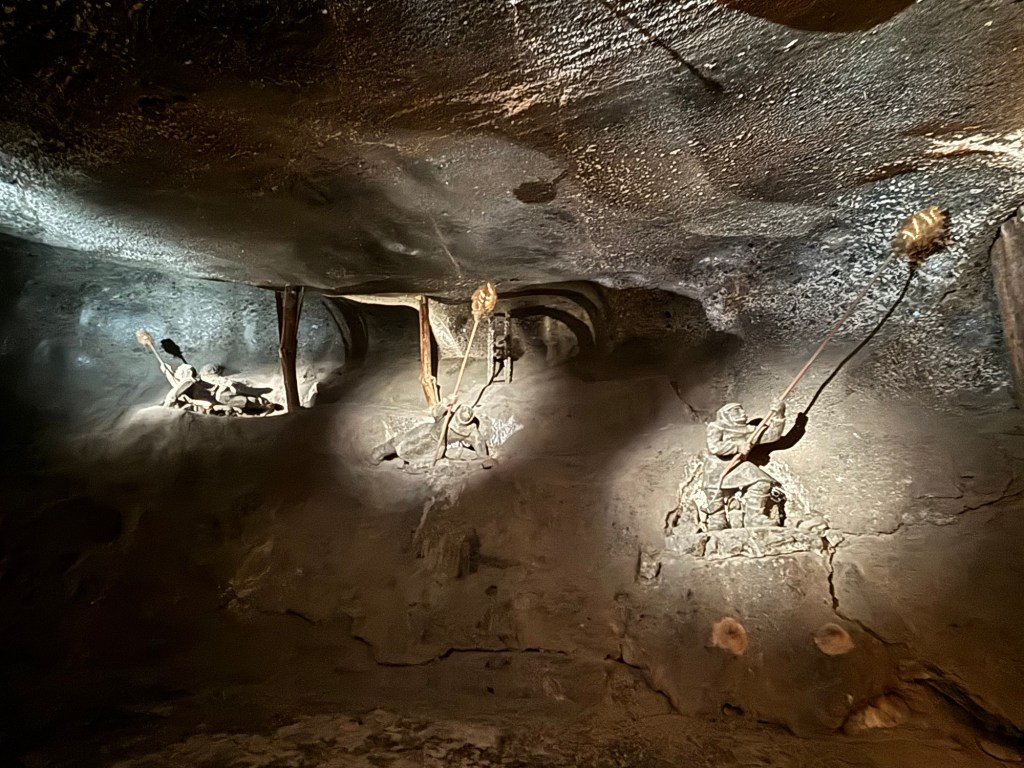
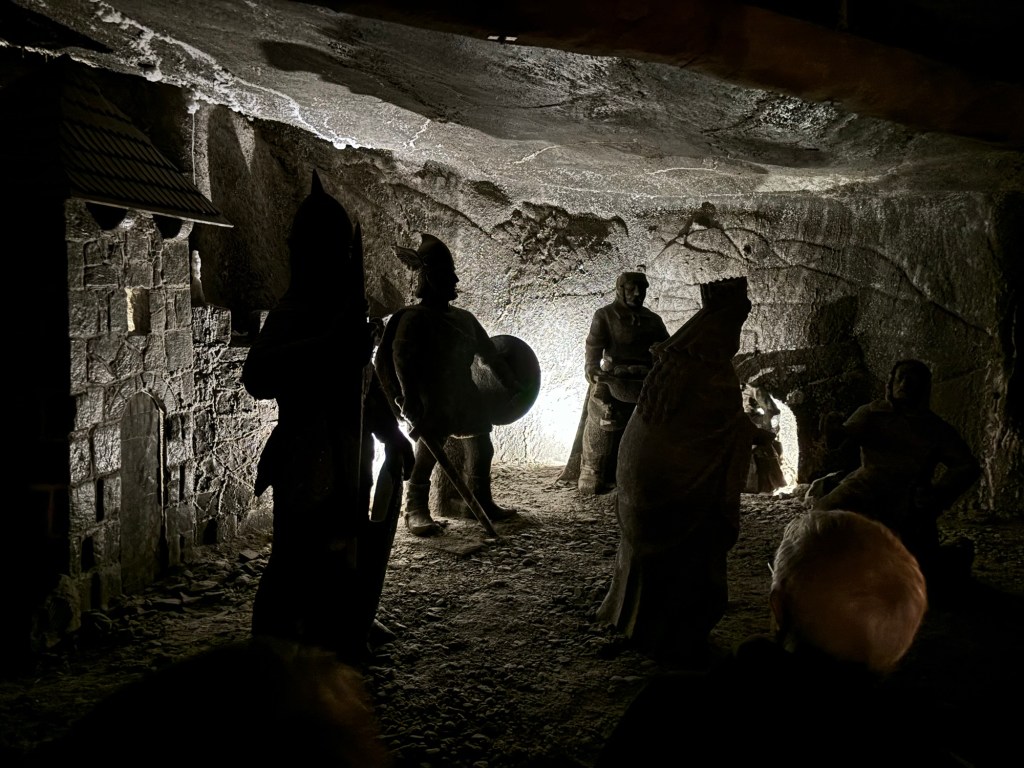
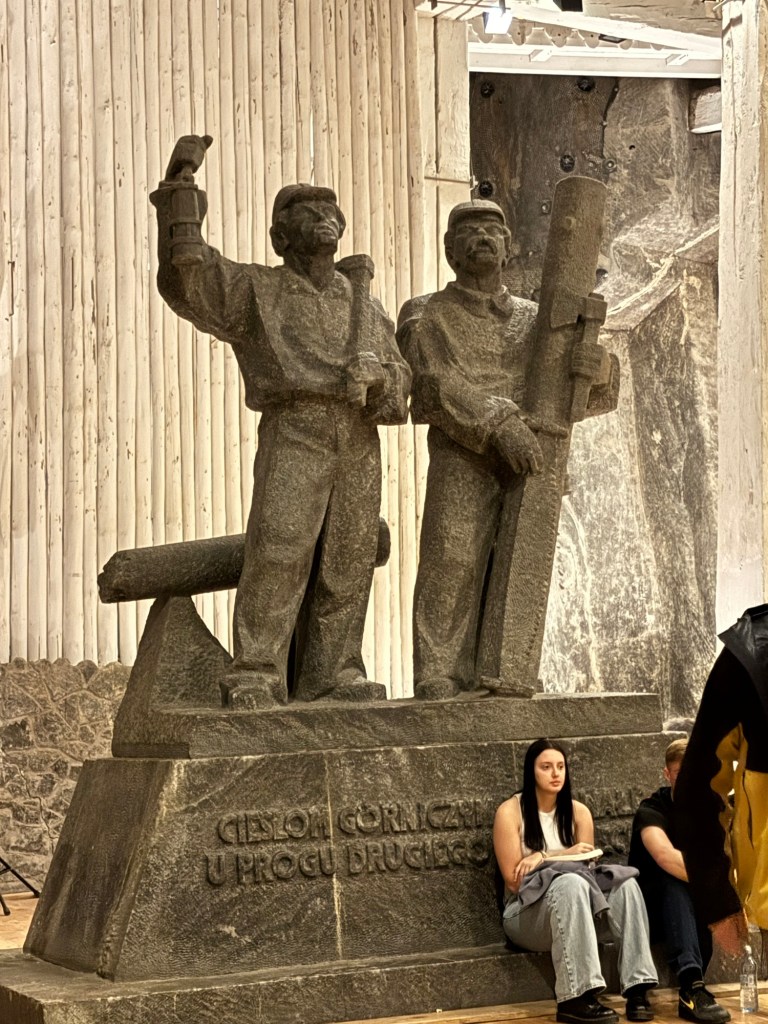
The miners used lighted torches to locate and burn off pockets of methane gas (as shown in the salt sculptures holding the long poles)Short demo of burning off methane gas
GUIDE: “If you hear any loud sounds in the mine, just turn and watch the guide. If she runs, then be scared and follow!”
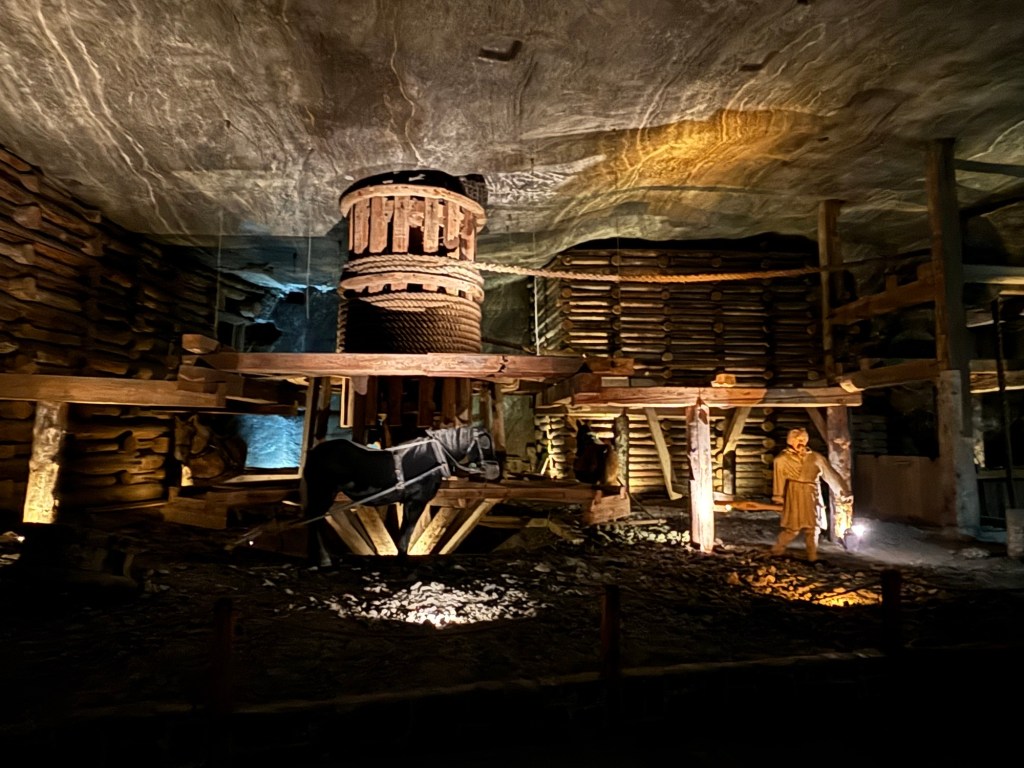
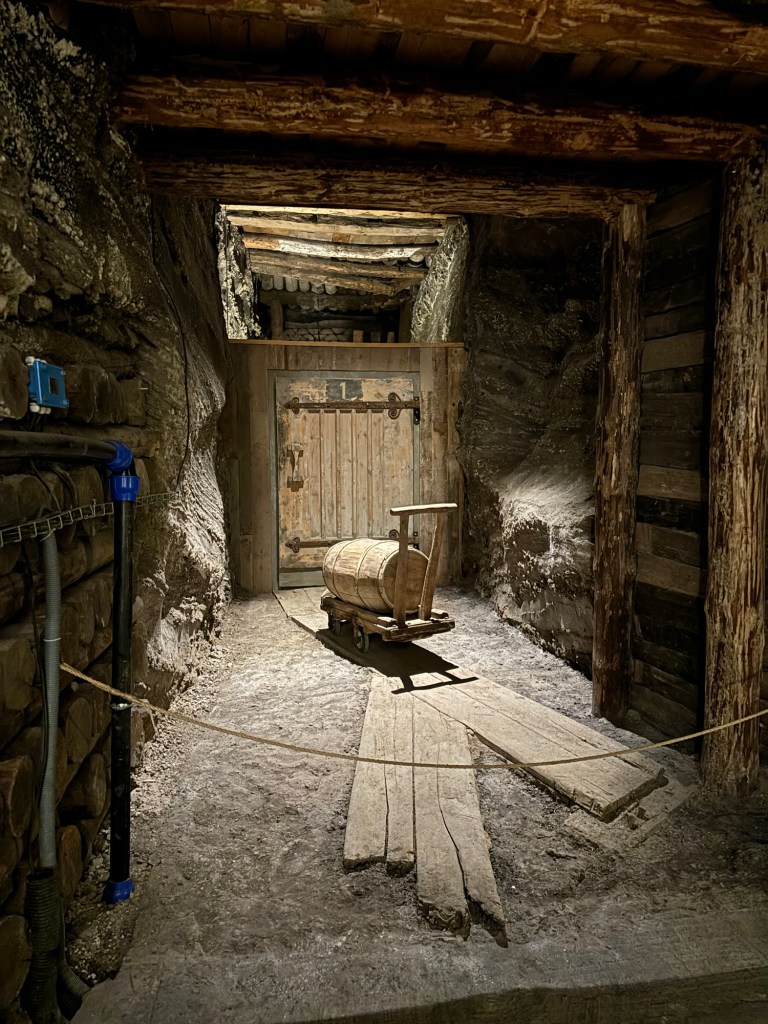
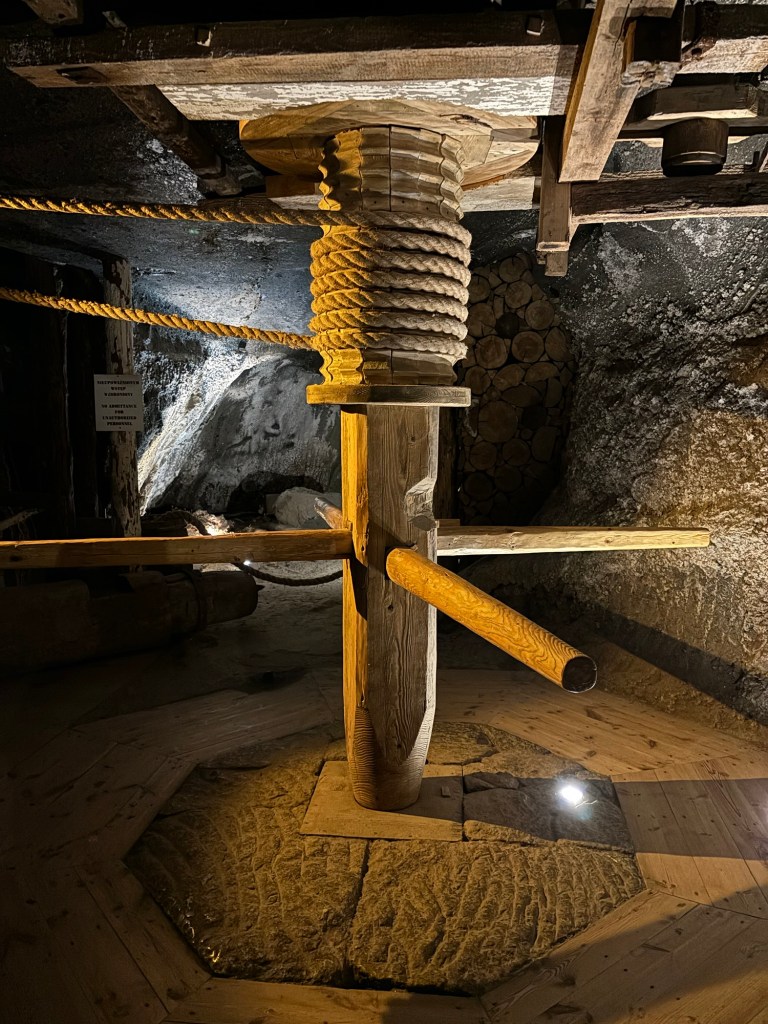
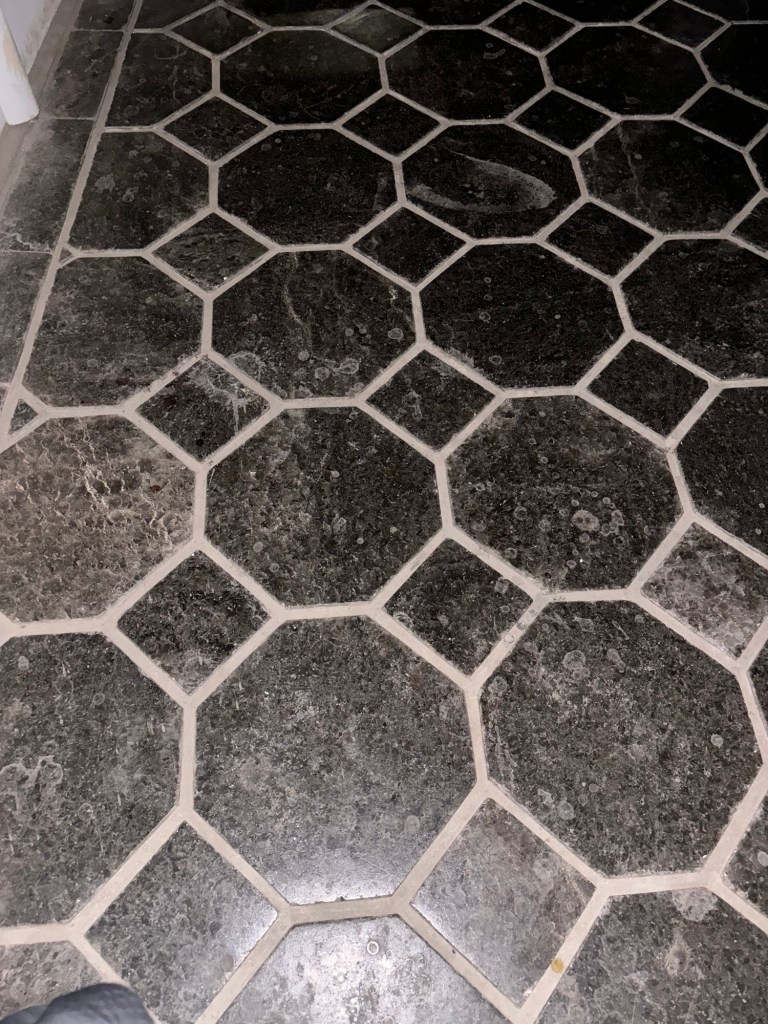
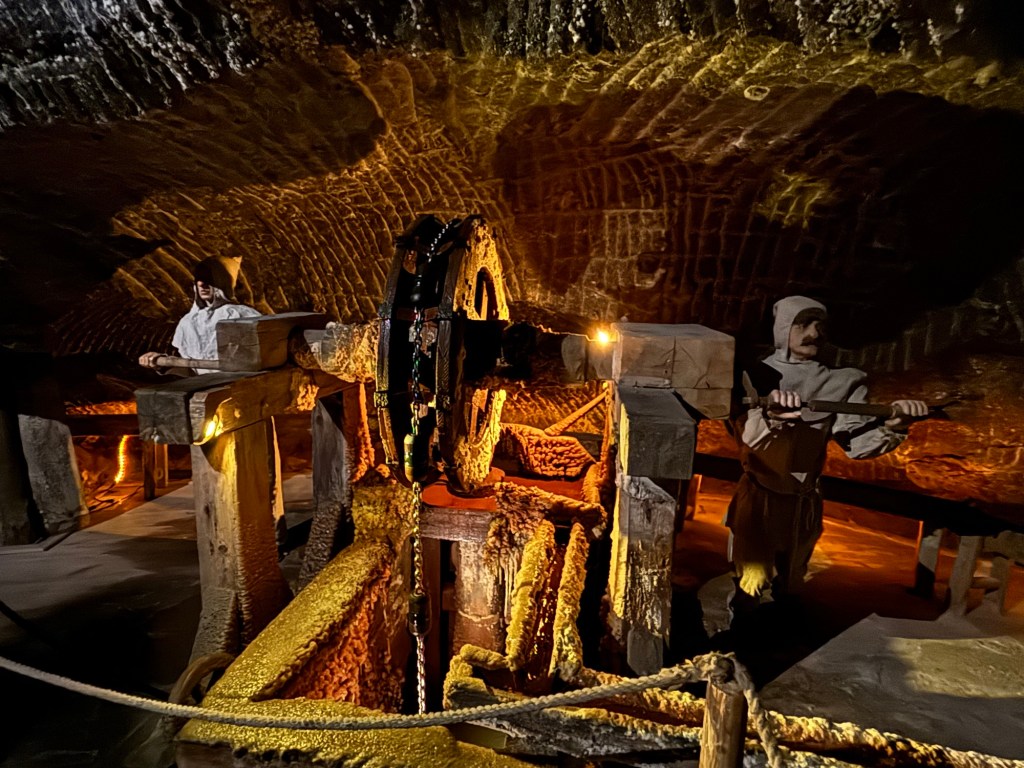
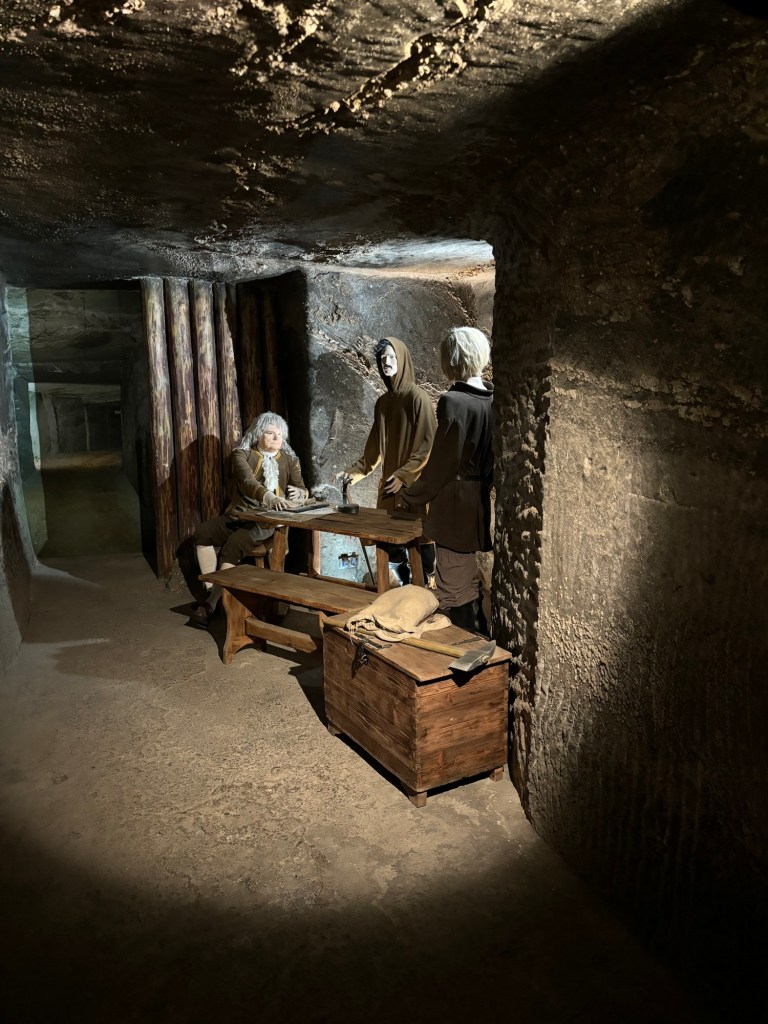
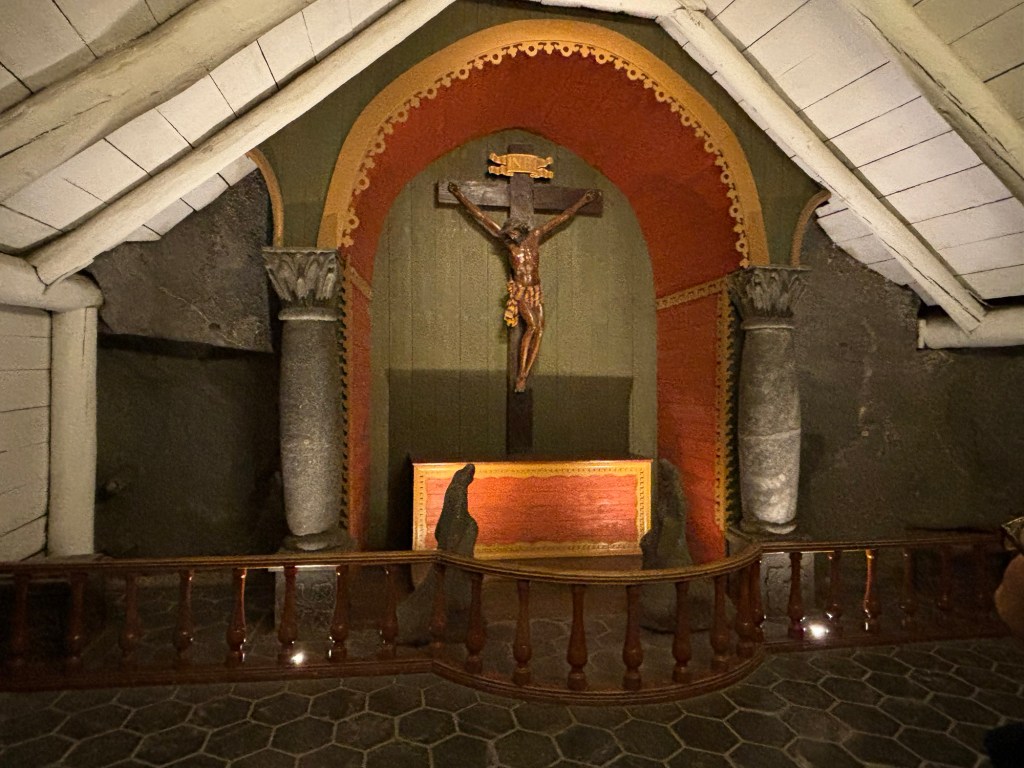
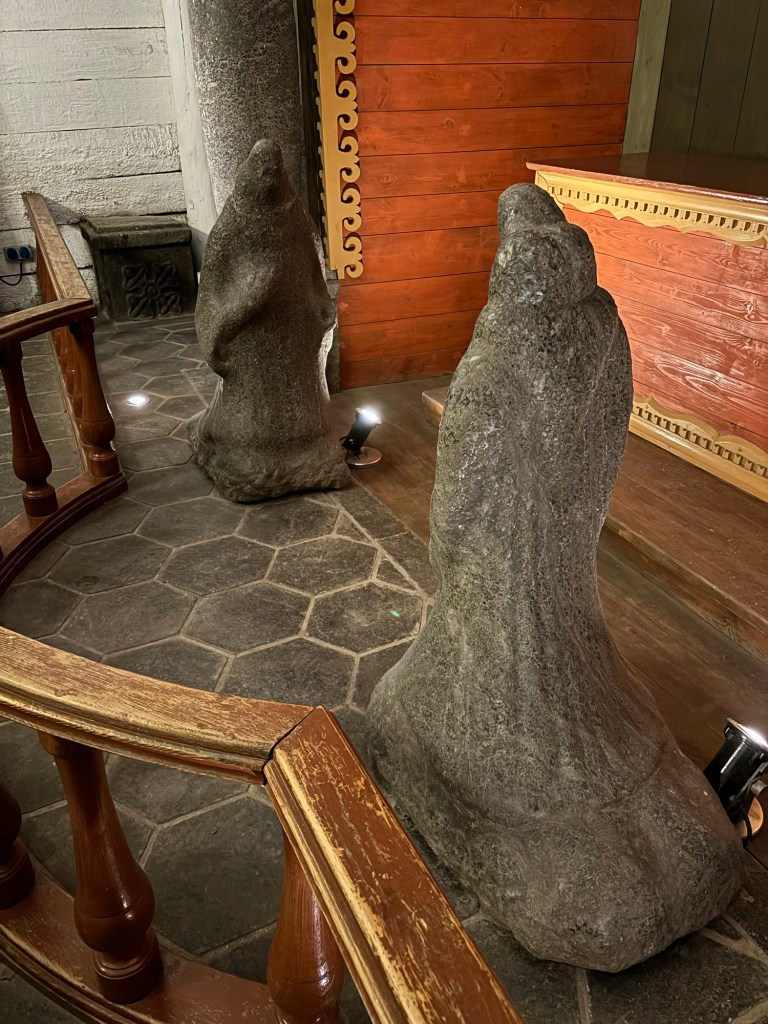
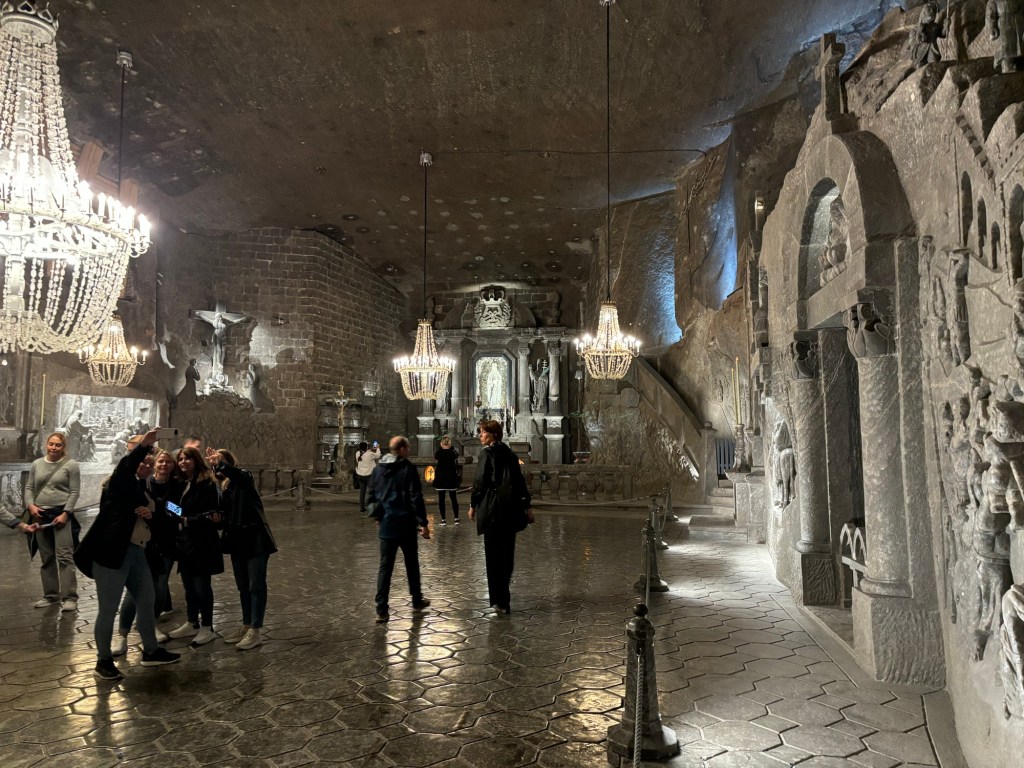
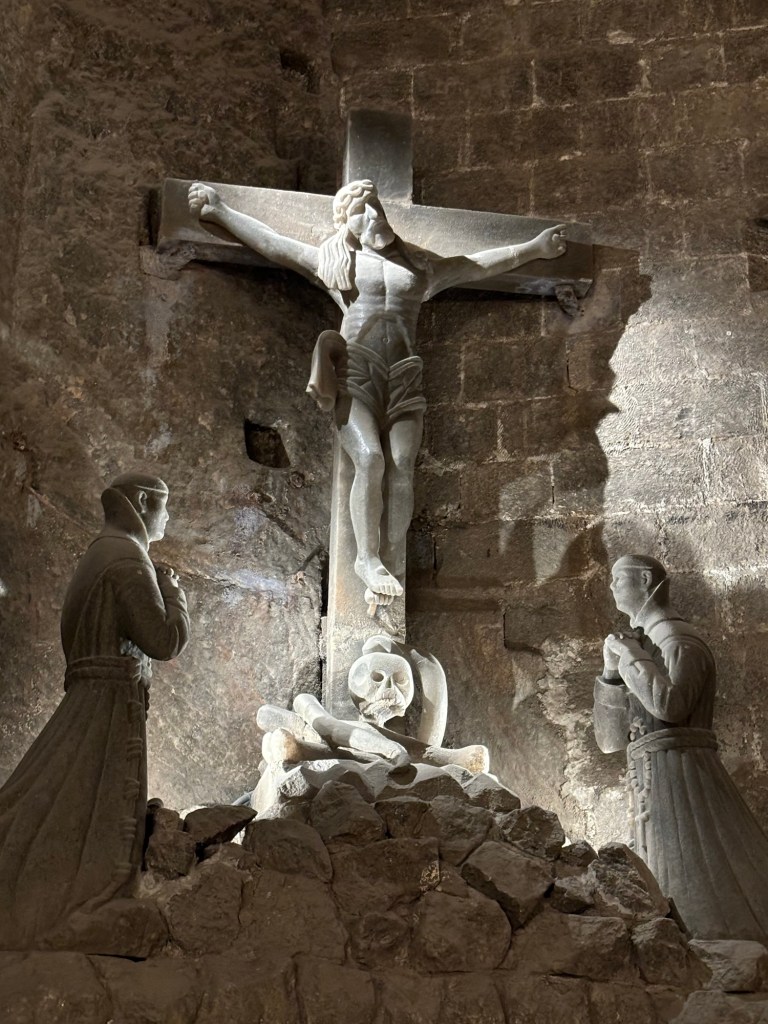
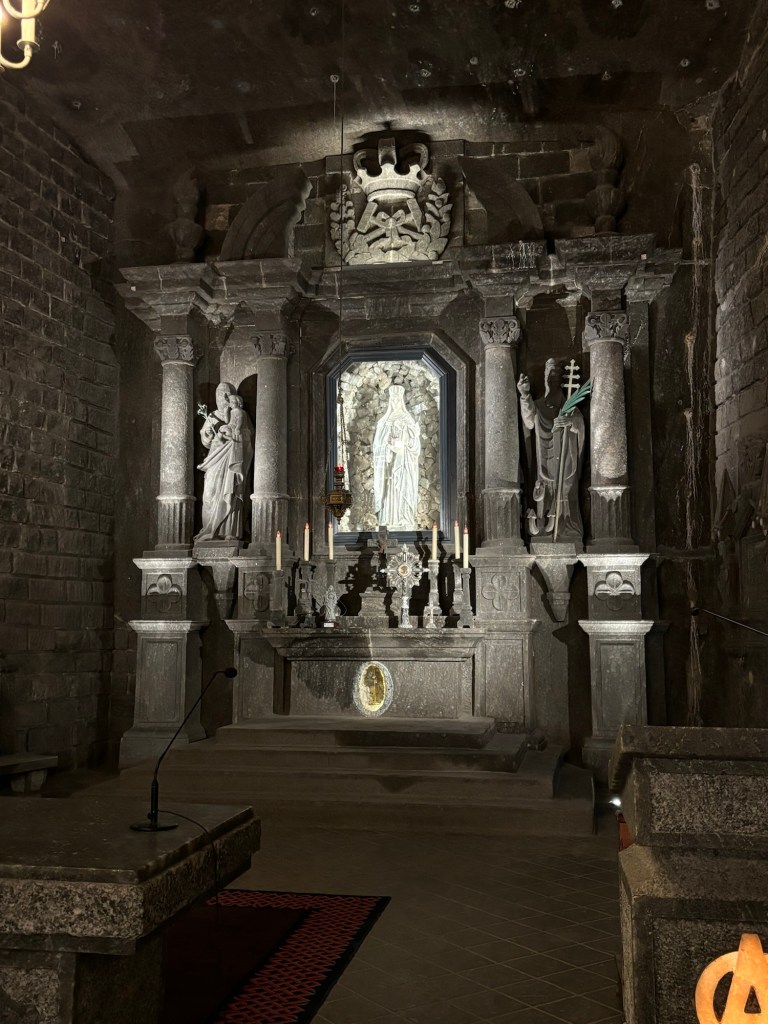
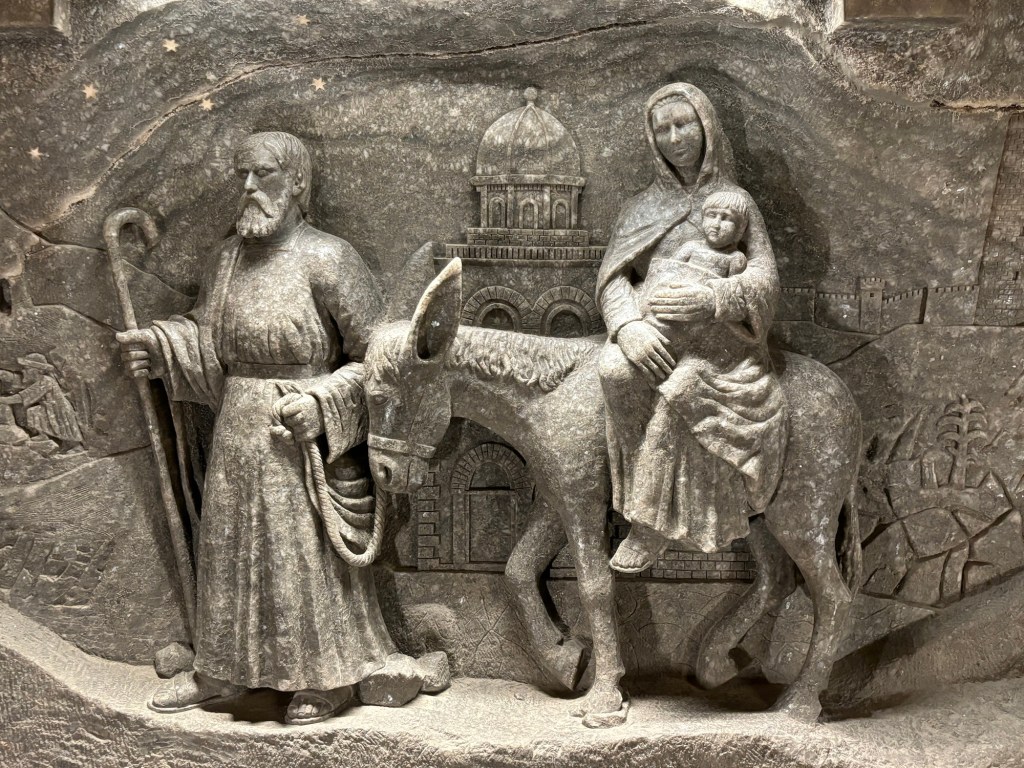
The wooden winch is 300 years old.They even used horses down in the mineSalt sculptureDepiction of salt mining six thousand years agoSalt stairsSalt floorsOld water pumpFOREMAN’S EXCAVATION INTERIOR DECOR – 17TH CENTURYThe Holy Cross Chapel – Small Sanctuary with Jesus and Mary made of wood. One of several chapels in the mine built by and for the miners.The Virgin MotherThe two munk sculptures at the altar were made of salt, but now they look like penguins – too much exposure to moisture.
GUIDE: “If you have a troublemaker with you, let me know and I can find a place to leave them.”
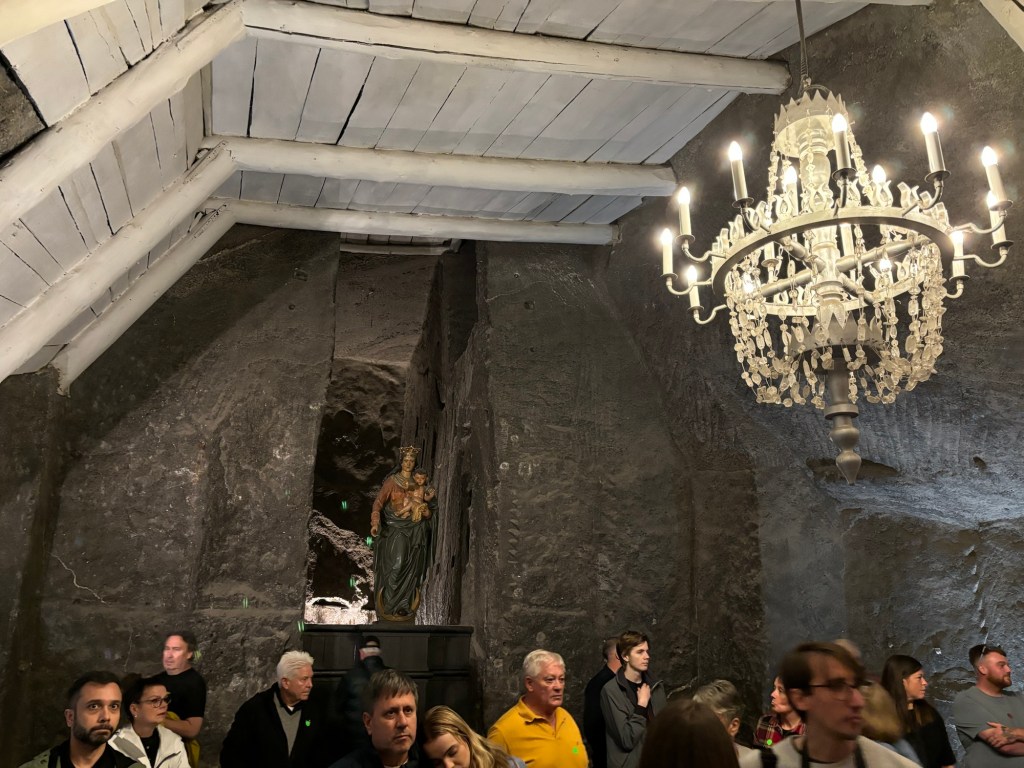
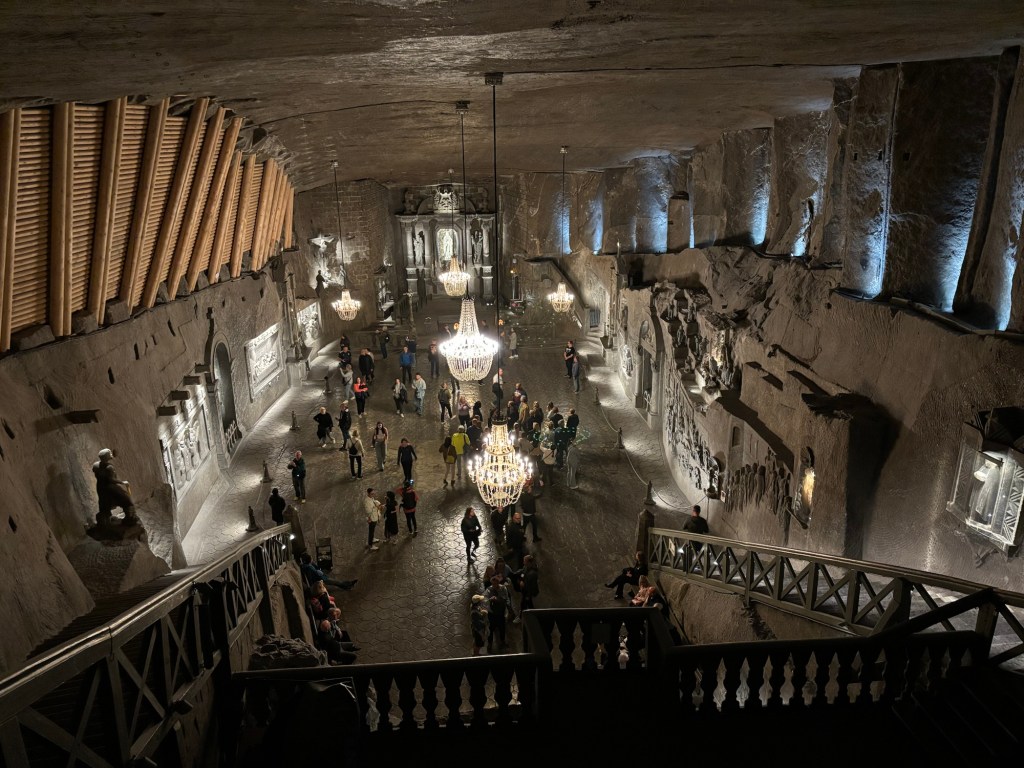
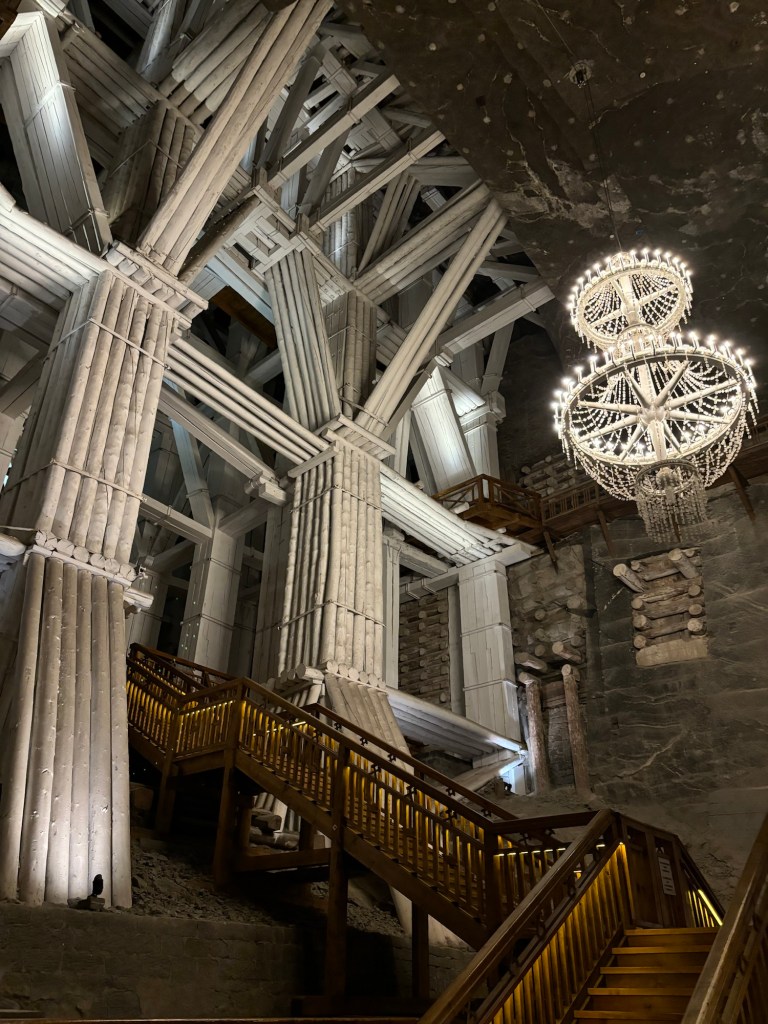
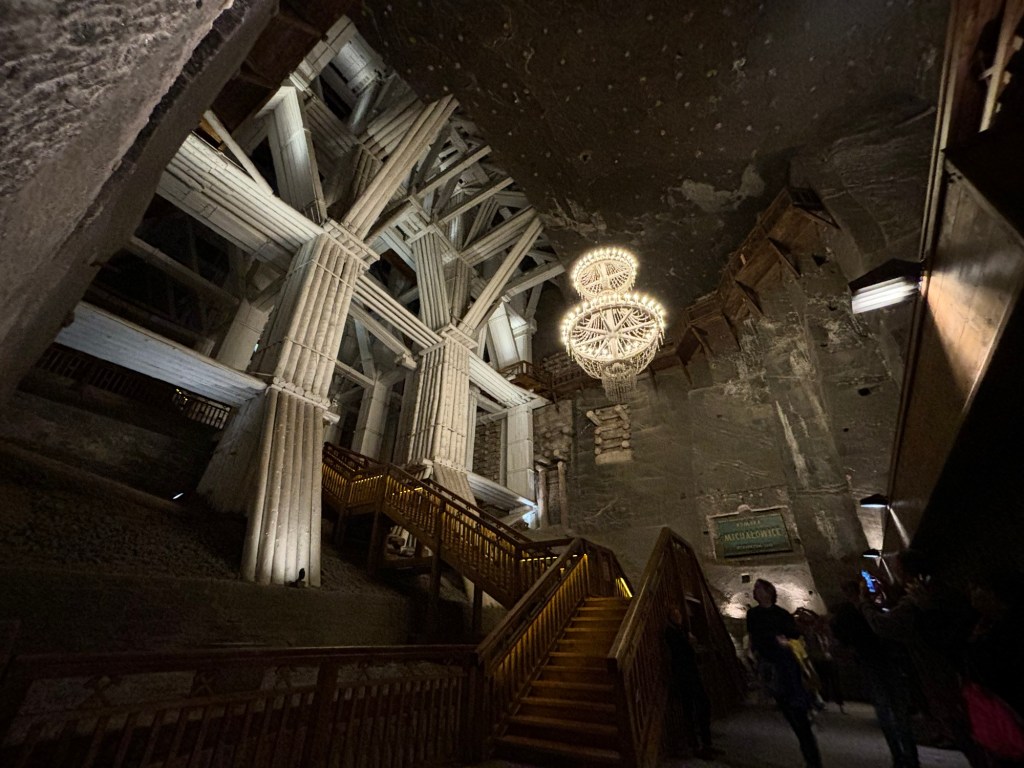
The very large Saint Kinga’s Chapel – Founded in 1896 in a Chamber dating back to 1862!
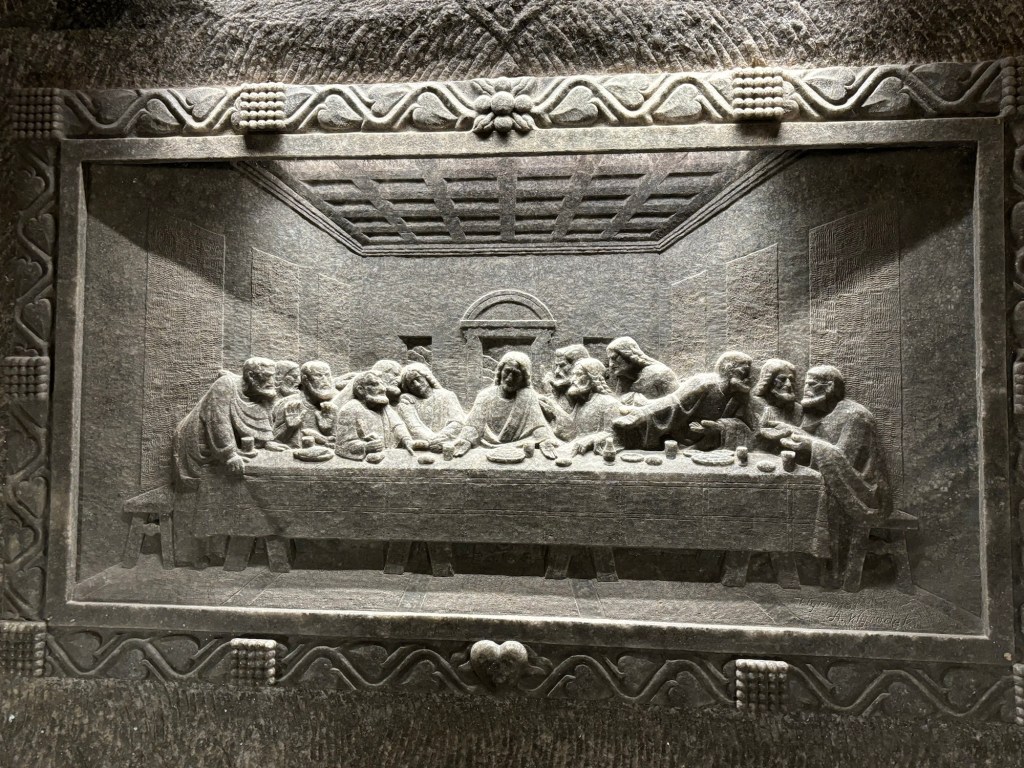
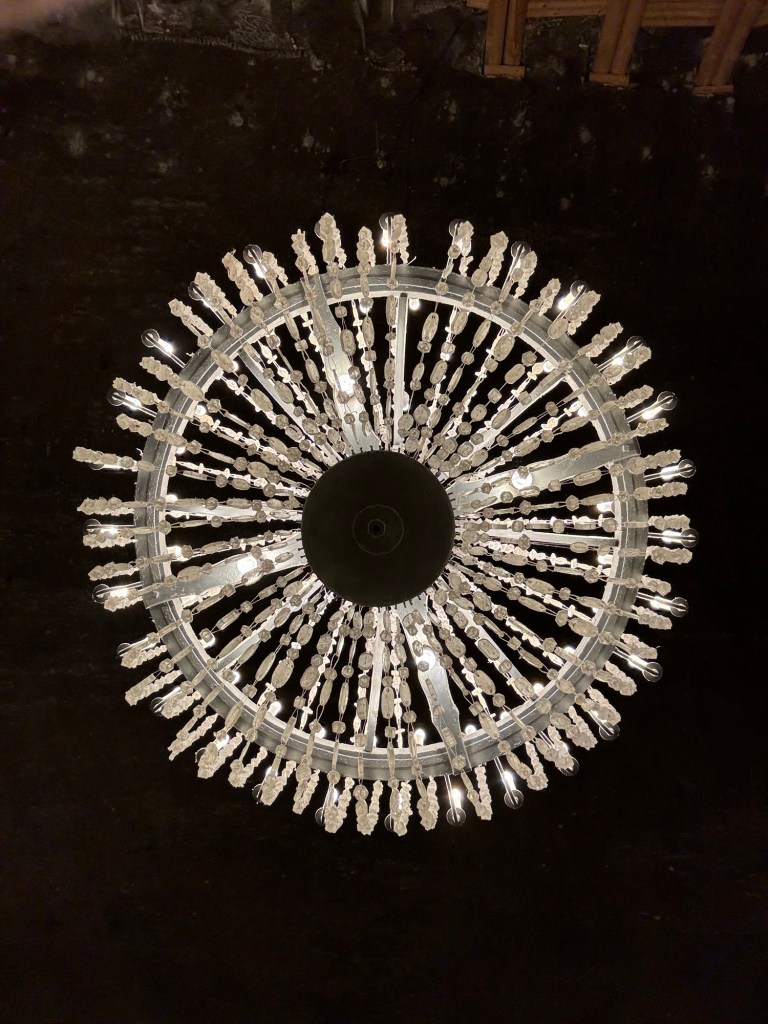
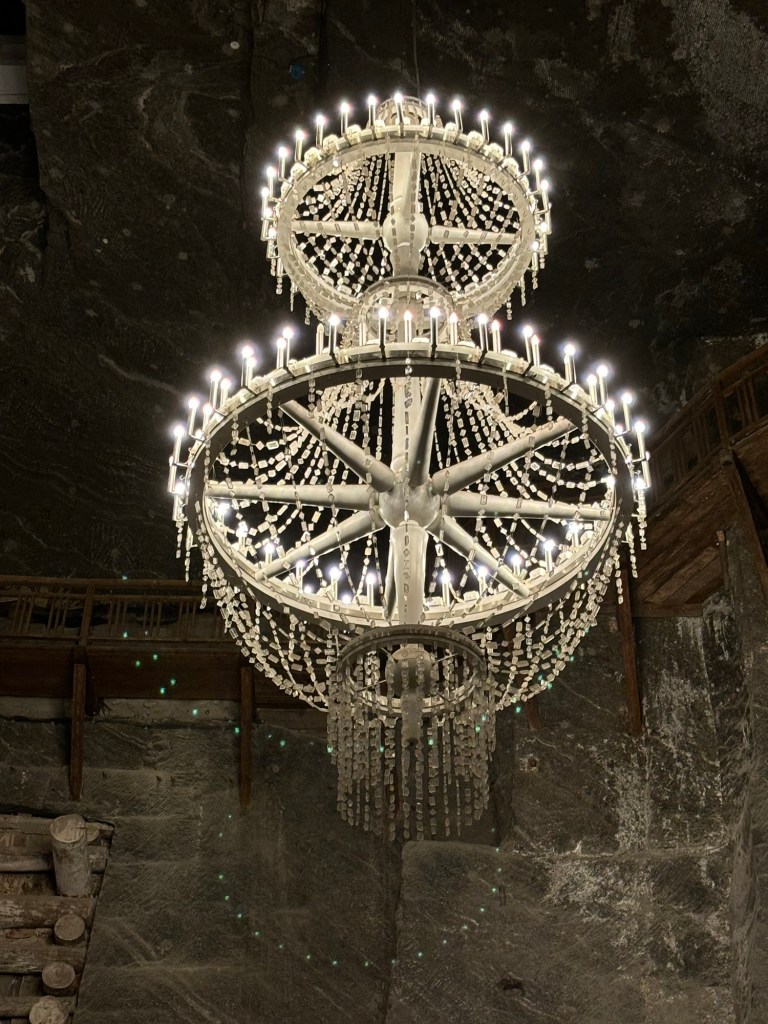
Took 67 years for all the carvings in the chapel.The Last Supper sculpture, made by a miner, has a lot of visual depth, but most of it is close to the surface! What an amazing talent!The large chandelier from below
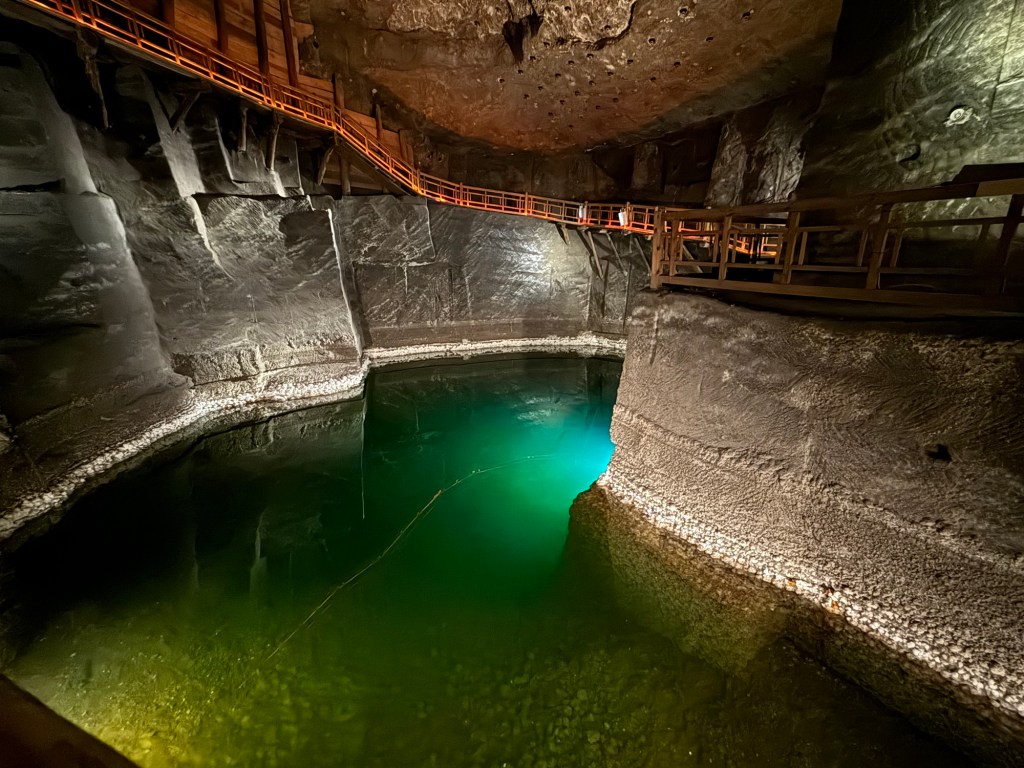
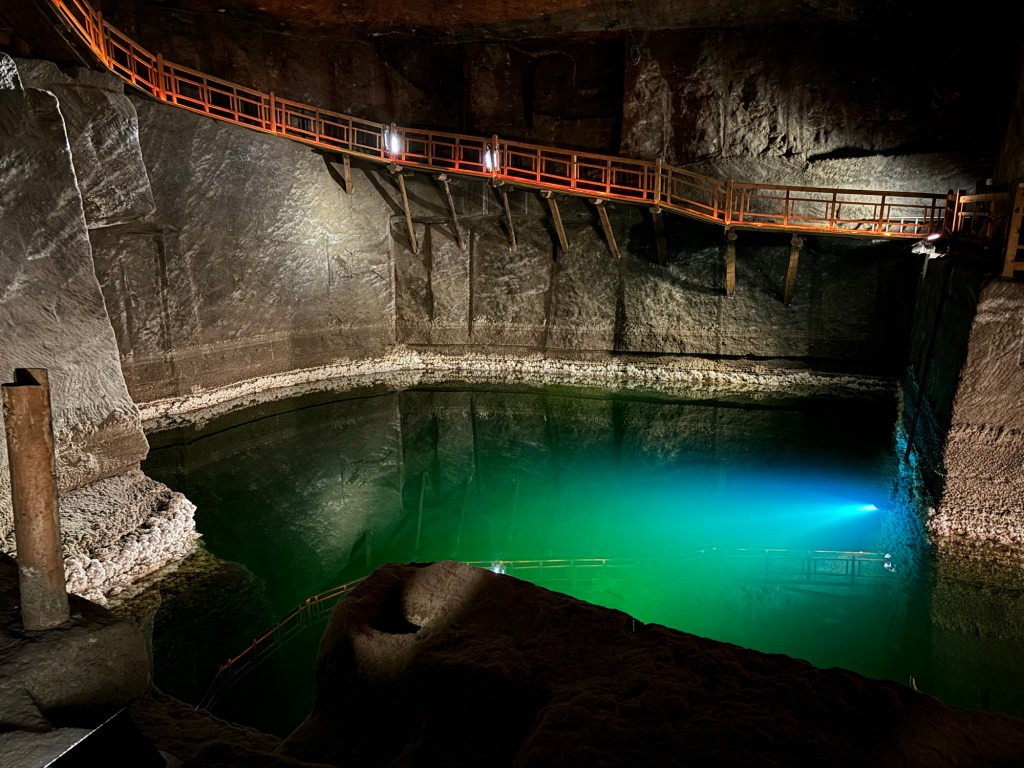
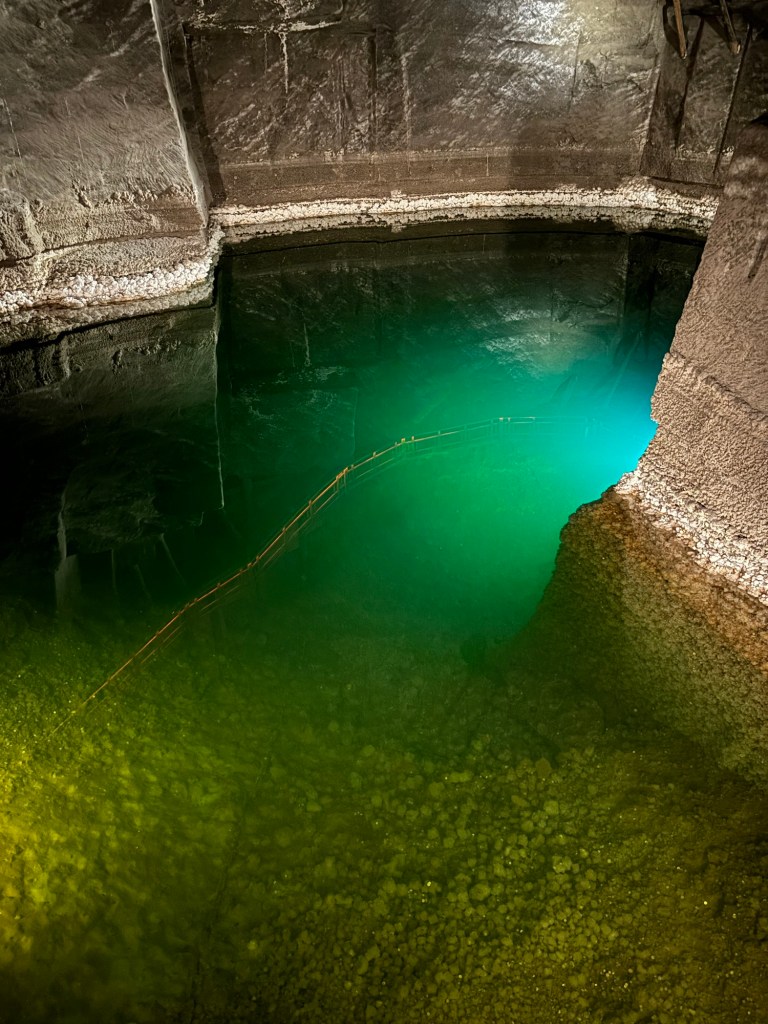
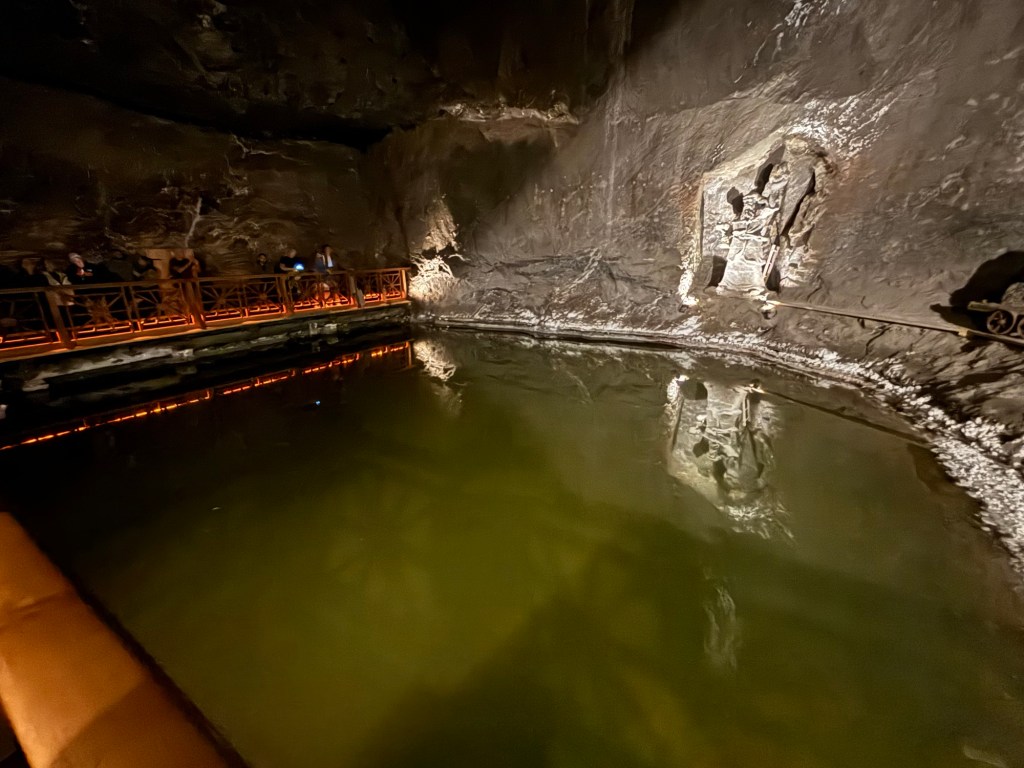
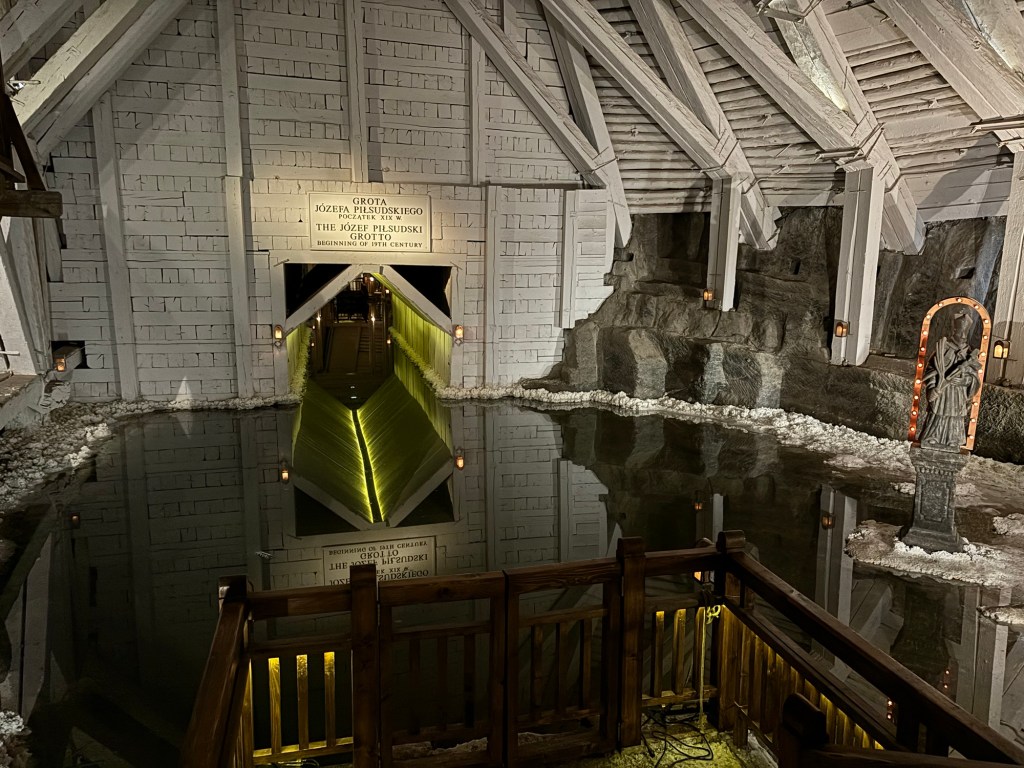
The lake on 2nd level, over 300 feet down, is super saturated with salt many times more salty than sea water and it does not damage the salt like regular water does.
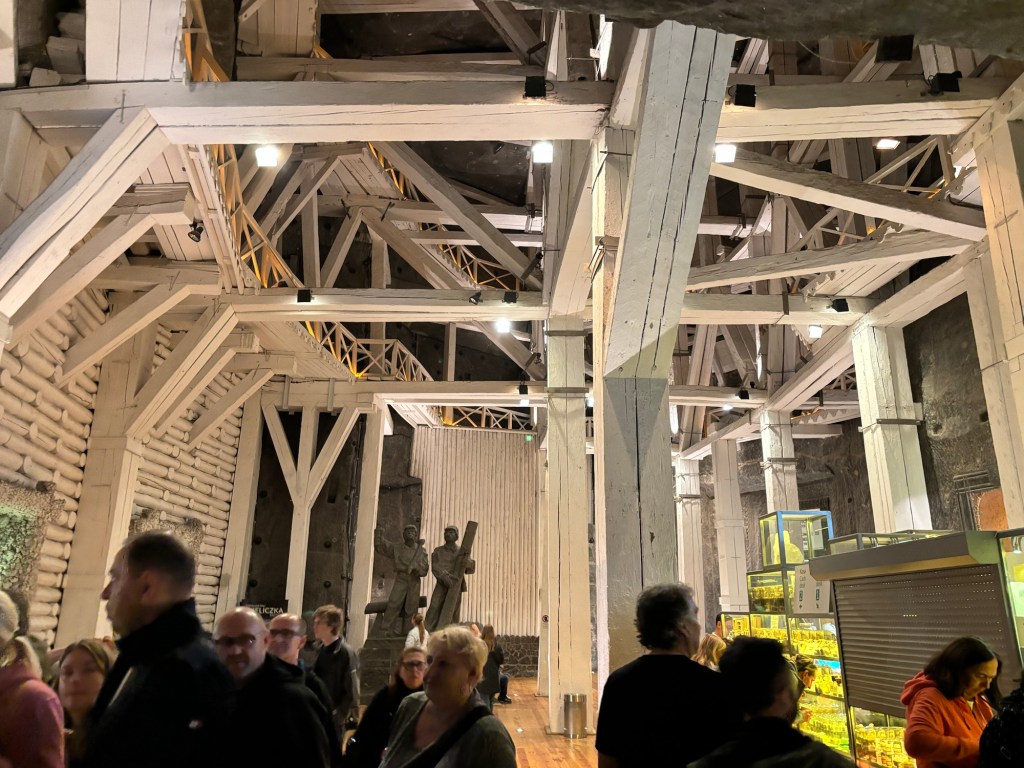
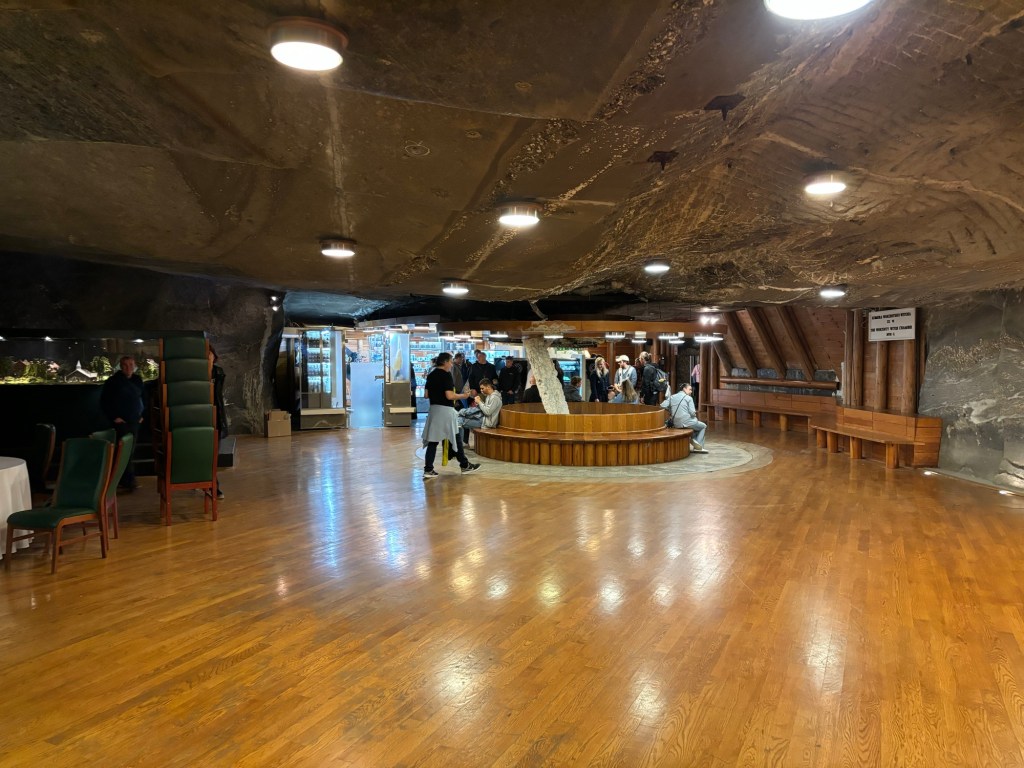
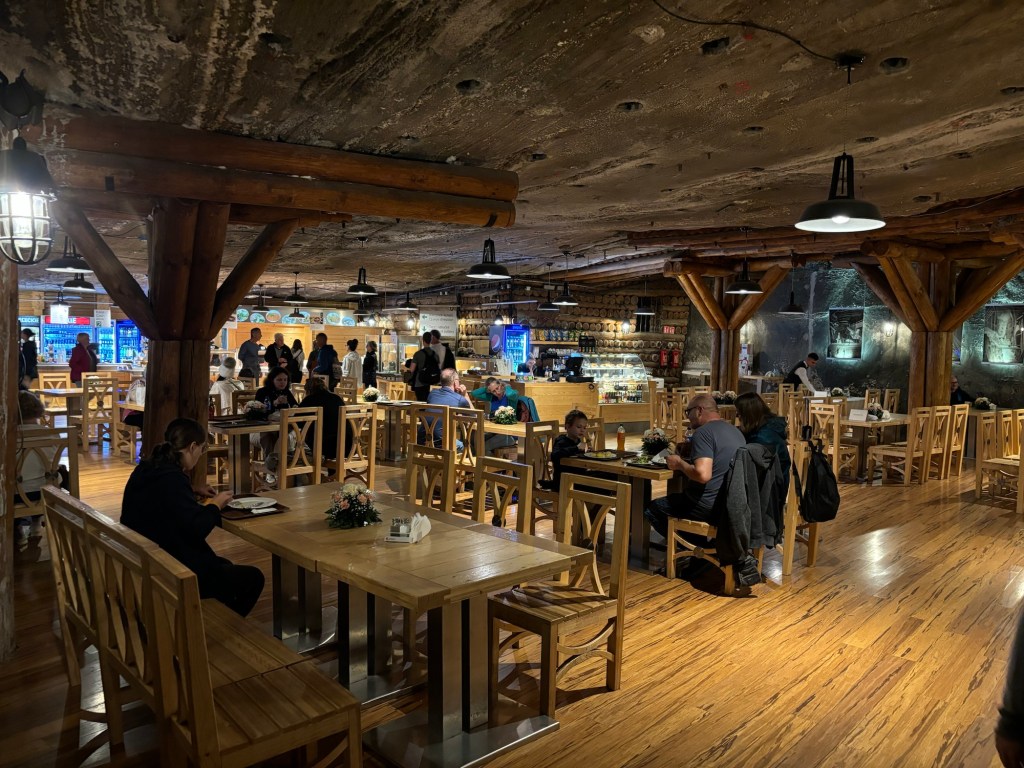
We took a break in a large chamber that had souvenirs, snacks, and drinks.
GUIDE: “You can get some traditional miner drinks, like Fanta.”
Only Chamber excavated with dynamiteLarge chamber with a shallow pond and amazing acoustics
GUIDE: “You can have a big Polish dinner tonight. You have been burning calories!”
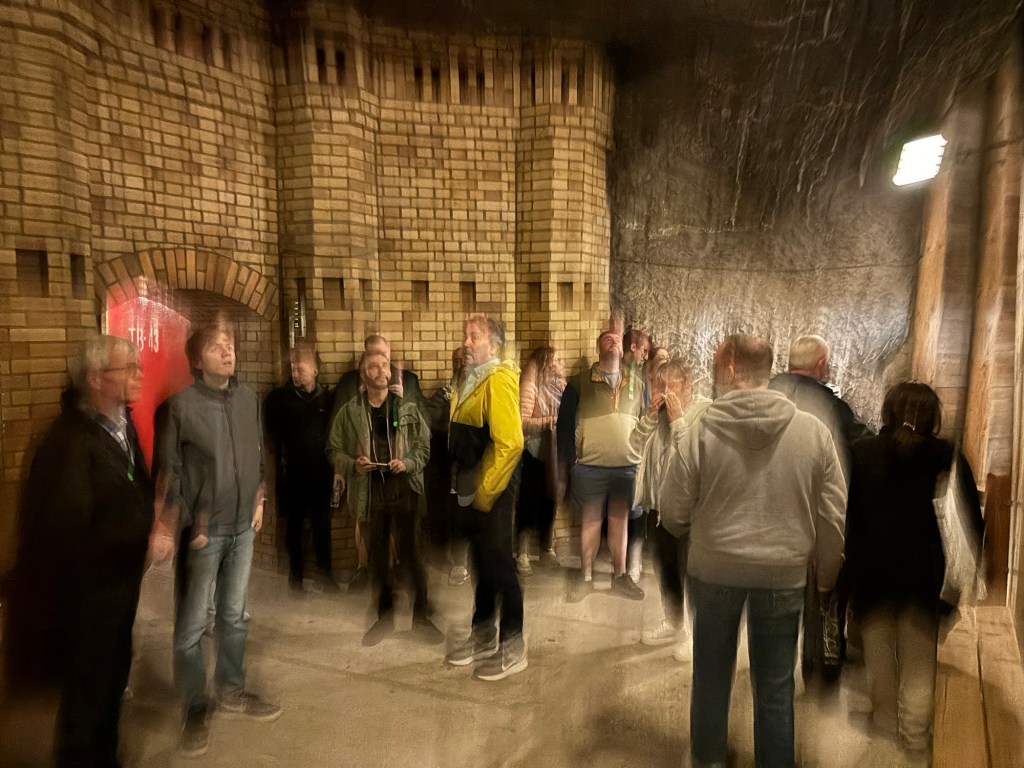
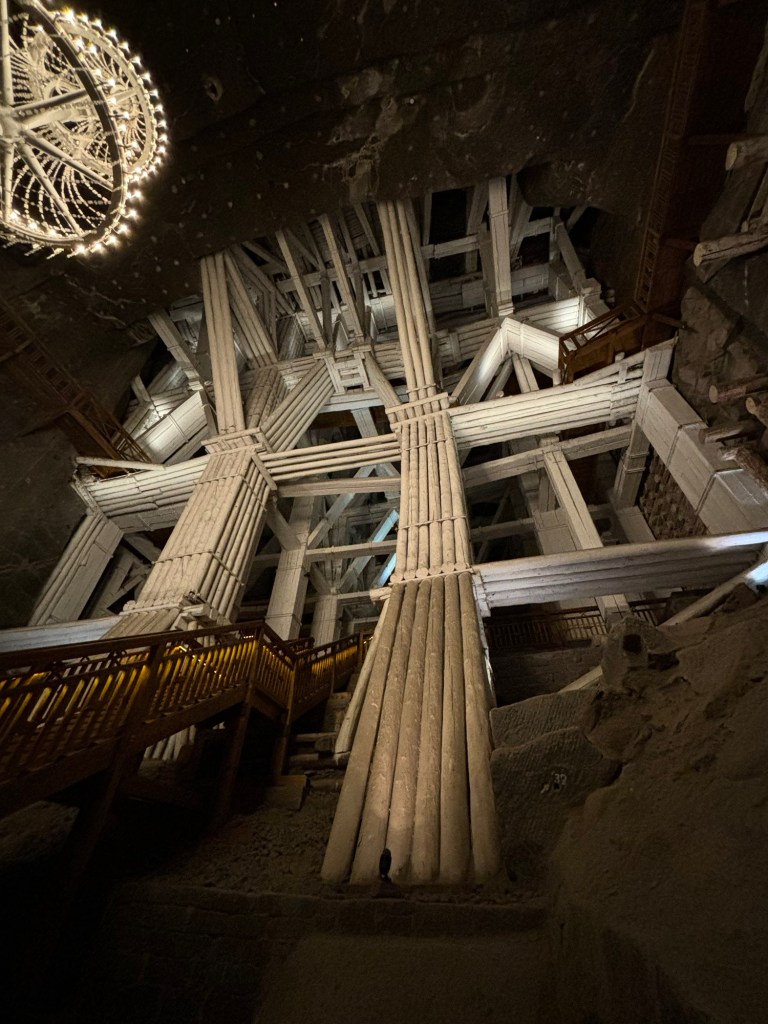
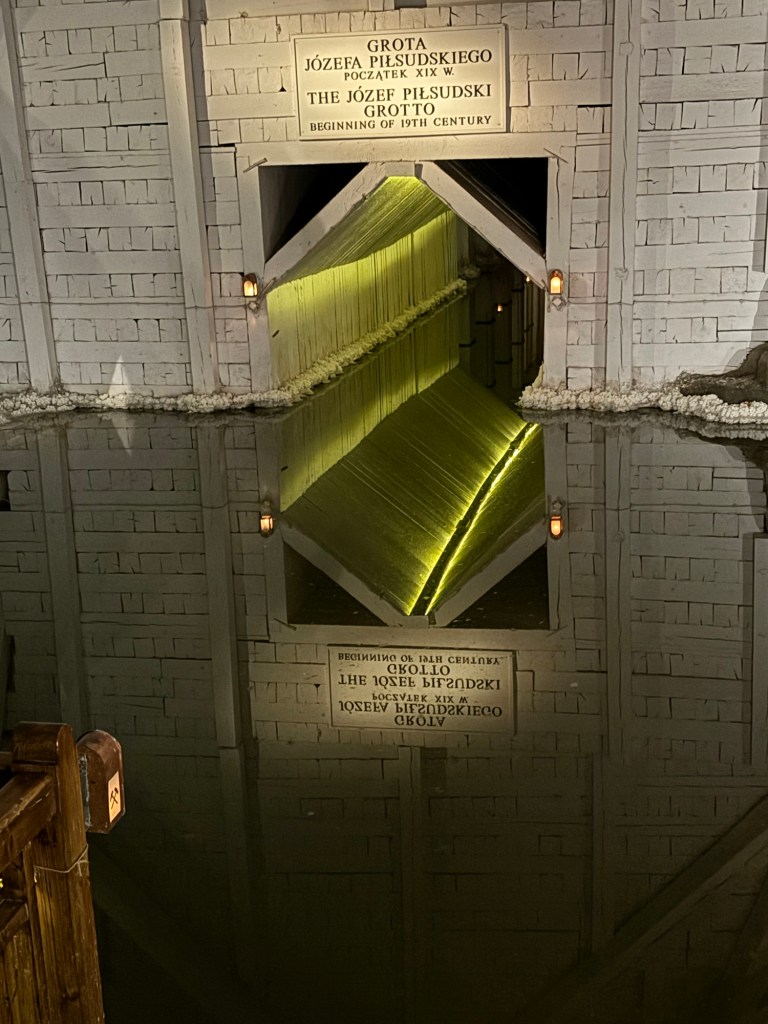
Notice the reflection in the waterLooking up into the tallest chamber on the tourist route – massive!
GUIDE: “That was a very interesting story, but you will have to take it with a pinch of salt!”
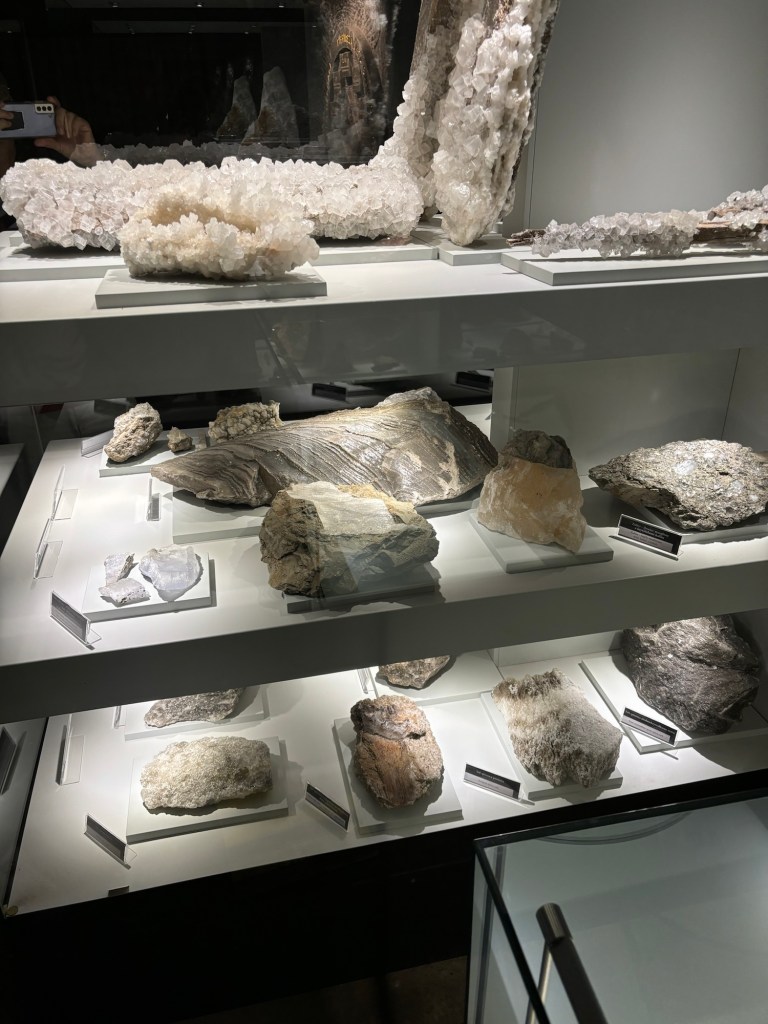
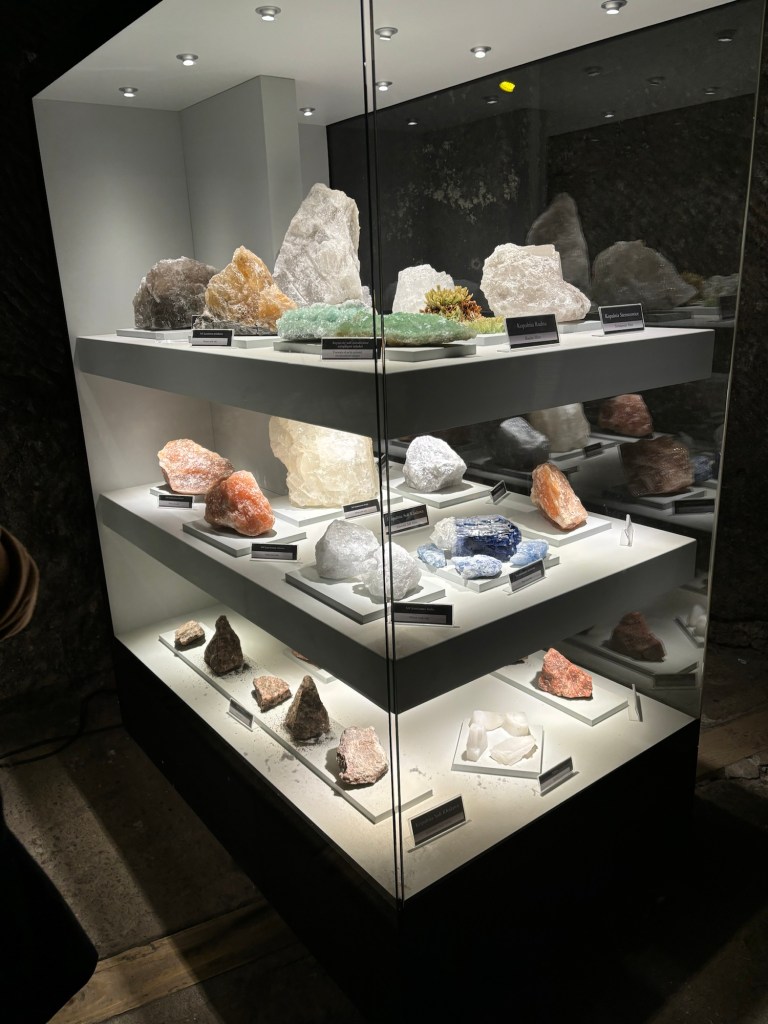
Different kinds of saltExit exhibits, shops, and cafeteriaExit to elevators
The elevator to the surface only took 40 seconds, but it was in a traditional miners elevator. Nine of us squished together in a very tiny, cramped cage! AND YES, it was definitely better than climbing back up 800 steps!
After the van brought us back to our hotels, I decided to get an early dinner since the weather is supposed to be really bad tonight.
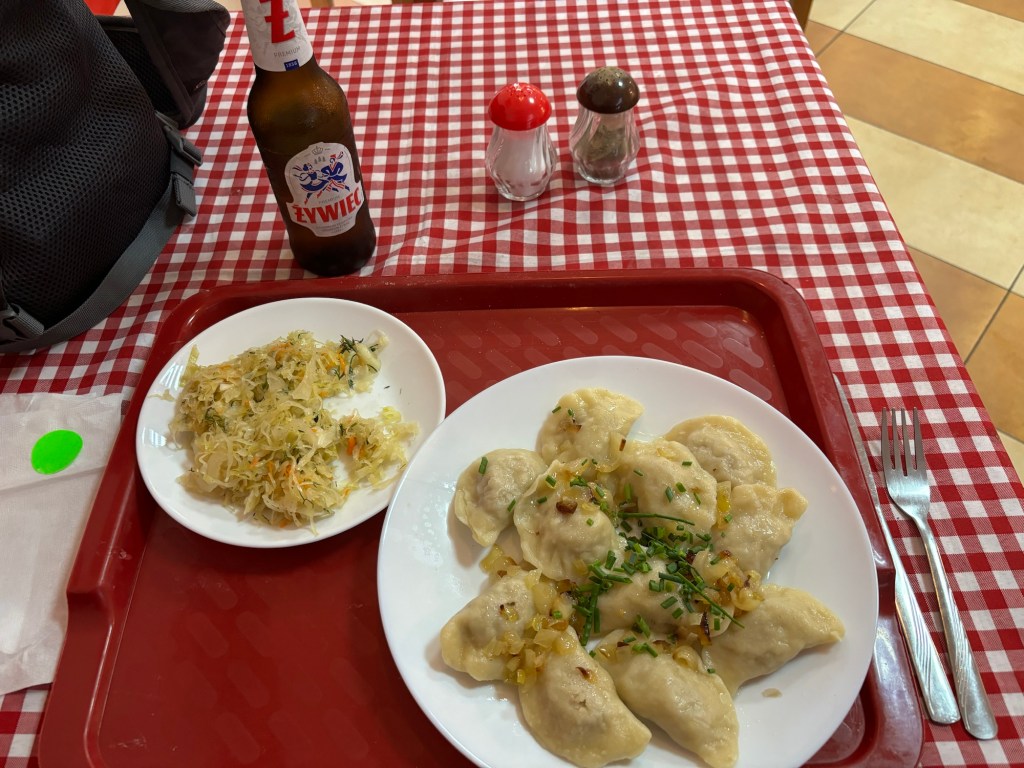
I popped into a traditional Polish cafeteria a block from the apartment. Excellent and inexpensive – just the way I like it!
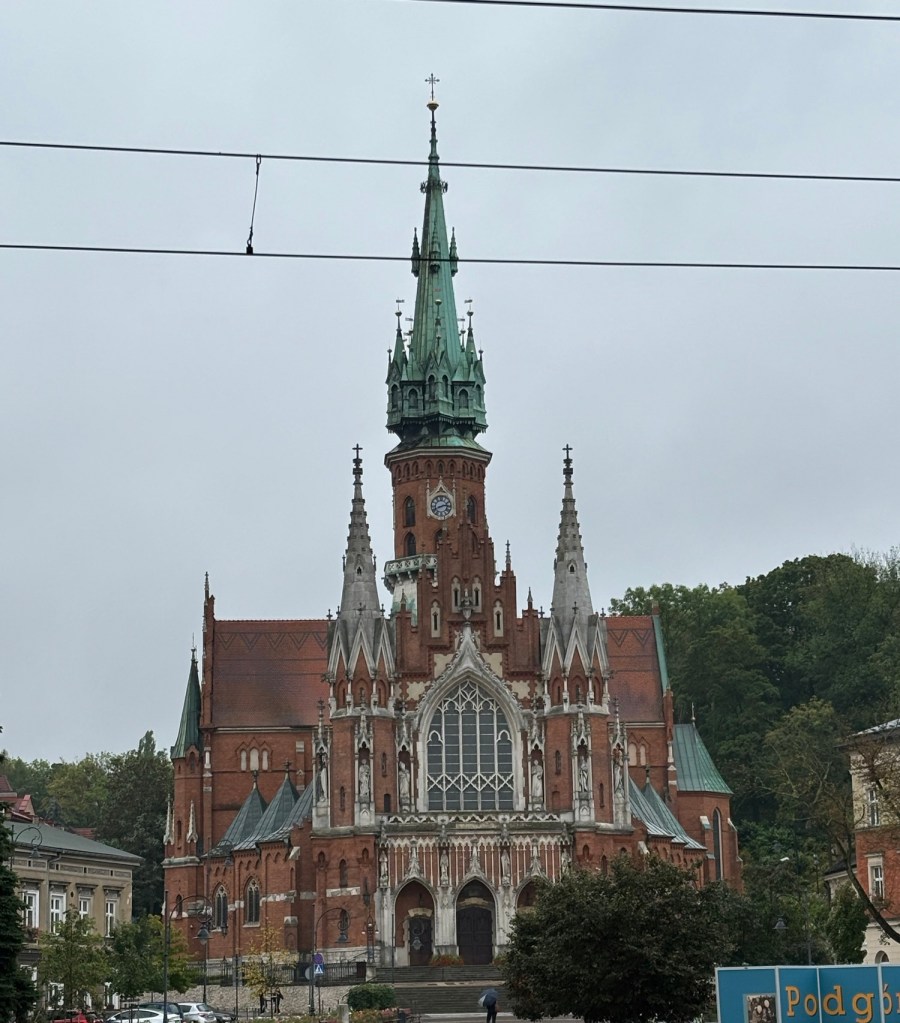
Pierogi with meat, some chilled cabbage salad, and a Polish beer.One of the almost 150 churches in Krakow
And tomorrow morning it’s on to Warsaw!
Words of wisdom, or just to amuse…?
Actual great opportunities do not have “Great Opportunities” in the subject line.
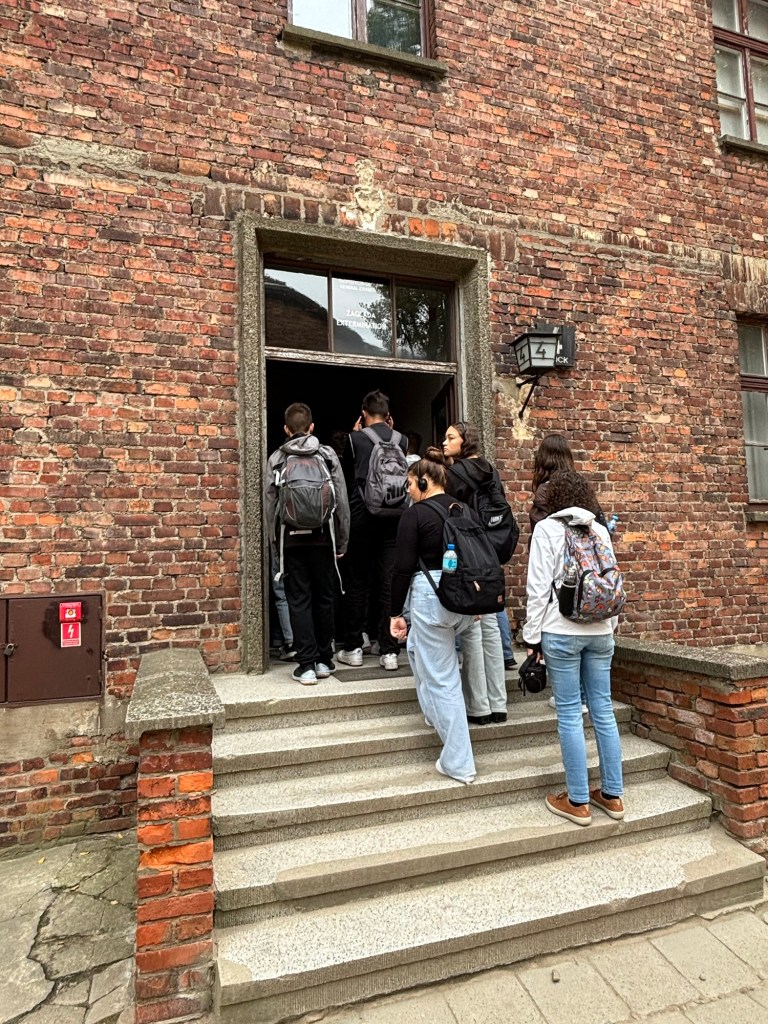
Just over thirty miles west of Krakow are the infamous Auschwitz / Birkenau Nazi Concentration Camps. The coach bus ride from Krakow takes about 90 minutes. No eating is allowed in the camps out of respect for the starvation that took place at the camps.
The whole complex is called the Auschwitz / Birkenau Memorial and Museum. We started on the original Auschwitz side. It was a profound day.
Preliminary Commentary from my Guidebook
A Brief history of the Auschwitz camp from its founding through liberation
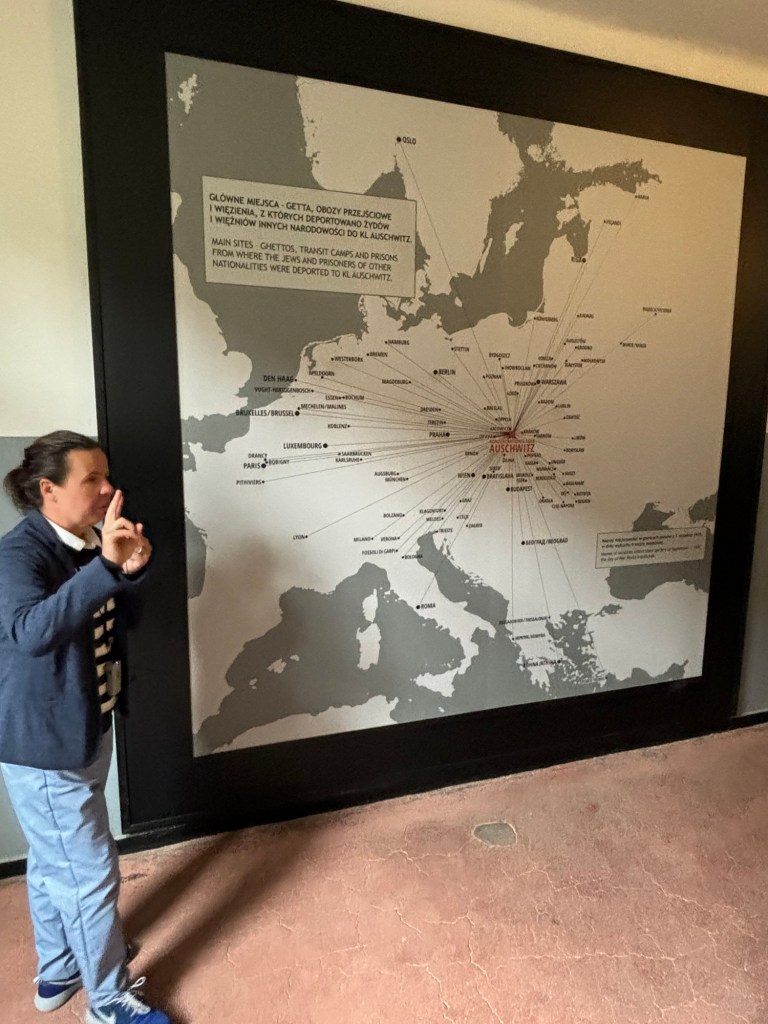
Auschwitz (June 1940 – January 1945) was the first Nazi German concentration camp founded in German-occupied Poland and, over time, it became the largest of all the camps set up by the Third Reich. Like the other camps, it was a state institution administered by the German central government and underwritten by its budget. The direct reason for its creation was the rising number of Poles being arrested by the German police and the overcrowding of the existing prisons. At first, Auschwitz was intended to be just one of the many concentration camps established in the Nazi terror system. It filled this role the whole time, even when, beginning in 1942, it became above all the largest center for the mass extermination of Jews.
During its period of peak operations (August 1944), Auschwitz was made up of three main parts: → Auschwitz I (number of inmates approx. 16,000); → Auschwitz II-Birkenau approx. 90,000), 3 km (2 mi) away, where the largest mass extermination facilities— gas chambers — in Europe were located; and → Auschwitz III-Monowitz (approx. 10,000), 6 km (4 mi) away, which was situated next to the Buna-Werke synthetic rubber and gasoline plant, built with the use of prisoner labor by the German IG Farbenindustrie company. At the time Auschwitz also had several dozen sub-camps holding 21,000 prisoners forced to work in industry or on farms. The whole complex formed an integral administrative entity subordinated to the main Auschwitz I camp. In conjunction with the building of the camp, the Germans expelled at least 8,000 Poles from Oswiecim and the nearby villages; the entire Jewish population of the town-about 7,000 people— was deported to Sosnowiec, Bedzin, and Chrzanów.
The liberation of Auschwitz: In mid-January 1945, in conjunction with the breakthrough in the front lines by the Red Army and the approach of Soviet units to Oswiecim, 56,000 prisoners were forced onto the Death March (at least 9,000 fatalities)-the evacuation of laborers to concentration camps located in the depths of the Third Reich,
In the second half of 1944, several months before they fled, the Germans began destroying the evidence of their crimes. They burned the prisoner files and lists of deported Jews, and shipped out the items plundered from the victims along with large quantities of building ma-terials. In the last week of the camp’s existence, they blew up the gas chambers and burned down storehouses full of property left behind by the Jewish victims of mass extermination.
The 7,500 sick and exhausted prisoners left behind in the camp were liberated by Soviet soldiers on January 27, 1945.
Back to my Commentary
Our Educator (or Guide) repeatedly said, “Everything was planned.” And with example after example demonstrated the advance planning of the Nazis (how to build the camps, how to make people “comfortable” when arriving, how to reuse everything, the conduct of human experiments, the labor for their war effort, etc.).
I’ve divided my dialogue below into Auschwitz and Birkenau sections largely to separate photos from each camp, but I’ll talk about both in the either section.
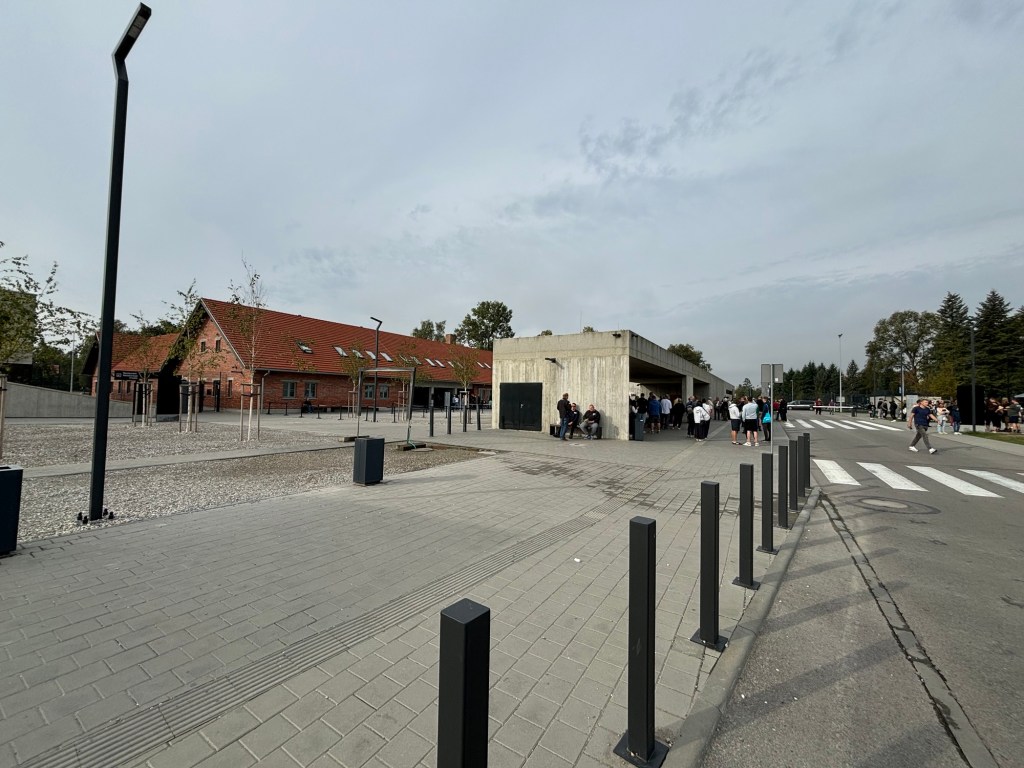
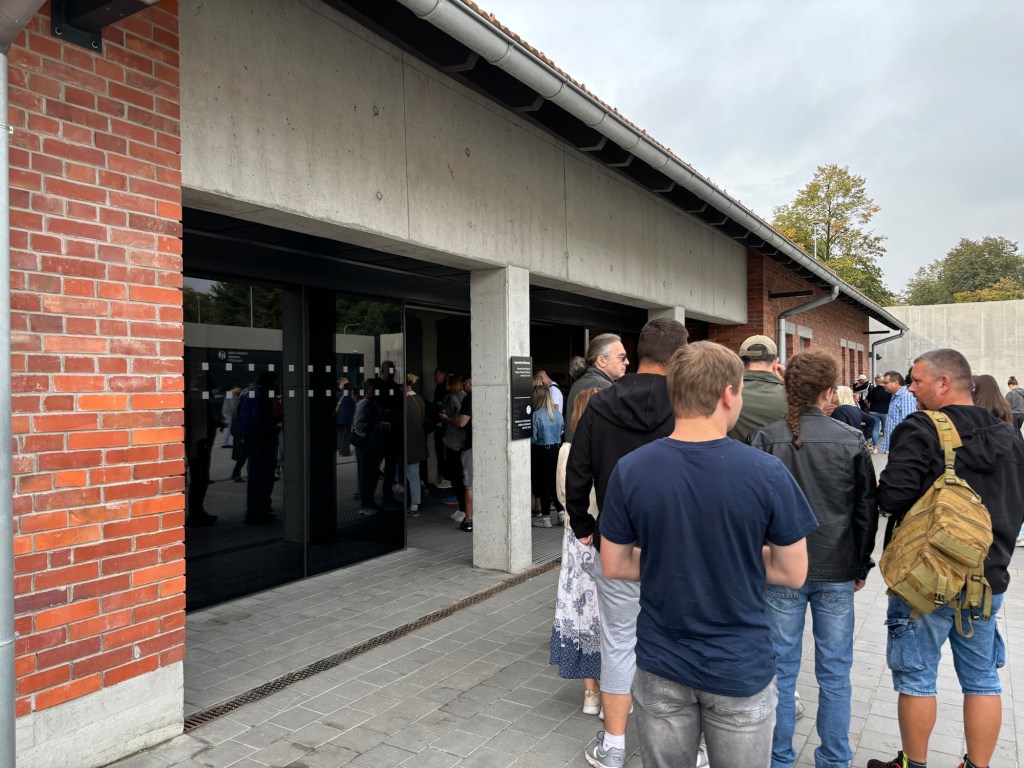
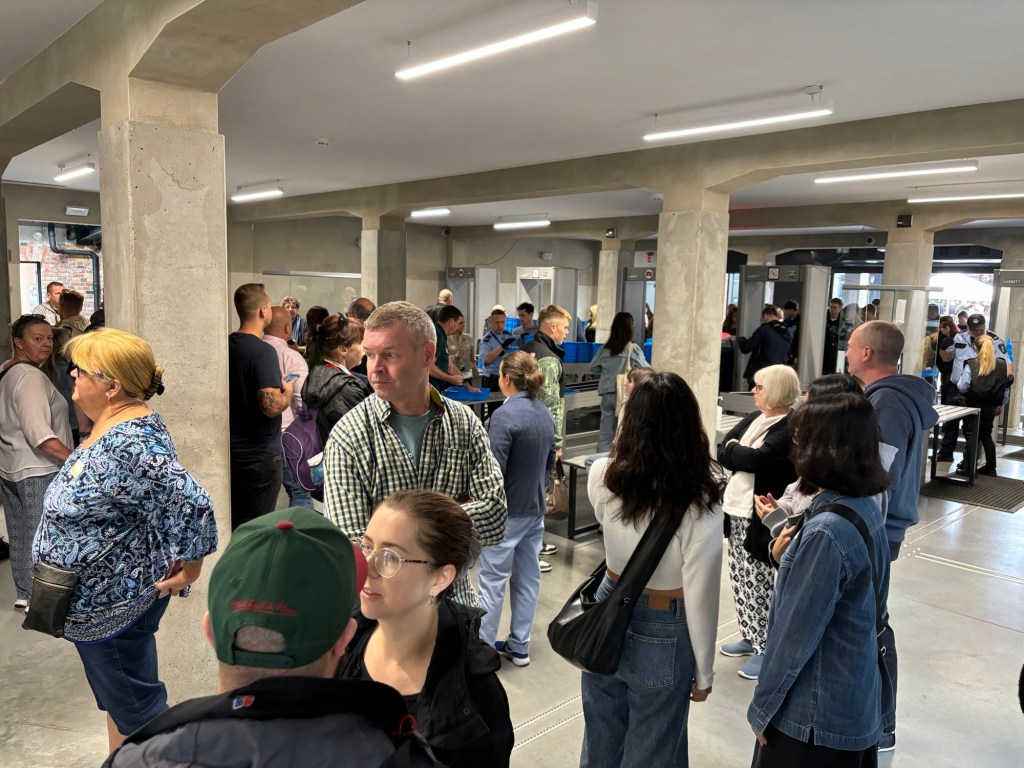
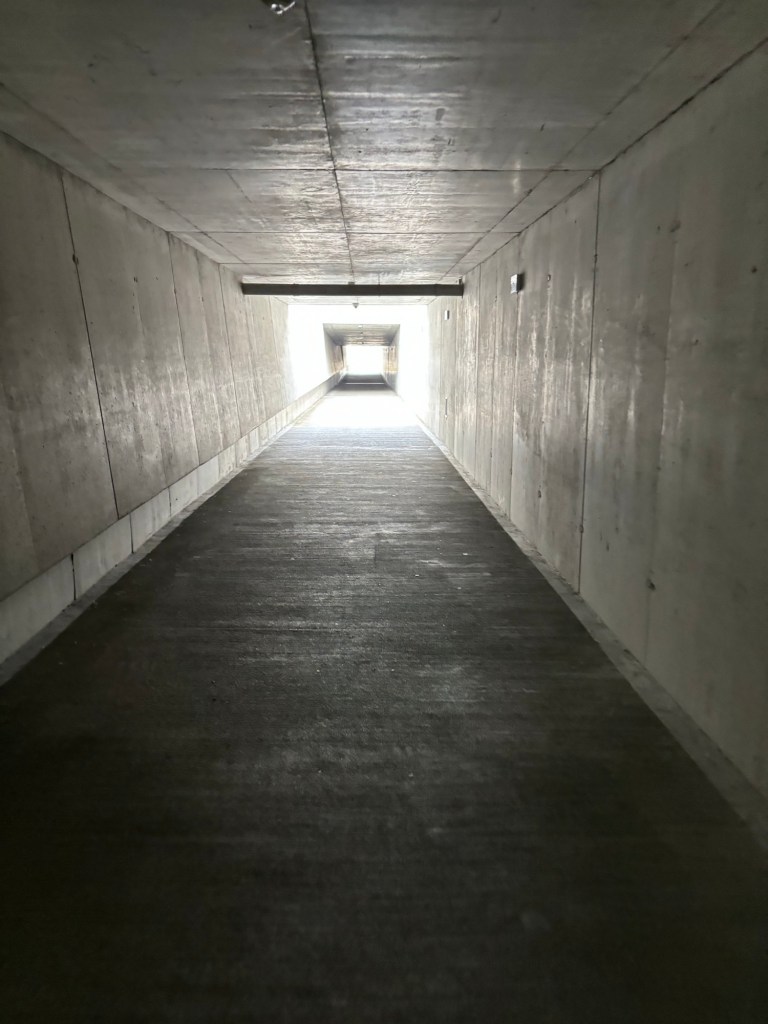
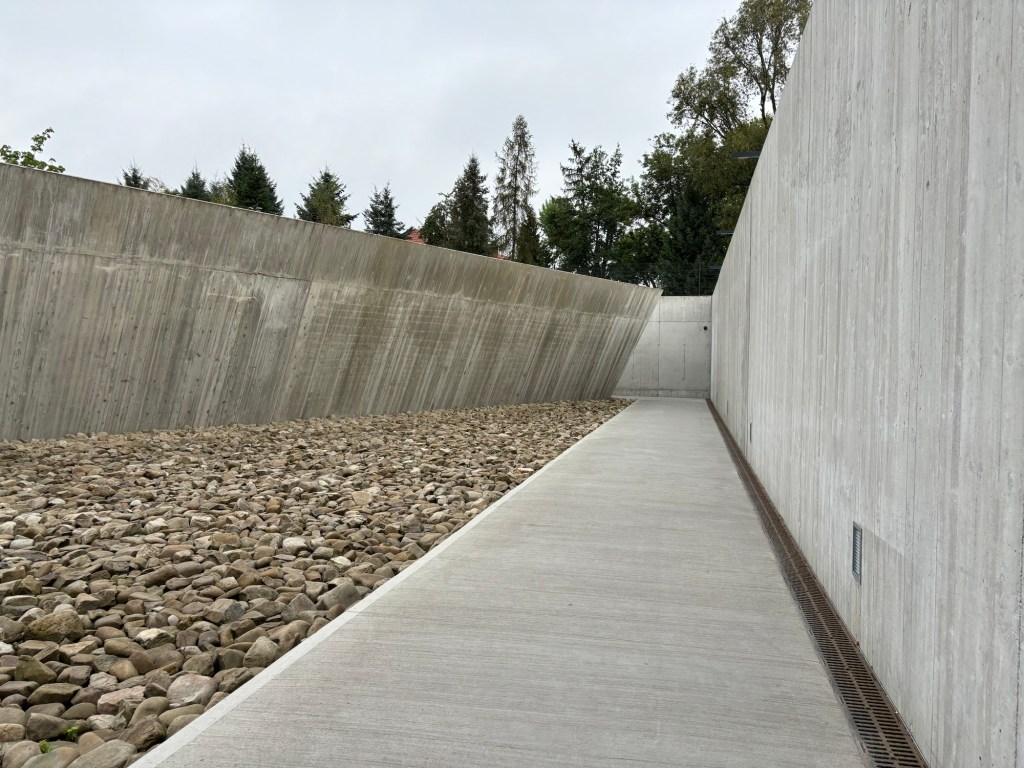
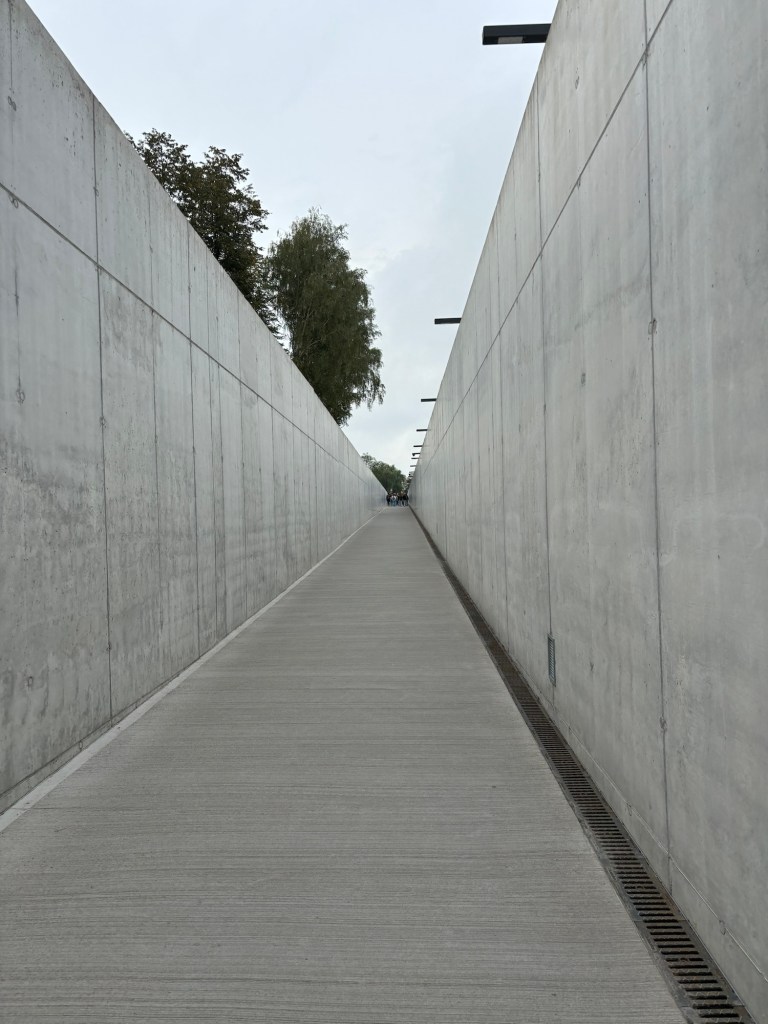
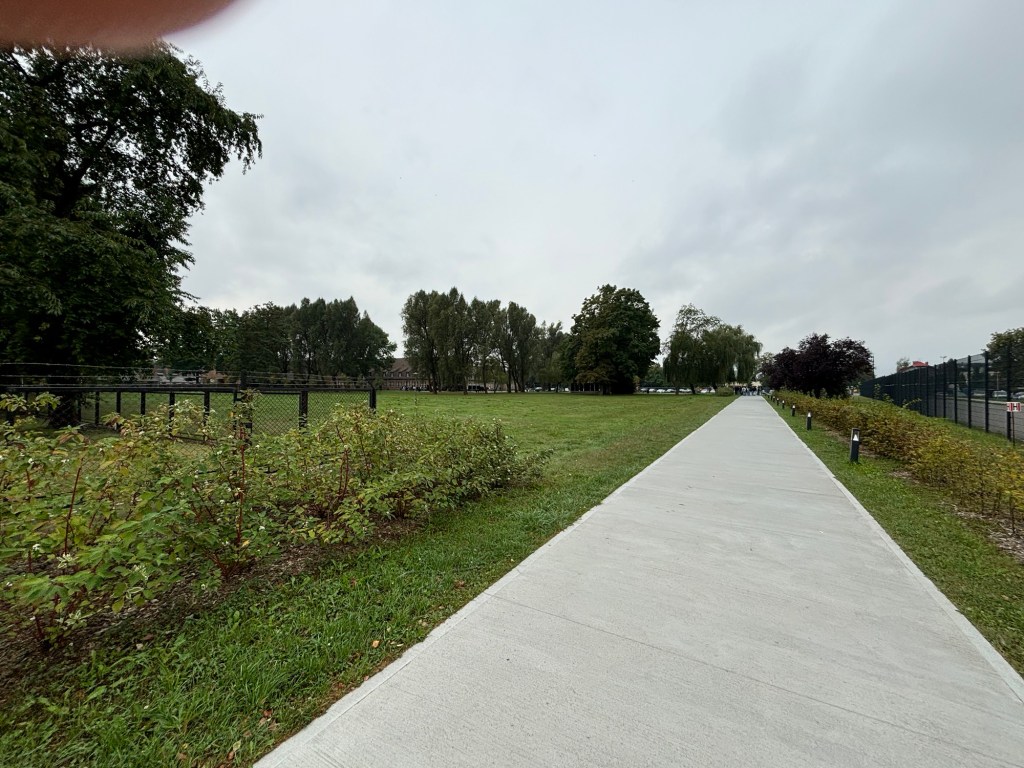
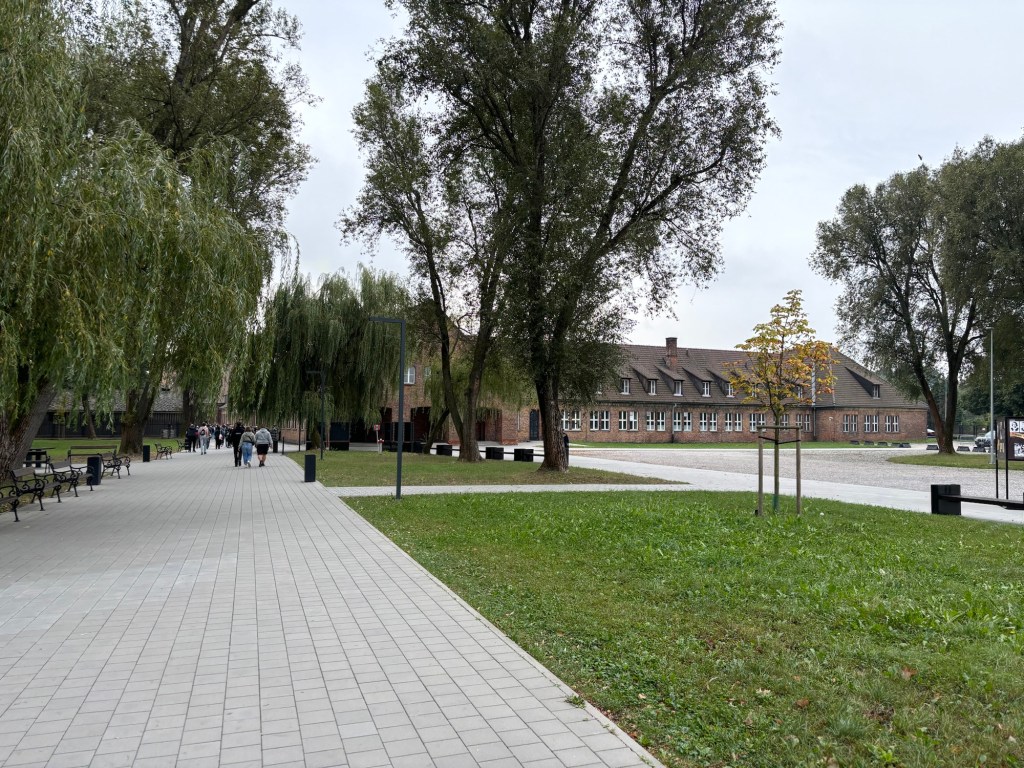
Here are a few photos of the modern entrance:
AUSCHWITZ
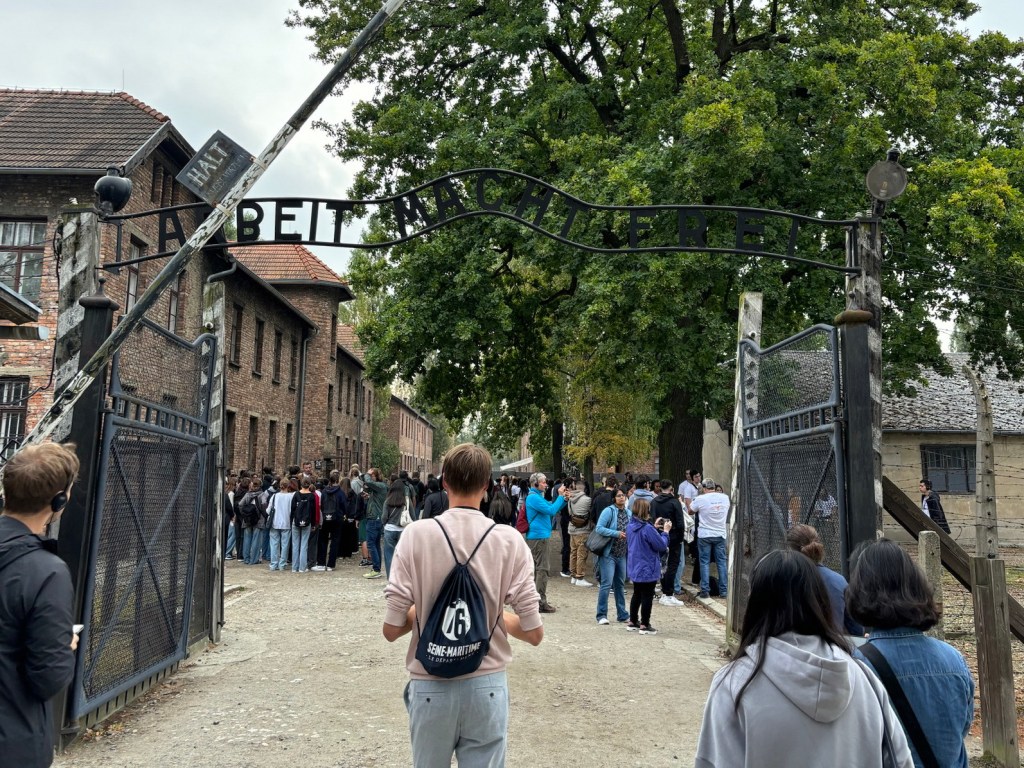
“Arbeit macht frei” is the despicable German phrase above the entrance to the Auschwitz Concentration Camp in Poland. It is translated as “Work makes one free.” It was intended to reassure those who were forced to enter that they were just coming to a work camp and everything would be okay.
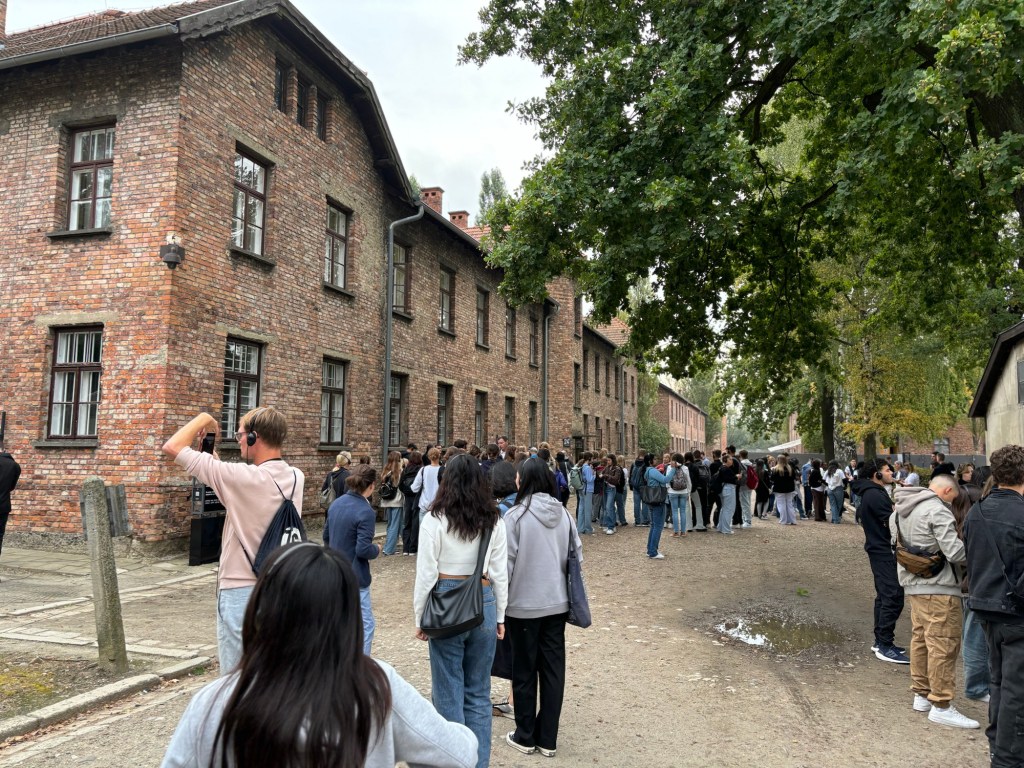
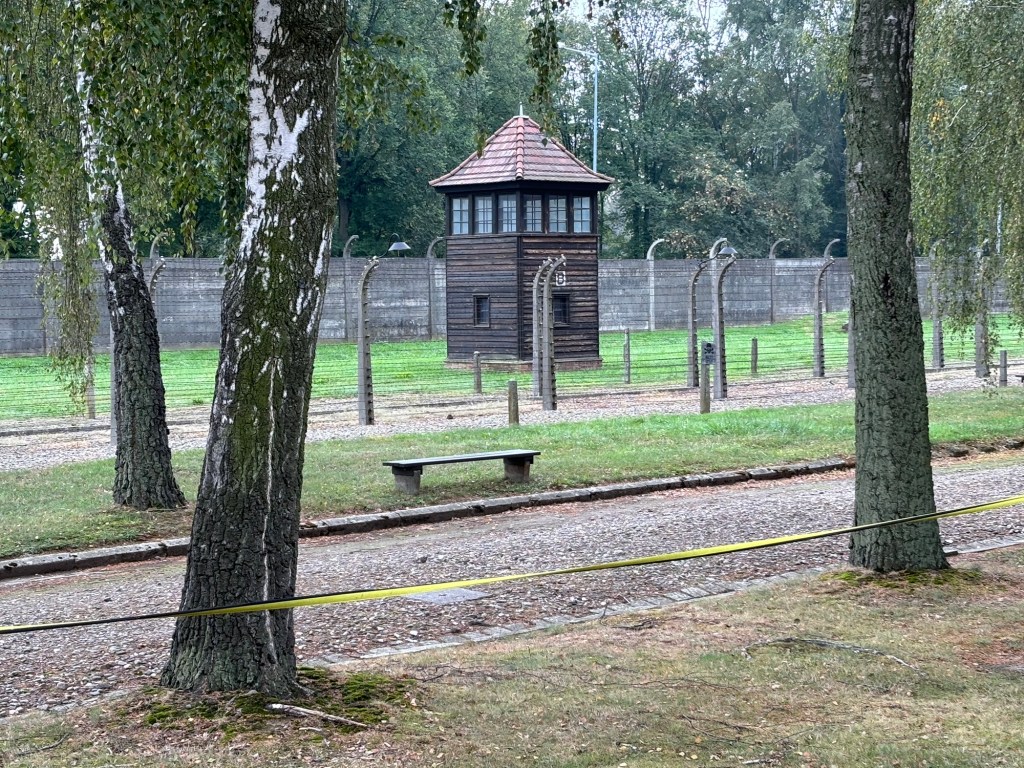
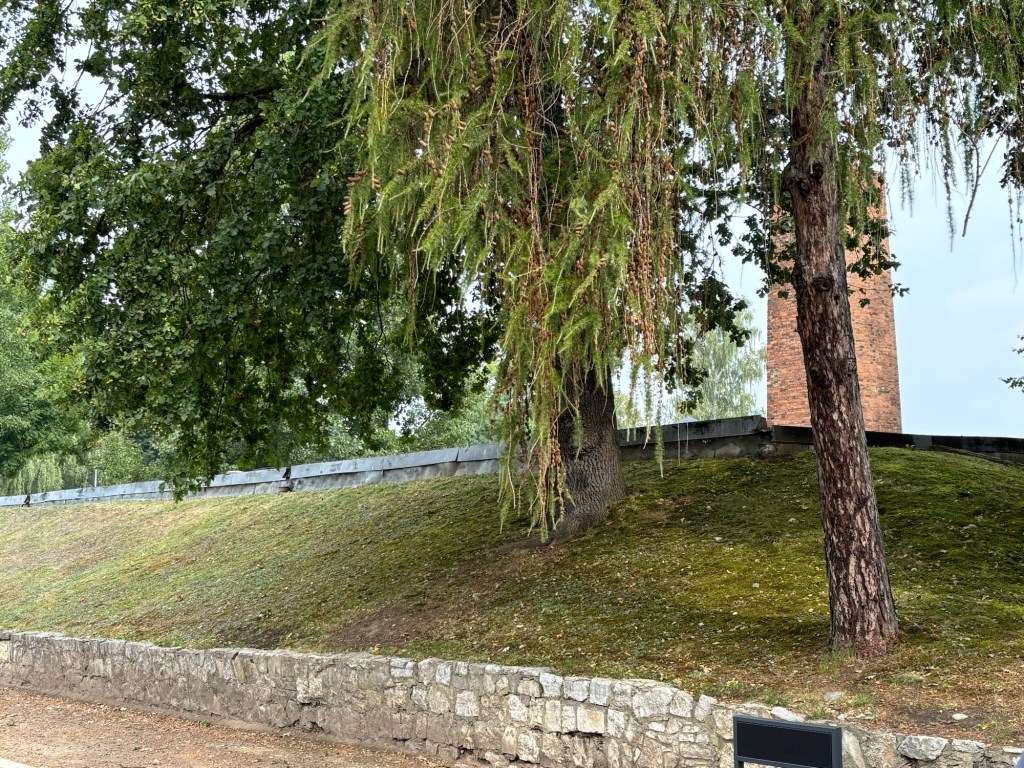
It is very quiet and properly somber at Auschwitz. The camp has many trees, including a great number of weeping willows on the grounds. Seems appropriate. The tree cover is similar to how it was from 1940-45, and the museum authority has replanted, as needed, in the original configuration.
The Polish names for the villages where the camps are located were changed to the German names of Auschwitz and Birkenau by the Nazis after they invaded.
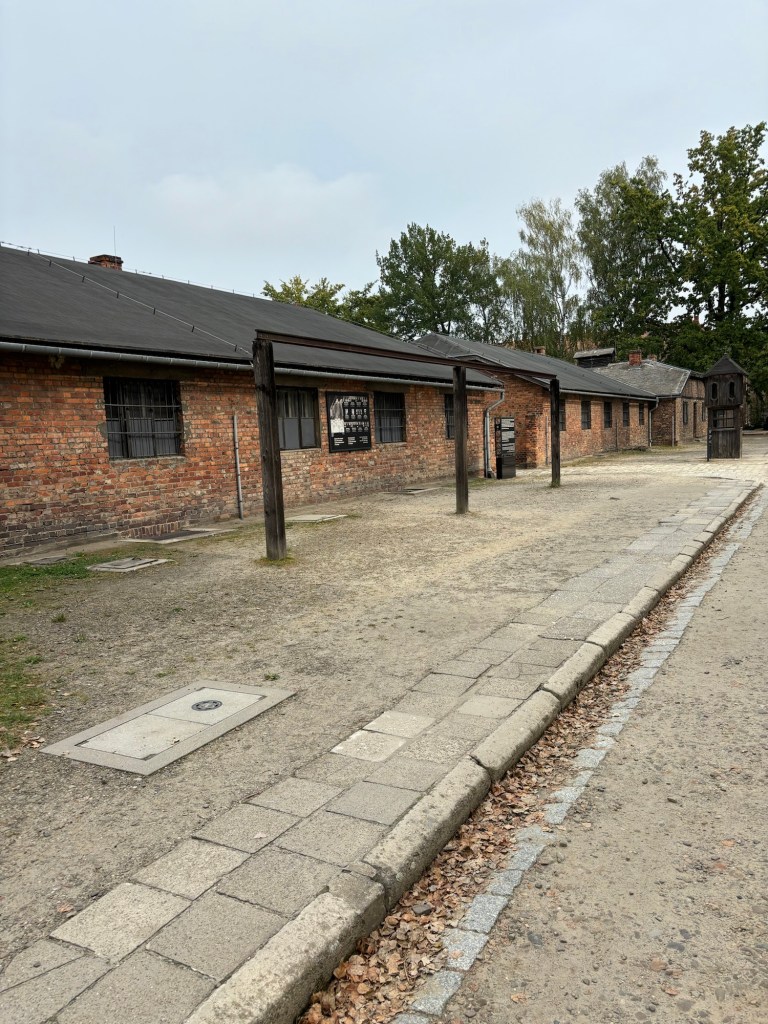
The Auschwitz site was chosen because it was isolated and had twenty 2-story brick buildings already on the site. Eight more similar structures plus additional administrative and support buildings were constructed by prisoners.
Still, the camp was too small for their growing purposes with only 28 barracks so 18 months after opening they also built nearby Birkenau, or Auschwitz 2, and planned for 600 more barracks there! There were also many sub-camps around the areas.
Initially, prisoners at Auschwitz were largely Poles who were jailed for many reasons, and starvation was used to kill the prisoners cheaply and over time.
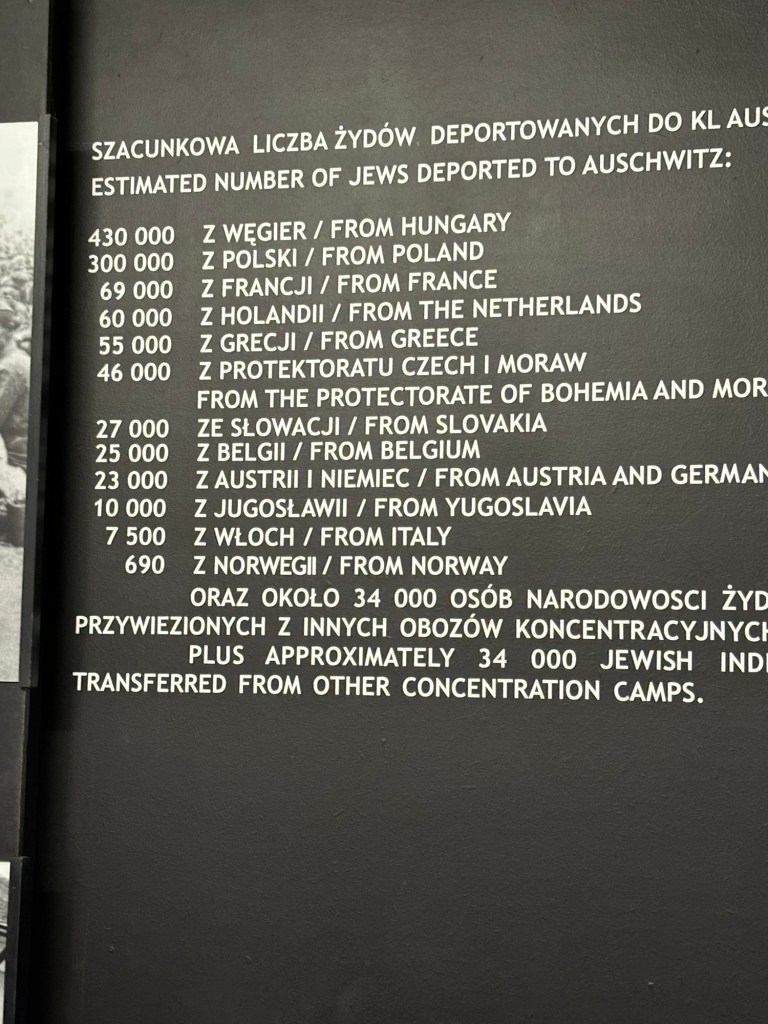
Later, especially when large numbers of Jews were being shipped to both camps, about 80% of those arriving were gassed within the day they arrived!
The gas chamber at Auschwitz could kill 2,000 people in 30 minutes. The four additional chambers at Birkenau could murder 8,000 in the same period. Afterwards, the naked bodies were removed from the gas chambers, the womens’ hair was cut off (used to make cheap fabrics) and the bodies were stripped of all jewelry and gold or metal teeth. Then the corpses were burned! The Nazis even found ways to use the ashes and bone fragments.
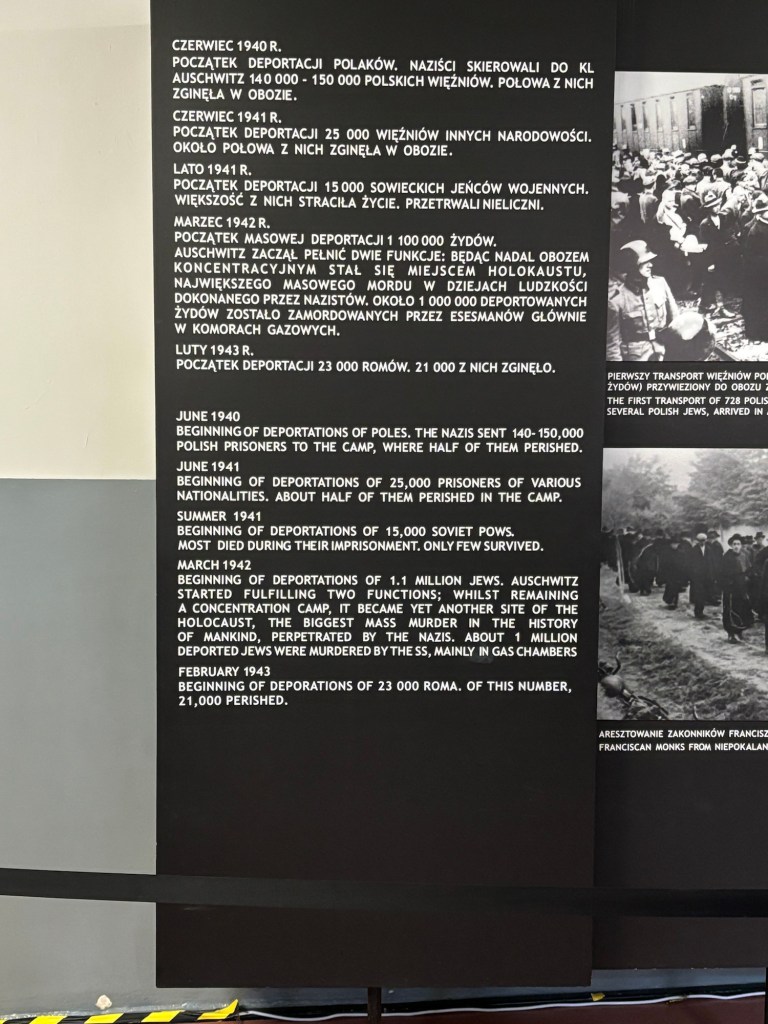
While some people were sent to the camps to be jailed and to work for the German war effort, from the beginning, all the Jews that were sent here were sent to be exterminated. And this went on for five years!
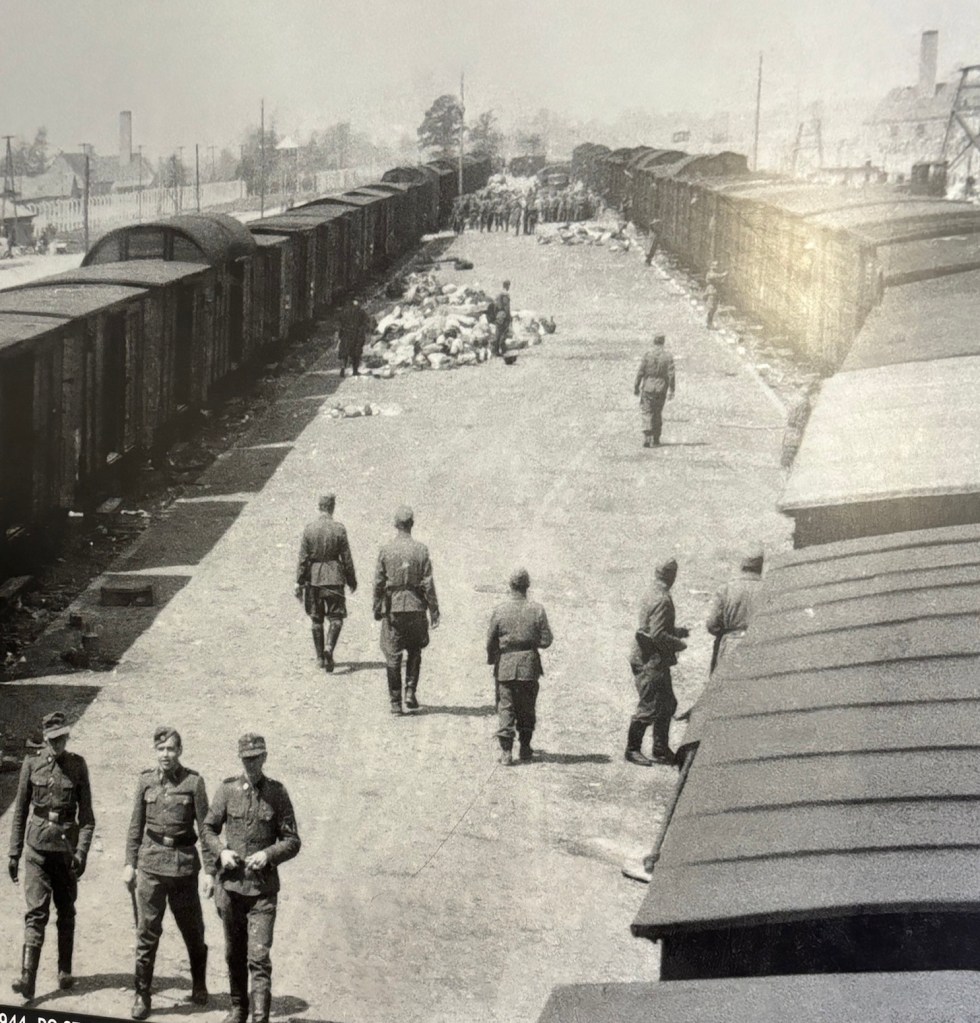
The people were told they were going to resettlement camps. And when they arrived by train, they saw many buildings with people all about working and living there. So they were put at ease and were peaceful when they were taken to the gas chambers.
The Jewish women, mothers, pregnant women, children, young teens, the elderly, the disabled, and most of those over 40 were not useful and were sent straight to the gas chambers.
They were told that they needed to take showers and be disinfected upon arrival. So those going to the gas chambers had to strip down and they were headed into the gas chamber. The Nazis even had fake shower heads in chambers to put people at ease.
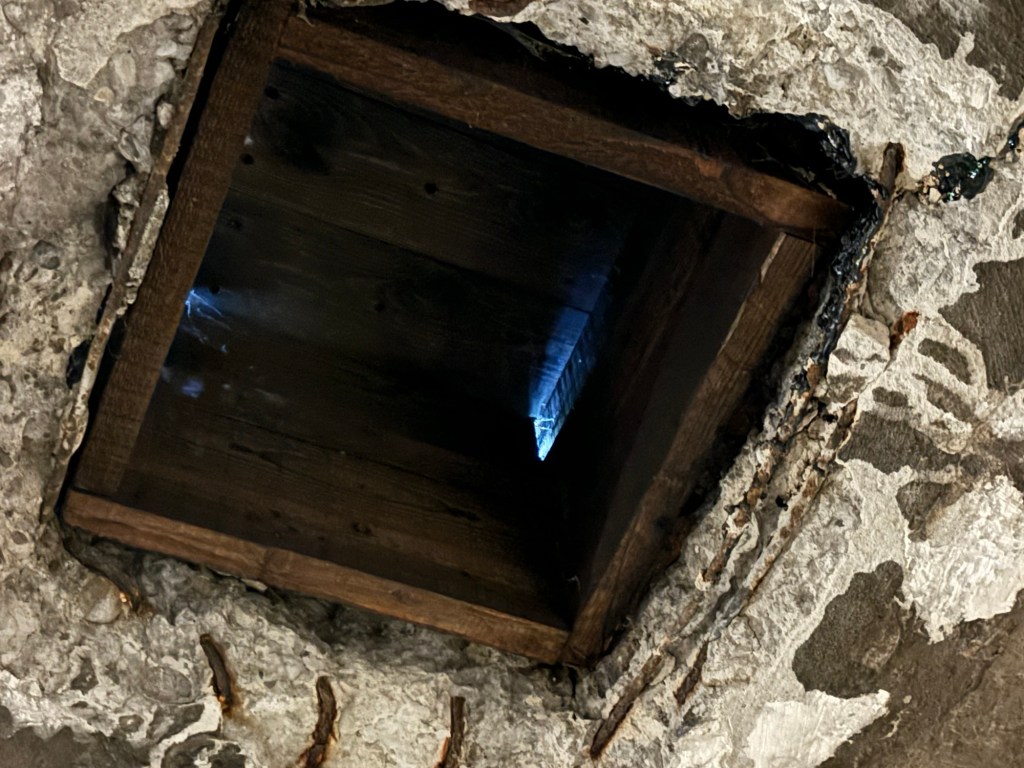
However, once the doors were closed, the German soldiers began to drop pesticide crystals down into the chamber from holes opened in the roof.
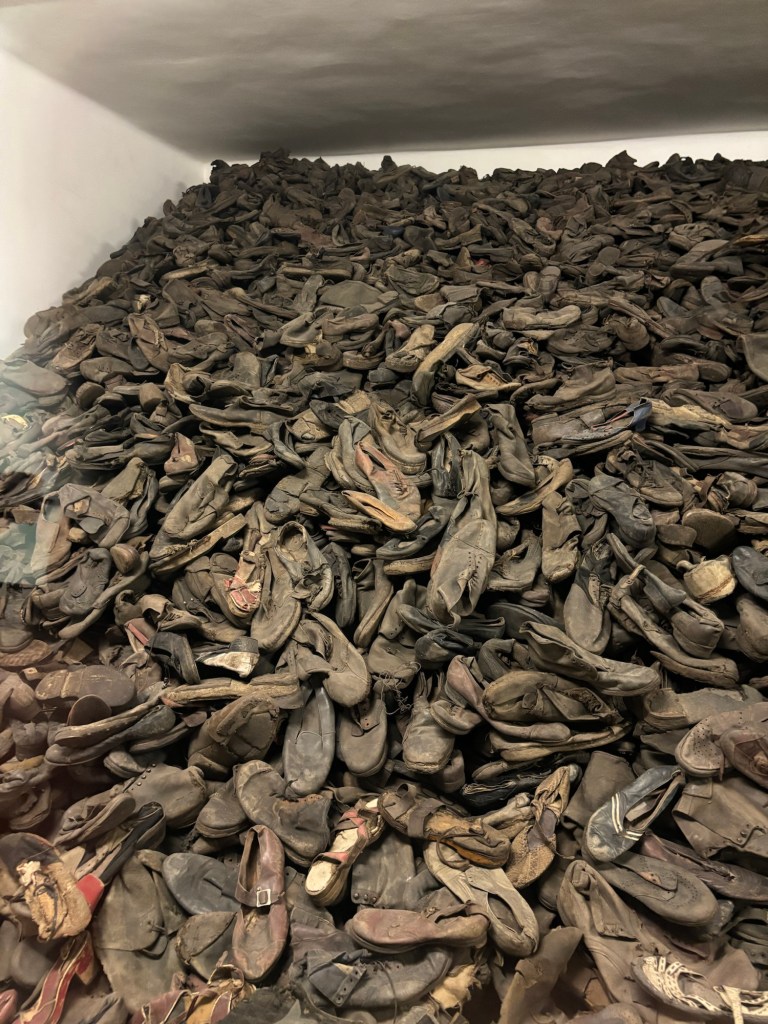
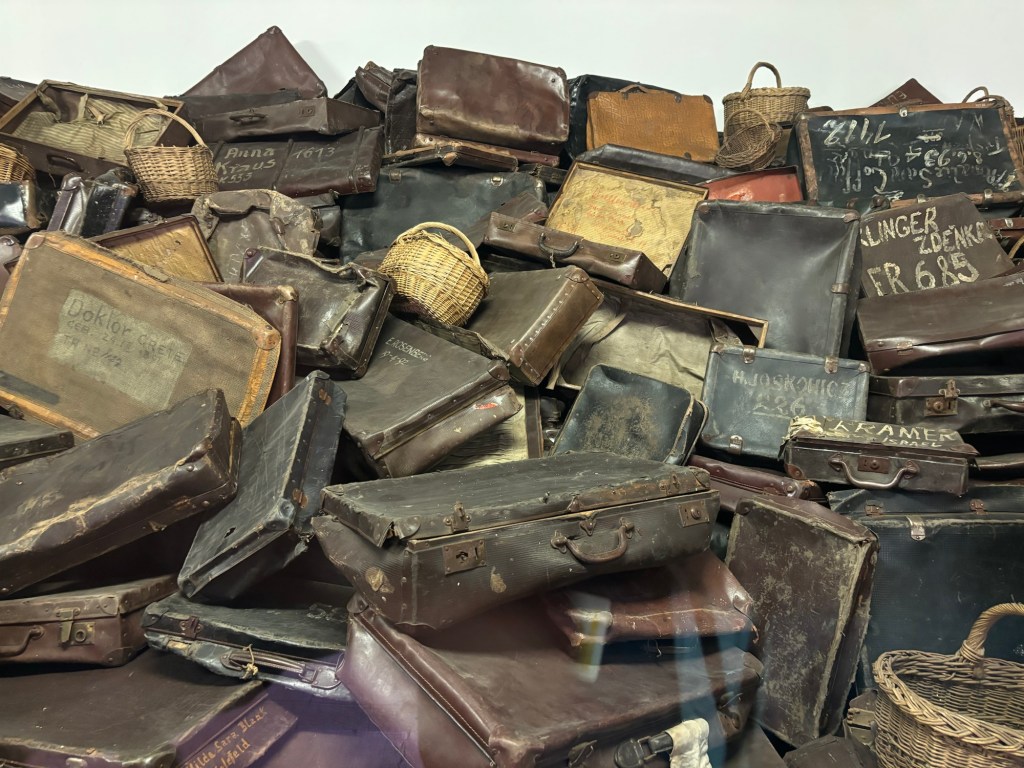
The people were murdered naked so their clothing could be recycled along with their suitcases and other possessions. They thought of everything! Horribly, some Jewish victims at Birkenau were even burned alive when the Nazis ran short of pesticides for the gas chambers.
Five days before the 1945 liberation, the Nazis tried to burn any evidence of the atrocities. However, so much had been stockpiled over the years that it was impossible.
Other Information
Workers had to wear striped uniforms for visibility by the guards and they all prisoners had numbers on their uniforms, which is how the guards addressed them.
Each prisoner also had a colored triangle to identify their group (gay, prostitute, Jew, Roma/gypsies, etc.). Only Jews had both a triangle and a star – and always in yellow.
Less than 700 of the 200,000 children and young teenagers survived.
Block 10 was where they experimented on women to find most effective sterilization method. That way, the Nazis could more easily races or peoples the Germans did not want. They could make entire nations die out.
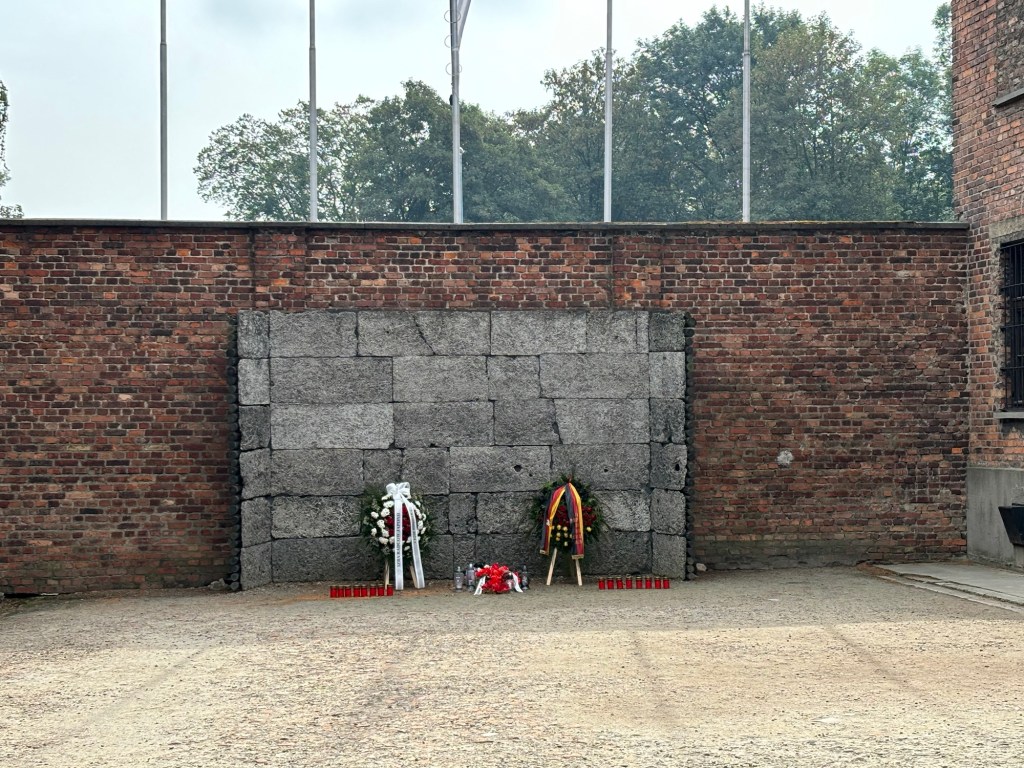
Block 11 was the Jail. In the Jail Block you either died by flogging, hanging, or firing squad.
They even had “standing cells” for four adults. The cell was so tiny they could not lie down and then still had to work the next day.
They even had a Courtroom for the political prisoners.
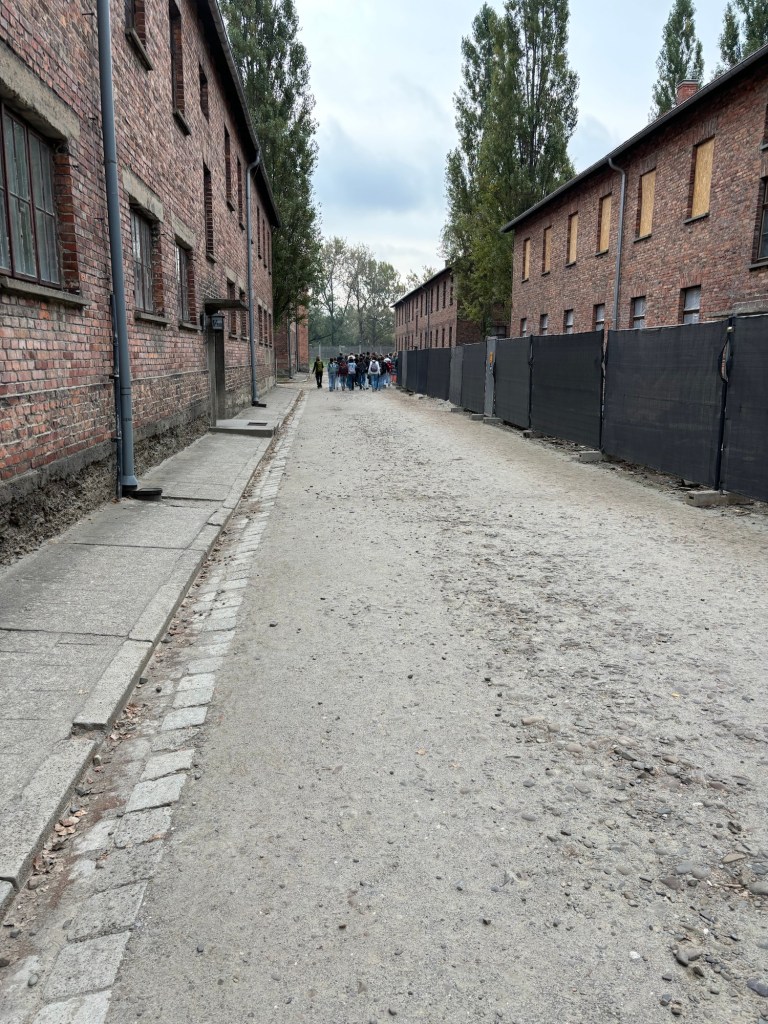
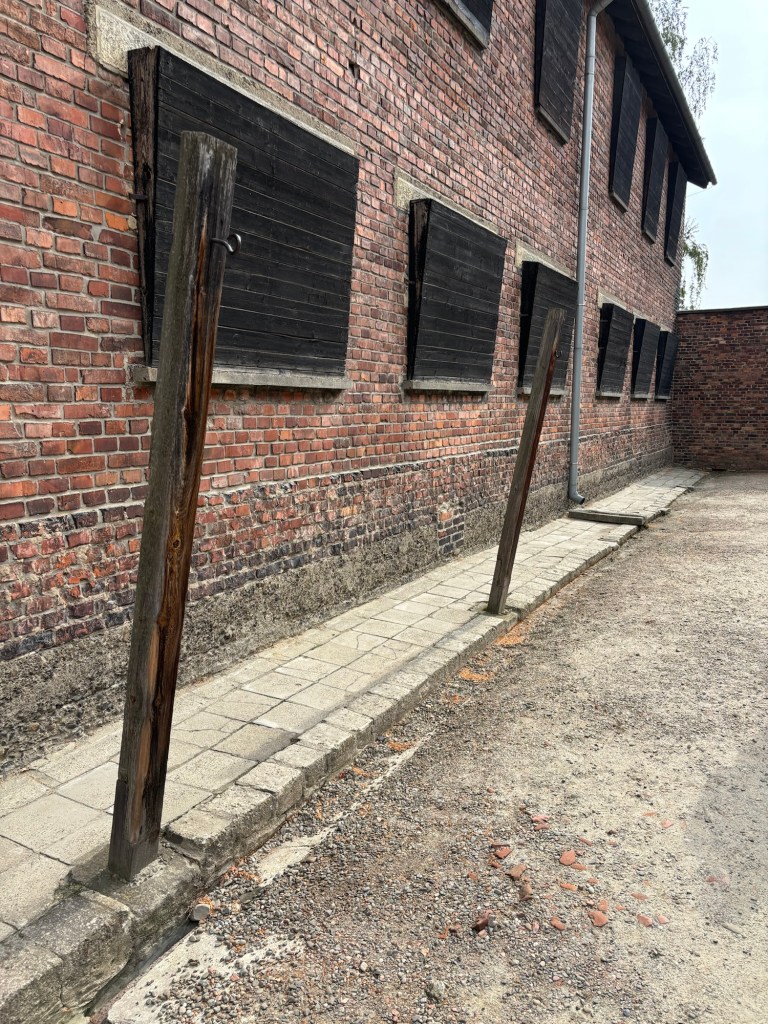
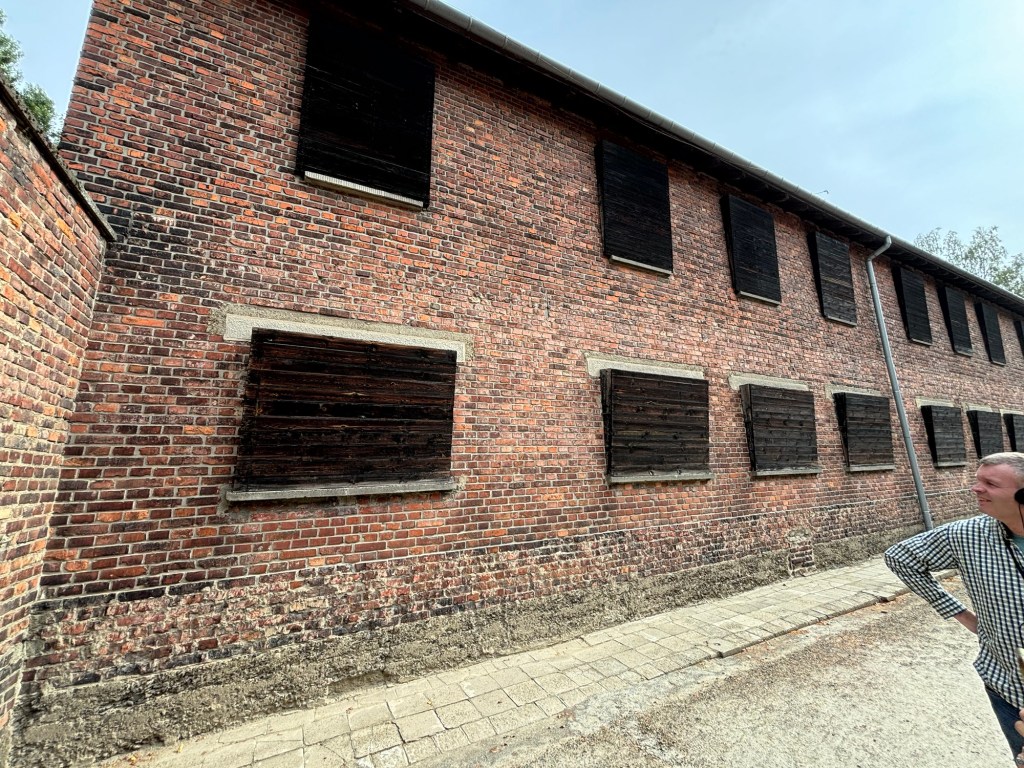
The adjacent barracks had wood planks over windows so other prisoners couldn’t see what was happening, but they could hear the beatings, floggings, hangings, and firing squads.
Prisoners were always counted twice per day to make sure no one escaped. The Nazis were worried that escaped prisoners would then tell others what was happening.
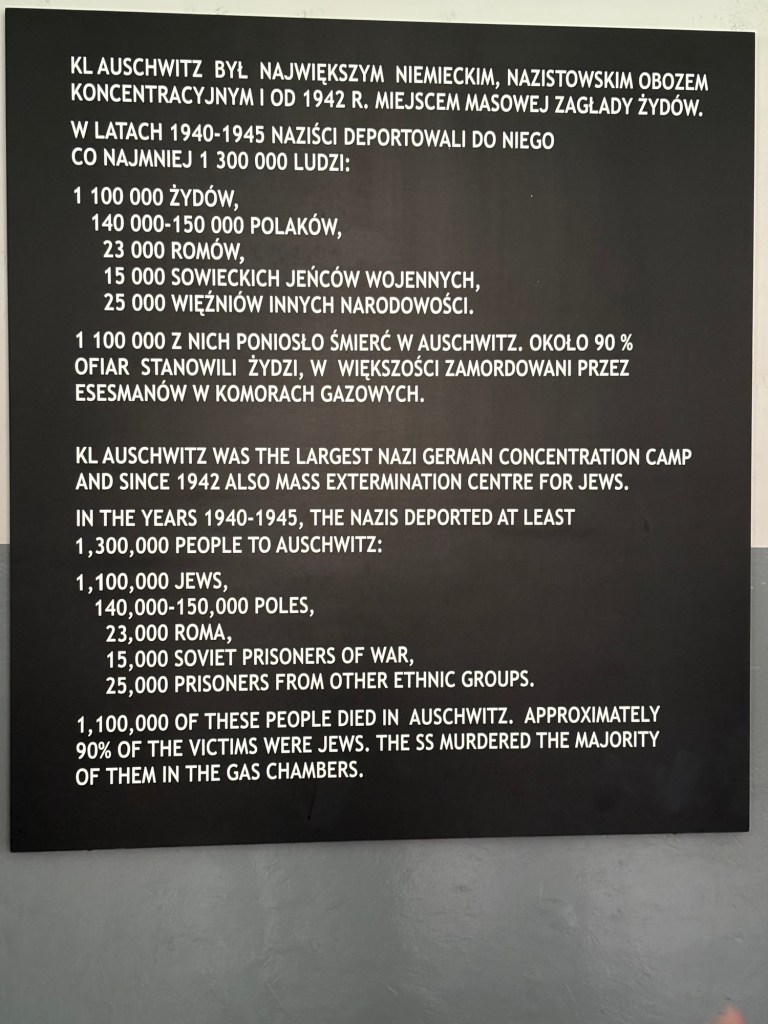
Only 200 escaped out of 1.3 million who came into the camp.
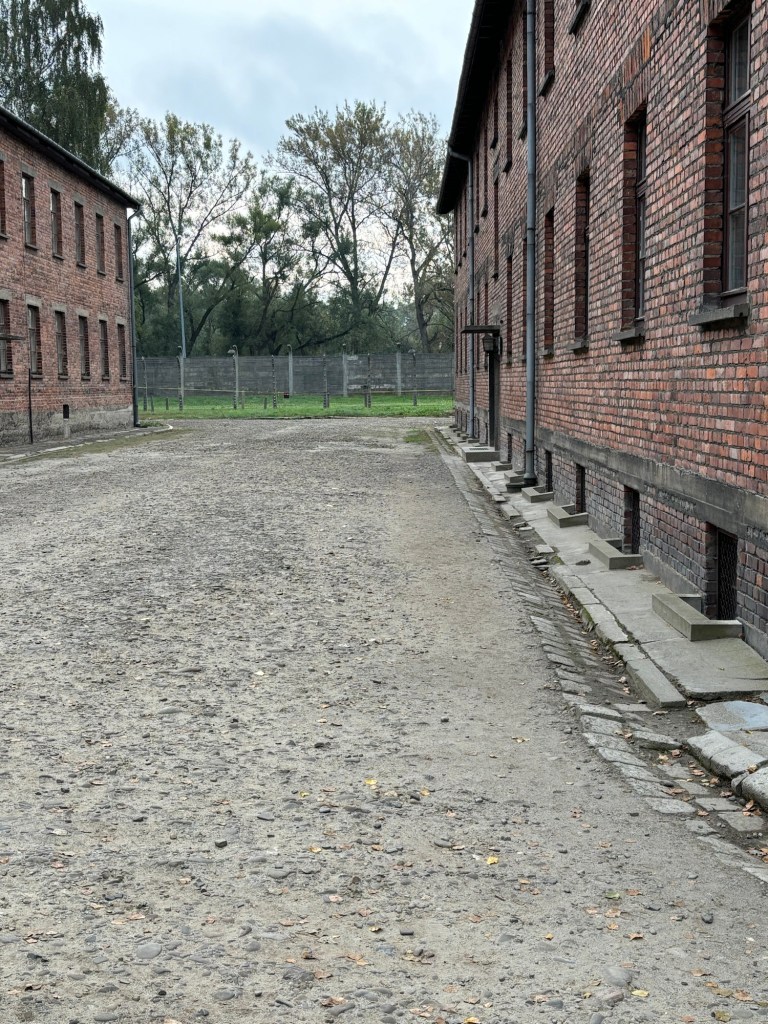
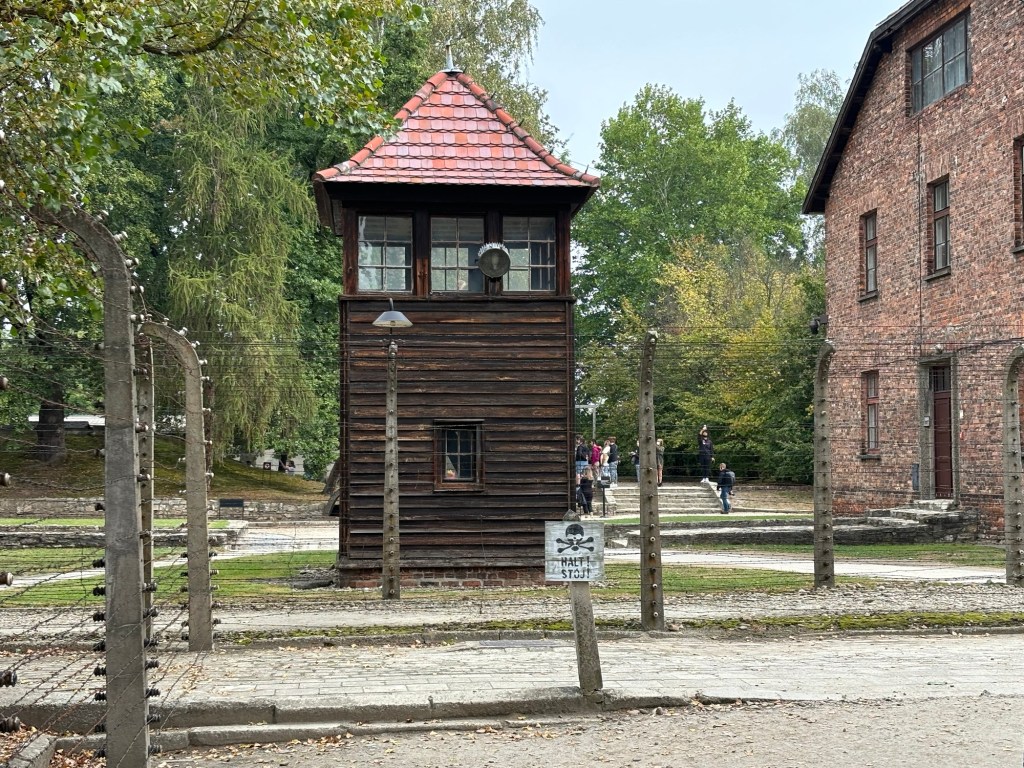
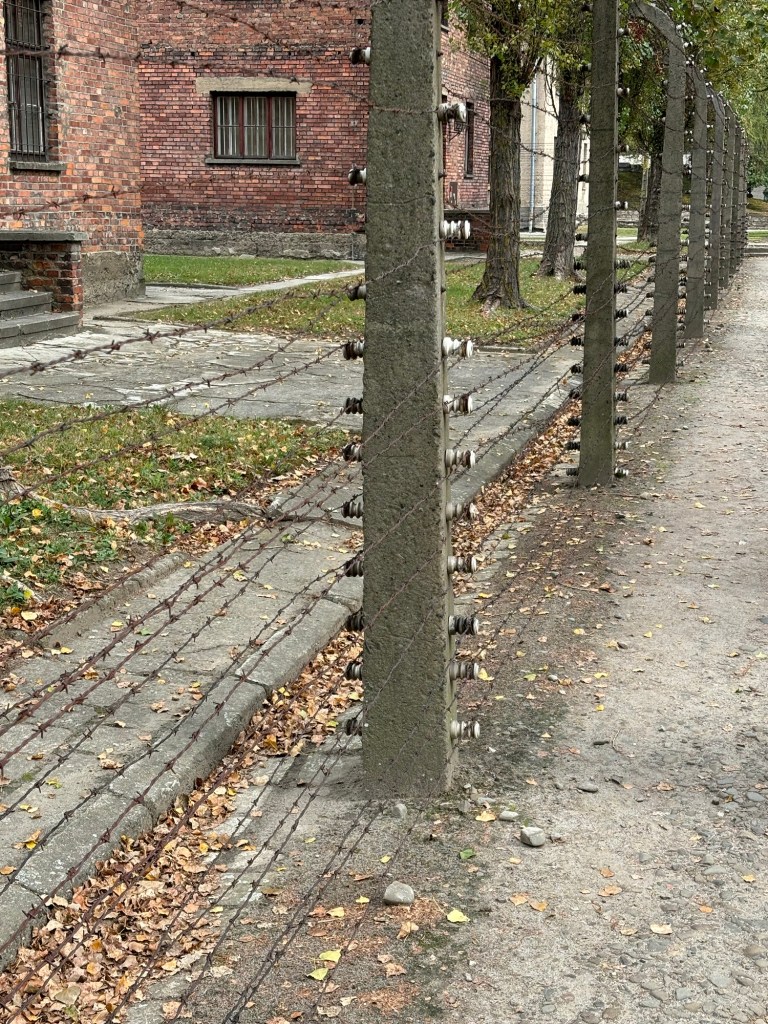
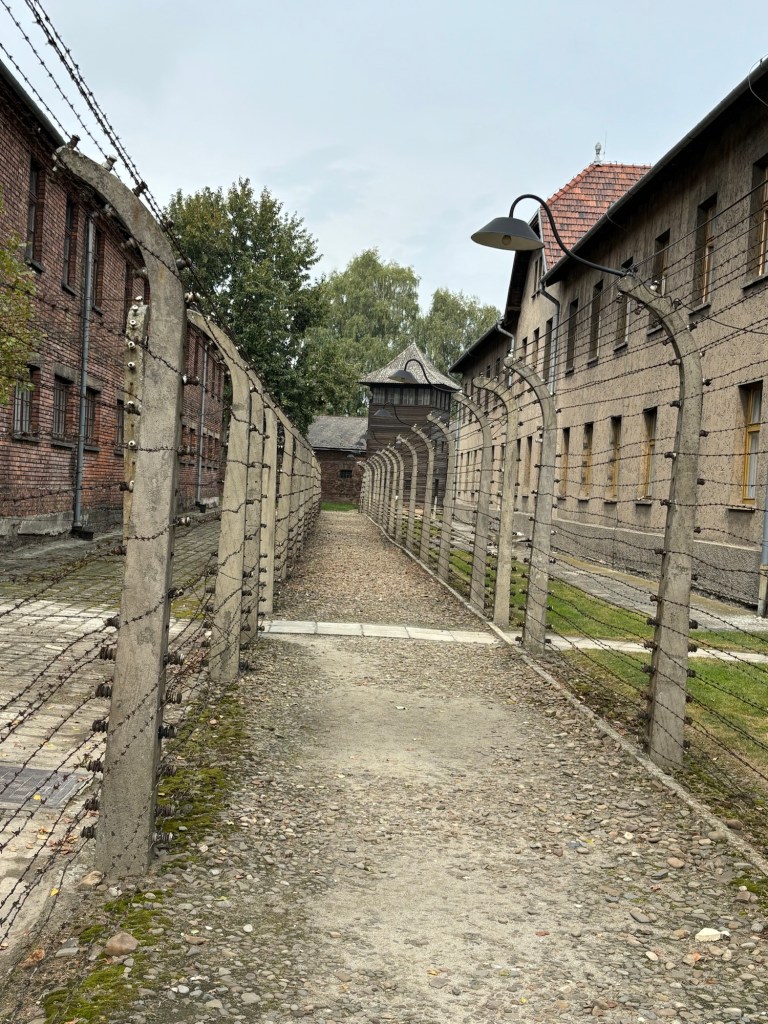
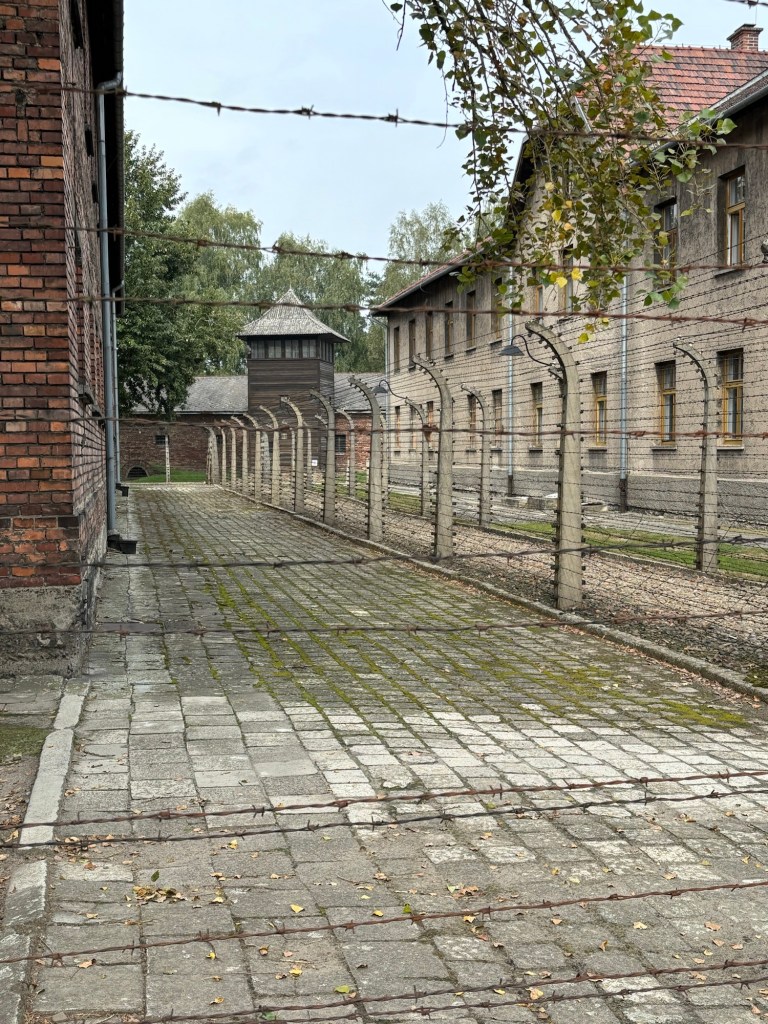
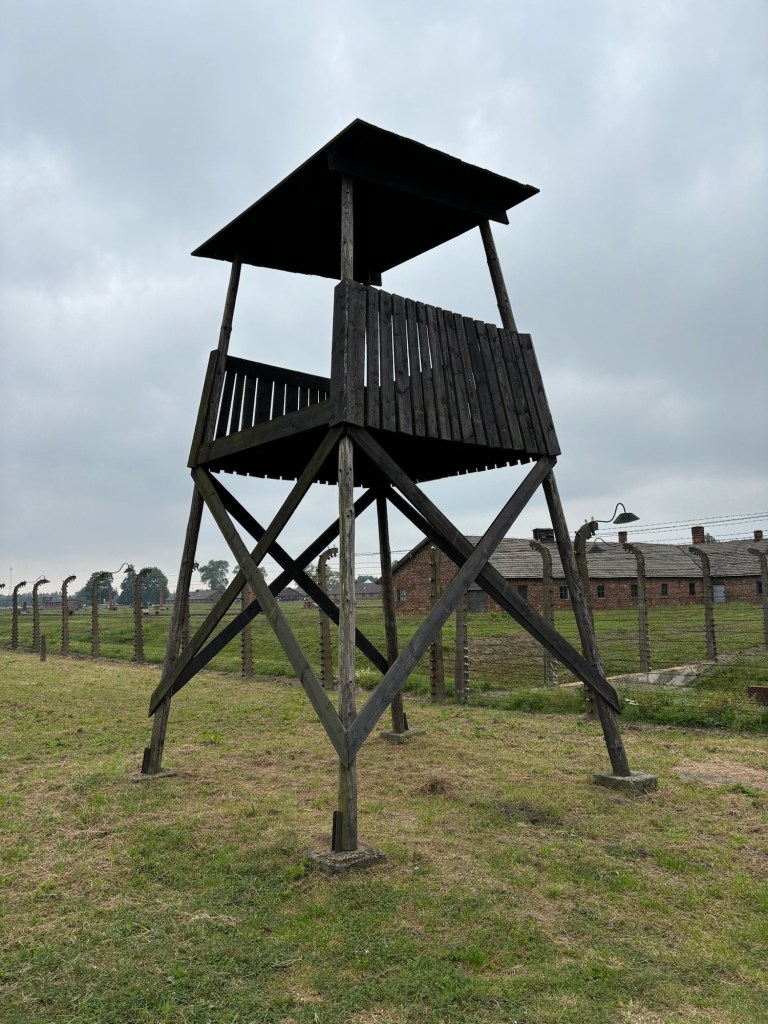
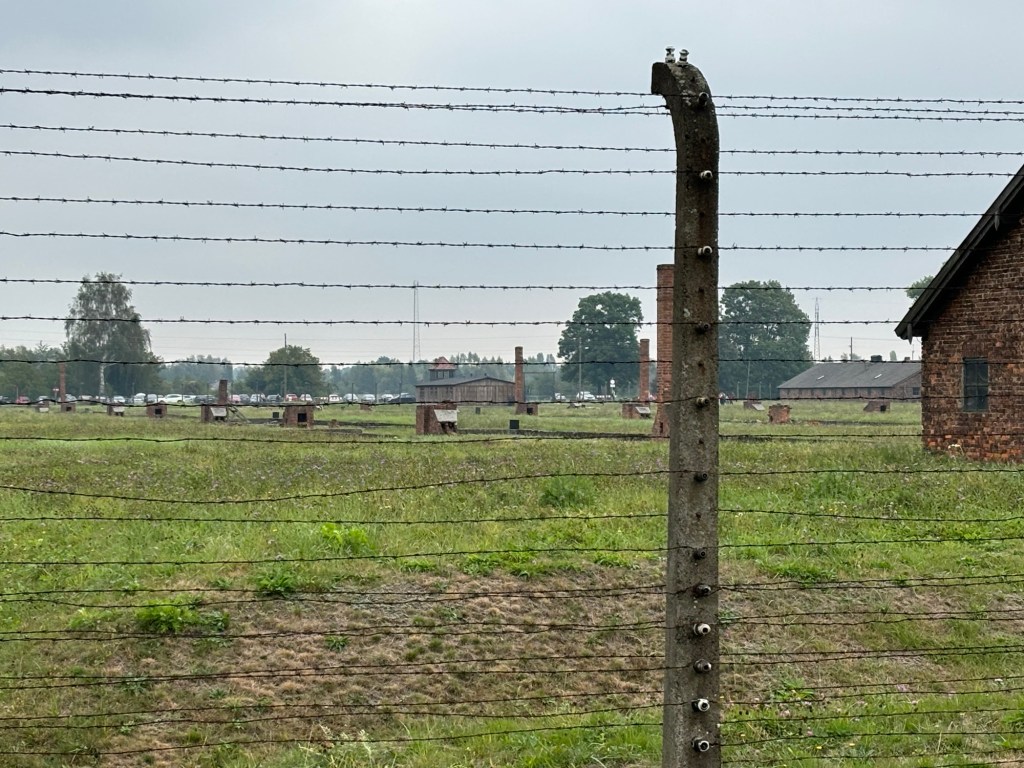
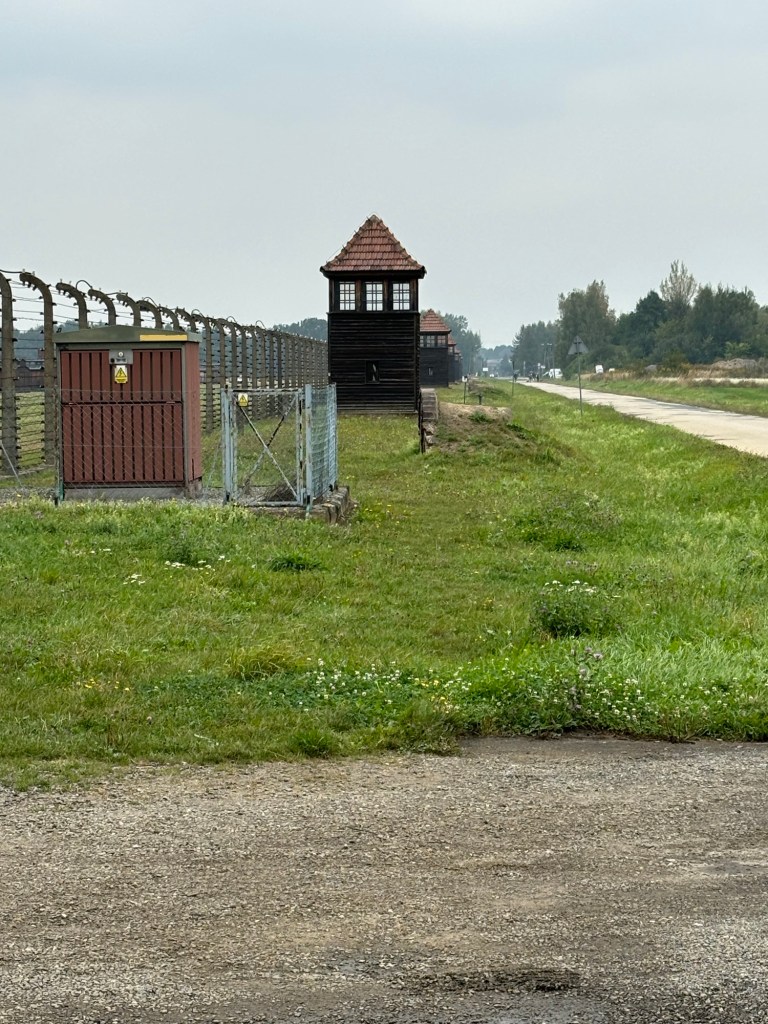
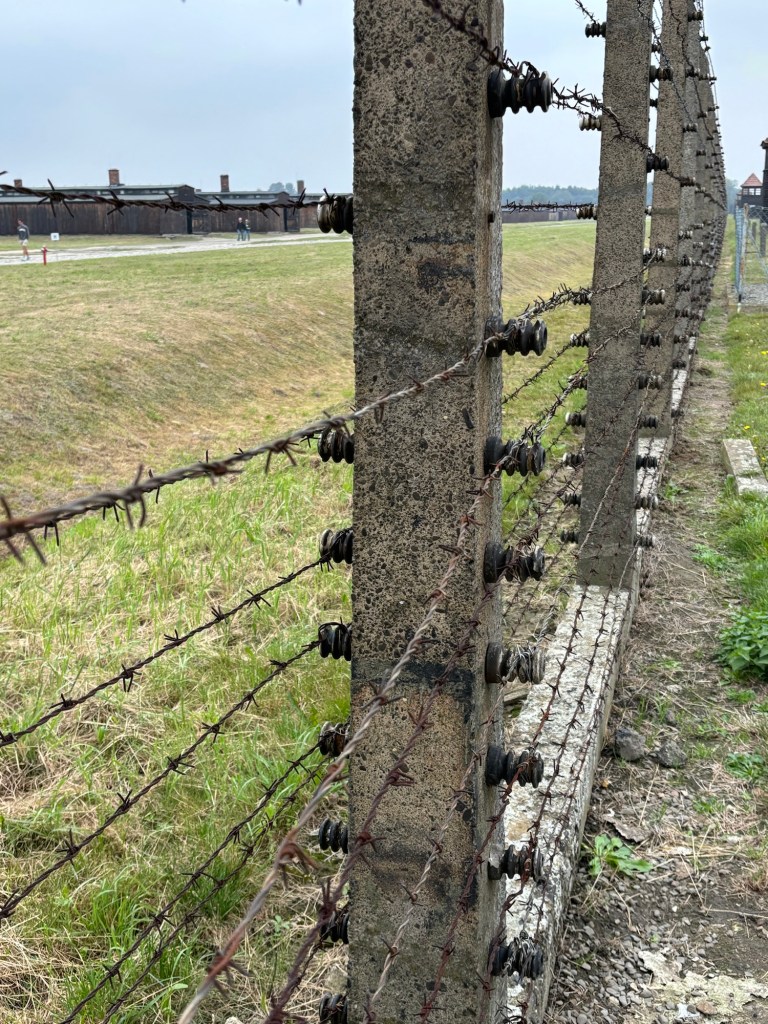
The camp was also surrounded by 400 volt electrified fence (200 is lethal).
The stench from the gas chambers and the burning of bodies was horrible.
Even birds and animals avoided the area, except for rats, which were everywhere (and a food source).
Photos from Auschwitz
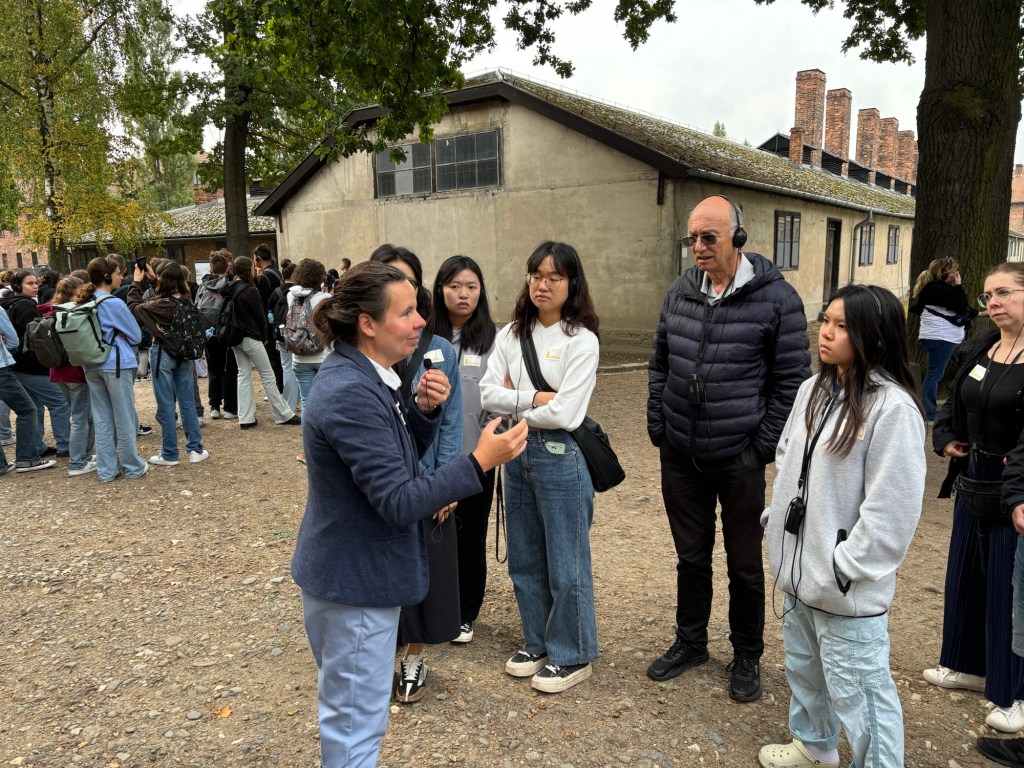
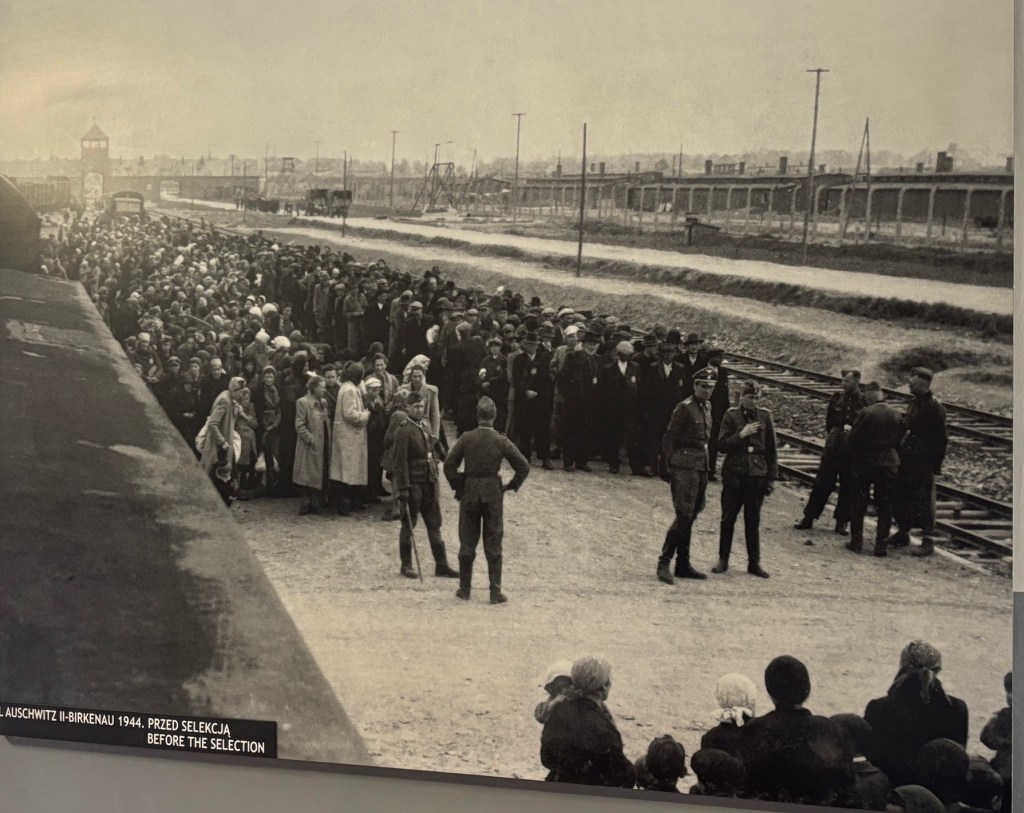
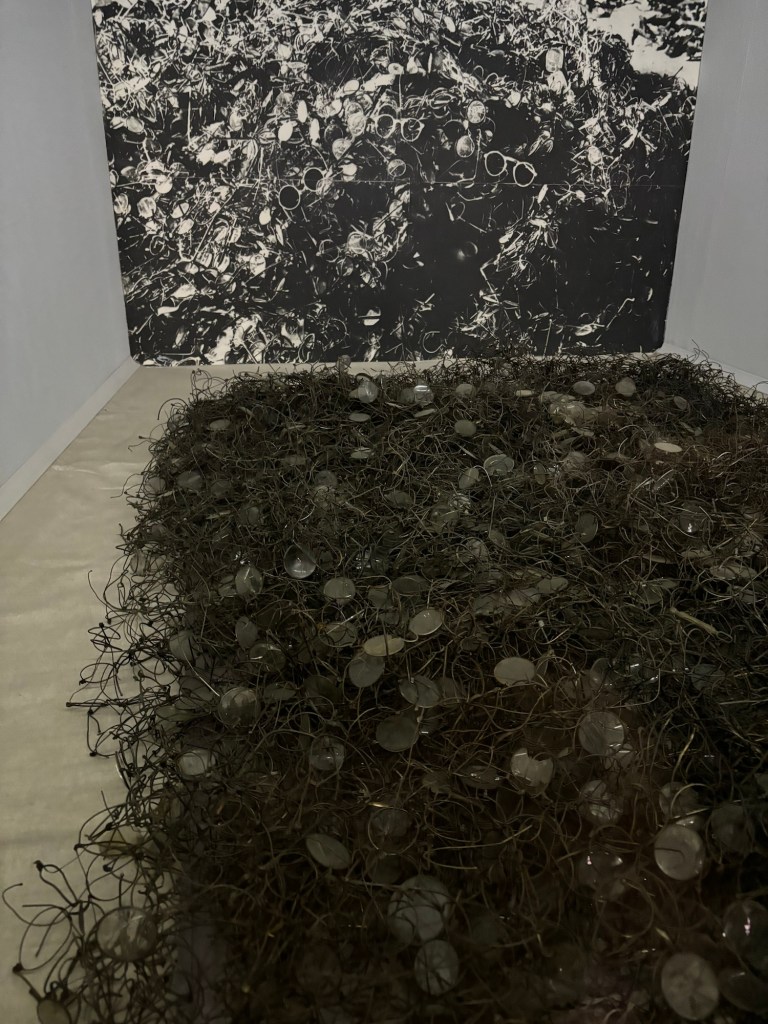
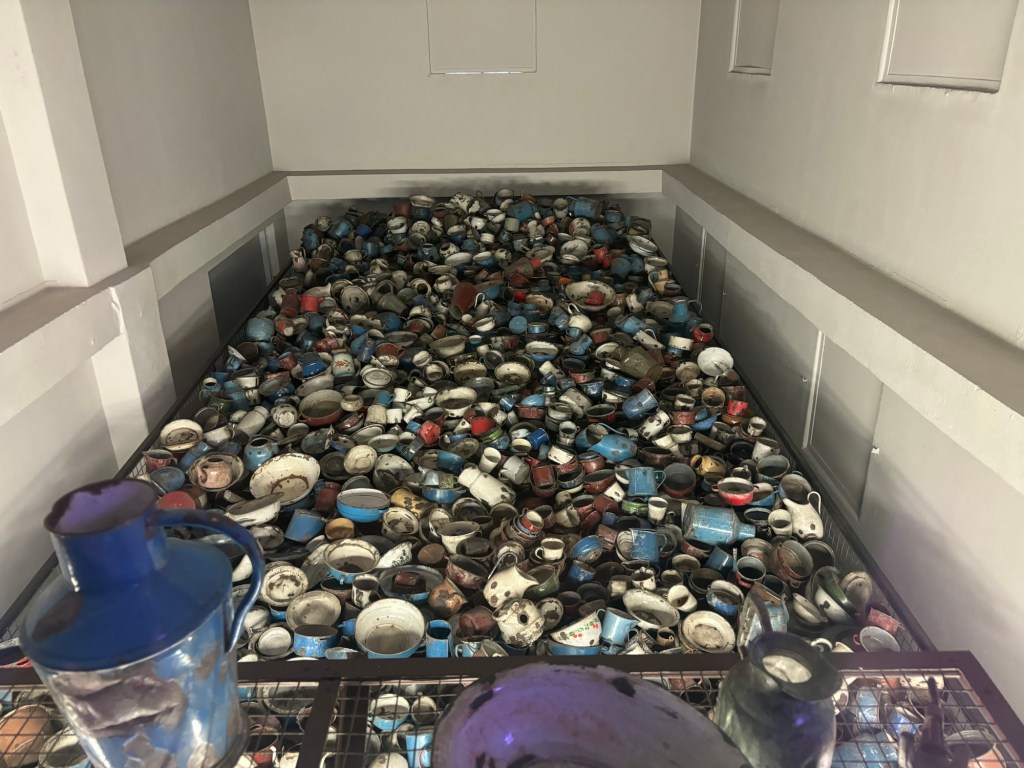
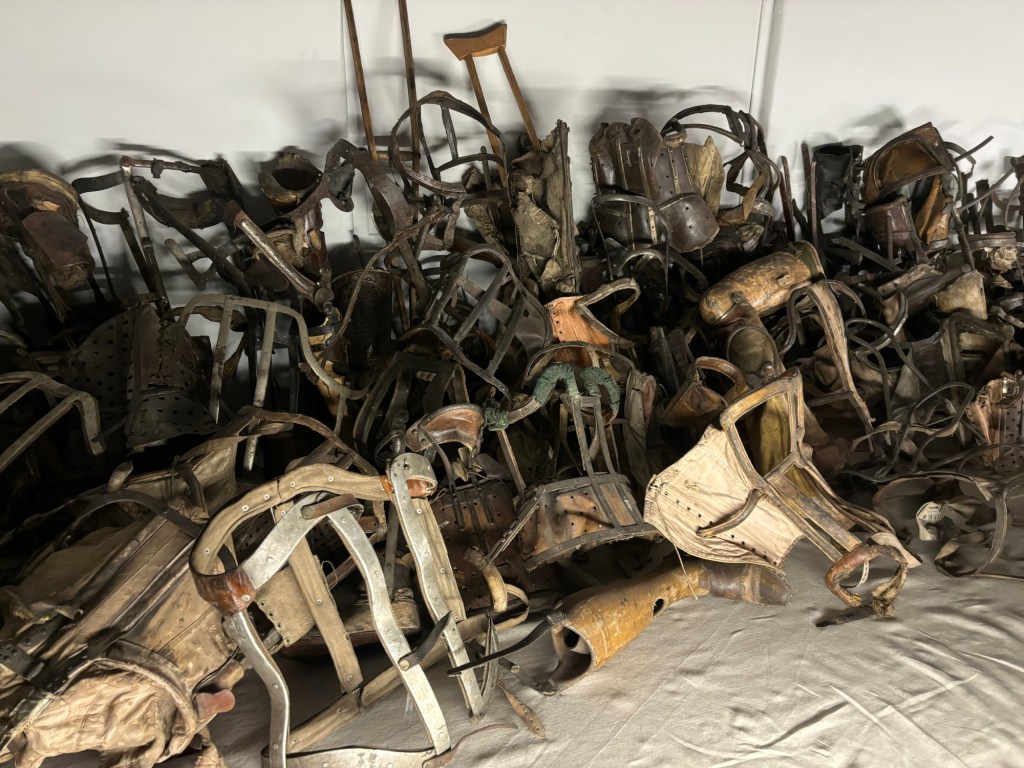
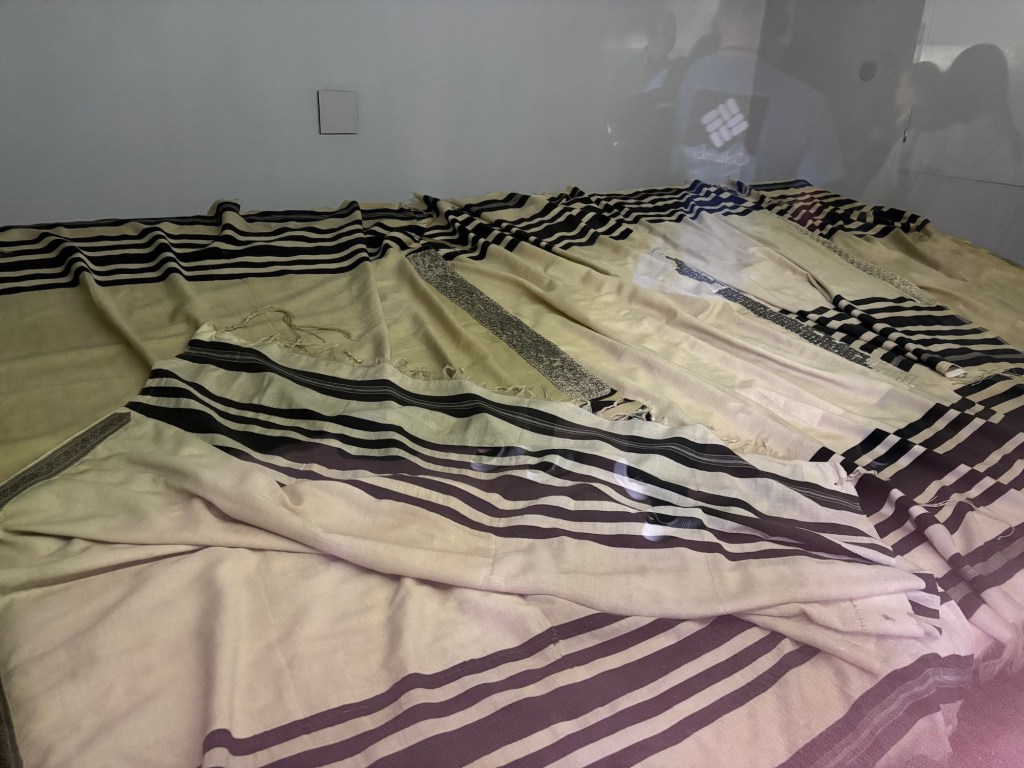
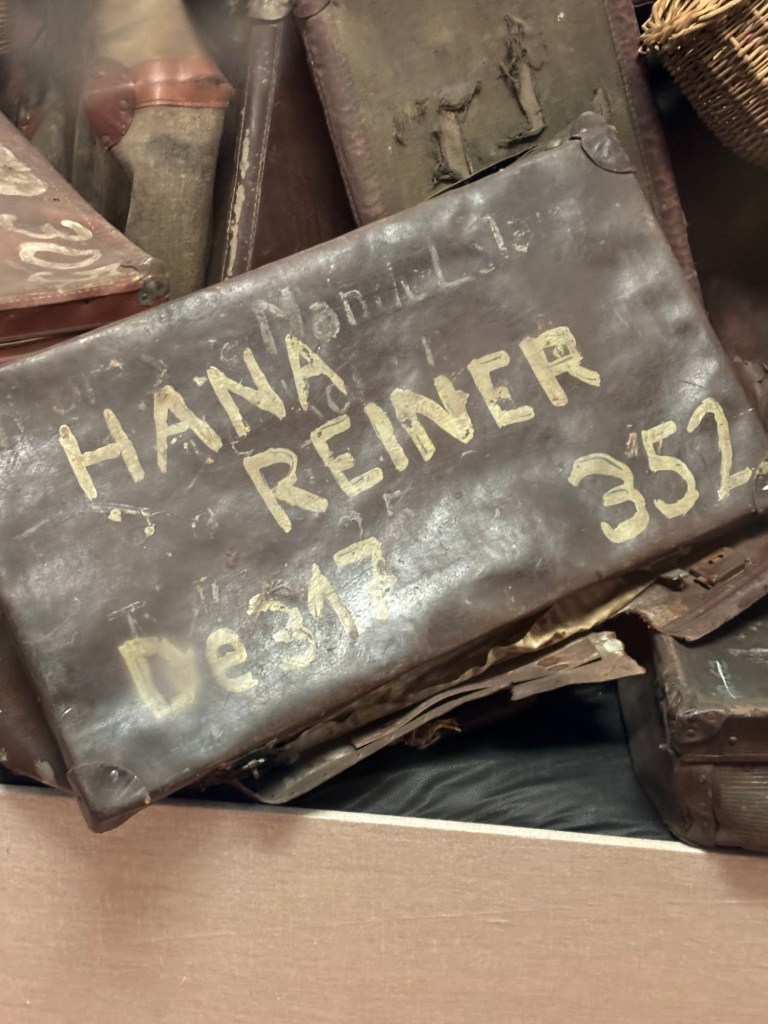
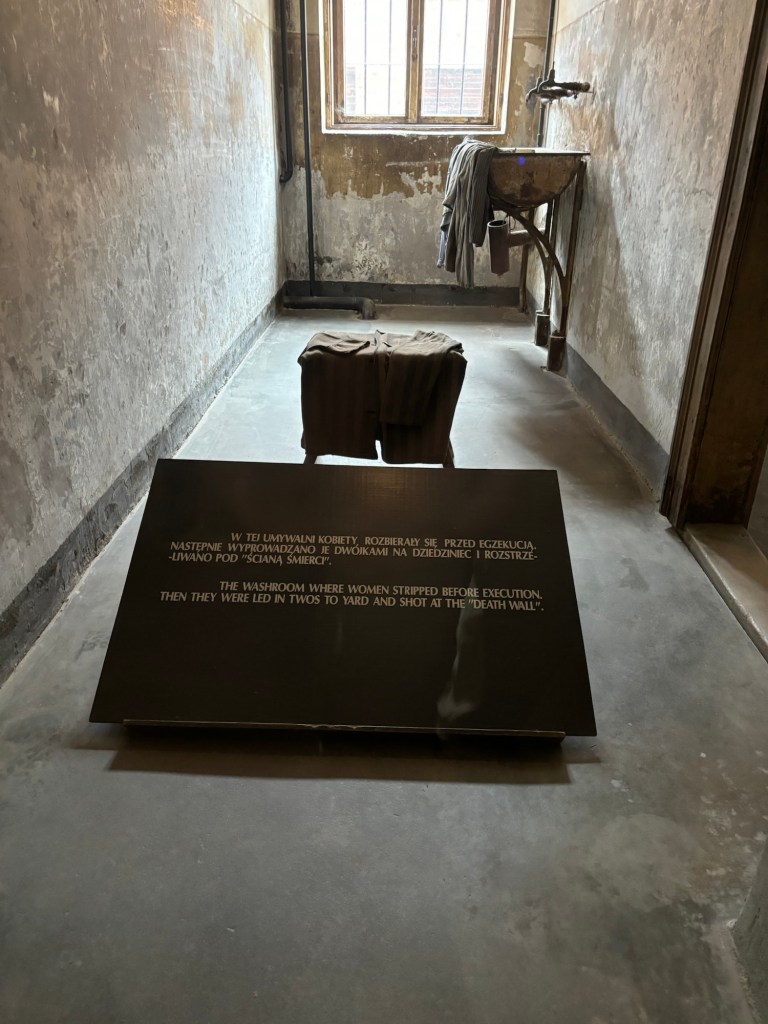
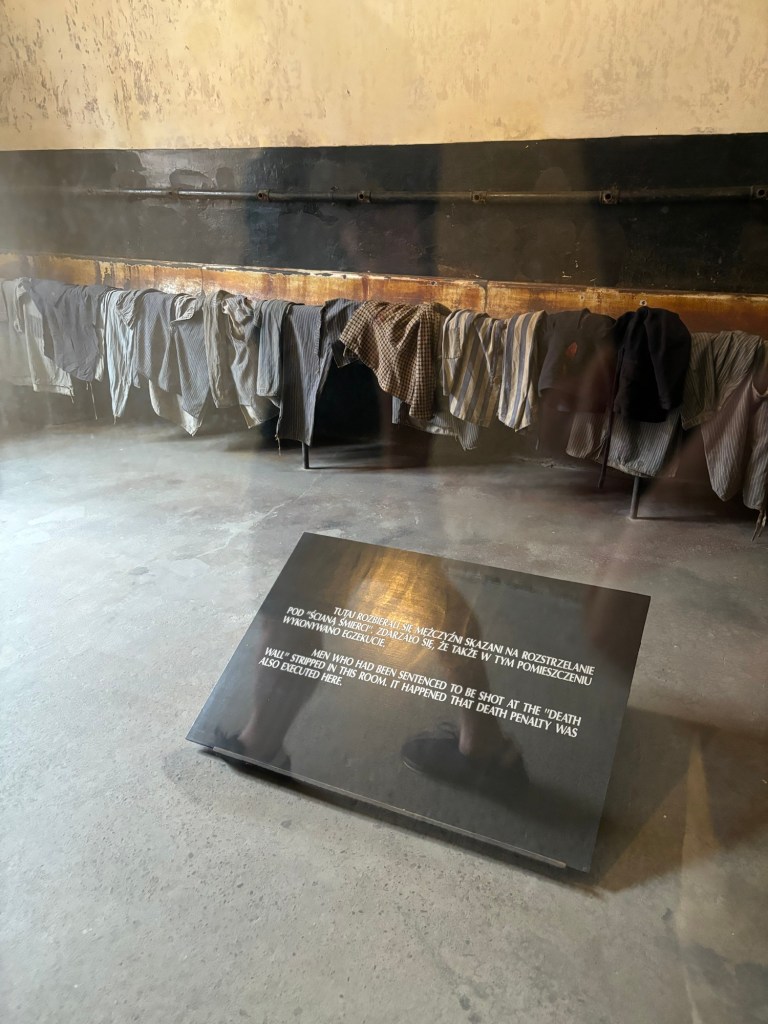
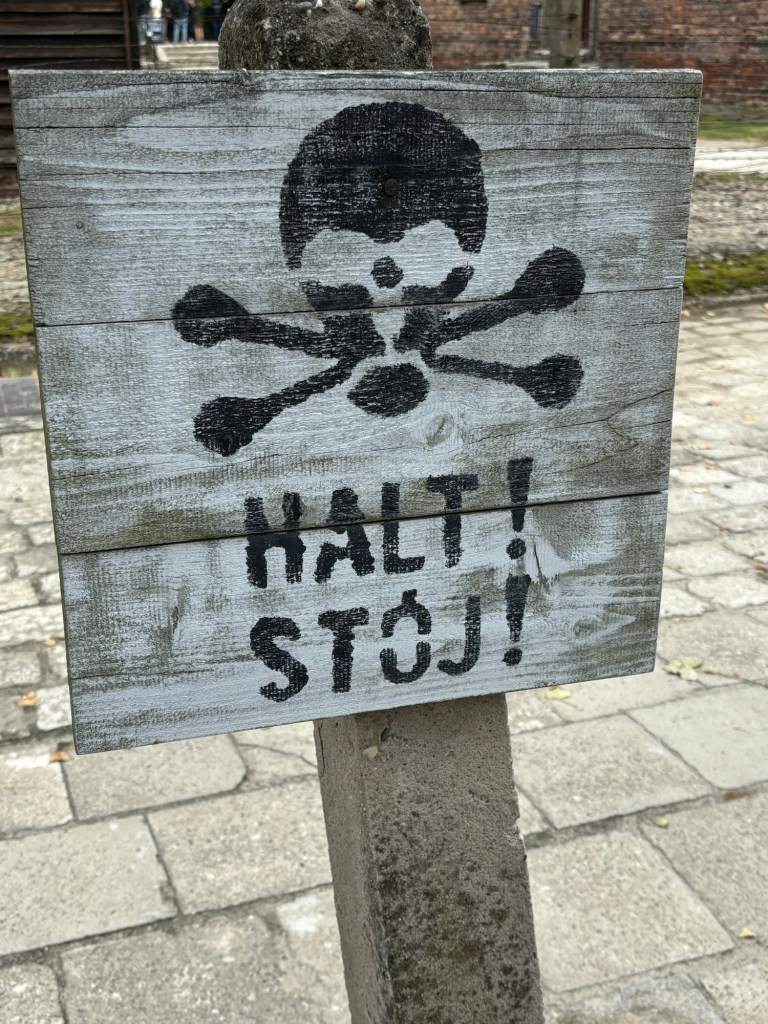
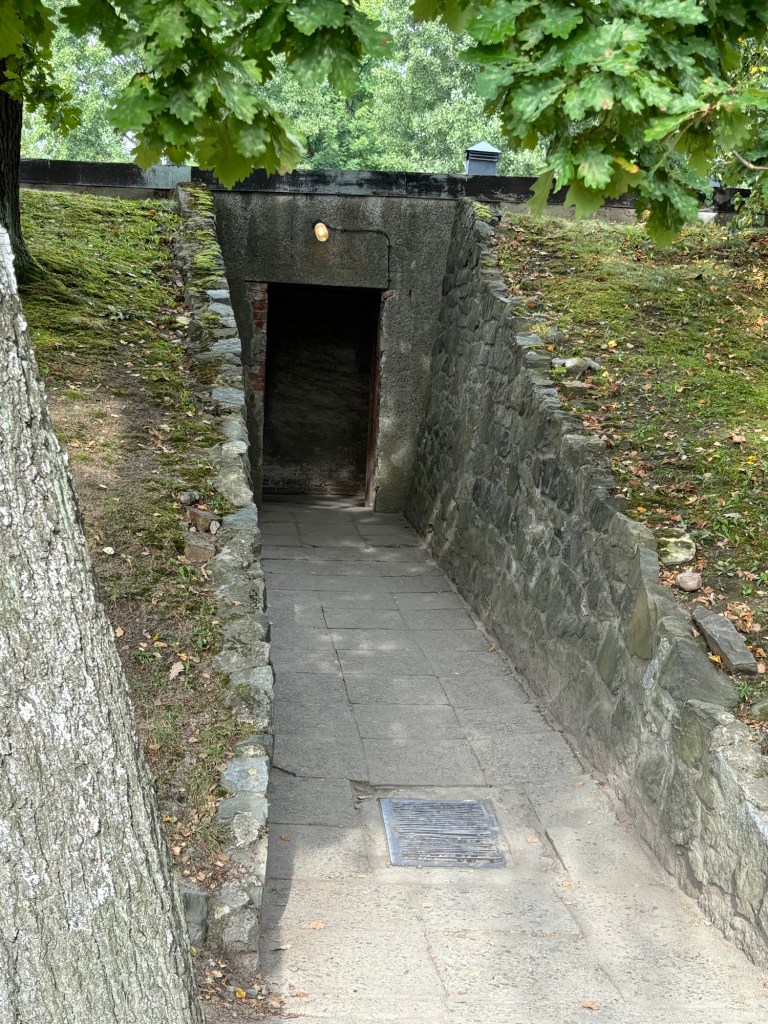
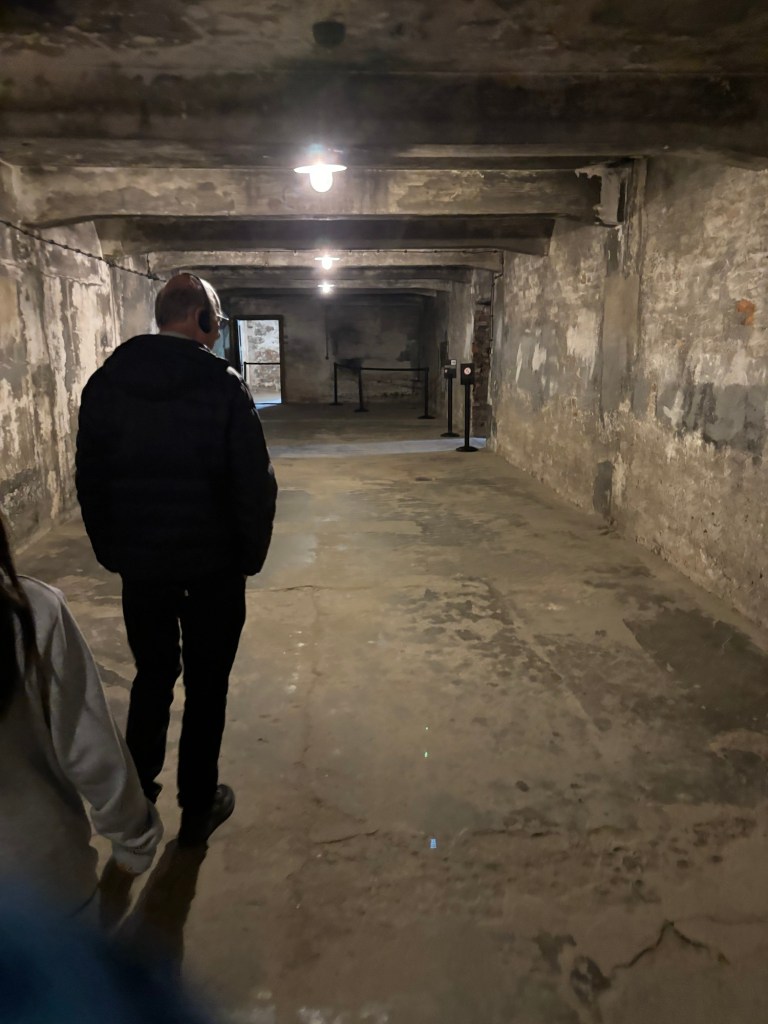
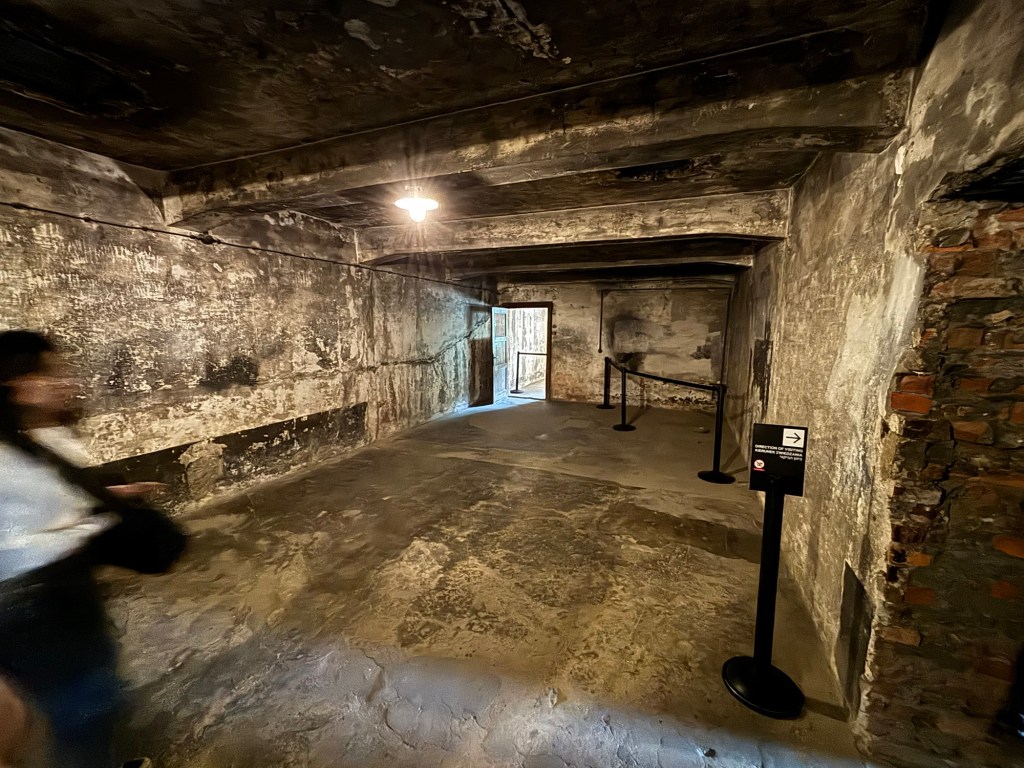
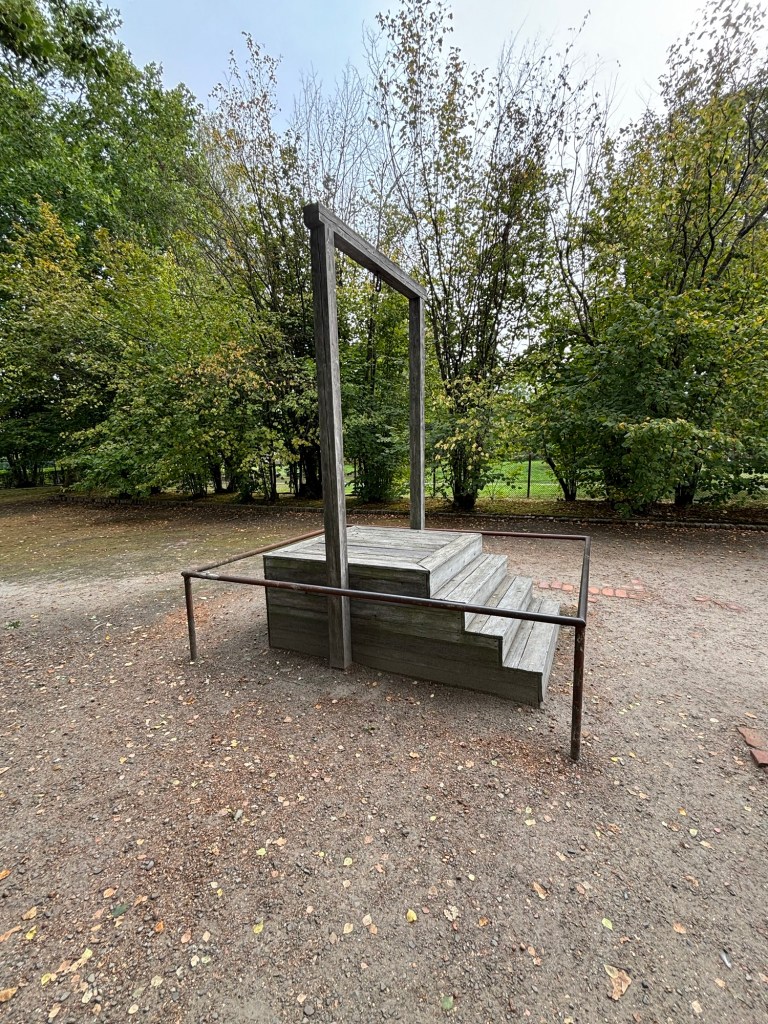
The “Arbeit Macht Frei” GateOur Educator / GuideThe prisoners coming off the train have been separated. See the women and children to the left and men (workers) to the right. The group in the left are soon to be in the gas chambers.See all the belongings left on the siding for the unaware prisoners to get their “shower and disinfecting“Burned GlassesPots and PansProsthetic DevicesPrawn ShawlsShoesLuggageMany wrote their name and number on items so they could be reunited after their “shower”Hands tied behind their back and hooked on the polesWood over the windows in the adjacent barracksThe firing squad wallUp to 12 hangings at a timeThe gas chamber (black top) with mounded dirt surrounding, and the chimney on the adjacent crematoriumGas Chamber entranceA gas chamber for up to 700 people at a timeOne of the hatches in the ceiling where the guards would drop down the gas pelletsThe first commandant of Auschwitz, SS-Obersturmbannführer Rudolf Höss, who was tried and sentenced to death after the war by the Polish Supreme National Tribunal, was hanged here on 16 April 1947. (Adjacent to the Auschwitz gas chamber)
Next we re-boarded our bus for a 5-minute drive to the Birkenau part of the memorial and museum.
BIRKENAU (or Auschwitz 2)
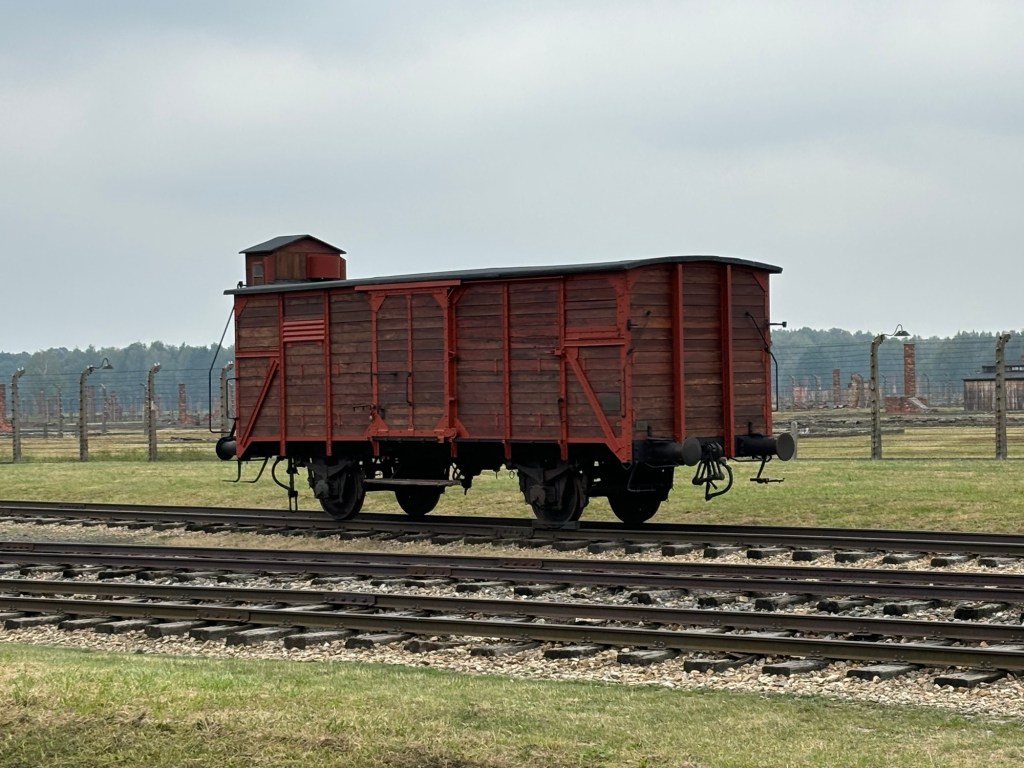
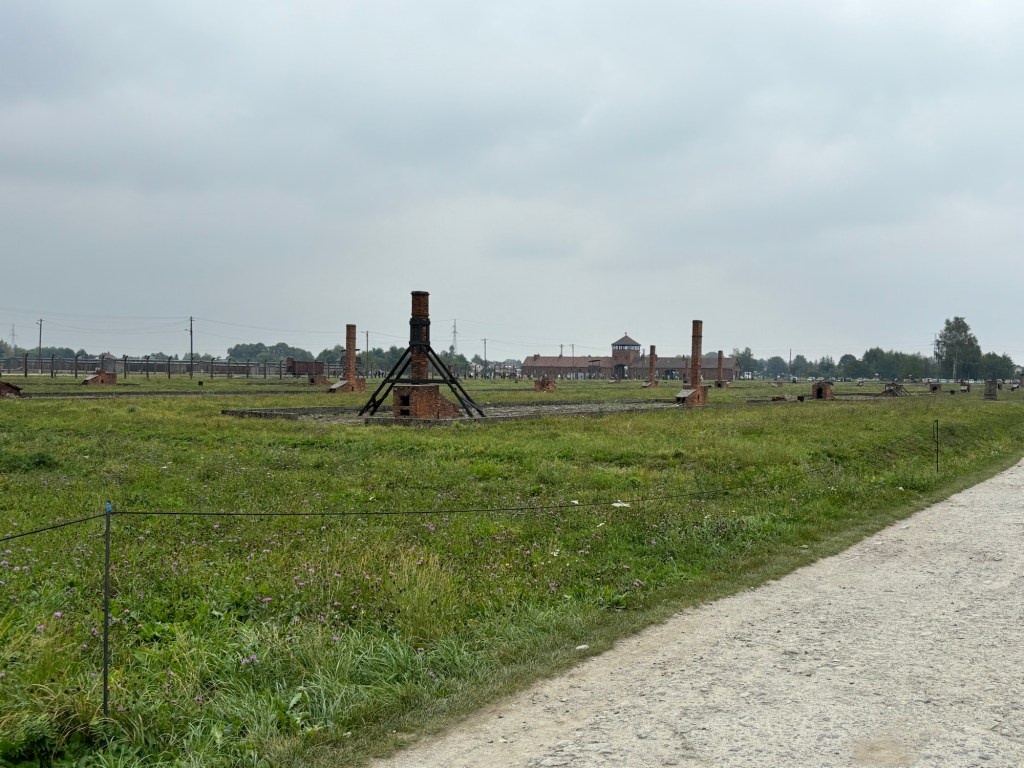
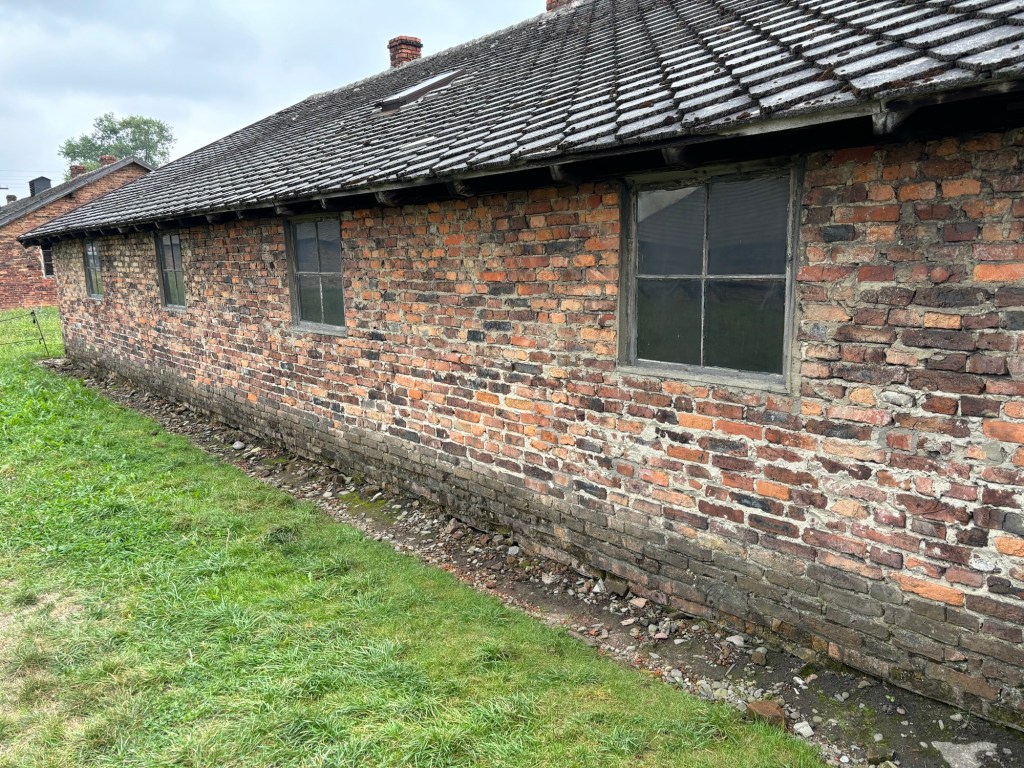
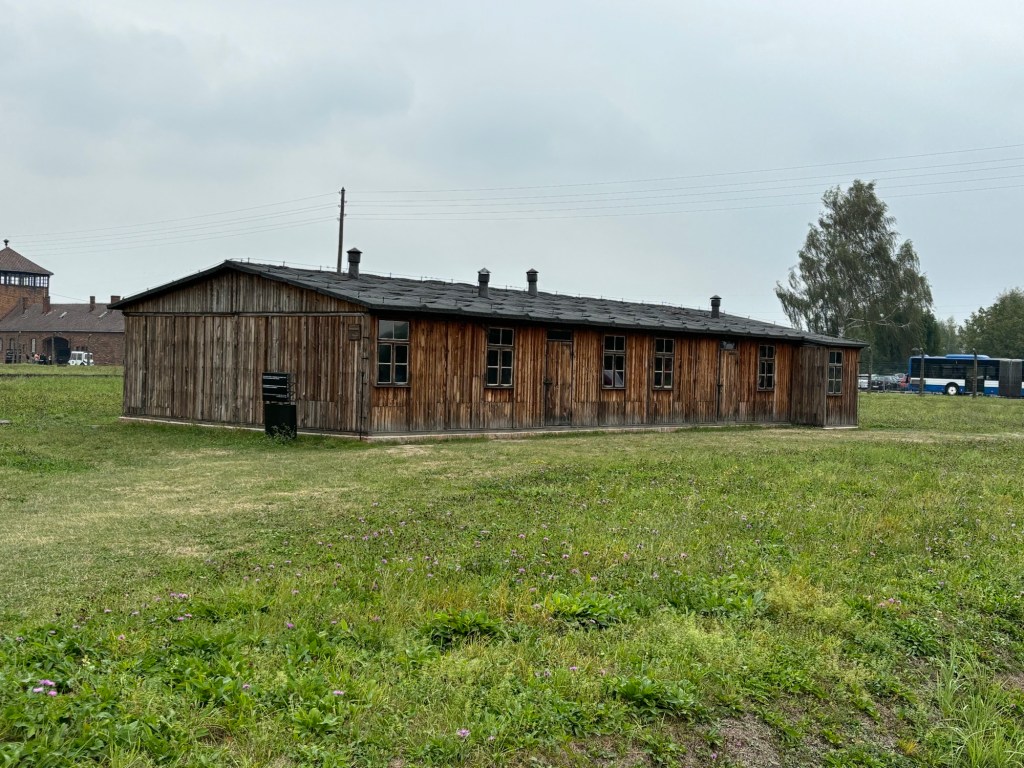
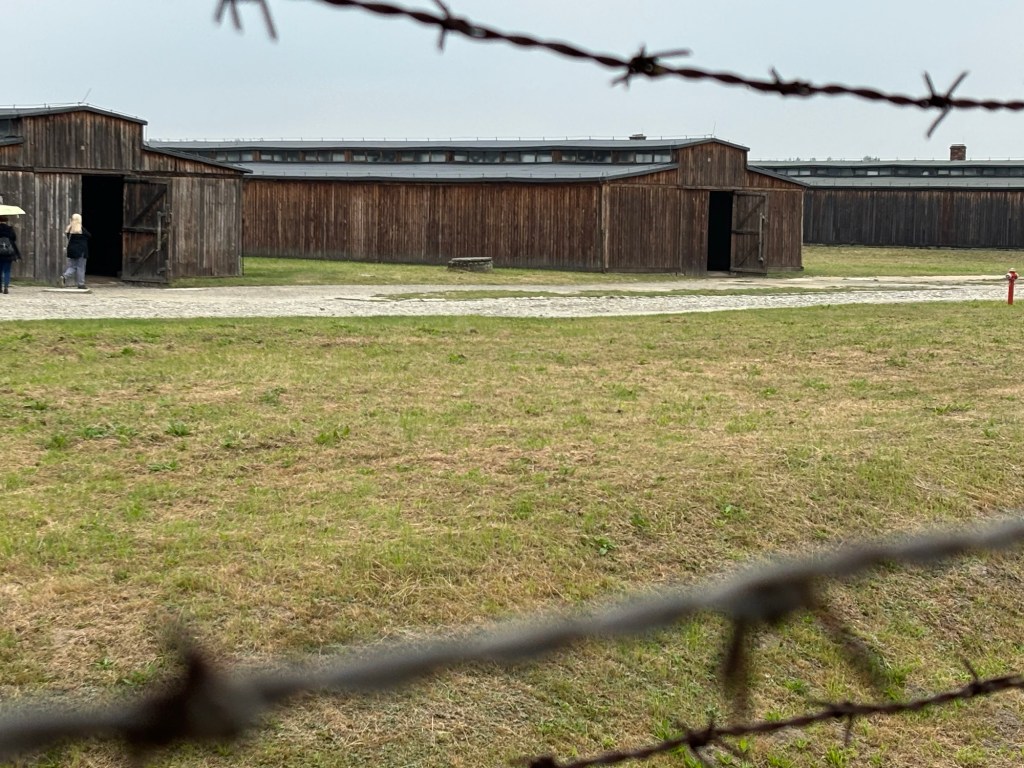
This camp was massive as compared to Auschwitz proper. It was built over three years and designed to hold 200,000 people at a time! The prisoners built 300 barracks. There was not enough time or materials to build the other 300 planned barracks. And the living conditions were much worse at Birkenau. Only 20 wood barracks remain of the almost 250 built.
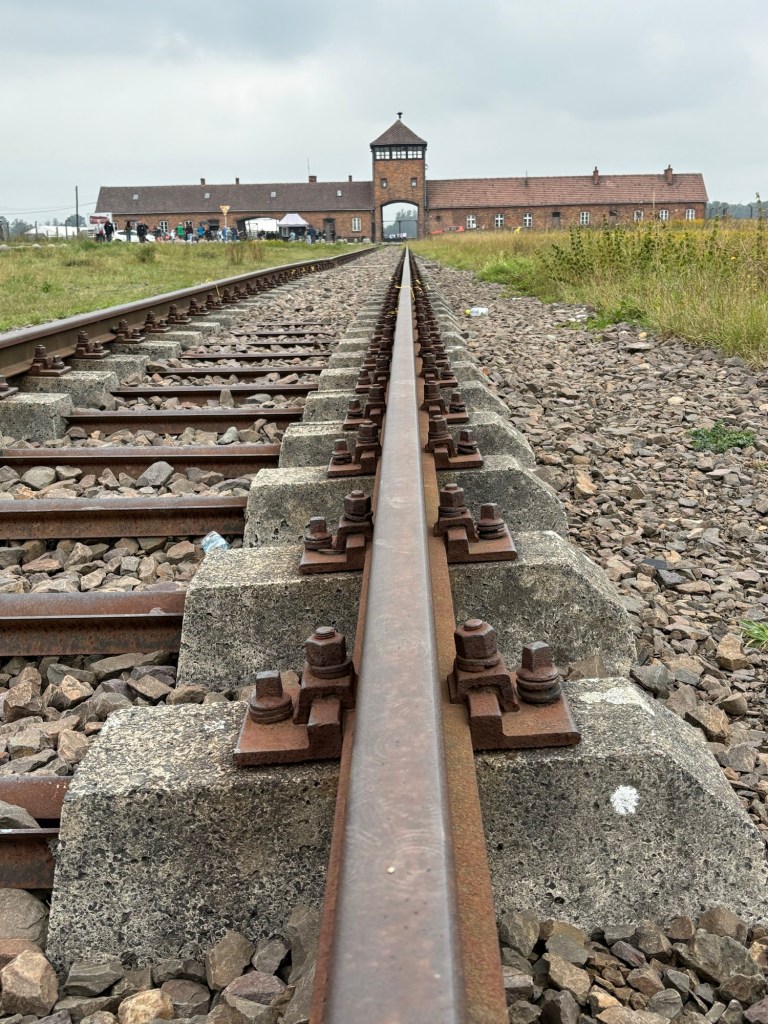
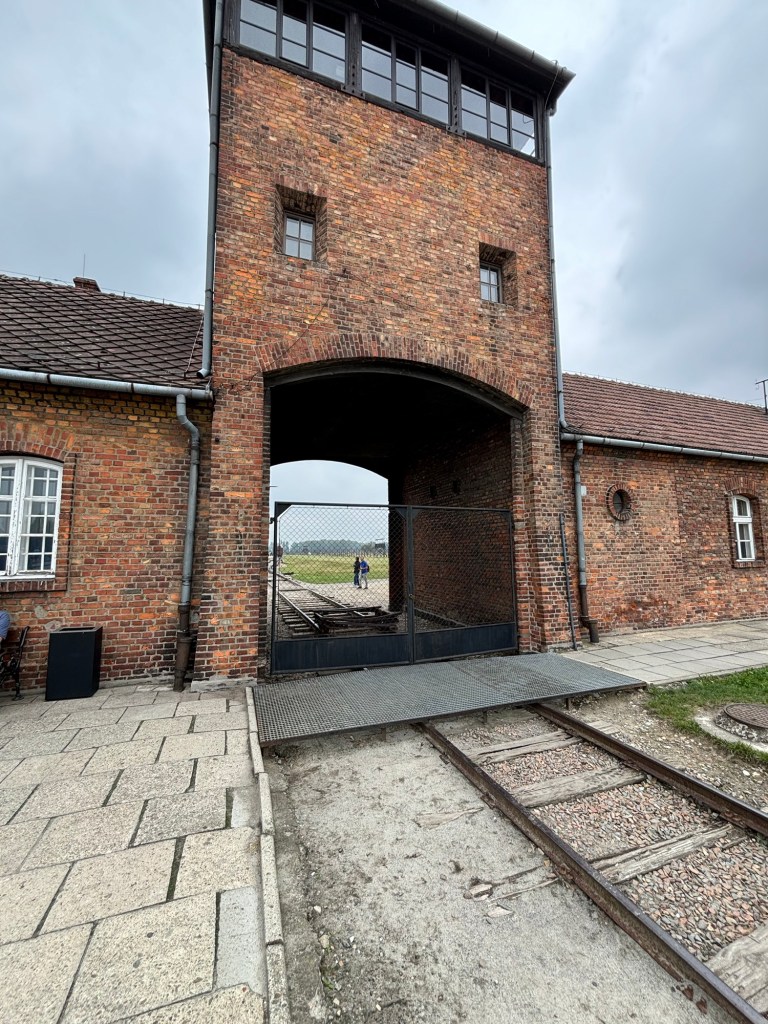
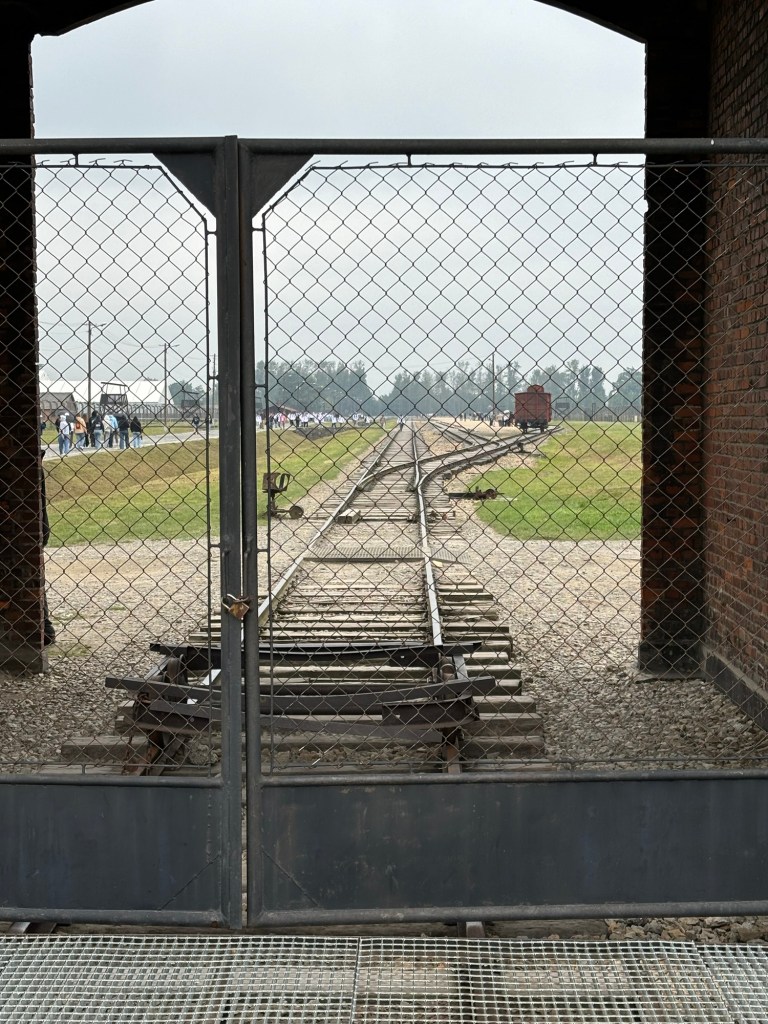
When trains came through the iconic Birkenau gate, the people would dismount along the railway. Nazi SS doctors faced the people as they were lined up parallel to the tracks. The people they waved to the doctor’s right (left side of the disembarked passengers went to barracks and LIVED, at least for a short term until they outlived their usefulness).
The people they selected to move to the doctor’s left (the right side of the disembarked) went to gas chambers! They were the women, children, young teens, the old, and the disabled. In other words, those who were not useful to the Third Reich.
There were so many deaths that the prisoners sometimes had to burn up to 2,000 corpses at a time in one pile, especially since Birkenau had four gas chambers.
Other Information
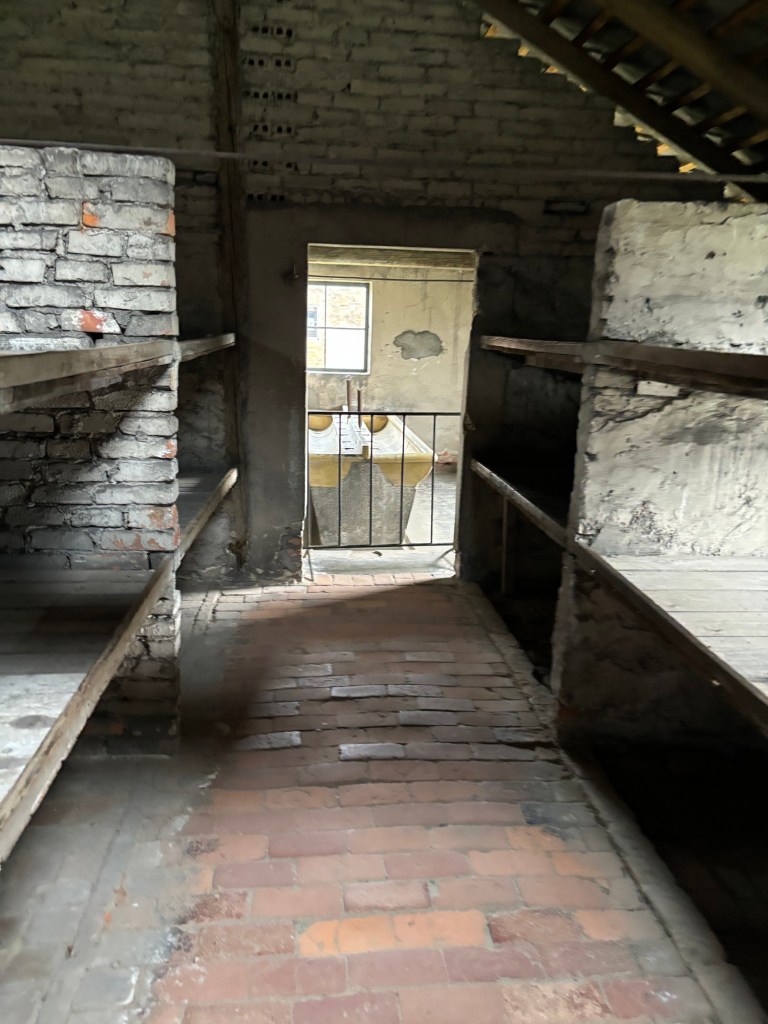
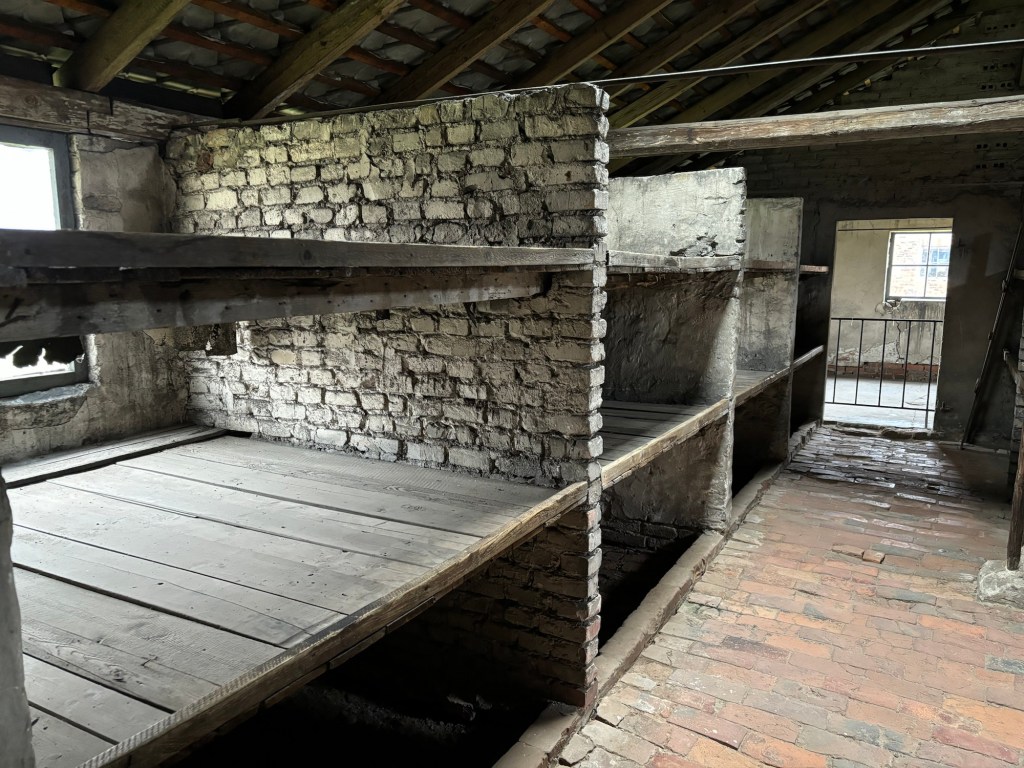
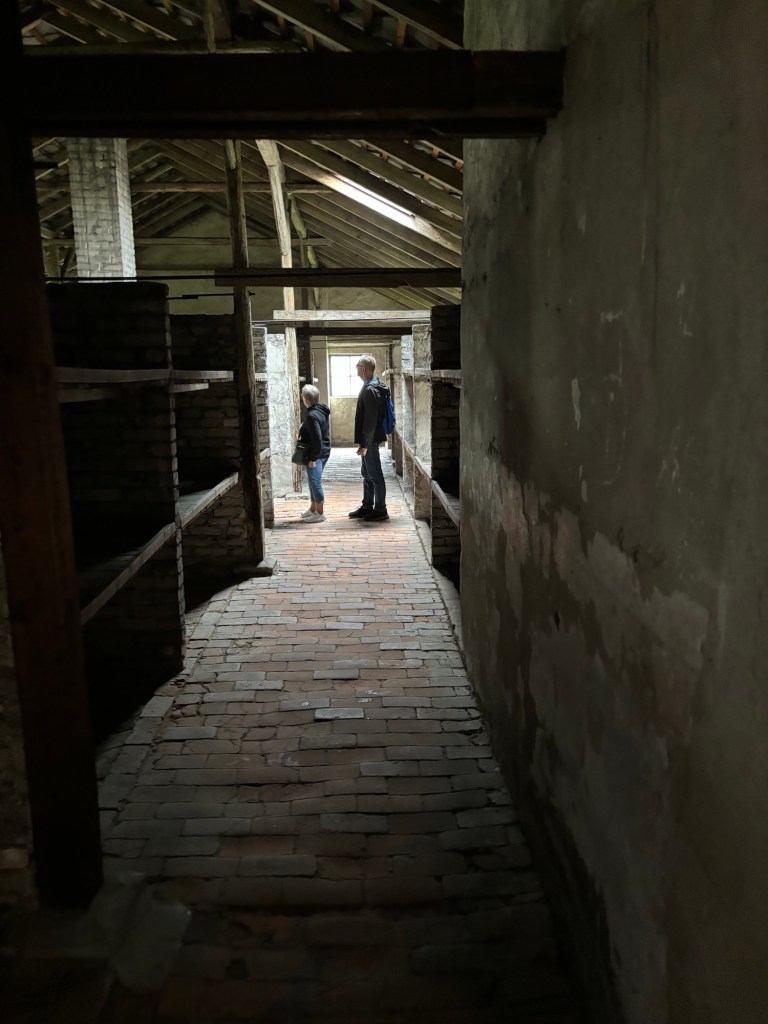
The wooden barracks were intended for 70 horses as a stable; but instead housed up to 700 humans.
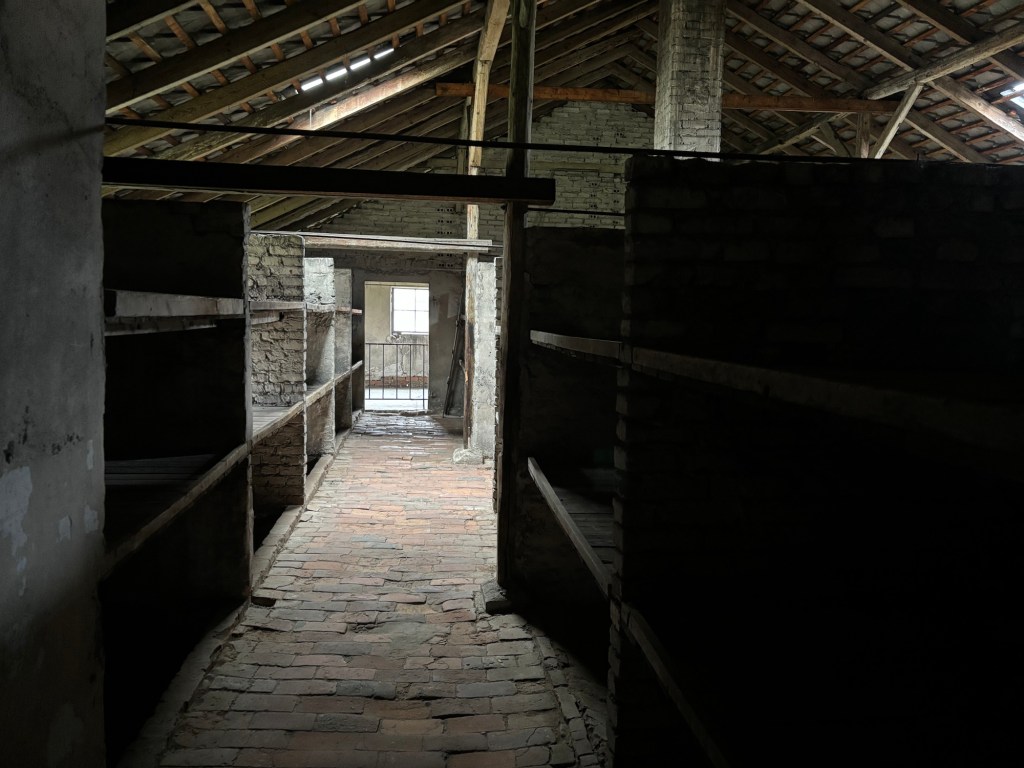
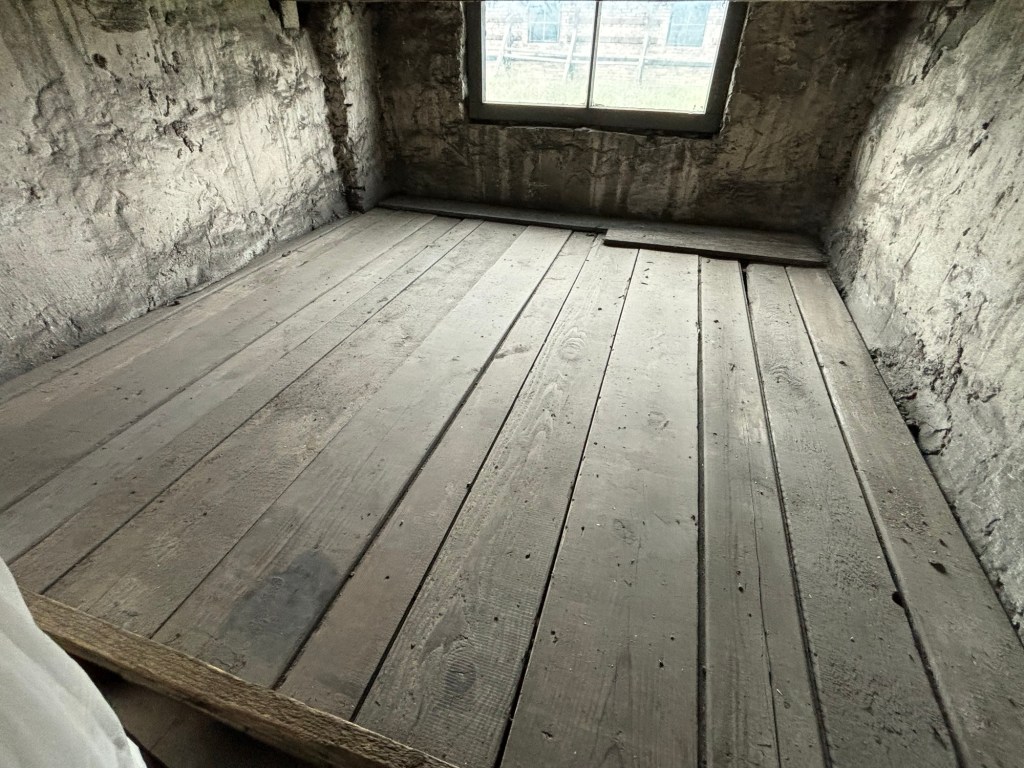
Each wood rack bed level in the brick barracks was intended for 4 people; 12 total in 3 bunks, but sometimes up to 20!
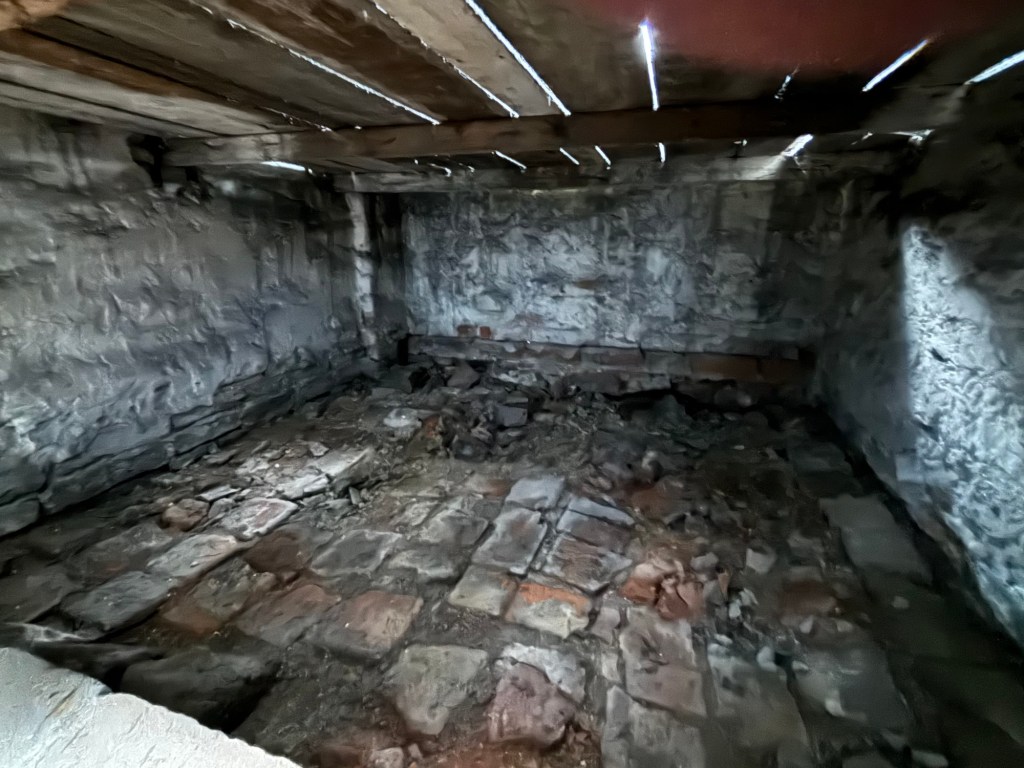
The bottom level was the worst — rocks, lice, bugs, and cold.
The temp sometimes fell down to -10 degrees Fahrenheit in winter.
Less than 0.5% of children and young teens who arrived survived to liberation.
Auschwitz was a German government institution and part of the national budget!
All the gold that was melted down was sent to the German treasury.
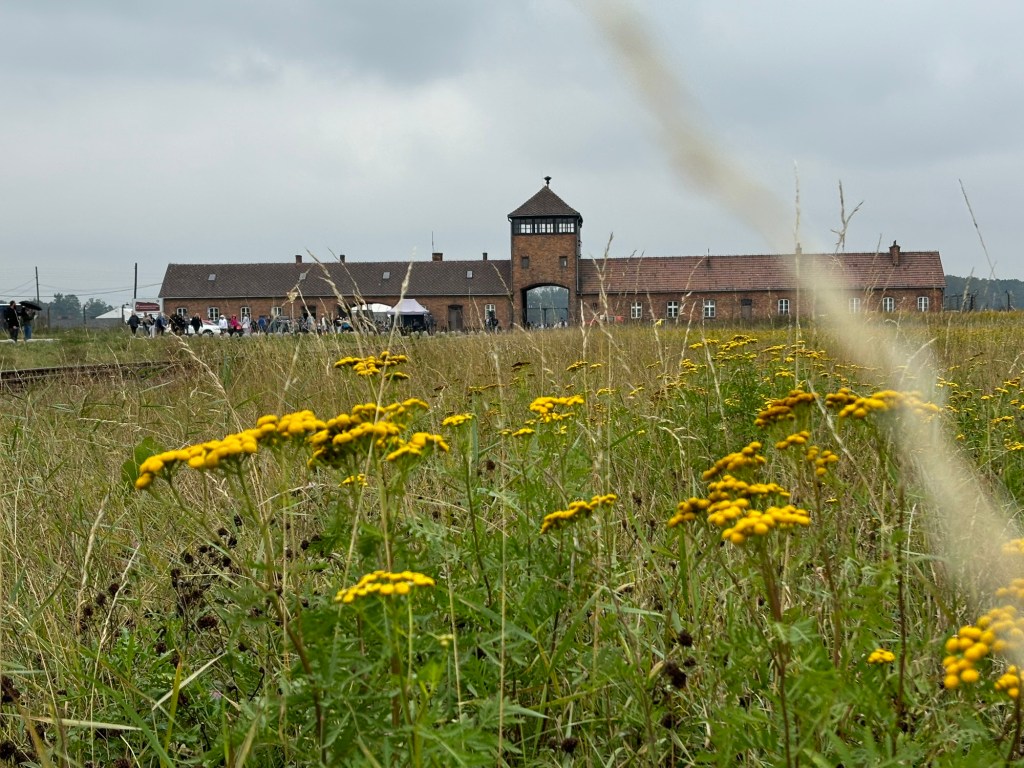
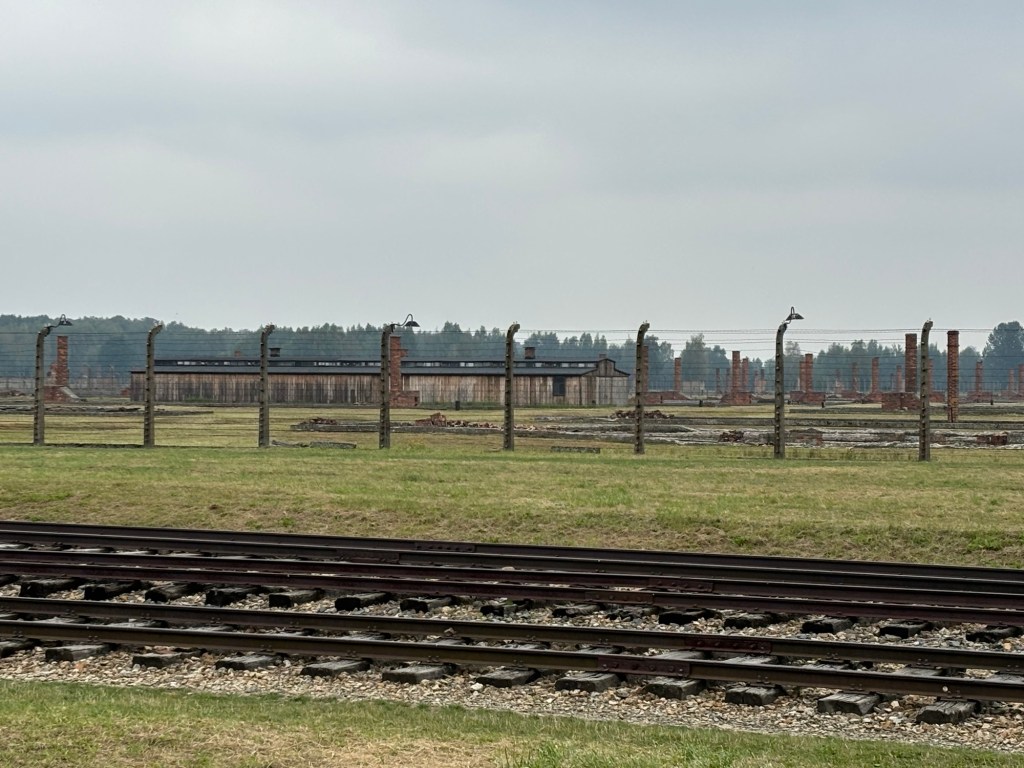
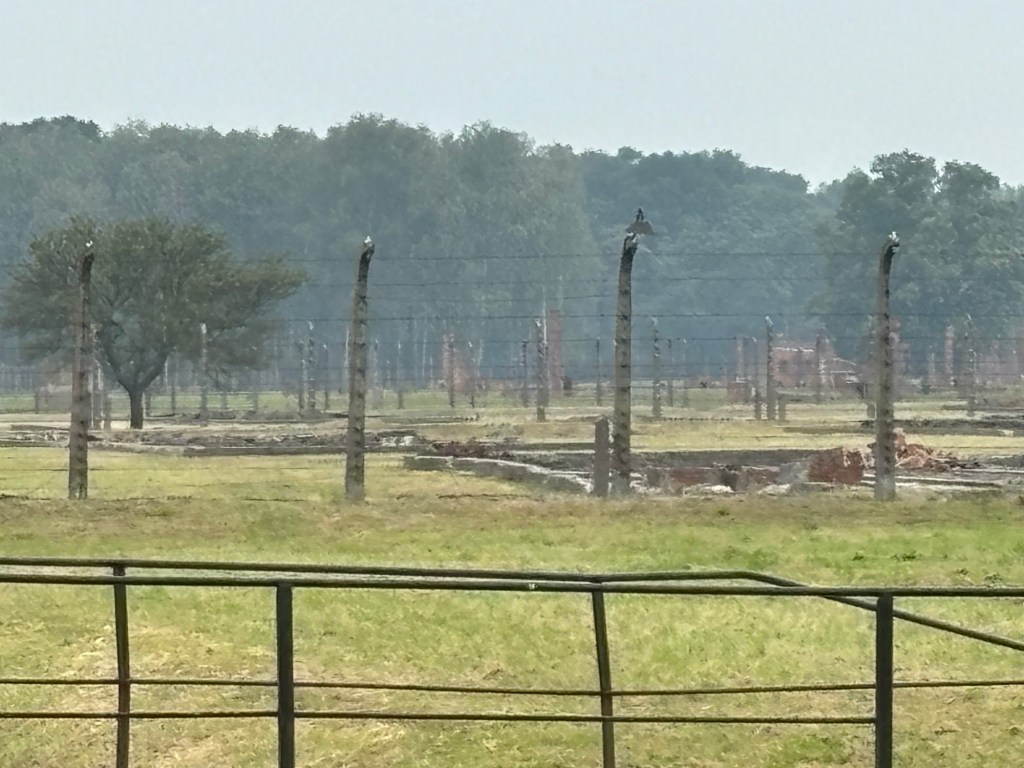
The horrible and iconic entrance to BirkenauAn aerial view of the massive, treeless campMost of the buildings are now gone, with just chimneys remainingA middle bunk for 4Bottom bunk – dark, cold, scaryMust have been a special barracks since the regular wood barracks had no windows Hundreds of former barracks sites
Final Thought
Remember, Auschwitz / Birkenau was only ONE of the Nazi camps areas! More than 1 million people died in five years at Auschwitz / Birkenau. At Treblinka, another camp in Poland, over 900,000 died in one year!
Words of wisdom, or just to amuse…?
Your growth as a conscious being is measured by the number of uncomfortable conversations you are willing to have.
Gorgeous cloudless sky this morning with temps in the low 60s heading toward 75!
I boarded an 8:00 am train to Krakow. The train route travels through Hungary, Slovakia, Czech Republic, into Poland, and then to Krakow.
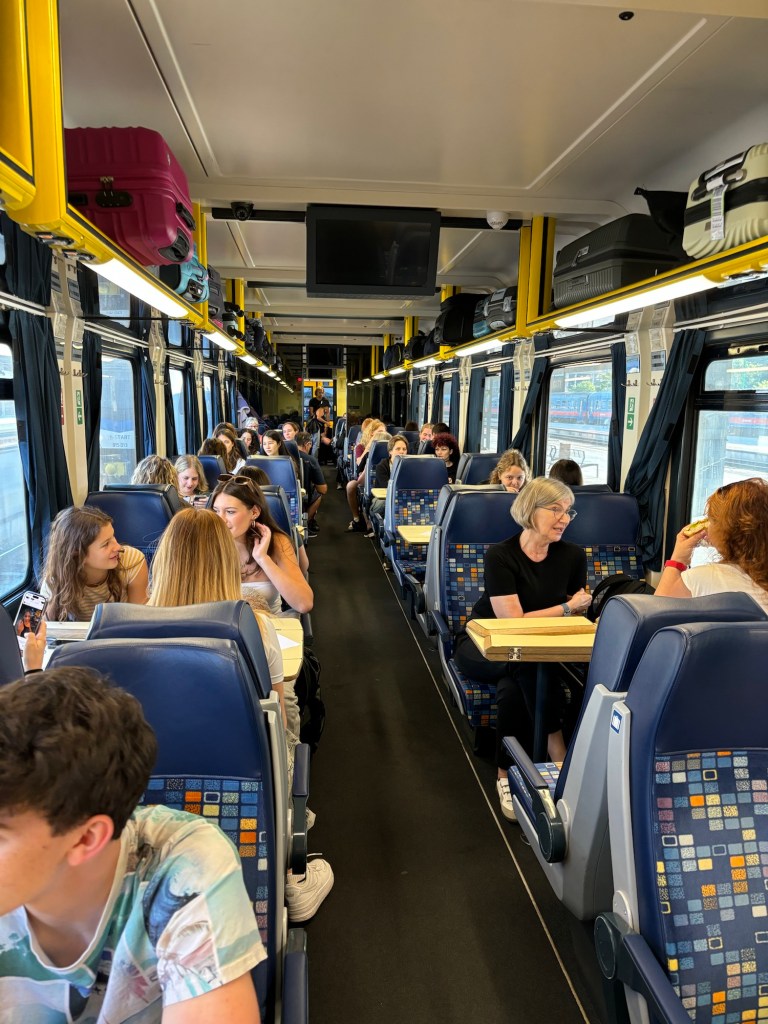
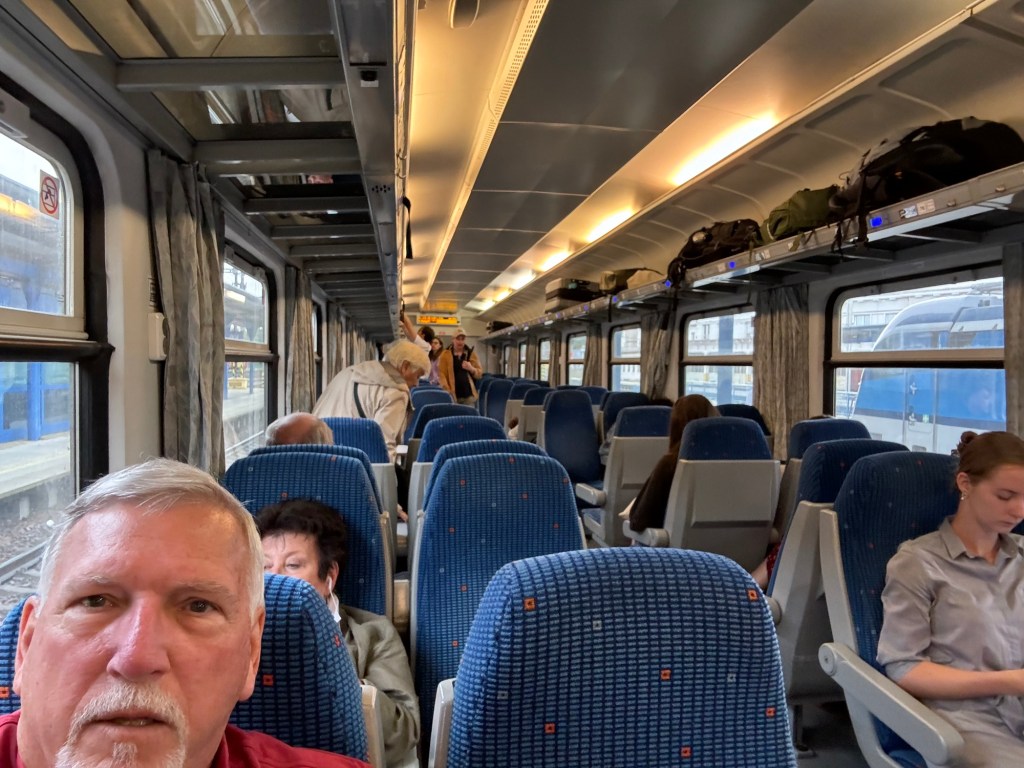
My train car soon filled up with Hungarian high school students also heading Krakow. Non-stop chatter and hijinks for 8 hours?
Loaded with teenagers and their chaperones
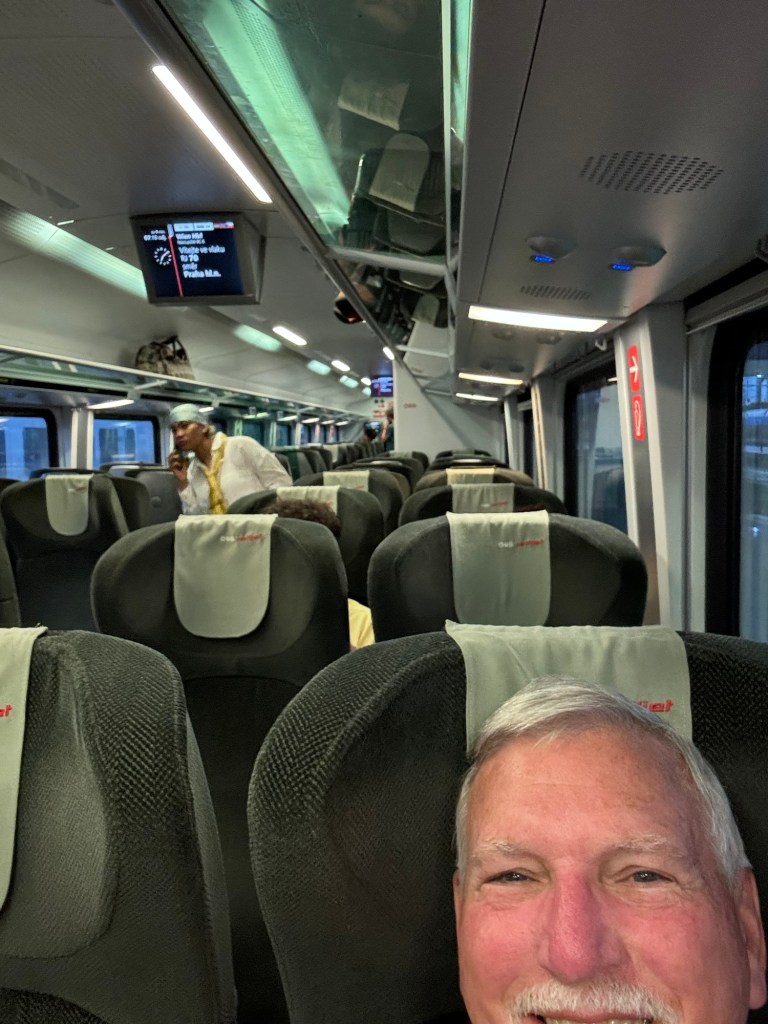
No way – the next car behind was almost empty. So I moved s d sat in peaceful bliss while my previous car continued to buzz.
So not crowded!
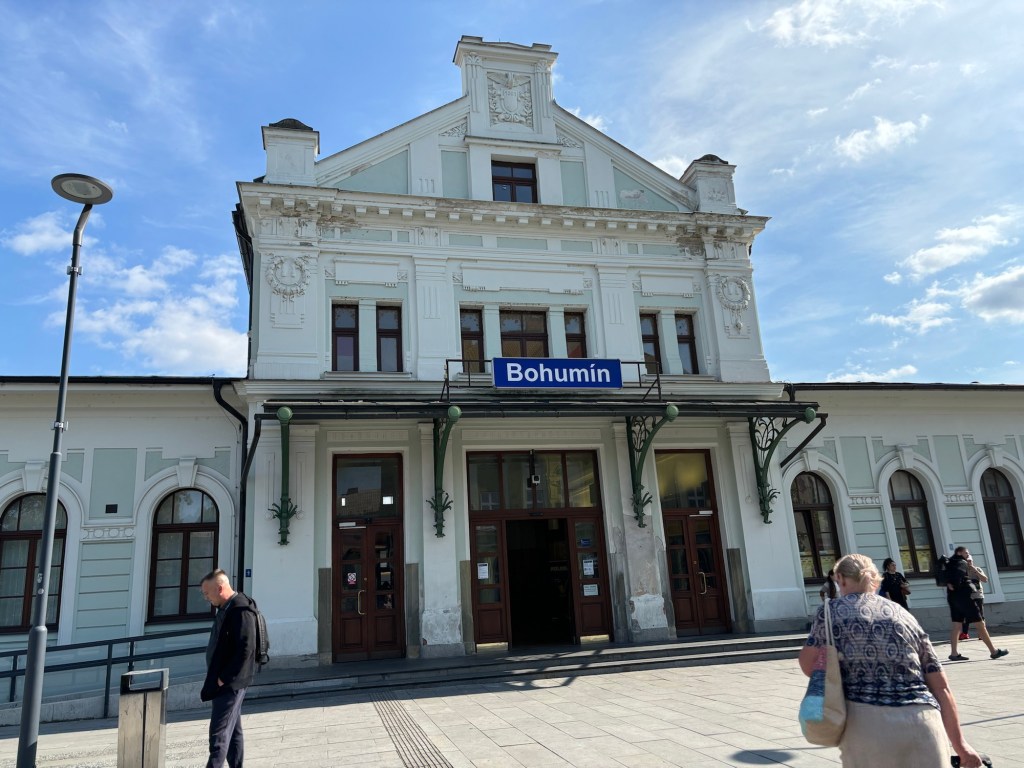
Then I unexpectedly had to get off to change trains in a little Czech town, Bohumin. Supposed to leave in 30 minutes, but now that train was delayed for 90 minutes. AND come to find out…the lady who booked my train seat a few days ago failed to book a seat on this second train (she said my train would go straight to Krakow). NOPE! Have to change trains AND the second train was sold out for my 2nd Class Eurail Pass!
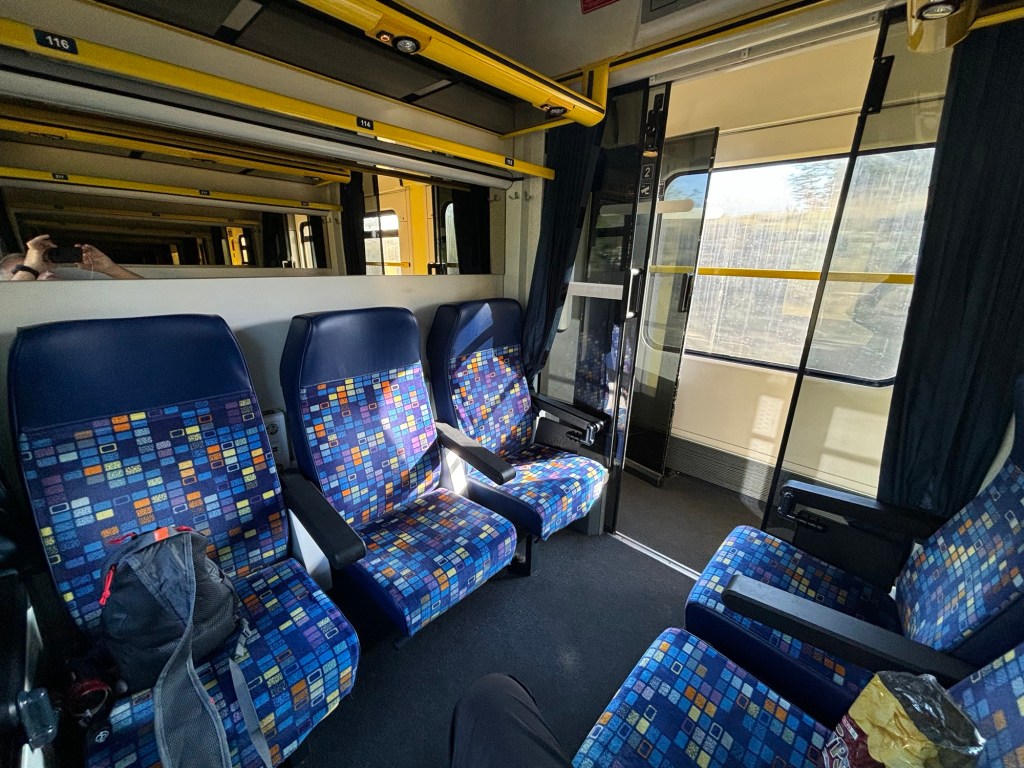
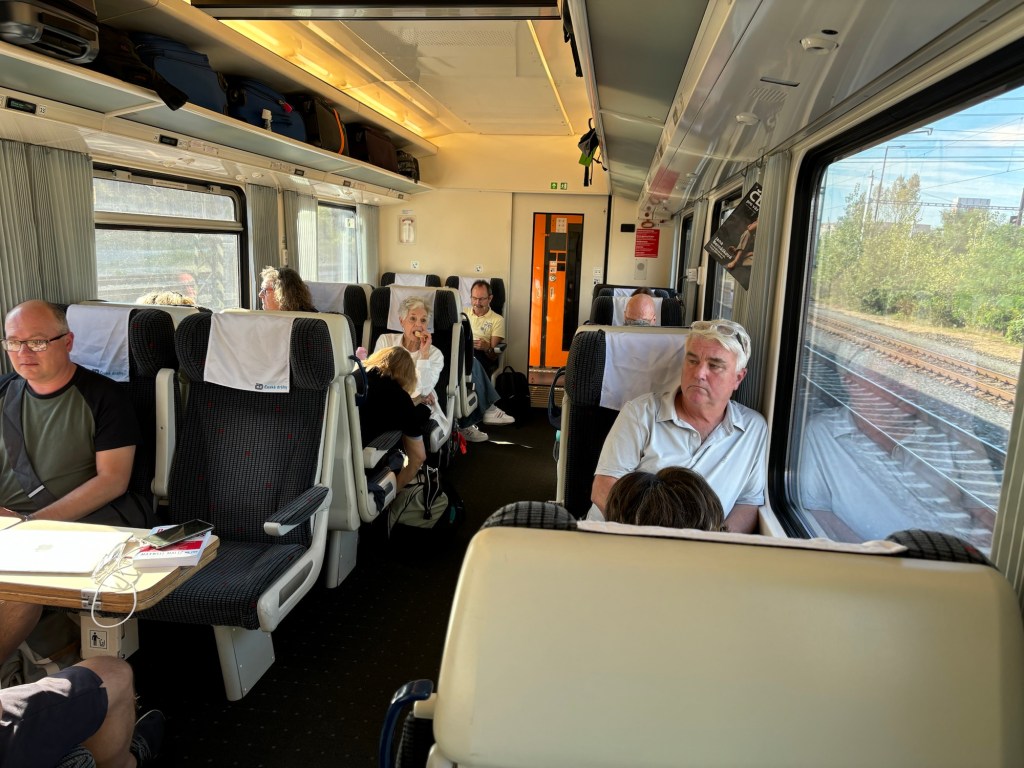
Fortunately, there were still first class seats available so I quickly upgraded (only $3 since I have a pass) and got to experience life in a first class train car for the rest of the ride to Krakow! Woo Hoo!
First Class!
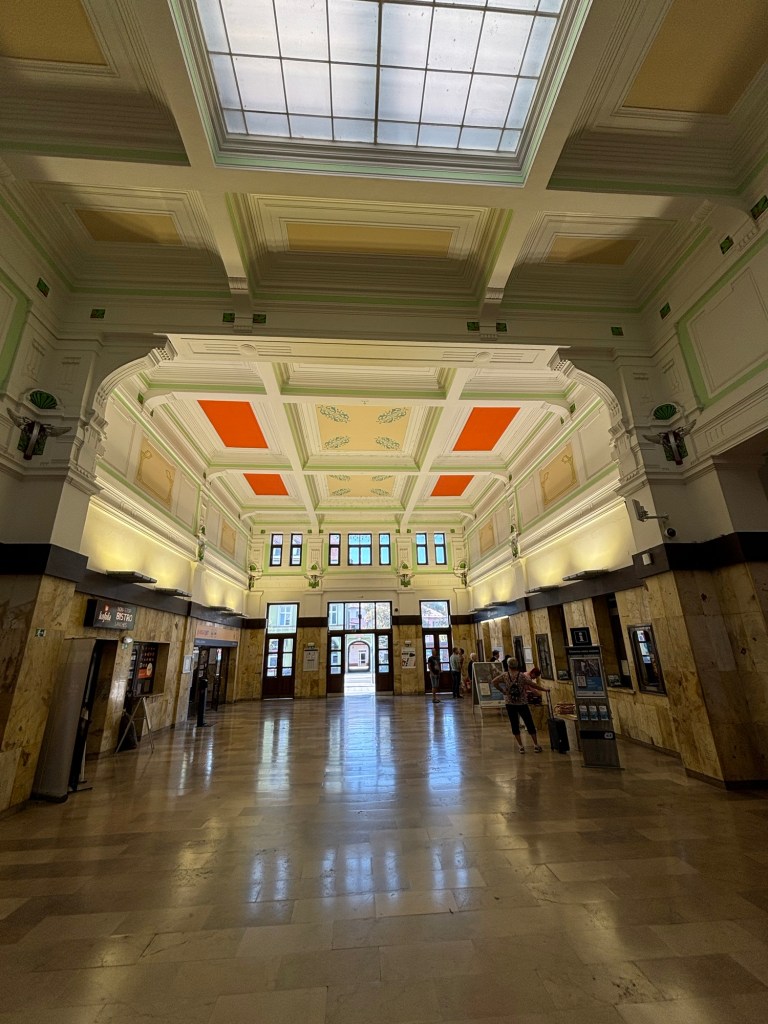
Anyway, Bohumin was very picturesque with a nice train station, too, and much larger than I would expect for such a small town. Maybe it’s a regional station for many small surrounding towns.
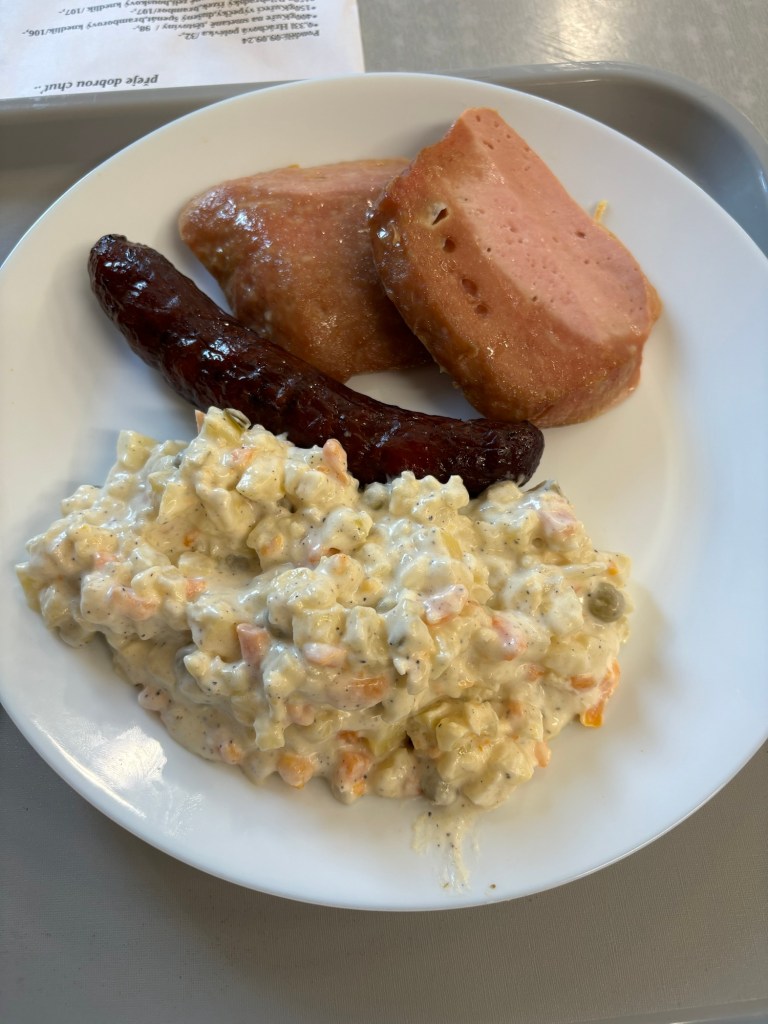
Since I had a long delay, I walked to a small cafeteria in town for lunch. And it cost less than $4.00!
Ham, sausage, and potato salad – excellent!
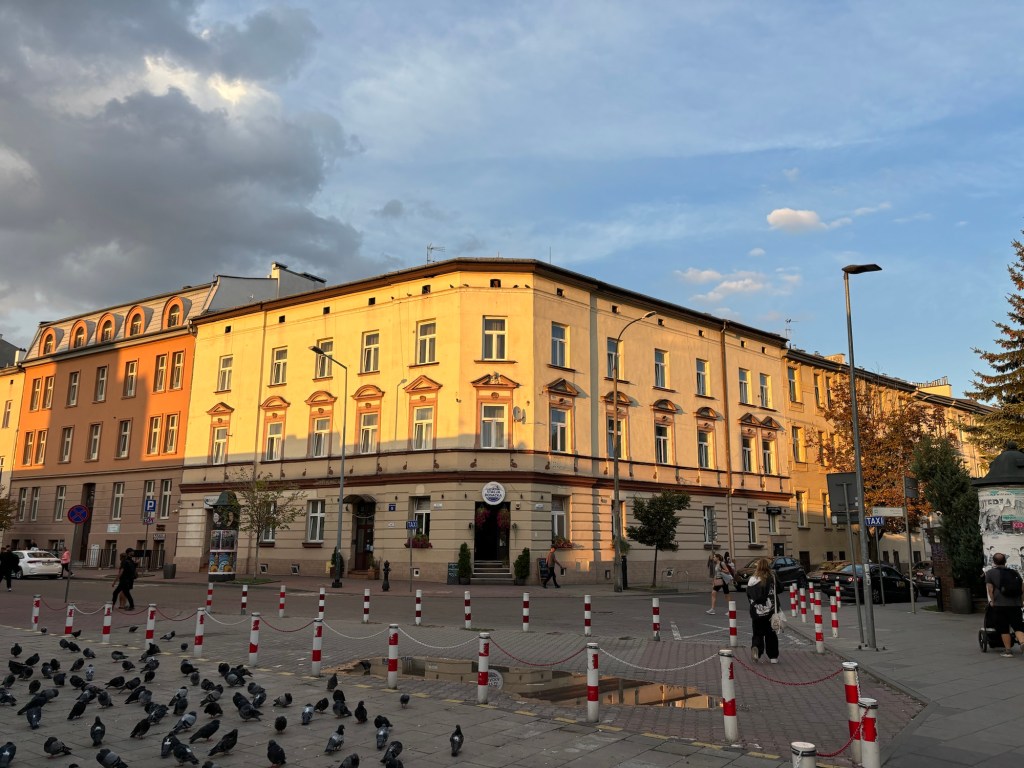
After I arrived in Krakow and exited the station, I walked straight down the street for a quarter mile and…voila! My apartment building! That’s convenient.
After I dumped my stuff, I found a scooter and headed into Old Town to see where I pick up my tour at 7:00 am tomorrow morning. I wanted to be sure tonight so I don’t have to rush in the early morning figuring out where to go. Easy 15 minute ride.
And what a wonderfully glorious early fall evening!From what I’ve seen so far, Krakow is spectacular!
When I got back, I picked up some essentials for tonight and tomorrow at the tiny market a half block from my apartment.
Poland is a pretty good value.
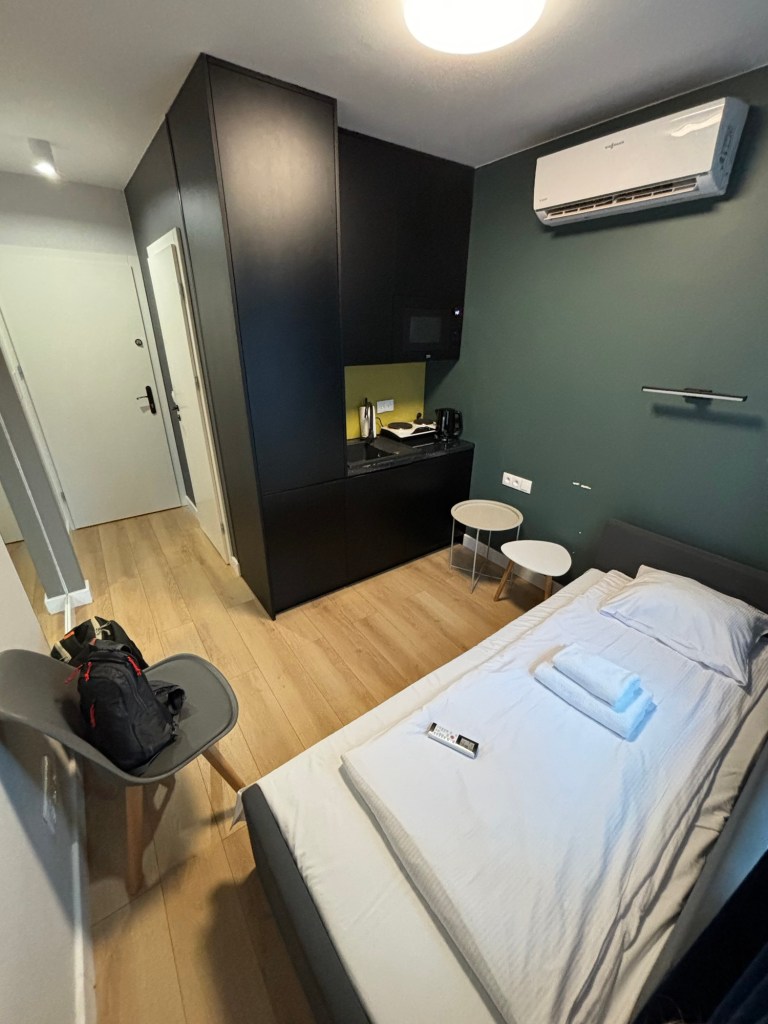
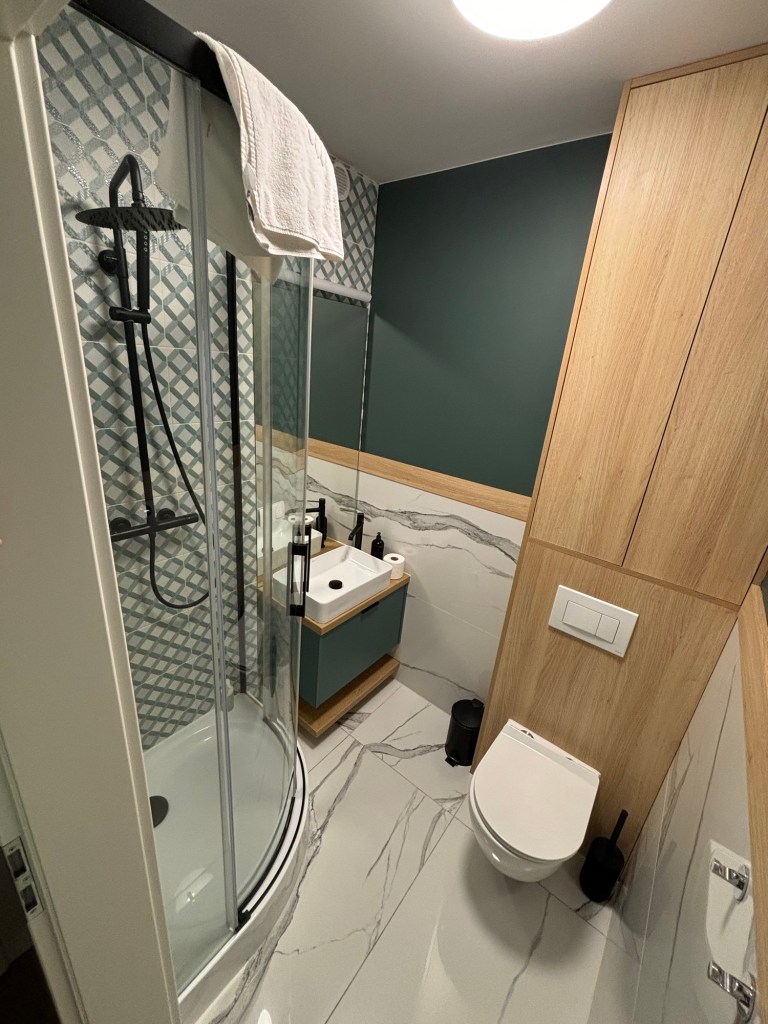
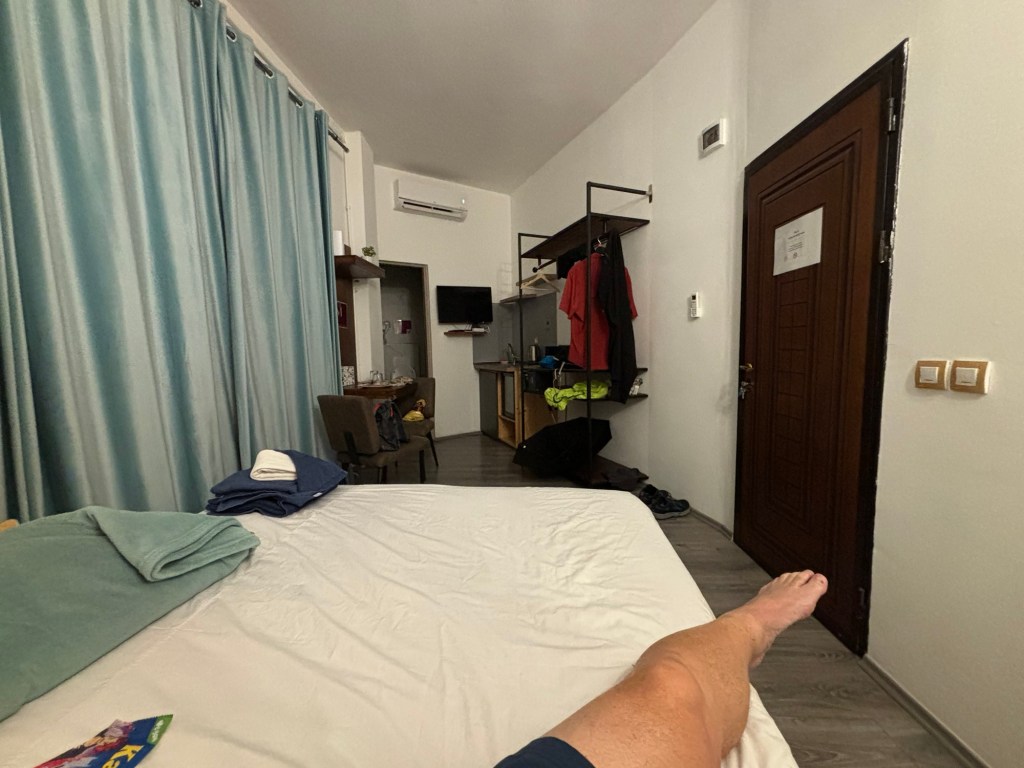
While my private “apartment” is tiny, it is new, immaculate, has a kitchen, and a spotless bathroom. Best on the trip, so far. And it’s just over $100 for three nights. Find that in America! The only minor downside is the 76 steps going up to my top floor unit. NOT complaining , just an observation.
And for less than $18, here’s what I got at the tiny 7-11-style market (where prices are generally higher):
Coke Zero – 4 bottles
Foot long sub sandwich
Strawberry yogurt w/granola
Bananas – 3
Pack of cookies
Can of peanuts
Gummy bears – 2 pkg
After a long day riding trains, I decided that eating in was in order – so a sub sandwich and chips in the room. Good enough!
And tomorrow I’ll be up early to join a 7:00 am tour to Auschwitz / Birkenau.
Words of wisdom, or just to amuse…?
It’s thrilling to be extremely polite to rude strangers.
What a good nights sleep! My mini-apartment has air conditioning! And no one else snoring, or coming in at all hours, or turning lights on in the middle of the night. So it was a peaceful night!
And it’s much cooler today – in the low 60s this morning under partly sunny skies. Makes everything better! So Budapest is growing on me. In the partial sunshine of this morning, and zooming around on a scooter, the city is looking up! Some beautiful buildings, decent bike paths, and the lovely Danube River all combine to make Budapest more of what I expected. Still not Vienna or Prague, but looking up.
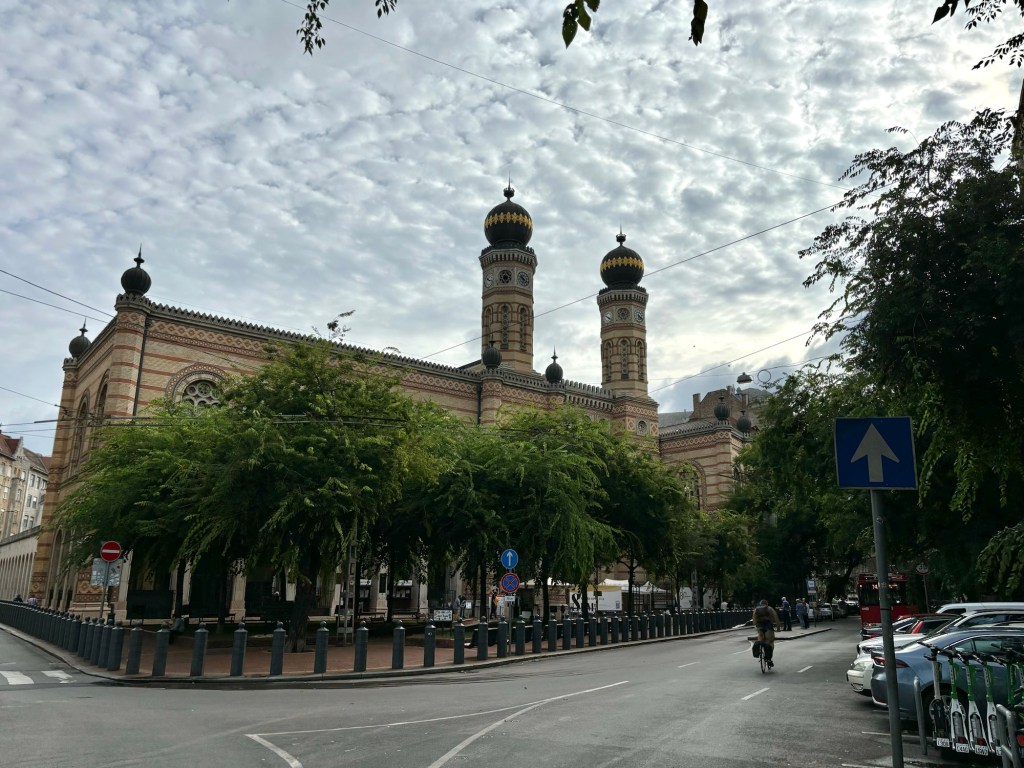
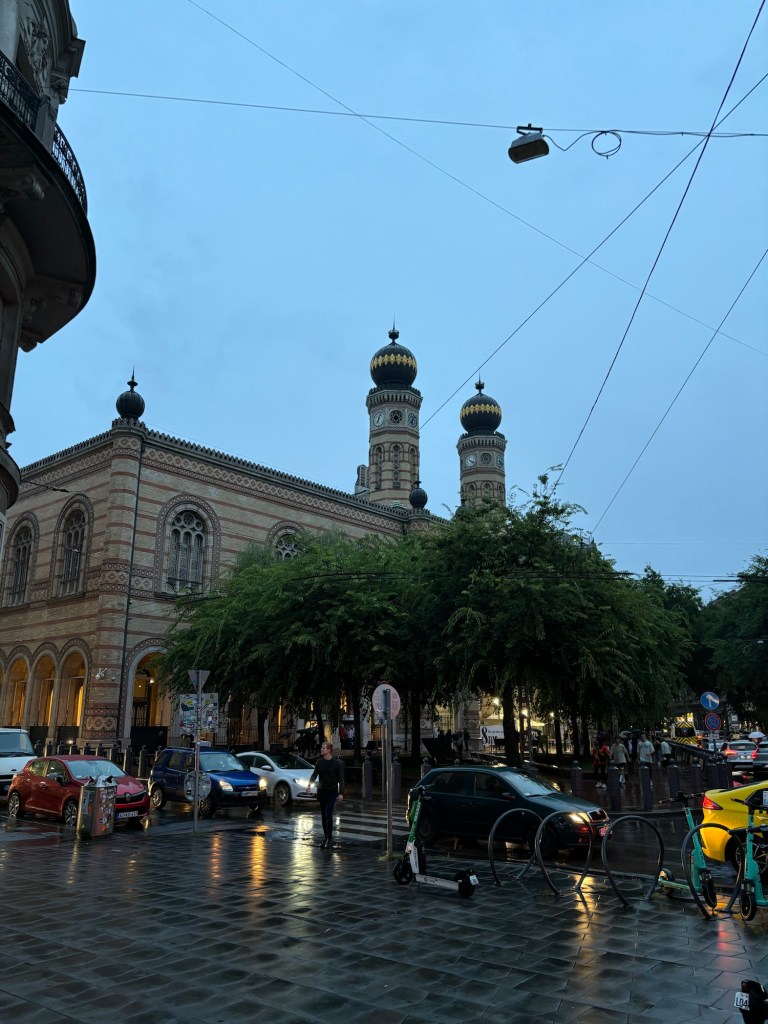
The synagogue next to my apartment building
Budapest, Hungary’s capital, is bisected by the River Danube. Its 19th-century Chain Bridge connects the hilly Buda district on the west side with the flat Pest area on the east. In 1849, Buda and Pest consolidated to became Budapest.
I took another free walking tour in the morning. Our Guide, Zoli, was interesting — loud (that’s good and bad), funny, flippant, colorful, and swore like a sailor the whole time! The kind of guy you can only tolerate in small doses – and a 2 1/2 hour walking tour is not a tolerable small dose! While the tour and sights were good, Zoli is officially off my list of top tour guys. Saved me some money on a larger tip.
Hungarian is a very difficult language that is dissimilar from almost all others. Hungarian has 14 vowels and 25 consonants! I tried just to keep up with: hello, goodbye, please, and thank you.
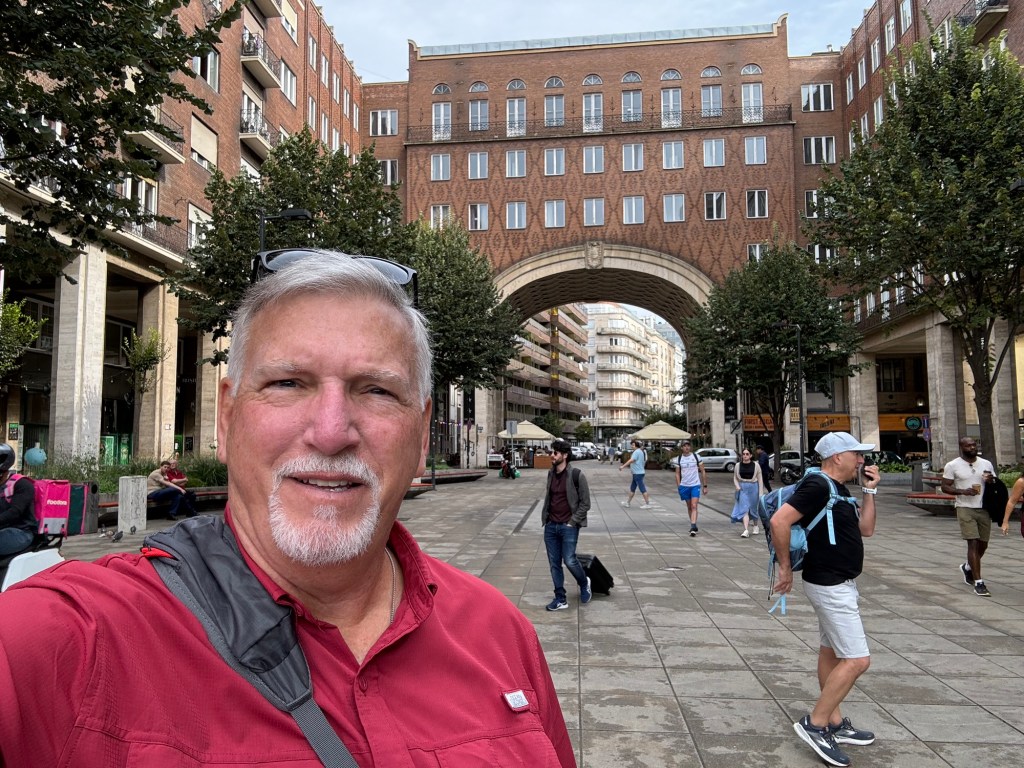
We started in a square in the old Jewish Quarter and headed out.
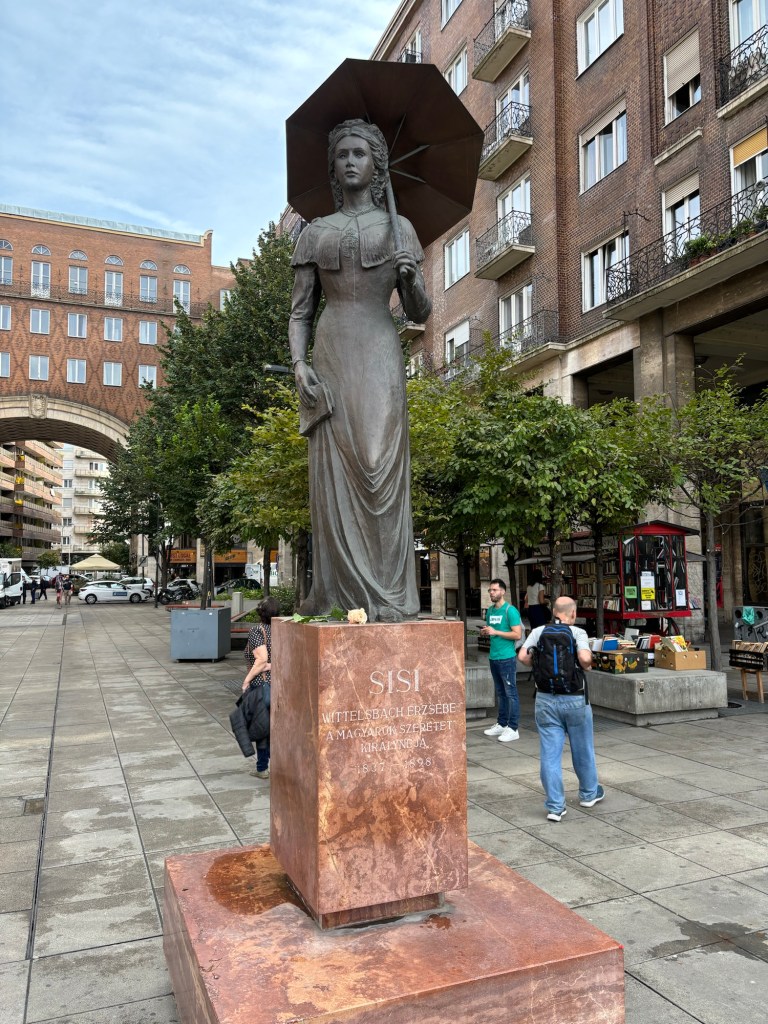
ELIZABETH WITTELSBACH – THE HUNGARIANS LOVE YOUR QUEEN
Statue of Empress Elisabeth of Austria, Member of the Hungarian House of Wittelsbach. Elisabeth, nicknamed Sisi or Sissi, was Empress of Austria and Queen of Hungary from her marriage to Emperor Franz Joseph I on 24 April 1854 until her assassination in 1898. Famed for her beauty, she was a celebrity of her day who set fashion trends and loved horse riding and travelling.
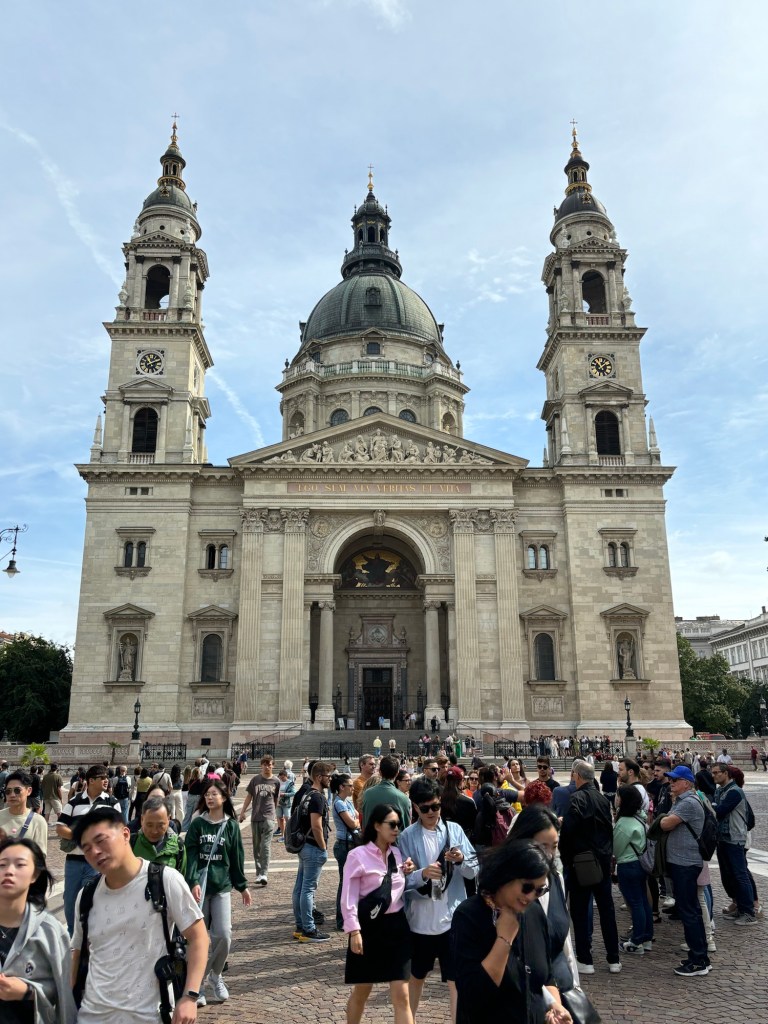
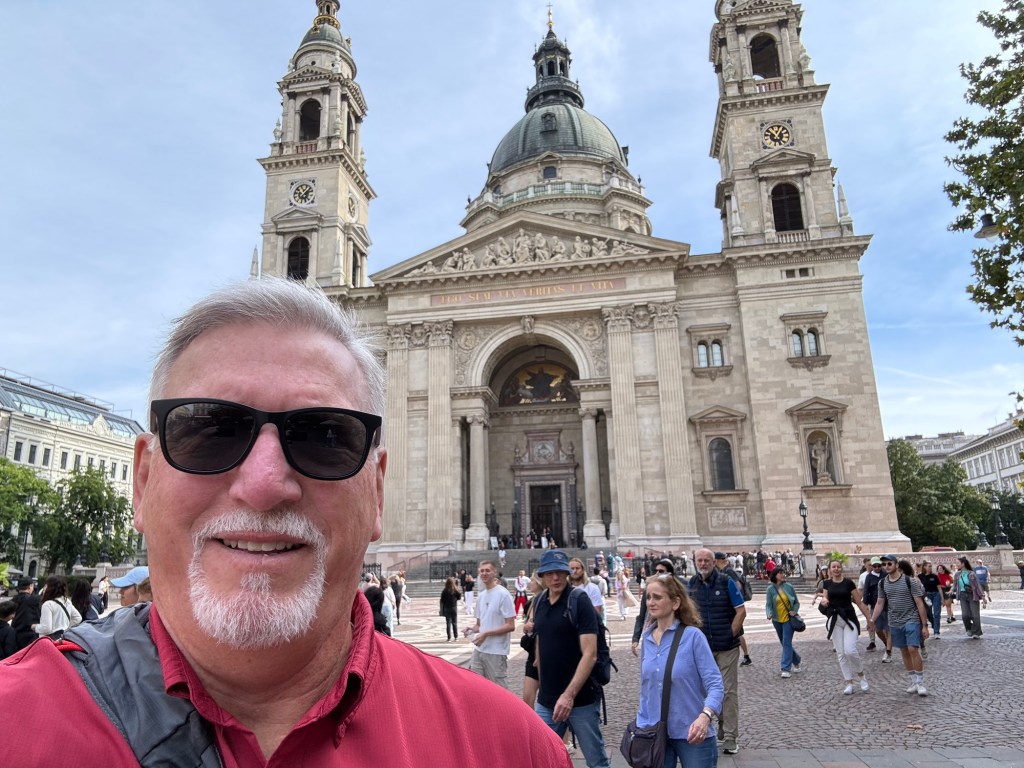
St. Stephen’s Basilica. (in Hungarian: Szent István Bazilika)Not Saint Stephen
St. Stephen’s was completed in 1905 after 54 years of construction. It is named in honor of Stephen, the first King of Hungary, whose right hand is housed in the reliquary in the Basilica.
Our tour guide, Zoli, in plaid
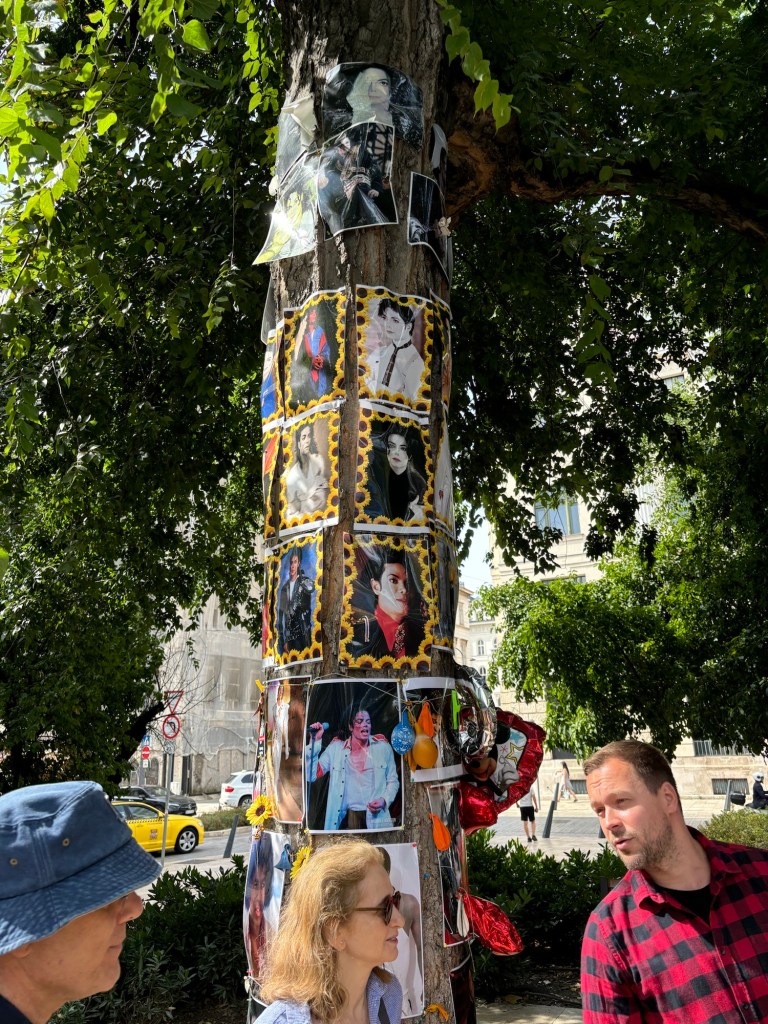
Michael Jackson came to Budapest in 1994 and stayed at the hotel across from the memory tree above. After he died in 2009, fans created this memorial with photos and memorabilia.
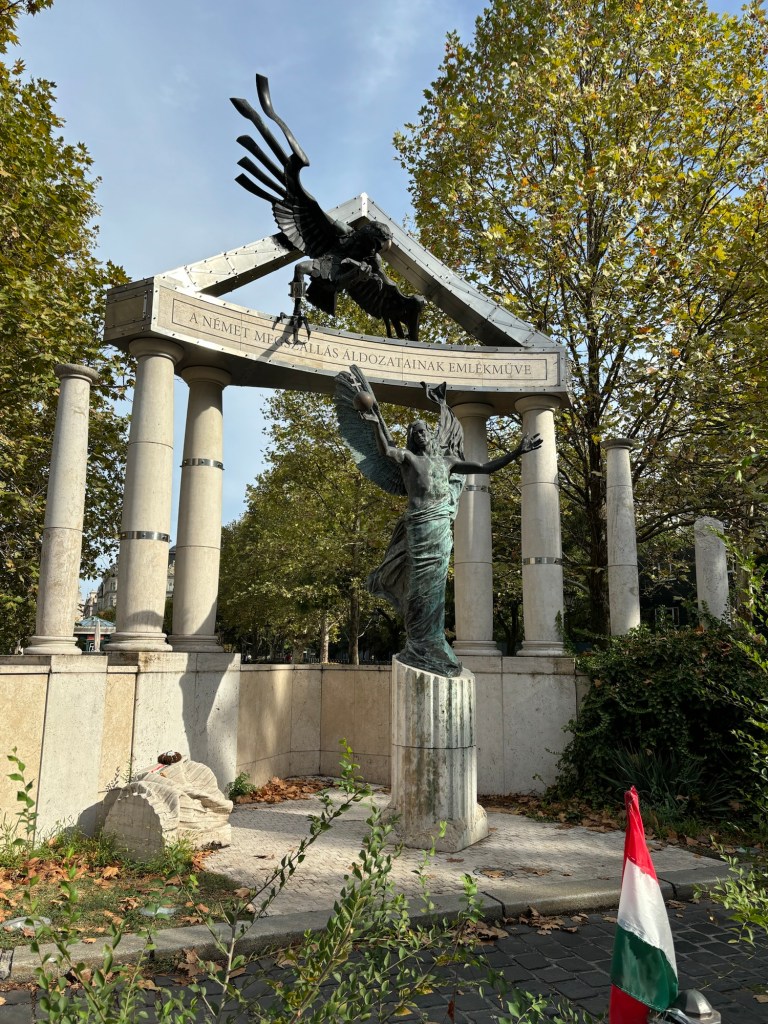
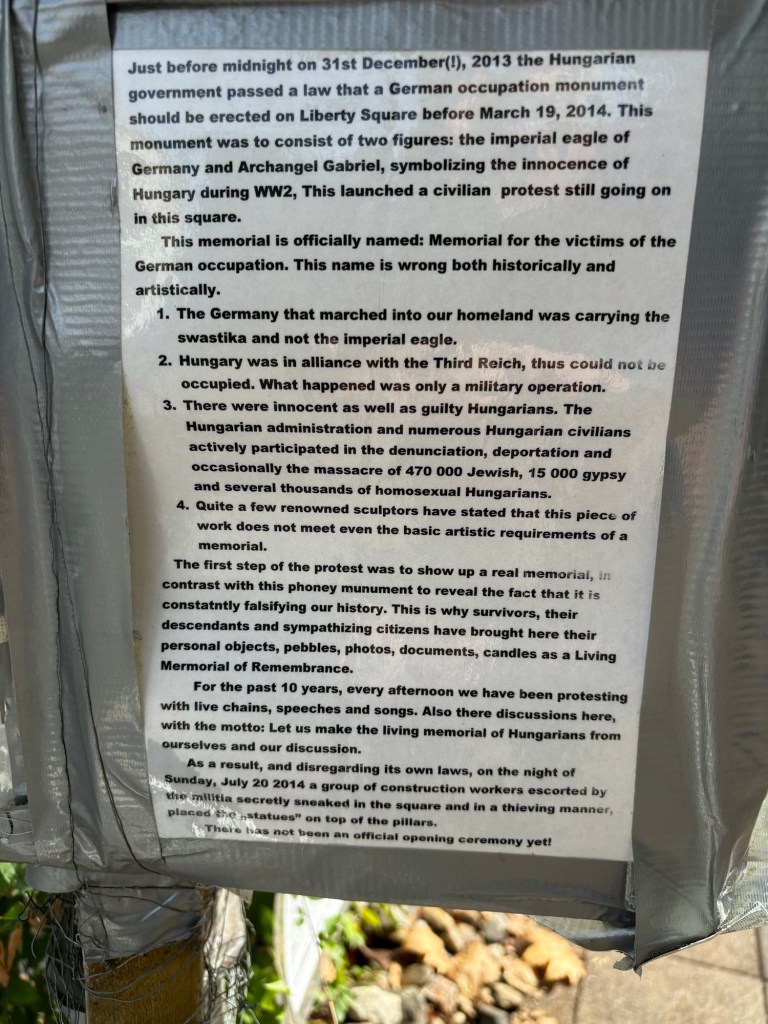
In 2014, the Hungarian government built the below “Memorial for Victims of the German Occupation.” It was meant to commemorate the Nazi takeover of Hungary that occurred on March 19, 1944. The memorial shows the archangel Gabriel, representing Hungary, being attacked by a Germanic eagle with the year 1944 on its ankle, set against a backdrop of broken columns.
Memorial for Victims of the German Occupation
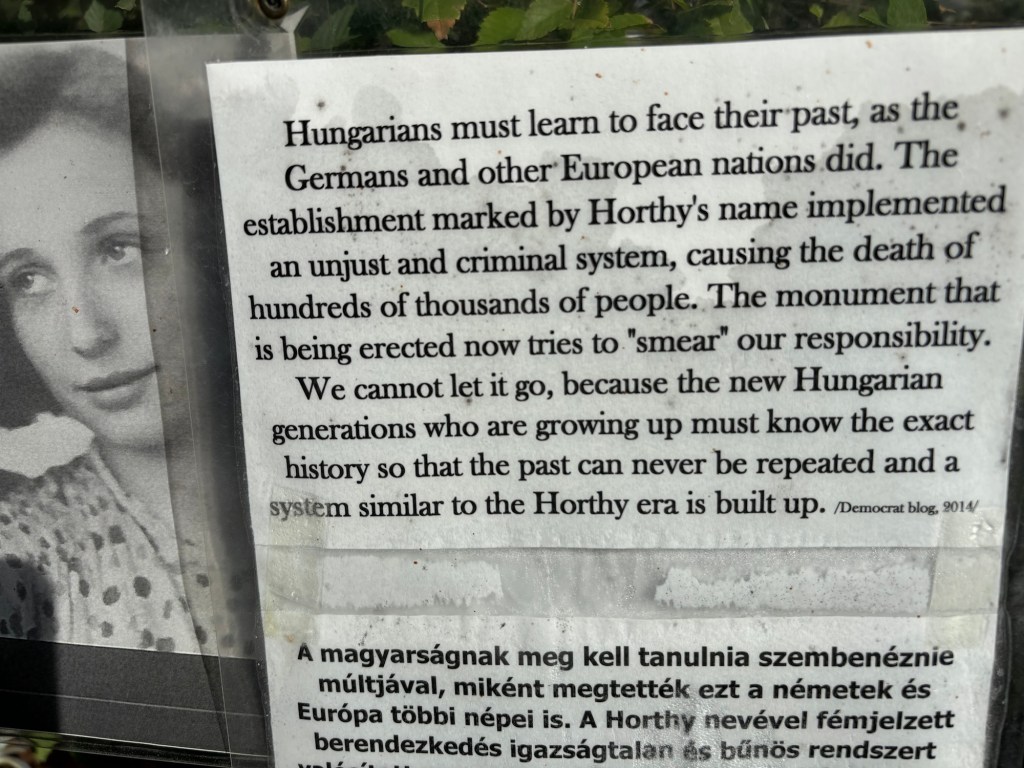
However, the Hungarian government at the time was complicit with the Nazis and the monument was widely criticized for downplaying the Hungarian role.
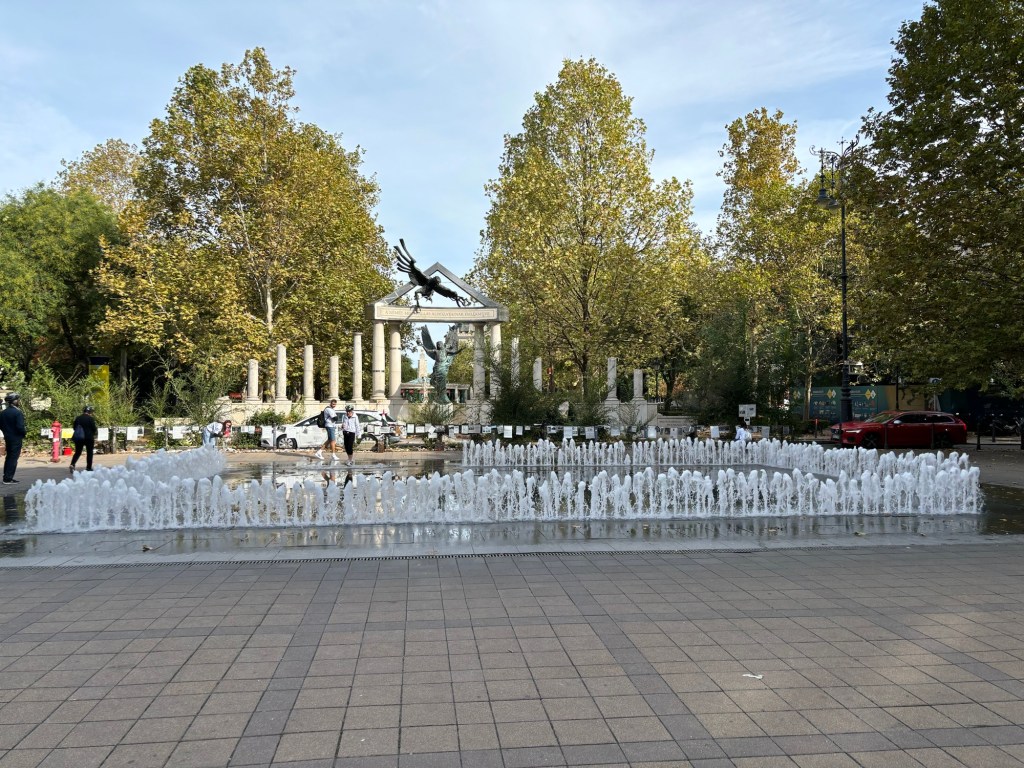
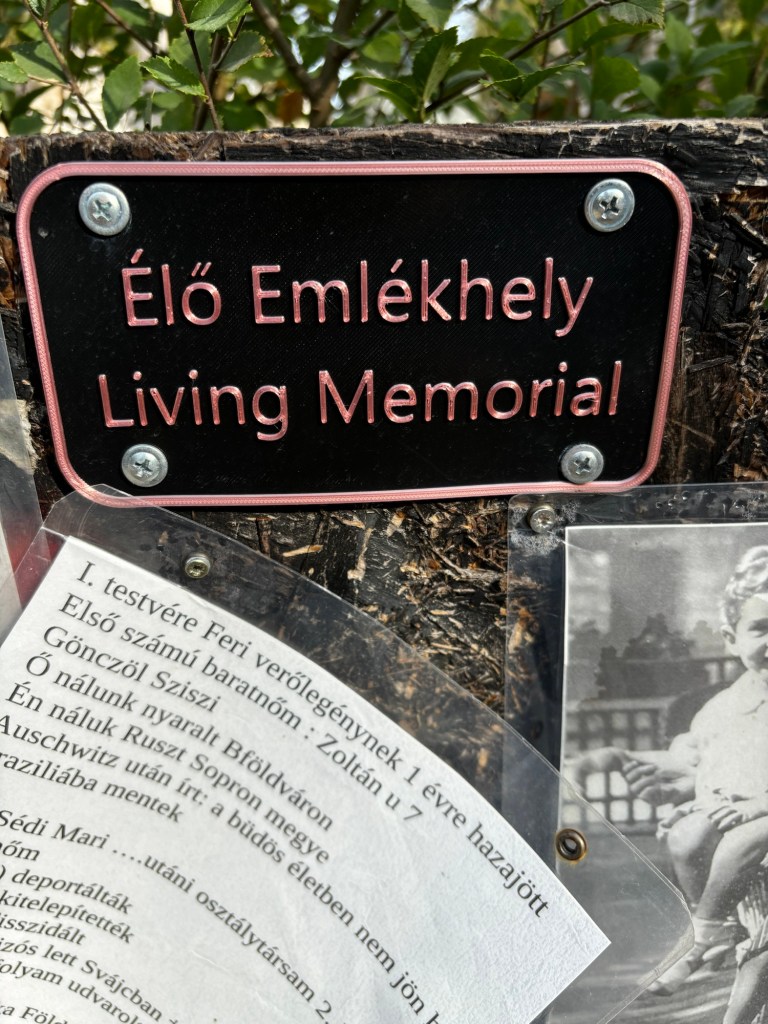
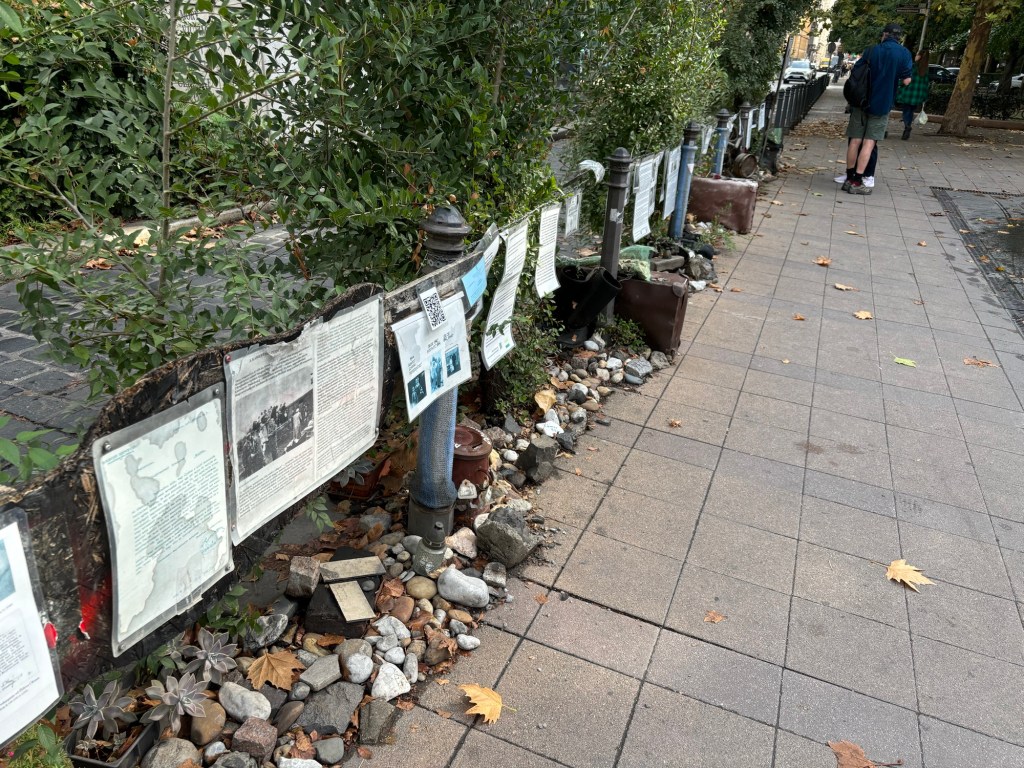
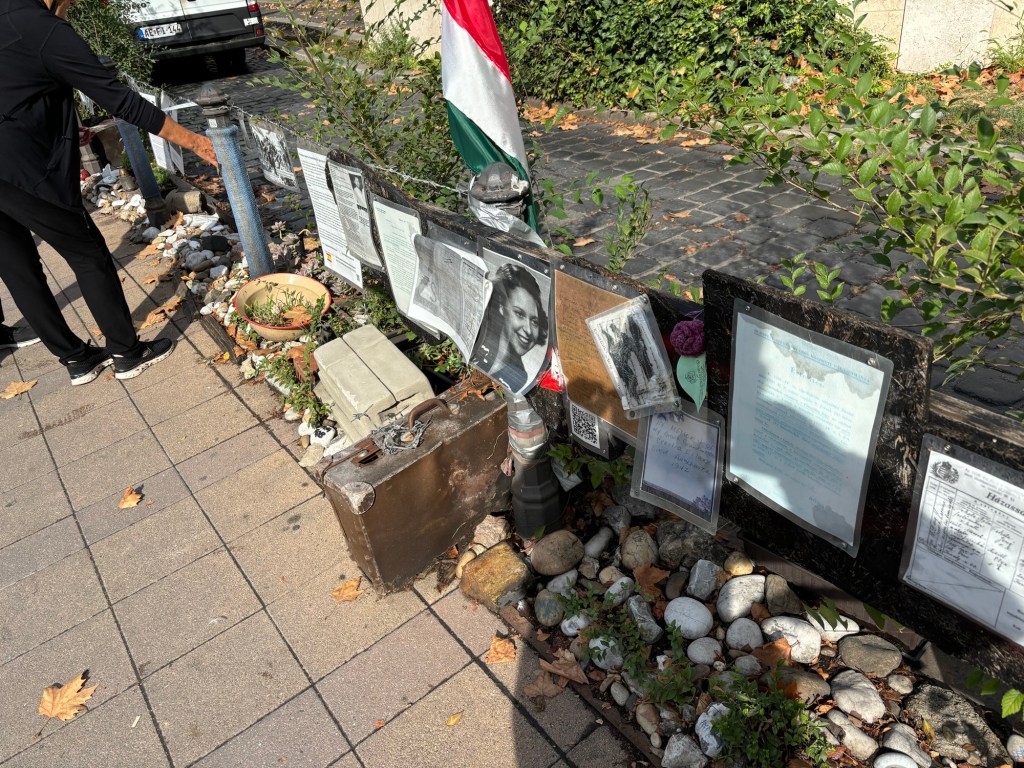
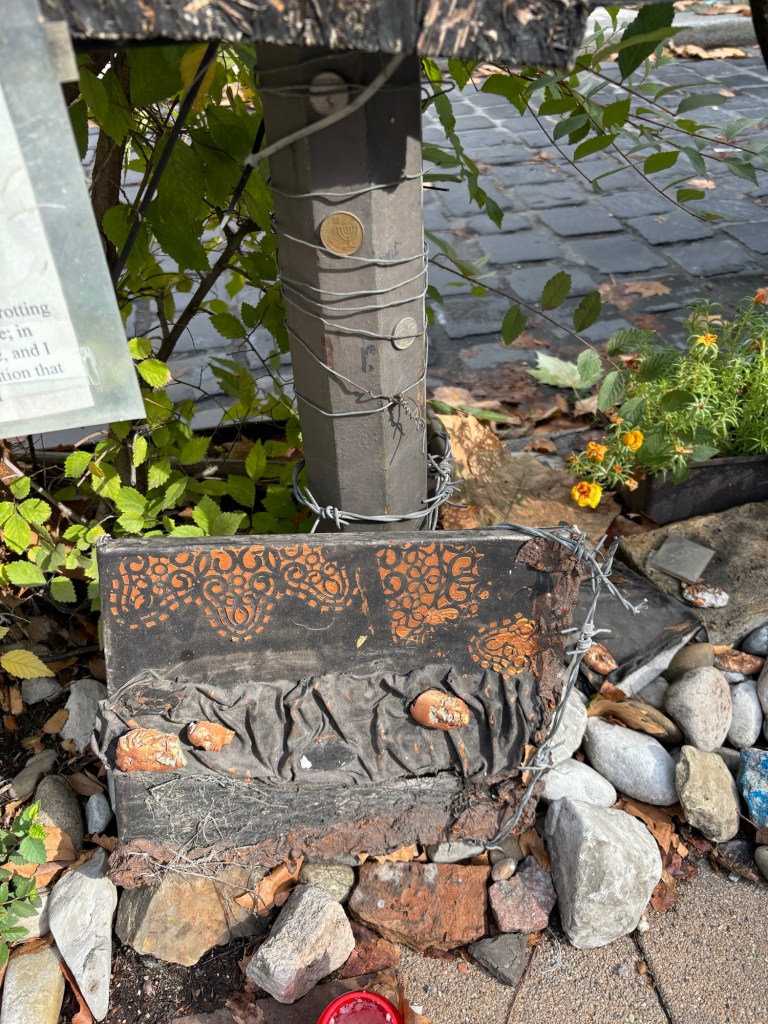
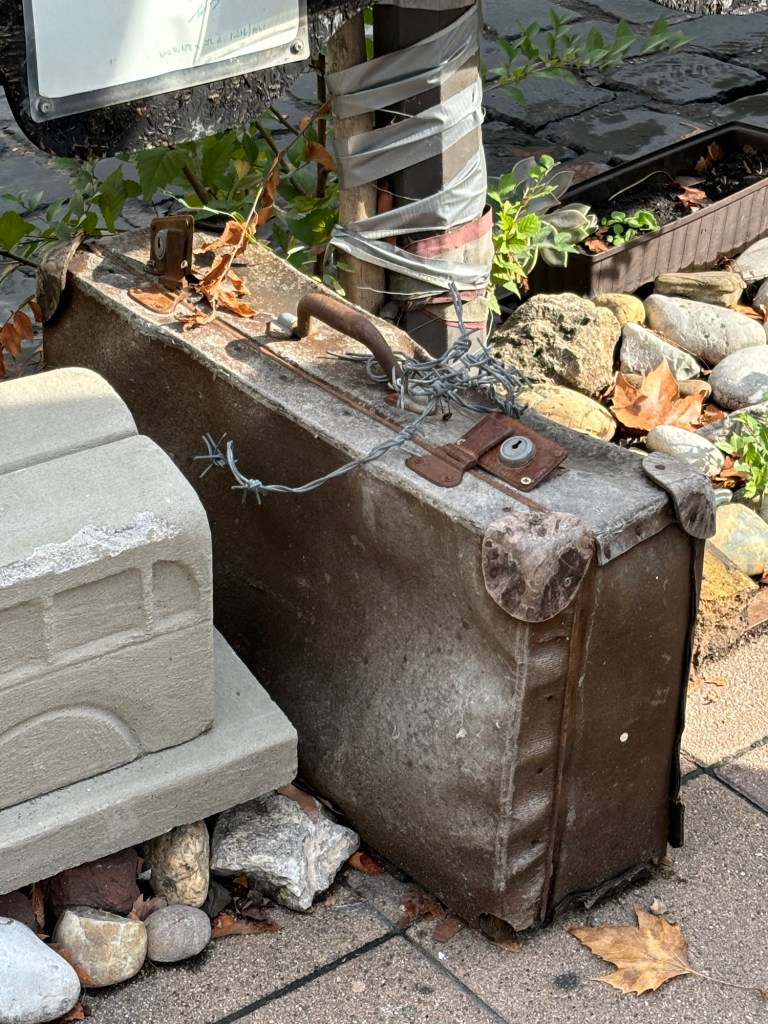
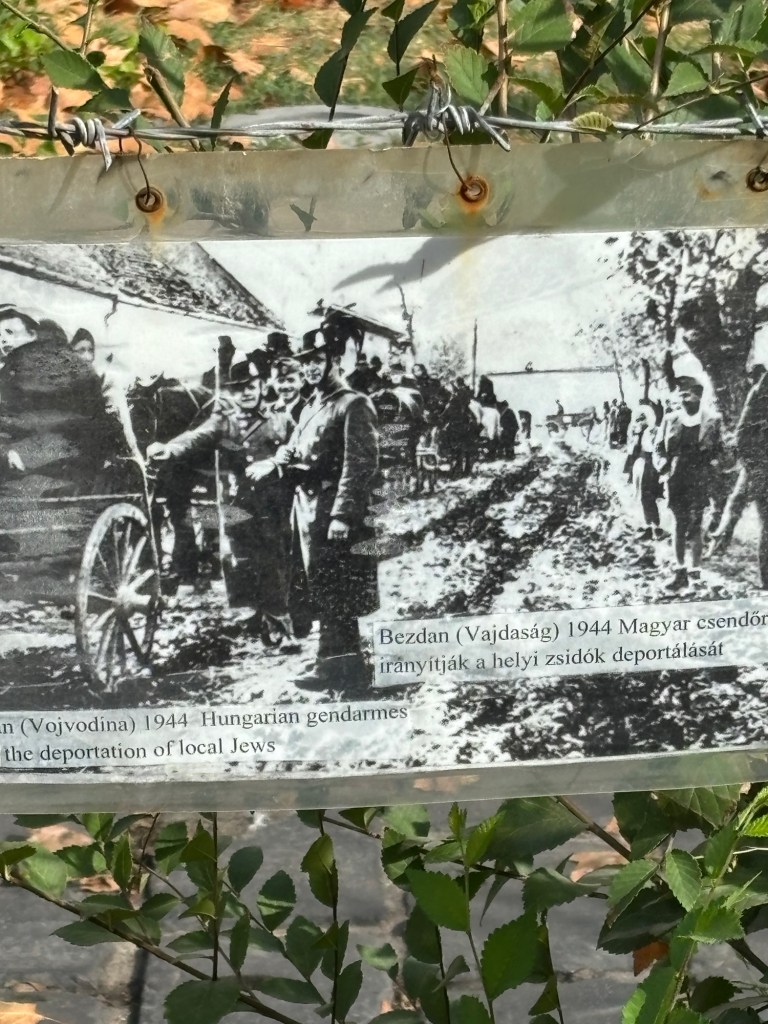
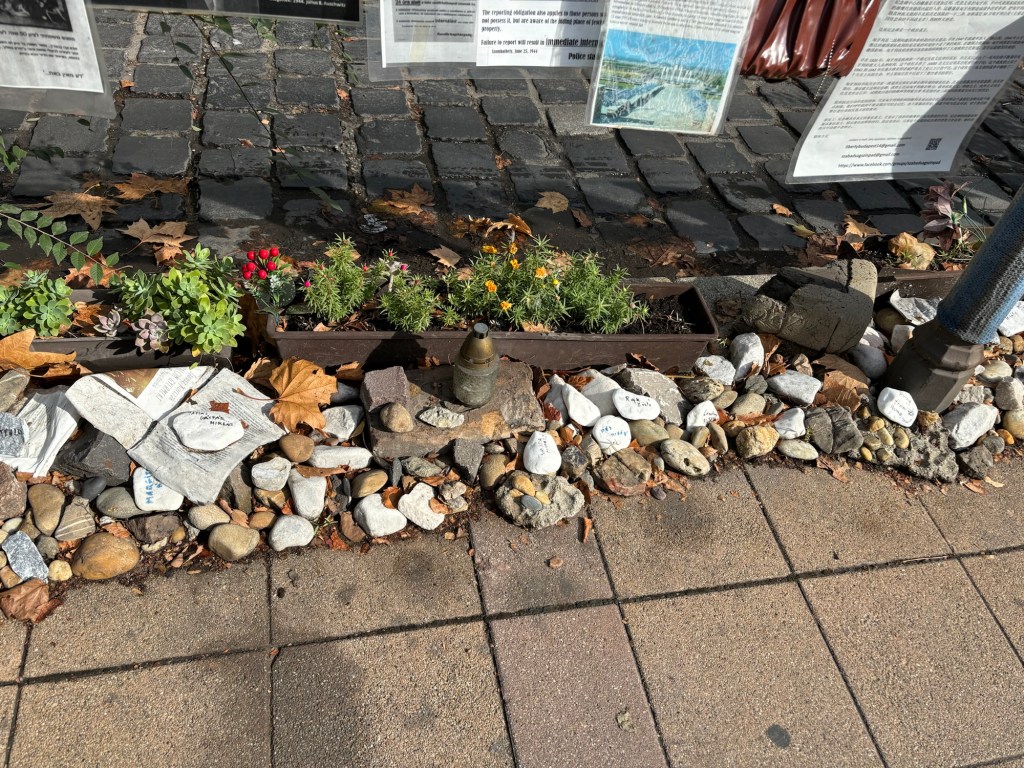
An Anti-Monument was created in front of the government monument and tells a different story, pointing out the government’s collusion with the Nazi’s war atrocities.
The Anti-Monument fountain and memorial itemsItems about persecuted Jews, and symbolic items, like barbed wire, suitcases, photos, etc. The typed statements are interesting to read.The shooting streams are meant to symbolize bars in a jail (or concentration camp). When you walk close, the “bars” come down. If enough people gather around, you could bring all the “bars” down together. The power of people to accomplish change.
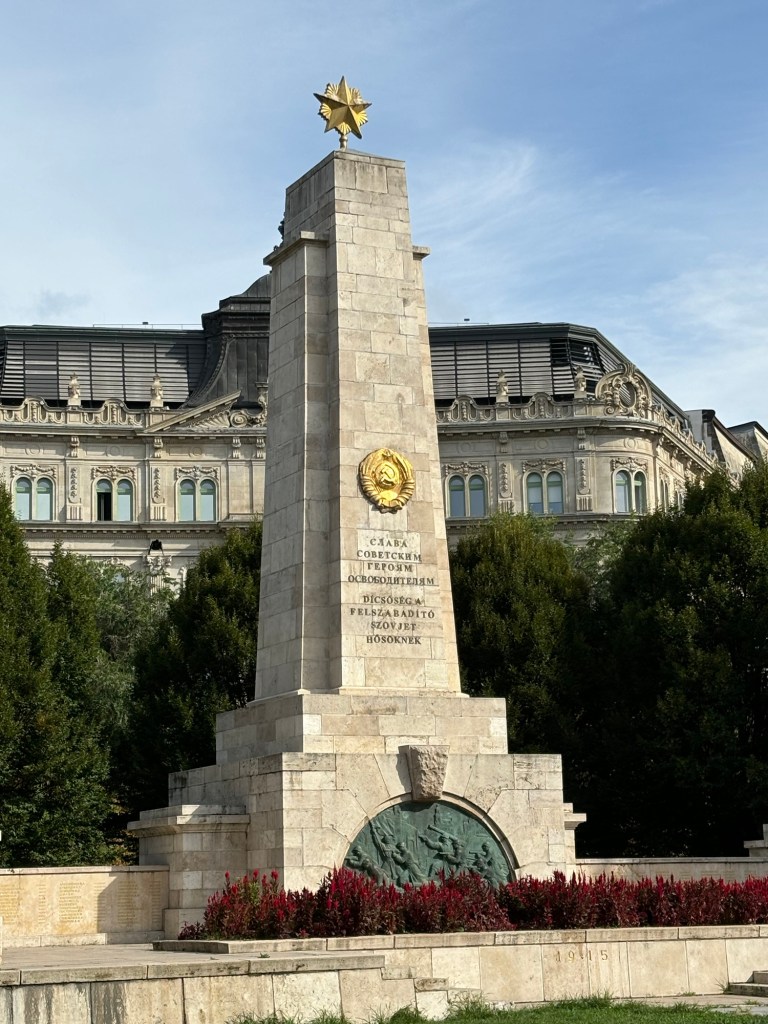
Farther along in the same park is a tall obelisk style monument in honor of the Soviet liberating forces in World War II. It’s another monument that was not well received by many after the long occupation and influence of the Soviets over Hungary until 1989 when the Berlin Wall came down.
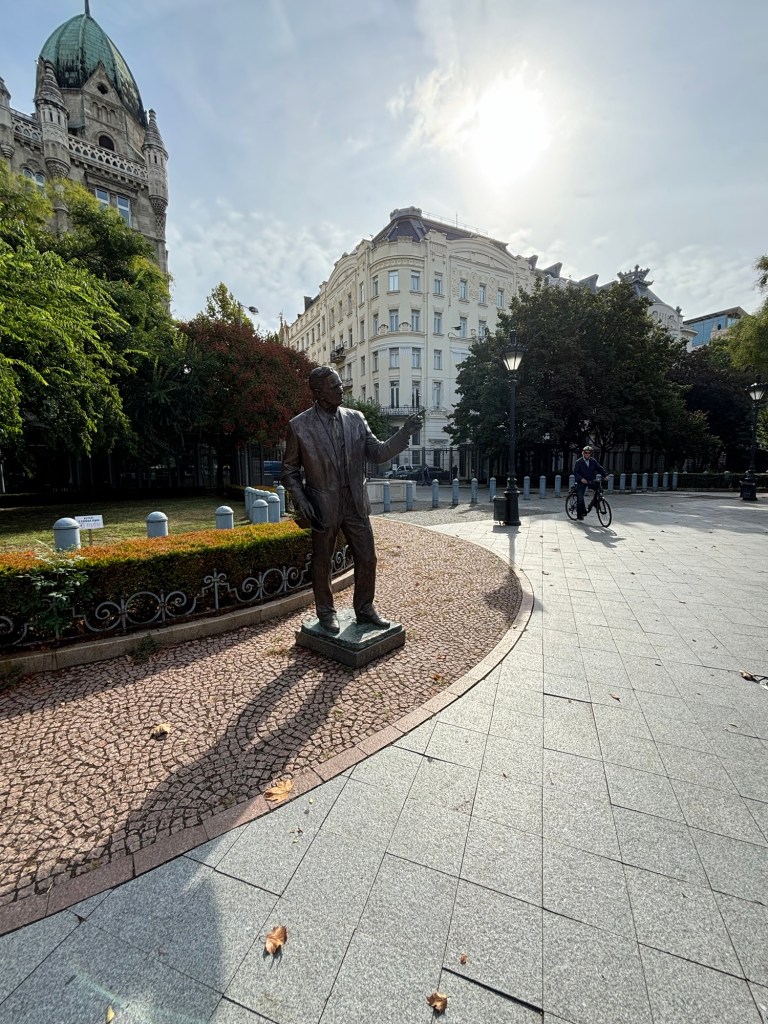
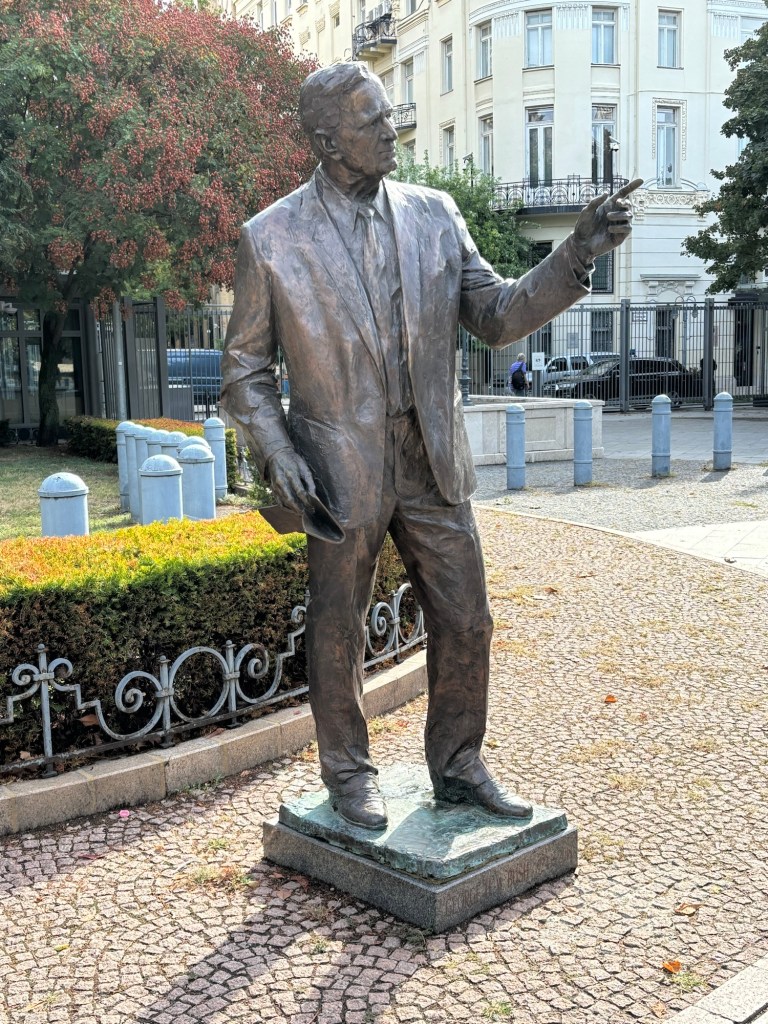
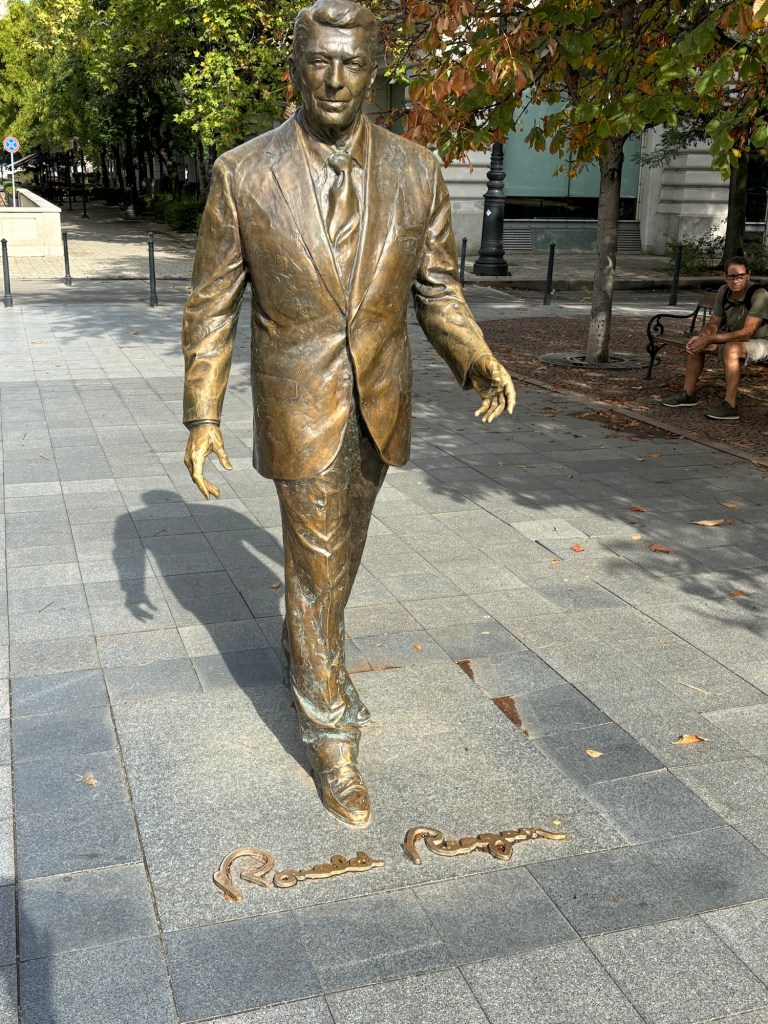
That monument was eventually surrounded by trees on three sides to make it less visible, and less likely for continued vandalism. By the way, that monument to the Soviets is also less than 100 yards from the American Embassy! And there are life size bronze statues of Presidents Ronald Reagan and George H. W. Bush nearby in the park!
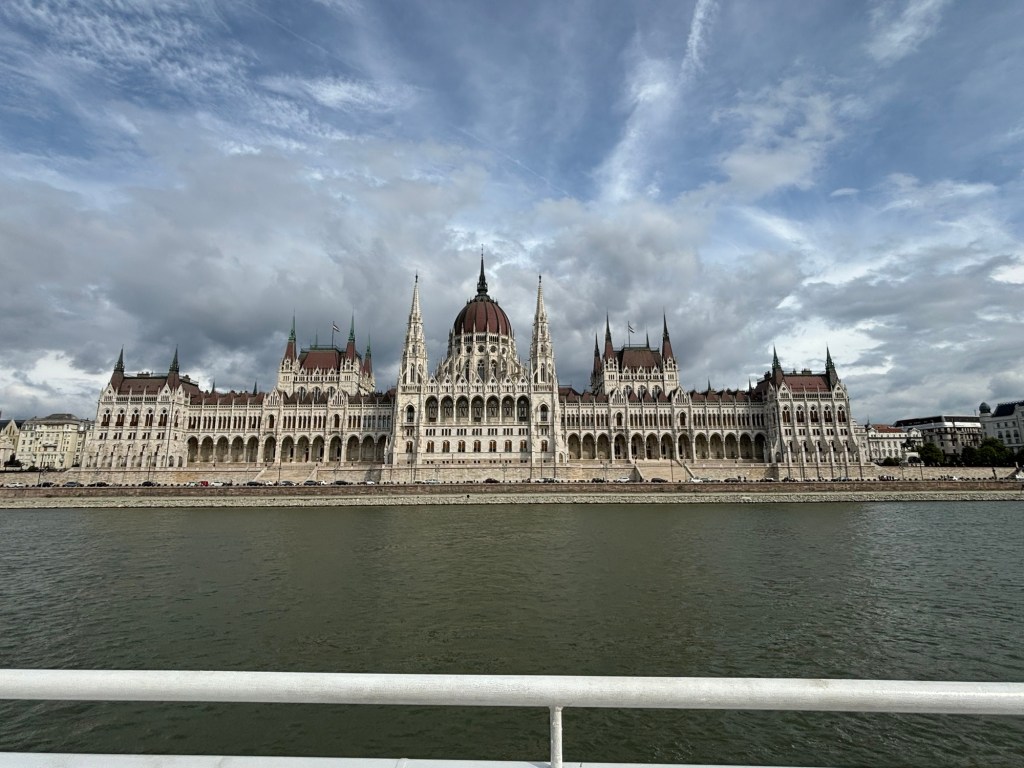
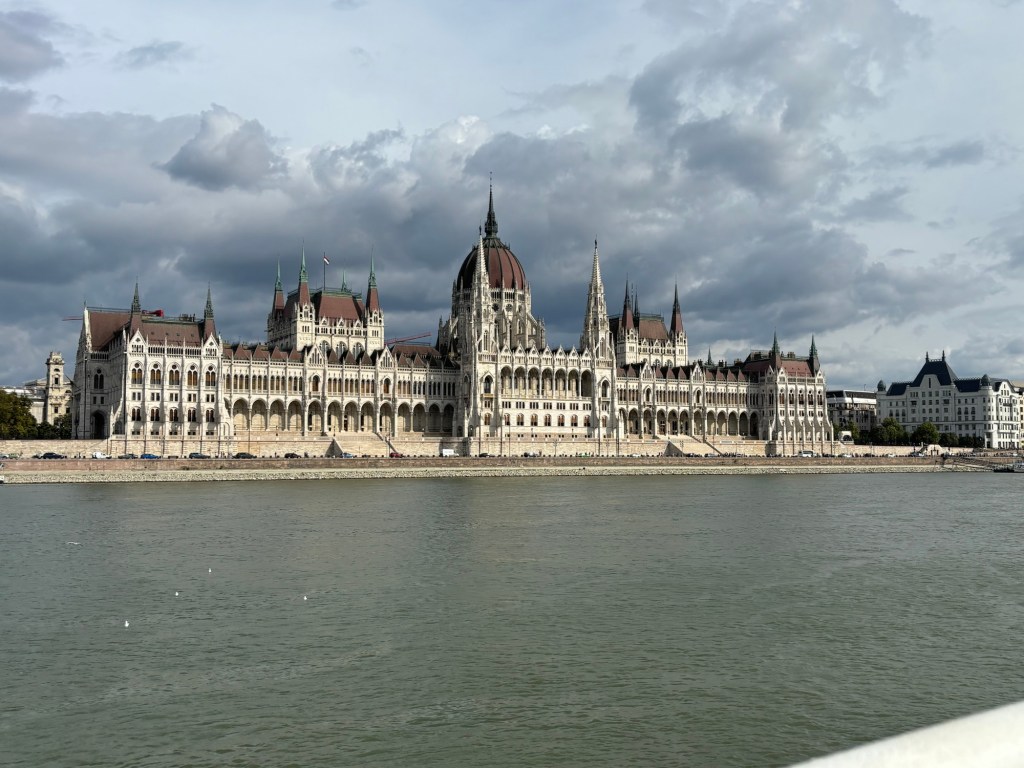
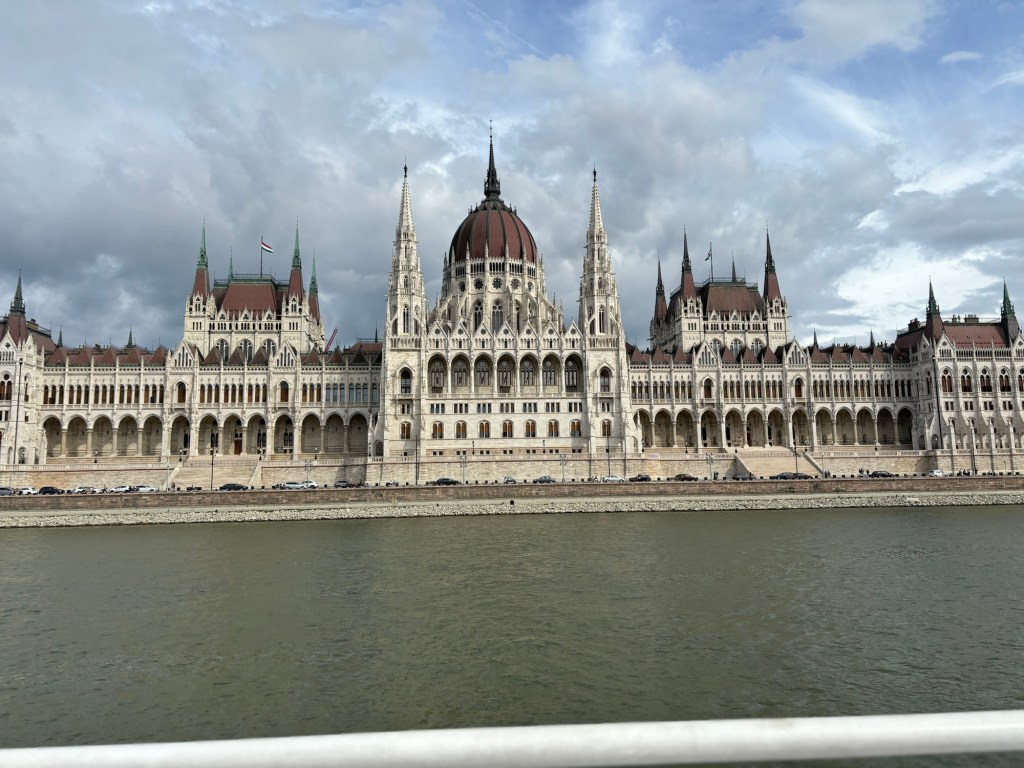
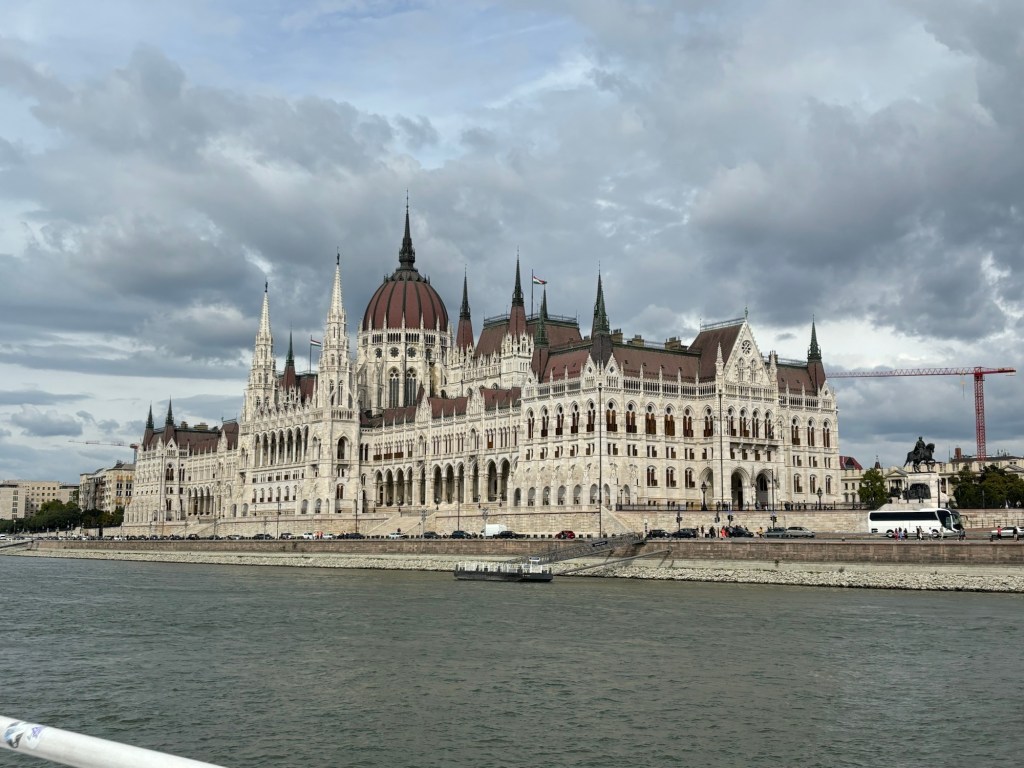
The U.S. EmbassyGeorge H.W. BushRonald ReaganThe impressive Hungarian Parliament Building
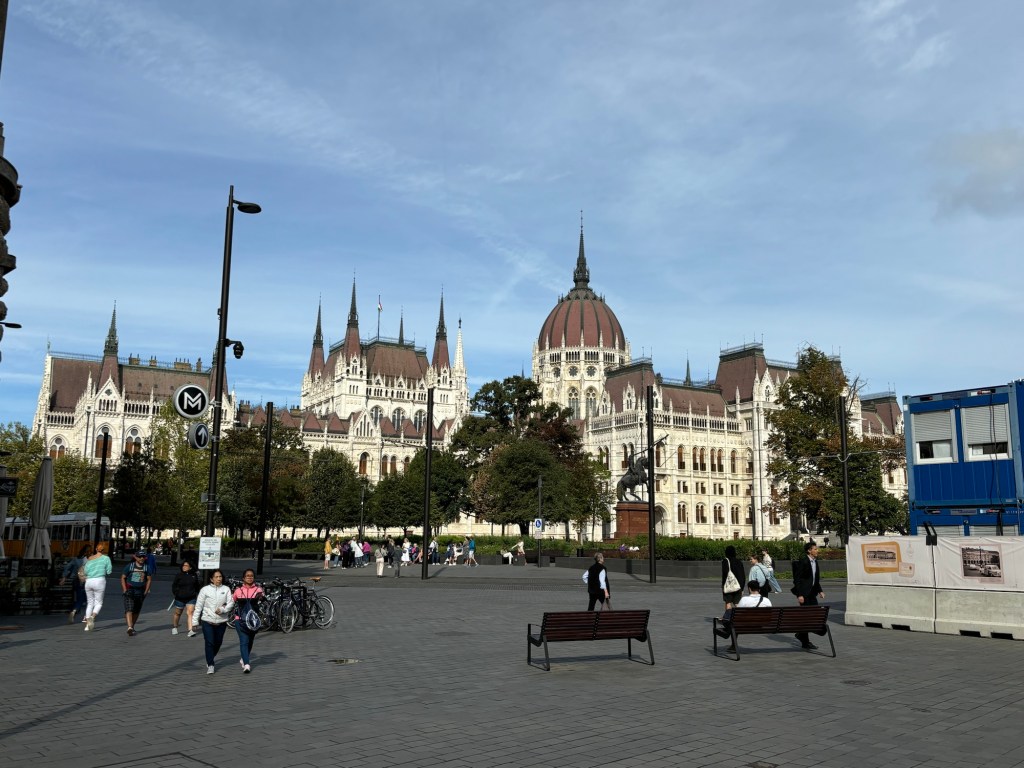
A beautiful building that is also the 3rd largest Parliament building in the world after those in Romania and India!
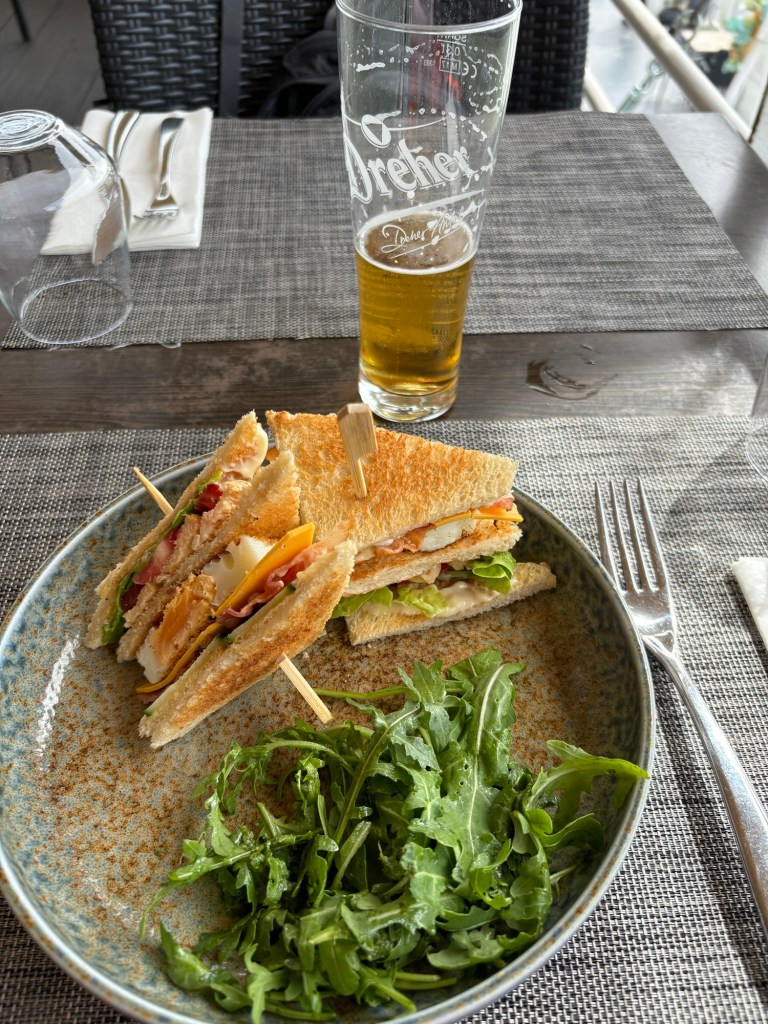
Following the tour I headed down to the river for lunch on a docked river boat.
A club sandwich and a Hungarian beer
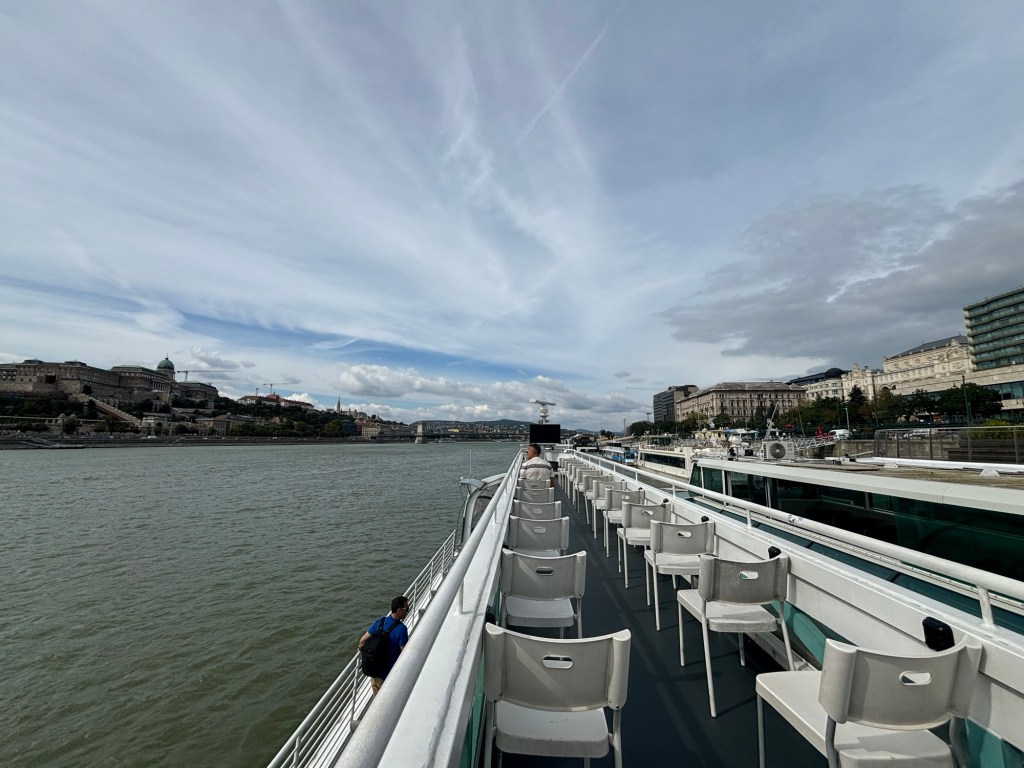
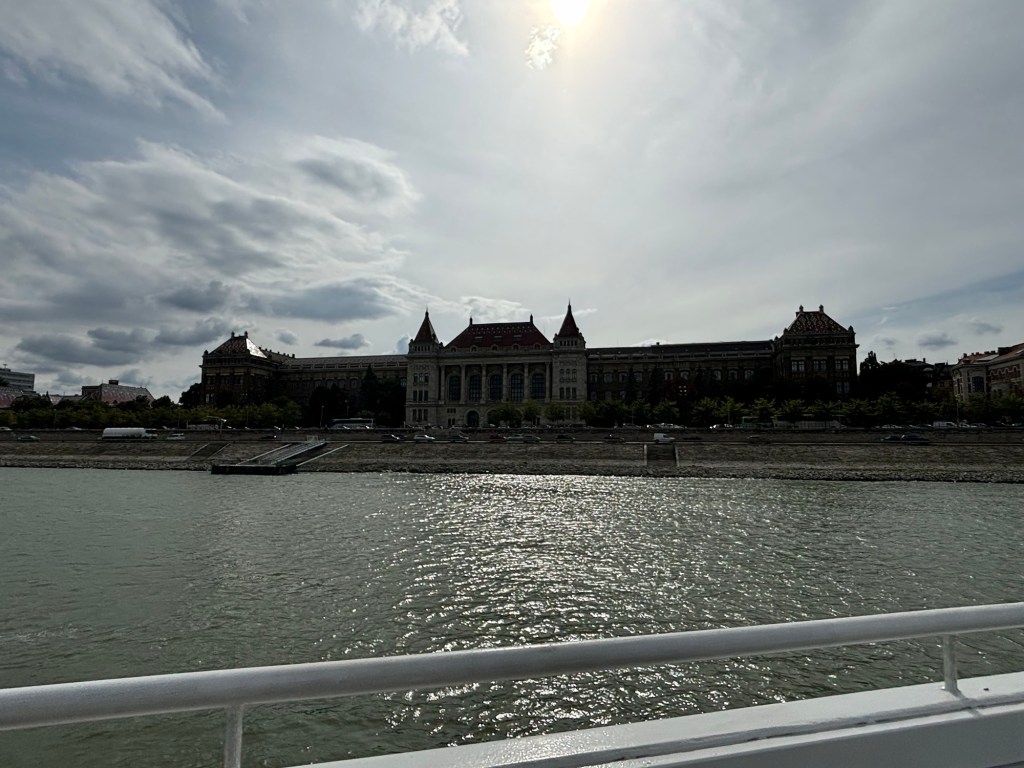
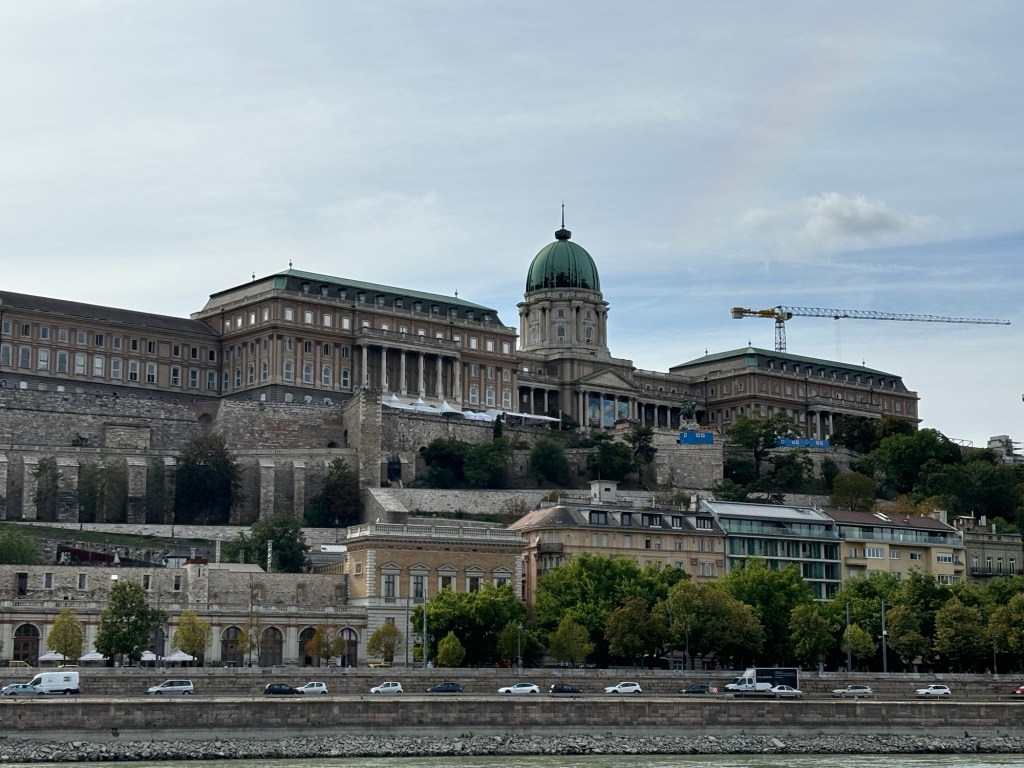
My short Danube River sightseeing cruise after lunch was enjoyable. Here are some photos.
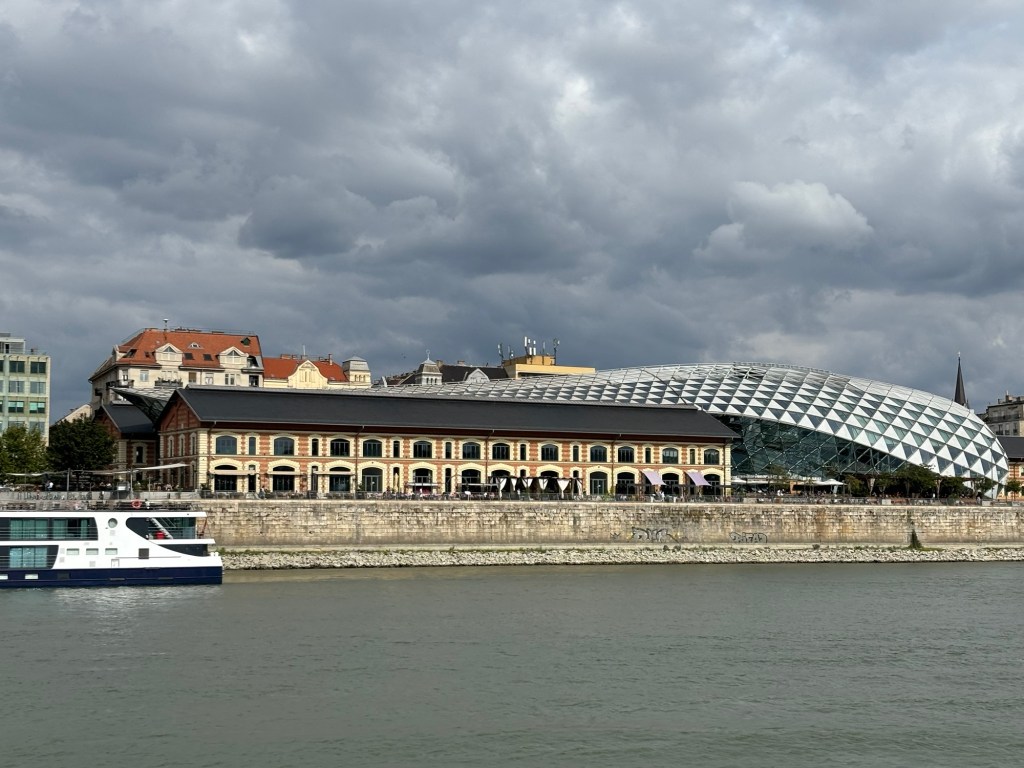
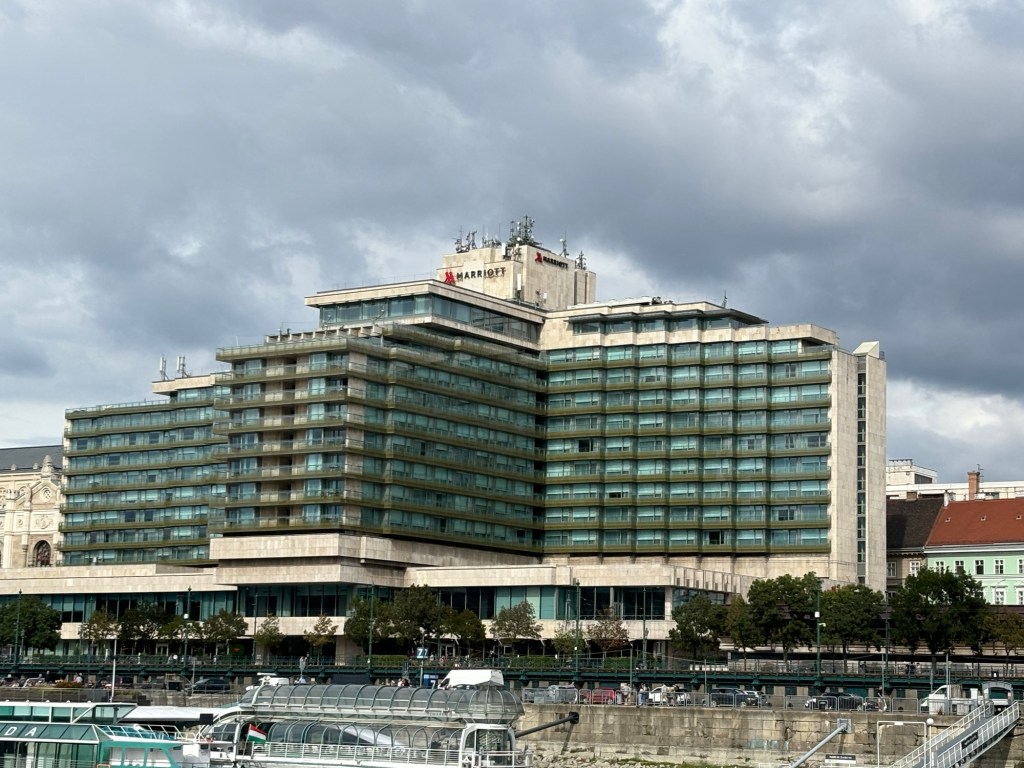
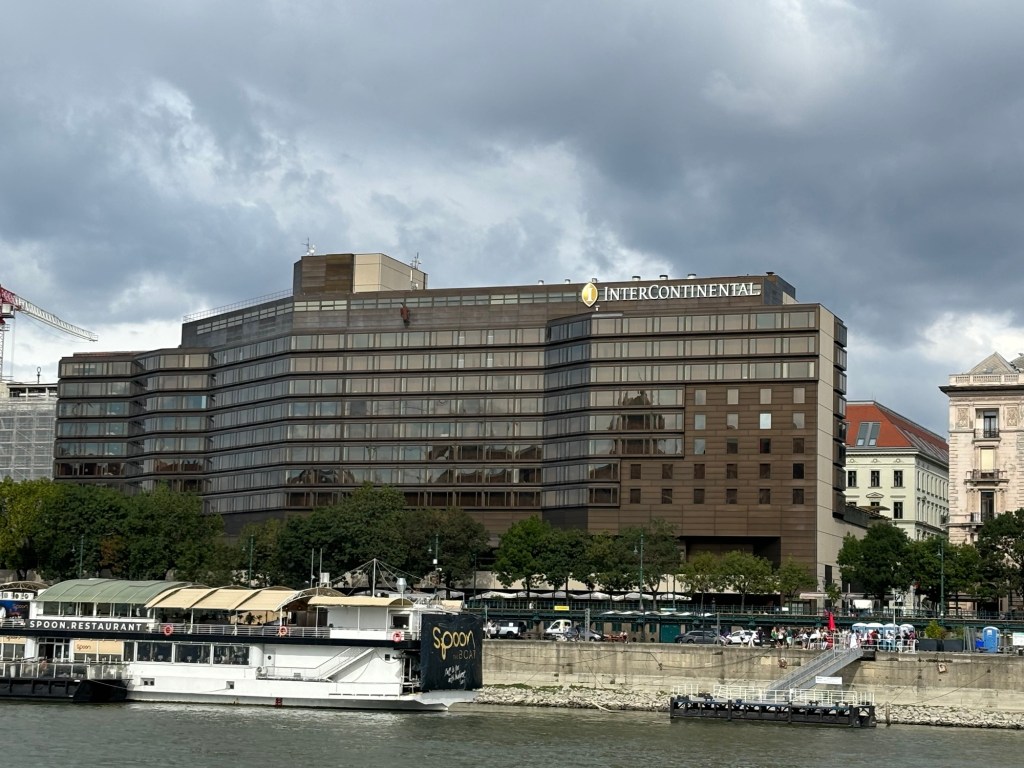
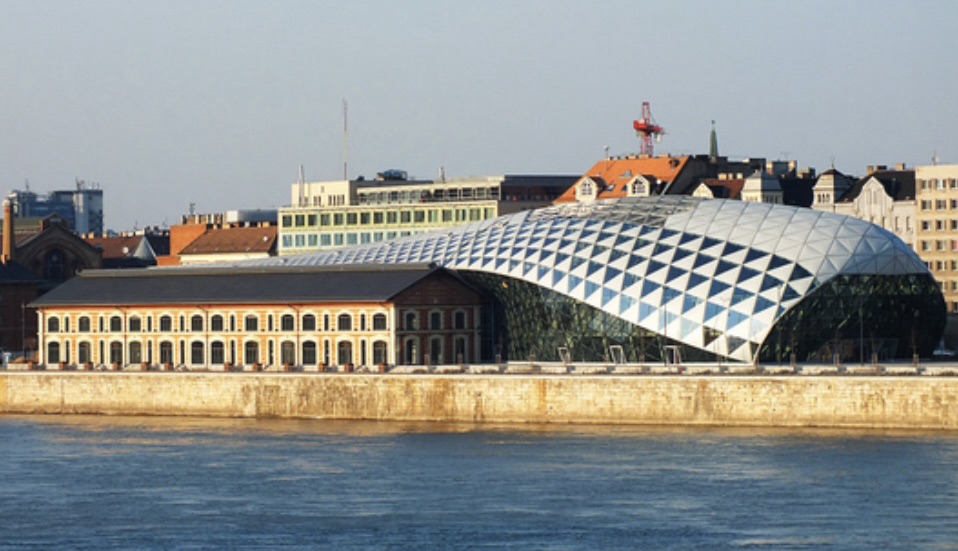
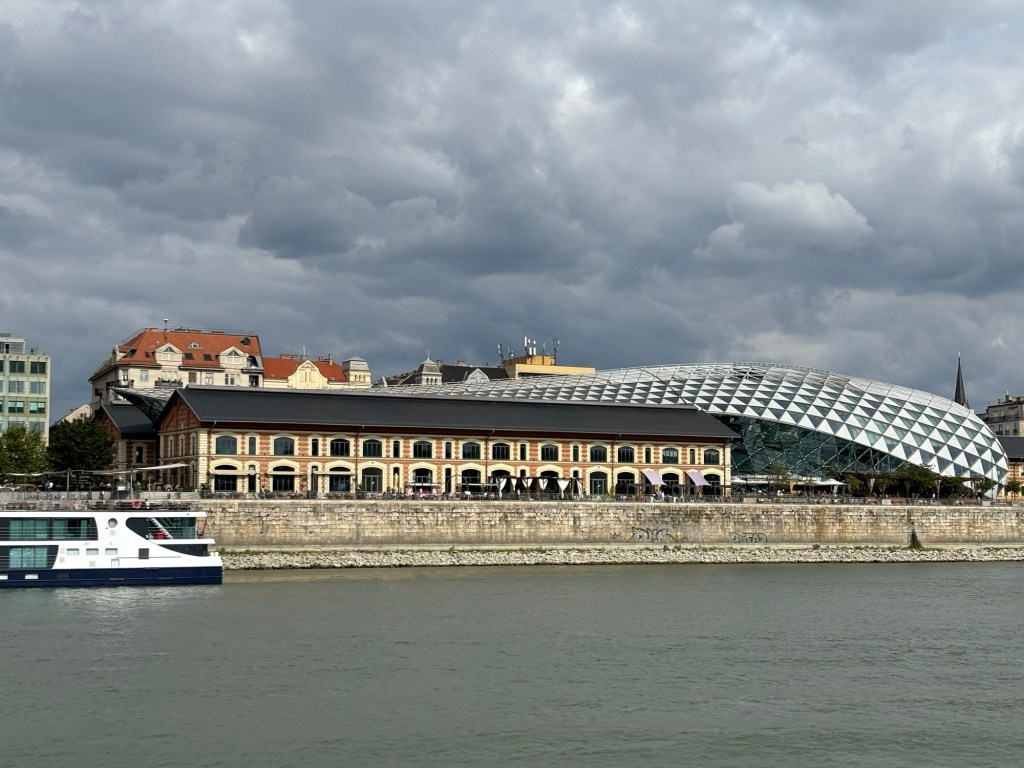
The ugly Marriott HotelThe lovely Intercontinental Hotel The Whale
The building above is the Bálna, meaning “Whale” in Hungarian, and it’s a shopping center, art museum / gallery, meeting space, dining area, and cultural center. It was originally called the CET, an acronym for Central European Time, but the distinct shape led to the rather apropos “Whale” moniker.
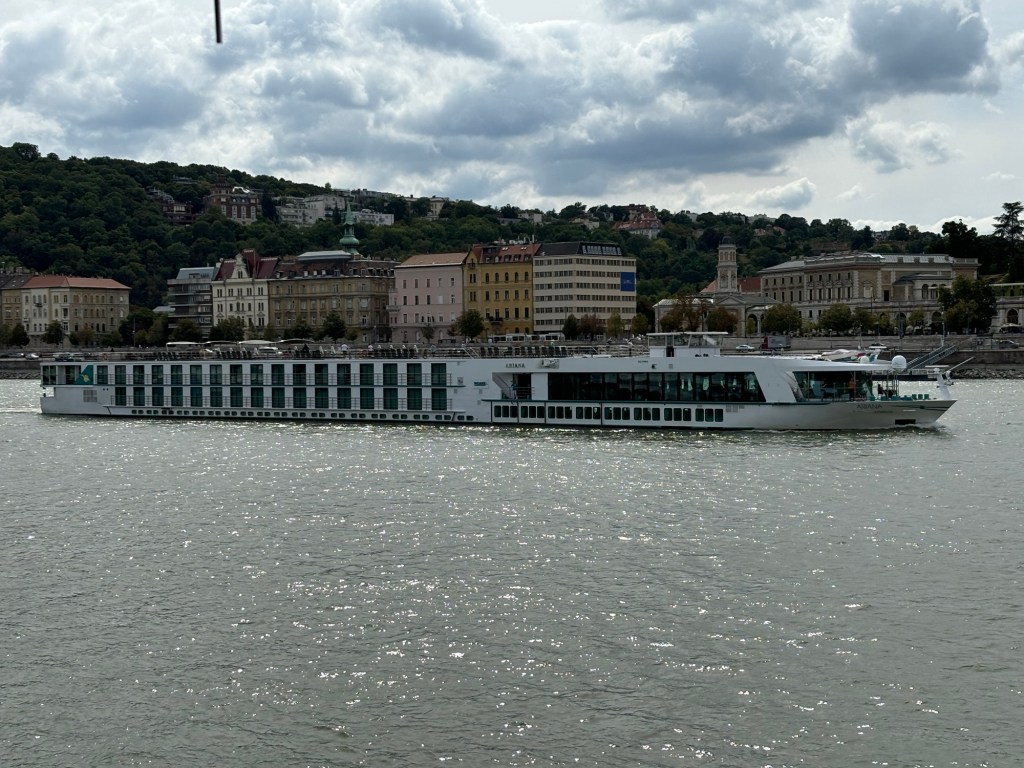
They were innumerable day sailing vessels along the river, as well as many formal river cruise ships, including five Viking ships alone!
A big draw in Budapest is Margaret Island, a 1 1/2 mile long island park in the middle of the Danube. One of the city’s bridges takes you there or any number of river cruise boats. Running and walking trails, fitness facilities, shops, restaurants, etc. It is a very popular with the residents and with visitors.
I did not get the chance to visit another of the popular and iconic sites in Budapest – the geothermal pools and bath houses. I’ll have to save them for my next visit.
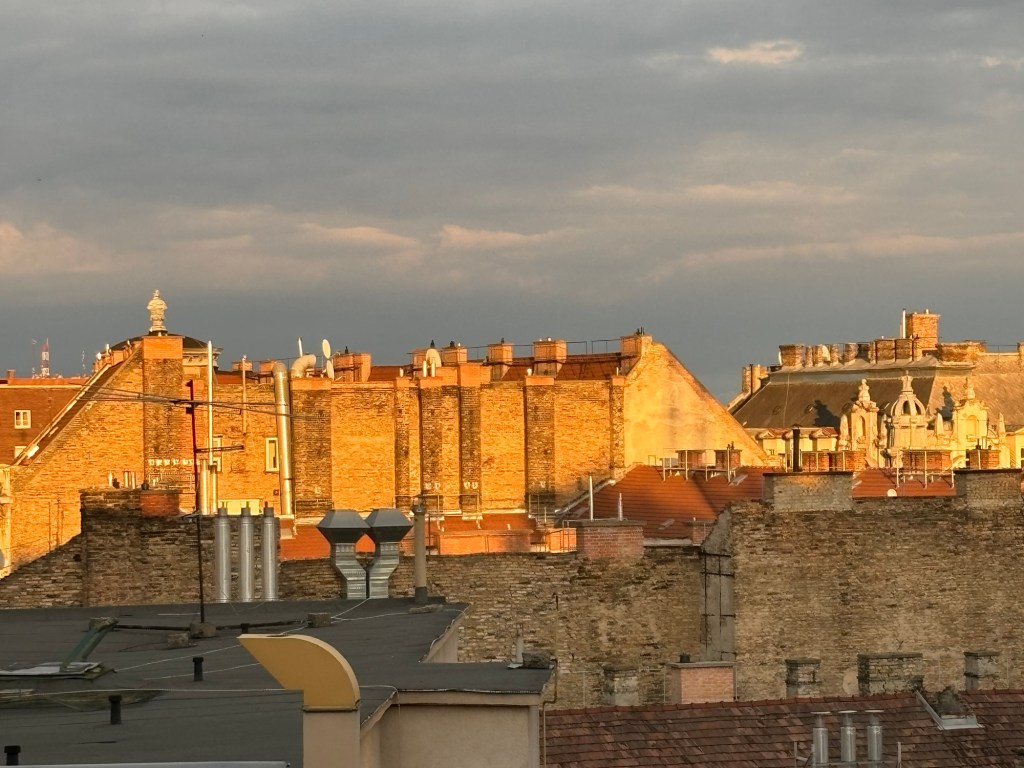
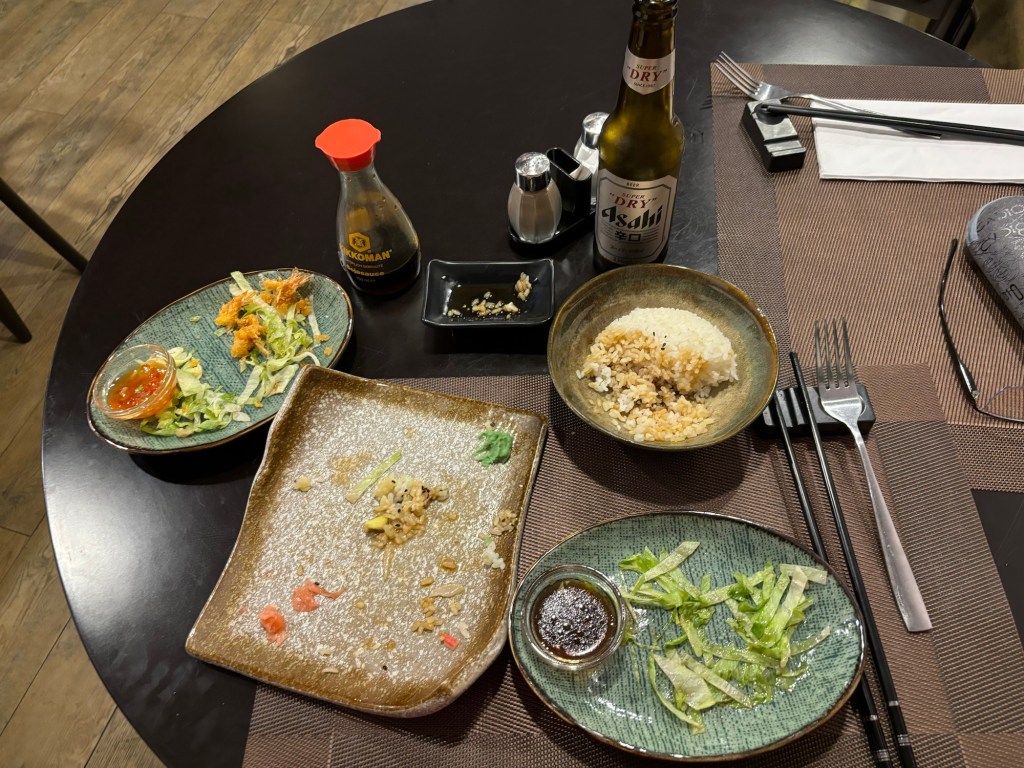
The sun setting in BudapestThe aftermath of my excellent Japanese dinnerAnd dessert!
Tomorrow it’s a 8+ hour train ride to Krakow, Poland.
Words of wisdom, or just to amuse…?
To keep young kids behaving on a car road trip, have a bag of their favorite candy and throw a piece out the window each time they misbehave.
Well, I’m hoping that Budapest will be better tomorrow in the sunshine, or at least when it’s not raining. So far it seems similar to Bratislava and nothing on par with beautiful Prague or Vienna. Kind of worn out and like a dreary old Soviet state (actually just a Soviet satellite state, never part of the Soviet Union). Sorry Budapest.
I had booked a room at the Black Sheep Hostel in Budapest for two nights. After arriving and seeing the place, I’m thankful that I mistakenly booked for 2025, and that they were full for the night! So I cancelled 2025 and quickly booked another room just a few blocks away, and while it’s not the Ritz, it is clean and comfortable. Whew! Dodged a bad bullet!
My new “apartment”
From the department of “news you may not need to know,” everybody smokes and or vapes in Hungary! Clearly not everyone, but sure seems like a much higher percentage than in the other counties so far. Hard to walk down the street without getting gassed!
After I settled into my cheap, two night apartment, I headed out for dinner and a few groceries.
A rainy day in Hungary
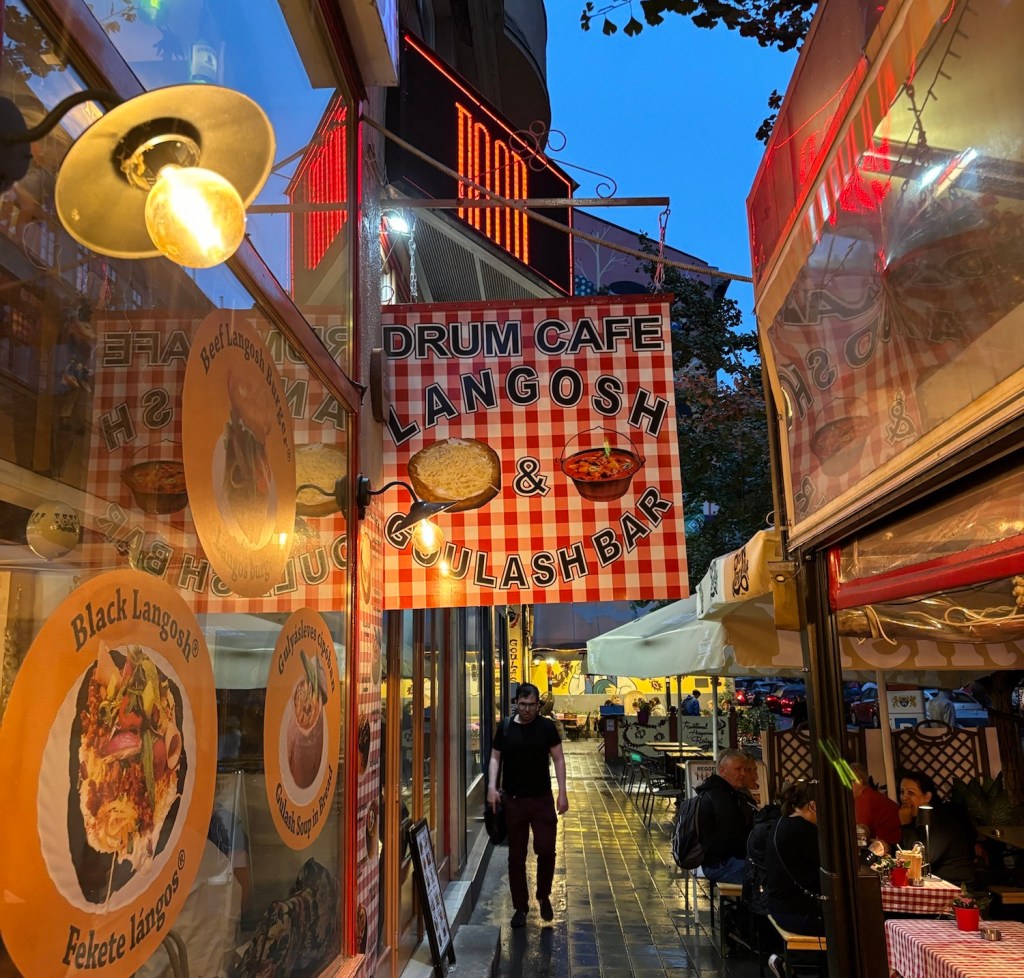
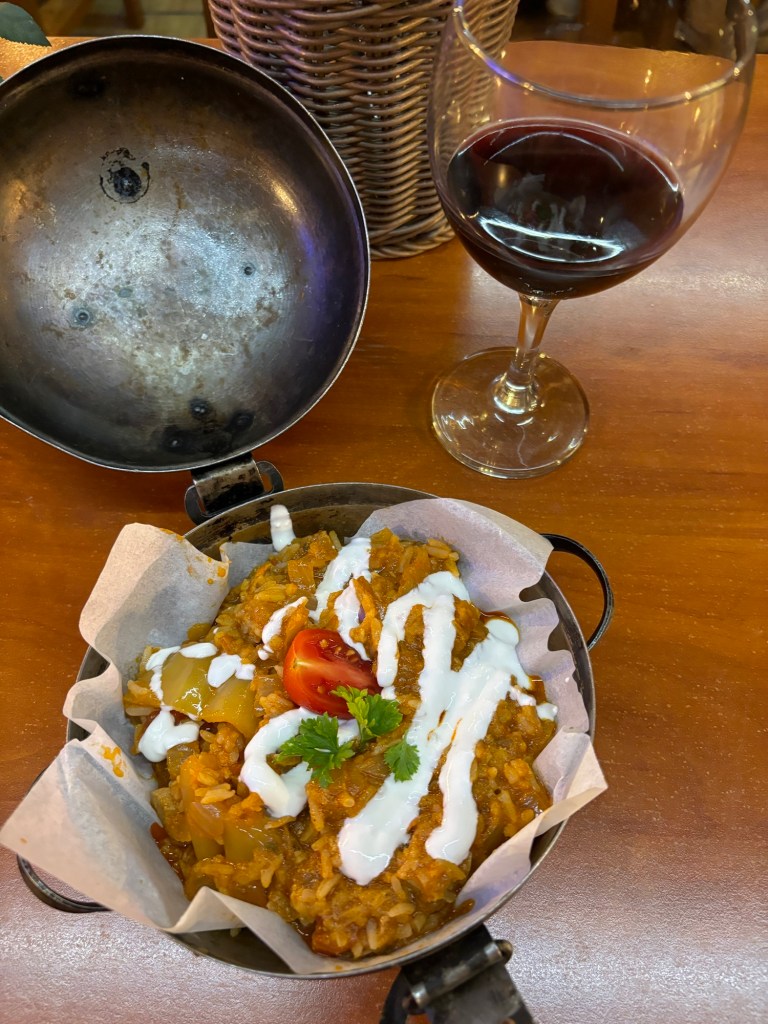
I had a fabulous dinner at Drum Cafe near my apartment. It had a traditional colorful “Bácska” rice meat, with soft pork goulash and jasmine rice backed and served in discus bowl (in Hungarian: Hagyományos Bácskai rizseshús sertés szinhúsból, jázmin rizzsel diszkosztálban besütve). Try pronouncing that, even slowly!
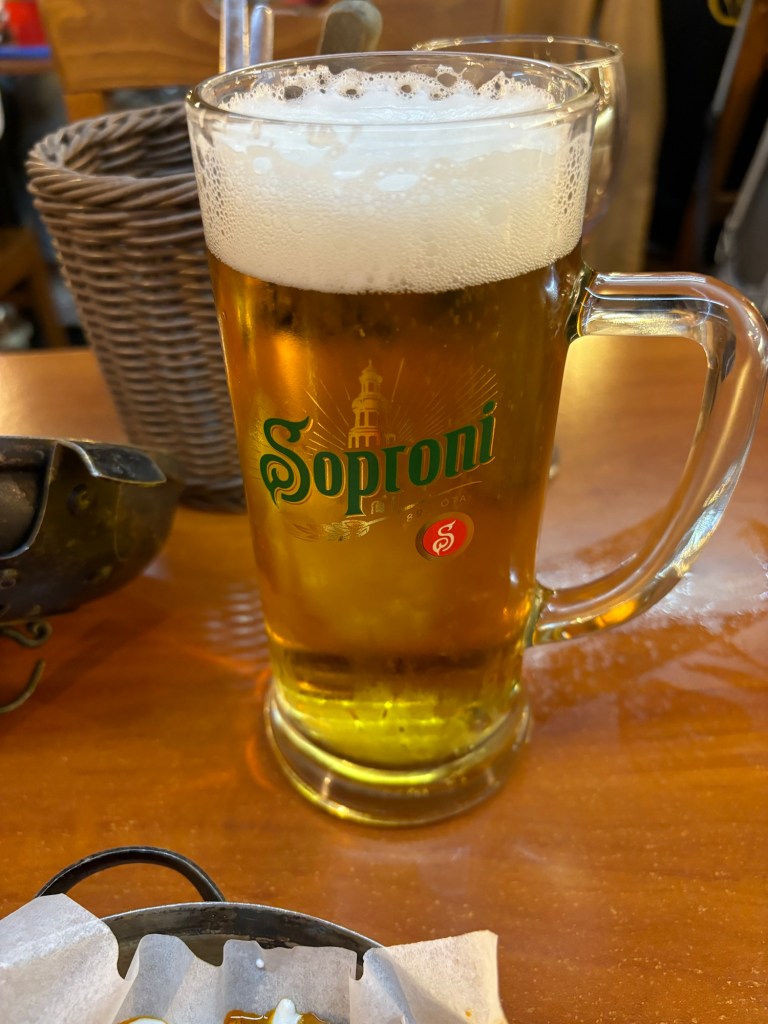
I tried to wash it down with a not-so-good red house wine (should have known at $1.25 a glass!). Nothing beats the cheap table wines in Spain! So I switched to an excellent beer, Soproni Classic, a traditional Hungarian lager. (Web description: Medium body with a malty flavour and thick white head, ending on a smooth finish with grassy notes.). La de da.
Really flavorful and delicious!
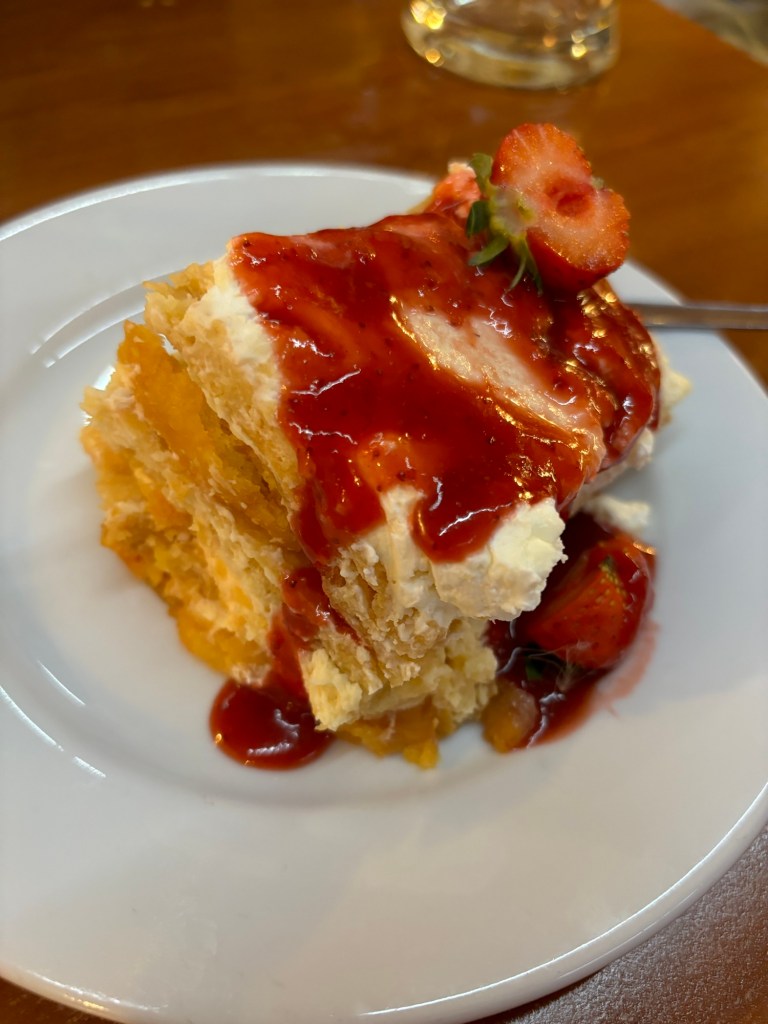
And I finished with a wonderful OMG dessert! Sweet langosh cake with mascarpone and Marsala wine, with strawberry sauce (in Hungarian: Mézes mascarponés lángos torta Marsala borral, eper ontettel).
Wow!
After dinner, I popped into a local Spar grocery (common through much of Europe) to get sodas, breakfast pastries, and some essentials.
I caught an early 7:00 am train – in the rain – to Bratislava. Actually two trains, and then I spent few hours looking around the capital of Slovakia before heading on to Budapest.
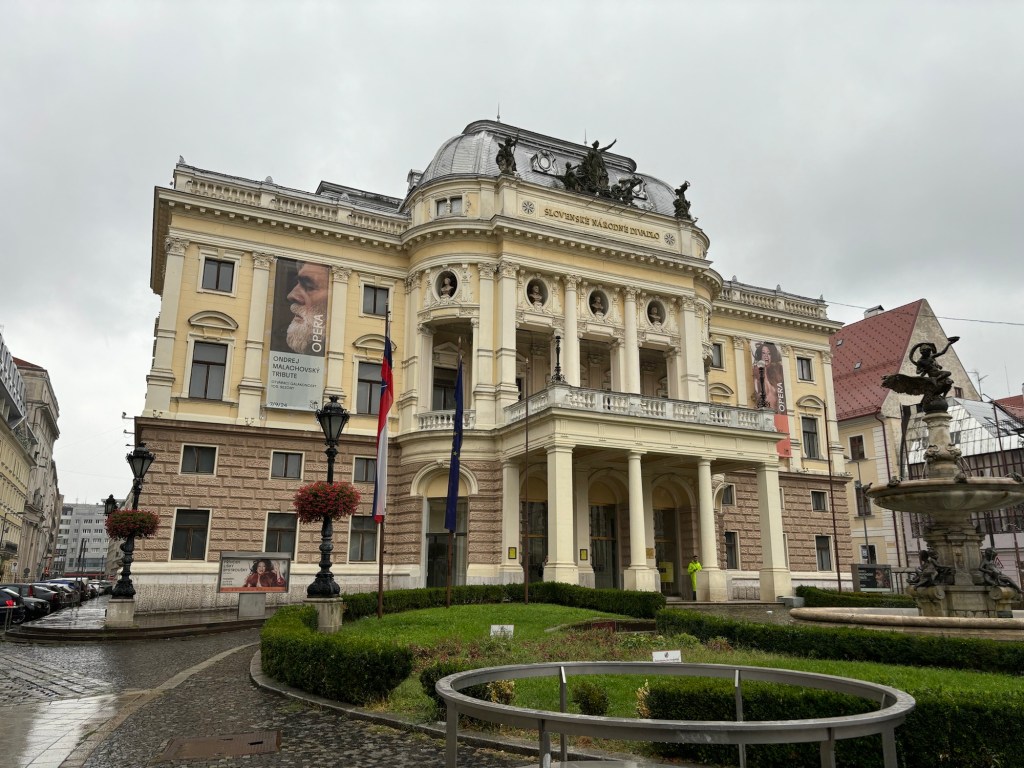
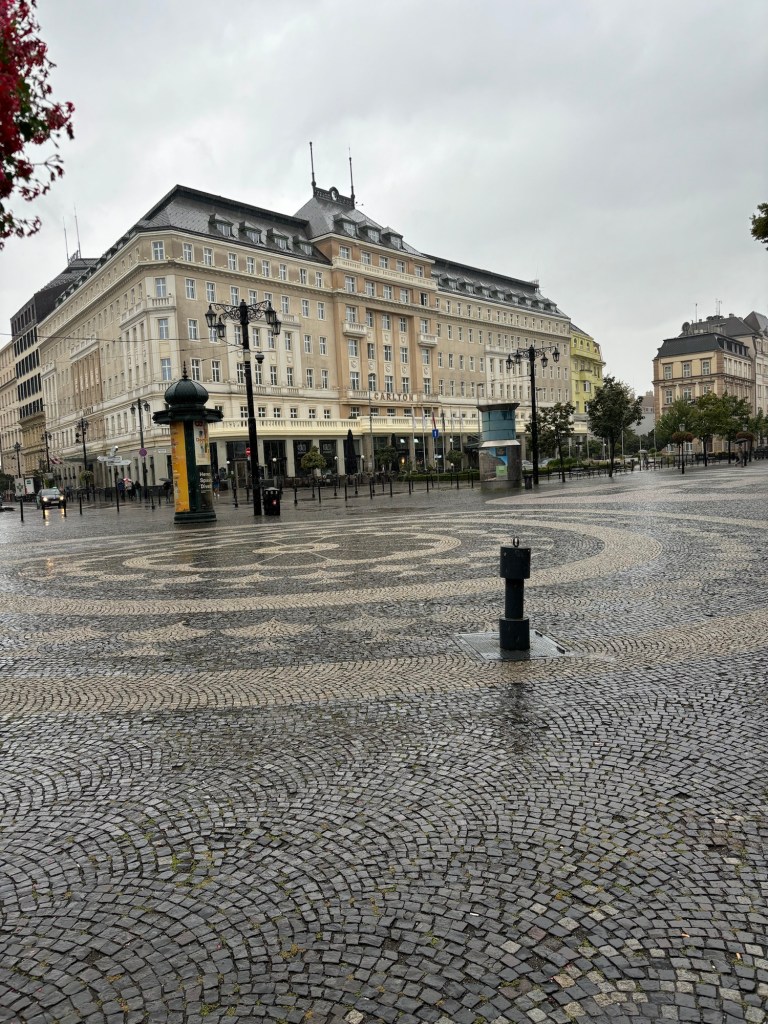
With just a few hours here and the rain pouring down, I took an Uber down to the Old Town.
I was underwhelmed with the city – old, but 50s kind of old, not historic old. The train station was also over crowded and rundown. And have I ever complained about pay toilets? Hate them, especially when they are dirty and in bad repair.
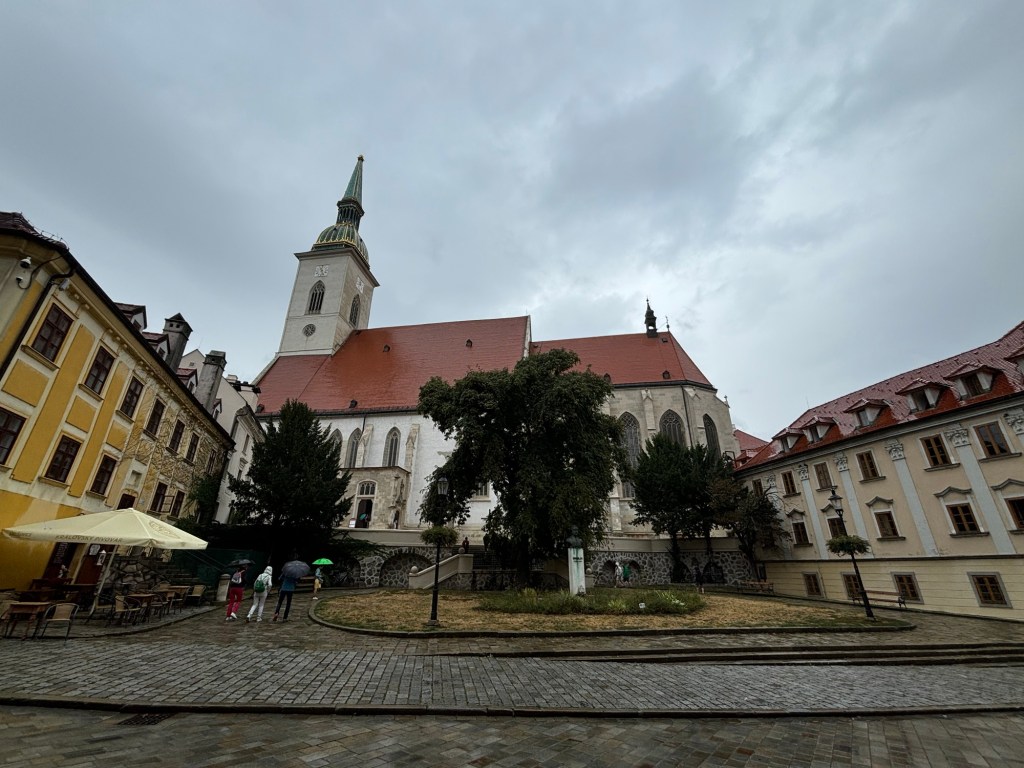
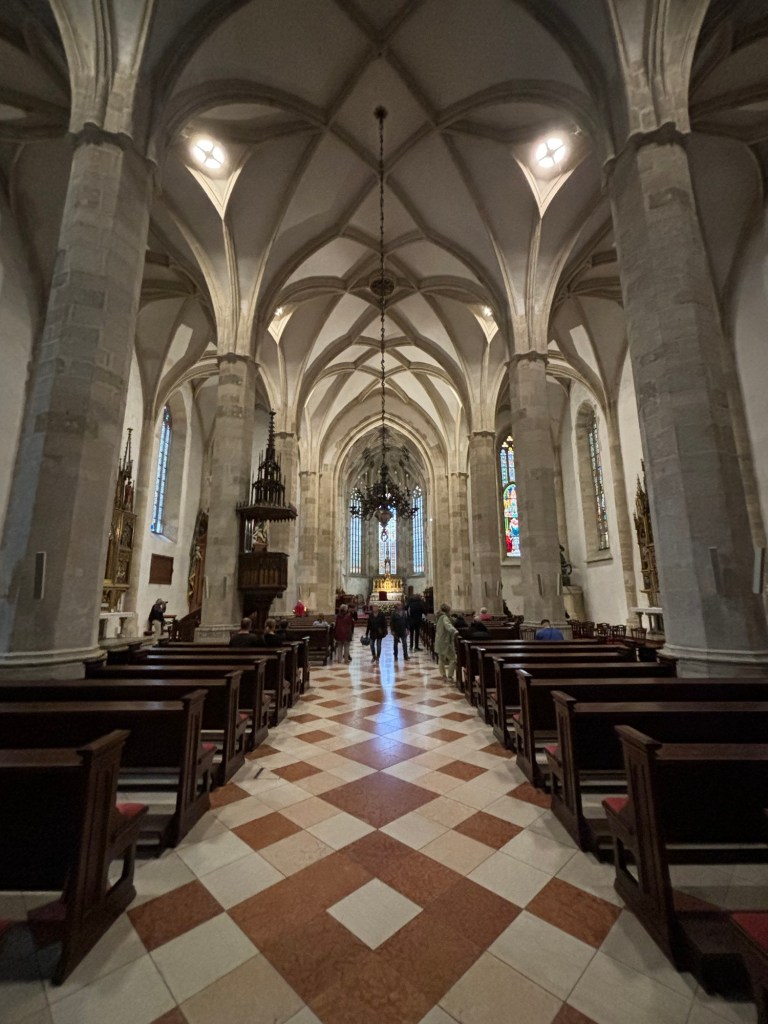
Anyway, I visited St Martin’s Cathedral, where the body of St. John the Merciful (Almoner) is kept. (Info: https://dom.fara.sk/en/)
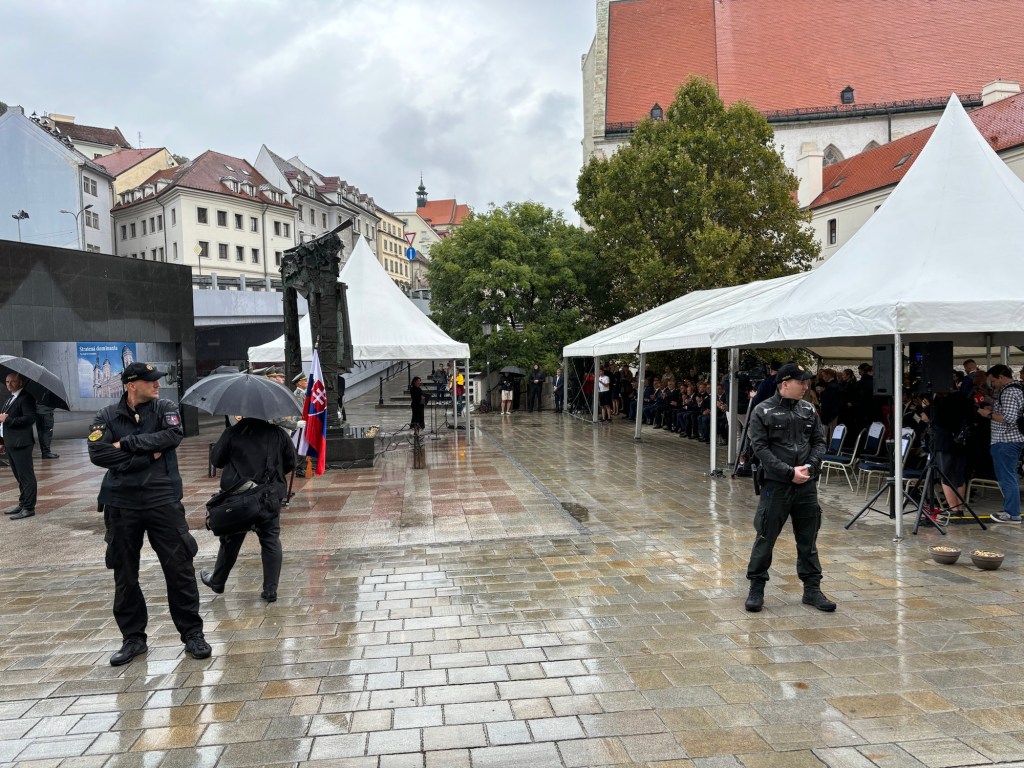
Some type of ceremony with dignitaries since there were armed guides surrounding the area.Not sure if I want to approach him or not…Meeting new friends everywhere
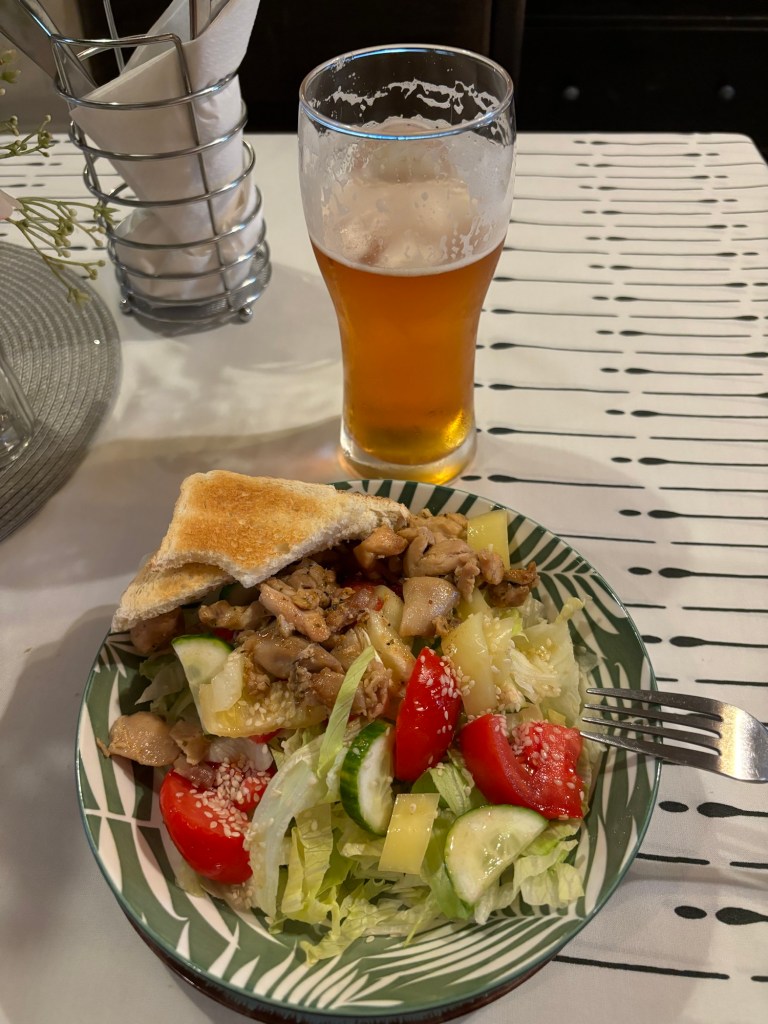
I also had a nice lunch downtown. I decided to add some health food to my lunch today – a nice salad with a bit of chicken. Then to make sure I was hitting multiple major food groups, I added some hops and grains in the form of a local Slovak beer, Zlatý Bažant, or Golden Pheasant beer.
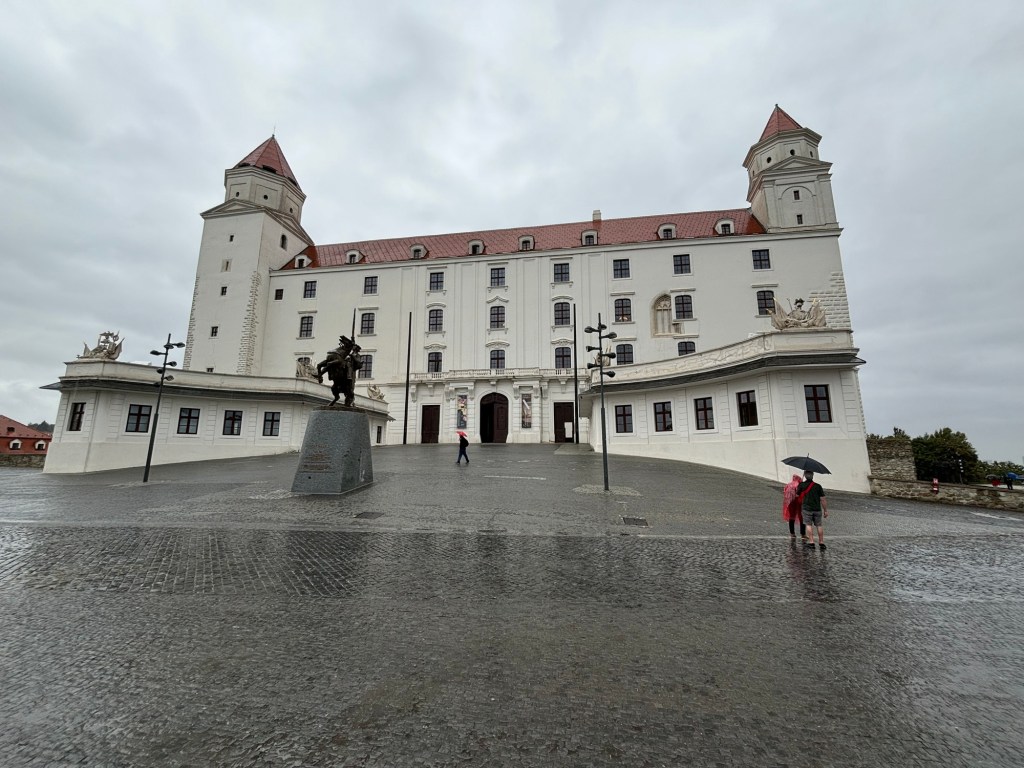
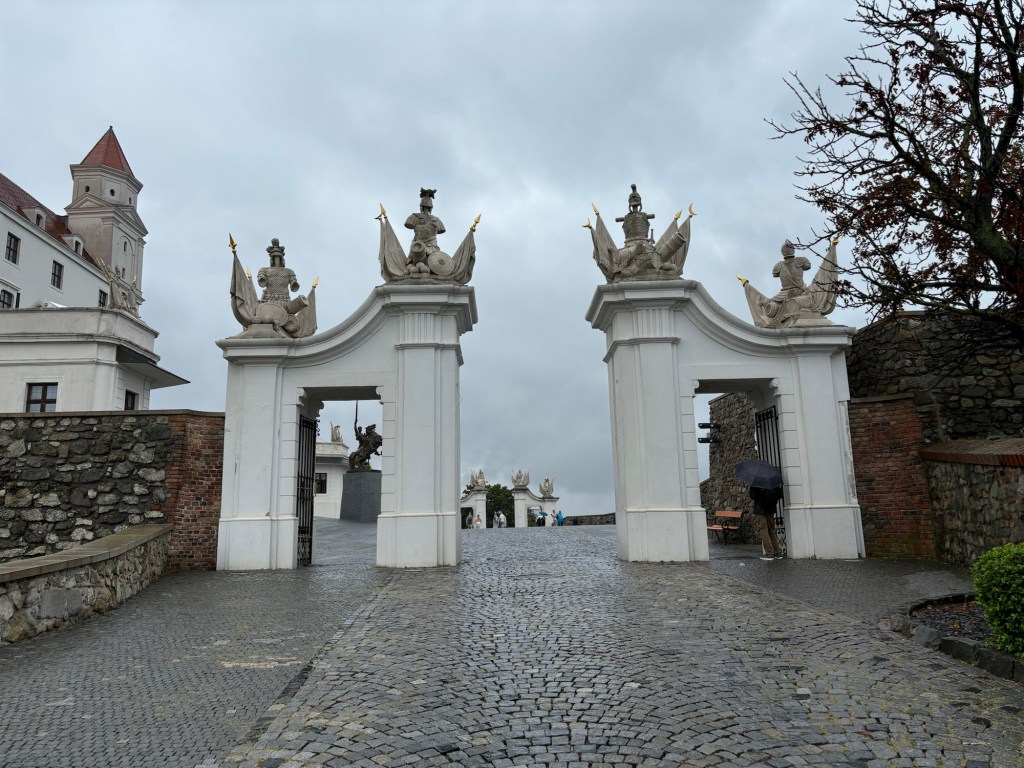
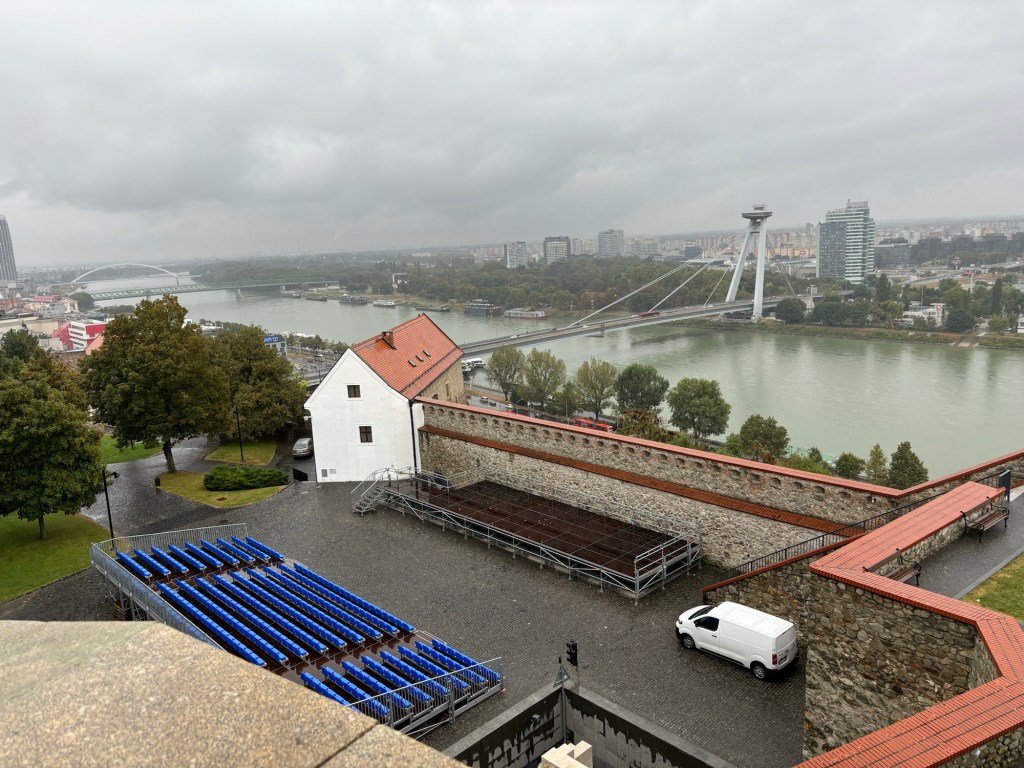
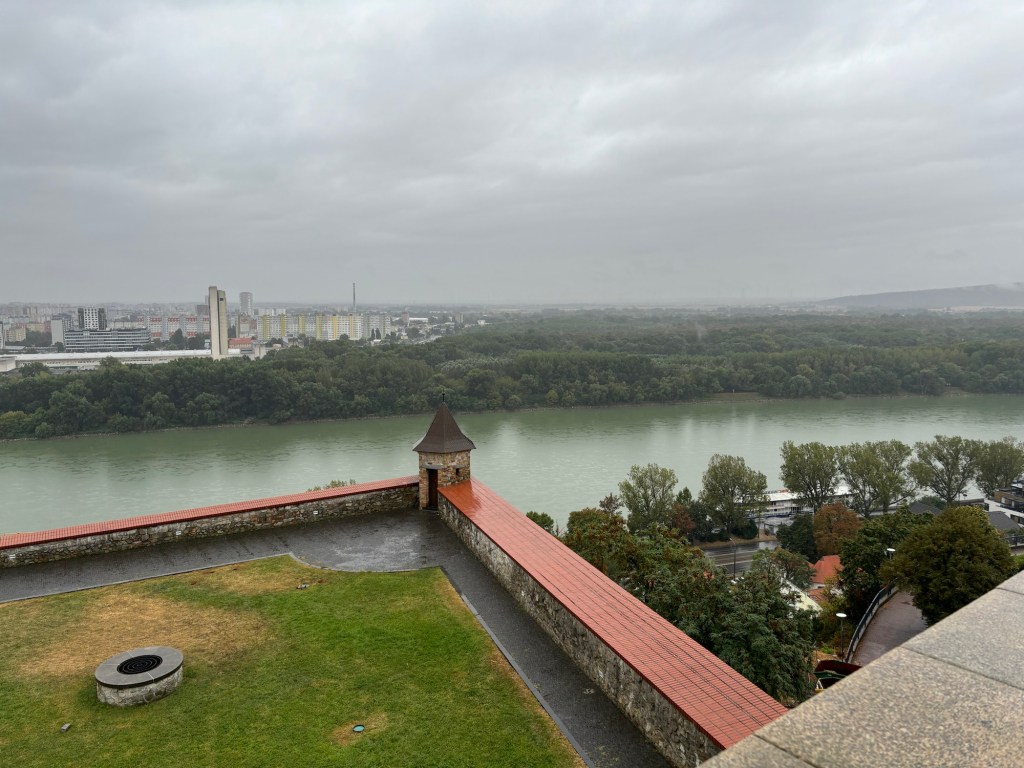
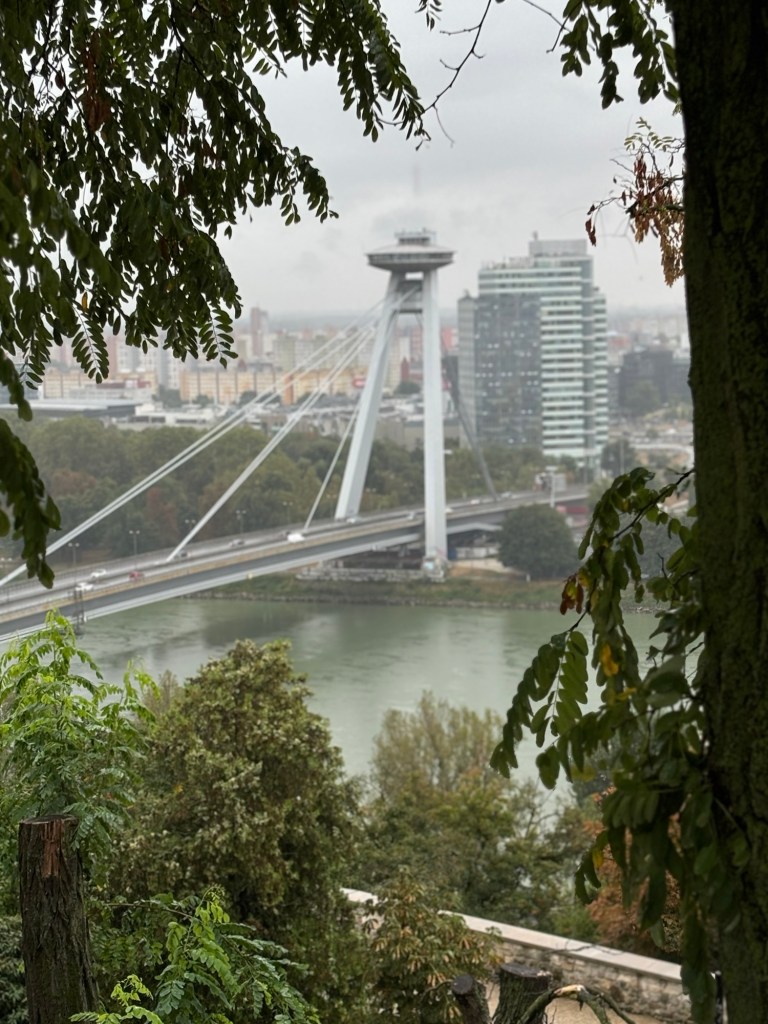
After lunch I made a quick stop at the Bratislava Castle. On a clear day the views above the Danube would be spectacular. But alas, just heavy rain today.
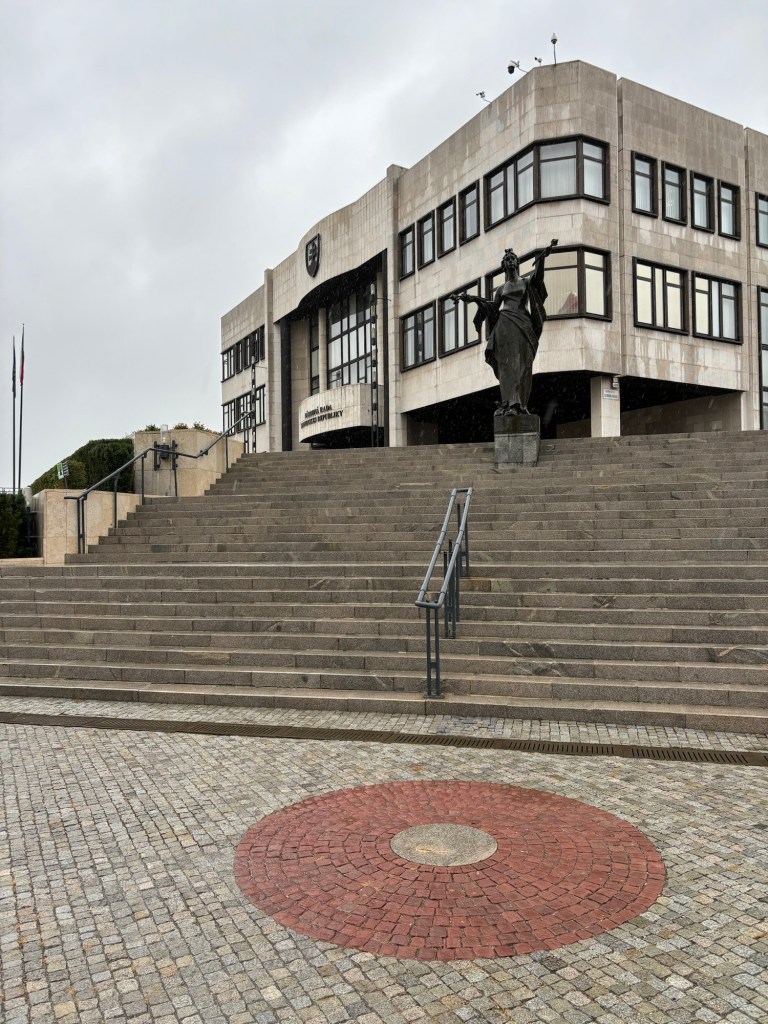
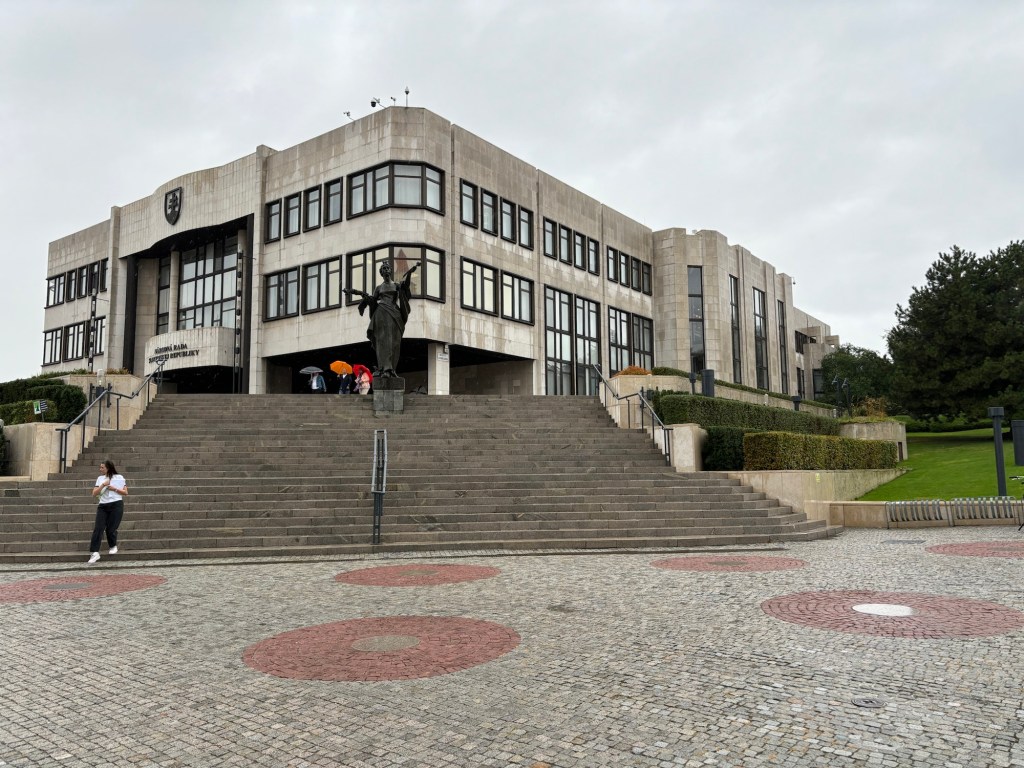
The Slovakian Parliament Building
A Traveler’s note…
Like on other countries around the world, you have to be careful when booking transportation, lodging, etc. Our English spelling of cities often doesn’t match the foreign language spellings. Some examples here are: Prague (Praha), Vienna (Wien), and Warsaw (Warszawa). Not hard to get off track!
Words of wisdom, or just to amuse…?
I wasn’t originally going to get a brain transplant, but then I changed my mind.
Another gorgeous sunny day, although rain and cooler temps are coming tomorrow. First up after breakfast – a “free” walking tour.
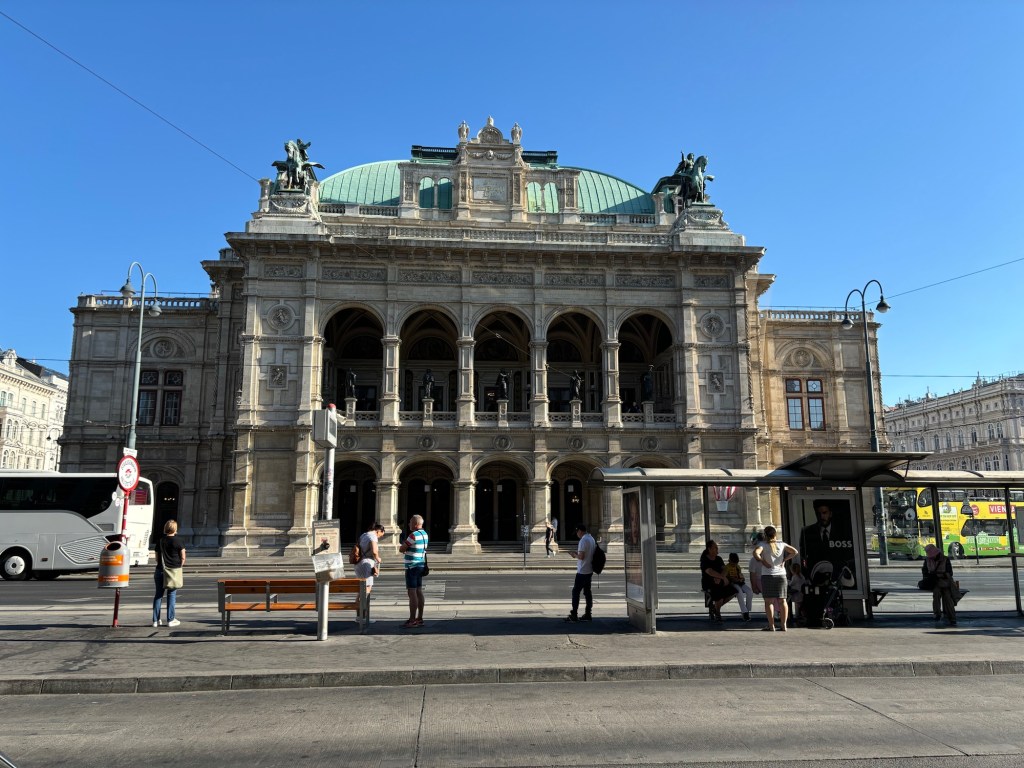
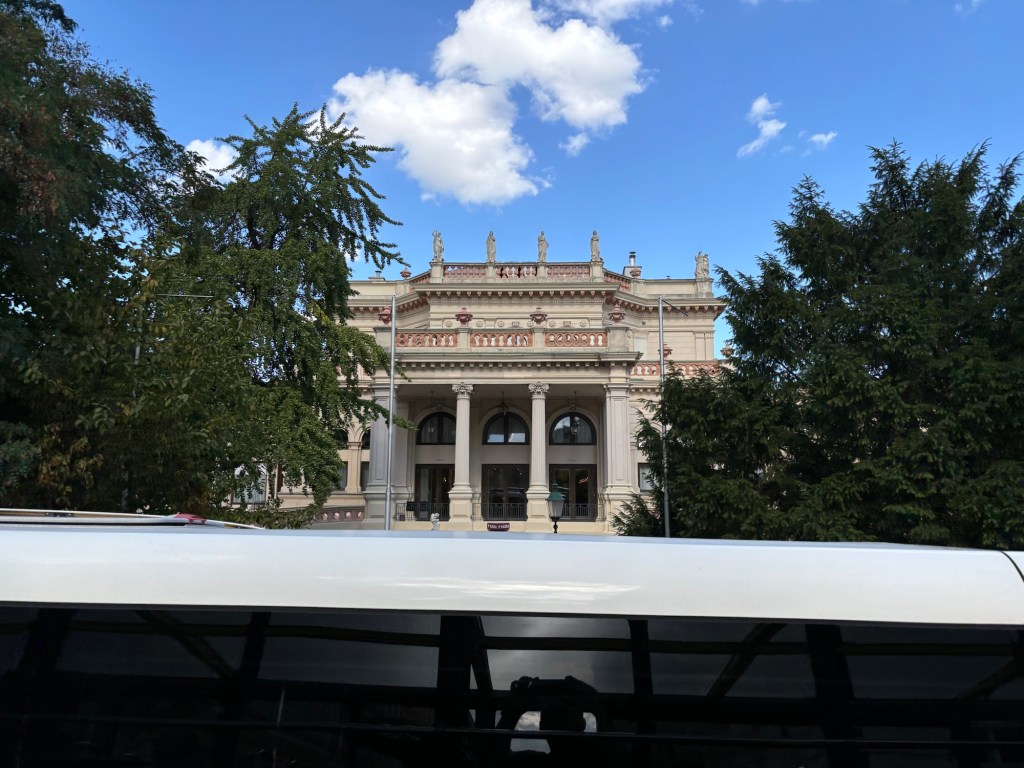
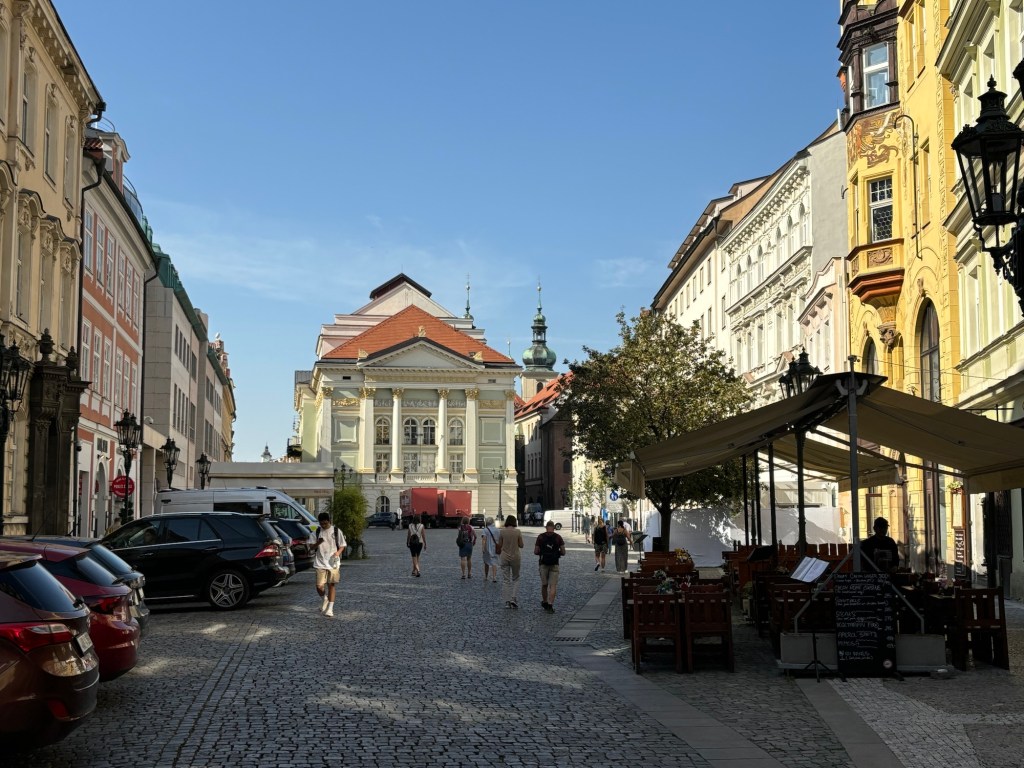
The Royal Opera House
Our tour guide proved to be quite the historian. Not as funny as the Prague guide, but well versed in historical facts.
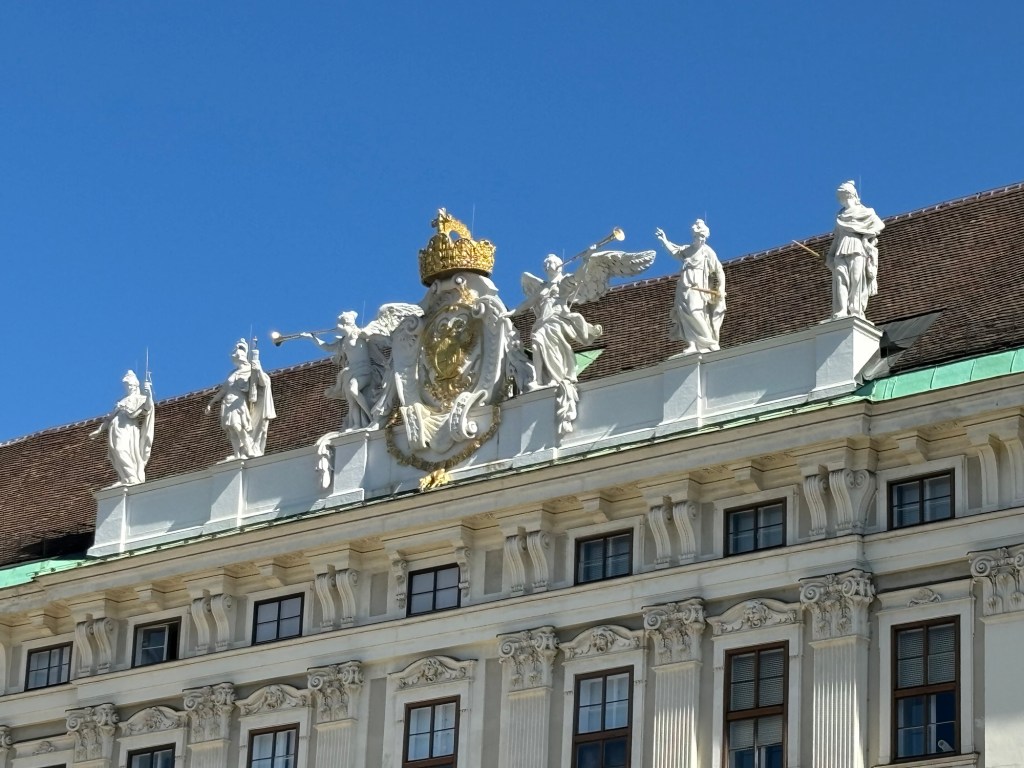
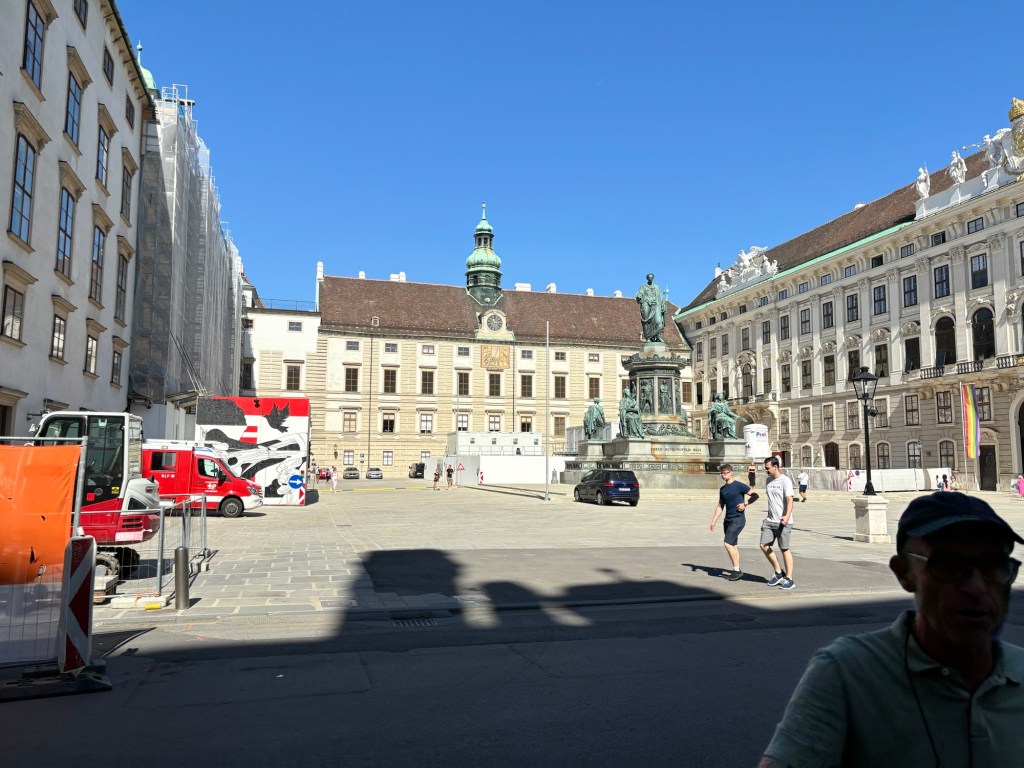
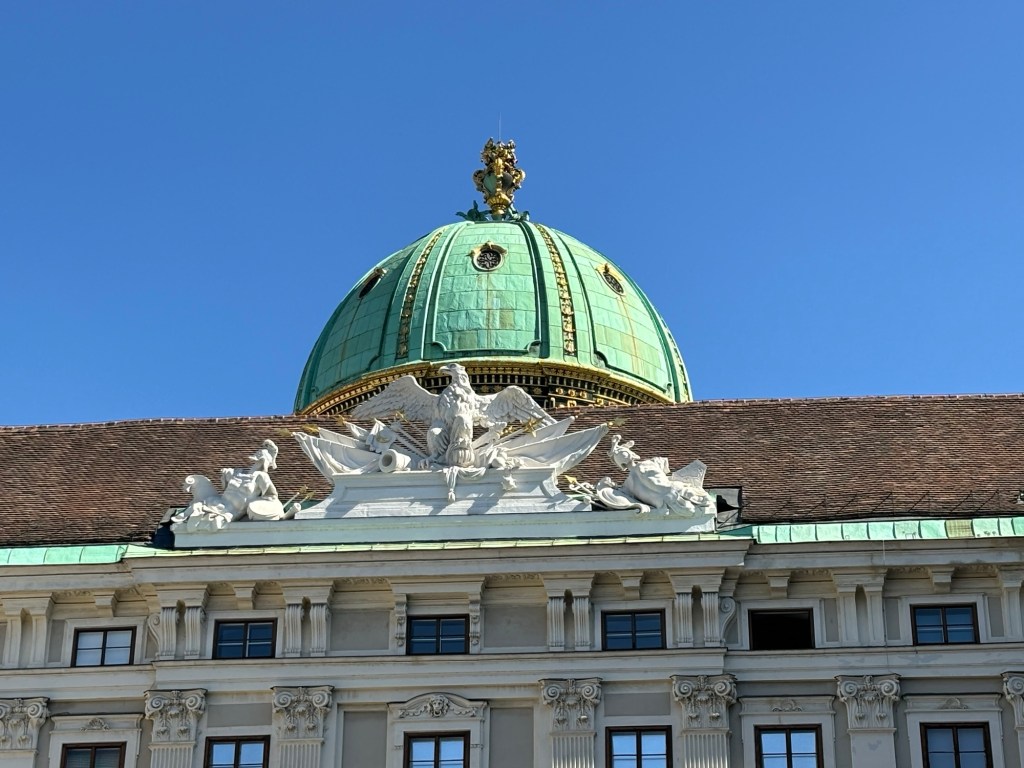
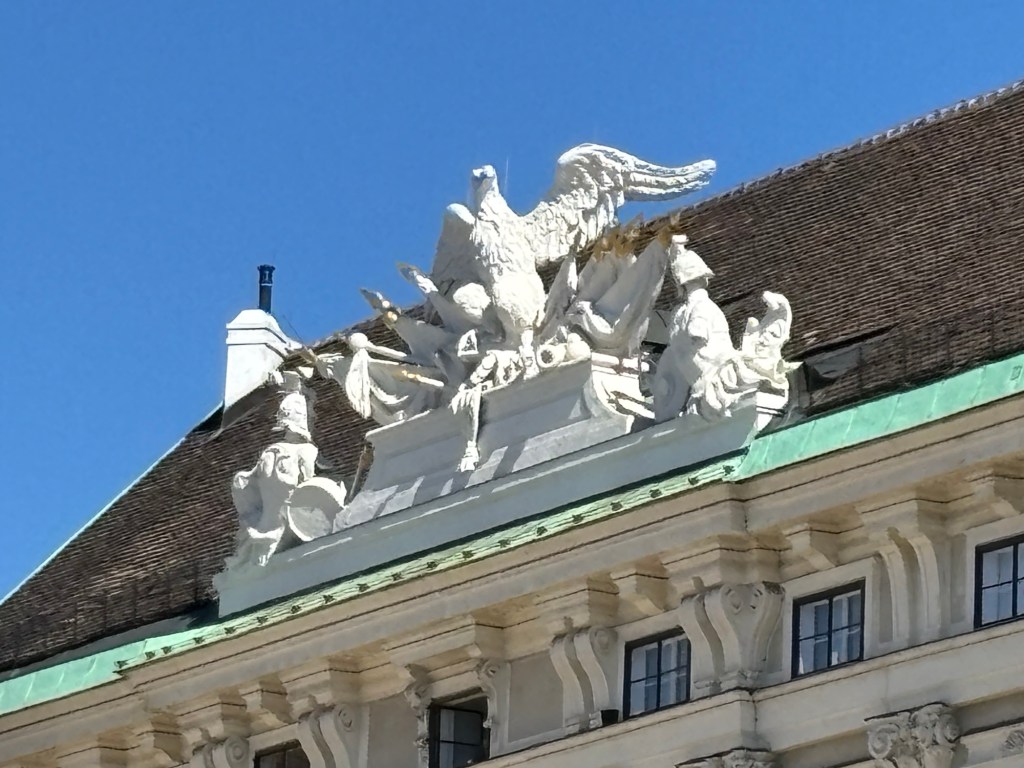
We began at the Albertina, part of the huge Hofborg Castle grounds, and now an art museum. The Hofburg Castle was home to the Hapsburg dynasty. Franz Josef I ruled for 68 years until he died in 1916. He was followed for two final years by his grand-nephew, Charles, and then the 640 year reign of the Habsburg’s ended 1918 with WWI. The Habsburgs were also Emperors of the Holy Roman Empire for their first 500 years in power.
A replica of the crown of the Holy Roman Empire on the side of one of the grand palaces at Hofburg Castle.
Currently, the real crown and the rest of the Imperial Regalia are exhibited at the Hofburg in Vienna — officially “until there is again a Holy Roman Emperor of the German Nation.” Wow, I guess?
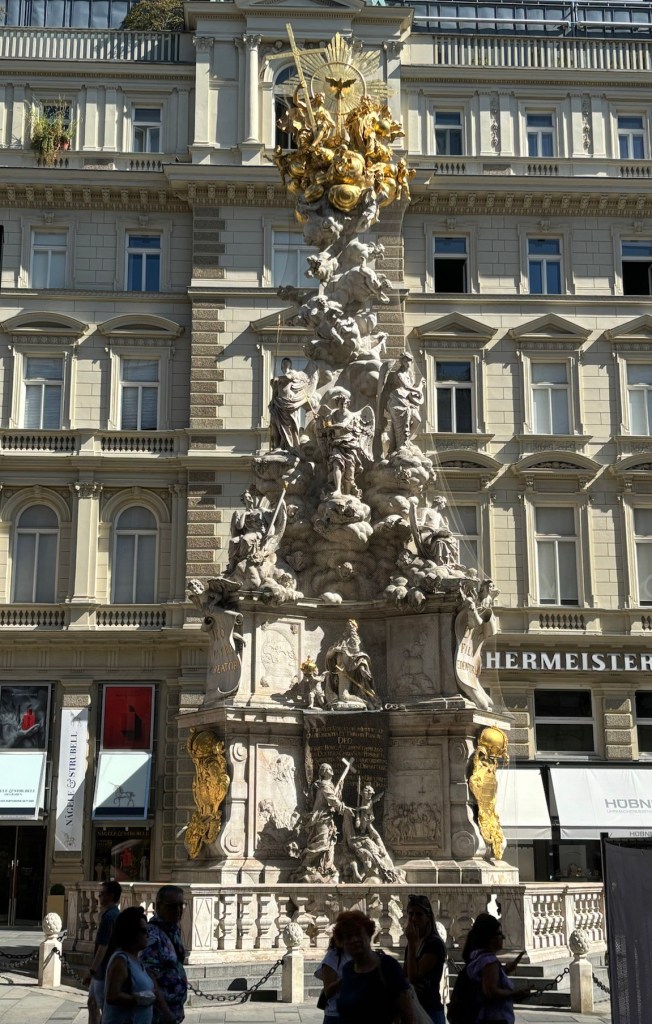
A statue depicting the Holy Trinity
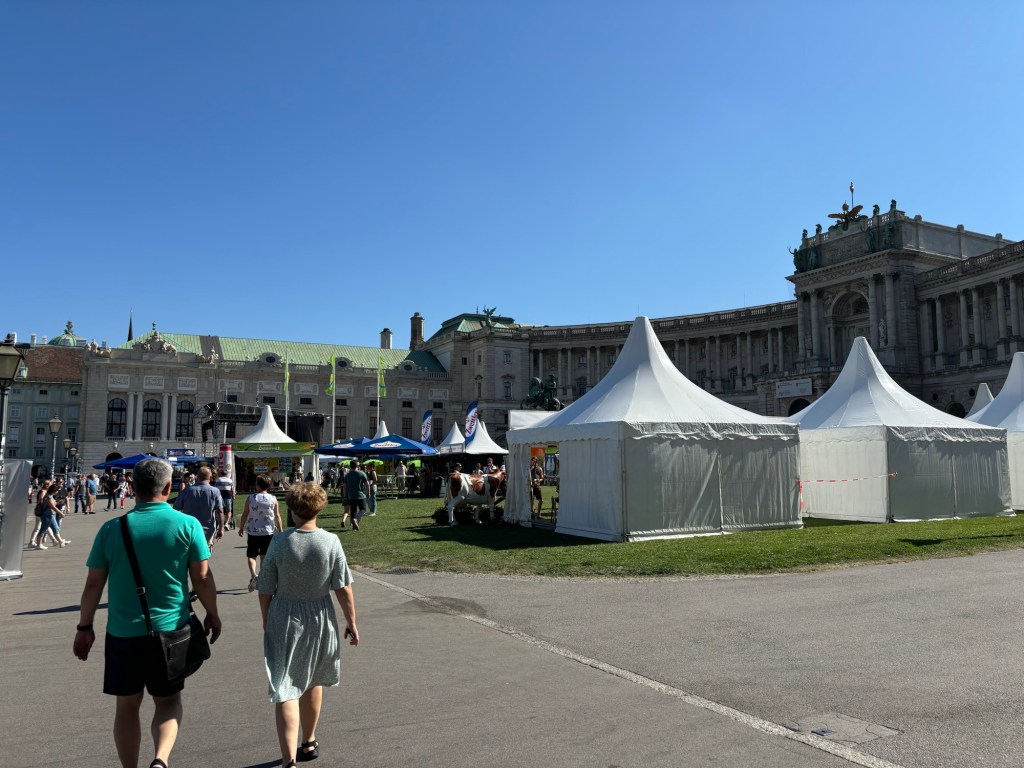
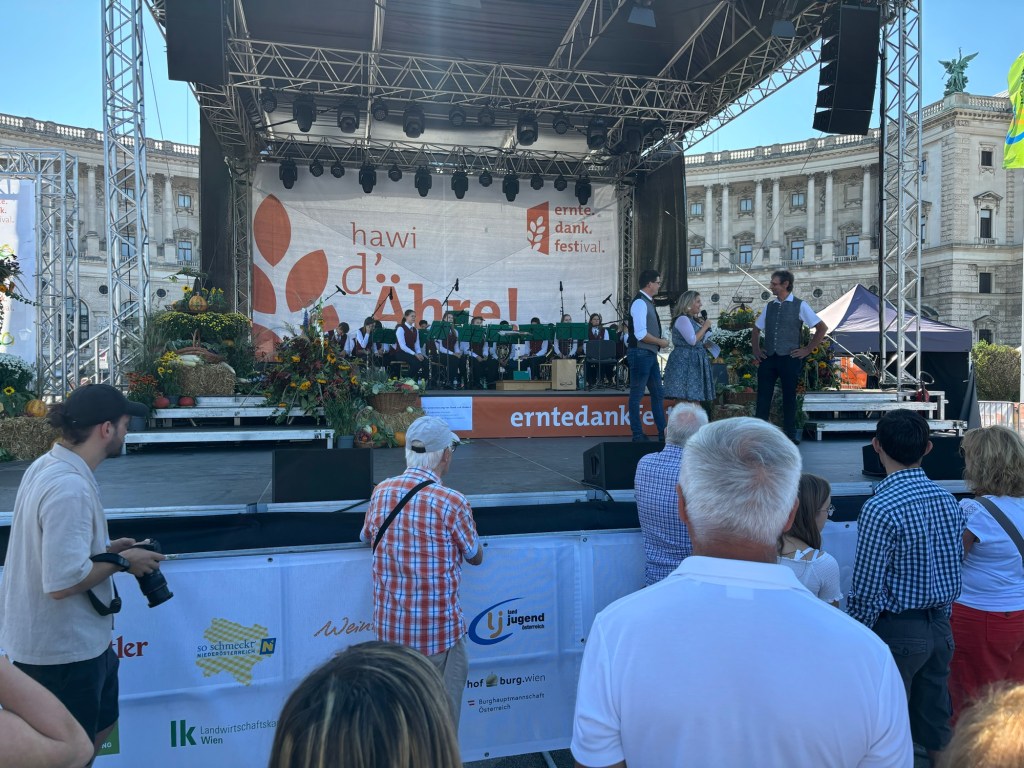
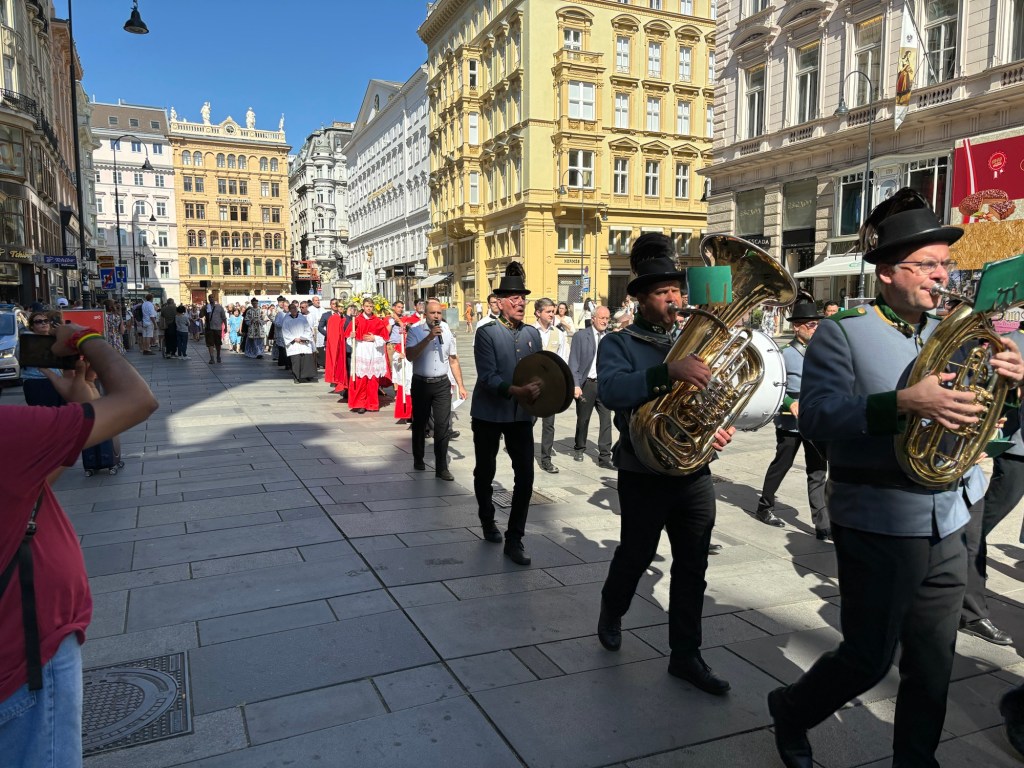
Today they were also holding a thanksgiving festival celebrating the harvest. There was almost a county fair atmosphere at the castle grounds and later a religious procession from the massive cathedral on the grounds.
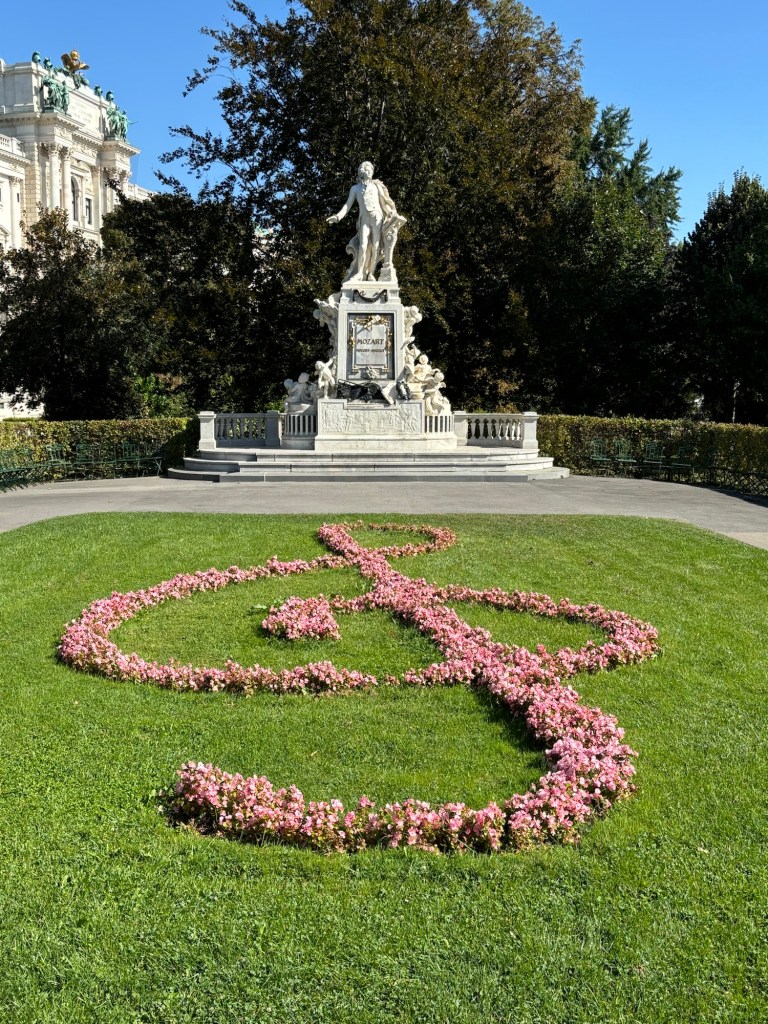
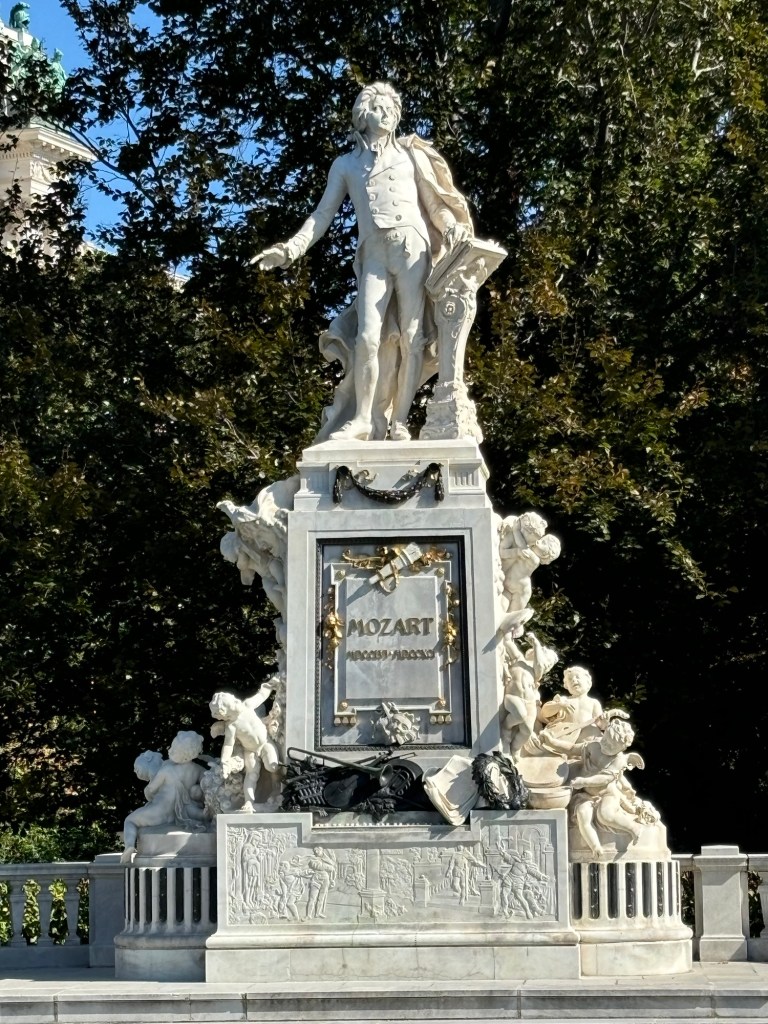
A statue of Mozart
Leopold Mozart brought his soon to be famous 6 year old son, Wolfgang Amadeus Mozart, to Vienna. Somehow young Mozart was able to play for Empress Maria Theresa and the royal court at Schloss Schonbrunn. Mozart amazed everyone with his musical genius, compositions, and playing ability. His path through his short life (35 years) was set from that point.
Along with Hayden and Beethoven, Mozart played “serious” music. Some fifty years later, “pop” music of the early 19th century came on the scene in the form of the waltz! The waltz king, Johann Strauss, became the first “Pop Star” with his shocking music of an uptempo beat, and with couples dancing closely together! Shocking to the aristocracy! Somewhat of a playboy, Strauss was 13 times engaged and 3 times married. He definitely fit the mold of a modern pop star.
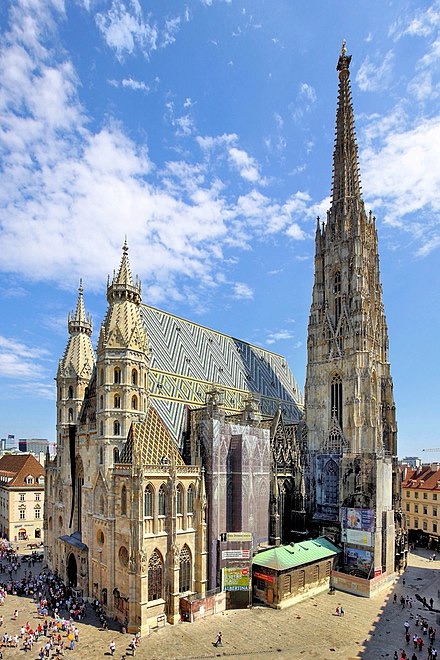
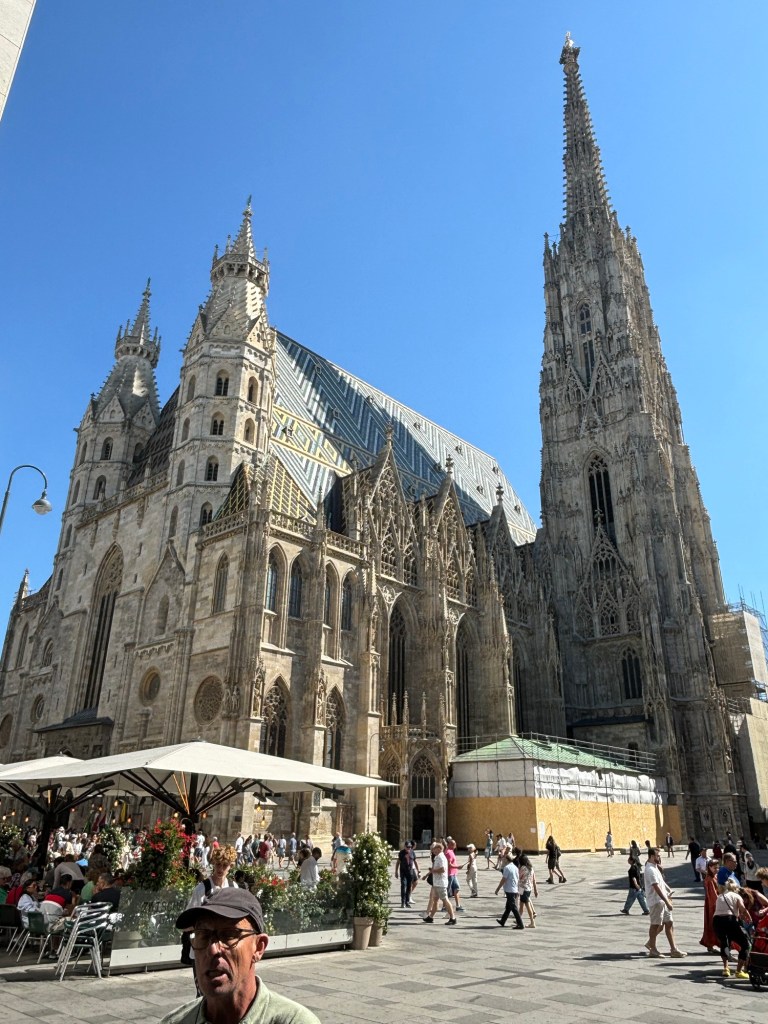
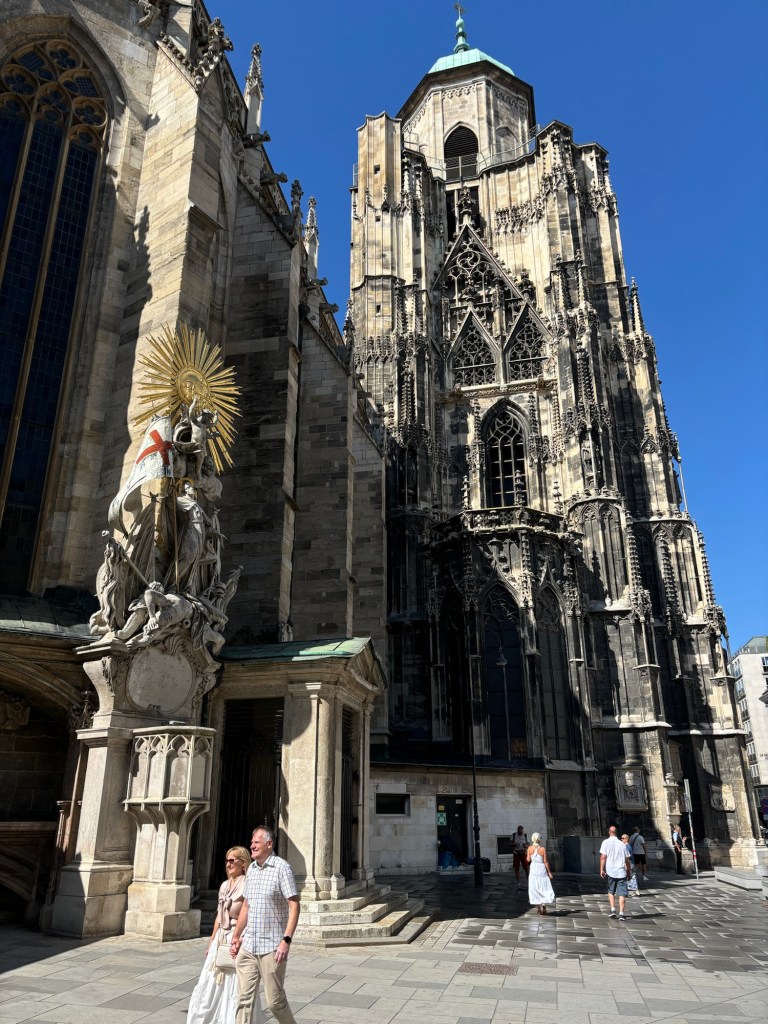
We visited the St. Stephen’s Cathedral after leaving the castle grounds (History: https://www.stephanskirche.at/history.php). The current St. Stephen’s was built in the Romanesque and Gothic form similar to the Gaudi-designed La Sagrada Familia in Barcelona.
Saint Stephen, venerated as the first martyr of the Catholic Church, was stoned to death for his religious beliefs.
You can still see the fire damage from an accidental fire in 1945
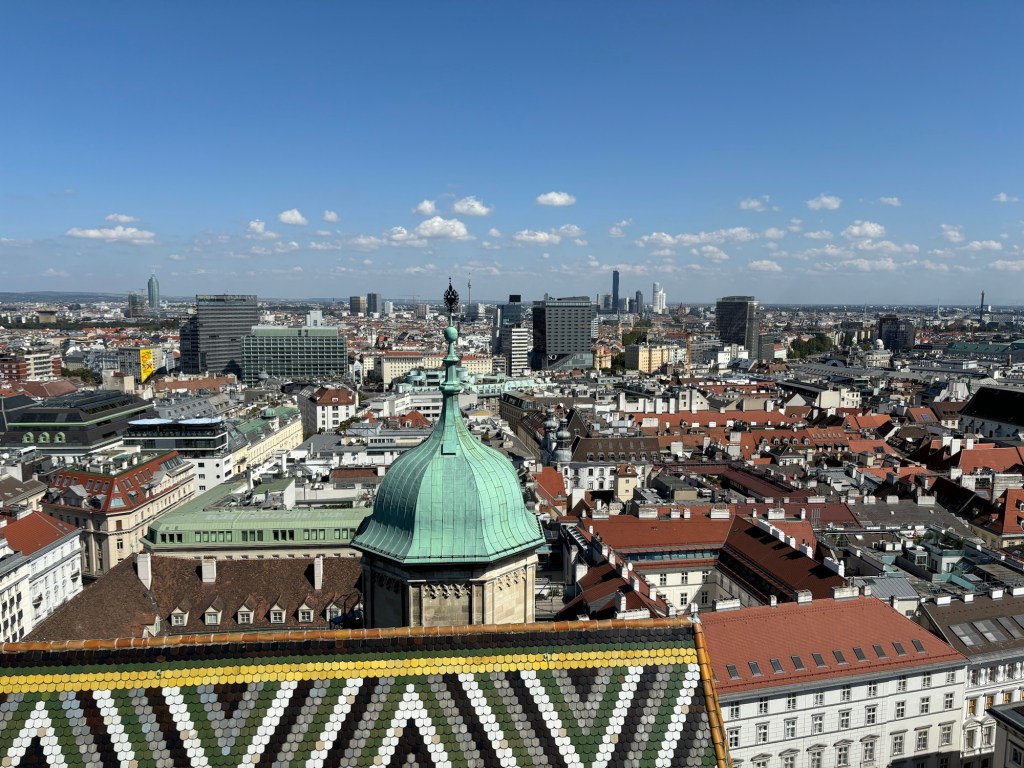
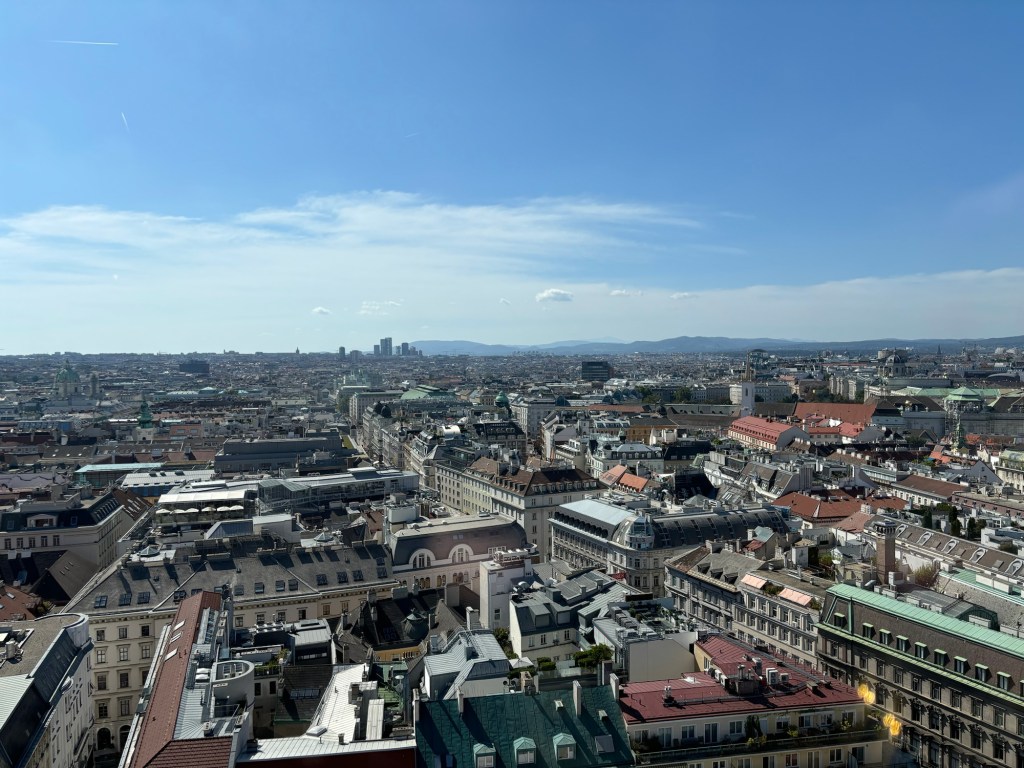
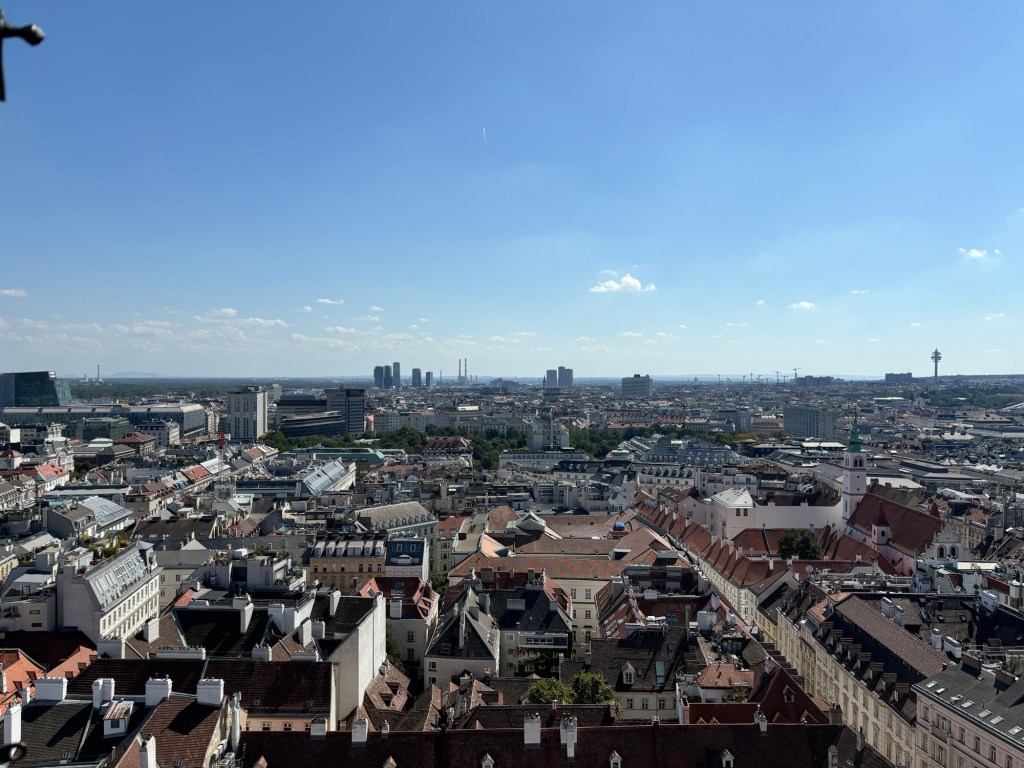
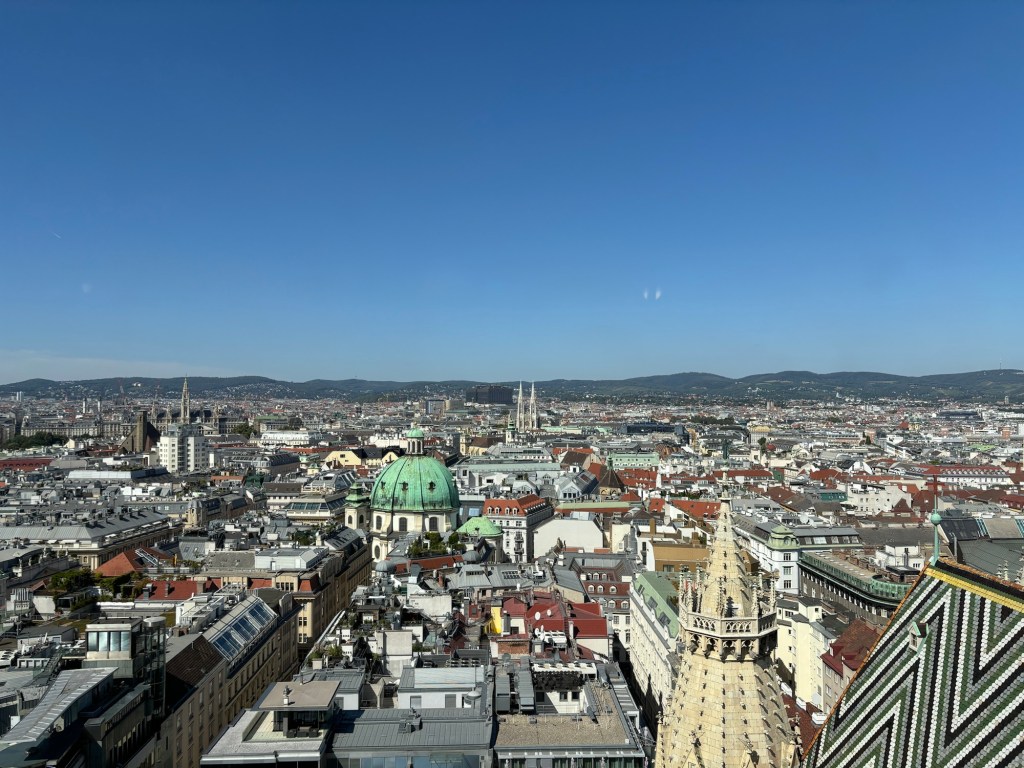
The 446 foot tall South Tower has 343 steps! All in a tiny, winding, spiral stone staircase. Barely enough space to let someone pass if you both squish against the walls.
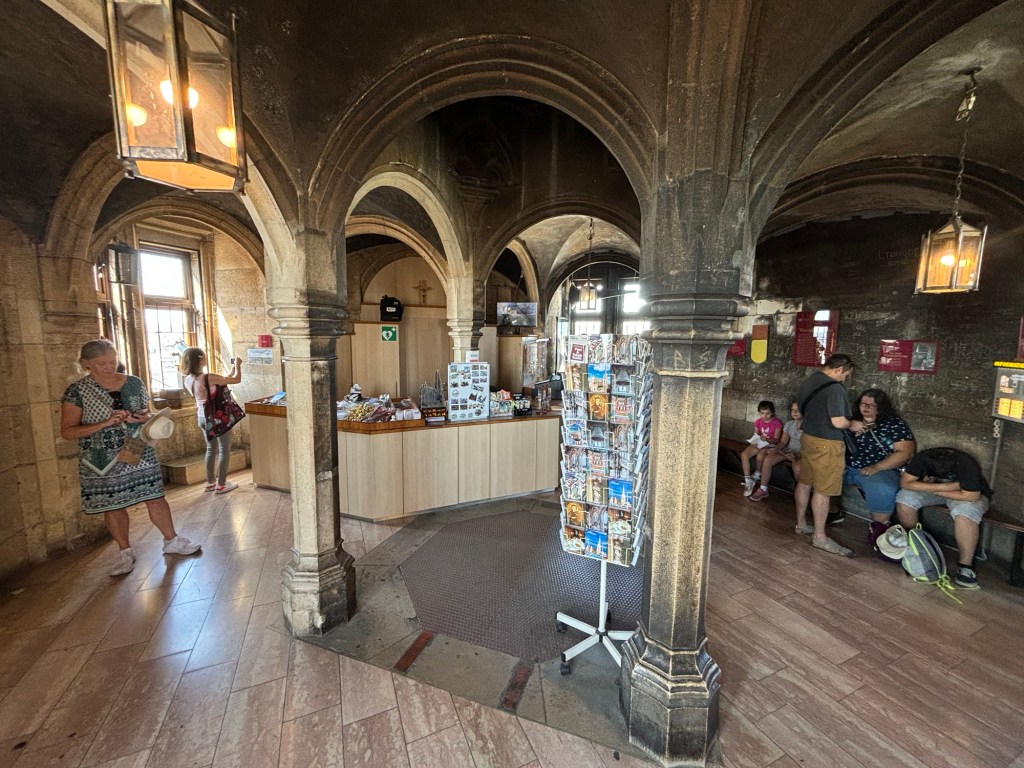
And it’s a Catholic Church so of course they have a shop at the top where they sell rosary beads and other religious items. But the best part is that there are also benches to sit down on at the top! It was a sweaty climb!
Cardinal Views of Vienna from the Tower
NorthSouthEastWest
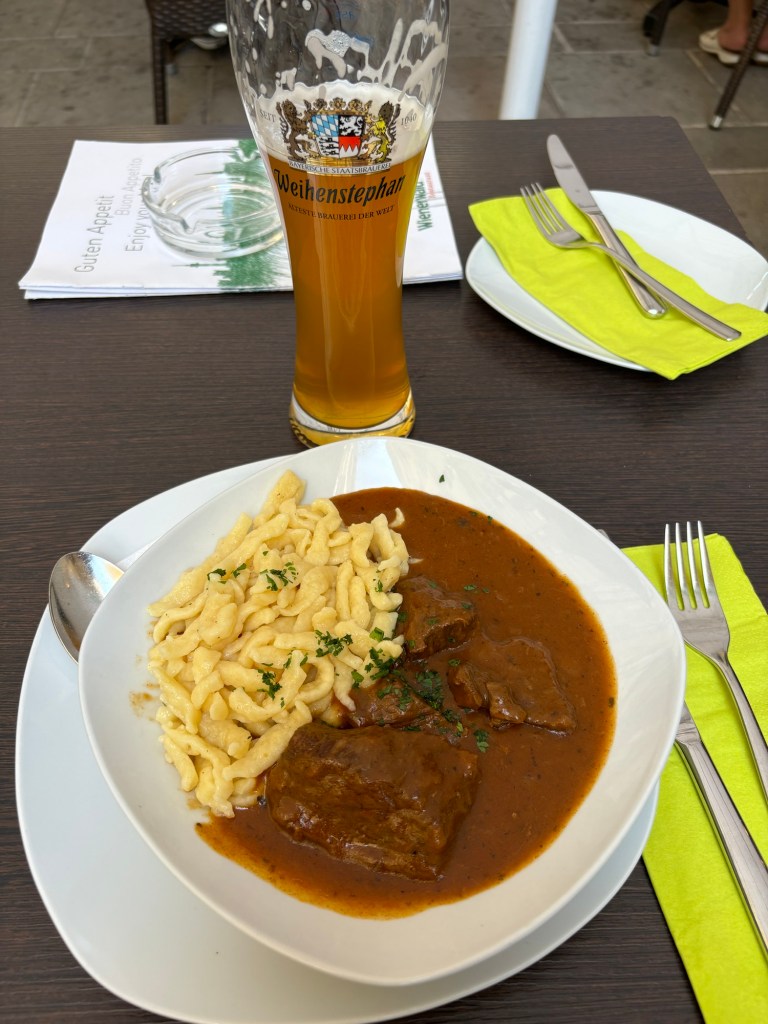
At an outdoor cafe, I enjoyed some delicious Austrian goulash and a beer.
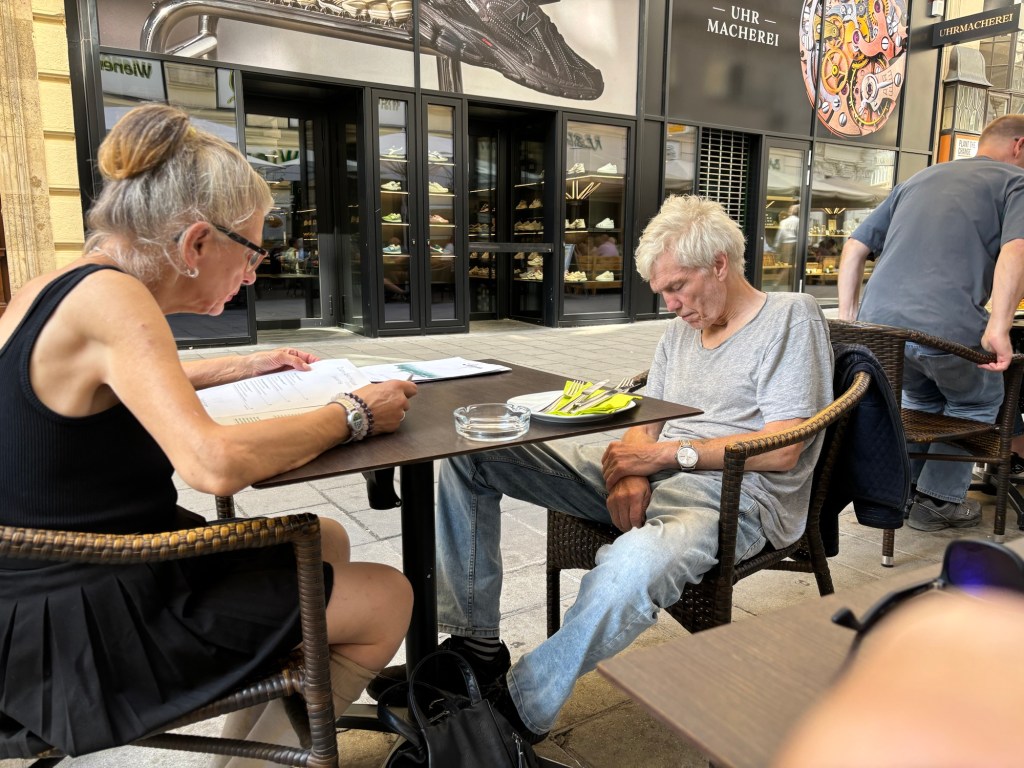
A funny note about the photo above…
When I sat down at my lunch table, the man at my left was telling the waiter that he was waiting for a friend. Then the guy promptly fell asleep. About ten minutes later, the lady walks up to and touches his shoulder to wake him, and then bends down to give him a hug. He continues to stay slumped in his chair. She sits down and begins talking, and within 30 seconds, he falls asleep again. She waits a bit, then she starts talking, he stirs, mumbles a response, and falls back asleep. This was repeated over and over the entire time I sat next to them. Not sure what his story was, but he sure was sleepy! Zowie!
More Photos
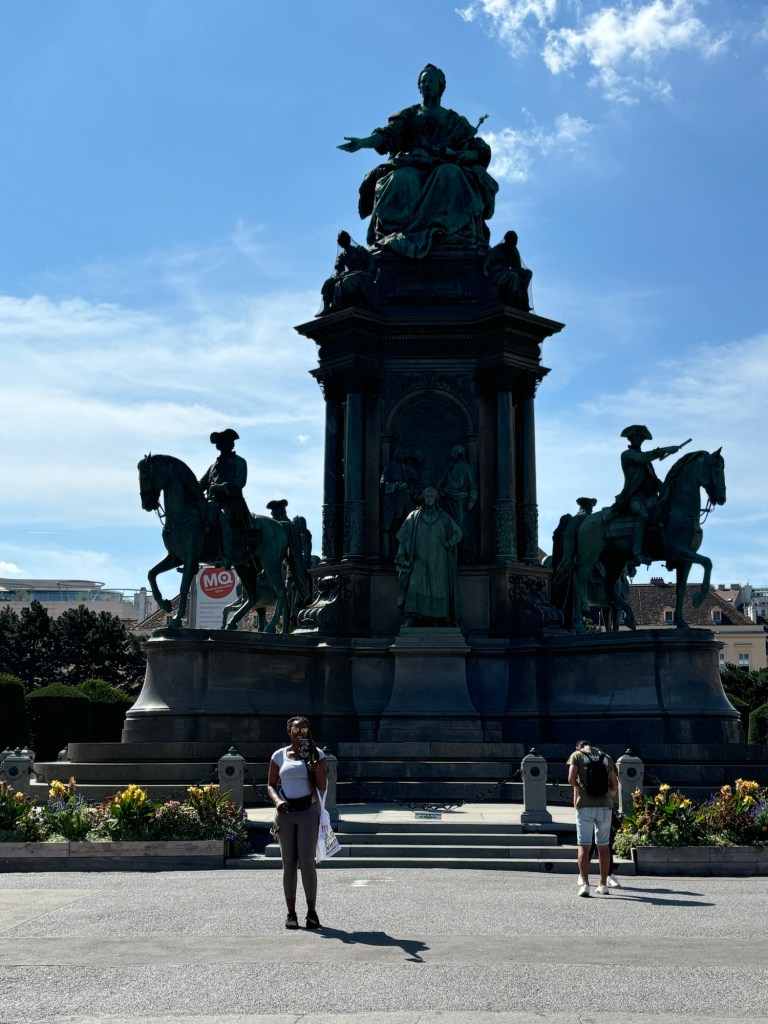
Statue of Empress Maria Theresa, great grandmother of Franz Josef IThe Imperial Horse Stables!
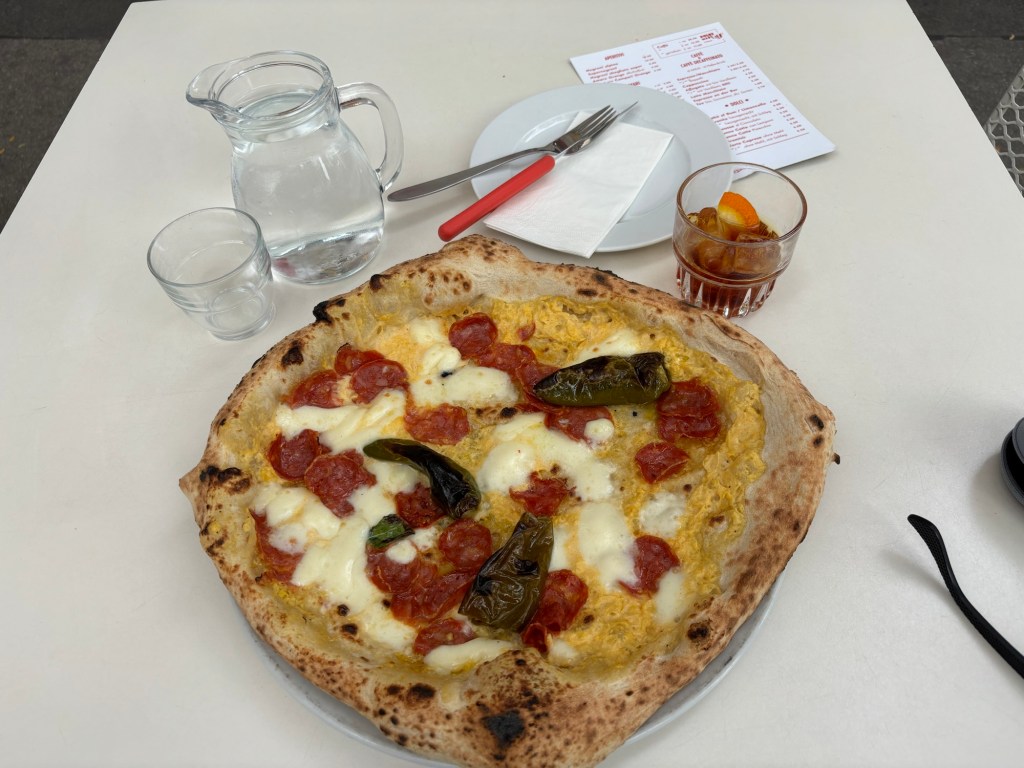
My pizza dinner was excellent! Sweet vermouth aperitif, a pitcher of water, and today’s pizza special. May have been the best pizza ever, even though it seems like an odd group of ingredients.
Maiscreme (corn cream), mozzarella, scharfe salami (pepperoni), and pimentos de Padron (Spanish-Style Blistered Padrón Peppers).
Next I’m off to Bratislava and Budapest in the morning!
Words of wisdom, or just to amuse…?
What did the Dalmatian say when itching a scratch? Oh yeah, that’s the spot.
A 15-minute scooter run to the train station for my 4-hour ride to Vienna, Austria. I haven’t been to Vienna in nearly 40 years so I expect there will be lots of new to go with the old.
Well, the Czech trains were a significant upgrade over the German versions. Modern, comfortable, cool, and on-time!
The countryside along the trains path through the Czech Republic was largely flat with a mix of farmland and forest. The plowed fields seem almost rock free, unlike the VERY rocky fields of France, Spain, and Portugal.
Another thing different is that I have seen many deer stands (or maybe bird hunting stands?) in fields adjacent to my various train routes. That is something I never saw in my trips through France, Spain, and Portugal, along with no deer! Well, a couple, but nothing like the U.S.
After my train arrived, I jumped on a scooter to head across town to my hostel. OMG! Vienna has amazing, and mostly off the roadway, bike paths! Much safer zooming around town on my e-scooters. And I didn’t find a single cobblestone street all day! Ah, smooth pavement, what a relief. Prague must have been the cobblestone capital of Europe, and they’re REALLY bumpy on scooters.
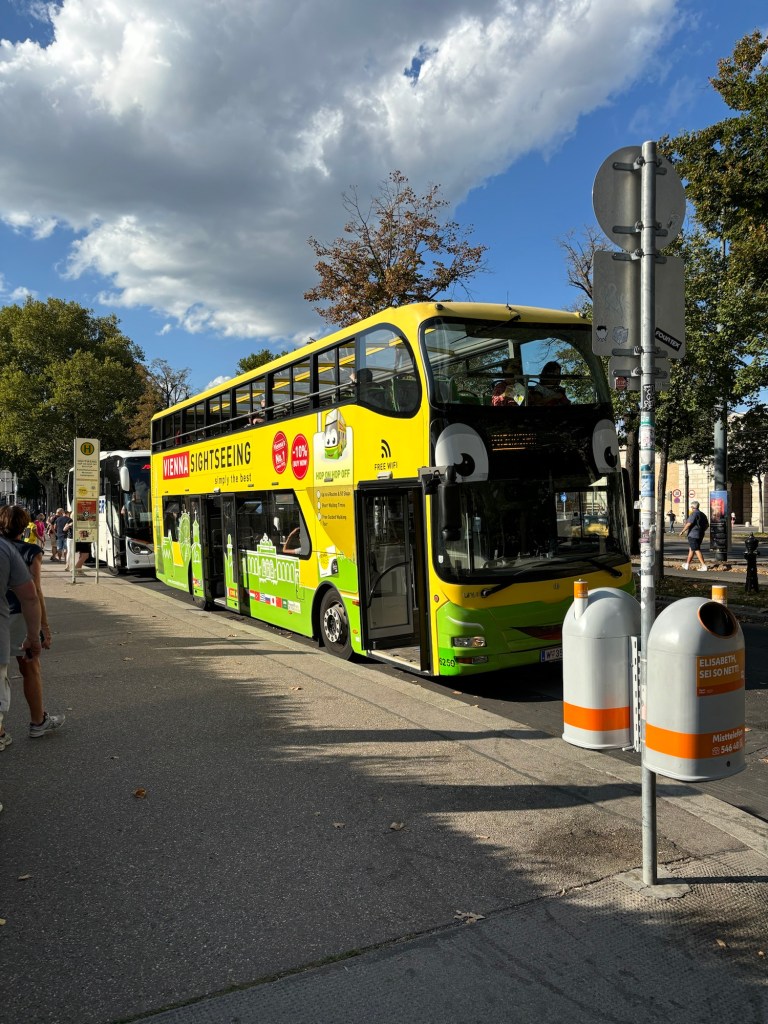
Anyway, I dumped my pack at the hostel, got back on a scooter, and headed out to find a hop on – hop off stop for my afternoon of bus-seeing.
The weather has been clear skies everywhere so far, although a bit too hot to be comfortable. Not complaining, but next year when I plan to do countries in the south of Eastern Europe, I plan to come in October!
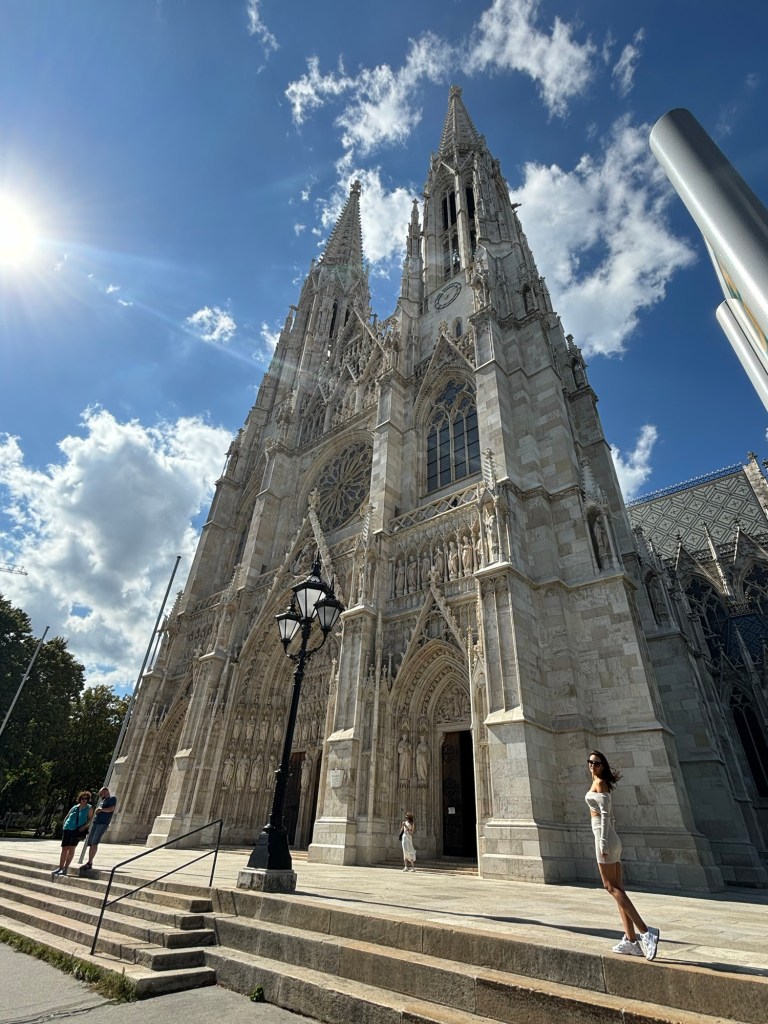
Here are some not so good bus pix from the afternoon in Vienna.
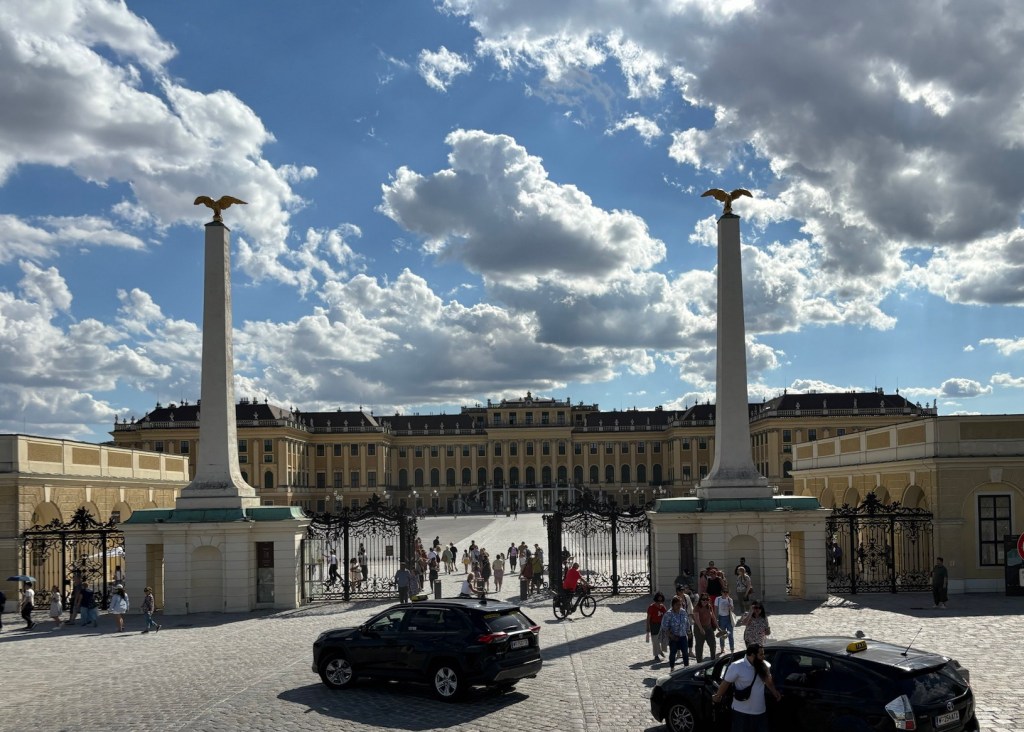
Schloss Schönbrunn – the Schönbrunn Palace – summer home of the Habsburg dynasty of Austro-Hungarian rulers.
Since it’s been sweaty weather, I did a full load of clothes at the hostel before dinner. That’ll hold me for another 5-6 days.
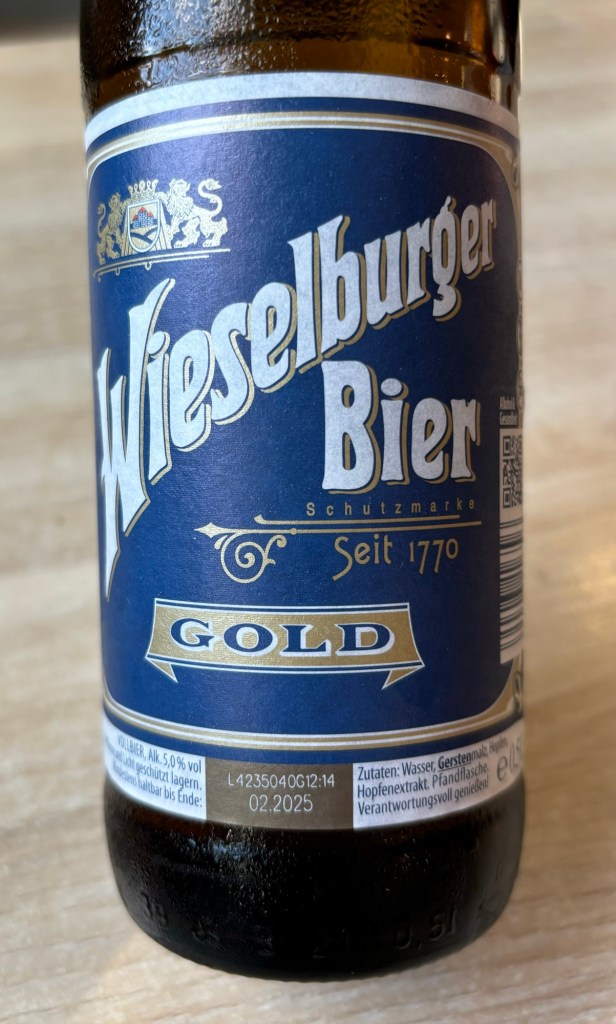
The Official Beer of the “Waiting For My Laundry” Club! An excellent Austrian brew!
The good thing about most laundries in Europe is that they include laundry detergent and it costs less than $9 for a full load of wash and dry. Makes it easy to travel light when you can wash a few things along the way.
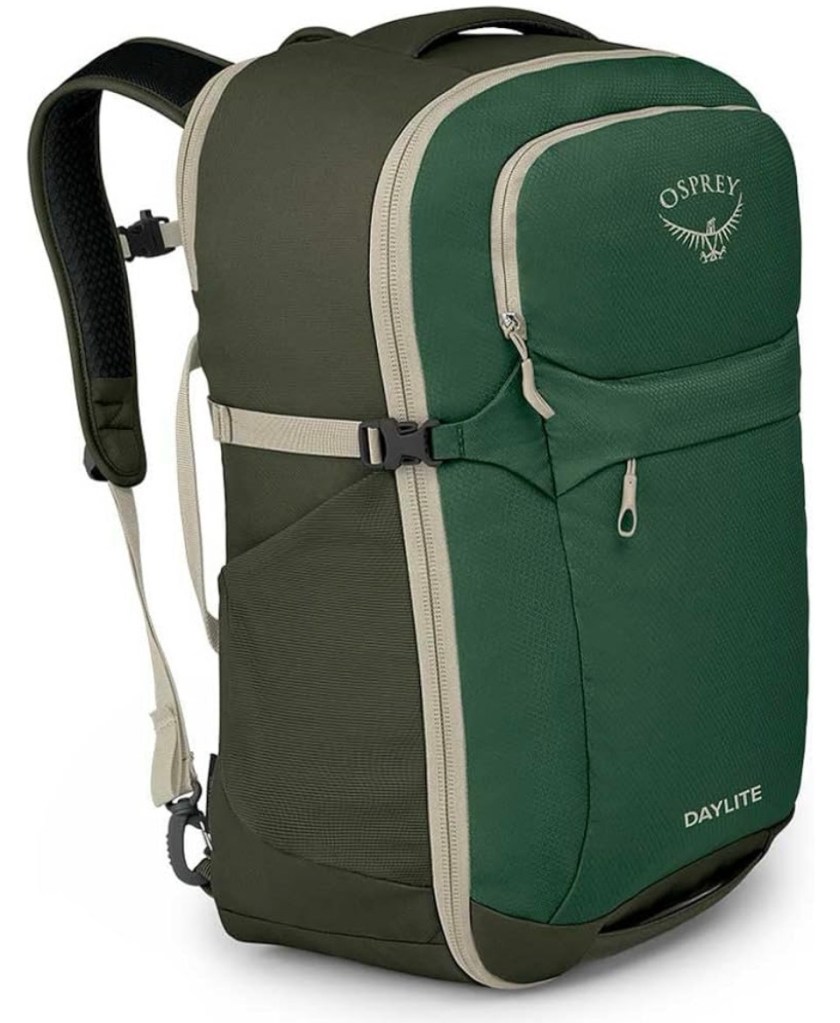
My Osprey Daylite Carry On Travel Backpack – it’s my go to pack so I don’t have to check a bag, even on a three week trip.
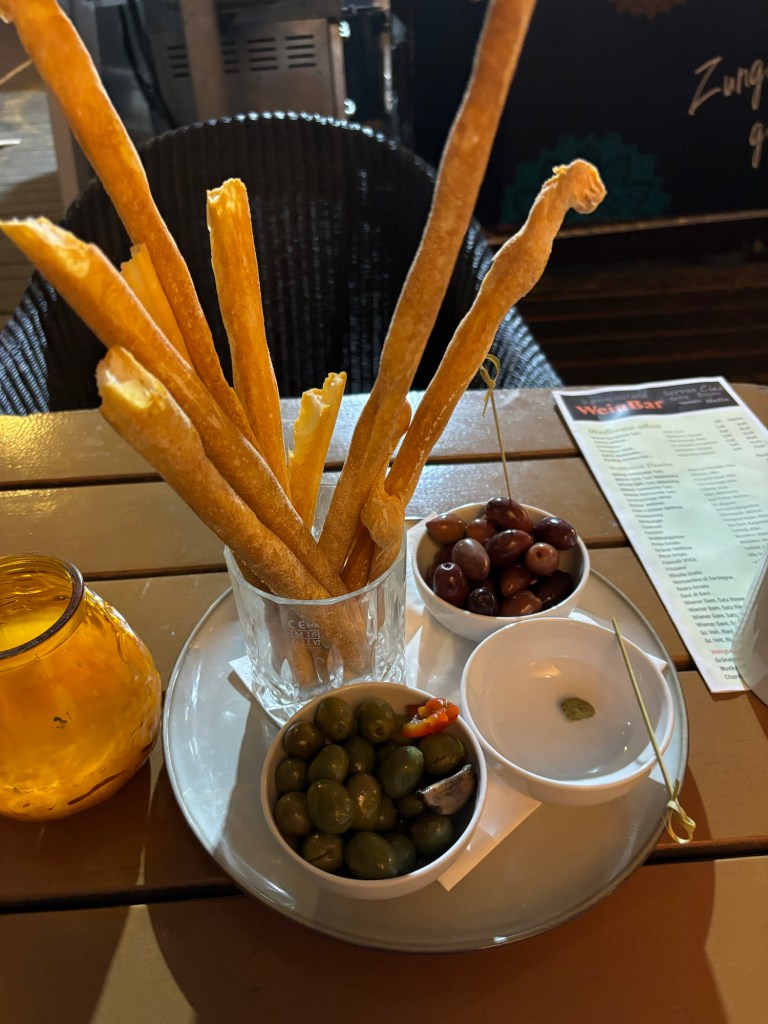
For dinner I hit a riverside cafe for a bit of an odd combo: olives and breadsticks, along with Thai beef, vegetables, and rice, washed down with two bottles of water. Good, but not great. I’m going for pizza tomorrow!
My appetizer
And on tap for tomorrow? A walking tour in the morning, then we’ll see what the rest of the day brings.
Words of wisdom, or just to amuse…?
I’m not reading any instructions. I just press buttons until it does what I want.
No A/C in this hostel either, but they have fans in the rooms – life is good! After a comfortable night, I headed out by scooter to find breakfast and the meeting site for my 10 am Walking Tour.
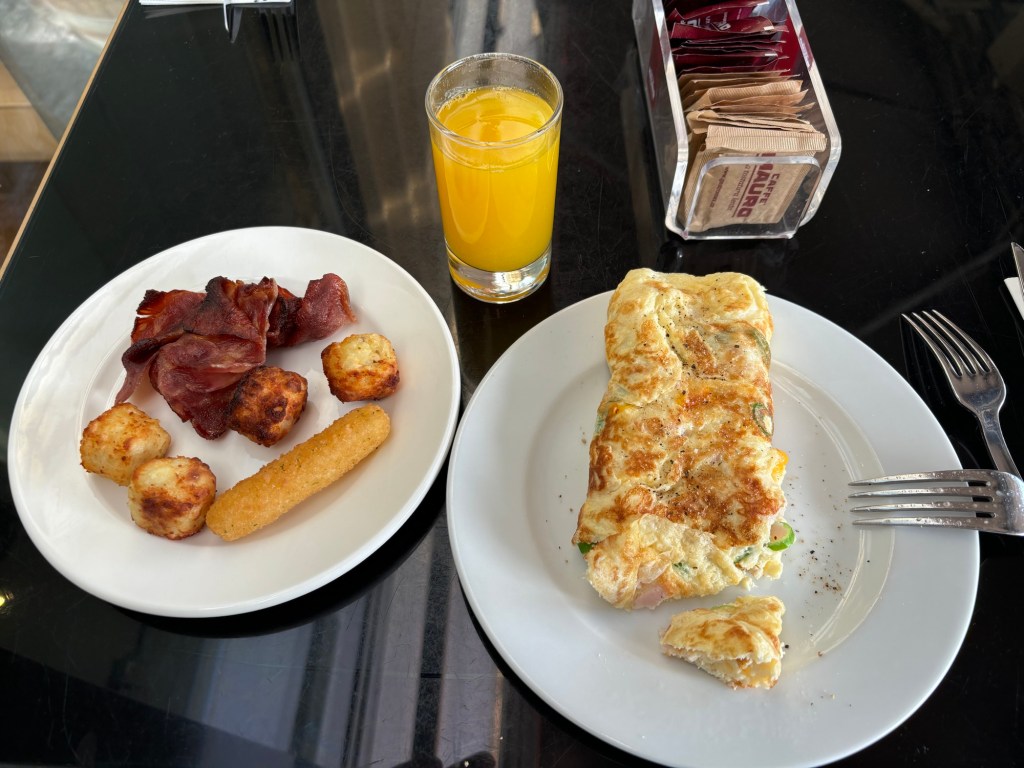
I enjoyed a great breakfast at the Adele Restaurant and Bar – with a spectacular buffet of an endless variety. Wow! Wish I had been more hungry.
Added some yogurt and granola for dessert!
Some Tidbits about Prague and the Czech Republic
There are 10.5 million residents in the country.
University is free in the Czech Republic.
Polka, Pilsner, dollar, and a few other words all come from the Czech language.
There are a lot of Opera Houses and Theaters in Prague!
And if you don’t like cobblestone streets, don’t come to Prague!
My Three Hour Tour (for Gillian fans…)
I signed up for a walking tour around Prague like I’ve joined in other cities around the world. The “donation only” tours are generally very enjoyable, and this one did not disappoint either. I was in an international group of 22 English, Ukrainian, Israeli, American, Brazilian, and a couple other nationalities I didn’t catch. Our guide was born in Prague, but had also lived 15 years in the U.S., so he was easy to follow.
Along the tour, our guide said, “For you Americans in our group, if you see something here that looks old, it is old! It’s not like something in America that was built 50 years ago and designed to look like it was made in the 1300s.”
We toured the old Jewish Sector, New Town, Old Town, and walked across the Charles Bridge to the other side of the Vltava River.
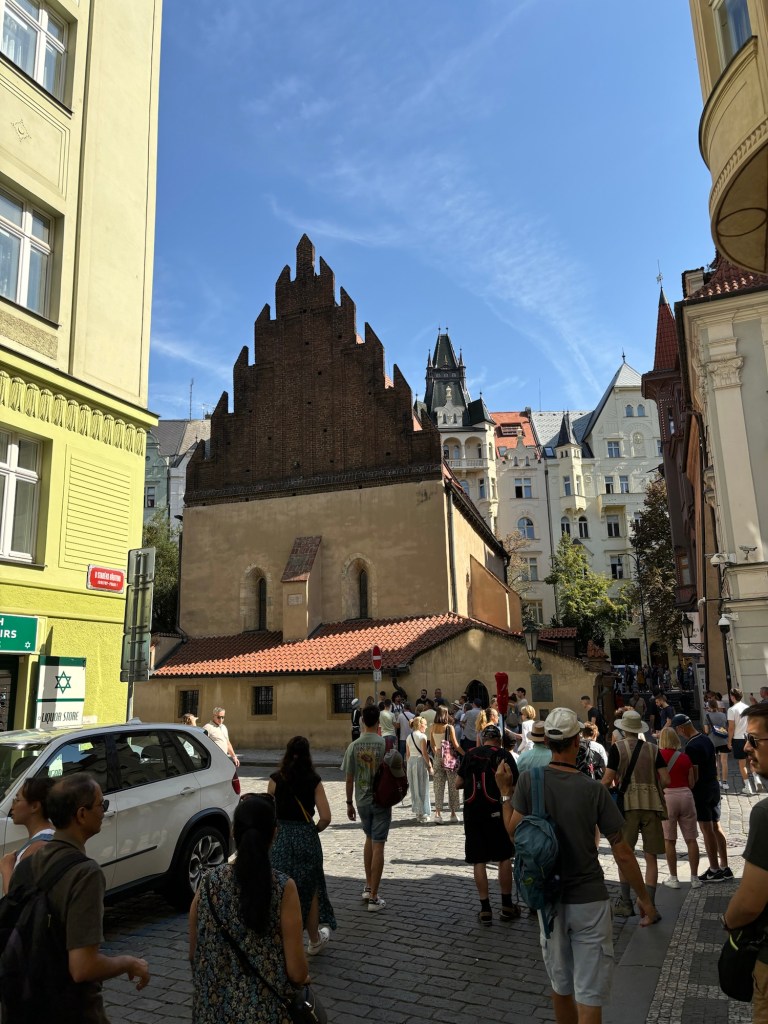
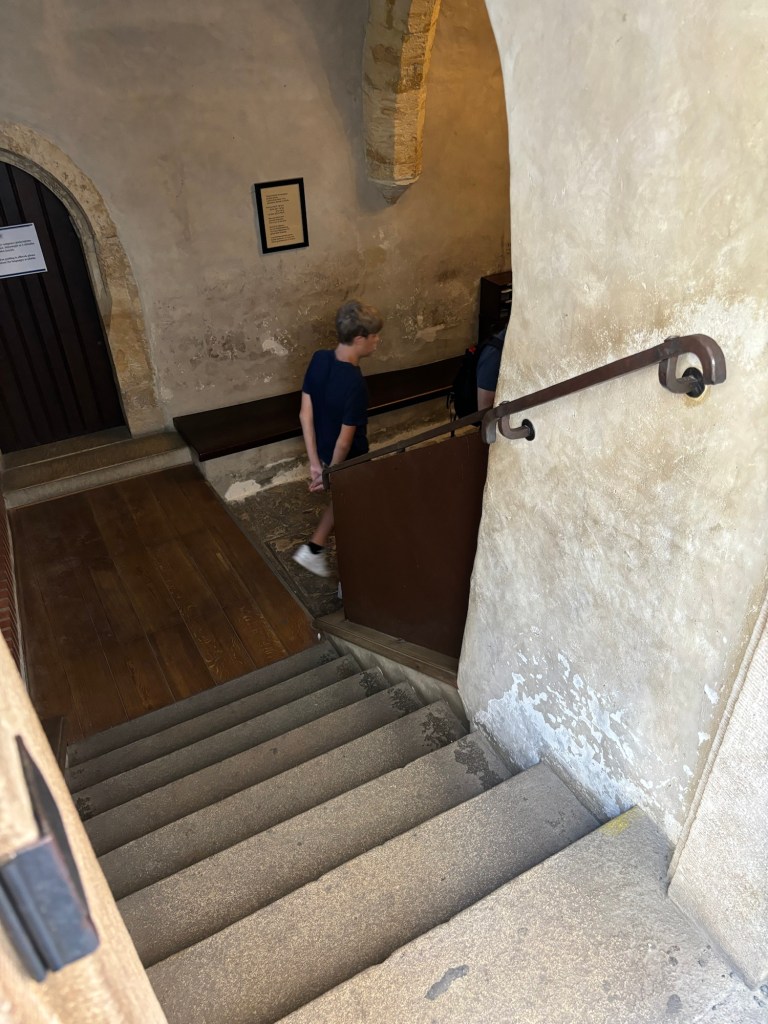
It’s interesting that many of the shops, bars, homes, hotels, churches, etc., especially in Old Town Prague have 2-3 levels below street level. Due to flooding from the river, the roadways had all been elevated by adding dirt and rocks up to 30 feet deep. So in many cases you can walk down into buildings, or have to walk down a level or two to find the bathrooms in many establishments. The Old-New Synagogue mentioned below is an example of that – you actually walk down two flights of stairs from the street to get to the synagogue’s main floor.
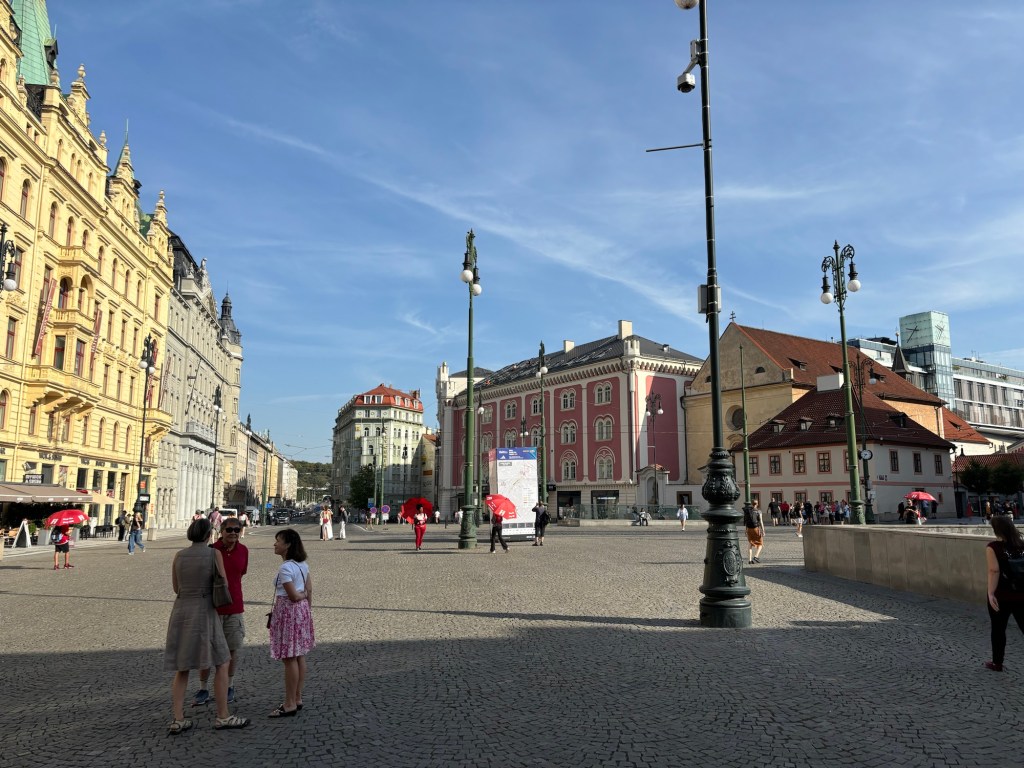
New Town Photos
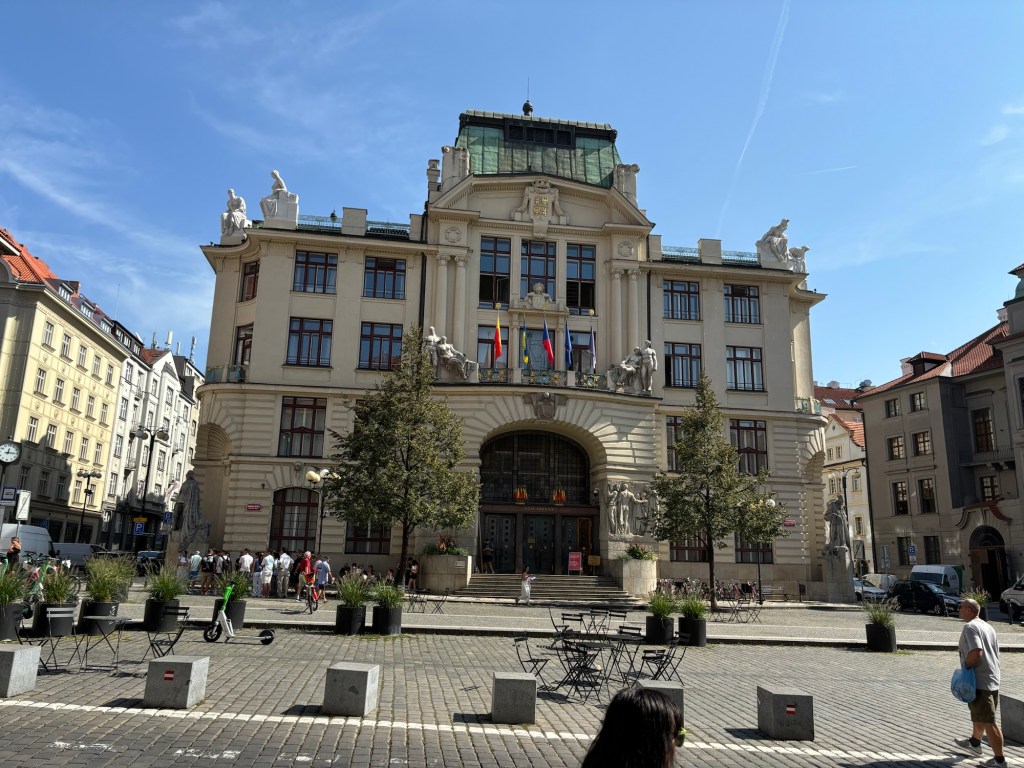
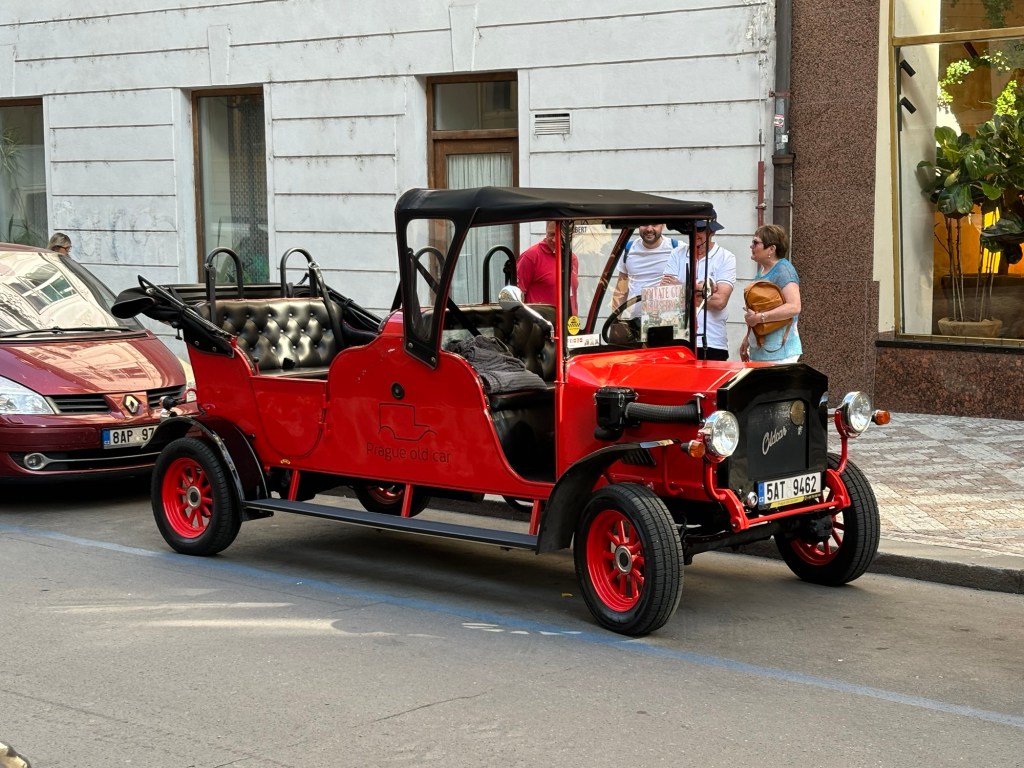
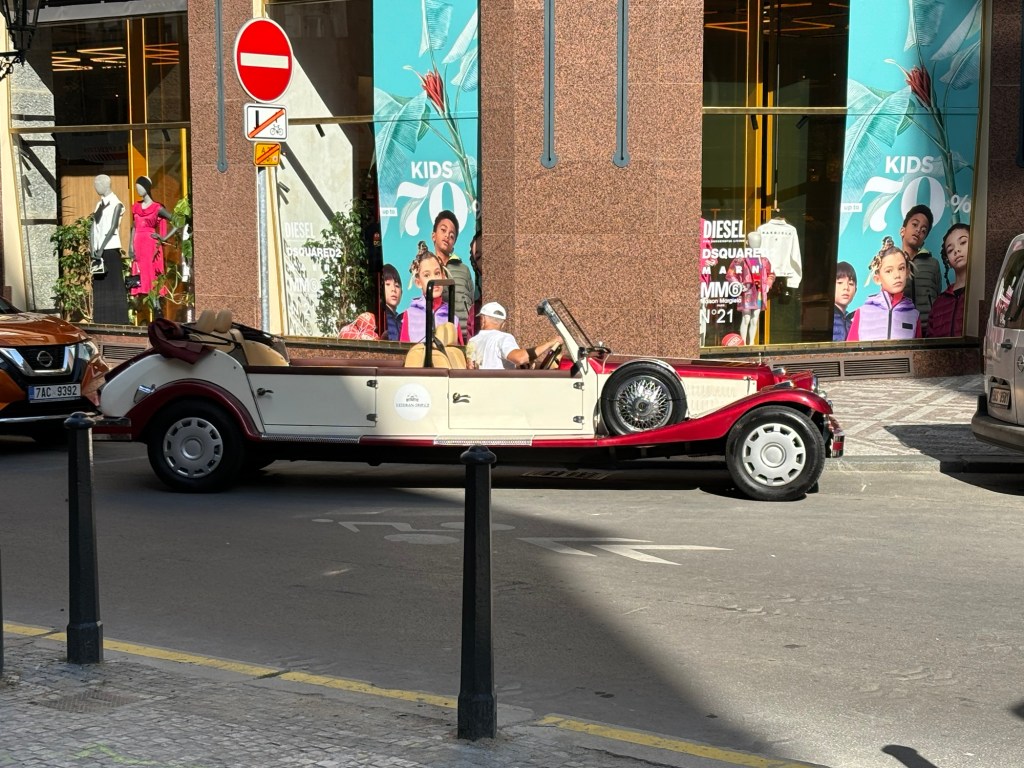
“Nova Radnice” or New City HallTourist Sightseeing Cars
Old Town Photos
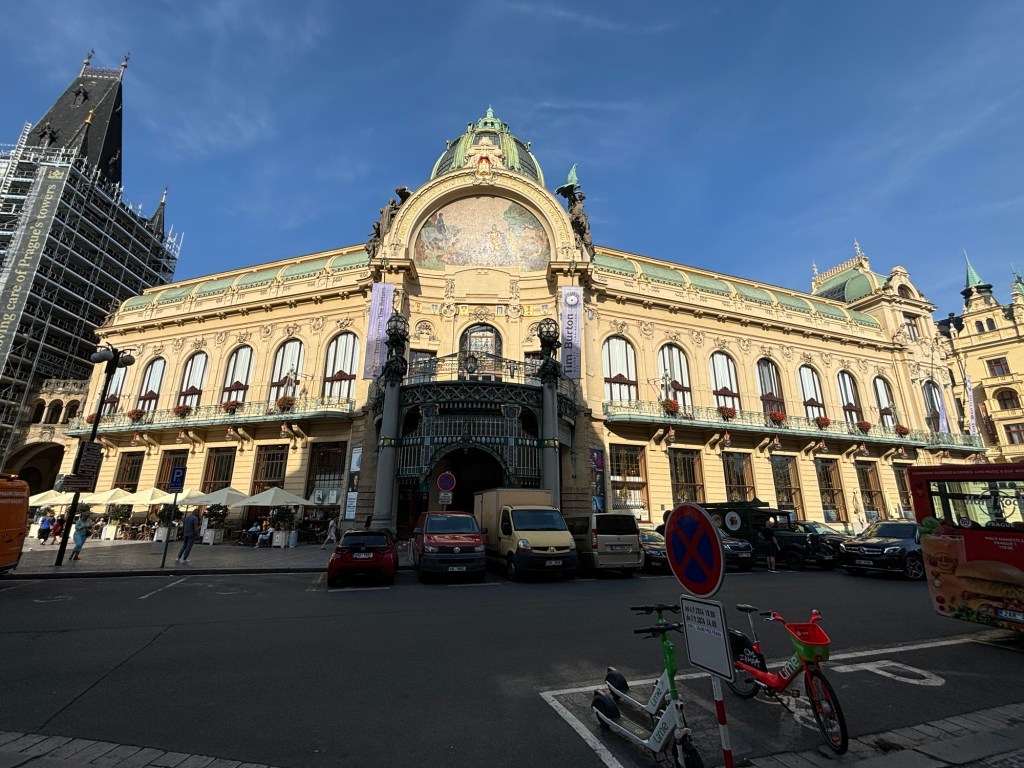
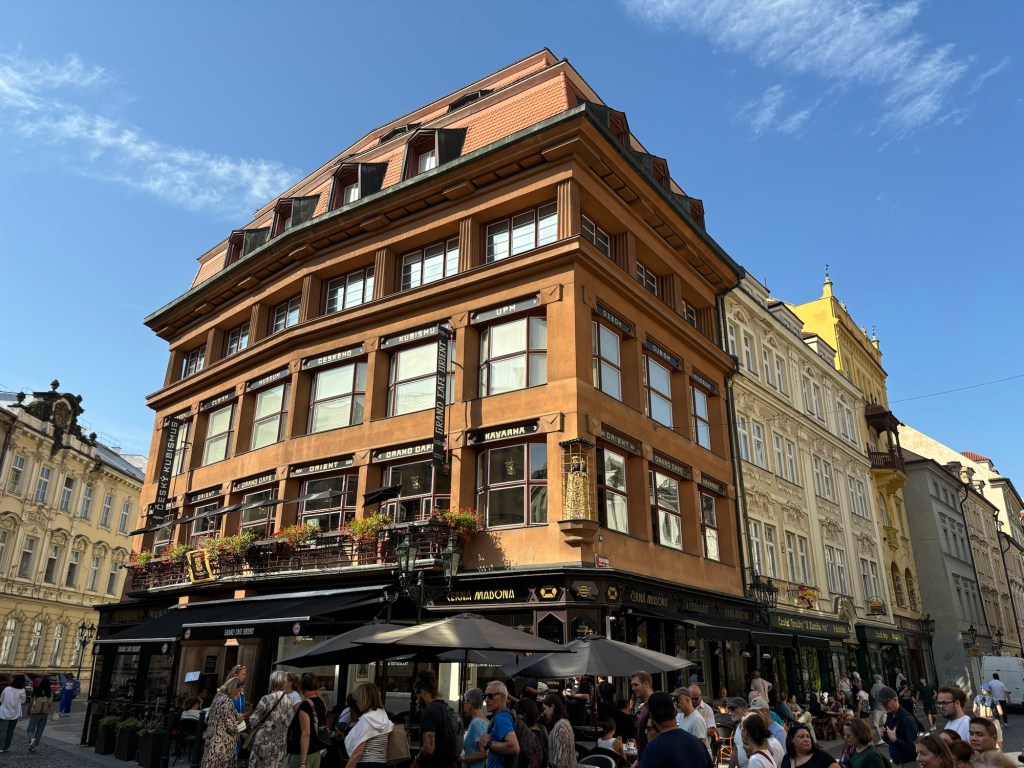
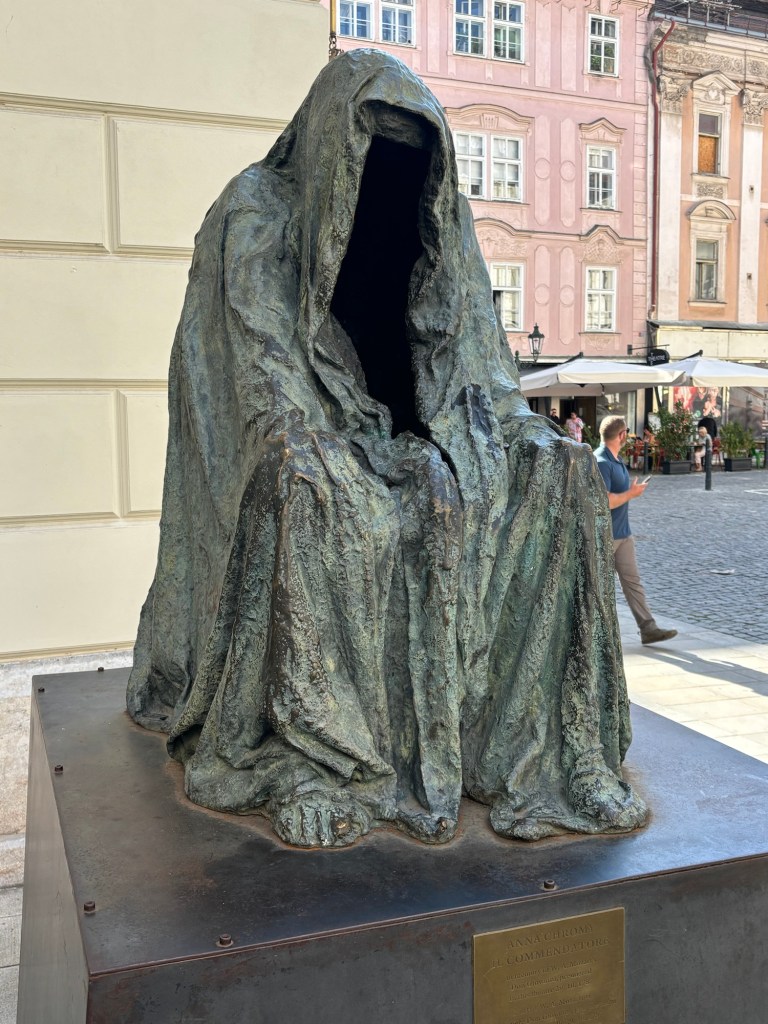
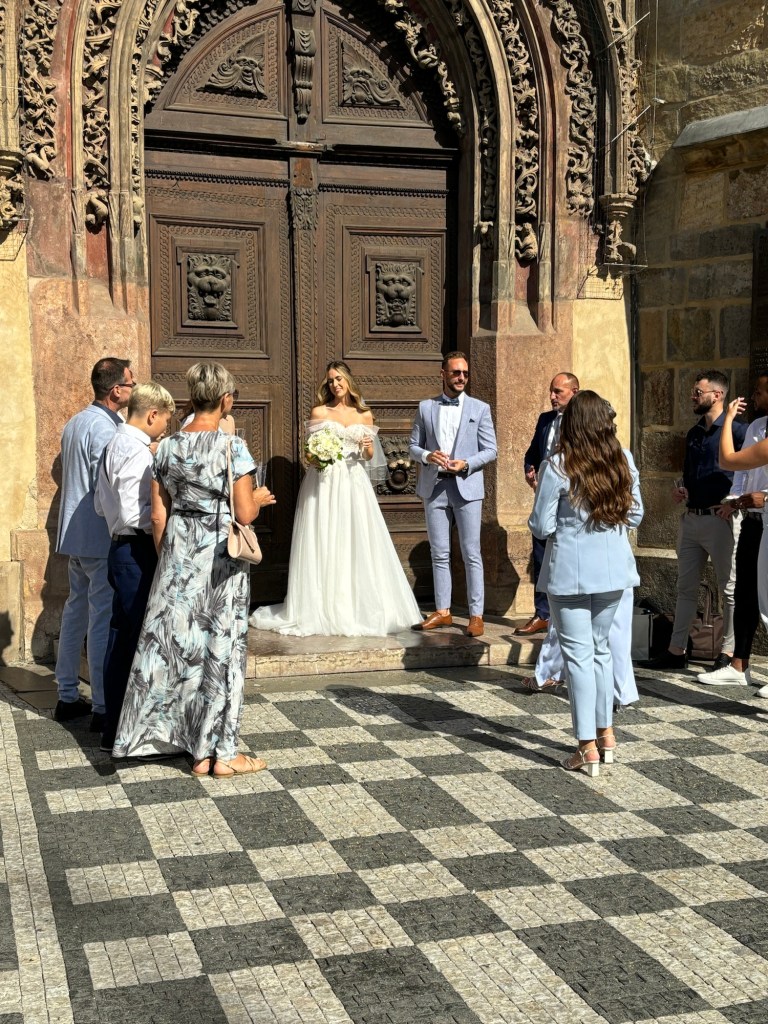
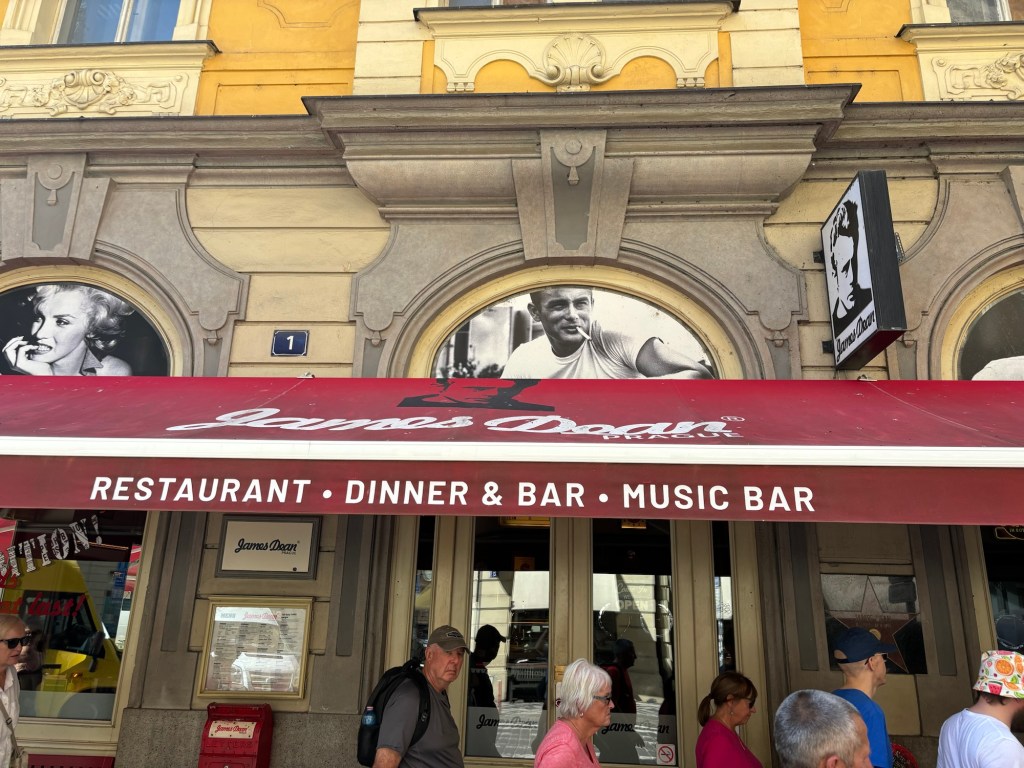
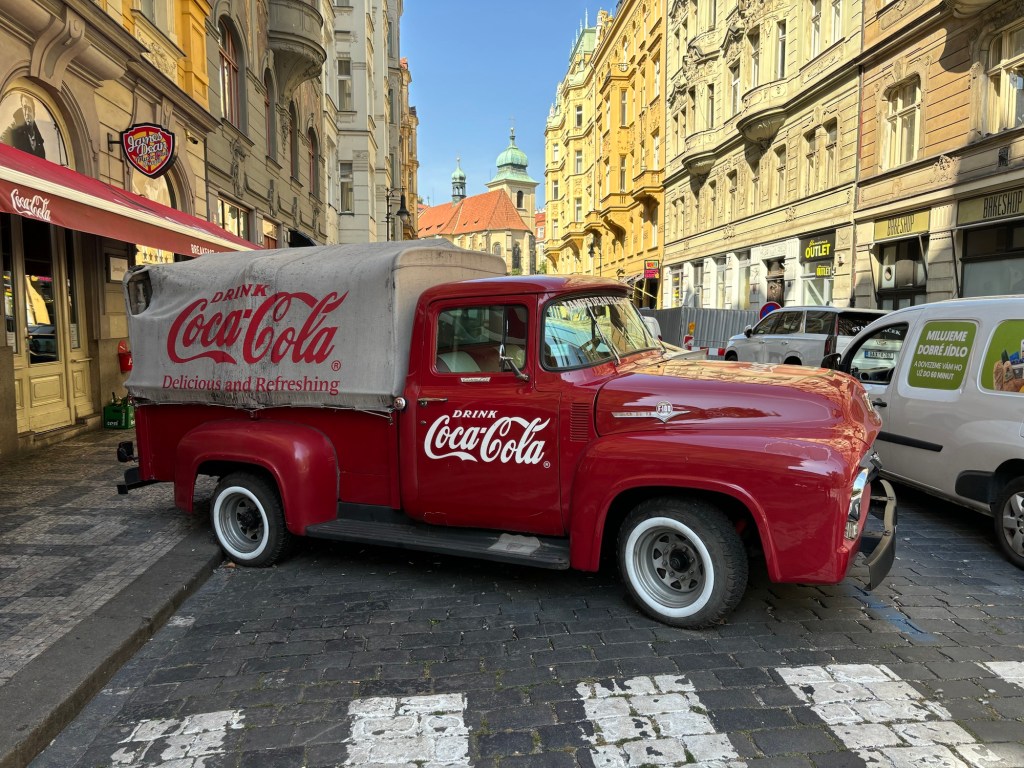
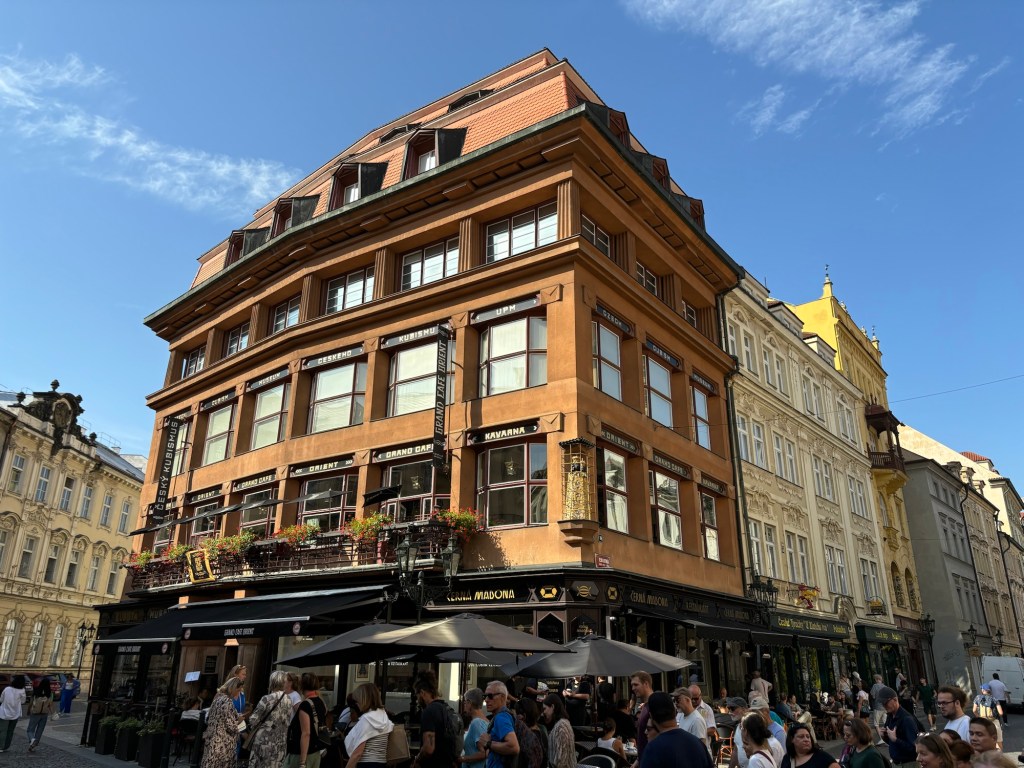
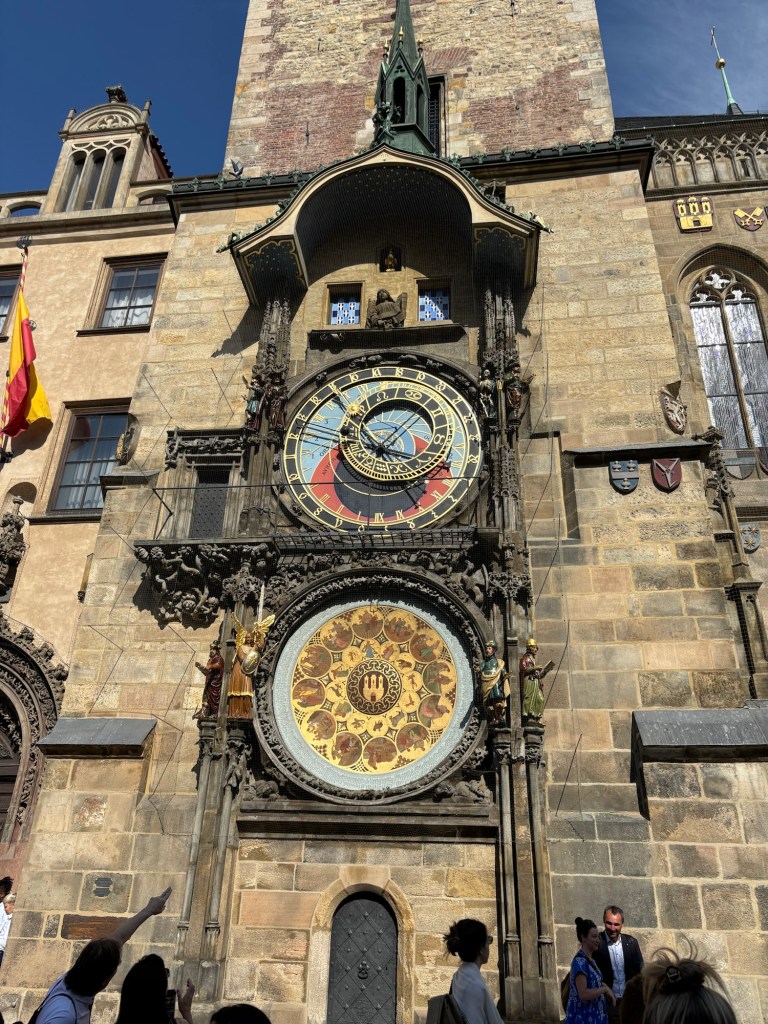
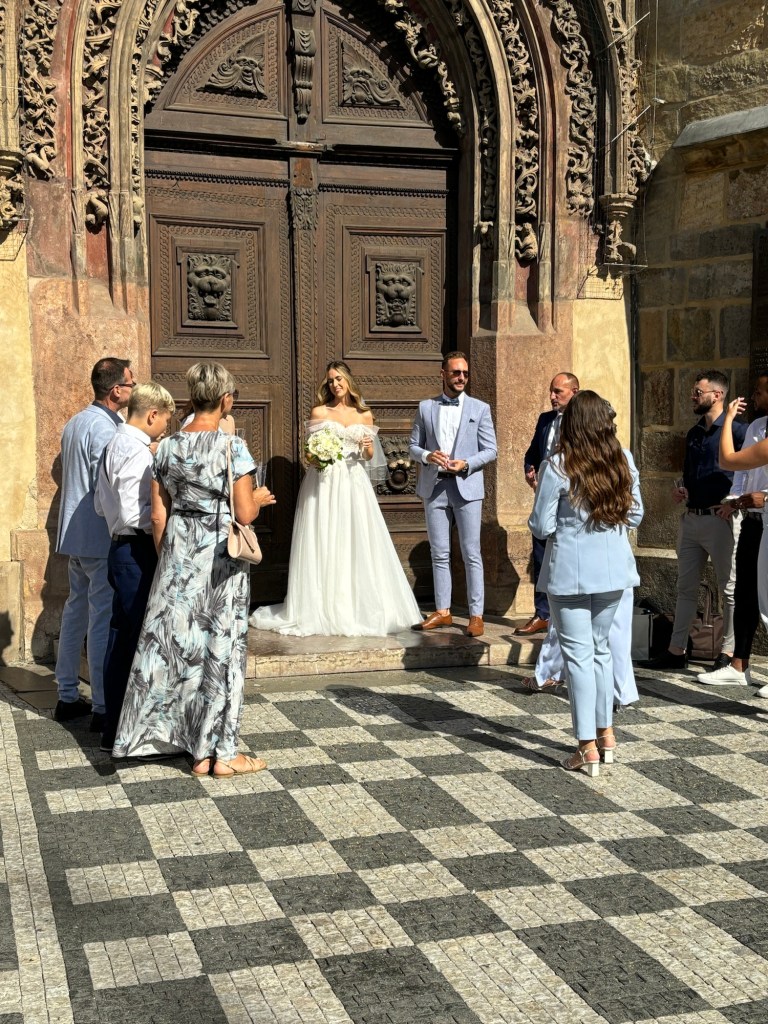
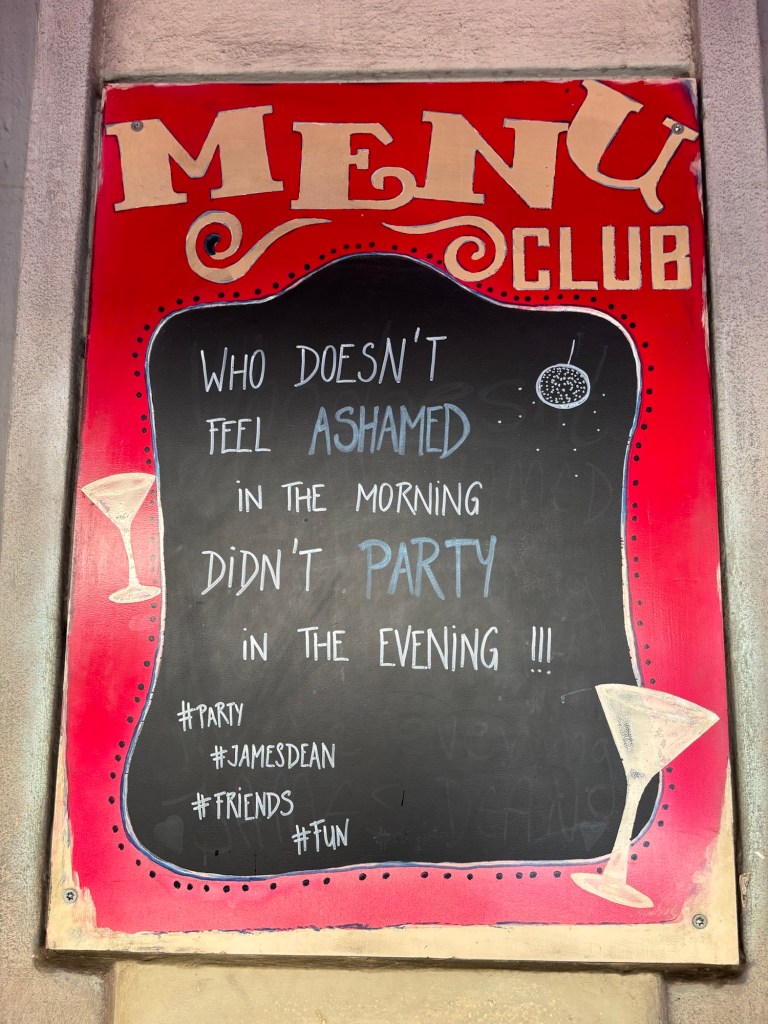
Bronze in memory of W. A. Mozart’s, “Don Giovanni,” that premiered in this theatre October 29, 1787The James Dean Bar and truck out front A building in Cubist style of Pablo Picasso. Lots of angled and squared lines and corners.The Astronomical Clock by the Old Town Square with movements on the hourAnd a wedding a the same church as the clock
Our tour guide also informed us that Einstein served as a professor at the Jesuit University here in Prague in 1911-12. He said, “Einstein taught physics, thermodynamics, and a few other things that I don’t understand. That’s why I’m a tour guide!”
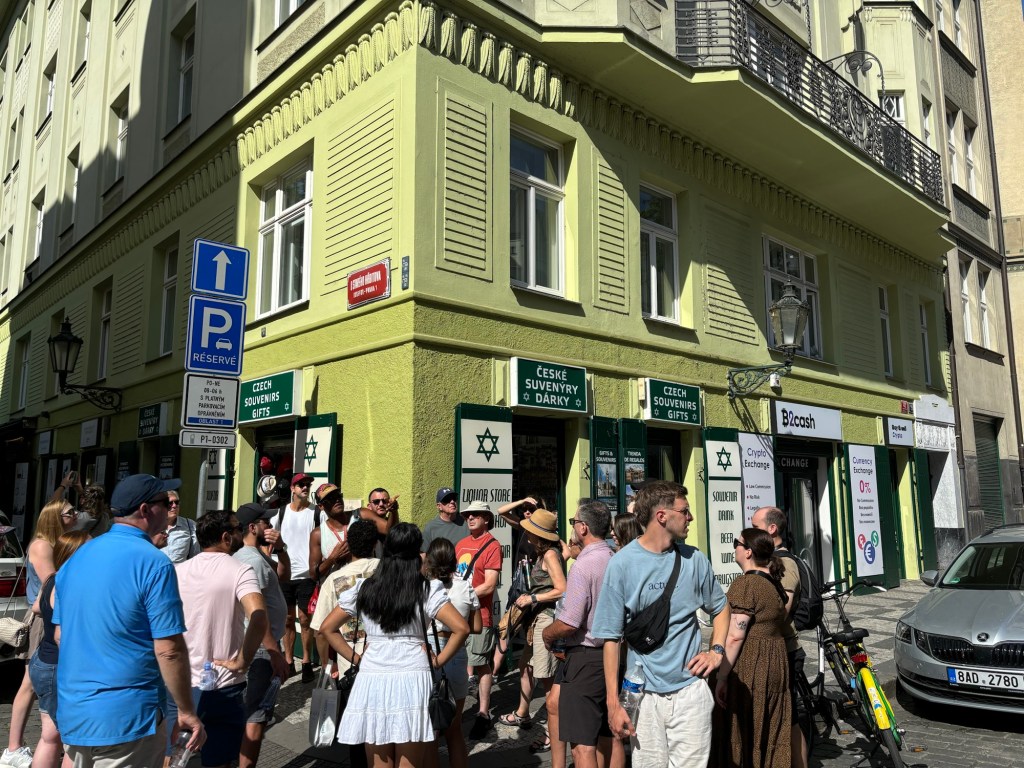
Jewish Quarter
Of note, Prague also had a large Jewish population of almost 100,000 before WWII…sadly, only 10,000 returned after the war. But even before the war, the Jews were isolated in the so called “ghetto” area (“Ghetto: The History of a Word”, an undesirable area outside the city walls. The link below has some interesting background of the Jewish experience in Prague.
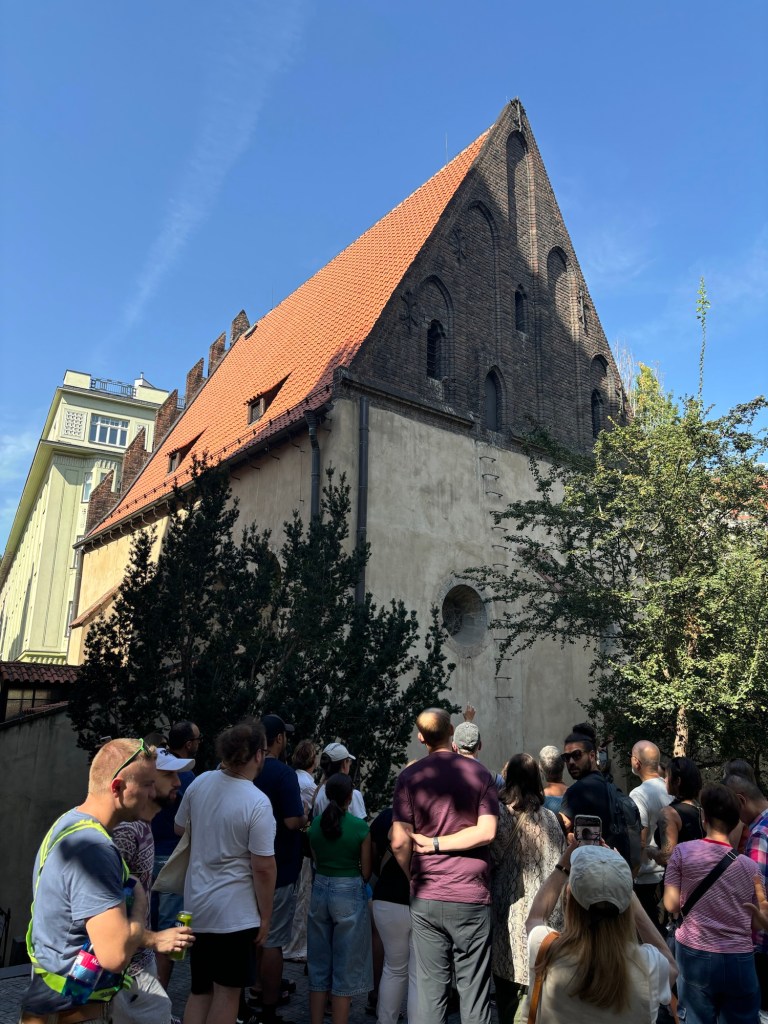
“The Old-New Synagogue is the oldest site of Prague’s Jewish Town and the oldest extant synagogue in Europe. It has been the main synagogue of the Prague Jewish community for more than 700 years. Built in the last third of the thirteenth century by stone-masons from the royal workshop who were working on the nearby Convent of St. Agnes, it is a testimony to the important status of the then Jewish community of Prague.” (Source)
“Staronová synagoga” (or Old-New Synagogue) is the oldest active synagogue in Europe.Walking down into the synagogue
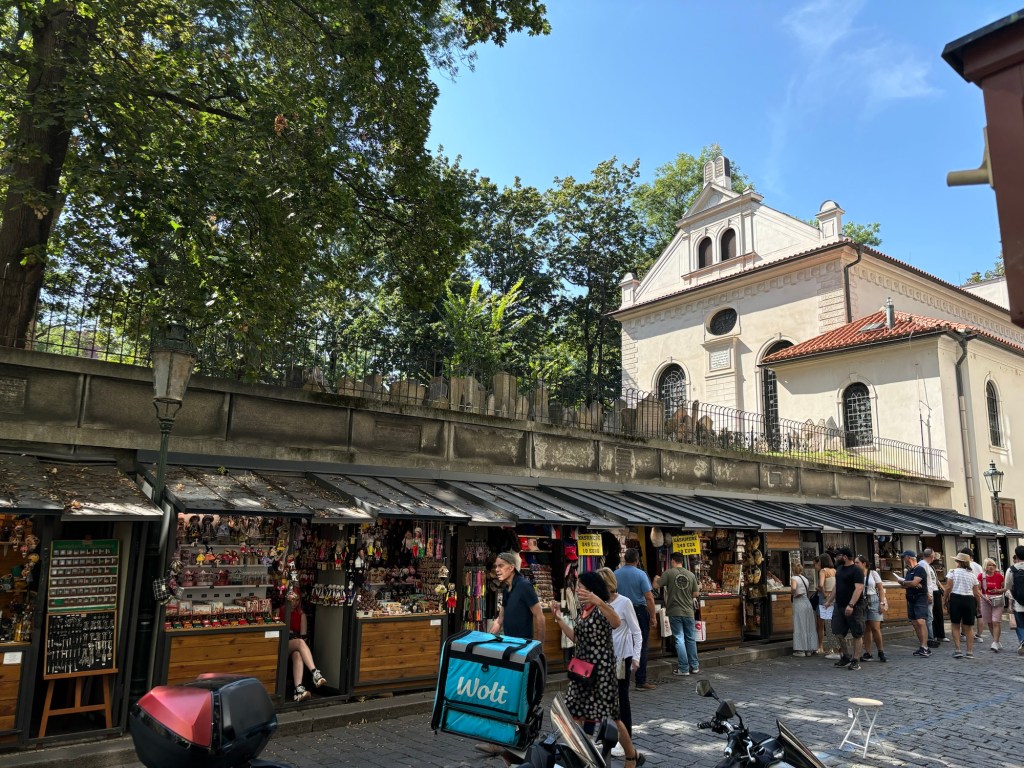
We also passed by a Jewish Cemetery that was 10 feet above our heads. Over time the residents had added layer after layer of dirt onto the cemetery to expand upwards! Our guide said there were up to ten levels or layers of bodies buried there.
Notice the grave markers above the shops and the wall
Today, the old Jewish ghetto is a VERY upscale area with tree lined streets, many top tier shops, and high rents.
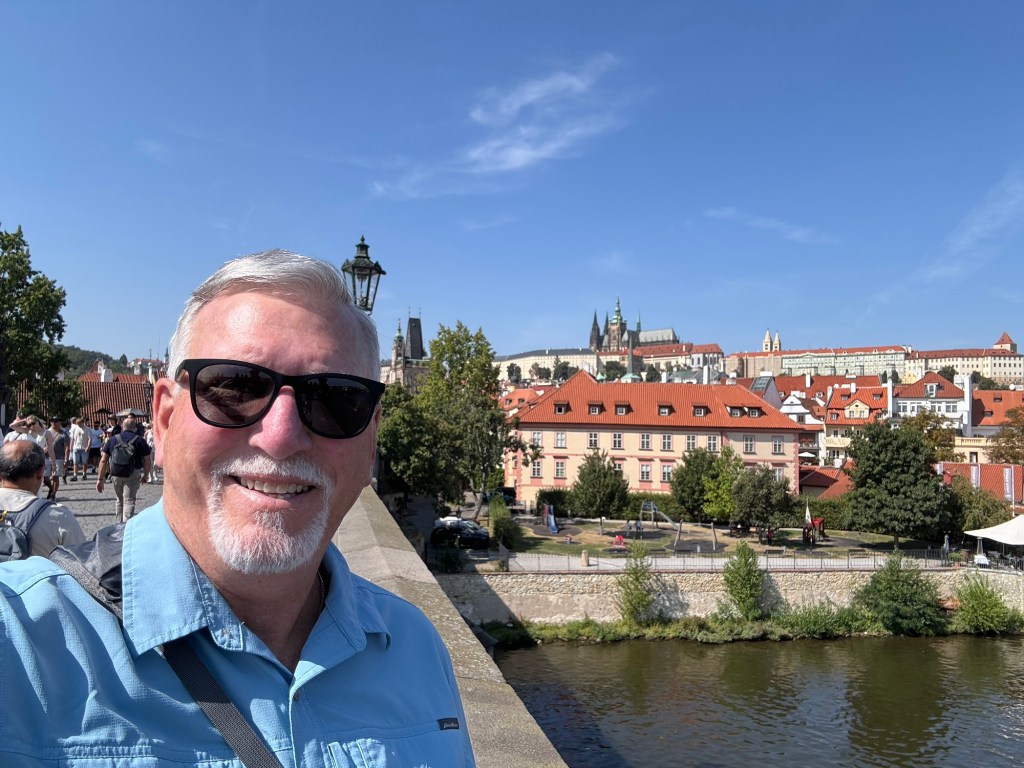
The Charles Bridge
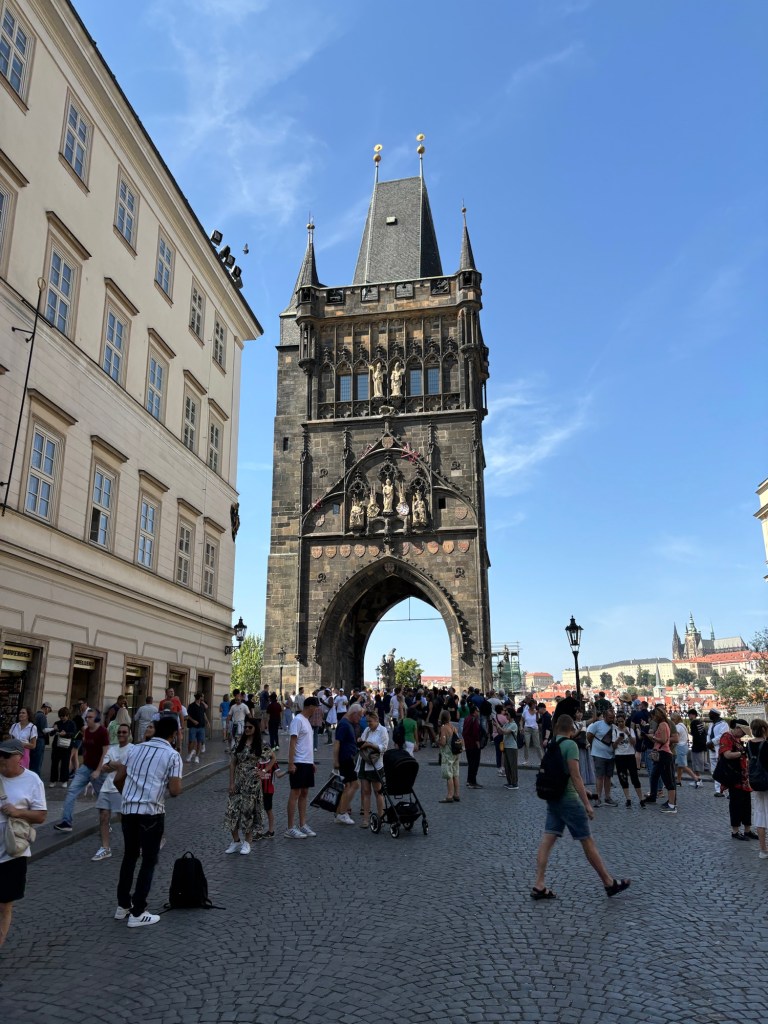
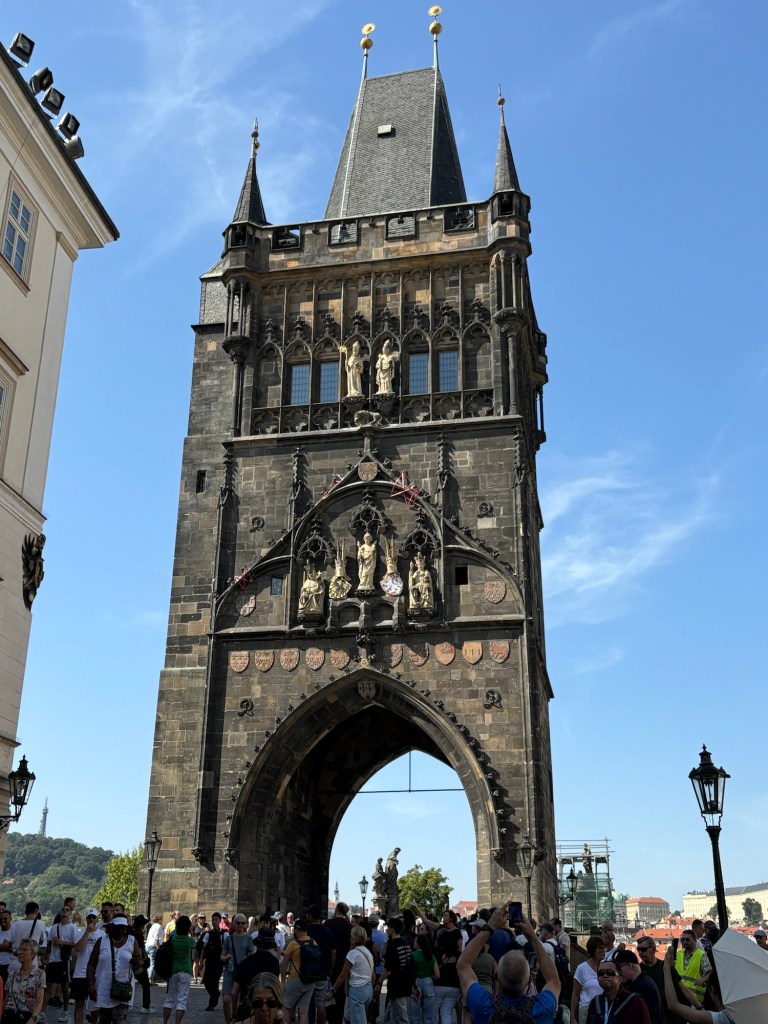
As I mentioned in yesterday’s post, Charles IV started construction on the bridge in 1357. And guided by the King’s royal astronomers, construction of the bridge commenced at the suitable, lucky time of 5:31 am on July 9, 1357. In palindromic terms (same number forward and backward), this time can be numerated as a sequence of ascending and descending odd numbers (135797531); and these numbers are actually carved on the Old Town Bridge Tower!
1357 9th July (7) at 5:31
Not sure I buy the 5:31 am part, but the 9th of July in 1357 palindromic number is pretty cool. And the bridge is still standing almost 700 years later.
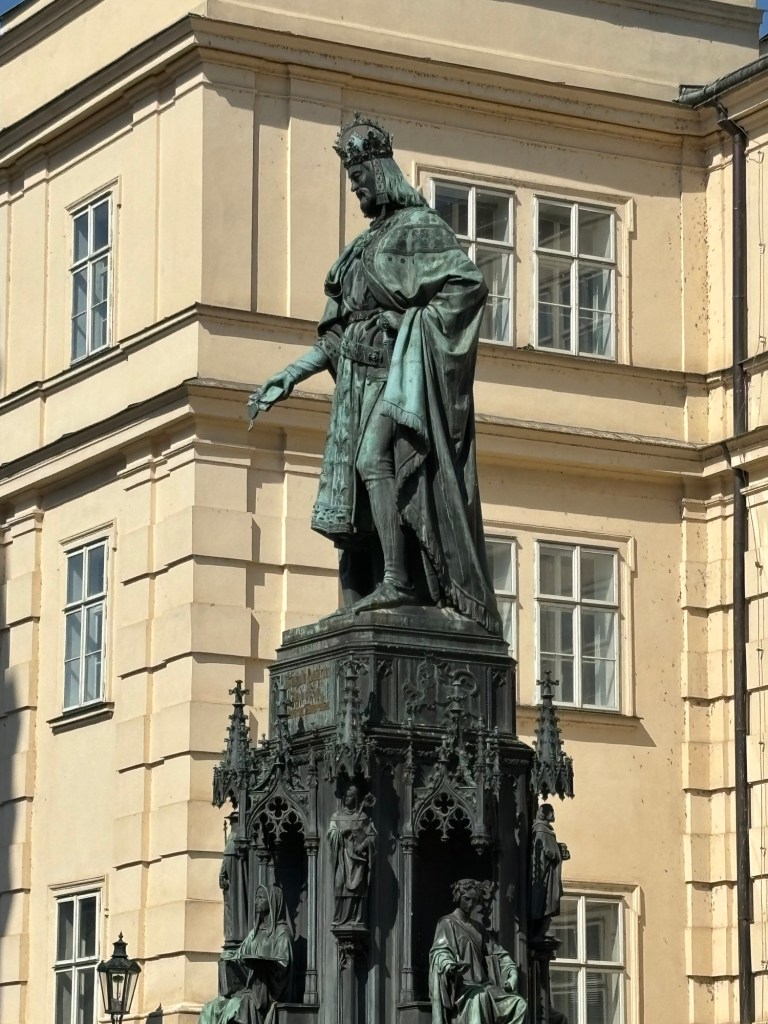
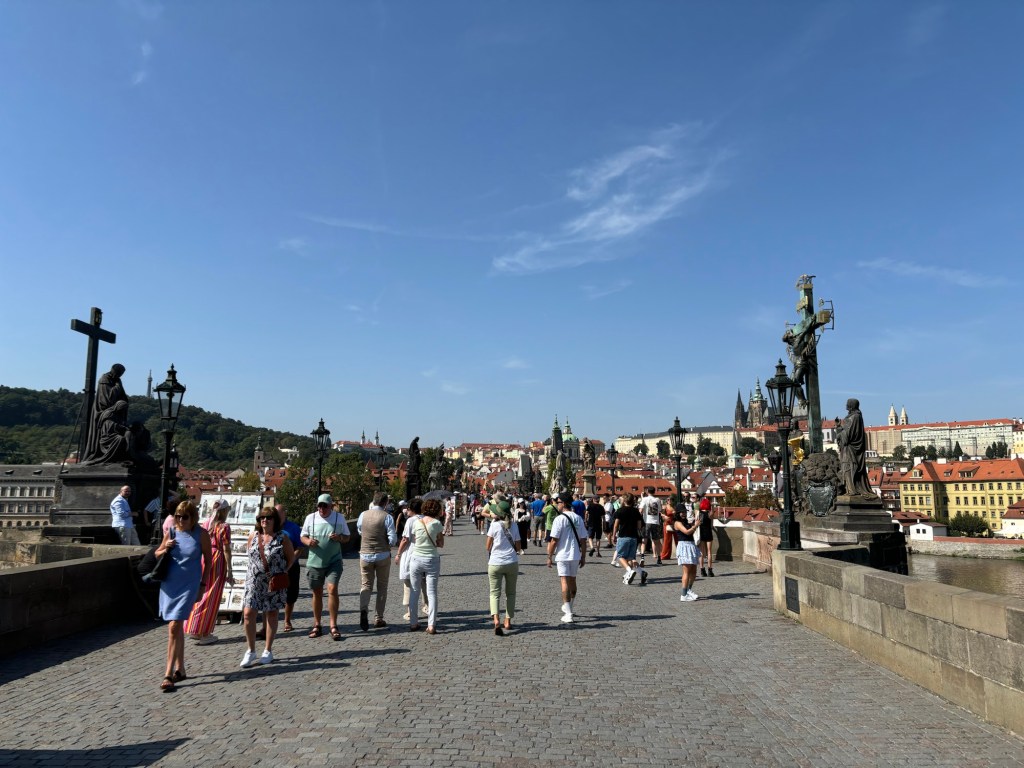
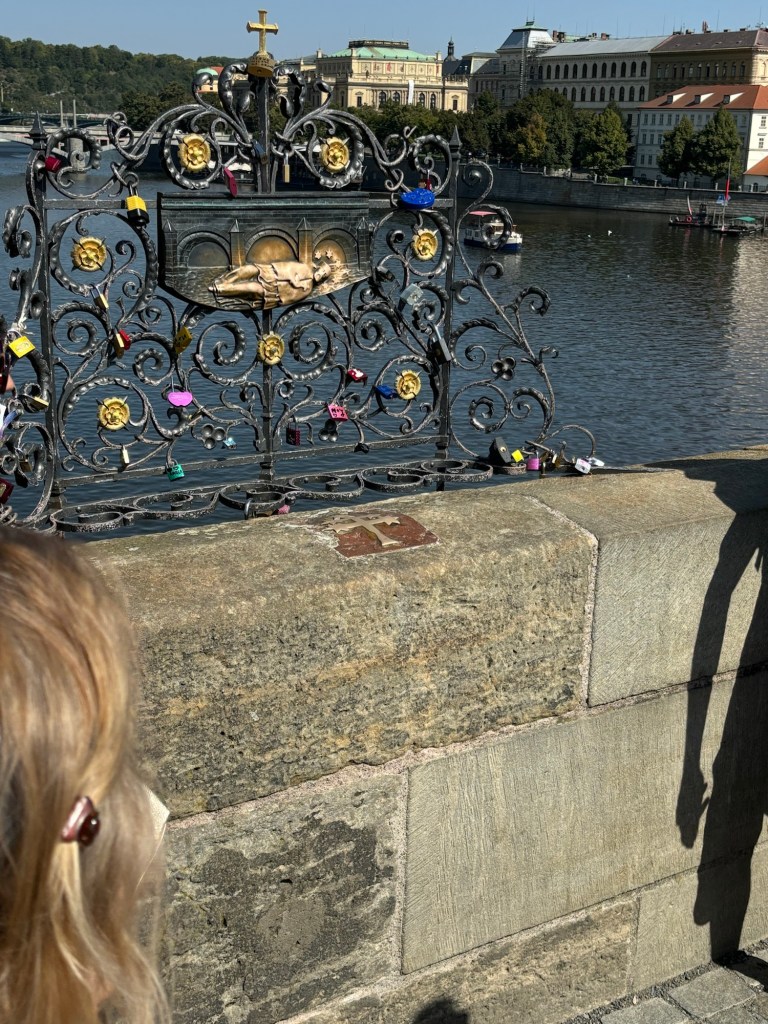
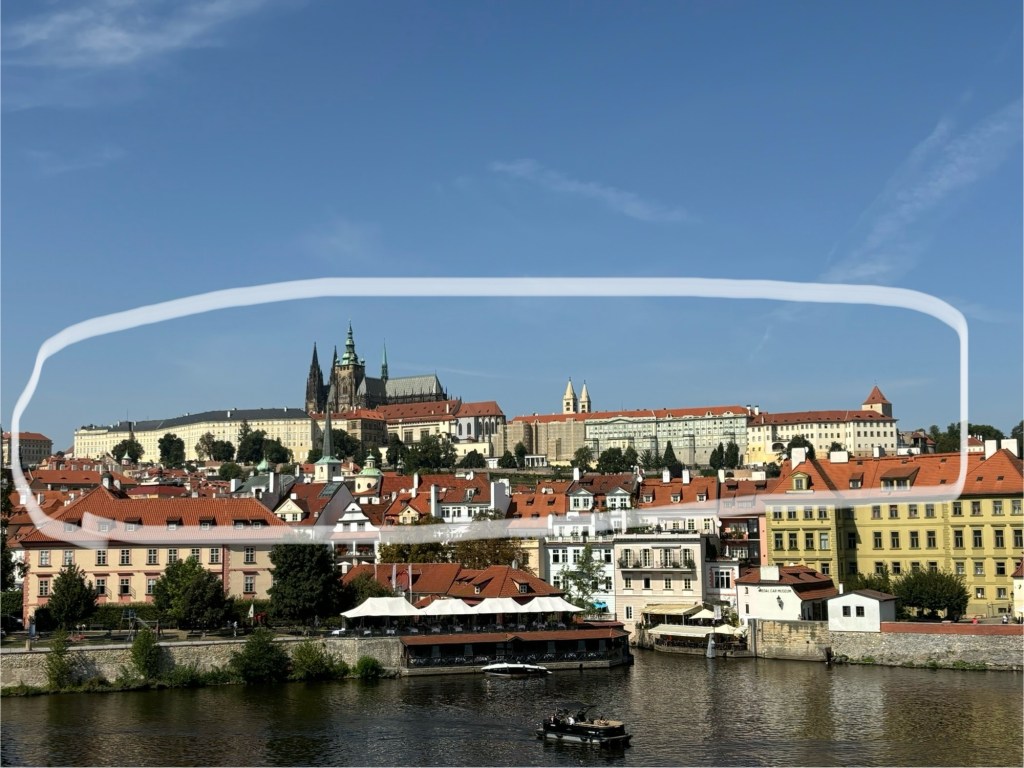
Heading toward the Charles BridgeKing Charles IVOne of the two tensing gates to the city, this one as you cross the Charles Bridge into PragueWalking across the Charles BridgeThe image of the martyred St. John, with five stars. He was thrown off the bridge and drowned.Prague Castle on the bluff above the river and the city – it encompasses all within the line drawn. It’s massive!
Post-Tour Touring
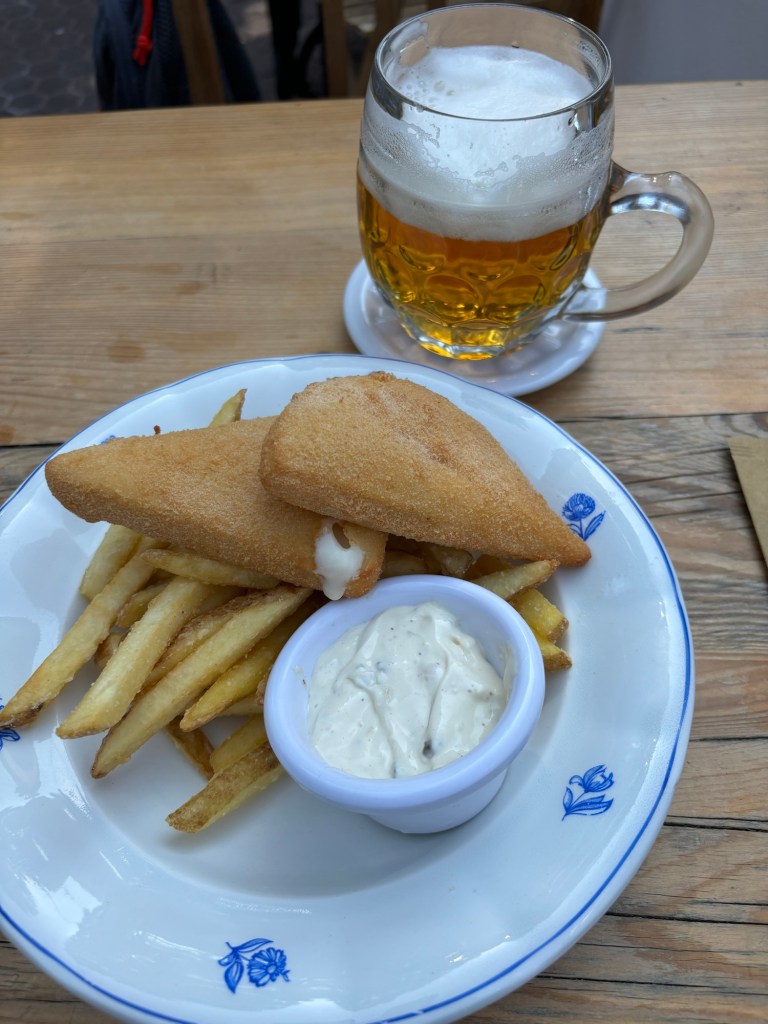
My lunch was fried cheese, tartar and french fries, a common Czech meal. The cheese is usually Brie, Camembert, or Gouda. Our guide said that, “these are BIG pieces of fried cheese, not like the tiny mozzarella sticks Americans get at Wendy’s or Jack in the Box!”
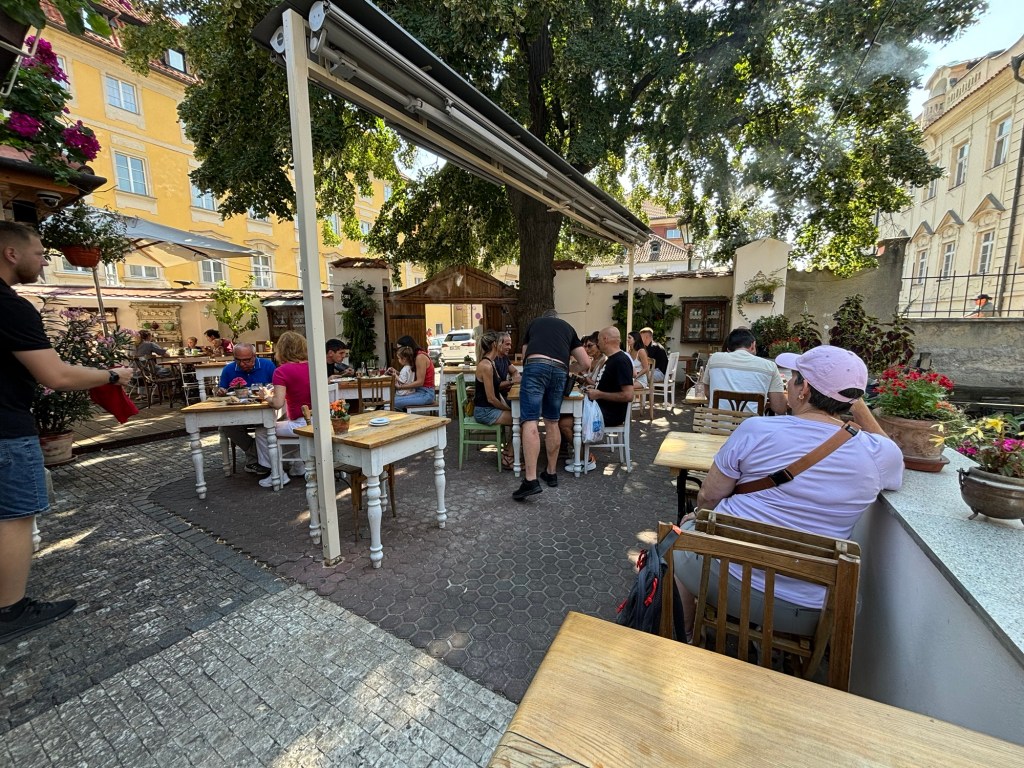
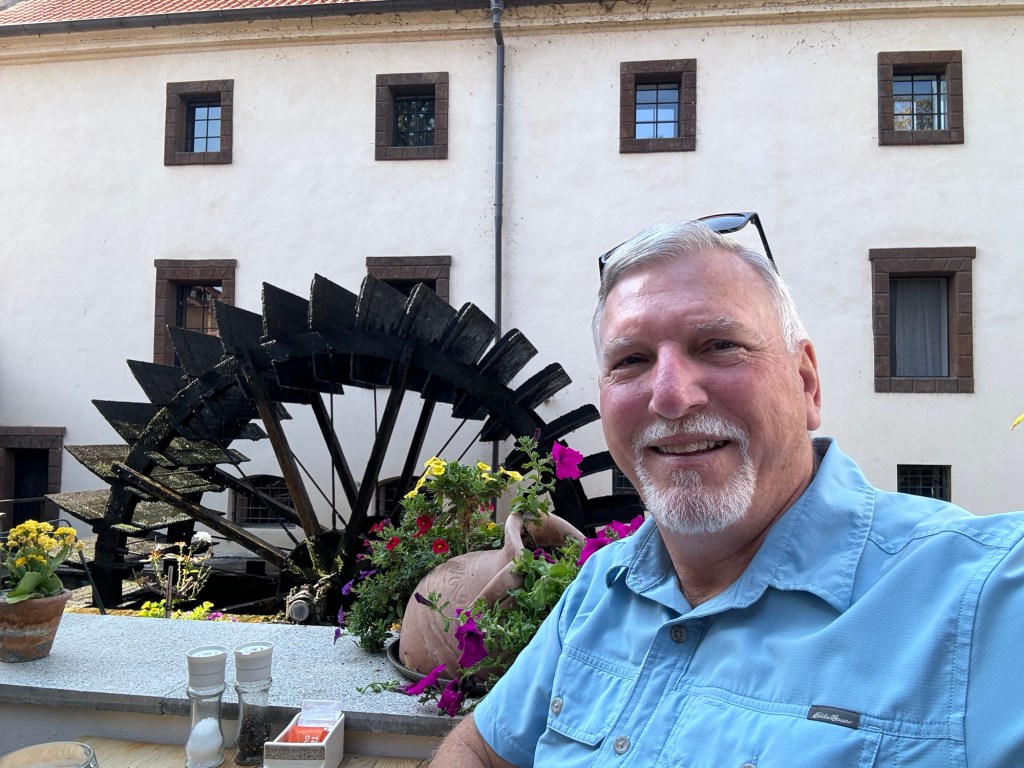
“Smažený sýr, tatarka a hranolky” (think the Czech language might be difficult?)My lunch cafeMe after my fried cheese and beer!
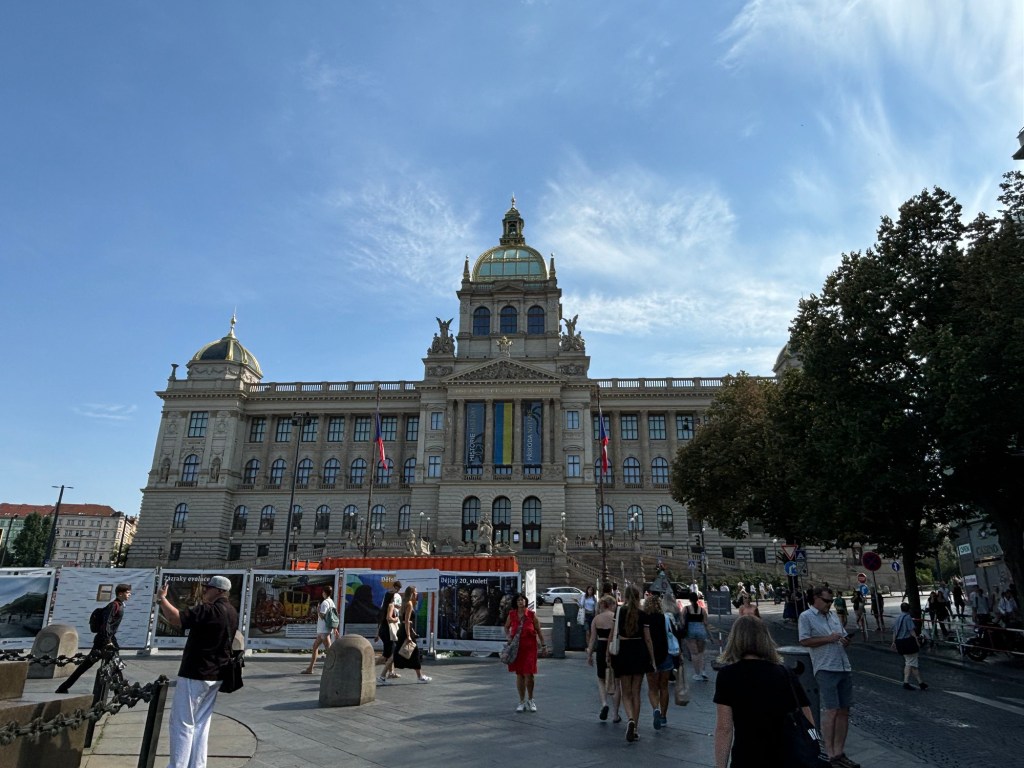
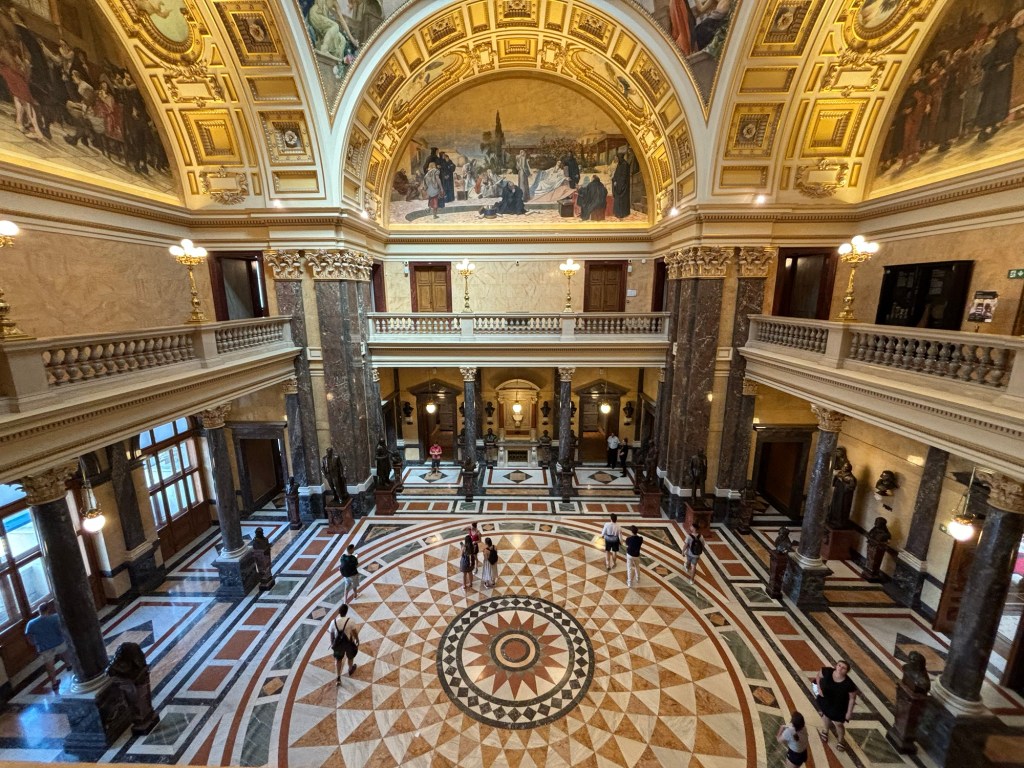
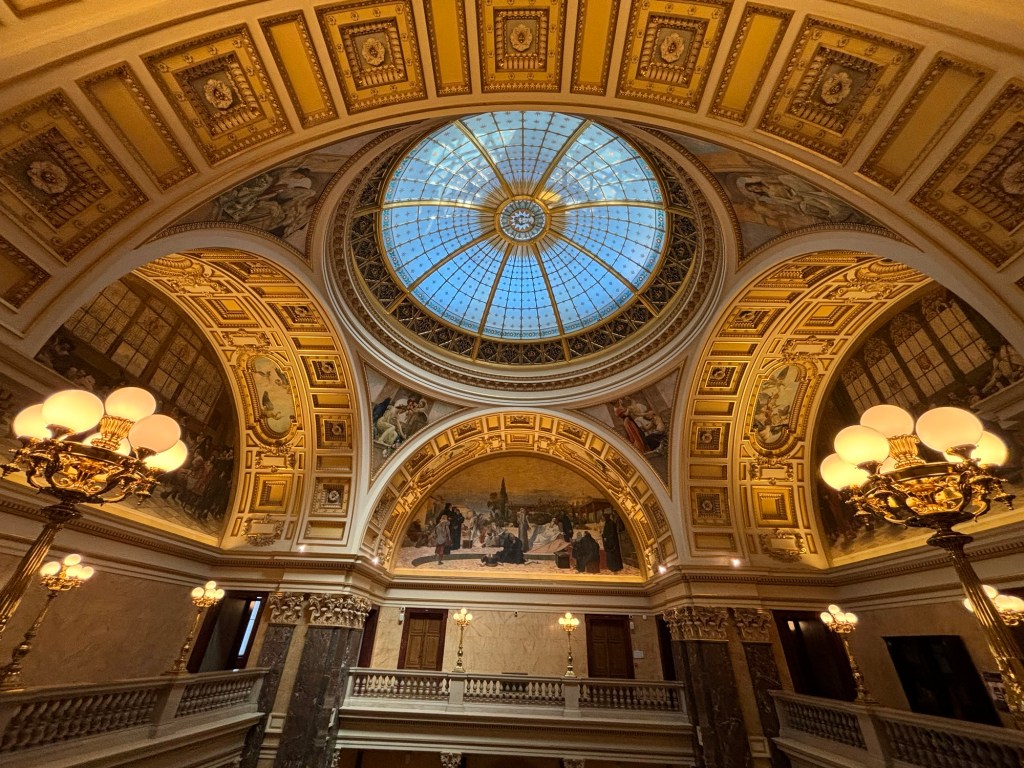
After lunch I e-scootered off to the National Museum for a visit. I only hit a couple of the buildings and wasn’t overly impressed with the exhibits, but there are many other buildings that can also be visited.
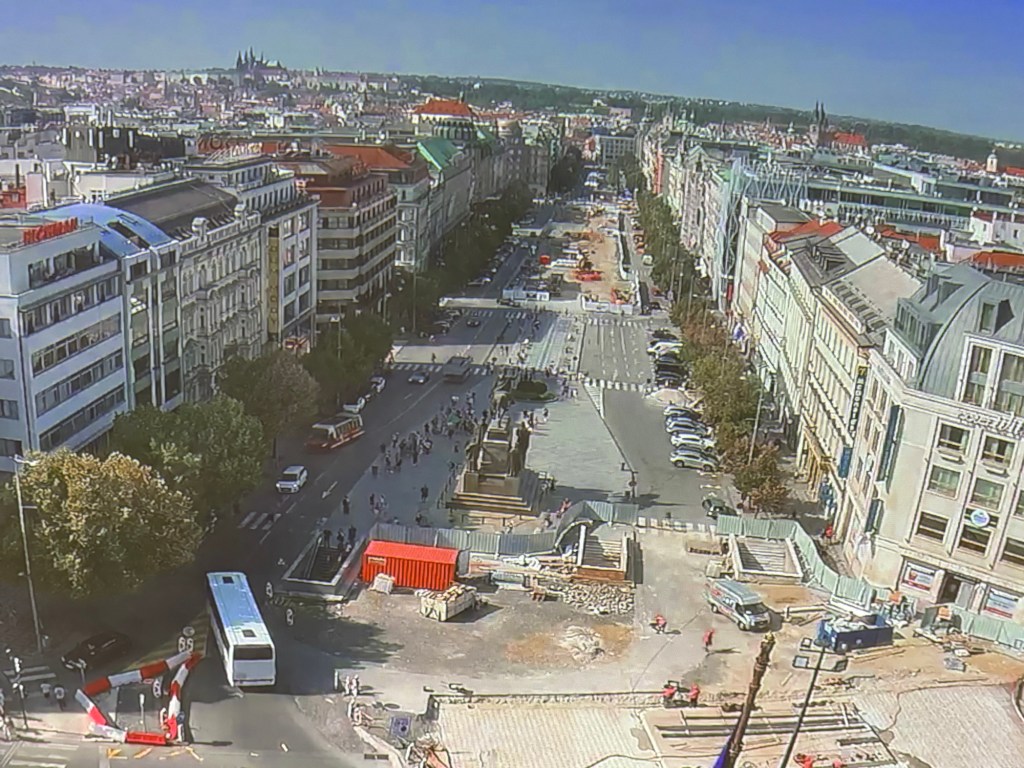
The main buildingInside the main entryThe massive plaza in front of the National Museum, one of the largest in Europe (currently with a lot of construction underway)
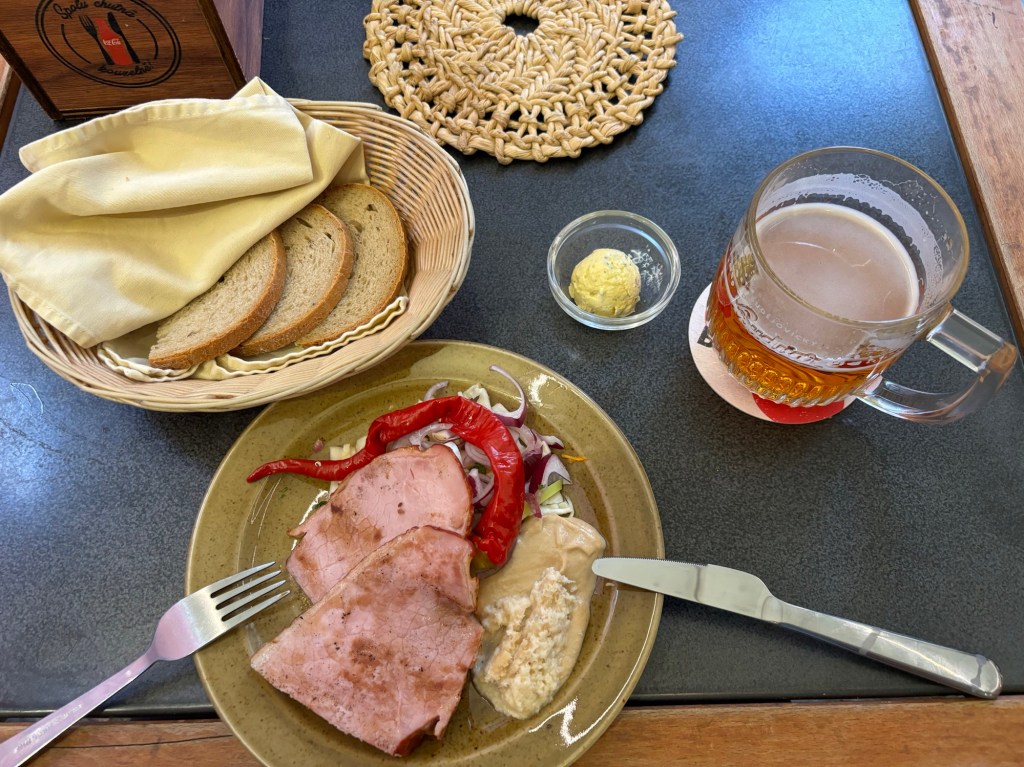
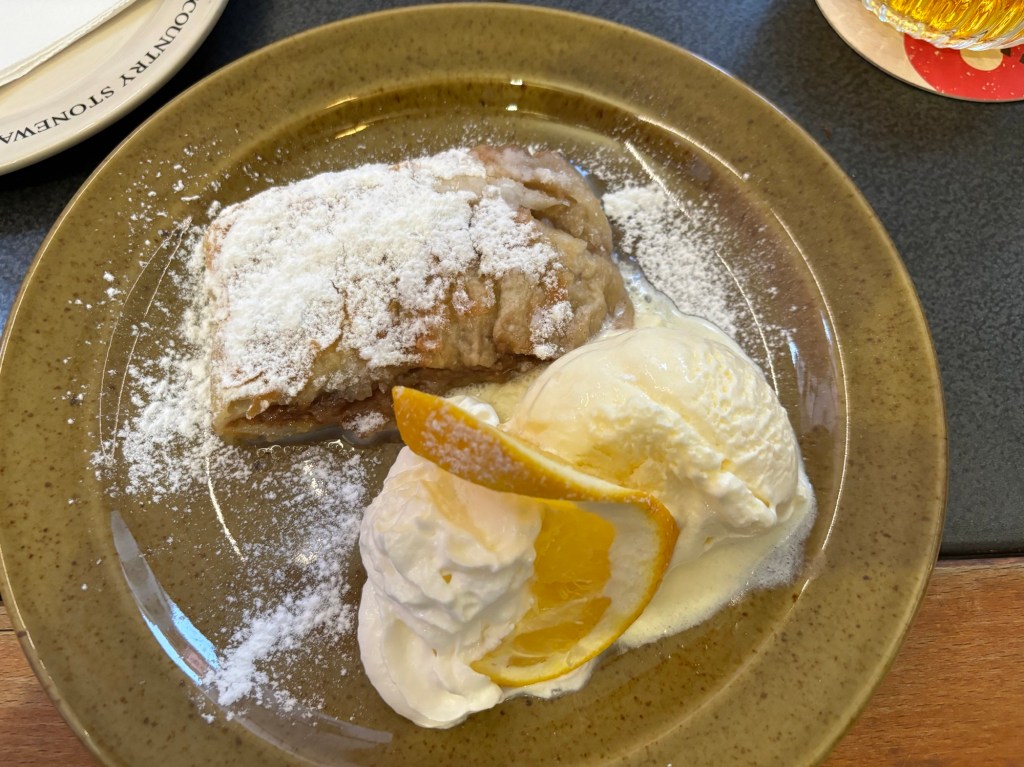
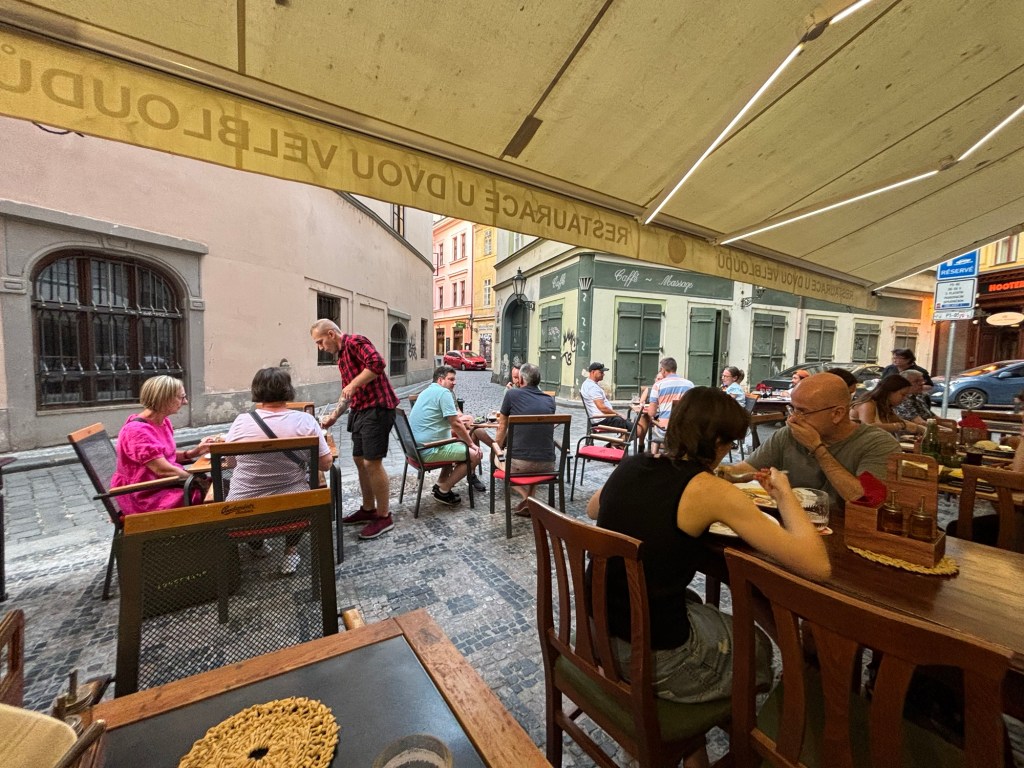
I enjoyed dinner at an outdoor cafe on a beautiful, warm, late summer evening. Ham with mustard and horse radish, salad, bread, and beer. And warm apple streusel with ice cream for dessert. It’s hard traveling…
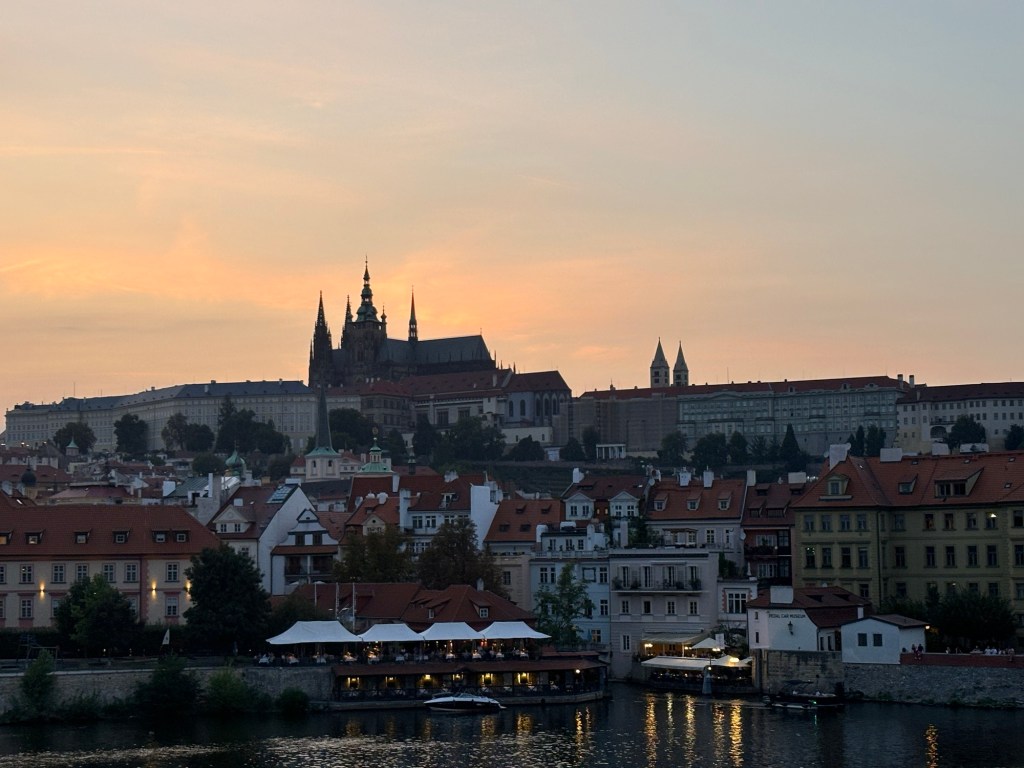
And the Prague Castle just after sunset
And I’m off to Vienna in the morning!
Words of wisdom, or just to amuse…?
What’s the difference between a hippo and a zippo? One is really heavy and the other is a little lighter!



 A Captain’s Adventures